List of Top 20 Courses to Study in Malaysia with High Job Demand
With the evolution of technology, the current job landscape in Malaysia has changed drastically. In many industries and countries, the current in-demand occupations or specialties did not exist 10 or even five years ago. The rise of technology has led to a disruption in the way we work and live. The Digital Era of the Industrial Revolution INR 4.0 has changed the way we work and live. Therefore, the course that you choose need to prepare you for the future job that’s filled with technological advancements.
What are you going to study? What career do you want? Which education path are you going to follow to get there? These are the life-changing questions that need well thought out answers after your secondary school. While secondary and university education is about more than just career preparation, what are the necessary skills that will help you to find and keep a job in the future?
Malaysian students who explore, research and plan their potential future lives in work are much better placed to make decisions that are right for them and compete for available jobs when they graduate.
An experienced Education Advisor would be invaluable in assisting you to choose the right course. Students need to talk to the right education counselors so that you get the right information to help you in making this life-changing decision.. The best courses to study are those that have a future high job demand and salary, as well as, suited to your academic knowledge and skills.
For more information on the top private universities and colleges in Malaysia, WhatsApp 01111408838
Please fill up the Form below and I will WhatsApp you and provide you with sound advise on how to choose the best private university or college in Malaysia to study at. If you do not give your mobile number or full name as in IC, your query will not be answered. Our knowledgeable & experienced counsellor will send you a message on WhatsApp & provide assistance from there.
Which are the Best 20 Courses to Study in Malaysia?
I didn’t know what to study after A-Levels. EduSpiral helped me to understand what I am good at as well as what’s in demand for the future. Renee Tan, Mechanical Engineering at Heriot-Watt University Malaysia
The Fourth Industrial Revolution is changing the work landscape across all industries, worldwide. The World Economic Forum reports that this could see the displacement of 75 million jobs due to the adoption of new technologies and structural changes in the labour market. However, it also predicted the simultaneous emergence of 133 million new jobs. The key for future success for students after secondary school is to carve a career path that takes advantage of these technological changes but can’t be replaced by them.
By 2030, roles in office support, food service, production and machine operations, and mechanical installation and repairs will have all but disappeared in the US, with similar trends happening in South Africa and the rest of the world. The jobs that will continue to be in demand include health professionals, STEM (science, technology, engineering and mathematics) specialists, creatives, managers, and those in education or workforce training.
You can also expect a rise in jobs that don’t exist yet to meet new or growing needs, such as climate change and environmental issues, or to cater to the longer life expectancy of the global population. Imagine a career change to become a solar power or wind turbine specialist, or reinventing yourself as an urban farmer. Those are recognisable professions with a niche twist, but there are predictions that future roles such as AI psychologist, drone manager, or a quantum data analyst will also exist. There should also be significant growth in health and wellness professionals that can assist in taking care of Malaysia’s ageing population, keeping everyone fit and healthy, and offering the special care and bedside manners missing from machines and robots.
The future of work looks dynamic and exciting. New careers and ways of working are opening up as new technology is introduced, globalisation continues and we adjust to challenges like COVID-19. These changes will reshape the nature of work itself. By having access to this information, students will be better prepared to make informed career decisions. This will not only help you to manage future risks, but also to maximise future opportunities.
Have You Chosen a Course that’s Future Proof?
“I met up with EduSpiral about 4 times in Ipoh & at Asia Pacific University to discuss about my future. He provided me with in-depth information and even arranged for me to meet up with the Head of School at APU to talk to me.” Kar Jun (Left), Accounting graduate from Asia Pacific University (APU)
One of the main aim of getting a university education in Malaysia is to find a stable job so that you can take care of yourself and your family. However, nowadays, with the high cost of living, just finding any job will not do. You will need to find a job that has a high salary.
Part of finding the right career in Malaysia for you will be looking at the future job demand in Malaysia and globally. You don’t want to have completed a degree course and then not be able to find a job or realise that the job pays very low salary. Therefore, it is important for students after high school or Pre-University to choose the right course to study – you don’t want to waste your time and money on a course you don’t want to do or worse being unemployed finding out that the course you have studied does not have any job demand.
Keep in mind, that after graduating, you would want to buy a car, a house, and get married and have children. This means that you will need to have enough money to feed yourself, your spouse, children and most probably your parents. Factor in the costs of healthcare, insurance, education, food, travel, saving for your retirement and other day-to-day expenses and all these amount to a lot of money!
Top 20 Courses to Study in Malaysia
I was interested in choosing a course that has high job demand & salary as well as meet my interests. EduSpiral gave me job reports & statistics to help me choose the right course. Bernice, Digital Marketing at Taylor’s University
There are hundreds of courses to choose from after completing your Pre-University or Foundation. However, the courses all have different career prospects as some have higher job demand and salary while others are less. Choosing the right degree programme that will enhance your chances of getting a job after graduation.
Half of Malaysians work in jobs unrelated to their degrees
EduSpiral advised me to study Finance because it had high job demand & salary. Darren, Finance & Investment Graduate
What you study at university is unlikely to be what you end up doing as a career, with latest YouGov research showing that half (51%) of Malaysian graduates work in jobs unrelated to their degrees. The remaining half (49%) work in jobs related to their degrees.
This isn’t the same across all degrees, however. Those who studied information and communication technology are more likely to end up working in a related field, compared with those who studied business, administration and law. Three in five (58%) of those who studied information and communication technology ended up working in jobs relevant to their degree, as opposed to just two in five of those who did business (39%), administration and law.
Other factors also seem to affect whether someone moves into a job linked to their degree. Those who studied abroad (18%) are more likely than those who studied locally (82%) (56% vs. 48%) to work in jobs related to their degree. Older Malaysians (aged 45 to 54) are also more likely than their younger compatriots (aged 25 to 34) to work in jobs relevant to their degree (59% vs. 47%).
Overall, six in ten (62%) Malaysians find their degrees ‘very useful’. A third (35%) find them somewhat useful, and the remaining 4% find them useless.
When choosing a degree half (49%) were influenced by their parents when selecting their field of study. The rest were influenced by their friends (32%), by themselves (28%) or by their teachers (25%).
The vast majority (97%) of graduates agree that having a university degree is important. Assuming the position of an employer, a quarter (23%) would be unwilling to hire someone without a university degree. Two in five (40%) would be willing, and the remaining third (37%) thinks it makes no difference.
Half of Malaysians work in jobs unrelated to their degrees
Do your Research and Find the Most in Demand Job with High Salary in Malaysia so that you can Choose the Right Course to Study
Mr. Lonnie from EduSpiral, guided us in our confusion of which course to take that has a high job demand & salary and after the counseling, we decided on Fintech. Bryan & Wen Kai, Fintech at Asia Pacific University (APU)
The International Labor Organization has estimated that almost 300 million jobs are at risk due to the coronavirus pandemic. Of those that are lost, almost 40% will not come back. According to research by the University of Chicago, they will be replaced by automation to get work done more safely and efficiently.
Particularly at risk are so-called “frontline” jobs – customer service, cashiers, retail assistant, and public transport being just a few examples. But no occupation or profession is entirely future proof. Thanks to artificial intelligence (AI) and machine learning (ML), even tasks previously reserved for highly trained doctors and lawyers – diagnosing illness from medical images, or reviewing legal case history, for example – can now be carried out by machines.
At the same time, the World Economic Forum, in its 2020 Future of Jobs report, finds that 94% of companies in the UK will accelerate the digitization of their operations as a result of the pandemic, and 91% are saying they will provide more flexibility around home or remote working.
The world of work is in constant change. Email, video conferencing, and cloud sharing are now the norm and millions of people now work in the gig economy, rather than on structured payrolls. But perhaps the greatest debate about the future of work is centered on automation, artificial intelligence, and robotics, and their potential effects on jobs.
BETWEEN 3.3 million and 6 million jobs are expected to be created in Malaysia by 2030, but with the new age of automation Industrial 4.0, preparation and training are fast becoming the critical factor as the new workforce would need new skills.
Furthermore, the ever-increasing cost of living in Malaysia is making it challenging for fresh graduates and working professionals to support their lifestyle. In light of that, it would be important for students to plan ahead what career that you want to enter into so that you can choose a course that has future job demand and high salary in Malaysia.
By having a view of emerging job trends, it is hoped that students would be inspired to draw up study plans and select career choices and pathways as early as schooling years up to university level that will ensure success in future careers and work environments.
Choosing the Right Course, Possessing Soft Skills & Having a Good Command Increases Your Chances of Employability
I wasn’t sure of which course to study & Lonnie , from EduSpiral, guided me to choose the right course based on Job Demand & Salary. Hong Ming, Foundation in Arts & Technology at UOWM KDU University College
In a research, commissioned by the Ministry of Women and Family and Community Development, it was found that there was very little variation in CGPA between employed and unemployed graduates. This explains why the overall academic performance did not affect the chance of becoming employed graduates. On the other hand, graduates who had higher English proficiencies were employed compared to unemployed graduates.
The study showed that having good grades did not guarantee employment for Malaysian graduates. Therefore, graduates must have a good command of English and other soft skills such as analytical thinking, intelligence, independence, leadership, communication and computer skills and work experience.
The results showed that the chance of being employed rose with an increase in English proficiency. The only significant personality variable is leadership and technical skills and this variable consisted of constructs such as possessing analytical thinking, being intelligent, independent, having leadership skills, communication and computer skills and possessing work experience.
Most of these challenges are more pronounced for graduates who come from rural areas because they are less exposed to speaking in English and almost all of them study in the public universities where Bahasa Malaysia is used as the medium of instruction.
In another study by the Ministry of Higher Education on the National Graduate Employability, Prospective employers complain of fresh Institution of Higher Learning (IHL) graduates lacking the prerequisite attributes; more than 50% of fresh graduates are deemed to be unsatisfactory in English communication skills, and yet, many of these young, inexperienced job-seekers expect unrealistically high starting salaries.
Currently, deficiencies are seen in the areas of communication, ICT knowledge, and professional and technical skills which have resulted in an insufficient supply of employable graduates. This situation is further aggravated by university students not pursuing fields of study that are relevant to industry
Every year about 180,000 students graduate with diplomas and degrees from institutions of higher learning. The most common problems identified by employers are:
poor command of English (55.8%)
poor character, attitude or personality (37.4%)
asking for unrealistic salary/benefits (33%)
mismatch of skills (30.2%)
choosy in job/company (27.7%)
no demonstrated ability to solve problems (25.9%)
skill knowledge not in-depth enough (23.8%)
As the main demand of industry is to employ graduates who are GSA (Generic Student Attribute) centred, from the above it is obvious that these skills are lacking among fresh graduates.
Choose the Right Course based on Facts & Evidence
I wasn’t sure of what to study & my mother found EduSpiral to talk to me. He helped me to choose a course that suited me & had good job prospects. Min Yi, Human Resource Management at Asia Pacific University (APU)
And to get a job with a high salary, you need to choose a degree course that has a high job demand and salary. Therefore, you have to do your research in choosing a course that has high job demand and salary. s
Malaysian students are exposed to the internet and to the jobs from overseas countries such as the USA or UK. Many don’t realise that some of these courses are not in demand in Malaysia or may not command a high salary. A lot of students after SPM or O-Levels just blindly follow their friends to the university taking any course as long as they can be with their friends.
Some students choose the course based on the advise of their parents, relatives or friends. Some of their advise could be valuable but some are simply just not based on facts or evidence of good career prospects. Students must check the advise given by so called agents & counsellors, and their friends and relatives to make sure what they said is true and supported by facts and evidence.
Most Affordable Foundation Programme in Malaysia at Multimedia University (MMU)
Written by EduSpiral Consultant Services. For more information contact 01111408838
Foundation courses are preparatory courses that assist students to transition from SPM or IGCSE/O-Levels in Malaysia to specific bachelor’s degree programmes at private universities. In addition, the Foundation Programme in Malaysia is a pre-university program designed to help students meet the entry requirements for first-year university and prepare them to handle the rigours of undergraduate studies. Students gain a solid grounding in academic and communication skills, with a focus on developing their Critical Thinking and English language skills.
The tuition fees for Foundation Programmes at top private universities can range from RM10,000 and above. For some students, it could be an unaffordable choice to take Foundation. Now, a top ranked and award-winning private university, Multimedia University (MMU), is giving Malaysian students the opportunity to pursue their studies at private university through their affordable Foundation. Read on to find out more or fill up the enquiry form to see how you can achieve your education dream.
For more information on MMU Foundation Programmes, WhatsApp 01111408838
Please fill up the Form below and I will WhatsApp you and provide you with sound advise on how to choose the best private university or college in Malaysia to study at. If you do not give your mobile number or full name as in IC, your query will not be answered. Our knowledgeable & experienced counsellor will send you a message on WhatsApp & provide assistance from there.
Where to Study the Most Affordable Foundation Programme in Malaysia?
EduSpiral counseled us online & then picked us up from the airport to visit MMU in order to help us choose the right university. Mak, Ong & Chaw – Diploma in Information Technology (IT) at Multimedia University (MMU)
Therefore, students have to search for the right private university and foundation programme that will fit their undergraduate academic goals. Where you choose to study your Foundation Programme is an important decision as it will provide the necessary fundamental knowledge and skills to handle the rigours of the degree programme.
Although the Foundation tuition fee at Multimedia University (MMU) is only RM6000, there is no sacrifice on quality. You will still get the same high quality education from MMU. Their quality is evident through the numerous awards won by their faculties as well as the high rankings achieved by the university.
For example, Multimedia University (MMU) made its debut in the Times Higher Education (THE) Impact Rankings 2021, where the varsity is ranked at 601-800 worldwide. The impact rankings measure global universities’ success in delivering the 17 United Nations’ Sustainable Development Goals. In addition, Multimedia University (MMU) remains strong in the Times Higher Education (THE) Asia Rankings for the year 2021. The university is ranked at 401+ among universities across Asia. The rankings also listed MMU as Top 10 among all universities in Malaysia. Furthermore, MMU remains strong when the varsity is being counted as one of the Top 7 among Private Universities in Malaysia in the QS World University Ranking (WUR) 2021. Furthermore, we are very proud that the WUR has placed us in the Top 2 in Computer Science, and in the Top 3 in Electrical & Electronics amongst Malaysian private varsities.
The Foundation programme is a Pre-University Programme designed by Multimedia University (MMU) intending to equip their students to familiarise and handle the degree programme offered. Students will seamlessly move on to the degree course upon completion. There are many types of Foundation Programmes offered by MMU.
Multimedia University (MMU) Foundation Programmes at RM6,000
Most Affordable Foundation Programme in Malaysia at Multimedia University (MMU)
What are the Foundation Programmes offered at Multimedia University?
PTPTN Loan is Available for Foundation Programmes at MMU
PERINGKAT PENGAJIAN UNTUK IPTS
JUMLAH PEMBIAYAAN SETAHUNMENGIKUT PERINGKAT*
MAKSIMUM(RM)
75%(RM)
50%(RM)
Foundation
6,800
5,100
3,400
Peringkat jumlah pembiayaan ditentukan berdasarkan kelayakan di bawah:-
PERINGKAT PEMBIAYAAN
KELAYAKAN
Maksimum
Sekiranya pelajar atau penjaga pelajar disenaraikan sebagai penerima Bantuan Rakyat 1 Malaysia (BR1M)
75% daripada pembiayaan maksimum
Pendapatan keluarga tidak melebihi RM8,000 (tiada dalam data BR1M)
50% daripada pembiayaan maksimum
Pendapatan keluarga melebihi RM8,000 (tiada dalam data BR1M)
The first loan payment is released only after the completed agreement is received by PTPTN.
Subsequent payments will be made after PTPTN receives confirmation from the IPT
The loan payment is credited directly to the student’s account.
What are the Degree Programmes Offered at MMU
Upon completion of the Foundation programme at Multimedia University (MMU), students may continue on to the related degree programme. PTPTN Loan is also available for the degree programmes at MMU.
Top Reasons to Study Foundation at Multimedia University (MMU)
EduSpiral helped me to find an affordable and yet world top ranked computer science university. Vickey, Diploma in IT at Multimedia University (MMU)
As the first private university approved by the Malaysian government, top ranked Multimedia University (MMU) adheres to the strictest requirements for a high quality degree. A study by Gartner and MSC Malaysia found that MMU is among the top five universities preferred by major ICT players for graduate employment — a testament to the quality of MMU’s academicians, curriculum, student development programmes and our solid reputation with the industries. In addition, Multimedia University falls within the Top 200 QS Asia University Ranking 2018 due to their holistic education and excellent academic reputation.
MMU remains strong when the varsity is being counted as one of the Top 7 among Private Universities in Malaysia in the QS World University Ranking (WUR) 2021. Furthermore, the WUR has placed MMU in the Top 2 in Computer Science, and in the Top 3 in Electrical & Electronics amongst Malaysian private varsities.
Multimedia University (MMU), a tertiary education institution set up through Universiti Telekom Sdn Bhd (UTSB), a wholly owned subsidiary of TM, fulfils the noblest of corporate social responsibilities – taking up the challenge of educating the next generation the nation’s leaders and knowledge workers. As the first private university in Malaysia, MMU developed the pioneer model for the successful establishment of private universities in the nation, paving the way for the growth of the private tertiary education sector.
As the university at the heart of the MSC, MMU also serves as a catalyst for the development of the high tech ICT industry of the nation, parallel to the Silicon Valley-Stanford model in the United States.
Multimedia University offers various courses at its 3 campuses located throughout Malaysia. The campuses are supported by excellent facilities, qualified & experienced lecturers and its tuition fees are affordable as well.
As part of TM’s initiative to further develop the ICT industry in the nation as a whole, MMU serves to fulfil the nation’s human resource needs as it grows into a knowledge economy. The establishment of MMU as a research university also serves to benefit the nation’s ICT industry to be a creator and not just a consumer of technology. Through the establishment of a local private university, the nation can train its required human resources within its borders, a sound strategy from the economic management perspective.
MMU’s continued growth and sustainability is a clear indication of TM’s strong commitment towards the development of the field of education and research in the nation.
The quality of MMU lecturing is one of the highest among Malaysian universities. All academic staff in MMU use the multimedia mode of instruction. Course materials of all subjects are stored online and are accessible via the intranet at any time and place in the world. We look forward to meet the nation’s demand for excellence in education through multimedia technology. The approach combines classroom instruction, computer-based interactive multimedia learning mode as well as open interaction among academic staffs, students as well as the industry communities. We hope to create a learned community that collects, preserves and disseminates state-of-the-art knowledge in multimedia-related areas.
An Entrepreneurial University with Industry-Ready Programmes
A Well-rounded Education Be empowered with the fundamentals of your field of study that also incorporate entrepreneurial skills and expertise which are revlevant to your respective industries and job markets.
Industry in Campus Be connected and gain benefit from our state-of-the-art labs established by our industry collaboration with ZTE, Microsoft, Intel and many more.
Ready for Industry Be enthused with Start-up Schemes from the Entrepreneur Development Centre (EDC) to encourage innovation and entrepreneurship ventures
Financial Assistance at Multimedia University (MMU)
Top students from all over Malaysia choose to study at Multimedia University (MMU) Cyberjaya
Perbadanan Tabung Pendidikan Tinggi Nasional (PTPTN) is the Malaysian government body offering national educational loan for Malaysian students enrolling for Foundation, Diploma and Degree programmes. Amount of the loan is subject to PTPTN’s approval . PTPN Loan is available for Foundation programmes at Multimedia University (MMU).
Skim Prihatin Pendidikan 1Malaysia (SPP1M) or 1Malaysia Education Caring Scheme is additional financial assistance to deserving students to pursue quality degree qualifications in identified disciplines and courses. This additional financial assistance will act as a top-up fund to their existing fun or scholarship.
Scholarships are available to deserving students.
Conducive Learning Environment at Multimedia University (MMU)
Multimedia University (MMU) Melaka campus is has a sports complex, tennis courts, basketball courts & football fields for students to pursue a healthy lifestyle
Learning goes beyond books. At MMU, you will have all these various facilities and settings that will make learning fun, comfortable, and memorable.
Convenient accommodation. A calm and safe base for you to re-energise yourself every day, both on-campus and within walking distance off-campus.
Intelligent labs. High-tech labs to boost the teaching and learning process. These are the Innov8 Lab, SiRi Learning Lab, SMART Lab, and an e-Moot Court.
Digital Libraries. Well-stocked libraries with print and digital resources to cover your reading needs and habit.
Cutting edge mind-set. Surround yourself with like-minded individuals who are seeking for ways to best prepare themselves for a dynamic and challenging future.
Extensive infrastructure. Computers galore, campus-wide Wi-Fi, 24-hour security, ample parking, food and drink outlets, and many others.
Location. Cyberjaya – An intelligent city housing many high-tech firms that could one day become your workplace. Melaka – A city bustling with life and activities that is a wealth of experience to your life.
Healthy lifestyle. Multiple sports tracks and fields, indoor sports centres, various courts and pitches, in addition to numerous clubs and societies. Olympic-sized swimming pool A swimming pool fit for champions right in the heart of Cyberjaya.
Vibrant Campus Life. Multimedia University (MMU) keeps their beautiful campus exciting with engaging events and going-ons all year round. With over 100 clubs and societies, you can choose to practise martial arts, go dragon boating or attend an anime screening after class is over. Besides engaging with the University’s international community, student exchange programmes are also available to enhance learning experience.
Major Awards & Achievements for Multimedia University (MMU) in Malaysia and Globally
Multimedia University (MMU) is ranked 179th in Asia according to Quacquarelli Symonds (QS) World University rankings for 2018. The 2017 QS World University Rankings by Subject again listed MMU as one of the highest ranked private universities in Malaysia for Electrical & Electronics Engineering and Computer Science & Information Systems.
MMU Makes Its Debut in THE Impact Rankings 2021 Multimedia University (MMU) made its debut in the Times Higher Education (THE) Impact Rankings 2021, where the varsity is ranked at 601-800 worldwide. The impact rankings measure global universities’ success in delivering the 17 United Nations’ Sustainable Development Goals.
MMU is Ranked 351- 400 in the THE Young University Rankings 2021 MMU continues to be ranked in the 351 – 400 band, the same one we occupied when we were first included in the Times Higher Education (THE) Young University Rankings 2021.
MMU Remains Strong in THE Asia University Rankings 2021 (Top 10 in Malaysia) Multimedia University (MMU) remains strong in the Times Higher Education (THE) Asia Rankings for the year 2021. The university is ranked at 401+ among universities across Asia. The rankings also listed MMU as Top 10 among all universities in Malaysia.
MMU Continues Its Excellence Standing in the 401-500 World Rank in THE World University Rankings 2021 (Emerging Economies) MMU continues to stand shoulder-to-shoulder with other higher-education giants of the world. MMU maintains its ranking with significant improvements in citations, international outlook, and teaching.
MMU Standing Among TOP 7 Private Universities in Malaysia in the QS World University Rankings 2021 MMU remains strong when the varsity is being counted as one of the Top 7 among Private Universities in Malaysia in the QS World University Ranking (WUR) 2021. Furthermore, we are very proud that the WUR has placed us in the Top 2 in Computer Science, and in the Top 3 in Electrical & Electronics amongst Malaysian private varsities.
Top 5 – Malaysian Private University in Times Higher Education World University Rankings 2020 MMU enters the rankings as the 34th best university in the ASEAN region and is listed among the top few universities in Malaysia. This is the first time that MMU has qualified to enter the THE rankings.
Top 200 in QS Asia University Ranking 2020 QS World University Rankings is an annual publication of university rankings by Quacquarelli Symonds (QS). Multimedia University falls within the Top 200 QS Asia University Ranking 2020 due to our holistic education and excellent academic reputation.
Awarded Silver Award under the Education & Learning Category at Putra Brand Awards 2019 The awards, also known as the People’s Choice Awards, recognises brand building as an integral business investment and is measured by consumer preference. The Putra Brand Awards is organised by the Association of Accredited Advertising Agents Malaysia (4As). It is the only brand awards in Malaysia endorsed by Malaysia External Trade Development Corporation (MATRADE) and supported by the Branding Association of Malaysia (BAM), the Malaysian Advertisers Association (MAA), and the Media Specialists Association (MSA)
Premier Digital Tech Institution Status 2019 The Ministry of Higher Education (MOHE) and the Malaysia Digital Economy Corporation (MDEC) awarded eight universities and five polytechnics with the Premier Digital Tech University and Preferred Digital Tech Polytechnic status respectively. MMU stood among seven other universities in awarding the status, together with Universiti Malaya, Universiti Teknologi Malaysia, Universiti Teknologi Mara, Tunku Abdul Rahman University College, Sunway University, Taylor’s University and Asia Pacific University. MMU further fortified its position as the Premier Digital Tech Institution when the university is continuously recognised as one of the senior institutes in Premier Digital Tech which was accorded by the Ministry of Higher Education and Malaysia Digital Economy Corporation (MDEC)
Top 3 – Most Entrepreneurial Private University MOHE Entrepreneurial Award (MEA) 2016 The Ministry of Higher Education (MOHE) introduced MOHE Entrepreneurial Awards (MEA) to act as a catalyst for the creation of a conducive entrepreneurial ecosystem and holistic entrepreneurship development in Malaysian Higher Education Institutions (HEIs) in 2012. The award was adapted from the Times Higher Education “Entrepreneurial University Award of the Year’”, sponsored by the National Centre for Entrepreneurship in Education, United Kingdom.
Top 200 in QS Asia University Ranking 2018 QS World University Rankings is an annual publication of university rankings by Quacquarelli Symonds (QS). Multimedia University falls within the Top 200 QS Asia University Ranking 2018 due to our holistic education and excellent academic reputation.
Self-Accreditation Status Malaysian Qualifications Agency (MQA) 2017 The Malaysian Qualifications Agency or the MQA is a statutory body in Malaysia set up under the Malaysian Qualifications Act 2007 to accredit academic programs provided by educational institutions providing post secondary or higher education and facilitate the accreditation and articulation of qualifications.
Malaysian Firms Most Preferred IT Graduates Frost & Sullivan Asia Pacific 2017 Multimedia University is committed in serving Malaysian industries and become the most preferred source of skilled knowledge workers in the field of information technology (IT), computer science and digital technologies. Produced by Frost & Sullivan Asia Pacific, the report evaluated talent availability and suitability in Malaysia covering both local and foreign graduates for the country’s digital economy sector.
97% employability within 6 months of graduation – Ministry of Higher Education (MoHE) Tracer Study & MOE Kemaskini Status Pekerjaan 2015 MMU produces industry-ready graduates who enjoy high employability among the most sought after in the industry. The 2015 surveys conducted by MMU and the Higher Education Ministry of Malaysian showed 97% of its graduates secured employment within six months of completing studies – one of the highest employment rate for a private Malaysian university. MMU nurtures entrepreneurial skills among students to ensure that they become employers if they choose in the future.
Premier Digital Tech University Status 2017 The Ministry of Higher Education (MOHE) and the Malaysia Digital Economy Corporation (MDEC) awarded eight universities and five polytechnics with the Premier Digital Tech University and Preferred Digital Tech Polytechnic status respectively. MMU is one of seven other universities in Malaysia awarded the status
Top 200 QS World University Ranking for Electrical & Electronic Engineering, 2015-2017
Top 300 QS World University Ranking for Computer Science & Information Systems, 2017
Service Section, Management System Certification Department SIRIM QAS International Sdn. Bhd. Awarded with MS ISO 9001:2015
Students Benefit from Multimedia University (MMU) Industry Collaboration
EduSpiral counseled us online & then picked us up from the airport to visit MMU in order to help us choose the right university. Mak, Ong & Chaw – Diploma in Information Technology (IT) at Multimedia University (MMU)
MMU has long made a way of life of welcoming with open arms any institution and organization keen to collaborate with us. Whether they’re from academia, the government, or industry, MMU is always eager to explore new ways of entering mutually-beneficial arrangements, especially when it involves innovating new methods, services and/or knowledge.
By being involved in innovation on so many fronts, MMU hopes to benefit its ultimate stakeholders and its students. Being innovators lead MMU academics into becoming better lecturers, not just at their respective subjects, but in teaching the students on how to become innovators themselves. We have found that students who innovate not only master their subjects better, but also mature faster and tend to better acquire invaluable soft skills.
This is how MMU has come to collaborate with some of the biggest names of the global industry, a veritable who’s who of the world, including ZTE, Nokia, Dell, Intel, Microsoft, Cisco and Motorola. Our work with them ensure that our students will become a new generation of innovators, regardless of how challenging the industry becomes.
Excellent Facilities & Resources
Comprehending the needs of community within the surrounding area. The facilities available vary from basic equipments (chairs, tables, sofa set, etc) to halls and rooms (Dewan Tun Canselor, Multipurpose Hall, Mini Stadium, Exam Hall, Main Hall, Lecture Hall, Theatre Hall, Classroom, Tutorial Room, Labs and Meeting Room).
With the evolution of technology, the current job landscape in Malaysia has changed drastically. In many industries and countries, the current in-demand occupations or specialties did not exist 10 or even 5 years ago. The rise of technology has led to a disruption in the way we work and live. The Digital Era has changed the way we work.
Malaysian employers are investing in digitalizing companies to enhance their global competitiveness, strengthen growth and productivity while creating high value-added jobs instead of relying on foreign labour. As a testament to government ambition in accelerating Industry 4.0 adoption, an allocation of RM210 million from 2019 until 2021 will be funded to support the transition of local businesses for “Readiness Assessment Programme” as a commitment to upskilling the workforce.
According to the Malaysian Social Security Organisation (SOCSO), most job replacements in 2018 was brought about by various forms of automation. While the most affected sectors were manufacturing and construction, the agency warns that the banking sector is next. In fact, a 2017 McKinsey global report estimates that 43% of all finance and insurance activities can be automated through technology that is already available.
As the digital economy grows, Malaysia must be prepared to choose jobs that will be in demand in the future as well as still exist. 75 million job roles are expected to disappear by 2022 according to the “Future of Jobs Report 2018” by the World Economic Forum,. Furthermore, another 133 million roles are expected to emerge. McKinsey says its study indicates that by 2030, automation could displace up to 25% of hours (equivalent to about 4.5 million workers) in Malaysia. However, between 3.3 million and 6 million jobs are expected to be created in Malaysia by 2030, but with the new age of automation Industrial 4.0, preparation and training are fast becoming the critical factor as the new workforce would need new skills.
Please fill up the Form below and I will WhatsApp you and provide you with sound advise on how to choose the best private university or college in Malaysia to study at. If you do not give your mobile number or full name as in IC, your query will not be answered. Our knowledgeable & experienced counsellor will send you a message on WhatsApp & provide assistance from there.
List of the Ten Best Courses in Malaysia with High Job Demand in the Future
I was confused about what to study & at which university. Talking to EduSpiral helped clear my doubts. Zen Yi, Graduated from Software Engineering at Asia Pacific University (APU)
Industry 4.0 is signalling a change in the traditional manufacturing landscape. What are the implications of these future trends to Malaysian students? You must start now to choose the right course that will be able to get you a job in the INR 4.0. In its “Future of Jobs Report 2020,” the World Economic Forum estimates that 85 million jobs will be displaced while 97 million new jobs will be created across 26 countries by 2025. AI will automate many repetitive and sometimes dangerous tasks like data entry and assembly line manufacturing.
In recent years, the world has seen technology develop at an accelerated pace, ushering in a new world that calls for the acquirement of new skills. The impact of technology on jobs cannot be understated, with the rise of automation changing the way tasks are carried out, putting jobs in various industries at risk.
Many of the fastest growing jobs and predicted future ones are driven by technology development, increased Internet connectivity, rapid globalisation and new business demands.
Many Malaysian students are still choosing the traditional and outdated degree programmes that will not equip them to face the new technologically advanced work environment. These students will be jobless or possess skills that would not be relevant in the future jobs in Malaysia.
By having a view of emerging job trends, it is hoped that Malaysian students after secondary school would be inspired to draw up study plans and select career choices and pathways for their university studies that will ensure success in future careers and work environments.
What are the Top 10 Courses to Study that has Future High Job Demand?
1. Computing & Technology Courses
EduSpiral counseled us online & then picked us up from the airport to visit MMU in order to help us choose the right university. Mak, Ong & Chaw – Diploma in Information Technology (IT) at Multimedia University (MMU)
The Information and Technology (IT) industry continues to relish tremendous growth since the pandemic started. It is one of the fastest growing sectors in the Malaysian market to date. According to a report by GlobalData Market Opportunities Forecasts, IT expenditure in Malaysia will reach RM103.75 billion by 2023.
The National Policy on Industry Revolution 4.0 (Industry4WRD), spearheaded by the Ministry of International Trade and Industry (MITI), will play a vital role in promoting digitalisation across all sectors. Businesses are starting to pivot their operations to enable remote capabilities, no longer restricted to borders and time zone differences.
Many of the fastest growing jobs and predicted future ones are driven by technology development, increased Internet connectivity, rapid globalisation and new business demands. Tech skills are required in jobs across industries in different roles and functions and this is expected to create demand for tech-based or tech-related jobs.
Jobs like artificial intelligence specialists and data scientists are required across industries to help organisations and businesses be more efficient in delivering their products and services, and be more responsive to customer demands in anticipated increased competition.
Cybersecurity and data systems integration solutions are burgeoning. The essentialities of such services received acknowledgement by SMEs, and the adoption rate reflects the shift. And predictably, the top 10% of job opportunities in Malaysia are cybersecurity related.
Budget 2021 allocated RM27million for cybersecurity programs alone. That itself forms the fundamental building blocks of the digital transition under the Malaysian Digital Economy roadmap. Although data systems integration (internet of things, artificial intelligence, cloud computing, big data analytics) and cybersecurity remains one of the greater potentials, the government is looking into creating 5G ecosystems.
In 2020, Malaysia recorded a shortage of 7,917 experts within the field. This is consistent with global trends, where the speed of digitalisation greatly outpaces the number of skilled talent. The government aims to resolve this shortage with plans of producing 20,000 cybersecurity knowledge workers by 2025 through the MyDIGITAL blueprint.
In February 2021, the government launched its digital blueprint—MyDIGITAL, a roadmap that charts the path towards Malaysia’s vision of becoming a regional leader in the digital economy. Some of these initiatives include increasing the number of local data centres to provide high-end cloud computing services, rolling out 5G networks, and driving greater cybersecurity adoption. MyDIGITAL is expected to create 500,000 new job opportunities in the digital economy and, in effect, contribute 22.6% of Malaysia’s gross domestic product by 2030.
“I was confused and had some questions. EduSpiral met up with me and my mum to explain more about the course and helped me choose the right course.” Gary, Accounting Graduate from University of Wollongong Malaysia (UOWM) KDU
In today’s ever-changing world, banking and finance graduates are highly sought-after in a cross-section of Malaysia’s industries where each offer a variety of job opportunities. The Financial sector stands as one of the largest sectors in Malaysia with more than 300,000 people employed. This sector is made up by professionals in the Accounting, Banking, Economics, Finance, Insurance and Statistics and Taxation sub-sectors.
An important industry for the country, it contributes up to 11 percent of the nation’s Gross Domestic Product (GDP).There are many areas in the banking and finance sector in Malaysia where each sub-sector requiring specific knowledge and skills.
As Malaysia’s economy progressively opens up and stabilises from the pandemic, roles within the Banking & Financial sector are rapidly evolving to keep pace with market and growth needs. Bank Negara, Malaysia’s central bank is set to issue its first digital banking licences in Q3 to Q4 2022, a move which is projected to accelerate the mushrooming of Fintech companies in the country.
Accordingly, demand for talent with cross-functional skill sets across finance and tech will rise rapidly as hiring activities increase. The ideal candidate would have experience in the audit, risk, or investment space as well as skills in data analytics and automation.
At the same time, there is also a growing awareness, especially among younger Malaysians, of tech-enabled financial tools such as digital wealth management platforms. As these tools and platforms become more prevalent, banks and financial institutions are progressively moving away from selling structured products.
Fintech is another area that continues to experience significant growth due to changing consumer behaviour, movement control restrictions, and regulatory changes. According to the Fintech Malaysia Report 2021, online and mobile banking penetration reached 112.5% and 61.8% respectively, with more than 3 million new mobile banking service subscribers and 400,000 new businesses registering for QR code payment acceptance in 2020.
The key in succeeding in the banking & finance industry is choosing the right specialisation, and ensuring you find a career path that best match your abilities and interests. Therefore, having a finance qualification can lead to a rewarding career. A fast-track career in finance depends on a good understanding of market movements and the diverse investment market.
I was interested in choosing a course that has high job demand & salary as well as meet my interests. EduSpiral gave me job reports & statistics to help me choose the right course. Bernice, Digital Marketing at Taylor’s University
E-commerce is seen as one of the bright spots driving Malaysia’s economic recovery, not just for its growing popularity but also for its growth potential. Many brick and-mortar stores were able to continue their businesses throughout the lockdowns by taking them online. And with platforms like eBay, even micro, small, and medium businesses have a platform to compete in global markets.
As of Q2 2021, Malaysia’s e-commerce income grew 23.3% year-on-year, driven by the manufacturing and services sector. Total gross salaries paid within this sector also increased by 0.4%, equivalent to RM100.5 million.
The e-commerce space is revelling positive growth amidst the pandemic. Retail sectors are occupying the e-commerce space while platforms such as Lazada and Shopee are booming. The government understands the merits of e-commerce enterprises. Thus, implementing various initiatives to strengthen Malaysia’s digital economy.
In addition, there is an allotment of RM300 million for the existing Penjana Micro & SMEs eCommerce, Penjana Shop Malaysia Online, Selangor e-Bazar and Buy Malaysia initiatives by the government encouraging consumers to shop online. As a result, more than 500,000 local SMEs will procure benefits from them.
As of 2020, 83% of the Malaysian population uses the internet, with 70% of them frequenting social networking apps, and 61% on shopping apps. Digital marketing has become crucial for brands to reach these prospective customers, thus making roles under this industry highly demanded.
The roles under this umbrella consist of digital marketing specialists who are responsible for creating marketing campaigns and reporting results. Companies are also seeking out content creators for marketing purposes, whether it’s a writer or editor for written content, or a video producer or graphic design artist for visual content. And to ensure content is able to reach audiences, they need to be optimised for search engines like Google. This makes specialists in search engine optimisation (SEO) in demand.
A course that many students overlook is Human Resource Management. Human Resource professionals whose expertise lie in learning and development, talent management, change management and transformation are an extremely sought-after breed, and especially so if such talent possess digital adoption or digital project management experience to boot. The heightened need for greater tech-savvy HR professionals is accelerated by initiatives such as the Malaysian government’s announcement to pump US$720 million into its “Industry Digitalization Transformation Fund”, in its endeavours to enhance its digital economy. A significant US$50 million of which would be used to help small and medium enterprises (SMEs) in their transition to Industry 4.0.
HR leaders who “lean into” new technologies, platforms, and ways of workin will be strongly positioned to have an impact on business results and employee experience. The importance of the HR function to digitalise the modus operandi of businesses has never been more indisputable.
I talked to EduSpiral on WhatsApp and after obtaining all the necessary information. EduSpiral met me and my parents at Heriot-Watt University Malaysia to take us around for a tour. Aun Jie, Chemical Engineering at Heriot-Watt University Malaysia
The world will always need engineers, but some specialized fields are growing faster than others. As the population ages, environmental policy changes, and automation takes over more and more aspects of manufacturing, the world needs qualified and experienced engineers to design, develop, test, and implement new strategies to meet the challenges of technological advancements.
In order for the country to become a developed nation, the engineer to population ratio must be 1:100. For Malaysia, with a population of 32 million, the number of engineers should be 300,000. Surprisingly, based on the Education Ministry’s statistics from 1997 to 2020, the average number of engineers produced per year by the local institutions of higher learning, excluding graduates from international universities is about 16,000. The cumulative total of all engineers produced from 1997 to 2020 is estimated to be about 400,000. The number of engineers may be currently surplus for Malaysia.
Unfortunately, the reality is that only 35% of the graduate engineers (GE) registered with the Board of Engineers Malaysia (BEM). BEM is owned by the Malaysian government to administer the registration of PE. Although according to Malaysia’s law through the Registration of Engineers Act 1967 (Revised 2015), all practising engineers must be registered with the BEM as GE to work as an engineer legally. According to the statistic published by BEM in February 2020, only 10% out of 142,000 registered Graduate Engineer (GE) successfully obtained the certification as Professional Engineer, which is less than 4% of all engineers in Malaysia.
The surge in telecommunications and internet usage skyrocketed. Virtual meetings are the norm. Software such as Zoom and other communication platforms are now necessities. Wireless networks and fibre broadband are a must to keep operations and businesses running amidst this pandemic.
Ministry of Finance states that the Malaysian economy expects to rebound between 6.0% and 7.5% through its gross domestic product in 2021. And civil engineering will be the one spurring the recovery.
Although lawyers affect nearly every aspect of society in a range of positions and industries, their basic duties are the same–to represent the needs of their clients in civil and criminal trials. Lawyers can specialize in bankruptcy, international, elder, probate, or environmental law. The growing field of intellectual property is also seeing a growing level of attention from lawyers. There are 14,300 registered lawyers in Malaysia.
EduSpiral analysed my personality and results, subsequently advised me on choosing the right course as well as the best university that fit me. John Lai Wai Hong, Graduated in Mass Communication from KDU University College
As of 2020, 83% of the Malaysian population uses the internet, with 70% of them frequenting social networking apps, and 61% on shopping apps. Data from LinkedIn shows an astounding increase of 48% for more digital marketers and content creators. Digital marketing has become crucial for brands to reach these prospective customers, thus making roles under this industry highly demanded.
Existing jobs like content creators are now being taken to the next level and being given new dimensions by technology to reach a wider audience through multiple channels and platforms. Bloggers, podcasters, and YouTubers are in demand as companies look to create both tactical and strategic content that will help their customers make sense of the new and rapidly changing environment.
The roles under this umbrella consist of digital marketing specialists who are responsible for creating marketing campaigns and reporting results. Companies are also seeking out content creators for marketing purposes, whether it’s a writer or editor for written content, or a video producer or graphic design artist for visual content.
I met EduSpiral a few years ago after completing my Diploma at LKW. I wanted to continue my degree at a better university & EduSpiral showed the number of awards won by First City UC for interior design which convinced me. Jun Hao, Graduated with Interior Architecture & Design at First City University College
The 5-year centralised economic development plan, known as the Malaysia Plan, will be one of the keys to driving the construction sector up to pace again. The government has plans to expand and modernise the public infrastructures within the country. In December 2020, the government approved a 2021 budget worth RM322.5 billion (US$73.3 billion). 73.3% for operational expenditure, 21.4% towards development expenditure and the balance of 5.3% to tackle the Covid-19 pandemic.
As the East Coal Rail Line aims for completion in 2027, others projects continue to boost Malaysia’s construction sector. These include the Mass Rail Transit 2, Light Rail Transit 3, Electrified Double Track Gemas-Johor Bahru, Klang Valley Double Track Phase 2, Pan Borneo Highway and Coastal Highway.
With projects underway, there is a surge in demand for skilled labour workers within the property and construction industry.
I didn’t know which college fit me, so, EduSpiral took me to visit 4 universities to help me choose. Erwin, Graduated from Diploma in Hospitality & Tourism
Over six decades, global tourism has experienced steady growth and has been seen as a powerful vehicle for economic benefit and job creation. In 2018, the World Travel & Tourism Council (WTTC) reported that the tourism industry is one of the world’s largest economic sectors contributing 10.4 percent of the world’s gross domestic product (GDP) and creating more than 319 million jobs globally.
While in Malaysia, in the same year, the Department of Statistics revealed that employment in the tourism industry grew by 4.9 percent (3.5 million people), contributing to 23.5 percent of total employment. These statistics provide a clear indication that the tourism industry holds promising prospects for those who intend to venture into this career path.
As long as there is interest to explore places, be it physically or virtually, the promise of securing a job in this sector will always be available. Traditional and current, tourism career options range from working in hotels or resorts, cruise ships, adventure sports centers or even as tour guides leading activities and historical trips.
However, with the advancement in new technologies, tourism-related businesses need to transform the way they operate in order to utilize and adapt to the new emerging opportunities in the current Fourth Industrial Revolution (IR 4.0). Internet of Things, Artificial Intelligence, Big Data, Blockchain, Virtual Reality and Augmented Reality are among the emerging buzzwords in Tourism 4.0. These technologies help to unlock innovation and new potential in the tourism sector. With available data online, more personalized experiences will be created. This will create new markets for future tourism career growth. Online travel agents, tourism influencer marketers and niche tourism are among the disruptors that are expected to cater the demand of future tourism job vacancies.
On the other hand, without doubt the COVID-19 pandemic has adversely affected this industry. Many tourism services have had to close down, revenue from the tourism sector decreased and tourism operators were forced to find other alternatives to stay afloat. However, one should not be discouraged as it has been proven in the past, this industry has persevered and rebounded, and undoubtedly will be able to rebuild stronger than ever.
EduSpiral advised us that the Foundation in Science going into Pharmacy would be our best choice because our STPM results didn’t meet the requirements. Leow En Qi and Sin Jie, graduated from Pharmacy
Malaysia’s changing demographics has become a significant contributor in the increased demand for healthcare services, according to a Fitch Solutions report.
In particular, its growing ageing population is expected to bring heightened demand due to a high prevalence of non-communicable diseases (NCDs) in this age demographic. NCDs contributed up to 68% of the burden of premature deaths, majority of which occured in the 45-59 age group.
The report found that the proportion of the population aged 65 years and above has grown from 3.9% in 2000 to 5.1% in 2015, and it is estimated that the total elderly population in Malaysia will hit 2.4 million by the end of this year.
The country continuously faces a host of health-related issues that require active interventions from healthcare providers. The Ministry of Health is proactively addressing these challenges by enhancing healthcare facilities and services in the country by allocating appropriate resources to empower the public health delivery system.
As the pandemic continues to create uncertainty, health will continue to be a top priority in Malaysia. This means that medical professionals, especially nurses, will continue to be in high demand.
Hiring in healthcare and life sciences also rose, up 26 per cent in Q2 2021, and as reported in the Michael Page Malaysia Talent Trends 2021, the in-demand roles are radiographers, laboratory technologists, clinical research, specialist doctors, and research and development (R&D) scientists.
Finally, according to the Malaysian Physiotherapy Association, currently there is an estimated 2,759 practising physiotherapists in the country which is only 0.88 Per 10,000 population. Therefore, there is a demand for more qualified and trained Physiotherapists.
I didn’t come from a rich family but I very much wanted to go to KL to study. EduSpiral helped me to find a good university with affordable fees. Eric Lau, Graduated from Graphic Design at First City University College
The rapid rate of digitalization — for example, the shift to online retail due to lockdowns — has opened up new roles in e-commerce with companies rushing to place creative ads on the various social media platforms. Those trends, in turn, have led businesses to implement new digital technologies, resulting in a surge in demand for creative designers especially in the digital area.
Many companies are tailoring advertising work to digital and direct mail in the hopes of reaching all the online shoppers at home. As companies battle to maintain brand dominance, creative firms and in-house departments are taking on additional projects, more qualified and trained creative talent are needed .
Malaysia’s rapidly maturing digital creative industry, which includes animation, movies, and video games, is proving to be a significant growth driver to the nation. In addition, a total of 35,000 jobs will be made available in the arts and creative industry through an allocation of RM100 million under the Pemulih programme announced by the Prime in June 2021.
MDEC, in its South-East Asia Animation Report 2018, said the region’s animation industry was forecast to be US$404.8bil in 2023. Based on the study by MDEC, the country’s creative content industry, which includes film and game developers, generated RM7.4bil in 2017, while in 2018, the animation export product value alone totalled RM146mil.
The industry has also created thousands of job opportunities. The report, released this year, said there were 100 animation companies in Malaysia while the whole national creative digital group totalled 350 companies. The country’s creative content works have been exported to 120 nations.
The next exceptional technology trend – Virtual Reality (VR) and Augmented Reality (AR), and Extended Reality (ER). VR immerses the user in an environment while AR enhances their environment. Although this technology trend has primarily been used for gaming thus far, it has also been used for training, as with VirtualShip, a simulation software used to train U.S. Navy, Army and Coast Guard ship captains. Around 14 million AR and VR devices were sold in 2019. The global AR and VR market is expected to grow to $209.2 billion by 2022, only creating more opportunities in the trending technology, and welcoming more professionals ready for this game-changing field.
There are many types of designers and roles that they do in a job. The demand for designers in Malaysia will depend on which type of design you specialise in.
Students May Be Unemployed If You Choose a Course that would not be Relevant in the Future
EduSpiral gave me useful information & evidence on why I should choose the best university. Philip Sim, Information Technology (IT) graduate from Asia Pacific University (APU)
The unemployment rate among Malaysia’s fresh graduates is expected to increase to 25% this year, 2020. In comparison to last year, it is a jump from 13.8%. The Ministry of Higher Education (MOHE) said 75,000 out of 300,000 fresh graduates are expected to be unemployed in 2020 due to the economic downturn caused by the COVID-19 pandemic.
Furthermore, 41,161 out of 330,557 graduates from 2019 are still unemployed. With the addition of 75,000 from 2020, the total unemployment among the group will add up to a whopping 116,161 people.
Last year, 189,543 out of 330,557 graduates managed to get a job six months after they graduated.
The youth unemployment in Malaysia is at 13.2%. The highest unemployment rate is seen among those aged 15 to 19, at 18.7%, followed by those aged 20 to 24, at 11.9%, according to the Economic Outlook Report 2019 issued by the finance ministry.
Graduates being left behind, possess outdated information and lacking in relevant skills required by the industry, thus contributing to the rising unemployment rate. Therefore, if you don’t plan carefully, you may end up studying a course that has no job demand after you graduate. This would be an incredible waste of your time and money.
Look at Job Demand and Trends in Malaysia when Choosing your Course
When choosing a course, it is important for students to look at the job demand to ensure that there would be a job when they graduate. In addition, check out the salary so that you know that the career that you are planning to choose can sustain your future lifestyle.
Traditionally prestigious professions still have it – those in these jobs remain sought-after today, although their counterparts in the digital industry are in high demand. Despite talk of oversupply, medical specialists, accountants, engineers, architects, pharmacists and dentists are still much needed in Malaysia.
These professionals are crucial for Malaysia to achieve developed nation status. These roles are important in ensuring affordable, quality service, especially healthcare, for the people. On the other hand, the manufacturing, wholesale and retail, and finance and insurance sectors may have too many workers.
Thanks to disruptive technology and the challenging economy, these industries (which were last year’s top retrenched fields) continue to see an oversupply of workers. There are also too many general practitioners, especially in urban areas.
Critical Occupations List (COL)
The Critical Occupations List 2019/2020, which covers 18 key sectors in the country, underscores the need for accountants, engineers, software engineers, ICT professionals and tertiary level educators.
I contacted EduSpiral to find an affordable college for culinary arts. He arranged for me and my mother for a campus tour & helped me find a college that had excellent facilities that I could afford. Fu Wei, Diploma in Culinary Arts Graduate from YTL International College of Hotel Management
Malaysia’s Human Resources Ministry advised graduates entering the job market to study employment trends. Those thinking of manufacturing, wholesale and retail, and finance and insurance, should know that these sectors topped the retrenchment list last year, it said.
WHILE software developer, recruiter, database developer, information security specialist, data analyst, corporate tax specialist, payroll specialist, business intelligence consultant, regulatory specialist and marketing research specialist, are LinkedIn’s “top 10” most-in-demand talents, those interested in traditionally-popular fields also have reason to be optimistic. Many crucial areas like medicine, engineering and accounting, are still thriving in Malaysia.
And, according to Malaysian Employers Federation executive director Datuk Shamsuddin Bardan, the sales and marketing, hospitality, food and beverage line, are also hiring. He, however, says job seekers are reluctant to enter the sales and marketing profession, viewing the job as too demanding, especially with the need for English proficiency.
Multilingual talents for contact centres and customer service roles are also much-sought after, as are Human Resource professionals to help companies map long-term growth plans, he says. Meanwhile, companies involved in ICT, IT-enabled services and business process outsourcing, education and manufacturing, will continue filling key positions.
Industrial Revolution (INR) 4.0 – Top Courses that You Should Study in Malaysia to be Ready for it
Studying Information Technology (IT) was my dream but my results didn’t achieve the requirements. But EduSpiral gave me in-depth advise & helped me to choose the right course that suited me. Harold, Diploma in Business IT at Asia Pacific University (APU)
In order to be successful in your future career, students need to plan ahead and find out which jobs would be in demand and be relevant. The Industrial Revolution 4.0 has impacted many jobs and rapidly transformed the future of jobs.
Industry 4.0 is signalling a change in the traditional manufacturing landscape. Also known as the Fourth Industrial Revolution, Industry 4.0 encompasses three technological trends driving this transformation: connectivity, intelligence and flexible automation.
Industry 4.0 converges IT (Information Technology) and OT (Operational Technology), to create a cyber-physical environment. This convergence has been made possible thanks to the emergence of digital solutions and advanced technologies, which are often associated with Industry 4.0.
These technologies are helping to drive manufacturing’s digital transformation through the integration of previously disparate systems and processes through interconnected computer systems across the value and supply chain.
Embracing Industry 4.0, digital manufacturing and the interconnectivity that comes with it opens a myriad of benefits for companies, including greater agility, flexibility and operational performance.
In doing so, our objective is not so much to predict the future but rather to understand what are the changes that technology is impacting jobs of the future. When we understand the future trends, we will know which courses to choose that will enable us to hone our skills to obtain a job that has high demand and salary.
How to Choose the Best Course to Study at the Top Private University in Malaysia
I was not sure of what to study. EduSpiral helped me to choose the right course. Jasmine, Business Information Systems Graduate from Asia Pacific University (APU)
It is important to choose the right course to study – you don’t want to waste your time and money on a course you don’t want to do (or end up dropping out of). To help you decide which course is right for you, make a list of courses that are of interest to you.
Looking at your results in SPM could help you to decide which course you would be good at. If you are good in Maths & Physics then you can consider Engineering courses. Having good results in Chemistry, Biology & Maths, you can think of a career in Food Science, Pharmacy or Medicine. Talking to an experienced education advisor would help you to navigate through this confusing time of choosing the best course that fits you.
Many students after SPM make the mistake of just listening to advise without verifying whether the information given is true or not. In addition, just because you have heard or seen a lot of advertisements by a particular university, doesn’t mean that it is the best in that course.
Many of the course counselors at the universities are paid by the universities to get you to register there, so their main motivation is to get you to register, not to help you make the right choice.
You should also ask yourself if you would still be interested in that subject for a further three or four years – enough to motivate yourself to work and research independently? Remember, you are going to work in this career for the next 50 years after graduation, therefore, you should have a high interest in the course.
The course that you choose should also have a job demand for you after you graduate. Choosing a course that you are passionate about without job demand and you may end up being jobless. Look for statistics and research to support whether there is a job demand for your future career in Malaysia or Singapore. Here at EduSpiral Consultant Services, we do our research on the job demand for the careers in Malaysia, Salary Reports, and universities so that we can advise our students based on facts and evidence.
Now why would you want to talk to EduSpiral Consultant Services when you can contact the private universities directly? Well, EduSpiral Consultant Services staff have more than 15 years experience in counseling students. Having worked in the private education industry, we have in-depth knowledge of each private university and college in what they are good at. We have worked with our partner universities and colleges for many years while the counselors at the private universities or agents’ offices change every few years therefore they would not have the in-depth knowledge of the courses and the university that they are working at.
How to Choose the Right Course to Study in Malaysia?
I didn’t know what to study after A-Levels. EduSpiral helped me to understand what I am good at as well as what’s in demand for the future. Renee Tan, Mechanical Engineering at Heriot-Watt University Malaysia
It can be confusing for students to choose the right major for their undergraduate degree studies in Malaysia. Preparations should have been made even before this time but fear not it is still not too late if you have not decided on a career path. It is important for you to research carefully the career that you intend to pursue.
Students after SPM or IGCSE/O-Levels would need to go through some sort of a Pre-University programme before entering into the degree course. Therefore, you still have about 1 to 1.5 years in your Pre-U programme to really figure out what to study for your degree.
It can be confusing to choose the right course. You should carefully think about what are the options available to you. To choose the best course that fits you, you need to consider the following:
Look at your results – what are your best & worst subjects, and which subjects are your favourite?
What are your interests & hobbies?
What is your passion?
Job demand for the career of choice. There is no point in choosing a course out of passion and then graduate to find out that you cannot get a job in that field.
Salary of the career of choice
Discuss the budget for your studies with your parents. There is no point in choosing a course like Pharmacy or Medicine, if you cannot afford it.
Have You Chosen the Right University to Equip You with Future Skills?
EduSpiral advised & helped me choose the best college for A-Levels. And now I have graduated from a top ranked UK University in Malaysia Dexter Leong, A-Levels at HELP Academy & Degree from University of Nottingham Malaysia Campus
With the evolution of technology, the current job landscape in Malaysia has changed drastically. In many industries and countries, the current in-demand occupations or specialties did not exist 10 or even five years ago. The rise of technology has led to a disruption in the way we work and live. The Digital Era has changed the way we work.
Malaysia government’s focus was also in line with its efforts to meet the challenges of the Industrial Revolution 4.0 (IR 4.0) that requires highly skilled human capital. Therefore, students have to keep in mind whether the university that you have chosen will equip you to face the challenges of a technologically advanced future work environment?
Many students do not give much thought in choosing their university. They just assume that the cheapest, nearest and most convenient university will do. This is a wrong assumption and if you don’t choose the right university with the environment that will enhance your skills, you won’t do well in your future career.
In addition, employers are also seeking candidates with a whole new set of soft skills that are suitable for the new normal. Communication skills and work attitude are some of the important factors that companies look into when hiring a candidate. It’s not always about the technical skills; soft skills matter as well. Therefore, the university that you choose will have an impact on equipping you with these necessary skills.
Having a degree without the right job skills will make you unprepared to perform your job well, hence have less opportunities to advance in your career and continually have low salary.
Ask a Knowledgeable & Experienced Education Consultant in Malaysia to Help you Choose a Top Course to Study
I had taken a course and wasn’t doing well. Then, I met EduSpiral who guided me to the right course and now I am doing very well. Brendon, Entertainment Arts graduate from KDU University College
Choosing a course to study is not a science, it is a process in finding out who you are and what you are good at. An experienced Education Advisor would be invaluable in assisting you to choose the right course. Students need to talk to the right education counselors so that you get the right information to help you in making this life-changing decision.
Ask the right Education Counselors. Would you ask a Doctor on how to repair your car? Or would you ask a mechanic for medical advise? Although this sounds ridiculous, but many students do listen to advise from young and inexperienced counselors from universities, colleges or agents’ offices. Talking to an experienced education advisor would help you to navigate through this confusing time of choosing the best course that fits you.
Experienced education counselors are able to analyse your interests, personality and exam results to help you make a list of possible courses for consideration. EduSpiral Consultant Services staff have more than 15 years experience in counseling students. Having worked in the private education industry, we have in-depth knowledge of each private university and college in what they are good at.
EduSpiral Consultant Services has worked with our partner universities and colleges for many years while the counselors at the private universities or agents’ offices change every few years therefore they would not have the in-depth knowledge of the courses and the university that they are working at.
Best Route to Become a Physical Therapist in Malaysia
The job of a Physiotherapist can be very satisfying as you have the power to bring physical relief to people who are in pain with hands-on treatment. In addition, you also provide emotional support and self-help strategies that will empower your patients to improve their own health, strength and quality of life.
As the Malaysian population becomes more educated and affluent as well as age, there are more cases of Arthritis and musculoskeletal conditions. With education and a higher income, Malaysians are more open to visiting Physiotherapists to find relief from these conditions.
According to the Malaysian Physiotherapy Association, currently there is an estimated 2,759 practising physiotherapists in the country which is only 0.88 Per 10,000 population. Therefore, there is a demand for more qualified and trained Physiotherapists. So, how does one become a Physiotherapist in Malaysia? What is the education pathway from SPM or IGCSE/O-Levels to be qualified Physiotherapist? In this article, we will answer all these questions and more.
For more information on how to choose the right course with high job demand, contact 01111408838
Please fill up the Form below and I will WhatsApp you and provide you with sound advise on how to choose the best private university or college in Malaysia to study at. If you do not give your mobile number or full name as in IC, your query will not be answered. Our knowledgeable & experienced counsellor will send you a message on WhatsApp & provide assistance from there.
Physiotherapists are experts in movement throughout the lifespan – from birth right through to old age. If you have trouble with any aspect of body movement, a Physiotherapist has the expertise to find out why. Their training and expert knowledge of how the body works allows them to help people – whether ill, injured, disabled or healthy – to exercise and to regain or improve their function.
Using knowledge from our extensive scientific background of human anatomy and physiology, Physiotherapists can help to assess, diagnose and treat injuries and conditions that affect people in all ages or to assist a patient to prevent injury in the workplace or sports related.
Physiotherapists use mainly physical means such as exercise, manipulation, mobilisation, massage and electrotherapy to help patients achieve their full potential. Traditionally, physiotherapy was regarded as rehabilitative and mainly hospital-based, but the profession has always been active in other health care areas and collaborate with doctors and pharmacists. They also review exercise routines, new supplements on the market and physiotherapists have invaluable expertise to offer in educational and preventative roles in the community, the workplace and in private practice in Malaysia.
What is the Qualification to Become a Physiotherapist in Malaysia?
How to Become a Physiotherapist in Malaysia?
According to the Malaysian Physiotherapy Association, the Physiotherapy professional entry level education Minimum qualification required to practice is a 3-year Diploma in Physiotherapy from a recognised university. Founded in 1963, the Malaysian Physiotherapy Association has been a member of World Physiotherapy since 1974 and is part of our Asia Western Pacific region.
However, it is recommended to study at university full-time for 4 years for an accredited Physiotherapy degree. Graduates can then apply for registration with the Malaysian Physiotherapy Association. No additional assessment is needed.
Students who successfully complete their degree programme will be able to register as an Allied Health Professional and practice as a Physiotherapist. The Allied Health Profession Act (Act 774) was gazette on 18 February 2016 and is estimated to be in force in 2021 with the Physiotherapist in the country registering to the database in 2021. Once this is done all therapist will be given an Annual Practicing Certificate and only allowed to practice PT with this Cert. The Ministry of Health will have by then a full database of all therapist in the country and legislation may start in earnest for the profession. . Aspiring Physiotherapists can continue their education and training as specialists through postgraduate studies.
Physiotherapists are included in the Allied Health Profession Act 774, 14 February 2016 and need to be registered with the Malaysian Allied Health Professions Council: http://alliedhealthmoh.gov.my/mahpc/faq/#.
Who Should Study Physiotherapy?
Physiotherapists look further than anatomy, physiology and pathology to see the person as a whole thinking, feeling, emotional being. Great physiotherapists inspire their clients to live healthier lives.
Interest in Biology and How the Human Body Functions
Students who have a strong interest in how the human body works and like Biology in their SPM or IGCSE/O-Levels are good candidates to study Physiotherapy. You should have good results in Biology. From understanding how the respiratory, neurological and musculoskeletal systems affect mobility to mastering the human anatomy, you can certainly find Physiotherapy an intellectually satisfying pursuit.
Enjoy Helping People
Students who like to help people and desire to see them lead a healthy pain-free life. You are able to listen to people with empathy and try to help them.
Enjoy Hands-On Practical Jobs
Students who like to move around and prefer practical jobs are ideal to pursue a career in Physiotherapy.
Ideal for People who Love Sports
Physiotherapy is the closest career to sports that is stable, reputable and have a decent salary. It is a great pathway for students who have a passion for sports. You can treat sports-related injuries as a Physiotherapist.
Why Study Physiotherapy?
Physiotherapy is an excellent career for students who love Biology and sports
Able to Help people
Physiotherapy can make invaluable changes to a person’s quality of life. Serious health problems like cystic fibrosis and arthritis can be effectively treated with physiotherapy, so having the skills to make this possible is an impressive contribution to society.
Highly practical courses
A Physiotherapy course include lectures as well as about 1,000 hours of clinical postings throughout your Physiotherapy degree studies
Your days will be full of problem-based learning, tutorials and eventually work experience in hospitals or clinics.
Real-world work experiences
As physiotherapy is a vocational career, universities promise their students clinical placements across various healthcare settings. This gives you the chance to see your learning in action, giving context to all the time spent studying the theory. You’ll graduate well prepared for a career in the field.
Pursue a passion for sport
Careers in sport in Malaysia are notoriously hard to come by but if you study a degree in Physiotherapy, there is an opportunity for you to find a job in this area. Professional sports teams need their physiotherapists in Malaysia and overseas.
You can also work as a sports injury specialist at a private clinic or your own practice.
Decent Salary
The average salary of a physiotherapist is considerably higher relative to the salary of an employee with an ordinary graduation degree. Graduates with a Physiotherapy degree can work in private as well as government sector with good salary. You could even earn more by running your own physiotherapy clinic.
It Changes Lives
Physiotherapy helps in transforming the lives of the people in pain. Physiotherapists help people feel different by reducing their pain as well as giving them the confidence to soon become well. You play a big role in changing the lives of people to be become healthier and lead a pain-free life.
What are the Entry Requirements for Physiotherapy Courses in Malaysia?
Foundation in Science
SPM/O-Level
Minimum 5 credits in Mathematics, 2 science subject and 2 other subjects
Diploma in Physiotherapy
SPM or equivalent with PASS in Bahasa Melayu and English and 5 credits in the following subjects:
Mathematics
ONE science subject (Biology/Physics/Chemistry/General Science/Applied Science); and
Any other THREE subjects (including Bahasa Malaysia and/or English if credits)
*Having SPM referring to pass SPM with at least pass in Bahasa Melayu and History*
Pass GCE O-Level or equivalent with PASS in Bahasa Melayu or English and 5 Grade C in the following subjects:
Mathematics
ONE science subject (Biology/Physics/Chemistry/General Science/Applied Science); and
Any other THREE subjects (including Bahasa Melayu and/or English if obtained Grade C)
Certificate (Level 3 MQF) in the field of Health Science with minimum CGPA of 2.75
Other recognized qualification of equivalence
Degree in Physiotherapy
Pass Matriculation/Pre-University/STPM or equivalent with minimum GPA 2.33 in TWO of the following subjects:
Biology
Physics/Mathematics
Chemistry
Pass A-level or equivalent with minimum Grade D in TWO of the following subjects:
Biology
Physics/Mathematics
Chemistry
Pass Diploma (Level 4 MQF) with minimum CGPA of 2.75 in related field
Pass Diploma (Level 4 MQF) with CGPA less than 2.75 in related field and a minimum of 3 years working experience in the related field
Other recognized qualification of equivalence
English Language Requirements
MUET Band 3/IELTS (5.5)/TOEFL (550)
English proficiency for international student: TOEFL (550)/IELTS (5.5) or equivalent
What is the Duration of the Physiotherapy Courses in Malaysia?
Students after SPM or IGCSE/O-Levels can go for the Foundation in Science for 1 year and then enter into the 4-year Physiotherapy Degree Programme.
Alternatively, SPM or IGCSE/O-level students may go for the 3-year Diploma in Physiotherapy and then enter into Year 2 of the Physiotherapy Degree Programme.
Students who have completed a Pre-University Programme such as STPM, UEC, A-Levels, AUSMAT, SACEi, CIMP, etc may enter into the 4-year Physiotherapy Degree Programme
What Skills Do You Need as a Physiotherapist?
Possess an encouraging and motivating attitude
Your ability to encourage and motivate your patients will be vital as you become a professional physiotherapist. You should be able to compliment patients as they improve and respond to treatment or therapy.
Patience and tolerance
There will always be patients who would not listen to your advice, and will barely make any progress. As frustrating as it is, you should never get angry or scold your patient.
Always keep calm and explain their condition to them and what they must do to get better. Also, remember that not everyone improves at the same pace.
Good communication skills
In your practice, you will come across people of different ages, races, cultures, from children to seniors. Therefore, you must be able to communicate your message in a way that they will understand.
What will I Study in a Diploma in Physiotherapy Course in Malaysia?
I will use the curriculum from one of Malaysia’s top Health-care private universities as an example for you to gain insight into what you will study in a typical Diploma in Physiotherapy course.
MAHSA University’sDiploma in Physiotherapy is a 3-year programme for students who have completed their SPM, IGCSE, O-Levels, or its equivalent, and are committed to a future as a physiotherapist, intent on alleviating physical disabilities and improving the physical human condition.
Students learn to manage and avert the problems that affect the physical functioning of the human body, and to maximize the physical body’s movement and agility, with the primary objective of enabling patients to achieve optimal and maximum independence in movement and function. Students learn proven techniques that help manage disorders of the human body for people of all ages.
In addition, Students learn how to provide treatment and care, while rehabilitating patients with physical and psychological deficiencies. Those enrolled in the course will study subjects such as anatomy, physiology, behavioural science, exercise therapy, electrotherapy, kinesiology and also the communication skills that will enable them to effectively interact with and counsel their patients.
What are Some of the Subjects in the Diploma in Physiotherapy Course?
Anatomy & Physiology
Applied Anatomy
Behavioural Science
Integrated Language Skills
Kinesiology
Introduction to Health Care System
English for Academic Writing
Creative and Critical Thinking
Movement Therapy
Electrotherapy
Physiotherapy Skills
Musculoskeletal
Cardiorespiratory
Neurology
Time Management
Essentials of Clinical Placement
Elective Placement
Clinical Practice
Paediatrics
Women’s Health
Sports, Wellness and Fitness
Geriatrics
Co-curricular Project
What will I Study in a Physiotherapy Degree Course in Malaysia?
Again, I will use the curriculum from one of Malaysia’s best private universities for Physiotherapy as an example for you to gain insight into what you will study in a typical degree programme.
MAHSA University’s Bachelor of Physiotherapy (Hons) is a 4-year undergraduate degree programme that prepares students for a career caring for and rehabilitating patients with neurological, cardiorespiratory, musculoskeletal or other debilitating conditions through the use of expert techniques to reduce pain, improve movement and restore muscle control to maximize mobility.
Students will immerse themselves in the study of functional anatomy, physiology, pathophysiology, foundation of psychology, physiotherapy rehabilitation, clinical practice and health science research. They will also learn the use of physical manipulation of the anatomy to regulate muscles and nerves, the many exercises that can be performed for specific needs, and the uses of electrotherapy, ultrasound, acupuncture, and hydrotherapy in their rehabilitative efforts.
Upon completion of this programme, students will be qualified to
aid and rehabilitate patients with reduced mobility due to muscular, neurological, cardiovascular, or respiratory conditions.
diagnose and assess physiological problems and devise treatment plans to improve patients’ mobility.
reduce pain and discomfort in patients in their physiotherapeutic efforts; encourage and cheer patients and give them moral support.
give sound advice to patients and their families and educate them about the improvement of their situations and the prevention of unwelcome conditions.
promote patient health and well being.
write reports and maintain records of patients’ treatment and progress
manage clinical risks.
In other words, MAHSA’s Bachelor of Physiotherapy (Hons) graduate will be able to perform the demanding tasks expected of a highly qualified physiotherapist.
What are Some of the Subjects in the Physiotherapy Degree Programme in Malaysia?
Functional & Applied Anatomy of Musculoskeletal System
Communication
Professional Development
English for Academic Purposes
Exercise Therapy & Handling Skills
Electrotherapy
Applied Anatomy and Physiology of Cardiorespiratory System
Clinical Exposure
Manual Skills in Physiotherapy
Applied Anatomy and Physiology in Neurology
Physiotherapy Practice in Musculoskeletal
Physiotherapy Practice in Cardiorespiratory Conditions
Entrepreneurship
Physiotherapy Practice in Neurology
Research Methods
Youth Development
Clinical Practice
Physiotherapy Practice in Women’s Health
Clinical Reasoning & Evidence Based Practice
Community Work
Physiotherapy Practice in Paediatrics
Physiotherapy Practice in Geriatrics
Physiotherapy Practice in Sports
Physiotherapy Practice in Occupational Health
Research Project
Elective Placement
What do Physiotherapists do in Malaysia?
Physiotherapy is a science-based profession and takes a ‘whole person’ approach to health and wellbeing, which includes the patient’s general lifestyle. At the core is the patient’s involvement in their own care, through education, awareness, empowerment and participation in their treatment.
You can benefit from physiotherapy at any time in your life. Physiotherapy helps with back pain or sudden injury, managing long-term medical condition such as asthma, and in preparing for childbirth or a sporting event.
Physiotherapists are highly qualified health professionals who work in partnership with their patients to help people get better and stay well. Physiotherapists also work closely with doctors and other health clinicians to plan and manage treatment. Doctors in Malaysia refer more patients to physiotherapists than any other healthcare profession.
Using advanced techniques and evidence-based care, physiotherapists assess, diagnose, treat and prevent a wide range of health conditions and movement disorders. Physiotherapy helps repair damage, reduce stiffness and pain, increase mobility and improve quality of life.
Physiotherapy extends from health promotion to injury prevention, acute care, rehabilitation, maintenance of functional mobility, chronic disease management, patient and carer education and occupational health. Physiotherapists help people affected by injury, illness or disability through movement and exercise, manual therapy, education and advice.
They maintain health for people of all ages, helping patients to manage pain and prevent disease. The profession helps to encourage development and facilitate recovery, enabling people to stay in work while helping them to remain independent for as long as possible.
What do Physiotherapist work as?
Physiotherapy is a degree-based healthcare profession. Physios use their knowledge and skills to improve a range of conditions associated with different systems of the body, such as:
Physiotherapists work in a variety of specialisms in health and social care. Additionally, some physiotherapists are involved in education, research and service management.
Many Malaysians can benefit from physiotherapy at some point in their lives. While it is well-known that physiotherapists treat injuries, increasing numbers of Malaysians are coming to physiotherapists when they want to take control of their health and stay well. Some of the needs physiotherapists address include:
Cardiorespiratory – prevents, rehabilitates and supports people living with, or at risk of diseases and injuries affecting the heart and lungs, such as heart disease or asthma. Physiotherapists help patients prepare for or recover from surgery, and prescribe exercises and other interventions to improve quality of life.
Cancer, palliative care and lymphoedema – addresses a range of patient needs, including treating, managing or preventing fatigue, pain, muscle and joint stiffness, and deconditioning. Continence and women’s health – manages and prevents incontinence and pelvic floor dysfunction in men, women and children. Physiotherapists work in areas including pregnancy, birth, post-partum care, breastfeeding, menopause, bedwetting, prolapse, loss of bladder or bowel control, and with men living with or recovering from prostate cancer.
Supporting older Malaysians – uses evidence-based care to promote healthy and active ageing among older Malaysians. Working in old folks homes and residential aged care settings, physiotherapists help manage or prevent the effects of conditions or risks such as osteoporosis, incontinence and falls.
Musculoskeletal – prevents and treats clients with musculoskeletal conditions such as neck and back pain. Techniques include addressing underlying problems, preventing strain and injury, and prescribing exercises and other interventions to promote mobility.
Neurology – promotes movement and quality of life in patients who have had severe brain or spinal cord damage from trauma, or who suffer from neurological diseases such as stroke, Parkinson’s disease and multiple sclerosis.
Orthopaedic – helps patients prevent or manage acute or chronic orthopaedic conditions such as osteoarthritis, rheumatoid arthritis and amputations. Physiotherapists also help patients prepare for or rehabilitate from orthopaedic surgery, or another orthopaedic hospital admissions.
Occupational health – supports the health and wellbeing of workers, reduces safety risks in the workplace, prevents and manages injuries and diseases, and support workers in returning to work.
Paediatric (supporting infants and children) – aims to prevent conditions such as plagiocephally (misshapen head) or support a child’s development such as addressing milestone delays with sitting and walking, clumsiness, or hyperactivity.
Pain – manages or prevents pain and its impact on function in patients using a psychologically informed and interdisciplinary approach. Physiotherapists work with other health and social-care professionals to manage pain at the acute stage of an injury or condition, including through identifying psychosocial risk factors that may lead to chronicity.
Sports – prevents, diagnoses and treats musculoskeletal and sporting injuries among all types of people, from professional athletes to everyday Malaysians. Acupuncture and dry needling – which helps to manage both chronic and acute conditions such as sprains and strains, spinal dysfunction, arthritis and neurological conditions.
Aquatic – using a pool, physiotherapists treat patients with a multitude of conditions using hydrotherapy including sports injuries, post-operative and orthopaedic conditions, spinal pain and/or injuries and arthritis. Aquatic physiotherapy is popular for aged care.
About a typical physiotherapy session in Malaysia
A typical session with a physiotherapist is unique to a patient’s needs and their health condition. Treatment also depends on the scope of practice of the physiotherapist.
However, a ‘typical’ session may involve:
Assessing and diagnosing the patient’s condition and needs.
Working with the patient to set and attain goals—whether that’s maintaining mobility and independence in aged care to running a marathon
Developing a treatment or prevention plan that will take into account lifestyle, activities and general health
Prescribing exercise and physical aides if required.
Where do physiotherapists work in Malaysia?
Physiotherapists work in a range of settings including in private and public hospitals, their own private practice, community health services, in private clinics, or working with older people in residential aged care facilities. Physiotherapists are also employed by non-governmental organisations and by the Women, Family and Community Development Ministry.
What are the Career Options Available for Physiotherapy Graduates in Malaysia?
Some career options for graduates with a Bachelor of Physiotherapy in Malaysia include:
Physiotherapist
Physiotherapy Manager
Clinical Therapist
Physiotherapy Specialist
Physical Therapy Specialist
There are also employment opportunities in various institutions and organisations such as:
With the evolution of technology, the current job landscape in Malaysia has changed drastically. In many industries and countries, the current in-demand occupations or specialties did not exist 10 or even 5 years ago. The rise of technology has led to a disruption in the way we work and live. The Digital Era has changed the way we work.
Malaysian employers are investing in digitalizing companies to enhance their global competitiveness, strengthen growth and productivity while creating high value-added jobs instead of relying on foreign labour. As a testament to government ambition in accelerating Industry 4.0 adoption, an allocation of RM210 million from 2019 until 2021 will be funded to support the transition of local businesses for “Readiness Assessment Programme” as a commitment to upskilling the workforce.
According to the Malaysian Social Security Organisation (SOCSO), most job replacements in 2018 was brought about by various forms of automation. While the most affected sectors were manufacturing and construction, the agency warns that the banking sector is next. In fact, a 2017 McKinsey global report estimates that 43% of all finance and insurance activities can be automated through technology that is already available.
As the digital economy grows, Malaysia must be prepared to choose jobs that will be in demand in the future as well as still exist. 75 million job roles are expected to disappear by 2022 according to the “Future of Jobs Report 2018” by the World Economic Forum,. Furthermore, another 133 million roles are expected to emerge. McKinsey says its study indicates that by 2030, automation could displace up to 25% of hours (equivalent to about 4.5 million workers) in Malaysia. However, between 3.3 million and 6 million jobs are expected to be created in Malaysia by 2030, but with the new age of automation Industrial 4.0, preparation and training are fast becoming the critical factor as the new workforce would need new skills.
Please fill up the Form below and I will WhatsApp you and provide you with sound advise on how to choose the best private university or college in Malaysia to study at. If you do not give your mobile number or full name as in IC, your query will not be answered. Our knowledgeable & experienced counsellor will send you a message on WhatsApp & provide assistance from there.
List of the Top 55 Courses in Malaysia with High Job Demand in the Future
I was confused about what to study & at which university. Talking to EduSpiral helped clear my doubts. Zen Yi, Graduated from Software Engineering at Asia Pacific University (APU)
Industry 4.0 is signalling a change in the traditional manufacturing landscape. What are the implications of these future trends to Malaysian students? You must start now to choose the right course that will be able to get you a job in the INR 4.0. In its “Future of Jobs Report 2020,” the World Economic Forum estimates that 85 million jobs will be displaced while 97 million new jobs will be created across 26 countries by 2025. AI will automate many repetitive and sometimes dangerous tasks like data entry and assembly line manufacturing.
In recent years, the world has seen technology develop at an accelerated pace, ushering in a new world that calls for the acquirement of new skills. The impact of technology on jobs cannot be understated, with the rise of automation changing the way tasks are carried out, putting jobs in various industries at risk.
Many of the fastest growing jobs and predicted future ones are driven by technology development, increased Internet connectivity, rapid globalisation and new business demands.
Many Malaysian students are still choosing the traditional and outdated degree programmes that will not equip them to face the new technologically advanced work environment. These students will be jobless or possess skills that would not be relevant in the future jobs in Malaysia.
By having a view of emerging job trends, it is hoped that Malaysian students after secondary school would be inspired to draw up study plans and select career choices and pathways for their university studies that will ensure success in future careers and work environments.
What are the Top Courses to Study that has Future High Job Demand?
Computing & Technology
EduSpiral counseled us online & then picked us up from the airport to visit MMU in order to help us choose the right university. Mak, Ong & Chaw – Diploma in Information Technology (IT) at Multimedia University (MMU)
The Information and Technology (IT) industry continues to relish tremendous growth since the pandemic started. It is one of the fastest growing sectors in the Malaysian market to date. According to a report by GlobalData Market Opportunities Forecasts, IT expenditure in Malaysia will reach RM103.75 billion by 2023.
The National Policy on Industry Revolution 4.0 (Industry4WRD), spearheaded by the Ministry of International Trade and Industry (MITI), will play a vital role in promoting digitalisation across all sectors. Businesses are starting to pivot their operations to enable remote capabilities, no longer restricted to borders and time zone differences.
Many of the fastest growing jobs and predicted future ones are driven by technology development, increased Internet connectivity, rapid globalisation and new business demands. Tech skills are required in jobs across industries in different roles and functions and this is expected to create demand for tech-based or tech-related jobs.
Jobs like artificial intelligence specialists and data scientists are required across industries to help organisations and businesses be more efficient in delivering their products and services, and be more responsive to customer demands in anticipated increased competition.
Cybersecurity and data systems integration solutions are burgeoning. The essentialities of such services received acknowledgement by SMEs, and the adoption rate reflects the shift. And predictably, the top 10% of job opportunities in Malaysia are cybersecurity related.
Budget 2021 allocated RM27million for cybersecurity programs alone. That itself forms the fundamental building blocks of the digital transition under the Malaysian Digital Economy roadmap. Although data systems integration (internet of things, artificial intelligence, cloud computing, big data analytics) and cybersecurity remains one of the greater potentials, the government is looking into creating 5G ecosystems.
In 2020, Malaysia recorded a shortage of 7,917 experts within the field. This is consistent with global trends, where the speed of digitalisation greatly outpaces the number of skilled talent. The government aims to resolve this shortage with plans of producing 20,000 cybersecurity knowledge workers by 2025 through the MyDIGITAL blueprint.
In February 2021, the government launched its digital blueprint—MyDIGITAL, a roadmap that charts the path towards Malaysia’s vision of becoming a regional leader in the digital economy. Some of these initiatives include increasing the number of local data centres to provide high-end cloud computing services, rolling out 5G networks, and driving greater cybersecurity adoption. MyDIGITAL is expected to create 500,000 new job opportunities in the digital economy and, in effect, contribute 22.6% of Malaysia’s gross domestic product by 2030.
“I was confused and had some questions. EduSpiral met up with me and my mum to explain more about the course and helped me choose the right course.” Gary, Accounting Graduate from University of Wollongong Malaysia (UOWM) KDU
In today’s ever-changing world, banking and finance graduates are highly sought-after in a cross-section of Malaysia’s industries where each offer a variety of job opportunities. The Financial sector stands as one of the largest sectors in Malaysia with more than 300,000 people employed. This sector is made up by professionals in the Accounting, Banking, Economics, Finance, Insurance and Statistics and Taxation sub-sectors.
An important industry for the country, it contributes up to 11 percent of the nation’s Gross Domestic Product (GDP).There are many areas in the banking and finance sector in Malaysia where each sub-sector requiring specific knowledge and skills.
As Malaysia’s economy progressively opens up and stabilises from the pandemic, roles within the Banking & Financial sector are rapidly evolving to keep pace with market and growth needs. Bank Negara, Malaysia’s central bank is set to issue its first digital banking licences in Q3 to Q4 2022, a move which is projected to accelerate the mushrooming of Fintech companies in the country.
Accordingly, demand for talent with cross-functional skill sets across finance and tech will rise rapidly as hiring activities increase. The ideal candidate would have experience in the audit, risk, or investment space as well as skills in data analytics and automation.
At the same time, there is also a growing awareness, especially among younger Malaysians, of tech-enabled financial tools such as digital wealth management platforms. As these tools and platforms become more prevalent, banks and financial institutions are progressively moving away from selling structured products.
Fintech is another area that continues to experience significant growth due to changing consumer behaviour, movement control restrictions, and regulatory changes. According to the Fintech Malaysia Report 2021, online and mobile banking penetration reached 112.5% and 61.8% respectively, with more than 3 million new mobile banking service subscribers and 400,000 new businesses registering for QR code payment acceptance in 2020.
The key in succeeding in the banking & finance industry is choosing the right specialisation, and ensuring you find a career path that best match your abilities and interests. Therefore, having a finance qualification can lead to a rewarding career. A fast-track career in finance depends on a good understanding of market movements and the diverse investment market.
I was interested in choosing a course that has high job demand & salary as well as meet my interests. EduSpiral gave me job reports & statistics to help me choose the right course. Bernice, Digital Marketing at Taylor’s University
E-commerce is seen as one of the bright spots driving Malaysia’s economic recovery, not just for its growing popularity but also for its growth potential. Many brick and-mortar stores were able to continue their businesses throughout the lockdowns by taking them online. And with platforms like eBay, even micro, small, and medium businesses have a platform to compete in global markets.
As of Q2 2021, Malaysia’s e-commerce income grew 23.3% year-on-year, driven by the manufacturing and services sector. Total gross salaries paid within this sector also increased by 0.4%, equivalent to RM100.5 million.
The e-commerce space is revelling positive growth amidst the pandemic. Retail sectors are occupying the e-commerce space while platforms such as Lazada and Shopee are booming. The government understands the merits of e-commerce enterprises. Thus, implementing various initiatives to strengthen Malaysia’s digital economy.
In addition, there is an allotment of RM300 million for the existing Penjana Micro & SMEs eCommerce, Penjana Shop Malaysia Online, Selangor e-Bazar and Buy Malaysia initiatives by the government encouraging consumers to shop online. As a result, more than 500,000 local SMEs will procure benefits from them.
As of 2020, 83% of the Malaysian population uses the internet, with 70% of them frequenting social networking apps, and 61% on shopping apps. Digital marketing has become crucial for brands to reach these prospective customers, thus making roles under this industry highly demanded.
The roles under this umbrella consist of digital marketing specialists who are responsible for creating marketing campaigns and reporting results. Companies are also seeking out content creators for marketing purposes, whether it’s a writer or editor for written content, or a video producer or graphic design artist for visual content. And to ensure content is able to reach audiences, they need to be optimised for search engines like Google. This makes specialists in search engine optimisation (SEO) in demand.
A course that many students overlook is Human Resource Management. Human Resource professionals whose expertise lie in learning and development, talent management, change management and transformation are an extremely sought-after breed, and especially so if such talent possess digital adoption or digital project management experience to boot. The heightened need for greater tech-savvy HR professionals is accelerated by initiatives such as the Malaysian government’s announcement to pump US$720 million into its “Industry Digitalization Transformation Fund”, in its endeavours to enhance its digital economy. A significant US$50 million of which would be used to help small and medium enterprises (SMEs) in their transition to Industry 4.0.
HR leaders who “lean into” new technologies, platforms, and ways of workin will be strongly positioned to have an impact on business results and employee experience. The importance of the HR function to digitalise the modus operandi of businesses has never been more indisputable.
I talked to EduSpiral on WhatsApp and after obtaining all the necessary information. EduSpiral met me and my parents at Heriot-Watt University Malaysia to take us around for a tour. Aun Jie, Chemical Engineering at Heriot-Watt University Malaysia
The world will always need engineers, but some specialized fields are growing faster than others. As the population ages, environmental policy changes, and automation takes over more and more aspects of manufacturing, the world needs qualified and experienced engineers to design, develop, test, and implement new strategies to meet the challenges of technological advancements.
In order for the country to become a developed nation, the engineer to population ratio must be 1:100. For Malaysia, with a population of 32 million, the number of engineers should be 300,000. Surprisingly, based on the Education Ministry’s statistics from 1997 to 2020, the average number of engineers produced per year by the local institutions of higher learning, excluding graduates from international universities is about 16,000. The cumulative total of all engineers produced from 1997 to 2020 is estimated to be about 400,000. The number of engineers may be currently surplus for Malaysia.
Unfortunately, the reality is that only 35% of the graduate engineers (GE) registered with the Board of Engineers Malaysia (BEM). BEM is owned by the Malaysian government to administer the registration of PE. Although according to Malaysia’s law through the Registration of Engineers Act 1967 (Revised 2015), all practising engineers must be registered with the BEM as GE to work as an engineer legally. According to the statistic published by BEM in February 2020, only 10% out of 142,000 registered Graduate Engineer (GE) successfully obtained the certification as Professional Engineer, which is less than 4% of all engineers in Malaysia.
The surge in telecommunications and internet usage skyrocketed. Virtual meetings are the norm. Software such as Zoom and other communication platforms are now necessities. Wireless networks and fibre broadband are a must to keep operations and businesses running amidst this pandemic.
Ministry of Finance states that the Malaysian economy expects to rebound between 6.0% and 7.5% through its gross domestic product in 2021. And civil engineering will be the one spurring the recovery.
Although lawyers affect nearly every aspect of society in a range of positions and industries, their basic duties are the same–to represent the needs of their clients in civil and criminal trials. Lawyers can specialize in bankruptcy, international, elder, probate, or environmental law. The growing field of intellectual property is also seeing a growing level of attention from lawyers. There are 14,300 registered lawyers in Malaysia.
I met EduSpiral a few years ago after completing my Diploma at LKW. I wanted to continue my degree at a better university & EduSpiral showed the number of awards won by First City UC for interior design which convinced me. Jun Hao, Graduated with Interior Architecture & Design at First City University College
The 5-year centralised economic development plan, known as the Malaysia Plan, will be one of the keys to driving the construction sector up to pace again. The government has plans to expand and modernise the public infrastructures within the country. In December 2020, the government approved a 2021 budget worth RM322.5 billion (US$73.3 billion). 73.3% for operational expenditure, 21.4% towards development expenditure and the balance of 5.3% to tackle the Covid-19 pandemic.
As the East Coal Rail Line aims for completion in 2027, others projects continue to boost Malaysia’s construction sector. These include the Mass Rail Transit 2, Light Rail Transit 3, Electrified Double Track Gemas-Johor Bahru, Klang Valley Double Track Phase 2, Pan Borneo Highway and Coastal Highway.
With projects underway, there is a surge in demand for skilled labour workers within the property and construction industry.
EduSpiral analysed my personality and results, subsequently advised me on choosing the right course as well as the best university that fit me. John Lai Wai Hong, Graduated in Mass Communication from KDU University College
As of 2020, 83% of the Malaysian population uses the internet, with 70% of them frequenting social networking apps, and 61% on shopping apps. Data from LinkedIn shows an astounding increase of 48% for more digital marketers and content creators. Digital marketing has become crucial for brands to reach these prospective customers, thus making roles under this industry highly demanded.
Existing jobs like content creators are now being taken to the next level and being given new dimensions by technology to reach a wider audience through multiple channels and platforms. Bloggers, podcasters, and YouTubers are in demand as companies look to create both tactical and strategic content that will help their customers make sense of the new and rapidly changing environment.
The roles under this umbrella consist of digital marketing specialists who are responsible for creating marketing campaigns and reporting results. Companies are also seeking out content creators for marketing purposes, whether it’s a writer or editor for written content, or a video producer or graphic design artist for visual content.
I didn’t know which college fit me, so, EduSpiral took me to visit 4 universities to help me choose. Erwin, Graduated from Diploma in Hospitality & Tourism
Over six decades, global tourism has experienced steady growth and has been seen as a powerful vehicle for economic benefit and job creation. In 2018, the World Travel & Tourism Council (WTTC) reported that the tourism industry is one of the world’s largest economic sectors contributing 10.4 percent of the world’s gross domestic product (GDP) and creating more than 319 million jobs globally.
While in Malaysia, in the same year, the Department of Statistics revealed that employment in the tourism industry grew by 4.9 percent (3.5 million people), contributing to 23.5 percent of total employment. These statistics provide a clear indication that the tourism industry holds promising prospects for those who intend to venture into this career path.
As long as there is interest to explore places, be it physically or virtually, the promise of securing a job in this sector will always be available. Traditional and current, tourism career options range from working in hotels or resorts, cruise ships, adventure sports centers or even as tour guides leading activities and historical trips.
However, with the advancement in new technologies, tourism-related businesses need to transform the way they operate in order to utilize and adapt to the new emerging opportunities in the current Fourth Industrial Revolution (IR 4.0). Internet of Things, Artificial Intelligence, Big Data, Blockchain, Virtual Reality and Augmented Reality are among the emerging buzzwords in Tourism 4.0. These technologies help to unlock innovation and new potential in the tourism sector. With available data online, more personalized experiences will be created. This will create new markets for future tourism career growth. Online travel agents, tourism influencer marketers and niche tourism are among the disruptors that are expected to cater the demand of future tourism job vacancies.
On the other hand, without doubt the COVID-19 pandemic has adversely affected this industry. Many tourism services have had to close down, revenue from the tourism sector decreased and tourism operators were forced to find other alternatives to stay afloat. However, one should not be discouraged as it has been proven in the past, this industry has persevered and rebounded, and undoubtedly will be able to rebuild stronger than ever.
EduSpiral advised us that the Foundation in Science going into Pharmacy would be our best choice because our STPM results didn’t meet the requirements. Leow En Qi and Sin Jie, graduated from Pharmacy
Malaysia’s changing demographics has become a significant contributor in the increased demand for healthcare services, according to a Fitch Solutions report.
In particular, its growing ageing population is expected to bring heightened demand due to a high prevalence of non-communicable diseases (NCDs) in this age demographic. NCDs contributed up to 68% of the burden of premature deaths, majority of which occured in the 45-59 age group.
The report found that the proportion of the population aged 65 years and above has grown from 3.9% in 2000 to 5.1% in 2015, and it is estimated that the total elderly population in Malaysia will hit 2.4 million by the end of this year.
The country continuously faces a host of health-related issues that require active interventions from healthcare providers. The Ministry of Health is proactively addressing these challenges by enhancing healthcare facilities and services in the country by allocating appropriate resources to empower the public health delivery system.
As the pandemic continues to create uncertainty, health will continue to be a top priority in Malaysia. This means that medical professionals, especially nurses, will continue to be in high demand.
Hiring in healthcare and life sciences also rose, up 26 per cent in Q2 2021, and as reported in the Michael Page Malaysia Talent Trends 2021, the in-demand roles are radiographers, laboratory technologists, clinical research, specialist doctors, and research and development (R&D) scientists.
Finally, according to the Malaysian Physiotherapy Association, currently there is an estimated 2,759 practising physiotherapists in the country which is only 0.88 Per 10,000 population. Therefore, there is a demand for more qualified and trained Physiotherapists.
I didn’t come from a rich family but I very much wanted to go to KL to study. EduSpiral helped me to find a good university with affordable fees. Eric Lau, Graduated from Graphic Design at First City University College
The rapid rate of digitalization — for example, the shift to online retail due to lockdowns — has opened up new roles in e-commerce with companies rushing to place creative ads on the various social media platforms. Those trends, in turn, have led businesses to implement new digital technologies, resulting in a surge in demand for creative designers especially in the digital area.
Many companies are tailoring advertising work to digital and direct mail in the hopes of reaching all the online shoppers at home. As companies battle to maintain brand dominance, creative firms and in-house departments are taking on additional projects, more qualified and trained creative talent are needed .
Malaysia’s rapidly maturing digital creative industry, which includes animation, movies, and video games, is proving to be a significant growth driver to the nation. In addition, a total of 35,000 jobs will be made available in the arts and creative industry through an allocation of RM100 million under the Pemulih programme announced by the Prime in June 2021.
MDEC, in its South-East Asia Animation Report 2018, said the region’s animation industry was forecast to be US$404.8bil in 2023. Based on the study by MDEC, the country’s creative content industry, which includes film and game developers, generated RM7.4bil in 2017, while in 2018, the animation export product value alone totalled RM146mil.
The industry has also created thousands of job opportunities. The report, released this year, said there were 100 animation companies in Malaysia while the whole national creative digital group totalled 350 companies. The country’s creative content works have been exported to 120 nations.
The next exceptional technology trend – Virtual Reality (VR) and Augmented Reality (AR), and Extended Reality (ER). VR immerses the user in an environment while AR enhances their environment. Although this technology trend has primarily been used for gaming thus far, it has also been used for training, as with VirtualShip, a simulation software used to train U.S. Navy, Army and Coast Guard ship captains. Around 14 million AR and VR devices were sold in 2019. The global AR and VR market is expected to grow to $209.2 billion by 2022, only creating more opportunities in the trending technology, and welcoming more professionals ready for this game-changing field.
There are many types of designers and roles that they do in a job. The demand for designers in Malaysia will depend on which type of design you specialise in.
Students May Be Unemployed If You Choose a Course that would not be Relevant in the Future
EduSpiral gave me useful information & evidence on why I should choose the best university. Philip Sim, Information Technology (IT) graduate from Asia Pacific University (APU)
The unemployment rate among Malaysia’s fresh graduates is expected to increase to 25% this year, 2020. In comparison to last year, it is a jump from 13.8%. The Ministry of Higher Education (MOHE) said 75,000 out of 300,000 fresh graduates are expected to be unemployed in 2020 due to the economic downturn caused by the COVID-19 pandemic.
Furthermore, 41,161 out of 330,557 graduates from 2019 are still unemployed. With the addition of 75,000 from 2020, the total unemployment among the group will add up to a whopping 116,161 people.
Last year, 189,543 out of 330,557 graduates managed to get a job six months after they graduated.
The youth unemployment in Malaysia is at 13.2%. The highest unemployment rate is seen among those aged 15 to 19, at 18.7%, followed by those aged 20 to 24, at 11.9%, according to the Economic Outlook Report 2019 issued by the finance ministry.
Graduates being left behind, possess outdated information and lacking in relevant skills required by the industry, thus contributing to the rising unemployment rate. Therefore, if you don’t plan carefully, you may end up studying a course that has no job demand after you graduate. This would be an incredible waste of your time and money.
Look at Job Demand and Trends in Malaysia when Choosing your Course
When choosing a course, it is important for students to look at the job demand to ensure that there would be a job when they graduate. In addition, check out the salary so that you know that the career that you are planning to choose can sustain your future lifestyle.
Traditionally prestigious professions still have it – those in these jobs remain sought-after today, although their counterparts in the digital industry are in high demand. Despite talk of oversupply, medical specialists, accountants, engineers, architects, pharmacists and dentists are still much needed in Malaysia.
These professionals are crucial for Malaysia to achieve developed nation status. These roles are important in ensuring affordable, quality service, especially healthcare, for the people. On the other hand, the manufacturing, wholesale and retail, and finance and insurance sectors may have too many workers.
Thanks to disruptive technology and the challenging economy, these industries (which were last year’s top retrenched fields) continue to see an oversupply of workers. There are also too many general practitioners, especially in urban areas.
Critical Occupations List (COL)
The Critical Occupations List 2019/2020, which covers 18 key sectors in the country, underscores the need for accountants, engineers, software engineers, ICT professionals and tertiary level educators.
I contacted EduSpiral to find an affordable college for culinary arts. He arranged for me and my mother for a campus tour & helped me find a college that had excellent facilities that I could afford. Fu Wei, Diploma in Culinary Arts Graduate from YTL International College of Hotel Management
Malaysia’s Human Resources Ministry advised graduates entering the job market to study employment trends. Those thinking of manufacturing, wholesale and retail, and finance and insurance, should know that these sectors topped the retrenchment list last year, it said.
WHILE software developer, recruiter, database developer, information security specialist, data analyst, corporate tax specialist, payroll specialist, business intelligence consultant, regulatory specialist and marketing research specialist, are LinkedIn’s “top 10” most-in-demand talents, those interested in traditionally-popular fields also have reason to be optimistic. Many crucial areas like medicine, engineering and accounting, are still thriving in Malaysia.
And, according to Malaysian Employers Federation executive director Datuk Shamsuddin Bardan, the sales and marketing, hospitality, food and beverage line, are also hiring. He, however, says job seekers are reluctant to enter the sales and marketing profession, viewing the job as too demanding, especially with the need for English proficiency.
Multilingual talents for contact centres and customer service roles are also much-sought after, as are Human Resource professionals to help companies map long-term growth plans, he says. Meanwhile, companies involved in ICT, IT-enabled services and business process outsourcing, education and manufacturing, will continue filling key positions.
Industrial Revolution (INR) 4.0 – Top Courses that You Should Study in Malaysia to be Ready for it
Studying Information Technology (IT) was my dream but my results didn’t achieve the requirements. But EduSpiral gave me in-depth advise & helped me to choose the right course that suited me. Harold, Diploma in Business IT at Asia Pacific University (APU)
In order to be successful in your future career, students need to plan ahead and find out which jobs would be in demand and be relevant. The Industrial Revolution 4.0 has impacted many jobs and rapidly transformed the future of jobs.
Industry 4.0 is signalling a change in the traditional manufacturing landscape. Also known as the Fourth Industrial Revolution, Industry 4.0 encompasses three technological trends driving this transformation: connectivity, intelligence and flexible automation.
Industry 4.0 converges IT (Information Technology) and OT (Operational Technology), to create a cyber-physical environment. This convergence has been made possible thanks to the emergence of digital solutions and advanced technologies, which are often associated with Industry 4.0.
These technologies are helping to drive manufacturing’s digital transformation through the integration of previously disparate systems and processes through interconnected computer systems across the value and supply chain.
Embracing Industry 4.0, digital manufacturing and the interconnectivity that comes with it opens a myriad of benefits for companies, including greater agility, flexibility and operational performance.
In doing so, our objective is not so much to predict the future but rather to understand what are the changes that technology is impacting jobs of the future. When we understand the future trends, we will know which courses to choose that will enable us to hone our skills to obtain a job that has high demand and salary.
How to Choose the Best Course to Study at the Top Private University in Malaysia
I was not sure of what to study. EduSpiral helped me to choose the right course. Jasmine, Business Information Systems Graduate from Asia Pacific University (APU)
It is important to choose the right course to study – you don’t want to waste your time and money on a course you don’t want to do (or end up dropping out of). To help you decide which course is right for you, make a list of courses that are of interest to you.
Looking at your results in SPM could help you to decide which course you would be good at. If you are good in Maths & Physics then you can consider Engineering courses. Having good results in Chemistry, Biology & Maths, you can think of a career in Food Science, Pharmacy or Medicine. Talking to an experienced education advisor would help you to navigate through this confusing time of choosing the best course that fits you.
Many students after SPM make the mistake of just listening to advise without verifying whether the information given is true or not. In addition, just because you have heard or seen a lot of advertisements by a particular university, doesn’t mean that it is the best in that course.
Many of the course counselors at the universities are paid by the universities to get you to register there, so their main motivation is to get you to register, not to help you make the right choice.
You should also ask yourself if you would still be interested in that subject for a further three or four years – enough to motivate yourself to work and research independently? Remember, you are going to work in this career for the next 50 years after graduation, therefore, you should have a high interest in the course.
The course that you choose should also have a job demand for you after you graduate. Choosing a course that you are passionate about without job demand and you may end up being jobless. Look for statistics and research to support whether there is a job demand for your future career in Malaysia or Singapore. Here at EduSpiral Consultant Services, we do our research on the job demand for the careers in Malaysia, Salary Reports, and universities so that we can advise our students based on facts and evidence.
Now why would you want to talk to EduSpiral Consultant Services when you can contact the private universities directly? Well, EduSpiral Consultant Services staff have more than 15 years experience in counseling students. Having worked in the private education industry, we have in-depth knowledge of each private university and college in what they are good at. We have worked with our partner universities and colleges for many years while the counselors at the private universities or agents’ offices change every few years therefore they would not have the in-depth knowledge of the courses and the university that they are working at.
How to Choose the Right Course to Study in Malaysia?
I didn’t know what to study after A-Levels. EduSpiral helped me to understand what I am good at as well as what’s in demand for the future. Renee Tan, Mechanical Engineering at Heriot-Watt University Malaysia
It can be confusing for students to choose the right major for their undergraduate degree studies in Malaysia. Preparations should have been made even before this time but fear not it is still not too late if you have not decided on a career path. It is important for you to research carefully the career that you intend to pursue.
Students after SPM or IGCSE/O-Levels would need to go through some sort of a Pre-University programme before entering into the degree course. Therefore, you still have about 1 to 1.5 years in your Pre-U programme to really figure out what to study for your degree.
It can be confusing to choose the right course. You should carefully think about what are the options available to you. To choose the best course that fits you, you need to consider the following:
Look at your results – what are your best & worst subjects, and which subjects are your favourite?
What are your interests & hobbies?
What is your passion?
Job demand for the career of choice. There is no point in choosing a course out of passion and then graduate to find out that you cannot get a job in that field.
Salary of the career of choice
Discuss the budget for your studies with your parents. There is no point in choosing a course like Pharmacy or Medicine, if you cannot afford it.
Have You Chosen the Right University to Equip You with Future Skills?
EduSpiral advised & helped me choose the best college for A-Levels. And now I have graduated from a top ranked UK University in Malaysia Dexter Leong, A-Levels at HELP Academy & Degree from University of Nottingham Malaysia Campus
With the evolution of technology, the current job landscape in Malaysia has changed drastically. In many industries and countries, the current in-demand occupations or specialties did not exist 10 or even five years ago. The rise of technology has led to a disruption in the way we work and live. The Digital Era has changed the way we work.
Malaysia government’s focus was also in line with its efforts to meet the challenges of the Industrial Revolution 4.0 (IR 4.0) that requires highly skilled human capital. Therefore, students have to keep in mind whether the university that you have chosen will equip you to face the challenges of a technologically advanced future work environment?
Many students do not give much thought in choosing their university. They just assume that the cheapest, nearest and most convenient university will do. This is a wrong assumption and if you don’t choose the right university with the environment that will enhance your skills, you won’t do well in your future career.
In addition, employers are also seeking candidates with a whole new set of soft skills that are suitable for the new normal. Communication skills and work attitude are some of the important factors that companies look into when hiring a candidate. It’s not always about the technical skills; soft skills matter as well. Therefore, the university that you choose will have an impact on equipping you with these necessary skills.
Having a degree without the right job skills will make you unprepared to perform your job well, hence have less opportunities to advance in your career and continually have low salary.
Ask a Knowledgeable & Experienced Education Consultant in Malaysia to Help you Choose a Top Course to Study
I had taken a course and wasn’t doing well. Then, I met EduSpiral who guided me to the right course and now I am doing very well. Brendon, Entertainment Arts graduate from KDU University College
Choosing a course to study is not a science, it is a process in finding out who you are and what you are good at. An experienced Education Advisor would be invaluable in assisting you to choose the right course. Students need to talk to the right education counselors so that you get the right information to help you in making this life-changing decision.
Ask the right Education Counselors. Would you ask a Doctor on how to repair your car? Or would you ask a mechanic for medical advise? Although this sounds ridiculous, but many students do listen to advise from young and inexperienced counselors from universities, colleges or agents’ offices. Talking to an experienced education advisor would help you to navigate through this confusing time of choosing the best course that fits you.
Experienced education counselors are able to analyse your interests, personality and exam results to help you make a list of possible courses for consideration. EduSpiral Consultant Services staff have more than 15 years experience in counseling students. Having worked in the private education industry, we have in-depth knowledge of each private university and college in what they are good at.
EduSpiral Consultant Services has worked with our partner universities and colleges for many years while the counselors at the private universities or agents’ offices change every few years therefore they would not have the in-depth knowledge of the courses and the university that they are working at.
Find Out Why You Should Study Robotics and Where you can Study the Degree Programme in Malaysia
Written by EduSpiral Consultant Services. For more information contact 01111408838
By 2022, an operational stock of almost 4 million industrial robots are expected to work in factories worldwide. These robots will play a vital role in automating production to speed up the post-Corona economy. At the same time, robots are driving demand for skilled workers. Educational systems must effectively adjust to this demand. The World Robotics 2020 Industrial Robots report found 2.7 million robots already working across the world. Sales of new robots remain high with 373,000 units shipped globally in 2019, a drop of 12% from the previous year – but still the third highest volume ever recorded.
Please fill up the Form below and I will WhatsApp you and provide you with sound advise on how to choose the best private university or college in Malaysia to study at. If you do not give your mobile number or full name as in IC, your query will not be answered. Our knowledgeable & experienced counsellor will send you a message on WhatsApp & provide assistance from there.
Graduates Needed to work in Autonomous Robots & Advanced Robotics in Malaysia
I met EduSpiral and he helped me to filter all the information from the universities and choose the best university that fit me. Vincent Hoy, Graduated from Mechatronic Engineering at Asia Pacific University (APU)
Robotics play a major role in the manufacturing landscape today. Automated manufacturing solutions should be a key part of any operation that strives for maximum efficiency, safety and competitive advantage in the market. Manufacturing robots automate repetitive tasks, reduce margins of error to negligible rates, and enable human workers to focus on more productive areas of the operation.
Robots used in manufacturing fill numerous roles. Fully autonomous robots in manufacturing are commonly needed for high-volume, repetitive processes — where the speed, accuracy and durability of a robot offers unparalleled advantages. Other manufacturing automation solutions include robots used to help people with more intricate tasks. The robot executes components of the process such as lifting, holding and moving heavy pieces.
Compared with conventional robots, advanced robots have superior perception, integrability, adaptability, and mobility. These improvements permit faster setup, commissioning, and reconfiguration, as well as more efficient and stable operations. The cost of this sophisticated equipment will decline as prices for sensors and computing power decrease, and as software increasingly replaces hardware as the primary driver of functionality. Taken together, these improvements mean that advanced robots will be able to perform many tasks more economically than the previous generation of automated systems.
Producers are now deploying advanced robotics as an essential element of advanced automation that enables the self-controlled factory of the future. Enhancing plant structures and processes with digital technologies can increase productivity and flexibility in both the factory and the supply chain, enabling producers to rapidly adjust to changing customer needs.
Automation will Replace Many Jobs
As the digital economy grows, Malaysia must be prepared to choose jobs that will be in demand in the future as well as still exist. 75 million job roles are expected to disappear by 2022 according to the “Future of Jobs Report 2018” by the World Economic Forum. Furthermore, another 133 million roles are expected to emerge. The Fourth Industrial Revolution (Industry 4.0), artificial intelligence (AI), innovation, automation, Internet of Things (IOT) and other technological advancement would impact all industries. The Industry 4.0 will change the kinds of jobs needed across all market sectors.
BETWEEN 3.3 million and 6 million jobs are expected to be created in Malaysia by 2030, but with the new age of automation Industrial 4.0, preparation and training are fast becoming the critical factor as the new workforce would need new skills.
Which are the Top Private Universities Offering Robotics Related Degree Courses in Malaysia?
My friend introduced me to EduSpiral. He gave me all the information on Facebook & then met us at the Education Fair to guide us on how to choose the right university Lyngkaran, Engineering at Taylor’s University
The study of robotics is a very new field and is a combination of various areas of study. The focus will vary from university to university and students will need to research and look at the subjects to see which one would fit their future career goals. A robot is the product of a combination of Mechanical Engineering, Electronic Engineering and Computer Science or Ai.
Mechatronic engineering is covers the design of automated machines such as robotics. Mechatronics Engineering is a combination of mechanical engineering, electrical & electronics engineering and software engineering, but is a distinctly different discipline to all three. Furthermore, Mechatronic engineering is the engineering discipline concerned with the research, design, implementation and maintenance of intelligent engineered products and processes enabled by the integration of mechanical, electronic, computer, and software engineering technologies”
First City University College offers the Diploma in Mechatronic Engineering for students after SPM or IGCSE/O-Levels who are sure that they want to study engineering.
Top Ranked in Electronic Engineering, Multimedia University (MMU) offers the Robotics & Automation Specialisation in their 4-year Electronic Engineering programme. This programme will differ from the Mechatronic Engineering degree.
Taylor’s University offers 2 options for students. Those interested in the engineering pathway may choose the 4-year BEM Accredited Mechanical Engineering programme and minor in Robotic Design. On the other hand, students may go for the specialised 3-year Robotic Design & Development degree.
My mom contacted EduSpiral to ask his advise with regard to my results & where to study. He met us at the university to guide us and even obtained a partial scholarship for me. Ignatius, Mechatronic Engineering at Asia Pacific University (APU)
Engineering principles learnt at different levels are enhanced by exposure to practical sessions supported by hands-on laboratory work. This is undertaken in the fully-equipped laboratories for Analogue and Digital Electronics, Communication Engineering, Power System, Robotics, PLC Controls, Pneumatics and Automation, Mechanical Equipment, Mechanical Workshop and as well as Materials and Testing Laboratories.
In order to enable students to learn and understand the latest high-tech engineering design and simulation techniques, software such as Matlab, Labview, Multisim and Autodesk Inventor have been installed in the Engineering Design laboratory. Students can all these facilities to complete engineering assignments and design projects.
The Final Year Project rooms allows students to focus on project development in parallel the APU Centre of Robotics Engineering allows for students to engage with advanced Robotics research work.
High-quality undergraduate engineering education by providing students with a curriculum that is firmly grounded in Mechatronic engineering fundamentals.
A study of basic engineering sciences and fundamentals of mechanical, electrical, electonics and computing engineering. Students will be to integrate these four diverse.
The technical skills to design, analyse and test “intelligent” products or processes that incorporate suitable controller, sensor and mechatronic devices for robotics and automation.
UOW Malaysia KDU University
I wasn’t sure of which course to study & Lonnie , from EduSpiral, guided me to choose the right course based on Job Demand & Salary. Hong Ming, Foundation in Arts & Technology at UOWM KDU University College
The Bachelor of Mechatronics Engineering with Honours at UOW Malaysia KDU University, is a multidisciplinary field of science that includes a combination of mechanical engineering, electronics, computer engineering, telecommunications engineering, systems engineering and control engineering. This program is suitable for students who are passionate and interested in understanding new designs or developing new sensors, actuators, control algorithms and use advanced functional materials for the design of mechanical systems.
After SPM or IGCSE O-Levels, students may take the Foundation in Engineering at UOWM KDU for 1 year before entering into the 4-year Engineering degree.
This program is designed to meet the surge of innovation and emergence of new technologies required by modern industries to sustain global competitiveness which makes mechatronic engineers as a hybrid graduate that are able to tackle a wide range of challenges in the industry. Every industry needs mechatronics engineers to continue to rapidly develop innovative products with performance, which delivers quality at a lower cost. This makes the scope and applications of mechatronics relevant and vibrant for many years to come with a steady increase in demand from the industry.
The Mechatronic program at UOW Malaysia KDU University College is a perfect balance between mechanical and electronic engineering geared to provide both theory and laboratory work to enable students to understand the principles underlying the application of intelligent controllers and systems. Students will mature through the practical application of concepts and theory that will be carried out in cutting-edge laboratories. UOW Malaysia KDU Mechatronics students have the unique prospect to gain hands-on experience in the integrated design of mechanical, electrical, and software systems. Other than that, students are also exposed to the real world as UOW Malaysia KDU established academic linkages with industry players for capstone project design, guest seminars, industrial enhancement skills as well as support for project-based learning and internship.
EduSpiral counseled us online & then picked us up from the airport to visit MMU in order to help us choose the right university. Mak, Ong & Chaw – Diploma in Information Technology (IT) at Multimedia University (MMU)
Multimedia University (MMU) offers the Robotics and Automation specialisation in their Electronic Engineering degree. This BEM accredited engineering programme is for students planning for professional careers in the fields of industry automation, this engineering programme provides a complete undergraduate training in robotics and automation fields, such as advanced robotics, machine vision, applied dynamics, knowledge system and neural computing, digital control system, microprocessor system, automation and power technology.
In addition, the students are also exposed to basic engineering training in circuit and signal analysis, field theory, electronics, control theory, power systems, machines, communications and engineering mathematics. To better prepare the students for the engineering professional career, courses in basic management, economics, accounting and law are also included. This programme also provides students with industrial experience and research training, by requiring students to complete industrial training and graduation projects.
Students interested in Robotics have 2 options at Taylor’s University where you can choose between the 4-year engineering degree which is more focused on Mechanical Engineering with a specialisation in Robotics or a computing degree which is purely Robotics related.
Taylor’s University -Bachelor of Engineering (Hons) Mechanical Engineering with a minor in Robotic Design
I loved motorsports and EduSpiral gave me great advise to help guide me to achieve my dream. Justin Moo, Mechanical Engineering graduate from Taylor’s University
Taylor’s University is the first university outside the United States to be accepted into the Grand Challenges Scholar Program, championed by National Academy of Engineering (NAE) to guide future engineers who have the desire to change the world and work on projects affecting our quality of life. Taylor’s University is one of the best universities in Malaysia for you to study the Bachelor of Engineering (Hons) Mechanical Engineering with a minor in Robotic Design.
This Minor provides students with the fundamentals of design coupled with the fundamentals and advanced modules relating to robotics and artificial intelligence. Students would then use the knowledge and skills gained through out the modules within this minor to design and build a robotic system.
The subjects in the minor are:
Circuits and Devices
Design Principles
Programming Techniques
Machine Learning and Parallel Computing
Microprocessors and Computer Architecture
Students after SPM or IGCSE/O-Levels with at least 5 credits including the relevant subjects may enter Taylor’s University Foundation in Engineering for 1 year before continuing on to the Mechanical Engineering degree. Pre-University graduates in Malaysia from programmes such as UEC, STPM, A-Levels, SAM, CPU, AUSMAT and others may enter directly into the 4-year Mechanical Engineering degree providing they meet the minimum entry requirements. The Mechanical Engineering degree at Taylor’s University is accredited by MQA and the Board of Engineers Malaysia (BEM).
The Bachelor of Engineering (Hons) Mechanical Engineering degree programme at Taylor’s University is designed to equip students with a sound understanding of fundamental theories and concepts in mechanical engineering, primarily the scientific knowledge to solve challenges and design systems in automotive, power generation, aerospace and manufacturing industries, to elevate our quality of life.
Through this programme, students will able to construct and evaluate alternative design concepts, undertake detailed engineering analysis and mechanical design as well as manufacture prototypes and evaluate its performance.
Engineering students will be instilled with technical proficiency and industry knowledge, as well as the ability to apply theories into practical and feasible innovations, in a multidisciplinary environment.
In-depth knowledge and skills on designing and analysing mechanical components, machines and systems via modules such as Theory of Machines & Mechanisms, Design of Engineering Components & Systems, and Computer Aided Engineering & Geometric Modeling.
In-depth knowledge and understanding regarding heat, energy and fluid flow via modules such as Thermodynamics & Heat Transfer, Engineering Fluid Mechanics and Internal Combustion Engines & Emission.
Acquire knowledge of manufacturing processes and production technologies as well as operating and managing complex production systems via modules such as Manufacturing Engineering and Automatic Control & Instrumentation.
Exposure to electrical and electronic engineering modules for a better understanding of the design and application of electrical and electronic circuitry in systems.
Cultivate business-minded engineers through exposure to business management modules such as Business Skills for Engineers and Managing Projects for Success.
Ability to develop and improve solutions catered to consumers’ needs through various engineering design modules.
Ability to apply the CDIOTM Framework to engineering processes and systems, taking into consideration functionality, safety, cost effectiveness and sustainability aspects.
Taylor’s University – Bachelor of Robotic Design and Development (Honours)
I was confused about what to study & didn’t want to do what my dad was working as because he was so busy. My mum asked EduSpiral to advise me. He showed my that I am different from my dad & helped me to make the right choice. Chong Han, Foundation in Engineering at Taylor’s University
Robotic Design and Development at Taylor’s is a multi-disciplinary programme combining mechanical engineering, electrical & electronics and computer science. It is designed to equip students with a sound understanding of fundamental theories and concepts in Robotics technology. This programme incorporates Work-Based Learning for students in their 3rd year. This will allow students to develop specialist knowledge, theory and skills by using the workplace as a context for project-based or practice-evidenced learning. Learn how you can step closer to your dream of impacting the ever-evolving world of robotics.
The degree programme will cover the methodical processes such as algorithms, in order to acquire, represent, process, store, communicate and access information. With this degree students will embark on Work-Based Learning (WBL) for their 3rd year.
Work-based learning (WBL) provides students hands-on experience with industry partners for a year. During this duration, they will gain real world, practical learning experiences. This complements the classroom learning that students would have gained in their first two years of their degree, increasing their career readiness.
First City University College
Established in 1990 by the First Nationwide Group, First City University College has an impressive purpose-designed, fully equipped campus with sports and recreational facilities, and located on a 13-acre site within Bandar Utama
It is an ideal programme for students after high school who are sure of pursuing a career in engineering. In the engineering diploma, you will study subjects that are related to your interests in engineering and is also more practical.
Through the Diploma in Mechatronics, students will gain knowledge and technical skills in mechanical and electronic engineering. The diploma subjects will focus on electrical & electronic engineering, embedded systems, thermodynamics, fluid dynamics, hydraulics & pneumatics and applied mechanics. During the diploma, students will be placed at reputable companies for their internships to put into practice what they have learnt.
In addition, students will complete projects related to robotics and automation. Students will be registered with the Institute of Engineers Malaysia (IEM).
Rapid Change in Technology Impacting Jobs of the Future
EduSpiral gave me useful information & evidence on why I should choose the best university. Philip Sim, Information Technology (IT) graduate from Asia Pacific University (APU)
Malaysia government’s focus was also in line with its efforts to meet the challenges of the Industrial Revolution 4.0 (IR 4.0) that requires highly skilled human capital. More new job opportunities would emerge as the digital revolution unfolded, and cited the World Economic Forum’s estimate that 65% of the workforce will work in the yet to be created job sector because it requires digital skills.With the evolution of technology, the current job landscape in Malaysia has changed drastically. In many industries and countries, the current in-demand occupations or specialties did not exist 10 or even five years ago. The rise of technology has led to a disruption in the way we work and live. The Digital Era has changed the way we work.
As the digital economy grows, Malaysia must be prepared to choose jobs that will be in demand in the future as well as still exist. 75 million job roles are expected to disappear by 2022 according to the “Future of Jobs Report 2018” by the World Economic Forum. Furthermore, another 133 million roles are expected to emerge.
In 2017, the McKinsey Global Institute found that about half the activities people are paid to do could potentially be automated using technologies that exist today. While few occupations can be entirely automated, 60% of all occupations have at least 30% of constituent activities that can be automated.
Some of the biggest changes will occur in jobs that require routine physical activity in a predictable setting, such as operating machinery or preparing food. About 50% of the work time in Malaysia is spent on these types of highly automatable activities.”
McKinsey says its study indicates that by 2030, automation could displace up to 25% of hours (equivalent to about 4.5 million workers) in Malaysia. Yet, the country’s job outlook is ultimately promising as the job losses will be more than offset by the demand for new skills and labour.
The Fourth Industrial Revolution (Industry 4.0), artificial intelligence (AI), innovation, automation, Internet of Things (IOT) and other technological advancement would impact all industries. The Industry 4.0 will change the kinds of jobs needed across all market sectors. Therefore, students must possess the right skills to value-add, creative, empathetic and interactive in a technology-driven job landscape.
Malaysia has a high unemployment rate among its graduates. Thus, it is vital for students to consider carefully in the early stages which courses that would lead to jobs that will be high in demand in future. Ask advise from knowledgeable and experienced counselors who can assess you, advise you with evidence based information and guide you to the best course that suits you.
A Fast Changing Future Job Landscape
EduSpiral provided detailed information to help me make my decision. Vincent Lim, Software Engineering Graduate, Asia Pacific University (APU)
The International Labor Organization has estimated that almost 300 million jobs are at risk due to the coronavirus pandemic. Of those that are lost, almost 40% will not come back. According to research by the University of Chicago, they will be replaced by automation to get work done more safely and efficiently. Particularly at risk are so-called “frontline” jobs – customer service, cashiers, retail assistant, and public transport being just a few examples. But no occupation or profession is entirely future proof. Thanks to artificial intelligence (AI) and machine learning (ML), even tasks previously reserved for highly trained doctors and lawyers – diagnosing illness from medical images, or reviewing legal case history, for example – can now be carried out by machines.
At the same time, the World Economic Forum, in its 2020 Future of Jobs report, finds that 94% of companies in the UK will accelerate the digitization of their operations as a result of the pandemic, and 91% are saying they will provide more flexibility around home or remote working.
The world of work is in constant change. Email, video conferencing, and cloud sharing are now the norm and millions of people now work in the gig economy, rather than on structured payrolls. But perhaps the greatest debate about the future of work is centered on automation, artificial intelligence, and robotics, and their potential effects on jobs.
BETWEEN 3.3 million and 6 million jobs are expected to be created in Malaysia by 2030, but with the new age of automation Industrial 4.0, preparation and training are fast becoming the critical factor as the new workforce would need new skills.
The unemployment rate among fresh graduates is expected to increase to 25% this year, 2020. In comparison to last year, it is a jump from 13.8%. The Ministry of Higher Education (MOHE) said 75,000 out of 300,000 fresh graduates are expected to be unemployed in 2020 due to the economic downturn caused by the COVID-19 pandemic.
Furthermore, 41,161 out of 330,557 graduates from 2019 are still unemployed. With the addition of 75,000 from 2020, the total unemployment among the group will add up to a whopping 116,161 people.
Last year, 189,543 out of 330,557 graduates managed to get a job six months after they graduated.
The youth unemployment in Malaysia is at 13.2%. The highest unemployment rate is seen among those aged 15 to 19, at 18.7%, followed by those aged 20 to 24, at 11.9%, according to the Economic Outlook Report 2019 issued by the finance ministry
Furthermore, the ever-increasing cost of living in Malaysia is making it challenging for fresh graduates and working professionals to support their lifestyle. In light of that, it would be important for students to plan ahead what career that you want to enter into so that you can choose a course that has future job demand and high salary in Malaysia.
By having a view of emerging job trends, it is hoped that students would be inspired to draw up study plans and select career choices and pathways as early as schooling years up to university level that will ensure success in future careers and work environments.
Malaysia Lacks the Talent to Work in Industry 4.0 Jobs
EduSpiral helped me to understand clearly what software engineering is about & helped me to choose the right university. Vincent Chow, Software Engineering Graduate, Asia Pacific University
The Malaysian Ministry of International Trade and Industry (MITI) tabled the the National Policy for Industry 4.0 to help advance the countries’ businesses and factories. This will ideally help the local industries to increase productivity, efficiency, quality, and to also develop new skills and talent with the people.
According to MITI, Malaysia is currently somewhere in between Industry 2.0, which is mass production of items, and Industry 3.0, automation. It is a slow process that is facing many challenges such as the lack of awareness and understanding of Industry 4.0 and also the lack of standards and skillsets.
Industry 4.0 is the new approach to combining traditional manufacturing processes and technology such as the Internet of Things (IoT) to enable machines to capture and convey more data via machine-to-machine communications to enable businesses to make smarter decisions.
All these have to be mobilised by a workforce equipped with the necessary skill sets to develop systems, applications and services such as artificial intelligence, Big Data and advanced analytics, robotics and automation.
In terms of preparing the necessary skilled manpower (for Industry 4.0), Indonesia and Singapore are far ahead (of Malaysia) because they have specific programmes from abroad for their workers to learn from
Malaysia did not have a standard system to produce graduates with the necessary skills for Industry 4.0, Ganesh said the local university syllabuses were somewhat out of date and did not fulfill the requirements of Industry 4.0.
“After completing their studies, our (university) graduates have to be retaught to master 4.0 elements like additive manufacturing and robotics, that is, how to handle and manage robots and so on
Unfortunately, many of the local industries were still depending on manual labour to carry out their operations, he said.
He also said that Malaysia has to seek out foreign technology to enable it to approach Industry 4.0 due to the shortage of efforts locally to develop home-grown technology to meet the needs of the new industry.
Number of Industrial Robots Globally Increases Job Opportunities for Mechatronic Engineering Graduates
I met EduSpiral and he helped me to filter all the information from the universities and choose the best university that fit me. Vincent Hoy, Graduated from Mechatronic Engineering at Asia Pacific University (APU)
“Governments and companies around the globe now need to focus on providing the right skills necessary to work with robots and intelligent automation systems,” says Milton Guerry, President of the International Federation of Robotics. “This is important to take maximum advantage of the opportunities that these technologies offer. The post-Corona recovery will further accelerate the deployment of robotics. Policies and strategies are important to help workforces make the transition to a more automated economy.”
We must already start way earlier – curricula for schools and undergraduate education need to match the demand of the industry for the workforce of the future. Demand for technical and digital skills is increasing, but equally important are cognitive skills like problem-solving and critical thinking,” says Dr. Susanne Bieller, IFR´s General Secretary. “Economies must embrace automation and build the skills required to profit – otherwise they will be at a competitive disadvantage.”
China has more industrial robots than next four countries put together, according to a new report.
Data presented by Buy Shares indicates that China, Japan, and the United States cumulatively control about 58.71 percent of the global industrial robot installations.
As of September 2020, there were 381,000 units of industrial robots globally.
The coronavirus pandemic has been seen to spur industrial robots market.
Based from the data, China accounts for the largest share at 140,500 units, followed by Japan at 49,900 units.
The number of industrial robots in the world
The US is third with 33,300 installed units. South Korea has the fourth-highest installation at 27,900 units while Germany closes the fifth spot with 20,500 million installations.
The Czech Republic has the least industrial robot installation at 2,600.
Several factors are contributing to the growth if the industrial robot market installation. According to the research report:
“The industrial robot market is also expected to grow following the unprecedented situation as a result of the coronavirus pandemic.
In the course of the crisis, many factories had to protect their employees by shutting down some production plants.
The pandemic creates a potential market for the industry as it is part of preparing for any similar pandemic in the future.”
The research also overviewed the annual installation of industrial robots worldwide between 2009 and 2019. Over the 10 years, the installation grew by 535 percent.
In 2009, the figure stood at 60,000 while last year the number was 381,000. By 2010, the number had doubled to 121,000.
Notably, in 2018, the installation stood at 422,000 before dropping by 9.7 percent to 381,000 in 2019. The drop was the first in seven years.
Choosing a Top Private College or University in Malaysia to Study the Diploma in Hotel Management will Equip You with the Necessary Knowledge & Skills for a Successful Career
Studying tourism and hospitality management is your ticket to one of the highest growing industries today: According to the UN World Tourism Organization (UNWTO), tourism has experienced continued growth and diversification to become one of the fastest growing economic sectors in the world!
The World Travel & Tourism Council (WTTC) estimates that 1 of every 10 jobs on the planet are in the hospitality and tourism industry, which also accounts for 1 in 5 of all new jobs created over the last five years. That means there’s plenty of opportunities to create a career in this ever-growing industry.
Please fill up the Form below and I will WhatsApp you and provide you with sound advise on how to choose the best private university or college in Malaysia to study at. If you do not give your mobile number or full name as in IC, your query will not be answered. Our knowledgeable & experienced counsellor will send you a message on WhatsApp & provide assistance from there.
What are the Top Colleges and Universities in Malaysia Offering the Diploma in Hotel Management?
I didn’t know which college fit me, so, EduSpiral took me to visit 4 universities to help me choose. Erwin, Graduated from Diploma in Hospitality & Tourism
To choose a top private college for your hospitality diploma studies is to find one that has years of experience as well as recognised by the Ministry of Education and accredited by Malaysian Qualifications Agency (MQA). The years of experience by the college or university would have allowed it to build its reputation in the industry for producing well trained graduates as well as build linkages with the industry for job placement and internships. Furthermore, facilities are important in providing practical experience. Therefore, take into consideration all these factors and not just choose the cheapest college to study at. If you don’t get the skills you would not do well in your career.
How to Choose the Best College or University in Malaysia to Study the Diploma in Hotel Management?
My mother contacted EduSpiral & he arranged for me to attend a workshop which helped me to choose the right course. Jessie, Diploma in Hotel Management at YTL International College of Hotel Management (YTL-ICHM)
To be successful in your future career in the hospitality industry, you should not just look for the cheapest and most convenient college or university to study at. Students who have gained specialised knowledge and experience from a top college or university will be able to jump into the industry with confidence and get promoted easily.
Take time to choose the college or university by talking to experienced and knowledgeable counselors. EduSpiral Consultant Services has more than 10 years experience in placing students into top universities and the counselor has more than 20 years guiding students. We will be most delighted to help you in selecting the university, just fill up the enquiry form.
First, students should look for colleges and universities who are experienced in providing hospitality education and are equipped with the necessary facilities. With years of experience running the course, the university would have built up a reputation and a network of top hotels and resorts to place you for your internship as well as future job. Visit their campuses and look for facilities such as mock hotel suites or rooms, front desk, kitchens, event rooms, wine lab, etc.
In addition, check to see if the courses recognised and approved by the Malaysian Qualifications Audit (MQA). Rankings can be a guide to the quality and standard of the course.
Some colleges offer job guarantee but do look at the list of hotels that they can place you at to make sure that they are reputable.
The university that you choose now can either equip you with the knowledge and skills to have a successful future or not enough skills ending up in joblessness.
Study at a Top College or University in Malaysia for the Diploma in Hotel Management
I found information on KDU’s Culinary Arts programme easily through EduSpiral. He answered all my questions quickly & helped me to register. Wei Kang, Culinary Arts Graduate from KDU University College
A Diploma in Hotel Management is a 2-year or 2.5-year course that is more practical compared to other courses. It is a good choice for students who prefer non-academic courses, good with hands-on activities and like to help people.
Students will take about 25 to 30 subjects in 6 semesters including internship. The subjects will expose you to the various aspects of the hospitality industry with some business studies. The curriculum for the Diploma in Hotel Management focuses on the key competencies related to hospitality operations, communication, human relations and cultural diversity. Through this diploma programme, students can gain knowledge on the concept of hospitality and develop operational skills that will allow them to work in different service sectors.
Choosing to study the Diploma in Hotel Management at a top college or university in Malaysia will equip you with sound hospitality knowledge and skills and connect you with the industry. The best college or university in Malaysia will focus on quality, have award winners for the particular courses, years of experience offering the particular course, highly experienced lecturers, a good study environment and good facilities.
What is the Education Pathway for the Diploma in Hotel Management?
I contacted EduSpiral to find an affordable college for culinary arts. He arranged for me and my mother for a campus tour & helped me find a college that had excellent facilities that I could afford. Fu Wei, Diploma in Culinary Arts Graduate from YTL International College of Hotel Management
A credit in SPM or IGCSE is at least a C. If you are not sure about the requirements, please fill up the enquiry form and we will contact you to advise and guide you.
Upon completion of the Diploma, students can continue on to the Hospitality Management or Hotel Management Degree entering into Year 2 for another 2 years. Students may also choose to work after completing the Diploma.
Students who only obtained at least 1 credit in their SPM or IGCSE/O-Levels may go for the Certificate course for 1 year 4 months and then only enter into the Diploma course.
Should I Study Foundation or Diploma?
duSpiral gave me a lot of information to help me make a wise decision. They helped me with the application & took me around for a campus tour which helped me to make a good decision. Ee Wen, Hospitality & Tourism Graduate from First City University College
Students who have at least 5Cs in SPM or IGCSE O-Levels may consider taking the Foundation in Arts or Diploma in Hotel Management. Both pathways to the degree will take a total of 4 years. There is no difference in the time. However, some diploma courses may be 2.5 years.
A Foundation in Arts is good for students who are not sure of what they want to study and still want to consider other courses such as business or IT. Foundation in Arts tend to be more academic and focus on theory. You will study general subjects like business, maths, computing, etc. There is no PTPTN Loan for the Foundation course.
Students who are sure of taking the hotel management course should just go for the Diploma in Hotel Management as you will study the subjects that you like as they would be focused on hospitality. The diploma is more practical and hands-on. Another advantage of the diploma is that there will be an internship at the end of the course. There will be another internship during your degree. PTPTN Loan is available for the diploma.
What will you Learn in a Diploma in Hotel Management at a Private College or University in Malaysia?
EduSpiral met me and my parents at KDU University College to explain about the hospitality course and then took us around for a campus tour. This helped me to make my choice on what to study and where to study easier. Jia Lin, Hospitality at UOWM KDU, Utropolis Glenmarie
In a Diploma in Hotel Management, students will be exposed to three major operational aspects of the hospitality industry: rooms division, food and beverage service as well as cuisine.
They will develop communication and customer skills, which cultivates service-minded graduates. In addition, students will study introductory business courses such as Marketing, and Accounting.
Finally, there will be an internship at a hotel, resort or tour agency for students to put into practice what they have studied and to gain experience working in the hospitality industry.
What are some of the Subjects in a Diploma in Hotel Management Course in Malaysia?
EduSpiral helped me to find a college that’s affordable and with a job guarantee too! Dora, Diploma in Hotel Management at YTL International College of Hotel Management
Business of Hospitality & Tourism
Fundamentals of Food & Beverage
Fundamentals of Cuisine
Cuisine Operations
Procurement for the Hospitality Industry
Hospitality Marketing
Front Office Management
Housekeeping Management
Beverage Studies
Hotel Facilities Management
Basic Foreign Languages such as French/German/Chinese
The Tourism Industry
Tourism & Hospitality Geography
Food Costing, Purchasing & Merchandising
Business Language & Culture: English Higher Intermediate
Marketing & E-Commerce for Hotel & Tourism
Rooms Division Management
Restaurant Management
Hospitality Accounting
Wine studies or Oeneology
Business Communication
Information Technology
Business Operations – Beverage Service
International Wine
Business Operations – Rooms
Kitchen Operations and Hygiene
Business Operations : Function Room Service Procedure
Marketing
Business Operations : Restaurant Service Procedure
Menu Control and Nutrition
Business Law
Planning & Project Management
Food Safety
People Management
Health, Safety and Risk Management
Quality Management
Human Resources Management
How is the Diploma in Hotel Management Course Assessed?
The Diploma in Hotel Management is assessed through course work, assignments, projects, practicals, quizzes and exams. Compared to other diploma courses like business or IT, the diploma in hotel management is more focused on practical. It is ideal for students who do not like to study and prefer hands-on approach to learning.
How is the Grading like in the Diploma Course?
Talking to EduSpiral on Facebook helped me to find my direction in life and to choose the right college that fit my career goals. Austin Ang, Graduated in Hotel Management from UOWM KDU
You will need to get at least a C grade to pass the course. Anything below, you will have to retake the subject.
A+ 85-100 or GPA 4.00
A 80-84 or GPA 4.00
A- 75-79 or GPA 3.67
B+ 70-74 or GPA 3.33
B 65-69 or GPA 3.00
B- 60-64 or GPA 2.67
C+ 55-59 or GPA 2.33
C 50-54 or GPA 2.00
C- 45-49 or GPA 1.67
D+ 40-44 or GPA 1.33
D 45-40 or GPA 1.00
What are the Career opportunities for Hotel Management Graduates?
The boom in tourism has created a demand for hospitality professionals world wide. In addition, hospitality graduates are highly sought after outside of the industry because of the service oriented training that they receive. This makes the graduates highly adept to the needs of customers.
Types of industry in hospitality
I talked to EduSpiral online and after touring the campus, I was able to make a better decision. Yoon Shen, Hotel & Tourism Graduate
Resorts
Hotels
Restaurants
Exclusive clubs
Catering
Cruise liners
Airlines
Conventions
Events
Health & fitness
Banks
Leisure such as theme parks
Gaming & casinos
Spas
Education
Types of executive or managerial positions in the Hospitality industry
I was lost and did not know where to study until I met EduSpiral. I am very happy that I will have a better future. Daniel Wan, Hotel & Tourism graduate
PR/communications
Marketing
Restaurant
Guest relations
Corporate events planner
Advertising & sales
Kitchen
Food & Beverage
Caterer
Customer Service
Cost Control
Conventions/Conference/Event Planner
Theme Park Operations
Customer Loyalty Programme
Front Office
Business Development
Hotel owner
Nature of Work of Hotel Management
The nature of work in hospitality career varies from one position to the other. Some positions may have to work longer hours than the other. Some of the hotel related nature of work is described below.
Job Description of a Hotel General Manager
Responsible for the entire operations a large hotel.
Ensure that the hotel is run efficiently and make profit according to the expectations of the stakeholders.
Looks into the sales, marketing and financial aspects of the hotel
Job Description of a Resident Hotel Manager
Stay in the hotel and are on call all the time in the event of emergency.
Look into the detailed day-to-day operational aspects of the hotel and reports to the General Manager.
A team of hotel staff usually report to the Resident Manager.
Job Description of a Guest Relations Officer (Concierge)
The officer will check in hotel guests and confirm hotel bookings
Ensure that the guests’ luggage are safely transferred to the rooms and the guests’ incoming messages or faxes are given to the guest concerned or even recommend places of interest to guests.
Job Description of a Front Office Manager
Manage the Cashier, Receptionist, and Reservation Officer.
Ensure that services rendered are up to standard as well as provide customer service training to staff.
Look into the operational aspects of accounting, room reservations, money changing, luggage, mail, and others to ensure that guests are satisfied.
Job Description of a Food and Beverage (F&B) Manager
Overseeing the operations of the hotel’s different restaurants, lounges and banquet facilities
Besides coordinating activities among various departments, such as kitchen, dining room, and banquet operations, F&B managers ensure that customers are satisfied with their dining experience.
Oversee the inventory and ordering of food, equipment, and supplies and arrange for the routine maintenance and upkeep of the restaurant.
Generally responsible for all of the administrative, financial and human-resource functions
Job Description of a Restaurant Manager in a Hotel
Oversee all aspects of the operations from the quality of the food to the quality of the personnel.
Ensure that food prepared hygienically, presentable and creatively.
Manage the budget and negotiate with suppliers.
Formulate creative strategies for advertising and promotions to increase sales.
Recruit, train and motivate staff.
Job Description of a Housekeeper Executive/Floor Supervisor
Ensure good maintenance of all the rooms, toilets, swimming pools, gymnasium, meeting rooms, etc.
Arrange the cleaning scheduling as well as the supervision of the work done by the housekeepers
Ascertain standard supplies for rooms are maintained, informs maintenance to look into repairs, and special instructions for VIPs are carried out.
Choosing a Top Private University to Study Cybersecurity in Malaysia
It is important to choose the best university in Malaysia to study your Cyber Security degree in Malaysia so that you will gain the necessary knowledge and skills for a successful career in the competitive field of ICT.
The best private universities and colleges in Malaysia have excellent facilities, years of experience running the Cyber Security degree course, strong student support services, internships and experienced lecturers.
A university degree in Cyber Security is no longer enough to secure a job in Malaysia. Employers in Malaysia are looking for individuals with multiple skill sets. Employers today expect their employees to be able to multitask and communicate well in the English language.
Are you a career-focused secondary school leaver searching for the best cybersecurity programmes? Discover several of Malaysia’s top private universities with affordable tuition and impressive academic reputation. Consider the scholarships and other financial aid resources.
When selecting the best cybersecurity programmes, research each university’s accreditation, rankings, awards and achievements. The best private universities in Computer Security or Cyber Security will ensure that graduates will be equipped with the knowledge and skills to handle the complexities of the job which will result in an excellent career.
Please fill up the Form below and I will WhatsApp you and provide you with sound advise on how to choose the best private university or college in Malaysia to study at. If you do not give your mobile number or full name as in IC, your query will not be answered. Our knowledgeable & experienced counsellor will send you a message on WhatsApp & provide assistance from there.
Malaysia’s Best Cybersecurity Private Universities and Programmes
Being in Sabah made it difficult for me to survey the universities in Peninsula. I found EduSpiral online and they provided detailed information & helped me with my application. They even took me around the university for a tour when I went to visit. Xavier Phang, Software Engineering Graduate from Asia Pacific University (APU)
Ratings are based on many factors such as computer science curriculum, facilities, internship options, employability, reputation, and affordable tuition and fees. Several top-rated private universities in Malaysia for cybersecurity have been listed for students to consider.
When choosing to study cybersecurity at a private university in Malaysia, students need to look at the curriculum closely as the subjects and focus differ from university to university. They are not all the same. Talk to knowledgeable and experienced counselors who know the difference and are able to clearly explain to you which university’s programme would suit your career aims.
In addition, the learning of students will be fostered with the help of world-class facilities at the university. Without access to cutting edge software and facilities, students would not be able to put into practice the knowledge that they have gained in the classroom. Visit the universities to look at their facilities and ask the counselors what are the software available to students.
Prior to enrollment, prospective students are encouraged to contact us for the latest fees, scholarships and entry requirements.
Why Choose the Best Private University in Malaysia to Study Cybersecurity?
Choosing a university is important as it will help to shape your mind, character and help you to develop the necessary skills for a successful career. Therefore, not all private universities are the same. You should not choose a university because it is the cheapest, easiest and nearest. It should be based on which university that best fits your needs.
Furthermore, a degree earned at a reputable university in Malaysia makes seeking employment much easier whether locally or globally. Part of finding the right college or university in Malaysia for you will be picking out the criteria that matters to most to you, and then seeing if any of the top private colleges or universities in Malaysia that you’re looking at fit those criteria.
Malaysia’s best universities in Computer Security or Cyber Security will ensure that graduates will be equipped with the knowledge and skills to handle the complexities of the job which will result in an excellent career.
Top 5 Private Universities for Cybersecurity Programmes in Malaysia
1. Asia Pacific UNIVERSITY (APU)
EduSpiral helped me to understand clearly what software engineering is about & helped me to choose the right university. Vincent Chow, Software Engineering Graduate, Asia Pacific University
As an all-rounded education provider, APU has world-class facilities, qualified academics, industry-relevant syllabus and strong partnerships. Furthermore, Asia Pacific University (APU), students will be trained to become qualified cyber security professionals who are ready to face challenges in the digital world through a wholesome experience.
State-of-the-art infrastructure at APU’s CyberSecurity Talent Zone allows students to have real-life exposure within the university’s environment.
With the support of industry partners and Malaysia Digital Economy Corporation (MDEC), APU continuously responds to the talent demand as they aspire to train and nurture “superheroes” of the digital space who will combat digital crimes and safeguard digital assets when they graduate.
Industry advisory panel consisting of experts from the cyber security field – CompTIA, ISACA, CSM, MDEC, TecForte, Cyber Test Systems, Cyber Intelligence and SecureKi – are involved in designing the curriculum at APU, ensuring the syllabus taught is up-to-date and relevant for students to change and improve the landscape of secure computing.
APU also houses state-of-the-art infrastructure to complement the delivery of the curriculum. In 2018, APU launched the nation’s first CyberSecurity Talent Zone, which is now home to military-grade real-time cyber security monitoring systems, research centres and simulation infrastructure to nurture global cybersecurity, networking and IoT talents of the future.
The full-fledged Cyber Threats Simulation and Response Centre (also known as Cyber Range) and Security Operations Centre (SOC) stream live monitoring data extracted from a database of cyber-attacks worldwide, providing a platform for hands-on practice when it comes to ethical hacking and incident response.
Based on real-time data, APU students learn to monitor, troubleshoot, investigate and escalate security breach issues. These experiences nurture security professionals who are ever-ready to join the cyber security workforce with their practical and technical exposure.
Asia Pacific University (APU) has won more than 200 awards in the area of technology locally as well as globally. To win an award is proof that a student has reached a level of capability as well as the quality of the lecturer that has taught and guided the student in the competition.
Additionally, APU’s cyber security students have been excelling in local and international cyber-related competitions. Moreover, APU has produced digital security superstars, who constantly outperform their peers at national and international level competitions.
2. TAYLOR’S UNIVERSITY
My friend introduced me to EduSpiral. He gave me all the information on Facebook & then met us at the Education Fair to guide us on how to choose the right university Lyngkaran, Engineering at Taylor’s University
Taylor’s University offers the computer science degrees with a cybersecurity specialization. The Bachelor of Computer Science (Hons) programme at Taylor’s University specializing in computer security & digital forensics is designed to equip students with the knowledge and ability to secure computing systems and networks from malice or intrusions, such as viruses and hackers, as well as expose them to current and developing computer forensic technologies.
At Taylor’s School of Computing & IT students will learn how to design and create computer systems to curb malicious users from causing damage to the system, and focus on studying the whole security life cycle covering the identification of risks and threats, testing of security measures and responses required if security measures fail. Through the Bachelor of Computer Science (Hons) (Computer Security & Forensics) programme at Taylor’s University, students will be equipped with in-depth knowledge in network security, systems hardening, the process of forensically gathering evidence and analysing captured data, as well as legal aspects of cyber security.
Some of the reasons for choosing to study at Taylor’s are that they are:
Strong Focus on Computer Security & Forensics at Taylor’s University
Develop specialised skills such as hands-on forensic analysis and security techniques as well as procedures required to implement more robust security mechanisms; also mastery of industry software such as EnCase Forensic.
Practical exposure at dedicated security and forensic test laboratory, through subjects like Computer Crime & Digital Evidence, Computer Security & Forensics Tools and Forensic Computing Practice, allowing students to gather, analyse and present evidence.
Learning from Experts
Gain valuable industry exposure and keep abreast with industry practices via module adoption, expert talks, guest lecturers and project based module from the experts such as International Multilateral Partnership Against Cyber Threats (IMPACT) and F-Secure.
Industry Engagement at Taylor’s University
Opportunity to work on real-world problems identified by the industry for assignments, projects or as a Final Year Project under the guidance of the industry members.
Mentorship from industry experts in developing commercial applications, tools and/or services.
Integrated Professional Certification at Taylor’s University
Option to take-up elective modules for the Oracle Database SQL Expert exam as an Oracle Database SQL Certified Expert, SAP Professional Training and Google Web Academy Online Professional.
Dynamic Internship Programme at Taylor’s University
12-week internship exposes students to the real working environment and provides in-depth knowledge in the field of computing.
UK Dual Award Degreeat Taylor’s University
Students will receive equal recognition and certification from both Taylor’s University and the University of the West of England (UWE), UK.
Top Ranked Private University in Malaysia
QS WORLD UNIVERSITY RANKING 2022: TAYLOR’S UNIVERSITY RECOGNISED AS TOP PRIVATE UNIVERSITY IN MALAYSIA AND SOUTHEAST ASIA
Taylor’s University has been recognised as the Top Private University in Malaysia and Southeast Asia for two consecutive years. Leaping 47 ranks to #332 in the QS World University Rankings 2022, we are now placed among the top 1.1% of the most influential universities globally.
Ranked Number 1 for Employability
TAYLOR’S UNIVERSITY REMAINS MALAYSIA’S TOP PRIVATE UNIVERSITY IN QS GRADUATE EMPLOYABILITY RANKINGS 2022
Taylor’s University retains its position as Malaysia’s leading private university in the QS Graduate Employability Rankings 2022, ranking 16th in the world for the Graduate Employment Rate indicator. This places Taylor’s alongside internationally renowned universities such as Cardiff University, Lancaster University, the University of Notre Dame and Université de Montréal.
3. MULTIMEDIA UNIVERSITY (MMU)
EduSpiral counseled us online & then picked us up from the airport to visit MMU in order to help us choose the right university. Mak, Ong & Chaw – Diploma in Information Technology (IT) at Multimedia University (MMU)
“Globalisation and digitisation have made life easier, through greater accessibility and collaboration via advances in technology. But they are making connected IT (information technology) systems vulnerable to attack,” said Multimedia University (MMU) Faculty of Information Science and Technology dean Associate Professor Dr Lau Siong Hoe.
In a changing world of new security paradigm with the widespread of information communication technologies, Lau said research in information security was critical to secure information of electronic transactions in public networks and computer systems.
“Here at MMU, we are taking an interdisciplinary approach to tackling the challenges and opportunities created by ever-changing technical advances. Key to this effort is the Centre for Ubiquitous Computing and Communication, which was established in 2009 through the Digital Security Special Interest Group.
“The centre conducts research and development in cryptography, biometrics, network security and cyberlaw to meet the multifaceted requirements and objectives of securing information and user privacy. Its aim is to be a premier research and development centre that will have positive impacts at the institutional and national levels,” he said.
Among the research that the centre is conducting is on cloud-based connected car services.
Lau said as vehicle IT became more complex, the risk of cyber attacks grew.
“Researchers are studying and developing integrated end-to-end IT security concepts for vehicle-to vehicle (V2V) communication that will ensure authenticity, integrity and confidentiality whenever sensitive data is exchanged,” he said.
V2V communication lets a vehicle broadcast its position, speed, steering-wheel position, brake status and other data to other vehicles within a range of a few hundred meters.
It is expected that the communication between vehicles can provide drivers with more information about their surroundings, allowing them to make better decisions.
The centre also focuses its research activities on cryptography and network security.
“Cryptography is the practice and study of methods to secure communication in the presence of adversaries. It is a key technology for achieving information security in communications and computer systems,” he said.
“Network security refers to the practice and study of methods to analyse, trace and respond to network incidents caused by unauthorised access, misuse, modification, or denial of the network services and network-accessible resources.
“The research focuses on wireless and mobile communication security, intrusion detection systems and technologies, malware analysis, web security and digital forensics,” said Lau.
The dean, Associate Professor Dr Lau Siong Hoe, said the security technology programme is designed to develop knowledge and skills in security management and technologies necessary for employment in areas such as government and corporate security, strategic facilities security, private sector and retail security, and financial institutions and major security organisations.
“The course emphasises the functions and management of security technology in the protection of assets and is supported by appropriate studies in cyber law and ethics. Graduates of this course will be equipped for a career in the security industry. Potential career prospects include security auditor, security penetration tester, computer forensic investigator, software engineer, systems analyst and programmer.”
The three-year programme includes subjects such as Applied Cryptography, Information Theory, Password Authentication and Biometrics, Integrative Programming and Technologies, Ethical Hacking and Security Assessment, Malware and Intrusion Detection, and Digital Forensics.
“The majority of students at the faculty are enrolled in the Security Technology programme that provides a broad overview of the techniques of information security technology for safe communication and protection of data when storing or sending electronic data over the networked environment,” said Lau.
He highlighted that organisations are applying artificial intelligence (AI) to bolster cybersecurity and offer more protection against sophisticated hackers.
“In order to meet future industry demand, we are planning and integrating more AI-related subjects such as machine learning and deep learning to equip students with skills and knowledge to enhance conventional cybersecurity protocols.
“As the new generation of cyber attacks evolves over time and can be difficult to detect, cybersecurity solutions that apply AI approach by using data from prior cyber attacks to respond to newer but somewhat similar risk will help to remediate the situation.”
4. FIRST CITY UNIVERSITY COLLEGE
I found EduSpiral online and he met me and my Dad at the university to counsel us & take us around for a tour. As I didn’t come from a rich family, EduSpiral helped me to find a university that’s affordable and good. Eric Ng, Diploma in Information Technology (IT) at First City University College
Students will study modules focusing on system analysis & design, computer architecture, cyber security, computer forensics, biometric technology, ethical hacking, Internet of Things and cloud computing. Emphasis is placed on network security, wireless and mobile security. Also, students will undergo internships where they will gain hands-on experience.
The Programme objectives are to:
Equip students with knowledge and technical competencies in Computer Networking and Security for today’s dynamic IoT, Mobile Communications, Large-scale Systems, and Cloud Computing environment.
Equip students with the ability to provide innovative, creative, and ethical integrated solutions for Computer Networking and Security.
Equip students with the ability to design, configure and manage network infrastructure and security.
Equip students with communication, teamwork, leadership, entrepreneurial, and social skills.
Produce graduates who are mindful of social, ethical and professional practices to work globally and engage in research and life-long learning.
5. University of Wollongong (UOW) Malaysia KDU
I wasn’t sure of which course to study & Lonnie , from EduSpiral, guided me to choose the right course based on Job Demand & Salary. Hong Ming, Foundation in Arts & Technology at UOWM KDU University College
UOW Malaysia KDU recognises the need to integrate and diminish the gap between industry requirements, practice and technology and academic delivery. Irrespective of the computing stream students choose to study, our syllabus ensure they have a strong grasp in the fundamentals on computing, from programming, to using complex algorithms, and designing, building and testing of applications or systems – all of which are critical in cultivating a graduate who is an analytical thinker and creative problem-solver.
Additionally, University of Wollongong (UOW) Malaysia KDU Won the Top University Award at the KPMG Cyber Challenge 2019.
Students will study a Computer Science programme with specialisation subjects in Computer Security at Year 2 and 3. They are:
Computer System Security
Wireless and Mobile Security
Ethical Hacking and Countermeasures
Computer Forensics
Network Security
Penetration Testing
In November 2018, KDU entered into a strategic partnership with UOW Global Enterprises, a wholly-owned subsidiary of University of Wollongong Australia. Subsequently, in November 2019, the name of the college and university colleges were changed to reflect the stewardship of the University of Wollongong and they are now known as UOW Malaysia KDU.
Top Ten List of Best Courses to Study in Malaysia after SPM, O-Levels, UEC, STPM, A-Levels or Pre-University
I have grouped all the courses that are popular and have job demand in Malaysia into 10 main areas of study. Some courses have higher job demand and salary than others. You have to choose based on your list of criteria of what’s important to you. This list of top ten of the best courses to study in Malaysia makes it easier for students to narrow down to which area that you are interested in and would best suit you.
Choosing a course to study is a process in finding out who you are, what you are good at and its job prospects. An experienced & knowledgeable Education Advisor would be invaluable in assisting you to choose the right course. Here at EduSpiral Consultant Services, I do the research on the job demand for the careers in Malaysia, Salary Reports, and universities so that I can advise students based on facts and evidence. Furthermore, in my 20-year career, I have counselled thousands of students to choose their course and career, and many have already graduated and found the career of their dreams.
Please fill up the Form below and I will WhatsApp you and provide you with sound advise on how to choose the best private university or college in Malaysia to study at. If you do not give your mobile number or full name as in IC, your query will not be answered. Our knowledgeable & experienced counsellor will send you a message on WhatsApp & provide assistance from there.
The Top Ten List of Best Courses to Study in Malaysia
EduSpiral advised & helped me choose the best college for A-Levels. I obtained a scholarship & have graduated from a top ranked UK University. Lucas, A-Levels at HELP Academy & Law Degree from Queens University Belfast
Choosing the right course to study in Malaysia after high school is one of the most important decisions you can make in your life. This can be a confusing and difficult time if you are unprepared.
With the wide variety of courses available to a student, the time can be a confusing one if not guided properly by an experienced and knowledgeable education counsellor.
It can be confusing for students to choose the right major for their undergraduate degree studies in Malaysia. Preparations should have been made even before this time but fear not it is still not too late if you have not decided on a career path. It is important for you to research carefully the career that you intend to pursue.
Below is a list of Top 10 Courses that students can consider studying in Malaysia. Some of them have very high job demand and salary, while others not so much. There are many factors in choosing a course such as your interest & skills, your academic results, the budget for your studies, job demand, salary, and more.
The list would serve as a guide in your decision-making.
Best Computer Science, Computing & Information Technology (IT) Courses to Study in Malaysia
I was confused about what to study & at which university. Talking to EduSpiral helped clear my doubts. Zen Yi, Graduated from Software Engineering at Asia Pacific University (APU)
Best Course Choices for Science Stream Students in Malaysia
Engineering & Built Environment
Mechanical Engineering
Electrical & Electronic Engineering
Telecommunication Engineering
Civil Engineering
Chemical Engineering
Mechatronic Engineering
Petroleum Engineering
Geology
Quantity Surveying
Construction Project Management
Interior Architecture
Architecture
Health Sciences
Medicine
Dentistry
Optometry
Pharmacy
Nursing
Applied Sciences
Biotechnology
Food Science
Aquatic Science
Nutrition
Best Course Choices for Arts Stream Students in Malaysia
Note that Science stream students from SPM, STPM, UEC, O-Levels or A-Levels can choose to study science or arts courses. Arts students cannot study science course except for engineering if they meet the requirements.
First, EduSpiral took me around to a few universities and advised me on which course that would suit me. Finally, after deciding, EduSpiral met up with me and my Dad to help me to register. Jia Jin, Foundation in Design at Taylor’s University
Lonnie Sik, Founder of EduSpiral, has more than 15 years of experience counseling thousands of students on how to choose the right course & university
in finding out who you are and what you are good at. An experienced Education Advisor would be invaluable in assisting you to choose the right course.
Students should discuss their future choices with knowledgeable and experienced education counselors so that you get the right information to help you in making this life-changing decision.
Ask the right Education Counselors. Would you ask a Doctor on how to repair your car? Or would you ask a mechanic for medical advise?
Although this sounds ridiculous, but many students do listen to advise from young and inexperienced counselors from universities, colleges or agents’ offices.
Talking to an experienced education advisor would help you to navigate through this confusing time of choosing the best course that fits you.
Experienced education counselors are able to analyse your interests, personality and exam results to help you make a list of possible courses for consideration. EduSpiral Consultant Services staff have more than 20 years experience in counseling students.
Having worked in the private education industry, we have in-depth knowledge of each private university and college in what they are good at.
“I was confused and had some questions. EduSpiral met up with me and my mum to explain more about the course and helped me choose the right course.” Gary, Accounting Graduate from University of Wollongong Malaysia (UOWM) KDU
You may have a clear idea of what you want to do for a career which makes choosing a course to study easier, particularly if you want to become a doctor or lawyer. You can search our articles section to see if we’ve already written about your dream graduate career and how you can achieve this.
When making a decision about your career, it is important to take into consideration the average salary. Starting salaries in Malaysia is about RM2800 to RM3000 for most careers while starting salaries in Singapore is about SGD2714.
Although starting salaries is generally the same level for everyone, what you do in the following years of your job will determine how much higher you would get.
Sometimes, the course that you are interested in may not have a high job demand or salary in Malaysia, hence, you have to weigh the cost of taking that course. You have to balance between passion and money.
If you come from a rich family then I guess you have no worries and can go for your passion but if you’re like general population, then you have to consider carefully the future salary of the course that you intend to take.
Many students forget that when they grow older, most will get married and start a family. In addition, you will need to care for your parents when they get old. All these will need money.
Therefore, it is also important to choose the right university that would equip you with the necessary knowledge and skills to move up in your career.
Many students make the mistake of choosing the cheapest university for their studies and then later realise that they cannot get the promotion or salary increment because they did not get the skills needed.
English is one of these skills that most students do not take seriously about its importance for promotion and salary increments in future jobs. Think about it, if you are unable to write a report or email in proper English or do a presentation smoothly, how would you be able to become a manager or CEO eventually?
Help! I don’t know what course to choose to study at university- what do I do?
EduSpiral advised & helped me choose the best college for A-Levels. And now I have graduated from a top ranked UK University in Malaysia Dexter Leong, A-Levels at HELP Academy & Degree from University of Nottingham Malaysia Campus
It is important to choose the right course to study – you don’t want to waste your time and money on a Course you don’t want to do (or end up dropping out of). To help you decide which course is right for you, make a list of courses that are of interest to you.
Is it a subject you have already studied? For example, maybe you loved the English subject and you read novels for pleasure in your own time. You can consider Teaching English as a Second Language, journalism or Mass Communication. In addition, you don’t have to do a journalism degree to become a journalist – many degrees are considered!
Maybe you’ve always been interested in computers and the internet at home, and enjoyed maths at school, so are considering a degree in computer science, a course subject you probably won’t have studied before.
Experienced education counselors are able to analyse your interests, personality and exam results to help you make a list of possible courses for consideration.
I found information on KDU’s Culinary Arts programme easily through EduSpiral. He answered all my questions quickly & helped me to register. Wei Kang, Culinary Arts Graduate from KDU University College
Looking at your results in SPM, UEC or O-Levels could help you to decide which course you would be good at. If you are good in Maths & Physics then you can consider Engineering courses. Having good results in Chemistry, Biology & Maths, you can think of a career in Food Science, Pharmacy or Medicine.
Talking to an experienced education advisor would help you to navigate through this confusing time of choosing the best course that fits you.
Many students make the mistake of just listening to advise without verifying whether the information given is true or not. In addition, just because you have heard or seen a lot of advertisements by a particular university, doesn’t mean that it is the best in that course.
You should also ask yourself if you would still be interested in that subject for a further three or four years – enough to motivate yourself to work and research independently? Remember, you are going to work in this career for the next 50 years after graduation, therefore, you should have a high interest in the course.
The course that you choose should also have a job demand for you after you graduate. Choosing a course that you are passionate about without job demand and you may end up being jobless. Look for statistics and research to support whether there is a job demand for your future career in Malaysia or overseas.
Now why would you want to talk to EduSpiral Consultant Services when you can contact the private universities directly? Well, EduSpiral Consultant Services staff have more than 15 years experience in counseling students.
Having worked in the private education industry, we have in-depth knowledge of each private university and college in what they are good at. We have worked with our partner universities and colleges for many years while the counselors at the private universities or agents’ offices change every few years therefore they would not have the in-depth knowledge of the courses and the university that they are working at.
What am I good at? What am I not good at?
I contacted EduSpiral to find an affordable college for culinary arts. He arranged for me and my mother for a campus tour & helped me find a college that had excellent facilities that I could afford. Fu Wei, Diploma in Culinary Arts Graduate from YTL International College of Hotel Management
An undergraduate degree course in Malaysia lasts three to five years – that’s a long time to spend studying something which you don’t enjoy, especially at a more intense level! First of all ask yourself what you have enjoyed studying at secondary school in Malaysia.
Your SPM or O-Level results will show what you are actually good at. Having good results in Maths, you can consider Actuarial Science, Accounting, Computing or Finance courses.
Certain courses have compulsory subject requirements to enter into them such as the science subjects for Medicine, Pharmacy, Dentistry, etc or Maths & Physics for Engineering courses. If your results are good in these subjects then you can consider them.
Having narrowed down to these courses, you can go for the Foundation in Arts for 1 year before really choosing which one to study for your degree.
Alternatively you can also think about subjects you definitely don’t want to study at university level and which you can’t wait to say goodbye to. Crossing these off will make your list of options smaller and less overwhelming.
Your parents and friends would also be able to give you an idea of what you are good at. Looking at your hobbies and interests would help to narrow down the list. Your hobby in drawing could open the possibility of choosing design courses.
An advantage of the diploma in multimedia design is that after 2.5 years of studying, should you not want to continue on to the degree, you can stop and find a job. Students should choose a top private university or college that has years of experience in teaching the course as well as have won many awards. The awards won are evidence that the university is good for the design course. The Diploma in Multimedia Design course should be accredited by the Malaysian Qualifications Agency (MQA). Many students have been confused by some design academies into taking vocational design courses that are for students with no credits or failed in SPM.
Students should choose a top private university or college that has years of experience in teaching the course as well as have won many awards. The awards won are evidence that the university is good for the design course. The Diploma in Multimedia Design course should be accredited by the Malaysian Qualifications Agency (MQA). Many students have been confused by some design academies into taking vocational design courses that are for students with no credits or failed in SPM.
Please fill up the Form below and I will WhatsApp you and provide you with sound advise on how to choose the best private university or college in Malaysia to study at. If you do not give your mobile number or full name as in IC, your query will not be answered. Our knowledgeable & experienced counsellor will send you a message on WhatsApp & provide assistance from there.
Studying the Diploma in Multimedia Design at a Top Private University or College in Malaysia
The multimedia design diploma programme deals with the technology, design, production and delivery of multimedia products. The course should equip the student to be competent in designing, developing and utilizing multimedia.
Through a strong emphasis on ideas and concepts, visual communication theories, and hands-on rendering skills, students will be able to conceptualize, produce, promote and present ideas for multimedia material outcomes.
Multimedia Design students in Malaysia will gain the practical, creative and communication skills necessary to plan, design and construct fully interactive multimedia applications. You will also learn how to design, illustrate, manage, and produce visual communications by mastering key software applications, fundamental design principles, web content management, and graphics animation. Students will develop skills in 2D and 3D imaging and animation, digital, audio and interface design.
You will learn about multimedia production skills and design expertise required to work in the multimedia industry. Students should gain the necessary skills to create Internet content, web pages, videos, marketing collaterals, advertising, instructional material, and multimedia projects.
Study at the best universities and colleges for Diploma in Multimedia Design in Malaysia
Students who want to succeed in the competitive design world must choose the best university in multimedia design so that they can gain the necessary skills and knowledge.
Below is a list of the top design and computing schools in Malaysia that can help you.
Premier private universities and colleges in Malaysia for Multimedia Design diploma programmes are
Affordable Diploma in Creative Multimedia Course in Malaysia at Top Ranked Multimedia University (MMU) Cyberjaya
Multimedia University (MMU) Animation & Visual Effects and Creative Media Students are taught by Qualified and Experienced Industry Experts
The Diploma in Creative Multimedia programme at Multimedia University (MMU) in Cyberjaya focuses on nurturing creative mindset and the ability to solve design problems through creative conventions; the ability to empower key visual components and practical processes in solving complex communication issues; as well as establish creative design innovations which purposes translated into entertainment, advertising, online media, motion graphics and multimedia application provided to a range of industry needs.
Creative Multimedia programme is designed based on contemporary digital media trend, covers a wide spectrum of digital media technical modules ranging from computer graphics, digital imaging, videography and interactive media.
Upon completion of the Diploma programme, you can opt for a related Degree programme from the Faculty of Creative Multimedia.
Multimedia University (MMU) is ranked 179th in Asia according to Quacquarelli Symonds (QS) World University rankings for 2018. Having won hundreds of awards, Multimedia University (MMU) offers the best courses in Multimedia, Animation, Visual Effects & Interface Design in Malaysia.
Therefore, it is undeniably the best university in Malaysia for students to study the Diploma in Creative Multimedia course that’s also affordable. Students may apply for PTPN Loan for the Diploma as well as the degree programmes. Furthermore, 97% of Multimedia University (MMU) students are employed within six months of graduation.
Phenomenal Diploma in Multimedia Design at Saito University College
Saito University College design students benefit from the personal attention provided by the highly experienced lecturers with top notch facilities
With more than 20 years of experience, Saito College is one of the best colleges for multimedia design in Malaysia with many award-winning students, highly experienced & qualified lecturers and having produced thousands of graduates highly in demand by the industry. Not only Saito College is a top college in design in Malaysia, their fees are also affordable therefore making it accessible to students to achieve their dreams.
Are you passionate and curious about the art of digital animation, videography and interactive digital design? Then the Diploma in Multimedia Design at Saito College will be perfect for you. Multimedia designers utilise the advancement in digital technology to create digital content that captures the hearts and minds of millions of people around the world.Think Toys Story and Despicable Me.
Whether it is building a corporate presence on the web or designing new formats for interactive television, multimedia design is central to creatively engaging an audience.
Saito College combines their strong capability in graphic designing with their highly advanced multimedia technological capability to train their students to meet the high expectations of employers. Saito College’s multimedia design graduates are also highly sought after by various employers in many industries even prior to graduation.
Top Diploma in Design & Media (Digital Advertising and Media & Communication Studies) at Asia Pacific University (APU) Malaysia
Studying Information Technology (IT) was my dream but my results didn’t achieve the requirements. But EduSpiral gave me in-depth advise & helped me to choose the right course that suited me. Harold, Diploma in Business IT at Asia Pacific University (APU)
The Diploma in Design & Media at Asia Pacific University (APU) is a 2-year diploma for students after SPM or O-Levels. APU’s Diploma in Design & Media is unique in that it is the only private college offering such a course and one where students have 3 options for specialisations.
There are 3 pathways for the diploma that students can choose from after Semester 4 and they are:
The Diploma in Design & Media (Digital Advertising and Media & Communication Studies) at Asia Pacific University (APU) is designed to:
Provide a programme that covers the academic aspect as well as the vocational aspects of Design and Media.
Prepare students for careers in the Design and Media environment.
Provide students with academic and professional skills to develop solutions requiring a holistic outlook in Design Studies.
Provide students with critical, independent and cooperative learning skills so as to facilitate their response to continuous future international change. Develop students’ intellectual skills, communications ability and team working capability.
Provide students with opportunities for progression into Degree Programmes of Design and Media standard in relevant areas.
Studying the Diploma in Multimedia Design at a Top Private University or College in Malaysia
The Diploma in Multimedia Design is an undergraduate professional course that prepares students in concepts of 2D, 3D, Web, Graphic, Web, Visual effects and Cinema 4D. It is a 2.5 year course that includes an internship. Students after SPM or IGCSE/O-Levels who have a passion for design with a strong interest in multimedia should choose the best private universities & colleges in Malaysia to study the Diploma in Multimedia Design.
Upon completion of the Diploma in Multimedia Design, students may continue on to Year 2 of the following degree programmes:
Programme Objectives of the Diploma in Multimedia Design Course
To develop independent, innovative content designers, with the ability to identify problems and provide solutions for the creative industries.
To produce technically competent content designers with strong fundamental understanding and ability to adapt to any creative production workflow.
To cultivate enterprising graduates with the ability to create competitive Intellectual Property to stimulate growth of the creative industry.
What are the Programme Outcomes for the Diploma in Multimedia Design Course
Acquire and apply design principles
Acquire the technical competence in areas of Creative Multimedia
Adhere to guidance and directions with minimum supervision
Integrate professionalism and commitment while working collaboratively
Able to communicate effectively through presentation skills
Able to solve technical problems innovatively through exploration
Committed and motivated to self-development within the content industry
Be an enterprising multimedia content designer
What are the Subjects in a Diploma in Multimedia Design at Private Colleges & Universities in Malaysia?
I didn’t come from a rich family but I very much wanted to go to KL to study. EduSpiral helped me to find a good university with affordable fees. Eric Lau, Graduated from Graphic Design at First City University College
Students will take about 30-35 subjects throughout the 2.5-year course. Generally, students will take about 5-7 subjects including MPU subjects a semester.
Students are required by the government to take about 3-4 MPU subjects during their diploma studies. You will need a Minimum of 90 Credits or 30 subjects to Graduate.
There are 2 long semesters and 1 short semester in an academic year.
Below are samples of some of the Diploma in Multimedia Design subjects that you will take at a private university or college. Each institution will have their own emphasis and subjects will differ from every institution.
3D Modelling
Visual Communication
Graphic Design
Visual Programming
Computer Graphics
Drawing Fundamental
Design Fundamental
Internet Application
Digital Photography
Digital Storyboarding
Creative Design
Creative Multimedia Project
Information Design
Generative Audio Visual
Digital Sound Production
Video Production Process
Motion Graphic Application
Apps Design & Development
Entrepreneurship
Design Appreciation
History of Graphic Design
Design Principles & practices
Basic Drawing
Computer Graphic Design
Communication English
Photography & Digital imaging
Story Board & Art Direction
Digital Typography
Videography
2D Animation
Business Communication
Digital Illustration
Electronic Publishing
3D Visualization
Multimedia Interface Design
Creative Thinking
3D Animation
Digital Video Production
Motion Graphic
Entrepreneurship
Design Project Management
Web Design
Assessments for the Diploma in Multimedia Design Programme in Malaysia
I met up with EduSpiral and he to me to a few universities for a tour. We also discussed about the courses in detail to help me decide which university would be best for me for interior design. Kenneth, Interior Design at Taylor’s University
A diploma course is more practical while a Foundation, external Pre-University programme and degree courses are more academic.
The assessments for a diploma programme at private universities and colleges in Malaysia is a mix of Assignments, Coursework, and written examination percentage. The diploma programme provides students with relevant, interesting, stimulating and practical experience via a variety of teaching and practical techniques.
Students will experience different dynamic learning processes are employed in the delivery of a diploma programme, such as lectures, tutorials, computer lab work, team-based project, real life system development, presentations, independent projects supervised by supervisors from university lecturers or industry experts. The learning is very much practical oriented.
Methods of Delivery
Lectures
Lab work (depends on the course)
Tutorials
Field visits (e.g. business organisations, universities, non-governmental organisations, government-related corporations, etc.)
Scenario-based learning
Guest lecture series (prominent speakers from the industry and academic institutions)
Interactive learning
What are the Entry Requirements for the Diploma in Multimedia Design Course in Malaysia?
The minimum entry requirement for the diploma programme is one of the following:
SPM Certificate with three credits
Senior Middle Three UEC with 3Bs
GCE/’O’ Levels certificate or equivalent with three credits
Students who do not fulfill the entry requirements listed above can still enter into our Certificate of Creative Design course before continuing on with their diploma.
Minimum entry requirements for the Certificate in Creative Design will be as follows:
SPM Certificate with at least one credit
GCE/’O’ Levels certificate or equivalent with at least one credit.
Internships for Diploma in Multimedia Design Students
Internship is compulsory within the academic curricular. It is the pre-arranged programme of student attachment with companies within the industry for 3-6 months period. Students will be awarded credits for the internship. Students benefit greatly from these internship attachments as they have the opportunity to apply their theoretical knowledge into real life projects with the help of working professionals.
What is the Duration for the Diploma in Multimedia Design at Private Colleges & Universities in Malaysia?
Generally, 2.5 years in duration including the internship. There are 3 semesters a year. Upon completion of the Diploma programme, you can either continue on to Year 2 of the Digital Multimedia or Animation degree programme or go out to work.
Taking a Pre-University programme, you must continue on to the degree as a Pre-University is not recognised for work purposes. Some courses such as culinary and design, a diploma is sufficient to join the workforce in Malaysia. Otherwise, it is advisable to continue your studies to degree level.
Is the PTPTN Loan Available for Diploma in Multimedia Design Courses?
Students whose parents are under Bantuan Rakyat 1 Malaysia (BR1M) may get the full PTPTN Loan amount RM14,030 (Science-related Diploma) or RM 13,600 (Arts-related Diploma). This is the total loan amount for the whole course.Yes, students may apply for PTPTN Loan for diploma courses that are accredited by the Malaysian Qualification Agency (MQA)
Students whose parents’ combined income is not more than RM8,000 but not under BR1M will get RM10,520 (Science-related Diploma) or RM 10,200 (Arts-related Diploma).
Finally, students whose parents’ combined income is more than RM8,000 will get RM7,010 (Science-related Diploma) or RM 6,800 (Arts-related Diploma).
The details of the loan level are as below:
No
Level
Description of Eligibility
1
Maximum
Student’s or parents’ names are listed as recipient of BR1M
2
75% from maximum loan amount
Family income lower than RM8,000 (names not listed in BR1M)
3
50% from maximum loan amount
Family income higher than RM8,000 (names not listed in BR1M)
Mode of Payment Payment from PTPN will be made TWICE a year directly into the university’s account. Students must make payment of first semester’s tuition fees to the university and then apply for the PTPN Loan for it to come into effect for the second semester. Eligibility for the 2nd Payment and onwards Student must obtain GPA 2.0 and above in order to continue enjoying the loan.
PTPTN LOAN AMOUNT
PERINGKAT PENGAJIAN UNTUK IPTS
JUMLAH PEMBIAYAAN SETAHUNMENGIKUT PERINGKAT*
MAKSIMUM(RM)
75%(RM)
50%(RM)
Diploma in Multimedia Design
6,800
5,100
3,400
How do we Apply for the PTPTN Loan for the Diploma in Multimedia Design Course?
Please note that generally, you have to pay the First Semester Fees first and then apply for the loan, which would take 2-3 months to process. The loan should be given out in time for the second semester but if it doesn’t happen in time, you have to prepare the fees for the Second Semester.Most private universities and colleges will have a special department and staff to help you to make all the necessary arrangements for the loan so you do not need to worry about it. They will brief you about it during Orientation



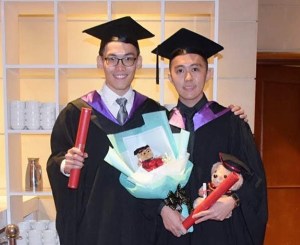


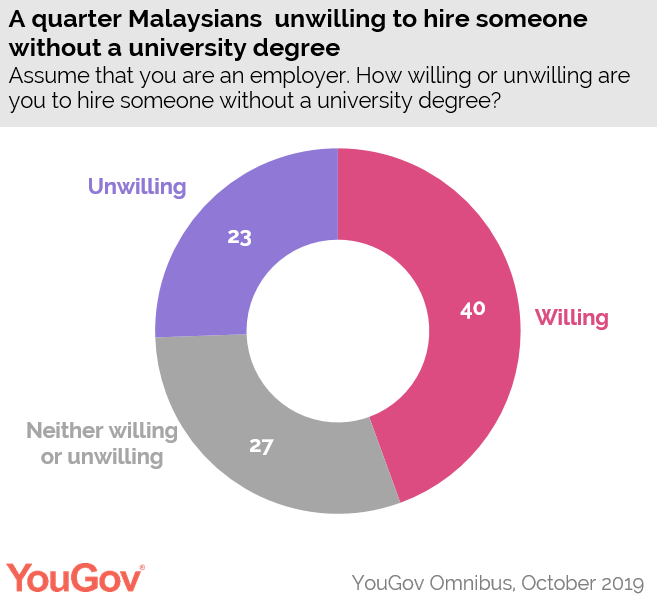

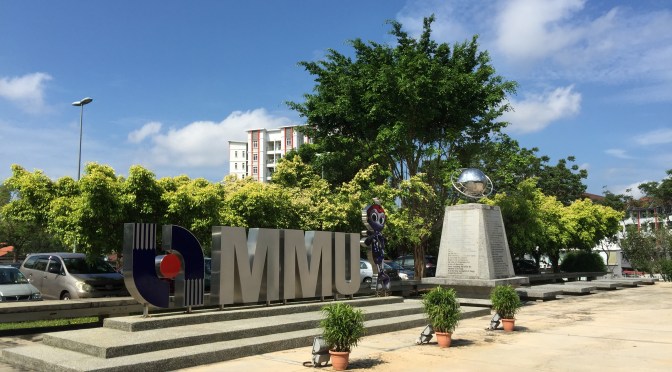
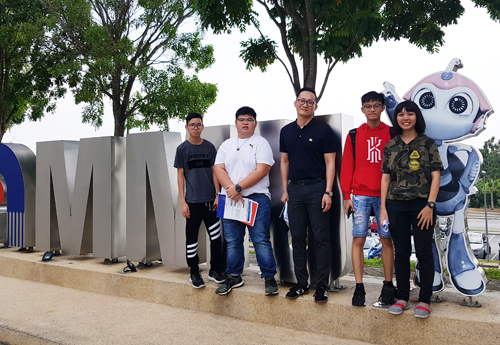
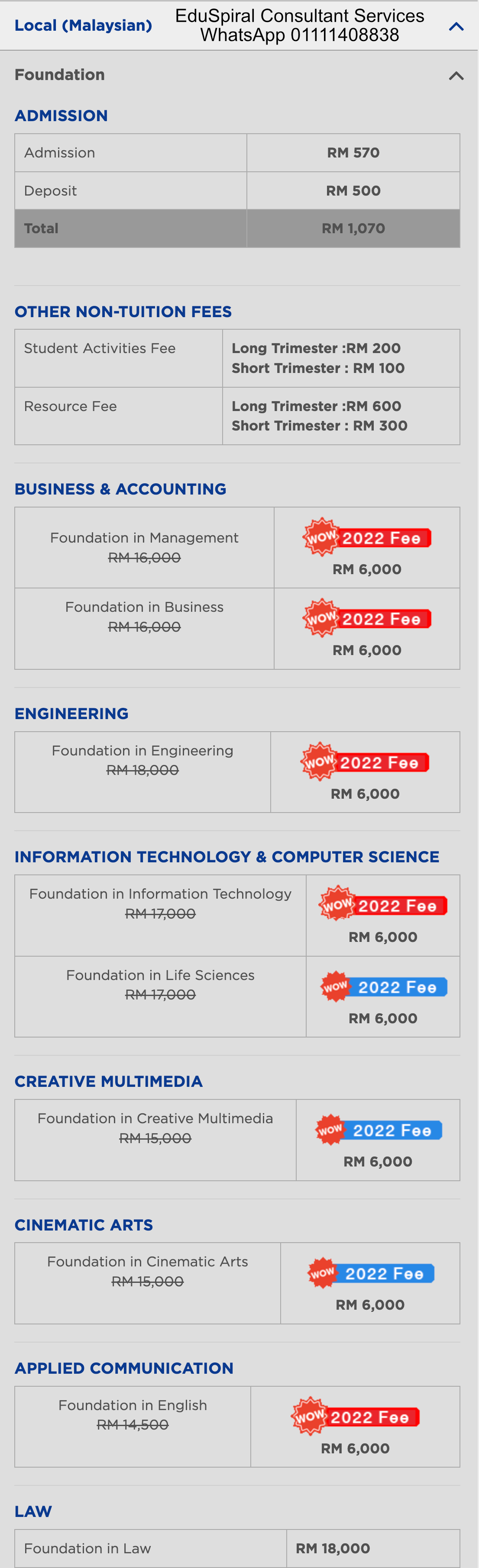
























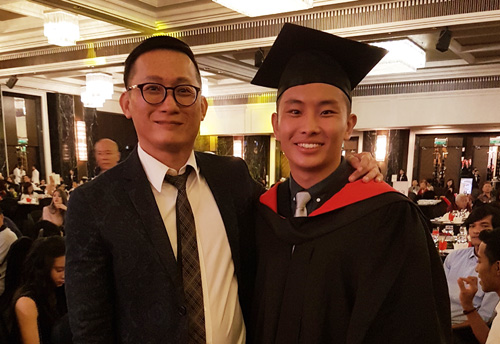




 Top Private Universities & Colleges in Malaysia