How to Choose the Best Pre-University (Pre-U) Programme after SPM or O-Levels

Choosing the Best Pre-University Programme in Malaysia to Study after SPM or O-Levels

Written by EduSpiral Consultant Services. For more information contact 01111408838

Most great things begin with a plan. Your future career and university studies should be no different. A plan will give you something to work towards. It’ll also help you make the most of the opportunities that come your way. With so many Pre-University (Pre-U) Programmes in Malaysia, it can be confusing to choose the right one that fits you.

A lot of the universities and colleges advertise frequently making many claims, and even after attending the education fairs, that can leave you more confused after listening to their counselors. There are also many agents and online education advisor websites claiming that they can help you but you need to be careful as most of them are inexperienced and tend to push you to certain universities only.

Choosing the best Pre-University Programme in Malaysia that fits you will take time and effort. You should carefully think about what are the options available to you. Look at your results, interests and budget. If you are not sure which Pre-University course to study, do ask a knowledgeable and experienced counselor and always make decisions based on evidence and facts. The decisions that you make now, can change your life forever. Based on my vast experience in the education industry, I have made up a list of the most popular Pre-University Programmes in Malaysia for you to consider.

For more information contact 01111408838

Please fill up the Form below and I will WhatsApp you and provide you with sound advise on how to choose the best private university or college in Malaysia to study at. If you do not give your mobile number or full name as in IC, your query will not be answered. Our knowledgeable & experienced courselor will send you a message on WhatsApp & provide assistance from there.

← Back

Thank you for your response. ✨

Warning
Warning
Warning
Warning
Warning
Warning
Warning
Warning
Warning

Warning.

Malaysia’s Best Guide on Choosing the Best Pre-University (Pre-U) Programme to Study after SPM or O-Levels

Our mum asked us to talk to EduSpiral as we did not know what to study. EduSpiral had helped our older sister before. He met us at Taylor’s, talked to us and then gave us a tour.
Gan twins, Foundation in Arts at Taylor’s University

Choosing the right Pre-University course after SPM or O-Levels can be confusing. There is no such thing as the “best” Pre-University or Pre-University programme. It is choosing the right Pre-U programme that fits you and your academic goals.

Sometimes students choose the Pre-University programme for the wrong reasons. Students must research carefully the type of Pre-University and its assessment style. Some students don’t perform well in the Pre-University because the assessment of the Pre-University doesn’t fit them or their command of the English language is too weak to handle the written assignments.

 To choose the best Pre-University programme to study in Malaysia, you have to ask yourself the following questions:

  1. Do you prefer exam-based or a mix of exams, assignments, course work, etc.? What is your learning style? Talk to the counselors at the private universities to find out in detail about the curriculum of the Pre-University programme to see which one best fits you.
  2. What you want to study for your degree? If you know that you want to go for Business studies, then there is no need to take the Foundation in Science. Students wanting to go for medicine, law, pharmacy or dentistry are recommended to take the A-Levels.
  3. What is your budget? A Pre-University (Pre-U) Programme will cost from RM10,000 to RM50,000 while a degree at a private university will cost from RM50,000-RM100,000 for a business course to RM130,000 for a Pharmacy course. To study overseas for degree will cost from RM150,000 to RM200,000 a year including cost of living. If this is out of your budget, then you should consider taking the STPM and going for Public University. If you do not have the finances to study at private universities, then just go for STPM. Note that STPM is extremely tough and takes 2 years of your time. You may not get the degree of your choice when entering into Public University.
  4. Do you want to continue your studies in Malaysia or overseas? If you plan to go overseas, then go for the external Pre-University programme and choose based on which country you want to go to. If you plan to continue your degree course in Malaysia, you should just take the Foundation course as it is cheaper and generally easier than the external Pre-U. To study overseas will cost from RM150,000 to RM200,000 a year at least. So, if you do not have the finances to study overseas, there is no point to go for an external Pre-University Programme. A Foundation course at a top private university in Malaysia will be sufficient.
  5. Intakes are also important for students who want to perform the best in the exams. Taking the March intake is generally a mistake as it is compressed in duration therefore making the student having to complete the syllabus in a short amount of time.
  6. When you will get the results? You must also find out when you will get your results in order to meet the application deadline for your university of choice.

Top Criteria to Consider When Choosing the Best Pre-University (Pre-U) Programme in Malaysia
I wasn’t sure which university to study at and found EduSpiral online. He provided good advise & helped me with my application. I love my university life now.
Hanson, Foundation in Science (Engineering) at UCSI University
  • Is the Pre-University (Pre-U) course popular at that college or university? Quality/reputation/ranking of the private college in Malaysia
  • Which are the awarding bodies? Are the certificates recognised for enter at all universities overseas?
  • Are the courses recognised and approved by the Ministry of Education Malaysia and the relevant external bodies?
  • Are the courses accredited by the Malaysian Qualifications Audit (MQA)?
  • Subjects offered in the Pre-University (Pre-U) Programme. Do they help you to achieve your undergraduate academic goals. Does the subject combinations allow you to enter your university and degree of choice.
  • Which are the subjects that you must take in order to enter the degree of your choice.
  • Is the class size small so that you have personal attention from the lecturer? If the fees are very cheap and the class size is big, then you may not have the attention that you need from the lecturer to guide you to do well in the Pre-University (Pre-U) Programme.
  • Do they have enough students to start a class?
  •  How many students do they have studying that Pre-University (Pre-U) Programme at that university?
  •  What is the duration of the Pre-University (Pre-U) Programme?
  • When do you get your results so that you can meet the application deadline for the overseas university?
  • Does the college or university have a dedicated department to assist students for the overseas university and scholarship applications?
  • Does the college have regular visits from overseas universities so that you can expose yourself to the various universities and ask questions?
  •  Quality of lecturers. What are their qualifications? How many years of experience in teaching?
  • Faculty contact/classes taught by full-time qualified & experienced faculty
  •  Ask your friends who have studied there for their opinion. Ask your friends who are currently studying there as well.
  • Entry requirements
  • How much money do I have to pay for the course and cost of living? Ask your parents. Note that you will need to have enough to pay the tuition fees as well as your cost of living. (tuition, hostel, food, transportation, etc.)
  • How much are the tuition fees? Does it include the external exam fees and other fees?
  • How much is on-campus accommodation?
  • How much is off-campus accommodation? Note that it might be cheaper to find off campus accommodation on your own with friends. Is the accommodations near eateries, banks, entertainment, public transportation, etc.?
  • What is the student culture at the university? (English-speaking environment, ambitious, serious about studies, lifestyle or party university, etc) The language spoken mostly at the college by the students may also matter if you don’t know Mandarin or BM or English. If most of the students speak Mandarin at that university then it will not help you to improve your English. Having a good command of the English language helps you to get good jobs and promotions.
  • What are the Extra-curricular activities available? (Student organisations, clubs, sports, etc.)
  • Public vs. Private (STPM is tougher and choice of course & university is determined by the government)

Common Factors in Choosing the Best College or University for the Pre-University Programme in Malaysia
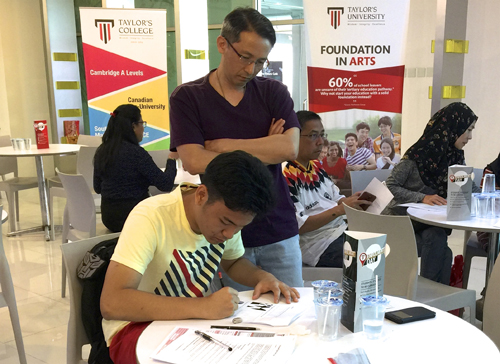
First, EduSpiral took me around to a few universities and advised me on which course that would suit me. Finally, after deciding, EduSpiral met up with me and my Dad to help me to register.
Jia Jin, Foundation in Design at Taylor’s University

Here’s a list of common criteria in choosing a top private university in Malaysia for the Pre-University (Pre-U) Programme:

  • What type of university do I like? (Large, medium, small, city, suburbs, or outer city) Some people like small universities where you get a community feel while others like large university campuses where they get to meet lots of people.
  • The size of the university also matters to some people as some prefer a small and friendly university environment where you know everyone’s names. Some may prefer a medium sized university where there are more students to interact with and more facilities to use like a bigger library, student centre, computer labs etc.
  • In large universities you might feel lost but there will be more facilities like a football field, gym, swimming pool, basketball courts, etc. You just need to understand your personality and then choose the type of university that fits you.
  • If you are a sports person, you might want to find one with a football field, basketball courts, gym or swimming pool.
  • Safety at the university campus and community.
  • Know yourself, if you like city life, don’t choose a university far away from the city even though the facilities are great. However, if you have a discipline problem in having too much fun, studying away from the city may be a good choice
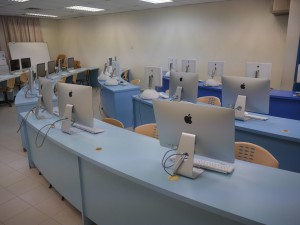
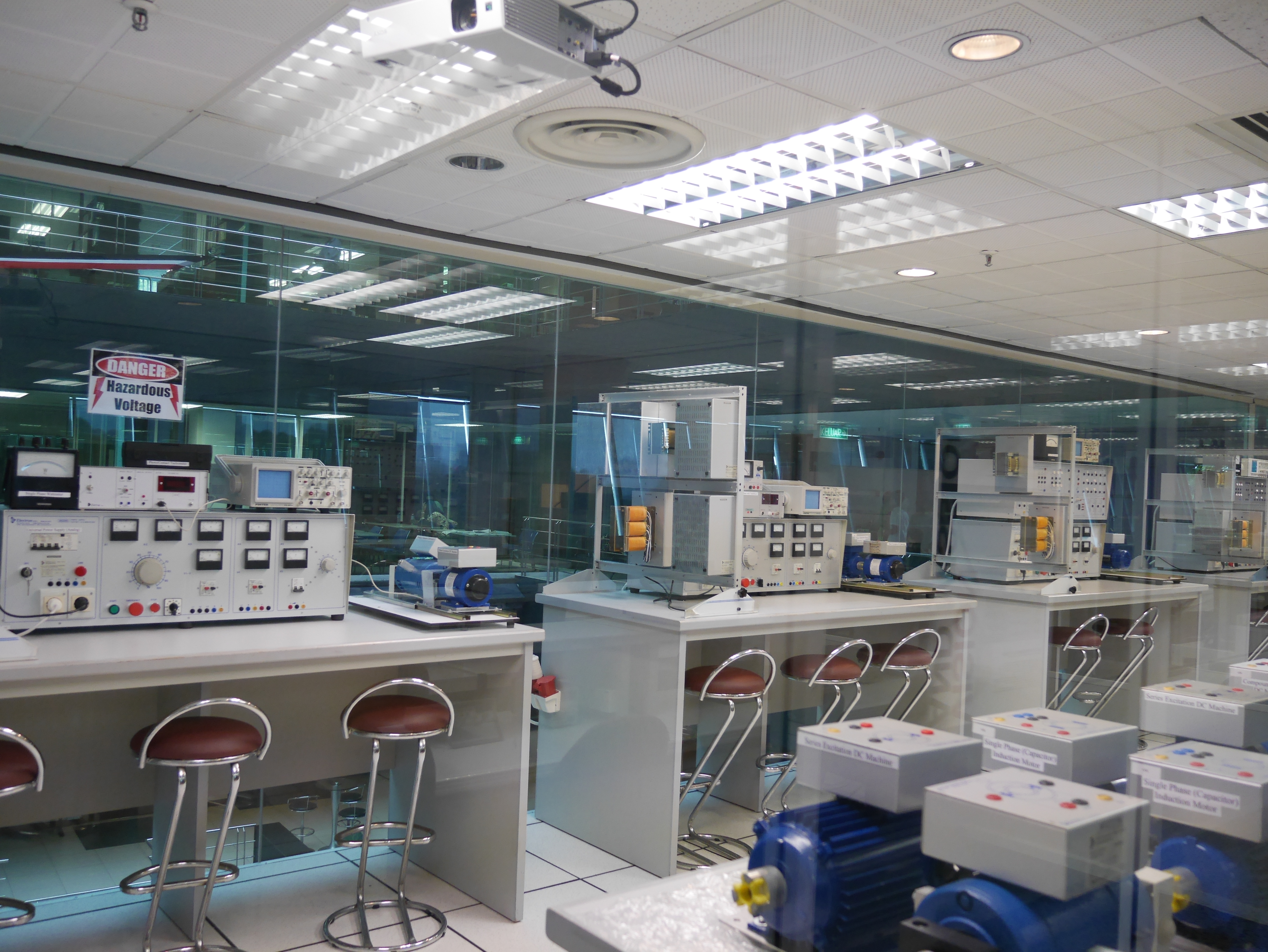
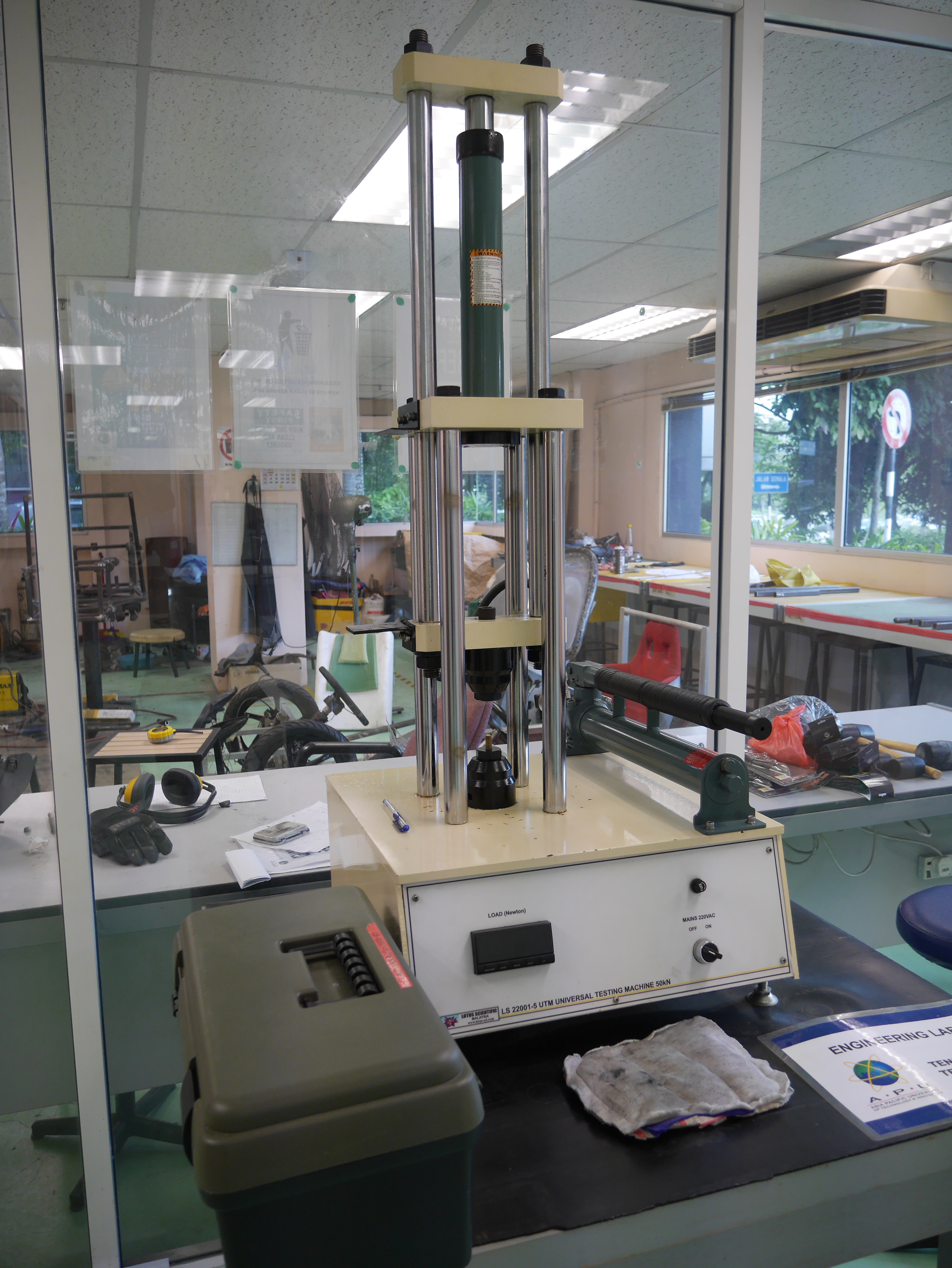
  • What are the facilities and resources offered at the university? – engineering labs, computer labs, computers, science labs, sports facilities, student centre, job placement centre, etc. Note – You should expect to get what you pay for.
  • If you like sports, you may not want to choose a university without a basketball court or gym.
  • Is it near public transportation? This is important if you do not have transportation.


Duration of the Pre-University Programmes in Malaysia

EduSpiral picked us up from Subang Airport to take us to visit the universities & advised on which is the best for mass communication.
Hui Lan, Mass Communication at KDU University College

The duration of the Pre-University Programme vary from programme to programme and takes about 8 months to 24 months to complete.

  • Foundation programmes by private universities in Malaysia – Duration is 12 months
  • Sijil Tinggi Persekolahan Malaysia (STPM) Malaysia – Duration is 18 months
  • Matriculation Certificate, Ministry of Education Malaysia – Duration is 12 months
  • University of Cambridge International Examinations (CIE) UK A-Levels – Duration is 12-18 months
  • Edexcel International Advanced Level UK A-Levels – Duration is 12-18 months
  • South Australian Matriculation (SAM) or SACE International – Duration is 10 months to 18 months depending on intake
  • Western Australian Matriculation (AUSMAT) Duration is 7 months to 10 months

Entry Requirements of Pre-University Programmes in Malaysia

General Entry Requirements for all Pre-University Programmes in Malaysia:

  • SPM or ‘O’ Level or equivalent – 5 credits. Additional requirements may include credits in English, Mathematics or Science depending on the Pre-University Programme or degree you intend to take.
  • Medical & Pharmacy degree programmes will require at least 5Bs in SPM including the Science subjects while Engineering would require credits in Physics & Maths.
  • Students must have passes in BM and Sejarah in SPM
  • Note that you will need to take into account the degree requirements for certain courses for SPM subjects.

Subjects for Pre-University Programmes in Malaysia

The number of subjects for the Pre-University Programmes in Malaysia vary from 3 to 12. When choosing the subjects, it is important to take those that would be relevant to the intended degree course. It is important to choose the right combination of subjects which would be related to your degree programme.

For example, if you take up Arts subjects, you will not be able to continue into a Biotechnology degree course.

Acceptance & Recognition of the Pre-University Programmes in Malaysia

As long as the Pre-University Programme has been accredited by the Malaysian Qualifications Agency (MQA), it will be accepted into any private university in Malaysia and the external Pre-University programmes such as A-Levels, AUSMAT, SAM, etc are accepted into universities overseas. The Internal Foundation Programmes of Private Universities in Malaysia are generally not accepted for entry by universities overseas therefore you have to take this into consideration when making your decision.

The Different Types of Pre-University Programmes for SPM/O-Level School Leavers

EduSpiral analysed my personality and results, subsequently advised me on choosing the right course as well as the best university that fit me.
John Lai Wai Hong, Graduated in Mass Communication from KDU University College

Choosing the right Pre-University course after SPM or O-Levels can be confusing. There is no such thing as the “best” Pre-University programme. It is choosing the right Pre-U programme that fits you and your future goals. We have come up with a list of the Top Ten best Pre-University programmes to study in Malaysia,

Below is a list of pre-university programmes offered by top universities & colleges in Malaysia:

  1. Foundation programmes by private universities in Malaysia
  2. Sijil Tinggi Persekolahan Malaysia (STPM) Malaysia
  3. Unified Examination Certificate (UEC)
  4. University of Cambridge International Examinations (CIE) UK A-Levels
  5. South Australian Matriculation (SAM) or SACE International
  6. American Degree Transfer Program (ADTP)
  7. Edexcel International Advanced Level UK A-Levels
  8. Western Australian Matriculation (AUSMAT)
  9. Matriculation Certificate, Ministry of Education Malaysia
  10. Canadian International Matriculation Programme (CIMP)

There are many different Pre-University programmes available in Malaysia. I will list some of the most popular ones.

Summary of the Best Pre-University Programmes in Malaysia

Top Foundation Programmes in Malaysia

Students after SPM or O-Levels can consider taking the Foundation Programmes at top private universities in Malaysia. The Foundation Programmes are 1 year and is cheaper compared to the external Pre-University Programmes.

Many private higher educational institutions in Malaysia, have developed their own internal university foundation programmes. Students who know what they want to study can just go for the Foundation at the university offering the degree of interest. It is cheaper, easier and a faster way to continue to completing the degree in Malaysia.

Duration 12 months
Number of subjects 12-15. Varies depending on the programme and university (usually combination of compulsory, elective & MPU subjects)
Recognition & Accreditation Malaysia Qualification Agency (MQA)
Assessment Assessment for Foundation programmes in Malaysia will vary from university to university. It will contain a mix of coursework, assignments, quizzes and exams. The coursework could cover different assessment tasks such as projects, assignments, laboratory work, presentations, tests, and others as assigned throughout each semester. The final examination is conducted at the end of each semester. 
Price RM8,000 – RM25,000
Advantages
  • Tailored specifically towards the degree course offered by the university
  • Shorter duration compared to the STPM and A-Level programmes
  • Generally, cheaper than most Pre-University (Pre-U) programmes
  • Most students find it easier compared to other Pre-University programmes
  • English-speaking environment which would help you to improve your language skills (depends on which university you choose)
  • The course is taught and marked by Malaysians who would understand the language skills of Malaysian students. Therefore, students who are weak in the English language should choose the Foundation and take the opportunity to improve their language skills during the Foundation programme.
Disadvantages
  • Depending on which Foundation, it may be difficult to change courses if you decide to pursue a different field
  • May not be accepted by other private universities for your undergraduate degree
  • May not be accepted into universities overseas


The Best A-Level Programmes in Malaysia

EduSpiral advised me to go for the best college for A-Levels in order to fulfil my dream of entering an Ivy League university in the USA. He met us at Taylor’s College Subang to talk to us and tour the college.
Gi Hang, A-Levels at Taylor’s College

The A-Levels is quite popular however it is quite tough and not for those who do not have the discipline or motivation to complete it. I would recommend the A-Levels for those intending to pursue medicine, dentistry, law or pharmacy or who are planning to go overseas. The A-Levels is internationally-recognised for admission into universities worldwide including professional courses.

The A-level syllabuses are divided into Advanced Subsidiary (AS) and Advanced Two (A2) levels, each contributing 50% towards the final A-Level grade. AS Level is the first half of the course and forms the foundation of A-Level. A2 Level is the second part of the syllabus and covers more difficult topics.

Students who have good results in SPM/O-Levels and prefer exam-oriented assessment rather than coursework or assignments, should go for the A-Levels.


Country of origin United Kingdom (UK)
Duration 12 – 18 months
Number of subjects 2- 4. Students may choose the following subjects:

  • Mathematics
  • Further Mathematics
  • Chemistry
  • Physics
  • Biology
  • Business
  • Economics
  • English Literature
  • Law
  • Accounting
Assessment It is 100% external examination-based. Both the ‘A2’ and ‘AS’ level examination sessions occur twice a year, in June and November, with some subjects only available in June or November. Results are issued in August and February respectively.
Awarding Body
  • University of Cambridge International Examinations (CIE) or
  • Edexcel International Advanced Levels (Modular structure)
Price RM20,000 – RM40,000
Advantages
  • Commonly considered the ‘Gold Standard’ of Pre-U programmes and is globally accepted (UK, US, Singapore, Australia etc.)
  • Accepted by universities worldwide
  • General subjects therefore the choices to enter degree programmes are wide depending on your subject combination
Disadvantages
  • Higher cost compared to most Pre-University (Pre-U) programmes
  • Longer duration than most Pre-University programmes
  • The A-Levels is rigorous and requires students who have strong academic results in SPM or O-Levels to do well in it
  • Subjects are general therefore students who have taken it may not be sure of what they want to study at degree level
  • If your command of the English language is weak then you may find this course very challenging
  

Australia Matriculation Programmes in Malaysia

I met EduSpiral a few years back & although I wanted to pursue his advise, my parents asked me to take STPM. I wasn’t satistied with my STPM results and finally, EduSpiral helped me to understand clearly that SAM was the best Pre-U that suit me.
Khalil, South Australian Matriculation (SAM) at Taylors College

There are 2 different Australian Matriculation programmes in Malaysia which are the:

  • South Australian Matriculation (SAM) or SACE International
  • Western Australian Matriculation (AUSMAT)

There are some slight differences between the two programmes and it is important for students to research and compare to see which on fits them.

I would not advise students to go for the March intake as it is an intensive programme which is shorter in duration where the exam is in November. Many students with good SPM results have not done well after taking the March intake for AUSMAT.


Country of origin Australia
Duration 7 – 18 months
Number of subjects 5 subjects (including English)
Assessment
  • South Australian Matriculation (SAM) or SACE International: 70% coursework (e.g. tests, research papers, assignments) and 30% exams
  • AUSMAT: 50% coursework (e.g. tests, research papers, assignments) and 50% exams
Awarding Body South Australian Certificate of Education (SACE)
Price RM21,000 – RM40,000
Advantages
  • Recognised for entry by most countries overseas
  • Shorter duration compared to the A-Levels and STPM
  • Continuous assessment helps to accumulate marks towards your final grade, instead of depending on a particular exam or coursework
  • Students who have a strong command of the English language & like assignment based courses would do well in the Australian Matriculation
Disadvantages
  • Very high entry requirements for competitive programmes like Medicine, Pharmacy, Dentistry, etc.
  • Students must do well consistently in all assessment types to obtain a high final grade
  • Self-directed learning may not be suitable for everyone
  • The March intake for AUSMAT is short and too intensive. Many students do not do well in it

Canadian International Matriculation Programme (CIMP) in Malaysia

The Canadian Pre-University (CPU) or CIMP is the final year of the secondary school programme in Ontario, Canada. It is designed based on the course guidelines and standards of the Ministry of Education and Training of the Ontario Province.

Country of origin Canada
Duration 12 – 15 months
Number of subjects 6 subjects which include one English subject, that is, either ENG4E or ENG4U. The other subjects are Business, Computer Studies, Mathematics, Science and Social Science.
Assessment 70% coursework (e.g. tests, research papers, assignments) and 30% final exam
Awarding Body Ontario Secondary School Diploma (OSSD)
Cost Between RM13,000 – RM35,000
Advantages  

  • Focuses on interactive learning as opposed to only academic
  • Progressive accumulation of marks towards your final grade instead of depending on one final exam or coursework
Disadvantages
  • Public speaking and debate may not be suitable everyone (requirement for CPU)
  • Very high entry requirements for competitive programmes like Medicine, Pharmacy, Dentistry, etc.
  • Students must do well consistently in all assessment types to obtain a high final grade


American Degree Transfer Programme (ADTP)

Students after SPM or O-Levels will enter directly into Year 1 of the degree program for a total of 4 years. The American Degree system after SPM or O-Levels is

  • Year 1 (Freshman) – ADTP in Malaysia
  • Year 2 (Sophomore) – ADTP in Malaysia
  • Year 3 (Junior) – University in the USA
  • Year 4 (Senior) – University in the USA

The American undergraduate degree provides an education that emphasizes problem-solving, critical thinking and decision-making skills. American education provides a flexible, holistic and well-rounded approach to education. It produces graduates with strong critical and analytical thinking skills with the ability to put knowledge into action.

Country of origin USA
Duration 48 months. After SPM or O-Levels, students will enter into the American Degree Programme for 2 years before transferring their credits to a university of their choice in the USA for the final 2 years.
Number of subjects Students will take about 40 subjects (110 – 140 credit hours) in total during their four years of studies, where 20 subjects (60 credit hours) are completed at ADP and the rest are completed in the USA. Students will normally take about 4-5 subjects each semester.
Assessment Students are assessed through exams, coursework, assignments, presentations, quizzes and research papers. The percentage of exams and assignments varies depending on the subject you are taking.
Grading System Final results will be a single score, the Grade Point Average (GPA) on a 0.0 to 4.0 scale. The highest grade is an A, which equals 4.0 The final result is the CGPA (cumulative grade point average) which is also on a 0.0 to 4.0 scale, and is your GPA obtained from all subjects taken.
Cost RM30,000 – RM60,000 for duration of 2 years of study in Malaysia. Cost of studying in the USA would range from RM150,000 to RM200,000 per year including cost of living.
Advantages
  • The curriculum is broad based and flexible.
  • Students are allowed to switch major if they decided to do so even after 2 years of studies.
  • Students are required to take courses outside of their major (commonly known as the liberal arts education philosophy).
  • Continuous learning and testing system (70% coursework, 30% final examination) where students are involved in projects, teamwork, presentation, extra- and co-curricular activities.
  • The education is learning-driven instead of exam-driven. Students are groomed to be all rounded team players with strong critical thinking and communication skills.
  • Students are expected to speak, ask, and challenge your instructors during discussions in / outside of class.
Disadvantages
  • Students must transfer to the USA for the final part of the studies. If you complete the ADTP and decide not to go to the USA, it is not accepted for entry at any university in Malaysia.
  • Students who prefer exam-based programmes will find the ADTP challenging.

Diploma Course at Private Universities in Malaysia

Students who are sure of what they want to study can go for a Diploma course. If you are still not sure, then you should go for a Pre-University programme. The diploma generally is more practical while a degree course is more theoretical and academic.

After completing your diploma, you can go find a job or continue on to Year 2 of the degree if your college or university offers the degree or you can transfer credits into another university. If you transfer to another university, you may not be able to get the full exemptions to enter into Year 2 of the degree.

Duration 24 – 30 months
Number of subjects 25-35 subjects (May include internship)
Assessment A mix of Assignments, Coursework, and written examination percentage. The diploma programme provides students with relevant, interesting, stimulating and practical experience via a variety of teaching and practical techniques.

Students will experience different dynamic learning processes are employed in the delivery of a diploma programme, such as lectures, tutorials, computer lab work, team-based project, real life system development, presentations, independent projects supervised by supervisors from university lecturers or industry experts. The learning is very much practical oriented.

Recognition  Accredited by the Malaysian Qualifications Agency (MQA)
Cost RM15,000 to RM50,000
Advantages
  • The Diploma is technically not a pre-university programme; it is one level below undergraduate degree
  • Needs at least 3 credits in SPM to enter the Diploma programme
  • Students may apply for the PTPN Loan for Diploma courses. There is no PTPN Loan for Foundation & External Pre-University programmes
  • You will study the subjects that you are interested in. The subjects are specific to your field of interest.
  • The course is more practical with mixed assessment.
  • Upon completion of the Diploma, you may choose to start work or continue on to Year 2 of the related degree.
Disadvantages
  • You cannot change to a different course for degree level
  • You may lose some credits when transferring to a different university


Sijil Tinggi Persekolahan Malaysia (STPM)

I was planning to study in IPTA after STPM but then my parents talked to EduSpiral. They realised the importance of studying at a top award winning university for computing.
Mark Siew, Software Engineering at Asia Pacific University

Sijil Tinggi Persekolahan Malaysia (STPM) is Malaysia’s version of the UK’s GCE A-Levels and is a Pre-University course recognised for entry into public universities (IPTA) in Malaysia. The STPM is also accepted for entry into private universities in Malaysia and overseas universities. The STPM is acknowledged as one of the toughest exams in the world.

If you had scored high is SPM, you are eligible for scholarships for Foundation programmes at top private universities. The Foundation programmes are easier and so if you score for Foundation, you can get more scholarships to cover part or all of your degree studies.

Problem is if you take the STPM which is so much tougher than the Foundation course, although Form 6 is free, but if you don’t score in STPM, you have no scholarship for your degree studies and in the end have to pay all of the fees for your degree studies in private university.

The STPM is extremely tough and if you do not do well, you would have wasted 2 years of your life and time is money. The earlier you graduate and join the work force, the more work experience you can gain and add this to your resume where it translates into higher salary. If you take a diploma at a private university in Malaysia, you would have finished it at the same time you would have taken to complete Form 6.

You need a lot of discipline and good teachers in order to do well in the STPM. If you have alright results for your SPM, don’t expect a miracle in the STPM as it is 20 times tougher than the SPM. If you can afford, choose an easier way through the 1-year Foundation offered at top reputable Private Universities in Malaysia.

Country of origin Malaysia
Duration 18 months (+6 months if you intend to apply to public universities)
Number of subjects Between 4 – 5 (including General Paper)
Assessment
  • Students will go through a school-based assessment with a weighting of 20-40% of the final score and a centralised examination with a weighting of 60-80% of the final score (The weighting varies according to subjects).
  • Nevertheless, School Based Assessment (SBA) cannot be repeated and repeaters are required to sit for an alternative written paper in place with SBA.
  • The curriculum is divided into three parts based on topic areas. Each part will be taught and studied in either the first, second or third term.
  • You will take the examinations at the end of each term (3 in total). One term is 6 months. Students who are not satisfied with their results for the first two terms can retake the examinations at the end of the third term.
  • Students’ assessment will be carried out each term with the results being released at the end of each respective term. The overall STPM results will be based on the best combined results of the three terms.
Grading Final results will be a single score, the Overall Subject Grade Point. Grades are given from A to F for each subject taken, which corresponds to a grade point. The Overall Subject Grade Point is the average of the top four subjects with the maximum score of 4.0.
Cost Less than RM1,000
Advantages
  • A Pre-University course recognised for entry into public universities (IPTA) in Malaysia
  • An affordable Pre-University programme
  • Recognised for entry into universities worldwide
  • With School Based Assessment, teaching and learning are integrated with assessment. Students are allowed to improve on their first term and second term results by retaking these term examinations at the end of the third term. Students who do not obtain satisfactory results for the third term may also re-sit it.
Disadvantages
  • The STPM can be very challenging for students who are weak academically or who do not prepare themselves well
  • Longer duration compared to most Pre-University courses in Malaysia
  • Heavy weightage of exam-based assessment
  • As soon as you enter Lower 6 you will have to hit the books because your first exam will be in December and you will have not much time to study and the teachers do no have enough time to cover the material as well. There is no rest as you will need to keep studying  the exams every 6 months.
  • To enter into most private universities, students must achieve at least a CGPA of 2.00 or at least 2 Principal Cs in the relevant subjects. A C- is not a principal and some universities do not accept the Pengajian Am as entry into the university.
  • STPM requires you to take in too much information in 1.5 years. That in itself shows the inadequacies of a system which doesn’t give enough time for students to consume the information required. Furthermore, STPM needs a lot of study time in order to score well. If you are not ready to commit the time and effort, you should consider other options.
  • From the time you enter Form 6 till the exam and getting into IPTA would be 2 years. If you had taken a diploma, you would have already completed it.
  • English language not emphasized so you do not gain the all important language and communication skills needed to succeed in the workforce
  • The government chooses the course and university (IPTA) for you. Therefore, after 2 years, you may not get to study what you want.

Malaysian Matriculation Programme (Matrikulasi) and Asasi IPTA

Program Matrikulasi Malaysia) is a one-year pre-university preparatory programme offered by the Ministry of Education, Malaysia. Starting 2005, the selection process for the programme is done through a race-based quota system, where 90% of the places are reserved for bumiputeras students while the remaining 10% are open for non-bumiputeras.

Prior to 2006, only one-year programmes are being conducted. Since then, four different programmes are offered. They are One Year Programme (PST, short for Program Satu Tahun in Malay), Two Year Programme (PDT, short for Program Dua Tahun in Malay), Technical Programme and Accounting Programme. Mathematics, physics, biology, chemistry and informatics science subjects are conducted in English. Other compulsory subjects are English, Dynamics Skills (Kemahiran Dinamika), Islamic/Moral Study and Information Technology. Students are also required to take up a co-curricular activity of their choice (sports/games, societies/clubs or marching band) during the programme.

Country of origin Malaysia
Duration 12 months (Program Satu Tahun) – 24 months (Program Dua Tahun)
Number of subjects Students must study at least six subjects over two semesters (one year). There is one intake a year, usually in March or April. The matriculation programme in Malaysia offers three streams – science, accountancy and technical streams
Assessment Combination of classroom assignments and examinations
Grading System Your GPA is determined from the grade values associated with the grades that you obtain for each subject every semester. All grades are internally assessed.
Cost RM600
Advantages
  • Extremely affordable
  • Good prospects to gain admission into public universities
  • Wide range of subjects to choose from
Cons
  • Recognised for entry into universities in Commonwealth countries
  • Has limitations, such as ‘Program Dua Tahun’ only open for bumiputras
  • Fewer options of degree courses as the subjects are divided into ‘streams’

Comparison Chart of the Top Pre-University (Pre-U) Programmes in Malaysia

Pre-U Programme Brief introduction Duration Assessment Subjects
Cambridge A-Levels           Awarded by Cambridge Advanced Level Certificate                                                                               The Cambridge GCE A Level is the general certificate of education qualification through examinations by the University of Cambridge International Examinations (CIE).The GCE A Level programme places emphasis on knowledge, understanding and reasoning abilities and skills. Duration is 12 or 18 months                Intakes in January, March and July                                                                                                Exams in June & November Assessed totally through external examinations. The examination papers are set and marked by examiners from the University of Cambridge International Examinations (CIE).  You can now sit for the A-Level examination in two phases:  at Advanced Subsidiary Level (AS) and at Advanced Two (A2) Level. Students unsatisfied with any of their individual units must re-sit the entire level, ie either AS or A2, and only the last score will automatically be taken into account. No. of Subjects: 3-4                                                SciencePhysics, Chemistry, Biology, Mathematics, Further Mathematics and Economics.Arts

Law, Mathematics, Economics, History, Accounting, English Literature and Business Studies.

LONDON EDEXCEL INTERNATIONAL – A-Levels          The Qualifications & Curriculum Authority (QCA) in the UK only recognises the London A-Levels. The London A-Levels is under the tight scrutiny of the QCA for all preparation, distribution and marking of the examination papers. For the London A-Levels, there is a centre in every region to facilitate communication with Edexcel UK, in addition to ensuring that the London A-Levels centres meet the standards set by the QCA. Duration is 12 or 18 months      Intakes in January, April and July         Exams in January & May/June 100% external examination. n Modular A-levels, each A-Level subject is subdivided into SIX UNITS where each unit is separately assessed in stages. In the Staged assessment it is divided into stages and in each stage the candidates get to select any number of the six units to be assessed in each examination session. An assessment is done every six months and the number of units selected for each examination session is entirely up to the candidate. The best grades for all the 6 units will be added together for a full A-Level final grade. No. of Subjects: 3-4

Mathematics

Further Maths

Biology

Chemistry

Physics

Economics

Accounting

Law

Business

South Australian Matriculation (SAM) or SACE International                                                               Awarded by South Australian Certificate of Education (SACE) SAM offers  – Proven learning techniques tailored to university study- A balanced choice of subjects leading to a variety of university degree courses- A mixture of school assessments and external examinations that assess students fairly

– The flexibility for students to complete the program over an extended period

– An opportunity for students to increase their tertiary entrance rank by repeating subjects without penalty.

Duration is 10 – 18 months with intakes in January, April or August Balance of continuous internal assessment and a final external examination. Students are provided with a university aggregate score (out of 90 marks) and a tertiary entrance rank (TER), a percentile ranking that is recognised without modification by all tertiary selection agencies in Australia. Students must complete 5 subjects, including 1 subject from List 1 and at least 1 subject from List 2. In addition, students must achieve a satisfactory score (10/20 or better) in either English as Second Language Studies, or English Studies. No. of Subjects – 6                                       • Accounting
• Biology
• Chemistry
• Economics
• English as an Additional
Language
• Legal Studies
• Mathematical Methods
• Nutrition
• Physics
• Psychology
• Research Project B
• Specialist Mathematics
Australian Matriculation (AUSMAT)  Awarded by Western Australian Certificate of Education (WACE) The AUSMAT is the Year 12 curriculum of Western Australia. The Curriculum Council of Western Australia, on behalf of the Government of Western Australia, overseas the quality implementation of the curriculum. Duration is 7-10 months with Intakes in January & March

Exam in November

50% internal continuous assessment(moderated by the Curriculum Council)and 50% external final examinations (TEE)

Provides opportunities to use multiple assessment techniques to help students progress – continuous assessment may include topic tests, quizzes, assignments, investigations, research and exams.

Flexibility of calculating a student’s score based on Best-4 or Best-5 subjects .

No. of Subjects – 5                                              Required to take English as an Additional Language (EAL/D) or English The remaining subjects must include one subject from each from List 1 and List 2:LIST 1 – German, English, Economics,  LIST 2 – Accounting and Finance, Biological SciencesChemistry, Computer Studies

Mathematics, Mathematics : Specialist Physics

Canadian International Matriculation Programme (CIMP) or International Canadian Pre-University (ICPU)                               Awarded by Ontario Secondary School Diploma (OSSD) Offered according to the requirements of the Ontario Ministry of Education, students to graduate with the Ontario Secondary School Diploma (OSSD) In the CIMP, they focus on your development in the following areas:- Effective communication; using English as the language   for international communication- Independent learning skills; learn how to learn

– Effective transition from secondary to tertiary education

– Talent and leadership development

– Community outreach

Duration is 10 months.               Intakes in January, March and July                Exam in May & November Assessment will be 70% coursework and 30% final examinations. Coursework includes evaluations conducted throughout the programme; quizzes, assignments, projects and class tests. The final assessment will be in the form of an examination.In addition, to graduate, students must sit for anexternal literacy test administered in March, perform Ten (10) hours of recognised Community Involvement.  No. of Subjects – 6                                            Business, Computer Studies, Mathematics, Science, Social Sciences & English Courses.
Internal Foundation at Private Universities in Malaysia -Internal qualification  It is cheaper and easier than the external Pre-University programmes. Students intending to continue on in the particular university can choose to go for their internal Foundation course. Its accredited by MQA & can transfer to other private universities in Malaysia for the relevant degree. Duration is 12 mths or 3 semesters with intakes in Jan, April, July, August or October depending on the university Assessments comprise coursework, class tests and examinations. Internally assessed by the private university. No. of Subjects – 12-15

Subjects depends on the type of Foundation

 American Degree Program (ADP)  -Direct entry into Year 1 of degree continue to Year 2 in Malaysia and then transfer to a university in the USA for the final 2 years- Holistic education Duration is 2 years in Malaysia and 2 years in the USA Assessment includes quizzes, assignments, projects and class tests. Students will take general studies for the first 2 years before specializing in their major for the final 2 years

EduSpiral Consultant Services – Your Online Education Advisor

EduSpiral Consultant Services is a full-service educational counseling & planning firm that guides students from across Malaysia to help them choose the right course and university.

EduSpiral Consultant Services represents the best colleges and universities in Malaysia offering a wide range of choices for students to choose from. These colleges and universities offer value for money in the quality of education and excellent facilities that you get.

These universities and colleges are chosen by EduSpiral because they represent the best in their fields in Malaysia and affordable. EduSpiral provides in-depth information and counseling on their courses so that students are able to make the right choice.

If you are still not sure what to study, please contact us and we will send you a free EduSpiral Career Assessment FormEduSpiral Consultant Services has helped hundreds of students to choose the right course and enter into the university of choice. Please do contact us should you need any advise.

Please contact us for more details.

Please fill up the Form below and I will WhatsApp you and provide you with sound advise on how to choose the best private university or college in Malaysia to study at. If you do not give your mobile number or full name as in IC, your query will not be answered. Our knowledgeable & experienced courselor will send you a message on WhatsApp & provide assistance from there.

← Back

Thank you for your response. ✨

Warning
Warning
Warning
Warning
Warning
Warning
Warning
Warning
Warning

Warning.

Which is the Best Pre-University (Pre-U) Programme to Study after SPM or O-Levels in Malaysia?

Best Pre-University (Pre-U) Programmes in Malaysia

Written by EduSpiral Consultant Services. For more information contact 01111408838

There are a number of different Pre-University programmes in Malaysia that’s available to you. You should find out more about various pre-university programmes are available at top private colleges & universities before making your decision. You need to understand yourself, your learning style, career goals, academic goals and  capabilities in order to decide which Pre-University course would best suit you.

A Pre-University Programme is a “transition” course between secondary school and university degree studies. The Pre-University Programme is general and equips students with the knowledge and skills to handle the rigours of an undergraduate programme. Choosing the right Pre-University Programme is an important step after SPM or O-Levels. The best Pre-University Programme is the one that matches your learning style, budget, academic & career goals, and soft skills. EduSpiral Consultant Services  is here to help you narrow down your choices with sound professional advise.

For more information contact 01111408838

Please fill up the Form below and I will WhatsApp you and provide you with sound advise on how to choose the best private university or college in Malaysia to study at. If you do not give your mobile number or full name as in IC, your query will not be answered. Our knowledgeable & experienced courselor will send you a message on WhatsApp & provide assistance from there.

← Back

Thank you for your response. ✨

Warning
Warning
Warning
Warning
Warning
Warning
Warning
Warning
Warning

Warning.

The Best Pre-University (Pre-U) Programmes in Malaysia to Study after SPM or O-Levels

“EduSpiral gave me advise over phone, Facebook, Skype and even took me to visit the universities. He spent a lot of time to help me make my decision on what to study and at which university.”
Ban Moon (Left), Scored 3As in the A-Levels at HELP Academy

A Pre-University programme is a preparatory course for students after SPM or O-Levels. The Pre-University programme at private colleges in Malaysia acts as a ‘bridge’ between secondary school and university, equipping you with proper knowledge and learning skills so that students will be able to handle the challenges of an undergraduate degree course.

Students who are not sure of what to study after SPM or O-Levels can contact EduSpiral Consultant Services to help guide you to choose the right course and university. There are many Pre-University programmes that you can go for after SPM or O-Levels so it can be confusing for you to choose the right one.

Choosing the right Pre-University course that fits you would mean that you have to ask yourself which methods of assessment best suit you? Exams, coursework, practicals, group projects and presentations could all be in the mix in differing quantities. Every Pre-University course in Malaysia will include a percentage of the breakdown of assessment. You need to understand yourself and capabilities in order to decide which Pre-University course would best suit you.

Below is a list of pre-university programmes that’s popular in Malaysia at top universities & colleges:

  1. Foundation programmes by private universities in Malaysia
  2. Sijil Tinggi Persekolahan Malaysia (STPM) Malaysia
  3. Unified Examination Certificate (UEC)
  4. University of Cambridge International Examinations (CIE) UK A-Levels
  5. South Australian Matriculation (SAM) or SACE International
  6. American Degree Transfer Program (ADTP)
  7. Edexcel International Advanced Level UK A-Levels
  8. Western Australian Matriculation (AUSMAT)
  9. Matriculation Certificate, Ministry of Education Malaysia
  10. Canadian International Matriculation Programme (CIMP)

Duration of the Pre-University Programmes in Malaysia

I talked to EduSpiral on Facebook to find out which is the best place to study A-Levels to help me achieve my goals. I am glad I did.
Gan Wei Cheng, 3A* in A-Levels at KDU College Penang and now JPA Scholarship at U. of Sydney for Pharmacy

The duration of the Pre-University Programme vary from programme to programme and takes about 8 months to 24 months to complete.

  • Foundation programmes by private universities in Malaysia – Duration is 12 months
  • Sijil Tinggi Persekolahan Malaysia (STPM) Malaysia – Duration is 18 months
  • Matriculation Certificate, Ministry of Education Malaysia – Duration is 12 months
  • University of Cambridge International Examinations (CIE) UK A-Levels – Duration is 12-18 months
  • Edexcel International Advanced Level UK A-Levels – Duration is 12-18 months
  • South Australian Matriculation (SAM) or SACE International – Duration is 10 months to 18 months depending on intake
  • Western Australian Matriculation (AUSMAT) Duration is 7 months to 10 months

Entry Requirements of Pre-University Programmes in Malaysia

General Entry Requirements for all Pre-University Programmes in Malaysia:

  • SPM or ‘O’ Level or equivalent – 5 credits. Additional requirements may include credits in English, Mathematics or Science depending on the Pre-University Programme or degree you intend to take.
  • Medical & Pharmacy degree programmes will require at least 5Bs in SPM including the Science subjects while Engineering would require credits in Physics & Maths.
  • Students must have passes in BM and Sejarah in SPM
  • Note that you will need to take into account the degree requirements for certain courses for SPM subjects.

Subjects for Pre-University Programmes in Malaysia

The number of subjects for the Pre-University Programmes in Malaysia vary from 3 to 12. When choosing the subjects, it is important to take those that would be relevant to the intended degree course. It is important to choose the right combination of subjects which would be related to your degree programme.

For example, if you take up Arts subjects, you will not be able to continue into a Biotechnology degree course.

Acceptance & Recognition of the Pre-University Programmes in Malaysia

As long as the Pre-University Programme has been accredited by the Malaysian Qualifications Agency (MQA), it will be accepted into any private university in Malaysia and the external Pre-University programmes such as A-Levels, AUSMAT, SAM, etc are accepted into universities overseas. The Internal Foundation Programmes of Private Universities in Malaysia are generally not accepted for entry by universities overseas therefore you have to take this into consideration when making your decision.

Malaysian Private University Internal Foundation Programme

My mum contacted EduSpiral to help advise me on which course & university to choose as I was quite confused. He took us to visit the universities & helped guide me to make the right choice.
Bryan Yap, Foundation in Business at Heriot-Watt University Malaysia

Students after SPM or O-Levels can consider taking the Foundation Programmes at top private universities in Malaysia. The Foundation Programmes are 1 year and is cheaper compared to the external Pre-University Programmes.

Many private higher educational institutions in Malaysia, have developed their own internal university foundation programmes. These courses are accredited by the Malaysia Qualification Agency (MQA) and recognised by the respective foreign partner universities.

Unlike the external qualifications which focus on more general Science and Art-based subjects, the internal qualifications provide specialisation in precise areas of study such as the fields of businesscomputer IT, and engineering, and hence, cater to the specific needs of different students.

Students who know what they want to study can just go for the Foundation at the university offering the degree of interest. It is cheaper, easier and a faster way to continue to completing the degree. If you are still not sure of what to study for your degree, the Foundation programme is a good choice and is shorter in duration than the STPM and less difficult.

List of the Different Types of Foundation Programmes in Malaysia

  1. Foundation in Science
  2. Foundation in Arts
  3. Foundation in Business Administration or Management
  4. Foundation in Communication & Media Studies
  5. Foundation in Computing & Technology
  6. Foundation in Engineering
  7. Foundation in Natural & Built Environment or Architecture
  8. Foundation in Design
Duration 12 months
Number of subjects 12-15. Varies depending on the programme and university (usually combination of compulsory, elective & MPU subjects)
Recognition & Accreditation Malaysia Qualification Agency (MQA)
Assessment Assessment for Foundation programmes in Malaysia will vary from university to university. It will contain a mix of coursework, assignments, quizzes and exams. The coursework could cover different assessment tasks such as projects, assignments, laboratory work, presentations, tests, and others as assigned throughout each semester. The final examination is conducted at the end of each semester. 
Price RM8,000 – RM25,000
Advantages
  • Tailored specifically towards the degree course offered by the university
  • Shorter duration compared to the STPM and A-Level programmes
  • Generally, cheaper than most Pre-University (Pre-U) programmes
  • Most students find it easier compared to other Pre-University programmes
  • English-speaking environment which would help you to improve your language skills (depends on which university you choose)
  • The course is taught and marked by Malaysians who would understand the language skills of Malaysian students. Therefore, students who are weak in the English language should choose the Foundation and take the opportunity to improve their language skills during the Foundation programme.
Disadvantages
  • Depending on which Foundation, it may be difficult to change courses if you decide to pursue a different field
  • May not be accepted by other private universities for your undergraduate degree
  • May not be accepted into universities overseas

Cambridge International Examinations (CIE) A-Levels in Malaysia

EduSpiral advised me to go for the best college for A-Levels in order to fulfil my dream of entering an Ivy League university in the USA. He met us at Taylor’s College Subang to talk to us and tour the college.
Gi Hang, A-Levels at Taylor’s College

After SPM or O-Levels, Malaysian students have a choice to continue with the GCE A-Levels programme offered by the University of Cambridge International Examinations (CIE) which is part of the Cambridge Local Examination Syndicate (UCLES).

The A-level syllabuses are divided into Advanced Subsidiary (AS) and Advanced Two (A2) levels, each contributing 50% towards the final A-Level grade. AS Level is the first half of the course and forms the foundation of A-Level. A2 Level is the second part of the syllabus and covers more difficult topics.

For assessment purposes, students can choose any one of the following options:

  • Take all papers of the ‘A’ levels in one sitting, usually at the end of the second year of study, or
  • Take the ‘staged’ assessment route, that is, to take the ‘AS’ level in one examination session and the final part of the assessment ‘A2’ level at a subsequent session, or
  • Take the ‘AS’ level only, either at the end of a one-year or two-year course.

Many private colleges prepare students to sit for the Cambridge A-Levels which is a popular choice among Malaysians. It is internationally-recognised for admission into universities worldwide including professional courses.

  • Duration: 15 to 18 months (3 semesters)
  • Recognition: University of Cambridge International Examinations (CIE) which is part of the Cambridge Local Examination Syndicate (UCLES). The A-Levels is accepted worldwide at all top universities
  • Cost: Ranges from RM10,000 to RM40,000
  • Subjects: There are normally between 2 to 4 A-level subjects and the General Paper. Both the ‘AS’ and ‘A2’ levels are flexible and students have the freedom to select the subjects that they are interested in, either to study a broad variety of subjects or to specialise in a particular area.
  • Assessment: The A-Level Programme is 100% external examination-based. Both the ‘A2’ and ‘AS’ level examination sessions occur twice a year, in June and November, with some subjects only available in June or November. Results are issued in August and February respectively.
  • Intakes: January, March & July
  • Examination Sessions: May / June and October / November

Edexcel International Advanced Levels in Malaysia

I scored 10As in my SPM and needed scholarships to help me continue my studies. EduSpiral gave me the information online and took me around to the campuses to help me make the best choice.
Lay Hoe, A-Levels at HELP University

Edexcel International Advanced Levels is a new suite of A level qualifications developed for  international centres.  With a modular structure, the Edexcel new suite of International Advanced Levels have examination windows in January and June of each year, allowing students to finish their course in January if they need to, for entry to local and international universities.  Please note Law will continue to be examined in June of each year only.

The qualifications have been written to the same rigorous standard as all Edexcel qualifications and Edexcel International Advanced level qualifications are already recognised by many leading universities in the UK and internationally.

  • Duration: 15 to 18 months
  • Recognition: Recognised by Qualifications and Curriculum Authority (QCA), UK and fully accredited by the Malaysian Qualifications Agency (MQA) The A-Levels is accepted worldwide at all top universities
  • Cost: Ranges from RM10,000 to RM40,000
  • Subjects: There are normally between 2 to 4 A-level subjects and the General Paper
  • Assessment:   No coursework (100% examination)
  • Structure: Modular structure. AS can be used as a stage on the way to completing an Advanced Level.
  • Intakes: January, March & July
  • Examination Sessions: January and June examinations. Students sit for the exams in the same time as UK students

What’s the difference between the Cambridge A-Levels and the Edexcel A-Levels in Malaysia?

I scored 10As in my SPM and needed scholarships to help me continue my studies. EduSpiral gave me the information online and took me around to the campuses to help me make the best choice.
Lay Hoe, A-Levels at HELP Academy

Academic system: The Cambridge A-Level programme follows a staged assessment route to A Level by taking the AS Level in one examination session and completing the final A Level assessments at a subsequent session. Some papers are actually practical papers, in which you have to do experiments and answer related questions.

The Edexcel A- Level programme follows a modular system. Most Edexcel A-Level students would sit for 1-2 papers per subject at the end of every 5 to 6-month period.

Examination board: Edexcel and CIE are both examples of UK examination boards which provide a range of exams and qualifications. All exam boards operate under the guidelines produced by the JCQ (Joint Committee for Qualifications).

There is no difference in the level or degree of difficulty between the examination offered by Edexcel and CIE. The specifications of syllabuses might differ but both of them are recognized by colleges, universities and employers all around the world.

The Edexcel International Advanced Levels A-Levels modular system aims to test you on the application of each unit, and hence a student can choose to repeat a single unit on its own, without having to repeat an entire level.

Only the highest mark scored in any attempt will automatically be taken into account.

The Cambridge Board, on the other hand, is linear-based. Students attempt to take the examinations in two stages, AS & A2 Level.

Students unsatisfied with any of their individual units must re-sit the entire level, i.e. either AS or A2, and only the last score will automatically be taken into account.

Advantage of the Cambridge A-Level programme

  • Examination fees for Cambridge A-Level are lower than its Edexcel counterpart.
  • Fewer modules per subject (max five) than Edexcel (max six).
  • The CIE is internationally recognised by universities around the world including all UK universities and over 450 US universities including Harvard, Yale, MIT and Stanford.

Advantage of the Edexcel International Advanced Levels programme

  • This modular system aims to test you on the application of each unit, and hence a student can choose to repeat a single unit on its own, without having to repeat an entire level. Only the highest mark scored in any attempt will automatically be taken into account.
  • The Cambridge Board, on the other hand, is linear-based. Students attempt to take the examinations in two stages, AS & A2 Level. Students unsatisfied with any of their individual units must re-sit the entire level, i.e. either AS or A2, and only the last score will automatically be taken into account.
Country of origin United Kingdom (UK)
Duration 12 – 18 months
Number of subjects 2- 4. Students may choose the following subjects:

  • Mathematics
  • Further Mathematics
  • Chemistry
  • Physics
  • Biology
  • Business
  • Economics
  • English Literature
  • Law
  • Accounting
Assessment It is 100% external examination-based. Both the ‘A2’ and ‘AS’ level examination sessions occur twice a year, in June and November, with some subjects only available in June or November. Results are issued in August and February respectively.
Awarding Body
  • University of Cambridge International Examinations (CIE) or
  • Edexcel International Advanced Levels (Modular structure)
Price RM20,000 – RM40,000
Advantages
  • Commonly considered the ‘Gold Standard’ of Pre-U programmes and is globally accepted (UK, US, Singapore, Australia etc.)
  • Accepted by universities worldwide
  • General subjects therefore the choices to enter degree programmes are wide depending on your subject combination
Disadvantages
  • Higher cost compared to most Pre-University (Pre-U) programmes
  • Longer duration than most Pre-University programmes
  • The A-Levels is rigorous and requires students who have strong academic results in SPM or O-Levels to do well in it
  • Subjects are general therefore students who have taken it may not be sure of what they want to study at degree level
  • If your command of the English language is weak then you may find this course very challenging
  

South Australia Matriculation (SAM) or SACE International Programme in Malaysia

I met EduSpiral a few years back & although I wanted to pursue his advise, my parents asked me to take STPM. I wasn’t satistied with my STPM results and finally, EduSpiral helped me to understand clearly that SAM was the best Pre-U that suit me.
Khalil, South Australian Matriculation (SAM) at Taylors College

The South Australian Matriculation (SAM) (SAM / SACE International (SACEI) attracts aspiring individuals who enjoy self-directed learning and leadership through an investigative approach. The various activities in the programme allow students to lead and contribute to society, making it the most popular Australian-based Pre-U programme in Malaysia. Many SAM / SACE International graduates have gained entries into top universities worldwide.

SAM is a 10-month matriculation programme with a unique assessment pattern – 30% of the final mark is derived from the final public examination (usually in the month of October/November) while the remaining 70% is awarded internally through continuous assessment of coursework and tests. It offers students the flexibility to complete the programme over an extended period although the normal duration of study is one year. Students can also repeat subjects without a penalty.

Students may choose from the following subjects

  • Accounting
  • Biology
  • Chemistry
  • Economics
  • English as an Additional Language
  • Legal Studies
  • Mathematical Methods
  • Nutrition
  • Physics
  • Psychology
  • Research Project B
  • Specialist Mathematics

The SAM programme gives students an Australian Tertiary Admission Rank (ATAR, which is a percentile ranking that is utilised as a selection criterion of students for bachelor’s degree courses by universities in Australia and different parts of the world.

  • Duration: 10 to 18 months
  • Recognition: Recognised by Senior Secondary Assessment Board of South Australia (SSABSA) and fully accredited by the Malaysian Qualifications Agency (MQA). Students will be awarded the South Australian Certificate of Education (SACE).SAM or SACE International is accepted worldwide at all top universities
  • Cost: Ranges from RM30,000 to RM45,000
  • Subjects: 6
  • Assessment:  30% Exam while the remaining 70% is awarded internally through continuous assessment of coursework and tests
  • Intakes: January, March or August
  • Examination Sessions: November & March

Western Australian Matriculation (AUSMAT) in Malaysia

The Western Australian Matriculation (AUSMAT) is the final year (Year 12) of the secondary school programme offered by the government of Western Australia to enable entry into year one Bachelor’s degree programmes of most universities around the world.

I would not advise students to go for the March intake as it is an intensive programme which is shorter in duration where the exam is in November. Many students with good SPM results have not done well after taking the March intake for AUSMAT.

The AUSMAT is an internationally-recognised pre-university programme administered by the Curriculum Council of Western Australia on behalf of the Western Australian government.  Tertiary Entrance Examination (TEE). The student’s score (based on best four subjects) is ranked for the Australian Tertiary Admission Rank (ATAR) for university application at undergraduate level. This arrangement not only helps to remove pressure from the single year-end assessment, but also provides opportunities for the usage of a variety of assessment techniques in determining the students’ standard of achievement.

Students are required to take five subjects including English as an Additional Language (EAL/D) or English. The remaining four subjects can be a combination of these subjects: Applicable Mathematics, Calculus, Biology, Chemistry, Physics, Economics, Accounting, Information Systems, German, and others.

  • Duration: 7 to 10 months
  • Recognition: Recognised by Western Australian Certificate of Education (WACE)
  • Cost: Ranges from RM30,000 to RM45,000
  • Subjects: 5
  • Assessment:  50% Exam while the remaining 50% continuous assessment of coursework and tests
  • Intakes: January & March
  • Examination Sessions: November

Difference between AUSMAT and SAM/SACE International

Both of these pre-university programmes are based on the Australian education system and both incorporate a combination of coursework and final exams which ultimately leads to an Australian Year 12 qualification.

The South Australian Matriculation (SAM) or SACE International is administered by the SACE Board of South Australia, a statutory authority of the South Australian Government. SAM students will be assessed and graded based on 70% college-based assessment (coursework) and 30% final examination.

The difference between SAM/SACE International and The Australian Matriculation (AUSMAT) is that AUSMAT is administered by the School Curriculum and Standards Authority of Western Australia, a statutory authority of the Western Australian Government. Unlike SAM, those studying AUSMAT will be assessed and graded based on 50% coursework and 50% examination.

Country of origin Australia
Duration 7 – 18 months
Number of subjects 5 subjects (including English)
Assessment
  • South Australian Matriculation (SAM) or SACE International: 70% coursework (e.g. tests, research papers, assignments) and 30% exams
  • AUSMAT: 50% coursework (e.g. tests, research papers, assignments) and 50% exams
Awarding Body South Australian Certificate of Education (SACE)
Price RM21,000 – RM40,000
Advantages
  • Recognised for entry by most countries overseas
  • Shorter duration compared to the A-Levels and STPM
  • Continuous assessment helps to accumulate marks towards your final grade, instead of depending on a particular exam or coursework
  • Students who have a strong command of the English language & like assignment based courses would do well in the Australian Matriculation
Disadvantages
  • Very high entry requirements for competitive programmes like Medicine, Pharmacy, Dentistry, etc.
  • Students must do well consistently in all assessment types to obtain a high final grade
  • Self-directed learning may not be suitable for everyone
  • The March intake for AUSMAT is short and too intensive. Many students do not do well in it

American Degree Transfer Programme (ADTP)

I met EduSpiral at their fair and then at Old Town for more counseling. They then met me at the college to help with the application.
Zhi Leong, ADP at HELP College of Arts & Technology

After SPM or O-Levels, students will enter into the American Degree Transfer Programme (ADTP) for 2 years before transferring their credits to a university of their choice in the USA for the final 2 years.

Students after SPM or O-Levels will enter directly into Year 1 of the degree program for a total of 4 years. The American Degree system after SPM or O-Levels is Year 1 (Freshman), Year 2 (Sophomore), Year 3 (Junior) and finally Year 4 (Senior).

Students will take about 40 subjects (110 – 140 credit hours) in total during their four years of studies, where 20 subjects (60 credit hours) are completed at ADTP and the rest are completed in the USA. Students will normally take about 4-5 subjects each semester.

Students are assessed through exams, coursework, assignments, presentations, quizzes and research papers. The percentage of exams and assignments varies depending on the subject you are taking.

The American undergraduate degree provides an education that emphasizes problem-solving, critical thinking and decision-making skills. American education provides a flexible, holistic and well-rounded approach to education. It produces graduates with strong critical and analytical thinking skills with the ability to put knowledge into action.

  • It is a 4-year degree program after SPM or O-Levels
  • Students gain direct entry to university level after high school.
  • The curriculum is broad based and flexible.
  • Students are allowed to switch major if they decided to do so even after 2 years of studies.
  • Students are required to take courses outside of their major (commonly known as the liberal arts education philosophy).
  • Continuous learning and testing system (70% coursework, 30% final examination) where students are involved in projects, teamwork, presentation, extra- and co-curricular activities.
  • The education is learning-driven instead of exam-driven. Students are groomed to be all rounded team players with strong critical thinking and communication skills.
  • Students are expected to speak, ask, and challenge your instructors during discussions in / outside of class.
Country of origin USA
Duration 48 months. After SPM or O-Levels, students will enter into the American Degree Programme for 2 years before transferring their credits to a university of their choice in the USA for the final 2 years.
Number of subjects Students will take about 40 subjects (110 – 140 credit hours) in total during their four years of studies, where 20 subjects (60 credit hours) are completed at ADP and the rest are completed in the USA. Students will normally take about 4-5 subjects each semester.
Assessment Students are assessed through exams, coursework, assignments, presentations, quizzes and research papers. The percentage of exams and assignments varies depending on the subject you are taking.
Grading System Final results will be a single score, the Grade Point Average (GPA) on a 0.0 to 4.0 scale. The highest grade is an A, which equals 4.0 The final result is the CGPA (cumulative grade point average) which is also on a 0.0 to 4.0 scale, and is your GPA obtained from all subjects taken.
Cost RM30,000 – RM60,000 for duration of 2 years of study in Malaysia. Cost of studying in the USA would range from RM150,000 to RM200,000 per year including cost of living.
Advantages
  • The curriculum is broad based and flexible.
  • Students are allowed to switch major if they decided to do so even after 2 years of studies.
  • Students are required to take courses outside of their major (commonly known as the liberal arts education philosophy).
  • Continuous learning and testing system (70% coursework, 30% final examination) where students are involved in projects, teamwork, presentation, extra- and co-curricular activities.
  • The education is learning-driven instead of exam-driven. Students are groomed to be all rounded team players with strong critical thinking and communication skills.
  • Students are expected to speak, ask, and challenge your instructors during discussions in / outside of class.
Disadvantages
  • Students must transfer to the USA for the final part of the studies. If you complete the ADTP and decide not to go to the USA, it is not accepted for entry at any university in Malaysia.
  • Students who prefer exam-based programmes will find the ADTP challenging.

Sijil Tinggi Persekolahan Malaysia (STPM)

I was planning to study in IPTA after STPM but then my parents talked to EduSpiral. They realised the importance of studying at a top award winning university for computing.
Mark Siew, Software Engineering at Asia Pacific University

Sijil Tinggi Persekolahan Malaysia (STPM) is Malaysia’s version of the UK’s GCE A-Levels and is a Pre-University course recognised for entry into public universities (IPTA) in Malaysia. The STPM is also accepted for entry into private universities in Malaysia and overseas universities. The STPM is set and run by the Malaysian Examinations Council since 1982. 

The STPM is acknowledged as one of the toughest exams in the world. The other way to enter public university (IPTA) is the Matriculation course where only 10% of the seats are set aside for Non-bumis therefore the competition will be extremely high for the spots.

  • Duration: 18 months
  • Recognition: Exams are set and run by the Malaysian Examinations Council. The STPM is accredited by the Malaysian Qualifications Agency (MQA).
  • Cost: Almost Free
  • Subjects: 5
  • Assessment:  Students will go through a school-based assessment with a weighting of 20-40% of the final score and a centralised examination with a weighting of 60-80% of the final score (The weighting varies according to subjects).
  • Intakes: May
  • Examination Sessions: You will take the examinations at the end of each term (3 in total). One term is 6 months. Students who are not satisfied with their results for the first two terms can retake the examinations at the end of the third term.
  • Structure: Modular
Country of origin Malaysia
Duration 18 months (+6 months if you intend to apply to public universities)
Number of subjects Between 4 – 5 (including General Paper)
Assessment
  • Students will go through a school-based assessment with a weighting of 20-40% of the final score and a centralised examination with a weighting of 60-80% of the final score (The weighting varies according to subjects).
  • Nevertheless, School Based Assessment (SBA) cannot be repeated and repeaters are required to sit for an alternative written paper in place with SBA.
  • The curriculum is divided into three parts based on topic areas. Each part will be taught and studied in either the first, second or third term.
  • You will take the examinations at the end of each term (3 in total). One term is 6 months. Students who are not satisfied with their results for the first two terms can retake the examinations at the end of the third term.
  • Students’ assessment will be carried out each term with the results being released at the end of each respective term. The overall STPM results will be based on the best combined results of the three terms.
Grading Final results will be a single score, the Overall Subject Grade Point. Grades are given from A to F for each subject taken, which corresponds to a grade point. The Overall Subject Grade Point is the average of the top four subjects with the maximum score of 4.0.
Cost Less than RM1,000
Advantages
  • A Pre-University course recognised for entry into public universities (IPTA) in Malaysia
  • An affordable Pre-University programme
  • Recognised for entry into universities worldwide
  • With School Based Assessment, teaching and learning are integrated with assessment. Students are allowed to improve on their first term and second term results by retaking these term examinations at the end of the third term. Students who do not obtain satisfactory results for the third term may also re-sit it.
Disadvantages
  • The STPM can be very challenging for students who are weak academically or who do not prepare themselves well
  • Longer duration compared to most Pre-University courses in Malaysia
  • Heavy weightage of exam-based assessment
  • As soon as you enter Lower 6 you will have to hit the books because your first exam will be in December and you will have not much time to study and the teachers do no have enough time to cover the material as well. There is no rest as you will need to keep studying  the exams every 6 months.
  • To enter into most private universities, students must achieve at least a CGPA of 2.00 or at least 2 Principal Cs in the relevant subjects. A C- is not a principal and some universities do not accept the Pengajian Am as entry into the university.
  • STPM requires you to take in too much information in 1.5 years. That in itself shows the inadequacies of a system which doesn’t give enough time for students to consume the information required. Furthermore, STPM needs a lot of study time in order to score well. If you are not ready to commit the time and effort, you should consider other options.
  • From the time you enter Form 6 till the exam and getting into IPTA would be 2 years. If you had taken a diploma, you would have already completed it.
  • English language not emphasized so you do not gain the all important language and communication skills needed to succeed in the workforce
  • The government chooses the course and university (IPTA) for you. Therefore, after 2 years, you may not get to study what you want.

Malaysian Matriculation Programme (Matrikulasi) and Asasi IPTA

Program Matrikulasi Malaysia) is a one-year pre-university preparatory programme offered by the Ministry of Education, Malaysia. Starting 2005, the selection process for the programme is done through a race-based quota system, where 90% of the places are reserved for bumiputeras students while the remaining 10% are open for non-bumiputeras.

Prior to 2006, only one-year programmes are being conducted. Since then, four different programmes are offered. They are One Year Programme (PST, short for Program Satu Tahun in Malay), Two Year Programme (PDT, short for Program Dua Tahun in Malay), Technical Programme and Accounting Programme. Mathematics, physics, biology, chemistry and informatics science subjects are conducted in English. Other compulsory subjects are English, Dynamics Skills (Kemahiran Dinamika), Islamic/Moral Study and Information Technology. Students are also required to take up a co-curricular activity of their choice (sports/games, societies/clubs or marching band) during the programme.

Country of origin Malaysia
Duration 12 months (Program Satu Tahun) – 24 months (Program Dua Tahun)
Number of subjects Students must study at least six subjects over two semesters (one year). There is one intake a year, usually in March or April. The matriculation programme in Malaysia offers three streams – science, accountancy and technical streams
Assessment Combination of classroom assignments and examinations
Grading System Your GPA is determined from the grade values associated with the grades that you obtain for each subject every semester. All grades are internally assessed.
Cost RM600
Advantages
  • Extremely affordable
  • Good prospects to gain admission into public universities
  • Wide range of subjects to choose from
Cons
  • Recognised for entry into universities in Commonwealth countries
  • Has limitations, such as ‘Program Dua Tahun’ only open for bumiputras
  • Fewer options of degree courses as the subjects are divided into ‘streams’

Diploma Course at Private Universities in Malaysia

Students who are sure of what they want to study can go for a Diploma course. If you are still not sure, then you should go for a Pre-University programme. The diploma generally is more practical while a degree course is more theoretical and academic.

After completing your diploma, you can go find a job or continue on to Year 2 of the degree if your college or university offers the degree or you can transfer credits into another university. If you transfer to another university, you may not be able to get the full exemptions to enter into Year 2 of the degree.

Duration 24 – 30 months
Number of subjects 25-35 subjects (May include internship)
Assessment A mix of Assignments, Coursework, and written examination percentage. The diploma programme provides students with relevant, interesting, stimulating and practical experience via a variety of teaching and practical techniques.

Students will experience different dynamic learning processes are employed in the delivery of a diploma programme, such as lectures, tutorials, computer lab work, team-based project, real life system development, presentations, independent projects supervised by supervisors from university lecturers or industry experts. The learning is very much practical oriented.

Recognition  Accredited by the Malaysian Qualifications Agency (MQA)
Cost RM15,000 to RM50,000
Advantages
  • The Diploma is technically not a pre-university programme; it is one level below undergraduate degree
  • Needs at least 3 credits in SPM to enter the Diploma programme
  • Students may apply for the PTPN Loan for Diploma courses. There is no PTPN Loan for Foundation & External Pre-University programmes
  • You will study the subjects that you are interested in. The subjects are specific to your field of interest.
  • The course is more practical with mixed assessment.
  • Upon completion of the Diploma, you may choose to start work or continue on to Year 2 of the related degree.
Disadvantages
  • You cannot change to a different course for degree level
  • You may lose some credits when transferring to a different university


EduSpiral Consultant Services – Your Online Education Advisor

EduSpiral Consultant Services is a full-service educational counseling & planning firm that guides students from across Malaysia to help them choose the right course and university.

EduSpiral Consultant Services represents the best colleges and universities in Malaysia offering a wide range of choices for students to choose from. These colleges and universities offer value for money in the quality of education and excellent facilities that you get.

These universities and colleges are chosen by EduSpiral because they represent the best in their fields in Malaysia and affordable. EduSpiral provides in-depth information and counseling on their courses so that students are able to make the right choice.

If you are still not sure what to study, please contact us and we will send you a free EduSpiral Career Assessment FormEduSpiral Consultant Services has helped hundreds of students to choose the right course and enter into the university of choice. Please do contact us should you need any advise.

Please contact us for more details.

Please fill up the Form below and I will WhatsApp you and provide you with sound advise on how to choose the best private university or college in Malaysia to study at. If you do not give your mobile number or full name as in IC, your query will not be answered. Our knowledgeable & experienced courselor will send you a message on WhatsApp & provide assistance from there.

← Back

Thank you for your response. ✨

Warning
Warning
Warning
Warning
Warning
Warning
Warning
Warning
Warning

Warning.

Top 10 Pre-University (Pre-U) Programmes in Malaysia

Top Pre-University Programmes Offered at

Universities & Colleges in Malaysia

Written by EduSpiral Consultant Services. For more information contact 01111408838

There are a number of different Pre-University programmes in Malaysia that’s available to you. You should find out more about various pre-university programmes are available at top private colleges & universities before making your decision. You need to understand yourself, your learning style, career goals, academic goals and  capabilities in order to decide which Pre-University course would best suit you. EduSpiral Consultant Services  is here to help you narrow down your choices with sound professional advise.

For more information contact 01111408838

Please fill up the Form below and I will WhatsApp you and provide you with sound advise on how to choose the best private university or college in Malaysia to study at. If you do not give your mobile number or full name as in IC, your query will not be answered. Our knowledgeable & experienced courselor will send you a message on WhatsApp & provide assistance from there.

← Back

Thank you for your response. ✨
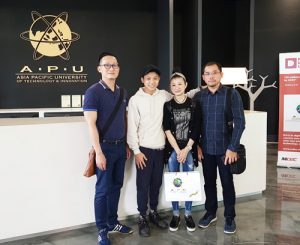
Warning
Warning
Warning
Warning
Warning
Warning
Warning
Warning
Warning

Warning.

A List of the Top 10 Most Popular Pre-University Programmes in Malaysia

EduSpiral analysed my personality and results, subsequently advised me on choosing the right course as well as the best university that fit me.
John Lai Wai Hong, Graduated in Mass Communication from KDU University College

A Pre-University programme is a preparatory course for students after SPM or O-Levels. The Pre-University programme at private colleges in Malaysia acts as a ‘bridge’ between secondary school and university, equipping you with proper knowledge and learning skills so that students will be able to handle the challenges of an undergraduate degree course.

Choosing the right Pre-University course after SPM or O-Levels can be confusing. There is no such thing as the “best” Pre-University programme. It is choosing the right Pre-U programme that fits you and your future goals. We have come up with a list of the Top Ten best Pre-University programmes to study in Malaysia,

Below is a list of pre-university programmes offered by top universities & colleges in Malaysia:

  1. Foundation programmes by private universities in Malaysia
  2. Sijil Tinggi Persekolahan Malaysia (STPM) Malaysia
  3. Unified Examination Certificate (UEC)
  4. University of Cambridge International Examinations (CIE) UK A-Levels
  5. South Australian Matriculation (SAM) or SACE International
  6. American Degree Transfer Program (ADTP)
  7. Edexcel International Advanced Level UK A-Levels
  8. Western Australian Matriculation (AUSMAT)
  9. Matriculation Certificate, Ministry of Education Malaysia
  10. Canadian International Matriculation Programme (CIMP)

There are many different Pre-University programmes available in Malaysia. I will list some of the most popular ones.

Top Foundation Programmes in Malaysia

Students after SPM or O-Levels can consider taking the Foundation Programmes at top private universities in Malaysia. The Foundation Programmes are 1 year and is cheaper compared to the external Pre-University Programmes.

Many private higher educational institutions in Malaysia, have developed their own internal university foundation programmes. Students who know what they want to study can just go for the Foundation at the university offering the degree of interest. It is cheaper, easier and a faster way to continue to completing the degree in Malaysia.

Duration 12 months
Number of subjects 12-15. Varies depending on the programme and university (usually combination of compulsory, elective & MPU subjects)
Recognition & Accreditation Malaysia Qualification Agency (MQA)
Assessment Assessment for Foundation programmes in Malaysia will vary from university to university. It will contain a mix of coursework, assignments, quizzes and exams. The coursework could cover different assessment tasks such as projects, assignments, laboratory work, presentations, tests, and others as assigned throughout each semester. The final examination is conducted at the end of each semester. 
Price RM8,000 – RM25,000
Advantages
  • Tailored specifically towards the degree course offered by the university
  • Shorter duration compared to the STPM and A-Level programmes
  • Generally, cheaper than most Pre-University (Pre-U) programmes
  • Most students find it easier compared to other Pre-University programmes
  • English-speaking environment which would help you to improve your language skills (depends on which university you choose)
  • The course is taught and marked by Malaysians who would understand the language skills of Malaysian students. Therefore, students who are weak in the English language should choose the Foundation and take the opportunity to improve their language skills during the Foundation programme.
Disadvantages
  • Depending on which Foundation, it may be difficult to change courses if you decide to pursue a different field
  • May not be accepted by other private universities for your undergraduate degree
  • May not be accepted into universities overseas


The Best A-Level Programmes in Malaysia

EduSpiral advised me to go for the best college for A-Levels in order to fulfil my dream of entering an Ivy League university in the USA. He met us at Taylor’s College Subang to talk to us and tour the college.
Gi Hang, A-Levels at Taylor’s College

The A-Levels is quite popular however it is quite tough and not for those who do not have the discipline or motivation to complete it. I would recommend the A-Levels for those intending to pursue medicine, dentistry, law or pharmacy or who are planning to go overseas. The A-Levels is internationally-recognised for admission into universities worldwide including professional courses.

The A-level syllabuses are divided into Advanced Subsidiary (AS) and Advanced Two (A2) levels, each contributing 50% towards the final A-Level grade. AS Level is the first half of the course and forms the foundation of A-Level. A2 Level is the second part of the syllabus and covers more difficult topics.

Students who have good results in SPM/O-Levels and prefer exam-oriented assessment rather than coursework or assignments, should go for the A-Levels.


Country of origin United Kingdom (UK)
Duration 12 – 18 months
Number of subjects 2- 4. Students may choose the following subjects:

  • Mathematics
  • Further Mathematics
  • Chemistry
  • Physics
  • Biology
  • Business
  • Economics
  • English Literature
  • Law
  • Accounting
Assessment It is 100% external examination-based. Both the ‘A2’ and ‘AS’ level examination sessions occur twice a year, in June and November, with some subjects only available in June or November. Results are issued in August and February respectively.
Awarding Body
  • University of Cambridge International Examinations (CIE) or
  • Edexcel International Advanced Levels (Modular structure)
Price RM20,000 – RM40,000
Advantages
  • Commonly considered the ‘Gold Standard’ of Pre-U programmes and is globally accepted (UK, US, Singapore, Australia etc.)
  • Accepted by universities worldwide
  • General subjects therefore the choices to enter degree programmes are wide depending on your subject combination
Disadvantages
  • Higher cost compared to most Pre-University (Pre-U) programmes
  • Longer duration than most Pre-University programmes
  • The A-Levels is rigorous and requires students who have strong academic results in SPM or O-Levels to do well in it
  • Subjects are general therefore students who have taken it may not be sure of what they want to study at degree level
  • If your command of the English language is weak then you may find this course very challenging
  

Australia Matriculation Programmes in Malaysia

I met EduSpiral a few years back & although I wanted to pursue his advise, my parents asked me to take STPM. I wasn’t satistied with my STPM results and finally, EduSpiral helped me to understand clearly that SAM was the best Pre-U that suit me.
Khalil, South Australian Matriculation (SAM) at Taylors College

There are 2 different Australian Matriculation programmes in Malaysia which are the:

  • South Australian Matriculation (SAM) or SACE International
  • Western Australian Matriculation (AUSMAT)

There are some slight differences between the two programmes and it is important for students to research and compare to see which on fits them.

I would not advise students to go for the March intake as it is an intensive programme which is shorter in duration where the exam is in November. Many students with good SPM results have not done well after taking the March intake for AUSMAT.


Country of origin Australia
Duration 7 – 18 months
Number of subjects 5 subjects (including English)
Assessment
  • South Australian Matriculation (SAM) or SACE International: 70% coursework (e.g. tests, research papers, assignments) and 30% exams
  • AUSMAT: 50% coursework (e.g. tests, research papers, assignments) and 50% exams
Awarding Body South Australian Certificate of Education (SACE)
Price RM21,000 – RM40,000
Advantages
  • Recognised for entry by most countries overseas
  • Shorter duration compared to the A-Levels and STPM
  • Continuous assessment helps to accumulate marks towards your final grade, instead of depending on a particular exam or coursework
  • Students who have a strong command of the English language & like assignment based courses would do well in the Australian Matriculation
Disadvantages
  • Very high entry requirements for competitive programmes like Medicine, Pharmacy, Dentistry, etc.
  • Students must do well consistently in all assessment types to obtain a high final grade
  • Self-directed learning may not be suitable for everyone
  • The March intake for AUSMAT is short and too intensive. Many students do not do well in it

Canadian International Matriculation Programme (CIMP) in Malaysia

The Canadian Pre-University (CPU) or CIMP is the final year of the secondary school programme in Ontario, Canada. It is designed based on the course guidelines and standards of the Ministry of Education and Training of the Ontario Province.

Country of origin Canada
Duration 12 – 15 months
Number of subjects 6 subjects which include one English subject, that is, either ENG4E or ENG4U. The other subjects are Business, Computer Studies, Mathematics, Science and Social Science.
Assessment 70% coursework (e.g. tests, research papers, assignments) and 30% final exam
Awarding Body Ontario Secondary School Diploma (OSSD)
Cost Between RM13,000 – RM35,000
Advantages  

  • Focuses on interactive learning as opposed to only academic
  • Progressive accumulation of marks towards your final grade instead of depending on one final exam or coursework
Disadvantages
  • Public speaking and debate may not be suitable everyone (requirement for CPU)
  • Very high entry requirements for competitive programmes like Medicine, Pharmacy, Dentistry, etc.
  • Students must do well consistently in all assessment types to obtain a high final grade


American Degree Transfer Programme (ADTP)

Students after SPM or O-Levels will enter directly into Year 1 of the degree program for a total of 4 years. The American Degree system after SPM or O-Levels is

  • Year 1 (Freshman) – ADTP in Malaysia
  • Year 2 (Sophomore) – ADTP in Malaysia
  • Year 3 (Junior) – University in the USA
  • Year 4 (Senior) – University in the USA

The American undergraduate degree provides an education that emphasizes problem-solving, critical thinking and decision-making skills. American education provides a flexible, holistic and well-rounded approach to education. It produces graduates with strong critical and analytical thinking skills with the ability to put knowledge into action.

Country of origin USA
Duration 48 months. After SPM or O-Levels, students will enter into the American Degree Programme for 2 years before transferring their credits to a university of their choice in the USA for the final 2 years.
Number of subjects Students will take about 40 subjects (110 – 140 credit hours) in total during their four years of studies, where 20 subjects (60 credit hours) are completed at ADP and the rest are completed in the USA. Students will normally take about 4-5 subjects each semester.
Assessment Students are assessed through exams, coursework, assignments, presentations, quizzes and research papers. The percentage of exams and assignments varies depending on the subject you are taking.
Grading System Final results will be a single score, the Grade Point Average (GPA) on a 0.0 to 4.0 scale. The highest grade is an A, which equals 4.0 The final result is the CGPA (cumulative grade point average) which is also on a 0.0 to 4.0 scale, and is your GPA obtained from all subjects taken.
Cost RM30,000 – RM60,000 for duration of 2 years of study in Malaysia. Cost of studying in the USA would range from RM150,000 to RM200,000 per year including cost of living.
Advantages
  • The curriculum is broad based and flexible.
  • Students are allowed to switch major if they decided to do so even after 2 years of studies.
  • Students are required to take courses outside of their major (commonly known as the liberal arts education philosophy).
  • Continuous learning and testing system (70% coursework, 30% final examination) where students are involved in projects, teamwork, presentation, extra- and co-curricular activities.
  • The education is learning-driven instead of exam-driven. Students are groomed to be all rounded team players with strong critical thinking and communication skills.
  • Students are expected to speak, ask, and challenge your instructors during discussions in / outside of class.
Disadvantages
  • Students must transfer to the USA for the final part of the studies. If you complete the ADTP and decide not to go to the USA, it is not accepted for entry at any university in Malaysia.
  • Students who prefer exam-based programmes will find the ADTP challenging.

Diploma Course at Private Universities in Malaysia

Students who are sure of what they want to study can go for a Diploma course. If you are still not sure, then you should go for a Pre-University programme. The diploma generally is more practical while a degree course is more theoretical and academic.

After completing your diploma, you can go find a job or continue on to Year 2 of the degree if your college or university offers the degree or you can transfer credits into another university. If you transfer to another university, you may not be able to get the full exemptions to enter into Year 2 of the degree.

Duration 24 – 30 months
Number of subjects 25-35 subjects (May include internship)
Assessment A mix of Assignments, Coursework, and written examination percentage. The diploma programme provides students with relevant, interesting, stimulating and practical experience via a variety of teaching and practical techniques.

Students will experience different dynamic learning processes are employed in the delivery of a diploma programme, such as lectures, tutorials, computer lab work, team-based project, real life system development, presentations, independent projects supervised by supervisors from university lecturers or industry experts. The learning is very much practical oriented.

Recognition  Accredited by the Malaysian Qualifications Agency (MQA)
Cost RM15,000 to RM50,000
Advantages
  • The Diploma is technically not a pre-university programme; it is one level below undergraduate degree
  • Needs at least 3 credits in SPM to enter the Diploma programme
  • Students may apply for the PTPN Loan for Diploma courses. There is no PTPN Loan for Foundation & External Pre-University programmes
  • You will study the subjects that you are interested in. The subjects are specific to your field of interest.
  • The course is more practical with mixed assessment.
  • Upon completion of the Diploma, you may choose to start work or continue on to Year 2 of the related degree.
Disadvantages
  • You cannot change to a different course for degree level
  • You may lose some credits when transferring to a different university


Sijil Tinggi Persekolahan Malaysia (STPM)

I was planning to study in IPTA after STPM but then my parents talked to EduSpiral. They realised the importance of studying at a top award winning university for computing.
Mark Siew, Software Engineering at Asia Pacific University

Sijil Tinggi Persekolahan Malaysia (STPM) is Malaysia’s version of the UK’s GCE A-Levels and is a Pre-University course recognised for entry into public universities (IPTA) in Malaysia. The STPM is also accepted for entry into private universities in Malaysia and overseas universities. The STPM is acknowledged as one of the toughest exams in the world.

If you had scored high is SPM, you are eligible for scholarships for Foundation programmes at top private universities. The Foundation programmes are easier and so if you score for Foundation, you can get more scholarships to cover part or all of your degree studies.

Problem is if you take the STPM which is so much tougher than the Foundation course, although Form 6 is free, but if you don’t score in STPM, you have no scholarship for your degree studies and in the end have to pay all of the fees for your degree studies in private university.

The STPM is extremely tough and if you do not do well, you would have wasted 2 years of your life and time is money. The earlier you graduate and join the work force, the more work experience you can gain and add this to your resume where it translates into higher salary. If you take a diploma at a private university in Malaysia, you would have finished it at the same time you would have taken to complete Form 6.

You need a lot of discipline and good teachers in order to do well in the STPM. If you have alright results for your SPM, don’t expect a miracle in the STPM as it is 20 times tougher than the SPM. If you can afford, choose an easier way through the 1-year Foundation offered at top reputable Private Universities in Malaysia.

Country of origin Malaysia
Duration 18 months (+6 months if you intend to apply to public universities)
Number of subjects Between 4 – 5 (including General Paper)
Assessment
  • Students will go through a school-based assessment with a weighting of 20-40% of the final score and a centralised examination with a weighting of 60-80% of the final score (The weighting varies according to subjects).
  • Nevertheless, School Based Assessment (SBA) cannot be repeated and repeaters are required to sit for an alternative written paper in place with SBA.
  • The curriculum is divided into three parts based on topic areas. Each part will be taught and studied in either the first, second or third term.
  • You will take the examinations at the end of each term (3 in total). One term is 6 months. Students who are not satisfied with their results for the first two terms can retake the examinations at the end of the third term.
  • Students’ assessment will be carried out each term with the results being released at the end of each respective term. The overall STPM results will be based on the best combined results of the three terms.
Grading Final results will be a single score, the Overall Subject Grade Point. Grades are given from A to F for each subject taken, which corresponds to a grade point. The Overall Subject Grade Point is the average of the top four subjects with the maximum score of 4.0.
Cost Less than RM1,000
Advantages
  • A Pre-University course recognised for entry into public universities (IPTA) in Malaysia
  • An affordable Pre-University programme
  • Recognised for entry into universities worldwide
  • With School Based Assessment, teaching and learning are integrated with assessment. Students are allowed to improve on their first term and second term results by retaking these term examinations at the end of the third term. Students who do not obtain satisfactory results for the third term may also re-sit it.
Disadvantages
  • The STPM can be very challenging for students who are weak academically or who do not prepare themselves well
  • Longer duration compared to most Pre-University courses in Malaysia
  • Heavy weightage of exam-based assessment
  • As soon as you enter Lower 6 you will have to hit the books because your first exam will be in December and you will have not much time to study and the teachers do no have enough time to cover the material as well. There is no rest as you will need to keep studying  the exams every 6 months.
  • To enter into most private universities, students must achieve at least a CGPA of 2.00 or at least 2 Principal Cs in the relevant subjects. A C- is not a principal and some universities do not accept the Pengajian Am as entry into the university.
  • STPM requires you to take in too much information in 1.5 years. That in itself shows the inadequacies of a system which doesn’t give enough time for students to consume the information required. Furthermore, STPM needs a lot of study time in order to score well. If you are not ready to commit the time and effort, you should consider other options.
  • From the time you enter Form 6 till the exam and getting into IPTA would be 2 years. If you had taken a diploma, you would have already completed it.
  • English language not emphasized so you do not gain the all important language and communication skills needed to succeed in the workforce
  • The government chooses the course and university (IPTA) for you. Therefore, after 2 years, you may not get to study what you want.

Malaysian Matriculation Programme (Matrikulasi) and Asasi IPTA

Program Matrikulasi Malaysia) is a one-year pre-university preparatory programme offered by the Ministry of Education, Malaysia. Starting 2005, the selection process for the programme is done through a race-based quota system, where 90% of the places are reserved for bumiputeras students while the remaining 10% are open for non-bumiputeras.

Prior to 2006, only one-year programmes are being conducted. Since then, four different programmes are offered. They are One Year Programme (PST, short for Program Satu Tahun in Malay), Two Year Programme (PDT, short for Program Dua Tahun in Malay), Technical Programme and Accounting Programme. Mathematics, physics, biology, chemistry and informatics science subjects are conducted in English. Other compulsory subjects are English, Dynamics Skills (Kemahiran Dinamika), Islamic/Moral Study and Information Technology. Students are also required to take up a co-curricular activity of their choice (sports/games, societies/clubs or marching band) during the programme.

Country of origin Malaysia
Duration 12 months (Program Satu Tahun) – 24 months (Program Dua Tahun)
Number of subjects Students must study at least six subjects over two semesters (one year). There is one intake a year, usually in March or April. The matriculation programme in Malaysia offers three streams – science, accountancy and technical streams
Assessment Combination of classroom assignments and examinations
Grading System Your GPA is determined from the grade values associated with the grades that you obtain for each subject every semester. All grades are internally assessed.
Cost RM600
Advantages
  • Extremely affordable
  • Good prospects to gain admission into public universities
  • Wide range of subjects to choose from
Cons
  • Recognised for entry into universities in Commonwealth countries
  • Has limitations, such as ‘Program Dua Tahun’ only open for bumiputras
  • Fewer options of degree courses as the subjects are divided into ‘streams’

Comparison Chart of the Top Pre-University (Pre-U) Programmes in Malaysia

Pre-U Programme Brief introduction Duration Assessment Subjects
Cambridge A-Levels           Awarded by Cambridge Advanced Level Certificate                                                                               The Cambridge GCE A Level is the general certificate of education qualification through examinations by the University of Cambridge International Examinations (CIE).The GCE A Level programme places emphasis on knowledge, understanding and reasoning abilities and skills. Duration is 12 or 18 months                Intakes in January, March and July                                                                                                Exams in June & November Assessed totally through external examinations. The examination papers are set and marked by examiners from the University of Cambridge International Examinations (CIE).  You can now sit for the A-Level examination in two phases:  at Advanced Subsidiary Level (AS) and at Advanced Two (A2) Level. Students unsatisfied with any of their individual units must re-sit the entire level, ie either AS or A2, and only the last score will automatically be taken into account. No. of Subjects: 3-4                                                SciencePhysics, Chemistry, Biology, Mathematics, Further Mathematics and Economics.Arts

Law, Mathematics, Economics, History, Accounting, English Literature and Business Studies.

LONDON EDEXCEL INTERNATIONAL – A-Levels          The Qualifications & Curriculum Authority (QCA) in the UK only recognises the London A-Levels. The London A-Levels is under the tight scrutiny of the QCA for all preparation, distribution and marking of the examination papers. For the London A-Levels, there is a centre in every region to facilitate communication with Edexcel UK, in addition to ensuring that the London A-Levels centres meet the standards set by the QCA. Duration is 12 or 18 months      Intakes in January, April and July         Exams in January & May/June 100% external examination. n Modular A-levels, each A-Level subject is subdivided into SIX UNITS where each unit is separately assessed in stages. In the Staged assessment it is divided into stages and in each stage the candidates get to select any number of the six units to be assessed in each examination session. An assessment is done every six months and the number of units selected for each examination session is entirely up to the candidate. The best grades for all the 6 units will be added together for a full A-Level final grade. No. of Subjects: 3-4

Mathematics

Further Maths

Biology

Chemistry

Physics

Economics

Accounting

Law

Business

South Australian Matriculation (SAM) or SACE International                                                               Awarded by South Australian Certificate of Education (SACE) SAM offers  – Proven learning techniques tailored to university study- A balanced choice of subjects leading to a variety of university degree courses- A mixture of school assessments and external examinations that assess students fairly

– The flexibility for students to complete the program over an extended period

– An opportunity for students to increase their tertiary entrance rank by repeating subjects without penalty.

Duration is 10 – 18 months with intakes in January, April or August Balance of continuous internal assessment and a final external examination. Students are provided with a university aggregate score (out of 90 marks) and a tertiary entrance rank (TER), a percentile ranking that is recognised without modification by all tertiary selection agencies in Australia. Students must complete 5 subjects, including 1 subject from List 1 and at least 1 subject from List 2. In addition, students must achieve a satisfactory score (10/20 or better) in either English as Second Language Studies, or English Studies. No. of Subjects – 6                                       • Accounting
• Biology
• Chemistry
• Economics
• English as an Additional
Language
• Legal Studies
• Mathematical Methods
• Nutrition
• Physics
• Psychology
• Research Project B
• Specialist Mathematics
Australian Matriculation (AUSMAT)  Awarded by Western Australian Certificate of Education (WACE) The AUSMAT is the Year 12 curriculum of Western Australia. The Curriculum Council of Western Australia, on behalf of the Government of Western Australia, overseas the quality implementation of the curriculum. Duration is 7-10 months with Intakes in January & March

Exam in November

50% internal continuous assessment(moderated by the Curriculum Council)and 50% external final examinations (TEE)

Provides opportunities to use multiple assessment techniques to help students progress – continuous assessment may include topic tests, quizzes, assignments, investigations, research and exams.

Flexibility of calculating a student’s score based on Best-4 or Best-5 subjects .

No. of Subjects – 5                                              Required to take English as an Additional Language (EAL/D) or English The remaining subjects must include one subject from each from List 1 and List 2:LIST 1 – German, English, Economics,  LIST 2 – Accounting and Finance, Biological SciencesChemistry, Computer Studies

Mathematics, Mathematics : Specialist Physics

Canadian International Matriculation Programme (CIMP) or International Canadian Pre-University (ICPU)                               Awarded by Ontario Secondary School Diploma (OSSD) Offered according to the requirements of the Ontario Ministry of Education, students to graduate with the Ontario Secondary School Diploma (OSSD) In the CIMP, they focus on your development in the following areas:- Effective communication; using English as the language   for international communication- Independent learning skills; learn how to learn

– Effective transition from secondary to tertiary education

– Talent and leadership development

– Community outreach

Duration is 10 months.               Intakes in January, March and July                Exam in May & November Assessment will be 70% coursework and 30% final examinations. Coursework includes evaluations conducted throughout the programme; quizzes, assignments, projects and class tests. The final assessment will be in the form of an examination.In addition, to graduate, students must sit for anexternal literacy test administered in March, perform Ten (10) hours of recognised Community Involvement.  No. of Subjects – 6                                            Business, Computer Studies, Mathematics, Science, Social Sciences & English Courses.
Internal Foundation at Private Universities in Malaysia -Internal qualification  It is cheaper and easier than the external Pre-University programmes. Students intending to continue on in the particular university can choose to go for their internal Foundation course. Its accredited by MQA & can transfer to other private universities in Malaysia for the relevant degree. Duration is 12 mths or 3 semesters with intakes in Jan, April, July, August or October depending on the university Assessments comprise coursework, class tests and examinations. Internally assessed by the private university. No. of Subjects – 12-15

Subjects depends on the type of Foundation

 American Degree Program (ADP)  -Direct entry into Year 1 of degree continue to Year 2 in Malaysia and then transfer to a university in the USA for the final 2 years- Holistic education Duration is 2 years in Malaysia and 2 years in the USA Assessment includes quizzes, assignments, projects and class tests. Students will take general studies for the first 2 years before specializing in their major for the final 2 years

How to Choose the Best Pre-University Course in Malaysia that Fits You

EduSpiral Consultant Services – Your Online Education Advisor

EduSpiral Consultant Services is a full-service educational counseling & planning firm that guides students from across Malaysia to help them choose the right course and university.

EduSpiral Consultant Services represents the best colleges and universities in Malaysia offering a wide range of choices for students to choose from. These colleges and universities offer value for money in the quality of education and excellent facilities that you get.

These universities and colleges are chosen by EduSpiral because they represent the best in their fields in Malaysia and affordable. EduSpiral provides in-depth information and counseling on their courses so that students are able to make the right choice.

If you are still not sure what to study, please contact us and we will send you a free EduSpiral Career Assessment FormEduSpiral Consultant Services has helped hundreds of students to choose the right course and enter into the university of choice. Please do contact us should you need any advise.

Please contact us for more details.

Please fill up the Form below and I will WhatsApp you and provide you with sound advise on how to choose the best private university or college in Malaysia to study at. If you do not give your mobile number or full name as in IC, your query will not be answered. Our knowledgeable & experienced courselor will send you a message on WhatsApp & provide assistance from there.

← Back

Thank you for your response. ✨

Warning
Warning
Warning
Warning
Warning
Warning
Warning
Warning
Warning

Warning.

Top 10 Universities & Colleges in Malaysia for Diploma in Information Technology (IT)

The Best Private Universities & Colleges in

Malaysia for Diploma in Information Technology

Courses

Written by EduSpiral Consultant Services. For more information contact 01111408838

Students after SPM or O-Levels who are sure of pursuing their studies in the Information Technology (IT) field may go for the Diploma in Information Technology instead of Foundation or other Pre-University courses. If you enter the 2-year Diploma in Information Technology, you would have completed it at the same time students finish their STPM. Therefore, the diploma would be more advantageous.

The Diploma in Information Technology course at top private universities in Malaysia is designed for those without any computing knowledge as well as those who wish to pursue careers in computer-based environments, particularly in programming and information systems. It can be known as the Diploma in IT or ICT or Computing or Computer Studies. There is a high job demand in Malaysia for well trained computing graduate. Students should choose the best private universities in Malaysia to study the Computer Studies diploma to obtain the necessary knowledge and skills.


For a personalised advise on how to choose the right course contact 01111408838

Please fill up the Form below and I will WhatsApp you and provide you with sound advise on how to choose the best private university or college in Malaysia to study at. If you do not give your mobile number or full name as in IC, your query will not be answered. Our knowledgeable & experienced courselor will send you a message on WhatsApp & provide assistance from there.

← Back

Thank you for your response. ✨
Warning
Warning
Warning
Warning
Warning
Warning
Warning
Warning
Warning

Warning.

Top Private Universities & Colleges in Malaysia offering the Best Diploma in Information Technology (IT) or Diploma in Computer Studies Course

I was confused about what to study & at which university. Talking to EduSpiral helped clear my doubts.
Zen Yi, Graduated from Software Engineering at Asia Pacific University (APU)

Students after SPM or O-Levels can go for the Diploma in Information Technology or Diploma in Computer Studies with at least 3 credits including Maths.

To succeed in the competitive world of computing, students should choose the best private universities in Malaysia to study the Computer Studies diploma to obtain the necessary knowledge and skills.

Leading private universities & colleges in Malaysia offering information technology (IT) diploma programme are:

  1. Asia Pacific University (APU)
  2. Multimedia University (MMU)
  3. Taylor’s University
  4. KDU Penang University College
  5. KDU University College Utropolis Glenmarie
  6. UCSI University
  7. HELP University
  8. First City University College

Top Private Universities in Malaysia Offering the The Best Diploma in Information Technology (IT) Courses

EduSpiral helped me to find an affordable and yet world top ranked computer science university.
Vickey, Diploma in IT at Multimedia University (MMU)

Asia Pacific University (APU)

Multimedia University (MMU) Cyberjaya & Melaka

Taylor’s University

KDU Penang University College 

KDU University College Utropolis Glenmarie

UCSI University 

First City University College

HELP University

Alternatively, students after SPM or O-Levels wanting the best universities for Foundation in Computing or Technology can go to Asia Pacific University (APU), Multimedia University (MMU)Taylor’s UniversityKDU University College Utropolis Glenmarie, and First City University College

How to choose the right Diploma in Information Technology (IT) Course in Malaysia?

EduSpiral provided in-depth information on software engineering and convinced my parents on the importance of letting me study at the best university for IT in Malaysia. Mark Siew, Asia Pacific University
EduSpiral provided in-depth information on software engineering and convinced my parents on the importance of letting me study at the best university for IT in Malaysia.
Mark Siew, Asia Pacific University

A lot of students assume that all Diploma in Information Technology (IT) courses at the universities are the same. They are not. It is important when choosing the Diploma in IT, to look at the subjects offered.

My younger brother who is a Software Engineer advised me that students should look at diplomas that have programming subjects as these are the backbone of a good iT program.

Some Diploma in IT are more multimedia based while others focus on programming. Some universities could have a diploma with a specialism in software engineering. You have to decide which area you want to focus on in your future career before choosing the college or university, if not, you will end up with a diploma but without the necessary knowledge and skills in IT.

This is important because during interviews for IT jobs, you will be given a test to assess your knowledge in IT. If you do not pass that test, you will not move on to be interviewed. IT is not like a business course, it is technical. If you do not have the necessary knowledge and skills, you will not go far in your career.

A lot of students make the mistake in choosing a cheap college because they assume that all IT diplomas are the same so there is no need to invest more. In saving a few thousand Ringgit for the few years in the diploma, they are throwing away hundreds of thousands in salary increments and promotions for the next 50 years of their work life because they did not gain the knowledge and skills that a good university would provide for them.

If you choose a lousy Kung Fu master, you will only learn his lousy skills. If you choose Ip Man, then maybe you can become the next Bruce Lee.

Assessment of the Diploma in Information Technology (IT) Course in Malaysia

A diploma course is generally more practical compared to a degree course. Coursework percentage and written examination percentage. Different learning processes can be used in the delivery of the programme, such as lectures, tutorials, computer lab work, team-based project, real life system development, presentations, independent projects supervised by supervisors from university lecturers or industry experts. It will vary from university to university on how the course is conducted.

Entry Requirements for Diploma in Information Technology or Diploma in Computer Science Courses at Top Private Universities in Malaysia

EduSpiral arranged for me and my mother to meet up with the lecturer at HELP to get a deeper understanding of the course, and also got me a scholarship! Cavan Stefan at HELP University
EduSpiral arranged for me and my mother to meet up with the lecturer at HELP to get a deeper understanding of the course, and also got me a scholarship!
Cavan Stefan at HELP University

With any 3 credits in SPM including Maths and a Pass in BM & Sejarah, you can go for the Diploma in Information Technology or Diploma in Computer Studies course at a top private university in Malaysia. After the 2-year diploma, you can continue on to Year 2 of the Degree at the same university or college if the degree course is offered. 

Diploma in Information Technology (IT) graduates may enter a wide variety of IT degree courses such as software engineering, computer science, information technology, business information systems, cyber security, data analytics, and more.

If not, you can transfer your diploma credits into another university to enter into Year 2 of the degree for another 3 years depending on the exemptions. It will take about one to three weeks for the university to perform the exemption evaluation.

To perform exemptions, you will need to submit the following documents to the university of interest for exemption evaluation:

  • Transcripts for the subjects taken
  • Course outline for all subjects taken
  • Letter of Completion or Diploma Certificate
  • Copy of SPM certificate

PTPN Loan for Diploma in Information Technology (IT) Course in Malaysia

Please note that there is no PTPN Loan for Foundation. For the Diploma you can apply for the PTPN Loan 
However, the PTPL Loan is available for Foundation programmes at Multimedia University (MMU).


What will I study in a Diploma in Information (IT) Course in Malaysia?

Studying Information Technology (IT) was my dream but my results didn’t achieve the requirements. But EduSpiral gave me in-depth advise & helped me to choose the right course that suited me.
Harold, Diploma in Business IT at Asia Pacific University (APU)

A diploma in IT course at a top private university in Malaysia provides general knowledge and skills in IT, programming, databases, multimedia and networks.

The Diploma in Information Technology equips students with a strong grounding in the basic skills as well as providing a theoretical understanding which is important for an IT graduate.

Students will be exposed to JAVA programming, VB.net, HTML, J2ME, Java Scripting as well as networking and business communication. The modules lead into all aspects of software applications; internet technology; multimedia technology; information systems; operating systems; systems methodologies; visual programming; and database management systems.

Other non-IT courses such as marketing, business communication and problem-

solving, among others, are included in the course so that students are equipped with transferable skills that will enable them to work efficiently both independently and in teams.

Students will normally take about 24-25 subjects not including the MQA subjects which are Bahasa Kebangsaan, Moral, and Pengajian Malaysia. The MQA subjects are compulsory at all colleges and universities.

Sample of subjects that can be found in a Diploma in IT or Diploma in Computing Programmes at Top Universities in Malaysia

  • Business Communications
  • Database Concepts and Practices
  • Internet Technology
  • Object-Oriented Programming with Java
  • Data Communications
  • Principles of Software Engineering
  • Programming in VB.net
  • Calculus
  • Java Programming
  • Computer Programming
  • Business Programming
  • Multimedia Programming
  • Linear Algebra
  • Computer Ethics
  • Introduction to Information Technology
  • Basic Business Mathematics
  • Introduction to Visual Basic Programming
  • Web Development
  • Basic Statistics
  • Introduction to C Programming
  • Introduction to Analysis & Design
  • Computing Mathematics
  • Mobile Telecommunications
  • Fundamental of Database Systems
  • User Interface Design
  • Wireless and Mobile Technologies
  • Interactive Media Applications
  • Discrete Maths

Duration of the Diploma in Information Technology (IT) In Malaysia?

For some colleges or universities, the diploma will take 2 years while at others, it will be 2.5 years. After completing the diploma, you can generally enter into Year 2 of the related IT degree course. You will need to submit the transcripts and course outline to the university that you are interested in for them to perform the exemptions.

Outstanding Computing and Information Technology Degree Courses in Malaysia

After completing the Diploma in Information Technology or Computer Studies, students may transfer into Year 2 of the degree programme for another 2 years. Students can choose top computing degree programmes such as:


Career Opportunities for Diploma in Information Technology (IT) Graduates in Malaysia

I found EduSpiral online and he met me and my Dad at the university to counsel us & take us around for a tour. As I didn’t come from a rich family, EduSpiral helped me to find a university that’s affordable and good.
Eric Ng, Diploma in Information Technology (IT) at First City University College

Diploma holders can seek employment in the area of internet commerce/e-commerce; software development; database administration, system support, etc. But I would advise students to go for the degree because there are too many diploma and degree graduates out there therefore to remain competitive in the workforce, you should get a degree.

Many students have heard that there could be no jobs for IT graduates because many are unemployed. While this may be true, the jobs are still plenty out there. It is not that there are no jobs, it is because the graduates do not have the skills and knowledge even after going through university.

This is because they have chosen a cheaper university where they did not have experienced lecturers to equip them well. The university environment is also important because if most students speak in Mandarin at the university, then you won’t be able to improve on your communication skills in English which is important in getting a job in a Multi National Company.

Talk to the Best Education Consultant in Malaysia to Help you Make the Right Choice in your Studies

Choosing a course to study after SPM is not a science, it is a process

Lonnie Sik, Founder of EduSpiral, has more than 15 years of experience counseling thousands of students on how to choose the right course & university

in finding out who you are and what you are good at. An experienced Education Advisor would be invaluable in assisting you to choose the right course in Malaysia or Singapore.

Students in Malaysia need to talk to the right education counselors so that you get the right information to help you in making this life-changing decision.

Ask the right Education Counselors in Malaysia to help you. Would you ask a Doctor on how to repair your car? Or would you ask a mechanic for medical advise? Although this sounds ridiculous, but many students do listen to advise from young and inexperienced counselors from universities, colleges or agents’ offices.  Talking to an experienced education advisor in Malaysia would help you to navigate through this confusing time of choosing the best course that fits you.

Experienced education counselors are able to analyse your interests, personality and exam results to help you make a list of possible courses for consideration. EduSpiral Consultant Services staff have more than 15 years experience in counseling students. Having worked in the private education industry, we have in-depth knowledge of each private university and college in what they are good at.

EduSpiral Consultant Services has worked with our partner universities and colleges for many years while the counselors at the private universities or agents’ offices change every few years therefore they would not have the in-depth knowledge of the courses and the university that they are working at.

At EduSpiral Consultant Services, I have worked in the private higher education industry in Malaysia for more than 15 years advising students with facts and evidence on how to choose the right course after SPM. You should carefully think about what are the options available to you. To choose the best course that fits you, students may fill up our EduSpiral Career Assessment form for evaluation.

The EduSpiral Career Assessment form is a simple form designed by us that gathers information from students after SPM, O-Levels, UEC, STPM or A-Levels in order to assess their aptitude helping us to determine the most suitable course and career progression.

How to Choose the Best Private University to Study Diploma in Information Technology (IT) in Malaysia

EduSpiral advised me on Facebook and then met me and my friends at APU to take us around for a tour. Edward, Software Engineering at Asia Pacific University
EduSpiral advised me on Facebook and then met me and my friends at APU to take us around for a tour.
Edward, Software Engineering at Asia Pacific University

The best private universities and colleges in Malaysia have excellent facilities, years of experience running the programme, strong student support services, internships and experienced lecturers.

They are also accredited by MQA and approved by the Malaysian Ministry of Education. Accreditation by the various professional bodies such as the Board of Engineers Malaysia, Pharmacy Board, Lembaga Arkitek Malaysia, Nursing Board, Malaysian Medical Council, etc also indicates the standard achieved.

The best private university in Malaysia will focus on quality, have award winners for the particular courses, years of experience offering the particular course, highly experienced lecturers, a good study environment (not a party university), internships, good mix of international & local students, extra-curricular activities and good facilities. The SETARA ranking is a guide for students to assess the quality of a private university in Malaysia.

When choosing a university and college in Malaysia, it is important for students to visit the campus and see the facilities and feel the culture of the students to see if it fits you.

Talk to the lecturers and find out from the counselors there about the courses and check if the courses have been accredited by MQA and other external bodies like the Pharmacy Board, Nursing Board, Malaysian Medical Council, Board of Engineers Malaysia , Lembaga Arkitek Malaysia or Persatuan Arkitek Malaysia.

The environment should be one where students speak mostly in English so that you can improve your English and communication skills. If you are weak in English and choose a cheap university where the students speak mainly in Mandarin, it will be difficult for you to improve your English.

Star newspaper has reported that graduates with good English earn 25% higher salary and get faster promotion. The Ministry of Education reported that there were more than 70,000 public university jobless graduates and one of the main reasons was poor command of the English language.

Would you rather suffer for 4 years and get a high salary for 60 years of your work life or an easy 4 years and low salary for 60 years? The decisions that you make now, can change your life forever. Remember the best university doesn’t mean it is the best university for you. The best university is one that fits your career goals, your personality and can push you to a higher level of success.

EduSpiral Consultant Services – Your Online Education Advisor

EduSpiral Consultant Services is a full-service educational counseling & planning firm that guides students from across Malaysia to help them choose the right course and university.

EduSpiral Consultant Services represents the best colleges and universities in Malaysia offering a wide range of choices for students to choose from. These colleges and universities offer value for money in the quality of education and excellent facilities that you get.

These universities and colleges are chosen by EduSpiral because they represent the best in their fields in Malaysia and affordable. EduSpiral provides in-depth information and counseling on their courses so that students are able to make the right choice.

If you are still not sure what to study, please contact us and we will send you a free EduSpiral Career Assessment FormEduSpiral Consultant Services has helped hundreds of students to choose the right course and enter into the university of choice. Please do contact us should you need any advise.

Please contact us for more details.

Please fill up the Form below and I will WhatsApp you and provide you with sound advise on how to choose the best private university or college in Malaysia to study at. If you do not give your mobile number or full name as in IC, your query will not be answered. Our knowledgeable & experienced courselor will send you a message on WhatsApp & provide assistance from there.

← Back

Thank you for your response. ✨

Warning
Warning
Warning
Warning
Warning
Warning
Warning
Warning
Warning

Warning.

Top 10 Foundation in Information Technology (IT) Universities in Malaysia

Best Foundation in Information Technology (IT) / Computer Studies Course at Top Private Universities in Malaysia

Written by EduSpiral Consultant Services. For more information contact 01111408838

With the increased demand for trained professionals in information technology (IT) and the many universities for students to choose from, it is important for a student after SPM or O-Levels to be able to choose a university with a top Foundation in Information Technology programme that will equip them with the in-depth knowledge and skills to tackle the rigours of the degree programme.

Students after SPM or O-Levels interested in a career in information technology, software engineering, computer science or cyber security can go for the 1-year Foundation in Information Technology programmes at top private universities in Malaysia.  The Foundation in Information Technology (IT) programmes are cheaper and generally easier than the external Pre-University programmes.

Learn how to become a computer science professional in Malaysia by talking to knowledgeable & experienced counselors and then choosing the best private university for your degree studies. Research the education and career requirements, training and certification information and experience needed to be successful in your future career in information technology or computer science in Malaysia.

For more information contact 01111408838

Please fill up the Form below and I will WhatsApp you and provide you with sound advise on how to choose the best private university or college in Malaysia to study at. If you do not give your mobile number or full name as in IC, your query will not be answered. Our knowledgeable & experienced courselor will send you a message on WhatsApp & provide assistance from there.

← Back

Thank you for your response. ✨

Warning
Warning
Warning
Warning
Warning
Warning
Warning
Warning
Warning

Warning.

List of Top Ten Universities in Malaysia Offering the Best Foundation in Information Technology (IT) or Foundation in Computer Studies Course

EduSpiral picked me up from KL Sentral to tour the campus & provided counseling to help me make the right choice.
Qi Leem, Software Engineering Graduate from Asia Pacific University (APU)

Students after SPM or O-Levels interested in a career in Computing & Technology can go for the 1-year Foundation programmes at top private universities in Malaysia instead of an external Pre-University Course like SAM, AUSMAT or A-Levels. The Foundation in Information Technology (IT) programmes are cheaper than the external Pre-University programmes and generally easier. If you do not plan on going overseas for your degree programme, then it is better to go for the Foundation programme at a top private university in Malaysia.

Foundation in Information Technology or Foundation in Computer Studies courses are intensive, focused one-year courses which prepare students for your computing degree studies in Malaysia and guarantee entry to the university of interest upon successful completion. The Foundation in Information Technology or Foundation in Computer Studies courses provide a solid foundation for students to adapt to university education more confidently, both in terms of level and style of education of the particular university.

  1. Asia Pacific University (APU)
  2. Multimedia University (MMU) Cyberjaya
  3. Multimedia University (MMU) Melaka
  4. Taylor’s University
  5. KDU University College
  6. KDU Penang University College
  7. UCSI University
  8. HELP University
  9. First City University College
  10. KDU College


Education Pathway for the Information Technology (IT) Programme in Malaysia

Studying Information Technology (IT) was my dream but my results didn’t achieve the requirements. But EduSpiral gave me in-depth advise & helped me to choose the right course that suited me.
Harold, Diploma in Business IT at Asia Pacific University (APU)

Students after SPM or O-Levels may go for the Foundation in Computing or Information Technology at top private universities in Malaysia for 1 year before continuing on to the 3-year Information Technology (IT) degree.

With at least 5 credits in SPM or O-Levels including Maths, students may enter the Foundation in Information Technology (IT).

Alternatively, students with at least 3 credits in SPM or O-Levels may go for the 2-year Diploma in Information Technology, Diploma in Computer Studies or Diploma in Software Engineering and then enter into Year 2 of the Information Technology (IT) degree. Pre-University students with the relevant results in STPM, A-Levels, SAM, CPU, AUSMAT, etc. can enter directly into Year 1 of the Information Technology (IT) degree at the best university in Malaysia.

Established since 2009, EduSpiral Consultant Services is a top recruitment agent for top private universities in Malaysia and private colleges in Singapore providing information and counselling on courses and helping students to choose the right university. EduSpiral Consultant Services sets ourselves apart from other agents by providing counseling based on facts and evidence so that our students are able to make the right choices after SPM, O-Levels, UEC, STPM, A-Levels or Pre-University. We research on articles and information to help them make the right choices about choosing their career and course in Information Technology (IT).

Study Foundation in Information Technology (IT) or Foundation in Computer Studies Course at Top Universities in Malaysia

EduSpiral helped me to find an affordable and yet world top ranked computer science university.
Vickey, Diploma in IT at Multimedia University (MMU)

Many top private universities in Malaysia, have developed their own internal university foundation programmes. The Foundation in Information Technology (IT) and Foundation in Computing & Technology courses are accredited by the Malaysia Qualification Agency (MQA) and recognised by the respective foreign partner universities. The Foundation in Information Technology (IT) subjects are geared more specifically to Information Technology courses unlike the external qualifications which focus on more general Science and Art-based subjects.

You will get the chance to study a variety of subject areas related to computer studies in the Foundation in Information Technology (IT) or Foundation in Computing & Technology Programme. This will not only give you an idea of what subject you may like to progress on to, but also to develop the valuable learning skills necessary for pursue a degree. A Foundation Programme in Malaysia can be 2 semesters with 6 months each semester or 3 semesters with 4 months each semester.

Assessment for Foundation in Information Technology (IT) or Foundation in Computing & Technology programmes in Malaysia will vary from university to university. It will contain a mix of coursework, assignments, quizzes and exams. The coursework could cover different assessment tasks such as projects, assignments, laboratory work, presentations, tests, and others as assigned throughout each semester. The final examination is conducted at the end of each semester. The assessments are subject to quality assurance procedures to maintain high standards and ensuring fair assessment.

To enter into the Foundation in Computing & Technology students after SPM would need at least 5 credits in the relevant subjects with a pass in BM and Sejarah.

If you are sure that you want to study Information Technology (IT) for your degree studies then this Foundation Programme is your best choice.

  • Duration: 1 year
  • Entry Requirements: Min. 5 credits, inclusive of Maths
  • Recognition: Mostly in Malaysia and some overseas. As long as the Foundation course is accredited by MQA, it will be accepted by another private university for entry into the relevant degree programme.
  • Cost: Generally cheaper than overseas Pre-University courses and A-Levels

Best Foundation in Computing & Technology at Top Ranked Asia Pacific University

EduSpiral counseled me online on the software engineering courses & then took me & my friends to tour the university.
Boon Ping, Software Engineering at Asia Pacific University

Asia Pacific University Foundation (Pre-University) programme is designed to help those with SPM, O Levels or similar qualifications to develop the skills and knowledge to progress into the first year of degree of choice. Throughout the programme, our academic staff will advise you on the options available at each stage of your university degree study.

If you have 5 Credits in “SPM’ or “O” Levels or equivalent then the Degree Foundation at Asia Pacific University (APU) is ideal for you because it is purposely designed to prepare you for entry into a degree in many areas of Information Technology, Business or Engineering.

Asia Pacific University’s vast experience in delivering degrees means we know what students need to do well in a degree. We have used this to design a Degree Foundation which gives you the skills in communications, research, English, Maths, technology (including Information Technology) and general study methods to do well whichever of our wide range of degrees you choose.

And APU goes further by providing you with an introduction to Business and IT or Engineering so that you can make an informed choice of degree when you have completed the Foundation. Depending on your choice you can go on to study full time for a 3-year Honours degree in IT, Games, Media, Business, Design, Accounting, Finance, International Studies areas or a 4-year Honours degree in Engineering, which is internationally benchmarked.

Upon completion of the Foundation in Computing & Technology at Asia Pacific University, you can continue on to any of the top award-winning computing programmes. Graduates at Asia Pacific University will receive the degree from APU and another from Staffordshire University, UK.

3+0 Staffordshire University UK Computing Programmes at APIIT

What you will study at Asia Pacific University’s Foundation in Computing & Technology

Asia Pacific University's Team Kraud, comprising Daryl Ong Wi Hsien, Lim Chu Seng, Chin Jess Nny and Armand Madewnus beat 370 participants from 90 teams, to win the Grand Prize at the AngelHack 9th Global Hackathon
Asia Pacific University’s Team Kraud, comprising Daryl Ong Wi Hsien, Lim Chu Seng, Chin Jess Nny and Armand Madewnus beat 370 participants from 90 teams, to win the Grand Prize at the AngelHack 9th Global Hackathon

Upon completing your study in this programme, you will be able to:

  • Enter Level 1 of Degree Study
  • Understand the concepts that underpin the study of Business, Technology, Engineering, Media and IT
  • Make an informed choice about what degree you want to study
  • Demonstrate English language and study skills for undergraduate learning
  • Apply skills in numeracy, technology and communication
  • Understand the essential elements of technology
  • Use appropriate application software and the Internet
  • Communicate effectively verbally and in writing to a given audience
  • Work effectively in a team
  • Be ready to become an effective member of the working community
  • Continue and succeed in further / higher education

What you will study

The modules studied help develop your study skills, introduce you to what you can expect on your degree and also allow you to discover what you can study depending on whether you choose a degree in Business, Accounting & Finance, Banking & Finance, Actuarial Studies, Media, Information Technology or Engineering. The modules are:

Semester 1 (12 weeks)

  • Communication Skills
  • English for Academic Purposes
  • Personal Development & Study Methods
  • Essential of Web Applications
  • Mathematics

Semester 2 (12 weeks)

  • Introduction to Business
  • Individual, State & Society
  • Introduction to Visual & Interactive Programming
  • Public Speaking in English

Semester 3 (12 weeks)

  • Academic Research Skills
  • Further Mathematics
  • Introduction to Multimedia Applications
  • Perspectives in Technology
  • Co-Curricular

Entry Requirements into the Foundation in Computing & Technology at Asia Pacific University

  • An overall credit pass in at least 5 subjects at SPM level including a credit in Mathematics and a minimum of a pass in Bahasa Malaysia and Sejarah (History); or
  • 5 grade C passes at ‘O’ Level / GCSE including a credit in Mathematics; or
  • A qualification that APU accepts as equivalent to the above.

Foundation in Information Technology Course in Malaysia at Top Ranked Multimedia University (MMU) Cyberjaya & Melaka

EduSpiral helped me to find an affordable and yet world top ranked computer science university.
Vickey, Diploma in IT at Multimedia University (MMU)

Both Multimedia University’s Faculty of Computing & Informatics and Faculty of Information Science & Technology incorporate industry-led curriculum so you will gain not only technical knowledge and skills, but also relevant soft and management skills. Many of the lecturers are professionals and specialists in their fields who will be able to impart real-life experience and solutions to your learning.

Multimedia University (MMU) also has strong collaborations with global industry leaders who are ready to share their knowledge of cutting-edge innovative technologies to keep you up-to-the-minute with current and future industry needs. MMU was the first private university approved by the Malaysian government.

Multimedia University’s collaboration partners include multinational corporations such as Microsoft, IBM, Dell-EMC, Cisco, Oracle, Intel, Cloudera, Nokia, EC Council, Google, Sun, Novell, Shell, BT, Celcom, CA, and Motorola. Through such partnerships, our staff and students are able to leverage on the latest technologies driving the Malaysian and global ICT scenes.

To give MMU students an extra edge in the job market, the university also conducts numerous professional certification programs via learning centers such as the Microsoft IT Academy, the Cisco Networking Academy, the Oracle Workforce Development Programme, the Cloudera Academic Partnership Programme, the Sun Academic Initiative and the Novell (Micro Focus) Academic Training Partner.

Vendor academy programs (Microsoft, Cisco, Oracle, Novell/LPI, Juniper, IBM). Industry-linked Final Year Project. Lectures/Seminars by Industry Partners Visits to IT companies. Incorporation of industrial-standard software and tools in the course content Participation in competitions (e.g. programming competitions)

A study by Gartner and MSC Malaysia found that Multimedia University (MMU) is among the top five universities preferred by major ICT players for graduate employment – a testament to the quality of MMU’s academicians, curriculum, student development programmes and our solid reputation with the industries.

In this constantly evolving digital world, Information and Communication Technology is more important than ever. As ICT continues to transform the way people communicate, learn, work and play, the career prospects for IT graduates are both diverse and rewarding. Whether it’s Bioinformatics or Data Communication, Artificial Intelligence or Information Technology Management, a degree from MMU will definitely hold you in good stead for the future.

Entry Requirements for the Foundation in Information Technology at Multimedia University (MMU) at Cyberjaya

Multimedia University (MMU) Cyberjaya Campus
  • Pass SPM / O-level or its equivalent with minimum of grade C in at least five (5) subjects, inclusive of Mathematics and English;
  • OR Pass UEC with minimum of grade B in at least four (4) subjects inclusive of Mathematics and English;
  • OR Other equivalent qualification recognised by the Malaysia Government

List of Subjects offered in the Foundation in Information Technology at the Faculty of Computing & Informatics at Multimedia University (MMU) at Cyberjaya

Intelligent Learning Lab at Multimedia University (MMU)

In an ever-changing, technologically-dependent world, our one-year Foundation in Information Technology programme aims to produce students who are well-equipped with computer skills as well as mathematical and physics skills.

The Foundation in Information Technology programme at Multimedia University (MMU) Cyberjaya is delivered through engaging lectures and laboratory work which serve to build knowledge and help develop practical skills. After completion of the foundation programme you can opt for a degree programme from either Faculty of Computing and Informatics (FCI) at Cyberjaya or Faculty of Information, Science and Technology (FIST) at Melaka.

Trimester 1 Foundation in Information Technology Subjects at Multimedia University (MMU) Cyberjaya

  • Introduction to Business Management
  • Introduction to Computing Technologies
  • Communicative English
  • Mathematics 1
  • Problem Solving and Programme Design

Trimester 2 Foundation in Information Technology Subjects at Multimedia University (MMU) Cyberjaya

  • Critical Thinking
  • Introduction to Digital Systems
  • Essential English
  • Multimedia Fundamentals
  • Mathematics II
  • Principles of Physics

Trimester 3 Foundation in Information Technology Subjects at Multimedia University (MMU) Cyberjaya

  • Academic English
  • Mathetmatics III
  • Mini IT Project

List of Subjects offered in the Foundation in Information Technology at the Faculty of Information Science & Technology at Multimedia University (MMU) at Melaka

In an ever-changing, technologically-dependent world, our one-year Foundation in Information Technology programme aims to produce students who are well-equipped with computer skills as well as mathematical and physics skills.

The Foundation in Information Technology programme at Multimedia University (MMU) Melaka is delivered through engaging lectures and laboratory work which serve to build knowledge and help develop practical skills. After completion of the foundation programme you can opt for a degree programme from either Faculty of Computing and Informatics (FCI) or Faculty of Information, Science and Technology (FIST).

Trimester 1 Foundation in Information Technology Subjects at Multimedia University (MMU) Melaka 

  • Communicative English
  • Critical Thinking
  • Algebra
  • Trigonometry
  • Computer Applications
  • Introduction to Computer Architecture and Operating System

Trimester 2 Foundation in Information Technology Subjects at Multimedia University (MMU) Melaka 

  • Fundamentals of Business Management
  • Calculus
  • Introduction to Multimedia Technology
  • Physics
  • Essential English

Trimester 3 Foundation in Information Technology Subjects at Multimedia University (MMU) Melaka 

  • Academic English
  • Introduction to Probability and Statistics
  • Problem Solving and Programming Mini Project

Upon completing the 1-year Foundation in Information Technology at MMU Melaka or MMU Cyberjaya, students may choose to enter into any of the Computer Science or Information Technology programmes below:

Multimedia University (MMU) Faculty of Computing & Informatics (Cyberjaya)

Multimedia University (MMU) Cyberjaya is a top private university in Malaysia supported by a full university campus facilities

Located within Cyberjaya and built on an 80-hectare plot of land with all the advantages of high technology, MMU Cyberjaya is equipped with various intelligent features such as multimedia learning facilities, intelligent building systems, a digital library, and an integrated campus management system designed to nurture innovative ICT graduates.

Multimedia University (MMU) Faculty of Information Science and Technology (Melaka)

With 13 buildings spread over 280,000 square metres, Multimedia University (MMU) Melaka. It is MMU’s first campus, and has around 10,000 students.
With 13 buildings spread over 280,000 square metres, the Melaka campus is host to the Faculty of Information Science and Technology. It is MMU’s first campus, and has around 10,000 students in total inclusive of 350 international students.

The Best Reasons to Study Computer Science & Information Technology at Multimedia University (MMU)

  • Ranked World’s Top 300 University for Computer Science & Information Systems
  • Academically and professionally certified lecturers (CCNA, CCNP, MCP, MCTS, MTA and Java)
  • One of the best teaching labs in private universities, equipped with world-class research and teaching facilities such as SMART and Innov8 labs
  • Strong collaborations with multi-national companies such as Cisco Networking Academy, Microsoft IT Academy, Oracle Workforce Development Program, Novell Academic Training Partner, Linux Professional Institute and EC-Council
  • Forefront Curriculum Design and Industry Placement Opportunities to bridge academic studies with practical experience
  • Be part of a globally ranked university that is listed in the Top 200 QS World University Rankings and continues to strive with solid breakthrough to be at the 179th spot in QS Asia University Rankings.
  • Study alongside 1,500 international students from more than 70 countries.
  • Experience the best and latest technologies from MMU’s collaborations with major ICT players such as ZTE, Nokia, Intel, Microsoft, Cisco and Motorola.
  • Get exposure to some of the best practices of the world’s best universities such as MIT, Stanford, Carnegie Mellon, Harvard, USC and Tokyo University.
  • Be enthused with Start-up Schemes from the Entrepreneur Development Centre (EDC) to encourage innovation and entrepreneurship ventures.

Top Ranked University in Malaysia to Study Foundation in Computing at Taylors University

Taylors University offers a conducive environment for students to excel in their studies

With at least 5 credits, students after SPM from Malaysia can enter the Foundation in Computing at Taylor’s University.

Taylor’s University 1-year Foundation in Computing programme is designed to provide students with the necessary knowledge and skills to pursue a future in various computing related degrees programmes. Emphasising on ‘learning by doing’, students are regularly required to work on actual projects that instil core competencies and knowledge in the field of computing and information technology.

As part of their studies, Taylor’s students will be exposed to a dynamic learning environment that extends beyond the classroom, where students are trained to apply theory into practice, thus developing the ability to demonstrate discipline-specific knowledge, cognitive capabilities and soft skills.

Upon completion, students at Taylor’s University will develop core competencies in the field of computer

Taylors University is strategically located at Subang Jaya, Selangor in a safe self-sustaining 27-acre campus

science and information technology, grooming them for further studies or careers in the ICT industry, or to be the next technopreneurs of Malaysia’s bustling start-up scene.

Upon completion of the top rated Foundation in Computing programme, students at Taylor’s University can continue on to any of the UK dual-award degree programmes below:


Strong Computing Focus for the Foundation in Computing at Taylor’s University

Computer lab at Taylor's University
Computer lab at Taylor’s University
  • Knowledge and understanding of computing, IT and basics of logical thinking skills, through modules like Introduction to Computing, Practical IT skills and Introduction to Algorithm & Problem Solving.

From Theory to Application

  • Develop independence and confidence, through continuous assessments which encompass elements of presentation, group discussion, out-of-classroom activities and practical assignments.

Balanced Learning Environment at Taylor’s School of IT

  • Opportunity to acquire and demonstrate discipline-specific knowledge, cognitive capabilities and soft skills.
    A balanced assessment method, whereby 50% of the evaluation allocated to various continuous assessments such as course work, quizzes, class test, projects, oral presentations, and the remaining 50% to the final exam.

Conducive Learning Environment at Taylor’s University

Library at Taylor's University
Library at Taylor’s University
  • Same access to the University’s facilities as undergraduate and postgraduate students, and able to contribute equally to the campus community.
    Exposure to the latest developments in the computing field through talks and workshops conducted by local and international speakers and industry experts.

Reliable Support System at Taylor’s University

  • First Year Experience (FYE) initiatives, such as motivational talks and peer-assisted study sessions, provide students the much-needed support to adjust to university life and excel in academic and extra-curricular activities.

Programme Structure for the Taylor’s University Foundation in Computing Programme

Subjects for the Foundation in Computing at Taylor’s University

Top students from all over Malaysia choose to study at Taylor's University
Top students from all over Malaysia choose to study at Taylor’s University

Semester 1

  • English I
  • Introduction to Computing
  • Introduction to Information Systems
  • Practical IT Skills
  • Algebra and Calculus
  • Social Media

Semester 2

  • English II
  • Introduction to Multimedia
  • Introduction to E-business
  • Introduction to Algorithm & Problem Solving
  • Discrete Mathematics
  • .Net Technology

Entry Requirements for the Foundation in Computing at Taylor’s University

  • Sijil Pelajaran Malaysia (SPM)
    Pass with min. 5 credits including English and Mathematics / Additional Mathematics with a pass in Bahasa Melayu and History
  • O Level
    Pass with min. 5 credits including English and Mathematics / Additional Mathematics
  • Unified Examination Certificate (UEC)
    Pass with min. 3Bs including Mathematics and a pass in English

First Rate Foundation in Art & Technology at KDU University College Utropolis Glenmarie

KDU University College's new campus at Utropolis Glenmarie, Shah Alam
KDU University College’s new campus at Utropolis Glenmarie, Shah Alam

Students after SPM or O-Levels who are not sure of what they want to study can go for the flexible Foundation in Arts & Technology Programme at KDU University College Utropolis Glenmarie that will stream them into the various degree programmes in business, computing, communication, creative arts, hospitality, culinary arts,  offered.

The KDU University College Foundation Studies (Art and Technology) is a one-year multidisciplinary foundation programme aimed at preparing students for further study in the fields of

  • Game development
  • Business
  • Communication
  • Computing
  • Hospitality

This flexible programme ensures students are grounded with a strong grasp of core subjects according to

Area51 Game Development Studio at KDU University College Utropolis Glenmarie

their choice of programmes at degree level, as well as a variety of other subjects to give them a broad-based education platform. It also helps them to explore new methods and ideas, as well as skills and concepts, to encourage independent and critical thinking.

Upon completion, students will be able to articulate seamlessly into various degree programmes, offered at KDU.

Students interested to register online for KDU University College Utropolis Glenmarie’s course can click on this link. Scholarships are available for deserving students.

Subjects for the Foundation in Art & Technology at KDU University College Utropolis Glenmarie

Total of 17 modules

Computer Lab at KDU University College Utropolis Glenmarie

CORE
(6 compulsory modules)

  • Creative Studies
  • Critical Writing and Referencing
  • Fundamentals of Information Technology
  • Introduction to Business
  • Introduction to Creative Concepts
  • Introduction to Communication
STREAM
(8 modules according to stream)

GAME ART GAME DESIGN / COMMUNICATION GAME TECHNOLOGY / COMPUTING BUSINESS / HOSPITALITY
 

  • Design Practice
  • Design Studies
  • Drawing 1, 2 & 3
  • History of Art and Media
  • Media Appreciation
  • Media Production
 

  • Design Practice
  • Digital Photography
  • Design Studies
  • History of Art and Media
  • Introduction to Multimedia
  • Media Appreciation
  • Media Production
  • Social Science


  • Design Studies
  • Information System
  • Introduction to Multimedia
  • Mathematics 1, 2 & 3
  • Programming Logic and Design
  • Social Science
 

  • Introduction to Management
  • Introduction to Multimedia
  • Information System
  • Introduction to Quantitative Methods
  • Introduction to Economics
  • Social Science
  • Introduction to Marketing
  • Introduction to Accounting

MPU

  • Cultural Studies
  • Pengajian Malaysia 1 (Malaysian Students)
  • Bahasa Melayu Komunikasi 1 (International Students)
  • Study Skills

Entry Requirements for the Foundation in Art & Technology at KDU University College Utropolis Glenmarie

ACADEMIC QUALIFICATION MINIMUM ENTRY REQUIREMENT
  • SPM / O Levels :
Pass with min. 5 Credits (inclusive of passes in English and Mathematics)
  • UEC :
Min. 3 Credits (inclusive of passes in English and Mathematics)
Any other qualifications deemed equivalent by the Ministry of Education, Malaysia (or as stated in the Document Senarai Nilai Taraf Kelayakan Akademik, Malaysian Qualifications Agency) Pass (Subject to review and approval of certified transcripts)
Notes:
  1. Students who will be continuing their studies in Accounting degree programmes, or in the Game Technology specialisation of the Game Development programme, must have obtained a Credit in Mathematics at SPM level.
  2. Students who will be continuing their studies in Computer Science and Software Engineering degree programmes must have obtained a Credit in Additional Mathematics at SPM level.
ENGLISH REQUIREMENT
Local Student : Credit (SPM / 1119 / UEC / O Levels examination)
International Student : Band 5.5 in IELTS; or a score of 196 (computer-based) or 69 (internet-based) or 525 (paper-based) in TOEFL

*If English language requirements are not fulfilled, additional English module(s) may be taken at KDU University College.

Most Affordable Foundation In Engineering, Science & Technology at First City University College

First City University College offers affordable Foundation, Diploma & Degree programmes at their 13-acre campus in Bandar Utama

This affordable Foundation in Engineering, Science & Technology Programme in Malaysia at First City University College prepares students for two major pathways of Degree programmes offered by the Faculty of Engineering and Computing, which are Engineering and Computing. Students will be equipped with elementary to intermediate level of knowledge on the respective pathway after the completion of this foundation programme.

In Semester 1, students will explore their first programming language of which they will analyse, design and develop an IT solution for a business case. At the same time, students will build a solid background on Mathematics for their chosen pathway in Semester 2.

In Semester 2, students will explore more into their chosen pathway. For students who choose the Computing pathway, they will learn various programming languages, such as structured C++ programming in Semester 2 and Object-Oriented Java programming in Semester 3. Students will learn to create simple and yet functional programs from these languages.

Computer lab at First City University College

On the other hand, for students who choose the Engineering pathway, they will be equipped with technical knowledge in Engineering-related modules, such as Mechanics, Electrical and Electronics, and instrumentation and measurements in Semester 2; and Applied Physics and Materials Science in Semester 3.

Students can also select the Science pathway which prepares them to continue their degree in chemistry-related degrees such as Chemical Engineering.

Furthermore, students from all pathways will also benefit from applying the MATLAB software in their mathematics modules.

To conclude, this foundation programme provides students a strong solid background on the respective pathway to degree programmes of study.

The duration for the Foundation is 1 year (3 semesters) with intakes in January, March and May of each year.

With 5 credits in SPM or O-Levels including the relevant subjects, you can go for the Foundation in Engineering, Science & Technology at First City University College. After the 1-year Foundation, you can continue on to the following degree programmes at First City:

The Faculty of Engineering and Computing at First City University College provides students with the latest in learning experience through the use of state-of-the-art facilities. Students are inspired and motivated through a hands-on approach in the teaching of engineering and computing.

The one-year foundation programme consists of three pathways; students will have a choice to pursue undergraduate degree studies in Engineering/Science (Electronic Enginering), or Computing (Computer Science / Software Engineering / Information Technology / Information Systems ) at First City UC by selecting the respective elective modules required for each of the degree courses in Semester 2 and 3.

SEMESTER 1 MODULE CONTENT

  • • Analytical Mathematics
  • • Communication and Study Skills
  • • Computer Technology
  • • Personal and Professional Development
  • • Advance Office Software

SEMESTER 2 MODULE CONTENT

  • • Calculus Mathematics
  • • Mechanics ** / #
  • • Instrumentation and Measurements **
  • • Fundamental Electrical and Electronic Engineering **
  • • Software Design Techniques***
  • • Web Design***
  • • Structured Programming ***
  • • Fundamentals in Chemistry #
  • • Physical Chemistry #

SEMESTER 3 MODULE CONTENT

  • • Engineering Mathematics ** / #
  • • Applied Physics ** / #
  • • Materials Science **
  • • Group Project • Database ***
  • • Object-Oriented Programming***
  • • Systems Analysis and Design***
  • • Organic and Inorganic Chemistry # **

Students who wish to specialise in Engineering are required to take these elective modules.

*** Students who wish to specialise in Computing are required to take these elective modules.

Students who wish to specialise in Science are required to take these elective modules.

  • For SPM students, a pass in Malay Language and History is required.

EduSpiral Consultant Services – Your Online Education Advisor

EduSpiral Consultant Services is a full-service educational counseling & planning firm that guides students from across Malaysia to help them choose the right course and university.

EduSpiral Consultant Services represents the best colleges and universities in Malaysia offering a wide range of choices for students to choose from. These colleges and universities offer value for money in the quality of education and excellent facilities that you get.

These universities and colleges are chosen by EduSpiral because they represent the best in their fields in Malaysia and affordable. EduSpiral provides in-depth information and counseling on their courses so that students are able to make the right choice.

If you are still not sure what to study, please contact us and we will send you a free EduSpiral Career Assessment FormEduSpiral Consultant Services has helped hundreds of students to choose the right course and enter into the university of choice. Please do contact us should you need any advise.

Please contact us for more details.

Please fill up the Form below and I will WhatsApp you and provide you with sound advise on how to choose the best private university or college in Malaysia to study at. If you do not give your mobile number or full name as in IC, your query will not be answered. Our knowledgeable & experienced courselor will send you a message on WhatsApp & provide assistance from there.

← Back

Thank you for your response. ✨
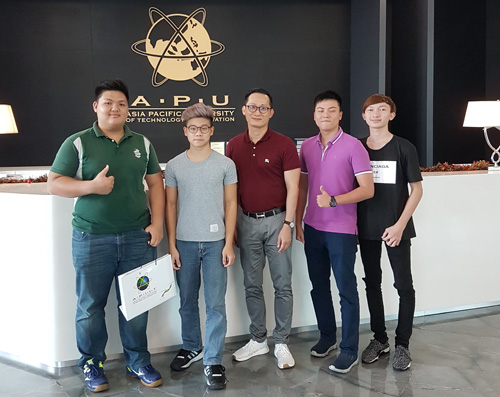
Warning
Warning
Warning
Warning
Warning
Warning
Warning
Warning
Warning

Warning.

Top 10 Universities & Colleges in Malaysia for Information Technology (IT)

Choose to Study at a Top University in Malaysia for Information Technology (IT)

For more information contact 01111408838

Computing or IT professionals are one of the highest paid in Malaysia. In addition, Job demand for Information Technology professionals in Malaysia and globally is high. Therefore, choosing a course that has high job demand in Malaysia ensures the chances of finding a high paying job after graduation. Students should also choose the best university in Malaysia for information technology (IT) to study so that they can be competent and skilful in their career.

Part of finding the right college or university in Malaysia for you will be picking out the criteria that matters to most to you, and then seeing if any of the top private colleges or universities in Malaysia that you’re looking at fit those criteria. To help you to choose the best university that fits you, you can build a list of top universities in Malaysia that meets your criteria.

Students after high school need to select the best university in Malaysia to study information technology so that you can gain competent skills to do well in your career. Choosing the cheapest or nearest university may not be the best choice as you may not gain the right knowledge and skills. A top university for computer science would have experienced lecturers and excellent facilities to support your learning experience therefore equipping you well for a successful future in the challenging work place.

For more information contact 01111408838

Please fill up the Form below and I will WhatsApp you and provide you with sound advise on how to choose the best private university or college in Malaysia to study at. If you do not give your mobile number or full name as in IC, your query will not be answered. Our knowledgeable & experienced courselor will send you a message on WhatsApp & provide assistance from there.

← Back

Thank you for your response. ✨

Warning
Warning
Warning
Warning
Warning
Warning
Warning
Warning
Warning

Warning.

Top 10 Universities & Colleges in Malaysia for Information Technology (IT)

  1. Asia Pacific University (APU)
  2. Multimedia University (MMU) Cyberjaya Campus
  3. Multimedia University (MMU) Melaka Campus
  4. APIIT
  5. KDU University College Utropolis Glenmarie
  6. KDU Penang University College
  7. UCSI University
  8. First City University College
  9. HELP University
  10. HELP College of Arts & Technology

Studying Information Technology (IT) in Malaysia

EduSpiral helped me to find an affordable and yet world top ranked computer science university.
Vickey, Diploma in IT at Multimedia University (MMU)

Information technology (IT) is the application of computers to store, study, retrieve, transmit, and manipulate data, or information, often in the context of a business or other enterprise. IT is considered a subset of information and communications technology (ICT).

IT includes several layers of physical equipment (hardware), virtualization and management or automation tools, operating systems and applications (software) used to perform essential functions. User devices, peripherals and software, such as laptops, smartphones or even recording equipment, can be included in the IT domain. IT can also refer to the architectures, methodologies and regulations governing the use and storage of data

Information Technology (IT) involves many things. Take, for instance, an IT department in a company in Malaysia where there are many people with many jobs and a variety of responsibilities. These responsibilities range from keeping systems and data secure to keeping networks up and running. There are people who input data, people who manage databases and people who do programming.

Information Technology (IT) also includes the management of data, whether it is in the form of text, voice, image, audio or some other form. It can also involve things related to the Internet. This gives IT a whole new meaning, since the Internet is its own realm. Information Technology (IT) involves the transfer of data, so it makes sense that the Internet would be a part of IT. IT has become a part of our everyday lives and continues to proliferate into new realms.

Typically, Information Technology (IT) is used in the context of enterprise operations as opposed to personal or entertainment technologies. The commercial use of IT encompasses both computer technology and telephony.

There are many types of IT courses that you can choose or specialise in. You must take the time to talk to the right people so that you understand which one fits you. Students should also choose the best university for computing or IT to study at so that you can gain the necessary knowledge and skills. According to Pikom, there are many jobs out there for IT graduates and there are also many jobless IT graduates. The reason for this is that there is a mismatch of the courses with the skill needed. In addition, the training that the students received was not up to the standard needed in the industry.

To succeed in your career in Information Communication Technology (ICT), in Malaysia, it is important to gather the right information, talk to knowledgeable & experienced counselors and then to choose the right course and university.


Education Pathway for the Information Technology (IT) Programme in Malaysia

Studying Information Technology (IT) was my dream but my results didn’t achieve the requirements. But EduSpiral gave me in-depth advise & helped me to choose the right course that suited me.
Harold, Diploma in Business IT at Asia Pacific University (APU)

Students after SPM or O-Levels may go for the Foundation in Computing or Information Technology at top private universities in Malaysia for 1 year before continuing on to the 3-year Information Technology (IT) degree.

With 3 credits in SPM or O-Levels including Maths, students may go for the 2-year Diploma in Information Technology, Diploma in Computer Studies or Diploma in Software Engineering and then enter into Year 2 of the Information Technology (IT) degree. Pre-University students with the relevant results in STPM, A-Levels, SAM, CPU, AUSMAT, etc. can enter directly into Year 1 of the Information Technology (IT) degree at the best university in Malaysia.

Established since 2009, EduSpiral Consultant Services is a top recruitment agent for top private universities in Malaysia and private colleges in Singapore providing information and counselling on courses and helping students to choose the right university. EduSpiral Consultant Services sets ourselves apart from other agents by providing counseling based on facts and evidence so that our students are able to make the right choices after SPM, O-Levels, UEC, STPM, A-Levels or Pre-University. We research on articles and information to help them make the right choices about choosing their career and course in Information Technology (IT).

Choose to Study Information Technology (IT) in Malaysia because of Increase in Job Demand

EduSpiral picked us up from KL Sentral & brought us to the university for counseling and to tour the campus. In addition, he helped us in our application to the university.
Seng Foong & Samson, Software Engineering at Asia Pacific University (APU)

According to the Robert Walters Salary Report 2018, the Information and Technology sector is also expected to grow the fastest next year in a candidate-driven market with salary increments ranging between 20 to 30 per cent. Robert Walters, a specialist professional recruitment consultancy company shares that they see a high demand in IT jobs spanning across the fintech, banking, as well as the healthcare sector such as data analysts, software engineers and cyber security. Hiring activity will remain active in 2018, driven mostly by continuous growth of e-commerce, digitalisation, fintech, shared services and better organisational optimisation.

The IT sector saw a spike in demand for software developers skilled in programming languages in 2017 as organisations looked to fill hybrid positions with top candidates who were adept in more than one coding language. This trend is set to continue as we see more need such as in the implementation of the Digital Free Trade Zone and businesses moving towards digitalisation. Candidates with high potential or niche skills are also expected to enjoy increments of between 25 per cent to 30 per cent when they move jobs, although a raise of 15-20 per cent is common business practice.

The information technology (IT) industry is expected to face a shortage of between 7,000 and 15,000 professionals in the next two years, as Malaysia rides the wave of the growing digital economy. Malaysian Digital Economy Corp (MDEC) CEO Datuk Yasmin Mahmood said currently there are more than 3,000 companies registered under the Multimedia Super Corridor and the industry is currently in need of specialised workers in various IT fields.

“We project that by 2025, the IT industry will require one million specialised working professionals as the industry is experiencing a rampant growth,” she said.

To keep up with the growth, many companies have to resort to foreign talents that are capable of moving in tandem with the current trend and needs in the IT industry. Malaysian Employers Federation ED Datuk Shamsuddin Bardan said many IT companies are forced to seek foreign expertise, especially for the high-end sectors such as the big data analytics and artificial intelligence.

“The country still could not fulfil the requirement set by IT companies, especially when everyone is moving towards the Industry 4.0 and adopting technology such as big data analytics.

MORE experts are needed to fill up the positions in the data-driven industry, backed by the growing demand from local companies, said Malaysia Digital Economy Corp Sdn Bhd (MDEC).

MDEC head of strategic partnership Somasundaram Nagappan said there are currently 6,000 working professionals in big data analytics sector through MDEC’s programmes. Malaysia Digital Economy Corp Sdn Bhd (MDEC) targets to have 20,000 data science professionals by 2020.

The emergence of technology and automation under the fourth industrial wave (Industry 4.0) has raised fears that some people might lose their jobs in Malaysia, especially in the manufacturing sector. There have been various reports stating how companies need to adopt the big data movement to remain relevant, or risk losing out in the evolving market. Directly, more companies have begun to engage and hire data professionals to tap into the big data potential, creating a big pool of demand for local data science fresh graduates.

A report from the recent Digital Workforce of The Future by LinkedIn, which revealed that a combination of skills encompassing Big Data, data analytics and web development registered a 21% growth in demand. In Malaysia, the top five in-demand digital skills are big data, software and user testing, mobile development, Cloud computing and software engineering management.

Choose to Study Information Technology (IT) because of Increase in Salary for Professionals in Malaysia

EduSpiral took me & my friends to tour a few universities to help us make the right choice. He then met me & my father for further counseling & to assist in registering.
Horng Yarng, Diploma in ICT at Asia Pacific University

According to the recent Robert Walters Global Salary Survey 2017, the broad sectors which may offer the highest salary packages in Malaysia are information technology, financial services and shared services. The technology sector in Malaysia is set to see the highest demand in terms of jobs and salary hikes.

Since 2013, the technology sector has seen salary hikes and this trend is expected to continue over the next couple of years. Meanwhile, Robert Walters Malaysia managing director Sally Raj says software developers and cyber security experts can expect significant salary raises of up to 25% when moving jobs in 2017, as cyber security professionals will be highly sought after across a number of industries, especially in the banking sector.

Commenting on the technology sector, Raj says the technology sector, especially for niche positions, may see at least a 30% salary rise this year compared with 27% last year. For example, in senior positions, a chief technology officer can expect an annual salary of between RM360,000 and RM600,000 this year from RM350,000 and RM540,000 in 2016.

A program manager may bring in an annual salary of between RM240,000 and RM360,000 from RM216,000 and RM336,000 last year. A solution architect, however, could see an annual salary hike of up to RM180,000-RM324,000 from RM120,000-RM192,000.

Hays regional director for Malaysia Tom Osborne concurs that the technology sector will likely see the highest jump in salary this year. “The key sectors in Malaysia that will see pay hikes include information technology. Areas in IT where growth will occur include IT infrastructure systems administration and management positions.

For instance, a network engineer in the systems administration side could rake in an annual salary of between RM96,000 and RM144,000 this year compared to between RM72,000 and RM120,000 last year.

According to the JobStreet.com 2017 Salary Report, IT/computer consulting jobs (IT, science, engineering and technical) for senior managers in Kuala Lumpur, Selangor and Putrajaya command the highest average maximum monthly salary of around RM18,000.

Meanwhile, IT/computer workers in consumer and fast-moving consumer goods industries earn the highest average minimum salary of RM14,000 within the same region.

“Organisations in Malaysia are reinventing themselves for the digital world that has seen many invest in upgrading their IT infrastructure. This has created demand for talent who are well versed in this area and as a consequence, wages have increased.

“Technology is going to be at the forefront over the next few years, as businesses like financial services (banking and insurance), fast-moving consumer goods companies and retailers gear up to adopt technology. Furthermore, organisations are now utilising digital channels to grow their businesses.”

With the advent of financial technology (fintech), Raj foresees further growth in technology usage in the financial services sector, partly thanks to the recent regulatory “sandbox” framework for fintech. The sandbox refers to a safe space where businesses can test innovative products, services, business models and delivery mechanisms.

As digital, mobile and e-commerce-related companies expand their businesses, she says there will be an increase in the number of employers recruiting mobile engineers and software developers in 2017.

According to Human Resources Online, prospects are bright as employers are driven by Malaysia’s blend of price point and quality. There is an uptake in the creation of centres of excellence, resulting in increased demand for specialist talent further up the value chain.

Malaysia is currently less competitive on cost point alone compared to other typical offshore centres, such as Chennai and Manila. However, if you factor in the quality, seniority and specialist nature of IT professional that can be hired here, Malaysia is now moving towards being a cost-effective alternative to Singapore and Hong Kong, a move away from the typical offshore BPO model.

Moving into Q1 2017, significant growth is expected across the following sectors:

  • Infrastructure services such as networks, platforms and specialist areas such as cloud and virtualisation; Salaries of IT directors with more than 10 years of experience pegged at RM250k-360k per annum;
  • ERP, EAI and other specialist off-the-peg solutions from large vendors such as SAP, Oracle and Salesforce;
  • Solutions architect for application development can take home in the range of RM180k-250k per month.
  • Business transformation, an increasingly dominant area of IT, leading to demand for professionals in project management, program management, PMO and change management.

Study Information Technology (IT) at Top Universities in Malaysia

The Best ICT and Computing courses offered at Top Ranked Asia Pacific University (APU)

Certificate

After I finished my SPM, I felt confused about my further study. Because of Eduspiral, I am able to pursue my studies at Asia Pacific University. Eduspiral, was so patient to answer all my questions and even brought me to visit the university when I went to KL alone. Jeremy Lee, APU scholarship student

Pre-University Programmes

IT Diploma Programmes at Asia Pacific University

Computing & Technology Degree Programmes at Asia Pacific University (APU)

3+0 Staffordshire University UK Computing Programmes at APIIT

Top Ranked Taylor’s University Computing & IT Programmes

Outstanding Information & Multimedia Technology  Courses at Top Ranked KDU Penang University College

Affordable Information Technology Programmes at Top Ranked  UCSI University

Excellent Information & Multimedia Technology Programmes at KDU University College Utropolis Glenmarie

EduSpiral took my father & I to visit KDU University College and talk to the Game Technology lecturer & Head. I was able to make a good decision in choosing the right university. Choon Meng, Game Technology at KDU University College
EduSpiral took my father & I to visit KDU University College and talk to the Game Technology lecturer & Head. I was able to make a good decision in choosing the right university.
Choon Meng, Game Technology at KDU University College

Information Technology Courses at First City University College

Information Technology Courses Offered at HELP University

EduSpiral arranged for me and my mother to meet up with the lecturer at HELP to get a deeper understanding of the course, and also got me a scholarship! Cavan Stefan, IT at HELP University
EduSpiral arranged for me and my mother to meet up with the lecturer at HELP to get a deeper understanding of the course, and also got me a scholarship!
Cavan Stefan, IT at HELP University

EduSpiral Consultant Services – Your Online Education Advisor

EduSpiral Consultant Services is a full-service educational counseling & planning firm that guides students from across Malaysia to help them choose the right course and university.

EduSpiral Consultant Services represents the best colleges and universities in Malaysia offering a wide range of choices for students to choose from. These colleges and universities offer value for money in the quality of education and excellent facilities that you get.

These universities and colleges are chosen by EduSpiral because they represent the best in their fields in Malaysia and affordable. EduSpiral provides in-depth information and counseling on their courses so that students are able to make the right choice.

If you are still not sure what to study, please contact us and we will send you a free EduSpiral Career Assessment FormEduSpiral Consultant Services has helped hundreds of students to choose the right course and enter into the university of choice. Please do contact us should you need any advise.

Please contact us for more details.

Please fill up the Form below and I will WhatsApp you and provide you with sound advise on how to choose the best private university or college in Malaysia to study at. If you do not give your mobile number or full name as in IC, your query will not be answered. Our knowledgeable & experienced courselor will send you a message on WhatsApp & provide assistance from there.

← Back

Thank you for your response. ✨

Warning
Warning
Warning
Warning
Warning
Warning
Warning
Warning
Warning

Warning.

How to Choose a Top University for Computer Science in Malaysia

Choosing the Best University for Computer Science in Malaysia

For more information contact 01111408838

Students after high school need to select the best university in Malaysia to study computer science so that you can gain competent skills to do well in your career. Choosing the cheapest or nearest university may not be the best choice as you may not gain the right knowledge and skills. A top university for computer science would have experienced lecturers and excellent facilities to support your learning experience therefore equipping you well for a successful future in the challenging work place.

Computer software engineers, or software developers, design and develop software applications or computer systems in Malaysia. They develop computer applications for clients as well as the major systems that make a computer run.

Computer scientists are primarily concerned with the design of algorithms, languages, hardware architecture, systems software, applications software and tools. Applications range from simple game playing to the control of space vehicles, power plants and factories, from banking machines to intelligent fault and medical diagnosis. Computer professionals, in short, are concerned with the creation of computer and information systems for the benefit of society.

Computer Science jobs are high in demand in Malaysia and globally therefore making it a top choice for students to study this course at university level. Choosing a course that has high job demand in Malaysia ensures the chances of finding a high paying job after graduation. Students should also choose the best university in Malaysia for computer science to study so that they can be competent and skilful in their career.

For more information contact 01111408838

Please fill up the Form below and I will WhatsApp you and provide you with sound advise on how to choose the best private university or college in Malaysia to study at. If you do not give your mobile number or full name as in IC, your query will not be answered. Our knowledgeable & experienced courselor will send you a message on WhatsApp & provide assistance from there.

← Back

Thank you for your response. ✨

Warning
Warning
Warning
Warning
Warning
Warning
Warning
Warning
Warning

Warning.

Best Guide in Choose a University in Malaysia for Computer Science Degree Course

EduSpiral picked us up from KL Sentral & brought us to the university for counseling and to tour the campus. In addition, he helped us in our application to the university.
Seng Foong & Samson, Software Engineering at Asia Pacific University (APU)

If you’re among the lucky who can factor more than cost and proximity into where you decide to go, studying in a private university in Malaysia is a ticket to an adventure beyond the boundaries of what you’ve experienced so far. It’s a passport to the far side of what you already know. It’s a chance to be challenged, not coddled. To be provoked, not pacified.

Does brand matter? To a point. There are indeed future employers in Malaysia who see certain degrees as seals of approval, as pre-screening of a sort. However, obtaining a degree from a famous private university will only take you so far.

Some private universities have spent millions of Ringgit throughout the years telling you that they are the best. You should objectively look at the information carefully to assess which university in Malaysia is best for you. If you do not have the necessary knowledge and skills, you won’t get far in your career.

We must be careful when choosing a private university in Malaysia to study computer science as many students listen to advise from friends and relatives who are not knowledgeable offering information not supported by facts and evidence. Choosing a private university should be done carefully and objectively, not based on the number of glitzy advertisements you have heard or seen about that university.

Talking to counselors from the private universities is a common practice to obtain the necessary information to help you to decide. You should evaluate the information provided to see if what they say is true and supported by facts and evidence. There are also many agents in Malaysia offering their services where most of the staff are young and inexperienced. They would not have the skills to guide you on this most important decision in your life.

How many of a college’s or university’s students are coming from other countries? Favour private universities with higher percentages of foreigners, because as much of your education will happen outside as inside any lecture theatre, and globalisation is here and real. The dexterity with which you can navigate other cultures — your awareness of, and openness to, them — could be more valuable than any knowledge gleaned from a book.

Choosing a university that excels in your field of study may provide you with access to more specialised opportunities, including state-of-the-art computer labs and expensive software for learning. If your university excels in research in your field, it’s also likely that its research will filter through to your course, that you will be taught by prominent lecturers, and that there will be opportunities for you to undertake research.

Choosing the best university for your studies in Malaysia is important as it will help to shape your mind, character and help you to develop the necessary skills for a successful career. Therefore, not all private universities & colleges in Malaysia are the same. You should not choose a university because it is the cheapest, easiest and nearest. It should be based on which university that best fits your needs.

Many students in Malaysia also make the common mistake in choosing a university because their friends are going there. I even had one student tell me that his choice of university depends on where his girlfriend is going! This is one of the most important decisions that may change your life forever hence it should not be taken lightly.

Part of finding the right college or university in Malaysia for you will be picking out the criteria that matters to most to you, and then seeing if any of the top private colleges or universities in Malaysia that you’re looking at fit those criteria. To help you to choose the best university that fits you, you can build a list of top universities in Malaysia that meets your criteria.

Computer Science is the study of computer systems including algorithmic processes and the principles involved in the design of hardware and software.

I was confused about what to study & at which university. Talking to EduSpiral helped clear my doubts.
Zen Yi, Graduated from Software Engineering at Asia Pacific University (APU)

Computer scientists are primarily concerned with the design of algorithms, languages, hardware architecture, systems software, applications software and tools. Applications range from simple game playing to the control of space vehicles, power plants and factories, from banking machines to intelligent fault and medical diagnosis. Computer professionals, in short, are concerned with the creation of computer and information systems for the benefit of society.

Additionally, computer science covers a wide area, from its theoretical and algorithmic foundations to cutting-edge developments in robotics, computer vision, intelligent systems, bioinformatics, and other exciting areas. We can think of the work of computer scientists as falling into three categories.

  1. They design and implement software. Computer scientists take on challenging programming jobs. They also supervise other programmers, keeping them aware of new approaches.
  2. They devise new ways to use computers. Progress in the CS areas of networking, database, and
    human-computer-interface enabled the development of the World Wide Web. Now CS researchers are working with scientists from other fields to make robots become practical and intelligent aides, to use databases to create new knowledge, and to use computers to help decipher the secrets of our DNA.
  3. They develop effective ways to solve computing problems. For example, computer scientists develop
    the best possible ways to store information in databases, send data over networks, and display complex images. Their theoretical background allows them to determine the best performance possible, and their study of algorithms helps them to develop new approaches that provide better performance.

Sample of Subjects that can be found in a Computer Science Degree Programme at Top Private Universities in Malaysia

Below is a sample of some of the subjects that students will study at a top university in Malaysia for the computer science degree programme.

  • Programming Fundamentals
  • Computer Architecture
  • Fundamentals of Relational Database
  • Discrete Mathematics
  • System Analysis and Design
  • Object-Oriented Programming
  • Foundation of Human Computer Interaction
  • Computer Networks
  • Data Structures & Algorithms
  • Program Design & Development
  • Principles of Programming Languages
  • Operating Systems and Concurrency
  • Artificial Intelligence.(AI)
  • Database Programming
  • Computer Graphics
  • Web Application Integration 1 (Web)/Image Processing(AI)
  • Software Engineering
  • Social and Current issues in Computing
  • Parallel Computing
  • Advanced Programming Language Concepts
  • Algorithmics
  • Real-Time Systems
  • Ubiquitous Computing
  • Emergent Technology
  • Cloud Infrastructure & Services
  • Information Storage & Management
  • Computer Systems Security
  • Multimedia Techniques for Animation, Games & Film Effects
  • Investigations in Computer Science
  • Engineering Software & Applications
  • Data Structures
  • Concurrent Programming
  • System & Network Administration
  • Computer Systems and Low Level Techniques
  • Ai Methods
  • Programming Concepts in C++
  • Mobile & Wireless Technology
  • Believable Models for Games & Virtual Reality

Choose to Study Computer Science in Malaysia because of High Job Demand

I wanted to study mobile computing & EduSpiral shared with me about the course & helped me to choose the right university
Mun Kit, Mobile Computing at Asia Pacific University (APU)

EduSpiral Consultant Services is a professional university placement centre in Malaysia advising students on how to choose the right course and private university to study. We do our research from reports by job recruitment companies in Malaysia and try our best to help students to choose the best course to study in Malaysia that fits them and that has a good job demand in Malaysia with a high salary. The Salary Guide for Malaysians by Jobstreet.com is very useful for students wanting to choose the right course to study. Students interested in the Top 20 Courses to study in Malaysia can click on the link to read more. These courses are chosen based on the job demand in Malaysia.

When choosing the right course to study in Malaysia, one of the criteria that students should look at is the job demand. If you don’t plan carefully, you may end up studying a course that has no job demand after you graduate in Malaysia. This would be an incredible waste of your time and money.

Choose to Study Computer Science in Malaysia because of High Salary

EduSpiral picked me up from KL Sentral to tour the campus & provided counseling to help me make the right choice.
Qi Leem, Software Engineering Graduate from Asia Pacific University (APU)

EduSpiral Consultant Services is a professional university placement centre in Malaysia advising students on how to choose the right course and private university to study. We do our research from reports by job recruitment companies in Malaysia and try our best to help students to choose the best course to study in Malaysia that fits them and that has a good job demand in Malaysia with a high salary. The Salary Guide for Malaysians by Jobstreet.com is very useful for students wanting to choose the right course to study. Students interested in the Top 20 Courses to study in Malaysia can click on the link to read more. These courses are chosen based on the job demand in Malaysia.

When choosing the right course to study in Malaysia, one of the criteria that students should look at is the job demand. If you don’t plan carefully, you may end up studying a course that has no job demand after you graduate in Malaysia. This would be an incredible waste of your time and money.

We have found the report by Jobstreet.com to be useful for students to read through to give them an insight into the job market and salary in Malaysia. The report will help you to decide on which are the best jobs in Malaysia so that you can choose the right course. For more advise on choosing the right course or university in Malaysia, please contact EduSpiral Consultant Services.

Choose to Study at Top Universities in Malaysia for Computer Science

EduSpiral helped me to find an affordable and yet world top ranked computer science university.
Vickey, Diploma in IT at Multimedia University (MMU)

After SPM or O-Levels, there are many different pathways for you to choose from and sometimes it can be confusing.  Choosing the right university or college for the computer science degree course after high school is one of the most important decisions you can make in your life. This can be a confusing and difficult time if you are unprepared.

Students who are not sure of what to study after SPM or O-Levels can contact EduSpiral Consultant Services to help guide you to choose the right course and university in Malaysia. At EduSpiral Consultant Services, we have counseled and helped thousands of students to choose the right course and private university to study in Malaysia.

Below is a list of common criteria in choosing a top private university or college in Malaysia to study the computer science programme in Malaysia

Recognition & Reputation of the Computer Science Courses in Malaysia

EduSpiral arranged for me and my mother to meet up with the lecturer at HELP to get a deeper understanding of the course, and also got me a scholarship!
Cavan Stefan, IT at HELP University
  • Is the computer science course popular at that university?
  • What is the reputation or ranking of the private university in Malaysia? Global ranking by QS World University Rankings or locally by MQA in SETARA?
  • Is the computer science course recognised and approved by the Ministry of Education Malaysia?
  • Is the computer science course accredited by the Malaysian Qualifications Audit (MQA)?
  • Awards won by the university, staff or students for the particular course of interest. The number of awards won would be a guide on how good the university is for the course.
  • Type of programme (local diploma or dual award diploma or diploma awarded by foreign university partner?)

Academic Quality of the Computer Science Degree Course at the University in Malaysia

EduSpiral took me & my friends to tour a few universities to help us make the right choice. He then met me & my father for further counseling & to assist in registering.
Horng Yarng, Diploma in ICT at Asia Pacific University
  • Subjects offered in the computer science course (Are they relevant, up-to-date, and help you to achieve your career goals)
  • Entry requirements for the computer science Degree Course at the university in Malaysia
  • What is the Class size for the computer science course?
  • Faculty contact/classes taught by full-time qualified & experienced faculty
  • Quality of lecturers. What are their qualifications? How many years of experience in teaching?
  • Ask your friends who have studied there or currently studying there for their opinion on the teaching quality, environment and facilities.
  • Does the university or college have a strong internship or Co-Op programme?
  • Do they have enough students to start a class?
  •  How many students do they have studying that course at that university?
  •  What is the duration of the course? When are the intake dates?

Facilities at the University for the Computer Science Course in Malaysia

I didn’t come from a rich family. My mother was recommended to EduSpiral who advised us to go for First City University College’s affordable diploma and yet high quality.
Hou Tung, Diploma in IT at First City University College
  • When choosing a university in Malaysia, it is important for students to visit the campus and see the facilities and feel the culture of the students to see if it fits you.
  • Location of the university or college. Is it in the city, suburbs or country side? You should also consider the ambience of your surroundings when choosing a university. If you can’t live without nightlife, think city! If you’re into the great outdoors, you might want to go rural. Some students prefer a city life while other students prefer a quieter university environment away from the city. On the other hand, if you’re used to shopping malls and cinemas and choose a university in a rural area, you might get bored.
  • Size of the university.
  • Transportation. Is the university accessible to you? What are the public transportation available? If you drive, is there ample parking?
  • Campus resources (labs, library or resource centre, wifi, computer access, sports facilities, etc.)
  • Does the university have the necessary computer software for students to use and learn from?

Cost for your Computer Science Degree Course Studies in Malaysia

EduSpiral picked us up from KL Sentral & took us to Asia Pacific University for a campus tour as well as arranged the Software Engineering lecturer to explain the courses in detail to us.
Chin Mun (Left) with friends from INTI, now studying Business Computing at APU
  • How much money do I have to pay for the course and cost of living? Ask your parents. Note that you will need to have enough to pay the tuition fees as well as your cost of living. (Costs for university studies in Malaysia would include tuition, hostel, food, transportation, entertainment, etc.)
  • What are the Financial assistance available at the university? (Scholarships, PTPN Loan, EPF withdrawal, etc)
  • Is the PTPTN loan available for the course at the university?
  • How much are the tuition fees? Does it include the exam and other fees?
  • How much is on-campus accommodation?
  • How much is off-campus accommodation? (Off-campus apartments, houses, condominiums) Note that it might be cheaper to find off campus accommodation on your own with friends. Is the accommodations near eateries, banks, entertainment, public transportation, safe & secure, etc.?

Student Environment and Activities at the University & College

EduSpiral arranged for me and my mother to meet up with the lecturer at HELP to get a deeper understanding of the course, and also got me a scholarship!
Cavan Stefan at HELP University
  • What is the student culture at the university? (English-speaking environment, ambitious, serious about studies, lifestyle or party university, etc) The language spoken mostly at the college by the students may also matter if you don’t know Mandarin or BM or English. If most of the students speak Mandarin at that university then it will not help you to improve your English. Having a good command of the English language helps you to get good jobs and promotions.
  • Size of the university or college in Malaysia. Some students prefer a large campus with sports facilities and other resources while other students like small colleges with family-like environment. A small college may offer individualised attention, as well as a more intimate and personalised experience. for your studies You might even want to think about how far you want to walk to get from one class to another in a large university campus. Even those little details may affect your decision.
  • Make up of the student body (diversity, international students, gender, etc.) Universities with a good proportion of international students will help you to improve your English language skills since you would need to communicate with them in English. In addition, you will learn about their culture, behaviour and discover new ideas. These skills will be useful to you when you work overseas or in a multi-national company.
  • What are the Extra-curricular activities available? (Student organisations, clubs, sports, etc.)
  • Is the university or college campus a safe area? Safety within the campus and outside.
  • Public vs. Private (STPM is tougher and choice of course & university is determined by the government)

EduSpiral Consultant Services – Your Online Education Advisor

EduSpiral Consultant Services is a full-service educational counseling & planning firm that guides students from across Malaysia to help them choose the right course and university.

EduSpiral Consultant Services represents the best colleges and universities in Malaysia offering a wide range of choices for students to choose from. These colleges and universities offer value for money in the quality of education and excellent facilities that you get.

These universities and colleges are chosen by EduSpiral because they represent the best in their fields in Malaysia and affordable. EduSpiral provides in-depth information and counseling on their courses so that students are able to make the right choice.

If you are still not sure what to study, please contact us and we will send you a free EduSpiral Career Assessment FormEduSpiral Consultant Services has helped hundreds of students to choose the right course and enter into the university of choice. Please do contact us should you need any advise.

Please contact us for more details.

Please fill up the Form below and I will WhatsApp you and provide you with sound advise on how to choose the best private university or college in Malaysia to study at. If you do not give your mobile number or full name as in IC, your query will not be answered. Our knowledgeable & experienced courselor will send you a message on WhatsApp & provide assistance from there.

← Back

Thank you for your response. ✨

Warning
Warning
Warning
Warning
Warning
Warning
Warning
Warning
Warning

Warning.

Top Interior Architecture (Interior Design) Universities in Malaysia

Best Interior Architecture Degree Courses in Malaysia at Top Private Universities

Written by EduSpiral Consultant Services For more information contact 01111408838

Interior architecture is a combination of the study and practice of interior design with architecture. Interior Architecture explores how the interiors of buildings such as offices, homes, condominiums, hospitals, hotels or restaurants are inhabited, used and experienced by their target audience.

Interior Architects are trained to consider the modification of the interior structure of the building rather than just refinishing and furnishing existing spaces.

Interest in interior architecture in Malaysia has grown rapidly in recent years as we have become more affluent and design conscious. New materials, technologies and techniques are giving interior architects in Malaysia exciting new ways to enclose and use space using, such as architectural glass for floors and ceilings and new environmentally friendly technologies for heating and lighting.

To be successful in your career in Interior Architecture or Interior Design, students must choose a top university in Malaysia so that they can gain the necessary design skills and specific knowledge.

For more information contact 01111408838

Please fill up the Form below and I will WhatsApp you and provide you with sound advise on how to choose the best private university or college in Malaysia to study at. If you do not give your mobile number or full name as in IC, your query will not be answered. Our knowledgeable & experienced courselor will send you a message on WhatsApp & provide assistance from there.

← Back

Thank you for your response. ✨

Warning
Warning
Warning
Warning
Warning
Warning
Warning
Warning
Warning

Warning.

Best Interior Architecture (Interior Design) Course at Top Universities in Malaysia

I met EduSpiral a few years ago after completing my Diploma at LKW. I wanted to continue my degree at a better university & EduSpiral showed the number of awards won by First City UC for interior design which convinced me. Jun Hao at his graduation showcase, Interior Design at First City University College
I met EduSpiral a few years ago after completing my Diploma at LKW. I wanted to continue my degree at a better university & EduSpiral showed the number of awards won by First City UC for interior design which convinced me.
Jun Hao at his graduation showcase, Interior Design at First City University College


Students after SPM interested in interior architecture can consider going for the Diploma in Interior Architecture or Interior Design with 3 credits. If you are still unsure of what to study, then you can go for the Foundation with 5 credits and then enter into the Interior Architecture at a top private university in Malaysia.

Students should choose a top university in Malaysia to study interior architecture, one that has proven itself with experience and having won awards. Don’t be fooled by advertisements or glamour and make your choice based on these factors. A good interior architecture school doesn’t need to be very expensive.

Top 20 Ranked UK Dual Award Interior Architecture and Design Degree in Malaysia at First City UC

First City University College offers affordable Foundation, Diploma & Degree programmes at their 13-acre campus in Bandar Utama

First City University College is acknowledged to be one of the best universities for design in Malaysia having been the first to offer the undergraduate degree majoring in Graphic Design, Interior Architecture & Design and Furniture & Product Design.

Students can now obtain a top ranked UK dual award BA (Hons) Interior Architecture and Design degree at First City University College. Upon graduation, students will receive a degree from First City University College and Manchester Metropolitan University, UK.

Manchester Metropolitan University, home to Manchester School of Art, has been ranked 15th out of UK universities for art and design courses in the Times and The Sunday Times Good University Guide 2017.

The 3½ year programme- BA (Hons) Interior Architecture & Design at First City University College is renowned for developing creative and knowledgeable graduates; armed with skills and ability to embark on careers as professional interior architects.

First City University College has everything an art & design student needs to equip him/her with the skill sets required of a professional designer in Malaysia. The college provides ample studio space, up-to-date computer hardware and software, 3D printer, Mac Lab, woodwork workshop, print studios, workshops, photo labs, recording studio, and a range of other equipment to help students in their design projects.

Students after SPM or O-Levels with 5 credits may go for the 1-year Foundation in Art & Design and then continue into the 3.5-year UK dual award BA (Hons) Interior Architecture and Design degree at First City University College. Alternatively, with 3 credits in SPM or O-Levels, students may enter into the Diploma in Interior Design for 2.5 years and then enter into Year 2 of the Interior Architecture & Design degree.


First City University College graduates of the BA (Hons) Interior Architecture and Design will be able to:

3D Printer at First City University College
  • Understand the role of design and the designer within a professional context.
  • Have a theoretical and critical perspective of design within its cultural, social,
    political and economic context.
  • Are able to align the design and development of interior spaces with the architectural
    context and building envelope.
  • Understand structural, technical and material considerations at an appropriate level.
  • Design interior spaces in a rational, sensitive and articulate manner that contributes
    to the creation of a physical framework for a fair, equitable and sustainable society.

YEAR 1 Subjects for the BA (Hons) Interior Architecture and Design at First City University College

Design class at First City University College
  • IAD Design Studio 1
  • Design Communication
  • Technical Studies 1
  • Interior Architecture in Context 1

The Year 1 modules are designed to familiarise students with the principles of design relating to architecture and interiors. The students will be introduced to design function and principles in the development of a vocabulary for the interpretation of form and space. The modules will also encourage the development and application of fundamental design skills.

YEAR 2 Subjects for the BA (Hons) Interior Architecture and Design at First City University College

Woodwork lab for interior design course at First City University College
  • IAD Design Studio 2
  • Professional Studies
  • Technical Studies 2
  • Interior Architecture in Context 2

The Year 2 modules promote creative design exploration through inspiring projects set in increasingly complex contexts whilst encouraging further development and refinement of the skills learned in the first year of study. Design exercises concentrate on the overall understanding, organisation and realisation of schemes, developing into projects dedicated to the handling of materials and detailing.

YEAR 3 Subjects for the BA (Hons) Interior Architecture and Design at First City University College

First City University College Interior Design Final Year Student's Project Presentation
First City University College Interior Design Final Year Student’s Project Presentation
  • IAD Design Studio 3
  • Technical Studies 3
  • Research Project

The final year is student-centred. It encourages the students to undertake a synthesised research and a design project defined by students and agreed by tutors at the start of the academic year. Within this context, students will be able to develop their own design briefs and strategies to which they respond creatively through an integrated design proposal.

Work Placement

Working in conjunction with the work placement office, students will be assisted in identifying appropriate work placement opportunities which are then secured through a process of application and competitive interview.

MPU Compulsory Subjects

  • All Malaysian and International students are required to take 4 MPU compulsory

First City University College is a Top Award-Winning Design University College in Malaysia

As evidence that First City UC is the best university college for design in Malaysia, the university and their students have won numerous awards for

Lim Yong An (right), Gold Winner of the Nippon Young Paint Designers Award 2014 in the Interior Design Category

Interior Design as well as Graphic Design.

  • Nippon Paint Young Designer Awards 2014:
    • Gold Winner for Interior Design is Lim Yong An
    • Lim Yong An also won the “Best Green Innovation Award”.
    • Ernest Loh Yin-Sen won Silver
    • Soo Mei Lian won “Best Colour Choice”
    • Yii Sii Lin won an Honorary Mention
    • Best College for Interior Design also went to KBU International College
    • Best Lecturer for Interior Design went to KBU’s Chua Huwi Huwi.
  • RSA Genovasi Malaysian Awards 2014
    • Social Entrepreneurship Category Winners – Mandy Choong Mun Yee, Lee Man Kit, Kim Eunkyung, Goh Pei Hua and Yong Lee Chee
    • Digital Age Category Winner – Daniel Chua Yong Ho
  • MIFF 2014 Awards– MIFF 2014 Young Designers Category
  • Father’s Day – VIVA Drawing Competition 2014

    Lim Meng Yeu (Third from Right in black T-shirt), a graduate from KBU International College emerged as the Gold winner of the Student category of MIID’s MIDA Awards 2012
    Lim Meng Yeu (Third from Right in black T-shirt), a graduate from KBU International College emerged as the Gold winner of the Student category of MIID’s MIDA Awards 2012
  • Conqueror Happy Design Contest 2013/14
  • MIJF Jewellery Design Competition 2014 Award
  • Lee Hui Ying, clinched second prize for the MIFF Furniture Design Competition 2014
  • Nippon Paint Young Designer 2012 competition, KBU staff and students made a sweep of the awards with:
    • Regional Winner – Lim Meng Yeu – Platinum/Malaysia beating Gold winners from Thailand, Vietnam, Singapore & China
    • Gold/Malaysia – Lim Meng Yeu
    • Silver/Malaysia – Chu Sze Yong
    • Honorary Mention/Malaysia – Ee Wil Ken and Lee Xuan Xuan
    • Best College/University – KBU International College
    • Best Lecturer – Chua Huwi Huwi
  • Wil Ken bagging a notable award, 2012 Emerging Designer of the Year – Student category of the Malaysian Institute of Interior Designers’ (MIID) Malaysian Interior Design Awards (MIDA) 2012
  • Lim Meng Yeu, 23, a graduate from KBU International College emerged as the Gold winner of the Student category of MIID’s MIDA Awards 2012
  • Lee Jian Ru received the Silver Prize winner of the Student category of 2013 MIID’s MIDA Awards and Foh Vui Siang won the Best Green Innovation Award and also received Honorary Mention

    MIFF Furniture Design Competition 2014 second prize winner Lee Hui Ying together with KBU International College Design School Head Siow Yin Yoong (fourth in the row from left to right) and lecturers.
    MIFF Furniture Design Competition 2014 second prize winner Lee Hui Ying together with KBU International College Design School Head Siow Yin Yoong (fourth in the row from left to right) and lecturers.
  • Philips Lightover Challenge 2013 Winners – Julius Lok Juin Chern and Chiang Siew Leng
  • Gan Su Yi and Cheok Yi Chi won 2nd and 3rd prize respectively in the 2013 Bristol Student Design Competition organised by the leading and highly regarded furniture manufacturers in providing office furniture and seating- in collaboration with Majlis Rekabentuk Malaysia (MRM)
  • Third place in the 2012 Veloster Rev it Up Inter-College Challenge by Hyundai
  • Thirteen of KBU’s graduands have bagged the First Class Honours degree awards in the field of Graphic Design, Interior Architecture and Design and Software Engineering, in which the degree programmes are conducted in collaboration with Nottingham Trent University, UK. Chu Sze Yong (Interior Architecture & Design) graduate was presented the Student of the Year Award.
  • Lee Jin Yin and Lydia Low, Year 2 Graphic Design students, collaborated with IM Magazine to produce their magazine cover for the July 2012 issue.
  • Katherine Goh, Year 2 Graphic Design student, won the Consolation Prize under the New Media Category for the Peri-fy Your Art Competition 2012
  • Bernadette Quah Paik Choo was named the winner of the Ideation Award 2011 by Malaysia International Furniture Fair (MIFF)
  • Phum Boon Eng from KBU International College beat 91 other participants to win the MIECO Designer’s Choice Awards (MDCA) 2009 Student’s Category. The MDCA 2009, was jointly organized by MIECO Sdn Bhd and MIFF Sdn Bhd in conjunction with the Malaysian International Furniture Fair 2009 (MIFF 2009)


First City University College Design Students are Taught by qualified and experienced lecturers

Dr. Debbie Gan shares invaluable knowledge and experience to the design students at First City University College

Dr. Debbie Gan Siew Siew, Deputy Head, School of Art & Design, currently manages and teaches the undergraduate graphic design programme at First City University College. Her experience in higher education spans over 6 years, teaching at BA and MA level in the UK and Malaysia.

She received her MA with Distinction in Graphic Design and subsequently her PhD at the Nottingham Trent University, exploring the role graphic design in the national branding of emergent nations through a variety of design research methods.

She has been invited to speak at various talks and design events, and has participated in several national and international design conferences. Debbie is also a design practitioner, providing consultations on design projects on a regular basis.

She is currently writing a book, co-authored with Dr. Anthony Crabbe. Debbiehopes that the combination of design, teaching, and research practices, as well as her national and international influences will enable her to develop and share a greater understanding of the world in which we live.

Debbie Gan Siew Siew, the first and only winner of the 2005 Keith Short Scholarship awarded by the Nottingham Trent University (NTU), UK., is now at the university to pursue herMA in Graphic Design.

The Keith Short Scholarship Award offers full scholarship to students and is open to students ofNTU overseas collaborative partners, including Malaysia.Debbie who is the former student of KBU International College (KBU) graduated with a BA (Hons) in Graphic Design (an NTU franchised programme conducted at the School of Design, KBU).

Top Ranked Bachelor of Arts (Hons) Interior Architecture Programme at Taylor’s University in Malaysia

Taylor's University interior design student portfolio
Taylor’s University interior design student portfolio

Taylor’s University is ranked Top 3 in Malaysia according to QS World University Ranking for Art & Design. Taylor’s University is one of the best universities in Malaysia for you to study interior architecture.

Taylor’s University 3½-year Interior Architecture degree programme is a pre-professional programme that provides a recognised qualification in Interior Architecture, which is necessary in the journey to become a Registered Interior Designer. Professionally accredited by Lembaga Arkitek Malaysia (LAM), the programme is developed in-line with the guidelines of LAM or Board of Architects Malaysia and appraised under the same rigour as the Architecture programme.

Taylor’s students will experience a thorough education to Interior Architecture and gain valuable industry exposure through lecture series, external design reviews, field trips, site visits and the option to participate in international study trips. The Bachelor of Arts (Hons) Interior Architecture programme at Taylor’s University also includes a 6-month internship locally or abroad, to develop better understanding of the industry through real-life experience and first-hand practice in the field.

Students with 3 credits may go for the Diploma in Interior Design for 2 years and then enter Year 2 of the Bachelor of Arts (Hons) Interior Architecture. In addition students after SPM or O-Levels with at least 5 credits including the relevant subjects may enter Taylor’s University Foundation in Design for 1 year before continuing on to the Bachelor of Arts (Hons) Interior Architecture. Students who are unsure of design as a career path may go for the Foundation in Arts at Taylor’s University and then enter the Interior Architecture degree.

Programme Structure for the Bachelor of Arts (Hons) Interior Architecture programme at Taylor’s University

YEAR 1 Subjects for the Interior Architecture Degree at Taylor’s University

Mac Lab at Taylor's University
Mac Lab at Taylor’s University

Semester 1

  • Introduction to Interior Design Projects
  • Construction & Technology
  • Design Communication
  • Materials & Finishes
  • MPU (U1) – Module 1*

Semester 2

  • Building Science & Services
  • CAD 2D
  • Environmental Psychology
  • Historical Influences on Interior Design I
  • Interior Design Projects I
  • MPU (U1) – Module 2*

YEAR 2 Subjects for the Interior Architecture Degree at Taylor’s University

Carpentry Workshop for interior architecture students at Taylor's University School of Design
Carpentry Workshop for interior architecture students at Taylor’s University School of Design

Semester 3

  • CAD 3D
  • Detailing & Working Drawings
  • Historical Influences on Interior Design II
  • Interior Design Projects II
  • MPU (U2)*

Semester 4

  • Interior Design Projects III
  • Contemporaries Design Theories
  • Furniture Design
  • Research Methodology
  • Elective
  • MPU (U3)*

YEAR 3 Subjects for the Interior Architecture Degree at Taylor’s University

Taylor's University interior design student portfolio
Taylor’s University interior design student portfolio

Semester 5

  • Practicum (6 months)
  • Reflective Practice: Documentation
  • Design Methods

Semester 6

  • Advanced Interior Design Practice I
  • Design Proposition
  • Interior Design Professional Practice I
  • MPU (U4)*

YEAR 4 Subjects for the Interior Architecture Degree at Taylor’s University

Semester 7

  • Advanced Interior Design Practice II
  • Design Realisation
  • Interior Design Professional Practice II

The Best Design Facilities at Taylor’s University

Facilitating Design Thinking
The deliberately-crafted workspaces are conducive and serve as viable platforms for intellectual discourse and knowledge exchange with peers and faculty members.
Carpentry Workshop
The Carpentry Workshop allows students to visualise and translate their ideas from a concept into a solid, presentable form.
Photography Studio
The studio is equipped with a range of lamps, diffusors, reflectors and a variety of backdrop materials.
Design Mac lab
The Design Mac Lab is equipped with the latest industry standard design software and hardware.
Drawing Rooms
The Drawing Rooms are equipped with easels stands and drawing tables and are dedicated spaces for students to learn the use of a variety of media and materials.
Printmaking Room
The Printmaking Room provides hands-on exposure to the printmaking processes using a variety of printing techniques and book binding.
Multimedia Lab
The Multimedia Lab is equipped with powerful machines that allow students to work on 3-dimensional (3D) and animation projects, pushing the boundaries of digital expression.
Centre of Design and Architecture (CODA)
A dedicated space where students are able to conduct art exhibitions and display their work in a public setting while observing the responses of viewers. International artists are also invited to display their artwork in the gallery from time to time.

Award-Winning Design School at Taylor’s University

Taylor's University interior design student portfolio
Taylor’s University interior design student portfolio
2016
  • Top 3 in Malaysia according to QS World University Ranking for Art & Design
2015
  • Wood Pencil Winners (New Blood Category), D&AD Awards, London 2015
2014
  • Bronze Winners, Kancil Student Awards 2014
2013
  • 2 First Prizes – Ancient Herbs Branding Competition
  • 1st Prize – Young Talent Category Malaysian International Furniture Fair (MIFF) Furniture Design Competition
  • Gus Yap Hock Sin, B.A. (Hons) Interior Architecture was one of two students chosen to represent Malaysia at the iSaloni International Furniture Exhibition in Milan, Italy
Taylor's University graphic design student portfolio
Taylor’s University graphic design student portfolio

2012

  • 1st Prize – Hyundai Rev-It-Up Challenge Take 2 TV Commercial Competition
  • 3rd Prize – Ideation Award, Malaysia
  • Institution of SPADE Awards 2012
  • Gold, Silver & Bronze Awards as well as a Honorary Mention – Corporate Category
  • 1 Gold Award – Exhibition & Retail Category
  • 1 Silver Award – Commercial Category
  • Interior Design Confederation of Singapore (IDCS) SPADE Awards
  • Shortlisted as top 10 Best Video at BMW Shorties

2011

Taylor's University interactive multimedia design student portfolio
Taylor’s University interactive multimedia design student portfolio
  • 1st Prize – Residential Design
  • 2nd Prize – Institutional Design
  • 3rd Prize – Montage Design
  • MSID 5Belas Interior Design Competition
  • Best Use of Character Award Kuala Lumpur 48 Hour Film Project: The No Idea Production team won with their short film ‘Escape’
  • IDCS SPADE Best Design Award 2011
  • 3 Golds – Design Project Concept, Spatial Design & Planning and Creative Lighting Application
  • 4 Silvers – Design Project Concept, Creative Material Application, Spatial Design & Planning, and Creative Lighting Application
  • 1 Bronze – Spatial Design & Planning
  • Honorary Mention – Creative Material Application
  • Awards in 4 out of 5 categories at the Interior Design Confederation of Singapore (IDCS) SPADE Awards
2009
  • Overall winner and 4 Awards MSID 4Belas Interior Design Competition

Industry Exposure for Design Students at Taylor’s University

At The Design School, we apply the best of analytical and creative thinking to produce design graduates who are equipped to play a strategic role in shaping the profitability and success of organisations. The School teaches students how to understand consumers’ needs and behaviours, challenge conventions and think outside the box.
Local & International Design Showcase
Students participate in prestigious exhibitions and unique showcases at national and international levels, competing against peers, industry members and promising designers from around the world. This provides students with a platform for creative networking and to strengthen their design portfolio.
Industry Collaborations

Students engage in strategic collaborations with industry leaders to effectively understand, analyse, communicate and present creative and complex design solutions that address and solve real-world challenges faced by organisations.

This provides them with first-hand insight and exposure to the industry. Over the years, students have worked on several projects with various organisations including:

  • Ogilvy & Mather Malaysia
  • IKEA Malaysia
  • Leo Burnett Malaysia
  • Hyundai Sime Darby Malaysia
  • Rip Curl Malaysia
  • Roar Studio Sdn. Bhd
  • Bank Negara Art Gallery & Museum
Design Haus
Design Haus is a society formed by and for the students at TDS, dedicated to celebrating design and its contributions to visual culture and society. Through its multiple activities, Design Haus aims to inspire TDS students and engage the public through greater understanding and appreciation of good design.
Graduate Showcase
Final-year students showcase their work to peers, academics and industry members to obtain valuable feedback, enabling them to gain multiple perspectives on their work. The event provides an avenue for members of the public and industry leaders to interact with designers in an informal setting. Students will also manage and co-ordinate various aspects of the event as a team, including sponsorship and publicity.
Field Trips
Students undertake educational visits to various places of interest, including art galleries, agencies, factories and more, to gain insights and witness the concept of design and interior architecture in practice.

Site Visits

Taylor's University graphic design student portfolio
Taylor’s University graphic design student portfolio
Students gain exposure to realistic and physical built environments through site visits. These visits enable students to put their design theories into practice, while teaching them the purpose and process of space creation as well as how to compose and analyse space.
Designed for Success
The School actively engages in consultancy support with the industry throughout Asia, establishing valuable linkages and extending the learning experience beyond the classroom. Our students are given the opportunity to work alongside professionals on various real-world projects and case studies, participate in local and international competitions, undergo industry attachments, participate in lecture series, and exhibit their work to peers, academics and industry members.

UCSI University produces Award Winners in Interior Architecture and Architecture Competitions

DETA 2012 saw Simon Chong Sin Man of UCSI University emerge as Champion. Simon’s idea of an eco-friendly cafeteria for factory workers integrated with trees where food waste can be recycled into fertiliser.

Simon Chong Sin Man, Interior Architecture degree student from UCSI University, was 1 out of 3 students who emerged as winners of the Dulux Emerging Talent Awards (DETA) 2012. Specially brought to the Interior Design students by AkzoNobel, DETA 2012 aims to unearth and nurture emerging talent while also grooming these young designers to become sustainability-conscious leaders of the future.

A group of Interior Architecture students from UCSI University recently swept 13 prizes at the 17th Malaysian Institute of Interior Designers (MIID) Interior Design Competition. Wong Sye Jia and Tan Chir Eye – who clinched first place in the Residential Design and Hospitality Design categories, respectively. Themed, ‘Re-invent’, the national competition saw UCSI students bag first and second place in Residential Design and Commercial Design; first place in Hospitality Design, Installation Design and Performance; and another six awards in other categories such as furniture design, photography, and sketching, among others.

UCSI is the best for interior architecture in Malaysia seeing the number of awards that their students have

Winners of the MIID Furniture Design Competitioin, Gee Sze Yong, 19, Ting Ying San, 21 and Lim Chuun Kiat, 19 who are pursuing the Diploma in Architecture Studies and Interior Architecture at UCSI University

won.

  • UCSI University Architecture student, Lam Chee Hau, won Silver in the 2015 Nippon Young Designers Award in the Architecture Category
  • UCSI University Architecture student, Lam Chee Hau won Honorary Mention in the 2014 Nippon Young Designers Award in the Architecture Category
  • UCSI University Architecture students, Wan Mei Zhen, won Silver and Tan Kwon Chong Best Green Innovation & Honorary Mention in the 2013 Nippon Young Designers Award in the Architecture Category
  • UCSI University Architecture student, Yap Yan Xun, won Honorary Mention in the 2010 Nippon Young Designers Award in the Architecture Category
  • UCSI University Interior Architecture student, Sherilyn Kee En En, won Best Colour Choice Award in the 2014 Nippon Young Designers Award in the Interior Design Category
  • UCSI University Interior Architecture student, Ng Ann Kee, won Students’ Choice Award in the 2010 Nippon Young Designers Award in the Interior Design Category
  • Gee Sze Yong, 19, Ting Ying San, 21 and Lim Chuun Kiat, 19 who are pursuing the Diploma in Architecture Studies and Interior Architecture programme at UCSI University win in the Malaysian Institute of Interior Designers (MIID) furniture design competition 2014
  • UCSI University recently swept 13 prizes at the 17th MIID Interior Design Competition 2013. Themed, ‘Re-invent’, the national competition saw UCSI students bag first and second place in Residential Design and Commercial Design; first place in Hospitality Design, Installation Design and Performance; and another six awards in other categories such as furniture design, photography, and sketching, among others.
  • UCSI University architecture students win 7 awards in the 25th Persatuan Arkitek Malaysia (PAM) Architectural Students Workshop 2013

Bachelor of Arts (Honours) in Interior Architecture at Top Ranked UCSI University

Bachelor of Arts (Honours) in Interior Architecture offered at UCSI University is a full time 3.5 year fully accredited degree

UCSI University students won the 17th Malaysian Institute of Interior Designers (MIID) Interior Design Competition for LED inspired performance

programme governed by the Council of Architectural Accreditation & Education of Malaysia (CAAEM).

The programme gears its students towards the future of being thinkers rather than just doers; ‘think-and-do-tanks’ that addresses human needs on a variety of scales. This will enable students to engage with current public expectations of interior architecture practice with the adaptive and increasingly complex and ever changing demands of design and current trends from the industry.

Various electives courses are introduced in the degree programme where interior architecture and environmental skills are developed through lecture, studio presentations and workshop based projects. Theoretical and technological studies offered in the elective programme explore the use and experience of interiors in various ways.

Elective/Option courses are introduced in the degree programme in order for students to obtain exposure in a selected field of interest :

  • Concept Design
  • Digital Architecture
  • Set & Exhibit Design
  • Furniture Design & Workshop
  • Advertising and Promotion for Designers
  • Experiencing Culture

Professional Recognition for the Bachelor of Arts (Honours) in Interior Architecture offered at UCSI University


Board of Architects Malaysia

Malaysian Qualifications Agency
Winner of 17th MIID Interior Design Competition for Installation

UCSI University produces Award Winners

  • 13 prizes at the 17th MIID Interior Design Competition organised by Malaysian Institute of Interior Designers (MIID) or Pertubuhan Perekabentuk Dalaman Malaysia (PPDM)
  • Simon Chong Sin Man, Interior Architecture degree student from UCSI University, was 1 out of 3 students who emerged as winners of the Dulux Emerging Talent Awards (DETA) 2012. Specially brought to the Interior Design students by AkzoNobel, DETA 2012 aims to unearth and nurture emerging talent while also grooming these young designers to become sustainability-conscious leaders of the future

Entry Requirements into the Bachelor of Arts (Honours) in Interior Architecture Degree offered at UCSI University

Qualifications Academic Requirements Admission Level
Foundation in Arts/ Science/ Equivalent Minimum CGPA 2.0 Direct into Year 1
English requirements apply
STPM
(Arts/Science stream)
Minimum CGPA of 2.00 for 2 subjects Direct into Year 1
English requirements apply
‘A’ Levels Minimum 2 Principals, (average grades C, C) Direct into Year 1
English requirements apply
UEC
(Commerce/Science stream)
Minimum 5 Credits Direct into Year 1
English requirements apply
SAM/ CPU SAM – Minimum average of 65% in 5 subjects
CPU – Minimum average of 65% in 6 subjects
Direct into Year 1
English requirements apply
International Baccalaureate Minimum average 28/42 [65%] from 6 subjects Direct into Year 1
English requirements apply
Local Matriculation Minimum CGPA 2.0 Direct into Year 1
English requirements apply
Diploma/ Advance Diploma/ Degree/ equivalent Minimum CGPA 2.0
  • Subject to School discretion and credit transfer after reviewing transcript, syllabus description & portfolio.
  • Max. 30% credits transfer as per MOHE ruling
  • English requirements apply.

Subjects offered in the Bachelor of Arts (Honours) in Interior Architecture Degree at UCSI University

Year 1 [Semester 1]
  • Interior Architecture Design 1
  • Design Communication 1
  • Interior Architecture Technology 1
  • Interior Architecture History 1
  • Professional Communication
Year 1 [Semester 2]
  • Interior Architecture Design 2
  • Design Communication 2
  • Interior Architecture Technology 2
  • Interior Architecture History 2
  • Architectural Digital Media 1
Year 2 [Semester 3]
  • Interior Architecture Design 3
  • Interior Architecture Technology 3
  • Interior Architecture History 3 (MPU-U3)
  • Architectural Digital Media 2
  • Communication & Visualisation
  • Minor 1**
Year 2 [Semester 4]
  • Interior Architecture Design 4
  • Interior Architecture Technology 4
  • Theories of Interior Architecture
  • Interior Architecture Management
  • Minor 2**
Year 3 [Semester 5]
  • Interior Architecture Design 5
  • Interior Architecture Practice
  • Design Report
  • Building Science 1
  • Minor 3**
Year 3 [Semester 6]
  • Interior Architecture Design 6
  • Interior Architecture Contract & Law
  • Building Science 2
  • Minor 4**
Practical Training (6 months)
  • Professional Internship
Minor/ MPU
(U2 & U4)
  • Minor: Concept Design & Visual Arts 1 (MPU-U2)
  • Minor: Concept Design & Visual Arts 2 (MPU-U2)
  • Minor: Furniture Design Workshop 1 (MPU-U2)
  • Minor: Furniture Design Workshop 2 (MPU-U2)
  • Minor: Experiencing Culture 1 (MPU-U4)
  • Minor: Experiencing Culture 2 (MPU-U4)
  • Minor: Advertising & Promotion 1 (MPU-U4)
  • Minor: Advertising & Promotion 2 (MPU-U4)

Study at the Top Ranked UCSI University in Malaysia

UCSI University is a vibrant community of learning and scholarship. With more than 10,000 students from 80 different

UCSI University is ranked Tier 5 or Excellent in the SETARA 2013 offers state-of-the-art facilities at their strategically located campus in Cheras, KL

countries, the University stands out as a melting pot of diversity and learners will supplement their pursuit of knowledge with a keen sense of cultural appreciation – a vital trait in today’s borderless world.

As one of Malaysia’s first private universities,UCSI University has long impacted the national higher education landscape and the University continues to do so with its wide range of undergraduate and postgraduate programmes.

UCSI University is ranked in the Top 300 Universities in Asia in 2015 by the renown QS University Rankings.

UCSI University is ranked as Excellent or Tier 5 in the SETARA 2013 & SETARA 2017 rating system by MQA.

The University’s academic staff are at the forefront of their disciplines and their views are highly sought after on major issues; from business to political science.

Many of their academics have extensive experience working overseas and some play advisory roles in public bodies and various committees. By bringing their experiences into the classroom, UCSI’s academics cater to an exhilarating learning environment and learners will thrive as they balance academic mastery with industrial application.

Since its inception in 1986, UCSI University has been committed to further the discovery and celebration of knowledge.

Co-Operative Education Training Programme for Every Year of Degree Studies at UCSI University

I am glad that EduSpiral recommended me to UCSI University as I gained so much real work experiences during all my Co-Op (Internship). Paul Kong, graduated in Business Administration from UCSI University
I am glad that EduSpiral recommended me to UCSI University as I gained so much real work experiences during all my Co-Op (Internship).
Paul Kong, graduated in Business Administration from UCSI University

With its innovative academic curriculum, UCSI University students also enjoy the unique benefits of its Co-Operative Education Training Programme (Co-Op) that enhances their employability by integrating classroom learning with workplace training in Co-Op employer organisations.

Completing two months’ work experience for every study year, a UCSI University student would have six to eight months’ work experience to stand ready for full-time employment upon their graduation.

The Co-Operative Placement Programme at UCSI University formally integrates classroom learning with workplace training in co-operative employer organisations.

As part of their degree requirements, students enrolled in UCSI University programmes are required to complete a co-operative module comprising two months’ work experience for each year of their degree programme. Today, the University have over 3500 industry partners supporting the Co-Op Placement Programme.

With the number rising annually, these partnerships create job opportunities for students to be job-ready upon their graduation.

State-of-the-Art Facilities at UCSI University

Situated on a 19-acre piece of land, the Campus is located in Cheras, Kuala Lumpur with convenient access

Students get value for money at UCSI University with access to excellent sports facilities

to numerous facilities including banks, restaurants, transportation services, entertainment, and accommodation. Fully wireless, it is equipped with the latest cutting-edge technology to access the world of e-learning and e-resources.

Housing 7 different blocks, the Campus includes the Student Centre (Menara Gading), the Resource Centre, the Academic Blocks and Residential Halls to comfortably accommodate a student population of more than 15000.

Sporting facilities in this Campus include: basketball, badminton and squash courts, as well as a gymnasium, a football field, and a swimming pool.

Other facilities include the four-level library, an auditorium, a recital hall, a multi-purpose hall, computer laboratories, residential halls, bookstores and cafeterias. Also available on Campus is an Apple Experience Centre.

The Campus faculty-centric facilities include: the Anatomy & Pathology Museum, Clinical Skills Laboratories, Petrochemical

Students at UCSI University have access to excellent sports facilities for healthy lifestyle

Laboratory, Physiology & Pharmacology Laboratory, Molecular Biology Laboratory, and Microbiology Laboratory, fashion design workshops, Psychology Laboratory, as well as drafting and design studios.

The University is also constantly working with the industry to set up specialised labs which ensure students are updated with the latest industrial practices. Currently, the University has established laboratories jointly with National Instruments and RICOH under the School of Engineering and the School of Information Technology, respectively.

Due to its rapid expansion, an additional 48-storey building will be built on the existing Campus that will include a 5-Star hotel, twelve floors of parking bays and hostel accommodations for UCSI University students, administrative offices, restaurants, a ballroom and also a clubhouse.

Professional Recording Studio at UCSI University

The recording studio located in the Recital Hall is a professional 24-track digital recording and editing studio with an attached

UCSI University's Professional Recording Studio is a professional 24-track digital recording and editing studio with an attached control room.
UCSI University’s Professional Recording Studio is a professional 24-track digital recording and editing studio with an attached control room.

control room that is connected to the Recital Hall for live recording purposes. Equipped to handle small to integrated productions, advanced editing and CD-R burning, it is available for stereo recording, multi-track recording, fully automated mix-down, CD writing or audio/CD-R production and audio postproduction for vision.

Recording applications available include instrument, choir, ensemble, jazz and pop bands, drums, voice-overs, musicals, vocals, backing tapes, background music, minus ones for lip-syncing, minus ones for vocal performances and video soundtracks. A valuable teaching facility, the studio is also used for many of our audio engineering courses to enable students to work in a setting that closely parallels the professional music world.

The recording studio is also used by the Mass Communication and Branding & Advertising students at UCSI University.

Dewan Tan Sri Ahmad Razali (DETSAR)

Fully equipped with air-conditioning and a sound system, the Hall can accommodate up to 660 pax for examinations and 1,000 pax for dinner functions.

Multipurpose Hall (MPH)

The library & computer labs are located inside the Learning Resource Centre at UCSI University

The Multipurpose Hall can accommodate up to 420 pax for examinations.

Recital Hall

The Recital Hall and the Auditorium are two identical theatres, which are well-designed for professional performances and functions and furnished with theatre-style seating for 450 people. Both are also well-equipped with their own sound systems, audio/visuals, and recording facilities.

Library & Resource Centre

The five-storey UCSI University Library offers a comprehensive collection of all the latest texts and references, both in hardcopy and online. The e-Library provides access to a wide array of references, from academic peer-reviewed international journals to music scores and audio-visual items. Also available are discussion rooms and workstations, as well as supplementary audio references.

Best BA (Hons) Interior Architecture degree programme at KDU Penang University College

Design students' projects at KDU Penang University College
Design students’ projects at KDU Penang University College

Students after SPM or O-Levels in the northern region of Malaysia who are interested in pursuing a top computing diploma can consider the 2-year Diploma in Interior Design at KDU Penang University College. Upon completion of the diploma, graduates can continue on into Year 2 of the BA (Hons) Interior Architecture

The three and half year Interior Architecture degree programme at KDU Penang University College simulates a real workplace environment to strengthen your employability prospects in the industry. Graduates have the option of pursuing the post of Interior Architects in architecture and design practices from all over Malaysia or alternatively pursuing careers in private interior architecture consultation specialising in residential, retail, workplace or hospitality. KDU Penang’s interior architecture degree is professionally recognised by the Malaysian Board of Architects (LAM) and the Malaysian Qualifications Agency (MQA).

Enhance your career in the world of built environment design by acquiring a degree in

KDU Penang University College has excellent facilities and is one of the best colleges in Penang

Interior Architecture. The BA (Hons) Interior Architecture degree programme at KDU Penang University College will enable you to be knowledgeable and skillful in the Interior Architecture industry facilitating the creation of quality products or services, and successfully engage in multi-disciplinary problem solving tasks through effective communication.

By learning the design process of both interior design and architecture, we allow our students to delve deeper into the creative aspect of built environment design. Besides hands-on experience with design, this programme also emphasises project management and feasible project costing through the understanding of efficient design processes, green-building materials and the application of high-tech digital software.

The three and half year Interior Architecture degree programme at KDU Penang University College

Mac lab at KDU Penang University College

simulates a real workplace environment to strengthen your employability prospects in the industry.

Graduates have the option of pursuing the post of Interior Architects in architecture and design practices from all over Malaysia or alternatively pursuing careers in private interior architecture consultation specialising in residential, retail, workplace or hospitality.

KDU Penang’s interior architecture degree is professionally recognised by the Malaysian Board of Architects (LAM) and the Malaysian Qualifications Agency (MQA).

Programme Structure for the BA (Hons) Interior Architecture degree programme at KDU Penang University College

YEAR 1 Subjects for the Interior Architecture degree at KDU Penang University College

Design Students' Gallery at KDU Penang University College
Design Students’ Gallery at KDU Penang University College
  • 2D & 3D Studies
  • Drawings & Illustrations
  • Colour Theories
  • Critical Design Studies
  • Sustainability in Practice: Contextual Studies, Art & Design
  • Digital Communication Skills
  • Technical Drawing & Digital Visual Composition
  • Competition Brief : Furniture Design

YEAR 2 Subjects for the Interior Architecture degree at KDU Penang University College

Design students at KDU Penang University College are taught by full time lecturers who are highly experienced and qualified
  • Design Studio 1: Interior Architecture
  • Design Studio 2: Computer Aided Design Visualisation
  • Construction Technology 1: Construction Detailing
  • Critical and Cultural Studies 1
  • Design Studio 3: Inside Out Design
  • Design Studio 4: Design Visualisation
  • Construction Technology 2: Contemporary Technologies
  • Internet & Cloud Application

YEAR 3 Subjects for the Interior Architecture degree at KDU Penang University College

KDU Penang University College has excellent facilities and is one of the best colleges in Penang
  • Design Studio 5: Macro Project
  • Design Studio 6: 3D Visualisations
  • Professional Practice and Employability
  • Construction Technology 3: Advanced Technologies
  • Critical and Cultural Studies 2
  • Elective Subject:
  • Travelling Studio OR Internet Culture
  • Digital Project Portfolio
  • Digital Photography

YEAR 4 Subjects for the Interior Architecture degree at KDU Penang University College

  • Practical Training (6 months)

Outstanding Interior Architecture Programmes at KDU Penang University College

KDU Penang University College is strategically located in the heart of the city supported by technologically advanced Facilities

The path of creativity is rocky, yet gratifying. Imagine if you hold the ability to transform the world around you into a better and more exciting place, why not pursue it? Be it visual, fashion or built environment design, we offer you the potential to craft an impassioned career that empowers you to change lives with design and creativity. KDU Penang University College Department of Design lays the foundation for your creative pathway.

INTERNATIONAL EXPLORATION

The best learning experience is not confined within the four walls of our classroom. In DOD, we believe in providing our students the opportunity to explore the diversity of global culture, which in turn will equip them with a broader perspective of creativity. Incorporated into our Diploma programmes, students will have the chance to travel overseas to learn and discover the beauty of foreign artistry and culture. It will definitely be a once-in-a-lifetime experience.

ADVANCE STANDING WITH FOREIGN UNIVERSITY

Mac Lab for design students at KDU College Penang

Deakin University, Australia. Wanganui School of Design, New Zealand. Griffith University, Australia. RMIT University, Australia. Edith Cowan University, Australia. University of Hertfordshire, UK. DongSeo University, South Korea

OUTCOME BASED EDUCATION

In KDU, we focus on how best students can learn. In order to provide a relevant education for our students, we work closely with industry professionals and academics to ensure our programmes are practical and in accordance with the industry demand. As mentors, we facilitate and guide our students to attain high standards through participation in competitions, exhibitions and internships. Our students are well-prepared to further their career in the creative industry.

COLLABORATION WITH INDUSTRY PARTNERS

Projects by KDU Penang University College interior design students
  • Malaysian Institute of Interior Design (MIID)
  • Pertubuhan Arkitek Malaysia (PAM)
  • Graphic Designers Association of Malaysia (wREGA)

EXPERIENCED, QUALIFIED EDUCATORS

KDU Penang University College lecturers have the academic qualification and diverse practical experience to provide a quality education for our students. Pedagogy training are compulsory and provided to ensure our lecturers have the necessary teaching skills.

Excellent Facilities at KDU Penang University College

  • Business
    KDU College Game Design Students at work
    KDU College Game Design Students at work
    • Business Lounge
  • Design & Communication
    • Art Gallery
    • Interior Design Drafting Studio
    • 3D Studio
    • Photography Studio
    • Recording studio
    • iMac labs
    • Spin Doctor Lab
  • Engineering
    • VLSI Engineering Lab
    • Power Lab for Engineering
    • Communication Lab for Engineering
    • Electronic Lab for Engineering
  • Culinary Arts
    • Pastry & Bakery Kitchen

      Excellent kitchen facilities at KDU College Penang
      Excellent kitchen facilities at KDU College Penang
    • Escoffier
    • Garde Manger & Butchery Kitchen
    • Preparation & Production Kitchens
    • Carême Kitchen
    • Pastry Kitchens
    • Fully-equipped hotel specification kitchen
    • Service Restaurants
    • Bon Appètit – Fine Dining Restaurant
  • Pre-University
    • Fully-equipped science labs
  • Game Technology
    • Games Design Lab
  • Hotel & Tourism
    • Mock Hotel Suite

      Gym at KDU College Penang
      Gym at KDU College Penang
    • Front Office Mock-up
    • Suite Room Mock-up
  • General
    • Gymnasium
    • Library
    • Electronic book databases
    • Electronic journal databases
    • Specialized electronic databases
    • Cafetaria
    • Wi-Fi enabled campus

KDU Penang University College offers scholarships to deserving students.Affordable accommodation is also provided. Students interested to register at KDU Penang University College can go to this link.

EduSpiral Consultant Services – Your Online Education Advisor

EduSpiral Consultant Services is a full-service educational counseling & planning firm that guides students from across Malaysia to help them choose the right course and university.

EduSpiral Consultant Services represents the best colleges and universities in Malaysia offering a wide range of choices for students to choose from. These colleges and universities offer value for money in the quality of education and excellent facilities that you get.

These universities and colleges are chosen by EduSpiral because they represent the best in their fields in Malaysia and affordable. EduSpiral provides in-depth information and counseling on their courses so that students are able to make the right choice.

If you are still not sure what to study, please contact us and we will send you a free EduSpiral Career Assessment FormEduSpiral Consultant Services has helped hundreds of students to choose the right course and enter into the university of choice. Please do contact us should you need any advise.

Please contact us for more details.

Please fill up the Form below and I will WhatsApp you and provide you with sound advise on how to choose the best private university or college in Malaysia to study at. If you do not give your mobile number or full name as in IC, your query will not be answered. Our knowledgeable & experienced courselor will send you a message on WhatsApp & provide assistance from there.

← Back

Thank you for your response. ✨

Warning
Warning
Warning
Warning
Warning
Warning
Warning
Warning
Warning

Warning.

Best Universities in Malaysia for Interior Design (Interior Architecture) Accredited by Lembaga Arkitek Malaysia (PAM)

Study Interior Design (Interior Architecture) at Top Universities in Malaysia

Written by EduSpiral Consultant Services For more information contact 01111408838

The right college or university will inculcate the best skills and expertise in students to be successful in their challenging interior design or interior architecture careers. Therefore, it is important for students to carefully choose the best university in Malaysia for their interior architecture design studies.

Students after SPM or O-Levels interested in interior architecture can consider going for the 2.5-year Diploma in Interior Architecture or Interior Design with 3 credits. Upon completion of the diploma, students can enter into Year 2 of the Interior Architecture degree for another 2 years.

If you are still unsure of what to study, then you can go for the 1-year Foundation in Arts or Foundation in Design with 5 credits and then enter into the 3.5-year Interior Architecture degree at top private universities in Malaysia. To be successful in your career in Interior Architecture or Interior Design, students must choose a top university in Malaysia so that they can gain the necessary design skills and specific knowledge.

For more information contact 01111408838

Please fill up the Form below and I will WhatsApp you and provide you with sound advise on how to choose the best private university or college in Malaysia to study at. If you do not give your mobile number or full name as in IC, your query will not be answered. Our knowledgeable & experienced courselor will send you a message on WhatsApp & provide assistance from there.

← Back

Thank you for your response. ✨

Warning
Warning
Warning
Warning
Warning
Warning
Warning
Warning
Warning

Warning.

Best Interior Architecture (Interior Design) Universities in Malaysia

I met EduSpiral a few years ago after completing my Diploma at LKW. I wanted to continue my degree at a better university & EduSpiral showed the number of awards won by First City UC for interior design which convinced me. Jun Hao at his graduation showcase, Interior Design at First City University College
I met EduSpiral a few years ago after completing my Diploma at LKW. I wanted to continue my degree at a better university & EduSpiral showed the number of awards won by First City UC for interior design which convinced me.
Jun Hao at his graduation showcase, Interior Design at First City University College

Interior architecture is a combination of the study and practice of interior design with architecture. Interior Architecture explores how the interiors of buildings such as offices, homes, condominiums, hospitals, hotels or restaurants are inhabited, used and experienced by their target audience.

Interior Architects are trained to consider the modification of the interior structure of the building rather than just refinishing and furnishing existing spaces.

Interest in interior architecture in Malaysia has grown rapidly in recent years as we have become more affluent and design conscious. New materials, technologies and techniques are giving interior architects in Malaysia exciting new ways to enclose and use space using, such as architectural glass for floors and ceilings and new environmentally friendly technologies for heating and lighting.

Interior architects plan and detail commercial and residential building interiors for effective use with particular emphasis on space creation, space planning and factors that affect our responses to living and working environments. Good design can enable us to live and work more efficiently, comfortably, profitably, securely and pleasurably in a more aesthetically fulfilling and functional environment.

Interior Architects plan space allocation, traffic flow, building services, furniture, fixtures, furnishings and surface finishes. They consider the purpose, efficiency, comfort, safety and aesthetic of interior spaces to arrive at an optimum design. They custom design or specify furniture, lighting, walls, partitions, flooring, colour, fabrics and graphics to produce an environment tailored to a purpose.

In your work as an interior architect in Malaysia, you’ll prepare drawings of interior spaces, and you might even design the

furniture that will be used in those spaces. You might work for an architectural firm or another company that designs hospitals, offices, homes or schools; you could also go into business for yourself.

Students after SPM interested in interior architecture can consider going for the Diploma in Interior Architecture or Interior Design with 3 credits. If you are still unsure of what to study, then you can go for the Foundation with 5 credits and then enter into the Interior Architecture at a top private university in Malaysia.

Students should choose a top university in Malaysia to study interior architecture, one that has proven itself with experience and having won awards. Don’t be fooled by advertisements or glamour and make your choice based on these factors. A good interior architecture school doesn’t need to be very expensive.

Top Ranked Bachelor of Arts (Hons) Interior Architecture Programme at Taylor’s University in Malaysia

I met up with EduSpiral and he to me to a few universities for a tour. We also discussed about the courses in detail to help me decide which university would be best for me for interior design.
Kenneth, Interior Design at Taylor’s University

Taylor’s University 3½-year Interior Architecture degree programme is a pre-professional programme that provides a recognised qualification in Interior Architecture, which is necessary in the journey to become a Registered Interior Designer. Professionally accredited by Lembaga Arkitek Malaysia (LAM), the programme is developed in-line with the guidelines of LAM or Board of Architects Malaysia and appraised under the same rigour as the Architecture programme.

Taylor’s University is ranked Top 3 in Malaysia according to QS World University Ranking for Art & Design. Taylor’s University is one of the best universities in Malaysia for you to study interior architecture.

Students with 3 credits may go for the Diploma in Interior Design for 2 years and then enter Year 2 of the Bachelor of Arts (Hons) Interior Architecture. In addition students after SPM or O-Levels with at least 5 credits including the relevant subjects may enter Taylor’s University Foundation in Design for 1 year before continuing on to the Bachelor of Arts (Hons) Interior Architecture. Students who are unsure of design as a career path may go for the Foundation in Arts at Taylor’s University and then enter the Interior Architecture degree.

Taylor’s students will experience a thorough education to Interior Architecture and gain valuable industry exposure through lecture series, external design reviews, field trips, site visits and the option to participate in international study trips. The Bachelor of Arts (Hons) Interior Architecture programme at Taylor’s University also includes a 6-month internship locally or abroad, to develop better understanding of the industry through real-life experience and first-hand practice in the field.

Programme Structure for the Bachelor of Arts (Hons) Interior Architecture programme at Taylor’s University

YEAR 1 Subjects for the Interior Architecture Degree at Taylor’s University

Mac Lab at Taylor's University
Mac Lab at Taylor’s University

Semester 1

  • Introduction to Interior Design Projects
  • Construction & Technology
  • Design Communication
  • Materials & Finishes
  • MPU (U1) – Module 1*

Semester 2

  • Building Science & Services
  • CAD 2D
  • Environmental Psychology
  • Historical Influences on Interior Design I
  • Interior Design Projects I
  • MPU (U1) – Module 2*

YEAR 2 Subjects for the Interior Architecture Degree at Taylor’s University

Carpentry Workshop for interior architecture students at Taylor's University School of Design
Carpentry Workshop for interior architecture students at Taylor’s University School of Design

Semester 3

  • CAD 3D
  • Detailing & Working Drawings
  • Historical Influences on Interior Design II
  • Interior Design Projects II
  • MPU (U2)*

Semester 4

  • Interior Design Projects III
  • Contemporaries Design Theories
  • Furniture Design
  • Research Methodology
  • Elective
  • MPU (U3)*

YEAR 3 Subjects for the Interior Architecture Degree at Taylor’s University

Taylor's University interior design student portfolio
Taylor’s University interior design student portfolio

Semester 5

  • Practicum (6 months)
  • Reflective Practice: Documentation
  • Design Methods

Semester 6

  • Advanced Interior Design Practice I
  • Design Proposition
  • Interior Design Professional Practice I
  • MPU (U4)*

YEAR 4 Subjects for the Interior Architecture Degree at Taylor’s University

Semester 7

  • Advanced Interior Design Practice II
  • Design Realisation
  • Interior Design Professional Practice II

The Best Design Facilities at Taylor’s University

  • Facilitating Design Thinking The deliberately-crafted workspaces are conducive and serve as viable platforms for intellectual discourse and knowledge exchange with peers and faculty members.
  • Carpentry Workshop The Carpentry Workshop allows students to visualise and translate their ideas from a concept into a solid, presentable form.
  • Photography Studio The studio is equipped with a range of lamps, diffusors, reflectors and a variety of backdrop materials.
  • Design Mac lab The Design Mac Lab is equipped with the latest industry standard design software and hardware.
  • Drawing Rooms The Drawing Rooms are equipped with easels stands and drawing tables and are dedicated spaces for students to learn the use of a variety of media and materials.
  • Printmaking Room The Printmaking Room provides hands-on exposure to the printmaking processes using a variety of printing techniques and book binding.
  • Multimedia Lab The Multimedia Lab is equipped with powerful machines that allow students to work on 3-dimensional (3D) and animation projects, pushing the boundaries of digital expression.
  • Centre of Design and Architecture (CODA) A dedicated space where students are able to conduct art exhibitions and display their work in a public setting while observing the responses of viewers. International artists are also invited to display their artwork in the gallery from time to time.

Award-Winning Design School at Taylor’s University

Taylor's University interior design student portfolio
Taylor’s University interior design student portfolio
2016
  • Top 3 in Malaysia according to QS World University Ranking for Art & Design
2015
  • Wood Pencil Winners (New Blood Category), D&AD Awards, London 2015
2014
  • Bronze Winners, Kancil Student Awards 2014
2013
  • 2 First Prizes – Ancient Herbs Branding Competition
  • 1st Prize – Young Talent Category Malaysian International Furniture Fair (MIFF) Furniture Design Competition
  • Gus Yap Hock Sin, B.A. (Hons) Interior Architecture was one of two students chosen to represent Malaysia at the iSaloni International Furniture Exhibition in Milan, Italy
Taylor's University graphic design student portfolio
Taylor’s University graphic design student portfolio

2012

  • 1st Prize – Hyundai Rev-It-Up Challenge Take 2 TV Commercial Competition
  • 3rd Prize – Ideation Award, Malaysia
  • Institution of SPADE Awards 2012
  • Gold, Silver & Bronze Awards as well as a Honorary Mention – Corporate Category
  • 1 Gold Award – Exhibition & Retail Category
  • 1 Silver Award – Commercial Category
  • Interior Design Confederation of Singapore (IDCS) SPADE Awards
  • Shortlisted as top 10 Best Video at BMW Shorties

2011

Taylor's University interactive multimedia design student portfolio
Taylor’s University interactive multimedia design student portfolio
  • 1st Prize – Residential Design
  • 2nd Prize – Institutional Design
  • 3rd Prize – Montage Design
  • MSID 5Belas Interior Design Competition
  • Best Use of Character Award Kuala Lumpur 48 Hour Film Project: The No Idea Production team won with their short film ‘Escape’
  • IDCS SPADE Best Design Award 2011
  • 3 Golds – Design Project Concept, Spatial Design & Planning and Creative Lighting Application
  • 4 Silvers – Design Project Concept, Creative Material Application, Spatial Design & Planning, and Creative Lighting Application
  • 1 Bronze – Spatial Design & Planning
  • Honorary Mention – Creative Material Application
  • Awards in 4 out of 5 categories at the Interior Design Confederation of Singapore (IDCS) SPADE Awards
2009
  • Overall winner and 4 Awards MSID 4Belas Interior Design Competition

Industry Exposure for Design Students at Taylor’s University

At The Design School, we apply the best of analytical and creative thinking to produce design graduates who are equipped to play a strategic role in shaping the profitability and success of organisations. The School teaches students how to understand consumers’ needs and behaviours, challenge conventions and think outside the box.
Local & International Design Showcase
Students participate in prestigious exhibitions and unique showcases at national and international levels, competing against peers, industry members and promising designers from around the world. This provides students with a platform for creative networking and to strengthen their design portfolio.
Industry Collaborations

Students engage in strategic collaborations with industry leaders to effectively understand, analyse, communicate and present creative and complex design solutions that address and solve real-world challenges faced by organisations.

This provides them with first-hand insight and exposure to the industry. Over the years, students have worked on several projects with various organisations including:

  • Ogilvy & Mather Malaysia
  • IKEA Malaysia
  • Leo Burnett Malaysia
  • Hyundai Sime Darby Malaysia
  • Rip Curl Malaysia
  • Roar Studio Sdn. Bhd
  • Bank Negara Art Gallery & Museum
Design Haus
Design Haus is a society formed by and for the students at TDS, dedicated to celebrating design and its contributions to visual culture and society. Through its multiple activities, Design Haus aims to inspire TDS students and engage the public through greater understanding and appreciation of good design.
Graduate Showcase
Final-year students showcase their work to peers, academics and industry members to obtain valuable feedback, enabling them to gain multiple perspectives on their work. The event provides an avenue for members of the public and industry leaders to interact with designers in an informal setting. Students will also manage and co-ordinate various aspects of the event as a team, including sponsorship and publicity.
Field Trips
Students undertake educational visits to various places of interest, including art galleries, agencies, factories and more, to gain insights and witness the concept of design and interior architecture in practice.

Site Visits

Taylor's University graphic design student portfolio
Taylor’s University graphic design student portfolio
Students gain exposure to realistic and physical built environments through site visits. These visits enable students to put their design theories into practice, while teaching them the purpose and process of space creation as well as how to compose and analyse space.
Designed for Success
The School actively engages in consultancy support with the industry throughout Asia, establishing valuable linkages and extending the learning experience beyond the classroom. Our students are given the opportunity to work alongside professionals on various real-world projects and case studies, participate in local and international competitions, undergo industry attachments, participate in lecture series, and exhibit their work to peers, academics and industry members.

Top 20 Ranked UK Dual Award BA (Hons) Interior Architecture and Design Degree in Malaysia at First City University College

First City University College offers affordable Foundation, Diploma & Degree programmes at their 13-acre campus in Bandar Utama

Students can now obtain a top ranked UK dual award BA (Hons) Interior Architecture and Design degree at First City University College. Upon graduation, students will receive a degree from First City University College and Manchester Metropolitan University, UK.

Manchester Metropolitan University, home to Manchester School of Art, has been ranked 15th out of UK universities for art and design courses in the Times and The Sunday Times Good University Guide 2017.

Students after SPM or O-Levels with 5 credits may go for the 1-year Foundation in Art & Design and then continue into the 3.5-year UK dual award BA (Hons) Interior Architecture and Design degree at First City University College. Alternatively, with 3 credits in SPM or O-Levels, students may enter into the Diploma in Interior Design for 2.5 years and then enter into Year 2 of the Interior Architecture & Design degree.

First City University College is acknowledged to be one of the best universities for design in Malaysia having been the first to offer the undergraduate degree majoring in Graphic Design, Interior Architecture & Design and Furniture & Product Design.

The 3½ year programme- BA (Hons) Interior Architecture & Design at First City University College is renowned for developing creative and knowledgeable graduates; armed with skills and ability to embark on careers as professional interior architects.

First City University College has everything an art & design student needs to equip him/her with the skill sets required of a professional designer in Malaysia. The college provides ample studio space, up-to-date computer hardware and software, 3D printer, Mac Lab, woodwork workshop, print studios, workshops, photo labs, recording studio, and a range of other equipment to help students in their design projects.

Students can now obtain a top ranked UK dual award BA (Hons) Interior Architecture and Design degree at First City University College. Upon graduation, students will receive a degree from First City University College and Manchester Metropolitan University, UK.

Manchester Metropolitan University, home to Manchester School of Art, has been ranked 15th out of UK universities for art and design courses in the Times and The Sunday Times Good University Guide 2017.

First City University College graduates of the BA (Hons) Interior Architecture and Design will be able to:

3D Printer at First City University College
  • Understand the role of design and the designer within a professional context.
  • Have a theoretical and critical perspective of design within its cultural, social,
    political and economic context.
  • Are able to align the design and development of interior spaces with the architectural
    context and building envelope.
  • Understand structural, technical and material considerations at an appropriate level.
  • Design interior spaces in a rational, sensitive and articulate manner that contributes
    to the creation of a physical framework for a fair, equitable and sustainable society.

YEAR 1 Subjects for the BA (Hons) Interior Architecture and Design at First City University College

Design class at First City University College
  • IAD Design Studio 1
  • Design Communication
  • Technical Studies 1
  • Interior Architecture in Context 1

The Year 1 modules are designed to familiarise students with the principles of design relating to architecture and interiors. The students will be introduced to design function and principles in the development of a vocabulary for the interpretation of form and space. The modules will also encourage the development and application of fundamental design skills.

YEAR 2 Subjects for the BA (Hons) Interior Architecture and Design at First City University College

Woodwork lab for interior design course at First City University College
  • IAD Design Studio 2
  • Professional Studies
  • Technical Studies 2
  • Interior Architecture in Context 2

The Year 2 modules promote creative design exploration through inspiring projects set in increasingly complex contexts whilst encouraging further development and refinement of the skills learned in the first year of study. Design exercises concentrate on the overall understanding, organisation and realisation of schemes, developing into projects dedicated to the handling of materials and detailing.

YEAR 3 Subjects for the BA (Hons) Interior Architecture and Design at First City University College

First City University College Interior Design Final Year Student's Project Presentation
First City University College Interior Design Final Year Student’s Project Presentation
  • IAD Design Studio 3
  • Technical Studies 3
  • Research Project

The final year is student-centred. It encourages the students to undertake a synthesised research and a design project defined by students and agreed by tutors at the start of the academic year. Within this context, students will be able to develop their own design briefs and strategies to which they respond creatively through an integrated design proposal.

Work Placement

Working in conjunction with the work placement office, students will be assisted in identifying appropriate work placement opportunities which are then secured through a process of application and competitive interview.

MPU Compulsory Subjects

  • All Malaysian and International students are required to take 4 MPU compulsory

First City University College is a Top Award-Winning Design University College in Malaysia

As evidence that First City UC is the best university college for design in Malaysia, the university and their students have won numerous awards for

Lim Yong An (right), Gold Winner of the Nippon Young Paint Designers Award 2014 in the Interior Design Category

Interior Design as well as Graphic Design.

  • Nippon Paint Young Designer Awards 2014:
    • Gold Winner for Interior Design is Lim Yong An
    • Lim Yong An also won the “Best Green Innovation Award”.
    • Ernest Loh Yin-Sen won Silver
    • Soo Mei Lian won “Best Colour Choice”
    • Yii Sii Lin won an Honorary Mention
    • Best College for Interior Design also went to KBU International College
    • Best Lecturer for Interior Design went to KBU’s Chua Huwi Huwi.
  • RSA Genovasi Malaysian Awards 2014
    • Social Entrepreneurship Category Winners – Mandy Choong Mun Yee, Lee Man Kit, Kim Eunkyung, Goh Pei Hua and Yong Lee Chee
    • Digital Age Category Winner – Daniel Chua Yong Ho
  • MIFF 2014 Awards– MIFF 2014 Young Designers Category
  • Father’s Day – VIVA Drawing Competition 2014
  • Conqueror Happy Design Contest 2013/14
  • MIJF Jewellery Design Competition 2014 Award
  • Lee Hui Ying, clinched second prize for the MIFF Furniture Design Competition 2014
  • Nippon Paint Young Designer 2012 competition, KBU staff and students made a sweep of the awards with:
    • Regional Winner – Lim Meng Yeu – Platinum/Malaysia beating Gold winners from Thailand, Vietnam, Singapore & China
    • Gold/Malaysia – Lim Meng Yeu
    • Silver/Malaysia – Chu Sze Yong
    • Honorary Mention/Malaysia – Ee Wil Ken and Lee Xuan Xuan
    • Best College/University – KBU International College
    • Best Lecturer – Chua Huwi Huwi
  • Wil Ken bagging a notable award, 2012 Emerging Designer of the Year – Student category of the Malaysian Institute of Interior Designers’ (MIID) Malaysian Interior Design Awards (MIDA) 2012
  • Lim Meng Yeu, 23, a graduate from KBU International College emerged as the Gold winner of the Student category of MIID’s MIDA Awards 2012
  • Lee Jian Ru received the Silver Prize winner of the Student category of 2013 MIID’s MIDA Awards and Foh Vui Siang won the Best Green Innovation Award and also received Honorary Mention
  • Philips Lightover Challenge 2013 Winners – Julius Lok Juin Chern and Chiang Siew Leng
  • Gan Su Yi and Cheok Yi Chi won 2nd and 3rd prize respectively in the 2013 Bristol Student Design Competition organised by the leading and highly regarded furniture manufacturers in providing office furniture and seating- in collaboration with Majlis Rekabentuk Malaysia (MRM)
  • Third place in the 2012 Veloster Rev it Up Inter-College Challenge by Hyundai
  • Thirteen of KBU’s graduands have bagged the First Class Honours degree awards in the field of Graphic Design, Interior Architecture and Design and Software Engineering, in which the degree programmes are conducted in collaboration with Nottingham Trent University, UK. Chu Sze Yong (Interior Architecture & Design) graduate was presented the Student of the Year Award.
  • Lee Jin Yin and Lydia Low, Year 2 Graphic Design students, collaborated with IM Magazine to produce their magazine cover for the July 2012 issue.
  • Katherine Goh, Year 2 Graphic Design student, won the Consolation Prize under the New Media Category for the Peri-fy Your Art Competition 2012
  • Bernadette Quah Paik Choo was named the winner of the Ideation Award 2011 by Malaysia International Furniture Fair (MIFF)
  • Phum Boon Eng from KBU International College beat 91 other participants to win the MIECO Designer’s Choice Awards (MDCA) 2009 Student’s Category. The MDCA 2009, was jointly organized by MIECO Sdn Bhd and MIFF Sdn Bhd in conjunction with the Malaysian International Furniture Fair 2009 (MIFF 2009)

Entry Requirements to Join the Design Courses at First City University College

The diploma is 2.5 years and after that, you can enter into Year 2 of the Interior Architecture & Design degree

We didn't know that First City University College had won many awards for Interior Design until EduSpiral showed us the awards. The "famous" college that we had planned to join hadn't even won any awards in interior design. Zhi Yih & Chin Xien, Foundation in Design at First City University College
We didn’t know that First City University College had won many awards for Interior Design until EduSpiral showed us the awards. The “famous” college that we had planned to join hadn’t even won any awards in interior design.
Zhi Yih & Chin Xien, Foundation in Design at First City University College

programme. You will not be able to take the PTPN Loan for the Certificate, Diploma or Degree.

Students with the necessary 3 credits in SPM can apply for the PTPN Loan for their Diploma. There is also no PTPN loan for Foundation studies. PTPN Loan is also available for the degree course.

You will need at least 3 credits in SPM to join the Diploma.  After that, you can enter into Year 2 of the interior architecture & design degree for another 2 years.

First City University College offers value for money and the Diploma is probably the most affordable and the students have access to excellent facilities. In addition, you will be getting a UK degree at an affordable price.

The BA (Hons) Interior Architecture & Design at First City University College is a modular programme and assessment is based on coursework involving a wide range of individual and group projects, presentation, 2D and 3D image generation and modeling, essays, seminars, and a written dissertation.

Various activities that include field trips and site visits, as well as a series of guest lectures by prominent members of design profession, are also organized.

Career Opportunities for the Interior Architecture & Design Graduate in Malaysia

Interior design companies, architecture firms, furniture manufacturer, lighting design consultant, exhibition design consultant, exhibition designer and set designers and retail designers

First City University College Design Students are Taught by qualified and experienced lecturers

Dr. Debbie Gan shares invaluable knowledge and experience to the design students at First City University College

Dr. Debbie Gan Siew Siew, Deputy Head, School of Art & Design, currently manages and teaches the undergraduate graphic design programme at First City University College. Her experience in higher education spans over 6 years, teaching at BA and MA level in the UK and Malaysia.

She received her MA with Distinction in Graphic Design and subsequently her PhD at the Nottingham Trent University, exploring the role graphic design in the national branding of emergent nations through a variety of design research methods.

She has been invited to speak at various talks and design events, and has participated in several national and international design conferences. Debbie is also a design practitioner, providing consultations on design projects on a regular basis.

She is currently writing a book, co-authored with Dr. Anthony Crabbe. Debbiehopes that the combination of design, teaching, and research practices, as well as her national and international influences will enable her to develop and share a greater understanding of the world in which we live.

Debbie Gan Siew Siew, the first and only winner of the 2005 Keith Short Scholarship awarded by the Nottingham Trent University (NTU), UK., is now at the university to pursue herMA in Graphic Design.

The Keith Short Scholarship Award offers full scholarship to students and is open to students ofNTU overseas collaborative partners, including Malaysia.Debbie who is the former student of KBU International College (KBU) graduated with a BA (Hons) in Graphic Design (an NTU franchised programme conducted at the School of Design, KBU).

Best BA (Hons) Interior Architecture degree programme at KDU Penang University College

Design students' projects at KDU Penang University College
Design students’ projects at KDU Penang University College

Students after SPM or O-Levels in the northern region of Malaysia who are interested in pursuing a top computing diploma can consider the 2-year Diploma in Interior Design at KDU Penang University College. Upon completion of the diploma, graduates can continue on into Year 2 of the BA (Hons) Interior Architecture

The three and half year Interior Architecture degree programme at KDU Penang University College simulates a real workplace environment to strengthen your employability prospects in the industry. Graduates have the option of pursuing the post of Interior Architects in architecture and design practices from all over Malaysia or alternatively pursuing careers in private interior architecture consultation specialising in residential, retail, workplace or hospitality. KDU Penang’s interior architecture degree is professionally recognised by the Malaysian Board of Architects (LAM) and the Malaysian Qualifications Agency (MQA).

Enhance your career in the world of built environment design by acquiring a degree in

KDU Penang University College has excellent facilities and is one of the best colleges in Penang

Interior Architecture. The BA (Hons) Interior Architecture degree programme at KDU Penang University College will enable you to be knowledgeable and skillful in the Interior Architecture industry facilitating the creation of quality products or services, and successfully engage in multi-disciplinary problem solving tasks through effective communication.

By learning the design process of both interior design and architecture, we allow our students to delve deeper into the creative aspect of built environment design. Besides hands-on experience with design, this programme also emphasises project management and feasible project costing through the understanding of efficient design processes, green-building materials and the application of high-tech digital software.

The three and half year Interior Architecture degree programme at KDU Penang University College

Mac lab at KDU Penang University College

simulates a real workplace environment to strengthen your employability prospects in the industry.

Graduates have the option of pursuing the post of Interior Architects in architecture and design practices from all over Malaysia or alternatively pursuing careers in private interior architecture consultation specialising in residential, retail, workplace or hospitality.

KDU Penang’s interior architecture degree is professionally recognised by the Malaysian Board of Architects (LAM) and the Malaysian Qualifications Agency (MQA).

Programme Structure for the BA (Hons) Interior Architecture degree programme at KDU Penang University College

YEAR 1 Subjects for the Interior Architecture degree at KDU Penang University College

Design Students' Gallery at KDU Penang University College
Design Students’ Gallery at KDU Penang University College
  • 2D & 3D Studies
  • Drawings & Illustrations
  • Colour Theories
  • Critical Design Studies
  • Sustainability in Practice: Contextual Studies, Art & Design
  • Digital Communication Skills
  • Technical Drawing & Digital Visual Composition
  • Competition Brief : Furniture Design

YEAR 2 Subjects for the Interior Architecture degree at KDU Penang University College

  • Design Studio 1: Interior Architecture
  • Design Studio 2: Computer Aided Design Visualisation
  • Construction Technology 1: Construction Detailing
  • Critical and Cultural Studies 1
  • Design Studio 3: Inside Out Design
  • Design Studio 4: Design Visualisation
  • Construction Technology 2: Contemporary Technologies
  • Internet & Cloud Application

YEAR 3 Subjects for the Interior Architecture degree at KDU Penang University College

  • Design Studio 5: Macro Project
  • Design Studio 6: 3D Visualisations
  • Professional Practice and Employability
  • Construction Technology 3: Advanced Technologies
  • Critical and Cultural Studies 2
  • Elective Subject:
  • Travelling Studio OR Internet Culture
  • Digital Project Portfolio
  • Digital Photography

YEAR 4 Subjects for the Interior Architecture degree at KDU Penang University College

  • Practical Training (6 months)

Outstanding Interior Architecture Programmes at KDU Penang University College

KDU Penang University College is strategically located in the heart of the city supported by technologically advanced Facilities

The path of creativity is rocky, yet gratifying. Imagine if you hold the ability to transform the world around you into a better and more exciting place, why not pursue it? Be it visual, fashion or built environment design, we offer you the potential to craft an impassioned career that empowers you to change lives with design and creativity. KDU Penang University College Department of Design lays the foundation for your creative pathway.

INTERNATIONAL EXPLORATION

The best learning experience is not confined within the four walls of our classroom. In DOD, we believe in providing our students the opportunity to explore the diversity of global culture, which in turn will equip them with a broader perspective of creativity. Incorporated into our Diploma programmes, students will have the chance to travel overseas to learn and discover the beauty of foreign artistry and culture. It will definitely be a once-in-a-lifetime experience.

ADVANCE STANDING WITH FOREIGN UNIVERSITY

Deakin University, Australia. Wanganui School of Design, New Zealand. Griffith University, Australia. RMIT University, Australia. Edith Cowan University, Australia. University of Hertfordshire, UK. DongSeo University, South Korea

OUTCOME BASED EDUCATION

In KDU, we focus on how best students can learn. In order to provide a relevant education for our students, we work closely with industry professionals and academics to ensure our programmes are practical and in accordance with the industry demand. As mentors, we facilitate and guide our students to attain high standards through participation in competitions, exhibitions and internships. Our students are well-prepared to further their career in the creative industry.

COLLABORATION WITH INDUSTRY PARTNERS

Projects by KDU Penang University College interior design students
  • Malaysian Institute of Interior Design (MIID)
  • Pertubuhan Arkitek Malaysia (PAM)
  • Graphic Designers Association of Malaysia (wREGA)

EXPERIENCED, QUALIFIED EDUCATORS

KDU Penang University College lecturers have the academic qualification and diverse practical experience to provide a quality education for our students. Pedagogy training are compulsory and provided to ensure our lecturers have the necessary teaching skills.

Excellent Facilities at KDU Penang University College

  • Business
    • Business Lounge
  • Design & Communication
    • Art Gallery
    • Interior Design Drafting Studio
    • 3D Studio
    • Photography Studio
    • Recording studio
    • iMac labs
    • Spin Doctor Lab
  • Engineering
    • VLSI Engineering Lab
    • Power Lab for Engineering
    • Communication Lab for Engineering
    • Electronic Lab for Engineering
  • Culinary Arts
    • Pastry & Bakery Kitchen
    • Escoffier
    • Garde Manger & Butchery Kitchen
    • Preparation & Production Kitchens
    • Carême Kitchen
    • Pastry Kitchens
    • Fully-equipped hotel specification kitchen
    • Service Restaurants
    • Bon Appètit – Fine Dining Restaurant
  • Pre-University
    • Fully-equipped science labs
  • Game Technology
    • Games Design Lab
  • Hotel & Tourism
    • Mock Hotel Suite
    • Front Office Mock-up
    • Suite Room Mock-up
  • General
    • Gymnasium
    • Library
    • Electronic book databases
    • Electronic journal databases
    • Specialized electronic databases
    • Cafetaria
    • Wi-Fi enabled campus

KDU Penang University College offers scholarships to deserving students.Affordable accommodation is also provided. Students interested to register at KDU Penang University College can go to this link.

EduSpiral Consultant Services – Your Online Education Advisor

EduSpiral Consultant Services is a full-service educational counseling & planning firm that guides students from across Malaysia to help them choose the right course and university.

EduSpiral Consultant Services represents the best colleges and universities in Malaysia offering a wide range of choices for students to choose from. These colleges and universities offer value for money in the quality of education and excellent facilities that you get.

These universities and colleges are chosen by EduSpiral because they represent the best in their fields in Malaysia and affordable. EduSpiral provides in-depth information and counseling on their courses so that students are able to make the right choice.

If you are still not sure what to study, please contact us and we will send you a free EduSpiral Career Assessment FormEduSpiral Consultant Services has helped hundreds of students to choose the right course and enter into the university of choice. Please do contact us should you need any advise.

Please contact us for more details.

Please fill up the Form below and I will WhatsApp you and provide you with sound advise on how to choose the best private university or college in Malaysia to study at. If you do not give your mobile number or full name as in IC, your query will not be answered. Our knowledgeable & experienced courselor will send you a message on WhatsApp & provide assistance from there.

← Back

Thank you for your response. ✨

Warning
Warning
Warning
Warning
Warning
Warning
Warning
Warning
Warning

Warning.

Top 5 Universities in Malaysia Best for Electrical & Electronic Engineering Diploma Course

Outstanding Diploma in Electrical & Electronic Engineering at the Best Private Universities in Malaysia

Written by EduSpiral Consultant Services For more information contact 01111408838

In a report conducted by IPSOS Business Consulting in 2012 on the E&E Sector Study on the Supply-Demand of Talent in Malaysia, it is found that there is a shortage of Electrical & Electronic Engineers in Malaysia. The E&E sector is an important contributor to Malaysia’s economy as it is one of the 12 National Key Economic Areas (NKEA) in the country’s Economic Transformation Programme (ETP). There are 1,900 active E&E companies in Malaysia which provide employment to over 350,000 people.

In line with ETP projections, Malaysia’s Electrical & Electronic sector growth is expected to be robust in the coming years. This growth will require a steady supply of skilled talent, both in numbers and in the appropriate skills-sets, to meet the present and future needs of the sector.

Students interested in engineering with a solid future job career in Malaysia can go for the Diploma in Electrical & Electronic engineering after their SPM or O-Levels. With 3 credits in SPM including Maths & Science and a Pass in BM & Sejarah, you can go for the Diploma at a top private university in Malaysia. Upon completion of the 2-year diploma, you can continue on to Year 2 of the Electrical & Electronic Engineering Degree at the same university or if the degree course is offered. The electrical & electronic degree programmes should be accredited by the Board of Engineers Malaysia (BEM).

Students should choose top private universities in Malaysia for their electrical & electronic engineering diploma education so that you can gain the best knowledge and skills for a successful career.

For more information contact 01111408838

Please fill up the form for more information. If you do not give your mobile number or full name as in IC, your query will not be answered. Please make sure you give a correct email address and check your email including the SPAM or JUNK email folder within 48 hours as we will email you the information. 

← Back

Thank you for your response. ✨

Warning
Warning
Warning
Warning
Warning
Warning

Warning.

Top Rate Universities in Malaysia for Electrical & Electronic Engineering Diploma

I was not sure if I could handle engineering but after listening to EduSpiral, I was able to make the right decision.
Jun Chung, Diploma in Electrical & Electronic Engineering at Asia Pacific University

Malaysia’s Electrical & Electronic sector also faces a situation of skills gaps, where adequately trained and skilled talent, both at entry and experienced levels are lacking. These are mainly in the areas of R&D and to some extent Engineering Support. The IPSOS Business Consulting in 2012 report found that Fresh Graduates or Entry-level Talent Not Industry-Ready (lacks required skill-sets) therefore it is important for students to choose a university that is able to provide the necessary training and possess the experience to teach.

In order to have a successful career as an electrical & electronics engineer, students after SPM, O-Levels, UEC, A-Levels or STPM must choose to study at the best private universities in Malaysia. Leading private universities and colleges in Malaysia offering the Diploma in Electrical & Electronic Engineering are

  1. UCSI University
  2. Asia Pacific University  or APIIT
  3. KDU University College Utropolis Glenmarie
  4. KDU Penang University College
  5. First City University College

Diploma in Electrical & Electronic Engineering at APIIT or Asia Pacific University (APU)

Electrical & Electronic Engineering lab at Asia Pacific University

The Diploma in Electrical and Electronic Engineering programme at Asia Pacific University prepares you for careers in the Electrical, Electronics, Telecommunication, and Manufacturing environments. This programme offers a broad-based study in the areas of electrical and electronic engineering.

A range of modules in the electrical and electronic engineering spectrum is provided.

Other skills necessary for the workplace are also provided. These include communication skills and life-long learning skills.
You will be equipped with the knowledge and expertise to face the challenges of business development in a wide range of electrical and electronic industries.

The Electrical & Electronic Engineering diploma programme at APIIT provides a significant amount of hands-on experience. The curriculum requires 6 semesters of laboratory experience in electrical and electronics. Hands on experience provide necessary experience in designing engineering solutions, dealing with implementation issues, and using engineering tools. In addition, you will be exposed with seminars & competitions to be part of the engineering world.

Year 1 Subjects for the Diploma in Electrical and Electronic Engineering at Asia Pacific University

Engineering lab at Asia Pacific University

The subjects offered in Year 1 of the Diploma in Electrical and Electronic Engineering programme at Asia Pacific University will enable you to understand the electrical and electronic engineering fundamentals starting with the science of elementary particles called electrons.

You will be able to apply theories and principles of science and mathematics to solve practical technical problems with basic knowledge and skills of the electrical elements, components and devices to construct simple electrical and electronic circuits. There are also modules that provide study skills as well as business and communication and information technology skills.

  • Practical English
  • Foundation of Engineering Mathematics
  • Professional Communications
  • Applied Mechanics
  • Practical IT Skills
  • Business Environment
  • Electrical & Electronic Principles
  • Engineering Materials
  • Engineering Mathematics 1
  • Engineering Mathematics 2

Year 2 Subjects for the Diploma in Electrical and Electronic Engineering at Asia Pacific University

The subjects provided in Year 2 of the Diploma in Electrical and Electronic Engineering programme at APU provide you

I met EduSpiral at the Education Fair and he helped me to filter all the information from the universities and choose the best university that fit me." Vincent Hoy, Scholarship student at Asia Pacific University
I met EduSpiral at the Education Fair and he helped me to filter all the information from the universities and choose the best university that fit me.”
Vincent Hoy, Engineering Scholarship student at Asia Pacific University

with knowledge of electrical components, instruments and devices operation and behaviour such as electric and magnetic fields, analogue and digital electronics, machines and control, communication engineering, microprocessor and programming technology. This makes your job opportunities much wider.

  • Instrumentation & Measurements
  • Control & Automation
  • Generation Transmission & Protection
  • Microprocessor Systems
  • Electrical Machines & Drives
  • Organisational Behaviour
  • Problem Solving & Program Design Using C
  • Analysis of Circuits
  • Analogue Electronics
  • Digital Electronics
  • Communication Engineering Principles
  • Design Principles

Upon successful completion of the Diploma in Electrical & Electronic Engineering programme, you will be eligible to progress into any of the following engineering degree programmes offered at Asia Pacific University:

Affordable Diploma in Electrical & Electronics Engineering course at Top Ranked UCSI University

UCSI University is ranked in the Top 300 Universities in Asia in 2015 by the renown QS University Rankings. UCSI University is ranked as Excellent or Tier 5 in the SETARA 2013 rating system by MQA.

Students after SPM or O-Levels with at least 3 credits in the relevant subjects can go for the Diploma in Electrical & Electronic Engineering at UCSI University for 2 years.

After that, they can enter into Year 2 of the Electrical & Electronic Engineering degree for another 3 years. The Electrical & Electronic Engineering degree at UCSI University is accredited by MQA and the Board of Engineers Malaysia (BEM)

The Diploma in Electrical & Electronics Engineering course at UCSI University is designed to provide fundamental theoretical knowledge and practical skills to individuals who are eager to join the industry at an earlier stage.


Robotic PLC Micro-Processor Lab for Engineering Students at UCSI University

The first rate Electrical & Electronic Diploma programme at UCSI University equips students with the relevant academic and “hands-on” experience to enable them to adapt quickly to their jobs after graduation, and provides flexibility, motivation and the essential knowledge and skills as a solid foundation for further studies.

Upon successful completion of the Diploma in Electrical & Electronics programme at UCSI University, graduates may continue on to Year 2 of any of the engineering degree programmes offered at UCSI University:

In a nutshell, this programme incorporates design projects – that aim to improve skills in design, problem-solving and report-writing – and furnishes students with the necessary skills, knowledge and expertise for challenges in various electrical and electronic industries.

The students are also required to undergo a minimum of three months’ industrial training under UCSI University’s Co-operative Placement scheme to learn and familiarize themselves with a real-life working environment.

Programme Details for the Diploma in Electrical & Electronics Engineering course at UCSI University

Power, machine & control engineering lab at UCSI University

The duration of the programme is approximately 2 years and 4 months.

In each year there are two long-semesters consisting of 14 weeks of instruction with 2 weeks of examinations, and one short-semester consisting of 7 weeks of instruction with 1 week of examinations. The long-semesters start in January and May, while the short-semester starts in September.

In the months of November & December students undergo industrial training under the Co-Operative Placement Scheme to learn and to familiarize themselves with real life working environment. In addition, students also undertake a design project near the end of their studies, which aids in developing the students’ skills in design, problem solving and report writing.

The number of contact hours per course per week depends on the credit and teaching methodology of each course. Each credit is approximately equivalent to 1 hour of class, or 2 hours of labs per week.

Assessments for the Diploma in Electrical & Electronics Engineering course at UCSI University

Robotic PLC Micro-Processor Lab at UCSI University

The teaching and learning strategies and assessment are designed depending on and according to the nature of course or topic being taught or investigated. The school of Engineering implements different methods and styles of teaching and learning and assessment to ensure the successful achievement of the learning outcomes of its programmes, that includes:

  • Ordinary classroom lectures
  • Group tutorials
  • Laboratory works
  • Seminars and eforums
  • Directed and self learning
  • Invited guest lectures
  • Industrial visits

Year 1 Subjects for the Diploma in Electrical & Electronics Engineering course at UCSI University

The engineering programmes at UCSI University are accredited by the Board of Engineers Malaysia and MQA
  • Engineering Physics 1 *
  • Engineering Mathematics 1
  • Computer Applications (Computing Essentials)
  • Electrical and Electronic Principles *
  • Engineering Physics 2 *
  • Circuit Analysis 1 *
  • Engineering Mathematics 2
  • Engineering Design *
  • Digital Electronics *

Year 2 Subjects for the Diploma in Electrical & Electronics Engineering course at UCSI University

I went for the EduSpiral Education Fair and gained a lot of information. After the fair, EduSpiral even arranged to take me around for a campus tour, assisted me with application and accommodation as well. Nixonn Cheong, Engineering at UCSI University
I went for the EduSpiral Education Fair and gained a lot of information. After the fair, EduSpiral even arranged to take me around for a campus tour, assisted me with application and accommodation as well.
Nixonn Cheong, Engineering at UCSI University
  • Engineering Principles
  • Applied Computing (Computing for Engineers) *
  • Circuit Analysis 2 *
  • Electrical Technology 1 *
  • Electrical Technology 2 *
  • Engineering Mathematics 3
  • Telecommunication Principles *
  • Industrial Studies
  • Project A
  • Analogue Electronics *
  • Co-operative Placement 2

Year 3 Subjects for the Diploma in Electrical & Electronics Engineering course at UCSI University

  • Control & Instrumentation Systems *
  • Microprocessor Based Systems *
  • Project B

Best Diploma in Electrical & Electronic Engineering (Microelectronics) at KDU College Penang

Engineering lab at KDU Penang University College

KDU Penang University College is the pioneer in engineering programmes in Penang. The college is ranked 5-star College status by Ministry of Education (MOE) MyQuest Audit thus making KDU Penang University College the best university to study engineering in Penang.

Very-large-scale integration (VLSI) is emphasised at KDU Penang University College with their own VLSI training facility featuring the latest Mentor Graphic software being used in the IC industry .

KDU Penang Diploma in Electrical and Electronic Engineering (Microelectronics) is a programme where the students will be introduced to the concepts of Physical Electronics, VLSI Technology, design and fabrication of miniaturised electronic devices and systems designed for generation, transmission and distribution of electricity.

This diploma offers challenging career prospects in the areas of research and development (R&D), design and manufacturing, technical management and marketing within the field of engineering.

Top notch engineering facilities at KDU Penang University College

It is important to choose the best college in Malaysia to study for your engineering degree so that you will gain the necessary

Excellent facilities and industry relevant software will equip KDU College Penang engineering graduates for a successful career

knowledge and skills for a successful career in the competitive job market. A college with excellent engineering labs and equipment will provide you with the opportunity to practice and familiarise with how they work.

KDU Penang University College has invested millions of Ringgit for their engineering labs and facilities to ensure their students receive the best education possible.

  • Well-equipped engineering laboratories and facilities such as the VLSI, Electrical Power, Electronics and Communications Lab to support the practical work.
  • Industrial grade software such as Mentor Graphics, SolidWorks, ERACS, OrCAD, Matlab and many more are also available.
  • 95% employment rate within the first 6 months upon graduation.
  • More than 250 industrial partners for internship/graduates placement.
  • On-campus interviews are regularly conducted for graduates.

Programme Structure for the Diploma in Electrical & Electronic Engineering (Microelectronics) at KDU Penang University College

Year 1 Subjects for the Diploma in Electrical & Electronic Engineering (Microelectronics) at KDU Penang University College

VLSI Labs for the engineering students at KDU College Penang
  • Engineering Mathematics I
  • Engineering Mathematics II
  • Computer Fundamentals
  • Semiconductor Devices & Applications
  • Electric Circuits I
  • Basic Programming
  • Electric Circuits II
  • Microcontroller System Design and Applications
  • Analogue Electronics
  • Digital Electronics
  • Personal Development & Leadership Skills

Year 2 Subjects for the Diploma in Electrical & Electronic Engineering (Microelectronics) at KDU Penang University College

  • Engineering Mathematics III
  • Introduction to Inventive Problem Solving in Engineering
  • Very Large Scale Integration

    Excellent facilities and industry relevant software will equip KDU College Penang engineering graduates for a successful career
    Excellent facilities and industry relevant software will equip KDU College Penang engineering graduates for a successful career
  • Technopreneurship
  • Electric Machines
  • Power Electronics
  • Advanced Computer Programming
  • Electric Power Systems Fundamentals
  • Industrial Training

Year 3 Subjects for the Diploma in Electrical & Electronic Engineering (Microelectronics) at KDU Penang University College

  • Wafer Fabrication and IC Packaging
  • Project Lab

Top Diploma in Electrical and Electronic Engineering (Mechatronics) at KDU Penang University College

Engineering lab at KDU Penang University College

The Diploma in Electrical and Electronic Engineering (Mechatronics) programme at KDU Penang University College is broad-based and specifically designed to integrate three major areas – electrical, electronics and mechanical engineering – into one stream. These courses give students theoretical and practical introduction to a career in electrical, electronics & mechanical engineering. This comprehensive, organized and focused programme provides the students with more flexibility in choosing or tailoring their career paths and endeavours.

Students after SPM or O-Levels wanting a top diploma in mechatronic engineering can choose to study at KDU Penang University College. With at least 3 credits in SPM, students may join the 2-year Diploma in Electrical and Electronic Engineering (Mechatronics) at KDU Penang University College.

KDU Penang University College is the pioneer in engineering programmes in Penang. The college is ranked 6-star College status by Ministry of Education (MOE) MyQuest Audit thus making KDU Penang University College  the best college to study engineering.

Excellent facilities and industry relevant software will equip KDU College Penang engineering graduates for a successful career

Engineering students at KDU Penang University College will be introduced to the concepts of:

  • Physical Electronics
  • Engineering Materials
  • Mechatronics System Design
  • Applied Pneumatics and Hydraulics
  • Computer Aided Design/Drafting
  • Robotic Technology

This comprehensive, programme provides the students with the flexibility to choose or tailor their career paths and endeavors.

This diploma offers career prospects in the areas of research and development (R&D), design and manufacturing, technical management and marketing within the field of engineering.

Subjects for the Diploma in Electrical and Electronic Engineering (Mechatronics) at KDU Penang University College

Year 1 Subjects for the Diploma in Electrical & Electronic Engineering

  • Engineering Mathematics I

    Electronics Lab at KDU College Penang
    Electronics Lab at KDU College Penang
  • Engineering Mathematics II
  • Computer Fundamentals
  • Semiconductor Devices & Applications
  • Electric Circuits I
  • Basic Programming
  • Electric Circuits II
  • Microcontroller System Design and Applications
  • Analogue Electronics
  • Digital Electronics
  • Personal Development & Leadership Skills

Year 2 Subjects for the Diploma in Electrical & Electronic Engineering

  • Engineering Mathematics III
  • Introduction to Inventive Problem Solving in Engineering
  • Mechatronics System Design

    Excellent facilities and industry relevant software will equip KDU College Penang engineering graduates for a successful career
    Excellent facilities and industry relevant software will equip KDU College Penang engineering graduates for a successful career
  • Technopreneurship
  • Engineering Materials
  • Computer Aided Design/Drafting
  • Instrumentation and Control
  • Applied Pneumatics and Hydraulics
  • Industrial Training

Year 3 Subjects for the Diploma in Electrical & Electronic Engineering

  • Robotic Technology
  • Project Lab

Outstanding Private University in Malaysia for Electronic Engineering Diploma at First City University College

This practical-oriented Diploma in Electronic Engineering programme at First City University College (First City UC) is designed to train students in the principles and practices of electronic engineering. The duration for the diploma is 2 1/3 years (7 semesters) with internship.  Intakes are in January, March and May of each year for the Diploma in Electronic Engineering at First City University College.

The Faculty of Engineering and Computing at First City University College provides students with the latest in learning experience through the use of state-of-the-art facilities. Students are inspired and motivated through a hands-on approach in the teaching of engineering and computing.

Why Study Engineering / Computing Programmes at First City UC?

The engineering labs at First City University College are well-equipped to meet the stringent requirements of MQA
  • Students are taught problem-solving skills
  • Attend talks by industry experts
  • Use of advanced software tools such as Mainframe Computing Technology and Mentor Graphics of Electronic Design Automation (EDA)
  • 19 State-of-the-art engineering and computing laboratories

Entry Requirements for the Diploma in Electronic Engineering at First City University College

  • SPM: Minimum 3 Cs (inclusive of Mathematics & 1 Science subject) and at least a pass in Malay Language, History & English.
  • UEC: Minimum 3 Bs (inclusive of Mathematics & 1 Science subject) and at least a pass inEnglish
  • GCE O Level: Minimum 3 Cs (inclusive of Mathematics & 1 Science subject) and at least a pass in English

Diploma in Electronic Engineering Subjects at First City University College

Top notch engineering equipment at First City University College

SEMESTER 1 MODULE CONTENT

  • Materials Science
  • Basic Circuit Theory
  • Communication Skills
  • Programming Language
  • Digital Electronics 1

SEMESTER 2 MODULE CONTENT

  • Basic Electronics
  • Algebra
  • Calculus
  • Microcontroller Principles
Top notch engineering equipment at First City University College

SEMESTER 3 MODULE CONTENT

  • Analogue Electronics 1
  • Engineering Mathematics

SEMESTER 4 MODULE CONTENT

  • Computer Interfacing Techniques
  • Microcontroller Programming and Interfacing
  • Project Management

SEMESTER 5 MODULE CONTENT

  • Analogue Electronics 2
  • Digital Electronics 2
  • Signals and Systems

SEMESTER 6 MODULE CONTENT

  • First City University College Final year electrical & electronic engineering student, Yip Chee Hoe, with his project, "DC-DC Step Up Converter for Wind Turbine Application".
    First City University College Final year electrical & electronic engineering student, Yip Chee Hoe, with his project, “DC-DC Step Up Converter for Wind Turbine Application”.

    Industrial Training

SEMESTER 7 MODULE CONTENT

  • Basic Communication Systems
  • Project • IC Technology
  • Electronic Design Automation
  • Advanced Analogue and Digital Electronics
  • Electronic Circuit Modelling and Simulation

Electives*: *Remarks: Choose only TWO modules from 4 elective modules

Diploma in Electrical and Electronics Engineering at KDU University College Utropolis Glenmarie

Electrical & Electronics Engineering Lab at KDU University College Utropolis Glenmarie

Students after SPM or O-Levels who desire a career as an engineer in Malaysia can join the Diploma in Electrical & Electronic Engineering at KDU University College Utropolis Glenmarie before continuing on to Year 2 of the Bachelor of Engineering (Hons) Electrical & Electronic Engineering for another 3 years.

Electrical & Electronic Engineering Degree students at KDU University College Utropolis Glenmarie are given a choice of 3 majors to choose from in their fourth year

  • Electrical Power and Renewable Energy
    Focuses on harnessing green energy and developing the latest smart-grid technology
  • Electronic Engineering
    Emphasises on advanced digital system design and embedded systems
  • Communication Engineering

Learn all about the concepts and applications of power generation, transmission and distribution in this

Mechanical Engineering Lab at KDU University College Utropolis Glenmarie

electrical & electronic engineering diploma at KDU University College Utropolis Glenmarie. With an emphasis on the utilisation and control of electrical energy and technology, this course will provide you with a strong foundation in both theory and practical training.

Engineering students at KDU University College Utropolis Glenmarie will be able to acquire valuable hands-on experience through projects throughout the course and particularly through the industrial training programme offered in the second year.

Whether you join the job market after completing this diploma course or continue to study for a degree, you will be well-prepared and ready for the next step in your career path. Upon completion of the Diploma in Electrical & Electronics Engineering at KDU University College Utropolis Glenmarie, graduates can continue on to the Bachelor of Engineering (Hons) in Electrical and Electronic Engineering or the Bachelor of Engineering (Hons) Mechanical Engineering at KDU.

Year 1 Subjects for the Diploma in Electrical & Electronics Engineering at KDU University College Utropolis Glenmarie

Electrical & Electronic Engineering lab at KDU University College
  • Analogue Electronics
  • Computer Programming
  • Electric Circuits
  • Engineering Drawing & CAD
  • Engineering Mathematics I & II
  • Engineering Physics
  • Microcontroller Technology
  • Personal Development & Leadership Skills I & II
  • Principles of Electromagnetic Fields
  • Tertiary English I & II
  • Telecommunication Systems Fundamentals

Year 2 Subjects for the Diploma in Electrical & Electronics Engineering at KDU University College Utropolis Glenmarie

Electrical & Electronic Engineering lab at KDU University College
  • Digital Electronics
  • Electric Machines
  • Electric Power System Fundamentals
  • Electronic Instrumentation & Control Systems
  • Engineering Management, Practices & Ethics
  • Engineering Mathematics III
  • Engineering Project
  • Fundamentals of System Modelling
  • Industrial Project
  • Industrial Training
  • Microcontroller System Design & Applications
  • Power Electronics
  • Power Generation, Transmission & Distribution


EduSpiral Consultant Services- Your Personal Online Education Advisor

Established since 2009, EduSpiral Consultant Services helps provide information and counselling on courses and universities in Malaysia & Singapore.

EduSpiral Consultant Services represents the best colleges and universities in Malaysia offering a wide range of choices for

I went for the EduSpiral Education Fair and gained a lot of information. After the fair, EduSpiral even arranged to take me around for a campus tour, assisted me with application and accommodation as well. Nixonn Cheong, Engineering at UCSI University
I went for the EduSpiral Education Fair and gained a lot of information. After the fair, EduSpiral even arranged to take me around for a campus tour, assisted me with application and accommodation as well.
Nixonn Cheong, Engineering at UCSI University

students to choose from. These colleges and universities offer value for money in the quality of education and excellent facilities that you get.

These universities and colleges are chosen by EduSpiral because they represent the best in their fields in Malaysia and affordable. EduSpiral provides in-depth information and counseling on their courses so that students are able to make the right choice.

If you are still not sure what to study, please contact us and we will send you a free EduSpiral Career Assessment Form.

Please contact us for more details.

Please fill up the form for more information. If you do not give your mobile number or full name as in IC, your query will not be answered. Please make sure you give a correct email address and check your email including the SPAM or JUNK email folder within 48 hours as we will email you the information. 

← Back

Thank you for your response. ✨

Warning
Warning
Warning
Warning
Warning
Warning

Warning.

Helping Malaysian Students Choose the Best Courses & Top Private Universities to Study in Malaysia after High School