Study Psychology with Management BSc (Hons) at Top Ranked Heriot-Watt University Malaysia
Written by EduSpiral Consultant Services For more information contact 01111408838
Heriot-Watt University Malaysia psychology component of the programme (70%) covers the discipline’s main areas, namely social psychology, developmental psychology, cognitive psychology, biological psychology, individual differences and research methods, and emphasises their application to various employment-related contexts. The management component of the programme (30%) introduces a range of topics that are relevant to Psychology such as consumer behaviour, marketing, human resource management and project management. Heriot-Watt University Malaysia’s psychology graduates have a strong record of employment building careers in business, teaching, counselling, nursing, probation work and market research.
Students after SPM or O-Levels who are interested in this course can enter the Foundation in Business at Heriot-Watt University Malaysia before proceeding into the 3-year Psychology with Management BSc (Hons). Those who have completed STPM, A-Levels, SAM, AUSMAT, CPU or other Pre-University programmes may enter directly into the degree course with the relevant results.
For more information contact 01111408838
Please fill up the form for more information. If you do not give your mobile number or full name as in IC, your query will not be answered. Please make sure you give a correct email address and check your email including the SPAM or JUNK email folder within 48 hours as we will email you the information.
Outstanding Psychology with Management BSc (Hons) Degree Programme at Heriot-Watt University Malaysia
Heriot-Watt University is rated top in the UK for student experience
Psychology is the scientific study of the relationship between mind and behaviour. It asks why people, in general, behave as they do and why some people behave in unexpected or atypical ways. Findings from psychological study help us to enhance people’s everyday experiences and improve lives.
Psychologists employ a wide range of research skills such as observation, surveys and experiments. This Bachelor’s degree aims to introduce you to these scientific methods and the critical evaluations that go into answering important questions from a psychological perspective.
Heriot-Watt University Malaysia psychology component of the programme (70%) covers the discipline’s main areas, namely social psychology, developmental psychology, cognitive psychology, biological psychology, individual differences and research methods, and emphasises their application to various employment-related contexts. The management component of the programme (30%) introduces a range of topics that are relevant to Psychology such as consumer behaviour, marketing, human resource management and project management.
Teaching and Assessment
Teaching methods range from lectures, tutorial classes and mentor sessions, to computer-based laboratory activities supported by group and individual projects. Assessment is by examination, coursework, presentations, group project and individual project, the balance being appropriate to the different teaching methods used in the courses.
Programme content for the Psychology with Management BSc (Hons) at Top Ranked Heriot-Watt University Malaysia
Year 1 Subjects for the Psychology with Management Degree at Heriot-Watt University
Students at Heriot-Watt University Malaysia are taught by top professors and receive personal attention
Malaysia
Semester 1
Cognitive Psychology 1
Human Development & Intelligence
Research Methods and Analysis 3
Optional subject
Semester 2
Cognitive Psychology 2
Research Methods and Analysis 4
Social Psychology
Optional subject
Year 2 Subjects for the Psychology with Management Degree at Heriot-Watt University Malaysia
Students in Malaysia can get a top ranked UK degree in Malaysia at Heriot-Watt University Malaysia
Semester 1
Cognition Across the Lifespan
Research Methods and Analysis 5
Optional subject
Optional subject
Semester 2
Psychobiology
Social Cognition and Personality
Research Methods and Analysis 6
Optional subject
Year 3 Subjects for the Psychology with Management Degree at Heriot-Watt University Malaysia
Heriot-Watt University Malaysia provides an excellent learning environment
Semester 1
Psychology with Management Project 1
Optional subject
Optional subject
Optional subject
Semester 2
Psychology with Management Project 2
Optional subject
Optional subject
Optional subject
About Heriot-Watt University Malaysia, One of the Best Universities in Malaysia
Heriot-Watt University Malaysia’s purpose-built campus in Putrajaya is only 25 km from Kuala Lumpur. Situated in a stunning lakeside location, the building boasts a variety of informal study spaces, an extensive library and easy access to IT facilities with wifi available throughout.
Heriot-Watt University Malaysia’s first premises in Putrajaya opened to students in early 2013. Heriot-Watt University Malaysia’s purpose-built campus in the city of Putrajaya is based only 25 kilometres from Kuala Lumpur.
Students at the Putrajaya campus join a vibrant, diverse community. The multi-cultural character of the campus provides opportunities to meet and mix with a broad range of international students and enjoy a supportive environment to help you make the best of your time as a student.
The university offers a range of activities to help students settle into university life, make friends and feel part of the university community. Heriot-Watt University Malaysia provides opportunities for students to develop important skills and gain valuable experience, in addition to those offered by their academic programmes.
The university’s strengths and experience in business, finance, manufacturing, engineering, energy and the built environment research match well with local industry interests seeking opportunities to build links. Heriot-Watt University Malaysia already has relationships with some of the international companies with headquarters in Malaysia, particularly in areas such as electronics, photonics, marine and oil and gas.
A state-of-the-art learning environment at Heriot Watt University Malaysia
Heriot-Watt University’s campus is located close to the Putrajaya marina and to other purpose-built, modern leisure and sports
Heriot-Watt University Malaysia new RM191 million state-of-the-art campus next to the Putrajaya lake
facilities.
Situated in a stunning lakeside locationin Putrajaya, the building boasts a variety of informal study spaces, an extensive library and easy access to IT facilities with wifi available throughout. Heriot-Watt University’s teaching spaces will be flexibly designed to allow for traditional lectures and studio-based learning, complemented by high-quality electronic teaching and learning resources.
There are common rooms throughout the campus, giving students space to socialise and relax. On the promenade, facing the lake, is the cafeteria with other stores and retail outlets planned.
The campus will provide a state-of-the-art teaching and learning environment, reflecting the university’s status as a leading provider of high-quality, professionally orientated education, knowledge transfer and research. When the campus is fully developed the university aims to support up to 4,000 students.
Heriot-Watt University’s Graduates
Heriot-Watt University Graduates
Heriot-Watt University’s global alumni network
Heriot-Watt University has 96,000 alumni spread across the globe and this network of graduates is very important to us.
The Watt Club is the university’s alumni association which you automatically become part of when you graduate. It has been in existence since 1854 and is one of the oldest alumni associations in the UK.
The strong alumni base gives students opportunities to interact with industry representatives as well as their staff. This is proven statistically, with 94.3 per cent of Heriot-Watt University’s graduates employed within 6 months of graduation globally, ranking the university 10th in the UK for graduate employment.
Its success rate in the job market comes from a focus on courses which are geared to industry and which have a professional outcome. Strong links with the industry are a key factor, from alliances with oil and gas companies to research collaborations with more than 25 countries globally
Heriot-Watt University’s alumni in Malaysia
Heriot-Watt University is one of the top 20 universities in the UK
With 3,500 alumni, Malaysia has the biggest group of Heriot-Watt graduates outside of the UK and the university looks forward to the growth of this group as their new campus at Putrajaya becomes established. Current students can also benefit from the existing network with access to alumni mentoring, guest lectures, internships and other available services.
Many of the university’s Malaysian alumni have gone on to key roles with some of the country’s major companies, such as Petronas, YTL Corporation Berhad, Exxon Mobil, Motorola and PwC.
Scholarships are availableat Heriot-Watt University Malaysia to deserving Malaysian students who have achieved high results in their SPM, STPM, A-Levels or UEC examinations.
About Heriot-Watt University, a Top Ranking UK University now in Malaysia
Heriot-Watt University UK will lend its expertise to its Malaysian campus
Heriot-Watt University’s 190-year history began in 1821, when they established the world’s first Mechanics Institute (the School of Arts of Edinburgh).
Heriot-Watt University is one of the UK’s leading universities for innovative education and is recognised internationally as a centre for high-calibre research.
Heriot-Watt University has 1,737 members of staff, including 480 academic and 180 research staff. The university offers over 400 programmes through their 6 academic schools and 2 postgraduate institutes.
Heriot-Watt University is a Top Ranked University in the UK and in the World
Heriot-Watt University
Heriot-Watt University is ranked 352nd in the world, 40th in UK and 7th in Scotland for the QS World’s Top Universities. This places the university in the top 4%, based on approximation of at least 10,000 universities in the world
Heriot-Watt has been ranked 47th in world, 3rd in UK, and 1st in Scotland, in the QS world ranking of universities under 50 years of age.
THE’s ‘Table of Tables’ is the combined results of the three main UK university league tables – the Good University Guide (published by The Times and The Sunday Times), The Guardian and The Complete University Guide.In the Table of Tables 2015: Heriot-Watt is placed 25th in the UK – rising from 28th the previous year
63rd in the world, 10th in the UK and 2nd in Scotland in The Times Higher Education ‘100 Under 50’ 2013 (University Royal Charter awarded in 1966).
22nd in the world, based on the ‘international outlook’ indicator in the World University Rankings in the Times Higher Education – World’s Most International Universities.
Scottish University of the Year 2012-13 (and 2011-12) and UK University of the Year for Student Experience 2012-13 by the Sunday Times.
Heriot-Watt University consistently achieves high ranking across a number of key university league tables:
Guardian University Guide 2016 – 18th place Overall
National Student Survey 2013 – 11th in the UK and second in Scotland
The Complete University Guide 2016 – 37th Overall
Times Higher Education World University Ranking – 22nd in the world for ‘International outlook’
Times/Sunday Times Good University Guide 2015 – 41st in the UK and sixth in Scotland
Heriot-Watt University’s Ranking in the Guardian University Guide 2016
Heriot-Watt University Malaysia provides an excellent learning environment
Ranked 18th in the UK and 2nd in Scotland
3rd for Accounting & Finance and Electronic and Electrical Engineering
4th for Building and Town & Country Planning (Quantity Survey)
13th for Business, Management & Marketing
17th for Chemical Engineering
2nd for Civil Engineering
Heriot-Watt University is ranked 10th by the Guardian’s University guide 2016: league table for Mechanical Engineering
Top 20 in the UK for: Chemistry, Mechanical Engineering, Computer Science & Information Systems, Business, Management and Marketing and Chemical Engineering.
Heriot-Watt University’s Ranking in the Complete University Guide 2016 (UK)
Heriot-Watt was ranked fourth in Scotland in the 2016 Complete University Guide, after St Andrews, Edinburgh and Glasgow.
Heriot-Watt University is one of the best engineering schools in UK
Heriot-Watt University is 37th in the UK and are ranked in the top 25 for a further 6 subjects: Accounting & Finance, Art & Design, Business & Management Studies, Economics, Mathematics and Mechanical Engineering
Heriot-Watt University ranked in the top ten in the UK in five subject areas:
Building (6th and 1st in Scotland)
Chemical Engineering (5th)
Civil Engineering (9th)
Electrical & Electronic Engineering (9th)
Town & Country Planning (5th and 1st in Scotland)
Overall Heriot-Watt were ranked in the top 25% of UK universities in 11 subjects including Accounting & Finance, Art and Design, Business and Management Studies, Economics, Mathematics and Mechanical Engineering.
Other highlights included recognition for the university’s world-class research rated 30th in the UK for quality and for their spending on facilities which placed them 19th in the UK.
Research Standards at Heriot-Watt University
Students in Malaysia can now study at a top UK university locally
The university offers the advantages of a research-led teaching environment where advances in relevant fields are reflected in the syllabus.
In the 2008 RAE, 50% of the University’s research was rated as internationally excellent. Heriot-Watt had one of the highest RAE staff submission rates among Scottish universities.
The University plays a leading role in a number of Scottish research pooling initiatives including in the areas of Engineering (Scottish Research Partnership in Engineering), Mathematics, Physics, Chemistry, Computer Science, Economics and Marine Science.
The University has an extensive portfolio of research collaborations and is expanding this through the development of strategic alliances with key industry partners.
An excellent study environment at the top ranked Heriot-Watt University
Heriot-Watt University delivers globally relevant and pioneering research with real impact. Our research informs policy, changes the world we live in and solves real problems for business and industry. In the REF 2014 survey of all UK universities:
82% of our research was found to be world-class
we were 1st in the UK for General Engineering (joint submission with Edinburgh University)
we were 2nd in the UK for Architecture, Built Environment and Planning (joint submission with Edinburgh University)
we were 5th in the UK for Mathematical Sciences (joint submission with Edinburgh University).
EduSpiral Consultant Services- Your Personal Online Education Advisor
Established since 2009, EduSpiral ConsultantServices helps provide information and counselling on courses and private universities in Malaysia & Singapore.
EduSpiral took us for a tour around the campus as well as the hostel at Cyberjaya. They provided in-depth information about Heriot-Watt University Malaysia and facts on why the university is my best choice. Weng Hang, Actuarial Science at Heriot-Watt University Malaysia
range of choices for students to choose from. These colleges and universities offer value for money in the quality of education and excellent facilities that you get.
These universities and colleges are chosen by EduSpiral because they represent the best in their fields in Malaysia and affordable. EduSpiral provides in-depth information and counseling on their courses so that students are able to make the right choice.
Please fill up the form for more information. If you do not give your mobile number or full name as in IC, your query will not be answered. Please make sure you give a correct email address and check your email including the SPAM or JUNK email folder within 48 hours as we will email you the information.
Choosing the Best Engineering Course at Top Private Universities in Malaysia with Board of Engineers Malaysia (BEM) Accreditation to Study
Written by EduSpiral Consultant Services For more information contact 01111408838
Engineers play an important role in Malaysia as well as globally. More and more people in Malaysia are beginning to realise the importance of getting a top quality engineering education in order to succeed in their career. Top quality engineers are in demand in Malaysia and around the world.
Engineering is a career that can take you around the world, working on many different projects as well as being a very well paid job to get into, with different branches of speciality, according to your areas of interest. Qualified and experienced engineering graduates who can communicate well in English are able to migrate overseas to countries like Australia, UK, USA, Europe and more.
For a personalised advise on how to choose the right course contact 01111408838
Please fill up the form for more information. If you do not give your mobile number or full name as in IC, your query will not be answered. Please make sure you give a correct email address and check your email including the SPAM or JUNK email folder within 48 hours as we will email you the information.
Guide in Choosing the Best Engineering Course at Top Private Universities in Malaysia
I loved motorsports and EduSpiral gave me great advise to help guide me to achieve my dream. Justin Moo, Mechanical Engineering graduate from Taylor’s University
In addition, soft skills such as an English speaking environment, leadership skills, communication skills and internship programs will help the graduate stand out and be very successful. Research has shown that graduates with a good command of English has a 25% higher salary than those who don’t.
I met EduSpiral at the Education Fair and he helped me to filter all the information from the universities and choose the best university that fit me.” Vincent Hoy, Mechatronic Engineering Scholarship student at Asia Pacific University
Engineers use computer technology and mathematical models to work out the solution to structural, or mechanical problems. In an engineering degree course in Malaysia, students will spend time in the laboratory or use computers to understand how to solve problems. You will also have the opportunity to apply your theory to real-life projects through case-studies and internships.
Engineering degrees are extremely varied and can focus on particular parts of the engineering industry or just a general overview of the technical processes. Whichever degree you choose to study, you will graduate with a host of transferable skills that will enable you to work in a variety of industries.
Engineering students will gain skills such as project management, analysis and your practical experience
EduSpiral picked us up to tour the university & helped guide me to choose the right university after my A-Levels. Yao Seng, Civil Engineering, UCSI University
act as great foundations for careers in other industries. It isn’t uncommon to find top quality engineers in banking, politics and financial sectors. Many graduates do not work in the field that they graduate in. This is normal.
Before starting your career in engineering it is important to know which engineering field you would like to specialise in because of the variety of sectors within the engineering industry. If you are certain of what type of engineer you wish to become, you should study a degree which focuses specifically on that field of study.
If you are not sure, that is still alright as students after SPM or O-Levels can take the Foundation course at a reputable private university for one year. During that one year, you should talk to the seniors and lecturers to figure out which engineering field best fits you.
To enter into the Foundation in Engineering or Foundation in Science, students after SPM or O-Levels will need at least 5 credits including Maths and Physics (Chemistry for Chemical Engineering) and pass in BM and Sejarah. With 3 credits in SPM including Maths and a Science subject, students can join the Diploma in Engineering course before entering into Year 2 of the Degree course.
There are a wide variety of specialisations, and the more popular engineering fields in Malaysia are listed below for you to browse through.
Which Engineering field is the best for me to study in Malaysia?
EduSpiral took us on a campus tour & gave in-depth information to help me decide. Eugene Ong, Electrical & Electronic Engineering at UCSI University
Students should choose your engineering field by passion. Ask yourself, “What gets me excited? Projections may show a future demand in certain engineering fields, but do you want to work very hard for the next four years in order to get a job in an area you don’t really like?
Choosing to study in an engineering field that you have passion in, will make you more likely to succeed as you would be willing to put in the hard work needed to be an expert in your field.
Don’t worry I know it is very difficult for you to give the answer so I am here to help you to know your interest in a particular engineering field of study. It’s very simple just give the answer of some question and then decide yourself that which branch do you like most or which branch suited to you according to your interest. We will discuss so that you can choose the best engineering field to study according to your interest.
What is Electrical & Electronic Engineering?
EduSpiral took me & my friend to visit APU and UCSI so that we can see the campus facilities and make a better decision about our future. Kian Yong, Mehcanical Engineering at UCSI University
Have you ever open your switch board and repair it ?
Do you want to know the functioning of your home electrical appliances ?
Do you want to know what is really going on in a computer CPU ?
Are u interested in sensors & transistor ?
Do you want to make your own robot ?
If yes then this is the branch for you, again there is a small difference in electrical and electronics most of the syllabus content are same. In most college theses are separate branches but in some college they are same. In short we can say that electronics is subset of electrical. As far as placement and job opportunity is concerned then it depend from university to university.
What is Mechanical Engineering?
Top notch mechanical engineering facilities at HELP College of Arts & Technology
Are you interested in bike and cars design ?
Do you take interest in functioning of daily routine things ?
Do you ask basic question to your teachers(i.e how this works ? how that works ?)
Do you like physics ?
Do you like additional maths?
Do you like to make some new mechanism ?
Do you like to use your engineering skills for a common man life ?
if yes then you are at right place mechanical engineering is for you. Mechanical Engineering requires real hard work. In most of the colleges mechanical and production are different branches but there syllabus content are more or less similar but in few college this is combine. There is a misconception that in this branch’s job opportunity are less as compared to computer science and electronics. Again it’s depend upon individual .This is called evergreen branch, nowadays there are a lot of job opportunity and money in this sector if you have talent and ready to work hard.
What is Civil Engineering?
Are you interested in building making ?
Are you ready to rock the world by your talent ?
Have you ever think how this can be done after seeing a building ?
if yes then this is the branch for you. There is a misconception that in this branch’s job opportunity are less as compared to other branches of engineering. It is not so, if you are hardworking and talented then there are a lot of opportunity for civil engineers in Malaysia.
Which Engineering degree in Malaysia is right for me?
I was not happy at my former university and found EduSpiral online. He gave me good advise and even met up with me at KDU to tour the college. Ong Richard, Diploma in Electrical & Electronic Engineering at KDU University College Penang
It’s important to consider which area of engineering you will specialise in, as they can lead to very different careers. Civil engineers build the structures that define our civilisation – bridges, buildings, transport systems. Electrical engineers study how technology can build new products, or develop new processes for manufacturing and design.
Or you could design and build planes, aircraft, robots, medical equipment, or even computer programmes. Whatever you choose, you can create and develop projects that improve and change lives.
Chemical Engineering... is the branch of engineering that deals with the application of physical science (e.g., chemistry and physics), and life sciences (e.g., biology, microbiology and biochemistry) with mathematics and economics, to the process of converting raw materials or chemicals into more useful or valuable forms. Chemical engineers ensure the processes are operated safely, sustainably and economically when converting raw materials or chemicals into more useful or valuable forms.
Civil Engineering… is a professional engineering discipline that deals with the design, construction,
“EdusSpiral counseled me through Facebook providing valuable information and advise. My application to Curtin University Sarawak went smoothly.” Kai Chun, Chemical Engineering at Curtin Sarawak
and maintenance of the physical and naturally built environment, including works like bridges, roads, canals, dams and buildings. It is traditionally broken into several sub-disciplines including environmental engineering, geotechnical engineering, structural engineering, transportation engineering, municipal or urban engineering, water resources engineering, materials engineering, coastal engineering, surveying, and construction engineering. Civil engineering takes place on all levels: in the public sector and in the private sector from individual homeowners through to international companies.
Electrical Engineering… is a field of engineering that generally deals with the study and application of electricity, electronics and electromagnetism. It now covers a range of subtopics including power, electronics, control systems, signal processing and telecommunications. Usually electrical engineering is considered to deal with the problems associated with large-scale electrical systems such as power transmission and motor control, whereas electronic engineering deals with the study of small-scale electronic systems including computers and integrated circuits
Mechanical Engineering… is a discipline of engineering that applies the principles of physics and
“I am from Tawau, Sabah, therefore am not familiar with the universities in Peninsula Malaysia. I found EduSpiral’s blog and then I emailed him. I was surprised that my email was answered. EduSpiral helped guide me to choose the right course and the university. From the application to the university and booking of my accommodation I was assisted by EduSpiral.” Jason Yee, Chemical Engineering, UCSI University
materials science for analysis, design, manufacturing, and maintenance of mechanical systems. It is the branch of engineering that involves the production and usage of heat and mechanical power for the design, production, and operation of machines and tools. It is one of the oldest and broadest engineering disciplines.
The mechanical engineering field requires understanding of core concepts including mechanics, kinematics, thermodynamics, materials science, and structural analysis. Mechanical engineers use these core principles along with tools like computer-aided engineering and product lifecycle management to design and analyze manufacturing plants, industrial equipment and machinery, heating and cooling systems, motorized vehicles, aircraft, watercraft, robotics, medical devices and more.
Computer Engineering… deals with the design of computers and computer systems. This may involve the design of new hardware, the design of PDAs, USBs or the use of computers to control an industrial plant. Computer engineers may also work on a system’s software. However, the design of complex software systems is often the domain of software engineering, which is usually considered a separate discipline. Desktop computers represent a tiny fraction of the devices a computer engineer might work on, as computer-like architectures are now found in a range of devices including video game consoles and DVD players.
Mechatronics Engineering… is an engineering discipline which deals with the convergence of electrical and mechanical systems. Such combined systems are known as electromechanical systems and have widespread adoption. Examples include automated manufacturing systems, heating, ventilation and air-conditioning systems and various subsystems of aircraft and automobiles.
Which is the best engineering degree to study in Malaysia?
There are lots of great engineering courses to choose from, so we have picked some of the best degrees at different levels of cost, reputation and location for you to browse through. Let EduSpiral help you choose an engineering university or school that is right for you.
Choose somewhere that specialises in the area you are most interested in, such as civil engineering, chemical engineering, electrical engineering or mechanical engineering.
What qualifications/skills are needed to study engineering in Malaysia?
I went for the EduSpiral Education Fair and gained a lot of information. After the fair, EduSpiral even arranged to take me around for a campus tour, assisted me with application and accommodation as well. Nixonn Cheong, Engineering at UCSI University
On a personal level, you will need to be confident, motivated and flexible.
In order to study engineering in Malaysia, you’ll obviously need a strong interest in problem solving, and maths and science, just as we discussed before, but you’ll also need a strong command of the English language. You’ll be spending a lot of time in the laboratory and you’ll be using your computer and maths skills a lot, in theory and practical work. There will be a lot of problem solving, and applying this to case studies, as well as work experience and theory essays.
As a general rule you’ll need to be good in maths, physics, chemistry and biology, and if you’re heading into a more specific area you’ll need to check out the specialist subjects for that, as they vary hugely. This is why it’s very important to decide on your subject quite soon, as you may need a different A level requirement, however as a general rule, maths and sciences are your basic needs.
You can contact EduSpiral Consultant Services to get a clearer idea on your specific requirements with regards to this, and ask about language support whilst you’re on campus.
What will a degree in Engineering cost at a top private university in Malaysia?
After starting class at college, I was still confused if the course suited me. I took a bus from Seremban to meet up with EduSpiral for counseling. I have a clearer picture of what to do now. Kuang Joe, Diploma in Mechanical Engineering at HELP College of Arts & Technology
Obviously the course you choose and the university will all make a difference to how much the degree will cost in terms of tuition fees, and you should talk to your parents about how much they have set aside for your studies, as this will go a long way into funding your engineering study adventure.
As a general rule, and again, this depends on a lot of factors, you can expect a cost of around RM80,000 to RM180,000 total for the tuition fees for 4 years. You should be able to get help and advice on living arrangements from EduSpiral and the cost of living very much depends on which city you choose to study in. Most private universities in Malaysia will have on-campus accommodation and off-campus accommodation. It’s simply a case of looking into your options and your preferences.
As you can see, choosing engineering as your career means a lot of decisions to make, not only regarding the road you see your future career going down, in terms of the type of engineering you want to specialise in, but also the general things about studying abroad, such as the single most important one – which university?!
Studying Engineering in Malaysia Following the Guidelines of the 2012 Engineering Programme Accreditation Manual by the Engineering Accreditation Council (EAC) found on the Board of Engineers Malaysia (BEM) website
To gain a better understanding of what you will study in Engineering in Malaysia, I have taken the information below from the 2012 Engineering Programme Accreditation Manual by the Engineering Accreditation Council (EAC) found on the Board of Engineers Malaysia (BEM) website.
Note that only 4-year engineering degree programmes can be accredited by the EAC, not 3-year degrees.
I talked to EduSpiral on WhatsApp and after obtaining all the necessary information. EduSpiral met me and my parents at Heriot-Watt University Malaysia to take us around for a tour. Aun Jie, Chemical Engineering at Heriot-Watt University Malaysia
Therefore, when you choose the university to study at, you should look at the programme structure, facilities, lecturers’ qualifications, number of years offered at the university, and the experience of the university.
All graduate engineers must register with the BEM to practice engineering in
Malaysia.Having an EAC accredited engineering degree is the prerequisite for registration. The Public Service Department (JPA) would only allow graduates from the EAC accredited programmes or those recognized by EAC to join the public service.
Only programmes accredited by the EAC would be allowed to be offered at the institutions of higher learning in Malaysia, be it at public or private institutions.
English
In a survey of 422 engineering companies in Malaysia for a study by the Ministry of Higher Education on the Future of Engineering Education in Malaysia “There is also agreement among employers and leading engineers that local IHE graduates lack effective communication skills, both orally and in writing. In preparing the student for his professional career, the importance of mastering these soft skills must be further emphasised.”
New Engineering Programmes
Students who are the first batch of a new engineering programme at a university should be careful in choosing a university that has a good track record such as UCSI University or Asia Pacific University. Joining a university that has no track record in engineering will be risky as the engineering degree may not be accredited by the time the student graduates.
For a new programme, the university can only apply for accreditation at least 6 months before the final examination of the first intake of students.
Who is Engineering Accreditation Council (EAC)?
My friend introduced me to EduSpiral. He gave me all the information on WhatsApp & helped me to apply. Chong Keat, Electrical & Electronic Engineering at Heriot-Watt University Malaysia
Engineering Accreditation Council (EAC) is the body delegated by BEM for accreditation of engineering degrees. The EAC is made of representatives of the Board of Engineers Malaysia (BEM), The Institution of Engineers, Malaysia (IEM), Malaysian Qualification Agency (MQA) and the Public Services Department (Jabatan Perkhidmatan Awam Malaysia (JPA)).
Academic Programme
The academic programme component must consist of a minimum total of 120 credit
hours (not including credits for remedial courses) made up as follows:
(a) A minimum of 80 credit hours shall be engineering courses consisting of
engineering sciences and engineering design/projects appropriate to the student’s
field of study.
(b) The remaining credit hours shall include sufficient content of general education
component (such as mathematics, computing, languages, general studies, cocurriculum, management, law, accountancy, economics, social sciences, etc.) that complements the technical contents of the curriculum.
The curriculum content should cover the following:
Petroleum Engineering Lab at UCSI University
(i) Engineering mathematics, science, engineering principles, skills and tools
(computing, experimentation) appropriate to the discipline of study
(ii) Engineering applications – design and projects
(iii) Integrated exposure to professional engineering practice, including
management and professional ethics
(iv) Laboratory work to complement the science, computing and engineering
theory;
(v) Industrial training – exposure to professional engineering practice in an
engineering-practice environment;
(vi) Exposure to engineering practice;
(vii) Relevant tutorial classes to complement the lectures
(viii) Final year project.
Laboratory Work
Students should receive sufficient laboratory work to complement engineering theory that is learnt through lectures. The laboratory should help students develop competence in executing experimental work. Students should work in groups, preferably not more than five in a group.
Throughout the programme, there should be adequate provision for laboratory or similar investigative work, which will develop in the young engineer the confidence to deal with new and unusual engineering problems.
Industrial Training
Exposure to professional engineering practice is a key element in differentiating an
State-of-the-art engineering facilities at UCSI University
engineering degree from an applied science degree. Although the status of Corporate or
Professional Engineer requires a substantial period of experiential formation in industry after the completion of an accredited academic programme, it is clearly inadequate, over the first few critical years, for the student’s perceptions of engineering to develop in complete isolation from the realities of practice.
Exposure to Engineering Practice
Exposure to engineering practice shall also be integrated throughout the curriculum as
it is a key component. In addition, exposure to professional engineering practice may also be obtained through a combination of the following:
(i) Lectures/talks by guest lecturers from industry
(ii) Academic staff with industrial experience
(iii) Courses on professional ethics and conduct
(iv) Industry visits
(v) An industry-based final year project
(vi) Regular use of a logbook in which industrial experiences are recorded.
It is considered that there is no real substitute for first-hand experience in an
engineering-practice environment, outside the IHLs. The EAC advocates that all
engineering academic staff acquire some exposure to such experience, in addition to the other elements suggested, and make efforts to assist all students gain placements of suitable quality.
Final-Year Project
My mom contacted EduSpiral to ask his advise with regard to my results & where to study. He met us at the university to guide us and even obtained a partial scholarship for me. Ignatius, Mechatronic Engineering at Asia Pacific University
The final-year project can provide one of the best means of introducing an investigative research oriented approach to engineering studies. It is a requirement of the programme to include a significant project in its later stages. The final-year project is required to seek individual analysis and judgement, capable of being assessed independently. The student among others is expected to develop techniques in literature review and information processing, as necessary with all research approaches.
It is recommended that final-year projects should also provide opportunities to utilise appropriate modern technology in some aspects of the work, emphasising the need for engineers to make use of computers and multimedia technology in everyday practice.
Design Projects
Design projects shall include complex engineering problems and design systems, components or processes integrating core areas and meeting specified needs with appropriate consideration for public health and safety, cultural, societal, and environmental considerations.
Engineering Sciences, Principles, and Applications
An accredited programme is expected to cover the broad areas of the respective disciplines at an appropriate level. The following are examples of underpinning courses that may be introduced for the respective disciplines:
Civil
Mechanical
Electrical
Chemical
Electronics
Strength of Materials
Materials
Circuits & Signals
Chemical Thermo-dynamics
Circuits & Signals
Structural Analysis & Design
Statistics & Dynamics
Electro-magnetic Fields & Waves
Material & Energy Balance
Electro-magnetic Fields & Waves
Fluid Mechanics/Hydraulics
Fluid Mechanics
Instrumentation & Control
Chemical Kinetics & Reactor Design
Instrumentation & Control
Soil Mechanics/Geotechnical Engineering
Thermo-dynamics & Heat Transfer
Digital & Analogue Electronics
Momentum Transfer
Digital & Analogue Electronics
Civil Engineering Materials
Mechanical Design
Machines & Drives
Heat Transfer
Microprocessor Systems
Statics & Dynamics
Instrumentation & Control
Power Electronics
Mass Transfer
Programming Techniques
Construction Engineering
Vibrations
Electrical Power Generation & High Voltage Engineering
Mathematics, Statistics and Computing
These courses should be studied to a level necessary to underpin the engineering courses of the programme and with a bias towards application. The use of numerical methods of solution is encouraged, with an appreciation of the power and limitations of the computer for modelling engineering situations. Wherever practicable, it is preferred that mathematics, statistics and computing are taught in the context of their application to engineering problems and it follows that some mathematical techniques may be learnt within other subjects of the course. In addition to the use of computers as tools for calculation, analysis and data processing, the programme should introduce their application in such area as given in the following table:
Civil
Mechanical
Electrical
Chemical
Electronics
Computer Aided Analysis & Design
Computer Aided Design & Manufacture
Mathematical Applications
Computer Analysis & Design
Mathematical Applications
Economics Analysis for Decision Making
Economics Analysis for Decision Making
Statistical & Numerical Techniques
Economics Analysis for Decision Making
Statistical & Numerical Techniques
Databases & Information Systems
Databases & Information Systems
Computer Applications
Numerical Methods & Optimisation
Computer Applications
Operational Research
Operational Research
Operational Research
Business & Management Systems
On-line Control of Operations & Processes
Databases & Information Systems
Statistical & Numerical Techniques
Engineering Applications
Emphasis on engineering applications in degree programmes aims to ensure that all engineering graduates have a sound understanding of up-to-date industrial practice, in particular:
Civil Engineering:
My friend introduced me to EduSpiral. He gave me all the information on WhatsApp & helped me to apply. Chong Keat, Electrical & Electronic Engineering at Heriot-Watt University Malaysia
To appreciate the characteristics and structural behaviour of materials in a variety of user environments
To be able to analyse and design structural components from these materials
To appreciate the range of construction technology currently available and the skills which they require in people for their use
To appreciate the cost aspects of material selection, construction methods, operation and maintenance in their interaction with design and the delivery of civil engineering facilities and services
To understand the whole process of industrial decision-making in design, manufacturing and use and how it is influenced not only by technical ideas but also by the practical constraints of financial and human resources as well as the business and social environment of engineering.
I contacted EduSpiral to find out which UK branch university campus would be best for my son. EduSpiral advised me on WhatsApp & Phone calls providing facts & evidence on the university rankings & course details. He arranged for us to visit the campus as we were from Johor. (Mrs. Mah) Chee Yuan, Chemical Engineering at Heriot-Watt University Malaysia
Mechanical Engineering:
To appreciate the characteristic behaviour of materials in a variety of user environments
To appreciate the range of manufacturing methods currently available and the skills which they require in people for their use
To appreciate the cost aspects of material selection, manufacturing methods, operation and maintenance in their interaction with design and product marketing
To understand the whole process of industrial decision-making in design, manufacturing and use and how it is influenced not only by technical ideas but also by the practical constraints of financial and human resources as well as the business and social environment of engineering
Electrical and Electronic Engineering:
To appreciate the characteristic behaviour of materials in electrical and electronic systems
To be able to analyse and design electrical and electronic systems from devices/components made of various materials
To appreciate cost effectiveness of component/device equipment selection, manufacturing process and integration process
To appreciate the range of manufacturing methods currently available and the skills which they require in people for their use
To understand the whole process of industrial decision making in design, manufacturing and use and how it is influenced not only by technical ideas but also by the practical constraints of financial and human resources and by the business and social environment of engineering
Chemical Engineering
My friend introduced me to EduSpiral. He gave me all the information on Facebook & then met us at the Education Fair to guide us on how to choose the right university Lyngkaran, Engineering at Taylor’s University
To appreciate the characteristics and structural behaviour of materials in a variety of user environments
To be able to adopt these materials in process design and analysis
To understand the general sequence of processing steps for any given type of chemical process
To calculate and analyse the material and energy flows for a given chemical process
To understand the selection or estimation of process operating conditions, selection of process equipment, maintenance and process troubleshooting
To analyse the various types of unit operations and processing steps and to decide their relative advantages or disadvantages on the basis of environment, economics, safety and operability
To understand the various process control schemes for the purpose of maintaining production quality, ensuring process safety and preventing waste
What is the Board of Engineers Malaysia (BEM)?
I contacted EduSpiral to find out which UK branch university campus would be best for my son. EduSpiral advised me on WhatsApp & Phone calls providing facts & evidence on the university rankings & course details. He arranged for us to visit the campus as we were from Johor. (Mrs. Mah) Chee Yuan, Chemical Engineering at Heriot-Watt University Malaysia
The Board of Engineers Malaysia (BEM) registers graduates and professional engineers under the Registration of Engineers Act 1967 (Revised 2002). The requirement for registration as a graduate engineer is a degree in engineering recognised by the Board. Board of Engineers Malaysia (BEM) is the only body certifying Professional Engineers in Malaysia.
This regulatory body for engineering practices in Malaysia was set-up by the Malaysian government under the Registration of Engineers Act (1967) to administer and to enforce the Engineering Act and its provisions to protect public interest.
Only Graduate Engineers and Professional Engineers registered with the Board of Engineers, Malaysia (BEM) are entitled to practice engineering in Malaysia. All engineering practitioner MUST register with BEM within 6-months of practice.
A professional engineer (Ir or PEng) is a person who is licensed to practice to practice engineering in Malaysia after meeting all requirements of the (e.g. pass PI Examination).
The Education Pathway to be a Professional Engineer in Malaysia after completing a 4-Year Engineering Degree that’s Accredited by the Board of Engineers Malaysia
The recognized academic qualification for registration as a Graduate Engineer with BEM includes the as a Graduate Graduate
“EdusSpiral counseled me through Facebook providing valuable information and advise. My application to Curtin University Sarawak went smoothly.” Kai Chun, Chemical Engineering at Curtin Sarawak
Engineer Engineer with the Board of Engineers Malaysia (BEM) includes includes the following:
An engineering degree accredited/recognized by the Board of Engineers Malaysia (BEM) available in an approved list maintained by BEM
A pass in Part I & part II of the Engineering Council Examination of United Kingdom or Part I & Part II of the IEM/BEM Graduate Examination in any particular branch for qualifications that is not branch for qualifications qualifications that is not accredited/recognized by BEM/IEM.
An engineer who has just graduated with a recognised qualification must register with the Board of Engineers Malaysia. He/she can then start to obtain the necessary training and experience, normally four years, before he/she can attempt to sit for the Professional Interview, an exam to qualify Graduate Members of IEM to be transferred to Corporate Members. Corporate Members of Institution of Engineers, Malaysia (IEM) can then apply to upgrade their status to P.Eng. with the Board of Engineers Malaysia.
Asia Pacific University (APU) is ranked Tier 5 or “Excellent” in the SETARA 2013 rating by MQA. APU is now operating at its new iconic campus at Technology Park Malaysia, Kuala Lumpur.
After graduation, an engineer needs to register with Board of Engineers Malaysia to be a graduate engineer. After a few years of practical experience (supervised by a professional engineer), the graduate engineer can apply to sit for Professional Interview (with IEM). If he/she passes the Interview, he/she can apply to Board of Engineers Malaysia (BEM) to be a Professional Engineer that entitles him/her to use the title Ir.
Engineers Act 1967 requires every engineer to be registered with the Board of Engineers, Malaysia (BEM).
Graduates from recognised degree programmes shall be registered as Graduate Engineer to work as an engineer.
Practical training of more than 3 years is required for application to sit for Professional Interview (PI).
A PI candidate will be required to show that he can apply theory in engineering projects, and has acquired the skills of investigation, planning, and design.
Upon passing the PI, the candidate can then apply to BEM for registration as a Professional Engineer.
Why become a professional engineer in Malaysia?
I contacted EduSpiral to find out which UK branch university campus would be best for my son. EduSpiral advised me on WhatsApp & Phone calls providing facts & evidence on the university rankings & course details. He arranged for us to visit the campus as we were from Johor. (Mrs. Mah) Chee Yuan, Chemical Engineering at Heriot-Watt University Malaysia
If you ever want or need to become a consulting, engineer, you must be licensed as an Ir or P.Eng.
Only a Ir/P.Eng. can sign and seal engineering documents that are engineering documents that are submitted to a public authority or for public and private clients.
Many companies encourage licensure and some even pay a bonus for becoming a P.Eng.
In education, more universities are requiring a Ir/P.Eng. license to lecture in the engineering faculty or for holding certain positions.
In some industries such as utilities, and government positions, a P.Eng. is required for specified jobs or positions.
With the engineering profession now operating in an international environment, licensing may be required to work in or for other countries. You will be prepared in the event your career moves in this direction (e.g. APEC Engineers, EMF Int. Engineer Register, Washington Accord)
What is the the Washington Accord?
The Washington Accord is a multinational agreement signed in 1989, which recognises the substantial
Get a top ranked UK degree in Malaysia at Heriot-Watt University Malaysia
equivalency of engineering degree programmes accredited by the responsible bodies in each of the signatory countries such as the Board of Engineers Malaysia (BEM).
Washington Accord is an agreement among the engineering quality assurance organisations of several nations that recognises the substantial equivalency of programs accredited by those organisations.
The agreement paves the way for mutual recognition of accredited programmes, establishing the notion that graduates have met the academic requirements for entry to the practice of engineering in any signatory country.
Signatories have full rights of participation in the Accord; qualifications accredited or recognised by other signatories are recognised by each signatory as being substantially equivalent to accredited or recognised qualifications within its own jurisdiction.
Admission to the Accord is more importantly an endorsement that the engineering education system of the member nation has demonstrated a strong, longterm commitment to quality assurance in producing engineers ready for industry practice in the international scene.
As a Washington Accord signatory, Malaysia’s degrees that have been accredited by Engineering Accreditation Council (EAC)
I met EduSpiral at the Education Fair and he helped me to filter all the information from the universities and choose the best university that fit me.” Vincent Hoy, Scholarship student at Asia Pacific University
will be accepted by other Washington Accord signatories.
This means that students who study in universities with engineering degrees that are accredited by MQA and Board of Engineers Malaysia (BEM) may find work in other countries that have signed the Washington Accord.
Board of Engineers Malaysia (BEM) uses as a guide the list for Professional/Chartered Engineer by the accreditation organisations of the country where the degree is issued.
Candidates are advised to check with the relevant Engineering Accreditation bodies’ web site for the list recognised degrees of professional chartered level.
However, Board of Engineers Malaysia (BEM) reserves the right to review the list at any time without notice.
Accredited Professional Engineers in Malaysia can work globally because of the Washington Accord
In 2007, Malaysia became a member of The Washington Accord, which recognises experienced professional engineers
After explaining in detail, EduSpiral took me & my parents to tour the campus & helped with the scholarship application. Darren Fong, Engineering at Asia Pacific University
represented by responsible bodies. The Washington Accord is a small group of signatories that have agreed to mutually recognise accredited engineering programmes.
Members of The Washington Accord are Hong Kong, South Africa, Japan, Singapore, USA, Canada, New Zealand, Australia, UK, Ireland, Taipei, Korea, Malaysia and Turkey.
The Board of Engineers Malaysia (BEM), The Institution of Engineers Malaysia (IEM) and Association of Consulting Engineers Malaysia (ACEM) develop and use the EMF Register as a secure benchmark that allows a professional engineer to be recognised or exempted from licensing or registration in other countries (other than that in which they first gained recognition).
Eligibility for admission to EMF International Register of Professional Engineers Register is limited only to engineers who have completed an accredited or recognised engineering programme, registered with the Board of Engineers Malaysia (BEM) and is a corporate member of the IEM who is capable of independent practice.
To qualify for admission to EMF International Register of Professional Engineers Register, a candidate must be:
A Professional Engineer registered with the Board of Engineers Malaysia (BEM) and/or a Corporate Member with the Institution of Engineers Malaysia;
Seven years experience after graduation in a recognised engineering discipline;
Two years experience in responsible charge of significant work (may be obtained within the seven years experience)
Maintained their continuing professional development at a satisfactory level.
Shortage of Qualified Engineers in Malaysia
Choosing the course & university can change your life forever, so make this decision wisely. Pic – students on tour of UCSI University’s Engineering & Architecture campus
There is a shortage of qualified engineers in Malaysia suitable for the crucial role of overseeing construction projects and infrastructure development works, according to the Institution of Engineers Malaysia (IEM).
IEM president Datuk Lim Chow Hock told StarBiz that there were only about 150,000 experienced engineers in Malaysia.
“We are still short of 50,000 to meet the requirement in the construction and infrastructure sectors. The experienced engineers are needed in the consultation and management departments,” he said. Lim added that the demand for consultation and management engineers for government construction and infrastructure projects would mitigate the impact of the slowdown taking place in the construction industry.
“About 70% of our members are engineers in the development and construction sectors. “They can easily be reabsorbed to play consultation and management roles for government projects,” he said.
Lim added that about 30% of the members were involved in the electrical, electronic, and mechanical engineering industries. The IEM currently has about 43,000 members.
On the quality of the local engineering graduates, Lim said that there was concern on quality because a study done three years ago by IEM revealed that the local engineering graduates lacked certain fundamental understanding of engineering principles. “This is affecting their ability to execute their duties effectively.
This was the feedback from 11/11/2015 Malaysia short of 50,000 experienced engineers Business News | The Star Online
Job Prospects for Engineers in Malaysia
After chatting with EduSpiral on Facebook, I got a clearer picture of which university to choose that would best fit me. Zhi Sheng, Heriot-Watt University Malaysia
In the Third Outline Perspective Plan and the Eighth Malaysia plan, it is estimated that there will be a high demand for engineers where there are estimated 230,000 engineers and technicians for the year 2000 and the projected figure for 2010 is 470,000. (Source OPP3/8MP/EPU). Engineering is a respected profession that pays well. On average, people who graduate with a degree in engineering earn higher salaries than those with other bachelor’s degrees. Studies indicate that there will be a shortage of engineers well into the 21st century.
Furthermore, choose top private universities in Malaysia where the engineering degrees are accredited by MQA and the Board of Engineers Malaysia (BEM). Currently, according to BEM there are 11010 Professional Engineers and 81771 Graduate Engineers in Malaysia. Malaysia needs around 275,000 and 300,000 engineers in 5 and 10 years respectively.
In a 2006 Report by the Malaysian Ministry of Higher Education, Mechanical engineering is viewed as the field of engineering most highly demanded in the future with a projected increase of 24% from 5 to 10 years (from an estimated number of engineers of 58000 to 72000).
“This is based on the type of projects MIDA has approved for investments coming in,” he said.
What is the Board of Engineers Malaysia (BEM)?
I contacted EduSpiral to find out which UK branch university campus would be best for my son. EduSpiral advised me on WhatsApp & Phone calls providing facts & evidence on the university rankings & course details. He arranged for us to visit the campus as we were from Johor. (Mrs. Mah) Chee Yuan, Chemical Engineering at Heriot-Watt University Malaysia
The Board of Engineers Malaysia (BEM) registers graduates and professional engineers under the Registration of Engineers Act 1967 (Revised 2002). The requirement for registration as a graduate engineer is a degree in engineering recognised by the Board. Board of Engineers Malaysia (BEM) is the only body certifying Professional Engineers in Malaysia.
This regulatory body for engineering practices in Malaysia was set-up by the Malaysian government under the Registration of Engineers Act (1967) to administer and to enforce the Engineering Act and its provisions to protect public interest.
Only Graduate Engineers and Professional Engineers registered with the Board of Engineers, Malaysia (BEM) are entitled to practice engineering in Malaysia. All engineering practitioner MUST register with BEM within 6-months of practice.
A professional engineer (Ir or PEng) is a person who is licensed to practice to practice engineering in Malaysia after meeting all requirements of the (e.g. pass PI Examination).
The Education Pathway to be a Professional Engineer in Malaysia after completing a 4-Year Engineering Degree that’s Accredited by the Board of Engineers Malaysia
The recognized academic qualification for registration as a Graduate Engineer with BEM includes the as a Graduate Graduate
“EdusSpiral counseled me through Facebook providing valuable information and advise. My application to Curtin University Sarawak went smoothly.” Kai Chun, Chemical Engineering at Curtin Sarawak
Engineer Engineer with the Board of Engineers Malaysia (BEM) includes includes the following:
An engineering degree accredited/recognized by the Board of Engineers Malaysia (BEM) available in an approved list maintained by BEM
A pass in Part I & part II of the Engineering Council Examination of United Kingdom or Part I & Part II of the IEM/BEM Graduate Examination in any particular branch for qualifications that is not branch for qualifications qualifications that is not accredited/recognized by BEM/IEM.
An engineer who has just graduated with a recognised qualification must register with the Board of Engineers Malaysia. He/she can then start to obtain the necessary training and experience, normally four years, before he/she can attempt to sit for the Professional Interview, an exam to qualify Graduate Members of IEM to be transferred to Corporate Members. Corporate Members of Institution of Engineers, Malaysia (IEM) can then apply to upgrade their status to P.Eng. with the Board of Engineers Malaysia.
Asia Pacific University (APU) is ranked Tier 5 or “Excellent” in the SETARA 2013 rating by MQA. APU is now operating at its new iconic campus at Technology Park Malaysia, Kuala Lumpur.
After graduation, an engineer needs to register with Board of Engineers Malaysia to be a graduate engineer. After a few years of practical experience (supervised by a professional engineer), the graduate engineer can apply to sit for Professional Interview (with IEM). If he/she passes the Interview, he/she can apply to Board of Engineers Malaysia (BEM) to be a Professional Engineer that entitles him/her to use the title Ir.
Engineers Act 1967 requires every engineer to be registered with the Board of Engineers, Malaysia (BEM).
Graduates from recognised degree programmes shall be registered as Graduate Engineer to work as an engineer.
Practical training of more than 3 years is required for application to sit for Professional Interview (PI).
A PI candidate will be required to show that he can apply theory in engineering projects, and has acquired the skills of investigation, planning, and design.
Upon passing the PI, the candidate can then apply to BEM for registration as a Professional Engineer.
Why become a professional engineer in Malaysia?
I contacted EduSpiral to find out which UK branch university campus would be best for my son. EduSpiral advised me on WhatsApp & Phone calls providing facts & evidence on the university rankings & course details. He arranged for us to visit the campus as we were from Johor. (Mrs. Mah) Chee Yuan, Chemical Engineering at Heriot-Watt University Malaysia
If you ever want or need to become a consulting, engineer, you must be licensed as an Ir or P.Eng.
Only a Ir/P.Eng. can sign and seal engineering documents that are engineering documents that are submitted to a public authority or for public and private clients.
Many companies encourage licensure and some even pay a bonus for becoming a P.Eng.
In education, more universities are requiring a Ir/P.Eng. license to lecture in the engineering faculty or for holding certain positions.
In some industries such as utilities, and government positions, a P.Eng. is required for specified jobs or positions.
With the engineering profession now operating in an international environment, licensing may be required to work in or for other countries. You will be prepared in the event your career moves in this direction (e.g. APEC Engineers, EMF Int. Engineer Register, Washington Accord)
What is the the Washington Accord?
The Washington Accord is a multinational agreement signed in 1989, which recognises the substantial
Get a top ranked UK degree in Malaysia at Heriot-Watt University Malaysia
equivalency of engineering degree programmes accredited by the responsible bodies in each of the signatory countries such as the Board of Engineers Malaysia (BEM).
Washington Accord is an agreement among the engineering quality assurance organisations of several nations that recognises the substantial equivalency of programs accredited by those organisations.
The agreement paves the way for mutual recognition of accredited programmes, establishing the notion that graduates have met the academic requirements for entry to the practice of engineering in any signatory country.
Signatories have full rights of participation in the Accord; qualifications accredited or recognised by other signatories are recognised by each signatory as being substantially equivalent to accredited or recognised qualifications within its own jurisdiction.
Admission to the Accord is more importantly an endorsement that the engineering education system of the member nation has demonstrated a strong, longterm commitment to quality assurance in producing engineers ready for industry practice in the international scene.
As a Washington Accord signatory, Malaysia’s degrees that have been accredited by Engineering Accreditation Council (EAC)
I met EduSpiral at the Education Fair and he helped me to filter all the information from the universities and choose the best university that fit me.” Vincent Hoy, Scholarship student at Asia Pacific University
will be accepted by other Washington Accord signatories.
This means that students who study in universities with engineering degrees that are accredited by MQA and Board of Engineers Malaysia (BEM) may find work in other countries that have signed the Washington Accord.
Board of Engineers Malaysia (BEM) uses as a guide the list for Professional/Chartered Engineer by the accreditation organisations of the country where the degree is issued.
Candidates are advised to check with the relevant Engineering Accreditation bodies’ web site for the list recognised degrees of professional chartered level.
However, Board of Engineers Malaysia (BEM) reserves the right to review the list at any time without notice.
Accredited Professional Engineers in Malaysia can work globally because of the Washington Accord
In 2007, Malaysia became a member of The Washington Accord, which recognises experienced professional engineers
After explaining in detail, EduSpiral took me & my parents to tour the campus & helped with the scholarship application. Darren Fong, Engineering at Asia Pacific University
represented by responsible bodies. The Washington Accord is a small group of signatories that have agreed to mutually recognise accredited engineering programmes.
Members of The Washington Accord are Hong Kong, South Africa, Japan, Singapore, USA, Canada, New Zealand, Australia, UK, Ireland, Taipei, Korea, Malaysia and Turkey.
The Board of Engineers Malaysia (BEM), The Institution of Engineers Malaysia (IEM) and Association of Consulting Engineers Malaysia (ACEM) develop and use the EMF Register as a secure benchmark that allows a professional engineer to be recognised or exempted from licensing or registration in other countries (other than that in which they first gained recognition).
Eligibility for admission to EMF International Register of Professional Engineers Register is limited only to engineers who have completed an accredited or recognised engineering programme, registered with the Board of Engineers Malaysia (BEM) and is a corporate member of the IEM who is capable of independent practice.
To qualify for admission to EMF International Register of Professional Engineers Register, a candidate must be:
A Professional Engineer registered with the Board of Engineers Malaysia (BEM) and/or a Corporate Member with the Institution of Engineers Malaysia;
Seven years experience after graduation in a recognised engineering discipline;
Two years experience in responsible charge of significant work (may be obtained within the seven years experience)
Maintained their continuing professional development at a satisfactory level.
Engineering Jobs in Demand in Malaysia Developed by the National Key Economic Activities (NKEAs)
The NEAC will work with PEMANDU to develop the National Key Economic Activities (NKEAs) in the following areas:
The Petroleum Engineering degree course at Curtin Sarawak is highly recommended for those seeking lucrative careers in the Oil & gas industry
Electrical and Electronic, where manufacturing, research and development as well as design for Malaysian companies driving innovation will be focused upon.
Oil and gas sector led by a well developed pool of local talent and companies that are able to compete globally.
Green industries and services. Expertise in complex manufacturing and those in the solar and alternative energy sectors will be much sought after alongside those involved in the commercialisation of natural bio-diversity into high value products.
In a report conducted by IPSOS Business Consulting in 2012 on the E&E Sector Study on the Supply-Demand of Talent in Malaysia, it is found that there is a shortage of Electrical & Electronic Engineers in Malaysia.
The E&E sector is an important contributor to Malaysia’s economy as it is one of the 12 National Key Economic Areas (NKEA) in the country’s Economic Transformation Programme (ETP). There are 1,900 active E&E companies which provide employment to over 350,000 people.
The opportunity to obtain a world class top ranked UK degree in Malaysia at Heriot-Watt University Malaysia
The report found that Fresh Graduates or Entry-level Talent Not Industry-Ready (lacks required skill-sets) therefore choosing a university that can provide the necessary industry relevant teaching and training is imperative.
Telecommunication is the means of communicating through the transmission of signals. In today’s world, it is all around us – from 4G connectivity to streaming videos to mobile downloads, and so on.
The IPSOS report identified eight key talent shortage areas in the E&E field and one of the areas in demand for Telecommunications Engineers. They are responsible for the analysis, design, implementation, optimization and enhancement of wireless telecommunications products and networks.
Top Oil & Gas jobs in demand in Malaysia according to Hays Quarterly Hotspots
talent exists in these areas and as such competition is fierce. Strong local candidates with eight or more years of experience are very much in demand.
Lead Process Engineers, Engineering Managers, Lead Mechanical Engineers, Control & Instrumentation Engineers and Project Managers – Employers have won projects and now need to hire these professionals. In most demand are candidates with offshore projects experience or FPSO projects experience. Employers also expect that such talent will have experience working in a multicultural team.
Trends
Operating companies are going through the planning process for 2014. The expectation is that a number of junior level positions will be created in the large established operators that are looking to build a good pipeline of home-grown local talent. These jobs will typically range from fresh graduate positions to roles suitable for candidates with three to four years of experience.
The policy of Malaysianisation will continue this year. Yet a skill shortage exists across the board, particularly for more experienced candidates with eight or more years of experience. Candidates with niche experience also continue to be in demand.
Engineering Jobs in Demand in Malaysia according to Institute of Labour Market Information & Analysis
Curtin University Sarawak is Curtin University’s largest branch campus with 300-acre campus next to a lake
EPCM contractors, specialist contractors and subsea EPCM contractors have prepared their hiring plans for 2014. Mid-level and senior candidates will be in demand from March onwards.
Again, local talent is preferred for short-term immediate contract positions.
The Institute for Labour Market Information and Analysis (ILMIA), a division of the Ministry of Human Resources was set up in May 2012.
As Malaysia’s leading labour information centre, it provides the analysis of labour market trends and emerging human capital issues for enabling human capital planning and labour policies formulation
Engineering is one of the Top Paid Salaries in Malaysia (per month basis) as listed by Kelly Services Malaysia
According to the Kelly Services 2014/2015 Malaysia Salary Guide , “the skilled talent pool in Malaysia is at 27 percent – far off from the estimated requirement of 45 percent to meet the national agenda of a high income nation by 2020.”
The Malaysia Salary Guide also lists down a whole number of jobs with an indication of what the average salary range should be, according to placements made by Kelly Services Malaysia.
Another high-paying industry is engineering, with engineering managers of 8-12 years of experience earning a minimum of RM13,000 and a maximum of RM22,000. Utilities managers, another high-paying position can earn a minimum of RM16,000 and a maximum of RM21,000.
Top Ten highest paying jobs in Malaysia according to Jobstreet
According to Jobstreet, a petroleum engineer earns between RM 37,094 – RM 365,156 a year.
In positioning Malaysia as the leading oil and gas (O&G) hub in the Asia-Pacific region by 2017, Malaysia Petroleum Resources Corp (MPRC) was formed to promote, catalyse and transform the sector.
Notable projects in the O&G (oil and gas) sector include the RM60bil Refinery and Petrochemical Integrated Development project in Pengerang, Johor, and the RM3.8bil Sabah Oil and Gas Terminal in Kimanis.
Top Ten highest paying jobs in Malaysia at Manager Level according to Jobstreet
Doctors, engineers and managers in the aviation specializations draw the highest pay with doctors earning the highest, with an average salary of RM9,500 per month.
Top Ten highest paying jobs in Malaysia at Senior Manager Level according to Jobstreet
The Average Salary Of SENIOR MANAGERS Is RM12,800 Across All Industries. It takes years of experience and expertise before one becomes a senior manager, but all that hard work pays off.
Overall, senior managers in specializations such as IT– Hardware, Quality Control/Assurance and Geophysics are the top highest paying job in this position.
What type of students should study engineering in Malaysia?
Students with strong credits in Physics, Maths and Chemistry for Chemical or Petroleum Engineering or Physics & Maths for other engineering courses can consider an exciting and highly paid career in engineering. You are a person who is organised, like to work with your hands and mind, creative, and focused, then engineering is something to consider.
Arts stream students with 3 credits including Modern Maths and General Science can join the Diploma in Mechanical or Electronic Engineering at some universities.
Where to Study Engineering in Malaysia?
Curtin University Sarawak is ranked Tier 5 or Excellent in the SETARA 2013 by MQA
In addition, the number of years where the course has been offered at the university is an evidence of its experience. Lecturers must have the necessary qualifications with at least a Masters degree and teaching experience.
Our staff at EduSpiral Consultant Services have worked in the private education industry for many years therefore are able to advise you on which university would be the best that fits your budget, personality and SPM/STPM/UEC/A-Level results.
Having counseled thousands of students, we understand where you come from in order to show you where to go.
Excellent Private Universities & Colleges in Malaysia for Mechanical Engineering and Mechatronic Engineering Degree Courses
I loved motorsports and EduSpiral gave me great advise to help guide me to achieve my dream. Justin Moo, Mechanical Engineering graduate from Taylor’s University
Top Rated Private Universities & Colleges in Malaysia to Study Engineering Diploma & Foundation Courses
I went for the EduSpiral Education Fair and gained a lot of information. After the fair, EduSpiral even arranged to take me around for a campus tour, assisted me with application and accommodation as well. Nixonn Cheong, Engineering at UCSI University
I went for the EduSpiral Education Fair and gained a lot of information. After the fair, EduSpiral even arranged to take me around for a campus tour, assisted me with application and accommodation as well. Nixonn Cheong, Engineering at UCSI University
students to choose from. These colleges and universities offer value for money in the quality of education and excellent facilities that you get.
These universities and colleges are chosen by EduSpiral because they represent the best in their fields in Malaysia and affordable. EduSpiral provides in-depth information and counseling on their courses so that students are able to make the right choice.
Please fill up the form for more information. If you do not give your mobile number or full name as in IC, your query will not be answered. Please make sure you give a correct email address and check your email including the SPAM or JUNK email folder within 48 hours as we will email you the information.
Outstanding Private Universities in Malaysia with Architecture Degree Accredited by Lembaga Arkitek Malaysia (LAM) or Board of Architects Malaysia
Written by EduSpiral Consultant Services For more information contact 01111408838
Students interested in Architecture should be prepared for a long road ahead to achieve the status of obtaining the title “Ar.” as a professional architect. Architecture is a combination of creativity, history, sciences, and design. You will learn how to conceptualise and design buildings in relation to the economic, technical, environmental and social needs. Architecture strongly relates to built environment and urban planning disciplines such as civil and structural engineering, quantity surveying, and property economics and management.
Please fill up the form for more information. If you do not give your mobile number or full name as in IC, your query will not be answered. Please make sure you give a correct email address and check your email including the SPAM or JUNK email folder within 48 hours as we will email you the information.
Best Architecture Degree Programmes at Premier Private Universities in Malaysia with Lembaga Arkitek Malaysia (LAM) Accreditation
Architecture students at Taylor’s University
If you are interested in creating things, buildings and spaces, technology, art and design, a career in architecture may be for you. Basically, an architect is a person who creates the designs of buildings. They don’t actually build them, that’s the job of the Civil Engineer. Architects role is like a project leader who works with different people to coordinate and get the building up on time within budget.
The architecture profession in Malaysia is protected by law and is regulated by the Lembaga Akitek Negara (LAM). They govern the entire profession starting from the definition of an architect under the Malaysian Constitution, licensing, practice, acts and enactments as well as education.
Another important body concerning architects is the Pertubuhan Arkitek Malaysia (PAM) who takes care of the well being of the architects including professional development from the lowest to the highest qualifications. They also organise functions and activities for their members.
Gallery of architecture students’ work at UCSI University
Students after SPM or O-Levels interested to major in architecture can either go for the Diploma or the Foundation program in architecture in Malaysia.
Students who have obtained the relevant results in STPM, UEC, A-Levels, CPU, SAM and other Pre-U Programmes can enter the architecture degree for 3 years. After completing the Bachelors in Architecture at a top private university in Malaysia, the next step is to go into an accredited Masters in Architecture degree equivalent to LAM Part 2 for another 2 years. Architecture Masters Degree Graduates in Malaysia will then work for 2 years and then sit for the LAM Part 3 exams and then to finally become an architect.
The whole process after SPM or O-Levels will take you at least 8 years to become a professional architect in Malaysia. Normally it will be longer than that.
Top Bachelor of Science (Hons) in Architecture in Malaysia at Taylor’s University
course that is accredited by Lembaga Arkitek Malaysia (LAM) which exempts graduates from the LAM Part 1 Professional Examination.
Taylor’s students will learn from highly qualified academicians who are practicing architects with research experience about in-depth knowledge and understanding of the application of structure, materials, technologies and systems that will impact the field of architecture, through modules such as Building Materials, Building Construction and Building Technology. Students will also be able to select from a wide range of elective modules in specialised areas of expertise and research interest of the academicians.
The architecture degree programme at Taylor’s University also includes lecture series, external design reviews, field trips, site visits and an opportunity to participate in Activity Week, an international study trip. Students also gain valuable exposure via a dynamic internship (practicum):
8-week fieldwork in Year 1 requires students to document historical and architectural buildings, through a set of measured drawings and a report.
8-week internship in Year 2 exposes students to the real-life working environment and enables them to work within a building team.
Entry Requirements for the Bachelor of Science (Hons) in Architecture at Taylor’s University
Taylors University offers a conducive environment for students to excel in their studies
Taylor’s Foundation in Arts (FIA)
Pass with min. CGPA 2.67
Taylor’s Foundation in Natural & Built Environments (FNBE)
Pass with min. CGPA 2.33
Sijil Tinggi Persekolahan Malaysia (STPM)
Min. CGPA 2.67 in 3 subjects
Unified Examination Certificate (UEC)
Pass with min. 5Bs including English and Mathematics
A Levels
Min. CDD excluding General Paper / General Studies in student’s first language
South Australian Matriculation (SAM)/SACE International
Min. ATAR 70
Canadian Pre-University (CPU)
Min. average of 65% in 6 subjects
International Baccalaureate Diploma Programme (IBDP)
Min. 28 points in 6 subjects
Other Qualifications
Students with other qualifications will be considered on a case-by-case basis
Subjects for the Bachelor of Science (Hons) in Architecture programme at Taylor’s University
YEAR 1 Subjects for the Architecture programme at Taylor’s University
Architecture students at Taylor’s University
Semester 1
Architectural Design Studio I
Architecture Culture & History I
Building Materials
Design Communication
MPU (U1) – Module 1*
Semester 2
Architectural Design Studio II
Architecture Culture & History II
Building Construction I
Environmental Sustainable Design
MPU (U1) – Module 2*
MPU (U2)*
Practicum 1
Methods of Documentation & Measured Drawing
YEAR 2 Subjects for the Architecture programme at Taylor’s University
Exhibition by the architecture students at Taylor’s University
Semester 3
Architectural Design Studio III
Building Science I
Building Construction II
Computer Applications
MPU (U3)*
Semester 4
Architectural Design Studio IV
Asian Architecture
Building Services
Building Structures
Core Elective
Practicum 2
Internship Training & Report
YEAR 3 Subjects for the Architecture programme at Taylor’s University
Architecture students at Taylor’s University
Semester 5
Architectural Design Studio V
Building Science II
Building Technology I
Theories of Architecture & Urbanism
Core Elective
MPU (U4)*
Semester 6
Architectural Design Project
Building Technology II
Project Management
Core ElectiveNOTE:
* The Ministry of Education (MOE) requires all students to take Mata Pelajaran Umum (MPU) (i.e. General Studies) which is categorised under U1, U2, U3 and U4 within the duration of their studies. U1 modules are prescribed by MOE whereas U2, U3 and U4 modules are from a list of University Core Modules (UCM) prescribed as per the Programme Guide.
Professional Recognition for the Architecture and Quantity Survey Course at Taylor’s University
Redefining the Standards of Built Environment Practice
Architecture studio at Taylor’s University
Taylor’s University architecture programmes are accredited by the Board of Architects Malaysia, or Lembaga Arkitek Malaysia (LAM), making us the first private university with this recognition. Our programme meets the requirements of LAM, ensuring that graduates are eligible for an exemption from the LAM Part 1 Examination, easing their pathway to becoming Graduate Architects with the board.
The Quantity Surveying (QS) programme at Taylor’s University is also acknowledged and accredited by leading international boards, including the Board of Quantity Surveyors Malaysia (BQSM), Royal Institution of Chartered Surveyors (RICS) and the Pacific Association of Quantity Surveyors (PAQS). The RICS and PAQS accreditations place our QS graduates on par with international standards, meeting the requirements for professional surveyors from over 140 countries. Taylor’s University graduates will also gain automatic membership to BQSM upon graduation.
Taylor’s University programmes meet the rigorous standards of these professional accreditation boards, due to our stringent entry requirements, comprehensive curriculum, students’ work and achievements, as well as the qualified teaching faculty.
Board Of Architects Malaysia Or Lembaga Arkitek Malaysia (LAM)
The Board of Architects Malaysia or Lembaga Arkitek Malaysia (LAM) is the Malaysian statutory authority responsible for the enforcement of the Architects Act. The Board has many roles and functions, one of them is to accredit architectural programmes offered in Malaysia.
Board Of Quantity Surveyors Malaysia (BQSM)
Board of Quantity Surveyors Malaysia (BQSM) is a statutory body, governing the quantity surveying profession and promoting the growth of the quantity surveying profession through regulation and continuous professional development.
The Royal Institution of Chartered Surveyors (RICS)
The Royal Institution of Chartered Surveyors (RICS) is the world’s leading professional body for qualifications and standards in property, land and construction. RICS memberships offer a global passport to professional opportunities to more than 140 countries.
The Pacific Association of Quantity Surveyors (PAQS)
The Pacific Association of Quantity Surveyors (PAQS) is an international association of national organisations representing quantity surveyors in the Asia and Western Pacific region. One of the main roles of PAQS is to promote best practices of quantity surveying in the region.
Designing Functional Legacies at Taylor’s University
At SABD,Taylor’s University goal is to elevate our research centre, The Center for Modern Architecture Studies in Southeast Asia (MASSA), into a renowned research centre in Southeast Asia.
We intend to address the urgent need to include modern architecture as part of the architectural heritage in Southeast Asia, thus aiding the process of planning settlements and designing buildings that are suited to the context and continuity of the cultures of Southeast Asia.
As part of our initiatives to document our heritage, the students visited Kampung Cina, Kuala Terengganu, to examine the site and produce detailed drawings. These drawings were subsequently used to restore a temple to its former glory, after it was partly ruined in a fire.
Other research projects undertaken by our students include:
Modern Architecture Kuala Lumpur Series featuring Masjid Negara, Muzium Negara, Stadium Negara, Stadium Chin Woo and British Council
The Inventory of Sungai Buloh Leprosy Settlements, Selangor
Chapel of St. Francis Institution, Malacca
No. 6, Hereen Street, Bandar Hilir, Malacca
Ho Ann Kiong Temple, Kampung Cina, Kuala Terengganu and many more
What you will Study in the Architecture course in Malaysia
“My friend recommended EduSpiral to me and we met up at UCSI University for counseling & a tour. The architecture course is accredited & affordable. I am happy with my decision.” Vivi Tan, SMK Perimbun
Architecture is a mixture of practical and theoretical studies. It is important to understand the philosophy, history and culture in order to create stunning buildings.
Architecture major students in Malaysia will learn how to use design software to create models, drawings, prototypes and structures. You will learn how to use creative and rational inquiry to analyse and provide solutions to design problems, integrating emerging aesthetic, technical, social and ethical concerns.
Architecture degree students in Malaysia will apply advanced digital design tools to solve design problems and address sustainability issues. Students will spend long hours in research and project-based architectural design subjects to create aesthetically beautiful design pieces that are sustainable and environmentally friendly.
To create these projects will require you to think logically on how the buildings function and are constructed, and then combine them with innovative & creative concepts.
Some of the design software that you will learn how to use are:
Photoshop
AutoCAD
3D Max
Study the BSc. (Hons) Architecture Degree at Top Ranked UCSI University
Architecture is the art of designing the human built environment. Buildings are one of the most visible productions of man, and
Architecture students at UCSI University receive personal attention from their lecturers
vary greatly in design, function, and construction implementation across the globe. The vision that Architects conceive is projected onto the society and the built environment in which they practice.
These conceptions and ideas will inadvertently have profound effects on the built environment, and consequently on the people who interact with that environment.
Architecture is, therefore, an art form, the learning of which requires professional practice, personal artistic development and technical knowledge of building.
The constant dialogue between society and the architect is what produces architecture – as a product and as well as a discipline.
Unique selling points of the LAM Accredited Architecture degree course at UCSI University
UCSI University architecture students’ projects on display at the Gallery
Architecture is an art form – the learning of which requires professional practice, personal artistic development and technical knowledge of a building. The constant dialogue between society and the architect is what produces architecture – as a product and as a discipline.
The School of Architecture and Built Environment at UCSI University understands that all those who study and work in the field of architecture need a framework for aesthetics and a functional appreciation for buildings and context.
This can only be achieved via a thorough grounding in the design process, building sciences and technologies allied to an understanding of the important social, cultural, artistic, and historical factors which influence architecture. This philosophy underpins every teaching and research programme delivered at UCSI University.
The architecture degree programme at UCSI University develops both academic understanding and practical skills required for careers in the professional field. Graduates will be equipped for careers in the broad field of design in the built environment sector.
Accreditation of the Architecture Degree Course at UCSI University
All of UCSI University’s Architecture & Interior Architecture degree programmes comply with the latest requirements for accreditation by the Council of Architectural Accreditation & Education Malaysia (CAAEM), Lembaga Arkitek Malaysia (LAM).
Entry Requirements for the Architecture Degree Course at Top Private Universities in Malaysia Accredited by Lembaga Arkitek Malaysia
UCSI University Architecture students’ project
After SPM, students must possess a credit in Maths & any one Science subject in order to enter into the Foundation in Architecture at UCSIUniversity. To enter the BSc (Hons) Architecture at UCSI University, students need to have the following qualifications:
Foundation in Arts or Science Entry Requirement for Architecture degree -Minimum CGPA 2.0 including credit in Maths
STPM Arts or Science Stream Entry Requirement for Architecture degree -Pass with minimum CGPA of 2.00 (or equivalent) Minimum Gred C for 2 subjects INCLUDING Maths
A-Levels Entry Requirement for Architecture degree -Minimum Gred C for 2 subjects INCLUDING Maths
UEC Commerce or Science StreamEntry Requirement for Architecture degree -5 Credits (‘B’ grade) inclusive of Maths
South Australian Matriculation (SAM) Entry Requirement for Architecture degree – Minimum average of 65% in 5 subjects inclusive of Maths
Canadian Pre-U (CPU) Entry Requirement for Architecture degree – Minimum average of 65% in 6 subjects inclusive of Maths
Subjects offered for the Bachelor of Science (Hons) Architecture at UCSI University
Year 1
Semester 1
Architecture Design Studio 1
Building Construction and Technology 1
Architecture History 1
Design Communication 1
Professional Communication
Semester 2
Architecture Design Studio 2
Structure 1
Building Construction and Technology 2
Architecture History 2
Design Communication 2
Year 2
Semester 3
Architecture Design Studio 3
Building Services 1
Building Construction and Technology 3
Architecture History 3
Computer-aided Design 1
Building Science 1
Semester 4
Architecture Design Studio 4
Building Construction and Technology 4
Theories of Architecture & Design
Building Science 2
Structure 2
Experiencing Architecture
Year 3
Semester 5
Architecture Design Studio 5
Building Services 2
Professional Architecture Office Practice
Architecture Inquiries
Architecture Option*
* Architectural Option 1 (Choose any ONE)
Furniture Workshop
Project Management
Digital Architecture
Architecture Site Planning
Architecture Site Surveying & Coordination
End Sem 5 / 6 Practical
Professional Architectural Internship
Semester 6
Integrated Architectural Design Project
Working Drawing Option*
Shortage of Professional Architects in Malaysia
EduSpiral taking students on a tour of UCSI University’s Architecture Gallery and the North Wing campus
At the 2014 Persatuan Arkitek Malaysia -Tan Sri Ar Chan Sau Lai Architecture Award prize-giving ceremony today, Kuala Lumpur Mayor Datuk Seri Ahmad Phesal Talib said that the current ratio of architects in Malaysia is one to 17,257 people.
There is a shortage of architects in Malaysia due to the low passing rate in the final test which would enable them to become professional architects, which carries the title of Ar.
There are only 1700 Registered Architects in Malaysia. The Average pass rate is 9%~20%
How to achieve Professional Architect (Ir.) status in Malaysia
Carpentry Workshop for interior architecture students at Taylor’s University School of Design
The architecture profession in Malaysia is protected by law. The regulating and governing body of the architecture profession in
Malaysia is known as Lembaga Akitek Negara (LAM). They govern the entire profession starting from the definition of an architect under the Malaysian Constitution, licensing, practice, acts and enactments as well as education.
The other body that concerns the well being of architects themselves is Pertubuhan Akitek Malaysia.
It functions as an association that takes care of its members, organize functions and manages the professional development of an architect from the lowest to highest qualification. Just like Bar exams for lawyers, architects also require certain level of qualification that is a standard worldwide.
The qualifications are known as LAM Part 1, 2 and 3. The equivalent of this is RIBA (Royal Institute of British Architects), AIA (American Institute of Architects) and RAIA (Royal Australian Institute of Architects).
The diagram above shows the career path of an architect. After graduating with Part 2, a person is known as an architect, and
UCSI University architecture students are taught by qualified experienced industry professionals
will be able to practice according to the job specification of an architect. This should be the minimum target of anyone pursuing this profession. Anything less is a waste of time.
These qualifications can be obtained in two ways:
Obtaining a fully accredited degree (or equivalent) that carries Part 1 or 2 equivalent.
Sitting for individual exams after obtaining a non-accredited degree for Part or 2.
Part 3 can only be obtained after practicing as an architect for a minimum of 2 years and fulfilling all the project requirements set by LAM.
Fulfilling these needs, the architect will then submit themselves to a series of interviews and exams to determine that they are capable and absolutely qualified. These exams are conducted by Persatuan Arkitek Malaysia (PAM).
What you will Study in the Architecture degree course in Malaysia
UCSI University Architecture students’ project
Architecture is a mixture of practical and theoretical studies. It is important to understand the philosophy, history and culture in order to create stunning buildings.
Architecture students will learn how to use design software to create models, drawings, prototypes and structures. You will learn how to use creative and rational inquiry to analyse and provide solutions to design problems, integrating emerging aesthetic, technical, social and ethical concerns.
Architecture students in Malaysia will apply advanced digital design tools to solve design problems and address sustainability issues. Students will spend long hours in research and project-based architectural design subjects to create aesthetically beautiful design pieces that are sustainable and environmentally friendly.
To create these projects will require you to think logically on how the buildings function and are constructed, and then combine them with innovative & creative concepts.
Some of the design software that you will learn how to use are:
Photoshop
AutoCAD
3D Max
What will your work as an Architecture Degree Graduate be in Malaysia?
Taylors University is strategically located at Subang Jaya, Selangor in a safe self-sustaining 27-acre campus
Architecture Graduates in Malaysia will be able to gain professional working experience in an Architectural Firm, Interior Architectural Firm, Developer Firm, Construction Firm, Supplier & Manufacturer Firm and Educational Institution.
Scope of work varies from an Assistant Architect, a Project Manager, an Interior Designer, Design Consultant, Project Executive, Design Research Assistant Free lance Designer, to an Academic Tutor.
Architecture Graduates in Malaysia may also venture into other fields of expertise such as:
Furniture Design
Lighting Design,
Theme Park Design
Retail Design
Commercial Design
Hospitality Design
Healthcare Design
Corporate Office Design
Stage Design
Exhibit Design
Film & Television Set Design
Environmental Design
Museum Design
Residential Design and Graphic Design.
The career opportunities in this field have a good record of graduate employment. Opportunities also exist in the other areas, including marketing, promotion, facility management and development.
Many large organisations in Malaysia, such as departmental stores hotels, resorts and property developers, also employ architects and architectural graduates as designers as well as managers and supervisors. Following experience with larger firms, graduates may start their own consulting business.
EduSpiral Consultant Services- Your Personal Online Education Advisor
Established since 2009, EduSpiralConsultantServices helps provide information and counselling on courses and universities in Malaysia.
After chatting with EduSpiral online, I then met up with them at the university for a campus tour that helped me make a great decision about my future course. Kenneth Pang, Architecture student at UCSI University
These universities and colleges are chosen by EduSpiral because they represent the best in their fields in Malaysia and affordable. EduSpiral provides in-depth information and counseling on their courses so that students are able to make the right choice.
Please fill up the form for more information. If you do not give your mobile number or full name as in IC, your query will not be answered. Please make sure you give a correct email address and check your email including the SPAM or JUNK email folder within 48 hours as we will email you the information.
To enter into the Foundation in Computing & Technology students after SPM would need at least 5 credits in the relevant subjects with a pass in BM and Sejarah.
Foundation in Computing & Technology courses are intensive, focused one-year courses which prepare students for your degree studies in Malaysia and guarantee entry to the university of interest upon successful completion. The Foundation in Computing & Technology courses provide a solid foundation for students to adapt to university education more confidently, both in terms of level and style of education of the particular university.
For more information contact 01111408838
Please fill up the form for more information. If you do not give your mobile number or full name as in IC, your query will not be answered. Please make sure you give a correct email address and check your email including the SPAM or JUNK email folder within 48 hours as we will email you the information.
You will get the chance to study a variety of subject areas in the Foundation in Computing & Technology Programme. This will not only give you an idea of what subject you may like to progress on to, but also to develop the valuable learning skills necessary for pursue a degree. A Foundation Programme in Malaysia can be 2 semesters with 6 months each semester or 3 semesters with 4 months each semester.
Entry Requirements for Foundation in Computing & Technology at Asia Pacific University
Asia Pacific University new campus at Technology Park Malaysia, Bukit Jalil in Kuala Lumpur
Asia Pacific UniversityFoundation (Pre-University) programme is designed to help those with SPM, O Levels or similar qualifications to develop the skills and knowledge to progress into the first year of degree of choice. Throughout the programme, our academic staff will advise you on the options available at each stage of your university degree study.
If you have 5 Credits in “SPM’ or “O” Levels or equivalent then the Degree Foundation at Asia Pacific University (APU) is ideal for you because it is purposely designed to prepare you for entry into a degree in many areas of Information Technology, Business or Engineering.
Asia Pacific University’s vast experience in delivering degrees means we know what students need to do
Asia Pacific University is ranked Tier 5 or Excellent in the SETARA 2013 and offers students top rated facilities at their new campus
well in a degree. We have used this to design a Degree Foundation which gives you the skills in communications, research, English, Maths, technology (including Information Technology) and general study methods to do well whichever of our wide range of degrees you choose.
And APU goes further by providing you with an introduction to Business and IT or Engineering so that you can make an informed choice of degree when you have completed the Foundation. Depending on your choice you can go on to study full time for a 3-year Honours degree in IT, Games, Media, Business, Design, Accounting, Finance, International Studies areas or a 4-year Honours degree in Engineering, which is internationally benchmarked.
Upon completion of the Foundation in Computing & Technology at Asia Pacific University, you can continue on to any of the top award-winning computing programmes. Graduates at Asia Pacific University will receive the degree from APU and another from Staffordshire University, UK.
What you will study at Asia Pacific University’s Foundation in Computing & Technology
Asia Pacific University’s Team Kraud, comprising Daryl Ong Wi Hsien, Lim Chu Seng, Chin Jess Nny and Armand Madewnus beat 370 participants from 90 teams, to win the Grand Prize at the AngelHack 9th Global Hackathon
Upon completing your study in this programme, you will be able to:
Enter Level 1 of Degree Study
Understand the concepts that underpin the study of Business, Technology, Engineering, Media and IT
Make an informed choice about what degree you want to study
Demonstrate English language and study skills for undergraduate learning
Apply skills in numeracy, technology and communication
Understand the essential elements of technology
Use appropriate application software and the Internet
Communicate effectively verbally and in writing to a given audience
Work effectively in a team
Be ready to become an effective member of the working community
Continue and succeed in further / higher education
What you will study
Asia Pacific University (APU) students, Muhammad Alkautsar Sanusi, Abdulhamid Ahmed Ali, Gamma Rizkinata Satriana and Syahmi bin Suleiman, has been chosen as one of the 3 worldwide finalists of the Atos IT Challenge 2016
The modules studied help develop your study skills, introduce you to what you can expect on your degree and also allow you to discover what you can study depending on whether you choose a degree in Business, Accounting & Finance, Banking & Finance, Actuarial Studies, Media, Information Technology or Engineering. The modules are:
Semester 1 (12 weeks)
Communication Skills
English for Academic Purposes
Personal Development & Study Methods
Essential of Web Applications
Mathematics
Semester 2 (12 weeks)
Introduction to Business
Asia Pacific University’s Studio is well-equipped with Alienware Destop PC
Individual, State & Society
Introduction to Visual & Interactive Programming
Public Speaking in English
Semester 3 (12 weeks)
Academic Research Skills
Further Mathematics
Introduction to Multimedia Applications
Perspectives in Technology
Co-Curricular
Entry Requirements into the Foundation in Computing & Technology at Asia Pacific University
An overall credit pass in at least 5 subjects at SPM level including a credit in Mathematics and a minimum of a pass in Bahasa Malaysia and Sejarah (History); or
5 grade C passes at ‘O’ Level / GCSE including a credit in Mathematics; or
A qualification that APU accepts as equivalent to the above.
Entry Requirements for Foundation in Computing at Taylors University
Taylors University offers a conducive environment for students to excel in their studies
Taylor’s University 1-year Foundation in Computing programme is designed to provide students with the necessary knowledge and skills to pursue a future in various computing related degrees programmes. Emphasising on ‘learning by doing’, students are regularly required to work on actual projects that instil core competencies and knowledge in the field of computing and information technology.
As part of their studies, Taylor’s students will be exposed to a dynamic learning environment that extends beyond the classroom, where students are trained to apply theory into practice, thus developing the ability to demonstrate discipline-specific knowledge, cognitive capabilities and soft skills.
Upon completion, students at Taylor’s University will develop core competencies in the field of computer
Taylors University is strategically located at Subang Jaya, Selangor in a safe self-sustaining 27-acre campus
science and information technology, grooming them for further studies or careers in the ICT industry, or to be the next technopreneurs of Malaysia’s bustling start-up scene.
Upon completion of the top rated Foundation in Computing programme, students at Taylor’s University can continue on to any of the UK dual-award degree programmes below:
Strong Computing Focus for the Foundation in Computing at Taylor’s University
Computer lab at Taylor’s University
Knowledge and understanding of computing, IT and basics of logical thinking skills, through modules like Introduction to Computing, Practical IT skills and Introduction to Algorithm & Problem Solving.
From Theory to Application
Develop independence and confidence, through continuous assessments which encompass elements of presentation, group discussion, out-of-classroom activities and practical assignments.
Balanced Learning Environment at Taylor’s School of IT
Opportunity to acquire and demonstrate discipline-specific knowledge, cognitive capabilities and soft skills.
A balanced assessment method, whereby 50% of the evaluation allocated to various continuous assessments such as course work, quizzes, class test, projects, oral presentations, and the remaining 50% to the final exam.
Conducive Learning Environment at Taylor’s University
Library at Taylor’s University
Same access to the University’s facilities as undergraduate and postgraduate students, and able to contribute equally to the campus community.
Exposure to the latest developments in the computing field through talks and workshops conducted by local and international speakers and industry experts.
Reliable Support System at Taylor’s University
First Year Experience (FYE) initiatives, such as motivational talks and peer-assisted study sessions, provide students the much-needed support to adjust to university life and excel in academic and extra-curricular activities.
Programme Structure for the Taylor’s University Foundation in Computing Programme
Subjects for the Foundation in Computing at Taylor’s University
Top students from all over Malaysia choose to study at Taylor’s University
Semester 1
English I
Introduction to Computing
Introduction to Information Systems
Practical IT Skills
Algebra and Calculus
Social Media
Semester 2
English II
Introduction to Multimedia
Introduction to E-business
Introduction to Algorithm & Problem Solving
Discrete Mathematics
.Net Technology
Entry Requirements for the Foundation in Computing at Taylor’s University
Sijil Pelajaran Malaysia (SPM)
Pass with min. 5 credits including English and Mathematics / Additional Mathematics with a pass in Bahasa Melayu and History
O Level
Pass with min. 5 credits including English and Mathematics / Additional Mathematics
Unified Examination Certificate (UEC)
Pass with min. 3Bs including Mathematics and a pass in English
Entry Requirements for Foundation in Art & Technology at KDU University College Utropolis Glenmarie
KDU University College’s new campus at Utropolis Glenmarie, Shah Alam
Students after SPM or O-Levels who are not sure of what they want to study can go for the flexible Foundation in Arts & Technology Programme at KDU University College Utropolis Glenmarie that will stream them into the various degree programmes in business, computing, communication, creative arts, hospitality, culinary arts, offered.
This flexible programme ensures students are grounded with a strong grasp of core subjects according to
Area51 Game Development Studio at KDU University College Utropolis Glenmarie
their choice of programmes at degree level, as well as a variety of other subjects to give them a broad-based education platform. It also helps them to explore new methods and ideas, as well as skills and concepts, to encourage independent and critical thinking.
Upon completion, students will be able to articulate seamlessly into various degree programmes, offered at KDU.
Subjects for the Foundation in Art & Technology at KDU University College Utropolis Glenmarie
Total of 17 modules
Computer Lab at KDU University College Utropolis Glenmarie
CORE (6 compulsory modules)
Creative Studies
Critical Writing and Referencing
Fundamentals of Information Technology
Introduction to Business
Introduction to Creative Concepts
Introduction to Communication
STREAM (8 modules according to stream)
GAME ART
GAME DESIGN / COMMUNICATION
GAME TECHNOLOGY / COMPUTING
BUSINESS / HOSPITALITY
Design Practice
Design Studies
Drawing 1, 2 & 3
History of Art and Media
Media Appreciation
Media Production
Design Practice
Digital Photography
Design Studies
History of Art and Media
Introduction to Multimedia
Media Appreciation
Media Production
Social Science
Design Studies
Information System
Introduction to Multimedia
Mathematics 1, 2 & 3
Programming Logic and Design
Social Science
Introduction to Management
Introduction to Multimedia
Information System
Introduction to Quantitative Methods
Introduction to Economics
Social Science
Introduction to Marketing
Introduction to Accounting
MPU
Cultural Studies
Pengajian Malaysia 1 (Malaysian Students)
Bahasa Melayu Komunikasi 1 (International Students)
Study Skills
Entry Requirements for the Foundation in Art & Technology at KDU University College Utropolis Glenmarie
ACADEMIC QUALIFICATION
MINIMUM ENTRY REQUIREMENT
SPM / O Levels :
Pass with min. 5 Credits (inclusive of passes in English and Mathematics)
UEC :
Min. 3 Credits (inclusive of passes in English and Mathematics)
Any other qualifications deemed equivalent by the Ministry of Education, Malaysia (or as stated in the Document Senarai Nilai Taraf Kelayakan Akademik, Malaysian Qualifications Agency)
Pass (Subject to review and approval of certified transcripts)
Notes:
Students who will be continuing their studies in Accounting degree programmes, or in the Game Technology specialisation of the Game Development programme, must have obtained a Credit in Mathematics at SPM level.
Students who will be continuing their studies in Computer Science and Software Engineering degree programmes must have obtained a Credit in Additional Mathematics at SPM level.
ENGLISH REQUIREMENT
Local Student :
Credit (SPM / 1119 / UEC / O Levels examination)
International Student :
Band 5.5 in IELTS; or a score of 196 (computer-based) or 69 (internet-based) or 525 (paper-based) in TOEFL
*If English language requirements are not fulfilled, additional English module(s) may be taken at KDU University College.
Entry Requirements for Foundation In Engineering, Science & Technology at First City University College
First City University College’s purpose built 13-acre campus has excellent facilities with a conducive study environment
This affordable Foundation in Engineering, Science & Technology Programme in Malaysia prepares students for undergraduate degree studies in Engineering or Computing at First City University College. The duration for the Foundation is 1 year (3 semesters) with intakes in January, March and May of each year.
With 5 credits in SPM or O-Levels including the relevant subjects, you can go for the Foundation in Engineering, Science & Technology at First City University College. After the 1-year Foundation, you can continue on to the computing degree programmes at First City University College.
Students should choose top private universities in Malaysia for their electrical & electronic engineering education so that you can gain the best knowledge and skills for a successful career.
The Faculty of Engineering and Computing at First City University College provides students with the latest in learning experience through the use of state-of-the-art facilities. Students are inspired and motivated through a hands-on approach in the teaching of engineering and computing.
Why Study Computing at First City UC?
First City University College offers an affordable and conducive environment for students to excel in their studies
Students are taught problem-solving skills
Attend talks by industry experts
Use of advanced software tools such as Mainframe Computing Technology and Mentor Graphics of Electronic Design Automation (EDA)
19 State-of-the-art engineering and computing laboratories
Entry Requirements for the Foundation in Engineering, Science & Technology at First City University College
SPM (Science stream): Minimum 5 credits (inclusive of English and Mathematics)
SPM (Art stream): Minimum 7 credits (inclusive of English, Mathematics and General Science)
UEC: Minimum 4 Bs (inclusive of English and Mathematics)
GCE O Level (Art stream): Minimum 5 credits (inclusive of English, Mathematics and General Science)
GCE O Level (Science stream): Minimum 5 credits (inclusive of English and Mathematics)
SEMESTER 1 MODULE CONTENT
First City University College offers the A-Levels and AUSMAT at their 13-acre campus in Bandar Utama
• Analytical Mathematics
• Communication and Study Skills
• Computer Technology
• Personal and Professional Development
• Advance Office Software
SEMESTER 2 MODULE CONTENT
• Calculus Mathematics
• Mechanics ** / #
• Instrumentation and Measurements **
• Fundamental Electrical and Electronic Engineering **
• Software Design Techniques***
• Web Design***
• Structured Programming ***
• Fundamentals in Chemistry #
• Physical Chemistry #
SEMESTER 3 MODULE CONTENT
Computer lab at First City University College
• Engineering Mathematics ** / #
• Applied Physics ** / #
• Materials Science **
• Group Project • Database ***
• Object-Oriented Programming***
• Systems Analysis and Design***
• Organic and Inorganic Chemistry # **
Students who wish to specialise in Engineering are required to take these elective modules.
*** Students who wish to specialise in Computing are required to take these elective modules.
Students who wish to specialise in Science are required to take these elective modules.
For SPM students, a pass in Malay Language and History is required.
EduSpiral Consultant Services- Your Personal Online Education Advisor
EduSpiral advised me on Facebook and then met me and my friends at APU to take us around for a tour. Edward, Software Engineering at Asia Pacific University
wide range of choices for students to choose from. These colleges and universities offer value for money in the quality of education and excellent facilities that you get.
These universities and colleges are chosen by EduSpiral because they represent the best in their fields in Malaysia and affordable. EduSpiral provides in-depth information and counseling on their courses so that students are able to make the right choice.
Please fill up the form for more information. If you do not give your mobile number or full name as in IC, your query will not be answered. Please make sure you give a correct email address and check your email including the SPAM or JUNK email folder within 48 hours as we will email you the information.
Top University in Malaysia for Diploma in Information Technology at UCSI University
Written by EduSpiral Consultant Services For more information contact 01111408838
Students after SPM or O-Levels wanting to pursue a BSc (Hons) Computing course in a university with full campus facilities can consider the top ranked UCSI University. With at least 3 credits in SPM or O-Levels, students will enter the Diploma in Information Technology at UCSI University for 2 years. Upon completing the diploma, they will enter Year 2 of the BSc (Hons) Computing degree at UCSI University
Students with at least 5 credits in SPM or O-Levels can go for the Foundation in Arts at UCSI University for 1 year before continuing on to the BSc (Hons) Computing at UCSI University.
The Diploma in Information Technology course at UCSI University is designed for those without any computing knowledge as well as those who wish to pursue careers in computer-based environments, particularly in programming and information systems. This 2-year Diploma in Information Technology programme at UCSI University boasts a comprehensive curriculum comprising relevant IT courses that will undoubtedly equip students with general knowledge and skills in IT, programming, databases, multimedia and networks.
With more than 30 years of education experience, UCSI University provides an affordable degree in computing supported by excellent facilities. Students will enjoy the wide range of sports facilities as well as interact with students from more than 80 countries. UCSI University is ranked in the Top 300 Universities in Asia in 2015 by the renown QS University Rankings. UCSI University is ranked as Excellent or Tier 5 in the SETARA 2013 rating system by MQA.
For more information contact 01111408838
Please fill up the form for more information. If you do not give your mobile number or full name as in IC, your query will not be answered. Please make sure you give a correct email address and check your email including the SPAM or JUNK email folder within 48 hours as we will email you the information.
Top Diploma in Information Technology Programme in Malaysia at UCSI University
UCSI University is ranked Tier 5 or Excellent in the SETARA 2013 offers state-of-the-art facilities at their strategically located campus in Cheras, KL
The Diploma in Information Technology course at UCSI University is designed for those without any computing knowledge as well as those who wish to pursue careers in computer-based environments, particularly in programming and information systems. This 2-year Diploma in Information Technology programme at UCSI University boasts a comprehensive curriculum comprising relevant IT courses that will undoubtedly equip students with general knowledge and skills in IT, programming, databases, multimedia and networks.
Other non-IT courses such as marketing, business communication and problem-solving, among others, have also been implemented in the programme to ensure that students are furnished with transferable skills that will enable them to work efficiently both independently and in teams. UCSI University also partners with key multinational corporations in the industry, enabling students to apply theoretical learning to practical activities through actual projects during their co-operative placements.
At the end of the course, students will be equipped with a range of personal, organisational and
Computer lab at UCSI University
professional skills that provide invaluable support as the stepping stone to pursue further studies.
Upon completing the diploma, students will enter Year 2 of the BSc (Hons) Computing degree at UCSI University
Assessments
Coursework percentage and written examination percentage. This programme provides students with relevant, interesting, stimulating and practical experience via a variety of teaching and practical techniques. Different dynamic learning processes are employed in the delivery of this programme, such as lectures, tutorials, computer lab work, team-based project, real life system development, presentations, independent projects supervised by supervisors from university lecturers or industry experts. The learning is very much practical oriented.
Year 1 Subjects for the Diploma in Information Technology at UCSI University
The library & computer labs are located inside the Learning Resource Centre at UCSI University
Introduction to Statistics
Introduction to Information Technology (Diploma)
Introduction to Internet Technologies (Diploma)
Principle of Accounting (Diploma)
Business Essentials
System Analysis & Design
Java Programming 1 (Diploma)
Discrete Mathematics 1 (Diploma)
Java Programming 2 (Diploma)
Fundamental of Database Systems
Entrepreneurship (MPU–U2)
Extracurricular Learning Experience 1 (MPU-U4)
Co-operative Placement 1
Year 2 Subjects for the Diploma in Information Technology at UCSI University
Students learn from qualified & experienced lecturers at UCSI University
Object-Oriented Modelling (Diploma)
Computer Ethics (Diploma)
Basic and Practices of Marketing
Business Programming
Multimedia Programming (Diploma)
Business Communication for Diploma
User Interface Design
Managing and Implementing Business Project
Quantitative Techniques
Operating Systems & Networks (Diploma)
Wireless and Mobile Technologies (Diploma)
Creative Problem Solving (Diploma)
Business Law – Malaysian Perspective (MPU-U3)
Extracurricular Learning Experience 2 (MPU-U4)
Co-operative Placement 2
Study at the Top Ranked UCSI University in Malaysia
EduSpiral took these students separately to tour the campus and provided course counseling to help them make the right choice. Kian Yong (Mechanical Engineering), Yammie (Business), & Kenneth Pang (Architecture) at UCSI University’s Orientation
UCSI University is a vibrant community of learning and scholarship. With more than 10,000 students from 80 different countries, the University stands out as a melting pot of diversity and learners will supplement their pursuit of knowledge with a keen sense of cultural appreciation – a vital trait in today’s borderless world.
As one of Malaysia’s first private universities,UCSI University has long impacted the national higher education landscape and the University continues to do so with its wide range of undergraduate and postgraduate programmes.
UCSI University is ranked in the Top 300 Universities in Asia in 2015 by the renown QS University Rankings. UCSI University is ranked as Excellent or Tier 5 in the SETARA 2013 rating system by MQA.
The University’s academic staff are at the forefront of their disciplines and their views are highly sought after on major issues; from business to political science.
Many of their academics have extensive experience working overseas and some play advisory roles in public bodies and various committees. By bringing their experiences into the classroom, UCSI’s academics cater to an exhilarating learning environment and learners will thrive as they balance academic mastery with industrial application.
Since its inception in 1986, UCSI University has been committed to further the discovery and celebration of knowledge.
Co-Operative Education Training Programme for Every Year of Degree Studies at UCSI University
I am glad that EduSpiral recommended me to UCSI University as I gained so much real work experiences during all my Co-Op (Internship). Paul Kong, graduated in Business Administration from UCSI University
With its innovative academic curriculum, UCSI University students also enjoy the unique benefits of its Co-Operative Education Training Programme (Co-Op) that enhances their employability by integrating classroom learning with workplace training in Co-Op employer organisations.
Completing two months’ work experience for every study year, a UCSI University student would have six to eight months’ work experience to stand ready for full-time employment upon their graduation. Currently, UCSI University has more than 1,000 employer organisations registered as heir Co-Op employers. With the number rising annually, these partnerships create job opportunities for students to be job-ready upon their graduation.
State-of-the-Art Facilities at UCSI University
Situated on a 19-acre piece of land, the Campus is located in Cheras, Kuala Lumpur with convenient access to numerous
Chemistry lab at UCSI University
facilities including banks, restaurants, transportation services, entertainment, and accommodation. Fully wireless, it is equipped with the latest cutting-edge technology to access the world of e-learning and e-resources.
Housing 7 different blocks, the Campus includes the Student Centre (Menara Gading), the Resource Centre, the Academic Blocks and Residential Halls to comfortably accommodate a student population of more than 15000.
Sporting facilities in this Campus include: basketball, badminton and squash courts, as well as a gymnasium, a football field, and a swimming pool.
Other facilities include the four-level library, an auditorium, a recital hall, a multi-purpose hall, computer laboratories, residential halls, bookstores and cafeterias. Also available on Campus is an Apple Experience Centre.
The Campus faculty-centric facilities include: the Anatomy & Pathology Museum, Clinical Skills
Control, Instrumentation Pneumatics & Hydraulics Lab at UCSI University
Laboratories, Petrochemical Laboratory, Physiology & Pharmacology Laboratory, Molecular Biology Laboratory, and Microbiology Laboratory, fashion design workshops, Psychology Laboratory, as well as drafting and design studios.
The University is also constantly working with the industry to set up specialised labs which ensure students are updated with the latest industrial practices. Currently, the University has established laboratories jointly with National Instruments and RICOH under the School of Engineering and the School of Information Technology, respectively.
Due to its rapid expansion, an additional 48-storey building will be built on the existing Campus that will include a 5-Star hotel, twelve floors of parking bays and hostel accommodations for UCSI University students, administrative offices, restaurants, a ballroom and also a clubhouse.
Sports Facilities at UCSI University
Excellent sports facilities at UCSI University provide for an all-rounded education & a healthy lifestyle
Badminton Courts
Basketball Courts
Football Field
Futsal Court
Gymnasium
Pool Tables
Squash Courts
Swimming Pool
Table Tennis
Volleyball Court
EduSpiral Consultant Services – Your Online Education Advisor
EduSpiral Consultant Services is a education agent that guides students from across Malaysia to help them choose the right
After STPM, my dream was to study 3D Animation but I did not have much information about it. EduSpiral gave me a lot of information including the future job prospects so that I could make a good choice. Chun Poh, 3D Animation at UCSI University
course and university. Highly experienced professional staff will talk to you and get to know you before giving advise on which course that will best fit you and your budget.
Established in 2009, EduSpiral is an appointed representative for top reputable private colleges & universities in Malaysia & Singapore.
These universities and colleges are chosen by EduSpiral because they represent the best in their fields in Malaysia and affordable. EduSpiral provides in-depth information and counseling on their courses so that students are able to make the right choice.
Please fill up the form for more information. If you do not give your mobile number or full name as in IC, your query will not be answered. Please make sure you give a correct email address and check your email including the SPAM or JUNK email folder within 48 hours as we will email you the information.
Best Bachelor of Laws (3+0) University of London International Programme in Malaysia at KDU College Damansara Jaya
Written by EduSpiral Consultant Services For more information contact 01111408838
The modern law graduate can move into a variety of positions not only confined to the courts.
Law is one of the oldest fields of study, and remains as one of the most sought-after and widely respected programmes in the world. A law degree is the first step towards a career path in the traditional legal sector, whether as a practicing advocate or solicitor. However, a law degree is also one that opens many doors. The modern law graduate can move into a variety of positions not only confined to the courts but may also venture into the government, the public sector, business, corporations and even in entertainment. As the legal profession grows more dynamic every day, there is a demand for law graduates who are holistic in their approach and global in their outlook.
With at least 5 credits in your SPM with a credit in BM and passed Sejarah to join KDU’s Pre-Law A-Levels taking 2 subjects – Business Studies & Law.
For more information contact 01111408838
Please fill up the form for more information. If you do not give your mobile number or full name as in IC, your query will not be answered. Please make sure you give a correct email address and check your email including the SPAM or JUNK email folder within 48 hours as we will email you the information.
At KDU College, the emphasis is on holistic education and real-world learning giving their students the best exposure in the study of law. They guide students to discover the role they are most suited for when studying law here.
KDU College Bachelor of Laws (3+0) University of London International programme is tailored to help students develop their legal analytical, communication, problem-solving, critical thinking and research skills so they may excel in any career choice – whether as practicing attorneys, members of the judiciary or other legal professionals across a myriad of industries.
FIRST CLASS RANKING RESULT
KDU College Damansara Jaya Campus is equipped with excellent teaching and learning facilities
By 12% of the students in the Intermediate level.
SMALL CLASS SIZES
That allow lecturers to work closely with each student.
INTERNSHIP PROGRAMME
KDU College students have interned at Messrs Skrine, the Attorney General’s Chambers, The Federal Court of Malaysia and many others.
LEGAL SERIES AND FORUMS WITH WELL-KNOWN SPEAKERS
Such as Associate Prof. Dr. Azmi Sharom (Associate Professor, UM) and Dato’ Ambiga Sreenevasan (lawyer and human rights advocate).
EXCELLENT STUDENT EXPERIENCE
KDU College’s well equipped library at the Damansara Jaya Campus
At KDU College Damansara Jaya, students will go through the Success Programme, which comprises of:
First Year Experience – A continuous programme that eases students’ transition to college, strengthens their academic skills, develops their soft skills and provides them with a platform for career placement.
Co-Curricular Transcript – A second transcript which tracks students’ official record of honours, awards and recognitions, leadership activities and organisational experiences, professional development and educational training, and community service. This transcript, which complements students’ academic transcript, provides prospective employers and/or graduate schools with information on the student’s involvement with co-curricular activities.
EXAMINATION RESULTS ABOVE WORLD AVERAGE
KDU University College’s Foundation and Pre-University graduates have obtained scholarships into universities worldwide
In 80% of the programme subjects.
EXPERIENCED LECTURES IN THE LAW SCHOOLAT KDU COLLEGE
With an average of 20 years teaching experience.
WIDE RANGE OF ELECTIVES
To cater for market needs.
ACCOLADES AND REPRESENTATION
In Malaysian and international mooting competitions.
Entry Requirements into the Bachelor of Laws (3+0) University of London International Programme at KDU College
ACADEMIC QUALIFICATION
MINIMUM ENTRY REQUIREMENT
GCE A Levels :
2 Principal Passes
STPM :
2 Principal Passes
UEC :
5 UECs (B+) and 3 SPM credits (inclusive of English) or 8 UECs (B+) and credit in English at SPM level
SAM / AUSMAT :
ATAR 80
Any other qualification :
Subject to case by case evaluation upon acceptance by University of London
*Requirements for CLP:
Min. 3 Credits (inclusive of Bahasa Malaysia) in SPM or its equivalent obtained in one sitting
Min. 2 Principal Passes at STPM level or its equivalent obtained in one sitting
At least a Lower Second Class honours law degree
ENGLISH REQUIREMENT
Local Student :
Credit (SPM / 1119 / UEC / O Levels examination) / Min. score of Band 4 in MUET
International Student :
Band 6 in IELTS; or a score of 213 (computer-based) or 79 (internet-based) or 550 (paper-based) in TOEFL
*If English language requirements are not fullfilled, students are required to sit for the English Placement Test and based on the results, students will be advised to take the appropriate English course(s) at the KDU Centre for Intensive English. Students are required to complete the Certificate of Intensive English modules before the commencement of the Law programmes.
KDU College Bachelor of Laws (3+0) University of London International Programme
Law students at KDU College Moot Court
Pursue your law qualifications with one of the oldest universities in the UK.
Established in 1836, the University of London is one of the oldest universities in the UK and KDU is proud to offer their internationally recognised Bachelor of Laws (LL.B) programme. It is the only external law degree programme recognised by the Legal Profession Qualifying Board of Malaysia, and is considered the ‘gold standard’ of undergraduate law degrees by law practitioners and academics globally. KDU is one of the few affiliate centres for the University of London International Programmes in Malaysia.
The programme allows students the flexibility to complete it at their own pace (up to a maximum of 3 sittings and 5 years) and to sit for the exam in various locations around the world.
Programme Structure for KDU College Bachelor of Laws (3+0) University of London International programme
Moot Court at KDU College
Year 1 Subjects for the Bachelor of Laws (3+0) University of London International Programme at KDU College Damansara Jaya
Contract Law
Criminal Law
Legal System & Methods
Public Law
Year 2 Subjects for the Bachelor of Laws (3+0) University of London International Programme at KDU College Damansara Jaya
Equity & Trusts
KDU College offers the University of London International Programmes Law (LLB)
Law of Tort
European Union Law*
Electives (1 subject)
Year 3 Subjects for the Bachelor of Laws (3+0) University of London International Programme at KDU College Damansara Jaya
Jurisprudence
Property Law
Electives (2 subjects)
Elective Subjects for the Bachelor of Laws (3+0) University of London International Programme at KDU College Damansara Jaya
YEAR 2
YEAR 3
Administrative Law
Commercial Law
Family Law
International Protection of Human Rights
Civil & Criminal Procedure
Company Law
Conflict of Laws
Criminology
Dissertation
Evidence
Intellectual Property
Introduction to Islamic Law
Labour Law
Public International Law
* The European Union Law elective is subject as a core module in KDU, to ensure that students graduate with a Qualifying Law Degree (QLD) that will enable them to undertake the Bar Professional Training Course (for intending barristers) or the Legal Practice Course (for intending solicitors) in the UK.
One-Year Pre-Law A-Levels at KDU College in Malaysia
KDU College offers the University of London International Programmes Law (LLB)
The CIE GCE A Levels (Pre-Law) is the fastest and most sensible route for students intending to pursue a law degree. Students at KDU College Damansara Jaya will study two subjects (Business and Law) in a one-year duration, as compared to one and a half to two years in the regular A Levels programme.
At KDU, they develop Cambridge learners who are confident, responsible, innovative and engaged – equipped for success in the fast-changing modern world.
The Cambridge International Examinations is the world’s largest provider of international education
KDU College Damansara Jaya Campus
programmes and qualifications, especially for the CIE GCE A Level programme. Around the globe, it enjoys reputation for academic excellence. It is part of the Cambridge Assessment, a department of the University of Cambridge.
Year after year, students at the School of Pre-University Studies perform excellently. The recent June 2015 Cambridge A Level examination had a record of 30% straight A’s (3A’s and above), and with 6 out of 11 subjects obtaining more than 50% A’s. KDU students also regularly receive top subject awards from the Cambridge International Examination Board in the UK.
ACADEMIC QUALIFICATION
MINIMUM ENTRY REQUIREMENT
SPM / O Levels :
Pass with min. 5 Credits (inclusive of English and Mathemathics)
Subject prerequisite applies
UEC :
3 Credits (inclusive of English and Mathemathics)
Subject prerequisite applies
Other Year II Qualification :
Subject to evaluation by the School of Pre-University Studies
Note:
Entry requirement for students pursuing a degree in Medicine, Dentistry or Pharmacy upon graduation: 5 B in Biology, Chemistry, Physics, Mathematics / Additional Mathematics and another subject.
ENGLISH REQUIREMENT
Local Student :
Credit (SPM / 1119 / UEC / O Levels examination)
International Student :
Band 5.5 in IELTS; or a score of 196 (computer-based) or 69 (internet-based) or 525 (paper-based) in TOEFL
*If English Language requirements are not fulfilled, additional English module(s) may be taken at KDU University College.
EduSpiral Consultant Services- Your Personal Online Education Advisor
“I went for EduSpiral’s Change Your Life Education Fair at Kinta Riverfront in Ipoh after my SPM exams. Even after the fair I still had questions and he met me and my mother at Old Town to explain further. We decided to register at KDU because through much discussion with EduSpiral we found that it is the best university that fit my needs.” Gary Ng (Right), Accounting at KDU University College with Jun Sern, Mass Comm
These universities and colleges are chosen by EduSpiral because they represent the best in their fields in Malaysia and affordable. EduSpiral provides in-depth information and counseling on their courses so that students are able to make the right choice.
Please fill up the form for more information. If you do not give your mobile number or full name as in IC, your query will not be answered. Please make sure you give a correct email address and check your email including the SPAM or JUNK email folder within 48 hours as we will email you the information.
Please fill up the form for more information. If you do not give your mobile number or full name as in IC, your query will not be answered. Please make sure you give a correct email address and check your email including the SPAM or JUNK email folder within 48 hours as we will email you the information.
Study Human Resource Management (HRM) at Top Private Universities in Malaysia
Heriot-Watt University Malaysia is a branch campus of the top ranking Heriot-Watt University, UK
Human Resource personnel participate in activities of the company related to recruiting and hiring, training and development of staff, determining staff compensation and benefits, employee relations including handling grievances, ensuring occupational health and safety, and other activities geared towards strengthening their organization’s entire workforce.
In an effort to improve morale and productivity and limit job turnover, human resources managers also help their firms effectively use employee skills, provide training opportunities to enhance those skills, and boost the employees’ satisfaction with their jobs and working conditions. As the global marketplace continues to expand, experts in human resources management will continue to be in ever-increasing demand.
Taylor’s University offers an excellent environment for tertiary studies in Malaysia
A good university in Malaysia will prepare graduates with the necessary knowledge and skills to succeed in the area of human resource management. Top human resource specialists are paid very high salaries in Malaysia.
The Best Universities in Malaysia for a Top Rate Education in Human Resource Management
Asia Pacific University (APU) is ranked Tier 5 or “Excellent” in the SETARA 2013 rating by MQA. APU is now operating at its new iconic campus at Technology Park Malaysia, Kuala Lumpur.
Graduates from Asia Pacific University will receive a UK Dual Award degree from Staffordshire University. An impressive 95% of APU’s graduates obtain jobs before graduation.
Human Resource Management (HRM) is the function within an organization that focuses on recruitment of, management of, and providing direction for the people who work in the organization. HRM can also be performed by line managers.
Human Resource Management (HRM) is the process of managing the relationship between people and the organisations they work in. It is a specialist function supporting organisations, and their employees, at both strategic and operational levels. An understanding of HRM is also of benefit to anyone with responsibilities for managing people.
HRM is the organizational function that deals with issues related to people such as compensation, hiring, performance management, organization development, safety, wellness, benefits, employee motivation, communication, administration, and training.
HRM is also a strategic and comprehensive approach to managing people and the workplace culture and
Top students enjoy the state-of-the-art facilities in a family-like environment at the new KDU University College Utropolis Glenmarie campus
environment. Effective HRM enables employees to contribute effectively and productively to the overall company direction and the accomplishment of the organization’s goals and objectives.
A career in human resource management is about managing people effectively. You will work to place people in positions where their skills and abilities can be most effectively used to help the organisation meet its business goals. At the same time you will help create work environments which are healthy and rewarding for employees. Not only so they contribute to the organisation, but so they can satisfy their own personal and career needs. This is vital for any organisation wanting to retain a sustained competitive edge.
You will also consult and advise managers and employees on areas like employment law, dispute resolution and employee engagement.
Human Resources – Hays Recruitment Agency, Jobstreet, JobsDB, Kelly Services, Wanco Manpower, Agensi Pekerjaan City Recruit Sdn Bhd, Agensi Pekerjaan Randstad Sdn Bhd – RSR – Philips, Adecco Personnel,
Characteristics needed to succeed as a Human Resource Specialist in Malaysia
Students at Asia Pacific University are awarded a degree from Staffordshire University, UK and APU
A career in the human resources field demands a range of personal qualities and skills, from the ability to work with diverse employees to the active promotion of organizational goals.
Students considering a career in human resources in Malaysia should have “soft skills” like integrity, empathy, fair-mindedness, and a persuasive, congenial personality, able to stand firm on principles, negotiation skills, and you must be able to cope with conflicting points of view, able to perform under pressure, and demonstrate discretion.
Students who like to help people to grow and succeed, with interest in human behaviour are well suited for this course.
The “hard skills” include computer proficiency, strong written and oral communication, math, and principles of business.
What you can work as in Human Resource Management (HRM) in Malaysia
After my Diploma at TARC, I wanted to continue on in Penang for my degree but after talking to EduSpiral, I decided to go to KL so that I can improve my English so that I can have a successful career. Chun Khin, Finance degree at HELP University
Almost every company in Malaysia need at least one Human Resource staff to take care of the needs on their employees. Medium and Large companies will have a dedicated Human Resources Department to ensure their staff are well compensated, motivated, trained and receive the correct amount of benefits due to them.
Some of the job commonly held by graduates if human resource management graduates are:
Human Resources Personnel
Human Resource Manager
Compensation & Benefits
Executive Recruiter
Staffing Specialist
Training Coordinator
Job Analyst / Evaluator
Organizational Development Specialist
Industrial Relations Analyst
Arbitration Specialist
Change Management Consultant
Recruitment Specialist
Human Resource Consultant
Training & Development Consultant
Occupational, Health & Safety Officer
Head Hunter
What type of work does a Human Resource worker do in Malaysia?
Human resource personnel develop, advise on and implement policies relating to the effective use of personnel within an
EduSpiral provided a lot of information and took us to to tour the campus and hostel. Jane, Asia Pacific University
organisation.
Human resource personnel are responsible for recruiting, screening, interviewing and placing workers. They may also handle employee relations, payroll and benefits and training. Human resources managers plan, direct and coordinate the administrative functions of an organization. They oversee specialists in their duties; consult with executives on strategic planning; and link a company’s management with its employees.
Their aim is to ensure that the organisation employs the right balance of staff in terms of skills and experience, and that training and development opportunities are available to employees to enhance their performance and achieve the employer’s business aims. HR personnel not only deal with staff welfare and administration-centred activities, but also strategy and planning.
HR specialists tend to focus on a single area, such as recruiting or training. HR generalists handle a number of areas and tasks simultaneously. Small companies will typically have one or two HR generalists on staff, while larger ones may have many devoted to particular areas and services.
Some typical daily tasks for an HR worker include:
HELP College of Arts & Technology
Consult with employers to identify needs and preferred qualifications on potential staff
Interview applicants about their experience, education and skills
Contact references and perform background checks of potential staff
Inform applicants about job details such as benefits and conditions
Hire or refer qualified candidates
Conduct new employee orientations
Process paperwork
Process visa for foreign workers if any
Work closely with various departments to advise line managers and help them to understand and implement policies and procedures
Promote equality and diversity as part of the company’s culture
Liaise with a wide range of people involved in policy areas such as staff performance and occupational, health and safety
Staff recruitment – this includes developing job descriptions and person specifications, preparing job advertisements, checking application forms, shortlisting, interviewing and selecting candidates
Administer payroll and maintain employee records
Advise staff on their rights in Malaysian Labour Law matters
HR managers in Malaysia will perform some of the roles below:
EduSpiral took us to tour the campus and helped us to make a good decision after our A-Levels. Jolene & Aaron, MA Business & Finance at Heriot-Watt University Malaysia
Plan and coordinate the workforce to best use employees’ talents
Resolve issues between management and employees
Advise managers on policies like equal employment opportunity and sexual harassment
Develop and implement policies on issues like working conditions, performance management, equal opportunities, disciplinary procedures and absence management;
Prepare and develop staff handbook and the company’s HR policies and procedures
Advise on pay and other remuneration issues, including promotion, compensation and benefits
Undertake salary reviews of staff
Negotiate with staff and their representatives (for example, union officials) on issues relating to pay, benefits and working conditions
Interpret and advise both management and employees on Labour Laws in Malaysia
Deal with staff grievances and implement disciplinary procedures
Develop with line managers HR planning strategies which consider immediate and long-term staff requirements
Plan, and sometimes delivering, training – including orientation for new staff
Analyse training needs of the staff together with departmental managers to ensure staff are up-to-date in their knowledge and skills
The Salary of a Human Resource Management Professional in Malaysia according to Robert Walters Salary Survey
ROLE
5 – 10 Years Exp
10+ Years Exp
HR Director
220 – 296k
296 – 485k
Organisation Development
108 – 190k
190 – 336k
Talent Management
110 – 185k
185 – 256k
Compensation & Benefits
100 – 185k
185 – 330k
HR Business Partner
100 – 175k
175 – 230k
HR Manager
96 – 168k
168 – 264k
Recruitment Specialist
90 – 150k
150 – 220k
Training Specialist
84 – 144k
144 – 180k
HR Information Systems (HRIS)
84 – 132k
132 – 168k
What you will study in a Human Resource Management (HRM) Degree course in Malaysia
Some common subjects found in most human resource management degree courses in Malaysia are:
Students at Heriot-Watt University Malaysia are taught by top professors and receive personal attention
Labour law
Recruitment and selection
Compensation and benefits
Organisation change management
Training and development
Ethics, leadership, coaching, and mentoring.
Employee relations
Organisation behavioural
Occupational, Health and safety for workers
Labor relations
Performance management
Job analysis and design
Career development strategies
Organisational structures
In addition, human resource management students get to explore how economic, social, psychological, legal, and cultural forces influence employee relations and organisational decisions.
EduSpiral Consultant Services- Your Personal Online Education Advisor
Established since 2009, EduSpiralConsultantServices helps provide information and counselling on courses and universities in Malaysia.
EduSpiral emphasised the importance of having good English for our future career. I am glad to join a globalised university which has helped me to improve my communication skills. Vincent Yeoh, Accounting & Finance at Asia Pacific University
students to choose from. These colleges and universities offer value for money in the quality of education and excellent facilities that you get.
These universities and colleges are chosen by EduSpiral because they represent the best in their fields in Malaysia and affordable. EduSpiral provides in-depth information and counseling on their courses so that students are able to make the right choice.
Please fill up the form for more information. If you do not give your mobile number or full name as in IC, your query will not be answered. Please make sure you give a correct email address and check your email including the SPAM or JUNK email folder within 48 hours as we will email you the information.
Top University in Malaysia for Bachelor of Computer Science (Hons) Mobile Computing and Networking Degree at UCSI University
Written by EduSpiral Consultant Services For more information contact 01111408838
The Bachelor of Computer Science (Hons) Mobile Computing and Networking programme at UCSI University will furnish students with a strong grounding in the technological aspects of specially designed courses such as software management and operating systems, databases, networks as well as programming, among others.
UCSI University students will learn the fundamentals of problem-solving, network designing and database management, and will develop deeper understanding of the key principles applied in mobile computing. Bachelor of Computer Science (Hons) Mobile Computing and Networking Students at UCSI University will be tested on their understanding of key principles, fact and theories, and will demonstrate their skills in system design, development and management.
Students after SPM or O-Levels wanting to pursue aBachelor of Computer Science (Hons) Mobile Computing and Networking course in a university with full campus facilities can consider the top ranked UCSI University. With at least 3 credits in SPM or O-Levels, students will enter the Diploma in Information Technology at UCSI University for 2 years. Upon completing the diploma, they will enter Year 2 of the Bachelor of Computer Science (Hons) Mobile Computing and Networking degree at UCSI University
Students with at least 5 credits in SPM or O-Levels can go for the Foundation in Arts at UCSI University for 1 year before continuing on to the Bachelor of Computer Science (Hons) Mobile Computing and Networking degree at UCSI University.
With more than 30 years of education experience, UCSI University provides an affordable degree in mobile computing and networking supported by excellent facilities. Students will enjoy the wide range of sports facilities as well as interact with students from more than 80 countries. UCSI University is ranked in the Top 300 Universities in Asia in 2015 by the renown QS University Rankings. UCSI University is ranked as Excellent or Tier 5 in the SETARA 2013 rating system by MQA.
For more information contact 01111408838
Please fill up the form for more information. If you do not give your mobile number or full name as in IC, your query will not be answered. Please make sure you give a correct email address and check your email including the SPAM or JUNK email folder within 48 hours as we will email you the information.
Top Bachelor of Computer Science (Hons) Mobile Computing and Networking Degree Programme in Malaysia at UCSI University
UCSI University is ranked Tier 5 or Excellent in the SETARA 2013 offers state-of-the-art facilities at their strategically located campus in Cheras, KL
Mobile computing is now one of the preferred modes of communication amongst the younger generation who highly prioritise “portability”. The Bachelor of Computer Science (Hons) Mobile Computing and Networking programme at UCSI University will furnish students with a strong grounding in the technological aspects of specially designed courses such as software management and operating systems, databases, networks as well as programming, among others.
UCSI University students will learn the fundamentals of problem-solving, network designing and database management, and will develop deeper understanding of the key principles applied in mobile computing. Bachelor of Computer Science (Hons) Mobile Computing and Networking Students at UCSI University will be tested on their understanding of key principles, fact and theories, and will demonstrate their skills in system design, development and management.
The Bachelor of Computer Science (Hons) Mobile Computing and Networking course at UCSI University seeks to develop the students’ programming skills in the areas of network and multimedia, placing great emphasis on the latest mobile technologies as well as providing graduates with the skills and knowledge to contribute significant efforts as computing professionals within the global community.
Programme Details for the Bachelor of Computer Science (Hons) Mobile Computing and Networking at UCSI University
The library & computer labs are located inside the Learning Resource Centre at UCSI University
In the first year, you will be introduced to and learn skills in computing, programming, communication, principles of networking and marketing. You will work with fundamental computer-based systems components, and use these for experiments throughout the course.
In the second year, you will develop your networking knowledge and skills, which will enable you to implement, exploit and manage complex systems. You will study the technology of wireless communication which is beginning to appear in all manner of products and be able to design and improve mobile computing products to achieve a specific function. You will have access to a lab where you can design and configure systems with a range of network technologies. You will undertake group work to develop your skills in working with others on an integrative technical project.
The final year combines all your knowledge in mobile computing technology and mobile computing
Computer lab at UCSI University
applications, to enable you to manage the complete design of mobile computing systems. You will learn how to manage and optimize networks through the use of advanced design and simulation software, complemented with options in network security or multimedia.
Assessments
Coursework percentage and written examination percentage. This programme provides students with relevant, interesting, stimulating and practical experience via a variety of teaching and practical techniques. Different dynamic learning processes are employed in the delivery of this programme, such as lectures, tutorials, computer lab work, team-based project, real life system development, presentations, independent projects supervised by supervisors from university lecturers or industry experts. The learning is very much practical oriented.
Year 1 Subjects for the Bachelor of Computer Science (Hons) Mobile Computing and Networking Degree Programme at UCSI University
UCSI University is strategically located at Taman Connaught, Cheras, Kuala Lumpur with easy access to restaurants, banks, public transportation & other amenities
Discrete Mathematics 1
Data Structures & Algorithms
Java Programming 1
Java Programming 2
Object Oriented Modelling 1
Research Methods in Computing
Database Management Systems
Computer Org & Architecture
University Life (MPU-U2)
Extracurricular Learning Experience 1 (MPU-U4)
Co-operative Placement 1
Elective Year 1
Introduction to Internet Technologies
Database Administration
Fundamentals of Management
Business Communications
Creative Problem Solving
Year 2 Subjects for the Bachelor of Computer Science (Hons) Mobile Computing and Networking Degree Programme at UCSI University
EduSpiral helped Alvin Chai, Jen Hui, Paul Kit, and Wen Hao from Poi Lam High School Ipoh providing course counseling and campus tour. They are now studying in various programmes at UCSI University
Introduction to Human Computer Interaction
Multimedia Programming
Software Project Management
Visual Basic.Net
Operating Systems
Networking
Technopreneuship
Trends and Issues in Networking
Extracurricular Learning Experience 2 (MPU-U4)
Co-operative Placement 2
Elective Year 2
Wireless Network Infrastructure
Mobile Commerce
Business Systems Development Tools
Year 3 Subjects for the Bachelor of Computer Science (Hons) Mobile Computing and Networking Degree Programme at UCSI University
Students get value for money at UCSI University with access to excellent sports facilities
Social Network Programming
Cloud Computing Application System
Mobile Programming
Mobile Application Development
Application Layer Programming
Mobile Device Technology & Applications
Mobile Computing & Networking Project 1
Mobile Computing & Networking Project 2
Network Security Design
Networking Programming
Extracurricular Learning Experience 3 (MPU-U4)
Co-operative Placement 3
Elective Year 3
Java Web Programming
Wireless Communications
Network Management
Study at the Top Ranked UCSI University in Malaysia
EduSpiral took these students separately to tour the campus and provided course counseling to help them make the right choice. Kian Yong (Mechanical Engineering), Yammie (Business), & Kenneth Pang (Architecture) at UCSI University’s Orientation
UCSI University is a vibrant community of learning and scholarship. With more than 10,000 students from 80 different countries, the University stands out as a melting pot of diversity and learners will supplement their pursuit of knowledge with a keen sense of cultural appreciation – a vital trait in today’s borderless world.
As one of Malaysia’s first private universities,UCSI University has long impacted the national higher education landscape and the University continues to do so with its wide range of undergraduate and postgraduate programmes.
UCSI University is ranked in the Top 300 Universities in Asia in 2015 by the renown QS University Rankings. UCSI University is ranked as Excellent or Tier 5 in the SETARA 2013 rating system by MQA.
The University’s academic staff are at the forefront of their disciplines and their views are highly sought after on major issues; from business to political science.
Many of their academics have extensive experience working overseas and some play advisory roles in public bodies and various committees. By bringing their experiences into the classroom, UCSI’s academics cater to an exhilarating learning environment and learners will thrive as they balance academic mastery with industrial application.
Since its inception in 1986, UCSI University has been committed to further the discovery and celebration of knowledge.
Co-Operative Education Training Programme for Every Year of Degree Studies at UCSI University
I am glad that EduSpiral recommended me to UCSI University as I gained so much real work experiences during all my Co-Op (Internship). Paul Kong, graduated in Business Administration from UCSI University
With its innovative academic curriculum, UCSI University students also enjoy the unique benefits of its Co-Operative Education Training Programme (Co-Op) that enhances their employability by integrating classroom learning with workplace training in Co-Op employer organisations.
Completing two months’ work experience for every study year, a UCSI University student would have six to eight months’ work experience to stand ready for full-time employment upon their graduation. Currently, UCSI University has more than 1,000 employer organisations registered as heir Co-Op employers. With the number rising annually, these partnerships create job opportunities for students to be job-ready upon their graduation.
State-of-the-Art Facilities at UCSI University
Situated on a 19-acre piece of land, the Campus is located in Cheras, Kuala Lumpur with convenient access to numerous
Chemistry lab at UCSI University
facilities including banks, restaurants, transportation services, entertainment, and accommodation. Fully wireless, it is equipped with the latest cutting-edge technology to access the world of e-learning and e-resources.
Housing 7 different blocks, the Campus includes the Student Centre (Menara Gading), the Resource Centre, the Academic Blocks and Residential Halls to comfortably accommodate a student population of more than 15000.
Sporting facilities in this Campus include: basketball, badminton and squash courts, as well as a gymnasium, a football field, and a swimming pool.
Other facilities include the four-level library, an auditorium, a recital hall, a multi-purpose hall, computer laboratories, residential halls, bookstores and cafeterias. Also available on Campus is an Apple Experience Centre.
The Campus faculty-centric facilities include: the Anatomy & Pathology Museum, Clinical Skills
Control, Instrumentation Pneumatics & Hydraulics Lab at UCSI University
Laboratories, Petrochemical Laboratory, Physiology & Pharmacology Laboratory, Molecular Biology Laboratory, and Microbiology Laboratory, fashion design workshops, Psychology Laboratory, as well as drafting and design studios.
The University is also constantly working with the industry to set up specialised labs which ensure students are updated with the latest industrial practices. Currently, the University has established laboratories jointly with National Instruments and RICOH under the School of Engineering and the School of Information Technology, respectively.
Due to its rapid expansion, an additional 48-storey building will be built on the existing Campus that will include a 5-Star hotel, twelve floors of parking bays and hostel accommodations for UCSI University students, administrative offices, restaurants, a ballroom and also a clubhouse.
Sports Facilities at UCSI University
Excellent sports facilities at UCSI University provide for an all-rounded education & a healthy lifestyle
Badminton Courts
Basketball Courts
Football Field
Futsal Court
Gymnasium
Pool Tables
Squash Courts
Swimming Pool
Table Tennis
Volleyball Court
EduSpiral Consultant Services – Your Online Education Advisor
EduSpiral Consultant Services is a education agent that guides students from across Malaysia to help them choose the right
After STPM, my dream was to study 3D Animation but I did not have much information about it. EduSpiral gave me a lot of information including the future job prospects so that I could make a good choice. Chun Poh, 3D Animation at UCSI University
course and university. Highly experienced professional staff will talk to you and get to know you before giving advise on which course that will best fit you and your budget.
Established in 2009, EduSpiral is an appointed representative for top reputable private colleges & universities in Malaysia & Singapore.
These universities and colleges are chosen by EduSpiral because they represent the best in their fields in Malaysia and affordable. EduSpiral provides in-depth information and counseling on their courses so that students are able to make the right choice.
Please fill up the form for more information. If you do not give your mobile number or full name as in IC, your query will not be answered. Please make sure you give a correct email address and check your email including the SPAM or JUNK email folder within 48 hours as we will email you the information.
Top Private Universities in Malaysia for the Best Law (LLB) UK Transfer Programme
Written by EduSpiral Consultant Services For more information contact 01111408838
To qualify as a lawyer in the UK, you need to follow a prescribed path, and pass modules in seven areas known as the Foundations of Legal Knowledge. These usually lead to an LLB (Bachelor of Law) or BA (Hons) Law. You’ll then progress to the Legal Practice Course (LPC) or the Bar Vocational Course (BVC), leading to a qualification as a lawyer or a barrister.
The advantage of going for the UK Bar is that you can practice worldwide while the CLP only allows you to practice within Malaysia. You can save money by going for the UK Law Twinning or Transfer program at the best universities in Malaysia. This will ensure that you will have a successful career.
Students after SPM who are interested to pursue law should go for the A-Levels. To practice as a lawyer in Malaysia, the A-Levels are recognised by the Malaysian Bar.
For more information contact 01111408838
Please fill up the form for more information. If you do not give your mobile number or full name as in IC, your query will not be answered. Please make sure you give a correct email address and check your email including the SPAM or JUNK email folder within 48 hours as we will email you the information.
Study at the Best Universities in Malaysia for the UK Law Degree Transfer Programme
The modern law graduate can move into a variety of positions not only confined to the courts.
Law is one of the oldest fields of study, and remains as one of the most sought-after and widely respected programmes in the world. A law degree is the first step towards a career path in the traditional legal sector, whether as a practicing advocate or solicitor. However, a law degree is also one that opens many doors. The modern law graduate can move into a variety of positions not only confined to the courts but may also venture into the government, the public sector, business, corporations and even in entertainment. As the legal profession grows more dynamic every day, there is a demand for law graduates who are holistic in their approach and global in their outlook.
Top UK Law Degree Transfer Programme in Malaysia at Taylors University
Law students at Taylor’s University
Students after SPM or O-Levels must have 5 credits including English and Bahasa Melayu to enter into the A-Level programme before continuing on to Taylor’s Bachelor of Laws degree. The Law degree at Taylor’s University is recognised by the Malaysian Bar and the Legal Profession Qualifying Board, Malaysia for purposes of the CLP examinations.
Taylor’s University has won many law awards and is ranked Excellent or Tier 5 in the SETARA 2013. Taylor’s University is also ranked as one of the Top 250 universities in Asia by QS University Rankings: Asia 2015.
Officially upgraded to University in September 2010, Taylor’s is one of Malaysia’s top private universities. Over 70% of Taylors University’s graduates are employed within 2 months. In addition, the university has strong partnerships with 3,000+ career partners in Malaysia and globally. Taylor’s University is one of the best universities in Malaysia for you to study the Bachelor of Laws degree.
Taylor’s Law Degree Transfer to UK
Taylor’s University students have access to excellent sports facilities on campus
Graduate with a UK Law Degree from a Prestigious British University. Taylor’s Law School has established partnerships with reputable universities across the UK and you can choose to transfer after the 1st or 2nd year at Taylor’s University.
University of Manchester
University of Leeds
Cardiff University
University of Sheffield
University of Reading
University of the West of England
The Best UK Law Degree Transfer Programme in Malaysia at Taylor’s University
The law programme at Taylor’s University provides students with an in-depth understanding and
Taylors University offers a conducive environment for students to excel in their studies
appreciation of legal doctrines and concepts in the various areas of law. Through a combination of theoretical studies and practical exposure, students will be taught how to apply these into a variety of factual situations.
Study of Malaysian and English Law
Taylor’s students will learn both Malaysian and English Law, providing them with sound knowledge of the fundamentals of the legal system and practices in Malaysia.
Ready For Legal Practice
Application of legal theories to real-life cases at the Taylor’s Legal Aid Centre, while also developing a sense of community awareness, under the guidance and supervision of lecturers.
Compulsory Mooting exercises for first-year students hone their legal research and writing skills, as well as boost their confidence in public speaking and inculcate team spirit.
Learning from the Industry
Moot Court at Taylor’s University
In-depth understanding and a real-life feel of the legal profession via industry visits to the Legal Aid Centre, Parliament, Palace of Justice, Attorney General’s Chambers, prisons and legal offices.
Platforms for students to meet and engage with the country’s legal giants and gain valuable insights into the legal profession, through industry networking events.
Exposure to specialised areas of law and the workings of the legal fraternity through the Law Speaker Series.
Real-World Experience
4-week compulsory internship programme to develop practical and relevant skills for future employment.
Opportunity to carry out attachment at top law firms, the Bar Council’s Legal Aid Centres and other organisations, for students who excel in their studies.
Entry Requirements into Taylor’s University Bachelor of Laws Degree
Taylor’s Foundation / Diploma*Taylor’s University is a top ranked private university in Malaysia
Pass with min. CGPA 2.67
Sijil Tinggi Persekolahan Malaysia (STPM)
B-B- or min. CGPA 2.67 including Pengajian Am
Unified Examination Certificate (UEC)
Pass with 5Bs, including English, with max. 20 points
A Levels
Min. CC or BD or AE
South Australian Matriculation (SAM) / SACE International
Min. ATAR 70
Canadian Pre-University (CPU)*
Min. average of 65% in 6 subjects
International Baccalaureate (IB)*
Min. 24 points in 6 subjects and min. 4 points in 3 Higher Level subjects
Monash University Foundation Year (MUFY)
Min. 260/400
Other Qualifications*
Students with other qualifications will be considered on a case-by-case basis
ENGLISH REQUIREMENTS
IELTSTaylor’s University is an award-winning top private university in Malaysia
Overall Band 6.0
TOEFL
79 – Internet Based Test (20 in writing)
A Levels (English / English Literature )
Min. Grade C
South Australian Matriculation (SAM) / SACE International
(English as a second Language)
Min. Grade B
Canadian Pre-University (CPU) (English 4U)
Min. Grade C
MUET
Band 5
UEC English
B4
O Level / 1119 (GCE-O)
Grade C
Taylor’s EET
Overall band 6.0
Other Equivalent English Qualifications
Students with other qualifications will be considered on a case-by-case basis
Students who have completed a full year preparatory / foundation study in English may be exempted from meeting the English requirements.
NOTE:
Top students from all over Malaysia choose to study at Taylor’s University
Pass SPM / O Level or equivalent with 5 credits (Including English) for entry with pre-university / foundation qualification.
Pass SPM / O Level or equivalent with 3 credits (including English) for entry with Diploma qualification.
Students who intend to pursue the CLP course are also required to obtain a credit for Bahasa Melayu in SPM.
Entry Qualification that are not recognised by Legal Profession Qualifying Board, Malaysia for purposes of the CLP examinations.
All information is subject to change. The above entry requirements serve as a guideline. Readers are responsible to verify the information by contacting the university’s Admissions Department.
Programme Structure for the Bachelor of Laws at Taylor’s University
YEAR 1 Subjects for the Law Degree at Taylor’s University
Law students at Taylor’s University
Semester 1
Constitutional & Administrative Law I
Contract Law I
English Legal System
Law of Tort I
Legal Skills
Semester 2
Bahasa Malaysia Komunikasi 2 / Tamadun Islam dan Tamadun Asia
Constitutional & Administrative Law II
Contract Law II
Law of Tort II
Malaysian Legal System
Mooting
YEAR 2 Subjects for the Law Degree at Taylor’s University
X-Space Classroom at Taylor’s University – Promoting Learning Collaboratively, From the Lecturer, Peers and the World
Semester 3
Constitutional & Administrative Law III
Criminal Law I
Land Law I
Research & Writing and Drafting
Law Elective A I
Malaysian Studies 3 / Hubungan Etnik
Semester 4
Bahasa Kebangsaan A / Personal Development / Logic & Reasoning
Criminal Law II
Land Law II
Public International Law
Law Elective A II
Law Elective B
YEAR 3 Subjects for the Law Degree at Taylor’s University
Semester 5
Well-equipped library at Taylor’s University
Company Law I
Equity & Trusts I
Family Law I
Land Law III
Law Elective C
People Dynamics in Malaysian Organisation / Malaysian Studies 3
Semester 6
Internship
Equity & Trusts II
Family Law II
Company Law II
Law Elective D
Community Service Initiative
Electives
An intellectually stimulating environment at Taylor’s University
Electives A I
Information Technology Law I
Intellectual Property Law I
International Commercial Law I
Medical Law I
Electives A II
Information Technology Law II
Intellectual Property Law II
International Commercial Law II
Medical Law II
Electives B
Grand Hall at Taylor’s University
Alternative Dispute Resolution
International Human Rights Law
Electives C
Alternative Dispute Resolution
International Human Rights Law
Law of Evidence I
Electives D
Drafting
Dissertation
Law of Evidence II
Taylor’s Law School Achievements
Over the years, our students have successfully clinched numerous awards and recognitions at various local and international competitions, such as:
2015
Taylor’s University Lakeside Campus encompasses a modern, functional design with state-of-the-art facilities together with lush greenery and its trademark 5.5 acre lake
Bar Council’s Gender Equality Initiative
Colloquium – Champion
Debates – 1st Runners-up
1st Runners-up: Ghandhi Memorial Debates
2013
2nd Runner-up: LAWASIA International Moot Competition (National Rounds)
2012
The Spirit of LAWASIA Team Award
2010
National Champions: LAWASIA International Moot Competition
2009
1st Runner-up: LAWASIA International Moot Competition (National Rounds)
Real World Experiences
Grooming Successful Legal Professionals
TLS prepares students to hit the ground running the moment they graduate, by exposing them to simulated real-world experiences and real-world practice whenever possible.
Throughout their educational journey, students participate in various activities and events designed to prepare them for professional practice.
Mooting and Debating at Taylor’s University
Moots and debates are essential exercises that students are required to participate in during the course of their study at Taylor’s Law School.
Colloquiums at Taylor’s Law School
The law colloquiums not only raise awareness on current issues but also enable students to address social, economic, cultural, civil and political issues affecting our society at large. These colloquiums provide a platform for students to research, present, and debate these issues.
Networking With Industry
Taylor’s Law School regularly organises networking events with industry members. These events provide a platform for students to meet and engage with some of the country’s legal giants.
Lecture Series for Law Students at Taylor’s University
The Lecture Series is open to both students and staff, and touches upon specialised areas of law not usually covered during classroom study.
Field Trips for Law Students at Taylor’s University
Students regularly participate in visits to the courts, Attorney General’s chambers, prisons and the Parliament, to gain exposure to law in action and to help them gain a deeper insight into the legal practice.
Strong Industry Linkages at Taylor’s Law School
Synergistic Partnerships
Taylor’s University Lakeside Campus encompasses a modern, functional design with state-of-the-art facilities together with lush greenery and its trademark 5.5 acre lake
In the pursuit to groom legal professionals who are on par with the best, Taylor’s Law School continue to benchmark their curriculum against industry standards, through the Industry Advisory Panel (IAP).The IAP comprises the most prestigious law firms in Kuala Lumpur and the Bar Council, ensuring that teaching and learning initiatives at the School is of high quality and students are equipped with the required intellectual, professional as well as personal attributes that are demanded by the Bar and the Bench, and define the legal profession.
Taylor’s industry partners also provide support to our programme, through book prizes for top students, judging our Moots and Law Debates, sponsoring the School’s major events, and securing attachment and pupillage for our students in the top legal firms. Taylor’s Law School facilitates this process by creating platforms that allow our law graduates and potential employers to meet and interact.
Industry Advisory Panel
Taylor’s Law School has established strong partnerships with Bar Council Malaysia and the top-ranked legal firms in the country, which ensure that the School’s curriculum remains relevant and practical. These firms include:
Taylor’s University offers an excellent environment for tertiary studies in Malaysia
Azmi & Associates
Lee Hishammuddin Allen & Gledhill
Raja Darryl & Loh
Shearn Delamore
Shook Lin & Bok
Sivananthan & Co
Skrine
Wong & Partners
Zaid Ibrahim & Co
Zul Rafique & Partners
Law Ball & Awards Ceremony
The Annual Law Ball and Awards Ceremony organised by the Taylor’s Law Society is attended by our law students, alumnus, representatives from legal firms, and members of the IAP, as well as the School’s staff and invited guests. This event is an avenue for current students to meet and mingle with their seniors and industry leaders. Our industry partners also provide support to our programme, through book prizes.
Industry Attachments
In order to ensure that Taylor’s law students are equipped with relevant skills to complement their textbook knowledge, Taylor’s Law School encourage them to spend their vacations on attachments with law firms, legal aid centres, the Attorney General’s chambers or Non-Governmental Organisations. The School actively facilitates these attachments through our extensive network of partners and associates.
International Outlook for Law Students at Taylor’s University
Learning Beyond Borders
Taylor’s University students have access to excellent sports facilities on campus
Taylor’s Law School organises various activities and events for students to foster greater international exchange and promote the understanding of global issues. Participation in these activities ultimately creates lawyers who are globally-aware and geared to excel on a global platform.Overseas Study Trips
Taylor’s University overseas study trips not only educate the students about foreign laws and legal systems, but also provide them with an opportunity to appreciate the differences between foreign and Malaysian legal institutions.
Summer Courses
The Malaysian Law Summer Course provides an avenue for foreign students to observe and understand the Malaysian legal system, which also includes an internship placement at a local legal firm.
Community Outreach
Reaching out to those who matter
Lecture Theatre at Taylor’s University with a view of the lake
At Taylor’s Law School, they believe that legal professionals are in a unique and advantageous position to uplift those who are less fortunate. As such, our students are taught to give back to the society and contribute to the community’s development.
Law Awareness Event
The Law Awareness Week serves as a platform for the public to address their concerns on various legal matters in areas involving rights of community groups, through the Legal Aid Centre at Taylor’s and participating Non-Governmental Organisations (NGOs).
Community Service
Taylor’s students participate in raising funds for charitable organisations, visits to orphanages and community centres, voluntary tutoring of students, as well as other activities.
Legal Aid Centre at Taylor’s University
Taylor’s Legal Aid Centre was established to cater to the needs of the surrounding community, in collaboration with the Malaysia Bar Council. The centre provides pro-bono legal advice to the community, and as an avenue for students to gain hands-on practice in the legal profession.
The Best UK Transfer (UKT) Law Programme at HELP University
HELP University Law Alumni sharing their experience
Founded in 1986, it is one of the country’s first private law schools and has been the trend setter in private legal education in Malaysia. 2009 also saw the Department expanding by introducing its own Bachelor of Laws degree and in 2012, the Certificate in Legal Practice (CLP).
HELP University, one of the top private universities in Malaysia, offers its own home-grown LLB programme known as the HELP Bachelor of Laws (HELP LLB) which can be completed entirely at HELP University.
Graduates who complete the HELP LLB degree will be granted the opportunity to enrol in any post graduate Master’s Programme at HELP Graduate School (terms and conditions apply) Excluding the Master of Clinical Psychology. Currently, the LLB degree progamme at HELP University is not recognised for practice as a lawyer in Malaysia. You need to go for the UK Law Twinning programme in order to practice.
Legal Practice : Assignment 20%, Practical Assessment 40%, Final Examination 40%”
Year 1 UKT Law Subjects at HELP University
HELP University is one of the first law school to offer the UK Law Degree Transfer
DL1 Legal Method & Systems
DL2 Law of Contract
DL3 Constitutional & Administrative Law
DL4 Criminal Law
DL5 Legal Skills
Year 2 UKT Law Subjects at HELP University
DL6 Land Law
DL7 Law of Tort
DL8 Law of Evidence
DL10 Legal Practice
DL11 Company Law
HELP University has been enjoying the privilege of being the first private university to introduce the UK Degree Transfer Programme (Law), which has been recognised by prestigious and reputable universities in the UK.
To date, HELP has students Transfer to the following Top UK universities on advanced standing basis into Year 2 or Year 3 to obtain a qualifying law degree:*
HELP University is partnered with some of the best universities for Law in the UK.
HELP University UK Law Transfer into Year 2
HELP University’s UK Law degree transfer programme allows students to transfer to the final year of the law programme in prestigious universities in the UK such as Cardiff
University of Manchester
University of Sheffield
HELP University UK Law Transfer into Year 3
University of Leeds
University of Liverpool
Cardiff University
University of Wales, Aberystwyth
Northumbria University
University of the West of England, Bristol
University of Hertfordshire”
HELP University to date produced 29 First Class Achievers on the UK Degree Transfer Programme (Law). In 2012 alone HELP University had 7 first class achievers from prestigious universities in the UK including the University of Liverpool, University of Leeds and Cardiff University.
All HELP’s 7 First Class achievers in 2012 embarked on 2+1 transfer option. HELP University has been commended by the assessors of the Joint Academic Stage Board (JASB) which is a joint committee of the Bar Standards Board and the Solicitors
Visiting Law Professor from Cardiff University at HELP University
Regulation Authority for the best practices adopted at the Faculty level in the administration and teaching of the UK Degree Transfer Programme (Law).
The mission of HELP’s Department of Law is to groom employable lawyers through introducing skills based papers such as Legal Skills and Legal Practice which encompasses soft skills such as Legal Research, Client Interviewing and Counselling, Advocacy, Drafting, Negotiation, Case Management and Preparation, Managing a Law Firm, Criminal and Civil Litigation.
There is also the annual HELP-Skrine Moot Competition that acts as a platform to further enhance advocacy skills amongst their law students.
EduSpiral Consultant Services- Your Personal Online Education Advisor
“I went for EduSpiral’s Change Your Life Education Fair at Kinta Riverfront in Ipoh after my SPM exams. Even after the fair I still had questions and he met me and my mother at Old Town to explain further. We decided to register at KDU because through much discussion with EduSpiral we found that it is the best university that fit my needs.” Gary Ng (Right), Accounting at KDU University College with Jun Sern, Mass Comm
These universities and colleges are chosen by EduSpiral because they represent the best in their fields in Malaysia and affordable. EduSpiral provides in-depth information and counseling on their courses so that students are able to make the right choice.
Please fill up the form for more information. If you do not give your mobile number or full name as in IC, your query will not be answered. Please make sure you give a correct email address and check your email including the SPAM or JUNK email folder within 48 hours as we will email you the information.
Education Pathway at Top Universities to Become a Lawyer in Malaysia
Written by EduSpiral Consultant Services. For more information contact 01111408838
It is important for students to choose top private universities in Malaysia with law degrees that are recognised by the Malaysian Bar and the Legal Profession Qualifying Board, Malaysia for purposes of the CLP examinations. In addition, check the entry requirements with the Malaysian Bar to ensure that you qualify. Students after SPM or O-Levels in Malaysia should go for the A-Levels or Australian Matriculation before pursuing the law degree.
A lawyer is also known as an attorney, solicitor, barrister or advocate and is an individual who has obtained the necessary qualifications to be called to the bar to practice law. Lawyer can act as both advocates and advisors on behalf of their clients.
A lawyer, also known as an “attorney,” “counselor,” solicitor,” “barrister” or “advocate,” is an individual licensed by the state to engage in the practice of law and advise clients on legal matters. Lawyers act as both advocates and advisors on behalf of their clients. As advocates, they represent either the plaintiff (the party filing the lawsuit) or the defendant (the party defending the lawsuit), advancing their client’s case through oral argument and through written documents such as motions and briefs. As advisors, lawyers counsel clients on how the facts of their particular case apply to the law.
For more information contact 01111408838
Please fill up the form for more information. If you do not give your mobile number or full name as in IC, your query will not be answered. Please make sure you give a correct email address and check your email including the SPAM or JUNK email folder within 48 hours as we will email you the information.
Study at a Top Private University in Malaysia for Law
Students who love to read, talk, and write should consider law. You like to stand up for others and help people. When you are good in subjects like Sejarah, Moral, English or Biology, you can consider a career in Law. A few of these skills are exceptional oral and written communication skills, strong analytical skills, the ability to simultaneously balance multiple tasks, leadership skills, able to perform in-depth research, remember facts as well as use the facts in a logical manner.
What do lawyers do in Malaysia?
Taylors University Lakeside Campus is one of the best universities in Malaysia having being ranked Excellent or Tier 5 in the SETARA 2013
Although lawyers affect nearly every aspect of society in a range of positions and industries, their basic duties are the same–to represent the needs of their clients in civil and criminal trials. Lawyers can specialize in bankruptcy, international, elder, probate, or environmental law. The growing field of intellectual property is also seeing a growing level of attention from lawyers.
Other than practicing law in the courtroom, lawyers can find jobs in other areas such as:
Advocates & Solicitors
LegalSecretary
Corporate Counsel
Judiciary
Arbitrator
Company Secretary
Attorney-General’s Chambers
Forensic Investigator
Journalist
Legal Writer & Editor
Academician
Politician
Lawyers can also choose to work in other industries
Education and academic administration
You can work as a lecturer or marketing staff in the colleges that offer Law
1st Year Law students at HELP University
programmes. Legal knowledge is also useful in non-teaching positions at universities, work in the law library or admissions.
Banking and finance
Lawyers with experience in securities, trusts and estates, tax or banking law, you can venture into the lucrative field of banking and finance. Positions include: risk manager, estate planning advisor, trust officer, financial planner, commercial loans officer and mutual fund administrator.
Conflict resolution
Arbitration, mediation and negotiation are growing fields employing individuals with legal backgrounds as arbitrators and mediators. Hospitals, school associations, universities and government agencies all hire professionals with strong communication and dispute resolution skills. Note that mediation positions may not be full-time – mediators tend to be retained on a contract basis to assist with a specific dispute.
Government and politics
KDU College offers the University of London International Programmes Law (LLB)
The federal and provincial governments often hire lawyers as policy analysts to gather
and research information, analyze issues in written reports and coordinate the development of strategic policy. Matters involving policy related issues range from health and transportation to education and the environment. Politics is another popular field for lawyers. Positions include speech writer, political fundraiser, campaign manager, lobbyist or even political candidate.
Human resources
Companies need talented professionals to recruit new people and oversee their staff. You can work as a hiring coordinator, human resources administrator or training manager. And don’t forget working within the legal profession as a non-lawyer – inside knowledge of the legal industry makes you well suited for a job as a law firm administrator, head of associate recruiting, marketing director or professional development manager.
Legal consulting
Some lawyers consult to law firms in law office management, marketing and client development. If you’re tech-savvy, you can put your knowledge about legal software to work as an information technology consultant. With a nursing background, you can work as a legal nurse consultant, reviewing medical records in medical malpractice and personal injury cases, providing advice to the lawyers involved and acting as an expert witness.
Legal writing, editing and publishing
A lawyer’s research and writing skills are particularly useful. Several lawyers work as freelance legal writers and editors – contributing articles for legal publications, writing
do-it-yourself law books and researching/writing booklets on legal topics like divorce and landlord/tenancy matters for poverty law groups and government-funded organizations. Other one-time lawyers are now legal or business columnists for newspapers and magazines. Still others write content for law firm websites or are full-time editors for bar association newsletters and law, business or accounting publications.
After you obtain at least 2 principals in the A-Levels, you can either go for the law degree i.e. LLB (Hons) from recognised universities such as Taylor’s University or KDU College or take up the UK Law Degree Transfer Programme at the same universities and study 2 years in Malaysia and go to the UK for your final year.
Upon completing your degree, you may choose to take up the Bar Vocational Course (BVC) in the UK and
KDU College offers the University of London International Programmes Law (LLB)
be called up to the English Bar or choose to come back to Malaysia to sit for a qualifying exam in order to obtain the Certificate in Legal Practice (CLP).
When you complete all the required exams, you will undergo a 9-month training commonly known as chambering or pupilage. This is the period where one is exposed to the working world of law. You can be paid between RM300-RM1000 for this period.
While serving the 9-month pupilage you will still need to sit through some exams conducted by Malaysian Bar and partake in Malaysian Bar legal aid programme before you can be called to the Malaysian Bar to become a qualified lawyer
Entry Requirements by the Legal Profession Qualifying Board as Found in the Malaysian Bar Website
It is very important to check with the Malaysian Bar as to the latest Entry Requirements. If you study Foundation, Diploma or other Pre-University programme not recognised by the Qualifying Board, you may not be allowed to sit for the CLP.
Admission Requirements for the Legal Profession Qualifying Board Malaysia is taken from the Malaysian Bar website. For the latest guidelines, please contact the Legal Profession Qualifying Board Malaysia at:
Guidelines on Qualifications and Requirements for Recognition of holders of Australian and New Zealand Law Degrees to become ‘Qualified Person’ under the Legal Profession Act 1976.
Introduction
All matters pertaining to the qualifications and requirements for admission to the Bar in Malaysia are governed by the provisions under the Legal Profession Act 1976 (the Act). To be eligible for admission, a candidate must satisfy all requirements as are provided in the Act which may be broadly categorised as follows:
academic requirements
practical requirements
formal requirements
As to the academic requirements, this is satisfied if a candidate can show that he/she is a ‘qualified person’ within the meaning of section 3 of the Act. Under the Act, ‘qualified person’ means any person who:
has passed the final examination leading to the degree of Bachelor of Laws of the University of Malaya, the University of Malaya in Singapore, the University of Singapore or the National University of Singapore;
is a barrister-at-law of England; or
in possession of such other qualification as may by notification in the Gazette be declared by the Board to be sufficient to make a person a qualified person for the purposes of the Act.
Such person must then satisfy the practical and formal requirements before he/she may petition for admission.
In exercise of the powers conferred by para (c) above, the Legal Profession Qualifying Board (the Qualifying Board) has declared various qualifications, thus making a holder of any one of those qualifications a qualified person under the Act. Indeed, all law degrees (LL.B) from Australia and New Zealand, which are at present recognised for the purposes of the Act, have gained recognition through various Gazette Notifications made under para (c) above.
For the recognition of Australia and New Zealand law degrees, the approach taken by the Qualifying Board in the past is to determine the university whose LL.B degree is to be recognised and to specify additional requirements to be satisfied before the holder of that LL.B degree is deemed to be a qualified person for purposes of section 3 of the Act. This is then declared by notification in the Gazette.
At present a person who has passed the final examination leading to the degree of Bachelor of Laws (LL.B) from 14 universities in Australia and 5 universities in New Zealand, as listed in the relevant Gazette Notifications, and who is qualified to gain admission as a barrister or solicitor in New Zealandand in the case of Australia, in the State in which the university is situated, and having passed the requisite subjects prescribed by the respective Barristers/Solicitors Board or its equivalent, is a qualified person for the purposes of section 3 of the Act.
In 1994, the Qualifying Board decided to review the recognition of all qualifications under the Act including the present position of the LL.B degrees from Australia and New Zealand. This review was necessary taking into account the changes that have taken place since those qualifications were first considered and the recent trends and practices in legal education and training of lawyers. The Qualifying Board also felt that it had to specify its own requirements in order to conform to the new Malaysian needs in achieving and maintaining the required standard for admission to the Malaysian Bar and to provide for a uniform criteria for admission.
In March 1995, the Qualifying Board announced a new set of Guidelines for holders of LL.B degrees from universities in the United Kingdom (U.K.) to qualify to enter the Malaysian Certificate in Legal Practice examination (CLP) with the view of admission to the Bar. The Qualifying Board has now decided to introduce new Guidelines on the academic requirements for holders of Australian and New Zealand law degrees which are outlined below:
Guidelines on the New Academic Requirements
These Guidelines shall specify the requirements and criteria before a law degree from Australia and New Zealand is deemed to have satisfied the academic requirements and making a holder of such a law degree a qualified person for the purposes of section 3 of the Act. These new Guidelines are contained in Part One and Part Two.
It should be emphasised that these new Guidelines are applicable only to those who intend to use such law degrees to qualify for admission to the Bar in Malaysia and not to bar any person from acquiring such law degree for other purposes.
These Guidelines are introduced after careful study and discussions since 1994. In particular, they take into account of the following:
a special report commissioned by the Qualifying Board on law degrees in Australian and New Zealand;
visits and discussions the Qualifying Board had with the relevant authorities in Australian and New Zealand;
changes that have taken place in the area of legal education and training of lawyers in Australian, New Zealand and Malaysia; and
the need to streamline all academic qualifications which are being used for purposes of admission to the Bar in Malaysia.
These Guidelines consist of TWO parts:
Part One : New academic requirements and criteria to be satisfied before the holder of a law degree is deemed to be a qualified person under the Act.
Part Two: The qualifying degrees. The list of universities and their respective law programmes recognised by the Qualifying Board.
PART ONE
Academic Requirements
A. Certificate in Legal Practice
A person who has passed the final examination conducted by any of the universities listed in Part Two leading to the degree of Bachelor of Laws after 1 May 1999 is required to sit for and pass the examination for the Malaysian Certificate in Legal Practice (CLP) conducted by the Qualifying Board before he/she is deemed to be a qualified person under section 3 of the Legal Profession Act. 1976.
B. New Criteria
In addition to the requirement in (A) above, a candidate with any of the law degrees as are listed in Part Two must satisfy the following criteria as pre-requisites to sit for the CLP examination:
RULES
1. Entry requirements
2. Duration of the law degree
3. Subjects
4. Twinning Programmes
5. Joint Degrees
6. Transfers
7. Modes of Study
8. Branch Campus
9. Mature Student Entry
10. Transitional
1. Entry requirements
Candidates must have obtained the minimum grades as the entry requirements into the law programmes which are as follows:
1.1 Achievement at the SPM level or its equivalent. All candidates must have obtained a minimum of 3 credit passes at the Sijil Pelajaran Malaysia (SPM) or its equivalent which passes must be obtained in the one and the same sitting of the examination.
1.2 Achievement at STPM level or its equivalent
1.2.1 All candidates must have obtained a minimum of 2 principal passes at the Sijil Tinggi Pelajaran Malaysia (STPM) or its equivalent which passes must be obtained in the one and same sitting of the examination;
AND
1.2.2 The duration of the STPM course of study or its equivalent SHALL be a minimum of one academic year.
1.3 For the purposes of these Guidelines :
1.3.1 The qualifications which are accepted as equivalent o the SPM are:
a. the ‘O’ levels examination by the various Boards in the United Kingdom
b. the School Certificate examination in Australia, and
c. the School Certificate examination for New Zealand schools, colleges and high schools.
1.3.2 The qualifications which are accepted as equivalent o the STPM are:
a. the ‘A’ levels examination by the various Boards in the United Kingdom,
b. the Australian Matriculation examination,
c. the New Zealand Bursaries examination, and
d. any other qualifications which may be accepted by the Qualifying Board as equivalent to the STPM.
2. Duration of the law degree
2.1 The duration for the law degrees SHALL be a minimum of 3 academic years.
2.2 In the case of a full-time study at a university, the law degree which is obtained must be completed within 6 years of initial registration with that university.
3. Subjects
3.1 The law degree SHALL contain a minimum of 12 substantive law subjects,
3.2 The 12 law subjects, SHALL include the following 6 core- subjects:
a. Law of Contract
b. Law of Torts
c. Constitutional Law
d. Criminal Law
e. Land Law, and
f. Equity and Trusts
3.3 Each of the core-subjects as in (3.2) above, SHALL be studied for the duration of one academic year
3.4 Candidates must have passed all the core-subjects mentioned in (3.2) above.
4. Twinning Programmes
If the law degree is conducted through twinning or other collaborative arrangements between universities in Australia and New Zealand and local colleges in Malaysia, such programmes must satisfy the following criteria:
4.1 The twinning arrangement SHALL consist of the maximum of 2 academic years of study in Malaysia followed by a minimum of one academic year of study in Australia or New Zealand.
4.2 The curriculum and coverage of the 2 academic years of study in Malaysia SHALL be the same as that conducted and covered internally by that Australian or New Zealand university which is the partner in that twinning arrangement and SHALL be validated annually and supervised by the same Australian or New Zealand university.
4.3 The 2 academic years course of study in Malaysia under a twinning arrangement and the local colleges conducting such programmes must be approved by the Ministry of Education of Malaysia or any body established by statute for that purpose.
5. Joint Degrees
Where two or more different and distinct disciplines or branches of learning are combined and studied in one degree programme, that degree is a joint degree for the purposes of these Guidelines.
Such joint degrees are recognised under these Guidelines only if the duration is extended to 5 years or more.
6. Transfers
6.1 A law degree from any university is not recognised under these Guidelines if a holder of that degree was in the first instance a failed student from another law school who had obtained transfer to that university from which he graduates with a law degree and who was not required to commence the course afresh.
6.2 Where a student has failed a part of his course or obtained only a conditional pass in any university and subsequently transfers his studies to another university where he is provided credit for any part of the course which he has passed and is allowed to proceed to the next year of study without being required to pass the complete examination diet of the equivalent year that he failed or was referred in his original university, his final law degree is NOT accepted under these Guidelines. This does not include a failed student who commences his course afresh at a different university after failure at his original university and thereafter successfully completes his course and awarded a degree.
7. Modes of Study
A law degree is accepted only if it involves full-time study either wholly at a university in Australia and New Zealandor partly at a local college in Malaysia and partly at a university in Australia and New Zealand under a twinning arrangement as in (4) above.
8. Branch Campus
A law degree which is acquired from any university through its branch campus located in Malaysia or elsewhere SHALL be given the same treatment as though it is granted by the parent university in Australia or New Zealand.
9. Mature Student Entry
IN LIMITED CASES, mature students may be admitted to pursue a law degree. Such students :
9.1 shall have a minimum of 3 credits passes at SPM level or its equivalent, AND
9.2 shall possess a minimum of 5 years of proven working experience in the related field, AND
9.3 must be declared as suitable and proficient to follow the law programme by a special panel comprising of officials of the admitting university in concurrence with the Qualifying Board.
10. Transitional
Rules 1 to 9 above shall NOT apply to a candidate who has joined any of the universities listed in Part Twofor the law degree programme before 1 May 1999.
PART TWO
Qualifying Degrees
The Qualifying Board hereby declares that effective 1 May 1999, only the universities and their respective law degrees as listed below are recognised as qualifying degrees enabling the holders of the law degrees to sit for the CLP examination for purposes of Part One of these Guidelines and with the view of admission to the Bar in Malaysia:
Australia
1. Australian National University – LL.B.
2. University of Sydney – LL.B.
3. University of Adelaide – LL.B.
4. Monash University – LL.B.
5. University of Melbourne – LL.B.
6. University of Western Australia – LL.B.
7. Macquaire University – LL.B.
8. University of New South Wales – LL.B.
9. University of Queensland – LL.B.
10. University of Tasmania – LL.B.
11. University of Technology, Sydney – LL.B.
12. Bond University, Queensland – LL.B.
13. Murdoch University – LL.B.
14. Queensland University of Technology – LL.B. New Zealand
1. University of Auckland – LL.B.
2. University of Canterbury – LL.B.
3. Victoria University of Wellington – LL.B.
4. University of Otago – LL.B.
5. University of Waikato – LL.B.
The above list shall be reviewed from time to time and the Qualifying Board may add to or vary the list if it considers necessary to do so. Fresh applications for recognition may also be considered by the Qualifying Board from universities not included in the list.
These Guidelines were issued by the Qualifying Board on 30 April 1998.
Top Law Degree Recognised by the Malaysian Bar and the Legal Profession Qualifying Board at Taylors University
Taylors University offers a conducive environment for students to excel in their studies
Students after SPM or O-Levels must have 5 credits including English and Bahasa Melayu to enter into the A-Level programme before continuing on to Taylor’s Bachelor of Laws degree. The Law degree at Taylor’s University is recognised by the Malaysian Bar and the Legal Profession Qualifying Board, Malaysia for purposes of the CLP examinations.
Taylor’s University has won many law awards and is ranked Excellent or Tier 5 in the SETARA 2013. Taylor’s University is also ranked as one of the Top 250 universities in Asia by QS University Rankings: Asia 2015.
Officially upgraded to University in September 2010, Taylor’s is one of Malaysia’s top private universities. Over 70% of Taylors University’s graduates are employed within 2 months. In addition, the university has strong partnerships with 3,000+ career partners in Malaysia and globally. Taylor’s University is one of the best universities in Malaysia for you to study the Bachelor of Laws degree.
The Best Law Programme in Malaysia at Taylor’s University
Taylors University is strategically located at Subang Jaya, Selangor in a safe self-sustaining 27-acre campus
The law programme at Taylor’s University provides students with an in-depth understanding and appreciation of legal doctrines and concepts in the various areas of law. Through a combination of theoretical studies and practical exposure, students will be taught how to apply these into a variety of factual situations.
Study of Malaysian and English Law
Taylor’s students will learn both Malaysian and English Law, providing them with sound knowledge of the fundamentals of the legal system and practices in Malaysia.
Ready For Legal Practice
Application of legal theories to real-life cases at the Taylor’s Legal Aid Centre, while also developing a sense of community awareness, under the guidance and supervision of lecturers.
Compulsory Mooting exercises for first-year students hone their legal research and writing skills, as well as boost their confidence in public speaking and inculcate team spirit.
Learning from the Industry
Moot Court at Taylor’s University
In-depth understanding and a real-life feel of the legal profession via industry visits to the Legal Aid Centre, Parliament, Palace of Justice, Attorney General’s Chambers, prisons and legal offices.
Platforms for students to meet and engage with the country’s legal giants and gain valuable insights into the legal profession, through industry networking events.
Exposure to specialised areas of law and the workings of the legal fraternity through the Law Speaker Series.
Real-World Experience
4-week compulsory internship programme to develop practical and relevant skills for future employment.
Opportunity to carry out attachment at top law firms, the Bar Council’s Legal Aid Centres and other organisations, for students who excel in their studies.
Entry Requirements into Taylor’s University Bachelor of Laws Degree
Taylor’s Foundation / Diploma*Taylor’s University is a top ranked private university in Malaysia
Pass with min. CGPA 2.67
Sijil Tinggi Persekolahan Malaysia (STPM)
B-B- or min. CGPA 2.67 including Pengajian Am
Unified Examination Certificate (UEC)
Pass with 5Bs, including English, with max. 20 points
A Levels
Min. CC or BD or AE
South Australian Matriculation (SAM) / SACE International
Min. ATAR 70
Canadian Pre-University (CPU)*
Min. average of 65% in 6 subjects
International Baccalaureate (IB)*
Min. 24 points in 6 subjects and min. 4 points in 3 Higher Level subjects
Monash University Foundation Year (MUFY)
Min. 260/400
Other Qualifications*
Students with other qualifications will be considered on a case-by-case basis
ENGLISH REQUIREMENTS
IELTSTaylor’s University is an award-winning top private university in Malaysia
Overall Band 6.0
TOEFL
79 – Internet Based Test (20 in writing)
A Levels (English / English Literature )
Min. Grade C
South Australian Matriculation (SAM) / SACE International
(English as a second Language)
Min. Grade B
Canadian Pre-University (CPU) (English 4U)
Min. Grade C
MUET
Band 5
UEC English
B4
O Level / 1119 (GCE-O)
Grade C
Taylor’s EET
Overall band 6.0
Other Equivalent English Qualifications
Students with other qualifications will be considered on a case-by-case basis
Students who have completed a full year preparatory / foundation study in English may be exempted from meeting the English requirements.
NOTE:
Top students from all over Malaysia choose to study at Taylor’s University
Pass SPM / O Level or equivalent with 5 credits (Including English) for entry with pre-university / foundation qualification.
Pass SPM / O Level or equivalent with 3 credits (including English) for entry with Diploma qualification.
Students who intend to pursue the CLP course are also required to obtain a credit for Bahasa Melayu in SPM.
Entry Qualification that are not recognised by Legal Profession Qualifying Board, Malaysia for purposes of the CLP examinations.
All information is subject to change. The above entry requirements serve as a guideline. Readers are responsible to verify the information by contacting the university’s Admissions Department.
Programme Structure for the Bachelor of Laws at Taylor’s University
YEAR 1 Subjects for the Law Degree at Taylor’s University
Law students at Taylor’s University
Semester 1
Constitutional & Administrative Law I
Contract Law I
English Legal System
Law of Tort I
Legal Skills
Semester 2
Bahasa Malaysia Komunikasi 2 / Tamadun Islam dan Tamadun Asia
Constitutional & Administrative Law II
Contract Law II
Law of Tort II
Malaysian Legal System
Mooting
YEAR 2 Subjects for the Law Degree at Taylor’s University
X-Space Classroom at Taylor’s University – Promoting Learning Collaboratively, From the Lecturer, Peers and the World
Semester 3
Constitutional & Administrative Law III
Criminal Law I
Land Law I
Research & Writing and Drafting
Law Elective A I
Malaysian Studies 3 / Hubungan Etnik
Semester 4
Bahasa Kebangsaan A / Personal Development / Logic & Reasoning
Criminal Law II
Land Law II
Public International Law
Law Elective A II
Law Elective B
YEAR 3 Subjects for the Law Degree at Taylor’s University
Semester 5
Well-equipped library at Taylor’s University
Company Law I
Equity & Trusts I
Family Law I
Land Law III
Law Elective C
People Dynamics in Malaysian Organisation / Malaysian Studies 3
Semester 6
Internship
Equity & Trusts II
Family Law II
Company Law II
Law Elective D
Community Service Initiative
Electives
An intellectually stimulating environment at Taylor’s University
Electives A I
Information Technology Law I
Intellectual Property Law I
International Commercial Law I
Medical Law I
Electives A II
Information Technology Law II
Intellectual Property Law II
International Commercial Law II
Medical Law II
Electives B
Grand Hall at Taylor’s University
Alternative Dispute Resolution
International Human Rights Law
Electives C
Alternative Dispute Resolution
International Human Rights Law
Law of Evidence I
Electives D
Drafting
Dissertation
Law of Evidence II
Taylor’s Law School Achievements
Over the years, our students have successfully clinched numerous awards and recognitions at various local and international competitions, such as:
2015
Taylor’s University Lakeside Campus encompasses a modern, functional design with state-of-the-art facilities together with lush greenery and its trademark 5.5 acre lake
Bar Council’s Gender Equality Initiative
Colloquium – Champion
Debates – 1st Runners-up
1st Runners-up: Ghandhi Memorial Debates
2013
2nd Runner-up: LAWASIA International Moot Competition (National Rounds)
2012
The Spirit of LAWASIA Team Award
2010
National Champions: LAWASIA International Moot Competition
2009
1st Runner-up: LAWASIA International Moot Competition (National Rounds)
Taylor’s Law Degree Transfer to UK
Taylor’s University students have access to excellent sports facilities on campus
Graduate with a UK Law Degree from a Prestigious British University. Taylor’s Law School has established partnerships with reputable universities across the UK and you can choose to transfer after the 1st or 2nd year at Taylor’s University.
University of Manchester
University of Leeds
Cardiff University
University of Sheffield
University of Reading
University of the West of England
Best Bachelor of Laws (3+0) University of London International Programme in Malaysia at KDU College Damansara Jaya
The modern law graduate can move into a variety of positions not only confined to the courts.
Law is one of the oldest fields of study, and remains as one of the most sought-after and widely respected programmes in the world. A law degree is the first step towards a career path in the traditional legal sector, whether as a practicing advocate or solicitor. However, a law degree is also one that opens many doors. The modern law graduate can move into a variety of positions not only confined to the courts but may also venture into the government, the public sector, business, corporations and even in entertainment. As the legal profession grows more dynamic every day, there is a demand for law graduates who are holistic in their approach and global in their outlook.
With at least 5 credits in your SPM with a credit in BM and passed Sejarah to join KDU’s Pre-Law A-Levels taking 2 subjects – Business Studies & Law.
Get a Recognized Bachelor of Laws (LL.B) (3+0), University of London International Programmes in Malaysia at Top Rated KDU College Damansara Jaya
Founded in 1983, KDU College at Damansara Jaya Campus is an excellent choice for the A-Levels, Law & American Degree Program
At KDU College, the emphasis is on holistic education and real-world learning giving their students the best exposure in the study of law. They guide students to discover the role they are most suited for when studying law here.
KDU College Bachelor of Laws (3+0) University of London International programme is tailored to help students develop their legal analytical, communication, problem-solving, critical thinking and research skills so they may excel in any career choice – whether as practicing attorneys, members of the judiciary or other legal professionals across a myriad of industries.
FIRST CLASS RANKING RESULT
KDU College Damansara Jaya Campus is equipped with excellent teaching and learning facilities
By 12% of the students in the Intermediate level.
SMALL CLASS SIZES
That allow lecturers to work closely with each student.
INTERNSHIP PROGRAMME
KDU College students have interned at Messrs Skrine, the Attorney General’s Chambers, The Federal Court of Malaysia and many others.
LEGAL SERIES AND FORUMS WITH WELL-KNOWN SPEAKERS
Such as Associate Prof. Dr. Azmi Sharom (Associate Professor, UM) and Dato’ Ambiga Sreenevasan (lawyer and human rights advocate).
EXCELLENT STUDENT EXPERIENCE
KDU College’s well equipped library at the Damansara Jaya Campus
At KDU College Damansara Jaya, students will go through the Success Programme, which comprises of:
First Year Experience – A continuous programme that eases students’ transition to college, strengthens their academic skills, develops their soft skills and provides them with a platform for career placement.
Co-Curricular Transcript – A second transcript which tracks students’ official record of honours, awards and recognitions, leadership activities and organisational experiences, professional development and educational training, and community service. This transcript, which complements students’ academic transcript, provides prospective employers and/or graduate schools with information on the student’s involvement with co-curricular activities.
EXAMINATION RESULTS ABOVE WORLD AVERAGE
KDU University College’s Foundation and Pre-University graduates have obtained scholarships into universities worldwide
In 80% of the programme subjects.
EXPERIENCED LECTURES IN THE LAW SCHOOLAT KDU COLLEGE
With an average of 20 years teaching experience.
WIDE RANGE OF ELECTIVES
To cater for market needs.
ACCOLADES AND REPRESENTATION
In Malaysian and international mooting competitions.
Entry Requirements into the Bachelor of Laws (3+0) University of London International Programme at KDU College
ACADEMIC QUALIFICATION
MINIMUM ENTRY REQUIREMENT
GCE A Levels :
2 Principal Passes
STPM :
2 Principal Passes
UEC :
5 UECs (B+) and 3 SPM credits (inclusive of English) or 8 UECs (B+) and credit in English at SPM level
SAM / AUSMAT :
ATAR 80
Any other qualification :
Subject to case by case evaluation upon acceptance by University of London
*Requirements for CLP:
Min. 3 Credits (inclusive of Bahasa Malaysia) in SPM or its equivalent obtained in one sitting
Min. 2 Principal Passes at STPM level or its equivalent obtained in one sitting
At least a Lower Second Class honours law degree
ENGLISH REQUIREMENT
Local Student :
Credit (SPM / 1119 / UEC / O Levels examination) / Min. score of Band 4 in MUET
International Student :
Band 6 in IELTS; or a score of 213 (computer-based) or 79 (internet-based) or 550 (paper-based) in TOEFL
*If English language requirements are not fullfilled, students are required to sit for the English Placement Test and based on the results, students will be advised to take the appropriate English course(s) at the KDU Centre for Intensive English. Students are required to complete the Certificate of Intensive English modules before the commencement of the Law programmes.
KDU College Bachelor of Laws (3+0) University of London International Programme
Law students at KDU College Moot Court
Pursue your law qualifications with one of the oldest universities in the UK.
Established in 1836, the University of London is one of the oldest universities in the UK and KDU is proud to offer their internationally recognised Bachelor of Laws (LL.B) programme. It is the only external law degree programme recognised by the Legal Profession Qualifying Board of Malaysia, and is considered the ‘gold standard’ of undergraduate law degrees by law practitioners and academics globally. KDU is one of the few affiliate centres for the University of London International Programmes in Malaysia.
The programme allows students the flexibility to complete it at their own pace (up to a maximum of 3 sittings and 5 years) and to sit for the exam in various locations around the world.
Programme Structure for KDU College Bachelor of Laws (3+0) University of London International programme
Moot Court at KDU College
Year 1 Subjects for the Bachelor of Laws (3+0) University of London International Programme at KDU College Damansara Jaya
Contract Law
Criminal Law
Legal System & Methods
Public Law
Year 2 Subjects for the Bachelor of Laws (3+0) University of London International Programme at KDU College Damansara Jaya
Equity & Trusts
KDU College offers the University of London International Programmes Law (LLB)
Law of Tort
European Union Law*
Electives (1 subject)
Year 3 Subjects for the Bachelor of Laws (3+0) University of London International Programme at KDU College Damansara Jaya
Jurisprudence
Property Law
Electives (2 subjects)
Elective Subjects for the Bachelor of Laws (3+0) University of London International Programme at KDU College Damansara Jaya
YEAR 2
YEAR 3
Administrative Law
Commercial Law
Family Law
International Protection of Human Rights
Civil & Criminal Procedure
Company Law
Conflict of Laws
Criminology
Dissertation
Evidence
Intellectual Property
Introduction to Islamic Law
Labour Law
Public International Law
* The European Union Law elective is subject as a core module in KDU, to ensure that students graduate with a Qualifying Law Degree (QLD) that will enable them to undertake the Bar Professional Training Course (for intending barristers) or the Legal Practice Course (for intending solicitors) in the UK.
The Best UK Transfer (UKT) Law Programme at HELP University
HELP University Law Alumni sharing their experience
Founded in 1986, it is one of the country’s first private law schools and has been the trend setter in private legal education in Malaysia. 2009 also saw the Department expanding by introducing its own Bachelor of Laws degree and in 2012, the Certificate in Legal Practice (CLP).
HELP University, one of the top private universities in Malaysia, offers its own home-grown LLB programme known as the HELP Bachelor of Laws (HELP LLB) which can be completed entirely at HELP University.
Graduates who complete the HELP LLB degree will be granted the opportunity to enrol in any post graduate Master’s Programme at HELP Graduate School (terms and conditions apply) Excluding the Master of Clinical Psychology. Currently, the LLB degree progamme at HELP University is not recognised for practice as a lawyer in Malaysia. You need to go for the UK Law Twinning programme in order to practice.
Legal Practice : Assignment 20%, Practical Assessment 40%, Final Examination 40%”
Year 1 UKT Law Subjects at HELP University
HELP University is one of the first law school to offer the UK Law Degree Transfer
DL1 Legal Method & Systems
DL2 Law of Contract
DL3 Constitutional & Administrative Law
DL4 Criminal Law
DL5 Legal Skills
Year 2 UKT Law Subjects at HELP University
DL6 Land Law
DL7 Law of Tort
DL8 Law of Evidence
DL10 Legal Practice
DL11 Company Law
HELP University has been enjoying the privilege of being the first private university to introduce the UK Degree Transfer Programme (Law), which has been recognised by prestigious and reputable universities in the UK.
To date, HELP has students Transfer to the following Top UK universities on advanced standing basis into Year 2 or Year 3 to obtain a qualifying law degree:*
HELP University is partnered with some of the best universities for Law in the UK.
HELP University UK Law Transfer into Year 2
HELP University’s UK Law degree transfer programme allows students to transfer to the final year of the law programme in prestigious universities in the UK such as Cardiff
University of Manchester
University of Sheffield
HELP University UK Law Transfer into Year 3
University of Leeds
University of Liverpool
Cardiff University
University of Wales, Aberystwyth
Northumbria University
University of the West of England, Bristol
University of Hertfordshire”
HELP University to date produced 29 First Class Achievers on the UK Degree Transfer Programme (Law). In 2012 alone HELP University had 7 first class achievers from prestigious universities in the UK including the University of Liverpool, University of Leeds and Cardiff University.
All HELP’s 7 First Class achievers in 2012 embarked on 2+1 transfer option. HELP University has been commended by the assessors of the Joint Academic Stage Board (JASB) which is a joint committee of the Bar Standards Board and the Solicitors
Visiting Law Professor from Cardiff University at HELP University
Regulation Authority for the best practices adopted at the Faculty level in the administration and teaching of the UK Degree Transfer Programme (Law).
The mission of HELP’s Department of Law is to groom employable lawyers through introducing skills based papers such as Legal Skills and Legal Practice which encompasses soft skills such as Legal Research, Client Interviewing and Counselling, Advocacy, Drafting, Negotiation, Case Management and Preparation, Managing a Law Firm, Criminal and Civil Litigation.
There is also the annual HELP-Skrine Moot Competition that acts as a platform to further enhance advocacy skills amongst their law students.
EduSpiral Consultant Services- Your Personal Online Education Advisor
Established since 2009, EduSpiralConsultantServices helps provide information and counselling on courses and universities in Malaysia.
“EduSpiral gave me advise over phone, Facebook, Skype and even took me to visit the universities. He spent a lot of time to help me make my decision on what to study and at which university.” Ban Moon (Left), Scored 3As in the A-Levels at HELP Academy
These universities and colleges are chosen by EduSpiral because they represent the best in their fields in Malaysia and affordable. EduSpiral provides in-depth information and counseling on their courses so that students are able to make the right choice.
Please fill up the form for more information. If you do not give your mobile number or full name as in IC, your query will not be answered. Please make sure you give a correct email address and check your email including the SPAM or JUNK email folder within 48 hours as we will email you the information.



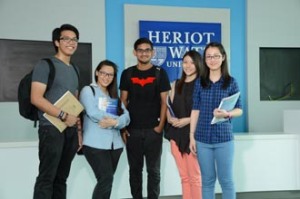



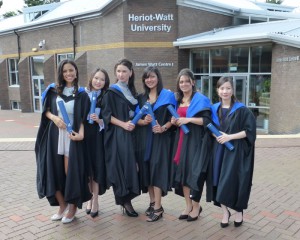






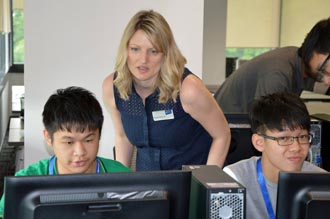
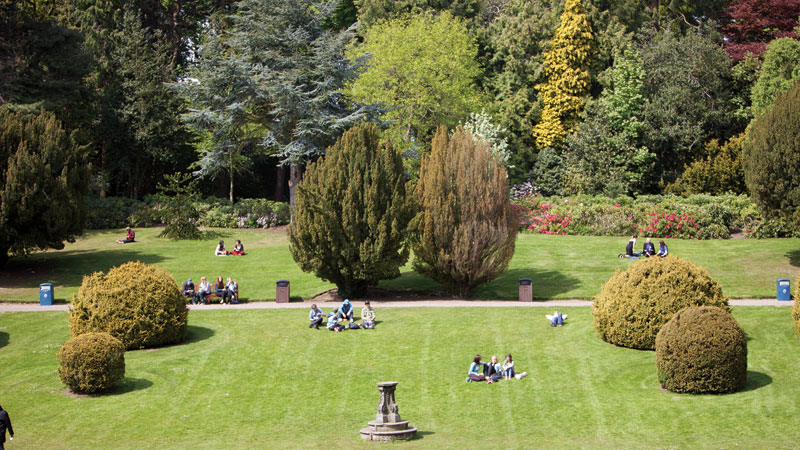





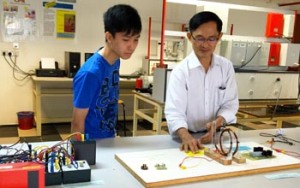








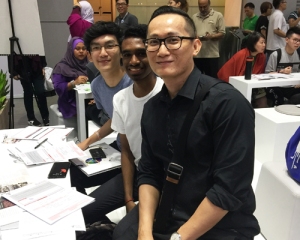
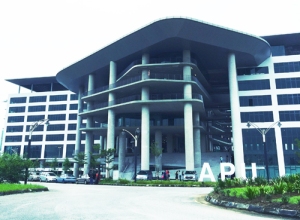

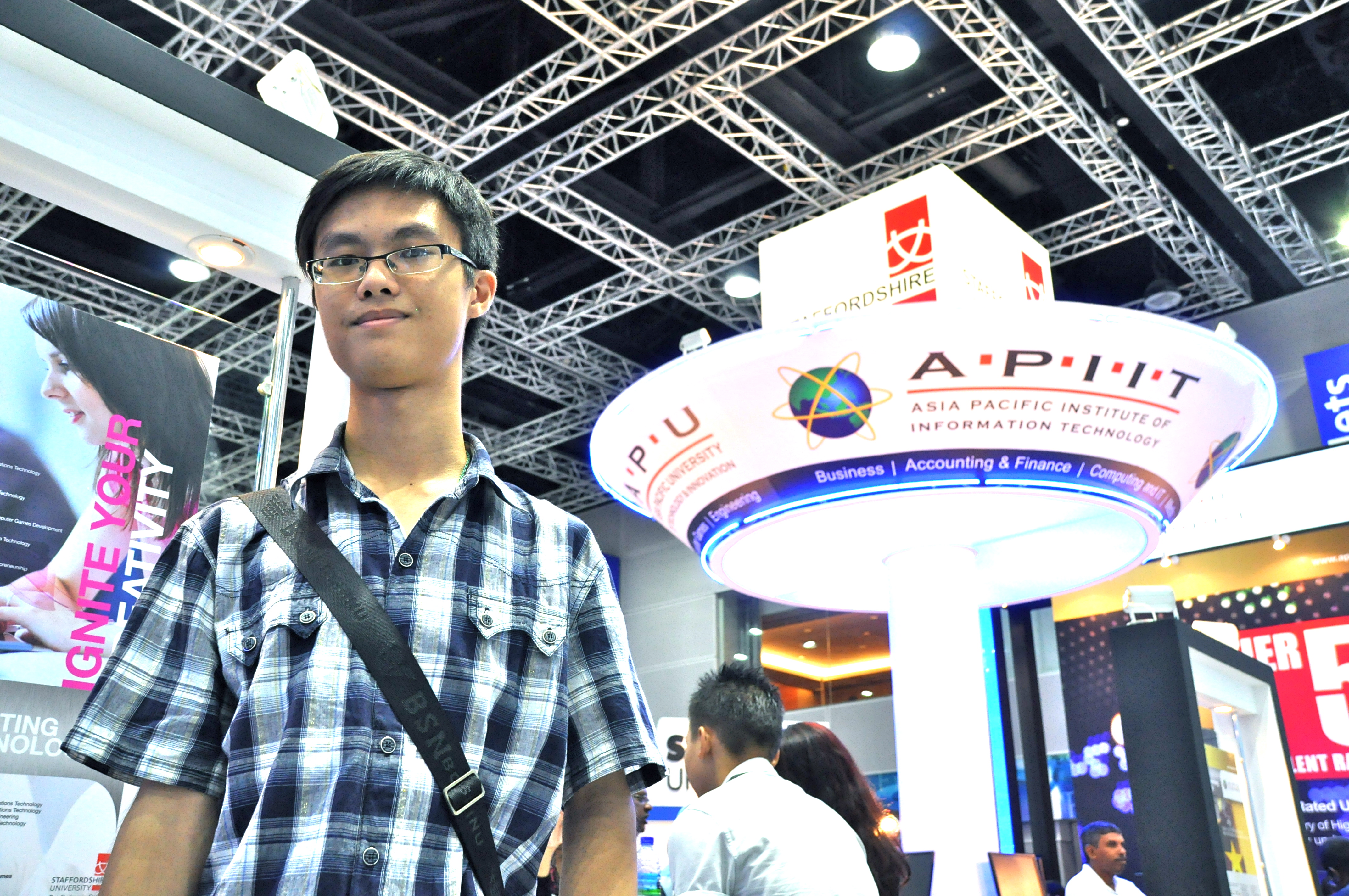









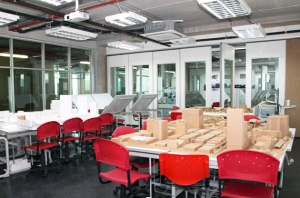





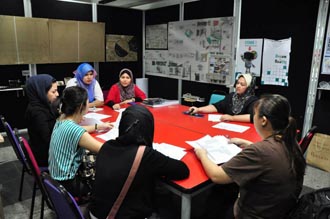



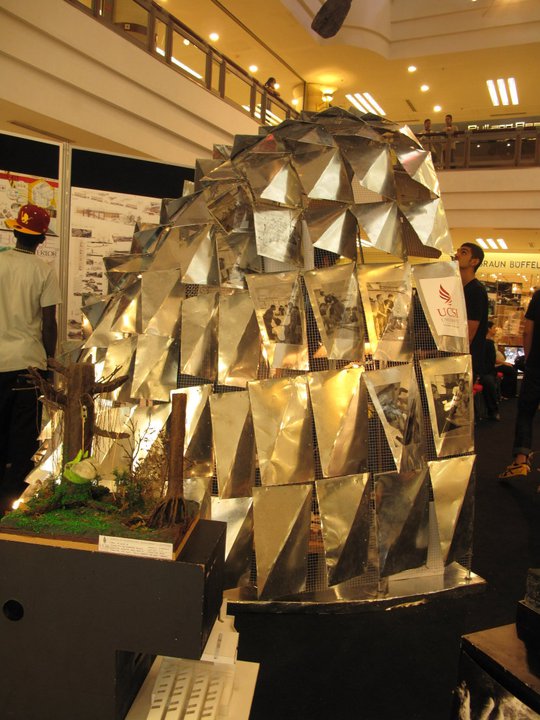







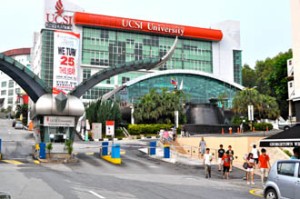




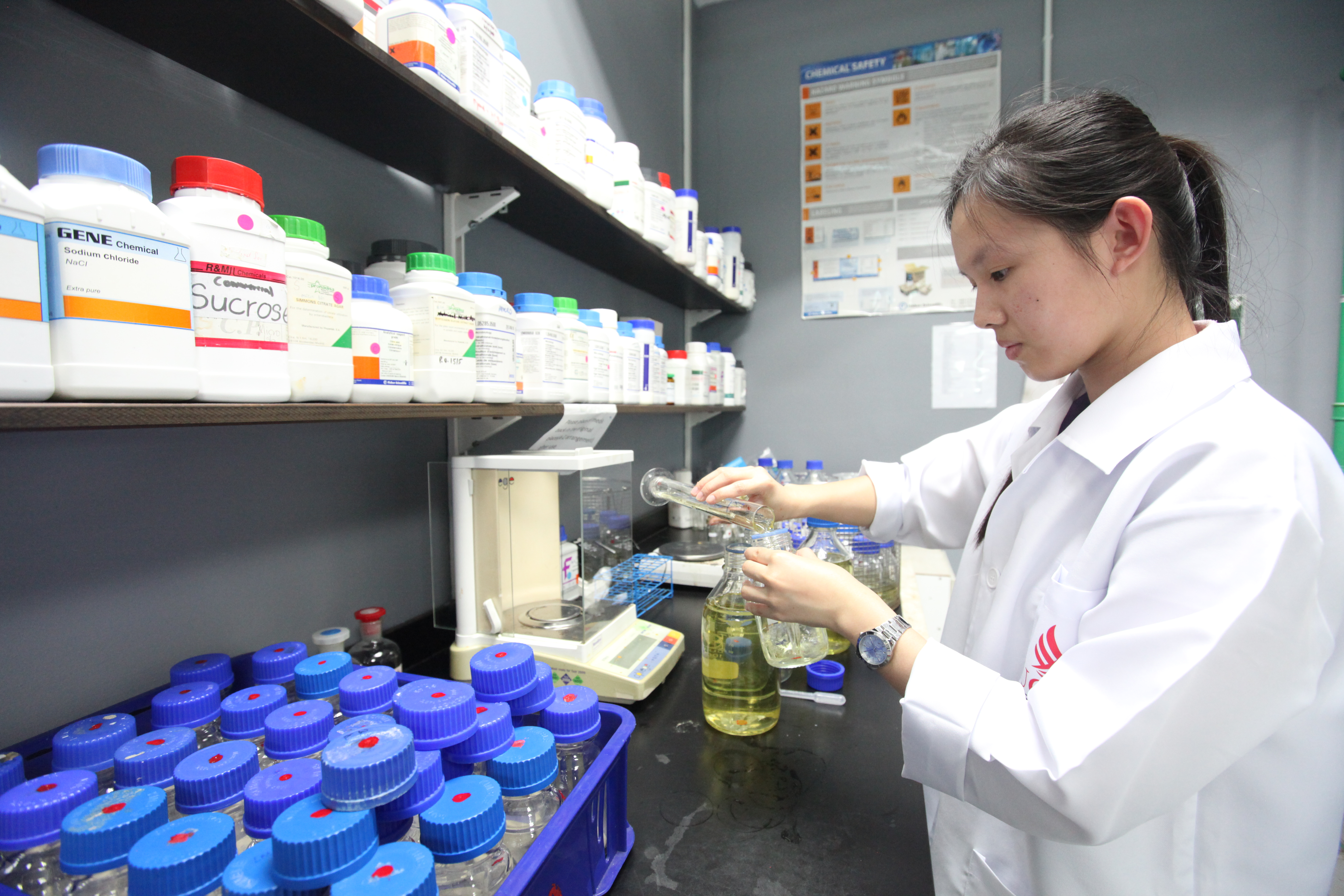



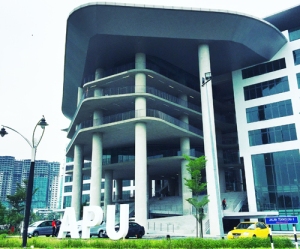

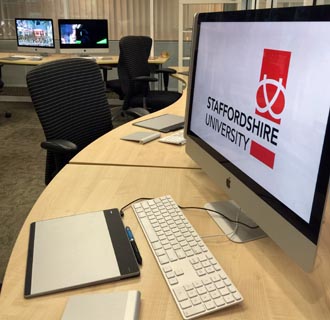





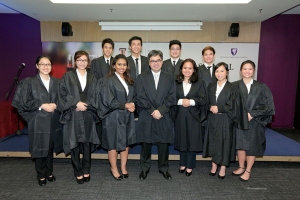


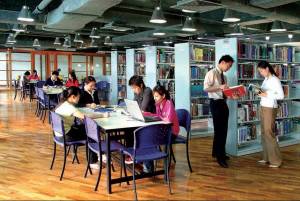


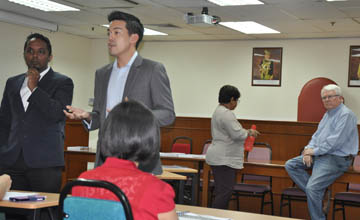





 Top Private Universities & Colleges in Malaysia