Category Archives: Study in Malaysia

List of Best Engineering Courses to Study at Top Universities in Malaysia

Best Engineering Courses to Study at Top Universities in Malaysia

Written by EduSpiral Consultant Services. For more information contact 01111408838

Demand for qualified engineers in Malaysia is increasing. In order to succeed in the engineering field, students must choose a top private university in Malaysia that has the experience and facilities to equip you with the knowledge and skills for a successful career.

Engineering is a career that can take you around the world, working on many different projects as well as being a very well paid job to get into, with different branches of speciality, according to your areas of interest. Qualified and experienced engineering graduates who can communicate well in English are able to migrate overseas to countries like Australia, UK, USA, Europe and more.

There are types of engineering fields and specialisations within those fields. Engineering is one of the highest paid careers of the modern world.

There are many different types of Engineering degrees and they can focus on particular parts of the engineering industry or just a general overview of the technical processes. Whichever engineering degree you choose to study, you will graduate with a host of transferable skills that will enable you to work in a variety of industries in Malaysia or globally.

For more information on the top private universities and colleges in Malaysia, Whatsapp 01111408838

Please fill up the form for more information. If you do not give your mobile number or full name as in IC, your query will not be answered. Please make sure you give a correct email address and check your email including the SPAM or JUNK email folder within 48 hours as we will email you the information. 

Go back

Your message has been sent

Warning
Warning
Warning
Warning
Warning
Warning

Warning.

List of Top Ten Engineering Courses in Malaysia

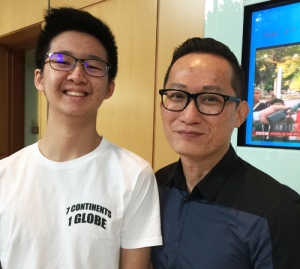
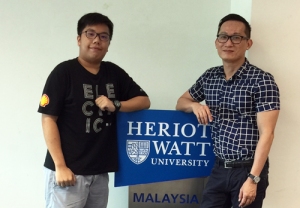
I talked to EduSpiral on WhatsApp and after obtaining all the necessary information. EduSpiral met me and my parents at Heriot-Watt University Malaysia to take us around for a tour.
Aun Jie, Chemical Engineering at Heriot-Watt University Malaysia

30% of the CEOs in Malaysia’s 50 largest companies posses a basic engineering degree. Engineers and technical minded individuals tend to have a certain advantage because they are very structured and solutions-based.

Malaysia needs at least 200,000 engineers by 2020 in order to attain the status of a developed nation. Currently, there are 70,000 registered professional engineers in Malaysia with the Institute of Engineers Malaysia (IEM).

There is a high demand for qualified engineers in Malaysia therefore jobs are easy to come by and salaries are high. Top Private universities in Malaysia offer an affordable option for students who cannot get into public universities or go overseas to study.

The quality of the programmes of some universities are of high standards and accredited by the Board of Engineers Malaysia (BEM) which provides recognition for graduates who want to work overseas.

Below is a list of the Top 10 Engineering Degree Courses in Malaysia for students to choose from after their pre-university studies.

  1. Electrical & Electronic Engineering
  2. Mechanical Engineering
  3. Civil Engineering
  4. Chemical Engineering
  5. Mechatronic Engineering
  6. Petroleum Engineering
  7. Telecommunication Engineering
  8. Aircraft Maintenance Engineering
  9. Medical Electronic Engineering
  10. Materials Engineering

Brief Introduction of the Top Engineering Courses in Malaysia

I was confused about what to study & didn’t want to do what my dad was working as because he was so busy. My mum asked EduSpiral to advise me. He showed my that I am different from my dad & helped me to make the right choice.
Chong Han, Foundation in Engineering at Taylor’s University

It’s important to consider which area of engineering you will specialise in, as they can lead to very different careers. Civil engineers build the structures that define our civilisation – bridges, buildings, transport systems. Electrical engineers study how technology can build new products, or develop new processes for manufacturing and design.

Or you could design and build planes, aircraft, robots, medical equipment, or even computer programmes. Whatever you choose, you can create and develop projects that improve and change lives. Think carefully about what area of engineering interests you most – what do you want to achieve in the long term with your engineering study?

Students who are not sure of what to study after SPM or O-Levels can contact EduSpiral Consultant Services to help guide you to choose the right course and university in Malaysia. At EduSpiral Consultant Services, we have counseled and helped thousands of students to choose the right course and private university to study in Malaysia.

1. Electrical & Electronic Engineering

I was not sure if I could handle engineering but after listening to EduSpiral, I was able to make the right decision.
Jun Chung, Diploma in Electrical & Electronic Engineering at Asia Pacific University

Electrical & Electronic Engineering is a broad and creative profession concerned with the design, development, planning and management of systems and devices which underpin modern economics and contribute to the quality of life.

Electronics engineering deals with devices and systems that use small amounts of electrical energy to analyse, transmit and store information. Transmission of these electronic signals forms the basis of communications and the information technology industry, and includes the field of microelectronics and the use of silicon chip technology.

Electrical engineering is concerned with the basic forms of energy that run our world. Whether it’s gas, hydro, turbine, fuel cell, solar, geothermal, or wind energy, electrical engineers deal with distributing these energies from their sources to our homes, factories, offices, hospitals, and schools.

I was not happy at my former university and found EduSpiral online. He gave me good advise and even met up with me at KDU to tour the college.
Ong Richard, Diploma in Electrical & Electronic Engineering at KDU University College Penang

Electrical & Electronic Engineering covers research, design, development, manufacturing and management of complex systems for many different uses.

The computer, tablet or smartphone you purchased recently is a creation of Electrical Engineering design. Furthermore, robots are comprised of sensors, actuators, microprocessors and sophisticated feedback control systems, all designed by Electrical Engineers. Wireless communication and the Internet are just a few areas electrical engineering has helped flourish, by developing better phones, more powerful computers, and high-speed modems. As we enter the 21st century, the technology that surrounds us will continue to expand and electrical engineers are leading the way.

Imagine the infrastructure that allows you to call anywhere in the world on your mobile phone. Think about the electricity wires that connect your house to the power grid and think about the small electronic devices that you are probably carrying in your pocket or bag. Those who study  will never be out of a job.

In order to succeed as an Electrical & Electronic Engineer in Malaysia, students should choose the best private universities in Malaysia to study Electrical & Electronic Engineering so that you can gain the necessary knowledge and skills. Students after SPM, O-Levels, STPM or UEC, should visit the universities’ campuses to look at the facilities and talk to the lecturers to gauge their experience. The Electrical & Electronic Engineering degrees at the top private universities in Malaysia should be accredited by MQA and also the Board of Engineers Malaysia (BEM).

2. Mechanical Engineering

I loved motorsports and EduSpiral gave me great advise to help guide me to achieve my dream.
Justin Moo, Mechanical Engineering graduate from Taylor’s University

Mechanical Engineering is a discipline of engineering that applies the principles of physics and materials science for analysis, design, manufacturing, and maintenance of mechanical systems. It is the branch of engineering that involves the production and usage of heat and mechanical power for the design, production, and operation of machines and tools.

The mechanical engineering field requires understanding of core concepts including mechanics, kinematics, thermodynamics, materials science, and structural analysis. Mechanical engineers use these core principles along with tools like computer-aided engineering and product lifecycle management to design and analyze manufacturing plants, industrial equipment and machinery, heating and cooling systems, motorized vehicles, aircraft, watercraft, robotics, medical devices and more.

Students will need to have a good grasp of Mathematics and Physics to enter into a 4-year engineering degree Board of Engineering Malaysia (BEM) accredited programme at a top university in Malaysia. The Mechanical Engineering degree at top universities in Malaysia teaches students how to design and manage the construction, operation and maintenance of tools and equipment used in many industries.

3. Civil Engineering

EduSpiral picked us up to tour the university
& helped guide me to choose the right university after my A-Levels.
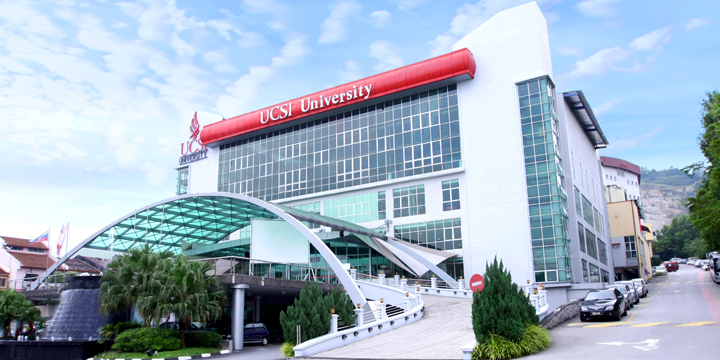
Yao Seng, Civil Engineering, UCSI University

Civil Engineering is a professional engineering discipline that deals with the design, construction, and maintenance of the physical and naturally built environment, including works like bridges, roads, canals, dams and buildings. They must consider many factors in their designs, from the costs to making sure the structure will stay intact during bad weather. Civil engineering in Malaysia takes place on all levels: in the public sector and in the private sector from individual homeowners through to international companies.

Many civil engineers manage people and projects. A civil engineer may oversee a construction site or work in design, construction, research, and teaching. There are many specialties within civil engineering, such as structural, construction, environment, and transportation.

Civil engineers usually work as part of a team from a wide range of fields. Therefore, apart from having good technical knowledge and aptitude, people skills are important.  Most civil engineering projects need to be able to stand up to natural forces (like wind and water), and man-made forces (like vehicles, equipment and people). For example, civil engineers:

  • Design roads so they don’t sink into the ground when heavy lorries drive along them
  • Build flats so they don’t fall over when the wind blows
  • Construct tunnels so they don’t flood when it rains

You need to be able to understand and measure forces and movement, and to calculate the strength of the structures you’re designing. What you learn in maths and science – especially physics – will help you do this.

4. Chemical Engineering

I contacted EduSpiral to find out which UK branch university campus would be best for my son. EduSpiral advised me on WhatsApp & Phone calls providing facts & evidence on the university rankings & course details. He arranged for us to visit the campus as we were from Johor. (Mrs. Mah)
Chee Yuan, Chemical Engineering at Heriot-Watt University Malaysia

Chemical Engineering is the branch of engineering that deals with the application of physical science (e.g., chemistry and physics), and life sciences (e.g., biology, microbiology and biochemistry) with mathematics and economics, to the process of converting raw materials or chemicals into more useful or valuable forms. Chemical engineers ensure the processes are operated safely, sustainably and economically when converting raw materials or chemicals into more useful or valuable forms.

Chemical engineering is about designing the product and the process for manufacturing foods, fuels and materials from their raw state into a new form. Chemical engineers create the systems and equipment used in industrial chemical processing.  Chemical engineers in Malaysia are responsible for producing processed foods as well as engineering petrol, developing different plastics, dyes, paints and papers. Chemical Engineering usually operates on an industrial scale. A chemical engineer makes things happen efficiently on a massive, industrial manufacturing scale. And skills in chemistry, physics and mathematics, and even economics are what makes a chemical engineer so valuable.

There are not many universities that offer the Chemical Engineering degree in Malaysia and for those who offer, most are still new and do not have the accreditation from the Board of Engineers Malaysia (BEM). Students should choose the best university to study so that they can gain the necessary skills to succeed in the competitive work environment. In order to succeed as a Chemical Engineer in Malaysia, students should choose the best private universities in Malaysia to study Chemical Engineering so that you can gain the necessary knowledge and skills.

5. Mechatronic Engineering

I met EduSpiral at the Education Fair and he helped me to filter all the information from the universities and choose the best university that fit me.”
Vincent Hoy, Mechatronic Engineering Scholarship student at Asia Pacific University

Mechatronic engineering is the combination of mechanical, electrical & electronic, robotics and computing. Such combined systems are known as electromechanical systems and have widespread adoption. Examples include automated manufacturing systems, heating, ventilation and air-conditioning systems and various subsystems of aircraft and automobiles.

A Mechatronic Engineer designs smart machines that are aware of their surroundings and can make decisions. It is a new branch of the engineering field with very good job prospects in Malaysia and globally.

Mechatronic engineers are at the leading edge of the development of new products, devices and processes. French standard NF E 01-010 gives the following definition: “approach aiming at the synergistic integration of mechanics, electronics, control theory, and computer science within product design and manufacturing, in order to improve and/or optimize its functionality”.

6. Petroleum Engineering

My friend introduced me to EduSpiral. He gave me all the information on Facebook & then met us at the Education Fair to guide us on how to choose the right university
Lyngkaran, Engineering at Taylor’s University

Petroleum engineers work in the practical application of basic sciences to the challenges and problems associated with oil and gas exploration, drilling and production.

Petroleum engineering is the exact study of how to initially locate and subsequently extract a variety of energy resources such as natural gas and oil from the earth’s surface. In simple terms, it is an engineering field that’s basically concerned with a wide range of activities which are generally related to the extraction and refining of fossil fuels.

The role of a Petroleum Engineer is to recover oil and gas from the earth in order to satisfy the energy hungry world we live in. Think exploration and drilling, think production and processing, think transport and even think environmental impact. Petroleum engineers work in all those areas and more, with a particular focus on the economics that drive this highly volatile industry. If there’s a more sustainable way to do it, one that’s better and more economical, you can bet a petroleum engineer will soon discover it.

In a degree in Petroleum Engineering at a top private university in Malaysia, students will be taught how to apply practical science to the challenges and problems associated with oil and gas exploration, drilling and production. During your Petroleum engineering degree programme you will complete engineering courses in drilling, well logging and well engineering, reservoir engineering. Each of the degree subjects will give you a good knowledge of oil and gas engineering.

7. Telecommunication Engineering

I wasn’t sure which university to study at and found EduSpiral online. He provided good advise & helped me with my application. I love my university life now.
Hanson, Foundation in Science (Engineering) at UCSI University

Telecommunications engineering combines electrical engineering with computer science to enhance telecommunication systems. The work of a telecommunications engineer ranges from basic circuit design to strategic mass developments.

A telecommunication engineer is responsible for designing and overseeing the installation of telecommunications equipment and facilities, such as complex electronic switching systems, copper wire telephone facilities, and fiber optics. Telecommunication is a diverse field of engineering which is connected to electronics, civil, structural, and electrical engineering. They are responsible for providing the method for customers to have telephone and high-speed Internet data services.

Telecom engineers are often expected, as most engineers are, to provide the best solution possible for the lowest cost to the company. This often leads to creative solutions to problems that often would have been designed differently without the budget constraints dictated by modern society. In the earlier days of the telecom industry, massive amounts of cable were placed that were never used or have been replaced by modern technology such as fiber optic cable and digital multiplexing techniques.

8. Aircraft Maintenance Engineering

“EduSpiral provided me with good advise on where to study Aircraft Maintenance Engineering & arranged for the scholarship interview for me too.”
Wai Hoe (Right), Full Scholarship for Aircraft Maintenance Engineering at Nilai University

The aircraft maintenance, repair and overhaul (MRO) has been earmarked by the government as a Malaysian growth industry under the Economic Transformation Programme (ETP). Malaysia has planned to become a regional MRO Hub by 2020 to achieve its stated vision of becoming an RM193.3 billion (US$65 billion) industry.

The affordability of air travel has led to a significant growth in the air carrier industry, creating a huge demand for aircraft maintenance staff. Suitably qualified personnel, especially those allowed to certify aircraft worthiness, command high salaries and are highly sought after.

An Aircraft Maintenance Engineer is responsible for the maintenance, repair and the overhaul of an aircraft. Graduates who have completed the necessary work experience (usually 3-5 years) and obtained their European Aviation Safety Agency (EASA) licence will be qualified to sign off on the airworthiness of an aircraft. Employment opportunities will mostly be with airlines and MRO (maintenance, repair and overhaul) centres. Graduates with the EASA License can earn up to RM8,000 a month while those without earn about RM2,000.

Other employment opportunities may arise from aerospace parts manufacturers and the civil service or they can find work as aircraft turbine engine inspectors or process engineers.

9. Medical Electronic Engineering

I contacted EduSpiral to find out which UK branch university campus would be best for my son. EduSpiral advised me on WhatsApp & Phone calls providing facts & evidence on the university rankings & course details. He arranged for us to visit the campus as we were from Johor. (Mrs. Mah)
Chee Yuan, Chemical Engineering at Heriot-Watt University Malaysia

Medical Electronics Engineering is a 4-year specialist engineering programme that is especially suited to individuals whose hearts are in engineering, but who also want to contribute to medical science and the improvement of health care in Malaysia. Medical electronics engineers are the scientists who design, test, manufacture and maintain all the health equipment on which doctors, hospitals and human lives depend.

Being a specific field, students will get to be thoroughly familiarised with such subjects like engineering mathematics, engineering chemistry, engineering physics, electronics and electrical engineering, mechanical engineering, civil engineering, network analysis, logic design, analogue and digital circuits, control systems, medical physics, and other exciting subjects.

At the end of the Medical Electronics Engineering degree programme, students will have amassed the knowledge to fully understand the workings of advanced medical equipment; correctly identify and analyse a problem and apply the appropriate computing requirements to solve it; design, formulate and implement computer medical systems; apply the latest tools and techniques to improve healthcare; understand health and safety issues pertaining to medical electronic systems and equipment; uphold ethical and environmental standards in the provision of healthcare systems, and various other expert responsibilities.

I went for the EduSpiral Education Fair and gained a lot of information. After the fair, EduSpiral even arranged to take me around for a campus tour, assisted me with application and accommodation as well.
Nixonn Cheong, Engineering at UCSI University

10. Materials Engineering

Materials engineering investigates the relationship between the structure of materials at both the atomic and molecular scales and how this relationship relates to the materials macroscopic properties.

They are involved in the development, processing, and testing of the materials used to create a range of products, from computer chips and aircraft wings to golf clubs and snow skis.

They work with metals, ceramics, plastics, semiconductors, and composites to create new materials that meet certain mechanical, electrical, and chemical requirements.

Study Engineering at the Best Private Universities in Malaysia

EduSpiral helped me to transfer my credits from TARC into the business degree. They even picked me up from the bus station to check into my hostel.
Jayden Cheah, from Pangkor studying Business at UCSI University

Students after SPM or O-Levels who are sure of choosing engineering for their degree studies may go for the Foundation in Engineering. If you are still not sure whether you want engineering or other science courses, you may choose the Foundation in Science programme at premier private universities in Malaysia.

Alternatively, students may enter an engineering diploma course such as the Diploma in Electrical & Electronic Engineering, Diploma in Civil EngineeringDiploma in Mechanical Engineering, Diploma in Mechatronic Engineering or Diploma in Materials Engineering with at least 3 credits in SPM or O-Levels including Maths & Science. Upon completion of the engineering diploma course students may enter into Year 2 of the relatedEngineering Degree programme .

Pre-University graduates in Malaysia from programmes such as UEC, STPM, A-Levels, SAM, CPU, AUSMAT and others may enter directly into the BEM Accredited Engineering degree programme providing they meet the minimum entry requirements.

Engineers use computer technology and mathematical models to work out the solution to structural, or mechanical problems. In an engineering degree course in Malaysia, students will spend time in the laboratory or use computers to understand how to solve problems. You will also have the opportunity to apply your theory to real-life projects through case-studies and internships.

I contacted EduSpiral to find out which UK branch university campus would be best for my son. EduSpiral advised me on WhatsApp & Phone calls providing facts & evidence on the university rankings & course details. He arranged for us to visit the campus as we were from Johor. (Mrs. Mah)
Chee Yuan, Chemical Engineering at Heriot-Watt University Malaysia

Engineering degrees are extremely varied and can focus on particular parts of the engineering industry or just a general overview of the technical processes. Whichever degree you choose to study, you will graduate with a host of transferable skills that will enable you to work in a variety of industries.

It is recommended for students to choose an engineering degree programme that is general rather than specific so that their job prospects are wider. If you choose a course such as aerospace engineering, your job scope is only limited to the aerospace industry. A degree in mechanical engineering or mechatronic engineering would provide you the opportunity to work in the aerospace industry as well as other industries.

Before starting your career in engineering it is important to know which engineering field you would like to specialise in because of the variety of sectors within the engineering industry. If you are certain of what type of engineer you wish to become, you should study a degree which focuses specifically on that field of study.

If you are not sure, that is still alright as students after SPM or O-Levels can take the Foundation course at a reputable private university for one year. During that one year, you should talk to the seniors and lecturers to figure out which engineering field best fits you.

To enter into the Foundation in Engineering or Foundation in Science, students after SPM or O-Levels will need at least 5 credits including Maths and Physics (Chemistry for Chemical Engineering) and pass in BM and Sejarah. With 3 credits in SPM including Maths and a Science subject, students can join the Diploma in Engineering course before entering into Year 2 of the Degree course.

Which Engineering field is the best for me to study in Malaysia?

EduSpiral took us on a campus tour & gave in-depth information to help me decide. Eugene Ong, Electrical & Electronic Engineering at UCSI University
EduSpiral took us on a campus tour & gave in-depth information to help me decide.
Eugene Ong, Electrical & Electronic Engineering at UCSI University

Students should choose your engineering field by passion. Ask yourself, “What gets me excited? Projections may show a future demand in certain engineering fields, but do you want to work very hard for the next four years in order to get a job in an area you don’t really like?

Students should identify your true interests. Do you like tinkering with devices? Mechanical engineering or mechatronic engineering are good choices for you. Are you passionate about solving the energy crisis? Then you might consider petroleum engineering, chemical engineering, or electrical engineering. And if you spend all your spare time writing code, computer science is an appropriate career path.

Choosing to study in an engineering field that you have passion in, will make you more likely to succeed as you would be willing to put in the hard work needed to be an expert in your field.

Don’t worry I know it is very difficult for you to give the answer so I am here to help you to know your interest in a particular engineering field of study. It’s very simple just give the answer of some question and then decide yourself that which branch do you like most or which branch suited to you according to your interest. We will discuss so that you can choose the best engineering field to study according to your interest.

Excellent Private Universities & Colleges in Malaysia for Mechanical Engineering and Mechatronic Engineering Degree & Diploma Courses

My mom contacted EduSpiral to ask his advise with regard to my results & where to study. He met us at the university to guide us and even obtained a partial scholarship for me.
Ignatius, Mechatronic Engineering at Asia Pacific University

Top Notch Private Universities & Colleges in Malaysia to Study Applied Geology, Chemical Engineering & Petroleum Engineering Degree Courses

I contacted EduSpiral to find out which UK branch university campus would be best for my son. EduSpiral advised me on WhatsApp & Phone calls providing facts & evidence on the university rankings & course details. He arranged for us to visit the campus as we were from Johor. (Mrs. Mah) Chee Yuan, Chemical Engineering at Heriot-Watt University Malaysia
I contacted EduSpiral to find out which UK branch university campus would be best for my son. EduSpiral advised me on WhatsApp & Phone calls providing facts & evidence on the university rankings & course details. He arranged for us to visit the campus as we were from Johor. (Mrs. Mah)
Chee Yuan, Chemical Engineering at Heriot-Watt University Malaysia

Civil Engineering Degree Courses Accredited by Board of Engineers Malaysia (BEM) at Private Universities & Colleges in Malaysia

Award-Winning Private Universities & Colleges in Malaysia for Electrical & Electronic Engineering and Telecommunication Engineering Degree Courses

My friend introduced me to EduSpiral. He gave me all the information on WhatsApp & helped me to apply. Chong Keat, Electrical & Electronic Engineering at Heriot-Watt University Malaysia
My friend introduced me to EduSpiral. He gave me all the information on WhatsApp & helped me to apply.
Chong Keat, Electrical & Electronic Engineering at Heriot-Watt University Malaysia

Private Universities & Colleges in Malaysia to StudyAerospace Engineering, Aircraft Maintenance Engineering & Other Engineering Degree Courses

Top Rated Private Universities & Colleges in Malaysia to Study Engineering Diploma & Foundation Courses

I went for the EduSpiral Education Fair and gained a lot of information. After the fair, EduSpiral even arranged to take me around for a campus tour, assisted me with application and accommodation as well. Nixonn Cheong, Engineering at UCSI University
I went for the EduSpiral Education Fair and gained a lot of information. After the fair, EduSpiral even arranged to take me around for a campus tour, assisted me with application and accommodation as well.
Nixonn Cheong, Engineering at UCSI University

What qualifications/skills are needed to study engineering in Malaysia?

EduSpiral took these students separately to tour the campus and provided course counseling to help them make the right choice. Kian Yong (Mechanical Engineering), Yammie (Business), & Kenneth Pang (Architecture) at UCSI University’s Orientation

On a personal level, you will need to be confident, motivated and flexible.

In order to study engineering in Malaysia, you’ll obviously need a strong interest in problem solving, and maths and science, just as we discussed before, but you’ll also need a strong command of the English language. You’ll be spending a lot of time in the laboratory and you’ll be using your computer and maths skills a lot, in theory and practical work. There will be a lot of problem solving, and applying this to case studies, as well as work experience and theory essays.

As a general rule you’ll need to be good in maths, physics, chemistry and biology, and if you’re heading into a more specific area you’ll need to check out the specialist subjects for that, as they vary hugely. This is why it’s very important to decide on your subject quite soon, as you may need a different A level requirement, however as a general rule, maths and sciences are your basic needs.

You can contact EduSpiral Consultant Services to get a clearer idea on your specific requirements with regards to this, and ask about language support whilst you’re on campus.

What will a degree in Engineering cost at a top private university in Malaysia?

“My dream is to study engineering but I was from the arts stream. EduSpiral helped me to find the right university to fulfil my dream.”
Andrew Tan from Sitiawan, studying engineering at Nilai University

Obviously the course you choose and the university will all make a difference to how much the degree will cost in terms of tuition fees, and you should talk to your parents about how much they have set aside for your studies, as this will go a long way into funding your engineering study adventure.

As a general rule, and again, this depends on a lot of factors, you can expect a cost of around RM80,000 to RM180,000 total for the tuition fees for 4 years. You should be able to get help and advice on living arrangements from EduSpiral and the cost of living very much depends on which city you choose to study in. Most private universities in Malaysia will have on-campus accommodation and off-campus accommodation. It’s simply a case of looking into your options and your preferences.

As you can see, choosing engineering as your career means a lot of decisions to make, not only regarding the road you see your future career going down, in terms of the type of engineering you want to specialise in, but also the general things about studying abroad, such as the single most important one – which university?!

EduSpiral Consultant Services- Your Personal Online Education Advisor

Established since 2009, EduSpiral Consultant Services helps provide information and counselling on courses and universities in Malaysia.

EduSpiral Consultant Services represents the best colleges and universities in Malaysia offering a

After I finished my SPM, I felt confused about my further study. Eduspiral, was so patient to answer all my questions and took us around for a campus tour.
Hui Ying, Diploma in Accounting at Asia Pacific University

wide range of choices for students to choose from. These colleges and universities offer value for money in the quality of education and excellent facilities that you get.

These universities and colleges are chosen by EduSpiral because they represent the best in their fields in Malaysia and affordable. EduSpiral provides in-depth information and counseling on their courses so that students are able to make the right choice.

If you are still not sure what to study, please contact us and we will send you a free EduSpiral Career Assessment Form.

Please contact us for more details.

Please fill up the form for more information. If you do not give your mobile number or full name as in IC, your query will not be answered. Please make sure you give a correct email address and check your email including the SPAM or JUNK email folder within 48 hours as we will email you the information. 

Go back

Your message has been sent

Warning
Warning
Warning
Warning
Warning
Warning

Warning.

List of Top Ten Degree Courses in Malaysia

How to Choose the Best Degree Course to Study in Malaysia

Written by EduSpiral Consultant Services For more information contact 01111408838

After STPM, A-Levels, Foundation, SAM, AUSMAT or other Pre-University Programme there are many different degree programmes at top private universities and colleges in Malaysia for you to choose from and sometimes it can be confusing. Students in Malaysia who are not sure of what to study after STPM can contact EduSpiral Consultant Services to help guide you to choose the right course and university in Malaysia

Choosing the right course to study in Malaysia after high school is one of the most important decisions you can make in your life. This can be a confusing and difficult time if you are unprepared. With the wide variety of courses available to a student, the time after STPM can be a confusing one if not guided properly by an experienced and knowledgeable education counselor.

An experienced Education Advisor would be invaluable in assisting you to choose the right course. Here at EduSpiral Consultant Services, we do our research on the job demand for the careers in Malaysia, Salary Reports, and universities so that we can advise our students based on facts and evidence.Students need to talk to the right education counselors so that you get the right information to help you in making this life-changing decision.

I have grouped all the courses that are popular and have job demand in Malaysia into 10 main areas of study. Some courses have higher job demand and salary than others. You have to choose based on your list of criteria of what’s important to you. This list of top ten courses in Malaysia makes it easier for students to narrow down to which area that you are interested in and would best suit you.

For a personalised advise on how to choose the right course contact 01111408838

Please fill up the Form below and I will WhatsApp you and provide you with sound advise on how to choose the best private university or college in Malaysia to study at. If you do not give your mobile number or full name as in IC, your query will not be answered. Our knowledgeable & experienced counselor will send you a message on WhatsApp & provide assistance from there.

Go back

Your message has been sent

Warning
Warning
Warning
Warning
Warning
Warning
Warning
Warning
Warning

Warning.

The Top Ten List of Best Courses to Study in Malaysia

My father wanted me to study at the best university for actuarial science & I wasn’t sure about my results. EduSpiral met up with us, explained about the course and university.
Min En, Actuarial Science, Heriot-Watt University Malaysia

Choosing a course to study after SPM, UEC, STPM, O-Levels or A-Levels is a process in finding out who you are and what you are good at. An experienced Education Advisor would be invaluable in assisting you to choose the right course.

Here at EduSpiral Consultant Services, we do our research on the job demand for the careers in Malaysia, Salary Reports, and universities so that we can advise our students based on facts and evidence. Students need to talk to the right education counselors so that you get the right information to help you in making this life-changing decision.

Choosing a top private university in Malaysia to study after SPM, O-Levels, UEC, Pre-U, A-Levels or STPM takes time, it is a process in finding out which one best fits you. You need to talk to the right counselors who are knowledgeable and experienced to help you to choose the best course to study in Malaysia.

  1. Best Engineering & Built Environment Courses to Study in Malaysia
    I met EduSpiral a few years back & although I wanted to pursue his advise, my parents asked me to take STPM. I wasn’t satistied with my STPM results and finally, EduSpiral helped me to understand clearly that SAM was the best Pre-U that suit me.
    Khalil, South Australian Matriculation (SAM) at Taylors College
  2. Best Computing & Information Technology (IT) Courses to Study in Malaysia
  3. Best Accounting, Finance & Quantitative Studies Courses to Study in Malaysia
    EduSpiral picked us up from Subang Airport to take us to visit the universities & advised on which is the best for mass communication.
    Hui Lan, Mass Communication at KDU University College
  4. Best Business Management Courses to Study in Malaysia
  5. Best Mass Communication Courses to Study in Malaysia
  6. Best Health Science Courses to Study in Malaysia
    I had financial difficulties for my studies and contacted EduSpiral for advise. He took me and my mum to tour the college which fit my budget. It had excellent facilities & a job guarantee!
    Calvin Teoh, Graduated with Diploma in Culinary Arts at YTL International College of Hotel Management
  7. Best Applied Science Courses to Study in Malaysia
  8. Best Humanities & Social Science Courses to Study in Malaysia
  9. Best Art and Design Courses to Study in Malaysia
    I was confused about what to study & at which university. Talking to EduSpiral helped clear my doubts.
    Zen Yi, Graduated from Software Engineering at Asia Pacific University (APU)
  10. Best Hospitality, Tourism & Culinary Arts Courses to Study in Malaysia

Choosing the Best Course to Study in Malaysia

Our mum asked us to talk to EduSpiral as we did not know what to study. EduSpiral had helped our older sister before. He met us at Taylor’s, talked to us and then gave us a tour.
Gan twins, Foundation in Arts at Taylor’s University

Choosing the right course after high school or Pre-University can be confusing. Other than interest in the course, students must research carefully the course for its job demand and salary in Malaysia or globally if you want to work overseas. You don’t want to choose a course and then find out that there is no job demand for it or that the salary is too low without much career prospects.

 To choose the best course to study in Malaysia, you have to ask yourself the following questions:

  1. Look at your results – what are your best & worst subjects, and which subjects are your favourite?
  2. What are your interests & hobbies?
  3. What is your passion?
  4. Talk to the counselors at the private universities to find out in detail about the curriculum of the course to see which one best fits you.
  5. What is your budget? Discuss the budget for your studies with your parents. A Pre-University (Pre-U) Programme will cost from RM10,000 to RM50,000 while a degree at a private university will cost from RM50,000-RM100,000 for a business course to RM130,000 for a Pharmacy course. To study overseas for degree will cost from RM150,000 to RM200,000 a year including cost of living. If this is out of your budget, then you should consider taking the STPM and going for Public University. If you do not have the finances to study at private universities, then just go for STPM. Note that STPM is extremely tough and takes 2 years of your time. You may not get the degree of your choice when entering into Public University.
  6. Job demand for the career of choice. There is no point in choosing a course out of passion and then graduate to find out that you cannot get a job in that field.
  7. Salary of the career of choice

If you are not sure what to study, do ask a trained counselor and always make decisions based on evidence and facts. The decisions that you make now, can change your life forever. You can contact us for a free career test to help you understand yourself better so that you are able to make the right decision.

What am I good at? What am I not good at?

Studying Information Technology (IT) was my dream but my results didn’t achieve the requirements. But EduSpiral gave me in-depth advise & helped me to choose the right course that suited me.
Harold, Diploma in Business IT at Asia Pacific University (APU)

An undergraduate degree course in Malaysia lasts three to five years – that’s a long time to spend studying something which you don’t enjoy, especially at a more intense level! First of all ask yourself what you have enjoyed studying at secondary school in Malaysia.

Your SPM or O-Level results will show what you are actually good at. Having good results in Maths, you can consider Actuarial Science, Accounting, Computing or Finance courses. Having narrowed down to these courses, you can go for the Foundation in Arts for 1 year before really choosing which one to study for your degree.

Alternatively you can also think about subjects you definitely don’t want to study at university level and which you can’t wait to say goodbye to. Crossing these off will make your list of options smaller and less overwhelming.

Your parents and friends would also be able to give you an idea of what you are good at. Looking at your hobbies and interests would help to narrow down the list. Your hobby in drawing could open the possibility of choosing design courses.

What qualifications do I have already?

You may already have an idea of the area you want to study and find a career in, which will have dictated what subjects you’re already studying at school. However it’s good to look at the qualifications and grades you have (or are predicted to have) to see what you are already eligible to study. Some students want to study medicine but in their SPM results, they only managed to get 5Cs. To study in medicine, one needs to have at least 5Bs including the science subjects. Students need to be realistic in choosing their course of study by looking at their actual results.

If your actual results do not meet the entry requirements for your particular course of interest, then you may need to consider other options or to resit the SPM or O-Level exam to get the necessary results.

What are my interests?

I was planning to study at a “famous” university but EduSpiral provided facts & evidence that First City UC had won many awards compared to my “famous” university.
Zi En, Interior Design at First City University College

If you can’t think of an academic subject which you’re especially strong at or one which you would want to pursue at university-level, think about your non-academic interests outside of school. It’s likely that you’re much more passionate about these but you’ve never even thought you could study a course related to these (or pursue a career in this area).

Your hobbies, interests and which clubs & societies that you have joined in secondary school would give you some idea of what you are good at. These, together with your actual results would contribute to your decision-making process in choosing the right course of study.

New courses are being created all the time to prepare and develop talent for growing industries, such as animation or computer game design. Projects, events and knowledge related to these interests can all contribute to show that you’re passionate about this area and eligible to study on a course which can prepare you for a related career.

In other cases there may be several routes to your dream career, some of which may allow you to study something different before transferring or. Talk to those who are already working in this area to see how they got to where they are now, including what they studied (or even what they wish they had studied).

What do I want to do for my career?

You may have a clear idea of what you want to do for a career which makes choosing a course to study

After I finished my SPM, I felt confused about my further study. Eduspiral, was so patient to answer all my questions and took us around for a campus tour. Hui Ying, Diploma in Accounting at Asia Pacific University
After I finished my SPM, I felt confused about my further study. Eduspiral, was so patient to answer all my questions and took us around for a campus tour.
Hui Ying, Diploma in Accounting at Asia Pacific University

easier, particularly if you want to become a doctor or lawyer. You can search our articles section to see if we’ve already written about your dream graduate career and how you can achieve this.

When making a decision about your career, it is important to take into consideration the average salary. Starting salaries in Malaysia is about RM2800 to RM3000 for most careers while starting salaries in Singapore is about SGD2714. Although starting salaries is generally the same level for everyone, what you do in the following years of your job will determine how much higher you would get.

Therefore, it is also important to choose the right university that would equip you with the necessary knowledge and skills to move up in your career. Many students make the mistake of choosing the cheapest university for their studies and then later realise that they cannot get the promotion or salary increment because they did not get the skills needed. English is one of these skills that most students do not take seriously about its importance for promotion and salary increments in future jobs.

Think about it, if you are unable to write a report or email in proper English or do a presentation smoothly, how would you be able to become a manager or CEO eventually?

Top Criteria to Consider When Choosing a Course in Malaysia

I wasn’t sure which university to study at and found EduSpiral online. He provided good advise & helped me with my application. I love my university life now.
Hanson, Foundation in Science (Engineering) at UCSI University
  • Is the course popular at that college or university? Quality/reputation/ranking of the private college in Malaysia
  • Which are the awarding bodies? Are the certificates recognised for enter at all universities overseas?
  • Are the courses recognised and approved by the Ministry of Education Malaysia and the relevant external bodies? For example, Malaysian Medical Council (MMC), Malaysian Pharmacy Board, Board of Engineers Malaysia (BEM), Malaysian Institute of Accountants (MIA), Lembaga Arkitek Malaysia (LAM), Persatuan Arkitek Malaysia (PAM), etc.
  • Are the courses accredited by the Malaysian Qualifications Audit (MQA)?
  • Subjects offered in the Course. Do they help you to achieve your undergraduate academic goals and equip you well to handle the challenges of the working environment?
  • What is the class size? Will you have personal attention from the lecturer?
  • Do they have enough students to start a class?
  •  How many students do they have studying that course at that university?
  •  What is the duration of the course?
  • When do you get your results so that you can meet the application deadline for the overseas university?
  •  Quality of lecturers. What are their qualifications? How many years of experience in teaching?
  • Faculty contact/classes taught by full-time qualified & experienced faculty
  •  Ask your friends who have studied there for their opinion. Ask your friends who are currently studying there as well.
  • Entry requirements
  • How much money do I have to pay for the course and cost of living? Ask your parents. Note that you will need to have enough to pay the tuition fees as well as your cost of living. (tuition, hostel, food, transportation, etc.)
  • How much are the tuition fees? Does it include the external exam fees and other fees?
  • How much is on-campus accommodation?
  • How much is off-campus accommodation? Note that it might be cheaper to find off campus accommodation on your own with friends. Is the accommodations near eateries, banks, entertainment, public transportation, etc.?
  • What is the student culture at the university? (English-speaking environment, ambitious, serious about studies, lifestyle or party university, etc) The language spoken mostly at the college by the students may also matter if you don’t know Mandarin or BM or English. If most of the students speak Mandarin at that university then it will not help you to improve your English. Having a good command of the English language helps you to get good jobs and promotions.
  • What are the Extra-curricular activities available? (Student organisations, clubs, sports, etc.)
  • Does the college or university have a dedicated department to assist students for the overseas university and scholarship applications?
  • Does the college have regular visits from overseas universities so that you can expose yourself to the various universities and ask questions?

Common Factors in Choosing the Best College or University in Malaysia

First, EduSpiral took me around to a few universities and advised me on which course that would suit me. Finally, after deciding, EduSpiral met up with me and my Dad to help me to register.
Jia Jin, Foundation in Design at Taylor’s University

Here’s a list of common criteria in choosing a top private university in Malaysia:

  • What type of university do I like? (Large, medium, small, city, suburbs, or outer city) Some people like small universities where you get a community feel while others like large university campuses where they get to meet lots of people.
  • The size of the university also matters to some people as some prefer a small and friendly university environment where you know everyone’s names. Some may prefer a medium sized university where there are more students to interact with and more facilities to use like a bigger library, student centre, computer labs etc.
  • In large universities you might feel lost but there will be more facilities like a football field, gym, swimming pool, basketball courts, etc. You just need to understand your personality and then choose the type of university that fits you.
  • If you are a sports person, you might want to find one with a football field, basketball courts, gym or swimming pool.
  • Safety at the university campus and community.
  • Know yourself, if you like city life, don’t choose a university far away from the city even though the facilities are great. However, if you have a discipline problem in having too much fun, studying away from the city may be a good choice
  • What are the facilities and resources offered at the university? – engineering labs, computer labs, computers, science labs, sports facilities, student centre, job placement centre, etc. Note – You should expect to get what you pay for.
  • If you like sports, you may not want to choose a university without a basketball court or gym.
  • Is it near public transportation? This is important if you do not have transportation.

Ask a Knowledgeable & Experienced Education Consultant to Help you Make the Right Choice

EduSpiral helped me to find a college that’s affordable and with a job guarantee too!
Dora, Diploma in Hotel Management at YTL International College of Hotel Management

Choosing a course to study after SPM, UEC, STPM, O-Levels or A-Levels is not a science, it is a process in finding out who you are and what you are good at. An experienced Education Advisor would be invaluable in assisting you to choose the right course. Students need to talk to the right education counselors so that you get the right information to help you in making this life-changing decision.

Ask the right Education Counselors. Would you ask a Doctor on how to repair your car? Or would you ask a mechanic for medical advise? Although this sounds ridiculous, but many students do listen to advise from young and inexperienced counselors from universities, colleges or agents’ offices.  Talking to an experienced education advisor would help you to navigate through this confusing time of choosing the best course that fits you.

Experienced education counselors are able to analyse your interests, personality and exam results to help you make a list of possible courses for consideration. EduSpiral Consultant Services staff have more than 15 years experience in counseling students. Having worked in the private education industry, we have in-depth knowledge of each private university and college in what they are good at.

EduSpiral Consultant Services has worked with our partner universities and colleges for many years while the counselors at the private universities or agents’ offices change every few years therefore they would not have the in-depth knowledge of the courses and the university that they are working at.

Choosing the Best Course to Study in Malaysia

My mother was planning to send me to an academy but EduSpiral advised me to join YTL for their affordable course supported by excellent facilities & job guarantee
Ying Kit, Diploma in Culinary Arts at My mother contacted EduSpiral & he arranged for me to attend a workshop which helped me to choose the right course.
Jessie, Diploma in Hotel Management at YTL International College of Hotel Management (YTL-ICHM)

Choosing the right course to study in Malaysia after high school is one of the most important decisions you can make in your life. This can be a confusing and difficult time if you are unprepared. With the wide variety of courses available to a student, the time after UEC, SPM or STPM can be a confusing one if not guided properly by an experienced and knowledgeable education counselor.

It can be confusing for students to choose the right major for their undergraduate degree studies in Malaysia. Preparations should have been made even before this time but fear not it is still not too late if you have not decided on a career path. It is important for you to research carefully the career that you intend to pursue.

Students after SPM or O-Levels would need to go through some sort of a Pre-University programme before entering into the degree course. Therefore, you still have about 1 to 1.5 years in your Pre-U programme to really figure out what to study for your degree.

Students who are not sure of what to study after SPM can contact EduSpiral Consultant Services to help guide you to choose the right course and university.

EduSpiral Consultant Services- Your Personal Online Education Advisor

Established since 2009, EduSpiral Consultant Services helps provide information and counselling on courses and universities in Malaysia & Singapore.

I met up with EduSpiral and he to me to a few universities for a tour. We also discussed about the courses in detail to help me decide which university would be best for me for interior design.
Kenneth, Interior Design at Taylor’s University

EduSpiral Consultant Services represents the best colleges and universities in Malaysia offering a wide range of choices for students to choose from. These colleges and universities offer value for money in the quality of education and excellent facilities that you get.

These universities and colleges are chosen by EduSpiral because they represent the best in their fields in Malaysia and affordable. EduSpiral provides in-depth information and counseling on their courses so that students are able to make the right choice.

If you are still not sure what to study, please contact us and we will send you a free EduSpiral Career Assessment Form.

Please contact us for more details.

Please fill up the Form below and I will WhatsApp you and provide you with sound advise on how to choose the best private university or college in Malaysia to study at. If you do not give your mobile number or full name as in IC, your query will not be answered. Our knowledgeable & experienced counselor will send you a message on WhatsApp & provide assistance from there.

Go back

Your message has been sent

Warning
Warning
Warning
Warning
Warning
Warning
Warning
Warning
Warning

Warning.


Top 10 Foundation Courses in Malaysia to Study after SPM at the Best Universities

Study Top Foundation Programmes after SPM Malaysia’s Best Private Universities & Colleges

Pre-University” means the course that you take before entering into a university in Malaysia. Therefore, a Foundation Programme is also classified as a Pre-University Programmes. Most students will enter into the Pre-University programme after completing SPM. There are many different Pre-University programmes available in Malaysia such as the STPM, A-Levels, SAM, CPU, AUSMAT, and more. If you don’t plan to go overseas immediately after your Pre-University Programme, then you should go for the Foundation programme in Malaysia.

Students after SPM or O-Levels should choose the foundation programme in Malaysia that best fits their career goals and needs. Students will take about 10-12 subjects in 3 semesters (1 year) for the Foundation programme at private universities in Malaysia. You will get the chance to study a variety of subject areas in the Foundation Programme. This will not only give you an idea of what subject you may like to progress on to, but also to develop the valuable learning skills necessary for pursue a degree. A Foundation Programme in Malaysia can be 2 semesters with 6 months each semester or 3 semesters with 4 months each semester.

Choosing the right Foundation programme  after SPM or O-Levels can be challenging. Many students after SPM or O-Levels are left with the difficult task of making that choice without being sufficiently equipped with the necessary details to make an informed choice. Students should ask a counselor who is knowledgeable and experienced to provide the right information to help them make the right choice.

For more information contact 01111408838

Please fill up the Form below and I will WhatsApp you and provide you with sound advise on how to choose the best private university or college in Malaysia to study at. If you do not give your mobile number or full name as in IC, your query will not be answered. Our knowledgeable & experienced courselor will send you a message on WhatsApp & provide assistance from there.

Go back

Your message has been sent

Warning
Warning
Warning
Warning
Warning
Warning
Warning
Warning
Warning

Warning.

Study at the Best Universities & Colleges in Malaysia for your Foundation Course after SPM

Being in Sabah made it difficult for me to survey the universities in Peninsula. I found EduSpiral online and they provided detailed information & helped me with my application. They even took me around the university for a tour when I went to visit.
Xavier Phang, Foundation leading to Software Engineering at Asia Pacific University

Top private universities in Malaysia, have developed their own internal university foundation programmes.  The curriculum and examination of the Foundation programmes are set by the local private colleges & universities, following the quality criteria set by the Ministry of Higher Education and quality assurance agency, Malaysian Qualifications Agency (MQA).

These Foundation courses are accredited by the Malaysia Qualification Agency (MQA) and recognised by the university’s respective foreign partner universities and also accepted by many other overseas universities as an equivalent to pre-university qualification in their respective home countries.

External Pre-University Programmes such as the A-Levels, AUSMAT or CIMP offer general subjects in Science or Arts.

There are many types of Foundation programmes in Malaysia, some are general like the Foundation in Arts or Foundation in Science, while other are more specific to the intended course of study like the Foundation in Engineering or Foundation in Computing & Technology.  Students who know what they want to study can just go for the specific Foundation at the university offering the degree of interest. You can go for the Foundation in Design, Foundation in Communication, Foundation in Technology, etc.


My mum contacted EduSpiral to help advise me on which course & university to choose as I was quite confused. He took us to visit the universities & helped guide me to make the right choice.
Bryan Yap, Foundation in Business at Heriot-Watt University Malaysia

However, there are also general Foundation programmes such as Foundation in Arts and Foundation in Science offered by the private universities. Foundation in Science programmes can lead to engineering, pharmacy, medicine, applied sciences, health sciences and other arts related degree programmes. The Foundation in Arts programme can lead to accounting, business, computing, architecture, design, and other arts related courses. After completing the Foundation in Science students have the choice to choose sciences or arts related degree programmes.

For students who have yet to decide on what to study for their degree, or would like to keep their choices open, should go for the Foundation in Arts or Foundation in Science.

Through these foundation courses, students will be able to gain an understanding of the core skills in a main field of choice through exposure to a range of subjects, even if they are unclear about which degree programme they want to undertake in university.

To enter into the degree programmes, you will need at least a CGPA of 2.00 or 2.50 depending on the university and the course.

Choosing a top private university in Malaysia to study after SPM or O-Levels for your Pre-University or Foundation course takes time, it is a process in finding out which one best fits you. You need to talk to the right counselors who are knowledgeable and experienced. Students should choose top universities in Malaysia that has an English-speaking environment so that it will help you to improve your language skills. Good English is important to obtain higher salaries and faster promotions in Malaysia. English-speaking environments promote critical thinking, problem-solving and leadership skills which enhance your career prospects.

Foundation or External Pre-University or STPM in Malaysia

I was confused about what to study & didn’t want to do what my dad was working as because he was so busy. My mum asked EduSpiral to advise me. He showed my that I am different from my dad & helped me to make the right choice.
Chong Han, Foundation in Engineering at Taylor’s University

Students after SPM or O-Levels can consider taking the Foundation Programmes at top private colleges & universities in Malaysia. The Foundation Programmes are 1 year and is cheaper compared to the external Pre-University Programmes. Foundation programmes are generally easier than external Pre-University courses. If you do not plan on going overseas for your degree programme, then it is better to go for the Foundation programme at a top private university in Malaysia.

Choosing the right Pre-University course that fits you would mean that you have to ask yourself which methods of assessment best suit you? Exams, coursework, practicals, group projects and presentations could all be in the mix in differing quantities.

Every Pre-University course in Malaysia will include a percentage of the breakdown of assessment for the subjects. You need to understand yourself and capabilities in order to decide which Pre-University course would best suit you. Students who are not sure of what to study after SPM can contact EduSpiral Consultant Services to help guide you to choose the right course and university.

After SPM, one of the choices that students have is to take Form 6 and eventually the STPM examination. Most students choose the STPM because of financial difficulties which is a valid reason. However, if your parents can afford or if they can sacrifice, it is better to go for the Foundation programme at private universities in Malaysia. In the article below, we will discuss in detail the advantages and disadvantages of taking the STPM and why you should take the Foundation programme.

If you are still not sure of what to study for your degree, the Foundation programme is a good choice and is shorter in duration than the STPM or A-Levels and less difficult.

What you need to know about the Foundation Course in Malaysia

Foundation courses can be seen as preparatory courses that assist students to transition from SPM or O-Levels in Malaysia to specific bachelor’s degree programmes. The Foundation Programme in Malaysia is a pre-university program designed to help students meet the entry requirements for first-year university and prepare them to handle the rigours of undergraduate studies. Students gain a solid grounding in academic and communication skills, with a focus on developing their Critical Thinking and English language skills.

Our mum asked us to talk to EduSpiral as we did not know what to study. EduSpiral had helped our older sister before. He met us at Taylor’s, talked to us and then gave us a tour.
Gan twins, Foundation in Arts at Taylor’s University
  • Duration: 3 semesters  (1 year of full-time study). Some universities offer a 2-semester Foundation which is still 1 year in duration.
  • Entry Requirements: Min. 5 credits, inclusive of Maths and 2 pure Science subjects for Foundation in Science or Engineering. For IT, you must have a credit in Maths. Other courses just require 5 credits. For Medicine and Pharmacy, Min. 5B in Maths, Additional Maths, Chemistry, Biology and Physics but will vary from university to university.
  • Recognition: Mostly in Malaysia and some overseas. As long as the Foundation course is accredited by MQA, it will be accepted by another private university for entry into the relevant degree programme.
  • Cost: Generally cheaper than overseas Pre-University courses and A-Levels

Foundation Courses Assessment System

First, EduSpiral took me around to a few universities and advised me on which course that would suit me. Finally, after deciding, EduSpiral met up with me and my Dad to help me to register.
Jia Jin, Foundation in Design at Taylor’s University

Assessment for Foundation programmes in Malaysia will vary from university to university. Foundation courses will follow assessment methods set by the institution and/or its partner university.

The coursework could cover different assessment tasks such as projects, assignments, laboratory work, presentations, tests, and others as assigned throughout each semester. The final examination is conducted at the end of each semester. The assessments are subject to quality assurance procedures to maintain high standards and ensuring fair assessment.

Unlike the external pre-university programmes in Malaysia which focus on more general Science and Art-based subjects, the Foundation programmes for private universities provide specialisation in specific areas of study such as business, computer & IT, or engineering, and hence, cater to the specific needs of different students.

Foundation Subjects: The number of subjects vary from 8 to 12 subjects depending on which university.

MPU Subjects / GENERAL STUDIES (Compulsory Units)

We didn’t know that First City University College had won many awards for Interior Design until EduSpiral showed us the awards. The “famous” college that we had planned to join hadn’t even won any awards in interior design.
Zhi Yih & Chin Xien, Foundation in Design at First City University College
  • Through the Malaysian Qualifications Agency (MQA), the Ministry of Education (MOE), Higher Education Sector has imposed the following requirements on programmes offered by all private tertiary education providers:
  • MPU (i.e. General Studies) will replace MPW from September 2013 onwards (Ministry of Education directive of 18th June 2013).
  • The Ministry of Education requires that all NEW Degree (International and Malaysian) students enrolled in September 2013 and onwards must take the MPU units as a prerequisite for the award of their degree.
  • Malaysian Degree students must take the units and pass them as a prerequisite for the award of the degree.
  • Students are required to take other MPU units which will be rolled out during the course of their study.

Why Study Foundation in Malaysia?

  1. It is cheaper than other Pre-U programmes like SAM, AUSMAT, A-Levels, etc which can cost from RM20,000 to RM60,000.
  2. The Foundation Programme is generally easier than the external qualifications.
  3. It is faster and easier than the A-Levels and STPM
  4. It is accepted and recognised for entry into most Private Universities in Malaysia
  5. If you don’t plan to go overseas to study for your degree then it is a cheaper and better option.

General Entry Requirements into Foundation Programmes in Malaysia

General Entry Requirements are 5 SPM Credits with Passes in BM & Sejarah. Note that the entry requirements will vary from university to university. You will need to check with the university of interest to find out exactly what their entry requirements are. Or you may contact EduSpiral Consultant Services for advise on your entry to top private universities in Malaysia.

My mum contacted EduSpiral to help advise me on which course & university to choose as I was quite confused. He took us to visit the universities & helped guide me to make the right choice.
Bryan Yap, Foundation in Business at Heriot-Watt University Malaysia
  • Foundation in Arts entering into the following degree programmes:
    • Business Administration, Management, Logistics & Marketing – 5 Credits
    • Accounting, Finance, Banking, Investment & Actuarial Science – 5 Credits including Maths and a Pass in English
    • Arts, Design, Advertising, Hospitality, Hotel Management & Communication  – 5 Credits
    • Psychology – 5 Credits including Maths, one Science subject and a Pass in English
    • Architecture and Information Technology (IT) – 5 Credits including Maths
    • Computer Science – 5 Credits including Additional Maths
    • English Language, TESL & Mass Communication – 5 Credits including English
  • Foundation in Science entering into:
    • Engineering – 5 Credits including Maths and 1 Science (Physics/ Chemistry/ Biology)
    • Architecture and IT – 5 Credits including Maths
    • Computer Science – 5 Credits including Add Maths
  • Foundation in Science entering into the following degree programmes
    • Biotechnology, Culinology, Food Science, Nutrition, Physiotherapy, Biotechnology, Biomedical Science, Medical Imaging & Optometry – 5 credits including Mathematics and 2 science subjects
    • Pharmacy – 5Bs including Biology and Chemistry and Physic and Math (or Additional Math)
    • Medicine & Dentistry – 5Bs including Biology, Chemistry, Physics, Mathematics/Additional Mathematics and 1 other subject
    • Architecture and IT – 5 Credits including Maths
  • Foundation in Computing & Technology into the following degree programmes
    I was confused about what to study & at which university. Talking to EduSpiral helped clear my doubts.
    Zen Yi, Software Engineering at Asia Pacific University
    • Computing, Information Technology, Software Engineering, Game Development, Intelligent Systems, Cyber Security & Networking,  – 5 credits including Mathematics
  • Foundation in Business into the following degree programmes
    • Business Administration, Management, Human Resource Management, International Business, Logistics & Marketing – 5 Credits
    • Accounting, Finance, Banking, Investment & Actuarial Science – 5 Credits including Maths and a Pass in English
  • Foundation in Engineering entering into:
    • Mechanical, Civil, Electrical & Electronic, Telecommunication & Mechatronic – 5 Credits including Maths and 1 Science (Physics/ Chemistry/ Biology)
  • Foundation in Architecture or Natural & Built Environment entering into:
    • Architecture – 5 Credits including Maths
    • Interior Architecture or Interior Design – 5 Credits
  • Foundation in Design to enter into:
    • Graphic Design, Interior Design, Product Design, Multimedia, Animation – 5 Credits
    • Some universities may require a portfolio of your artwork or a credit in Art
  • Foundation in Communication to enter into:
    • Mass Communication, Media Studies, Public Relations, Journalism, Branding & Advertising – 5 Credits

Top Ranked Universities such as Heriot-Watt University Malaysia will require higher entry requirements into the Foundation Course

English Language Requirement For Foundation Programmes in Malaysia

In addition to the academic requirements, students are also required to meet the English Language requirements. An applicant who does not meet the Universities’ English Language Requirements may need to take an extra English course at the university or an external English examination such as the IELTS.

Top Ten Reasons to Study the Foundation Programme at the Best Private Universities in Malaysia

My mum contacted EduSpiral and he gave me in-depth information on the courses & universities. He arranged for us to tour the universities to help me make the right choice.
Bryan Yap, Foundation in Business (Actuarial Science) at Heriot-Watt University Malaysia
  1. Cheaper than the External Pre-University Programmes
  2. Easier than the External Pre-University Programmes such as A-Levels, STPM or AUSMAT
  3. Some are recognised for entry into overseas universities
  4. Accredited by the Malaysian Qualifications Agency
  5. You study subjects that you like, which is Arts-related
  6. Your coursework and exams are marked by Malaysians who understand what you write or express
  7. You will be exposed to different types of arts-related subjects which would help you to decide which major to choose in the degree.
  8. Faster to enter the degree programme compared to taking the STPM or A-Levels
  9. If you do not plan to go overseas, there is no reason to take an external Pre-University programme which is tougher and more expensive.
  10. When you score well in the Foundation in Arts, you can apply for scholarships for the degree programme at the same university.

Top Private Universities & Colleges Offering First-Rate Foundation Programmes in Malaysia

Top Criteria to Consider When Choosing the Best Private University in Malaysia for a Foundation Programme that Fits You

EduSpiral patiently answered my questions on whatsapp & then took me around the campus for a tour to help me make a better decision.
Jie Sheng, Architecture at UCSI University
  • Is the Foundation course popular at that university? Quality/reputation/ranking of the private university in Malaysia
  • Are the courses recognised and approved by the Ministry of Education Malaysia?
  • Are the courses accredited by the Malaysian Qualifications Audit (MQA)?
  • Subjects offered in the Foundation (Are they relevant, up-to-date, and help you to achieve your career goals)
  • Do they have enough students to start a class?
  •  How many students do they have studying that course at that university?
  •  What is the duration of the course?
  •  Quality of lecturers. What are their qualifications? How many years of experience in teaching?
  • Faculty contact/classes taught by full-time qualified & experienced faculty
  •  Ask your friends who have studied there for their opinion. Ask your friends who are currently studying there as well.
  • Entry requirements (Foreign branch campuses in Malaysia have higher entry requirements)
  • How much money do I have to pay for the course and cost of living? Ask your parents. Note that you will need to have enough to pay the tuition fees as well as your cost of living. (tuition, hostel, food, transportation, etc.)
  • What are the Financial assistance available at the university? (Scholarships, PTPN Loan, EPF withdrawal, MARA Loan, etc)
  • Is the PTPTN loan available for the course at the university?
  • How much are the tuition fees? Does it include the exam and other fees?
  • How much is on-campus accommodation?
  • How much is off-campus accommodation? Note that it might be cheaper to find off campus accommodation on your own with friends. Is the accommodations near eateries, banks, entertainment, public transportation, etc.?
  • What is the student culture at the university? (English-speaking environment, ambitious, serious about studies, lifestyle or party university, etc) The language spoken mostly at the college by the students may also matter if you don’t know Mandarin or BM or English. If most of the students speak Mandarin at that university then it will not help you to improve your English. Having a good command of the English language helps you to get good jobs and promotions.
  • What is the make up of the student body (diversity, international students, gender, etc.)
  • What are the Extra-curricular activities available? (Student organisations, clubs, sports, etc.)
  • Public vs. Private (STPM is tougher and choice of course & university is determined by the government)

Common Factors in Choosing the Best Private University in Malaysia for the Foundation Programme

My mother found EduSpiral online & obtained all the necessary information for me to join the Architecture programme smoothly. Frederick Kwo, Architecture at UCSI University

Here’s a list of common criteria in choosing a top private university in Malaysia for the Foundation course:

  • What type of university do I like? (Large, medium, small, city, suburbs, or outer city) Some people like small universities where you get a community feel while others like large university campuses where they get to meet lots of people.
  • The size of the university also matters to some people as some prefer a small and friendly university environment where you know everyone’s names. Some may prefer a medium sized university where there are more students to interact with and more facilities to use like a bigger library, student centre, computer labs etc.
  • In large universities you might feel lost but there will be more facilities like a football field, gym, swimming pool, basketball courts, etc. You just need to understand your personality and then choose the type of university that fits you.
  • If you are a sports person, you might want to find one with a football field, basketball courts, gym or swimming pool.
  • Safety at the university campus and community.
  • Know yourself, if you like city life, don’t choose a university far away from the city even though the facilities are great. However, if you have a discipline problem in having too much fun, studying away from the city may be a good choice
  • What are the facilities and resources offered at the university? – engineering labs, computer labs, computers, science labs, sports facilities, student centre, job placement centre, etc. Note – You should expect to get what you pay for.
  • If you like sports, you may not want to choose a university without a basketball court or gym.
  • Is it near public transportation? This is important if you do not have transportation.
  • Note that you get what you pay for, if you pay for a Kancil don’t expect a Mercedes service. Nothing wrong with a Kancil, it’s just being realistic with your “purchase” however that does not mean that you should get lousy service from that college.

Best Foundation Programmes in Malaysia at Leading Private Universities & Colleges

First, EduSpiral took me around to a few universities and advised me on which course that would suit me. Finally, after deciding, EduSpiral met up with me and my Dad to help me to register.
Jia Jin, Foundation in Design at Taylor’s University

Students after SPM or O-Levels should choose the foundation programme in Malaysia that best fits their career goals and needs. Students will take about 10-12 subjects in 3 semesters (1 year) for the Foundation programme at private universities in Malaysia.

If you are not sure of which degree you plan to take then go for the Foundation in Science where it allows you to enter into any science-related or arts-related degree courses. The Foundation in Arts will allow students to choose from only arts-based degree programmes.

Students who are sure of their degree course may go for the specific Foundation courses where the subjects are tailored towards their degree studies such as Foundation in Computing & Information Technology, Foundation in Business Administration, Foundation in Engineering, Foundation in Design, Foundation in Architecture or Foundation in Communication or Media Studies.

EduSpiral Consultant Services – Your Online Education Advisor

EduSpiral Consultant Services is a full-service educational counseling & planning firm that guides students from across Malaysia to help them choose the right course and university.

EduSpiral Consultant Services represents the best colleges and universities in Malaysia offering a wide range of choices for students to choose from. These colleges and universities offer value for money in the quality of education and excellent facilities that you get.

These universities and colleges are chosen by EduSpiral because they represent the best in their fields in Malaysia and affordable. EduSpiral provides in-depth information and counseling on their courses so that students are able to make the right choice.

If you are still not sure what to study, please contact us and we will send you a free EduSpiral Career Assessment FormEduSpiral Consultant Services has helped hundreds of students to choose the right course and enter into the university of choice. Please do contact us should you need any advise.

Please contact us for more details.

Please fill up the Form below and I will WhatsApp you and provide you with sound advise on how to choose the best private university or college in Malaysia to study at. If you do not give your mobile number or full name as in IC, your query will not be answered. Our knowledgeable & experienced counselor will send you a message on WhatsApp & provide assistance from there.

Go back

Your message has been sent

Warning
Warning
Warning
Warning
Warning
Warning
Warning
Warning
Warning

Warning.

Top Diploma in Business in Penang at KDU Penang University College

Diploma in Business Leading to UK Top 50 Business Management Degree at KDU Penang University College

Written by EduSpiral Consultant Services For more information contact 01111408838

If you are interested in studying business after your SPM or O-Levels, choosing Diploma in Business could be your first smart business decision. A Diploma in Business provides a broad-based business education with exposure to global perspective of business. The diploma prepares students for future, building in them lifelong fundamental values and skills.

The diploma in Business programme is specific towards the area of study compared to Foundation, STPM or external Pre-University courses. The Diploma in Business is more practical and upon completion you can either go work or continue on to the degree in Business Administration.  If you take the STPM, which is very difficult and takes 2 years, you would have completed a 2-year Diploma course. The STPM is just a Pre-University programme which is one step lower than a Diploma. For the Diploma you can apply for the PTPN Loan 

Students after SPM or O-Levels in the northern region of Malaysia who are interested in pursuing a top business diploma can consider the 2-year diploma in business at KDU Penang University College. Upon completion of the diploma, graduates can continue on into Year 2 of the BA (Hons) Business Management degree UK dual award from a top 50 UK universityKDU Penang University College’s academic programmes are designed in a way to incorporate experiential knowledge enhancement trips with the bringing the classroom to the industry or vice versa initiatives.

For more information about KDU University College Penang contact 01111408838

Please fill up the form for more information. If you do not give your mobile number or full name as in IC, your query will not be answered. Please make sure you give a correct email address and check your email including the SPAM or JUNK email folder within 48 hours as we will email you the information. 

Go back

Your message has been sent

Warning
Warning
Warning
Warning
Warning
Warning

Warning.

The Best Business Diploma Programme in Malaysia at KDU Penang University College

Personal attention from the experienced full time lecturers at KDU Penang University College produces top graduates

KDU Penang students also benefit from CEO series or guest speaker series whereby prominent industry leaders come and share with students in their journey to excellence. Various hands-on projects, experiential knowledge enhancement trips as well as sharing sessions by prominent industry leaders have been incorporated into its tailored syllabus to expose and familiarise students with the actual working environment.

KDU Penang is also proud to be the only private Business school in the Northern region to provide distinct learning facilities such as its very own Business lounge where students can interact and practise their skills in preparation for the real business environment.

With the support of an experienced and committed teaching team, coupled with well-equipped

KDU Penang University College students are taught by qualified and experienced full time lecturers

modern facilities, the KDU Business Department is ever primed to produce industry-ready business experts.

The numerous awards won in competitions organised by the Multimedia Development Corporation (MDEC) are testaments to the quality education at KDU Penang.

KDU University College Penang offer the best facilities for students in Penang to excel in their studies.

Students after SPM, UEC, STPM, O-Levels or A-Levels interested to register at KDU University College Penang may go to this link. Affordable Accommodation is provided. Scholarships are available.

The Best Diploma in Business at KDU University College Penang

KDU College Penang is strategically located in the heart of the city supported by technologically advanced Facilities

The 2-year Diploma in Business at KDU University College Penang equips you with business management skills and prepares you to be industry-relevant.

Upon completion, you can explore career opportunities or further your tertiary education with top-notch universities in the UK, Australia, New Zealand, America and Canada.

Graduates from the Diploma in Business can continue their studies by entering into Year 2 of the BA (Hons) Business Management University of Lincoln UK dual award degree programmes also offered at KDU Penang University College. You will take another 2 years to complete the degree.

Year 1 Subjects for the Diploma in Business at KDU University College Penang

Close personal attention from KDU College Penang full time lecturers allow for students to excel in their studies
  • Academic English for Business I
  • Introduction to Business
  • Microeconomics
  • Business Mathematics
  • Introduction to Accounting
  • Academic English for Business 2
  • Principles of Management
  • Introduction to Information Technology
  • Principles of Marketing
  • Organizational Behaviour
  • Personal Development & Leadership

Year 2 Subjects for the Diploma in Business at KDU University College Penang

  • Introduction to Business Communication
  • Macroeconomics
  • Auditorium at KDU College Penang
    Auditorium at KDU College Penang

    Business Statistics

  • Business Law
  • Management of Human Resource
  • E-commerce
  • Entrepreneurship
  • Introduction to Finance & Banking

Electives Subjects (Choose any 4 below)

Accounting Electives

  • Financial Accounting
  • Management Accounting
  • Company Law

Management Electives

  • Business Ethics
  • Service Marketing
  • International Business
  • Operations Management

Professional recognition of the Business Programmes at KDU University College Penang

Student Centre at KDU College Penang

KDU Business qualification provides graduates with a qualification that is professionally recognized. Professional bodies such as MQA, SIRIM and CIMA (Chartered Institute of Management Accountants) , IPAA (Institute of Public Accountants of Australia) and MAICSA (Chartered Secretaries Malaysia) have evaluated and recognized the academic quality of KDU College Penang’s academic programmes.

  • KDU College Penang’s diploma graduates, upon completion of their studies are eligible for CIMA certificate level qualification and can proceed to the CIMA diploma level qualification by just attempting additional 3 modules from CIMA diploma.
  • Keele business degree graduates are exempted by MAICSA for all 8 modules of the Professional Diploma in corporate Administration, and can proceed to professional part 1 and 2, where they need to complete 7 modules to complete the ICSA qualification.
  • Institute of Public Accountants of Australia (IPAA) has accredited KDU Penang’s diploma programme and now their diploma graduates are eligible for the IPAA membership.

Globally Recognized Diploma in Business Programme at KDU University College Penang

KDU College Penang graduates are highly sought after in the job market

KDU Business department provides outstanding academic coverage with core subjects in all important areas of business such

as Accounting, Management, Finance, Banking, Human Resource, Marketing, E-commerce, Economics and much more. KDU’s Diploma in Business equips students with the academic knowledge and skills that allows them to be accepted for degree studies both locally and internationally.

KDU’s Diploma in Business graduates can

  • progress to year 2 of degree studies offered by both local private and public higher learning institutions
  • progress to year 2 of degree studies offered by established universities in Australia, New Zealand, and the United Kingdom
  • with excellent academic standings be accepted to the final year of degree studies at Middlesex University as well as Leeds Metropolitan University, United Kingdom.

Top UK Business Dual Honours Degree Programme at KDU Penang University College Penang

Business Lounge at KDU Penang University College

Since 1992, KDU University College Penang’s (KDU Penang) Business Department has grown by leaps and bounds with its quality programmes that are industry-relevant, coupled with its team of dedicated and highly qualified lecturers and industry-standard facilities.

KDU University College Penang’s Business Department is known for its business savvy students who excel in the industry after graduation. With its long history and experience in offering the ideal environment in business education, KDU Penang continues to enjoy its premier status as a business education provider in the Northern region.

KDU University College Penang is a rated 6-STAR College as per the 2015/2014 Malaysian Quality Evaluation System for Private Colleges, generally known as MyQUEST audit by the Ministry of Education.

The KDU Penang’s Business Department has garnered much prestige when a partnership was formed with the top ranked University of Lincoln in the United Kingdom (UK) for its best-ranked University of Lincoln Bachelors programme in Business Management.

Highly popular in the UK, the University of Lincoln Business programme is equally sought after by both local and international students

in Malaysia. Understanding the needs of the present professional business world, KDU Penang delivers good-quality, high-value education by offering this prestigious degree in the KDU Penang campus.

BA (Hons) Business Management at University of Lincoln, UK Dual Award Degree at KDU Penang University College

KDU Penang University College has excellent facilities and is one of the best colleges in Penang

The BA (Hons) Business Management degree at KDU Penang University College allows students to be exposed to a range of business domains before before focusing on a specific area. KDU students have the option to choose electives in Entrepreneurship, Marketing or International Business. Such is the calibre of this dual award programme that graduates receive a degree certificate from both KDU Penang University College and a leading UK university.

Utilising case studies and simulated business scenarios, this degree programme exposes students to the challenges and decision making situations faced in an internationalised business environment. In order to overcome these challenges, an interdisciplinary approach coupled with solid business knowledge and skills is absolutely essential.

With a syllabus that incorporates the latest business theory and practices, and collaboration with industry leaders, students can expect to acquire not only relevant capabilities and skills in contemporary business management and innovation but also critical thinking, problem solving and decision making that will enhance the possibility of excellent employment in today’s competitive job market.

Careers prospects include: Business Development Manager, Entrepreneur, General Manager, Human Resource Manager, Marketing Manager, Market Research Analyst, Operation Project Manager, and Procurement Manager.

KDU Penang University College Partner University – University of Lincoln Rankings

  • University of Lincoln is ranked in the top 400 universities in the world by QS World University Rankings 2015
  • The Guardian University guide 2017: University league table ranks University of Lincoln at 56st overall
  • The Guardian University guide 2017: University league table for Business, Management & Marketing ranks Keele University at 80
  • In the 2017 League Table Ranking by the Complete University Guide, University of Lincoln is ranked at 49th overall.
  • In the 2017 League Table Ranking for Business & Management Studies by the Complete University Guide, University of Lincoln is ranked 49th.
  • In the 2017 League Table Ranking for Accounting & Finance by the Complete University Guide, University of Lincoln is ranked at 42.
  • The University of Lincoln is placed in the top half of all UK institutions by the Guardian 2016 University Guide and the The Times and Sunday Times Good University Guide 2016.

Study at the Best University College in Penang

KDU University College Penang (KDU Penang) began its chapter when it opened its door to its first batch of students in 1991. Since

Lecture Hall at KDU College Penang

then, the KDU Penang has grown by leaps and bounds. Now, sitting proudly at Jalan Anson, KDU Penang is the most popular private tertiary education provider in the northern region. It has international alumni from 48 countries around the world. KDU prides itself with its impressive alumni of more than 45,000 graduates.

KDU Penang’s range of internationally recognized industry-driven academic programmes covers a wide level of offerings from Certificate to Diploma and Degree level programmes. All its programmes are accredited by the Malaysian Qualifications Agency and are internationally affiliated with top universities around the globe such as KEELE and Northumbria University from the United Kingdom and the IMI University Centre from Switzerland.

KDU Penang was twice conferred an all-round 5-star College status by Ministry of Education (MOE) MyQuest Audit and boasts of state-of-the-art facilities which include industry-standard 5 star kitchens, a Recording Studio, Art Gallery and Design Studios,

Gym at KDU College Penang

VLSI engineering labs, Games and Multimedia Computing Design Labs, Business Boardrooms and Lounge, Mock Hotel Suites and many more.

All this helps ensure that every KDU student is well prepared to be gainfully employed upon graduation – an indisputable fact that has strengthened the institution’s impressive 90% graduate employability rate.

Over a span of 23 years, our students continue to do us proud with a string of successes in various national and international competitions. In July 2013, KDU Penang was also awarded the Penang MPSP Green Industry Award for the SME Education and Awareness category.

Moving forward, KDU Penang will be upgrading itself to University College status by end of 2014. Known as Malaysia’s Premier Island City Campus, it will also be enhancing its campus learning experience with a brand new ‘Green’ campus in the Batu Kawan area in Penang by 2020.

EduSpiral Consultant Services- Your Personal Online Education Advisor

Established since 2009, EduSpiral Consultant Services helps provide information and counselling on courses and universities in Malaysia & Singapore.

EduSpiral counselled me online and met me at KDU College Penang to take me around the campus. It helped me a lot in making the right decision. Archie Wong, Keele University business degree programme at KDU College Penang
EduSpiral counselled me online and met me at KDU College Penang to take me around the campus. It helped me a lot in making the right decision.
Archie Wong, Keele University business degree programme at KDU College Penang

EduSpiral Consultant Services represents the best colleges and universities in Malaysia offering a wide range of choices for students to choose from. These colleges and universities offer value for money in the quality of education and excellent facilities that you get.

These universities and colleges are chosen by EduSpiral because they represent the best in their fields in Malaysia and affordable. EduSpiral provides in-depth information and counseling on their courses so that students are able to make the right choice.

If you are still not sure what to study, please contact us and we will send you a free EduSpiral Career Assessment Form.

Please contact us for more details.

Please fill up the form for more information. If you do not give your mobile number or full name as in IC, your query will not be answered. Please make sure you give a correct email address and check your email including the SPAM or JUNK email folder within 48 hours as we will email you the information. 

Go back

Your message has been sent

Warning
Warning
Warning
Warning
Warning
Warning

Warning.

How to Choose the Best University in Malaysia for Engineering

Top 10 Criteria on Choosing the Best Engineering Course in Malaysia to Study

Written by EduSpiral Consultant Services For more information contact 01111408838

Malaysian students who enjoy solving problems and coming up with a solution, then engineering could be for you. If you enjoy maths, physics, science, technology and design, then this could be a rewarding career choice for you, which can lead you into an exciting job as a petroleum engineer, civil engineer, electrical & electronic engineer, mechanical engineer, mechatronic engineer, chemical engineer, and more!

Students who are not sure of what to study after SPM or O-Levels can contact EduSpiral Consultant Services to help guide you to choose the right course and university in Malaysia. At EduSpiral Consultant Services, we have counseled and helped thousands of students to choose the right course and private university to study in Malaysia.

Engineers play an important role in Malaysia as well as globally. More and more people in Malaysia are beginning to realise the importance of getting a top quality engineering education in order to succeed in their career. Top quality engineers are in demand in Malaysia and around the world.

Engineering is a career that can take you around the world, working on many different projects as well as being a very well paid job to get into, with different branches of speciality, according to your areas of interest. Qualified and experienced engineering graduates who can communicate well in English are able to migrate overseas to countries like Australia, UK, USA, Europe and more.

There are types of engineering fields and specialisations within those fields. Engineering is one of the highest paid careers of the modern world.


For a personalised advise on how to choose the right course contact 01111408838

Please fill up the form for more information. If you do not give your mobile number or full name as in IC, your query will not be answered. Please make sure you give a correct email address and check your email including the SPAM or JUNK email folder within 48 hours as we will email you the information. 

Go back

Your message has been sent

Warning
Warning
Warning
Warning
Warning
Warning

Warning.

List of Important Criteria to Note When Choosing the Best University to Study Engineering in Malaysia

Here’s a list of common criteria in choosing a top private university or college in Malaysia to study the Engineering course

1. Recognition & Reputation of the Engineering Courses in Malaysia

I talked to EduSpiral on WhatsApp and after obtaining all the necessary information. EduSpiral met me and my parents at Heriot-Watt University Malaysia to take us around for a tour.
Aun Jie, Chemical Engineering at Heriot-Watt University Malaysia
  • Is the Engineering course popular at that university or college?
  • What is the reputation or ranking of the private university in Malaysia? Global ranking by QS World University Rankings or locally by MQA in the SETARA 2013
  • Is the Engineering course recognised and approved by the Ministry of Education Malaysia?
  • Is the Engineering course accredited by the Malaysian Qualifications Audit (MQA)?
  • Is the Engineering degree accredited by the Board of Engineers Malaysia (BEM)?
  • Awards won by the university, staff or students for the particular course of interest. The number of awards won would be a guide on how good the university is for the course.

2. Academic Quality of the Engineering Course at the University in Malaysia

My friend introduced me to EduSpiral. He gave me all the information on Facebook & then met us at the Education Fair to guide us on how to choose the right university
Lyngkaran, Engineering at Taylor’s University
  • Subjects offered in the Engineering course (Are they relevant, up-to-date, and help you to achieve your career goals)
  • Entry requirements for the Engineering Degree Course at the university or college in Malaysia
  • Faculty contact/classes taught by full-time qualified & experienced faculty
  • Quality of lecturers. What are their qualifications? How many years of experience in teaching?
  • Ask your friends who have studied there or currently studying there for their opinion on the teaching quality, environment and facilities.
  • Do they have enough students to start a class?
  •  How many students do they have studying that course at that college?
  •  What is the duration of the course? When are the intake dates?

3. General Facilities at the University

  • When choosing a university or college in Malaysia, it is important for students to visit the campus and see the facilities and feel the culture of the students to see if it fits you.
  • Size of the university.
  • Campus resources (labs, library or resource centre, wifi, computer access, sports facilities, etc.)

4. Facilities for Engineering at the University or College in Malaysia

It is important for the college or university to have the necessary Engineering facilities so that you can gain the necessary skills in your undergraduate education in Malaysia. The university doesn’t necessarily need to have all the facilities needed but should have the basic ones. Special Engineering labs will depend on the area of specialisation. You will need to look at the subjects offered to see which one fits your career goals and area of specialisation that you want to pursue.

5. Cost for your Engineering Course Studies in Malaysia

I wasn’t sure which university to study at and found EduSpiral online. He provided good advise & helped me with my application. I love my university life now.
Hanson, Foundation in Science (Engineering) at UCSI University
  • How much money do I have to pay for the course and cost of living? Ask your parents. Note that you will need to have enough to pay the tuition fees as well as your cost of living. (Costs for university studies in Malaysia would include tuition, hostel, food, transportation, entertainment, etc.)
  • What are the Financial assistance available at the university? (Scholarships, PTPN Loan, EPF withdrawal, etc)
  • Is the PTPTN loan available for the course at the university?
  • How much are the tuition fees? Does it include the exam and other fees?
  • How much is on-campus accommodation?
  • How much is off-campus accommodation? (Off-campus apartments, houses, condominiums) Note that it might be cheaper to find off campus accommodation on your own with friends. Is the accommodations near eateries, banks, entertainment, public transportation, safe & secure, etc.?

6. Student Environment at the University & College

My mom contacted EduSpiral to ask his advise with regard to my results & where to study. He met us at the university to guide us and even obtained a partial scholarship for me.
Ignatius, Mechatronic Engineering at Asia Pacific University
  • What is the student culture at the university? (English-speaking environment, ambitious, serious about studies, lifestyle or party university, etc) The language spoken mostly at the college by the students may also matter if you don’t know Mandarin or BM or English. If most of the students speak Mandarin at that university then it will not help you to improve your English. Having a good command of the English language helps you to get good jobs and promotions.
  • Size of the university or college in Malaysia. Some students prefer a large campus with sports facilities and other resources while other students like small colleges with family-like environment. A small college may offer individualised attention, as well as a more intimate and personalised experience. for your studies You might even want to think about how far you want to walk to get from one class to another in a large university campus. Even those little details may affect your decision.
  • Make up of the student body (diversity, international students, gender, etc.) Universities with a good proportion of international students will help you to improve your English language skills since you would need to communicate with them in English. In addition, you will learn about their culture, behaviour and discover new ideas. These skills will be useful to you when you work overseas or in a multi-national company.

7. Internships for the Engineering Course in Malaysia

  • Does the university or college have a strong internship or Co-Op programme?
  • What are the companies partnered with the university?
  • How long is the internship programme? How is it carried out?

8. Safety of the Surrounding Area of the University or College

  • Is the university or college campus a safe area? Safety within the campus and outside.
  • Have there been many snatch thefts or robberies around the university or college?

9. Students Activities Available at the University

  • What are the Extra-curricular activities available? (Student organisations, clubs, sports, etc.)
  • What are the Student Support Services available?

10. Location of the University and Transportation

I contacted EduSpiral to find out which UK branch university campus would be best for my son. EduSpiral advised me on WhatsApp & Phone calls providing facts & evidence on the university rankings & course details. He arranged for us to visit the campus as we were from Johor. (Mrs. Mah)
Chee Yuan, Chemical Engineering at Heriot-Watt University Malaysia
  • Location of the university or college. Is it in the city, suburbs or country side? You should also consider the ambience of your surroundings when choosing a university. If you can’t live without nightlife, think city! If you’re into the great outdoors, you might want to go rural. Some students prefer a city life while other students prefer a quieter university environment away from the city. On the other hand, if you’re used to shopping malls and cinemas and choose a university in a rural area, you might get bored.
  • Transportation. Is the university accessible to you? What are the public transportation available?
  • Does the university provide a free bus shuttle to link to other transportation hubs?
  • Is the university near bus stops or LRT station or MRT station?
  • If you drive, is there enough parking spots? How much is the parking rate for daily or monthly?

Guide in Choosing the Best Engineering Course at Top Private Universities in Malaysia

I loved motorsports and EduSpiral gave me great advise to help guide me to achieve my dream. Justin Moo, Mechanical Engineering graduate from Taylor's University
I loved motorsports and EduSpiral gave me great advise to help guide me to achieve my dream.
Justin Moo, Mechanical Engineering graduate from Taylor’s University

Demand for qualified engineers in Malaysia is increasing. In order to succeed in the engineering field, students must choose a top private university in Malaysia that has the experience and facilities to equip them.

In addition, soft skills such as an English speaking environment, leadership skills, communication skills and internship programs will help the graduate stand out and be very successful. Research has shown that graduates with a good command of English has a 25% higher salary than those who don’t.

Students after SPM or O-Levels who are sure of choosing engineering for their degree studies may go for the Foundation in Engineering. If you are still not sure whether you want engineering or other science courses, you may choose the Foundation in Science programme at premier private universities in Malaysia. Students after the external Pre-University Programme such as A-Levels, UEC, STPM, SAM, CPU, MUFY or AUSMAT may enter directly into the Engineering Degree programme with relevant results.

EduSpiral Consultant Services provides free advise to students after SPM, O-Levels, STPM, A-Levels,

I met EduSpiral at the Education Fair and he helped me to filter all the information from the universities and choose the best university that fit me." Vincent Hoy, Mechatronic Engineering Scholarship student at Asia Pacific University
I met EduSpiral at the Education Fair and he helped me to filter all the information from the universities and choose the best university that fit me.”
Vincent Hoy, Mechatronic Engineering Scholarship student at Asia Pacific University

UEC, and Pre-University to guide them in choosing the right course and university to study so that they can have a successful career. The aim for EduSpiral Consultant Services in sharing this article is to help students in selecting their course of study and career paths based on areas in demand.

Engineers use computer technology and mathematical models to work out the solution to structural, or mechanical problems. In an engineering degree course in Malaysia, students will spend time in the laboratory or use computers to understand how to solve problems. You will also have the opportunity to apply your theory to real-life projects through case-studies and internships.

Engineering degrees are extremely varied and can focus on particular parts of the engineering industry or just a general overview of the technical processes. Whichever degree you choose to study, you will graduate with a host of transferable skills that will enable you to work in a variety of industries.

It is recommended for students to choose an engineering degree programme that is general rather than specific so that their job prospects are wider. If you choose a course such as aerospace engineering, your job scope is only limited to the aerospace industry. A degree in mechanical engineering or mechatronic engineering would provide you the opportunity to work in the aerospace industry as well as other industries.

Engineering students will gain skills such as project management, analysis and your practical experience

EduSpiral picked us up to tour the university & helped guide me to choose the right university after my A-Levels. Yao Seng, Civil Engineering, UCSI University
EduSpiral picked us up to tour the university
& helped guide me to choose the right university after my A-Levels.
Yao Seng, Civil Engineering, UCSI University

act as great foundations for careers in other industries. It isn’t uncommon to find top quality engineers in banking, politics and financial sectors. Many graduates do not work in the field that they graduate in. This is normal.

Before starting your career in engineering it is important to know which engineering field you would like to specialise in because of the variety of sectors within the engineering industry. If you are certain of what type of engineer you wish to become, you should study a degree which focuses specifically on that field of study.

If you are not sure, that is still alright as students after SPM or O-Levels can take the Foundation course at a reputable private university for one year. During that one year, you should talk to the seniors and lecturers to figure out which engineering field best fits you.

To enter into the Foundation in Engineering or Foundation in Science, students after SPM or O-Levels will need at least 5 credits including Maths and Physics (Chemistry for Chemical Engineering) and pass in BM and Sejarah. With 3 credits in SPM including Maths and a Science subject, students can join the Diploma in Engineering course before entering into Year 2 of the Degree course.

There are a wide variety of specialisations, and the more popular engineering fields in Malaysia are listed below for you to browse through.

Which Engineering field is the best for me to study in Malaysia?

EduSpiral took us on a campus tour & gave in-depth information to help me decide. Eugene Ong, Electrical & Electronic Engineering at UCSI University
EduSpiral took us on a campus tour & gave in-depth information to help me decide.
Eugene Ong, Electrical & Electronic Engineering at UCSI University

Students should choose your engineering field by passion. Ask yourself, “What gets me excited? Projections may show a future demand in certain engineering fields, but do you want to work very hard for the next four years in order to get a job in an area you don’t really like?

Students should identify your true interests. Do you like tinkering with devices? Mechanical engineering or mechatronic engineering are good choices for you. Are you passionate about solving the energy crisis? Then you might consider petroleum engineering, chemical engineering, or electrical engineering. And if you spend all your spare time writing code, computer science is an appropriate career path.

Choosing to study in an engineering field that you have passion in, will make you more likely to succeed as you would be willing to put in the hard work needed to be an expert in your field.

Don’t worry I know it is very difficult for you to give the answer so I am here to help you to know your interest in a particular engineering field of study. It’s very simple just give the answer of some question and then decide yourself that which branch do you like most or which branch suited to you according to your interest. We will discuss so that you can choose the best engineering field to study according to your interest.

What is Electrical & Electronic Engineering?

EduSpiral took me & my friend to visit APU and UCSI so that we can see the campus facilities and make a better decision about our future. Kian Yong, Mehcanical Engineering at UCSI University
EduSpiral took me & my friend to visit APU and UCSI so that we can see the campus facilities and make a better decision about our future.
Kian Yong, Mehcanical Engineering at UCSI University
  1. Have you ever open your switch board and repair it ?
  2. Do you want to know the functioning of your home electrical appliances ?
  3. Do you want to know what is really going on in a computer CPU ?
  4. Are u interested in sensors & transistor ?
  5. Do you want to make your own robot ?

If yes then this is the branch for you, again there is a small difference in electrical and electronics most of the syllabus content are same. In most college theses are separate branches but in some college they are same. In short we can say that electronics is subset of electrical. As far as placement and job opportunity is concerned then it depend from university to university.

What is Mechanical Engineering?

Top notch mechanical engineering facilities at HELP College of Arts & Technology
  1. Are you interested in bike and cars design ?
  2. Do you take interest in functioning of daily routine things ?
  3. Do you ask basic question to your teachers(i.e how this works ? how that works ?)
  4. Do you like physics ?
  5. Do you like additional maths?
  6. Do you like to make some new mechanism ?
  7. Do you like to use your engineering skills for a common man life ?

if yes then you are at right place mechanical engineering is for you. Mechanical Engineering requires real hard work. In most of the colleges mechanical and production are different branches but there syllabus content are more or less similar but in few college this is combine. There is a misconception that in this branch’s job opportunity are less as compared to computer science and electronics. Again it’s depend upon individual .This is called evergreen branch, nowadays there are a lot of job opportunity and money in this sector if you have talent and ready to work hard.

What is Civil Engineering?

  1. Are you interested in building making ?
  2. Are you ready to rock the world by your talent ?
  3. Have you ever think how this can be done after seeing a building ?

if yes then this is the branch for you. There is a misconception that in this branch’s job opportunity are less as compared to other branches of engineering. It is not so, if you are hardworking and talented then there are a lot of opportunity for civil engineers in Malaysia.

Which Engineering degree in Malaysia is right for me?

I was not happy at my former university and found EduSpiral online. He gave me good advise and even met up with me at KDU to tour the college. Ong Richard, Diploma in Electrical & Electronic Engineering at KDU University College Penang
I was not happy at my former university and found EduSpiral online. He gave me good advise and even met up with me at KDU to tour the college.
Ong Richard, Diploma in Electrical & Electronic Engineering at KDU University College Penang

It’s important to consider which area of engineering you will specialise in, as they can lead to very different careers. Civil engineers build the structures that define our civilisation – bridges, buildings, transport systems. Electrical engineers study how technology can build new products, or develop new processes for manufacturing and design.

Or you could design and build planes, aircraft, robots, medical equipment, or even computer programmes. Whatever you choose, you can create and develop projects that improve and change lives.

Think carefully about what area of engineering interests you most – what do you want to achieve in the long term with your engineering study?

Chemical Engineering... is the branch of engineering that deals with the application of physical science (e.g., chemistry and physics), and life sciences (e.g., biology, microbiology and biochemistry) with mathematics and economics, to the process of converting raw materials or chemicals into more useful or valuable forms. Chemical engineers ensure the processes are operated safely, sustainably and economically when converting raw materials or chemicals into more useful or valuable forms.

Civil Engineering… is a professional engineering discipline that deals with the design, construction,

"EdusSpiral counseled me through Facebook providing valuable information and advise. My application to Curtin University Sarawak went smoothly." Kai Chun, Chemical Engineering at Curtin Sarawak
“EdusSpiral counseled me through Facebook providing valuable information and advise. My application to Curtin University Sarawak went smoothly.”
Kai Chun, Chemical Engineering at Curtin Sarawak

and maintenance of the physical and naturally built environment, including works like bridges, roads, canals, dams and buildings. It is traditionally broken into several sub-disciplines including environmental engineering, geotechnical engineering, structural engineering, transportation engineering, municipal or urban engineering, water resources engineering, materials engineering, coastal engineering, surveying, and construction engineering. Civil engineering takes place on all levels: in the public sector and in the private sector from individual homeowners through to international companies.

Electrical Engineering… is a field of engineering that generally deals with the study and application of electricity, electronics and electromagnetism. It now covers a range of subtopics including power, electronics, control systems, signal processing and telecommunications. Usually electrical engineering is considered to deal with the problems associated with large-scale electrical systems such as power transmission and motor control, whereas electronic engineering deals with the study of small-scale electronic systems including computers and integrated circuits

Mechanical Engineering… is a discipline of engineering that applies the principles of physics and

“I am from Tawau, Sabah, therefore am not familiar with the universities in Peninsula Malaysia. I found EduSpiral’s blog and then I emailed him. I was surprised that my email was answered. EduSpiral helped guide me to choose the right course and the university. From the application to the university and booking of my accommodation I was assisted by EduSpiral.” Jason Yee, Chemical Engineering, UCSI University
“I am from Tawau, Sabah, therefore am not familiar with the universities in Peninsula Malaysia. I found EduSpiral’s blog and then I emailed him. I was surprised that my email was answered. EduSpiral helped guide me to choose the right course and the university. From the application to the university and booking of my accommodation I was assisted by EduSpiral.”
Jason Yee, Chemical Engineering, UCSI University

materials science for analysis, design, manufacturing, and maintenance of mechanical systems. It is the branch of engineering that involves the production and usage of heat and mechanical power for the design, production, and operation of machines and tools. It is one of the oldest and broadest engineering disciplines.

The mechanical engineering field requires understanding of core concepts including mechanics, kinematics, thermodynamics, materials science, and structural analysis. Mechanical engineers use these core principles along with tools like computer-aided engineering and product lifecycle management to design and analyze manufacturing plants, industrial equipment and machinery, heating and cooling systems, motorized vehicles, aircraft, watercraft, robotics, medical devices and more.

Computer Engineering… deals with the design of computers and computer systems. This may involve the design of new hardware, the design of PDAs, USBs or the use of computers to control an industrial plant. Computer engineers may also work on a system’s software. However, the design of complex software systems is often the domain of software engineering, which is usually considered a separate discipline. Desktop computers represent a tiny fraction of the devices a computer engineer might work on, as computer-like architectures are now found in a range of devices including video game consoles and DVD players.

Mechatronics Engineering… is an engineering discipline which deals with the convergence of electrical and mechanical systems. Such combined systems are known as electromechanical systems and have widespread adoption. Examples include automated manufacturing systems, heating, ventilation and air-conditioning systems and various subsystems of aircraft and automobiles.

Which is the best engineering degree to study in Malaysia?

There are lots of great engineering courses to choose from, so we have picked some of the best degrees at different levels of cost, reputation and location for you to browse through. Let EduSpiral help you choose an engineering university or school that is right for you.

Choose somewhere that specialises in the area you are most interested in, such as civil engineering, chemical engineering, electrical engineering or mechanical engineering.

What qualifications/skills are needed to study engineering in Malaysia?

I went for the EduSpiral Education Fair and gained a lot of information. After the fair, EduSpiral even arranged to take me around for a campus tour, assisted me with application and accommodation as well. Nixonn Cheong, Engineering at UCSI University
I went for the EduSpiral Education Fair and gained a lot of information. After the fair, EduSpiral even arranged to take me around for a campus tour, assisted me with application and accommodation as well.
Nixonn Cheong, Engineering at UCSI University

On a personal level, you will need to be confident, motivated and flexible.

In order to study engineering in Malaysia, you’ll obviously need a strong interest in problem solving, and maths and science, just as we discussed before, but you’ll also need a strong command of the English language. You’ll be spending a lot of time in the laboratory and you’ll be using your computer and maths skills a lot, in theory and practical work. There will be a lot of problem solving, and applying this to case studies, as well as work experience and theory essays.

As a general rule you’ll need to be good in maths, physics, chemistry and biology, and if you’re heading into a more specific area you’ll need to check out the specialist subjects for that, as they vary hugely. This is why it’s very important to decide on your subject quite soon, as you may need a different A level requirement, however as a general rule, maths and sciences are your basic needs.

You can contact EduSpiral Consultant Services to get a clearer idea on your specific requirements with regards to this, and ask about language support whilst you’re on campus.

What will a degree in Engineering cost at a top private university in Malaysia?

After starting class at college, I was still confused if the course suited me. I took a bus from Seremban to meet up with EduSpiral for counseling. I have a clearer picture of what to do now. Kuang Joe, Diploma in Mechanical Engineering at HELP College of Arts & Technology
After starting class at college, I was still confused if the course suited me. I took a bus from Seremban to meet up with EduSpiral for counseling. I have a clearer picture of what to do now.
Kuang Joe, Diploma in Mechanical Engineering at HELP College of Arts & Technology

Obviously the course you choose and the university will all make a difference to how much the degree will cost in terms of tuition fees, and you should talk to your parents about how much they have set aside for your studies, as this will go a long way into funding your engineering study adventure.

As a general rule, and again, this depends on a lot of factors, you can expect a cost of around RM80,000 to RM180,000 total for the tuition fees for 4 years. You should be able to get help and advice on living arrangements from EduSpiral and the cost of living very much depends on which city you choose to study in. Most private universities in Malaysia will have on-campus accommodation and off-campus accommodation. It’s simply a case of looking into your options and your preferences.

As you can see, choosing engineering as your career means a lot of decisions to make, not only regarding the road you see your future career going down, in terms of the type of engineering you want to specialise in, but also the general things about studying abroad, such as the single most important one – which university?!

Shortage of Qualified Engineers in Malaysia

Choosing the course & university can change your life forever, so make this decision wisely. Pic - students on tour of UCSI University's Engineering & Architecture campus
Choosing the course & university can change your life forever, so make this decision wisely. Pic – students on tour of UCSI University’s Engineering & Architecture campus

There is a shortage of qualified engineers in Malaysia suitable for the crucial role of overseeing construction projects and infrastructure development works, according to the Institution of Engineers Malaysia (IEM).
IEM president Datuk Lim Chow Hock told StarBiz that there were only about 150,000 experienced engineers in Malaysia.

“We are still short of 50,000 to meet the requirement in the construction and infrastructure sectors. The experienced engineers are needed in the consultation and management departments,” he said. Lim added that the demand for consultation and management engineers for government construction and infrastructure projects would mitigate the impact of the slowdown taking place in the construction industry.

“About 70% of our members are engineers in the development and construction sectors. “They can easily be reabsorbed to play consultation and management roles for government projects,” he said.

Lim added that about 30% of the members were involved in the electrical, electronic, and mechanical engineering industries. The IEM currently has about 43,000 members.

On the quality of the local engineering graduates, Lim said that there was concern on quality because a study done three years ago by IEM revealed that the local engineering graduates lacked certain fundamental understanding of engineering principles. “This is affecting their ability to execute their duties effectively.

This was the feedback from 11/11/2015 Malaysia short of 50,000 experienced engineers Business News | The Star Online

Job Prospects for Engineers in Malaysia

After chatting with EduSpiral on Facebook, I got a clearer picture of which university to choose that would best fit me. Zhi Sheng, Heriot-Watt University Malaysia
After chatting with EduSpiral on Facebook, I got a clearer picture of which university to choose that would best fit me.
Zhi Sheng, Heriot-Watt University Malaysia

In the Third Outline Perspective Plan and the Eighth Malaysia plan, it is estimated that there will be a high demand for engineers where there are estimated 230,000 engineers and technicians for the year 2000 and the projected figure for 2010 is 470,000.  (Source OPP3/8MP/EPU). Engineering is a respected profession that pays well. On average, people who graduate with a degree in engineering earn higher salaries than those with other bachelor’s degrees. Studies indicate that there will be a shortage of engineers well into the 21st century.

Furthermore, choose top private universities in Malaysia where the engineering degrees are accredited by MQA and the Board of Engineers Malaysia (BEM). Currently, according to BEM there are 11010 Professional Engineers and 81771 Graduate Engineers in Malaysia. Malaysia needs around 275,000 and 300,000 engineers in 5 and 10 years respectively.

In a 2006 Report by the Malaysian Ministry of Higher Education, Mechanical engineering is viewed as the field of engineering most highly demanded in the future with a projected increase of 24% from 5 to 10 years (from an estimated number of engineers of 58000 to 72000).

About 8% of the respondents indicated a demand for other engineering fields, such as biomedical, computer engineering, instrumentation and technology, marine technology, mechatronic, software engineering and process engineering. According to the report, the demand is highest for: Mechanical Engineers, next is Electrical, Civil, Electronic and finally Chemical.

Malaysia needs more than 1,000 engineers annually to meet industry demands, said Talent Corporation Malaysia (TalentCorp). TalentCorp CEO Johan Mahmood Merican said engineers in the electric and electronic (E&E) and oil and gas (O&G) sectors are highly sought after.

“The industry is hungry for engineers,” he said after opening the Sector Focus Career Fair 2014 at the Universiti Sains Malaysia (USM) campus here.

Mirroring Johan Mahmood’s assessment was Malaysian Investment Development Authority (MIDA) Industry Talent Management Division director Mohamad Ismail Abu Bakar. He said there was a need for expertise in electric and electronic (E&E) , oil and gas (O&G), mechanical engineering and chemical engineering.

“This is based on the type of projects MIDA has approved for investments coming in,” he said.

Accredited Professional Engineers in Malaysia can work globally because of the Washington Accord

In 2007, Malaysia became a member of The Washington Accord, which recognises experienced professional engineers

After explaining in detail, EduSpiral took me & my parents to tour the campus & helped with the scholarship application. Darren Fong, Engineering at Asia Pacific University
After explaining in detail, EduSpiral took me & my parents to tour the campus & helped with the scholarship application.
Darren Fong, Engineering at Asia Pacific University

represented by responsible bodies. The Washington Accord is a small group of signatories that have agreed to mutually recognise accredited engineering programmes.

Members of The Washington Accord are Hong Kong, South Africa, Japan, Singapore, USA, Canada, New Zealand, Australia, UK, Ireland, Taipei, Korea, Malaysia and Turkey.

The Board of Engineers Malaysia (BEM), The Institution of Engineers Malaysia (IEM) and Association of Consulting Engineers Malaysia (ACEM) develop and use the EMF Register as a secure benchmark that allows a professional engineer to be recognised or exempted from licensing or registration in other countries (other than that in which they first gained recognition).

Eligibility for admission to EMF International Register of Professional Engineers Register is limited only to engineers who have completed an accredited or recognised engineering programme, registered with the Board of Engineers Malaysia (BEM) and is a corporate member of the IEM who is capable of independent practice.

To qualify for admission to EMF International Register of Professional Engineers Register, a candidate must be:

  • A Professional Engineer registered with the Board of Engineers Malaysia (BEM) and/or a Corporate Member with the Institution of Engineers Malaysia;
  • Seven years experience after graduation in a recognised engineering discipline;
  • Two years experience in responsible charge of significant work (may be obtained within the seven years experience)
  • Maintained their continuing professional development at a satisfactory level.

Engineering Jobs in Demand in Malaysia Developed by the National Key Economic Activities (NKEAs)

The NEAC will work with PEMANDU to develop the National Key Economic Activities (NKEAs) in the following areas:

The Petroleum Engineering degree course at Curtin Sarawak is highly recommended for those seeking lucrative careers in the Oil & gas industry
  • Electrical and Electronic, where manufacturing, research and development as well as design for Malaysian companies driving innovation will be focused upon.
  • Oil and gas sector led by a well developed pool of local talent and companies that are able to compete globally.
  • Green industries and services. Expertise in complex manufacturing and those in the solar and alternative energy sectors will be much sought after alongside those involved in the commercialisation of natural bio-diversity into high value products.

Electrical and electronics engineers form the core of various technology-ledcompanies in Malaysia.

In a report conducted by IPSOS Business Consulting in 2012 on the E&E Sector Study on the Supply-Demand of Talent in Malaysia, it is found that there is a shortage of Electrical & Electronic Engineers in Malaysia.

The E&E sector is an important contributor to Malaysia’s economy as it is one of the 12 National Key Economic Areas (NKEA) in the country’s Economic Transformation Programme (ETP). There are 1,900 active E&E companies which provide employment to over 350,000 people.

The opportunity to obtain a world class top ranked UK degree in Malaysia at Heriot-Watt University Malaysia

The report found that Fresh Graduates or Entry-level Talent Not Industry-Ready (lacks required skill-sets) therefore choosing a university that can provide the necessary industry relevant teaching and training is imperative.

Furthermore, Electrical and electronics engineers who possess solid analytical and communication skills will have a clear advantage over the others.

Telecommunication is the means of communicating through the transmission of signals. In today’s world, it is all around us – from 4G connectivity to streaming videos to mobile downloads, and so on.

The  IPSOS report identified eight key talent shortage areas in the E&E field and one of the areas in demand for Telecommunications Engineers. They are responsible for the analysis, design, implementation, optimization and enhancement of wireless telecommunications products and networks.

Top Oil & Gas jobs in demand in Malaysia according to Hays Quarterly Hotspots

Exploration Geologists, Development Geologists, and Reservoir and PetroleumEngineers – A shortage of qualified

Petroleum Engineers can earn very high salaries

talent exists in these areas and as such competition is fierce. Strong local candidates with eight or more years of experience are very much in demand.

Lead Process Engineers, Engineering Managers, Lead Mechanical Engineers, Control & Instrumentation Engineers and Project Managers – Employers have won projects and now need to hire these professionals. In most demand are candidates with offshore projects experience or FPSO projects experience. Employers also expect that such talent will have experience working in a multicultural team.

Trends

Operating companies are going through the planning process for 2014.  The expectation is that a number of junior level positions will be created in the large established operators that are looking to build a good pipeline of home-grown local talent.  These jobs will typically range from fresh graduate positions to roles suitable for candidates with three to four years of experience.

The policy of Malaysianisation will continue this year. Yet a skill shortage exists across the board, particularly for more experienced candidates with eight or more years of experience. Candidates with niche experience also continue to be in demand.

Engineering Jobs in Demand in Malaysia according to Institute of Labour Market Information & Analysis

Curtin University Sarawak is Curtin University's largest branch campus with 300-acre campus next to a lake
Curtin University Sarawak is Curtin University’s largest branch campus with 300-acre campus next to a lake

EPCM contractors, specialist contractors and subsea EPCM contractors have prepared their hiring plans for 2014. Mid-level and senior candidates will be in demand from March onwards.

Again, local talent is preferred for short-term immediate contract positions.

The Institute for Labour Market Information and Analysis (ILMIA), a division of the Ministry of Human Resources was set up in May 2012.

As Malaysia’s leading labour information centre, it provides the analysis of labour market trends and emerging human capital issues for enabling human capital planning and labour policies formulation

The report is taken from ILMIA’s website.

Sector Sub-Sector Jobs
ELECTRICAL & ELCTRONICS IC Design Engineer
Firmware Engineer
RF Engineer
Software Engineer
Media Process Engineer
Wafer Fabrication Engineer
Test Measurement Engineer
Product Design Engineer
Sector Sub-Sector Jobs
OIL & GAS Chemical Engineer
Petroleum Engineer
Mechanical Engineer
Electrical Instumentation Engineer
Geoscientist
Health, Safety & Environment
Civil & Structural Engineer
Materials & Metallurgical Engineer
Mechanical Technician
Electrical Technician

Engineering is one of the Top Paid Salaries in Malaysia (per month basis) as listed by Kelly Services Malaysia

According to the Kelly Services 2014/2015 Malaysia Salary Guide , “the skilled talent pool in Malaysia is at 27 percent – far off from the estimated requirement of 45 percent to meet the national agenda of a high income nation by 2020.”

The Malaysia Salary Guide also lists down a whole number of jobs with an indication of what the average salary range should be, according to placements made by Kelly Services Malaysia.

Another high-paying industry is engineering, with engineering managers of 8-12 years of experience earning a minimum of RM13,000 and a maximum of RM22,000. Utilities managers, another high-paying position can earn a minimum of RM16,000 and a maximum of RM21,000.

Top Ten highest paying jobs in Malaysia according to Jobstreet

According to Jobstreet, a petroleum engineer earns between RM 37,094 – RM 365,156 a year.

In positioning Malaysia as the leading oil and gas (O&G) hub in the Asia-Pacific region by 2017, Malaysia Petroleum Resources Corp (MPRC) was formed to promote, catalyse and transform the sector.

Notable projects in the O&G (oil and gas) sector include the RM60bil Refinery and Petrochemical Integrated Development project in Pengerang, Johor, and the RM3.8bil Sabah Oil and Gas Terminal in Kimanis.

Top Ten highest paying jobs in Malaysia at Manager Level according to Jobstreet

Doctors, engineers and managers in the aviation specializations draw the highest pay with doctors earning the highest, with an average salary of RM9,500 per month.

  1. Doctor                                      RM9,530
  2. Engineering – Oil/Gas                 RM9,462
  3. Aviation                                     RM9,406
  4. Audit/Taxation                            RM9,226
  5. Banking – Financial Services        RM9,100
  6. Geophysics                                RM8,938
  7. Publishing or Printing                   RM8,650
  8. Engineering – Chemical                RM8,545
  9. Engineering – Electronics              RM8,146
  10. IT – Software                               RM8,112

Top Ten highest paying jobs in Malaysia at Senior Manager Level according to Jobstreet

The Average Salary Of SENIOR MANAGERS Is RM12,800 Across All Industries. It takes years of experience and expertise before one becomes a senior manager, but all that hard work pays off.

Overall, senior managers in specializations such as IT– Hardware, Quality Control/Assurance and Geophysics are the top highest paying job in this position.

  1. IT – Hardware                                 RM18,100
  2. Quality Control/Assurance               RM17,768
  3. Geophysics                                    RM17,500
  4. Property/Real Estate                       RM16,917
  5. Engineering – Electrical                   RM16,503
  6. Publishing/Printing                          RM16,500
  7. Corporate Strategy                          RM15,606
  8. Engineering Oil/Gas                         RM15,307
  9. Sales – Corporate                             RM14,815
  10. Engineering – Civil                            RM14,768

What type of students should study engineering in Malaysia?

Students with strong credits in Physics, Maths and Chemistry for Chemical or Petroleum Engineering or Physics & Maths for other engineering courses can consider an exciting and highly paid career in engineering. You are a person who is organised, like to work with your hands and mind, creative, and focused, then engineering is something to consider.

Arts stream students with 3 credits including Modern Maths and General Science can join the Diploma in Mechanical or Electronic Engineering at some universities.

Where to Study Engineering in Malaysia?

Curtin University Sarawak is ranked Tier 5 or Excellent in the SETARA 2013 by MQA

Choose a university in Malaysia where the engineering courses are accredited by the Board of Engineers Malaysia (BEM) as well as MQA. Facilities are important as well.

In addition, the number of years where the course has been offered at the university is an evidence of its experience. Lecturers must have the necessary qualifications with at least a Masters degree and teaching experience.

Our staff at EduSpiral Consultant Services have worked in the private education industry for many years therefore are able to advise you on which university would be the best that fits your budget, personality and SPM/STPM/UEC/A-Level results.

Having counseled thousands of students, we understand where you come from in order to show you where to go.

Excellent Private Universities & Colleges in Malaysia for Mechanical Engineering and Mechatronic Engineering Degree & Diploma Courses

I loved motorsports and EduSpiral gave me great advise to help guide me to achieve my dream. Justin Moo, Mechanical Engineering graduate from Taylor's University
I loved motorsports and EduSpiral gave me great advise to help guide me to achieve my dream.
Justin Moo, Mechanical Engineering graduate from Taylor’s University

Top Notch Private Universities & Colleges in Malaysia to Study Applied Geology, Chemical Engineering & Petroleum Engineering Degree Courses

I contacted EduSpiral to find out which UK branch university campus would be best for my son. EduSpiral advised me on WhatsApp & Phone calls providing facts & evidence on the university rankings & course details. He arranged for us to visit the campus as we were from Johor. (Mrs. Mah) Chee Yuan, Chemical Engineering at Heriot-Watt University Malaysia
I contacted EduSpiral to find out which UK branch university campus would be best for my son. EduSpiral advised me on WhatsApp & Phone calls providing facts & evidence on the university rankings & course details. He arranged for us to visit the campus as we were from Johor. (Mrs. Mah)
Chee Yuan, Chemical Engineering at Heriot-Watt University Malaysia

Civil Engineering Degree Courses Accredited by Board of Engineers Malaysia (BEM) at Private Universities & Colleges in Malaysia

Award-Winning Private Universities & Colleges in Malaysia for Electrical & Electronic Engineering and Telecommunication Engineering Degree Courses

My friend introduced me to EduSpiral. He gave me all the information on WhatsApp & helped me to apply. Chong Keat, Electrical & Electronic Engineering at Heriot-Watt University Malaysia
My friend introduced me to EduSpiral. He gave me all the information on WhatsApp & helped me to apply.
Chong Keat, Electrical & Electronic Engineering at Heriot-Watt University Malaysia

Private Universities & Colleges in Malaysia to StudyAerospace Engineering, Aircraft Maintenance Engineering & Other Engineering Degree Courses

Top Rated Private Universities & Colleges in Malaysia to Study Engineering Diploma & Foundation Courses

I went for the EduSpiral Education Fair and gained a lot of information. After the fair, EduSpiral even arranged to take me around for a campus tour, assisted me with application and accommodation as well. Nixonn Cheong, Engineering at UCSI University
I went for the EduSpiral Education Fair and gained a lot of information. After the fair, EduSpiral even arranged to take me around for a campus tour, assisted me with application and accommodation as well.
Nixonn Cheong, Engineering at UCSI University

Bachelor of Engineering at Curtin University Sarawak

Engineering Degree Programmes at Heriot-Watt University Malaysia

BEM Accredited Engineering Programmes at Asia Pacific University (APU)

BEM Accredited Engineering Programmes at Taylor’s University

BEM Accredited Engineering Programmes at UCSI University

EduSpiral Consultant Services- Your Personal Online Education Advisor

Established since 2009, EduSpiral Consultant Services helps provide information and counselling on courses and universities in Malaysia & Singapore.

EduSpiral Consultant Services represents the best colleges and universities in Malaysia offering a wide

My friend introduced me to EduSpiral. He gave me all the information on WhatsApp & helped me to apply.
Chong Keat, Electrical & Electronic Engineering at Heriot-Watt University Malaysia

range of choices for students to choose from. These colleges and universities offer value for money in the quality of education and excellent facilities that you get.

These universities and colleges are chosen by EduSpiral because they represent the best in their fields in Malaysia and affordable. EduSpiral provides in-depth information and counseling on their courses so that students are able to make the right choice.

If you are still not sure what to study, please contact us and we will send you a free EduSpiral Career Assessment Form.

Please contact us for more details.

Please fill up the form for more information. If you do not give your mobile number or full name as in IC, your query will not be answered. Please make sure you give a correct email address and check your email including the SPAM or JUNK email folder within 48 hours as we will email you the information. 

Go back

Your message has been sent

Warning
Warning
Warning
Warning
Warning
Warning

Warning.

Malaysia’s Top Universities for the Best Software Engineering Degree Course

Best Computing Software Programming Courses at Top Private Universities in Malaysia

Written by EduSpiral Consultant Services. For more information contact 01111408838

Software Engineering includes the design and implementation of specific, reliable, efficient and secure software systems for a multitude of purposes. Of course, you also have to be able to write or code software if you are going to be able to build the systems around it. ‘Software’ are the programs that we all use on our computers – but Software Engineering goes so much deeper than that. Software engineers usually design a program to fulfil a certain need or solve a problem. Every time you use your email, or an app on your smartphone or a computer accounting system you are using software.

Software Engineering is concerned with the design and implementation of reliable and secure software systems, which have the functionality required for the intended purpose. Software Engineering is also sometimes referred to as “software programming”. Software Engineering is a booming industry with no shortage of opportunities to create unique and life changing programs.

For more information contact 01111408838

Please fill up the form for more information. If you do not give your mobile number or full name as in IC, your query will not be answered. Please make sure you give a correct email address and check your email including the SPAM or JUNK email folder within 48 hours as we will email you the information. 

Go back

Your message has been sent

Warning
Warning
Warning
Warning
Warning
Warning

Warning.

Study Software Engineering in Malaysia

Software Engineering is an Engineering profession concerned with the processes, methods, and tools for the design and development of high quality, reliable software systems. This involves the study and application of software specification, design, implementation, testing, and documentation of software. Target systems may range from simple software applications to mission-critical real-time systems.

Career Opportunities for Malaysian Software Engineering Graduates

I was confused about what to study & at which university. Talking to EduSpiral helped clear my doubts.
Zen Yi, Software Engineering at Asia Pacific University

The software industry is one of the fastest-growing industries in the world with work opportunities in many areas including, but not limited to, telecommunications, defence, electronics and, of course, software development and computing. With a Software Engineering degree, you will be qualified to design, program and create software for literally anything you can think of.

Even companies that have been associated largely with hardware in the past estimate that 80-90% of their engineers are involved in software development. As a consequence of this rapid expansion there is a serious worldwide shortage of software engineers who are able to deal with the complexity of developing high-quality software systems.

Given the ubiquitous nature of software in modern society, software engineers can find employment opportunities in many areas. These will include, but will not be limited to, the computing, software, electronics, telecommunications, security and defence industries.

A career in Software Engineering in Malaysia can be rewarding with a high job demand for qualified and trained professionals. Salary for software engineers is one of the top in Malaysia. Students should choose the best software engineering course to study in Malaysia and at a top university.

Education Pathway to Become a Successful Software Engineering Professional in Malaysia

EduSpiral advised me on Facebook and then met me and my friends at APU to take us around for a tour.
Edward, Software Engineering at Asia Pacific University

Students after SPM or O-Levels may go for the Foundation in Computing or Information Technology at top private universities in Malaysia for 1 year before continuing on to the 3-year Computer Science or Software Engineering degree.

With 3 credits in SPM or O-Levels including Maths, students may go for the 2-year Diploma in Information Technology, Diploma in Computer Studies or Diploma in Software Engineering and then enter into Year 2 of the Computer Science or Software Engineering degree.

Pre-University students with the relevant results in STPM, A-Levels, SAM, CPU, AUSMAT, etc. can enter directly into Year 1 of the Computer Science or Software Engineering degree at the best university in MalaysiaFoundation in Science programmes from premier private universities in Malaysia  are also accepted for entry.

Established since 2009, EduSpiral Consultant Services is a top recruitment agent for private universities in Malaysia and private colleges in Singapore providing information and counselling on courses and helping students to choose the right university. EduSpiral Consultant Services sets ourselves apart from other agents by providing counseling based on facts and evidence so that our students are able to make the right choices after SPM, O-Levels, UEC, STPM, A-Levels or Pre-University. We search for articles such as the one below that will benefit our students to help them make the right choices about choosing their career and course.

Top Criteria to Consider When Choosing the Best Private College in Malaysia to Study the Software Engineering Degree

Not satisfied after completing our diploma at Inti & EduSpiral helped us with the credit transfer. He arranged for us to talk to lecturers & staff at APU to guide us on which IT course to study.
Chin Mun & Li Ching, Business Computing at Asia Pacific University

After SPM or O-Levels, there are many different pathways for you to choose from and sometimes it can be confusing.  Choosing the right university or college for the Software Engineering Degree Course after high school is one of the most important decisions you can make in your life. This can be a confusing and difficult time if you are unprepared.

Students who are not sure of what to study after SPM or O-Levels can contact EduSpiral Consultant Services to help guide you to choose the right course and university in Malaysia. At EduSpiral Consultant Services, we have counseled and helped thousands of students to choose the right course and private university to study in Malaysia.

Here’s a list of common criteria in choosing a top private university or college in Malaysia to study the Software Engineering course in Malaysia

Recognition & Reputation of the Software Engineering Courses in Malaysia

EduSpiral arranged for me and my mother to meet up with the lecturer at HELP to get a deeper understanding of the course, and also got me a scholarship!
Cavan Stefan, IT at HELP University
  • Is the Software Engineering course popular at that university or college?
  • What is the reputation or ranking of the private university in Malaysia? Global ranking by QS World University Rankings or locally by MQA in the SETARA 2013
  • Is the Software Engineering course recognised and approved by the Ministry of Education Malaysia?
  • Is the Software Engineering course accredited by the Malaysian Qualifications Audit (MQA)?
  • Awards won by the university, staff or students for the particular course of interest. The number of awards won would be a guide on how good the university is for the course.
  • Type of programme (local diploma or dual award diploma or diploma awarded by foreign university partner?)

Academic Quality of the Software Engineering Degree Course at the University in Malaysia

EduSpiral took me & my friends to tour a few universities to help us make the right choice. He then met me & my father for further counseling & to assist in registering.
Horng Yarng, Diploma in ICT at Asia Pacific University
  • Subjects offered in the Software Engineering course (Are they relevant, up-to-date, and help you to achieve your career goals)
  • Entry requirements for the Software Engineering Degree Course at the university or college in Malaysia
  • What is the Class size for the Software Engineering course?
  • Faculty contact/classes taught by full-time qualified & experienced faculty
  • Quality of lecturers. What are their qualifications? How many years of experience in teaching?
  • Ask your friends who have studied there or currently studying there for their opinion on the teaching quality, environment and facilities.
  • Does the university or college have a strong internship or Co-Op programme?
  • Do they have enough students to start a class?
  •  How many students do they have studying that course at that college?
  •  What is the duration of the course? When are the intake dates?

Facilities at the University for the Software Engineering Course in Malaysia

I didn’t come from a rich family. My mother was recommended to EduSpiral who advised us to go for First City University College’s affordable diploma and yet high quality.
Hou Tung, Diploma in IT at First City University College
  • When choosing a university or college in Malaysia, it is important for students to visit the campus and see the facilities and feel the culture of the students to see if it fits you.
  • Location of the university or college. Is it in the city, suburbs or country side? You should also consider the ambience of your surroundings when choosing a university. If you can’t live without nightlife, think city! If you’re into the great outdoors, you might want to go rural. Some students prefer a city life while other students prefer a quieter university environment away from the city. On the other hand, if you’re used to shopping malls and cinemas and choose a university in a rural area, you might get bored.
  • Size of the university.
  • Transportation. Is the university accessible to you? What are the public transportation available? If you drive, is there ample parking?
  • Campus resources (labs, library or resource centre, wifi, computer access, sports facilities, etc.)

Cost for your Software Engineering Degree Course Studies in Malaysia

EduSpiral picked us up from KL Sentral & took us to Asia Pacific University for a campus tour as well as arranged the Software Engineering lecturer to explain the courses in detail to us.
Chin Mun (Left) with friends from INTI, now studying Business Computing at APU
  • How much money do I have to pay for the course and cost of living? Ask your parents. Note that you will need to have enough to pay the tuition fees as well as your cost of living. (Costs for university studies in Malaysia would include tuition, hostel, food, transportation, entertainment, etc.)
  • What are the Financial assistance available at the university? (Scholarships, PTPN Loan, EPF withdrawal, etc)
  • Is the PTPTN loan available for the course at the university?
  • How much are the tuition fees? Does it include the exam and other fees?
  • How much is on-campus accommodation?
  • How much is off-campus accommodation? (Off-campus apartments, houses, condominiums) Note that it might be cheaper to find off campus accommodation on your own with friends. Is the accommodations near eateries, banks, entertainment, public transportation, safe & secure, etc.?

Student Environment and Activities at the University & College

EduSpiral arranged for me and my mother to meet up with the lecturer at HELP to get a deeper understanding of the course, and also got me a scholarship!
Cavan Stefan at HELP University
  • What is the student culture at the university? (English-speaking environment, ambitious, serious about studies, lifestyle or party university, etc) The language spoken mostly at the college by the students may also matter if you don’t know Mandarin or BM or English. If most of the students speak Mandarin at that university then it will not help you to improve your English. Having a good command of the English language helps you to get good jobs and promotions.
  • Size of the university or college in Malaysia. Some students prefer a large campus with sports facilities and other resources while other students like small colleges with family-like environment. A small college may offer individualised attention, as well as a more intimate and personalised experience. for your studies You might even want to think about how far you want to walk to get from one class to another in a large university campus. Even those little details may affect your decision.
  • Make up of the student body (diversity, international students, gender, etc.) Universities with a good proportion of international students will help you to improve your English language skills since you would need to communicate with them in English. In addition, you will learn about their culture, behaviour and discover new ideas. These skills will be useful to you when you work overseas or in a multi-national company.
  • What are the Extra-curricular activities available? (Student organisations, clubs, sports, etc.)
  • Is the university or college campus a safe area? Safety within the campus and outside.
  • Public vs. Private (STPM is tougher and choice of course & university is determined by the government)

Top Guide to Choose the Best Private University in Malaysia to Study the Software Engineering Degree Course

I was lost in choosing the right course. My dad contacted EduSpiral to talk to me. He listened to me & guided me to make the right choice.
Hubert, Software Engineering at Asia Pacific University

If you’re among the lucky who can factor more than cost and proximity into where you decide to go, studying in a private university in Malaysia is a ticket to an adventure beyond the boundaries of what you’ve experienced so far. It’s a passport to the far side of what you already know. It’s a chance to be challenged, not coddled. To be provoked, not pacified.

Does brand matter? To a point. There are indeed future employers in Malaysia who see certain degrees as seals of approval, as pre-screening of a sort. However, obtaining a degree from a famous private university will only take you so far.

Some private universities have spent millions of Ringgit throughout the years telling you that they are the best. You should objectively look at the information carefully to assess which university in Malaysia is best for you. If you do not have the necessary knowledge and skills, you won’t get far in your career.

We must be careful when choosing a private university in Malaysia as many students listen to advise from

I had wanted to go to another university near my house for IT after my A-Levels. After consulting EduSpiral, I realised that I should choose the best university for IT so that I can gain the necessary knowledge and skills for a successful career in this competitive field.
Kah Jun, Software Engineering at APU

friends and relatives who are not knowledgeable offering information not supported by facts and evidence. Choosing a private university should be done carefully and objectively, not based on the number of glitzy advertisements you have heard or seen about that university.

Talking to counselors from the private universities is a common practice to obtain the necessary information to help you to decide. You should evaluate the information provided to see if what they say is true and supported by facts and evidence. There are also many agents in Malaysia offering their services where most of the staff are young and inexperienced. They would not have the skills to guide you on this most important decision in your life.

How many of a college’s or university’s students are coming from other countries? Favour private universities with higher percentages of foreigners, because as much of your education will happen outside as inside any lecture theatre, and globalisation is here and real. The dexterity with which you can navigate other cultures — your awareness of, and openness to, them — could be more valuable than any knowledge gleaned from a book.

Remember that no university is good at everything. Each university in Malaysia excels in particular courses, so you should check to make sure that your field of study is a strong-point of the university you choose.

Choosing a university that excels in your field of study may provide you with access to more specialised

I was confused about what to study & at which university. Talking to EduSpiral helped clear my doubts.
Zen Yi, Software Engineering at Asia Pacific University

opportunities, including custom-built facilities (a moot court for law students or Film & TV studio for mass communication students, for example), field-specific academic opportunities (such as student mobility programmes or overseas study trips) and employment or internships opportunities with top companies in. If your university excels in research in your field, it’s also likely that its research will filter through to your course, that you will be taught by prominent lecturers, and that there will be opportunities for you to undertake research.

Choosing the best university for your studies in Malaysia is important as it will help to shape your mind, character and help you to develop the necessary skills for a successful career. Therefore, not all private universities & colleges in Malaysia are the same. You should not choose a university because it is the cheapest, easiest and nearest. It should be based on which university that best fits your needs.

Many students in Malaysia also make the common mistake in choosing a university because their friends are going there. I even had one student tell me that his choice of university depends on where his girlfriend is going! This is one of the most important decisions that may change your life forever hence it should not be taken lightly.

Part of finding the right college or university in Malaysia for you will be picking out the criteria that matters to most to you, and then seeing if any of the top private colleges or universities in Malaysia that you’re looking at fit those criteria. To help you to choose the best university that fits you, you can build a list of top universities in Malaysia that meets your criteria.

Study at the Best Universities in Malaysia for Software Engineering

I had wanted to go to another university near my house for IT after my A-Levels. After consulting EduSpiral, I realised that I should choose the best university for IT so that I can gain the necessary knowledge and skills for a successful career in this competitive field. Kah Jun, Software Engineering at APU
I had wanted to go to another university near my house for IT after my A-Levels. After consulting EduSpiral, I realised that I should choose the best university for IT so that I can gain the necessary knowledge and skills for a successful career in this competitive field.
Kah Jun, Software Engineering at APU

In order to succeed in the competitive field of software engineering, students must choose the best universities in Malaysia to study. The best university doesn’t necessarily mean the most expensive. Students should choose the right university that fits them which has a good reputation for business programs, excellent facilities, top lecturers and an English-speaking student environment.

Students can consider studying the computing and IT degree at Asia Pacific University where they offer various specialisations in Network Computing, Software Engineering, and others for students to choose from. Asia Pacific University is acknowledged to be one of the best universities in Malaysia for software engineering as they have won hundreds of awards in this field. Students at APU will get a degree awarded by APU as well as Staffordshire University, UK.

Study Software Engineering at Top Private Universities in Malaysia

The Best ICT and Computing courses offered at Top Ranked Asia Pacific University (APU)

Certificate

After I finished my SPM, I felt confused about my further study. Because of Eduspiral, I am able to pursue my studies at Asia Pacific University. Eduspiral, was so patient to answer all my questions and even brought me to visit the university when I went to KL alone. Jeremy Lee, APU scholarship student

Pre-University Programmes

IT Diploma Programmes at Asia Pacific University

Computing & Technology Degree Programmes at Asia Pacific University (APU)

Graduates from Asia Pacific University will receive a UK Dual Award degree from Staffordshire University. An impressive 95% of APU's graduates obtain jobs before graduation.
Graduates from Asia Pacific University will receive a UK Dual Award degree from Staffordshire University. An impressive 95% of APU’s graduates obtain jobs before graduation.

3+0 Staffordshire University UK Computing Programmes at APIIT

Top Ranked Taylor’s University Computing & IT Programmes

Outstanding Information & Multimedia Technology  Courses at Top Ranked KDU Penang University College

KDU Penang University College Game Design Students at work

Affordable Information Technology Programmes at Top Ranked  UCSI University

Excellent Information & Multimedia Technology Programmes at KDU University College Utropolis Glenmarie

EduSpiral took my father & I to visit KDU University College and talk to the Game Technology lecturer & Head. I was able to make a good decision in choosing the right university. Choon Meng, Game Technology at KDU University College
EduSpiral took my father & I to visit KDU University College and talk to the Game Technology lecturer & Head. I was able to make a good decision in choosing the right university.
Choon Meng, Game Technology at KDU University College

Information Technology Courses at First City University College

Information Technology Courses Offered at HELP University

EduSpiral arranged for me and my mother to meet up with the lecturer at HELP to get a deeper understanding of the course, and also got me a scholarship! Cavan Stefan, IT at HELP University
EduSpiral arranged for me and my mother to meet up with the lecturer at HELP to get a deeper understanding of the course, and also got me a scholarship!
Cavan Stefan, IT at HELP University

Choosing the Best Computer Software Engineer Course in Malaysia

I whatsapped EduSpiral and got the information I needed about the university and course. He then arranged for me and my mother to meet up with APU counselors and to tour the campus as well. Li Jian, IT at Asia Pacific University
I whatsapped EduSpiral and got the information I needed about the university and course. He then arranged for me and my mother to meet up with APU counselors and to tour the campus as well.
Li Jian, IT at Asia Pacific University

Computer software engineers, or software developers, design and develop software applications or computer systems in Malaysia. They develop computer applications for clients as well as the major systems that make a computer run.

Students interested in a career in computer software engineering needs to have analytical skill, problem-solving, teamwork and communication skills as well as creativity and attention to detail; familiarity with database management, development environment, program testing and other related software.

Students should be good in Mathematics and possess at least a Credit in SPM or O-Levels for Maths. Students should have a strong interest in programming and lots of patience in creating a programme.


Studying the Best Software Engineering Course in Malaysia

Software Engineering is the practice of designing and implementing large, reliable, efficient and economical software by applying the principles and practices of engineering.

EduSpiral explained the courses to me and took me around the university. This helped me to make a better decision. Yoong Sang, IT at Asia Pacific University
EduSpiral explained the courses to me and took me around the university. This helped me to make a better decision.
Yoong Sang, IT at Asia Pacific University

Software Engineering is the field of studying, devising and building a practical solution to a problem. The objective of a software engineer is to understand a problem within a computer and create software that eases the problem. This could include either manipulating existing software or creating a new one from scratch. Software is required to make computer function. This job is mostly a team effort. Engineers group together with programmers in order to build a software that works with the system at hand.

Many subjects that are learned in Software Engineering is similar to the ones learned in Computer Science, but it also includes additional subjects such as requirements engineering, software architecture, software testing, and software deployment. Other areas that play an importance in this field include leadership, communication, time management, people management, etc. The engineers must plan out the best way to tackle the situation at hand and create a step by step process on how to accomplish this task. They may require to code in certain time, but most of the coding is done by programmers. A software engineer requires a background in software creation, programming languages, mathematics and computer hardware.

Software engineers when developing software go through a software process. This software process model

EduSpiral chatted with me on Facebook & helped me with my application & accommodation. Jian Yi, Business Computing at Asia Pacific University
EduSpiral chatted with me on Facebook & helped me with my application & accommodation.
Jian Yi, Business Computing at Asia Pacific University

is an abstraction of software process and is also known as process paradigms. The first published model for the software process is known as the Waterfall model. When a software is being made it must first be conceptualized on the paper, following which the program is designed and then asked to be written. The software then goes through vigorous testing and a soft release before it is made public. According to Guide to the Software Engineering Body of Knowledge, a widely accepted standard; software engineering can be divided into ten sub-disciplines: Software requirements, software design, software construction, software testing, software maintenance, software configuration management, software engineering management, software engineering process and software quality.

Software engineers learn much more about creating high-quality software in a systematic, controlled, and efficient manner. Software engineers are trained in all aspects of the software life cycle, from specification through analysis and design, to testing maintenance and evaluation of the product. They are concerned with safety and reliability of the product as well as cost and schedule of the development process.

Studying Software Engineering at Top Private Universities in Malaysia

I didn't want to leave Penang for my studies but EduSpiral provided detailed information to help me make my decision. Vincent Lim, Software Engineering, Asia Pacific University
I didn’t want to leave Penang for my studies but EduSpiral provided detailed information to help me make my decision.
Vincent Lim, Software Engineering, Asia Pacific University

Software Engineering has its roots in the theory and mathematics of computer science. While its study has a lot in common with computer science, software engineers learn much more about creating high-quality software in a systematic, controlled, and efficient manner. Software engineers are trained in all aspects of the software life cycle, from specification through analysis and design, to testing maintenance and evaluation of the product. They are concerned with safety and reliability of the product as well as cost and schedule of the development process.

Software engineering is the discipline of developing and maintaining software systems that behave
reliably and efficiently, are affordable to develop and maintain, and satisfy all the requirements that
customers have defined for them. More recently, it has evolved in response to factors such as the growing impact of large and expensive software systems in a wide range of situations and the increased importance of software in safety-critical applications.

Software engineering is different in character from other engineering disciplines due to both the
intangible nature of software and the discontinuous nature of software operation. It seeks to integrate the
principles of mathematics and computer science with the engineering practices developed for tangible,
physical artifacts. Prospective students in Malaysia can expect to see software engineering presented in two contexts.

EduSpiral picked me up from KL Sentral to tour the campus & provided counseling to help me make the right choice. Qi Leem, Computing at Asia Pacific University
EduSpiral picked me up from KL Sentral to tour the campus & provided counseling to help me make the right choice.
Qi Leem, Computing at Asia Pacific University
  • Degree programs in computer science offer one or more software engineering courses as elements of
    the Computer Science curriculum. Some offer a multi-course concentration in software engineering within Computer Science.
  • A number of institutions offer a software engineering degree program.

Degree programs in computer science and in software engineering have many subjects in common.
Software engineering students learn more about software reliability and maintenance and focus more on
techniques for developing and maintaining software that is correct from its inception. While CS students
are likely to have heard of the importance of such techniques, the engineering knowledge and experience
provided in Software Engineering programs go beyond what Computer Science programs can provide.

The importance of this fact is so great that one of the recommendations of the Software Engineering report is that, during their program of study, students of Software Engineering should participate in the development of software to be used in earnest by others. Software Engineering students learn how to assess customer needs and develop usable software that meets those needs. Knowing how to provide genuinely useful and usable software is of paramount importance.

In the workplace, the term software engineer is a job label. There is no standard definition for this term
when used in a job description. Its meaning varies widely among employers. It can be a title equivalent to
computer programmer or a title for someone who manages a large, complex, and/or safety-critical
software project. The layman must be mindful not confuse the discipline of software engineering with the
ambiguous use of the term software engineer as used in employment advertisements and job titles.

EduSpiral Consultant Services- Your Personal Online Education Advisor

Established since 2009, EduSpiral Consultant Services helps provide information and counselling on courses and universities in Malaysia.

EduSpiral Consultant Services represents the best colleges and universities in Malaysia offering a wide

I didn’t want to leave Penang for my studies but EduSpiral provided detailed information to help me make my decision.
Vincent Lim, Software Engineering, Asia Pacific University

range of choices for students to choose from. These colleges and universities offer value for money in the quality of education and excellent facilities that you get.

These universities and colleges are chosen by EduSpiral because they represent the best in their fields in Malaysia and affordable. EduSpiral provides in-depth information and counseling on their courses so that students are able to make the right choice.

If you are still not sure what to study, please contact us and we will send you a free EduSpiral Career Assessment Form.

Please contact us for more details.

Please fill up the form for more information. If you do not give your mobile number or full name as in IC, your query will not be answered. Please make sure you give a correct email address and check your email including the SPAM or JUNK email folder within 48 hours as we will email you the information. 

Go back

Your message has been sent

Warning
Warning
Warning
Warning
Warning
Warning

Warning.

Malaysia’s Top Electrical & Electronic Engineering Universities

Top Electrical & Electronic Engineering Degree Programmes at the Best Universities in Malaysia

Written by EduSpiral Consultant Services For more information contact 01111408838

In order to succeed as an Electrical & Electronic Engineer in Malaysia, students should choose the best private universities in Malaysia to study Electrical & Electronic Engineering so that you can gain the necessary knowledge and skills. Students after SPM, O-Levels, STPM or UEC, should visit the universities’ campuses to look at the facilities and talk to the lecturers to gauge their experience. The Electrical & Electronic Engineering degrees at the top private universities in Malaysia should be accredited by MQA and also the Board of Engineers Malaysia (BEM).

Electrical & Electronic Engineering covers research, design, development, manufacturing and management of complex systems for many different uses.

The computer, tablet or smartphone you purchased recently is a creation of Electrical Engineering design. Furthermore, robots are comprised of sensors, actuators, microprocessors and sophisticated feedback control systems, all designed by Electrical Engineers. Wireless communication and the Internet are just a few areas electrical engineering has helped flourish, by developing better phones, more powerful computers, and high-speed modems. As we enter the 21st century, the technology that surrounds us will continue to expand and electrical engineers are leading the way.

Imagine the infrastructure that allows you to call anywhere in the world on your mobile phone. Think about the electricity wires that connect your house to the power grid and think about the small electronic devices that you are probably carrying in your pocket or bag. Those who study Electrical & Electronic Engineering will never be out of a job.

For more information contact 01111408838

Please fill up the form for more information. If you do not give your mobile number or full name as in IC, your query will not be answered. Please make sure you give a correct email address and check your email including the SPAM or JUNK email folder within 48 hours as we will email you the information. 

Go back

Your message has been sent

Warning
Warning
Warning
Warning
Warning
Warning

Warning.

Study Electrical & Electronic Engineering in Malaysia

I wasn’t sure which university to study at and found EduSpiral online. He provided good advise & helped me with my application. I love my university life now.
Hanson, Foundation in Science (Engineering) at UCSI University

Electrical & Electronic Engineering is a broad and creative profession concerned with the design, development, planning and management of systems and devices which underpin modern economics and contribute to the quality of life.

Electronics engineering deals with devices and systems that use small amounts of electrical energy to analyse, transmit and store information. Transmission of these electronic signals forms the basis of communications and the information technology industry, and includes the field of microelectronics and the use of silicon chip technology.

Electrical engineering is concerned with the basic forms of energy that run our world. Whether it’s gas, hydro, turbine, fuel cell, solar, geothermal, or wind energy, electrical engineers deal with distributing these energies from their sources to our homes, factories, offices, hospitals, and schools.

An electrical & electronic engineer in Malaysia may be responsible for the research, design, development, manufacturing and management of complex hardware and software systems and reliable, cost effective devices, many involving the use of new information and computer intensive technologies.

My friend introduced me to EduSpiral. He gave me all the information on Facebook & then met us at the Education Fair to guide us on how to choose the right university
Lyngkaran, Engineering at Taylor’s University

These include:

  • Computer systems, data and telecommunication networks including the Internet
  • Mobile telecommunications and wireless networks
  • Optical and microwave communications
  • Integrated electronic systems
  • Advanced robotics and intelligent machines
  • Video and image processing systems
  • Quantum devices and quantum computing
  • Generation and transmission of electrical power
  • Renewable energy systems and solar energy conversion
  • Biomedical instruments and applications, such as medical imaging scanners, the cochlear implant (bionic ear), pacemakers and hearing aids

Career Opportunities for Malaysian Electrical & Electronic Engineering Graduates

My friend introduced me to EduSpiral. He gave me all the information on WhatsApp & helped me to apply.
Chong Keat, Electrical & Electronic Engineering at Heriot-Watt University Malaysia

Electrical & Electronic engineers work in the research, design, development, manufacturing and management of complex hardware and software systems and devices ranging from computer and power networks to advanced robotics and biomedical equipment. Electrical & Electronic Engineering includes electronics, electricity and control and signal processing. It’s an incredibly varied engineering discipline that gives its graduates a wide range of job opportunities.

Electrical & Electronic engineers may choose to work with a telecommunications or electricity company, with large industrial groups in fields ranging from steel making to mobile phone manufacturing or with specialist firms making hi-tech biomedical or internet products.

Electrical & Electronic Engineer in Malaysia can find work in Multi-National Companies, SMEs or top local

My mom contacted EduSpiral to ask his advise with regard to my results & where to study. He met us at the university to guide us and even obtained a partial scholarship for me.
Ignatius, Mechatronic Engineering at Asia Pacific University

companies like Kimberley Clark, Western Digital, Intel, IBM, OSRAM Opto Semiconductors,  Agilent Technologies, Nokia, Nortel, Ericsson, Bosch, ON Semiconductor (SCG Industries (M) Sdn Bhd), WCM Power Sdn Bhd, Penang Seagate Industries,  Agilent Technologies Microwave Products (Malaysia) Sdn Bhd, Infineon Technologies, ENTHU TECHNOLOGY SDN BHD, OAG Group of Companies,  Abtus Singapore Pte Ltd, Jabil Circuit Sdn Bhd, Sinclair Knight Merz Sdn Bhd, IBIDEN Electronics Malaysia Sdn Bhd, Carsem (M) Sdn. Bhd. (S-Site), , T.A. Furniture Industries Sdn Bhd,  Singapore Epson Industrial Pte Ltd., Palm-Oleo (Klang) Sdn. Bhd., Emerson Process Management Asia Pacific Pte Ltd (Singapore), Mediatek Singapore Pte Ltd, Inari Technology Sdn Bhd (A Member of Inari Berhad Group), GLOBALFOUNDRIES Singapore, Cycle & Carriage Industries Pte Ltd (Singapore), Perodua Manufacturing Sdn Bhd, T & T Inspection and Engineering Sdn Bhd,  Top Glove Corporation Berhad, ASTRO ALL ASIA NETWORK PLC, API Solutions Sdn Bhd, ESCATEC Electronics Sdn Bhd, Toshiba Transmission & Distribution Systems Asia Sdn Bhd, Samtec Asia Pacific (M) Sdn

I was confused about what to study & didn’t want to do what my dad was working as because he was so busy. My mum asked EduSpiral to advise me. He showed my that I am different from my dad & helped me to make the right choice.
Chong Han, Foundation in Engineering at Taylor’s University

Bhd., Fairchild Semiconductor (Malaysia) Sdn Bhd, O.Y.L. Manufacturing Company Sdn Bhd,  Siemens Malaysia Sdn Bhd, Mitsubishi Electric Asia Pte Ltd (Singapore), Acson Malaysia Sales & Service Sdn Bhd, Sonoco Products (Malaysia) Sdn Bhd and more.

You can work as Product Engineer, Project Engineer, Production Engineer, Design Verification Engineer, Research & Technology Engineer, Transmission Engineer, Global Material Composition Reporting Engineer, Substation Secondary Design, Control Engineer, MES Engineer, Staff Engineer (Standard Cell Design), CAD Drafter / Design Engineer (Generator Set), ASIC Verification Engineers, Pal Engineering & Services Sdn Bhd., IPQA Engineer and more.

As you can see, the list of Electrical & Electronic Engineering companies that graduates can find work in, in Malaysia is quite extensive. The list is not exhaustive and is meant to show you evidence that there is job demand for Electrical & Electronic Engineering graduates who are qualified, well trained and possess the necessary soft skills such as leadership, innovation, communication, initiative and able to communicate well in English.

Who should Study Electrical & Electronic Engineering?

I was not happy at my former university and found EduSpiral online. He gave me good advise and even met up with me at KDU to tour the college.
Ong Richard, Diploma in Electrical & Electronic Engineering at KDU University College Penang

Electrical & Electronic Engineering is widely regarded as one the most challenging disciplines to study in Malaysia This is because it addresses problems, physical phenomena and techniques that lie beyond the everyday experience of most people. However, these are the features that have given rise to a large part of the technology that we now take for granted and that will continue to do so into the future.

Electrical Engineering is the domain of:

  • micro-electonics
  • wireless
  • wired and optical communications
  • generation, transmission, conversion and conservation of electric power
  • micro-electromechanical systems
  • sensors
  • transducers
  • embedded devices and much more.

Electrical & Electronic Engineering is also the study of signals, including multimedia signals, and the central discipline that deals with the robust control of systems, from micro machines to a large industrial plant and beyond.

If you are not one to shy away from a challenge, if you believe you can grasp mathematical concepts, and

I was not sure if I could handle engineering but after listening to EduSpiral, I was able to make the right decision.
Jun Chung, Diploma in Electrical & Electronic Engineering at Asia Pacific University

especially if you want to design products and solutions that can impact a very large number of people, you should be interested in Electrical & Electronic Engineering.

It is worth noting that Computer Science is closely related to Electrical Engineering; in fact, Computer Science grew out of Electrical Engineering and the two disciplines are often found within a single School in many Engineering Faculties around the world. If you are interested in computing and have a talent for programming, you may also find that a degree in Electrical Engineering or a double degree is the right choice for you.

The Electrical & Electronic Engineering degree unlocks your potential and provides you with endless opportunities. There is no limit where you could apply your skills. It teaches you excellent problem solving skills and logical thinking.

Education Pathway to Become at Top Electrical & Electronic Engineer in Malaysia

After explaining in detail, EduSpiral took me & my parents to tour the campus & helped with the scholarship application.
Darren Fong, Engineering at Asia Pacific University

In order to have a successful career as an electrical & electronics engineer, students after SPM, O-Levels, UEC, A-Levels or STPM must choose to study at the best private universities in Malaysia that’s accredited by MQA and the Board of Engineers Malaysia (BEM).

Students after SPM or O-Levels may go for the Foundation in Engineering at top private universities in Malaysia for 1 year before continuing on to the 4-year Electrical & Electronic Engineering degree.

With 3 credits in SPM or O-Levels including Maths & Science, students may go for the 2-year Diploma in Electrical & Electronic Engineering and then enter into Year 2 of the Engineering degree. The Diploma in Electrical & Electronic Engineering is more practical and focused on the particular subjects compared to Foundation or Pre-University. Furthermore, students may apply for the PTPN Loan for the Diploma in Electrical & Electronic Engineering.

Pre-University students with the relevant results in STPM, A-Levels, SAM, CPU, AUSMAT, etc. can enter directly into Year 1 of the engineering degree.

Students should choose top private universities in Malaysia for their electrical & electronic engineering education so that you can gain the best knowledge and skills for a successful career.

Study at the Best Private Universities in Malaysia for Electrical & Electronic Engineering that’s Accredited by the Board of Engineers Malaysia

Top students from all over Malaysia study at Heriot-Watt University Malaysia

Electrical & Electronic engineering is a very important part of our everyday life. The study of Electrical & Electronic Engineering can involve large amounts of power such as power and control engineering, large devices like power stations and electric vehicles or small amounts of power like computers, communications and information engineering and small devices including MP3 players, iPads and cell phones.

Students after high school should choose to study at top ranked private universities such as Heriot-Watt University Malaysia or Curtin University Sarawak.

Students can consider studying Electrical & Electronic Engineering at one of the pioneer universities, UCSI University, or at Asia Pacific University, the best university for computing programmes. Software Engineering is closely related to Electrical & Electronic Engineering. Other universities that can be considered are Taylor’s University, KDU University College Utropolis Glenmarie and First City University College.

Increase in Job Demand in Malaysia For Electrical & Electronics Engineers

EduSpiral took us on a campus tour & gave in-depth information to help me decide. Eugene Ong, Electrical & Electronic Engineering at UCSI University
EduSpiral took us on a campus tour & gave in-depth information to help me decide.
Eugene Ong, Electrical & Electronic Engineering at UCSI University

The NKEA Communications Content & Infrastructure (CCI) The CCI sector spans a wide ecosystem, from content generation to networks, services and devices. In order to achieve a high-income economy, the continued development of the communications content and infrastructure sector is therefore fundamental.

It would be critical to ensure smart deployment of next generation infrastructure throughout the country and capitalize on opportunity to develop Telecommunications as an enabler to other sectors. Capital expenditure is estimated to amount to RM 51.5 billion over the 10 year period.

In a report conducted by IPSOS Business Consulting in 2012 on the E&E Sector Study on the Supply-Demand of Talent in Malaysia, it is found that there is a shortage of Electrical & Electronic Engineers in Malaysia.

The E&E sector is an important contributor to Malaysia’s economy as it is one of the 12 National Key Economic Areas (NKEA) in the country’s Economic Transformation Programme (ETP). There are 1,900 active E&E companies which provide employment to over 350,000 people.

I went for the EduSpiral Education Fair and gained a lot of information. After the fair, EduSpiral even arranged to take me around for a campus tour, assisted me with application and accommodation as well.
Nixonn Cheong, Engineering at UCSI University

In line with ETP projections, Malaysia’s E&E sector growth is expected to be robust in the coming years. This growth will require a steady supply of skilled talent, both in numbers and in the appropriate skills-sets, to meet the present and future needs of the sector This gap is due to several factors that includes competition from other sectors and economies for the same talent pool, as well as the un-employability of graduates that reduces the pool of addressable talent

The sector also faces a situation of skills gaps, where adequately trained and skilled talent, both at entry and experienced levels are lacking. These are mainly in the areas of R&D and to some extent Engineering Support.

The report found that Fresh Graduates or Entry-level Talent Not Industry-Ready (lacks required skill-sets) therefore it is important for students to choose a university that is able to provide the necessary training and possess the experience to teach.

  • University’s curriculum do not meet specific industry needs
  • Graduates lack relevant industry exposure
  • Graduates do not have the required soft skills demanded by the industry
  • Curriculum / students do not fully embrace the importance of soft skills.
  • It is also reported in the Star newspaper that Communication Skills is the no. 1 soft skill employers look for and that graduates with good command of the English language obtain a 25% higher salary and increased opportunities for promotion.

The  IPSOS report identified eight key talent shortage areas in the E&E field and the areas in demand for E&E fresh graduates are found in 5 areas which are:

  1. IC Design Engineers
  2. Embedded System / Firmware Engineer
  3. Software Engineer
  4. Radio Frequency (RF) Engineers
  5. Product Design R&D Engineers

EduSpiral Consultant Services- Your Personal Online Education Advisor

Established since 2009, EduSpiral Consultant Services helps provide information and counselling on courses and universities in Malaysia.

Being from Pangkor made it difficult to find information on the universities to transfer after my Diploma. EduSpiral gave a lot of information & advise that helped me to choose the right university. They even picked me up from the bus station to drop me at the hostel.
Jayden Cheah, Mechatronics Engineering at UCSI University

EduSpiral Consultant Services represents the best colleges and universities in Malaysia offering a wide range of choices for students to choose from. These colleges and universities offer value for money in the quality of education and excellent facilities that you get.

These universities and colleges are chosen by EduSpiral because they represent the best in their fields in Malaysia and affordable. EduSpiral provides in-depth information and counseling on their courses so that students are able to make the right choice.

If you are still not sure what to study, please contact us and we will send you a free EduSpiral Career Assessment Form.

Please contact us for more details.

Please fill up the form for more information. If you do not give your mobile number or full name as in IC, your query will not be answered. Please make sure you give a correct email address and check your email including the SPAM or JUNK email folder within 48 hours as we will email you the information. 

Go back

Your message has been sent

Warning
Warning
Warning
Warning
Warning
Warning

Warning.

Malaysia’s Best University to Study Optometry at Top Ranked UCSI University

Study at a Top University in Malaysia to become a Qualified Optometrist

Written by EduSpiral Consultant Services For more information contact 01111408838

Optometrists study at a university in Malaysia for at least 4 years and must participate in a period of assessed clinical training in practice, before being deemed to have the knowledge and skills needed to be registered. Students wanting in a good education in optometry should go to a top university in Malaysia that’s recognised by the Malaysian Optical Council. To choose the best university for optometry in Malaysia for your studies, students may contact us for advise and information. Read on to get a better understanding of optometry in Malaysia.

All optometrist in Malaysia must be registered with the Malaysian Optical Council. It is illegal for an unregistered person (other than a medical practitioner) to practise optometry in Malaysia. Upon completion of a Degree in Optometry, you will be able to register as an optometrist with the Malaysian Optical Council (MOC).

Optometrists in Malaysia are trained to examine the eyes to detect defects in vision, signs of injury, ocular diseases or abnormality and problems with general health, such as high blood pressure or diabetes. They make a health assessment, offer clinical advice, prescribe spectacles or contact lenses and refer patients for further treatment, when necessary. The job demand is high for qualified optometrists in Malaysia. Opticians in Malaysia cannot perform vision tests nor write prescriptions for visual correction. The Malaysian Government will require eye care providers to be trained as Optometrists therefore job opportunities will increase for Optometry graduates.


For more information contact 01111408838

Please fill up the form for more information. If you do not give your mobile number or full name as in IC, your query will not be answered. Please make sure you give a correct email address and check your email including the SPAM or JUNK email folder within 48 hours as we will email you the information. 

Go back

Your message has been sent

Warning
Warning
Warning
Warning
Warning
Warning

Warning.

All you need to know about Studying Optometry in Malaysia

An optometrist is an eye care professional who is trained to perform eye examinations. They are experts in optical lenses, eye health, and visual performance. Among their important roles are; assessing, diagnosing, as well as, managing ocular or vision diseases, injuries and disorders for their patients.

Optometry is a career field filled with possibilities in Malaysia. Optometry offers flexibility, variety, gratification, good income, and freedom in choosing a location to practice – all while doing meaningful work.

Optometrists examine, diagnose, treat and manage diseases, injuries, and disorders of the visual system, the eye, and associated structures and their related systemic conditions. Optometrists care for their patients’ visual health similar to the way doctors care for their patient’s general health. An optometrist’s skill is based on an intimate knowledge of the workings of the eye and visual system. A variety of complex techniques and instruments complement an understanding of the patient’s needs.

An optometric examination begins with the optometrist taking a detailed case history, to determine what visual problems the patient may be experiencing, as well as other relevant information about their health and visual needs. The optometrist then performs a series of tests, some of which are carried out routinely and others when indicated by the patient’s case history and the results of other tests.

The consultation concludes with the optometrist’s diagnosis of the patient’s problem, explaining the diagnosis to the patient and deciding on appropriate treatment. Treatments can include prescribing suitable spectacles, contact lenses or eye exercises, or simply giving advice on lighting, visual habits or other issues.

An important part of an optometrist’s work is the detection and diagnosis of eye disease. When an optometrist detects a visual complaint which requires medical or surgical treatment the patient may be referred to an ophthalmologist.

The difference between an ophthalmologist, optometrist, and optician in Malaysia

The job demand for qualified optometrists in Malaysia is high with good salary

The training and education required as well as the level of expertise for ophthalmologists, optometrists and opticians in Malaysia are different.

  1. In order to become an Ophthalmologist, one needs to study the medical degree and then specialise in it. Medical practitioners who specialise in the treatment of eye disease and surgery are known as ophthalmologists. They may also be called eye specialists, eye surgeons or eye doctors. Optometrists refer patients needing surgery or treatment of some eye diseases to ophthalmologists. Ophthalmologists are Medical Specialists trained in eye and vision care, and are licensed to practice medicine and surgery.  Ophthalmologists diagnose and treat eye diseases and perform ocular surgery. To correct vision problems,  Ophthalmologists prescribe and fit eyeglasses and contact lenses.
  2. Optometrists in Malaysia provide primary eye care specialising in visual health and eye care.
    UCSI University students are taught by highly experienced professors in the Optometry programme

    Optometrists provide sight testing and correction as well as diagnosing, treating and managing vision changes.  The work of an Optometrist in Malaysia includes prescribing and dispensing corrective lenses, detecting certain eye abnormalities, and prescribing medications for certain eye diseases. They also diagnose, treat and manage vision changes. An Optometrist is not the same level as a doctor.

  3. Opticians in Malaysia design, verify and fit eyeglass lenses and frames, contact lenses, and other devices to correct eyesight. Opticians in Malaysia cannot perform vision tests nor write prescriptions for visual correction. The Malaysian Government will require eye care providers to be trained as Optometrists therefore the job demand for Opticians will decrease.

Who should study Optometry in Malaysia?

A good optometrist will enjoy working with people of all ages and have a genuine desire to help their patients.A strong academic background is needed, as optometry courses are challenging and generally have limited places.Once in practice, optometrists need to have an interest in continued learning and professional development. This should include clinical knowledge to help in patient care and practice management to further develop business acumen.

Studying Optometry in Malaysia

UCSI University offers the degree in Optomotmetry

Caring for people’s vision through a career in optometry is rewarding. Most new graduates work initially as employees of optometrists in private practice, with large optical chains, in public clinics and occasionally with ophthalmologists. Many graduates aim to eventually become privately practising optometrists.

Optometrists in private practice in Malaysia enjoy:

  • great satisfaction in helping their patients overcome vision problems
  • a responsible position in the community as a health professional
  • the opportunity to be self-employed, either as a partner or a sole practitioner
  • substantial monetary remuneration, particularly where they own or part-own a practice
  • dealing directly with people for most of their working day

    Excellent optometry equipment at the lab in UCSI University
  • comfortable working conditions
  • the ability to attend congresses to interact with peers and learn about new developments in the profession the ability to work as an optometrist in many overseas countries
  • the chance to help the less fortunate with participation in eye outreach programs

Optometry graduates in Malaysia also have the opportunity to involve themselves in activities outside private practice such as vision research, teaching and administration and working for various professional organisations in the industry. Some optometrists may specialise in a particular aspect of visual care, including:

  • contact lens practice
  • low vision
  • sports vision
  • child visual health
  • consultant

Students after SPM or O-Levels may join the Foundation in Science at UCSI University for 1 year before

UCSI’s praxis® approach focuses on hands-on learning, which sees students using professional optometry equipment.

continuing on to the 4-year Bachelor of Optometry (Hons) programme at UCSI UniversityPre-University students with the relevant results in UECSTPM, A-Levels, SAM, CPU, AUSMAT, etc. can enter directly into Year 1 of the Optometry degree.

Upon completion of the UCSI optometry programme, graduates will be able to register as optometrists with the Malaysian Optical Council (MOC), under the Optical Act 1991. The graduates will be eligible to sit for the American or Canadian optometric board examination, if they want to practice overseas. Nonetheless, job opportunities in optometry abound in Malaysia.

The professional recognition, MQA accreditation and years of experience offering applied science and health science degree courses make UCSI University one of the best universities in Malaysia to study optometry.

Registration to become a Registered Optometrist with Malaysian Optical Council (MOC)

Dato’ Peter Ng, Chairman of UCSI Group together with the Team from Focus World Vision Care Group during the launch of the UCSI Optometry Centre.(left – right) France Lim, Dato’ Tony Looi, Dato’ Peter Ng, Ishan Goh, Alan Chong, Wong Gon Khiang, and Louis Chan

As legislated by Optical Act 1991 and Optical Regulations 1994, all practising optometrists must register with MOC. For new Malaysian optometry graduates, please check with MOC to confirm your institution of higher learning is recognized by Ministry of Health. If your institution is recognized by the government, you can proceed to register with MOC using Form 7. Once registered, you need to apply for Annual Practicing Certificate (APC) and Photo Name Certificate (PNC). APC needs to be renewed annually before 1st of December of respective year. Meanwhile, PNC can only be renewed for every 3 years.

Upon completion of a Degree in Optometry, you will be able to register as an optometrist with the Malaysian Optical Council (MOC).


Where do Optometrists Work in Malaysia?

An optometrist is an eye care professional who is trained to perform eye examinations. They are experts in optical lenses, eye health, and visual performance. Among their important roles are; assessing, diagnosing, as well as, managing ocular or vision diseases, injuries and disorders for their patients.

Most Malaysian optometrists are either self-employed or work for other optometrists in private practice. Optometric practices are like those of doctors or dentists and are usually located in office-type premises in or near shopping areas.

Sometimes optometrists work outside their practices, for example visiting homes of bedridden or house-bound patients, acting as a consultant to firms or factories at their premises, or working at health care institutions such as hospitals, community health centres or special clinics.

A small number of optometrists do not enter private practice after completing their course but continue their studies through research and teaching. These optometrists are called vision scientists and usually obtain higher qualifications such as a master’s degree or a Ph.D.

Malaysian optometrists’ basic range of clinical skills and procedures include:

  • Refraction: Measuring the optics of the eye
  • Binocular vision tests: Testing the co-ordination of the two eyes as a team
  • Ophthalmoscopy: Internal examination of the eye for eye disease
  • Slit lamp biomicroscopy: External, detailed examination of the eye
  • Tonometry: Measuring the pressure of the eyeball
  • Optical Dispensing: Supply and management of spectacles and contact lens

Optometrists also develop and implement ways to protect workers’ eyes from occupational eye strain or injury. Other specialist areas include:

  • contact lenses
  • colour vision
  • vision therapy

Career Opportunities for Optometrists in Malaysia


Work Setting Type of Work
Private Optometric Practice  Owning and operating an individual private practice and providing direct patient care.
Group Practice Working in a partnership or group practice with two or more ODs.
Retail Optical Stores  Practicing as an independent practitioner in a retail or optical setting.
Corporate / Industrial Working in a corporate setting to perform clinical research, develop eye-related products, or provide patient care within a clinic. Manufacturers of ophthalmic products (e.g. contact lens, eye solutions)
Academic Working in a university setting to teach/mentor optometry students.
Public Health/ Hospitals/ Community Health Care Centres Working with other health care practitioners to provide interdisciplinary care in a hospital, community health center, or a clinical setting.


Top Rank UCSI University Offers the Best Optometry Degree Recognised by Malaysia Optical Council (MOC)

UCSI University is ranked in the Top 300 Universities in Asia in 2015 by the renown QS University Rankings. UCSI University is ranked as Excellent or Tier 5 in the SETARA 2013 rating system by MQA.

Optometrists also test patients for vision depth, colour perception, contrast sensitivity, and the ability to focus and coordinate the eyes. The tests performed in UCSI are comprehensive eye examinations of the internal and external eye structures that utilise accurate instruments. This enables accurate analysis of a patient’s test results that will be further utilised to develop his/her treatment plan to ensure proper eye care management.

As such, the ocular management may include any of the following: prescription for eyeglasses or contact lenses, low vision aids, vision therapy, managing the problems of slow learners, medications, and appropriate referral of patients when necessary.

This four-year full-time Bachelor of Optometry (Hons) programme at UCSI University provides avenues for students to have proper training in managing various eye conditions. Major emphasis is placed on understanding and managing clinical conditions related to the eye in a practical setting and courses are in-depth, challenging, and designed to significantly advance optometric clinical skills in all fields of vision care.

Why Study Bachelor of Optometry (Hons) at Top Rank UCSI University

Optometrists are high-income earners and have tremendous potential for growth, job security and satisfaction. A career in

 UCSI’s praxis® approach focuses on hands-on learning, which sees students using professional optometry equipment.

UCSI’s praxis® approach focuses on hands-on learning, which sees students using professional optometry equipment.

optometry is virtually stress-free and is not physically demanding.

During clinical trainings, students at UCSI learn in a simulated optometric environment, practising on each other before moving on to real patients, under the supervision of experienced lecturers.

This training provides procedural experiences in case history taking, performing eye examinations, employing diagnostic techniques, and applying the necessary communication skills to discuss treatment plans and options with patients. Not all graduate studies are scientific theories; many are very practice-oriented.

Students in their final year will be able to manage a practice and work with children and the elderly with a clear knowledge of healthcare laws and policies, ethics, and economics that are applicable to the field of optometry.

Qualified professional optometrists in our School will supervise students in various practical clinic sessions, including community service. It’s a good way to gain valuable exposure to the eye health needs of the public.

This way, students are trained to understand the unique problems and needs of patients in different stages of life, particularly

UCSI University launches the optometry course at its state-of-the-art campus in Kuala Lumpur

patients in nursing homes.

From these experiences, the clinician will be able to manage inner city neighbourhood clinics, inmates, and institutionalised and low-income patients that otherwise wouldn’t have access to the vision care they need.

The qualified optometrist is a primary health care professional, who examines, diagnose, treat, and manage diseases, injuries, and disorders of the visual system, the eye, and associated structures as well as identify related systemic conditions affecting the eye, through their clinical education, training and experience.

Having been trained to have broad geographical view in patient handling, optometrists are capable to provide effective primary eye and vision care services to children and the general public.

Recognition of the Bachelor of Optometry (Hons) Degree at UCSI University

Upon completion of the UCSI optometry programme, graduates will be able to register as optometrists

Upon completion of the UCSI optometry programme, graduates will be able to register as optometrists with the Malaysian Optical Council (MOC)

with the Malaysian Optical Council (MOC), under the Optical Act 1991. The graduates will be eligible to sit for the American or Canadian optometric board examination, if they want to practice overseas. Nonetheless, job opportunities in optometry abound in Malaysia.

The professional recognition, MQA accreditation and years of experience offering applied science and health science degree courses make UCSI University one of the best universities in Malaysia to study optometry.

Optometry is a lucrative profession and the prospect is excellent. The demand for optometric services is expected to remain high with the ever increasing visual demands in the modern computer-based workplaces, and the increasing life span of the global aging population.

Other unique opportunities

  • Chain of franchised superstores (Retail Optical Stores)
  • Independent Private Practice
  • Partnership or Group Practice

    UCSI University located in Taman Connaught, Cheras, Kuala Lumpur
    UCSI University located in Taman Connaught, Cheras, Kuala Lumpur
  • Community Health Centres
  • Home Maintenance Organisations (HMOs)
  • Hospitals (Private and Public)
  • Manufacturers of Ophthalmic Products
  • Insurance Companies and Industrial Safety Programmes (Consultants)
  • Academia
  • Research
  • World Health Organisation and other related organisations

Duration The Bachelor of Optometry (Hons) is a 4-Year Full Time study consisting of 26 weeks per semester with no short semester. Intakes are in February and July of each year.

Bachelor of Optometry (Hons) Subjects at UCSI University

Year 1 Semester 1
  • Biochemistry & Cell Biology for Optometry
  • Human Anatomy & Neuroscience
  • Human Physiology
  • Optics for Optometry
Semester 2
  • Optometric Instrumentation
  • Microbiology for Optometry
  • Ocular Anatomy & Physiology
  • Visual Science I
Year 2 Semester 1
  • Optometric Practice I
  • Ophthalmic Optics and Dispensing I
  • Introduction to Biostatistics
  • Visual Science II
  • General and Ocular Pharmacology I
Semester 2
  • Optometric Practice II
  • Binocular Vision I
  • Ophthalmic Optics and Dispensing II
  • Visual Science III
  • General and Ocular Pharmacology II
  • Psychology for Optometry
Year 3 Semester 1
  • Optometric Practice III
  • Contact Lens Practice I
  • Ophthalmic Optics and Dispensing III
  • Introduction to General and Ocular Pathology for Optometry
  • Low Vision
  • English Communication Skill for Optometry
  • Binocular Vision II
Semester 2
  • Primary Care Clinic I
  • Contact Lens Practice II
  • Environmental and Community Optometry
  • Ocular Disease for Optometry
  • Specialty Care Practice A and B
  • Industrial Placement I
Year 4 Semester 1
  • Primary Care Clinic II
  • Ophthalmic Optics and Dispensing IV
  • Research Methods & Statistics (R&D)
  • Entrepreneurship and Ethics
  • Public Health Optometry
  • Specialty Care Clinic AI
  • Specialty Care Clinic BI
Semester 2
  • Primary Care Clinic III
  • Problem-based Clinical Case Study
  • Optometry Research Project (R&D)
  • Specialty Care Clinic AII
  • Specialty Care Clinic BII

Optometry Clinic at UCSI University

Optometry Clinic at UCSI University

This purpose-built optometry clinic houses some of the latest eye equipment including slit lamps used to examine the health of the eye, fundus cameras to take photographs of the eye, ophthalmoscopes to examine the interior surface of the eye, as well as corneal topographer and phoropter used to determine a patient’s corneal contour and glasses prescription, respectively.

UCSI Optometry Retail Centre

UCSI Optometry Retail Centre

In line with its praxis® approach, which advocates the application of theory to practice, UCSI’s School of Optometry also has a purpose-built optometry retail centre. It is managed by one of the leading optical retailers in the country to give students an edge in the entrepreneurial aspect of optometry.


Study at the Top Ranked UCSI University in Malaysia

UCSI University is ranked in the Top 300 Universities in Asia in 2015 by the renown QS University Rankings. UCSI University is ranked as Excellent or Tier 5 in the SETARA 2013 rating system by MQA.

Founded in 1986, UCSI University is the flagship institution of the UCSI Group conglomerate. With campuses in Kuala Lumpur, Terengganu and Sarawak, the University comprises seven faculties, a Centre for Pre-U Studies, De Institute of Creative Arts and Design, and an Institute of Music, with more than 85 programmes in disciplines like medicine, pharmacy, architecture, engineering, computer science, liberal arts and music.

As one of Malaysia’s first private universities, UCSI University has long impacted the national higher education landscape and the University continues to do so with its wide range of undergraduate and postgraduate programmes.

Excellent optometry equipment at the lab in UCSI University

UCSI University is ranked in the Top 300 Universities in Asia in 2015 by the renown QS University Rankings. UCSI is one of the few Malaysian private universities to break into the 2015 and 2016 QS Asian University Rankings. UCSI University is ranked as Excellent or Tier 5 in the SETARA 2013 rating system by MQA.

UCSI University  is a vibrant community of learning and scholarship. With more than 10,000 students from 110 different countries, the University stands out as a melting pot of diversity and learners will supplement their pursuit of knowledge with a keen sense of cultural appreciation – a vital trait in today’s borderless world.  Over 30% of UCSI’s student population is international.

Lim Lai Huat, a senior lab technologist specialising in marine systems showing Dato’ Ng the facilities at UCSI University’s Aquatic Science lab.

Scholarships are available to top deserving students. 1 out of 5 UCSI students obtain a merit-based government scholarship or grant.

As one of Malaysia’s first private universities, UCSI University has long impacted the national higher education landscape and the University continues to do so with its wide range of undergraduate and postgraduate programmes.

The university has over 100 academic programmes make UCSI the most academically diverse private university in Malaysia by far. They are also the pioneer in Aquatic Science, Biotechnology, Food Science, Music and Nutrition programmes in Malaysia‘s private higher education landscape

Chong Kim Sin, a UCSI Actuarial Science student has completed 5 Society of Actuaries (SOA) Professional Papers before entering into the 3rd Year of his degree studies.

OVER 30% of UCSI’s academic staff are PhD holders and a further 17% are pursuing their doctorate. The 2015 average at private higher education institutions in Malaysia is 16%

The University’s academic staff are at the forefront of their disciplines and their views are highly sought after on major issues; from business to political science.  There are 396 members of academic staff (staff to student ratio of 1:22) with the following qualifications:

  • 68 doctorate degree holders
  • 19 doctorate degree candidates
  • 235 master’s degree holders

Many of their academics have extensive experience working overseas and some play advisory roles in public bodies and various committees. By bringing their experiences into the classroom, UCSI’s academics cater to an exhilarating learning environment and learners will thrive as they balance academic mastery with industrial application.

Co-Operative Education Training Programme for Every Year of Degree Studies at UCSI University

I am glad that EduSpiral recommended me to UCSI University as I gained so much real work experiences during all my Co-Op (Internship). Paul Kong, graduated in Business Administration from UCSI University
I am glad that EduSpiral recommended me to UCSI University as I gained so much real work experiences during all my Co-Op (Internship).
Paul Kong, graduated in Business Administration from UCSI University

With its innovative academic curriculum, UCSI University students also enjoy the unique benefits of its Co-Operative Education Training Programme (Co-Op) that enhances their employability by integrating classroom learning with workplace training in Co-Op employer organisations.

UCSI University is the first university in Asia to facilitate industry placement for students each year.

Completing two months’ work experience for every study year, a UCSI University student would have six to eight months’ work experience to stand ready for full-time employment upon their graduation.

Around 4000 global companies provide UCSI students with internship. And 96% of UCSI University’s Co-Op partners would like to rehire their interns when they graduate.

With the number rising annually, these partnerships create job opportunities for students to be job-ready upon their graduation. UCSI University is among the Best performing comprehensive private universities in Malaysia for graduate employability.

State-of-the-Art Facilities at UCSI University

Located on a 19-acre piece of land, the Campus is located in Cheras, Kuala Lumpur with convenient access to numerous facilities including banks, restaurants, transportation services, entertainment, and on & off

Food Science lab at UCSI University

campus accommodation.

UCSI University is about 15 minutes away from KLCC and Midvalley Megamall and a free bus shuttle is provided for students to the Bandar Tasik Selatan LRT station and TBS.

The university is fully wireless and is equipped with the latest cutting-edge technology to access the world of e-learning and e-resources.

Housing 7 different blocks, the Campus includes the Student Centre (Menara Gading), the Resource Centre, the Academic Blocks and Residential Halls to comfortably accommodate a student population of more than 15000.

Other facilities include the four-level library, an auditorium, a recital hall, a multi-purpose hall, computer laboratories, residential halls, bookstores and cafeterias. Also available on Campus is an Apple Experience Centre.

Students get value for money at UCSI University with access to excellent sports facilities

The Campus faculty-centric facilities include: the Anatomy & Pathology Museum, Clinical Skills Laboratories, Petrochemical

Laboratory, Physiology & Pharmacology Laboratory, Molecular Biology Laboratory, and Microbiology Laboratory, fashion design workshops, Psychology Laboratory, as well as drafting and design studios.

The University is also constantly working with the industry to set up specialised labs which ensure students are updated with the latest industrial practices. Currently, the University has established laboratories jointly with National Instruments and RICOH under the School of Engineering and the School of Information Technology, respectively.

Due to its rapid expansion, an additional 48-storey building will be built on the existing Campus that will include a 5-Star hotel, twelve floors of parking bays and hostel accommodations for UCSI University students, administrative offices, restaurants, a ballroom and also a clubhouse.

Sports Facilities at UCSI University

  • Students get value for money at UCSI University with access to excellent sports facilities
    Students get value for money at UCSI University with access to excellent sports facilities

    Badminton Courts

  • Basketball Courts
  • Football Field
  • Futsal Court
  • Gymnasium
  • Pool Tables
  • Squash Courts
  • Swimming Pool
  • Table Tennis
  • Volleyball Court

EduSpiral Consultant Services- Your Personal Online Education Advisor

Established since 2009, EduSpiral Consultant Services helps provide information and counselling on courses and universities in Malaysia.

EduSpiral provides counseling that is supported by facts & evidence to help students make the best choice. Pic - Student, with his mother, registering at UCSI University after the tour
EduSpiral provides counseling that is supported by facts & evidence to help students make the best choice. Pic – Student, with his mother, registering at UCSI University after the tour

EduSpiral Consultant Services represents the best colleges and universities in Malaysia offering a wide range of choices for students to choose from. These colleges and universities offer value for money in the quality of education and excellent facilities that you get.

These universities and colleges are chosen by EduSpiral because they represent the best in their fields in Malaysia and affordable. EduSpiral provides in-depth information and counseling on their courses so that students are able to make the right choice.

If you are still not sure what to study, please contact us and we will send you a free EduSpiral Career Assessment Form.

Please contact us for more details.

Please fill up the form for more information. If you do not give your mobile number or full name as in IC, your query will not be answered. Please make sure you give a correct email address and check your email including the SPAM or JUNK email folder within 48 hours as we will email you the information. 

Go back

Your message has been sent

Warning
Warning
Warning
Warning
Warning
Warning

Warning.

Diploma in Mechanical Engineering at Top Universities in Malaysia

Top Private Universities Offering Affordable Diploma in Mechanical Engineering in Malaysia

Written by EduSpiral Consultant Services For more information contact 01111408838

Mechanical engineering is an extremely diverse field covering the design, development, construction, operation and maintenance of all types of motor vehicles, aircraft and ships as well as propulsion and power plants and mechanical and robotic components used in many industries. Mechanical Engineers design, build, test and maintain all manner of machines in all manner of places. It’s probably the most diverse and most flexible of all engineering disciplines, covering virtually all areas of development and production. Mechanical Engineering is one of the most popular engineering fields for students to study in Malaysia.

Career opportunities in Mechanical Engineering are very good in Malaysia with a high job demand and salary as well. As a Mechanical Engineer, you could work in the automotive, aerospace and transport industries, power generation, refineries, insurance industries, building services, railway systems design, consumer goods design and production and management consultancies.

Students after SPM or O-Levels with at least 3 Credits including Maths & Science may enter the 2-year Diploma in Mechanical Engineering course. Smart students should choose the best colleges or universities in Malaysia to study the Diploma in Mechanical Engineering so that they can gain the necessary knowledge and skills to continue on in the degree programme. Read on to find out more about which top universities in Malaysia offer the most affordable Diploma in Mechanical Engineering course.

For more information contact 01111408838

Please fill up the form for more information. If you do not give your mobile number or full name as in IC, your query will not be answered. Please make sure you give a correct email address and check your email including the SPAM or JUNK email folder within 48 hours as we will email you the information. 

Go back

Your message has been sent

Warning
Warning
Warning
Warning
Warning
Warning

Warning.

Why Study the Diploma in Mechanical Engineering at Top Universities in Malaysia?

I loved motorsports and EduSpiral gave me great advise to help guide me to achieve my dream.
Justin Moo, Mechanical Engineering graduate from Taylor’s University

Students after SPM or O-Levels should choose the best colleges or universities in Malaysia to study the Diploma in Mechanical Engineering so that they can gain the necessary knowledge and skills to continue on in the degree programme.

A diploma programme is specific towards the area of study compared to Foundation, STPM or external Pre-University courses. The Diploma in Mechanical Engineering is more practical and upon completion you can either go work or continue on to the degree in Mechanical Engineering.  If you take the STPM, which is very difficult and takes 2 years, you would have completed a 2-year Diploma course. The STPM is just a Pre-University programme which is one step lower than a Diploma.

With any 3 credits in SPM including Maths & Science and a Pass in BM & Sejarah, you can go for the Diploma in Mechanical Engineering at a top private university in Malaysia. After the 2.5-year diploma, you can continue on to Year 2 of the Degree at the same university if

After starting class at college, I was still confused if the course suited me. I took a bus from Seremban to meet up with EduSpiral for counseling. I have a clearer picture of what to do now.
Kuang Joe, Diploma in Mechanical Engineering

the degree course is offered. There is no need to perform exemptions if you continue on to degree at the same university. Or you can transfer into another private university for the degree in mechanical engineering that’s accredited by the Board of Engineers Malaysia (BEM).

To enter the Foundation programme, you will need at least 5 credits in SPM or O-Levels including Maths and Physics. Therefore, if you only have 3 credits in SPM, the Diploma would be ideal for you.

Another advantage is that the Diploma in Mechanical Engineering you can apply for the PTPN Loan. When you continue on to the degree Year 2, you can apply for the PTPN. Please note that there is no PTPN Loan for Foundation or any Pre-University course.

Excellent Private Universities & Colleges in Malaysia for Mechanical Engineering and Mechatronic Engineering Degree Courses that you can transfer your Diploma in Mechanical Engineering

EduSpiral took us to visit APU and UCSI so that we can see the campus facilities and make a better decision about our future.
Kian Yong (Mechanical Engineering) at UCSI University and Hong Ann (Software Engineering) at Asia Pacific University

Most diplomas in mechanical engineering can be transferred to another college or university into the Year 2 of the relevant programme. If you have taken the Diploma in Mechanical Engineering, it is highly likely that you can enter into Year 2 of the degree in Mechanical Engineering.

Upon completion of your Diploma in Mechanical Engineering, you may transfer your credits into Year 2 of the Mechanical Engineering or Mechatronic Engineering degree at top private universities in Malaysia.

Top private universities and colleges in Malaysia offering the Mechanical Engineering degree course that you can transfer your Diploma to are Heriot-Watt University MalaysiaTaylor’s UniversityUCSI University, Curtin University SarawakKDU University College Utropolis Glenmarie , KDU Penang University College.

You can also consider changing to Mechatronic Engineering after your Diploma in Mechanical Engineering course. Depending on the exemptions, you will enter into Year 2 of the Mechatronic Engineering degree.Mechatronic engineering is the combination of mechanical, electrical & electronic, robotics and computing. A Mechatronic Engineer designs smart machines that are aware of their surroundings and can make decisions. It is a new branch of the engineering field with very good job prospects. Malaysia’s Top private universities offering the Mechatronic Engineering degree programme that’s accredited by the Board of Engineers Malaysia are Asia Pacific University & UCSI University.

Low Cost Diploma in Mechanical Engineering in Malaysia after SPM at Top Rated MAHSA University

MAHSA University’s new state-of-the-art 48 acre campus at Saujana Putra

Students after SPM or O-Levels who want to enter the 2.5-year low cost Diploma in Mechanical Engineering at MAHSA University, will need at least 3 credits in the relevant subjects. The cheaply available Diploma in Mechanical Engineering at MAHSA University is a 2 ½ year programme, in line with the requirements of the Engineering Accreditation Council Malaysia (EAC) and Malaysian Qualifications Agency (MQA). Therefore students may apply for the PTPN Loan.

Students after SPM or O-Levels who desire a first rate Diploma in Mechanical Engineering course in Malaysia with affordable tuition fees can choose to study at

Hall at MAHSA University

MAHSA University at its new campus. In addition, the cost of on-campus hostel accommodation at MAHSA University is very affordable compared to other top private universities in Malaysia. Students will learn in an ultra modern, new purpose-built campus at Bandar Saujana Putra.

The Diploma in Mechanical Engineering at MAHSA University is a 2 ½ year diploma and provides an opportunity for students to learn theoretical and practical skills to work in the mechanical and manufacturing industries. Mechanical engineering skills are highly needed as there is a shortage of technicians everywhere.

Mechanical engineering is a diverse and challenging field where students will use practical skills combined with innovative thinking to design and build mechanical devices, systems and machines.

Entry Requirements for MAHSA University’s Diploma in Mechanical Engineering

Top notch engineering facilities at MAHSA University
  • Pass SPM or its equivalent with at least credits in 3 subjects, including Mathematics and 1 relevant science/technical/vocational subject AND a pass in English
    OR
  • Pass STPM or its equivalent with a pass in Mathematics, English and 1 relevant science/technical/vocational subject at the SPM level
    OR
  • Recognised Certificate in Engineering/ Engineering Technology or its equivalent
    OR
  • Recognised related Vocational and Technical/ Skills Certificate or its equivalent with 1 year of relevant work experience or a minimum 1 semester of a bridging programme

Advantages of Studying MAHSA University’s Diploma in Mechanical Engineering

Engineering lab at MAHSA University
  • The Diploma in Mechanical Engineering is awarded by MAHSA University, a recognized university in the region.
  • The Diploma in Mechanical Engineering is benchmarked to the quality standards and approved by the Engineering Accreditation Council Malaysia (EAC) and Malaysian Qualifications Agency (MQA). The teaching staff in the faculty comprises of professors and lecturers with vast experience from the different fields of specializations. The faculty also employs Professional Engineers who have wide industry experience to be part of the academic team.
  • The Diploma in Mechanical Engineering is very affordable and there are education loans available for students who wish to further seek out additional financial assistance.
  • The Diploma in Mechanical Engineering at MAHSA University is a 2 ½ year programme, in line with the requirements of the Engineering Accreditation Council Malaysia (EAC) and Malaysian Qualifications Agency (MQA).

Programme Structure for MAHSA University’s Diploma in Mechanical Engineering

 Semester SUBJECT SUBJECT CODE
1 Mathematics 1 DSM 1013
Chemistry DSM 1023
Physics DSM 1033
Communicative English DEL 1033
Engineering Drawing DME 1012
Science Laboratory DSM 1052
2 Mathematics 2 DSM 1043
Statics DME 1023
Computer Programming DME 1033
Material Science DME 1043
Bahasa Melayu Komunikasi 1 MPU 2133
Pengajian Malaysia 2 MPU 2163
3 Mechanical Technology Laboratory 2 DME 1062
Introduction to Information Technology MPU 2223
Family Structure DCE 1072
Family Structure MPU 2332
4 Mathematics 3 DSM 2013
Solid Mechanics DME 2013
Thermodynamics 1 DME 2023
Dynamics DME 2033
Computer Aided Design DME 2042
Mechanical Technology Laboratory 2 DME 2052
Community Work MPU 2412
5 Fluids Mechanics DME 2063
Thermodynamics 2 DME 2073
Mechanical Design 1 DME 2083
Manufacturing Technology DME 2093
Mechanical Technology Laboratory 3 DME 2102
6 Industrial Training DCE 2114
7 Mechanical Design 2 DME 3013
Mechanics of Machines DME 3023
Final Project DME 3043
Mechanical Technology Laboratory 4 DME 3032
Elective 1 DME 3XX3
Elective 2 DME 3XX3
ELECTIVE Electrical & Electronics Technology DME 3053
Management for Engineers DME 3063
Engineering Health & Safety DME 3073

Diploma in Mechanical Engineering at Nilai University

Nilai University is a 103-acre campus with excellent facitlities

This internationally-recognised diploma prepares you for a career in the field of mechanical engineering by equipping you with the necessary skills and knowledge to provide engineering services in the areas of process design, product manufacturing, energy generation, the creation of new materials and many more.

Graduates of this programme are qualified to continue into a degree programme at Nilai University or with our reputable partner universities. The broad-based modules give you the flexibility to pursue a degree in various other areas of engineering specialisations such as aerospace, chemical, civil and many more

Nilai University’s engineering programmes feature licensed MATLAB, Simulink, Multisim, Autocad, SolidWorks, Ansys, CNC Simulator and Emulator software to study the advances in the field of Electrical and Electronics, Mechanical, Mechatronics, and Automotive Engineering and to take up in-house projects.

Students will undergo training as part of the syllabus on Solidworks and Anysys software; the former will teach students how to create components with parametic methods and to create assemblies while the latter will impart knowledge on computer aided engineering analysis. You are given the opportunity to take the Dale Carnegie & the Outward Bound courses at Nilai University.

Common Factors in Choosing the Best Private University or College in Malaysia to Study Diploma in Mechanical Engineering

I was not sure if I could handle engineering but after listening to EduSpiral, I was able to make the right decision. Jun Chung, Diploma in Electrical & Electronic Engineering at Asia Pacific University
I was not sure if I could handle engineering but after listening to EduSpiral, I was able to make the right decision.
Jun Chung, Diploma in Electrical & Electronic Engineering at Asia Pacific University

Here’s a list of common criteria in choosing a top private university in Malaysia:

  • Diploma and degrees offered
  • Subjects offered in the diploma or degree (Are they relevant, up-to-date, and help you to achieve your career goals)
  • Accreditation by MQA and other relevant professional bodies in Malaysia
  • Type of programme (local degree, 3+0 UK or Australian degree, 4+0 American degree, degree transfer programme, etc)
  • Entry requirements (Branch campuses in Malaysia have higher entry requirements)
  • Location of the university
  • Size of the student population
  • Student culture (English-speaking environment, ambitious, serious about studies, lifestyle or party university, etc)
  • Public vs. Private (STPM is tougher and choice of course & university is determined by the government)

    EduSpiral took me & my friends to tour a few universities to help us make the right choice. He then met me & my father for further counseling & to assist in registering.
    Horng Yarng, Diploma in ICT at Asia Pacific University
  • Costs (tuition, hostel, food, transportation, etc.)
  • Financial assistance (Scholarships, PTPN Loan, EPF withdrawal, MARA Loan, etc)
  • Campus resources (labs, libraries, wifi, computer access, sports facilities, etc.)
  • Internship and co-op programs
  • Class size (Small class size for personal attention)
  • Faculty contact/classes taught by full-time qualified & experienced faculty
  • Quality/reputation/ranking of the private university in Malaysia
  • Safety (campus, community)
  • Make up of the student body (diversity, international students, gender, etc.)
  • Extra-curricular activities (Student organisations, clubs, sports, etc.)
  • Housing options (on-campus, off-campus apartments)
  • Student support services
  • Intake dates

EduSpiral Consultant Services- Your Personal Online Education Advisor

Established since 2009, EduSpiral Consultant Services helps provide information and counselling on courses and universities in Malaysia & Singapore.

EduSpiral Consultant Services represents the best colleges and universities in Malaysia offering a wide

"My dream is to study engineering but I was from the arts stream. EduSpiral helped me to find the right university to fulfil my dream." Andrew Tan from Sitiawan, studying engineering at Nilai University
“My dream is to study engineering but I was from the arts stream. EduSpiral helped me to find the right university to fulfil my dream.”
Andrew Tan from Sitiawan, studying engineering at Nilai University

range of choices for students to choose from. These colleges and universities offer value for money in the quality of education and excellent facilities that you get.

These universities and colleges are chosen by EduSpiral because they represent the best in their fields in Malaysia and affordable. EduSpiral provides in-depth information and counseling on their courses so that students are able to make the right choice.

If you are still not sure what to study, please contact us and we will send you a free EduSpiral Career Assessment Form.

Please contact us for more details.

Please fill up the form for more information. If you do not give your mobile number or full name as in IC, your query will not be answered. Please make sure you give a correct email address and check your email including the SPAM or JUNK email folder within 48 hours as we will email you the information. 

Go back

Your message has been sent

Warning
Warning
Warning
Warning
Warning
Warning

Warning.

What SPM Results to Enter Diploma in Information Technology (IT) or Computer Studies in Malaysia

What are the SPM entry requirements for Diploma in Information Technology (IT), Diploma in Computer Studies or Diploma in Computing at Top Universities in Malaysia?

Written by EduSpiral Consultant Services. For more information contact 01111408838

It can be a bit confusing for students after SPM or O-Levels to enter into their diploma course of interest. Many students assume that the entry requirements are the same for all universities in Malaysia. Some students with 3 credits in SPM have checked with TAR University College to find out that their entry requirements is 5 credits for Diploma courses, therefore, they sign up for the 1 year 4 month Certificate Course at TAR University College without realising that the entry requirements for all the rest of the private universities & colleges in Malaysia for Diploma is only 3 SPM Credits. Students should research and check the information carefully before joining any university or college in Malaysia.

Students after SPM or O-Levels interested in a career in Computer Science, Computing, Software Engineering or Information Technology (IT) can go for the 2-year Diploma course at top private universities in Malaysia instead of an external Pre-University Course like SAM, AUSMAT or A-Levels. The Diploma courses are generally cheaper than the external Pre-University programmes and easier. If you do not plan on going overseas for your degree programme, then it is better to go for the Computer Science, Computing, Software Engineering or Information Technology (IT) diploma at a top private university in Malaysia.

To enter into the Diploma in Computer Science, Diploma in Computer StudiesDiploma in Computing, Diploma in Software Engineering or Diploma in Information Technology (IT)students after SPM or O-Levels would need at least 3 credits in the relevant subjects with a pass in BM and Sejarah.

For more information contact 01111408838

Please fill up the form for more information. If you do not give your mobile number or full name as in IC, your query will not be answered. Please make sure you give a correct email address and check your email including the SPAM or JUNK email folder within 48 hours as we will email you the information. 

Go back

Your message has been sent

Warning
Warning
Warning
Warning
Warning
Warning

Warning.

SPM Entry Requirements in Malaysia for Computer Studies, Computer Science, Computing, Software Engineering or Information Technology (IT) Diploma Courses

Being in Sabah made it difficult for me to survey the universities in Peninsula. I found EduSpiral online and they provided detailed information & helped me with my application. They even took me around the university for a tour when I went to visit.
Xavier Phang, Software Engineering at Asia Pacific University

You will need at least 3 credits in SPM including Maths with a pass in BM & Sejarah to join the Computer Studies, Computer Science, Computing, Software Engineering or Information Technology (IT) diploma course in Malaysia. Most Universities will require a  Credit in SPM Maths but there are a few universities in Malaysia that accept SPM 3 credits with a Pass in Maths. Please contact us for the details.

With 3 credits including a Credit in Maths & Passes in BM & Sejarah, you can go for the Diploma in Information Technology, Diploma in Software Engineering, Diploma in Computing, Diploma in Computer Studies or Diploma in Information Communication Technology. After the 2-year diploma, you will then enter into Year 2 of the related degree for another 2 years.

You will need at least 3 credits in SPM and a pass in BM & Sejarah to enter into a Diploma course in Malaysia. To enter TAR University College or TARUC diploma programmes, you need at least 5 relevant credits including English. Some students without a credit in English would sign up for the English course at TAR University College. Most private universities and colleges in Malaysia only require a Pass in English. That’s the only college in Malaysia that requires 5 SPM credits to enter into all of their diploma courses. Students with 3 SPM credits can only enter into the Certificate courses at TAR UC for 1 year 4 months before entering into the Diploma courses.

Grading System 

SPM UEC O-Levels STPM A-Levels
A+ A1 A A A
A A2 B A- B
A- B3 C B+ C
B+ B4 D B D
B B5 E B- E
C+ B6 U – Ungraded C+ F
C C7 C
D C8 C-
E D+
G D

PTPN Loan for Computer Studies, Computer Science, Computing, Software Engineering or Information Technology (IT) Diploma Course in Malaysia

One advantage of taking the Diploma is that you can apply for the PTPTN loan. You cannot apply for the PTPTN loan for the Foundation course. In addition, for the Diploma, you would be studying subjects that you like.

Transferring your Diploma in Information Technology (IT) to a Degree Course in Malaysia

Not satisfied after completing our diploma at Inti & EduSpiral helped us with the credit transfer. He arranged for us to talk to lecturers & staff at APU to guide us on which IT course to study.
Chin Mun & Li Ching, Business Computing at Asia Pacific University

If you had taken a diploma course, you can transfer your credits into Year 2 of a relevant degree. Taking the Diploma in Information Technology, you can generally be accepted into Year 2 of the Information Technology, Software Engineering, Computer Science, Computing, Cyber Security and other related degree programmes. At some universities, you may not get full exemptions as the subjects may not be similar, so you may have to enter into Year 1 second or final semester.

If you are continuing on to the degree programme at the same university after your diploma, there is no need to do an exemption as it will be automatic.

To perform the exemption exercise to transfer to another university for the degree, you will need to submit the transcripts, course outline for all the subjects that you have taken at the college or university, Letter of Completion and SPM or O-Levels Certificate.

It will take some time to perform the exemptions so you need to submit the documents early.

How to choose the right Computer Studies, Computer Science, Computing, Software Engineering or Information Technology (IT) Diploma Course in Malaysia?

I didn’t come from a rich family. My mother was recommended to EduSpiral who advised us to go for First City University College’s affordable diploma and yet high quality.
Hou Tung, Diploma in IT at First City University College

A lot of students assume that all Diploma in Information Technology (IT) courses at the universities in Malaysia are the same. They are not. It is important when choosing the Computer Studies, Computer Science, Computing, Software Engineering or Information Technology (IT) diploma, to look at the subjects offered.

Some Diploma in IT are more multimedia based while others focus on programming. Some universities in Malaysia could have a diploma with a specialism in software engineering. You have to decide which area you want to focus on in your future career before choosing the college or university, if not, you will end up with a diploma but without the necessary knowledge and skills in IT.

This is important because during interviews for IT jobs, you will be given a test to assess your knowledge in IT. If you do not pass that test, you will not move on to be interviewed. IT is not like a business course, it is technical. If you do not have the necessary knowledge and skills, you will not go far in your career.

A lot of students make the mistake in choosing a cheap university or college in Malaysia because they assume that all Information Technology (IT) diplomas are the same so there is no need to invest more. In saving a few thousand Ringgit for the few years in the diploma, they are throwing away hundreds of thousands in salary increments and promotions for the next 50 years of their work life because they did not gain the knowledge and skills that a good university would provide for them.

What will I study in a Computer Studies, Computer Science, Computing, Software Engineering or Information Technology (IT) diploma Course in Malaysia?

EduSpiral took me & my friends to tour a few universities to help us make the right choice. He then met me & my father for further counseling & to assist in registering.
Horng Yarng, Diploma in ICT at Asia Pacific University

A diploma in Information Technology course provides general knowledge and skills in IT, programming, databases, multimedia and networks. The Diploma in Information Technology equips students with a strong grounding in the basic skills as well as providing a theoretical understanding which is important for an IT graduate.

Students will be exposed to JAVA programming, VB.net, HTML, J2ME, Java Scripting as well as networking and business communication. The modules lead into all aspects of software applications; internet technology; multimedia technology; information systems; operating systems; systems methodologies; visual programming; and database management systems.

Other non-IT courses such as marketing, business communication and problem-solving, among others, are included in the course so that students are equipped with transferable skills that will enable them to work efficiently both independently and in teams.

EduSpiral arranged for me and my mother to meet up with the lecturer at HELP to get a deeper understanding of the course, and also got me a scholarship!
Cavan Stefan, IT at HELP University

Students will normally take about 24-25 subjects not including the MQA subjects which are Bahasa Kebangsaan, Moral, and Pengajian Malaysia. The MQA subjects are compulsory at all colleges and universities.

In the Computer Studies, Computing, or Information Technology (IT) diploma you will learn a bit about all the components of the IT or computing field.

So, you don’t need to worry about which specialisation yet for your diploma. After completing the diploma, you will have a clearer picture on whether you want to specialise in software engineering, computer science, networking, cyber security, etc.

Sample of subjects that can be found in a Diploma in IT or Diploma in Computing Programmes at Top Universities in Malaysia

  • Introduction to Information Technology
  • Basic Business Mathematics
  • Introduction to Visual Basic Programming
  • Web Development
  • Basic Statistics
  • Introduction to C Programming
  • Introduction to Analysis & Design
  • Computing Mathematics
  • Mobile Telecommunications
  • Fundamental of Database Systems
  • User Interface Design
  • Wireless and Mobile Technologies
  • Interactive Media Applications
  • Discrete Maths
  • Business Communications
  • Database Concepts and Practices
  • Internet Technology
  • Object-Oriented Programming with Java
  • Data Communications
  • Principles of Software Engineering
  • Programming in VB.net
  • Calculus
  • Java Programming
  • Computer Programming
  • Business Programming
  • Multimedia Programming
  • Linear Algebra
  • Computer Ethics


So, Which is the Best College or University in Malaysia to studyComputer Studies, Computer Science, Computing, Software Engineering or Information Technology (IT) Diploma Course?

EduSpiral took us around to tour the campus and the hostel giving me & my family the assurance that we are making the right choice.
Jerry Cheong, Diploma in ICT at Asia Pacific University

EduSpiral Consultant Services has worked in the education industry for more than 15 years counseling thousands of students. We represent many reputable and top universities in Malaysia. Every student is different, therefore, we have to talk to each person and treat them like an individual to find out which university is the best that would suit their personality, financial and career goals.

Choosing a university is important as it will help to shape your mind, character and help you to develop the necessary skills for a successful career. Therefore, not all private universities are the same. You should not choose a university because it is the cheapest, easiest and nearest. It should be based on which university that best fits your needs.

Many students in Malaysia also make the common mistake in choosing a university because their friends are going there. I even had one student tell me that his choice of university depends on where his girlfriend is going! This is one of the most important decisions that may change your life forever hence it should not be taken lightly.

At EduSpiral Consultant Services, I have worked in the private higher education industry in Malaysia for more than 15 years advising students with facts and evidence on how to choose the right course after SPM. You should carefully think about what are the options available to you. To choose the best course that fits you, students may fill up our EduSpiral Career Assessment form for evaluation.

The EduSpiral Career Assessment form is a simple form designed by us that gathers information from students after SPM, O-Levels, UEC, STPM or A-Levels in order to assess their aptitude helping us to determine the most suitable course and career progression. After knowing which course, we can then determine which private university in best for that course.

Study at the Best Universities and Colleges in Malaysia for the Diploma in Information Technology

EduSpiral Consultant Services- Your Personal Online Education Advisor

Established since 2009, EduSpiral Consultant Services helps provide information and counselling on courses and universities in Malaysia.

EduSpiral Consultant Services represents the best colleges and universities in Malaysia offering a

EduSpiral advised me on Facebook and then met me and my friends at APU to take us around for a tour. Edward, Software Engineering at Asia Pacific University
EduSpiral advised me on Facebook and then met me and my friends at APU to take us around for a tour.
Edward, Software Engineering at Asia Pacific University

wide range of choices for students to choose from. These colleges and universities offer value for money in the quality of education and excellent facilities that you get.

These universities and colleges are chosen by EduSpiral because they represent the best in their fields in Malaysia and affordable. EduSpiral provides in-depth information and counseling on their courses so that students are able to make the right choice.

If you are still not sure what to study, please contact us and we will send you a free EduSpiral Career Assessment Form.

Please contact us for more details.

Please fill up the form for more information. If you do not give your mobile number or full name as in IC, your query will not be answered. Please make sure you give a correct email address and check your email including the SPAM or JUNK email folder within 48 hours as we will email you the information. 

Go back

Your message has been sent

Warning
Warning
Warning
Warning
Warning
Warning

Warning.