Written by EduSpiral Consultant Services For more information contact 01111408838
Public relations is the professional management of external and internal communications to build the reputation of a company or cause. Today’s PR Specialists work on developing beneficial relationships in cities, governments, corporations, consumers, media, charities and communities to manage the relationships and communication channels.
Public relations (PR) is the way organisations, companies and individuals communicate with the public and media. A PR specialist communicates with the target audience directly or indirectly through media with an aim to create and maintain a positive image and create a strong relationship with the audience.
A degree in Public Relations or related course like Mass Communication or Event Management will prepare students to acquire the skills to work as a Public Relations (PR) or Marketing Communications (Marcomm) professional in Malaysia. Language and communications skills are important factors in this career therefore students should consider private universities with an English-speaking student environment.
For more information contact 01111408838
Please fill up the Form below and I will WhatsApp you and provide you with sound advise on how to choose the best private university or college in Malaysia to study at. If you do not give your mobile number or full name as in IC, your query will not be answered. Our knowledgeable & experienced counsellor will send you a message on WhatsApp & provide assistance from there.
In order to work in Public Relations or Marketing Communications, students could also go for degree programmes in Mass Communication, Advertising or Media. First rate private universities in Malaysia to study a degree leading to a career in Public Relations or Marketing Communications are:
Studying Public Relations at Leading Private Universities in Malaysia
EduSpiral advised me on WhatsApp & provided all the information on Taylor’s University. He also helped to arrange a campus tour. Finally, he helped me to register as well as apply for the scholarship. Hazel Hoh, Foundation in Arts (Communication)
Public relations is the process of providing information to the public in order to present a specific view of a product or organization. Public relations differs from advertising in that it is less obtrusive, and aimed at providing a more comprehensive opinion to a large audience in order to shape public opinion. Unlike advertising, public relations professionals only have control until the message is related to media gatekeepers who decide where to pass the information on to the audience
Public relations is the professional management of external and internal communications to build the reputation of a company or cause. Today’s PR Specialists work on developing beneficial relationships in cities, governments, corporations, consumers, media, charities and communities to manage the relationships and communication channels.
Public relations (PR) is the way organisations, companies and individuals communicate with the public and media. A PR specialist communicates with the target audience directly or indirectly through media with an aim to create and maintain a positive image and create a strong relationship with the audience.
The PR Specialist uses a wide variety of communication tools and techniques such as the press releases, newsletters, public events, conventions, newspapers, billboards, blogs, social media, websites, TV, radio, etc.
The business world is very competitive and in order to win new customers and keep the existing ones, companies have to set themselves apart from the competition. But they also need to create and maintain a positive public image.
A PR specialist or firm helps them both create and maintain a good reputation among both the media and the customers by communicating in their behalf and presenting their products, services and the overall brand in a positive manner they will remember. A positive public image helps create a strong relationship with the customers which in turn increases the sales.
What will you Study in the Public Relations or Marketing Communications Degree?
EduSpiral talked to me to find out my interests and career goals. He also took me to a few universities to tour the campuses to see which one fit me best. Jia Ping, Mass Communication Graduate from KDU University College
Students should note that although the title of the degree may be the same but the subjects offered and the focus of the degree programme is different for each university. Students should look at the subjects offered to see if they meet your career goals. Below is a sample of the subjects that is offered at top private universities in Malaysia:
Introduction to Mass Communication
Visual Communication
Critical & Creative Thinking
Communication Theory
Innovative Media
Media Writing
Intercultural Communication
Communication Research Fundamentals
Publicity & Media Relations
Public Relations Principles
Promotional Writing
Media Law & Ethics
Public Relations Consultancy
Strategic Management
Entrepreneurship
International Marketing
Public Relations Techniques
Public Relations Foundation
Internet Marketing
Services Marketing
Public Relations Consultancy
Cross-Cultural Communication
Retail Marketing and Distribution
Digital Communication Management
Introduction to Public Relations Law
Media Relations
Financial Public Relations
Public Relations Consultancy
Professional Media Workshop
Corporate Public Relations
How is the Public Relations Degree Assessed?
EduSpiral analysed my personality and results, subsequently advised me on choosing the right course as well as the best university that fit me. John Lai Wai Hong, Graduated in Mass Communication from KDU University College
Assessment for the Public Relations degree course will vary from university to university. Generally, it will contain a mix of coursework, assignments, quizzes and exams.
The coursework could cover different assessment tasks such as projects, assignments, laboratory work, presentations, tests, and others as assigned throughout each semester. The final examination is conducted at the end of each semester. The assessments are subject to quality assurance procedures to maintain high standards and ensuring fair assessment.
The Public Relations degree programme provides a strong PR and event focus and in-depth knowledge in the field of marketing communication allowing students to plan, strategise and execute their marketing plans. Students will experience active engagement with the industry and provides opportunities to participate in talks, workshops, forums and practical sessions conducted by industry professionals. Some universities provide hands-on exposure to real campaigns, real clients and industry members.
In addition, students will undergo an internship experience with PR firms, multinational companies or public sector organisations provides real life experience and understanding of the various job functions.
What is the Education Pathway into the Public Relations Degree?
I was confused about what to study & concerned about Mass Comm. EduSpiral answered my questions with facts to show that mass comm is in demand in Malaysia. Jacob Lean, Graduated with Mass Communication from KDU University College
After completing the Foundation, you can continue on to the 3-year degree in Public Relations or Marketing Communications.
Alternatively, students with at least 3 credits can go for the 2-year Diploma in Mass Communication and then enter into Year 2 of the degree course.
What are the Entry Requirements?
I had taken a course and wasn’t doing well. Then, I met EduSpiral who guided me to the right course and now I am doing very well. Brendon, Entertainment Arts graduate from KDU University College
Students after SPM or IGCSE O-Levels will need at least 5Cs including English and Passes in BM and Sejarah to enter the Foundation course. To enter the Diploma in Mass Communication, you will need at least 3Cs including English.
To enter the Public Relations degree, students will need the following:
Foundation in Arts
Pass with min. CGPA 2.00
Foundation in Communication
Pass with min. CGPA 2.00
Diploma in Communication
Pass with min. CGPA 2.00
A-Levels
At least 2 Principal Passes in any subject
Sijil Tinggi Persekolahan Malaysia (STPM)
Min. CGPA 2.00 in 3 subjects and min. Grade C for each subject
Best Courses to Study in Malaysia If You Want To Work in eCommerce
Written by EduSpiral Consultant Services. For more information contact 01111408838
The standard definition of E-commerce is a commercial transaction which is happened over the internet. Online stores like Amazon, Lazada, Zalora, Shopee, Grabfood, Mudah.my, Lelong.com, Shopify, Ebay, are examples of E-commerce websites. By 2020, global retail e-commerce can reach up to $27 Trillion. Malaysia’s e-commerce market has grown rapidly in recent years, fuelled by rising smartphone penetration and a willingness by shoppers to buy from overseas. Driven by a relatively high internet penetration rate, the e-commerce market in Malaysia is going from strength to strength and is forecast to grow at a compound annual growth rate of 24 percent a year. Furthermore, MYCYBERSALE has been very successful in catalysing the growth of the national e-commerce industry contributing RM392 million in Gross Merchandise Value (GMV) during the 7-day sales in 2019.
Ecommerce is a brilliant field to work in for various reasons: It gives entrepreneurs freedom and the ability to work anywhere, most countries have a strong ecommerce job market and a lack of skilled people, and – while some industries require years of qualifications, or a long history in the industry – working in ecommerce is open to anyone who has taken the time to build up knowledge and skills within the area.
For more information on the top private universities and colleges in Malaysia, WhatsApp 01111408838
Please fill up the Form below and I will WhatsApp you and provide you with sound advise on how to choose the best private university or college in Malaysia to study at. If you do not give your mobile number or full name as in IC, your query will not be answered. Our knowledgeable & experienced counsellor will send you a message on WhatsApp & provide assistance from there.
Top Courses that Lead you to an Exciting Career in eCommerce
I was very interested in Digital Marketing but could not find a university that offer the course. EduSpiral helped me to find the right university & arranged for the lecturer to explain the details to me. Liew, Digital Marketing, Asia Pacific University (APU)
Experts in eCommerce are in great demand, as businesses seek to promote their products and build and enhance brand association and engagement channels with their customers via digital platforms.
Customer experience has been a key topic on the agenda of many businesses, with social media forming a key part of a successful strategy. There is a strong demand for marketing professionals with working knowledge of key social media channels and expertise in implementing successful social media strategies.
In addition, companies improve their digital platform, data collection and analysis also play an increasingly larger role. Curating such information and drawing insightful analysis is a top priority, as employers increasingly seek marketing professionals with data science and analysis skills to assist them in data-led decision making and shape business strategies in the long run.
Since companies need to communicate with their customers during these uncertain times, there’s been a spike in demand for communications & content specialists. Employers are looking for people who can quickly adapt to a new role and assist them in getting their message across all digital platforms at this time.
Digital marketers are in significantly higher demand right now as corporations move to digital portals to find clients and potential revenue streams that will enable them to remain afloat during the crisis.
Top Courses to Study in Malaysia to Work in eCommerce
A Degree program of study in E-commerce will aim to teach students how to create and put into place methods of electronic distribution and how to manage E-commerce systems. Students in these programs should expect to study analysis and design of information systems, project management, database systems, information technologies, data mining, global E-commerce policy and evolving information technologies.
There are many, many great courses to help build ecommerce knowledge and skills.
Ecommerce has evolved in many ways since its start, and it’s changing the way we live, shop and do business.
Since the earliest days of the Internet, E-commerce – which stands for electronic commerce, or the practice of making business or commercial transactions online – has transformed product markets, according to the United States Bureau of Labor Statistics (BLS). E-commerce has changed how retailers market products and even how they price them.
E-commerce management specialists and other professionals in the field of E-commerce are the ones behind these changes, and behind every transaction that occurs in online shopping. These professionals have a wide range of job duties. They must manage the systems that allow for E-commerce, including the design, development and maintenance of those systems. To protect the security of E-commerce sites from viruses and hacking, E-commerce professionals must keep the technology they use up-to-date at all times. In addition to their information technology job duties, E-commerce management specialists may also have business job responsibilities, like calculating budges for various projects and staying on top of the costs to make sure the company stays under budget.
Ecommerce (or electronic commerce) is the buying and selling of goods (or services) on the internet. It encompasses a wide variety of data, systems, and tools for online buyers and sellers, including mobile shopping and online payment encryption.
Most businesses with an ecommerce presence use an ecommerce store and/or an ecommerce platform to conduct online marketing and sales activities and to oversee logistics and fulfillment.
For many retailers, the growth of ecommerce has expanded their brands’ reach and positively impacted their bottom lines. But for retailers who have been slow to embrace the online marketplace, the impact has been different.
Types of Ecommerce
Generally, there are six main models of ecommerce that businesses can be categorized into:
B2C
B2B
C2C
C2B
B2A
C2A
Let’s review each type of electronic commerce in a bit more detail
EduSpiral picked us up from Subang Airport to take us to visit the universities & advised on which is the best for mass communication.
1. Business-to-Consumer (B2C).
B2C ecommerce encompasses transactions made between a business and a consumer. B2C is one of the most popular sales models in the ecommerce context. For example, when you buy shoes from an online shoe retailer, it’s a business-to-consumer transaction.
2. Business-to-Business (B2B).
Unlike B2C, B2B ecommerce encompasses sales made between businesses, such as a manufacturer and a wholesaler or retailer. B2B is not consumer-facing and happens only between businesses.
Business-to-business sales often focus on raw materials or products that are repackaged before being sold to customers.
3. Consumer-to-Consumer (C2C).
C2C is one of the earliest forms of ecommerce. Customer-to-customer relates to the sale of products or services between customers. This includes C2C selling relationships, such as those seen on eBay or Amazon.
4. Consumer-to-Business (C2B).
C2B reverses the traditional ecommerce model, meaning individual consumers make their products or services available for business buyers.
For example, the iStockPhoto business model in which stock photos are available online for purchase directly from different photographers.
5. Business-to-Administration (B2A).
B2A covers the transactions made between online businesses and administrations. An example would be the products and services related to legal documents, social security, etc.
6. Consumer-to-Administration (C2A).
C2A is similar to B2A, but consumers sell online products or services to an administration. C2A might include online consulting for education, online tax preparation, etc.
B2A and C2A are focused on increased efficiency within the government via the support of information technology.
Increased Demand for E-commerce in Malaysia
I was interested in choosing a course that has high job demand & salary as well as meet my interests. EduSpiral gave me job reports & statistics to help me choose the right course. Bernice, Digital Marketing at Taylor’s University
Entertainment aside, the spike in digital consumption can also be attributed to Malaysians making the radical shift to e-commerce, both the business owners as well as the shoppers. Between March 1 and October 31 last year, a total of 373,213 entities registered their businesses with the Companies Commission of Malaysia under the online category.
A Janio survey showed that 60 per cent of respondents have been making more purchases online as compared to pre-Covid times. prioritising essential food and household items.
Echoing that sentiment is data from online stores of supermarket chain Jaya Grocer and grocery delivery service HappyFresh. The stores saw the biggest jumps in sequential traffic in the third week of March, with activity up by a whopping 600 per cent compared to the first two weeks of the month.
Pikom (the National Tech Association of Malaysia), today expressed its belief and confidence that e-commerce is the future of the retail industry globally as well as locally.
Strong cross-border spending and delivery infrastructure key to boosting Malaysia’s e-commerce growth
I had so many questions to ask and being in Sitiawan made it difficult to find out about the universities. I WhatsApped Eduspiral & he helped me to find the right university. Met me & my family to take us around & also register. Kuan Jian, Diploma in Logistics
Malaysia’s $4 billion e-commerce market is notable for its explosive growth in recent years. Annual sales have expanded significantly since 2015, jumping 47.8 percent in 2017 alone.14 Looking ahead, the market is expected to expand at a compound annual growth rate of 24 percent to 2021.15
Despite a four-year period of rapid growth, there is still plenty of room for the market to continue to expand. At present, just under half the population is yet to shop online, meaning there are almost 16 million as-yet untapped e-shoppers.16 The nation is also young: the average age is 28.7 years, and 44.2 percent of the population is aged 24 and under, offering a generation of tech-savvy potential customers. 17
Internet penetration, at 80.1 percent, is higher than many other south east Asian countries.18 The government has ambitions to raise this level to 90 percent, which will widen access to online shopping.19 The Malaysian government’s work to introduce frameworks for e-commerce should also support sales. The country’s National E-commerce Strategic Roadmap outlines plans to double Malaysia’s e-commerce growth rate and contribute RM211 billion to gross domestic product by 2020.20
Malaysia has three major annual national shopping events – Malaysia Super Sale (March 1-31), Malaysia Mega Sale Carnival (June 15-Aug 31) and Malaysia Year-End Sale (Nov 1-Dec 31).21 International discount shopping event Singles Day on 11 November is also increasing in popularity.22
Key online shopping categories include travel, which makes up 39 percent of the total e-commerce value, consumer electronics (17.3 percent) and furniture and household goods (13 percent).23 The top e-commerce sites are platforms Lazada, 11street and Shopee.24 Average annual basket spend, at $242, is currently lower than many of the countries included in our report series* and offers both a challenge (driving up spend) and an opportunity to merchants.25
Strong cross-border spending and growing last-mile delivery infrastructure
Studying Information Technology (IT) was my dream but my results didn’t achieve the requirements. But EduSpiral gave me in-depth advise & helped me to choose the right course that suited me. Harold, Diploma in Business IT at Asia Pacific University (APU)
Cross-border spending is high in Malaysia, accounting for four out of 10 of all e-commerce transactions in the country.26 Malaysian shoppers are willing to buy from international e-commerce sites, with 48 percent having already made a purchase from overseas.27 The top three countries for cross-border sales are China (first), Singapore (second) and Japan (third).28 International retail giants are making moves to capitalize on the opportunities presented by Malaysia. Chinese conglomerate Alibaba has announced plans to create a regional distribution hub in the country.29 The company’s cofounder Jack Ma has also been named as Malaysia’s digital economy advisor.30
However, it should be noted that the Malaysian government has announced plans to introduce a digital tax for cross-border e-commerce from 2020, which could have ramifications for international sellers of digital products. While detailed information is yet to be announced, sellers of digital goods such as film, music streaming and video streaming are expected to be required to report sales and pay a levy to the Malaysian government for sales of certain goods.31
When it comes to delivery, 90 percent of Malaysians expect their purchase to be delivered within a week, and for 46 percent, delivery within three days is expected.32 International couriers are investing in their Malaysian last-mile offerings. DHL, for instance, has set up domestic last-mile delivery operations.33 Global brands including IKEA, Nestlé, Tesco, Zalora and Lazada have all recently invested in Malaysian distribution hubs in an effort to expand their e-commerce footprint in the country.34,35
Malaysians swift to adopt shopping on the go
My dream was to study at Taylor’s University and with the Taylor’s Excellence Award that EduSpiral shared with me, I am able to achieve it. Chun Tim, Foundation in Business into Finance at Taylor’s University
Despite being a modestly sized e-commerce sector, at an early stage of development in comparison with major markets like the U.S. and UK, consumers have been quick to adapt to mobile commerce. Approximately 62 percent of smartphone users now use their devices to shop online.36 Shopping via mobile devices now accounts for 47 percent of all e-commerce transactions,37 and shopping via mobile devices is expected to increase at a compound annual growth rate of 31.4 percent to 2021, to reach a value of $5.6 billion.38
Citizens are using their smartphones for everyday activities such as browsing, shopping and researching, backed by the state’s efforts to ramp up digital engagement.39 Malaysia is a nation of smartphone lovers, but there is still a significant part of the population yet to own a device, with penetration currently standing at 63.9 percent.40
Apps are the primary mobile commerce sales channel, used for 64 percent of transactions, or $1.2 billion in sales in 2017.41,42 Social media is another key way to reach would-be customers. Facebook is the most popular platform, with WhatsApp, WeChat, Instagram and Twitter all also popular.43 Domestic banks offering mobile banking and payment services are also helping drive mobile commerce uptake. However, concerns persist around the level of security and customer satisfaction when shopping via mobile devices.
Which is the Best Engineering Course to Study in Malaysia with Future Most In-Demand Jobs
Written by EduSpiral Consultant Services For more information contact 01111408838
When deciding on an engineering career path it is very difficult to know whether your chosen industry will continue growing, become oversaturated or even become obsolete because of technological advancements. It is clear that the trend is towards information technology and automation and this is set to remain the case for the foreseeable future. Traditional fields such as civil and petroleum engineering are still in high demand, but the fastest growing fields are those in the IT related areas. This article aims to list some of the engineering jobs that are most in-demand in future for Malaysian students to consider.
Engineering covers many different types of activity. Engineers make things, make things work and make things work better. They also use their creativity to design solutions to the world’s problems and help build the future. A career in engineering is fulfilling if you have chosen the right engineering field to study.
Please fill up the Form below and I will WhatsApp you and provide you with sound advise on how to choose the best private university or college in Malaysia to study at. If you do not give your mobile number or full name as in IC, your query will not be answered. Our knowledgeable & experienced counsellor will send you a message on WhatsApp & provide assistance from there.
The Most In-Demand Engineering Courses with Future High Job Demand in Malaysia
I met EduSpiral and he helped me to filter all the information from the universities and choose the best university that fit me. Vincent Hoy, Graduated from Mechatronic Engineering at Asia Pacific University (APU)
The world will always need engineers, but some specialized fields are growing faster than others. As the population ages, environmental policy changes, and automation takes over more and more aspects of manufacturing, the world needs qualified and experienced engineers to design, develop, test, and implement new strategies to meet the challenges of technological advancements.
Engineering plays a key role in supporting the growth and development in Malaysia’s economy as well as in improving the quality of life. As such, there is an important link between a country’s engineering capacity and its economic development. However, the extent to which engineering can aid development is also dependent upon government’s commitment of finances and resources required for infrastructure projects. By investing in infrastructure, such as transport, bridges, dams, communication, waste management, water supply and sanitation as well as energy and digital infrastructure, countries can raise their productivity and enhance other economic variables. By having a well-developed transport and communications infrastructure for example, countries are better able to get goods and services to market and move workers to jobs. A strong communications network allows a rapid and free flow of information, helping to ensure businesses can communicate and make timely decisions. All of these infrastructure projects require engineers.
Here are the fastest growing, most in-demand jobs predicted for future:
1. Automation & Robotics Engineer
My mom contacted EduSpiral to ask his advise with regard to my results & where to study. He met us at the university to guide us and even obtained a partial scholarship for me. Ignatius, Mechatronic Engineering at Asia Pacific University (APU)
Automation has been reducing jobs in key industries. Robots can perform tasks faster, cheaper, and more safely, and can perform repetitive tasks around the clock. There’s no going back from automation now—in fact, the field of robotics is only going to continue to grow. For job security, it’s a good idea for prospective engineers to position themselves within the automation industry.
Automation and robotics engineers are responsible for creating, developing, testing, and putting automated systems into place.
Robotic systems are already good at performing menial repetitive tasks that don’t require the dexterity and attention to detail provided by a human worker. However, with constant advances in computing, energy storage and materials, robots are beginning to move from single arm welding and assembly robots to complex humanoid machines.
A good example of this is the Boston Dynamics robot. A robotics engineer is involved in every aspect of the design, development, testing and implementation of robotic systems. Robotics engineers are typically either mechanical, electronics or mechatronic engineers. As we move ever-closer to an automated world, the only safe jobs are those within automation itself.
I didn’t know what to study after A-Levels. EduSpiral helped me to understand what I am good at as well as what’s in demand for the future. Renee Tan, Mechanical Engineering at Heriot-Watt University Malaysia
As alternative energy sources become more mainstream and their technology advances, the cost of creating and implementing solar and wind power has gone down. This, in turn, has helped to boost demand for people who work on developing new, more efficient green energy tech, as well as inspect, repair, and install existing tech.
Solar, wind, biofuels and geothermal energy are key players in powering the future with the two most prevalent renewable energy technologies being solar panels and wind turbines.
As solar panels reduce in price, the desire for them increases and they are being installed in more and more projects across the planet every year. It is estimated that within the next five years the need for photovoltaic engineers will be double what it is now, and this shows no sign of stopping as organisations seek to reduce their carbon emissions and find cheaper, more sustainable sources of energy.
With the Malaysian government target that 11% of all energy will come from renewables by 2020, the Solar industry is going through a major surge. The problem is that the new Solar plants are up to 50Mw in size (10 times bigger than what we currently have) and there are 460Mw of new projects already confirmed!
With local talent already in short supply candidates with Solar experience are being offered expat packages to return to Malaysia to work in the industry and many are looking to hire Civil Engineers and Electrical Engineers with transferable skills.
Alternative energy engineers can assemble and install solar panels and service wind turbines. Mechanical or electrical engineers can start out here, but may want to go for a Master’s degree in energy engineering, specifically.
My friend introduced me to EduSpiral. He gave me all the information on Facebook & then met us at the Education Fair to guide us on how to choose the right university Lyngkaran, Engineering at Taylor’s University
Civil engineering never goes out of style. It’s a very varied field with a lot of different branches, and, as the population grows and environmental policies adjust, there will always be a need for people to oversee infrastructure projects. This is another safe bet for people looking for a secure long-term prospect.
Civil engineers are responsible for overseeing road systems, sewage systems, and dams, among other things. With the increase in demand for alternative energy sources, there’s an equal increase in openings for civil engineers to handle the needed infrastructure for solar and wind farms, geothermal installations, and more. They will need to handle feasibility studies, impact studies, cost estimates, site inspection, and integration with existing infrastructure.
Another opportunity for civil engineers comes in the form of smart cities. With the public and private sectors both looking to embed technology more intuitively into infrastructure, this presents a flourishing of new cross-disciplinary opportunities for civil engineers to build their digital skills and play a vital role in revisiting urban structures to revolutionise the way cities operate.
There are various branches of civil engineering which make it difficult to saturate the market and it is therefore a great field to be in. The main civil engineering fields include: structural engineering, road/highway engineering and transportation engineering.
I was confused about what to study & didn’t want to do what my dad was working as because he was so busy. My mum asked EduSpiral to advise me. He showed my that I am different from my dad & helped me to make the right choice. Chong Han, Foundation in Engineering at Taylor’s University
According to the UN, in 2014 54% of the world’s population lived in urban areas. This is expected to increase to 66% by 2050, with the majority of the increase concentrated in Asia and Africa. In absolute terms, the urban population of the world grew from 746 million in 1950 to 3.9 billion in 2014. This figure is expected to surpass six billion by 2045.
This urbanisation will come with its own challenges and engineers will be involved in meeting the needs of growing urban areas, such as ensuring that there is adequate housing, water, sanitation, electricity and telecommunications.
Telecommunications is one of the most rapidly developing industry sectors globally. Mobile phones have become commonplace, optical fibres have improved long distance communications and digital techniques have made networks much more sophisticated. Communications are of vital importance to all people and all organisations
In addition, the arrival of 5G is expected to increase productivity and bring new products and services to market that have yet to be invented. Building on the foundation created by 4G LTE, 5G will dramatically increase the speed at which data is transferred across the network.
With the new opportunities brought about by this technology, 5G will create a highly competitive business environment across multiple industries. But it can only be built with the right skills and, as a result, many newly qualified engineers, technicians and 5G-ready engineers could find themselves being in very high demand over the next few years.
Being in Sabah made it difficult for me to survey the universities in Peninsula. I found EduSpiral online and they provided detailed information & helped me with my application. They even took me around the university for a tour when I went to visit. Xavier Phang, Software Engineering Graduate from Asia Pacific University (APU)
While the world needs people to design and develop new ways to respond to environmental issues, an aging population, manufacturing, and our growing need for new, sustainable infrastructure, it also needs people to create the software that helps those things function. Every industry is increasing their dependence on technology, and the demand for software engineering has been increasing for years. That doesn’t look like it’s going to slow anytime soon. In fact, experts predict an increase of about 11% within the next few years.
Systems software engineers design, develop, and test operating systems. As more industries continue to update their technology, there will also be a need for network software. Network engineers are needed to oversee planning and implementing computer networks, while data science specialists are needed to analyze data and turn it into usable information.
Technology no longer operates just as a separate discipline but is integrated into all aspects of engineering design, planning, operations and maintenance. That could include the design and commercial production of digital devices and appliances, control systems for defence, power plants, aerospace and smart city infrastructure.
For wider engineering disciplines, digital engineers allow projects to make use of simulations, models, analysis and big data insights which support resource planning and costings, reduces wastage and allows projects to come to life for the client as early as possible with richly detailed computer-aided design.
this means that if you’re an engineer with capabilities in software, hardware, and data management, your expertise will be in high demand in whichever industry you want to specialise.
My friend introduced me to EduSpiral. He gave me all the information on WhatsApp & helped me to apply. Chong Keat, Electrical & Electronic Engineering at Heriot-Watt University Malaysia
Malaysia is the largest medical device market in Southeast Asia, with a market worth US$1.55 billion (RM6.44 billion). In addition, Malaysia is seen as the leading medical device manufacturing hub in the East, competing against the likes of mature hubs such as Puerto Rico, Costa Rica and Ireland.
In Malaysia, the medical devices industry spans a wide range of industries from rubber and latex, textiles, plastics, machinery and engineering support and electronics.
Under the Eleventh Malaysia Plan (RMK-11), the Government has identified medical devices as one of the high potential growth sectors. The industry has also been identified as one of the growth areas under the Healthcare NKEA under which eight (8) EPPs were announced and targeted to contribute RM17.1 billion in revenue and RM11.4 billion in GNI, as well as generate 86,000 jobs by 2020.
There are approximately more than 200 medical devices manufacturers, mainly the small and medium entreprises (SMEs) manufacturing medical gloves. However, the industry also includes higher value-added and technologically advanced products such as cardiac pacemakers, stents, orthopaedic implantable devices, electromedical, therapeutic and monitoring devices.
There are currently more than 30 MNCs producing high value-added medical devices, making Malaysia their offshore location for manufacturing operations, such as Agilent, B. Braun, Boston Scientific, St. Jude Medical, C.R. Bard, Symmetry Medical, Teleflex, Resmed, Ciba Vision, Kelpac Medical, Ambu, Toshiba Medical Systems and Haemonetics.
Targeted products
Electromedical equipment
Cardiovascular devices
Orthopaedic devices
In-vitro diagnostic products
Wound care management products
Products from convergence of technology (medical devices/ pharmaceutical/electronics/ ICT/IoT/ 3D Printing)
I was not sure if I could handle engineering but after listening to EduSpiral, I was able to make the right decision. Jun Chung, Diploma in Electrical & Electronic Engineering at Asia Pacific University
Malaysia is already home to more than 230 aerospace companies including international players such as Airbus, General Electric, Spirit Aerospace and Honeywell. It is a great enabler for the development of a vibrant local supply chain comprising both international and local industry players.
Malaysia’s strategic position and strong local supply chain have contributed to its position as a preferred location for many MRO companies. Over 230 aerospace-related companies have established operations here in the country. They are involved in (MRO), aero manufacturing, education and training, systems integration, and engineering and design activities. Notable players such as Airbus Helicopters, Airfoil Services, Sepang Aircraft Engineering and GKN Aerospace have leveraged on our skilled local competencies to serve their customers in this region. Our local industry champions include UMW Aerospace, CTRM, Aerospace Composites Malaysia (ACM) and Spirit Aerosystems Malaysia. These are among the top tier single-source suppliers to major global aerospace OEMs such as Airbus, Boeing and Rolls Royce.
In the country’s most recent Aerospace Industry Blueprint, running from 2015 to 2030, the government has again targeted capturing 5% of the global MRO market by 2030, in addition to generating annual revenues of RM55.2bn ($13.7bn) and creating 32,000 high-skill jobs. Malaysia’s Economic Transformation Plan, meanwhile, forecasts the aerospace industry to be worth $1trn by 2020.
From commercial aviation to aircraft parts manufacturing MRO, aerospace is a strategic industry for Malaysia. In 2019, revenue from manufacturing and MRO raked in an estimated RM18 billion and provided jobs for 26,000 skilled workers.
As for Malaysia’s major exports, key products include aerospace parts and components such as fan cowl, fan casing, thrust reverser, forward leading edge and aircraft door. Most of the products were exported mainly to the US, Singapore, UK, China and France.
Malaysia is the second-largest aerospace market in Southeast Asia and the largest aero structures manufacturer in the region, with a long established design and build capability.
Currently, the aerospace industry activities can be seen throughout the country, especially in Selangor, Penang and Johor. The government is committed to strengthening the aerospace ecosystem by implementing efforts to transform Selangor and Kuala Lumpur into Southeast Asia’s hub for aerospace, particularly via Subang Aerotech Park and KLIA Aeropolis.
I was not happy at my former university and found EduSpiral online. He gave me good advise and even met up with me at KDU to tour the college. Ong Richard, Diploma in Electrical & Electronic Engineering at KDU University College Penang
Written by EduSpiral Consultant Services For more information contact 01111408838
The journey to become a qualified actuary as outlined by the Society of Actuaries (SOA) – one of the most prominent professional organisation for actuaries in the world – is divided into four stages. The first is the Validated by Educational Experience (VEE) stage where students who receive grades of 70% and above for subjects in economics, corporate finance and applied statistics – will receive credit for these professional papers.
The second stage involves five preliminary exams that candidates must pass before proceeding to the penultimate stage, namely, the Fundamentals of Actuarial Practices course and the Associateship Professionalism Course (APC). This will qualify them as an Associate of the Society of Actuaries (ASA). The final hurdle would be to qualify as a Fellow of the Society of Actuaries (FSA).
For more information contact 01111408838
Please fill up the Form below and I will WhatsApp you and provide you with sound advise on how to choose the best private university or college in Malaysia to study at. If you do not give your mobile number or full name as in IC, your query will not be answered. Our knowledgeable & experienced counsellor will send you a message on WhatsApp & provide assistance from there.
Top Universities in Malaysia to Study Actuarial Science with Exemptions from Validated by Educational Experience (VEE) Papers from Society of Actuaries (SOA) and Prepare You for the Professional Exams
I wasn’t sure of which university to join for actuarial science. EduSpiral shared with me about the scholarship and actuarial pathways clearly which helped me to decide. Wei Zhe, Actuarial Science at Asia Pacific University (APU)
Students can consider studying the BSc (Hons) Actuarial Studies at Asia Pacific University (APU). APU is the first and the only Malaysian university that has all the six preliminary exams (P, FM, IFM, LTAM, STAM & SRM) and all the three VEE topics listed in its SOA UCAP profile.
Heriot-Watt’s Statistics & Operational Research course (Actuarial Mathematics and Statistics) was placed the world’s top 200. In addition, in the 2021 Complete University Guide, Heriot-Watt is ranked 11th in UK for Mathematics. The best university in Malaysia for Actuarial Science would be Heriot-Watt University Malaysia where students can get 8-paper exemptions out of 15 needed to qualify as a Fellow at the Institute and Faculty of Actuaries (FIA), UK. This degree is one of only a few to be accredited by the UK actuarial profession. Good performance means exemptions from professional examinations (CT1-CT8), giving prospective actuaries an advantage over those on other mathematics programmes.
Graduates who go on to qualify as actuaries with the Society of Actuaries in North America can get credit from some of the SOA examinations on the basis of exemptions from the IfoA examinations.
Heriot-Watt University is recognised as a Center of Actuarial Excellence by the Society of Actuaries (SOA), North America. Heriot-Watt University is the only Center of Actuarial Excellence in Europe and one of only 30 other schools worldwide with this designation. With roots dating back to 1889, the Society of Actuaries (SOA) is the world’s largest actuarial professional organization with more than 28,000 actuaries as members.
In addition, students will receive a dual award University of the West of England, UK degree at Taylor’s University for the BSc. (Hons) Actuarial Studies. Taylor’s University offers a 3-year and a 4-year Actuarial Studies degree programme.
The 1-year internship at Taylor’s University is offered in the third year of the 4-year programme, students have the opportunity to broaden their knowledge and gain industry exposure that will help them excel in their final year of studies.
Best Actuarial Science Degree Course in Malaysia at Asia Pacific University (APU)
I wasn’t sure of which university to join for actuarial science. EduSpiral shared with me about the scholarship and actuarial pathways clearly which helped me to decide. Wei Zhe, Actuarial Science at Asia Pacific University (APU)
At Asia Pacific University, Bachelor of Science (Hons) Actuarial Studies students will also receive credits for all the 3 Validated by Educational Experience (VEE) papers from SOA as long as they receive a minimum mark of 70% in the APU equivalent papers.
APU is the first and the only Malaysian university that has all the six preliminary exams (P, FM, IFM, LTAM, STAM & SRM) and all the three VEE topics listed in its SOA UCAP profile.
Moreover, APU is one of the first universities to receive Full IFoA Accreditation with (maximum) exemptions from CS1, CS2, CM1, CM2, CB1 & CB2 in the new IFoA curriculum.
The necessary knowledge and skills to provide advice to institutions like insurance or reinsurance companies, pensions funds and financial and investment institutions. The skills acquired by actuaries are not confined to the financial sector but are also transferable to any organisation that has to deal with risk and make financial sense of the future.
Opportunities to adapt to Insurance-related industries by providing them with assignments to mimic the actual decision making process and broad-based information pertaining to the industries.
Opportunities to develop their skills to solve a problem and model a solution using specialized statistical and actuarial methods.
What you will study in the Bachelor of Science (Hons) in Actuarial Studies at Asia Pacific University (APU)
After chatting with EduSpiral on WhatsApp, he met me & my family to take us around the campus & provide further advise on the course. Zijun, Actuarial Science at Asia Pacific University
Asia Pacific University’sBSc (Hons) in Actuarial Studies is a 3 years degree programme of full-time study. The actuarial studies degree programme at APU is designed not only to provide students with knowledge and skills to enter the actuarial profession but also prepare them for the professional examinations that will lead them to a qualified actuary.
APU’s Bachelor of Science (Honours) in Actuarial Studies programme is to develop students’ mathematical, statistical and analytical skills in addition to actuarial practices as preparation to become a qualified actuary.
Actuaries are highly regarded professional and they work across several industries including life and general insurance, commercial and investment banking, pensions and healthcare, consulting firms, and public sector.
Actuaries are problem solvers and strategic thinkers with a deep understanding of risk management; they are one of the top paying professionals as they are usually in high demand worldwide.
During their undergraduate studies, students can attempt the examinations conducted by professional bodies such as Society of Actuaries (SOA) or Institute and Faculty of Actuaries (IFoA) and upon graduation, they can embark on careers as an actuarial assistant.
In Asia Pacific University, Bachelor of Science (Hons) Actuarial Studies students will also receive credits for all the 3 Validated by Educational Experience (VEE) papers from SOA as long as they receive a minimum mark of 70% in the APU equivalent papers. APU is the first and the only Malaysian university that has all the six preliminary exams (P, FM, IFM, LTAM, STAM & SRM) and all the three VEE topics listed in its SOA UCAP profile.
While working, they continue to sit and pass the remaining professional exams, eventually becoming qualified actuaries in their chosen specialisation in various areas such as Corporate Finance and Enterprise Risk management, Individual Life and Annuities, Group and health Insurance, Retirement Benefits, Quantitative Finance and Investment, and General Insurance.
APU graduates who perform to the required standard can be eligible for exemption from CS1, CS2, CM1, CM2, CB1 and CB2. This is a 6-paper exemption out of 7 papers of the Core Principles Professional Papers for the new IFoA Curriculum 2019, which is the maximum paper exemptions.
In addition, the university has competent teaching staff with professional or specialized academic qualification, possessing working experience from actuarial industries/academia.
APU’s Actuarial Science course syllabus is comprehensively structured in tandem and compliance with the 2 biggest actuarial bodies, the IFoA (UK) and the SOA (US).
APU graduates will also acquire the essential leadership qualities, work in teams, communication skills, problem solving abilities, critical thinking, as well as entrepreneurial and managerial skills that will enable them to face the challenging and exciting world today.
Actuaries usually work primarily for the insurance industry. They are also highly sought after by other sectors such as private corporations, banks, financial institutions and investment firms, brokerages and even government department such as Bank Negara also requires actuaries in risk management and financial consulting services.
APIIT & APU had continuously wins awards for excellence in education, research and development and for the achievements of their students. Students interested to register at APU may go to this link.
Study the Actuarial Science Degree at the Top Ranked Heriot-Watt University Malaysia
My father wanted me to study at the best university for actuarial science & I wasn’t sure about my results. EduSpiral met up with us, explained about the course and university. Min En, Actuarial Science, Heriot-Watt University Malaysia
Actuaries manage risk and uncertainty and evaluate the likely impact of future events. Heriot-Watt’s Actuarial Science programme is world-famous for its excellence. It contains all the courses that are essential for ensuring a flying start to a career as an actuary whilst at the same time fostering highly transferable mathematical skills.
If you excel at mathematics, enjoy problem solving and are looking for a degree that will prepare you for a rewarding career – both intellectually and financially – Actuarial Science could be the programme for you.
Heriot-Watt University Malaysia Bachelor’s degree mirrors the highly successful BSc Actuarial Science degree offered in the UK, which is accredited by the UK Actuarial Profession. This can significantly reduce the time taken to qualify as a Fellow of the Institute and Faculty of Actuaries.
Teaching and Assessment
Teaching is delivered through a combination of lectures, tutorials and project work. Course assessment is generally based on either coursework or an exam at the end of the semester, or a mixture of the two at the end of the semester or academic year.
Accreditation
Good performance in examinations means exemptions from all Core Technical subjects, CT1 to CT8, of the UK Institute and Faculty of Actuaries (IFoA) which can be converted to CS1 and 2, CM1 and 2 and CB1 and 2 under the new system of examinations, giving prospective actuaries an advantage over those in other mathematics programmes.
The degree is accredited by the Royal Statistical Society.
Accreditation of Actuarial Science Degree at Heriot-Watt University Malaysia
The UK Actuarial Profession has a structure of 26 professional examinations. To become a qualified Actuary (Fellow), you must pass 15 of these professional exams plus relevant work experience. The Actuarial Science degree program at Heriot-Watt University Malaysia will give you 8 paper exemptions from the Core Technical Subjects which are CT1 to CT8. This means that Heriot-Watt University Malaysia Actuarial Science graduates need to take 7 more of the professional examinations plus relevant work experience to become a qualified Actuary (Fellow) in Malaysia. Which means that this will be the fastest pathway to become an Actuary in Malaysia through Heriot-Watt University Malaysia’s Actuarial Science Degree.
Top Bachelor of Science (Hons) Actuarial Studies UK Dual Award degree programme at Taylor’s University Lakeside Campus
Taylor’s University Lakeside Campus encompasses a modern, functional design with state-of-the-art facilities together with lush greenery and its trademark 5.5 acre lake
Actuarial Studies is the extensive study of mathematics, probability, statistics, finance and economics. Offered by Taylor’s Business School (TBS), the programme transforms students into skilled analytical problem solvers who are trained to calculate and manage financial risk for businesses.
Beyond providing a comprehensive programme, Taylor’s University further enrich the educational experience through various learning opportunities to help students get the most out of their studies.
3-Year and 4-Year Bachelor of Science (Hons) Actuarial Studies UK Dual Award degree programme at Taylor’s University in Malaysia
Our mum asked us to talk to EduSpiral as we did not know what to study. EduSpiral had helped our older sister before. He met us at Taylor’s, talked to us and then gave us a tour. Gan twins, Foundation in Arts at Taylor’s University
Designed to Suit Different Needs
The Actuarial Studies programme at Taylor’s University offers flexibility and allows students to choose how they wish to maximise their time at Taylor’s Business School. These options include:
A Semester Abroad Students have the choice to complete a semester abroad in their second year. Credits gained during this semester will be recognised by Taylor’s University.
Short Internship Offered in the final year of the 3-year programme, students have the opportunity to apply classroom lessons and gain industry experience from top companies.
Long Internship Offered in the third year of the 4-year programme, students have the opportunity to broaden their knowledge and gain industry exposure that will help them excel in their final year of studies.
Flexible Learning Students also have the option to transfer to another Taylor’s Business School programme during their course. Credits gained during their enrolment in Actuarial Studies will be credited to their new programme. Students have an option to take electives from other business programmes as well.
UK Dual Award from the University of the West of England (UWE), Bristol, U.K.
Taylor’s University Lakeside Campus is strategically located in a modern and well-planned township. Just 30 minutes away from the bustling Kuala Lumpur
Taylor’s Business School (TBS) offers dual award degree programmes in collaboration with the Bristol Business School, University of the West of England (UWE), UK. A quality review committee, comprising academics from both institutions, is established for quality assurance and the moderation of the standards of the programmes, which includes curriculum and assessment. Students will receive certification from both Taylor’s University and UWE upon completion of their degrees at Taylor’s.
Tracing its roots back to 1595, UWE represents a long and well-established tradition of first-class professional education and training. With over 30,000 students, UWE is a modern, growing university situated in Bristol, which is ranked UK no.1 most liveable city.
UWE has been ranked no.6 for employability in the UK. 95% of graduates are employed or in further study six months after graduation. Bristol is the eighth largest city in the UK, the largest city in the south west and is home to many large businesses and employers including Airbus, AXA, BBC, Environment Agency, Hewlett Parkard, Lloyds TSB, Ministry of Defence and Rolls-Royce.
Internship and Industry Immersion Programme at Taylor’s University
A distinctive feature of our Bachelor of Business (Hons) curriculum is the internship and industry immersion programme at established organisations. The internship programme aims to provide you with a deeper cross-cultural appreciation of both business practices and research, whereas industry immersion programme is specially designed to provide you with a wealth of exposure with some of the prestigious companies in the corporate world, and receive exclusive training, insights and mentorship form industry veterans.
Outstanding Mechatronics Engineering Degree Courses to Study in Malaysia
Written by EduSpiral Consultant Services. For more information contact 01111408838
A top private university in Malaysia for mechatronic engineering possesses the necessary equipment, facilities and software to allow students to enhance their learning experience. The high standards would mean that their lecturers would have qualifications and experience to guide you in gaining a solid understanding of the broad engineering knowledge that mechatronics engineering covers. So, do take time and effort to talk to us to help you choose the right university to study at.
The career opportunities for mechatronics engineers in Malaysia is wide and a huge range of applications, from robotics in manufacturing and automation to the automotive, aerospace, medical and leisure and entertainment industries. With your broad engineering knowledge base, you probably hold technical design and decision-making positions, often overseeing or playing a central role in engineering design teams.
Mechatronics Engineering is the efficient and effective integration of mechanical systems, IT and electronics. It is a blend of mechanics and electronics, and uses precision engineering, control theory, computer science, mathematics and sensor technology, to design enhanced or “smart” products, processes and systems. Furthermore, Mechatronics Engineering is the combination of Mechanical, Electronic and Electrical Engineering for the design, manufacture and maintenance of systems that use microprocessors and actuators to control mechanical processes.
For more information please contact 01111408838
Please fill up the Form below and I will WhatsApp you and provide you with sound advise on how to choose the best private university or college in Malaysia to study at. If you do not give your mobile number or full name as in IC, your query will not be answered. Our knowledgeable & experienced counsellor will send you a message on WhatsApp & provide assistance from there.
First Rate Mechatronics Engineering Degree Programmes in Malaysia
I met EduSpiral and he helped me to filter all the information from the universities and choose the best university that fit me. Vincent Hoy, Graduated from Mechatronic Engineering at Asia Pacific University (APU)
Students who are active, creative, like machines and robots and are good in subjects like Add Maths and Physics can consider the degree in Mechatronics Engineering.
Furthermore, they are top ranked universities are very established in offering engineering programmes in Malaysia and have more than 20 years of experience and are the best universities in this field of study.
The engineering working world is very competitive and students must arm themselves with the necessary skills and knowledge to succeed. This means that they should choose top rated universities in Malaysia for their engineering studies.
Increased Demand for Engineering Professionals in Malaysia
Being from Pangkor made it difficult to find information on the universities to transfer after my Diploma. EduSpiral gave a lot of information & advise that helped me to choose the right university. They even picked me up from the bus station to drop me at the hostel. Jayden Cheah, Mechatronics Engineering at UCSI University
30% of the CEOs in Malaysia’s 50 largest companies posses a basic engineering degree. Engineers and technical minded individuals tend to have a certain advantage because they are very structured and solutions-based.
Malaysia needs at least 200,000 engineers by 2020 in order to attain the status of a developed nation. Currently, there are 70,000 registered professional engineers in Malaysia with the Institute of Engineers Malaysia (IEM).
Engineering is a career that can take you around the world, working on many different projects as well as being a very well paid job to get into, with different branches of speciality, according to your areas of interest. Qualified and experienced engineering graduates who can communicate well in English are able to migrate overseas to countries like Australia, UK, USA, Europe and more.
Get a First Rate Mechatronic Engineering Education at Top Private Universities in Malaysia
My mom contacted EduSpiral to ask his advise with regard to my results & where to study. He met us at the university to guide us and even obtained a partial scholarship for me. Ignatius, Mechatronic Engineering at Asia Pacific University (APU)
Mechatronics Engineering is the efficient and effective integration of mechanical systems, IT and electronics. It is a blend of mechanics and electronics, and uses the following:
precision engineering
control theory
computer science
mathematics
sensor technology, to design enhanced or “smart” products, processes and systems.
Mechatronics is the combination of Mechanical, Electronic and Electrical Engineering for the design, manufacture and maintenance of systems that use microprocessors and actuators to control mechanical processes.
The key element is the integration of these different areas into the design process from start to finish. Mechatronics engineers understand how to do this and enable the intelligent operation of mechanical systems. It also involves installing, operating and modifying mechanical and electronic equipment and in areas like manufacturing, aviation, robotics and defense.
Mechatronics engineers also have roles in project engineering where their cross disciplinary knowledge gives them an edge on mechanical or electrical engineers. Mechatronics engineers can work with electrical and mechanical systems together and solve problems that cross discipline boundaries. Their strength in IT, computer hardware and networking as well as software also helps them to be very versatile problem solvers.
Mechatronic Engineers are also involved in the design, construction and running of factory production lines and processes, where they use their skills in computers; micro-controllers; programmable logic controllers; programming; industrial sensors; hydraulic, pneumatic and electric drives; design of mechanical structures and mechanisms; and knowledge of manufacturing processes.
A mechatronics engineer unites the principles of mechanics, electronics, and computing to generate a simpler, more economical and reliable system. Its application areas range from power systems to transportation to optical telecommunications to biomedical engineering, along with a host of others.
Mechatronic systems are almost everywhere you look. For example, it can be applied to the automotive industry in the increasing combination of the mechanical part of the engine with electronics and artificial intelligence.
NASA Mars Rover
Another example is the Mars Rover that NASA built to send to planet Mars for research gathering purposes. The Mars Rover was the product of several years of research and development to ensure engineers on earth could effectively control the Rover on the unpredictable terrain of the planet Mars.
It had to be able to negotiate any terrain encountered as well as perform fine motions to grab and sample rock and soil – much like expecting a rugby union prop to also be an accomplished ballet dancer! Of course that call occurred after a brilliant and novel Mars landing strategy was developed.
Another Example: The anti-lock braking system
Cars need brakes. Cars have always had brakes. But the design of brakes has been improved over time, making them better, more responsive and safer. Now, thanks to modern sensing, actuation, computing and control technologies, braking systems are more amazing than ever before. Using technology to adjust the braking system in a split second has meant brakes are more responsive and deliver the greatest coefficient of friction possible.
It may sound a bit far-fetched but Mechatronic engineers create smart machines that are aware of their
My friend introduced me to EduSpiral. He gave me all the information on Facebook & then met us at the Education Fair to guide us on how to choose the right university Lyngkaran, Engineering at Taylor’s University
surroundings and can make decisions. These smart machines are complex beings made up of several parts: the mechanical system itself, the sensing and actuation, the control systems and the software. The opportunities available to develop such intelligent machines are ever evolving.
The future is virtually unlimited for mechatronics, and much of it is here today. Robotic systems and components are already as small as a few microns and researchers are investigating nano-technologies using mechatronic systems for implantation into the human body to repair or replace damaged physiological functions.
The next two decades will see an explosion of automated mechatronic systems infiltrating our lives more and more every year – improving our quality of life and our knowledge of the world and universe we live in. Offices, homes, factories, and more are becoming more and more mechanised to be efficient.
What do Mechatronics Engineers work as in Malaysia?
I wasn’t sure which university to study at and found EduSpiral online. He provided good advise & helped me with my application. I love my university life now. Hanson, Foundation in Science (Engineering) at UCSI University
Mechatronics combines mechanical, electrical and software engineering in the design, development and control of diverse systems used in a range of industries including manufacturing, medicine and the service industries. Examples of mechatronic systems include aircraft, dishwashers, motor vehicles, automated manufacturing plants, medical and surgical devices and systems, robots of all types, many toys, artificial organs and many others.
There is an increasing demand for engineering graduates who are able to work in an interdisciplinary environment. Mechatronics Engineering is a new discipline that is combines electronics, control, software, computer and mechanical engineering.
Modern mechatronics is about the integration of electronics with mechanical design to create intelligent systems. From fuzzy logic controlled washing machines to space exploration, mechatronics and robotic systems are at the forefront of technological developments.
The word ‘mechatronics’ might still not be recognised by some dictionaries even today, but it has been in use for quite a while now. It first surfaced in Japan in the 1980s and represents the discipline of engineering that is associated with robots and automation. Without a doubt, the engineers who choose this field do share an interest in building robots that are able to perform a variety of functions, for one purpose or another.
Mechatronics engineers are therefore involved in almost every possible industry at levels from applications development to manufacturing to advanced research.Some of the products of mechatronic engineering include everyday gadgets like cameras, printers, washing machines and automatic doors. Others include parts of the car and airplane, robotic arm, etc.
Graduates with a Mechatronics degree can take up careers in a wide range of industries including robotics, aerospace, chemical, defence and automotive and manufacturing where complex software plays a major role, as well as in businesses that require extensive computer support, such as banking and commerce.
Contributions can be made to these industries in a variety of roles including design engineer, software engineer, project planner, product designer and project manager.
What do Mechatronic Engineers do?
Robotic PLC Micro-Processor Lab for engineering students at UCSI University
In a nutshell, a mechatronic engineer is responsible for combining the elements of mechanical engineering and electronics engineering to design and develop mechatronic products. Elements of electrical engineering and computer science (in the form of software design and software engineering) play a part in the daily work of mechatronic engineers too.
Likewise, a Robotic Arm is a prime example of a mechatronics system because it includes aspects of mechanics, electronics, control and soft-computing to do its day-to-day jobs.
Engineers from different fields of expertise work in teams on projects. For example, in a project, the Electrical & Electronics Engineer will give an in-depth analysis on the Electrical characteristics while the Mechanical engineer focuses on the physical mechanics. The software engineer will provide the software for the machine to function. With knowledge from all areas, the mechatronics engineer will be an ideal project manager.
Here are some things you might be expected to do in your job:
I went for the EduSpiral Education Fair and gained a lot of information. After the fair, EduSpiral even arranged to take me around for a campus tour, assisted me with application and accommodation as well. Nixonn Cheong, Engineering at UCSI University
Develop new solutions to industrial problems using mechanical and electronic processes and computer technology.
Design and build completely new products by integrating various technologies, for example, developing robotic vehicles for underwater exploration.
Build and test factory production lines introducing automation to improve existing processes.
Maintain and improve previous industrial and manufacturing processes and designs, for example, robotic lawn mowers and robot floor cleaners.
Design, develop, maintain and manage high technology engineering systems for the automation of industrial tasks.
Apply mechatronic or automated solutions to the transfer of material, components or finished goods.
Apply advanced control systems, which are usually computer-driven.
Apply electronic and mechanical processes and computers to tasks where the use of human labour may be dangerous (like underwater exploration, mining or forestry)
Study the feasibility, cost implications and performance benefits of new mechatronic equipment.
Carry out modelling, simulation and analysis of complex mechanical, electronic or other engineering systems using computers.
Study the Human Resource Management (HRM) Degree Programme at the Best Private Universities in Malaysia
Written by EduSpiral Consultant Services For more information contact 01111408838
Human resource management is a general term used to describe the management and development of employees in an organization. Human resource management involves developing and administering programs for the employees that are designed to increase the effectiveness of the company.
For more information on the top private universities and colleges in Malaysia, WhatsApp 01111408838
Please fill up the Form below and I will WhatsApp you and provide you with sound advise on how to choose the best private university or college in Malaysia to study at. If you do not give your mobile number or full name as in IC, your query will not be answered. Our knowledgeable & experienced counsellor will send you a message on WhatsApp & provide assistance from there.
List of Outstanding Private Universities offering the Human Resource Management (HRM) Degree Programmes in Malaysia
I wasn’t sure of what to study & my mother found EduSpiral to talk to me. He helped me to choose a course that suited me & had good job prospects. Min Yi, Human Resource Management at Asia Pacific University (APU)
The study of Human Resource Management includes Business and psychology subjects as you learn to develop a strategic approach to recruiting, training and developing the employees’ in an organisation. Human Resource Management explores how the proper management of employees contributes towards organisational effectiveness. Job demand and salaries for qualified and experienced Human Resource Management professionals is quite high.
Best Education Pathway into the Human Resource Management Course in Malaysia
EduSpiral helped me to transfer my business diploma into UCSI University. He had advised me to go for a university with an English-speaking environment so that I can improve myself. Kwang Wei, Business graduate from UCSI University
All Business Management degrees provide a strong grounding in the principles of modern business management and also introduce the more functional areas of business and management.
International Business Management with Human Resource Management students at Heriot-Watt University Malaysia take a range of specialist HRM courses such as Employment Relations; Employment Law and Critical Approaches to Management. This specialisation allows students to tailor their degree to meet their career needs and aspirations.
*The degree of Master of Arts (MA) is an undergraduate Honours degree, awarded by the ancient universities in Scotland and the UK including Aberdeen, Dundee, Edinburgh, Glasgow, St Andrews, Cambridge and Oxford. At other universities in Scotland and the UK, undergraduate degrees in the arts, liberal arts, humanities or social sciences are awarded as Bachelor of Arts (BA).
Scholarships are available at Heriot-Watt University Malaysia to deserving Malaysian students who have achieved high results in their SPM, STPM, A-Levels or UEC examinations.
Teaching and Assessment for the International Business Management with Human Resource Management MA (Hons) at Heriot-Watt University Malaysia
Teaching is delivered through a combination of lectures, tutorials and project work.
Each course broadly requires four to five hours per week of contact time in classes and the equivalent in directed self-study during teaching weeks.
Course assessment is generally based on either coursework or an exam at the end of the semester, or a mixture of the two at the end of the semester or academic year.
Bachelor of Arts (Hons) in Human Resource Management at the Award-Winning Asia Pacific University (APU)
Asia Pacific University (APU) is a top ranked university in Malaysia with its new campus at Technology Park Malaysia. An impressive 95% of APU’s graduates obtain jobs before graduation
An understanding of the context, nature, role and significance of management activities undertaken by managers of Human Resource Management (HRM) in a range of organisations.
An opportunity to develop well-researched, logical and integrated solutions to multi-faceted problems in uncertain and dynamic contexts.
Vocationally relevant exposure enabling you to become operationally effective in management.
A platform to demonstrate a systematic understanding and critical evaluation of key aspects of HRM and Business, including strategic decision-making, international perspectives and contemporary use of HRM.
Human Resource Management UK Dual Award Degree at Taylor’s University
My dream was to study at Taylor’s University and with the Taylor’s Excellence Award that EduSpiral shared with me, I am able to achieve it. Chun Tim, Foundation in Business into Finance at Taylor’s University
degree. Pre-University graduates in Malaysia from programmes such as UEC, STPM, A-Levels, SAM, CPU, AUSMAT and others may enter directly into the 3-year Business Administration degree providing they meet the minimum entry requirements.
Officially upgraded to University in September 2010, Taylor’s is one of Malaysia’s top private universities. Over 70% of Taylors University’s graduates are employed within 2 months.
In addition, the university has strong partnerships with 3,000+ career partners in Malaysia and globally. These are just some of the reasons that Taylor’s University is one of the best universities in Malaysia for you to study the degree in Human Resource Management.
Outstanding Human Resource Management Degree Programme in Malaysia at Taylor’s University
The beautiful 27-acre Taylor’s Lakeside Campus will provide all the right conditions for a vibrant exchange between academic, commercial, social and leisure activities for top students
The bachelor degree in Human Resource Management programme at Taylor’s University Lakeside Campus is designed to equip students with the knowledge of contemporary human resource management (HRM) practices and its strategic relevance in business.
Students will develop strategies to manage people and construct workplace arrangements that respond to organisational and human needs. Students will be kept up-to-date with the new roles and responsibilities of HRM to suit today’s globalised work environment.
Ultimately, graduates will be equipped with a solid understanding of HRM along with strong skills in the areas of systems-thinking, problem-solving, influencing, negotiating, communications, and leadership as well as the ability to work effectively with stakeholders.
3-Year Bachelor of Business (Hons) Human Resource Management UK Dual Award degree at Taylor’s University
Strong Focus in HRM
In-depth understanding of HRM and its role in business operations, via modules such as International Human Resource Management, Human Resource Development, Employee Resource & Staffing and Employment Law in Malaysia.
Professional Accreditation for the Human Resource Management Degree at Taylor’s University
Automatic student membership to the Chartered Institute of Personnel and Development (CIPD), which provides access to essential study resources such as HR and business journals, career development and online communities.
Graduates will receive CIPD Level 5 – Certificate in Human Resource Management from CIPD, which incorporates the knowledge requirements of Associate Professional membership.
Comprehensive Curriculum for the Human Resource Management Degree at Taylor’s University
X-Space Classroom at Taylor’s University – Promoting Learning Collaboratively, From the Lecturer, Peers and the World
Exposure to business management modules such as Intercultural Communication for Business, Business Law, Organisational Studies and Strategic Management cultivates business-minded graduates.
Industry-relevant Curriculum for the Human Resource Management Degree at Taylor’s University
The Module Adoption Programme (MAP) links theory to practice by inviting industry specialists such as CIPD to give lectures, share experiences, case studies and projects to enhance students’ learning.
Opportunity to embark on a fast-track employment programme (Exec Track Programme) with CIMA and KPMG for selected students.
Dynamic Internship Experience for the Human Resource Management Degree at Taylor’s University
Our mum asked us to talk to EduSpiral as we did not know what to study. EduSpiral had helped our older sister before. He met us at Taylor’s, talked to us and then gave us a tour. Gan twins, Foundation in Arts at Taylor’s University
Minimum 10-week internship exposes students to the real working environment and provides relevant skills for future employment.
Learning Beyond the Classroom
Exposure to latest industry practices and curriculum through field work, leadership workshops, forums, business simulations and scholarly updates.
Service learning through community based projects, which cultivates students’ civic responsibility and understanding of relationships between theory, practice, values and community.
Dual Award for the Human Resource Management Degree at Taylor’s University
Human Resource Management Degree students will receive equal recognition and certification from both Taylor’s University and the University of the West of England (UWE), UK.
First Rate Bachelor of Business (Hons) Human Resource Management Degree Programme at University of Wollongong Malaysia (UOWM) KDU Utropolis Glenmarie
KDU University College Utropolis Glenmarie purpose built campus
UOWM KDU, Utropolis Glenmarie new campus is strategically located near Shah Alam and is easily accessible to students from Klang, Sunway, Puchong and Petaling Jaya.
UOWM KDU is an excellent choice for students who are serious about their studies and about quality. The new campus is beautifully designed to suit the students learning needs and comfortable enough for students to have a family-like environment.
UOWM KDU prides itself with its impressive alumni of more than 46,000 graduates. UOWM KDU has moved to their new campus in early 2015. Scholarships are available for deserving students as well.
Programme Structure for the Bachelor of Business (Hons) Degree Programme at UOWM KDU
The aggressive nature of business today means that inter-disciplinary knowledge is not an advantage
KDU University College Utropolis Glenmarie Campus Accommodation Block (White) is just next to the main block
anymore – it is a requirement. The Bachelor of Business (Hons) programme is a general business degree that provides students excellent coverage of fundamental core subjects with the addition of specialised subjects in 5 key business areas:
Economics
Marketing
Logistics
Human Resource Management
Finance
Students are given the freedom to tailor their degrees, depending on their interests in the specific area of the business world.
Multimedia University (MMU) Melaka, Ranked Top in Malaysia & in the World, Offers First Rate Human Resource Management
Multimedia University (MMU) is ranked 179th in Asia according to Quacquarelli Symonds (QS) World University rankings for 2018. The 2017 QS World University Rankings by Subject again listed MMU as one of the highest ranked private universities in Malaysia for Electrical & Electronics Engineering and Computer Science & Information Systems.
Upon completion of the recognised 1-year Foundation in Business, students will continue on to the 3-year Bachelor of Business Administration (Hons.) (Human Resource Management) programme at the Faculty of Business Multimedia University (MMU) Melaka. Pre-University students with the relevant results in STPM, A-Levels, SAM, CPU, AUSMAT, etc. can enter directly into Year 1 of the degree programme.
Alternatively, students after SPM or O-Levels with at least 3 credits in the relevant subjects may enter the 2.5-year Diploma in Business Administration at Multimedia University (MMU) Melaka and then continue on to the final part of the degree.
Bachelor of Business Administration (Hons.) (Human Resource Management) programme at the Faculty of Business Multimedia University (MMU) Melaka
Multimedia University (MMU) Melaka is a 40-acre state-of-the-art campus with sports facilities housing over 10,000 students
MMU Melaka students will be exposed to a multitude combination of business and human resources areas such as recruitment, occupational safety and health, organisational development, international human resource management, labour / industrial relations.
Prominence will also be given to communication, soft skills and strategy formulation that enables organisations to achieve strategic business goals and enhance overall organisation performance. Strong emphasis will also be given on labour law.
Year 1 Human Resource Management Degree Subjects at the Faculty of Business at Multimedia University (MMU) Melaka
EduSpiral counseled us online & then picked us up from the airport to visit MMU in order to help us choose the right university. Mak, Ong & Chaw – Diploma in Information Technology (IT) at Multimedia University (MMU)
Financial Accounting for Managers
Information Systems Concepts
Mathematics for Managers
Fundamental of Marketing
English for Business Studies
Fundamental of Finance
Introductory Macroeconomics
Understanding Management
Statistics for Managers
Fundamental of Business and Entrepreneurship
Managing Organisational Behaviour
Year 2 Human Resource Management Degree Subjects at the Faculty of Business at Multimedia University (MMU) Melaka
Management Accounting for Managers
Introductory Microeconomics
English for Business Communication
Managing Human Resource
Psychology
Business and Commercial laws
Business Information Systems
Quality and Operations Management
Compensation and Benefits
Industrial Training
Commercial Law
Year 3 Human Resource Management Degree Subjects at the Faculty of Business at Multimedia University (MMU) Melaka
Business Ethics
Business Research Methods
Recruitment and Selection
Industrial Relations
Performance Management
Management of Strategy
Human Resource Management Research Project
Training and Development: Systems, Strategies and Practices
Human Resource Information Systems
Malaysian Economy
Electronic Business
Elective Modules
TWO (2) subjects should be taken from the following:
Occupational Safety and Health
International Human Resource Management
Oganisational Development
Basic Human Resource Consulting
Negotiation at Workplace
Bachelor of Human Resource Management (Hons) Course Details, Tuition Fees, Entry Requirements & Intake Dates at Saito University College
Saito University College
Human Resource Management (HRM) job demand and salary in Malaysia is very high and yet not many students choose to study this course. Furthermore, not many private universities offer the degree in HRM.
Malaysian students interested in an affordable and yet high quality Human Resource Management (HRM) degree can consider Saito University College. Students have the opportunity to complete the degree in Malaysia and be awarded a degree from Saito or go to the University of West of England (UWE) UK for the final year and get a degree from UWE as well as Saito.
Saito was established in 1988 as a design college and eventually started their Business School in 2012. In late 2017, Saito College became Saito University College . With it came degree programs, an expanded teaching faculty and new campuses. As the intake dates and tuition fee will change from year to year, please WhatsApp us to find out.
Study Human Resource Management (HRM) at Saito University College
After my results came out, I was lost and didn’t know where to study. EduSpiral met me and my parents and took us around the campus to help me make the right choice. Kin Fen, student at Saito University College
The Bachelor of Human Resource Management degree programme at Saito University College is to equip students with current applicable knowledge and practical skills of the three disciplines – management, business and finance in the field of human resource management which fulfills the present market demands.
The knowledge and the practices exposed will give the students the experience needed to involved in human resource management related career. It will also give them the knowledge needed to perform their task diligently and effectively.
Year 1 Subjects for the Human Resource Management degree programme at Saito University College
Business English
Critical Thinking
Principles of Management
Fundamental of Computer Principles & Application
TITAS /Bahasa Melayu Komunikasi 2 (MPU 1)
Human Resources management
Principles of Marketing
Academic Writing
Business Management
Hubungan Etnik / Pengajian Malaysia 3
Accounting
Employment Law & Employee Relations
Organization Behavior
Year 2 Subjects for the Human Resource Management degree programme at Saito University College
Industrial Relations and Trade Union
Macroeconomics
Financial Accounting
Kemahiran Kepimpinan dan Hubungan Insan / Keusahawanan (MPU 2)
Financial Management
Statistics
Human Resource Planning and Staffing
Ekonomi Malaysia/ Perlembagaan Masyarakat Malaysia (MPU3)
Business & Company Law
Strategic Management
Compensation and Benefit Management
Khidmat Masyarakat / Aktiviti Ko-kurikulum
Organizational Psychology
Quality and Productivity Management
Year 3 Subjects for the Human Resource Management degree programme at Saito University College
Research Methodology
Human Resource and Information System
Performance Management
Final Year Project
Human Resource Development
Occupational Safety and Health Management
Business Ethics
Internship
Highly Acclaimed Bachelor of Business (Hons) Human Resource Management (HRM) at HELP University
The Faculty of Business, Economics and Accounting at HELP University offers students an exciting and diverse learning experience and it also nurtures critical skills to ensure their success in the career world.
Among the valuable skills that they learn are: managing uncertainty, working in teams, resolving conflicts, effective presentation and negotiation and entrepreneurship.
The Faculty of Business, Economics and Accounting is a comprehensive business and hospitality and tourism management school distinguished for the quality of its academic staff, the depth of its programs, the recognition accorded by world class universities, accreditation from professional bodies and its close links with industry.
It was formed in 1986 at the inception of HELP in the same year. At present, we are the largest academic faculty at HELP University with an enrolment of about 2,500 undergraduate students. Students may choose to study at HELP University’s new campus located at Subang 2 or at the Damansara Heights campus. The fees are the same for both campuses.
HELP University’s business curriculum is broad based in nature. It emphasises active learning through problem-solving and uses real-life case studies. HELP University’s business students can transfer credits to many top universities in Australia, UK and New Zealand, including the University of Queensland, University of Melbourne, Australian National University, University of New South Wales, Leeds University and many others.
In addition, HELP University’s business program is one of the very few business programs in the world where students are able to transfer their credits into the final year of the University of Queensland Business/Commerce program.
HELP University has various internship and graduate training programs with many leading multinational companies including General Electric, KPMG, PWC, Ernst & Young, Deloitte and BDO Binder. Hence HELP University’s graduates are preferred employees for top companies in Malaysia.
HELP is a popular choice for students in Malaysia wishing to pursue business, tourism and hospitality studies not only because of its academic excellence and teaching quality. They also provide students a wide range of services and extracurricular activities aimed at building character, infusing leadership qualities and positive values, and taking care of their physical, mental and emotional health.
Choosing the Best Pre-University Programme in Malaysia to Study after SPM or O-Levels
Written by EduSpiral Consultant Services. For more information contact 01111408838
Most great things begin with a plan. Your future career and university studies should be no different. A plan will give you something to work towards. It’ll also help you make the most of the opportunities that come your way. With so many Pre-University (Pre-U) Programmes in Malaysia, it can be confusing to choose the right one that fits you.
A lot of the universities and colleges advertise frequently making many claims, and even after attending the education fairs, that can leave you more confused after listening to their counselors. There are also many agents and online education advisor websites claiming that they can help you but you need to be careful as most of them are inexperienced and tend to push you to certain universities only.
Please fill up the Form below and I will WhatsApp you and provide you with sound advise on how to choose the best private university or college in Malaysia to study at. If you do not give your mobile number or full name as in IC, your query will not be answered. Our knowledgeable & experienced courselor will send you a message on WhatsApp & provide assistance from there.
Malaysia’s Best Guide on Choosing the Best Pre-University (Pre-U) Programme to Study after SPM or O-Levels
Our mum asked us to talk to EduSpiral as we did not know what to study. EduSpiral had helped our older sister before. He met us at Taylor’s, talked to us and then gave us a tour. Gan twins, Foundation in Arts at Taylor’s University
Choosing the right Pre-University course after SPM or O-Levels can be confusing. There is no such thing as the “best” Pre-University or Pre-University programme. It is choosing the right Pre-U programme that fits you and your academic goals.
Sometimes students choose the Pre-University programme for the wrong reasons. Students must research carefully the type of Pre-University and its assessment style. Some students don’t perform well in the Pre-University because the assessment of the Pre-University doesn’t fit them or their command of the English language is too weak to handle the written assignments.
To choose the best Pre-University programme to study in Malaysia, you have to ask yourself the following questions:
Do you prefer exam-based or a mix of exams, assignments, course work, etc.? What is your learning style? Talk to the counselors at the private universities to find out in detail about the curriculum of the Pre-University programme to see which one best fits you.
What you want to study for your degree? If you know that you want to go for Business studies, then there is no need to take the Foundation in Science. Students wanting to go for medicine, law, pharmacy or dentistry are recommended to take the A-Levels.
What is your budget? A Pre-University (Pre-U) Programme will cost from RM10,000 to RM50,000 while a degree at a private university will cost from RM50,000-RM100,000 for a business course to RM130,000 for a Pharmacy course. To study overseas for degree will cost from RM150,000 to RM200,000 a year including cost of living. If this is out of your budget, then you should consider taking the STPM and going for Public University. If you do not have the finances to study at private universities, then just go for STPM. Note that STPM is extremely tough and takes 2 years of your time. You may not get the degree of your choice when entering into Public University.
Do you want to continue your studies in Malaysia or overseas? If you plan to go overseas, then go for the external Pre-University programme and choose based on which country you want to go to. If you plan to continue your degree course in Malaysia, you should just take the Foundation course as it is cheaper and generally easier than the external Pre-U. To study overseas will cost from RM150,000 to RM200,000 a year at least. So, if you do not have the finances to study overseas, there is no point to go for an external Pre-University Programme. A Foundation course at a top private university in Malaysia will be sufficient.
Intakes are also important for students who want to perform the best in the exams. Taking the March intake is generally a mistake as it is compressed in duration therefore making the student having to complete the syllabus in a short amount of time.
When you will get the results? You must also find out when you will get your results in order to meet the application deadline for your university of choice.
Top Criteria to Consider When Choosing the Best Pre-University (Pre-U) Programme in Malaysia
I wasn’t sure which university to study at and found EduSpiral online. He provided good advise & helped me with my application. I love my university life now. Hanson, Foundation in Science (Engineering) at UCSI University
Is the Pre-University (Pre-U) course popular at that college or university? Quality/reputation/ranking of the private college in Malaysia
Which are the awarding bodies? Are the certificates recognised for enter at all universities overseas?
Are the courses recognised and approved by the Ministry of Education Malaysia and the relevant external bodies?
Are the courses accredited by the Malaysian Qualifications Audit (MQA)?
Subjects offered in the Pre-University (Pre-U) Programme. Do they help you to achieve your undergraduate academic goals. Does the subject combinations allow you to enter your university and degree of choice.
Which are the subjects that you must take in order to enter the degree of your choice.
Is the class size small so that you have personal attention from the lecturer? If the fees are very cheap and the class size is big, then you may not have the attention that you need from the lecturer to guide you to do well in the Pre-University (Pre-U) Programme.
Do they have enough students to start a class?
How many students do they have studying that Pre-University (Pre-U) Programme at that university?
What is the duration of the Pre-University (Pre-U) Programme?
When do you get your results so that you can meet the application deadline for the overseas university?
Does the college or university have a dedicated department to assist students for the overseas university and scholarship applications?
Does the college have regular visits from overseas universities so that you can expose yourself to the various universities and ask questions?
Quality of lecturers. What are their qualifications? How many years of experience in teaching?
Faculty contact/classes taught by full-time qualified & experienced faculty
Ask your friends who have studied there for their opinion. Ask your friends who are currently studying there as well.
Entry requirements
How much money do I have to pay for the course and cost of living? Ask your parents. Note that you will need to have enough to pay the tuition fees as well as your cost of living. (tuition, hostel, food, transportation, etc.)
How much are the tuition fees? Does it include the external exam fees and other fees?
How much is on-campus accommodation?
How much is off-campus accommodation? Note that it might be cheaper to find off campus accommodation on your own with friends. Is the accommodations near eateries, banks, entertainment, public transportation, etc.?
What is the student culture at the university? (English-speaking environment, ambitious, serious about studies, lifestyle or party university, etc) The language spoken mostly at the college by the students may also matter if you don’t know Mandarin or BM or English. If most of the students speak Mandarin at that university then it will not help you to improve your English. Having a good command of the English language helps you to get good jobs and promotions.
What are the Extra-curricular activities available? (Student organisations, clubs, sports, etc.)
Public vs. Private (STPM is tougher and choice of course & university is determined by the government)
Common Factors in Choosing the Best College or University for the Pre-University Programme in Malaysia
First, EduSpiral took me around to a few universities and advised me on which course that would suit me. Finally, after deciding, EduSpiral met up with me and my Dad to help me to register. Jia Jin, Foundation in Design at Taylor’s University
What type of university do I like? (Large, medium, small, city, suburbs, or outer city) Some people like small universities where you get a community feel while others like large university campuses where they get to meet lots of people.
The size of the university also matters to some people as some prefer a small and friendly university environment where you know everyone’s names. Some may prefer a medium sized university where there are more students to interact with and more facilities to use like a bigger library, student centre, computer labs etc.
In large universities you might feel lost but there will be more facilities like a football field, gym, swimming pool, basketball courts, etc. You just need to understand your personality and then choose the type of university that fits you.
If you are a sports person, you might want to find one with a football field, basketball courts, gym or swimming pool.
Safety at the university campus and community.
Know yourself, if you like city life, don’t choose a university far away from the city even though the facilities are great. However, if you have a discipline problem in having too much fun, studying away from the city may be a good choice
What are the facilities and resources offered at the university? – engineering labs, computer labs, computers, science labs, sports facilities, student centre, job placement centre, etc. Note – You should expect to get what you pay for.
If you like sports, you may not want to choose a university without a basketball court or gym.
Is it near public transportation? This is important if you do not have transportation.
Duration of the Pre-University Programmes in Malaysia
EduSpiral picked us up from Subang Airport to take us to visit the universities & advised on which is the best for mass communication. Hui Lan, Mass Communication at KDU University College
The duration of the Pre-University Programme vary from programme to programme and takes about 8 months to 24 months to complete.
Foundation programmes by private universities in Malaysia – Duration is 12 months
Sijil Tinggi Persekolahan Malaysia (STPM) Malaysia – Duration is 18 months
Matriculation Certificate, Ministry of Education Malaysia – Duration is 12 months
University of Cambridge International Examinations (CIE) UK A-Levels – Duration is 12-18 months
Edexcel International Advanced Level UK A-Levels – Duration is 12-18 months
South Australian Matriculation (SAM) or SACE International – Duration is 10 months to 18 months depending on intake
Western Australian Matriculation (AUSMAT) Duration is 7 months to 10 months
Entry Requirements of Pre-University Programmes in Malaysia
General Entry Requirements for all Pre-University Programmes in Malaysia:
SPM or ‘O’ Level or equivalent – 5 credits. Additional requirements may include credits in English, Mathematics or Science depending on the Pre-University Programme or degree you intend to take.
Medical & Pharmacy degree programmes will require at least 5Bs in SPM including the Science subjects while Engineering would require credits in Physics & Maths.
Students must have passes in BM and Sejarah in SPM
Note that you will need to take into account the degree requirements for certain courses for SPM subjects.
Subjects for Pre-University Programmes in Malaysia
The number of subjects for the Pre-University Programmes in Malaysia vary from 3 to 12. When choosing the subjects, it is important to take those that would be relevant to the intended degree course. It is important to choose the right combination of subjects which would be related to your degree programme.
For example, if you take up Arts subjects, you will not be able to continue into a Biotechnology degree course.
Acceptance & Recognition of the Pre-University Programmes in Malaysia
As long as the Pre-University Programme has been accredited by the Malaysian Qualifications Agency (MQA), it will be accepted into any private university in Malaysia and the external Pre-University programmes such as A-Levels, AUSMAT, SAM, etc are accepted into universities overseas. The Internal Foundation Programmes of Private Universities in Malaysia are generally not accepted for entry by universities overseas therefore you have to take this into consideration when making your decision.
The Different Types of Pre-University Programmes for SPM/O-Level School Leavers
EduSpiral analysed my personality and results, subsequently advised me on choosing the right course as well as the best university that fit me. John Lai Wai Hong, Graduated in Mass Communication from KDU University College
Many private higher educational institutions in Malaysia, have developed their own internal university foundation programmes. Students who know what they want to study can just go for the Foundation at the university offering the degree of interest. It is cheaper, easier and a faster way to continue to completing the degree in Malaysia.
Duration
12 months
Number of subjects
12-15. Varies depending on the programme and university (usually combination of compulsory, elective & MPU subjects)
Recognition & Accreditation
Malaysia Qualification Agency (MQA)
Assessment
Assessment for Foundation programmes in Malaysia will vary from university to university. It will contain a mix of coursework, assignments, quizzes and exams. The coursework could cover different assessment tasks such as projects, assignments, laboratory work, presentations, tests, and others as assigned throughout each semester. The final examination is conducted at the end of each semester.
Price
RM8,000 – RM25,000
Advantages
Tailored specifically towards the degree course offered by the university
Shorter duration compared to the STPM and A-Level programmes
Generally, cheaper than most Pre-University (Pre-U) programmes
Most students find it easier compared to other Pre-University programmes
English-speaking environment which would help you to improve your language skills (depends on which university you choose)
The course is taught and marked by Malaysians who would understand the language skills of Malaysian students. Therefore, students who are weak in the English language should choose the Foundation and take the opportunity to improve their language skills during the Foundation programme.
Disadvantages
Depending on which Foundation, it may be difficult to change courses if you decide to pursue a different field
May not be accepted by other private universities for your undergraduate degree
May not be accepted into universities overseas
The Best A-Level Programmes in Malaysia
EduSpiral advised me to go for the best college for A-Levels in order to fulfil my dream of entering an Ivy League university in the USA. He met us at Taylor’s College Subang to talk to us and tour the college. Gi Hang, A-Levels at Taylor’s College
The A-Levels is quite popular however it is quite tough and not for those who do not have the discipline or motivation to complete it. I would recommend the A-Levels for those intending to pursue medicine, dentistry, law or pharmacy or who are planning to go overseas. The A-Levels is internationally-recognised for admission into universities worldwide including professional courses.
The A-level syllabuses are divided into Advanced Subsidiary (AS) and Advanced Two (A2) levels, each contributing 50% towards the final A-Level grade. AS Level is the first half of the course and forms the foundation of A-Level. A2 Level is the second part of the syllabus and covers more difficult topics.
Students who have good results in SPM/O-Levels and prefer exam-oriented assessment rather than coursework or assignments, should go for the A-Levels.
Country of origin
United Kingdom (UK)
Duration
12 – 18 months
Number of subjects
2- 4. Students may choose the following subjects:
Mathematics
Further Mathematics
Chemistry
Physics
Biology
Business
Economics
English Literature
Law
Accounting
Assessment
It is 100% external examination-based. Both the ‘A2’ and ‘AS’ level examination sessions occur twice a year, in June and November, with some subjects only available in June or November. Results are issued in August and February respectively.
Awarding Body
University of Cambridge International Examinations (CIE) or
Edexcel International Advanced Levels (Modular structure)
Price
RM20,000 – RM40,000
Advantages
Commonly considered the ‘Gold Standard’ of Pre-U programmes and is globally accepted (UK, US, Singapore, Australia etc.)
Accepted by universities worldwide
General subjects therefore the choices to enter degree programmes are wide depending on your subject combination
Disadvantages
Higher cost compared to most Pre-University (Pre-U) programmes
Longer duration than most Pre-University programmes
The A-Levels is rigorous and requires students who have strong academic results in SPM or O-Levels to do well in it
Subjects are general therefore students who have taken it may not be sure of what they want to study at degree level
If your command of the English language is weak then you may find this course very challenging
Australia Matriculation Programmes in Malaysia
I met EduSpiral a few years back & although I wanted to pursue his advise, my parents asked me to take STPM. I wasn’t satistied with my STPM results and finally, EduSpiral helped me to understand clearly that SAM was the best Pre-U that suit me. Khalil, South Australian Matriculation (SAM) at Taylors College
There are 2 different Australian Matriculation programmes in Malaysia which are the:
South Australian Matriculation (SAM) or SACE International
Western Australian Matriculation (AUSMAT)
There are some slight differences between the two programmes and it is important for students to research and compare to see which on fits them.
I would not advise students to go for the March intake as it is an intensive programme which is shorter in duration where the exam is in November. Many students with good SPM results have not done well after taking the March intake for AUSMAT.
Country of origin
Australia
Duration
7 – 18 months
Number of subjects
5 subjects (including English)
Assessment
South Australian Matriculation (SAM) or SACE International: 70% coursework (e.g. tests, research papers, assignments) and 30% exams
AUSMAT: 50% coursework (e.g. tests, research papers, assignments) and 50% exams
Awarding Body
South Australian Certificate of Education (SACE)
Price
RM21,000 – RM40,000
Advantages
Recognised for entry by most countries overseas
Shorter duration compared to the A-Levels and STPM
Continuous assessment helps to accumulate marks towards your final grade, instead of depending on a particular exam or coursework
Students who have a strong command of the English language & like assignment based courses would do well in the Australian Matriculation
Disadvantages
Very high entry requirements for competitive programmes like Medicine, Pharmacy, Dentistry, etc.
Students must do well consistently in all assessment types to obtain a high final grade
Self-directed learning may not be suitable for everyone
The March intake for AUSMAT is short and too intensive. Many students do not do well in it
Canadian International Matriculation Programme (CIMP) in Malaysia
The Canadian Pre-University (CPU) or CIMP is the final year of the secondary school programme in Ontario, Canada. It is designed based on the course guidelines and standards of the Ministry of Education and Training of the Ontario Province.
Country of origin
Canada
Duration
12 – 15 months
Number of subjects
6 subjects which include one English subject, that is, either ENG4E or ENG4U. The other subjects are Business, Computer Studies, Mathematics, Science and Social Science.
Assessment
70% coursework (e.g. tests, research papers, assignments) and 30% final exam
Awarding Body
Ontario Secondary School Diploma (OSSD)
Cost
Between RM13,000 – RM35,000
Advantages
Focuses on interactive learning as opposed to only academic
Progressive accumulation of marks towards your final grade instead of depending on one final exam or coursework
Disadvantages
Public speaking and debate may not be suitable everyone (requirement for CPU)
Very high entry requirements for competitive programmes like Medicine, Pharmacy, Dentistry, etc.
Students must do well consistently in all assessment types to obtain a high final grade
The American undergraduate degree provides an education that emphasizes problem-solving, critical thinking and decision-making skills. American education provides a flexible, holistic and well-rounded approach to education. It produces graduates with strong critical and analytical thinking skills with the ability to put knowledge into action.
Country of origin
USA
Duration
48 months. After SPM or O-Levels, students will enter into the American Degree Programme for 2 years before transferring their credits to a university of their choice in the USA for the final 2 years.
Number of subjects
Students will take about 40 subjects (110 – 140 credit hours) in total during their four years of studies, where 20 subjects (60 credit hours) are completed at ADP and the rest are completed in the USA. Students will normally take about 4-5 subjects each semester.
Assessment
Students are assessed through exams, coursework, assignments, presentations, quizzes and research papers. The percentage of exams and assignments varies depending on the subject you are taking.
Grading System
Final results will be a single score, the Grade Point Average (GPA) on a 0.0 to 4.0 scale. The highest grade is an A, which equals 4.0 The final result is the CGPA (cumulative grade point average) which is also on a 0.0 to 4.0 scale, and is your GPA obtained from all subjects taken.
Cost
RM30,000 – RM60,000 for duration of 2 years of study in Malaysia. Cost of studying in the USA would range from RM150,000 to RM200,000 per year including cost of living.
Advantages
The curriculum is broad based and flexible.
Students are allowed to switch major if they decided to do so even after 2 years of studies.
Students are required to take courses outside of their major (commonly known as the liberal arts education philosophy).
Continuous learning and testing system (70% coursework, 30% final examination) where students are involved in projects, teamwork, presentation, extra- and co-curricular activities.
The education is learning-driven instead of exam-driven. Students are groomed to be all rounded team players with strong critical thinking and communication skills.
Students are expected to speak, ask, and challenge your instructors during discussions in / outside of class.
Disadvantages
Students must transfer to the USA for the final part of the studies. If you complete the ADTP and decide not to go to the USA, it is not accepted for entry at any university in Malaysia.
Students who prefer exam-based programmes will find the ADTP challenging.
Diploma Course at Private Universities in Malaysia
Students who are sure of what they want to study can go for a Diploma course. If you are still not sure, then you should go for a Pre-University programme. The diploma generally is more practical while a degree course is more theoretical and academic.
After completing your diploma, you can go find a job or continue on to Year 2 of the degree if your college or university offers the degree or you can transfer credits into another university. If you transfer to another university, you may not be able to get the full exemptions to enter into Year 2 of the degree.
Duration
24 – 30 months
Number of subjects
25-35 subjects (May include internship)
Assessment
A mix of Assignments, Coursework, and written examination percentage. The diploma programme provides students with relevant, interesting, stimulating and practical experience via a variety of teaching and practical techniques.
Students will experience different dynamic learning processes are employed in the delivery of a diploma programme, such as lectures, tutorials, computer lab work, team-based project, real life system development, presentations, independent projects supervised by supervisors from university lecturers or industry experts. The learning is very much practical oriented.
Recognition
Accredited by the Malaysian Qualifications Agency (MQA)
Cost
RM15,000 to RM50,000
Advantages
The Diploma is technically not a pre-university programme; it is one level below undergraduate degree
Needs at least 3 credits in SPM to enter the Diploma programme
Students may apply for the PTPN Loan for Diploma courses. There is no PTPN Loan for Foundation & External Pre-University programmes
You will study the subjects that you are interested in. The subjects are specific to your field of interest.
The course is more practical with mixed assessment.
Upon completion of the Diploma, you may choose to start work or continue on to Year 2 of the related degree.
Disadvantages
You cannot change to a different course for degree level
You may lose some credits when transferring to a different university
Sijil Tinggi Persekolahan Malaysia (STPM)
I was planning to study in IPTA after STPM but then my parents talked to EduSpiral. They realised the importance of studying at a top award winning university for computing. Mark Siew, Software Engineering at Asia Pacific University
Sijil Tinggi Persekolahan Malaysia (STPM) is Malaysia’s version of the UK’s GCE A-Levels and is a Pre-University course recognised for entry into public universities (IPTA) in Malaysia. The STPM is also accepted for entry into private universities in Malaysia and overseas universities. The STPM is acknowledged as one of the toughest exams in the world.
If you had scored high is SPM, you are eligible for scholarships for Foundation programmes at top private universities. The Foundation programmes are easier and so if you score for Foundation, you can get more scholarships to cover part or all of your degree studies.
Problem is if you take the STPM which is so much tougher than the Foundation course, although Form 6 is free, but if you don’t score in STPM, you have no scholarship for your degree studies and in the end have to pay all of the fees for your degree studies in private university.
The STPM is extremely tough and if you do not do well, you would have wasted 2 years of your life and time is money. The earlier you graduate and join the work force, the more work experience you can gain and add this to your resume where it translates into higher salary. If you take a diploma at a private university in Malaysia, you would have finished it at the same time you would have taken to complete Form 6.
You need a lot of discipline and good teachers in order to do well in the STPM. If you have alright results for your SPM, don’t expect a miracle in the STPM as it is 20 times tougher than the SPM. If you can afford, choose an easier way through the 1-year Foundation offered at top reputable Private Universities in Malaysia.
Country of origin
Malaysia
Duration
18 months (+6 months if you intend to apply to public universities)
Number of subjects
Between 4 – 5 (including General Paper)
Assessment
Students will go through a school-based assessment with a weighting of 20-40% of the final score and a centralised examination with a weighting of 60-80% of the final score (The weighting varies according to subjects).
Nevertheless, School Based Assessment (SBA) cannot be repeated and repeaters are required to sit for an alternative written paper in place with SBA.
The curriculum is divided into three parts based on topic areas. Each part will be taught and studied in either the first, second or third term.
You will take the examinations at the end of each term (3 in total). One term is 6 months. Students who are not satisfied with their results for the first two terms can retake the examinations at the end of the third term.
Students’ assessment will be carried out each term with the results being released at the end of each respective term. The overall STPM results will be based on the best combined results of the three terms.
Grading
Final results will be a single score, the Overall Subject Grade Point. Grades are given from A to F for each subject taken, which corresponds to a grade point. The Overall Subject Grade Point is the average of the top four subjects with the maximum score of 4.0.
With School Based Assessment, teaching and learning are integrated with assessment. Students are allowed to improve on their first term and second term results by retaking these term examinations at the end of the third term. Students who do not obtain satisfactory results for the third term may also re-sit it.
Disadvantages
The STPM can be very challenging for students who are weak academically or who do not prepare themselves well
Longer duration compared to most Pre-University courses in Malaysia
Heavy weightage of exam-based assessment
As soon as you enter Lower 6 you will have to hit the books because your first exam will be in December and you will have not much time to study and the teachers do no have enough time to cover the material as well. There is no rest as you will need to keep studying the exams every 6 months.
To enter into most private universities, students must achieve at least a CGPA of 2.00 or at least 2 Principal Cs in the relevant subjects. A C- is not a principal and some universities do not accept the Pengajian Am as entry into the university.
STPM requires you to take in too much information in 1.5 years. That in itself shows the inadequacies of a system which doesn’t give enough time for students to consume the information required. Furthermore, STPM needs a lot of study time in order to score well. If you are not ready to commit the time and effort, you should consider other options.
From the time you enter Form 6 till the exam and getting into IPTA would be 2 years. If you had taken a diploma, you would have already completed it.
English language not emphasized so you do not gain the all important language and communication skills needed to succeed in the workforce
The government chooses the course and university (IPTA) for you. Therefore, after 2 years, you may not get to study what you want.
Malaysian Matriculation Programme (Matrikulasi) and Asasi IPTA
Program Matrikulasi Malaysia) is a one-year pre-university preparatory programme offered by the Ministry of Education, Malaysia. Starting 2005, the selection process for the programme is done through a race-based quota system, where 90% of the places are reserved for bumiputeras students while the remaining 10% are open for non-bumiputeras.
Prior to 2006, only one-year programmes are being conducted. Since then, four different programmes are offered. They are One Year Programme (PST, short for Program Satu Tahun in Malay), Two Year Programme (PDT, short for Program Dua Tahun in Malay), Technical Programme and Accounting Programme. Mathematics, physics, biology, chemistry and informatics science subjects are conducted in English. Other compulsory subjects are English, Dynamics Skills (Kemahiran Dinamika), Islamic/Moral Study and Information Technology. Students are also required to take up a co-curricular activity of their choice (sports/games, societies/clubs or marching band) during the programme.
Country of origin
Malaysia
Duration
12 months (Program Satu Tahun) – 24 months (Program Dua Tahun)
Number of subjects
Students must study at least six subjects over two semesters (one year). There is one intake a year, usually in March or April. The matriculation programme in Malaysia offers three streams – science, accountancy and technical streams
Assessment
Combination of classroom assignments and examinations
Grading System
Your GPA is determined from the grade values associated with the grades that you obtain for each subject every semester. All grades are internally assessed.
Cost
RM600
Advantages
Extremely affordable
Good prospects to gain admission into public universities
Wide range of subjects to choose from
Cons
Recognised for entry into universities in Commonwealth countries
Has limitations, such as ‘Program Dua Tahun’ only open for bumiputras
Fewer options of degree courses as the subjects are divided into ‘streams’
Comparison Chart of the Top Pre-University (Pre-U) Programmes in Malaysia
Pre-U Programme
Brief introduction
Duration
Assessment
Subjects
Cambridge A-Levels Awarded by Cambridge Advanced Level Certificate
The Cambridge GCE A Level is the general certificate of education qualification through examinations by the University of Cambridge International Examinations (CIE).The GCE A Level programme places emphasis on knowledge, understanding and reasoning abilities and skills.
Duration is 12 or 18 months Intakes in January, March and July Exams in June & November
Assessed totally through external examinations. The examination papers are set and marked by examiners from the University of Cambridge International Examinations (CIE). You can now sit for the A-Level examination in two phases: at Advanced Subsidiary Level (AS) and at Advanced Two (A2) Level. Students unsatisfied with any of their individual units must re-sit the entire level, ie either AS or A2, and only the last score will automatically be taken into account.
No. of Subjects: 3-4 SciencePhysics, Chemistry, Biology, Mathematics, Further Mathematics and Economics.Arts
Law, Mathematics, Economics, History, Accounting, English Literature and Business Studies.
LONDON EDEXCEL INTERNATIONAL – A-Levels
The Qualifications & Curriculum Authority (QCA) in the UK only recognises the London A-Levels. The London A-Levels is under the tight scrutiny of the QCA for all preparation, distribution and marking of the examination papers. For the London A-Levels, there is a centre in every region to facilitate communication with Edexcel UK, in addition to ensuring that the London A-Levels centres meet the standards set by the QCA.
Duration is 12 or 18 months Intakes in January, April and July Exams in January & May/June
100% external examination. n Modular A-levels, each A-Level subject is subdivided into SIX UNITS where each unit is separately assessed in stages. In the Staged assessment it is divided into stages and in each stage the candidates get to select any number of the six units to be assessed in each examination session. An assessment is done every six months and the number of units selected for each examination session is entirely up to the candidate. The best grades for all the 6 units will be added together for a full A-Level final grade.
No. of Subjects: 3-4
Mathematics
Further Maths
Biology
Chemistry
Physics
Economics
Accounting
Law
Business
South Australian Matriculation (SAM) or SACE International Awarded by South Australian Certificate of Education (SACE)
SAM offers – Proven learning techniques tailored to university study- A balanced choice of subjects leading to a variety of university degree courses- A mixture of school assessments and external examinations that assess students fairly
– The flexibility for students to complete the program over an extended period
– An opportunity for students to increase their tertiary entrance rank by repeating subjects without penalty.
Duration is 10 – 18 months with intakes in January, April or August
Balance of continuous internal assessment and a final external examination. Students are provided with a university aggregate score (out of 90 marks) and a tertiary entrance rank (TER), a percentile ranking that is recognised without modification by all tertiary selection agencies in Australia. Students must complete 5 subjects, including 1 subject from List 1 and at least 1 subject from List 2. In addition, students must achieve a satisfactory score (10/20 or better) in either English as Second Language Studies, or English Studies.
No. of Subjects – 6 • Accounting
• Biology
• Chemistry
• Economics
• English as an Additional
Language
• Legal Studies
• Mathematical Methods
• Nutrition
• Physics
• Psychology
• Research Project B
• Specialist Mathematics
Australian Matriculation (AUSMAT) Awarded by Western Australian Certificate of Education (WACE)
The AUSMAT is the Year 12 curriculum of Western Australia. The Curriculum Council of Western Australia, on behalf of the Government of Western Australia, overseas the quality implementation of the curriculum.
Duration is 7-10 months with Intakes in January & March
Exam in November
50% internal continuous assessment(moderated by the Curriculum Council)and 50% external final examinations (TEE)
Provides opportunities to use multiple assessment techniques to help students progress – continuous assessment may include topic tests, quizzes, assignments, investigations, research and exams.
Flexibility of calculating a student’s score based on Best-4 or Best-5 subjects .
No. of Subjects – 5 Required to take English as an Additional Language (EAL/D) or English The remaining subjects must include one subject from each from List 1 and List 2:LIST 1 – German, English, Economics, LIST 2 – Accounting and Finance, Biological SciencesChemistry, Computer Studies
Mathematics, Mathematics : Specialist Physics
Canadian International Matriculation Programme (CIMP) or International Canadian Pre-University (ICPU) Awarded by Ontario Secondary School Diploma (OSSD)
Offered according to the requirements of the Ontario Ministry of Education, students to graduate with the Ontario Secondary School Diploma (OSSD) In the CIMP, they focus on your development in the following areas:- Effective communication; using English as the language for international communication- Independent learning skills; learn how to learn
– Effective transition from secondary to tertiary education
– Talent and leadership development
– Community outreach
Duration is 10 months. Intakes in January, March and July Exam in May & November
Assessment will be 70% coursework and 30% final examinations. Coursework includes evaluations conducted throughout the programme; quizzes, assignments, projects and class tests. The final assessment will be in the form of an examination.In addition, to graduate, students must sit for anexternal literacy test administered in March, perform Ten (10) hours of recognised Community Involvement.
No. of Subjects – 6 Business, Computer Studies, Mathematics, Science, Social Sciences & English Courses.
Internal Foundation at Private Universities in Malaysia -Internal qualification
It is cheaper and easier than the external Pre-University programmes. Students intending to continue on in the particular university can choose to go for their internal Foundation course. Its accredited by MQA & can transfer to other private universities in Malaysia for the relevant degree.
Duration is 12 mths or 3 semesters with intakes in Jan, April, July, August or October depending on the university
Assessments comprise coursework, class tests and examinations. Internally assessed by the private university.
No. of Subjects – 12-15
Subjects depends on the type of Foundation
American Degree Program (ADP)
-Direct entry into Year 1 of degree continue to Year 2 in Malaysia and then transfer to a university in the USA for the final 2 years- Holistic education
Duration is 2 years in Malaysia and 2 years in the USA
Assessment includes quizzes, assignments, projects and class tests.
Students will take general studies for the first 2 years before specializing in their major for the final 2 years
EduSpiral Consultant Services – Your Online Education Advisor
EduSpiral Consultant Services is a full-service educational counseling & planning firm that guides students from across Malaysia to help them choose the right course and university.
These universities and colleges are chosen by EduSpiral because they represent the best in their fields in Malaysia and affordable. EduSpiral provides in-depth information and counseling on their courses so that students are able to make the right choice.
Please fill up the Form below and I will WhatsApp you and provide you with sound advise on how to choose the best private university or college in Malaysia to study at. If you do not give your mobile number or full name as in IC, your query will not be answered. Our knowledgeable & experienced courselor will send you a message on WhatsApp & provide assistance from there.
Please fill up the Form below and I will WhatsApp you and provide you with sound advise on how to choose the best private university or college in Malaysia to study at. If you do not give your mobile number or full name as in IC, your query will not be answered. Our knowledgeable & experienced courselor will send you a message on WhatsApp & provide assistance from there.
Study at the Best Universities & Colleges in Malaysia for your Foundation Course after SPM
Being in Sabah made it difficult for me to survey the universities in Peninsula. I found EduSpiral online and they provided detailed information & helped me with my application. They even took me around the university for a tour when I went to visit. Xavier Phang, Foundation leading to Software Engineering at Asia Pacific University
These Foundation courses are accredited by the Malaysia Qualification Agency (MQA) and recognised by the university’s respective foreign partner universities and also accepted by many other overseas universities as an equivalent to pre-university qualification in their respective home countries.
My mum contacted EduSpiral to help advise me on which course & university to choose as I was quite confused. He took us to visit the universities & helped guide me to make the right choice. Bryan Yap, Foundation in Business at Heriot-Watt University Malaysia
However, there are also general Foundation programmes such as Foundation in Arts and Foundation in Science offered by the private universities. Foundation in Science programmes can lead to engineering, pharmacy, medicine, applied sciences, health sciences and other arts related degree programmes. The Foundation in Arts programme can lead to accounting, business, computing, architecture, design, and other arts related courses. After completing the Foundation in Science students have the choice to choose sciences or arts related degree programmes.
For students who have yet to decide on what to study for their degree, or would like to keep their choices open, should go for the Foundation in Arts or Foundation in Science.
Through these foundation courses, students will be able to gain an understanding of the core skills in a main field of choice through exposure to a range of subjects, even if they are unclear about which degree programme they want to undertake in university.
To enter into the degree programmes, you will need at least a CGPA of 2.00 or 2.50 depending on the university and the course.
Foundation or External Pre-University or STPM in Malaysia
I was confused about what to study & didn’t want to do what my dad was working as because he was so busy. My mum asked EduSpiral to advise me. He showed my that I am different from my dad & helped me to make the right choice. Chong Han, Foundation in Engineering at Taylor’s University
Choosing the right Pre-University course that fits you would mean that you have to ask yourself which methods of assessment best suit you? Exams, coursework, practicals, group projects and presentations could all be in the mix in differing quantities.
If you are still not sure of what to study for your degree, the Foundation programme is a good choice and is shorter in duration than the STPM or A-Levels and less difficult.
What you need to know about the Foundation Course in Malaysia
Foundation courses can be seen as preparatory courses that assist students to transition from SPM or O-Levels in Malaysia to specific bachelor’s degree programmes. The Foundation Programme in Malaysia is a pre-university program designed to help students meet the entry requirements for first-year university and prepare them to handle the rigours of undergraduate studies. Students gain a solid grounding in academic and communication skills, with a focus on developing their Critical Thinking and English language skills.
Our mum asked us to talk to EduSpiral as we did not know what to study. EduSpiral had helped our older sister before. He met us at Taylor’s, talked to us and then gave us a tour. Gan twins, Foundation in Arts at Taylor’s University
Duration: 3 semesters (1 year of full-time study). Some universities offer a 2-semester Foundation which is still 1 year in duration.
Entry Requirements: Min. 5 credits, inclusive of Maths and 2 pure Science subjects for Foundation in Science or Engineering. For IT, you must have a credit in Maths. Other courses just require 5 credits. For Medicine and Pharmacy, Min. 5B in Maths, Additional Maths, Chemistry, Biology and Physics but will vary from university to university.
Recognition: Mostly in Malaysia and some overseas. As long as the Foundation course is accredited by MQA, it will be accepted by another private university for entry into the relevant degree programme.
First, EduSpiral took me around to a few universities and advised me on which course that would suit me. Finally, after deciding, EduSpiral met up with me and my Dad to help me to register. Jia Jin, Foundation in Design at Taylor’s University
Assessment for Foundation programmes in Malaysia will vary from university to university. Foundation courses will follow assessment methods set by the institution and/or its partner university.
The coursework could cover different assessment tasks such as projects, assignments, laboratory work, presentations, tests, and others as assigned throughout each semester. The final examination is conducted at the end of each semester. The assessments are subject to quality assurance procedures to maintain high standards and ensuring fair assessment.
Unlike the external pre-university programmes in Malaysia which focus on more general Science and Art-based subjects, the Foundation programmes for private universities provide specialisation in specific areas of study such as business, computer & IT, or engineering, and hence, cater to the specific needs of different students.
Foundation Subjects: The number of subjects vary from 8 to 12 subjects depending on which university.
MPU Subjects / GENERAL STUDIES (Compulsory Units)
We didn’t know that First City University College had won many awards for Interior Design until EduSpiral showed us the awards. The “famous” college that we had planned to join hadn’t even won any awards in interior design. Zhi Yih & Chin Xien, Foundation in Design at First City University College
Through the Malaysian Qualifications Agency (MQA), the Ministry of Education (MOE), Higher Education Sector has imposed the following requirements on programmes offered by all private tertiary education providers:
MPU (i.e. General Studies) will replace MPW from September 2013 onwards (Ministry of Education directive of 18th June 2013).
The Ministry of Education requires that all NEW Degree (International and Malaysian) students enrolled in September 2013 and onwards must take the MPU units as a prerequisite for the award of their degree.
Malaysian Degree students must take the units and pass them as a prerequisite for the award of the degree.
Students are required to take other MPU units which will be rolled out during the course of their study.
Why Study Foundation in Malaysia?
It is cheaper than other Pre-U programmes like SAM, AUSMAT, A-Levels, etc which can cost from RM20,000 to RM60,000.
The Foundation Programme is generally easier than the external qualifications.
It is faster and easier than the A-Levels and STPM
It is accepted and recognised for entry into most Private Universities in Malaysia
If you don’t plan to go overseas to study for your degree then it is a cheaper and better option.
General Entry Requirements into Foundation Programmes in Malaysia
General Entry Requirements are 5 SPM Credits with Passes in BM & Sejarah. Note that the entry requirements will vary from university to university. You will need to check with the university of interest to find out exactly what their entry requirements are. Or you may contact EduSpiral Consultant Services for advise on your entry to top private universities in Malaysia.
My mum contacted EduSpiral to help advise me on which course & university to choose as I was quite confused. He took us to visit the universities & helped guide me to make the right choice. Bryan Yap, Foundation in Business at Heriot-Watt University Malaysia
I was confused about what to study & at which university. Talking to EduSpiral helped clear my doubts. Zen Yi, Software Engineering at Asia Pacific University
Computing, Information Technology, Software Engineering, Game Development, Intelligent Systems, Cyber Security & Networking, – 5 credits including Mathematics
Mass Communication, Media Studies, Public Relations, Journalism, Branding & Advertising – 5 Credits
Top Ranked Universities such as Heriot-Watt University Malaysia will require higher entry requirements into the Foundation Course
English Language Requirement For Foundation Programmes in Malaysia
In addition to the academic requirements, students are also required to meet the English Language requirements. An applicant who does not meet the Universities’ English Language Requirements may need to take an extra English course at the university or an external English examination such as the IELTS.
Top Ten Reasons to Study the Foundation Programme at the Best Private Universities in Malaysia
My mum contacted EduSpiral and he gave me in-depth information on the courses & universities. He arranged for us to tour the universities to help me make the right choice. Bryan Yap, Foundation in Business (Actuarial Science) at Heriot-Watt University Malaysia
Cheaper than the External Pre-University Programmes
Easier than the External Pre-University Programmes such as A-Levels, STPM or AUSMAT
Some are recognised for entry into overseas universities
Accredited by the Malaysian Qualifications Agency
You study subjects that you like, which is Arts-related
Your coursework and exams are marked by Malaysians who understand what you write or express
You will be exposed to different types of arts-related subjects which would help you to decide which major to choose in the degree.
Faster to enter the degree programme compared to taking the STPM or A-Levels
If you do not plan to go overseas, there is no reason to take an external Pre-University programme which is tougher and more expensive.
When you score well in the Foundation in Arts, you can apply for scholarships for the degree programme at the same university.
Top Private Universities & Colleges Offering First-Rate Foundation Programmes in Malaysia
Top Criteria to Consider When Choosing the Best Private University in Malaysia for a Foundation Programme that Fits You
EduSpiral patiently answered my questions on whatsapp & then took me around the campus for a tour to help me make a better decision. Jie Sheng, Architecture at UCSI University
Is the Foundation course popular at that university? Quality/reputation/ranking of the private university in Malaysia
Are the courses recognised and approved by the Ministry of Education Malaysia?
Are the courses accredited by the Malaysian Qualifications Audit (MQA)?
Subjects offered in the Foundation (Are they relevant, up-to-date, and help you to achieve your career goals)
Do they have enough students to start a class?
How many students do they have studying that course at that university?
What is the duration of the course?
Quality of lecturers. What are their qualifications? How many years of experience in teaching?
Faculty contact/classes taught by full-time qualified & experienced faculty
Ask your friends who have studied there for their opinion. Ask your friends who are currently studying there as well.
Entry requirements (Foreign branch campuses in Malaysia have higher entry requirements)
How much money do I have to pay for the course and cost of living? Ask your parents. Note that you will need to have enough to pay the tuition fees as well as your cost of living. (tuition, hostel, food, transportation, etc.)
What are the Financial assistance available at the university? (Scholarships, PTPN Loan, EPF withdrawal, MARA Loan, etc)
Is the PTPTN loan available for the course at the university?
How much are the tuition fees? Does it include the exam and other fees?
How much is on-campus accommodation?
How much is off-campus accommodation? Note that it might be cheaper to find off campus accommodation on your own with friends. Is the accommodations near eateries, banks, entertainment, public transportation, etc.?
What is the student culture at the university? (English-speaking environment, ambitious, serious about studies, lifestyle or party university, etc) The language spoken mostly at the college by the students may also matter if you don’t know Mandarin or BM or English. If most of the students speak Mandarin at that university then it will not help you to improve your English. Having a good command of the English language helps you to get good jobs and promotions.
What is the make up of the student body (diversity, international students, gender, etc.)
What are the Extra-curricular activities available? (Student organisations, clubs, sports, etc.)
Public vs. Private (STPM is tougher and choice of course & university is determined by the government)
Common Factors in Choosing the Best Private University in Malaysia for the Foundation Programme
My mother found EduSpiral online & obtained all the necessary information for me to join the Architecture programme smoothly. Frederick Kwo, Architecture at UCSI University
What type of university do I like? (Large, medium, small, city, suburbs, or outer city) Some people like small universities where you get a community feel while others like large university campuses where they get to meet lots of people.
The size of the university also matters to some people as some prefer a small and friendly university environment where you know everyone’s names. Some may prefer a medium sized university where there are more students to interact with and more facilities to use like a bigger library, student centre, computer labs etc.
In large universities you might feel lost but there will be more facilities like a football field, gym, swimming pool, basketball courts, etc. You just need to understand your personality and then choose the type of university that fits you.
If you are a sports person, you might want to find one with a football field, basketball courts, gym or swimming pool.
Safety at the university campus and community.
Know yourself, if you like city life, don’t choose a university far away from the city even though the facilities are great. However, if you have a discipline problem in having too much fun, studying away from the city may be a good choice
What are the facilities and resources offered at the university? – engineering labs, computer labs, computers, science labs, sports facilities, student centre, job placement centre, etc. Note – You should expect to get what you pay for.
If you like sports, you may not want to choose a university without a basketball court or gym.
Is it near public transportation? This is important if you do not have transportation.
Note that you get what you pay for, if you pay for a Kancil don’t expect a Mercedes service. Nothing wrong with a Kancil, it’s just being realistic with your “purchase” however that does not mean that you should get lousy service from that college.
Best Foundation Programmes in Malaysia at Leading Private Universities & Colleges
First, EduSpiral took me around to a few universities and advised me on which course that would suit me. Finally, after deciding, EduSpiral met up with me and my Dad to help me to register. Jia Jin, Foundation in Design at Taylor’s University
If you are not sure of which degree you plan to take then go for the Foundation in Science where it allows you to enter into any science-related or arts-related degree courses. The Foundation in Arts will allow students to choose from only arts-based degree programmes.
EduSpiral Consultant Services – Your Online Education Advisor
EduSpiral Consultant Services is a full-service educational counseling & planning firm that guides students from across Malaysia to help them choose the right course and university.
These universities and colleges are chosen by EduSpiral because they represent the best in their fields in Malaysia and affordable. EduSpiral provides in-depth information and counseling on their courses so that students are able to make the right choice.
Please fill up the Form below and I will WhatsApp you and provide you with sound advise on how to choose the best private university or college in Malaysia to study at. If you do not give your mobile number or full name as in IC, your query will not be answered. Our knowledgeable & experienced counselor will send you a message on WhatsApp & provide assistance from there.
Engineers play an important role in Malaysia as well as globally. More and more people in Malaysia are beginning to realise the importance of getting a top quality engineering education in order to succeed in their career. Top quality engineers are in demand in Malaysia and around the world.
Engineering is a career that can take you around the world, working on many different projects as well as being a very well paid job to get into, with different branches of speciality, according to your areas of interest. Qualified and experienced engineering graduates who can communicate well in English are able to migrate overseas to countries like Australia, UK, USA, Europe and more.
For a personalised advise on how to choose the right course contact 01111408838
Please fill up the form for more information. If you do not give your mobile number or full name as in IC, your query will not be answered. Please make sure you give a correct email address and check your email including the SPAM or JUNK email folder within 48 hours as we will email you the information.
1. Recognition & Reputation of the Engineering Courses in Malaysia
I talked to EduSpiral on WhatsApp and after obtaining all the necessary information. EduSpiral met me and my parents at Heriot-Watt University Malaysia to take us around for a tour. Aun Jie, Chemical Engineering at Heriot-Watt University Malaysia
Is the Engineering course popular at that university or college?
Awards won by the university, staff or students for the particular course of interest. The number of awards won would be a guide on how good the university is for the course.
2. Academic Quality of the Engineering Course at the University in Malaysia
My friend introduced me to EduSpiral. He gave me all the information on Facebook & then met us at the Education Fair to guide us on how to choose the right university Lyngkaran, Engineering at Taylor’s University
Subjects offered in the Engineering course (Are they relevant, up-to-date, and help you to achieve your career goals)
Campus resources (labs, library or resource centre, wifi, computer access, sports facilities, etc.)
4. Facilities for Engineering at the University or College in Malaysia
It is important for the college or university to have the necessary Engineering facilities so that you can gain the necessary skills in your undergraduate education in Malaysia. The university doesn’t necessarily need to have all the facilities needed but should have the basic ones. Special Engineering labs will depend on the area of specialisation. You will need to look at the subjects offered to see which one fits your career goals and area of specialisation that you want to pursue.
5. Cost for your Engineering Course Studies in Malaysia
I wasn’t sure which university to study at and found EduSpiral online. He provided good advise & helped me with my application. I love my university life now. Hanson, Foundation in Science (Engineering) at UCSI University
How much money do I have to pay for the course and cost of living? Ask your parents. Note that you will need to have enough to pay the tuition fees as well as your cost of living. (Costs for university studies in Malaysia would include tuition, hostel, food, transportation, entertainment, etc.)
What are the Financial assistance available at the university? (Scholarships, PTPN Loan, EPF withdrawal, etc)
Is the PTPTN loan available for the course at the university?
How much are the tuition fees? Does it include the exam and other fees?
How much is on-campus accommodation?
How much is off-campus accommodation? (Off-campus apartments, houses, condominiums) Note that it might be cheaper to find off campus accommodation on your own with friends. Is the accommodations near eateries, banks, entertainment, public transportation, safe & secure, etc.?
6. Student Environment at the University & College
My mom contacted EduSpiral to ask his advise with regard to my results & where to study. He met us at the university to guide us and even obtained a partial scholarship for me. Ignatius, Mechatronic Engineering at Asia Pacific University
What is the student culture at the university? (English-speaking environment, ambitious, serious about studies, lifestyle or party university, etc) The language spoken mostly at the college by the students may also matter if you don’t know Mandarin or BM or English. If most of the students speak Mandarin at that university then it will not help you to improve your English. Having a good command of the English language helps you to get good jobs and promotions.
Size of the university or college in Malaysia. Some students prefer a large campus with sports facilities and other resources while other students like small colleges with family-like environment. A small college may offer individualised attention, as well as a more intimate and personalised experience. for your studies You might even want to think about how far you want to walk to get from one class to another in a large university campus. Even those little details may affect your decision.
Make up of the student body (diversity, international students, gender, etc.) Universities with a good proportion of international students will help you to improve your English language skills since you would need to communicate with them in English. In addition, you will learn about their culture, behaviour and discover new ideas. These skills will be useful to you when you work overseas or in a multi-national company.
7. Internships for the Engineering Course in Malaysia
Does the university or college have a strong internship or Co-Op programme?
What are the companies partnered with the university?
How long is the internship programme? How is it carried out?
8. Safety of the Surrounding Area of the University or College
Is the university or college campus a safe area? Safety within the campus and outside.
Have there been many snatch thefts or robberies around the university or college?
9. Students Activities Available at the University
What are the Extra-curricular activities available? (Student organisations, clubs, sports, etc.)
What are the Student Support Services available?
10. Location of the University and Transportation
I contacted EduSpiral to find out which UK branch university campus would be best for my son. EduSpiral advised me on WhatsApp & Phone calls providing facts & evidence on the university rankings & course details. He arranged for us to visit the campus as we were from Johor. (Mrs. Mah) Chee Yuan, Chemical Engineering at Heriot-Watt University Malaysia
Location of the university or college. Is it in the city, suburbs or country side? You should also consider the ambience of your surroundings when choosing a university. If you can’t live without nightlife, think city! If you’re into the great outdoors, you might want to go rural. Some students prefer a city life while other students prefer a quieter university environment away from the city. On the other hand, if you’re used to shopping malls and cinemas and choose a university in a rural area, you might get bored.
Transportation. Is the university accessible to you? What are the public transportation available?
Does the university provide a free bus shuttle to link to other transportation hubs?
Is the university near bus stops or LRT station or MRT station?
If you drive, is there enough parking spots? How much is the parking rate for daily or monthly?
Guide in Choosing the Best Engineering Course at Top Private Universities in Malaysia
I loved motorsports and EduSpiral gave me great advise to help guide me to achieve my dream. Justin Moo, Mechanical Engineering graduate from Taylor’s University
In addition, soft skills such as an English speaking environment, leadership skills, communication skills and internship programs will help the graduate stand out and be very successful. Research has shown that graduates with a good command of English has a 25% higher salary than those who don’t.
I met EduSpiral at the Education Fair and he helped me to filter all the information from the universities and choose the best university that fit me.” Vincent Hoy, Mechatronic Engineering Scholarship student at Asia Pacific University
Engineers use computer technology and mathematical models to work out the solution to structural, or mechanical problems. In an engineering degree course in Malaysia, students will spend time in the laboratory or use computers to understand how to solve problems. You will also have the opportunity to apply your theory to real-life projects through case-studies and internships.
Engineering degrees are extremely varied and can focus on particular parts of the engineering industry or just a general overview of the technical processes. Whichever degree you choose to study, you will graduate with a host of transferable skills that will enable you to work in a variety of industries.
Engineering students will gain skills such as project management, analysis and your practical experience
EduSpiral picked us up to tour the university & helped guide me to choose the right university after my A-Levels. Yao Seng, Civil Engineering, UCSI University
act as great foundations for careers in other industries. It isn’t uncommon to find top quality engineers in banking, politics and financial sectors. Many graduates do not work in the field that they graduate in. This is normal.
Before starting your career in engineering it is important to know which engineering field you would like to specialise in because of the variety of sectors within the engineering industry. If you are certain of what type of engineer you wish to become, you should study a degree which focuses specifically on that field of study.
If you are not sure, that is still alright as students after SPM or O-Levels can take the Foundation course at a reputable private university for one year. During that one year, you should talk to the seniors and lecturers to figure out which engineering field best fits you.
To enter into the Foundation in Engineering or Foundation in Science, students after SPM or O-Levels will need at least 5 credits including Maths and Physics (Chemistry for Chemical Engineering) and pass in BM and Sejarah. With 3 credits in SPM including Maths and a Science subject, students can join the Diploma in Engineering course before entering into Year 2 of the Degree course.
There are a wide variety of specialisations, and the more popular engineering fields in Malaysia are listed below for you to browse through.
Which Engineering field is the best for me to study in Malaysia?
EduSpiral took us on a campus tour & gave in-depth information to help me decide. Eugene Ong, Electrical & Electronic Engineering at UCSI University
Students should choose your engineering field by passion. Ask yourself, “What gets me excited? Projections may show a future demand in certain engineering fields, but do you want to work very hard for the next four years in order to get a job in an area you don’t really like?
Choosing to study in an engineering field that you have passion in, will make you more likely to succeed as you would be willing to put in the hard work needed to be an expert in your field.
Don’t worry I know it is very difficult for you to give the answer so I am here to help you to know your interest in a particular engineering field of study. It’s very simple just give the answer of some question and then decide yourself that which branch do you like most or which branch suited to you according to your interest. We will discuss so that you can choose the best engineering field to study according to your interest.
What is Electrical & Electronic Engineering?
EduSpiral took me & my friend to visit APU and UCSI so that we can see the campus facilities and make a better decision about our future. Kian Yong, Mehcanical Engineering at UCSI University
Have you ever open your switch board and repair it ?
Do you want to know the functioning of your home electrical appliances ?
Do you want to know what is really going on in a computer CPU ?
Are u interested in sensors & transistor ?
Do you want to make your own robot ?
If yes then this is the branch for you, again there is a small difference in electrical and electronics most of the syllabus content are same. In most college theses are separate branches but in some college they are same. In short we can say that electronics is subset of electrical. As far as placement and job opportunity is concerned then it depend from university to university.
What is Mechanical Engineering?
Top notch mechanical engineering facilities at HELP College of Arts & Technology
Are you interested in bike and cars design ?
Do you take interest in functioning of daily routine things ?
Do you ask basic question to your teachers(i.e how this works ? how that works ?)
Do you like physics ?
Do you like additional maths?
Do you like to make some new mechanism ?
Do you like to use your engineering skills for a common man life ?
if yes then you are at right place mechanical engineering is for you. Mechanical Engineering requires real hard work. In most of the colleges mechanical and production are different branches but there syllabus content are more or less similar but in few college this is combine. There is a misconception that in this branch’s job opportunity are less as compared to computer science and electronics. Again it’s depend upon individual .This is called evergreen branch, nowadays there are a lot of job opportunity and money in this sector if you have talent and ready to work hard.
What is Civil Engineering?
Are you interested in building making ?
Are you ready to rock the world by your talent ?
Have you ever think how this can be done after seeing a building ?
if yes then this is the branch for you. There is a misconception that in this branch’s job opportunity are less as compared to other branches of engineering. It is not so, if you are hardworking and talented then there are a lot of opportunity for civil engineers in Malaysia.
Which Engineering degree in Malaysia is right for me?
I was not happy at my former university and found EduSpiral online. He gave me good advise and even met up with me at KDU to tour the college. Ong Richard, Diploma in Electrical & Electronic Engineering at KDU University College Penang
It’s important to consider which area of engineering you will specialise in, as they can lead to very different careers. Civil engineers build the structures that define our civilisation – bridges, buildings, transport systems. Electrical engineers study how technology can build new products, or develop new processes for manufacturing and design.
Or you could design and build planes, aircraft, robots, medical equipment, or even computer programmes. Whatever you choose, you can create and develop projects that improve and change lives.
Chemical Engineering... is the branch of engineering that deals with the application of physical science (e.g., chemistry and physics), and life sciences (e.g., biology, microbiology and biochemistry) with mathematics and economics, to the process of converting raw materials or chemicals into more useful or valuable forms. Chemical engineers ensure the processes are operated safely, sustainably and economically when converting raw materials or chemicals into more useful or valuable forms.
Civil Engineering… is a professional engineering discipline that deals with the design, construction,
“EdusSpiral counseled me through Facebook providing valuable information and advise. My application to Curtin University Sarawak went smoothly.” Kai Chun, Chemical Engineering at Curtin Sarawak
and maintenance of the physical and naturally built environment, including works like bridges, roads, canals, dams and buildings. It is traditionally broken into several sub-disciplines including environmental engineering, geotechnical engineering, structural engineering, transportation engineering, municipal or urban engineering, water resources engineering, materials engineering, coastal engineering, surveying, and construction engineering. Civil engineering takes place on all levels: in the public sector and in the private sector from individual homeowners through to international companies.
Electrical Engineering… is a field of engineering that generally deals with the study and application of electricity, electronics and electromagnetism. It now covers a range of subtopics including power, electronics, control systems, signal processing and telecommunications. Usually electrical engineering is considered to deal with the problems associated with large-scale electrical systems such as power transmission and motor control, whereas electronic engineering deals with the study of small-scale electronic systems including computers and integrated circuits
Mechanical Engineering… is a discipline of engineering that applies the principles of physics and
“I am from Tawau, Sabah, therefore am not familiar with the universities in Peninsula Malaysia. I found EduSpiral’s blog and then I emailed him. I was surprised that my email was answered. EduSpiral helped guide me to choose the right course and the university. From the application to the university and booking of my accommodation I was assisted by EduSpiral.” Jason Yee, Chemical Engineering, UCSI University
materials science for analysis, design, manufacturing, and maintenance of mechanical systems. It is the branch of engineering that involves the production and usage of heat and mechanical power for the design, production, and operation of machines and tools. It is one of the oldest and broadest engineering disciplines.
The mechanical engineering field requires understanding of core concepts including mechanics, kinematics, thermodynamics, materials science, and structural analysis. Mechanical engineers use these core principles along with tools like computer-aided engineering and product lifecycle management to design and analyze manufacturing plants, industrial equipment and machinery, heating and cooling systems, motorized vehicles, aircraft, watercraft, robotics, medical devices and more.
Computer Engineering… deals with the design of computers and computer systems. This may involve the design of new hardware, the design of PDAs, USBs or the use of computers to control an industrial plant. Computer engineers may also work on a system’s software. However, the design of complex software systems is often the domain of software engineering, which is usually considered a separate discipline. Desktop computers represent a tiny fraction of the devices a computer engineer might work on, as computer-like architectures are now found in a range of devices including video game consoles and DVD players.
Mechatronics Engineering… is an engineering discipline which deals with the convergence of electrical and mechanical systems. Such combined systems are known as electromechanical systems and have widespread adoption. Examples include automated manufacturing systems, heating, ventilation and air-conditioning systems and various subsystems of aircraft and automobiles.
Which is the best engineering degree to study in Malaysia?
There are lots of great engineering courses to choose from, so we have picked some of the best degrees at different levels of cost, reputation and location for you to browse through. Let EduSpiral help you choose an engineering university or school that is right for you.
Choose somewhere that specialises in the area you are most interested in, such as civil engineering, chemical engineering, electrical engineering or mechanical engineering.
What qualifications/skills are needed to study engineering in Malaysia?
I went for the EduSpiral Education Fair and gained a lot of information. After the fair, EduSpiral even arranged to take me around for a campus tour, assisted me with application and accommodation as well. Nixonn Cheong, Engineering at UCSI University
On a personal level, you will need to be confident, motivated and flexible.
In order to study engineering in Malaysia, you’ll obviously need a strong interest in problem solving, and maths and science, just as we discussed before, but you’ll also need a strong command of the English language. You’ll be spending a lot of time in the laboratory and you’ll be using your computer and maths skills a lot, in theory and practical work. There will be a lot of problem solving, and applying this to case studies, as well as work experience and theory essays.
As a general rule you’ll need to be good in maths, physics, chemistry and biology, and if you’re heading into a more specific area you’ll need to check out the specialist subjects for that, as they vary hugely. This is why it’s very important to decide on your subject quite soon, as you may need a different A level requirement, however as a general rule, maths and sciences are your basic needs.
You can contact EduSpiral Consultant Services to get a clearer idea on your specific requirements with regards to this, and ask about language support whilst you’re on campus.
What will a degree in Engineering cost at a top private university in Malaysia?
After starting class at college, I was still confused if the course suited me. I took a bus from Seremban to meet up with EduSpiral for counseling. I have a clearer picture of what to do now. Kuang Joe, Diploma in Mechanical Engineering at HELP College of Arts & Technology
Obviously the course you choose and the university will all make a difference to how much the degree will cost in terms of tuition fees, and you should talk to your parents about how much they have set aside for your studies, as this will go a long way into funding your engineering study adventure.
As a general rule, and again, this depends on a lot of factors, you can expect a cost of around RM80,000 to RM180,000 total for the tuition fees for 4 years. You should be able to get help and advice on living arrangements from EduSpiral and the cost of living very much depends on which city you choose to study in. Most private universities in Malaysia will have on-campus accommodation and off-campus accommodation. It’s simply a case of looking into your options and your preferences.
As you can see, choosing engineering as your career means a lot of decisions to make, not only regarding the road you see your future career going down, in terms of the type of engineering you want to specialise in, but also the general things about studying abroad, such as the single most important one – which university?!
Shortage of Qualified Engineers in Malaysia
Choosing the course & university can change your life forever, so make this decision wisely. Pic – students on tour of UCSI University’s Engineering & Architecture campus
There is a shortage of qualified engineers in Malaysia suitable for the crucial role of overseeing construction projects and infrastructure development works, according to the Institution of Engineers Malaysia (IEM).
IEM president Datuk Lim Chow Hock told StarBiz that there were only about 150,000 experienced engineers in Malaysia.
“We are still short of 50,000 to meet the requirement in the construction and infrastructure sectors. The experienced engineers are needed in the consultation and management departments,” he said. Lim added that the demand for consultation and management engineers for government construction and infrastructure projects would mitigate the impact of the slowdown taking place in the construction industry.
“About 70% of our members are engineers in the development and construction sectors. “They can easily be reabsorbed to play consultation and management roles for government projects,” he said.
Lim added that about 30% of the members were involved in the electrical, electronic, and mechanical engineering industries. The IEM currently has about 43,000 members.
On the quality of the local engineering graduates, Lim said that there was concern on quality because a study done three years ago by IEM revealed that the local engineering graduates lacked certain fundamental understanding of engineering principles. “This is affecting their ability to execute their duties effectively.
This was the feedback from 11/11/2015 Malaysia short of 50,000 experienced engineers Business News | The Star Online
Job Prospects for Engineers in Malaysia
After chatting with EduSpiral on Facebook, I got a clearer picture of which university to choose that would best fit me. Zhi Sheng, Heriot-Watt University Malaysia
In the Third Outline Perspective Plan and the Eighth Malaysia plan, it is estimated that there will be a high demand for engineers where there are estimated 230,000 engineers and technicians for the year 2000 and the projected figure for 2010 is 470,000. (Source OPP3/8MP/EPU). Engineering is a respected profession that pays well. On average, people who graduate with a degree in engineering earn higher salaries than those with other bachelor’s degrees. Studies indicate that there will be a shortage of engineers well into the 21st century.
Furthermore, choose top private universities in Malaysia where the engineering degrees are accredited by MQA and the Board of Engineers Malaysia (BEM). Currently, according to BEM there are 11010 Professional Engineers and 81771 Graduate Engineers in Malaysia. Malaysia needs around 275,000 and 300,000 engineers in 5 and 10 years respectively.
In a 2006 Report by the Malaysian Ministry of Higher Education, Mechanical engineering is viewed as the field of engineering most highly demanded in the future with a projected increase of 24% from 5 to 10 years (from an estimated number of engineers of 58000 to 72000).
“This is based on the type of projects MIDA has approved for investments coming in,” he said.
Accredited Professional Engineers in Malaysia can work globally because of the Washington Accord
In 2007, Malaysia became a member of The Washington Accord, which recognises experienced professional engineers
After explaining in detail, EduSpiral took me & my parents to tour the campus & helped with the scholarship application. Darren Fong, Engineering at Asia Pacific University
represented by responsible bodies. The Washington Accord is a small group of signatories that have agreed to mutually recognise accredited engineering programmes.
Members of The Washington Accord are Hong Kong, South Africa, Japan, Singapore, USA, Canada, New Zealand, Australia, UK, Ireland, Taipei, Korea, Malaysia and Turkey.
The Board of Engineers Malaysia (BEM), The Institution of Engineers Malaysia (IEM) and Association of Consulting Engineers Malaysia (ACEM) develop and use the EMF Register as a secure benchmark that allows a professional engineer to be recognised or exempted from licensing or registration in other countries (other than that in which they first gained recognition).
Eligibility for admission to EMF International Register of Professional Engineers Register is limited only to engineers who have completed an accredited or recognised engineering programme, registered with the Board of Engineers Malaysia (BEM) and is a corporate member of the IEM who is capable of independent practice.
To qualify for admission to EMF International Register of Professional Engineers Register, a candidate must be:
A Professional Engineer registered with the Board of Engineers Malaysia (BEM) and/or a Corporate Member with the Institution of Engineers Malaysia;
Seven years experience after graduation in a recognised engineering discipline;
Two years experience in responsible charge of significant work (may be obtained within the seven years experience)
Maintained their continuing professional development at a satisfactory level.
Engineering Jobs in Demand in Malaysia Developed by the National Key Economic Activities (NKEAs)
The NEAC will work with PEMANDU to develop the National Key Economic Activities (NKEAs) in the following areas:
The Petroleum Engineering degree course at Curtin Sarawak is highly recommended for those seeking lucrative careers in the Oil & gas industry
Electrical and Electronic, where manufacturing, research and development as well as design for Malaysian companies driving innovation will be focused upon.
Oil and gas sector led by a well developed pool of local talent and companies that are able to compete globally.
Green industries and services. Expertise in complex manufacturing and those in the solar and alternative energy sectors will be much sought after alongside those involved in the commercialisation of natural bio-diversity into high value products.
In a report conducted by IPSOS Business Consulting in 2012 on the E&E Sector Study on the Supply-Demand of Talent in Malaysia, it is found that there is a shortage of Electrical & Electronic Engineers in Malaysia.
The E&E sector is an important contributor to Malaysia’s economy as it is one of the 12 National Key Economic Areas (NKEA) in the country’s Economic Transformation Programme (ETP). There are 1,900 active E&E companies which provide employment to over 350,000 people.
The opportunity to obtain a world class top ranked UK degree in Malaysia at Heriot-Watt University Malaysia
The report found that Fresh Graduates or Entry-level Talent Not Industry-Ready (lacks required skill-sets) therefore choosing a university that can provide the necessary industry relevant teaching and training is imperative.
Telecommunication is the means of communicating through the transmission of signals. In today’s world, it is all around us – from 4G connectivity to streaming videos to mobile downloads, and so on.
The IPSOS report identified eight key talent shortage areas in the E&E field and one of the areas in demand for Telecommunications Engineers. They are responsible for the analysis, design, implementation, optimization and enhancement of wireless telecommunications products and networks.
Top Oil & Gas jobs in demand in Malaysia according to Hays Quarterly Hotspots
talent exists in these areas and as such competition is fierce. Strong local candidates with eight or more years of experience are very much in demand.
Lead Process Engineers, Engineering Managers, Lead Mechanical Engineers, Control & Instrumentation Engineers and Project Managers – Employers have won projects and now need to hire these professionals. In most demand are candidates with offshore projects experience or FPSO projects experience. Employers also expect that such talent will have experience working in a multicultural team.
Trends
Operating companies are going through the planning process for 2014. The expectation is that a number of junior level positions will be created in the large established operators that are looking to build a good pipeline of home-grown local talent. These jobs will typically range from fresh graduate positions to roles suitable for candidates with three to four years of experience.
The policy of Malaysianisation will continue this year. Yet a skill shortage exists across the board, particularly for more experienced candidates with eight or more years of experience. Candidates with niche experience also continue to be in demand.
Engineering Jobs in Demand in Malaysia according to Institute of Labour Market Information & Analysis
Curtin University Sarawak is Curtin University’s largest branch campus with 300-acre campus next to a lake
EPCM contractors, specialist contractors and subsea EPCM contractors have prepared their hiring plans for 2014. Mid-level and senior candidates will be in demand from March onwards.
Again, local talent is preferred for short-term immediate contract positions.
The Institute for Labour Market Information and Analysis (ILMIA), a division of the Ministry of Human Resources was set up in May 2012.
As Malaysia’s leading labour information centre, it provides the analysis of labour market trends and emerging human capital issues for enabling human capital planning and labour policies formulation
Engineering is one of the Top Paid Salaries in Malaysia (per month basis) as listed by Kelly Services Malaysia
According to the Kelly Services 2014/2015 Malaysia Salary Guide , “the skilled talent pool in Malaysia is at 27 percent – far off from the estimated requirement of 45 percent to meet the national agenda of a high income nation by 2020.”
The Malaysia Salary Guide also lists down a whole number of jobs with an indication of what the average salary range should be, according to placements made by Kelly Services Malaysia.
Another high-paying industry is engineering, with engineering managers of 8-12 years of experience earning a minimum of RM13,000 and a maximum of RM22,000. Utilities managers, another high-paying position can earn a minimum of RM16,000 and a maximum of RM21,000.
Top Ten highest paying jobs in Malaysia according to Jobstreet
According to Jobstreet, a petroleum engineer earns between RM 37,094 – RM 365,156 a year.
In positioning Malaysia as the leading oil and gas (O&G) hub in the Asia-Pacific region by 2017, Malaysia Petroleum Resources Corp (MPRC) was formed to promote, catalyse and transform the sector.
Notable projects in the O&G (oil and gas) sector include the RM60bil Refinery and Petrochemical Integrated Development project in Pengerang, Johor, and the RM3.8bil Sabah Oil and Gas Terminal in Kimanis.
Top Ten highest paying jobs in Malaysia at Manager Level according to Jobstreet
Doctors, engineers and managers in the aviation specializations draw the highest pay with doctors earning the highest, with an average salary of RM9,500 per month.
Top Ten highest paying jobs in Malaysia at Senior Manager Level according to Jobstreet
The Average Salary Of SENIOR MANAGERS Is RM12,800 Across All Industries. It takes years of experience and expertise before one becomes a senior manager, but all that hard work pays off.
Overall, senior managers in specializations such as IT– Hardware, Quality Control/Assurance and Geophysics are the top highest paying job in this position.
What type of students should study engineering in Malaysia?
Students with strong credits in Physics, Maths and Chemistry for Chemical or Petroleum Engineering or Physics & Maths for other engineering courses can consider an exciting and highly paid career in engineering. You are a person who is organised, like to work with your hands and mind, creative, and focused, then engineering is something to consider.
Arts stream students with 3 credits including Modern Maths and General Science can join the Diploma in Mechanical or Electronic Engineering at some universities.
Where to Study Engineering in Malaysia?
Curtin University Sarawak is ranked Tier 5 or Excellent in the SETARA 2013 by MQA
In addition, the number of years where the course has been offered at the university is an evidence of its experience. Lecturers must have the necessary qualifications with at least a Masters degree and teaching experience.
Our staff at EduSpiral Consultant Services have worked in the private education industry for many years therefore are able to advise you on which university would be the best that fits your budget, personality and SPM/STPM/UEC/A-Level results.
Having counseled thousands of students, we understand where you come from in order to show you where to go.
Excellent Private Universities & Colleges in Malaysia for Mechanical Engineering and Mechatronic Engineering Degree & Diploma Courses
I loved motorsports and EduSpiral gave me great advise to help guide me to achieve my dream. Justin Moo, Mechanical Engineering graduate from Taylor’s University
Best university for the Diploma in Mechanical Engineering is MAHSA University
Top Notch Private Universities & Colleges in Malaysia to Study Applied Geology, Chemical Engineering & Petroleum Engineering Degree Courses
I contacted EduSpiral to find out which UK branch university campus would be best for my son. EduSpiral advised me on WhatsApp & Phone calls providing facts & evidence on the university rankings & course details. He arranged for us to visit the campus as we were from Johor. (Mrs. Mah) Chee Yuan, Chemical Engineering at Heriot-Watt University Malaysia
Award-Winning Private Universities & Colleges in Malaysia for Electrical & Electronic Engineering and Telecommunication Engineering Degree Courses
My friend introduced me to EduSpiral. He gave me all the information on WhatsApp & helped me to apply. Chong Keat, Electrical & Electronic Engineering at Heriot-Watt University Malaysia
Top Rated Private Universities & Colleges in Malaysia to Study Engineering Diploma & Foundation Courses
I went for the EduSpiral Education Fair and gained a lot of information. After the fair, EduSpiral even arranged to take me around for a campus tour, assisted me with application and accommodation as well. Nixonn Cheong, Engineering at UCSI University
My friend introduced me to EduSpiral. He gave me all the information on WhatsApp & helped me to apply. Chong Keat, Electrical & Electronic Engineering at Heriot-Watt University Malaysia
range of choices for students to choose from. These colleges and universities offer value for money in the quality of education and excellent facilities that you get.
These universities and colleges are chosen by EduSpiral because they represent the best in their fields in Malaysia and affordable. EduSpiral provides in-depth information and counseling on their courses so that students are able to make the right choice.
Please fill up the form for more information. If you do not give your mobile number or full name as in IC, your query will not be answered. Please make sure you give a correct email address and check your email including the SPAM or JUNK email folder within 48 hours as we will email you the information.
Best Banking, Finance & Investment Degree Programmes at Top Universities in Malaysia
Written by EduSpiral Consultant Services For more information contact 01111408838
There is a demand for top graduates in banking and finance in Malaysia. Salaries for banking & finance graduates in Malaysia can be very high. The role of the financial sector is envisioned to continue growing to be a key driver and catalyst of Malaysia’s economic progression. This sector is projected to be more competitive, dynamic, inclusive, diversified, and integrated, with the ability to offer world class financial services, in terms of breadth, depth and quality to serve the needs of Malaysia.
Please fill up the form for more information. If you do not give your mobile number or full name as in IC, your query will not be answered. Please make sure you give a correct email address and check your email including the SPAM or JUNK email folder within 48 hours as we will email you the information.
Top Private Universities in Malaysia with for Finance, Banking and Investment Degree Programmes
EduSpiral took us to tour the campus and helped us to make a good decision after our A-Levels. Jolene & Aaron, MA Business & Finance at Heriot-Watt University Malaysia
Pre-University graduates in Malaysia from programmes such as UEC, STPM, A-Levels, SAM, CPU, AUSMAT and others may enter directly into the degree providing they meet the minimum entry requirements.
Private Universities in Malaysia with First Rate Accounting & Finance Degree Programmes
EduSpiral emphasised the importance of having good English for our future career. I am glad to join a globalised university which has helped me to improve my communication skills. Vincent Yeoh, Accounting & Finance at Asia Pacific University
I chatted with EduSpiral on Facebook for a year. He helped me to choose the right course by providing in-depth information. Terence Wong, Finance at Asia Pacific University
High Job Demand and Salary in Malaysia for Finance, Banking and Investment Graduates
My mum contacted EduSpiral to help advise me on which course & university to choose as I was quite confused. He took us to visit the universities & helped guide me to make the right choice. Bryan Yap, Foundation in Business at Heriot-Watt University Malaysia
EduSpiral Consultant Services sets ourselves apart from other agents by providing counseling based on facts and evidence so that our students are able to make the right choicesafter SPM, O-Levels, UEC, STPM, A-Levels or Pre-University. In order to choose the right course, we need information on the salaries of the career of our choice. To help students make the right choices about choosing their career and course in the banking & finance industry in Malaysia, we have listed the average salaries plus some of the top private universities in Malaysia offering this course.
Banking & Finance Salaries in Malaysia According to Robert Walters Salary Survey
Years of Experience
Min
Max
Relationship Manager
8 years
8,000
15,000
Business Intelligence Manager
8 years
8,000
15,000
Investment Analyst
5 to 10
8,000
19,000
Product Development Head
5 to 10
8,000
18,000
Shariah Head
5 to 10
8,000
21,000
Head Credit Risk
8 years
8,000
18,000
Head Sales
8 years
8,000
15,000
Head Merchant
10 years
8,000
18,000
Senior Manager – Compliance
5 years
9,000
15,000
Branch Manager
5 to 6
5,500
12,000
Compliance Manager
4 to 5
6,500
9,500
Risk Management Manager
4 to 7
6,500
9,500
Fund Accountant Manager
3 to 7
5,500
9,000
Relationship Manager
3 to 5
4,000
7,500
Compliance Officer
4 to 5
3,500
7,000
Assistant Branch Manager
1 to 3
4,000
6,500
Credit Manager
1 to 3
3,500
6,000
Treasury Officer
4 to 5
3,500
6,500
Corporate Recovery Executive
4 to 5
3,000
5,500
Credit Analyst
4 to 5
3,500
7,500
Internal Auditor
2 to 3
2,500
3,500
Personal Financial Consultant
1 to 3
2,800
4,500
Salary Range Per Month for Jobs In the Banking Industry in Malaysia according to Kelly Services Salary Report 2014/2015
EduSpiral helped me to find the right college for A-Levels, & now they have helped me to choose what to study after my A-Levels. Chee Kin, Actuarial & Finance degree at UCSI University
Relationship Manager with qualification in Degree/Professional Degree/Masters 8 years experience from RM8,000 to RM15,000
Business Intelligence Manager with qualification in Degree/Masters 8years experience from RM8,000 to RM15,000
Investment Analyst with qualification in Degree/Professional 5-10years experience from RM8,000 to RM19,000
Product Development Head with qualification in Degree/Masters 5-10 years experience from RM8,000 to RM18,000
Shariah Head with qualification in Degree/Masters 5-10 years experience from RM8,000 to RM21,000
Head Credit Risk with qualification in Degree 8 years experience from RM8,000 to RM18,000
Head Sales with qualification in Diploma/Degree/Professional Degree/Masters 8 years experience from RM8,000 to RM15,000
Head Merchant with qualification in Diploma/Degree/Professional Degree/Masters 10years experience from RM8,000 to RM18,000
Senior Manager – Compliance with qualification in Degree 5years experience from RM9,000 to RM15,000
Branch Manager with qualification in Degree 5-6years experience from RM5,500 to RM12,000
Compliance Manager with qualification in Degree 4-5years experience from RM6,500 to
After my Diploma at TARC, I wanted to continue on in Penang for my degree but after talking to EduSpiral, I decided to go to KL so that I can improve my English so that I can have a successful career. Chun Khin, Finance degree at HELP University
RM9,500
Risk Management Manager with qualification in Degree 4-7years experience from RM6,500 to RM9,500
Fund Accountant Manager with qualification in Degree 3-7years experience from RM5,500 to RM9,000
Relationship Manager with qualification in Degree 3-5 years experience from RM4,000 to RM7,500
Compliance Officer with qualification in Degree 4-5 years experience from RM3,500 to RM7,000
Assistant Branch Manager with qualification in Degree 1-3 years experience from RM4,000 to RM6,500
Credit Manager with qualification in Degree 1-3 years experience from RM3,500 to RM6,000
Treasury Officer with qualification in Degree 4-5 years experience from RM3,500 to RM6,500
Corporate Recovery Executive with qualification in Degree 4-5 years experience from RM3,000 to RM5,500
Credit Analyst with qualification in Degree 4-5 years experience from RM3,500 to RM7,500
Internal Auditor with qualification in Degree 2-3 years experience from RM2,500 to RM3,500
Personal Financial Consultant with qualification in Degree 1-3 years experience from RM2,800 to RM4,500
Sales Officer/Executivewith qualification in Diploma/Degree 0-1years experience from RM2,300 to RM4,500
Credit & Loans Officer with qualification in Diploma/Degree 1-3 years experience from RM2,300 to RM3,500
Management Trainee with qualification in Diploma/Degree 0-1 years experience from RM2,500 to RM3,200
Bank Clerk with qualification in SPM/STPM 0-1 years experience from RM1,500 to RM2,000
Bank Teller with qualification in SPM/STPM 1-3 years experience from RM1,500 to RM2,000
Loans Clerk with qualification in SPM/STPM 1-3 years experience from RM1,500 to RM2,000
Salary Range Per Month for Jobs In Finance in Malaysia according to Kelly Services Salary Report 2014/2015
I was confused about what to study & where to study. EduSpiral spent a lot of time to explain the courses & which ones had bright careers. He also advised me to choose a university that has an English-speaking environment to help improve my language skills. Hui Ying, Diploma in Accounting leading to Finance Degree, Asia Pacific University
Finance Manager with qualification in Degree 6-7 years experience from RM8,500 to RM13,000
Finance and Administrative Manager with qualification in Post Graduate Diploma/Degree/Professional Degree/Masters 5 years experience from RM8,000 to RM10,500
Internal Audit Manager with qualification in Degree 5 years experience from RM10,000 to RM14,000
Finance Manager – Investment with qualification in Degree 5-7 years experience from RM8,000 to RM12,000
Senior Accountant with qualification in Diploma/Degree/ACCA/CIMA/ MACPA/CPA 6-7 years experience from RM8,000 to RM12,000
Senior Auditor with qualification in Degree/Professional Certificate 4-5 years experience from RM7,000 to RM9,000
Accountant with qualification in Degree/Professional Certificate 2-3 years experience from RM6,000 to RM8,000
Claims Manager with qualification in Diploma/Degree 4-5 years experience from RM5,500 to RM7,500
“I attended EduSpiral’s Education Fair at KInta Riverfront after my SPM exam in December and obtained great information there. Although Asia Pacific University is famous for IT but I found out that they have a solid accounting programme and I can get a UK degree. I got a scholarship as well from APU.” Julian Hum, from SMK St. Michael Institution, Ipoh studying Business at Asia Pacific University.
Credit Control Manager with qualification in Diploma/Degree 4-6 years experience from RM5,500 to RM7,500
Accounts Payable Manager with qualification in Degree 3-4 years experience from RM5,000 to RM7,000
Cost Accountant with qualification in Diploma/Degree/ACCA/CIMA/ MACPA/CPA 3-4 years experience from RM4,500 to RM7,000
Financial Analyst with qualification in Degree 3-4 years experience from RM6,000 to RM7,500
Finance Executive with qualification in LCCI Higher/Diploma/Professional Certificate 2-4 years experience from RM3,500 to RM5,000
Team Leader – Accounts with qualification in Diploma/Degree 3-4 years experience from RM4,000 to RM6,500
Auditor with qualification in Degree/Professional Certificate 2-3 years experience from RM3,500 to RM6,000
Senior Accounts Executive with qualification in LCCI Higher/Diploma/Professional Certificate 2-4 years experience from RM3,500 to RM6,000
Accounts Executive with qualification in LCCI Intermediate /Diploma/Professional Certificate 1-3 years experience from RM3,000 to RM4,500
Underwriting Officer with qualification in Diploma/Degree 1-3 years experience from RM2,800 to RM4,000
Accounts Specialist (AP/AR) with qualification in Diploma/Degree 1-2 years experience from RM2,500 to RM4,000
Fund Accounting Executive with qualification in Diploma/Degree 0-2 years experience from RM2,500 to RM3,500
Credit Control Officer with qualification in Diploma/Degree 2-4 years experience from RM2,800 to RM4,500
Claims Officer with qualification in Diploma/Degree 1-3 years experience from RM2,500 to RM4,000
Payroll Officer with qualification in SPM/LCCI 1-2 years experience from RM2,500 to RM3,200
Audit Assistant with qualification in Diploma/Degree 0-1 years experience from RM2,500 to RM3,000
Accounts Assistant/Accounts Clerk with qualification in SPM/Certificate/Diploma 1-2 years experience from RM2,000 to RM2,800
Credit Control Assistant with qualification in Diploma/Degree 1-2 years experience from RM2,000 to RM2,800
Jobs in the Banking & Finance Industry in Malaysia
While some agents were pushing me to go for universities, EduSpiral took time to share information and take me and my friends for campus tours to help us make a better decision. Paul Kit, Finance at UCSI University
Banking is a traditional career area for graduates, as is the wider financial services sector. Although many graduate entrants have a financial background there are also openings for those with degrees in other subjects: you can expect good training on a graduate programme and there may be a chance to extend your knowledge through professional exams.
The banking and finance industry plays a crucial role in promoting and sustaining the economic growth of a country. It safeguards the interests of its customers, sells its services and encourages investments. Different types of banks offer different kinds of services to different groups of customers.
The banking and finance industry comprises:
Bank Negara Malaysia (Central Bank)
commercial banks
finance companies
money and stockbroking firms
futures trading firms
Commercial banks provide financial advice to the public, businesses and industries, as well as the local government.
Merchant banks provide services to firms and corporations. They offer banking services and advice on takeovers, mergers, acquisitions and international trading.
Bank Negara Malaysia (Central Bank) does not provide banking services to the public. It functions as a
“I went for EduSpiral’s Change Your Life Education Fair at Kinta Riverfront in Ipoh after my SPM exams. Even after the fair I still had questions and he met me and my mother at Old Town to explain further. We decided to register at KDU because through much discussion with EduSpiral we found that it is the best university that fit my needs.” Gary Ng (Right), Accounting at KDU University College with Jun Sern, Mass Comm
central bank and acts as an intermediary for the government and other banks. It supervises other banks and foreign exchange, looks after the government’s interests, prints and withdraws money in circulation. It also provides advice to the Ministry of Finance and other government agencies.
Banking is mainly divided into corporate banking, which provides banking services to large organisations; retail banking, which provides services to individual and smaller businesses; and investment banking. Financial services covers areas such as pensions, insurance and risk management.
Management training schemes in retail banks (the smaller, high street branches of large commercial banks) give you a chance to manage your own branch within a few years. But there are also roles for graduates with specialist skills, such as IT, as well as graduate jobs in other support functions, such as marketing and HR.
Other specialist areas, which you can train for on the job, include risk management, compliance and, particularly in the insurance sector, actuarial work.
Within this sector you can also find work with insurance companies, consultancies, specialist finance firms and businesses that built their reputation in a different sector before diversifying into offering financial services products.
Most careers in this sector will suit graduates with a feel for business, but there are many different paths: a job in a retail bank or building society would suit those with good people skills, while actuarial work needs graduates who are strong on numeracy.
Economic Transformation Programme to increase Financial Services Jobs in Malaysia
I was confused about what to study & where to study. EduSpiral spent a lot of time to explain the courses & which ones had bright careers. He also advised me to choose a university that has an English-speaking environment to help improve my language skills. Hui Ying, Diploma in Accounting leading to Finance Degree, Asia Pacific University
One of those opportunities is the Economic Transformation Programme (ETP), widely seen as Malaysia’s vehicle of growth.
The ETP is a comprehensive government initiative that aims to turn Malaysia into a high-income economy by 2020, with the goal of doubling Malaysia’s per-capita gross national income (GNI) from US$6,700 (RM23,700) in 2009 to more than US$15,000 (RM48,000) in 2020.
The ETP’s potential implications for retail banking especially are profound. As Malaysia is still largely a consumer-driven economy, it is predicted that the opportunity for growth in the retail industry is significant. Another area where the ETP will have a positive impact is investment banking.
The ETP also projects a total investment of RM1.2tril. A targeted average of RM115bil per year is expected from the private sector between 2011 and 2015.
As of July 2011, RM170bil worth of projects has been announced in Entry Point Projects, one of which is the proposed Klang Valley Mass Rapid Transit programme.
The need for private sector capital will be enhanced by the courting of investment from a wider range of countries that reduces Malaysia’s exposure to the fallout in the US and Europe. China, India and the Middle East now rank as major additions to the country’s portfolio.
The response towards the ETP has been positive, and is borne out by the figures. Foreign Direct Investment (FDI) in the first quarter of 2011 was already RM11bil, compared to RM 29.3bil for the whole of 2010.
Where can Banking & Finance Graduates work in Malaysia?
Banking & Finance professionals can earn very high salaries in Malaysia
Many students have asked me where the can work after graduating with the degree banking, finance or investment. There are many areas where graduates can work in such as banks, investment banks, islamic banks, moneybrokers, insurance, reinsurance, fund managers, futures fund managers, and more.
Qualified people are required to fill up different posts in the various departments of a bank. The departments include:
Accounts – Keeps a full record of the bank’s transactions.
Loans – Policies and guidelines for loans are determined by the head-office, to be abided by branch offices.
Investments – Handles investment in bonds and government securities to ensure maximum returns.
International trade – Connects with overseas banks and assists Malaysian traders in establishing contacts with foreign counterparts.
Sales and Marketing – Sells the bank’s services to the public and organises publicity campaigns for the bank.
After I finished my SPM, I felt confused about my further study. Eduspiral, was so patient to answer all my questions and took us around for a campus tour. Hui Ying, Diploma in Accounting at Asia Pacific University
Personnel – Recruits new workers and takes care of promotions, transfers, pay and welfare of staff.
Training – Responsible for the training of new recruits.
Systems and Technology – Keeps up with the latest development in technology to help in the daily running of the banks.
Economy – Provides the latest information on local and global economic trends. Researches and compiles statistical information.
Graduates can focus on banking & financial services jobs in a number of specialist areas including:
Risk – Credit / Marketing / Operational
Finance / Accounting / Audit
Corporate / Consumer Banking
Compliance
Capital Markets
Corporate Finance / M&A
Investment Management
Operations
Actuarial
Insurance
Private Equity
Treasury
I have prepared a list of the top banking and finance companies in Malaysia that graduates can find work in.
Foreign-owned Commercial Banks in Malaysia
My friend introduced me to EduSpiral. He helped me to make the right choice. Wai Hou, Diploma in Accounting at Asia Pacific University
Al Rajhi Banking & Investment Corporation (Malaysia) Berhad
Citibank Berhad
HSBC Bank Malaysia Berhad
Oversea-Chinese Banking Corporation (OCBC Bank Malaysia Berhad)
Standard Chartered Bank Malaysia Berhad (Standard Chartered)
The Bank of Nova Scotia Berhad (Scotiabank)
The Royal Bank of Scotland Berhad (RBS)
United Overseas Bank Malaysia Berhad (UOB)
Bangkok Bank Malaysia Berhad
Bank of China Malaysia Berhad
BDO Unibank Malaysia Berhad (Authorized Agent Bank of CIMB For Tax Collection)
BNP Paribas Malaysia Berhad
Deutsche Bank Malaysia Berhad
Bank of Tokyo-Mitsubishi UFJ Malaysia Berhad
Bank of America Berhad
Industrial and Commercial Bank of China Berhad
J.P Morgan Chase Bank Berhad
Bank Mandiri Malaysia Berhad
Mizuho Bank Malaysia Berhad
National Bank of Abu Dhabi Malaysia Berhad
Sumitomo Mitsui Banking Coorporation Malaysia Berhad
Zamora Trading Malaysia Berhad
India International Bank Malaysia Berhad
Investment banks in Malaysia
“I met EduSpiral at the education organised by them at Kinta Riverfront in December. I was still confused and had some questions. EduSpiral met up with me and my mum at Old Town to explain more about the course. The counselor helped me choose well.” Gary Ng taking the Diploma in Accounting at KDU University College
Affin Hwang Capital (Following merger between Affin Investment Bank and Hwang-DBS Investment Bank)
Alliance Investment Bank Berhad
AmInvesment Bank Berhad
CIMB Investment Bank Berhad (Partnered with BDO Uni-bank as Authorized Agent Bank For International Tax Collection)
Hong Leong Investment Bank Berhad
Public Investment Bank Berhad
RHB Investment Bank Berhad
KAF Investment Bank Berhad
Kenanga Investment Bank Berhad
Maybank Investment Bank
MIDF Investment Bank Berhad
MIMB Investment Bank Berhad (merged with Hong Leong Investment Bank)
OSK Investment Bank Berhad (merged with RHB Investment Bank Berhad)
ECM Libra Investment Bank Berhad (bought over by Kenanga Investment Bank
Islamic banks in Malaysia
Affin Islamic Bank Berhad
Al Rajhi Banking & Investment Corporation (Malaysia) Berhad
Alkhair International Islamic Bank Malaysia Berhad
Alliance Islamic Bank Berhad
AmIslamic Bank Berhad
Asian Finance Bank (M) Berhad
Asia Offshore Finance Agency
Bank Islam Malaysia Berhad
Bank Muamalat Malaysia Berhad
CIMB Islamic Bank Berhad
Hong Leong Islamic Banking Berhad
HSBC Amanah Malaysia Berhad
Kuwait Finance House (Malaysia) Berhad
Maybank Islamic Berhad
OCBC Al-Amin Bank Berhad
Public Islamic Bank Berhad
RHB Islamic Bank Berhad
Standard Chartered Saadiq Berhad
Development Financial Institutions (Government-owned banks) (full list)[edit]
Agro Bank Malaysia Berhad
Bank Kerjasama Rakyat Malaysia Berhad (Bank Rakyat)
Bank Simpanan Nasional Berhad
Export-Import Bank of Malaysia Berhad (Exim Bank)
Bank Perusahaan Kecil & Sederhana Berhad ((Small Medium Enterprise) SME Bank Berhad)
Sabah Development Bank Berhad (SDB)
Sabah Credit Corporation Berhad
Lembaga Tabung Haji
Credit Guarantee Corporation Malaysia Berhad (CGC)
Malaysian Industrial Development Finance Berhad (MIDF)
Bank Pembangunan Malaysia Berhad (BPMB) (The development bank of Malaysia)
Moneybrokers in Malaysia
Affin Moneybrokers Sdn Bhd
Amanah Butler Malaysia Sdn Bhd
First TAZ Money brokers Sdn Bhd
Forex Enterprise Sdn Bhd
Harlow’s & MGI Sdn Bhd
KAF-Astley & Pierce Sdn Bhd
Licensed Money Lenders in Malaysia
ACE Credit Berhad (Licensed Personal Financier)
Sri Guan Teik Enterprise Sdn Bhd (Award Winning Company)
Broadway money lenders
Bhera Investment Berhad (Award Winning Company)
Easytop Capital Sdn Bhd
SS SIong Wang Trading SS
PS Alliance Sdn Bhd
Maxmatic Capital sdn Bhd
Safe Best Enterprise Sdn Bhd
Euritage Sdn Bhd
Fullup Credit Sdn Bhd
Twomax Enterprise
First Max Enterprise
Perfect Million Capital Sdn Bhd
Everlast Enterprise
Bakti Mentari Enterprise
Money Aim Enterprise
Ultimax Management Services
Well Delight Sdn Bhd
Doritama Holding Sdn Bhd
FK Capital Berhad
Kenanga Capital Sdn Bhd
Fidelity Funding Sdn Bhd
Amalan Credit Corporation Sdn Bhd
Short Deposit Malaysia Private Bank Bhd
Zamora Trading Sdn Bhd
Max Loans Sdn Bhd
Other (non-banking) government-owned financial related organisations and Affiliates
Cagamas Berhad
EPF – Employees Provident Funds (KWSP – Kumpulan Wang Simpanan Pekerja)
Permodalan Nasional Berhad (PNB)
Treasury Malaysia
National Economic Action Council
Labuan Financial Service Authority (Labuan FSA)
Malaysia Deposit Insurance Corporation
Small and Medium Industries Development Corporation (SMIDEC)
Pengurusan Danaharta Nasional Berhad
The Iclif Leadership and Governance Centre (ICLIF)
Inland Revenue Board
Bursa Malaysia (KLSE – Kuala Lumpur Stock Exchange)
Malaysia Derivatives Exchange Berhad
Department of Statistics
J. D. Zamora Trust Services (International Tax Collection Agent)
Thanaraja bank of Taman beranang (tbtb)
Institute of Bankers Malaysia
Malaysian Insurance Institute
Association of Islamic Banking Institutions Malaysia
Life Insurance Association of Malaysia
General Insurance Association of Malaysia
International Association of Insurance Supervisor
Financial Mediation Bureau (FMB)
Credit Counselling and Debt Management Agency (AKPK)
Zamora Trading Malaysia (International Treaty Tax Authorized Collection Agent)
Licensed Fund Managers & Futures Fund Managers in Malaysia
Aberdeen Asset Management Sdn Bhd
Affin Hwang Asset Management Berhad
AIG Global Investment Corporation (Malaysia) Sdn Bhd
AIMS Asset MAnagement Sdn Bhd (+ Futures)
Alliance Capital Asset Management Sdn Bhd (+ Futures)
Alliance Unit Trust Management Berhad (+ Futures)
Alpha Asset MAnagement Berhad
Amanah Saham Kedah Berhad
Amanah SSCM Asset Management Sdn Bhd
AmanahRaya – JMF Asset Management Sdn Bhd (+ Futures)
EduSpiral emphasised the importance of having good English for our future career. I am glad to join a globalised university which has helped me to improve my communication skills. Vincent Yeoh, Accounting & Finance at Asia Pacific University
wide range of choices for students to choose from. These colleges and universities offer value for money in the quality of education and excellent facilities that you get.
These universities and colleges are chosen by EduSpiral because they represent the best in their fields in Malaysia and affordable. EduSpiral provides in-depth information and counseling on their courses so that students are able to make the right choice.
Please fill up the form for more information. If you do not give your mobile number or full name as in IC, your query will not be answered. Please make sure you give a correct email address and check your email including the SPAM or JUNK email folder within 48 hours as we will email you the information.















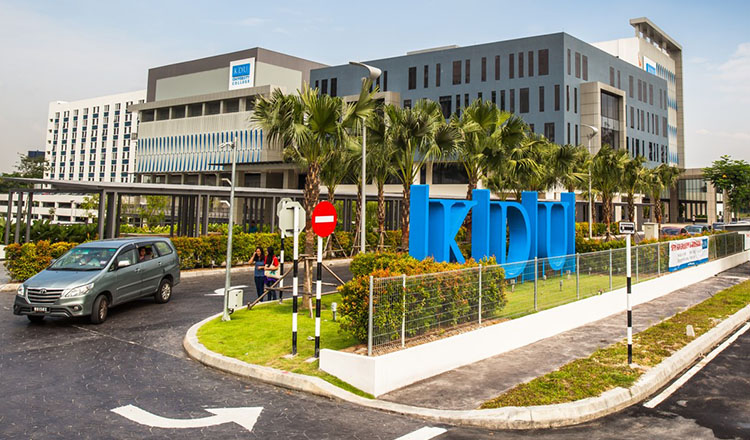





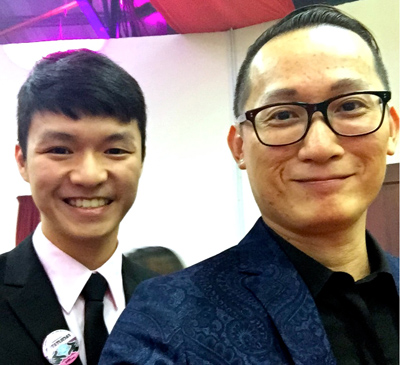
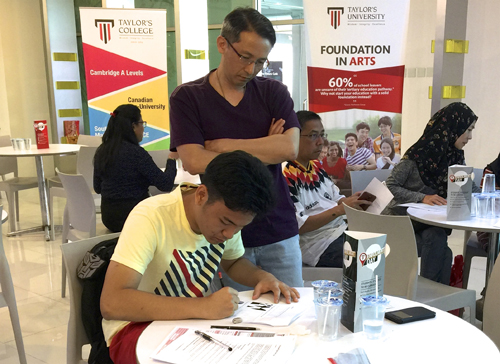



















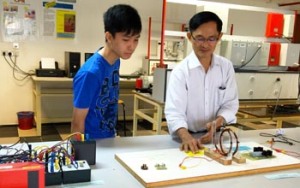























 Top Private Universities & Colleges in Malaysia