To enter into the Foundation in Computing & Technology students after SPM would need at least 5 credits in the relevant subjects with a pass in BM and Sejarah.
Foundation in Computing & Technology courses are intensive, focused one-year courses which prepare students for your degree studies in Malaysia and guarantee entry to the university of interest upon successful completion. The Foundation in Computing & Technology courses provide a solid foundation for students to adapt to university education more confidently, both in terms of level and style of education of the particular university.
For more information contact 01111408838
Please fill up the form for more information. If you do not give your mobile number or full name as in IC, your query will not be answered. Please make sure you give a correct email address and check your email including the SPAM or JUNK email folder within 48 hours as we will email you the information.
You will get the chance to study a variety of subject areas in the Foundation in Computing & Technology Programme. This will not only give you an idea of what subject you may like to progress on to, but also to develop the valuable learning skills necessary for pursue a degree. A Foundation Programme in Malaysia can be 2 semesters with 6 months each semester or 3 semesters with 4 months each semester.
Entry Requirements for Foundation in Computing & Technology at Asia Pacific University
Asia Pacific University new campus at Technology Park Malaysia, Bukit Jalil in Kuala Lumpur
Asia Pacific UniversityFoundation (Pre-University) programme is designed to help those with SPM, O Levels or similar qualifications to develop the skills and knowledge to progress into the first year of degree of choice. Throughout the programme, our academic staff will advise you on the options available at each stage of your university degree study.
If you have 5 Credits in “SPM’ or “O” Levels or equivalent then the Degree Foundation at Asia Pacific University (APU) is ideal for you because it is purposely designed to prepare you for entry into a degree in many areas of Information Technology, Business or Engineering.
Asia Pacific University’s vast experience in delivering degrees means we know what students need to do
Asia Pacific University is ranked Tier 5 or Excellent in the SETARA 2013 and offers students top rated facilities at their new campus
well in a degree. We have used this to design a Degree Foundation which gives you the skills in communications, research, English, Maths, technology (including Information Technology) and general study methods to do well whichever of our wide range of degrees you choose.
And APU goes further by providing you with an introduction to Business and IT or Engineering so that you can make an informed choice of degree when you have completed the Foundation. Depending on your choice you can go on to study full time for a 3-year Honours degree in IT, Games, Media, Business, Design, Accounting, Finance, International Studies areas or a 4-year Honours degree in Engineering, which is internationally benchmarked.
Upon completion of the Foundation in Computing & Technology at Asia Pacific University, you can continue on to any of the top award-winning computing programmes. Graduates at Asia Pacific University will receive the degree from APU and another from Staffordshire University, UK.
What you will study at Asia Pacific University’s Foundation in Computing & Technology
Asia Pacific University’s Team Kraud, comprising Daryl Ong Wi Hsien, Lim Chu Seng, Chin Jess Nny and Armand Madewnus beat 370 participants from 90 teams, to win the Grand Prize at the AngelHack 9th Global Hackathon
Upon completing your study in this programme, you will be able to:
Enter Level 1 of Degree Study
Understand the concepts that underpin the study of Business, Technology, Engineering, Media and IT
Make an informed choice about what degree you want to study
Demonstrate English language and study skills for undergraduate learning
Apply skills in numeracy, technology and communication
Understand the essential elements of technology
Use appropriate application software and the Internet
Communicate effectively verbally and in writing to a given audience
Work effectively in a team
Be ready to become an effective member of the working community
Continue and succeed in further / higher education
What you will study
Asia Pacific University (APU) students, Muhammad Alkautsar Sanusi, Abdulhamid Ahmed Ali, Gamma Rizkinata Satriana and Syahmi bin Suleiman, has been chosen as one of the 3 worldwide finalists of the Atos IT Challenge 2016
The modules studied help develop your study skills, introduce you to what you can expect on your degree and also allow you to discover what you can study depending on whether you choose a degree in Business, Accounting & Finance, Banking & Finance, Actuarial Studies, Media, Information Technology or Engineering. The modules are:
Semester 1 (12 weeks)
Communication Skills
English for Academic Purposes
Personal Development & Study Methods
Essential of Web Applications
Mathematics
Semester 2 (12 weeks)
Introduction to Business
Asia Pacific University’s Studio is well-equipped with Alienware Destop PC
Individual, State & Society
Introduction to Visual & Interactive Programming
Public Speaking in English
Semester 3 (12 weeks)
Academic Research Skills
Further Mathematics
Introduction to Multimedia Applications
Perspectives in Technology
Co-Curricular
Entry Requirements into the Foundation in Computing & Technology at Asia Pacific University
An overall credit pass in at least 5 subjects at SPM level including a credit in Mathematics and a minimum of a pass in Bahasa Malaysia and Sejarah (History); or
5 grade C passes at ‘O’ Level / GCSE including a credit in Mathematics; or
A qualification that APU accepts as equivalent to the above.
Entry Requirements for Foundation in Computing at Taylors University
Taylors University offers a conducive environment for students to excel in their studies
Taylor’s University 1-year Foundation in Computing programme is designed to provide students with the necessary knowledge and skills to pursue a future in various computing related degrees programmes. Emphasising on ‘learning by doing’, students are regularly required to work on actual projects that instil core competencies and knowledge in the field of computing and information technology.
As part of their studies, Taylor’s students will be exposed to a dynamic learning environment that extends beyond the classroom, where students are trained to apply theory into practice, thus developing the ability to demonstrate discipline-specific knowledge, cognitive capabilities and soft skills.
Upon completion, students at Taylor’s University will develop core competencies in the field of computer
Taylors University is strategically located at Subang Jaya, Selangor in a safe self-sustaining 27-acre campus
science and information technology, grooming them for further studies or careers in the ICT industry, or to be the next technopreneurs of Malaysia’s bustling start-up scene.
Upon completion of the top rated Foundation in Computing programme, students at Taylor’s University can continue on to any of the UK dual-award degree programmes below:
Strong Computing Focus for the Foundation in Computing at Taylor’s University
Computer lab at Taylor’s University
Knowledge and understanding of computing, IT and basics of logical thinking skills, through modules like Introduction to Computing, Practical IT skills and Introduction to Algorithm & Problem Solving.
From Theory to Application
Develop independence and confidence, through continuous assessments which encompass elements of presentation, group discussion, out-of-classroom activities and practical assignments.
Balanced Learning Environment at Taylor’s School of IT
Opportunity to acquire and demonstrate discipline-specific knowledge, cognitive capabilities and soft skills.
A balanced assessment method, whereby 50% of the evaluation allocated to various continuous assessments such as course work, quizzes, class test, projects, oral presentations, and the remaining 50% to the final exam.
Conducive Learning Environment at Taylor’s University
Library at Taylor’s University
Same access to the University’s facilities as undergraduate and postgraduate students, and able to contribute equally to the campus community.
Exposure to the latest developments in the computing field through talks and workshops conducted by local and international speakers and industry experts.
Reliable Support System at Taylor’s University
First Year Experience (FYE) initiatives, such as motivational talks and peer-assisted study sessions, provide students the much-needed support to adjust to university life and excel in academic and extra-curricular activities.
Programme Structure for the Taylor’s University Foundation in Computing Programme
Subjects for the Foundation in Computing at Taylor’s University
Top students from all over Malaysia choose to study at Taylor’s University
Semester 1
English I
Introduction to Computing
Introduction to Information Systems
Practical IT Skills
Algebra and Calculus
Social Media
Semester 2
English II
Introduction to Multimedia
Introduction to E-business
Introduction to Algorithm & Problem Solving
Discrete Mathematics
.Net Technology
Entry Requirements for the Foundation in Computing at Taylor’s University
Sijil Pelajaran Malaysia (SPM)
Pass with min. 5 credits including English and Mathematics / Additional Mathematics with a pass in Bahasa Melayu and History
O Level
Pass with min. 5 credits including English and Mathematics / Additional Mathematics
Unified Examination Certificate (UEC)
Pass with min. 3Bs including Mathematics and a pass in English
Entry Requirements for Foundation in Art & Technology at KDU University College Utropolis Glenmarie
KDU University College’s new campus at Utropolis Glenmarie, Shah Alam
Students after SPM or O-Levels who are not sure of what they want to study can go for the flexible Foundation in Arts & Technology Programme at KDU University College Utropolis Glenmarie that will stream them into the various degree programmes in business, computing, communication, creative arts, hospitality, culinary arts, offered.
This flexible programme ensures students are grounded with a strong grasp of core subjects according to
Area51 Game Development Studio at KDU University College Utropolis Glenmarie
their choice of programmes at degree level, as well as a variety of other subjects to give them a broad-based education platform. It also helps them to explore new methods and ideas, as well as skills and concepts, to encourage independent and critical thinking.
Upon completion, students will be able to articulate seamlessly into various degree programmes, offered at KDU.
Subjects for the Foundation in Art & Technology at KDU University College Utropolis Glenmarie
Total of 17 modules
Computer Lab at KDU University College Utropolis Glenmarie
CORE (6 compulsory modules)
Creative Studies
Critical Writing and Referencing
Fundamentals of Information Technology
Introduction to Business
Introduction to Creative Concepts
Introduction to Communication
STREAM (8 modules according to stream)
GAME ART
GAME DESIGN / COMMUNICATION
GAME TECHNOLOGY / COMPUTING
BUSINESS / HOSPITALITY
Design Practice
Design Studies
Drawing 1, 2 & 3
History of Art and Media
Media Appreciation
Media Production
Design Practice
Digital Photography
Design Studies
History of Art and Media
Introduction to Multimedia
Media Appreciation
Media Production
Social Science
Design Studies
Information System
Introduction to Multimedia
Mathematics 1, 2 & 3
Programming Logic and Design
Social Science
Introduction to Management
Introduction to Multimedia
Information System
Introduction to Quantitative Methods
Introduction to Economics
Social Science
Introduction to Marketing
Introduction to Accounting
MPU
Cultural Studies
Pengajian Malaysia 1 (Malaysian Students)
Bahasa Melayu Komunikasi 1 (International Students)
Study Skills
Entry Requirements for the Foundation in Art & Technology at KDU University College Utropolis Glenmarie
ACADEMIC QUALIFICATION
MINIMUM ENTRY REQUIREMENT
SPM / O Levels :
Pass with min. 5 Credits (inclusive of passes in English and Mathematics)
UEC :
Min. 3 Credits (inclusive of passes in English and Mathematics)
Any other qualifications deemed equivalent by the Ministry of Education, Malaysia (or as stated in the Document Senarai Nilai Taraf Kelayakan Akademik, Malaysian Qualifications Agency)
Pass (Subject to review and approval of certified transcripts)
Notes:
Students who will be continuing their studies in Accounting degree programmes, or in the Game Technology specialisation of the Game Development programme, must have obtained a Credit in Mathematics at SPM level.
Students who will be continuing their studies in Computer Science and Software Engineering degree programmes must have obtained a Credit in Additional Mathematics at SPM level.
ENGLISH REQUIREMENT
Local Student :
Credit (SPM / 1119 / UEC / O Levels examination)
International Student :
Band 5.5 in IELTS; or a score of 196 (computer-based) or 69 (internet-based) or 525 (paper-based) in TOEFL
*If English language requirements are not fulfilled, additional English module(s) may be taken at KDU University College.
Entry Requirements for Foundation In Engineering, Science & Technology at First City University College
First City University College’s purpose built 13-acre campus has excellent facilities with a conducive study environment
This affordable Foundation in Engineering, Science & Technology Programme in Malaysia prepares students for undergraduate degree studies in Engineering or Computing at First City University College. The duration for the Foundation is 1 year (3 semesters) with intakes in January, March and May of each year.
With 5 credits in SPM or O-Levels including the relevant subjects, you can go for the Foundation in Engineering, Science & Technology at First City University College. After the 1-year Foundation, you can continue on to the computing degree programmes at First City University College.
Students should choose top private universities in Malaysia for their electrical & electronic engineering education so that you can gain the best knowledge and skills for a successful career.
The Faculty of Engineering and Computing at First City University College provides students with the latest in learning experience through the use of state-of-the-art facilities. Students are inspired and motivated through a hands-on approach in the teaching of engineering and computing.
Why Study Computing at First City UC?
First City University College offers an affordable and conducive environment for students to excel in their studies
Students are taught problem-solving skills
Attend talks by industry experts
Use of advanced software tools such as Mainframe Computing Technology and Mentor Graphics of Electronic Design Automation (EDA)
19 State-of-the-art engineering and computing laboratories
Entry Requirements for the Foundation in Engineering, Science & Technology at First City University College
SPM (Science stream): Minimum 5 credits (inclusive of English and Mathematics)
SPM (Art stream): Minimum 7 credits (inclusive of English, Mathematics and General Science)
UEC: Minimum 4 Bs (inclusive of English and Mathematics)
GCE O Level (Art stream): Minimum 5 credits (inclusive of English, Mathematics and General Science)
GCE O Level (Science stream): Minimum 5 credits (inclusive of English and Mathematics)
SEMESTER 1 MODULE CONTENT
First City University College offers the A-Levels and AUSMAT at their 13-acre campus in Bandar Utama
• Analytical Mathematics
• Communication and Study Skills
• Computer Technology
• Personal and Professional Development
• Advance Office Software
SEMESTER 2 MODULE CONTENT
• Calculus Mathematics
• Mechanics ** / #
• Instrumentation and Measurements **
• Fundamental Electrical and Electronic Engineering **
• Software Design Techniques***
• Web Design***
• Structured Programming ***
• Fundamentals in Chemistry #
• Physical Chemistry #
SEMESTER 3 MODULE CONTENT
Computer lab at First City University College
• Engineering Mathematics ** / #
• Applied Physics ** / #
• Materials Science **
• Group Project • Database ***
• Object-Oriented Programming***
• Systems Analysis and Design***
• Organic and Inorganic Chemistry # **
Students who wish to specialise in Engineering are required to take these elective modules.
*** Students who wish to specialise in Computing are required to take these elective modules.
Students who wish to specialise in Science are required to take these elective modules.
For SPM students, a pass in Malay Language and History is required.
EduSpiral Consultant Services- Your Personal Online Education Advisor
EduSpiral advised me on Facebook and then met me and my friends at APU to take us around for a tour. Edward, Software Engineering at Asia Pacific University
wide range of choices for students to choose from. These colleges and universities offer value for money in the quality of education and excellent facilities that you get.
These universities and colleges are chosen by EduSpiral because they represent the best in their fields in Malaysia and affordable. EduSpiral provides in-depth information and counseling on their courses so that students are able to make the right choice.
Please fill up the form for more information. If you do not give your mobile number or full name as in IC, your query will not be answered. Please make sure you give a correct email address and check your email including the SPAM or JUNK email folder within 48 hours as we will email you the information.
Top University in Malaysia for Diploma in Information Technology at UCSI University
Written by EduSpiral Consultant Services For more information contact 01111408838
Students after SPM or O-Levels wanting to pursue a BSc (Hons) Computing course in a university with full campus facilities can consider the top ranked UCSI University. With at least 3 credits in SPM or O-Levels, students will enter the Diploma in Information Technology at UCSI University for 2 years. Upon completing the diploma, they will enter Year 2 of the BSc (Hons) Computing degree at UCSI University
Students with at least 5 credits in SPM or O-Levels can go for the Foundation in Arts at UCSI University for 1 year before continuing on to the BSc (Hons) Computing at UCSI University.
The Diploma in Information Technology course at UCSI University is designed for those without any computing knowledge as well as those who wish to pursue careers in computer-based environments, particularly in programming and information systems. This 2-year Diploma in Information Technology programme at UCSI University boasts a comprehensive curriculum comprising relevant IT courses that will undoubtedly equip students with general knowledge and skills in IT, programming, databases, multimedia and networks.
With more than 30 years of education experience, UCSI University provides an affordable degree in computing supported by excellent facilities. Students will enjoy the wide range of sports facilities as well as interact with students from more than 80 countries. UCSI University is ranked in the Top 300 Universities in Asia in 2015 by the renown QS University Rankings. UCSI University is ranked as Excellent or Tier 5 in the SETARA 2013 rating system by MQA.
For more information contact 01111408838
Please fill up the form for more information. If you do not give your mobile number or full name as in IC, your query will not be answered. Please make sure you give a correct email address and check your email including the SPAM or JUNK email folder within 48 hours as we will email you the information.
Top Diploma in Information Technology Programme in Malaysia at UCSI University
UCSI University is ranked Tier 5 or Excellent in the SETARA 2013 offers state-of-the-art facilities at their strategically located campus in Cheras, KL
The Diploma in Information Technology course at UCSI University is designed for those without any computing knowledge as well as those who wish to pursue careers in computer-based environments, particularly in programming and information systems. This 2-year Diploma in Information Technology programme at UCSI University boasts a comprehensive curriculum comprising relevant IT courses that will undoubtedly equip students with general knowledge and skills in IT, programming, databases, multimedia and networks.
Other non-IT courses such as marketing, business communication and problem-solving, among others, have also been implemented in the programme to ensure that students are furnished with transferable skills that will enable them to work efficiently both independently and in teams. UCSI University also partners with key multinational corporations in the industry, enabling students to apply theoretical learning to practical activities through actual projects during their co-operative placements.
At the end of the course, students will be equipped with a range of personal, organisational and
Computer lab at UCSI University
professional skills that provide invaluable support as the stepping stone to pursue further studies.
Upon completing the diploma, students will enter Year 2 of the BSc (Hons) Computing degree at UCSI University
Assessments
Coursework percentage and written examination percentage. This programme provides students with relevant, interesting, stimulating and practical experience via a variety of teaching and practical techniques. Different dynamic learning processes are employed in the delivery of this programme, such as lectures, tutorials, computer lab work, team-based project, real life system development, presentations, independent projects supervised by supervisors from university lecturers or industry experts. The learning is very much practical oriented.
Year 1 Subjects for the Diploma in Information Technology at UCSI University
The library & computer labs are located inside the Learning Resource Centre at UCSI University
Introduction to Statistics
Introduction to Information Technology (Diploma)
Introduction to Internet Technologies (Diploma)
Principle of Accounting (Diploma)
Business Essentials
System Analysis & Design
Java Programming 1 (Diploma)
Discrete Mathematics 1 (Diploma)
Java Programming 2 (Diploma)
Fundamental of Database Systems
Entrepreneurship (MPU–U2)
Extracurricular Learning Experience 1 (MPU-U4)
Co-operative Placement 1
Year 2 Subjects for the Diploma in Information Technology at UCSI University
Students learn from qualified & experienced lecturers at UCSI University
Object-Oriented Modelling (Diploma)
Computer Ethics (Diploma)
Basic and Practices of Marketing
Business Programming
Multimedia Programming (Diploma)
Business Communication for Diploma
User Interface Design
Managing and Implementing Business Project
Quantitative Techniques
Operating Systems & Networks (Diploma)
Wireless and Mobile Technologies (Diploma)
Creative Problem Solving (Diploma)
Business Law – Malaysian Perspective (MPU-U3)
Extracurricular Learning Experience 2 (MPU-U4)
Co-operative Placement 2
Study at the Top Ranked UCSI University in Malaysia
EduSpiral took these students separately to tour the campus and provided course counseling to help them make the right choice. Kian Yong (Mechanical Engineering), Yammie (Business), & Kenneth Pang (Architecture) at UCSI University’s Orientation
UCSI University is a vibrant community of learning and scholarship. With more than 10,000 students from 80 different countries, the University stands out as a melting pot of diversity and learners will supplement their pursuit of knowledge with a keen sense of cultural appreciation – a vital trait in today’s borderless world.
As one of Malaysia’s first private universities,UCSI University has long impacted the national higher education landscape and the University continues to do so with its wide range of undergraduate and postgraduate programmes.
UCSI University is ranked in the Top 300 Universities in Asia in 2015 by the renown QS University Rankings. UCSI University is ranked as Excellent or Tier 5 in the SETARA 2013 rating system by MQA.
The University’s academic staff are at the forefront of their disciplines and their views are highly sought after on major issues; from business to political science.
Many of their academics have extensive experience working overseas and some play advisory roles in public bodies and various committees. By bringing their experiences into the classroom, UCSI’s academics cater to an exhilarating learning environment and learners will thrive as they balance academic mastery with industrial application.
Since its inception in 1986, UCSI University has been committed to further the discovery and celebration of knowledge.
Co-Operative Education Training Programme for Every Year of Degree Studies at UCSI University
I am glad that EduSpiral recommended me to UCSI University as I gained so much real work experiences during all my Co-Op (Internship). Paul Kong, graduated in Business Administration from UCSI University
With its innovative academic curriculum, UCSI University students also enjoy the unique benefits of its Co-Operative Education Training Programme (Co-Op) that enhances their employability by integrating classroom learning with workplace training in Co-Op employer organisations.
Completing two months’ work experience for every study year, a UCSI University student would have six to eight months’ work experience to stand ready for full-time employment upon their graduation. Currently, UCSI University has more than 1,000 employer organisations registered as heir Co-Op employers. With the number rising annually, these partnerships create job opportunities for students to be job-ready upon their graduation.
State-of-the-Art Facilities at UCSI University
Situated on a 19-acre piece of land, the Campus is located in Cheras, Kuala Lumpur with convenient access to numerous
Chemistry lab at UCSI University
facilities including banks, restaurants, transportation services, entertainment, and accommodation. Fully wireless, it is equipped with the latest cutting-edge technology to access the world of e-learning and e-resources.
Housing 7 different blocks, the Campus includes the Student Centre (Menara Gading), the Resource Centre, the Academic Blocks and Residential Halls to comfortably accommodate a student population of more than 15000.
Sporting facilities in this Campus include: basketball, badminton and squash courts, as well as a gymnasium, a football field, and a swimming pool.
Other facilities include the four-level library, an auditorium, a recital hall, a multi-purpose hall, computer laboratories, residential halls, bookstores and cafeterias. Also available on Campus is an Apple Experience Centre.
The Campus faculty-centric facilities include: the Anatomy & Pathology Museum, Clinical Skills
Control, Instrumentation Pneumatics & Hydraulics Lab at UCSI University
Laboratories, Petrochemical Laboratory, Physiology & Pharmacology Laboratory, Molecular Biology Laboratory, and Microbiology Laboratory, fashion design workshops, Psychology Laboratory, as well as drafting and design studios.
The University is also constantly working with the industry to set up specialised labs which ensure students are updated with the latest industrial practices. Currently, the University has established laboratories jointly with National Instruments and RICOH under the School of Engineering and the School of Information Technology, respectively.
Due to its rapid expansion, an additional 48-storey building will be built on the existing Campus that will include a 5-Star hotel, twelve floors of parking bays and hostel accommodations for UCSI University students, administrative offices, restaurants, a ballroom and also a clubhouse.
Sports Facilities at UCSI University
Excellent sports facilities at UCSI University provide for an all-rounded education & a healthy lifestyle
Badminton Courts
Basketball Courts
Football Field
Futsal Court
Gymnasium
Pool Tables
Squash Courts
Swimming Pool
Table Tennis
Volleyball Court
EduSpiral Consultant Services – Your Online Education Advisor
EduSpiral Consultant Services is a education agent that guides students from across Malaysia to help them choose the right
After STPM, my dream was to study 3D Animation but I did not have much information about it. EduSpiral gave me a lot of information including the future job prospects so that I could make a good choice. Chun Poh, 3D Animation at UCSI University
course and university. Highly experienced professional staff will talk to you and get to know you before giving advise on which course that will best fit you and your budget.
Established in 2009, EduSpiral is an appointed representative for top reputable private colleges & universities in Malaysia & Singapore.
These universities and colleges are chosen by EduSpiral because they represent the best in their fields in Malaysia and affordable. EduSpiral provides in-depth information and counseling on their courses so that students are able to make the right choice.
Please fill up the form for more information. If you do not give your mobile number or full name as in IC, your query will not be answered. Please make sure you give a correct email address and check your email including the SPAM or JUNK email folder within 48 hours as we will email you the information.
Top University in Malaysia for Bachelor of Computer Science (Hons) Mobile Computing and Networking Degree at UCSI University
Written by EduSpiral Consultant Services For more information contact 01111408838
The Bachelor of Computer Science (Hons) Mobile Computing and Networking programme at UCSI University will furnish students with a strong grounding in the technological aspects of specially designed courses such as software management and operating systems, databases, networks as well as programming, among others.
UCSI University students will learn the fundamentals of problem-solving, network designing and database management, and will develop deeper understanding of the key principles applied in mobile computing. Bachelor of Computer Science (Hons) Mobile Computing and Networking Students at UCSI University will be tested on their understanding of key principles, fact and theories, and will demonstrate their skills in system design, development and management.
Students after SPM or O-Levels wanting to pursue aBachelor of Computer Science (Hons) Mobile Computing and Networking course in a university with full campus facilities can consider the top ranked UCSI University. With at least 3 credits in SPM or O-Levels, students will enter the Diploma in Information Technology at UCSI University for 2 years. Upon completing the diploma, they will enter Year 2 of the Bachelor of Computer Science (Hons) Mobile Computing and Networking degree at UCSI University
Students with at least 5 credits in SPM or O-Levels can go for the Foundation in Arts at UCSI University for 1 year before continuing on to the Bachelor of Computer Science (Hons) Mobile Computing and Networking degree at UCSI University.
With more than 30 years of education experience, UCSI University provides an affordable degree in mobile computing and networking supported by excellent facilities. Students will enjoy the wide range of sports facilities as well as interact with students from more than 80 countries. UCSI University is ranked in the Top 300 Universities in Asia in 2015 by the renown QS University Rankings. UCSI University is ranked as Excellent or Tier 5 in the SETARA 2013 rating system by MQA.
For more information contact 01111408838
Please fill up the form for more information. If you do not give your mobile number or full name as in IC, your query will not be answered. Please make sure you give a correct email address and check your email including the SPAM or JUNK email folder within 48 hours as we will email you the information.
Top Bachelor of Computer Science (Hons) Mobile Computing and Networking Degree Programme in Malaysia at UCSI University
UCSI University is ranked Tier 5 or Excellent in the SETARA 2013 offers state-of-the-art facilities at their strategically located campus in Cheras, KL
Mobile computing is now one of the preferred modes of communication amongst the younger generation who highly prioritise “portability”. The Bachelor of Computer Science (Hons) Mobile Computing and Networking programme at UCSI University will furnish students with a strong grounding in the technological aspects of specially designed courses such as software management and operating systems, databases, networks as well as programming, among others.
UCSI University students will learn the fundamentals of problem-solving, network designing and database management, and will develop deeper understanding of the key principles applied in mobile computing. Bachelor of Computer Science (Hons) Mobile Computing and Networking Students at UCSI University will be tested on their understanding of key principles, fact and theories, and will demonstrate their skills in system design, development and management.
The Bachelor of Computer Science (Hons) Mobile Computing and Networking course at UCSI University seeks to develop the students’ programming skills in the areas of network and multimedia, placing great emphasis on the latest mobile technologies as well as providing graduates with the skills and knowledge to contribute significant efforts as computing professionals within the global community.
Programme Details for the Bachelor of Computer Science (Hons) Mobile Computing and Networking at UCSI University
The library & computer labs are located inside the Learning Resource Centre at UCSI University
In the first year, you will be introduced to and learn skills in computing, programming, communication, principles of networking and marketing. You will work with fundamental computer-based systems components, and use these for experiments throughout the course.
In the second year, you will develop your networking knowledge and skills, which will enable you to implement, exploit and manage complex systems. You will study the technology of wireless communication which is beginning to appear in all manner of products and be able to design and improve mobile computing products to achieve a specific function. You will have access to a lab where you can design and configure systems with a range of network technologies. You will undertake group work to develop your skills in working with others on an integrative technical project.
The final year combines all your knowledge in mobile computing technology and mobile computing
Computer lab at UCSI University
applications, to enable you to manage the complete design of mobile computing systems. You will learn how to manage and optimize networks through the use of advanced design and simulation software, complemented with options in network security or multimedia.
Assessments
Coursework percentage and written examination percentage. This programme provides students with relevant, interesting, stimulating and practical experience via a variety of teaching and practical techniques. Different dynamic learning processes are employed in the delivery of this programme, such as lectures, tutorials, computer lab work, team-based project, real life system development, presentations, independent projects supervised by supervisors from university lecturers or industry experts. The learning is very much practical oriented.
Year 1 Subjects for the Bachelor of Computer Science (Hons) Mobile Computing and Networking Degree Programme at UCSI University
UCSI University is strategically located at Taman Connaught, Cheras, Kuala Lumpur with easy access to restaurants, banks, public transportation & other amenities
Discrete Mathematics 1
Data Structures & Algorithms
Java Programming 1
Java Programming 2
Object Oriented Modelling 1
Research Methods in Computing
Database Management Systems
Computer Org & Architecture
University Life (MPU-U2)
Extracurricular Learning Experience 1 (MPU-U4)
Co-operative Placement 1
Elective Year 1
Introduction to Internet Technologies
Database Administration
Fundamentals of Management
Business Communications
Creative Problem Solving
Year 2 Subjects for the Bachelor of Computer Science (Hons) Mobile Computing and Networking Degree Programme at UCSI University
EduSpiral helped Alvin Chai, Jen Hui, Paul Kit, and Wen Hao from Poi Lam High School Ipoh providing course counseling and campus tour. They are now studying in various programmes at UCSI University
Introduction to Human Computer Interaction
Multimedia Programming
Software Project Management
Visual Basic.Net
Operating Systems
Networking
Technopreneuship
Trends and Issues in Networking
Extracurricular Learning Experience 2 (MPU-U4)
Co-operative Placement 2
Elective Year 2
Wireless Network Infrastructure
Mobile Commerce
Business Systems Development Tools
Year 3 Subjects for the Bachelor of Computer Science (Hons) Mobile Computing and Networking Degree Programme at UCSI University
Students get value for money at UCSI University with access to excellent sports facilities
Social Network Programming
Cloud Computing Application System
Mobile Programming
Mobile Application Development
Application Layer Programming
Mobile Device Technology & Applications
Mobile Computing & Networking Project 1
Mobile Computing & Networking Project 2
Network Security Design
Networking Programming
Extracurricular Learning Experience 3 (MPU-U4)
Co-operative Placement 3
Elective Year 3
Java Web Programming
Wireless Communications
Network Management
Study at the Top Ranked UCSI University in Malaysia
EduSpiral took these students separately to tour the campus and provided course counseling to help them make the right choice. Kian Yong (Mechanical Engineering), Yammie (Business), & Kenneth Pang (Architecture) at UCSI University’s Orientation
UCSI University is a vibrant community of learning and scholarship. With more than 10,000 students from 80 different countries, the University stands out as a melting pot of diversity and learners will supplement their pursuit of knowledge with a keen sense of cultural appreciation – a vital trait in today’s borderless world.
As one of Malaysia’s first private universities,UCSI University has long impacted the national higher education landscape and the University continues to do so with its wide range of undergraduate and postgraduate programmes.
UCSI University is ranked in the Top 300 Universities in Asia in 2015 by the renown QS University Rankings. UCSI University is ranked as Excellent or Tier 5 in the SETARA 2013 rating system by MQA.
The University’s academic staff are at the forefront of their disciplines and their views are highly sought after on major issues; from business to political science.
Many of their academics have extensive experience working overseas and some play advisory roles in public bodies and various committees. By bringing their experiences into the classroom, UCSI’s academics cater to an exhilarating learning environment and learners will thrive as they balance academic mastery with industrial application.
Since its inception in 1986, UCSI University has been committed to further the discovery and celebration of knowledge.
Co-Operative Education Training Programme for Every Year of Degree Studies at UCSI University
I am glad that EduSpiral recommended me to UCSI University as I gained so much real work experiences during all my Co-Op (Internship). Paul Kong, graduated in Business Administration from UCSI University
With its innovative academic curriculum, UCSI University students also enjoy the unique benefits of its Co-Operative Education Training Programme (Co-Op) that enhances their employability by integrating classroom learning with workplace training in Co-Op employer organisations.
Completing two months’ work experience for every study year, a UCSI University student would have six to eight months’ work experience to stand ready for full-time employment upon their graduation. Currently, UCSI University has more than 1,000 employer organisations registered as heir Co-Op employers. With the number rising annually, these partnerships create job opportunities for students to be job-ready upon their graduation.
State-of-the-Art Facilities at UCSI University
Situated on a 19-acre piece of land, the Campus is located in Cheras, Kuala Lumpur with convenient access to numerous
Chemistry lab at UCSI University
facilities including banks, restaurants, transportation services, entertainment, and accommodation. Fully wireless, it is equipped with the latest cutting-edge technology to access the world of e-learning and e-resources.
Housing 7 different blocks, the Campus includes the Student Centre (Menara Gading), the Resource Centre, the Academic Blocks and Residential Halls to comfortably accommodate a student population of more than 15000.
Sporting facilities in this Campus include: basketball, badminton and squash courts, as well as a gymnasium, a football field, and a swimming pool.
Other facilities include the four-level library, an auditorium, a recital hall, a multi-purpose hall, computer laboratories, residential halls, bookstores and cafeterias. Also available on Campus is an Apple Experience Centre.
The Campus faculty-centric facilities include: the Anatomy & Pathology Museum, Clinical Skills
Control, Instrumentation Pneumatics & Hydraulics Lab at UCSI University
Laboratories, Petrochemical Laboratory, Physiology & Pharmacology Laboratory, Molecular Biology Laboratory, and Microbiology Laboratory, fashion design workshops, Psychology Laboratory, as well as drafting and design studios.
The University is also constantly working with the industry to set up specialised labs which ensure students are updated with the latest industrial practices. Currently, the University has established laboratories jointly with National Instruments and RICOH under the School of Engineering and the School of Information Technology, respectively.
Due to its rapid expansion, an additional 48-storey building will be built on the existing Campus that will include a 5-Star hotel, twelve floors of parking bays and hostel accommodations for UCSI University students, administrative offices, restaurants, a ballroom and also a clubhouse.
Sports Facilities at UCSI University
Excellent sports facilities at UCSI University provide for an all-rounded education & a healthy lifestyle
Badminton Courts
Basketball Courts
Football Field
Futsal Court
Gymnasium
Pool Tables
Squash Courts
Swimming Pool
Table Tennis
Volleyball Court
EduSpiral Consultant Services – Your Online Education Advisor
EduSpiral Consultant Services is a education agent that guides students from across Malaysia to help them choose the right
After STPM, my dream was to study 3D Animation but I did not have much information about it. EduSpiral gave me a lot of information including the future job prospects so that I could make a good choice. Chun Poh, 3D Animation at UCSI University
course and university. Highly experienced professional staff will talk to you and get to know you before giving advise on which course that will best fit you and your budget.
Established in 2009, EduSpiral is an appointed representative for top reputable private colleges & universities in Malaysia & Singapore.
These universities and colleges are chosen by EduSpiral because they represent the best in their fields in Malaysia and affordable. EduSpiral provides in-depth information and counseling on their courses so that students are able to make the right choice.
Please fill up the form for more information. If you do not give your mobile number or full name as in IC, your query will not be answered. Please make sure you give a correct email address and check your email including the SPAM or JUNK email folder within 48 hours as we will email you the information.
List of the Best Private Universities in Malaysia Offering Top Rated Software Engineering Degree Courses
Written by EduSpiral Consultant Services For more information contact 01111408838
Many students have heard that there could be no jobs for Information Technology and Software Engineering graduates because many are unemployed. While this may be true, the jobs are still plenty out there. It is not that there are no jobs, it is because the graduates do not have the skills and knowledge even after going through university. This is because they have chosen a cheaper university where they did not have experienced lecturers to equip them well. The university environment is also important because if most students speak in Mandarin at the university, then you won’t be able to improve on your communication skills in English which is important in getting a job in a Multi National Company.
Studying at the best university in Malaysia for software engineering would ensure that students obtain the necessary skills and knowledge that would help them to succeed in the fast changing computing field and competitive work environment..
Please fill up the form for more information. If you do not give your mobile number or full name as in IC, your query will not be answered. Please make sure you give a correct email address and check your email including the SPAM or JUNK email folder within 48 hours as we will email you the information.
List of Top Private Universities in Malaysia for the Best Software Engineering Courses
The Best ICT and Computing courses offered at Top Ranked Asia Pacific University (APU)
Certificate
After I finished my SPM, I felt confused about my further study. Because of Eduspiral, I am able to pursue my studies at Asia Pacific University. Eduspiral, was so patient to answer all my questions and even brought me to visit the university when I went to KL alone. Jeremy Lee, APU scholarship student
Computing & Technology Degree Programmes at Asia Pacific University (APU)
Graduates from Asia Pacific University will receive a UK Dual Award degree from Staffordshire University. An impressive 95% of APU’s graduates obtain jobs before graduation.
Not satisfied after completing our diploma at Inti & EduSpiral helped us with the credit transfer. He arranged for us to talk to lecturers & staff at APU to guide us on which IT course to study. Chin Mun & Li Ching, Business Computing at Asia Pacific University
Excellent Information & Multimedia Technology Programmes at KDU University College Utropolis Glenmarie
EduSpiral took my father & I to visit KDU University College and talk to the Game Technology lecturer & Head. I was able to make a good decision in choosing the right university. Choon Meng, Game Technology at KDU University College
Bachelor of Computer Science ( Intelligent Systems) (Hons)
Bachelor of Information Systems (Honours) in Business Management
Information Technology Courses Offered at HELP University
EduSpiral arranged for me and my mother to meet up with the lecturer at HELP to get a deeper understanding of the course, and also got me a scholarship! Cavan Stefan, IT at HELP University
Study at the Best Private University in Malaysia for a Top Rated Software Engineering Course to Equip You for a Successful Career
I was lost in choosing the right course. My dad contacted EduSpiral to talk to me. He listened to me & guided me to make the right choice. Hubert, Software Engineering at Asia Pacific University
Software Engineering is developing, designing and maintaining software systems that are reliable and efficiently carries out the tasks smoothly. The software system is created in collaboration with the needs and requirements of the clients. The software designed must be user friendly for the staff or customers to use. Software Engineering is an integration of computer science, computer programming, mathematics and engineering practice. Software engineers apply the principles of computer science and mathematical analysis to the design, development, testing, and evaluation of the software and systems that make computers work.
Software Engineering is the study and application of engineering to the design, development, and maintenance of software. It is the application of a systematic, disciplined, quantifiable approach to the development, operation, and maintenance of software. Software Engineers develop procedures and systematic applications that are used on electronic machines.
What subjects in SPM or O-Levels do I need to be good at in order to study Software Engineering in Malaysia?
I didn’t want to leave Penang for my studies but EduSpiral provided detailed information to help me make my decision. Vincent Lim, Software Engineering, Asia Pacific University
MATHS! If you want to study Software Engineering, you will need to be good in Mathematics. You should have an “A” in SPM for Additional Maths or at least a strong credit. Students always make the mistake of choosing to study Software Engineering because they like to play with computers. If you don’t have a strong foundation in Maths, you should choose some other course.
Computer software engineers, or software developers, design and develop software applications or computer systems in Malaysia. They develop computer applications for clients as well as the major systems that make a computer run.
Students interested in a career in computer software engineering needs to have analytical skill, problem-solving, teamwork and communication skills as well as creativity and attention to detail; familiarity with database management, development environment, program testing and other related software.
Students should be good in Mathematics and possess at least a Credit in SPM or O-Levels for Maths. Students should have a strong interest in programming and lots of patience in creating a programme.
Software Engineering is developing, designing and maintaining software systems that are reliable and efficiently carries out the tasks smoothly. The software system is created in collaboration with the needs and requirements of the clients. The software designed must be user friendly for the staff or customers to use. Software Engineering is an integration of computer science, computer programming, mathematics and engineering practice. Software engineers apply the principles of computer science and mathematical analysis to the design, development, testing, and evaluation of the software and systems that make computers work.
What do you need to know as a Software Engineer in Malaysia?
EduSpiral picked us up from KL Sentral & took us to Asia Pacific University for a campus tour as well as arranged the Software Engineering lecturer to explain the courses in detail to us. Chin Mun (Left) with friends from INTI, now studying Business Computing at APU
Software Engineers need to use different programming languages, depending on the purpose of the program. The programming languages most often used are C, C++, and Java, with Fortran and COBOL used less commonly. Other programming languages that are in high demand are HTML, XHTML, XML, PHP, Visual Basic.
With the growth of smart phones comes with it the demand for the programming languages related to it such as the programming language, Objective C, and its software development tool (XCode) for the iOS market.
Software Engineers will also need to have a strong foundation in computer science, logic and mathematics.
What will I study in a Software Engineering Degree Course in Malaysia?
I was planning to study in IPTA after STPM but then my parents talked to EduSpiral. They realised the importance of studying at a top award winning university for computing. Mark Siew, Software Engineering at Asia Pacific University
Through the development of new technologies and applications, software engineering radically and continually changes the way we experience our world, whether in gaming, communications, commerce, entertainment, science or education.
In the software engineering degree programme in Malaysia, you will take a course that emphasises the principles of programming and a course on computing fundamentals. You will study Java programming, object-oriented software engineering, data structures and algorithms, algorithmic foundations, computer systems and web application development.
Students will also be exposed to VB.net, HTML, J2ME, Java Scripting as well as networking and business communication. The modules lead into all aspects of software applications; internet technology; multimedia technology; information systems; operating systems; systems methodologies; visual programming; and database management systems.
Students may take some non-IT courses such as marketing, business communication and problem- solving, among others, are included in the course so that students are equipped with transferable skills that will enable them to work efficiently both independently and in teams.
Students will normally take about 35 subjects or more. In addition, all students are also required to successfully complete General Studies modules as stipulated by the Malaysian Qualification Agency, as well as fulfil credit requirements for Co-Curricular Activities. The MQA subjects are compulsory at all colleges and universities.
Sample of Subjects that can be found in a Software Engineering Degree Programme at Top Private Universities in Malaysia
I was confused about what to study & at which university. Talking to EduSpiral helped clear my doubts. Zen Yi, Software Engineering at Asia Pacific University
Computing & IT in the Workplace
Fundamentals of Software Development
Introduction to Databases
Introduction to Management
Introduction to Networking
Mathematical Concepts for Computing
Operating Systems & Computer Architecture
System Analysis & Design
Introduction to Artificial Intelligence
Introduction to Object Oriented Programming
AI Methods
Data Structures
Design Methods
Programming Concepts in C++
Requirements Engineering
Software Architecture
System Programming and Computer Control
Object Oriented Development with Java
Research Methods For Computing and Technology
System Development Methods
Advance Programming Language Concepts
Advanced Database Systems
Algorithmics
Cloud Infrastructure & Services
Design Patterns
Designing & Developing Applications on Cloud
Investigations in Software Engineering
Software Engineering Project
Software Quality Engineering
So, which college or university should I choose to Study the Degree in Software Engineering in Malaysia?
EduSpiral Consultant Services has worked in the education industry for more than 15 years counseling thousands of students. We represent many reputable and top universities in Malaysia. Every student is different, therefore, we have to talk to each person and treat them like an individual to find out which university is the best that would suit their personality, financial and career goals. Therefore, to have a successful future, please contact us.
What do you do as a Software Engineer in Malaysia?
EduSpiral took us to visit APU and UCSI so that we can see the campus facilities and make a better decision about our future. Hong Ann (Software Engineering) at Asia Pacific University
Software engineers are involved in the design and development of a variety of software, including computer games, word processing and business applications, operating systems and network distribution, and compilers, which convert programs to machine language for execution on a computer.
They also install, configure and maintain software systems used by commercial or manufacturing companies. They can work with the company to coordinate each department’s needs such as ordering, billing, inventory, payroll, and records.
Software Engineers could also help set up the company’s intranets or networks that link computers within the company. This helps the communication between the departments. To develop tailor-made software systems,
Software Engineers will begin by meeting up with the client to gather information on what they would like for the software to achieve. They need to gain a thorough understanding of the client’s business and information needs, and analyse the current system.
After that, they will then analyse the information and then begin to design, develop and test the software in real situations. Software Engineers will create detailed sets of instructions, called algorithms. The
Being in Sabah made it difficult for me to survey the universities in Peninsula. I found EduSpiral online and they provided detailed information & helped me with my application. They even took me around the university for a tour when I went to visit. Xavier Phang, Software Engineering at Asia Pacific University
algorithms tell the computer what to do. They also are used to convert instructions into a computer language. This process is called programming or coding. Software Engineers must be experts in operating systems and middleware to ensure that the underlying systems will work properly.
Software Engineers can also develop “off-the-shelf” or “ready-made’ software packages that can be integrated into an existing operating system. The ability to integrate the software requires a thorough knowledge of the software packages and programming languages.
They will need to provide the appropriate interfaces to be used to integrate them. Software Engineers works with in a team to design new hardware, software, and systems. The team may consist of engineering, marketing, manufacturing, and design people, who work together to release a product.
Software Engineers need to ensure that their knowledge is up-to-date as technology changes rapidly. Computer software can be developed for any function for control and automation, manufacturing, business, and management systems. Restaurants use custom-made software to ensure their accounts are kept properly and orders for food can be made efficiently so that wastage is managed.
What do you need to know as a Software Engineer in Malaysia?
EduSpiral provided in-depth information on software engineering and convinced my parents on the importance of letting me study at the best university for IT in Malaysia. Mark Siew, Asia Pacific University
Software Engineers need to use different programming languages, depending on the purpose of the program. The programming languages most often used are C, C++, and Java, with Fortran and COBOL used less commonly. Other programming languages that are in high demand are HTML, XHTML, XML, PHP, Visual Basic.
With the growth of smart phones comes with it the demand for the programming languages related to it such as the programming language, Objective C, and its software development tool (XCode) for the iOS market. Software Engineers will also need to have a strong foundation in computer science, logic and mathematics.
If you want to study Software Engineering, you will need to be good in Mathematics. You should have an “A” in SPM or O-Levels for Maths or at least a strong credit. Students always make the mistake of choosing to study Software Engineering because they like to play with computers. If you don’t have a strong foundation in Maths, you should choose some other course.
Software Engineering Vs. Computer Science
I whatsapped EduSpiral and got the information I needed about the university and course. He then arranged for me and my mother to meet up with APU counselors and to tour the campus as well. Li Jian, IT at Asia Pacific University
Both computer science and software engineering curricula generally require a foundation in programming fundamentals and basic computer science theory. They differ in their focus beyond these core elements. Computer science programs tend to keep the core small and then expect students to choose among more advanced courses (such as systems, networking, database, artificial intelligence, theory, etc.).
In contrast, Software Engineering programs generally expect students to focus on a range of topics that are essential to the Software Engineering agenda (problem modeling and analysis, software design, software verification and validation, software quality, software process, software management, etc.).
While both Computer Science and Software Engineering programs typically require
students to experience team project activity, Software Engineering programs usually requires more team involvement as effective team processes are essential to effective Software Engineering practices.
In addition, a key requirement specified by the Software Engineering curriculum guidelines is that Software Engineering students should learn how to build software that is genuinely useful and usable by the customer and satisfies all the requirements defined for it.
EduSpiral Consultant Services- Your Personal Online Education Advisor
Established since 2009, EduSpiral ConsultantServices helps provide information and counselling on courses and universities in Malaysia & Singapore.
I didn’t want to leave Penang for my studies but EduSpiral provided detailed information to help me make my decision. Vincent Lim, Software Engineering, Asia Pacific University
These universities and colleges are chosen by EduSpiral because they represent the best in their fields in Malaysia and affordable. EduSpiral provides in-depth information and counseling on their courses so that students are able to make the right choice.
Please fill up the form for more information. If you do not give your mobile number or full name as in IC, your query will not be answered. Please make sure you give a correct email address and check your email including the SPAM or JUNK email folder within 48 hours as we will email you the information.
Best Private University in Malaysia to Study a Top Information Technology (IT) Degree Programme
Written by EduSpiral Consultant Services. For more information contact 01111408838
Information technology (IT) is the application of computers to store, study, retrieve, transmit, and manipulate data, or information, often in the context of a business or other enterprise. IT is considered a subset of information and communications technology (ICT).
The Information Technology (IT) in Malaysia sector is exceptionally diverse and continues to grow. IT professionals often move between professional specialisations as their interests and expertise grow and change. Graduating with a Information Technology (IT) degree from a top private university in Malaysia allows you to choose from a wide range of careers in software development, business analysis, ITC consulting, data modelling, systems integration and network management.
Please fill up the form for more information. If you do not give your mobile number or full name as in IC, your query will not be answered. Please make sure you give a correct email address and check your email including the SPAM or JUNK email folder within 48 hours as we will email you the information.
Best Information Technology (IT) Programme at Top Private Universities in Malaysia
EduSpiral advised me on Facebook and then met me and my friends at APU to take us around for a tour. Edward, Software Engineering at Asia Pacific University
Sample of Subjects that can be found in an Information Technology (IT) Degree Programme at Top Private Universities in Malaysia
Being in Sabah made it difficult for me to survey the universities in Peninsula. I found EduSpiral online and they provided detailed information & helped me with my application. They even took me around the university for a tour when I went to visit. Xavier Phang, Engineering at Asia Pacific University
Introduction To C Programming
Interactive Media & Web Design Technology
Computing & IT in the Workplace
Fundamentals of Software Development
Introduction to Databases
Introduction to Management
Introduction to Networking
Mathematical Concepts for Computing
Operating Systems & Computer Architecture
System Analysis & Design
Human-Computer Interaction
Integrated Business Processes with SAP ERP Systems
Mobile & Wireless Technology
Programming Concepts in C++
Web Applications
System Programming and Computer Control
Creativity & Innovation
Object Oriented Development with Java
Probability & Statistical Modeling
Research Methods For Computing and Technology
System Development Methods
Advanced Database Systems
Cloud Infrastructure & Services
Computer Systems Management
Designing & Developing Applications on Cloud
Distributed Computer Systems
Enterprise Programming for Distributed Applications
Investigations in Information Technology
Study Information Technology or Computing at Top Private Universities in Malaysia
EduSpiral provided me with up-to-date information on Asia Pacific University & helped me to apply for the MARA Loan for my studies to achieve my dreams. Mohd Muaz Anuar taking the IT programme
A university degree in Information Technology (IT) is no longer enough to secure a job in Malaysia. Employers in Malaysia are looking for individuals with multiple skill sets. Employers today expect their employees to be able to multitask and communicate well in the English language.
The gap between the demand for information and computer technology (ICT) talent and the supply of that talent is large. Study indicates that the existing situation cannot even supply half of the demand by 2020, about 500,000 human capital educated in science and technology will be needed in Malaysia. From this number, at least 30,000 graduates are required in the ICT job market.
According to PIKOM, there are many jobs out there for IT graduates and there are also many jobless IT graduates. The reason for this is that there is a mismatch of the courses with the skill needed. In addition, the training that the students received was not up to the standard needed in the industry.
The Best ICT and Computing courses offered at Top Ranked Asia Pacific University (APU)
Certificate
After I finished my SPM, I felt confused about my further study. Because of Eduspiral, I am able to pursue my studies at Asia Pacific University. Eduspiral, was so patient to answer all my questions and even brought me to visit the university when I went to KL alone. Jeremy Lee, APU scholarship student
Computing & Technology Degree Programmes at Asia Pacific University (APU)
Graduates from Asia Pacific University will receive a UK Dual Award degree from Staffordshire University. An impressive 95% of APU’s graduates obtain jobs before graduation.
Not satisfied after completing our diploma at Inti & EduSpiral helped us with the credit transfer. He arranged for us to talk to lecturers & staff at APU to guide us on which IT course to study. Chin Mun & Li Ching, Business Computing at Asia Pacific University
Excellent Information & Multimedia Technology Programmes at KDU University College Utropolis Glenmarie
EduSpiral took my father & I to visit KDU University College and talk to the Game Technology lecturer & Head. I was able to make a good decision in choosing the right university. Choon Meng, Game Technology at KDU University College
Bachelor of Computer Science ( Intelligent Systems) (Hons)
Bachelor of Information Systems (Honours) in Business Management
Information Technology Courses Offered at HELP University
EduSpiral arranged for me and my mother to meet up with the lecturer at HELP to get a deeper understanding of the course, and also got me a scholarship! Cavan Stefan, IT at HELP University
What is Information Technology and Studying IT at the Best Universities in Malaysia
Not satisfied after completing our diploma at Inti & EduSpiral helped us with the credit transfer. He arranged for us to talk to lecturers & staff at APU to guide us on which IT course to study. Chin Mun & Li Ching, Business Computing at Asia Pacific University
Information Technology (IT) involves many things. Take, for instance, an IT department in a company in Malaysia where there are many people with many jobs and a variety of responsibilities. These responsibilities range from keeping systems and data secure to keeping networks up and running. There are people who input data, people who manage databases and people who do programming. There are also the decision makers, such as Chief Information Officers (CIOs), who decide how an IT department will operate and what components will be purchased.
Information Technology (IT) also includes the management of data, whether it is in the form of text, voice, image, audio or some other form. It can also involve things related to the Internet. This gives IT a whole new meaning, since the Internet is its own realm. Information Technology (IT) involves the transfer of data, so it makes sense that the Internet would be a part of IT. IT has become a part of our everyday lives and continues to proliferate into new realms.
Typically, Information Technology (IT) is used in the context of enterprise operations as opposed to
I whatsapped EduSpiral and got the information I needed about the university and course. He then arranged for me and my mother to meet up with APU counselors and to tour the campus as well. Li Jian, IT at Asia Pacific University
personal or entertainment technologies. The commercial use of IT encompasses both computer technology and telephony.
The term information technology was coined by the Harvard Business Review, in order to make a distinction between purpose-built machines designed to perform a limited scope of functions and general-purpose computing machines that could be programmed for various tasks. As the IT industry evolved from the mid-20th century, it encompassed transistors and integrated circuits — computing capability advanced while device cost and energy consumption fell lower, a cycle that continues today when new technologies emerge.
Information Technology (IT) Software and Hardware
EduSpiral arranged for me and my mother to meet up with the lecturer at HELP to get a deeper understanding of the course, and also got me a scholarship! Cavan Stefan, IT at HELP University
IT includes several layers of physical equipment (hardware), virtualization and management or automation tools, operating systems and applications (software) used to perform essential functions. User devices, peripherals and software, such as laptops, smartphones or even recording equipment, can be included in the IT domain. IT can also refer to the architectures, methodologies and regulations governing the use and storage of data.
Business applications include databases like SQL Server, transactional systems such as real-time order entry, email servers like Exchange, Web servers like Apache, customer relationship management and enterprise resource planning systems. These applications execute programmed instructions to manipulate, consolidate, disperse or otherwise affect data for a business purpose.
Computer servers run business applications. Servers interact with client users and other servers across one or more business networks. Storage is any kind of technology that holds information as data. Information can take any form including file data, multimedia, telephony data and Web data, data from sensors or
I had wanted to go to another university near my house for IT after my A-Levels. After consulting EduSpiral, I realised that I should choose the best university for IT so that I can gain the necessary knowledge and skills for a successful career in this competitive field. Kah Jun, Software Engineering at APU
future formats. Storage includes volatile random access memory (RAM) as well as non-volatile tape, hard disk and solid-state flash drives.
Information Technology (IT) architectures have evolved to include virtualization and cloud computing, where physical resources are abstracted and pooled in different configurations to meet application requirements. Clouds may be distributed across locations and shared with other IT users, or contained within a corporate data center, or some combination of both deployments.
Information Technology (IT) Education and Job Functions in Malaysia
A team of administrators and other technical staffers deploy and manage the company’s IT infrastructure and assets. IT teams depend on a wide range of specialized information and technology skills and knowledge to support equipment, applications and activities. Third-party contractors and IT vendor support personnel augment the IT team.
Common Information Technology (IT) Careers in Malaysia
I didn’t come from a rich family. My mother was recommended to EduSpiral who advised us to go for First City University College’s affordable diploma and yet high quality. Hou Tung, Diploma in IT at First City University College
Chief information officer: This person is responsible for IT and computer systems that support the enterprise’s goals.
Chief technology officer: This person sets all technology goals and policies within an organization.
IT director: This person is responsible for the function of all of the business’s technology tools and processes. This role is commonly called IT manager or IT leader.
Systems administrator: This person configures, manages, supports and troubleshoots a multi-user computing environment. Within an enterprise, this role can be segmented by technology, requiring an administrator or team dedicated to server, desktop, network, virtualization or other components.
Average Salary of Computing IT graduates in Malaysia
According to PIKOM, generally all ICT job categories in Malaysia, namely the fresh graduates, junior executives, senior executives, middle level managers and senior managers registered a positive salary increase in 2015 albeit with a lower-than-expected growth.In the table above, the construction / building /engineering industries posted the highest AAGR of the average monthly salary of ICT professionals for the 2009 to 2015 period, at 8.8%, followed by education (8.6%); automotive/heavy industry/machinery (8.5%) and electrical and electronics (8.5%).
Chief Technical Officers/Chief Information Officers with 12-18 yrs experience earns between RM18,000 – RM30,000 a month
Project Directors with 12-18 yrs experience earns between RM12,000-RM25,000
Service Delivery Directors with 12-18 yrs experience earns between RM12,000 -RM25,000
Sales Directors with 12-18 yrs can earn between RM10,000- RM25,000
Software Development Managers with a degree and 8-12 yrs can earn between RM9000 – RM15,000
Lead Software Developer with a degree and 6-8 yrs experience providing guidance and expertise to team of Software Developers in designing programming solutions can earn between RM8500-RM12,000
Solutions Architect (Senior) or Implementation & Technical Support Manager with 6-8 years experience earns between RM8000-RM12,000
Unix Specialist with 6-8 yrs earns between RM6500-RM12,000
Information Security Manager with 6-8 yrs experience gets RM8000-RM12,000
Project Manager with 3-5 yrs experience can get between RM6500-RM10,000
Software Sales Manager 4-6 yrs experience earns between RM6000-RM9000
Business Consultant with 5-7 yrs experience earns between RM6000-RM9000
Wintel Specialist with 4-8 yrs experience earns between RM5500-RM8500
Senior Systems Engineer with 5 yrs experience earns between RM5500-RM8000
IT Manager or SAP Consultants with 4-6 yrs experience earns between RM5500-RM8000
Service Delivery Manager with 5-8 yrs experience can earn between RM5500- RM8000
Systems Analyst with 3-5 yrs experience earns between RM5500-RM7000
Problem & Change Management Specialist or ETL Developers with 3-5 yrs earns between RM5000- RM8000
IT Marketing Manager with 4-6 yrs earns between RM4600-RM8000
Security Analyst with 3-5 yrs experience earns between RM4500-RM8000
Business Development Manager or BI Consultant or Websphere Application Developer with 3-5 yrs earns between RM5000-RM7500
Solutions Architect (Junior) with 3-5 yrs experience can earn between RM5000-RM7000
Inside Sales Manager with 4-5 yrs experience earns between RM5000-RM7000
IT Supply Chain Manager with 3-5 yrs earns between RM4500-RM7500
Account Manager with 3-5 yrs experience can earn between RM4500-RM5500
Technical Writer with 3-5 yrs earns between RM4000-RM5500
Database Administrator with 2-3 yrs experience earns between RM3800-RM5000
Quality Assurance Specialist or Systems Programmer with 3-5 yrs experience earns between RM3800-RM 7000
Billing Systems Engineer with 3-5 yrs experience earns between RM3800-RM5000
Technical Consultant with 2-3 yrs experience earns between RM3500-RM5000
Pre-sales Engineer with 2-3 yrs experience earns between RM3500-RM5200
Systems Engineer with 2-3 yrs experience earns between RM3500-RM5000
Unix / Linux OS Engineer with 2-3 yrs experience earns between RM3500-RM5000
Java Developer with 1-3 yrs experience earns between RM3500-RM5000
IT Procurement Specialist or Systems Programmer with 2-4 yrs experience earns between RM3500-RM5000
Helpdesk Tech Support (foreign language expertise) or IT Trainers with 2-3 yrs experience can earn between RM4000-RM5000
Programmer or Web Designeror Software Engineer or Analyst Programmer or Network Administrator with 2-3 yrs experience earns between RM3500-RM4500
Channel Sales Specialistor Inside Sales Specialists or Help Desk Analyst with 2-3 yrs experience earns between RM3000-RM4500
IT Marketing Communications Executive with 2-4 yrs can earn between RM2800-RM3800
IT Administrator with a Diploma/Degree and 2-3 yrs experience can earn between RM2800-RM3500
IT Executive with Diploma/Degree and 2 -3yrs experience can earn between RM3000-RM3500
Automation Support Engineer with a Degree and 1-3 yrs experience can earn between RM3000-RM4500
Technician with a Diploma and 1-3 yrs can earn between RM2300-RM4000
EduSpiral Consultant Services- Your Personal Online Education Advisor
Established since 2009, EduSpiral ConsultantServices helps provide information and counselling on courses and universities in Malaysia & Singapore.
I whatsapped EduSpiral and got the information I needed about the university and course. He then arranged for me and my mother to meet up with APU counselors and to tour the campus as well. Li Jian, IT at Asia Pacific University
range of choices for students to choose from. These colleges and universities offer value for money in the quality of education and excellent facilities that you get.
These universities and colleges are chosen by EduSpiral because they represent the best in their fields in Malaysia and affordable. EduSpiral provides in-depth information and counseling on their courses so that students are able to make the right choice.
Please fill up the form for more information. If you do not give your mobile number or full name as in IC, your query will not be answered. Please make sure you give a correct email address and check your email including the SPAM or JUNK email folder within 48 hours as we will email you the information.
Please fill up the form for more information. If you do not give your mobile number or full name as in IC, your query will not be answered. Please make sure you give a correct email address and check your email including the SPAM or JUNK email folder within 48 hours as we will email you the information.
Studying Computer Science and Software Engineering in Malaysia
I whatsapped EduSpiral and got the information I needed about the university and course. He then arranged for me and my mother to meet up with APU counselors and to tour the campus as well. Li Jian, IT at Asia Pacific University
Computer software engineers, or software developers, design and develop software applications or computer systems in Malaysia. They develop computer applications for clients as well as the major systems that make a computer run.
Students interested in a career in computer software engineering needs to have analytical skill, problem-solving, teamwork and communication skills as well as creativity and attention to detail; familiarity with database management, development environment, program testing and other related software.
Students should be good in Mathematics and possess at least a Credit in SPM or O-Levels for Maths. Students should have a strong interest in programming and lots of patience in creating a programme.
Software Engineering is developing, designing and maintaining software systems that are reliable and
Not satisfied after completing our diploma at Inti & EduSpiral helped us with the credit transfer. He arranged for us to talk to lecturers & staff at APU to guide us on which IT course to study. Chin Mun & Li Ching, Business Computing at Asia Pacific University
efficiently carries out the tasks smoothly. The software system is created in collaboration with the needs and requirements of the clients. The software designed must be user friendly for the staff or customers to use. Software Engineering is an integration of computer science, computer programming, mathematics and engineering practice. Software engineers apply the principles of computer science and mathematical analysis to the design, development, testing, and evaluation of the software and systems that make computers work.
A university degree in computer science, software engineering or information technology is no longer enough to secure a job in Malaysia. Employers in Malaysia are looking for individuals with multiple skill sets. Employers today expect their employees to be able to multitask and communicate well in the English language.
The gap between the demand for information and computer technology (ICT) talent and the supply of that talent is large. Study indicates that the existing situation cannot even supply half of the demand by 2020, about 500,000 human capital educated in science and technology will be needed in Malaysia. From this number, at least 30,000 graduates are required in the ICT job market.
According to PIKOM, there are many jobs out there for IT graduates and there are also many jobless IT graduates. The reason for this is that there is a mismatch of the courses with the skill needed. In addition, the training that the students received was not up to the standard needed in the industry.
What is the Difference Between Studying Computer Science and Software Engineering in Malaysia?
I was lost in choosing the right course. My dad contacted EduSpiral to talk to me. He listened to me & guided me to make the right choice. Hubert, Software Engineering at Asia Pacific University
Software Engineering is the field of studying, devising and building a practical solution to a problem. The objective of a software engineer is to understand a problem within a computer and create software that eases the problem. Computer Science is a field that deals with the scientific and practical approach to computing and all of its applications. A computer scientist focuses on the theory of computation and its applications.
The popularity of computers & technology has resulted in greater interest in computer-based courses in Malaysia. These include dividing the computer into hardware, software, programming and many other fields. These courses divide the many different aspects that make a computer. Software Engineering (SE) and Computer Science (CS) are two different fields that are used in computing. Many people that even perform jobs in Software Engineering field often possess Computer Science degrees. Because of such instances, many students are confused about Computer Science and Software Engineering.
Software Engineering is the field of studying, devising and building a practical solution to a problem. The
I had wanted to go to another university near my house for IT after my A-Levels. After consulting EduSpiral, I realised that I should choose the best university for IT so that I can gain the necessary knowledge and skills for a successful career in this competitive field. Kah Jun, Software Engineering at APU
objective of a software engineer is to understand a problem within a computer and create software that eases the problem. This could include either manipulating existing software or creating a new one from scratch. Software is required to make computer function. This job is mostly a team effort. Engineers group together with programmers in order to build a software that works with the system at hand.
Computing consists of several fields, and many respected colleges and universities offer undergraduate
degree programs in several of them such as computer science, computer engineering, information
systems, information technology, software engineering, and more. These computing fields are related but
also quite different from each other. The programs represent a number of computing disciplines.
Software engineering had emerged as an area within computer science. As computing is used to attack
a wider range of complex problems, creating reliable software becomes more difficult. With large,
complex programs, no one person can understand the entire program, and various parts of the program
can interact in unpredictable ways. (For example, fixing a bug in one part of a program can create new
bugs elsewhere.)
While computer science (like other sciences) focuses on creating new knowledge, software engineering
EduSpiral picked us up from KL Sentral & took us to Asia Pacific University for a campus tour as well as arranged the Software Engineering lecturer to explain the courses in detail to us. Chin Mun (Left) with friends from INTI, now studying Business Computing at APU
(like other engineering disciplines) focuses on rigorous methods for designing and building things that reliably do what they’re supposed to do.
Universities in Malaysia typically offer two computing majors: Computer Science and Software Engineering. There is a huge overlap between the subjects offered in these two majors. Even the career paths of these degrees overlap.
Programmers, software developers and computer scientists all serve different roles in the technology industry, but there is much similarity regarding skill sets, and overall there is a lot of crossover between the various fields.
The difference between the three roles really comes down to focus. All of these professionals can program computers, but programmers are focused on writing perfect, elegant code, whereas computer scientists are often more focused on theory, and software developers tend to be jacks of all trades with leadership skills who get placed in charge of software projects.
Computer Science Degree vs. Software Engineering Degree in Malaysia
I was planning to study in IPTA after STPM but then my parents talked to EduSpiral. They realised the importance of studying at a top award winning university for computing. Mark Siew, Software Engineering at Asia Pacific University
How does Computer Science differ from Software Engineering? Computer Science concentrates on core concepts and technologies involved in programming a computer. It involves learning programming languages, databases, operating systems, graphics, robotics and other sophisticated technologies. A computer science graduate is proficient in designing and building software, developing computing solutions and innovating better approaches to addressing computing challenges.
Finally, the coursework briefly explores software engineering subjects such as software development life-cycle and software product measurement. Software Engineering, on the other hand, focuses on designing and building large software systems. It teaches you to manage the whole software development life-cycle such as requirements gathering, software architecture, building prototypes, implementation, testing, deployment and maintenance. In addition to the software development process, this field concentrates on topics such as software team communication, and software product measurement, estimation and analysis.
Software engineering does involve learning certain core computer science concepts and programming, but it does not explore it as much in depth as done in Computer Science.Computer science focuses more on the technical skills, algorithms and other core sciences. In contrast, customer satisfaction is the goal of software engineering. A software engineer must be able to develop software that adheres to the requirements of the customer.
Can a Computer Science Graduate Work as a Software Engineer in Malaysia?
I didn’t want to leave Penang for my studies but EduSpiral provided detailed information to help me make my decision. Vincent Lim, Software Engineering, Asia Pacific University
Companies hire based on skill set. They do not specifically look for degrees in software engineering. Once hired, most companies start with the title of Software Engineer regardless of your major. It is also common place for computer science graduates to move into software engineering roles as they gain experience.
A typical career path of a computer science graduate involves application development and innovation. In the industry, this translates to software product development. For this reason, programming and networking jobs is the domain of computer science graduates. In academia, computer science graduates work on innovations in computer science theory and algorithms. This involves advanced graduate work that typically leads to a Ph.D. degree.
When a position requires development of large software systems, both computer science and software engineering graduates are potential candidates. Skill set and the amount of software engineering coursework undertaken during the program determines the suitability of the candidate. It is interesting to note that most of the software engineers today are computer science graduates and not software engineers. This is partly because software engineering is a relatively new degree compared to the computer science degrees that are available for more than 30 years.
Computer Science is the study of computer systems including algorithmic processes and the principles involved in the design of hardware and software.
I was confused about what to study & at which university. Talking to EduSpiral helped clear my doubts. Zen Yi, Software Engineering at Asia Pacific University
Computer scientists are primarily concerned with the design of algorithms, languages, hardware architecture, systems software, applications software and tools. Applications range from simple game playing to the control of space vehicles, power plants and factories, from banking machines to intelligent fault and medical diagnosis. Computer professionals, in short, are concerned with the creation of computer and information systems for the benefit of society.
Computer science spans a wide range, from its theoretical and algorithmic foundations to cutting-edge
developments in robotics, computer vision, intelligent systems, bioinformatics, and other exciting areas.
We can think of the work of computer scientists as falling into three categories.
They design and implement software. Computer scientists take on challenging programming jobs.
EduSpiral picked us up from KL Sentral & took us to Asia Pacific University for a campus tour as well as arranged the Software Engineering lecturer to explain the courses in detail to us. Chin Mun (Left) with friends from INTI, now studying Business Computing at APU
They also supervise other programmers, keeping them aware of new approaches.
They devise new ways to use computers. Progress in the CS areas of networking, database, and
human-computer-interface enabled the development of the World Wide Web. Now CS researchers are working with scientists from other fields to make robots become practical and intelligent aides, to use databases to create new knowledge, and to use computers to help decipher the secrets of our DNA.
They develop effective ways to solve computing problems. For example, computer scientists develop
the best possible ways to store information in databases, send data over networks, and display complex images. Their theoretical background allows them to determine the best performance possible, and their study of algorithms helps them to develop new approaches that provide better performance.
Computer science spans the range from theory through programming. Curricula that reflect this breadth
EduSpiral arranged for me and my mother to meet up with the lecturer at HELP to get a deeper understanding of the course, and also got me a scholarship! Cavan Stefan at HELP University
are sometimes criticized for failing to prepare graduates for specific jobs. While other disciplines may
produce graduates with more immediately relevant job-related skills, computer science offers a
comprehensive foundation that permits graduates to adapt to new technologies and new ideas.
Computer Science (CS or CompSci) is a field that deals with the scientific and practical approach to computing and all of its applications. Believe it or not, computer science came long before the development of computers. Computing was done since the time of the abacus. A computer scientist focuses on the theory of computation and its applications.
The study of computer science began even before the development of the first computer; it started with the development of machines for calculations such as the abacus. When it was clear that the computer were being designed for more purposes than just normal mathematical calculations, the field of computer science was broadened to study the computer systems that we have today. The first accredited degree for computer science was offered by the University of Cambridge in 1953 in the UK and by Purdue University in 1962 in the US.
Computer science has more to do with theory of the computer and its computing abilites rather than
I didn’t come from a rich family. My mother was recommended to EduSpiral who advised us to go for First City University College’s affordable diploma and yet high quality. Hou Tung, Diploma in IT at First City University College
hands-on applications. Computer science is basically the ability to solve a problem or getting the computer to do something without the help of a human. This field of data is not directly affected by the humans. Computing can also be done by hand and is used by many fields that are not related to primarily developing computers.
Scientists focus on developing algorithms that can create, alter and change the data depending on what they would like. The commands that the computer follows are done by certain algorithm that tells it what to do. Computer science can also be divided into two specializations: theoretical computer science and applied computer sciences. The theoretical science focuses on the classical theory of computation, along with other more abstract, logical, and mathematical aspects of computing. The applied computer sciences cover topics such as artificial intelligence, computer architecture and engineering, graphic designing, computing science, etc. It deals with mainly applications or additional programs.
Computer science requires a strong mathematical and scientific background. Depending on colleges, the courses may vary in teaching subjects. While some collages prefer teaching theoretical aspect of computer science, others focus on advanced programming. Courses include Theoretical computer science, Theory of computation, Information and coding theory, Algorithms and data structures, Programming language theory, Formal methods, Concurrent, parallel and distributed systems, Databases and information retrieval, Artificial intelligence, Computer architecture and engineering, Computer graphics and visualization, Computer security and cryptography, etc.
Sample of Subjects that can be found in a Computer Science Degree Programme at Top Private Universities in Malaysia
Being in Sabah made it difficult for me to survey the universities in Peninsula. I found EduSpiral online and they provided detailed information & helped me with my application. They even took me around the university for a tour when I went to visit. Xavier Phang, Engineering at Asia Pacific University
Programming Fundamentals
Computer Architecture
Fundamentals of Relational Database
Discrete Mathematics
System Analysis and Design
Object-Oriented Programming
Foundation of Human Computer Interaction
Computer Networks
Data Structures & Algorithms
Program Design & Development
Principles of Programming Languages
Operating Systems and Concurrency
Artificial Intelligence.(AI)
Database Programming
Computer Graphics
Web Application Integration 1 (Web)/Image Processing(AI)
Software Engineering
Social and Current issues in Computing
Parallel Computing
Advanced Programming Language Concepts
Algorithmics
Real-Time Systems
Ubiquitous Computing
Emergent Technology
Cloud Infrastructure & Services
Information Storage & Management
Computer Systems Security
Multimedia Techniques for Animation, Games & Film Effects
Investigations in Computer Science
Engineering Software & Applications
Data Structures
Concurrent Programming
System & Network Administration
Computer Systems and Low Level Techniques
Ai Methods
Programming Concepts in C++
Mobile & Wireless Technology
Believable Models for Games & Virtual Reality
Computer Science Careers in Malaysia
I was planning to study in IPTA after STPM but then my parents talked to EduSpiral. They realised the importance of studying at a top award winning university for computing. Mark Siew, Software Engineering at Asia Pacific University
Computers are everywhere today, and the job market reflects this. Communication in all of its forms telephone, television, networks depend on complex and extremely reliable software. Vehicles, ships, aircrafts, and satellites are all controlled by computers.
Modern medical care depends on imaging techniques that in turn depend on computation. Businesses, from the local bank to the international on-line store, rely on secure access to networks and databases.
The booming entertainment industry with video games and movie animation that today flourishes in Montreal, also has a large demand for programmers and designers.
With a Bachelor’s degree in Computer Science you are qualified to design and create new software and also to modify, and test existing software for computerized applications in a broad range of business and industry. You may also be required to devise new and more efficient algorithms and techniques.
Software Engineering is the practice of designing and implementing large, reliable, efficient and economical software by applying the principles and practices of engineering.
EduSpiral explained the courses to me and took me around the university. This helped me to make a better decision. Yoong Sang, IT at Asia Pacific University
Software Engineering is the field of studying, devising and building a practical solution to a problem. The objective of a software engineer is to understand a problem within a computer and create software that eases the problem. This could include either manipulating existing software or creating a new one from scratch. Software is required to make computer function. This job is mostly a team effort. Engineers group together with programmers in order to build a software that works with the system at hand.
Many subjects that are learned in Software Engineering is similar to the ones learned in Computer Science, but it also includes additional subjects such as requirements engineering, software architecture, software testing, and software deployment. Other areas that play an importance in this field include leadership, communication, time management, people management, etc. The engineers must plan out the best way to tackle the situation at hand and create a step by step process on how to accomplish this task. They may require to code in certain time, but most of the coding is done by programmers. A software engineer requires a background in software creation, programming languages, mathematics and computer hardware.
Software engineers when developing software go through a software process. This software process model
EduSpiral chatted with me on Facebook & helped me with my application & accommodation. Jian Yi, Business Computing at Asia Pacific University
is an abstraction of software process and is also known as process paradigms. The first published model for the software process is known as the Waterfall model. When a software is being made it must first be conceptualized on the paper, following which the program is designed and then asked to be written. The software then goes through vigorous testing and a soft release before it is made public. According to Guide to the Software Engineering Body of Knowledge, a widely accepted standard; software engineering can be divided into ten sub-disciplines: Software requirements, software design, software construction, software testing, software maintenance, software configuration management, software engineering management, software engineering process and software quality.
Software engineers learn much more about creating high-quality software in a systematic, controlled, and efficient manner. Software engineers are trained in all aspects of the software life cycle, from specification through analysis and design, to testing maintenance and evaluation of the product. They are concerned with safety and reliability of the product as well as cost and schedule of the development process.
Studying Software Engineering at Top Private Universities in Malaysia
I didn’t want to leave Penang for my studies but EduSpiral provided detailed information to help me make my decision. Vincent Lim, Software Engineering, Asia Pacific University
Software Engineering has its roots in the theory and mathematics of computer science. While its study has a lot in common with computer science, software engineers learn much more about creating high-quality software in a systematic, controlled, and efficient manner. Software engineers are trained in all aspects of the software life cycle, from specification through analysis and design, to testing maintenance and evaluation of the product. They are concerned with safety and reliability of the product as well as cost and schedule of the development process.
Software engineering is the discipline of developing and maintaining software systems that behave
reliably and efficiently, are affordable to develop and maintain, and satisfy all the requirements that
customers have defined for them. More recently, it has evolved in response to factors such as the growing impact of large and expensive software systems in a wide range of situations and the increased importance of software in safety-critical applications.
Software engineering is different in character from other engineering disciplines due to both the
intangible nature of software and the discontinuous nature of software operation. It seeks to integrate the
principles of mathematics and computer science with the engineering practices developed for tangible,
physical artifacts. Prospective students in Malaysia can expect to see software engineering presented in two contexts.
EduSpiral picked me up from KL Sentral to tour the campus & provided counseling to help me make the right choice. Qi Leem, Computing at Asia Pacific University
Degree programs in computer science offer one or more software engineering courses as elements of
the Computer Science curriculum. Some offer a multi-course concentration in software engineering within Computer Science.
A number of institutions offer a software engineering degree program.
Degree programs in computer science and in software engineering have many subjects in common.
Software engineering students learn more about software reliability and maintenance and focus more on
techniques for developing and maintaining software that is correct from its inception. While CS students
are likely to have heard of the importance of such techniques, the engineering knowledge and experience
provided in Software Engineering programs go beyond what Computer Science programs can provide.
The importance of this fact is so great that one of the recommendations of the Software Engineering report is that, during their program of study, students of Software Engineering should participate in the development of software to be used in earnest by others. Software Engineering students learn how to assess customer needs and develop usable software that meets those needs. Knowing how to provide genuinely useful and usable software is of paramount importance.
In the workplace, the term software engineer is a job label. There is no standard definition for this term
when used in a job description. Its meaning varies widely among employers. It can be a title equivalent to
computer programmer or a title for someone who manages a large, complex, and/or safety-critical
software project. The layman must be mindful not confuse the discipline of software engineering with the
ambiguous use of the term software engineer as used in employment advertisements and job titles.
What subjects in SPM or O-Levels do I need to be good at in order to study Software Engineering in Malaysia?
MATHS! If you want to study Software Engineering, you will need to be good in Mathematics. You should have an “A” in SPM for Additional Maths or at least a strong credit. Students always make the mistake of choosing to study Software Engineering because they like to play with computers. If you don’t have a strong foundation in Maths, you should choose some other course.
What do you need to know as a Software Engineer in Malaysia?
EduSpiral explained the courses to me and took me around the university. This helped me to make a better decision. Yoong Sang, IT at Asia Pacific University
Software Engineers need to use different programming languages, depending on the purpose of the program. The programming languages most often used are C, C++, and Java, with Fortran and COBOL used less commonly. Other programming languages that are in high demand are HTML, XHTML, XML, PHP, Visual Basic.
With the growth of smart phones comes with it the demand for the programming languages related to it such as the programming language, Objective C, and its software development tool (XCode) for the iOS market.
Software Engineers will also need to have a strong foundation in computer science, logic and mathematics.
What will I study in a Software Engineering Degree Course in Malaysia?
Not satisfied after completing our diploma at Inti & EduSpiral helped us with the credit transfer. He arranged for us to talk to lecturers & staff at APU to guide us on which IT course to study. Chin Mun & Li Ching, Business Computing at Asia Pacific University
Through the development of new technologies and applications, software engineering radically and continually changes the way we experience our world, whether in gaming, communications, commerce, entertainment, science or education.
In the software engineering degree programme in Malaysia, you will take a course that emphasises the principles of programming and a course on computing fundamentals. You will study Java programming, object-oriented software engineering, data structures and algorithms, algorithmic foundations, computer systems and web application development.
Students will also be exposed to VB.net, HTML, J2ME, Java Scripting as well as networking and business communication. The modules lead into all aspects of software applications; internet technology; multimedia technology; information systems; operating systems; systems methodologies; visual programming; and database management systems.
Students may take some non-IT courses such as marketing, business communication and problem- solving, among others, are included in the course so that students are equipped with transferable skills that will enable them to work efficiently both independently and in teams.
Students will normally take about 35 subjects or more. In addition, all students are also required to successfully complete General Studies modules as stipulated by the Malaysian Qualification Agency, as well as fulfil credit requirements for Co-Curricular Activities. The MQA subjects are compulsory at all colleges and universities.
Sample of Subjects that can be found in a Software Engineering Degree Programme at Top Private Universities in Malaysia
EduSpiral provided me with up-to-date information on Asia Pacific University & helped me to apply for the MARA Loan for my studies to achieve my dreams. Mohd Muaz Anuar taking the IT programme
Computing & IT in the Workplace
Fundamentals of Software Development
Introduction to Databases
Introduction to Management
Introduction to Networking
Mathematical Concepts for Computing
Operating Systems & Computer Architecture
System Analysis & Design
Introduction to Artificial Intelligence
Introduction to Object Oriented Programming
AI Methods
Data Structures
Design Methods
Programming Concepts in C++
Requirements Engineering
Software Architecture
System Programming and Computer Control
Object Oriented Development with Java
Research Methods For Computing and Technology
System Development Methods
Advance Programming Language Concepts
Advanced Database Systems
Algorithmics
Cloud Infrastructure & Services
Design Patterns
Designing & Developing Applications on Cloud
Investigations in Software Engineering
Software Engineering Project
Software Quality Engineering
What do you do as a Software Engineer in Malaysia?
EduSpiral advised me on Facebook and then met me and my friends at APU to take us around for a tour. Edward, Software Engineering at Asia Pacific University
Software engineers are involved in the design and development of a variety of software, including computer games, word processing and business applications, operating systems and network distribution, and compilers, which convert programs to machine language for execution on a computer.
They also install, configure and maintain software systems used by commercial or manufacturing companies. They can work with the company to coordinate each department’s needs such as ordering, billing, inventory, payroll, and records.
Software Engineers could also help set up the company’s intranets or networks that link computers within the company. This helps the communication between the departments. To develop tailor-made software systems,
Software Engineers will begin by meeting up with the client to gather information on what they would like for the software to achieve. They need to gain a thorough understanding of the client’s business and information needs, and analyse the current system.
EduSpiral provided a lot of information and took us to to tour the campus and hostel. Jane, Asia Pacific University
After that, they will then analyse the information and then begin to design, develop and test the software in real situations. Software Engineers will create detailed sets of instructions, called algorithms. The algorithms tell the computer what to do. They also are used to convert instructions into a computer language. This process is called programming or coding. Software Engineers must be experts in operating systems and middleware to ensure that the underlying systems will work properly.
Software Engineers can also develop “off-the-shelf” or “ready-made’ software packages that can be integrated into an existing operating system. The ability to integrate the software requires a thorough knowledge of the software packages and programming languages.
They will need to provide the appropriate interfaces to be used to integrate them. Software Engineers works with in a team to design new hardware, software, and systems. The team may consist of engineering, marketing, manufacturing, and design people, who work together to release a product.
Software Engineers need to ensure that their knowledge is up-to-date as technology changes rapidly. Computer software can be developed for any function for control and automation, manufacturing, business, and management systems. Restaurants use custom-made software to ensure their accounts are kept properly and orders for food can be made efficiently so that wastage is managed.
Best Step-by-Step Guide in Choosing the Right University for your Computer Science or Software Engineering Studies in Malaysia
Step 1: Learn About the Software Engineering Career in Malaysia
I didn’t come from a rich family. My mother was recommended to EduSpiral who advised us to go for First City University College’s affordable diploma and yet high quality. Hou Tung, Diploma in IT at KBU International College
Computer software engineering includes a variety of tasks and job descriptions, so aspiring software engineers may need to research the field before pursuing education and training that will prepare them for a particular career path. The types of software that computer software engineers create, test and evaluate include business applications, network control systems, operating systems, databases, middleware and computer games. Software engineers may use a variety of different programming languages.
Those who work primarily with computer systems may design and implement data assurance and system security, as well as customize computer systems to meet the needs of clients. They may also set up intranets, which are networks that allow different computers within an organization to communicate.
Step 2: Talk to Knowledgeable & Experienced Counselors
Talking to an experienced education advisor would help you to navigate through this confusing time of choosing the best course that fits you.
Experienced education counselors are able to analyse your interests, personality and exam results
EduSpiral took these students separately to tour the campus and provided course counseling to help them make the right choice. Kian Yong (Mechanical Engineering), Yammie (Business), & Kenneth Pang (Architecture) at UCSI University’s Orientation
to help you make a list of possible courses for consideration. EduSpiral Consultant Services staff have more than 15 years experience in counseling students. Having worked in the private education industry, we have in-depth knowledge of each private university and college in what they are good at.
EduSpiral Consultant Services has worked with our partner universities and colleges for many years while the counselors at the private universities or agents’ offices change every few years therefore they would not have the in-depth knowledge of the courses and the university that they are working at.
Step 3: Choose to Study the Bachelor’s Degree at a Top University in Malaysia
Not satisfied after completing our diploma at Inti & EduSpiral helped us with the credit transfer. He arranged for us to talk to lecturers & staff at APU to guide us on which IT course to study. Chin Mun & Li Ching, Business Computing at Asia Pacific University
A bachelor’s degree is usually the minimum education requirement for computer software engineering jobs in Malaysia. Those who work with applications typically major in software engineering, computer science or mathematics. Courses in a computer science undergraduate program may include computer fundamentals, data structures, principles of programming languages, software engineering and computer architecture.
A good university would have a solid internship programme in place. Employers in Malaysia may prefer to hire those who have relevant experience in addition to a bachelor’s degree. Students can participate in internships during their undergraduate education to enhance their employment prospects. Internships also enable students to gain hands-on experience and learn new skills from professionals in the industry.
Step 4: Get Professional Certificate During your Studies in Software Engineering in Malaysia
EduSpiral chatted with me on Facebook & helped me with my application & accommodation. Jian Yi, Business Computing at Asia Pacific University
Gain professional certification. Obtaining certification can demonstrate a certain level of competence and make job applicants more competitive.
Product vendors, software firms and professional computing societies, such as the Institute for Certification of Computer Professionals (ICCP), Microsoft Certified Professional (MCP), Cisco Certified Network Professional (CCNP) and many more offer certification programmes in Malaysia.
Students who seek certification from a product vendor or software firm may be required to work with the company’s products, while certification from a professional computing society typically requires a series of examinations, maintenance of membership and periodical recertification.
Step 5: Gain Related Experience and Skills in your Job in Malaysia
Since computer software engineers design new software programs, they should have a high degree of creativity. They should also have strong problem-solving, mathematical and analytical skills, as well as the ability to work with abstract concepts. Communication skills are also important since they must interact with hardware engineers, industrial designers, manufacturing operations personnel and end users to develop software products. An entry-level position, such as a computer support specialist or computer technician, can help prospective engineers develop these skills and obtain hands-on experience in the field.
Study Software Engineering, Computer Science, Information Technology or Computing at Top Private Universities in Malaysia
The Best ICT and Computing courses offered at Top Ranked Asia Pacific University (APU)
Certificate
After I finished my SPM, I felt confused about my further study. Because of Eduspiral, I am able to pursue my studies at Asia Pacific University. Eduspiral, was so patient to answer all my questions and even brought me to visit the university when I went to KL alone. Jeremy Lee, APU scholarship student
Computing & Technology Degree Programmes at Asia Pacific University (APU)
Graduates from Asia Pacific University will receive a UK Dual Award degree from Staffordshire University. An impressive 95% of APU’s graduates obtain jobs before graduation.
Not satisfied after completing our diploma at Inti & EduSpiral helped us with the credit transfer. He arranged for us to talk to lecturers & staff at APU to guide us on which IT course to study. Chin Mun & Li Ching, Business Computing at Asia Pacific University
Excellent Information & Multimedia Technology Programmes at KDU University College Utropolis Glenmarie
EduSpiral took my father & I to visit KDU University College and talk to the Game Technology lecturer & Head. I was able to make a good decision in choosing the right university. Choon Meng, Game Technology at KDU University College
Bachelor of Computer Science ( Intelligent Systems) (Hons)
Bachelor of Information Systems (Honours) in Business Management
Information Technology Courses Offered at HELP University
EduSpiral arranged for me and my mother to meet up with the lecturer at HELP to get a deeper understanding of the course, and also got me a scholarship! Cavan Stefan, IT at HELP University
Career Prospects for Software Engineers in Malaysia
“I went to the fair organised by EduSpiral at Kinta Riverfront and got great advise. EduSpiral picked us up from KL Sentral for a campus tour.’ Jo Binn from Samtet High School, now studying at Asia Pacific University
With software permeating virtually all aspects of our work in our society, a Software Engineering graduate in Malaysia has the option to work in many different sectors such as telecommunications, finance, health care, manufacturing, retailing, security, transport. Other engineering areas like aeronautical, automotive, mechatronic, building, electrical, etc. also have increasing needs for software engineering. The entertainment industry with video games and movie animation also has a large demand for Software Engineers.
As a Software Engineer you will be a qualified professional involved in the technical work of designing, coding, and testing large software products. You will also be responsible for tasks such as directing projects, managing teams, estimating costs and resources, assessing business plans, reviewing proposals and suggesting innovations.
Average Salary of Computing IT graduates in Malaysia
Chief Technical Officers/Chief Information Officers with 12-18 yrs experience earns between RM18,000 – RM30,000 a month
Project Directors with 12-18 yrs experience earns between RM12,000-RM25,000
Service Delivery Directors with 12-18 yrs experience earns between RM12,000 -RM25,000
Sales Directors with 12-18 yrs can earn between RM10,000- RM25,000
Software Development Managers with a degree and 8-12 yrs can earn between RM9000 – RM15,000
Lead Software Developer with a degree and 6-8 yrs experience providing guidance and expertise to team of Software Developers in designing programming solutions can earn between RM8500-RM12,000
Solutions Architect (Senior) or Implementation & Technical Support Manager with 6-8 years experience earns between RM8000-RM12,000
Unix Specialist with 6-8 yrs earns between RM6500-RM12,000
Information Security Manager with 6-8 yrs experience gets RM8000-RM12,000
Project Manager with 3-5 yrs experience can get between RM6500-RM10,000
Software Sales Manager 4-6 yrs experience earns between RM6000-RM9000
Business Consultant with 5-7 yrs experience earns between RM6000-RM9000
Wintel Specialist with 4-8 yrs experience earns between RM5500-RM8500
Senior Systems Engineer with 5 yrs experience earns between RM5500-RM8000
IT Manager or SAP Consultants with 4-6 yrs experience earns between RM5500-RM8000
Service Delivery Manager with 5-8 yrs experience can earn between RM5500- RM8000
Systems Analyst with 3-5 yrs experience earns between RM5500-RM7000
Problem & Change Management Specialist or ETL Developers with 3-5 yrs earns between RM5000- RM8000
IT Marketing Manager with 4-6 yrs earns between RM4600-RM8000
Security Analyst with 3-5 yrs experience earns between RM4500-RM8000
Business Development Manager or BI Consultant or Websphere Application Developer with 3-5 yrs earns between RM5000-RM7500
Solutions Architect (Junior) with 3-5 yrs experience can earn between RM5000-RM7000
Inside Sales Manager with 4-5 yrs experience earns between RM5000-RM7000
IT Supply Chain Manager with 3-5 yrs earns between RM4500-RM7500
Account Manager with 3-5 yrs experience can earn between RM4500-RM5500
Technical Writer with 3-5 yrs earns between RM4000-RM5500
Database Administrator with 2-3 yrs experience earns between RM3800-RM5000
Quality Assurance Specialist or Systems Programmer with 3-5 yrs experience earns between RM3800-RM 7000
Billing Systems Engineer with 3-5 yrs experience earns between RM3800-RM5000
Technical Consultant with 2-3 yrs experience earns between RM3500-RM5000
Pre-sales Engineer with 2-3 yrs experience earns between RM3500-RM5200
Systems Engineer with 2-3 yrs experience earns between RM3500-RM5000
Unix / Linux OS Engineer with 2-3 yrs experience earns between RM3500-RM5000
Java Developer with 1-3 yrs experience earns between RM3500-RM5000
IT Procurement Specialist or Systems Programmer with 2-4 yrs experience earns between RM3500-RM5000
Helpdesk Tech Support (foreign language expertise) or IT Trainers with 2-3 yrs experience can earn between RM4000-RM5000
Programmer or Web Designeror Software Engineer or Analyst Programmer or Network Administrator with 2-3 yrs experience earns between RM3500-RM4500
Channel Sales Specialistor Inside Sales Specialists or Help Desk Analyst with 2-3 yrs experience earns between RM3000-RM4500
IT Marketing Communications Executive with 2-4 yrs can earn between RM2800-RM3800
IT Administrator with a Diploma/Degree and 2-3 yrs experience can earn between RM2800-RM3500
IT Executive with Diploma/Degree and 2 -3yrs experience can earn between RM3000-RM3500
Automation Support Engineer with a Degree and 1-3 yrs experience can earn between RM3000-RM4500
Technician with a Diploma and 1-3 yrs can earn between RM2300-RM4000
EduSpiral Consultant Services- Your Personal Online Education Advisor
Established since 2009, EduSpiral ConsultantServices helps provide information and counselling on courses and universities in Malaysia & Singapore.
I whatsapped EduSpiral and got the information I needed about the university and course. He then arranged for me and my mother to meet up with APU counselors and to tour the campus as well. Li Jian, IT at Asia Pacific University
range of choices for students to choose from. These colleges and universities offer value for money in the quality of education and excellent facilities that you get.
These universities and colleges are chosen by EduSpiral because they represent the best in their fields in Malaysia and affordable. EduSpiral provides in-depth information and counseling on their courses so that students are able to make the right choice.
Please fill up the form for more information. If you do not give your mobile number or full name as in IC, your query will not be answered. Please make sure you give a correct email address and check your email including the SPAM or JUNK email folder within 48 hours as we will email you the information.
Please fill up the form for more information. If you do not give your mobile number or full name as in IC, your query will not be answered. Please make sure you give a correct email address and check your email including the SPAM or JUNK email folder within 48 hours as we will email you the information.
Study Software Engineering at Top Private Universities in Malaysia
The Best ICT and Computing courses offered at Top Ranked Asia Pacific University (APU)
Certificate
After I finished my SPM, I felt confused about my further study. Because of Eduspiral, I am able to pursue my studies at Asia Pacific University. Eduspiral, was so patient to answer all my questions and even brought me to visit the university when I went to KL alone. Jeremy Lee, APU scholarship student
Computing & Technology Degree Programmes at Asia Pacific University (APU)
Graduates from Asia Pacific University will receive a UK Dual Award degree from Staffordshire University. An impressive 95% of APU’s graduates obtain jobs before graduation.
Not satisfied after completing our diploma at Inti & EduSpiral helped us with the credit transfer. He arranged for us to talk to lecturers & staff at APU to guide us on which IT course to study. Chin Mun & Li Ching, Business Computing at Asia Pacific University
Excellent Information & Multimedia Technology Programmes at KDU University College Utropolis Glenmarie
EduSpiral took my father & I to visit KDU University College and talk to the Game Technology lecturer & Head. I was able to make a good decision in choosing the right university. Choon Meng, Game Technology at KDU University College
Bachelor of Computer Science ( Intelligent Systems) (Hons)
Bachelor of Information Systems (Honours) in Business Management
Information Technology Courses Offered at HELP University
EduSpiral arranged for me and my mother to meet up with the lecturer at HELP to get a deeper understanding of the course, and also got me a scholarship! Cavan Stefan, IT at HELP University
What is Software Engineering and Studying at Top Private Universities in Malaysia
EduSpiral took time to answer my questions online and brought me around to tour the universities to help me make the right choice. Hong Ann, Full Scholarship at APU
Software Engineering is developing, designing and maintaining software systems that are reliable and efficiently carries out the tasks smoothly. The software system is created in collaboration with the needs and requirements of the clients. The software designed must be user friendly for the staff or customers to use.
Software Engineering is an integration of computer science, computer programming, mathematics and engineering practice. Software engineers apply the principles of computer science and mathematical analysis to the design, development, testing, and evaluation of the software and systems that make computers work.
Software Engineers need to ensure that their knowledge is up-to-date as technology changes rapidly. Computer software can be developed for any function for control and automation, manufacturing, business, and management systems.
Restaurants use custom-made software to ensure their accounts are kept properly and orders for food can be made efficiently so that wastage is managed.
What do you do as a Software Engineer in Malaysia?
EduSpiral took my father & I to visit KDU University College and talk to the Game Technology lecturer & Head. I was able to make a good decision in choosing the right university. Choon Meng, Game Technology at KDU University College
Software engineers are involved in the design and development of a variety of software, including computer games, word processing and business applications, operating systems and network distribution, and compilers, which convert programs to machine language for execution on a computer.
They also install, configure and maintain software systems used by commercial or manufacturing companies. They can work with the company to coordinate each department’s needs such as ordering, billing, inventory, payroll, and records.
Software Engineers could also help set up the company’s intranets or networks that link computers within the company. This helps the communication between the departments. To develop tailor-made software systems,
Software Engineers will begin by meeting up with the client to gather information on what they would like for the software to achieve. They need to gain a thorough understanding of the client’s business and information needs, and analyse the current system.
After that, they will then analyse the information and then begin to design, develop and test the software in
EduSpiral provided in-depth information on software engineering and convinced my parents on the importance of letting me study at the best university for IT in Malaysia. Mark Siew, Asia Pacific University
real situations. Software Engineers will create detailed sets of instructions, called algorithms. The algorithms tell the computer what to do. They also are used to convert instructions into a computer language.
This process is called programming or coding. Software Engineers must be experts in operating systems and middleware to ensure that the underlying systems will work properly. Software Engineers can also develop “off-the-shelf” or “ready-made’ software packages that can be integrated into an existing operating system. The ability to integrate the software requires a thorough knowledge of the software packages and programming languages.
They will need to provide the appropriate interfaces to be used to integrate them. Software Engineers works with in a team to design new hardware, software, and systems. The team may consist of engineering, marketing, manufacturing, and design people, who work together to release a product.
What do you need to know as a Software Engineer in Malaysia?
EduSpiral arranged for me and my mother to meet up with the lecturer at HELP to get a deeper understanding of the course, and also got me a scholarship! Cavan Stefan at HELP University
Software Engineers need to use different programming languages, depending on the purpose of the program. The programming languages most often used are C, C++, and Java, with Fortran and COBOL used less commonly. Other programming languages that are in high demand are HTML, XHTML, XML, PHP, Visual Basic.
With the growth of smart phones comes with it the demand for the programming languages related to it such as the programming language, Objective C, and its software development tool (XCode) for the iOS market.
Software Engineers will also need to have a strong foundation in computer science, logic and mathematics.
What subjects do I need to be good at in order to study Software Engineering in Malaysia?
MATHS! If you want to study Software Engineering, you will need to be good in Mathematics. You should have an “A” in SPM for Additional Maths or at least a strong credit. Students always make the mistake of choosing to study Software Engineering because they like to play with computers. If you don’t have a strong foundation in Maths, you should choose some other course.
Software Engineering Vs. Computer Science
Being in Sabah made it difficult for me to survey the universities in Peninsula. I found EduSpiral online and they provided detailed information & helped me with my application. They even took me around the university for a tour when I went to visit. Xavier Phang, Software Engineering at Asia Pacific University
Both computer science and software engineering curricula generally require a foundation in programming fundamentals and basic computer science theory. They differ in their focus beyond these core elements. Computer science programs tend to keep the core small and then expect students to choose among more advanced courses (such as systems, networking, database, artificial intelligence, theory, etc.).
In contrast, Software Engineering programs generally expect students to focus on a range of topics that are essential to the Software Engineering agenda (problem modeling and analysis, software design, software verification and validation, software quality, software process, software management, etc.).
While both Computer Science and Software Engineering programs typically require
students to experience team project activity, Software Engineering programs usually requires more team involvement as effective team processes are essential to effective Software Engineering practices.
In addition, a key requirement specified by the Software Engineering curriculum guidelines is that Software Engineering students should learn how to build software that is genuinely useful and usable by the customer and satisfies all the requirements defined for it.
Demand for Software Testing Professionals in Malaysia
I didn’t come from a rich family. My mother was recommended to EduSpiral who advised us to go for First City University College’s affordable diploma and yet high quality. Hou Tung, Diploma in IT at First City University College
In a report in the Star publications, it is said that there is a lack of certified professionals in software testing. Software testing is considered essential in the development of top-notched software as it shorten the cycle to commercialize the product and significantly reduces the cost of support and development due to proficient testing implementation.”
“The country has made significant progress in the realm of certified software testers, said the Malaysian Software Testing Board (MSTB). It said that the segment grew from having a mere 90 certified testers to 240 over the past one year.
But more growth is needed. “We have made good progress but considering that there are 110,000 certified testers worldwide, we have a long way to go before we can be considered as having a respectable software-testing services community,” said MSTB president Mastura Abu Samah.
A recent survey conducted by market researcher Ovum shows that the global computer software and systems testing services market is expected to grow from US$13bil (RM46bil) this year to US$56bil (RM201bil) by 2013.”
Choose the Best University for Software Engineering in Malaysia to Study so that you can get the necessary Knowledge & Skills to Succeed
EduSpiral advised me on Facebook and then met me and my friends at APU to take us around for a tour. Edward, Software Engineering at Asia Pacific University
So, what does all the awards matter to you as a student who is looking for a university? The awards are evidence of quality and commitment of the university to providing you with a solid education in IT.
There are many IT graduates out there and many more graduating. With so many jobs available and yet there are many IT graduates who are not able to find a job. Why is that? The answer is because the colleges and universities have not prepared their students with the knowledge and necessary IT skills to secure a job.
According to Dr. Shawn Tan in his article in Digital News Asia on March 13, 2013, stated “While it is not difficult to hire people, it is increasingly difficult to hire good people, something that is corroborated with the situation on the ground. What the entire industry sorely needs is brains, but what we get are mostly bodies. For some reason, our universities are not graduating the right kind of people. Therefore, the real problem is that we have one too many bad Computer Science programs in our country.”
In addition to IT knowledge and skills, students also lack communication skills and possess a poor command of the English language. Without all these, you are unable to pass through the first interview.
Don’t choose a university or college because it is cheap and where the students speak mostly in their mother tongue. Although the fees are cheap, but in this environment, you will not learn the valuable communication skills that will help you to succeed in your future career. This means a lower salary for the next 60 years of your work life.
EduSpiral Consultant Services- Your Personal Online Education Advisor
on courses and universities in Malaysia & Singapore.
EduSpiral took us to visit APU and UCSI so that we can see the campus facilities and make a better decision about our future. Kian Yong (Mechanical Engineering) at UCSI University and Hong Ann (Software Engineering) at Asia Pacific University
These universities and colleges are chosen by EduSpiral because they represent the best in their fields in Malaysia and affordable. EduSpiral provides in-depth information and counseling on their courses so that students are able to make the right choice.
Please fill up the form for more information. If you do not give your mobile number or full name as in IC, your query will not be answered. Please make sure you give a correct email address and check your email including the SPAM or JUNK email folder within 48 hours as we will email you the information.
Study the Best Diploma in Information & Communications Technology with specialism in Software Engineering in Malaysia at Top Ranked Asia Pacific University (APU)
For more information about Asia Pacific University contact 01111408838
For more information about Asia Pacific University contact 01111408838
Please fill up the form for more information. If you do not give your mobile number or full name as in IC, your query will not be answered. Please make sure you give a correct email address and check your email including the SPAM or JUNK email folder within 48 hours as we will email you the information.
Best Private University in Malaysia for Software Engineering Diploma at Top Ranked Asia Pacific University (APU) Leading to UK Dual Award Software Engineering Degree
Asia Pacific University (APU) is ranked Tier 5 or “Excellent” in the SETARA 2013 rating by MQA. 95% of APU Graduates are employed before graduation.
Studying at an award-winning computing university in Malaysia means that you will gain from their experience and high quality of education. When you enter the working world, you will have the knowledge to perform the job well and the necessary skills to excel.
Award-Winning School of Computing & Technology at Asia Pacific University (APU)
I was lost in choosing the right course. My dad contacted EduSpiral to talk to me. He listened to me & guided me to make the right choice. Hubert, Software Engineering at Asia Pacific University
The School of Computing & Technology at Asia Pacific University (APU) is the oldest and most established school. The school has a strong presence in the industry and is an obvious choice among the school leavers.
The school offers a wide variety of specialised programmes. Asia Pacific University’s programmes are very much industry driven and relevant and our graduates are global citizens and industry ready.
Alumni of the School have progressed into a number of significant careers in leading multinational technology based companies. In line with APU’s vision, the School aims to be a leading provider of high quality computing and technology education and a contributor to research at the national and international level.
This is emphasised by our mission to provide high quality and internationally recognised and benchmarked Technology education and to be recognised for innovative teaching methods and educational activities.
The School of Computing & Technology at Asia Pacific University aims to:
Asia Pacific University has been RATED No. 1 in Asia and Malaysia for its multicultural learning experience by Student Barometer Wave 2014
Facilitate your academic and vocational progression by developing knowledge, key skills and capacity for independent and lifelong learning
Develop your skills in imaginative problem-solving and decision-making
Develop your Personal Development Portfolio to support your career aspirations
Provide a stimulating, interactive and accessible course of study to give you a sound grasp of information technology
knowledge, analysis and contemporary issues which you can develop and apply in future employment
Develop your imagination and innovative abilities to show initiative and creativity in your work
Develop your intelligence, ingenuity, inventiveness and independence as well as your communication skills
Students with skills in software systems development, with emphasis on aspects of software engineering.
Students with the skills to prepare them for careers in the ICT environment with emphasis on solutions design, software development and technology infrastructure support.
An appreciation of the proven principles and techniques for the development and support of software systems in commercial organisations.
Students with critical, independent and cooperative learning skills so as to facilitate responses to continuous future changes in industry practises.
Students with academic and professional skills to develop solutions requiring the application of technology in a business and organisational context, so as to respond to continuous future changes in technology and industry practices.
Students with intellectual skills, communications ability and team working capability.
Students with opportunities for progression into advanced programmes of study of International standard in relevant areas.
Asia Pacific University’s Collaborative Partners:
Course Structure for the Diploma in Information & Communications Technology with specialism in Software Engineering at Asia Pacific University (APU)
EduSpiral provided a lot of information and took us to to tour the campus and hostel. Jane, Asia Pacific University
SEMESTER 1
In this semester students will be equipped with basic mathematical, language and communication as well as information technology skills. Throughout the duration of this semester, students will have the opportunity to expose themselves to various terminologies and basic concepts related to technology and business managerial skills. These skills are imperative for a smooth transition to the following semester.
Modules
English for Academic Purposes
Numerical Skills
Managing Business
Practical IT Skills
SEMESTER 2
The modules Professional Communications, Academic Research Skills and Quantitative Methods that are offered in this semester help to develop students’ knowledge and skills significantly with emphasis on aspects that are core to the study of business.
Top students from over 100 countries choose to study at Asia Pacific University (APU)
Modules
Professional Communications
Academic Research Skills
Information Systems
Quantitative Methods
SEMESTER 3
This semester moves students to advanced modules in information and communication technology related areas. Modules such as Internet Applications and Problem Solving & Programme Design using C expand students’ knowledge and efficiency in solving problems and exposing them to the idea that there is no single solution to solving a problem.
Modules
Computer Technology
Internet Applications
Computer Systems Architecture
Problem Solving & Program Design Using C
SEMESTER 4
Not satisfied after completing our diploma at Inti & EduSpiral helped us with the credit transfer. He arranged for us to talk to lecturers & staff at APU to guide us on which IT course to study. Chin Mun & Li Ching, Business Computing at Asia Pacific University
In this semester, students are exposed to more advanced concepts, skills, trends and issues in the areas of information and communication technology. The modules in this semester develop skills and capabilities in systems development and application areas which support the software development project in the final semester.
Modules
Database & Data Structure
Multimedia Applications
Numerical Methods & Logic
Operating System
System Analysis & Design
SEMESTER 5
In the final semester, students are provided with more advanced programming skills in the Java Programming and V.B.Net modules.
Introduction to Software Engineering and Artificial Intelligence will bring an insight into the techniques used in the design of software and the building of knowledge based systems.
The semester culminates in the Software Development Project which integrates skills, knowledge and understanding from the
Lecturers at Asia Pacific University are highly experienced and qualified
full programme.
Modules
Java Programming
VB.Net
Introduction to SE
Introduction to AI
Software Development Project
*In addition to the above, all students are also required to successfully complete General Studies modules as stipulated by the Malaysian Qualification Agency, as well as fulfill credit requirements for Co-curricular activities.
Further Studies after the Diploma at Asia Pacific University:
Graduates from Asia Pacific University will receive a UK Dual Award degree from Staffordshire University. An impressive 95% of APU’s graduates obtain jobs before graduation.
Upon successful completion of this programme, you will be eligible to progress into any of the following degree programmes at APIIT or Asia Pacific University
The UK Dual Degree Programmes at Asia Pacific University
Staffordshire University is a top rated university in the UK
The Dual Degree Programmes are offered through a unique collaborative partnership between APU and Staffordshire University, United Kingdom, through which Staffordshire accredits undergraduate programmesthat are designed and delivered by APU. On completion of the programme, students will be awarded two undergraduate degree Certificates and Transcripts: one from APU and one from Staffordshire.
The APU-Staffordshire Dual Degree Programmes are offered under an approved collaboration in accordance with the Code of Practice for the Assurance of Academic Quality and Standards in Higher Education as published by the United Kingdom Quality Assurance Agency’s (QAA).
APU’s academic programmes are all approved by the Ministry of Higher Education of Malaysia and the qualifications are accredited by the Malaysian Qualifications Agency (MQA).
The Computer Science degree programme at Asia Pacific University is specifically designed to provide:
Technical knowledge, skills and background in the design and organization of computer systems.
The ability to critically evaluate design paradigms, languages, algorithms, and techniques used to develop complex software systems.
The ability to evaluate and respond to opportunities for developing and exploiting new technologies.
Why Staffordshire University
Dr. Parmjit Singh, CEO of APU, as the Pro-Chancellor of Staffordshire University and Executive Director of Asia Pacific University (APU) & APIIT Welcoming Her Majesty The Queen, accompanied by The Duke of Edinburgh to Staffordshire University, UK
Staffordshire University is truly committed to building a worldwide dynamic learning community. The University’s learning community is global and students represent over 75 nations worldwide.
Since 1914, Staffordshire University has offered vocationally inspired education relevant for the age. Back then their focus was on mining and ceramics. Now the university is delivering everything from Computer Games Design to Forensic Science.
As well as being involved in many international collaborative research projects, Staffordshire University is committed to delivering high quality education through its many international partnerships. Staffordshire University has over 17,000 students that make up a dynamic and vibrant community at their campuses in the United Kingdom.
Staffordshire University has a long and proud history of providing high quality, progressive and inclusive higher education for people from across Staffordshire, the region, the UK and the rest of the world. Staffordshire University has a reputation for producing graduates with the knowledge, skills and ability to make their mark in the world.
Some facts about Staffordshire University are:
APIIT’s Programmes are subjected to extensively External Quality Assurance processes by Staffordshire University
Staffordshire University’s strong focus on employability was underlined in the UK Sunday Times newspaper’s 2010 University League Tables, in which it was recognized as a leading UK university for achieving graduate employment.
One of the first universities in the world to offer computing degrees back in the 1960s, Staffordshire maintains a strong reputation for excellence and innovation in teaching technology based subjects.
The University’s Computing, Computer Games Design, Network Security, Mechanical, Electrical, Electronic and Automotive Engineering awards are all highly respected by employers globally.
Staffordshire’s Accounting and Finance, Business Studies, Economics, Management and Marketing degrees have all been designed to provide a truly international perspective. This is a real benefit for students wishing to pursue a career in Business or Commerce.
Students at Asia Pacific University are awarded a degree from Staffordshire University, UK and APU
The University’s learning community is truly global. At any one time, in excess of 17,000 students from over 75 countries are studying in Great Britain, by distance learning, or on Staffordshire University quality-accredited courses internationally.
APU Programmes are subjected to extensively External Quality Assurance processes by Staffordshire University, who also award the Undergraduate Degrees. This ensures that our programmes are benchmarked against international standards. In addition, APU’s solid relationship with Staffordshire University is among the strongest and most successful foreign collaborations in Malaysia, and is particularly notable in their strong shared mission of producing highly employable graduates.
Staffordshire University Rankings
Guardian University Guide 2017
Staffordshire University is a top rated university in the UK
Staffordshire University is ranked 69 Overall
Staffordshire University is ranked 47 in the league table for computer science and information systems
Staffordshire University is ranked 54 in the league table for accounting & finance
Complete University Guide University 2017
Staffordshire University’s Ranking in the Complete University Guide University Subject Tables 2016 for computer science is 86
Staffordshire University’s Ranking in the Complete University Guide UniversitySubject Tables 2017 for Art & Design is 60
An Excellent Future with Staffordshire University UK
Graduates from APIIT will be awarded the degree from Staffordshire University, UK
The 2014 National Student Survey (NSS) show computing awards at Staffordshire University exceeding the national sector average for the computer subject area.
The 2014 National results from the Destination of Leavers in Higher Education also show Staffordshire University computing awards exceeding the national average for computing graduate employability/further study, six months after graduation.
Staffordshire has forged partnerships with industry-leading companies such as Sony, Cisco, Microsoft, Vodafone, Jaguar Land Rover and Epic Games in support of teaching and learning as well as in preparing students for their careers.
The collaboration between Staffordshire University and US based Epic Games led to the launch of the University’s Epic Games Centre, which offers students the opportunity to put theory into practice and develop a deeper understanding of the commercial complexities of the gaming development process.
Staffordshire University graduates have been well accepted by industry. Many graduates have gone on to work with internationally recognised organisations such as the BBC, Microsoft, Bentley Motors and NASA. Others have gone on to form their own successful businesses whilst some graduates have worked on Oscar winning films, written books and even won an Olympic gold medal.
About Asia Pacific University (APU) in Malaysia
Asia Pacific University is ranked Tier 5 or Excellent in the SETARA 2013 and offers students top rated facilities at their new campus
The Asia Pacific University of Technology and Innovation (APU) is acknowledged to be one of Malaysia’s premier University of higher learning for technology.
Since its inception in 1993 as the Asia Pacific Institute of Information Technology (APIIT), the University has produced more than 16,000 highly skilled technology professionals in Malaysia and the Asia Pacific region, and has earned a reputation for excellence in education and research and development.
APIIT & APU had continuously wins awards for excellence in education, research and development and for the achievements of their students.
With an international student community of more than 10,000 students from more than 105 countries
Asia Pacific University new campus at Technology Park Malaysia, Bukit Jalil in Kuala Lumpur
studying in its Malaysian campus, APU offers a truly cosmopolitan learning environment which prepares students well for the global challenges which lie ahead.
APU offers a wide range of degrees with Technology as a common core. It is APU’s aim to nurture and encourage innovation through our programmes, with the intention of producing individuals who will learn, adapt and think differently in new and better ways.
An impressive 95% of APU’s graduates obtain jobs before graduation. Students interested to register at APU may go to this link.
Asia Pacific University (APU) is An Award-Winning Malaysian Private University
APU students win Gold and Bronze awards in the 25th International Invention, Innovation and Technology Exhibition (ITEX)
The Asia Pacific University of Technology and Innovation (APU) stands tall among Malaysia’s premier Institutions of Higher Learning – this is a University where a unique fusion of technology, innovation and creativity works effectively towards preparing graduates for significant roles in business and society globally.
In 2004, APU’s associate institution, APIIT, was the only Malaysian education institution to have won multiple awards in both National and International Asia Pacific ICT Awards. It was also the only Malaysian finalist in the Asian Innovation Awards and the winner of the Malaysian IT Product of the Year.
1. Tier 5 ranking or Excellent in the SETARA 2013 and 2011 which is Malaysia’s ranking system for universities
2. Their students have won the Microsoft Imagine Cup (Malaysia) for 2010, 2011 & 2012 and have represented Malaysia in the Microsoft Imagine Cup (World) competition. For 2011, they won all the top 3 awards.
3. Prime Minister Industry Excellence Award 2010
4. APU has been RATED No. 1 in Asia and Malaysia for its multicultural learning experience by Student Barometer Wave 2014, ‘Studying with people from other cultures’
Asia Pacific University Students Champions in the Microsoft Imagine Cup
Originally established as the Asia Pacific Institute of Information Technology (APIIT) in 1993, APU has more than 9000 students from 90 countries studying in its Malaysian campus. This gives you an opportunity to build an international network while studying as well as gain invaluable cultural insights and communication skills. More than 95% of APU graduates are employed by graduation.
As a testimony of thatAsia Pacific University (APU) is the best university for computing, computer science and ICT in Malaysia, they and their students have won the following awards:
DIGITAL GAMES COMPETITION
2016 – Champion
2016 – 1st Runner Up
HILTI INTERNATIONAL INDUSTRIAL MOBILE APPLICATION COMPETITION
Asia Pacific University’s Team Kraud, comprising Daryl Ong Wi Hsien, Lim Chu Seng, Chin Jess Nny and Armand Madewnus beat 370 participants from 90 teams, to win the Grand Prize at the AngelHack 9th Global Hackathon
2016 – Top 10 Finalist
INNOVATIVE PRACTICES IN EDUCATION & INDUSTRY EXHIBITION 2016
2016 – Bronze Award
INSTITUTE OF ENGINEERS MALAYSIA (IEM) AWARD
2016 – Gold Award
GAMIFICATION HACKATHON
2016 – Champion
2016 – Gold Medal
ANGELHACK GLOBAL HACKATHON (MALAYSIA)
2016 – Grand Prize
ATOS GLOBAL IT CHALLENGE
2016 – 1st Runner Up
F-SECURE IT SECURITY CHALLENGE
2016 – Champion
INTERNATIONAL INVENTION, INNOVATION & TECHNOLOGY EXHIBITION (ITEX)
Asia Pacific University wins the APICTA Awards 2016
2016 – 1 Gold Award for the Invention, Innovation and Technology category
2016 – 1 Silver Award for the Invention, Innovation and Technology category
2015 – 1 Gold Award for the Invention, Innovation and Technology category
2015 – 1 Bronze Award for the Invention, Innovation and Technology category
2014 – 1 Gold Award for the Invention, Innovation and Technology category
2014 – 1 Bronze Award for the Invention, Innovation and Technology category
2013 – 2 Silver Medals for the Invention, Innovation and Technology category
2013 – 2 Gold medals for the innovator category
MATERIALS LECTURE COMPETITION (MLC)
Group study room at Asia Pacific University (APU)
2016 – First Prize
2014 – Second Prize
SCHNEIDER ELECTRIC’S ‘GO GREEN IN THE CITY’ COMPETITION – MALAYSIA
2016 – 1st Runner-up
2016 – 2nd Runner-up
2015 – 1st Runner-up
2014 – 1st Runner-up
E-GENTING PROGRAMMING COMPETITION
Asia Pacific University wins the APICTA Awards 2016
(R&D DIVISION, EGENTING)
2015 – Distinction Award for ‘Software Program Design and Development’
2015 – Merit Award for ‘Software Program Design and Development’
2014 – Merit Award for ‘Software Program Design and Development’
2014 – Merit Award for ‘Software Program Design and Development’
2006 – First Prize for ‘Software Program Design and Development’
2004 – First Prize for ‘Software Program Design and Development’
2003 – First Prize for ‘Software Program Design and Development’
2002 – Merit Award for ‘Software Program Design and Development’
E-GENTING BUG HUNT
Top students from all over Malaysia choose to study at Asia Pacific University (APU)
2014 – First Prize
2014 – Second Prize
2014 – Third Prize
INTERNATIONAL ENERGY INNOVATION COMPETITION (EIC) SINGAPORE
2015 – 1st Runner-up
2015 – 4th Place
INTERNATIONAL CONFERENCE ON INFORMATION, SYSTEM AND CONVERGENCE APPLICATIONS (ICISCA)
2015 – 1 Gold Award
2015 – 1 Bronze Award
BANK NEGARA MALAYSIA MUSEUM ART GALLERY “DOODLE COMPETITION”
2015 – 3rd Place
1WORLD CULTURE FESTIVAL
Jasmine Kaur, Asia Pacific University student, winning the International Asia Pacific ICT Awards (APICTA) 2013 – ‘Best of Tertiary Student Project’
2015 – Champion of Nusantara Singing Category
2015 – 1st Runner Up of Nusantara Singing Category
2015 – Best Performance Award of Nusantara Singing Category
2015 – 2nd Runner Up of International Singing Category
CIMA GLOBAL BUSINESS CHALLENGE MALAYSIA
2015 – Finalist
2014 – 1st Runner-up
MALAYSIAN/MILO OPEN KARATE CHAMPIONSHIP
2015 – Merit Award
UTP-HAX NATIONAL HACKING COMPETITION 2014
2014 – 1st Runner-up
2014 – 4th Place
2014 – 1st Runner-up
BIG APP CHALLENGE 1.0
2014 – 1st Runner-up
CME GLOBAL TRADING CHALLENGE
2014 – 4th Place
ASIA PACIFIC ICT AWARDS (APICTA) MALAYSIA (MULTIMEDIA DEVELOPMENT CORPORATION)
Asia Pacific ICT Award 2012 (APICTA 2012) for the Best of Tertiary Student Winners from APU
2013 – Top Award for ‘Best of Tertiary Student Project’
2012 – Top Award for ‘Best of Tertiary Student Project’
2011 – Winner of ‘Special Jury Award’ by the Prime Minister
2011 – Top Award for ‘Best of Tertiary Student Project’
2011 – 2 Merit Awards for ‘Best of Tertiary Student Project’
2010 – Top Award for ‘Best of Tertiary Student Project’
2008 – Top Award for ‘Best of e-Inclusion & e-Community’
2005 – Top Award for ‘Best of Applications & Infrastructure Tools’
2004 – Top Award for ‘Best of Education & Training’
2004 – Top Award for ‘Best of Applications & Infrastructure Tools’
2004 – Merit Award for ‘Best of Research & Development’
2003 – Merit Award for ‘Best of Research & Development’
2002 – Merit Award for ‘Best of Smart Learning Applications’
2001 – Merit Award for ‘Best of Smart Learning Applications’
2000 – Merit Award for ‘Best of Smart Learning Applications’
2000 – Top Award for ‘Best of Student Projects’
1999 – Merit Award for ‘Best of Student Projects’
MAKEWEEKEND ROBOTICS CHALLENGE 2013
2013 – Winner of Water Drone Competition
2013 – Winner of Awesomeness Challenge
MALAYSIA CYBERSECURITY AWARDS (CYBERSECURITY MALAYSIA)
Asia Pacific University students win the E-Genting Bug Hunt (EGBH) 2014
2013 – Award for ‘Information Security Training Provider of the Year’
2012 – Award for ‘Information Security Training Provider of the Year’
2009 – Award for ‘Information Security Training Provider of the Year’
THE BRANDLAUREATE –SMES BEST BRANDS AWARDS
2012 – Winner of Corporate Branding Award in Education
INTERNATIONAL ASIA PACIFIC ICT AWARDS (APICTA)
2012 – Merit Award for ‘Best of Tertiary Student Project’
2011 – Merit Award for ‘Best of Tertiary Student Project’
2010 – Merit Award for ‘Best of Tertiary Student Project’
2004 – Merit Award for ‘Best of Education & Training’
2004 – Merit Award for ‘Best of Applications & Infrastructure Tools’
MICROSOFT IMAGINE CUP (MICROSOFT INC.)
Asia Pacific University’s Microsoft Imagine Cup winning team, comprising Tan Jit Ren (left), Wong Mun Choong (second from left), Chan Wai Lun (third from left) and Ker Jia Chiun (right), will represent the nation in the world finals of the competition in Sydney, Australia
2012 – Winner of Microsoft Imagine Cup (Malaysia)
2012 – Top Award for ‘MDeC Special Innovation’
2011 – Winner of Microsoft Imagine Cup (Malaysia)
2011 – 1st Runner-up of Microsoft Imagine Cup (Malaysia)
2011 – 2nd Runner-up of Microsoft Imagine Cup (Malaysia)
2011 – Top Award for ‘MDeC Special Innovation’
2011 – Top Award for ‘Presentation Superstars’
2010 – Winner of Microsoft Imagine Cup (Malaysia)
2010 – Top 6 finalists at World Championship in Poland
2010 – Top Award for ‘Best Presentation Team’
2010 – Top Award for ‘Best Implementation of Multipoint’
2004 – 3rd Prize Award for ‘System Government Elections Software’
HEP-IPTS DEBATE COMPETITION (MINISTRY OF HIGHER EDUCATION MALAYSIA
2012 – Champion of HEP- IPTS Debate Competition
2012 – Best Speaker Award
2011 – Champion of HEP- IPTS Debate Competition
MALAYSIAN GREENTECH AWARDS 2012 (MINISTRY OF ENERGY, GREEN TECHNOLOGY & WATER)
2012 – Silver Award for ‘GreenTech University’
MSC-IHL Business Plan Competition
(Institutions of Higher Learning Business Plan Competition by Multimedia Development Corporation)
2012 – Merit prize for Business Idea Category
2005 – Grand prize for Business Idea Category
2005 – Merit prize for Business Plan Category
NAPEI AWARDS (NATIONAL ASSOCIATION OF PRIVATE EDUCATION INSTITUTIONS, MALAYSIA)
Team Yolo from Asia Pacific University of Technology & Innovation (APU) achieved the 1st Runner Up of the UTP-HAX National Hacking Competition 2014
2011 – Award for Educational Excellence
2007 – Award for Educational Excellence
2004 – Award for Educational Excellence
1MALAYSIA INNOVATION TOURNAMENT (1MIT) 2010
2010 – Winner for ‘Best Animated Award’
2010 – Winner for ‘Most Scariest Video Award’
HACK IN THE BOX (HITB) INTERNATIONAL COMPETITION 2010
2010 – 2nd Prize for ‘Weapon of Mass Destruction’
MALAYSIA FROST & SULLIVAN TECHNOLOGY INNOVATION AWARD 2010
(WON BY APU GRADUATES)
2010 – Award for ‘Emerging Human Computer Interface Technologies’
WORLD UNIVERSITY DEBATES CHAMPIONSHIP 2010
2010 – Runner-up in the Grand Final
STANFORD UNIVERSITY’S GLOBAL INNOVATION TOURNAMENT 2009 (Won by APU Student)
2009 – Winner for Global Innovation Tournament Global Challenge
MSC MALAYSIA CREATIVE INDUSTRY AWARDS 2009 (GAMES CATEGORY – STUDENT)
2009 – Award for ‘Best Game Design’
2009 – Award for ‘Best Technical’
ITEX 2009 AWARDS – WON BY APU GRADUATES (INTERNATIONAL INVENTION, INNOVATION & TECHNOLOGY EXHIBITION)
Kudzai Nigel Chitewe from Zimbabwe, and student of Asia Pacific University of Technology and Innovation (APU), wins Runner-Up Prize At the Malaysian Materials Lecture Competition 2014 Finals
2009 – Gold Award for ‘Best Invention – SmartSurface’
2009 – Special Award for Corporate Invention
MINISTRY OF HIGHER EDUCATION MALAYSIA AWARDS
2008 – Top Award for ‘Best Website Design’
BUSINESS EXCELLENCE AWARD 2006
(MALAYSIA CANADA BUSINESS COUNCIL)
2006 – Bronze award for Industry Excellence for Education
DKSH-CSSC AWARD
2006 – First Prize for DKSH-CSSC Media Challenge 2006
PIKOM – COMPUTIMES ICT AWARDS 2004
(Association of Computer Industry in Malaysia)
2005 – Product of the Year Award for ‘URL Checker’
2004 – Product of the Year Award for ‘Screenshield Suite’
ASIAN INNOVATION AWARDS
1st Runner Up in the 2014 Chartered Institute of Management Accounting (CIMA) GLOBAL Business Challenge Malaysia – Ali Atiq, Nikita Arabel Pironti, Kasimova Shafia and Veeresh Roy Joggesser, who are all third year BA (Hons) in Accounting and Finance students from Asia Pacific University (APU)
(Far Eastern Economic Review, Singapore)
2004 – Only Malaysian Finalist
PRIME MINISTER’S GOLDEN HANDS AWARD
(Ministry of Works Malaysia)
2004 – Top Award in Network and PC Maintenance category
HSBC YOUNG IT ENTREPRENEUR AWARDS
(HONG KONG BANK)
2004 – Gold Award for ‘Universal Wireless Charging’ solution
2004 – Judges Award for ‘Security Transmitter & Detector’ device
2002 – Silver Award for ‘Business Edutainment Access Medium’ Business Plan
MINISTRY OF EDUCATION EXCELLENCE AWARDS
(Ministry of Education, Malaysia)
2003 – Award of Excellence in Research & Development
2003 – Award of Excellence for Development of Overseas Centres
ASIA STUDENT .NET AWARDS
Asia Pacific University Innovation Forex Traders team, comprising Team Leader, Li Kien Wong and Team Members Muhammad Talha, Jo Anne Wong, Shuya An, Yee Chee Liang achieved a remarkable 4th place ranking
(Microsoft Inc.)
2003 – 3rd Prize Award for ‘Automobile Manufacture Service’ software application
2003 – 5th Prize Award for ‘i-Mall’ software application
DARE TO BE DIGITAL PROGRAMMING COMPETITION
(British Council / University of Abertay, Dundee)
2003 – 1st Prize Award for a Multiplayer Online Game
2003 – 3rd Prize Award for a Role Playing Strategy Game
FORUM NOKIA MOBILE CHALLENGE JAVA COMPETITION
(Nokia Inc.)
2002 – Top 3 winners worldwide for a Java-based e-mail client application for Nokia devices using J2ME (Java 2 Micro Edition)
ENTERPRISE 50 AWARDS
(Accenture & SMI Devt Corp)
1998, 1999, 2000 – 3rd position in 2000 among top 50 Malaysian organisations
Asia Pacific University is a top University in Malaysia
Asia Pacific University’s achievements in winning a host of prestigious awards at national and regional levels over the years bear testimony
Asia Pacific ICT Award 2012 (APICTA 2012) for the Best of Tertiary Student Winners from APU
to their commitment to excellence in higher education and training, as well as innovative research and development and comercialisation.
UCTI has now been upgraded to university status hence the name change to Asia Pacific University of Technology and Innovation (APU)
UCTI (through APIIT) is Malaysia’s first Institution to achieve Multimedia Super Corridor (MSC) Company Status
The only Institution to have won the prestigious MSC Asia Pacific ICT Awards every year since the inception of the awards in 1999.
UCTI’s academic programmes are all approved by the Ministry of Higher Education of Malaysia and the qualifications are accredited by the Malaysian Qualifications Agency (MQA).
Asia Pacific University College of Technology and Innovation (UCTI) was established when Asia Pacific Institute of Information Technology (APIIT) was officially awarded University College status by the Ministry of Higher Education, Malaysia, in 2004.
The new University College is now called UCTI for short. Recently in July 2012, they have received university status and therefore is now known as the Asia Pacific University of Technology and Innovation (APU)
Research & Development Achievements for Asia Pacific University (APU)
Top lecturers teach at Asia Pacific University (APU)
URLchecker
• Winner of “ICT Product of the Year 2005” at PIKOM Computimes ICT Awards 2005
• Winner of “Best of Application and Infrastructure Tools” at MSC-APICTA Awards 2005
The Screenshield Suite
Winner of “Best of Application and Infrastructure Tools” at MSC-APICTA Awards 2008
Winner of “ICT Product of the Year 2004” at PIKOM Computimes ICT Awards 2004
Merit Award Winner of “Best of Application and Infrastructure Tools” at APICTA Awards 2004, Hong Kong
Winner of “Best of Application and Infrastructure Tools” at MSC-APICTA Awards 2004
Top lecturers teach at Asia Pacific University (APU)
Finalist at Far East Economic Review Asian Innovation Awards 2004 – Improving Quality of Life
FileShield – Best of R&D, Merit Award at MSC-APICTA 2003
iSMART
• Merit Award Winner of ‘Best Education and Training’ at APICTA Awards 2004, Hong Kong
• Winner of “Best of Education and Training” at MSC-APICTA Awards 2004
C.A.R.P.E.T.
• Merit Winner of “Best of R&D” at MSC-APICTA Awards 2004
Technologically Advanced Facilities at Asia Pacific University
Library at Asia Pacific University (APU)
APU’s library is a gateway to a comprehensive collection of books, journals, periodicals, student projects and other related publications to support learning and research for all students and staff.
In addition, you can access online digital libraries from leading providers such as Proquest, Emerald, ACM and Current Law Journals. The library also houses areas for individual and group study, computer facilities and a photocopying facility.
All students have access to state-of-the-art computer facilities that include the latest PCs and workstations with Internet connection, operating systems, software suites and commercial programming software in multiple IT labs built for project work, multimedia production, software and internet programming. Furthermore, all around the campus you will have access to wireless Internet so you can learn anywhere, anytime.
An excellent study environment inside Asia Pacific University (APU) library
Learning and understanding of the various Engineering principles at different levels is supported by hands-on laboratory work. This is undertaken in fully-equipped laboratories for Analogue and Digital electronics, Communications Engineering, Electrical Power, Controls and Automation, as well as Materials and Testing laboratories and the Mechanical workshop.
As well as this, in order to enable students to learn and understand the latest high-tech engineering techniques, software such as Matlab, Multisim (Simulation) and Autodesk Inventor (Engineering Design) have been installed in the Engineering software and Microprocessor laboratory. Students can make use of all these facilities to do their course work and projects.
Strategic Location of Asia Pacific University’s campus in Kuala Lumpur
Asia Pacific University new campus at Technology Park Malaysia, Bukit Jalil in Kuala Lumpur
The university is strategically located in Technology Park Malaysia, Bukit Jalil. It is near condos and the Bukit Jalil LRT station. A free shuttle bus is provided for students to the LRT station and their accommodation.
APU will be moving to a new campus which is also located at Technology Park Malaysia.
Technology Park Malaysia at Bukit Jalil is the ideal location for this new and contemporary Campus due to its strong positioning as Malaysia’s primary hub for leading-edge and high-tech developments in a wide variety of areas such as Information and Communication Technology, Biotechnology, Microelectronics, Engineering and Broadcasting.
Asia Pacific University (APU) iconic new campus at Technology Park Malaysia
TPM is also located in one of the most rapidly developing areas in Kuala Lumpur, and is well served and accessible through major highways, LRT and other forms of public transportation.
The central atrium space of APU’s new campus forms the hub to the building with large communal spaces, multipurpose hall and various other facilities like the large library, computer & engineering labs, lounges and syndicate rooms. Students will enjoy a lifestyle experience through the sports and recreation facilities such as a fitness center as well as basement car parks on campus, among many other exciting facilities.
A wide range of affordable hostel accommodation is provided. Free bus shuttles are provided to and from APU and the hostel as well as the Bukit Jalil LRT station.
Muhammad Anis Ur Rehman, Manager, Student Services at Asia Pacific University and APIIT presenting an appreciation gift to Lonnie from EduSpiral Consultant Services
Scholarships at APIIT range from 30% to 100% depending on the students’ results in SPM, STPM, UEC, O-Levels, or the A-Levels. Sports Scholarships are also available for State and National Players.
Special scholarships are available for students from East Malaysia – Sabah and Sarawak, to assist them to achieve their educational goals.
APIIT and Asia Pacific University staff will advise and assist students in applying for the PTPN Loan.
“Asia Pacific University of Technology & Innovation (APU) works closely with EduSpiral Consultant Services in assisting a smooth transfer into our programmes for students from all over Malaysia.
Students who have joined APIIT through EduSpiral are very happy with their services and have found their online advise insightful and valuable. EduSpiral also provides guided tours to our campus and provides students with an in-depth view of the careers in IT, Business, Accounting, Banking and Finance and Engineering enabling them to make sound decisions.”
Muhammad Anis Ur Rehman
Manager, Student Services
EduSpiral Consultant Services- Your Personal Online Education Advisor
Established since 2009, EduSpiralConsultantServices helps provide information and counselling on courses and universities in Malaysia.
Being in Sabah made it difficult for me to survey the universities in Peninsula. I found EduSpiral online and they provided detailed information & helped me with my application. They even took me around the university for a tour when I went to visit. Xavier Phang, Engineering at Asia Pacific University
These universities and colleges are chosen by EduSpiral because they represent the best in their fields in Malaysia and affordable. EduSpiral provides in-depth information and counseling on their courses so that students are able to make the right choice.
Please fill up the form for more information. If you do not give your mobile number or full name as in IC, your query will not be answered. Please make sure you give a correct email address and check your email including the SPAM or JUNK email folder within 48 hours as we will email you the information.
Top Diploma in Information Technology or Computer Studies Programmes in Malaysia
Written by EduSpiral Consultant Services For more information contact 01111408838
The Diploma in Information Technology course in Malaysia is designed for those without any computing knowledge as well as those who wish to pursue careers in computer-based environments, particularly in programming and information systems.
It can be known as the Diploma in Information Technology or Information Communications Technology or Computing or Computer Studies.
After SPM or O-Levels, students will need at least 3 credits including Maths and a pass in BM and Sejarah to join the Diploma in Information Technology (IT) course. If you know that you want to go into IT, then students should just take the Diploma in Information Technology rather than go for a Foundation program.
The Foundation course is good for students who are not sure of which course they want to study yet. Students who know that they want IT may be bored with the non-IT subjects in the Foundation programme.
For more information contact 01111408838
Please fill up the form for more information. If you do not give your mobile number or full name as in IC, your query will not be answered. Please make sure you give a correct email address and check your email including the SPAM or JUNK email folder within 48 hours as we will email you the information.
How to choose the right Diploma in IT Course in Malaysia?
Graduates from Asia Pacific University will receive a UK Dual Award degree from Staffordshire University. An impressive 95% of APU’s graduates obtain jobs before graduation.
A lot of students assume that all Diploma in IT courses at the universities are the same. They are not. It is important when choosing the Diploma in IT, to look at the subjects offered.
My younger brother who is a Software Engineer advised me that students should look at diplomas that have programming subjects as these are the backbone of a good iT program.
Some Diploma in IT are more multimedia based while others focus on programming. Some universities could have a diploma with a specialism in software engineering. You have to decide which area you want to focus on in your future career before choosing the college or university, if not, you will end up with a diploma but without the necessary knowledge and skills in IT.
This is important because during interviews for IT jobs, you will be given a test to assess your knowledge in IT. If you do not pass that test, you will not move on to be interviewed. IT is not like a business course, it is technical. If you do not have the necessary knowledge and skills, you will not go far in your career.
A lot of students make the mistake in choosing a cheap college because they assume that all IT diplomas are the same so there is no need to invest more. In saving a few thousand Ringgit for the few years in the diploma, they are throwing away hundreds of thousands in salary increments and promotions for the next 50 years of their work life because they did not gain the knowledge and skills that a good university would provide for them.
If you choose a lousy Kung Fu master, you will only learn his lousy skills. If you choose Ip Man, then maybe you can become the next Bruce Lee.
The Best Private Universities and Colleges in Malaysia Offering the Diploma in IT or Computing Course
What will I study in a Diploma in Information Technology Course in Malaysia?
EduSpiral took these students separately to tour the campus and provided course counseling to help them make the right choice. Kian Yong (Mechanical Engineering), Yammie (Business), & Kenneth Pang (Architecture) at UCSI University’s Orientation
A diploma in Information Technology course provides general knowledge and skills in IT, programming, databases, multimedia and networks.
The Diploma in Information Technology equips students with a strong grounding in the basic skills as well as providing a theoretical understanding which is important for an IT graduate.
Students will be exposed to JAVA programming, VB.net, HTML, J2ME, Java Scripting as well as networking and business communication. The modules lead into all aspects of software applications; internet technology; multimedia technology; information systems; operating systems; systems methodologies; visual programming; and database management systems.
Other non-IT courses such as marketing, business communication and problem- solving, among others, are included in the course so that students are equipped with transferable skills that will enable them to work efficiently both independently and in teams.
Students will normally take about 24-25 subjects not including the MQA subjects which are Bahasa Kebangsaan, Moral, and Pengajian Malaysia. The MQA subjects are compulsory at all colleges and universities.
Sample of subjects that can be found in a Diploma in IT or Diploma in Computing Programmes at Top Universities in Malaysia
Introduction to Information Technology
Basic Business Mathematics
Introduction to Visual Basic Programming
Web Development
Basic Statistics
Introduction to C Programming
Introduction to Analysis & Design
Computing Mathematics
Mobile Telecommunications
Fundamental of Database Systems
User Interface Design
Wireless and Mobile Technologies
Interactive Media Applications
Discrete Maths
Business Communications
Database Concepts and Practices
Internet Technology
Object-Oriented Programming with Java
Data Communications
Principles of Software Engineering
Programming in VB.net
Calculus
Java Programming
Computer Programming
Business Programming
Multimedia Programming
Linear Algebra
Computer Ethics
How long will it take to study the Diploma in IT In Malaysia?
For some colleges or universities, the diploma will take 2 years while at others, it will be 2.5 years. After completing the diploma, you can generally enter into Year 2 of the related IT degree course. You will need to submit the transcripts and course outline to the university that you are interested in for them to perform the exemptions.
Assessment of the Diploma in Information Technology Course in Malaysia
A diploma course is generally more practical compared to a degree course.
All students at APU have access to state-of-the-art computer facilities that include the latest PCs and workstations with Internet connection, operating systems, software suites and commercial programming software in multiple IT labs built for project work, multimedia production, software and internet programming.
Coursework percentage and written examination percentage. Different learning processes can be used in the delivery of the programme, such as lectures, tutorials, computer lab work, team-based project, real life system development, presentations, independent projects supervised by supervisors from university lecturers or industry experts. It will vary from university to university on how the course is conducted.
Career Opportunities for Diploma in Information Technology Graduates in Malaysia
Diploma holders can seek employment in the area of internet commerce/e-commerce; software development; database administration, system support, etc.
But I would advise students to go for the degree because there are too many diploma and degree graduates out there therefore to remain competitive in the workforce, you should get a degree.
Many students have heard that there could be no jobs for IT graduates because many are unemployed. While this may be true, the jobs are still plenty out there. It is not that there are no jobs, it is because the graduates do not have the skills and knowledge even after going through university.
This is because they have chosen a cheaper university where they did not have experienced lecturers to equip them well. The university environment is also important because if most students speak in Mandarin at the university, then you won’t be able to improve on your communication skills in English which is important in getting a job in a Multi National Company.
So, which college or university should I choose to Study the Diploma in IT in Malaysia?
EduSpiral Consultant Services has worked in the education industry for more than 15 years counseling thousands of students. We represent many reputable and top universities in Malaysia. Every student is different, therefore, we have to talk to each person and treat them like an individual to find out which university is the best that would suit their personality, financial and career goals. Therefore, to have a successful future, please contact us.
EduSpiral Consultant Services- Your Personal Online Education Advisor
Established since 2009, EduSpiralConsultantServices helps provide information and counselling on courses and universities in Malaysia & Singapore.
Being in Sabah made it difficult for me to survey the universities in Peninsula. I found EduSpiral online and they provided detailed information & helped me with my application. They even took me around the university for a tour when I went to visit. Xavier Phang, Software Engineering at Asia Pacific University
for students to choose from. These colleges and universities offer value for money in the quality of education and excellent facilities that you get.
These universities and colleges are chosen by EduSpiral because they represent the best in their fields in Malaysia and affordable. EduSpiral provides in-depth information and counseling on their courses so that students are able to make the right choice.
Please fill up the form for more information. If you do not give your mobile number or full name as in IC, your query will not be answered. Please make sure you give a correct email address and check your email including the SPAM or JUNK email folder within 48 hours as we will email you the information.
A Top Private University in Cyber Security will Equip You with the Knowledge & Skills to Succeed in You Career
Written by EduSpiral Consultant Services. For more information contact 01111408838
Cyber security professionals are increasingly in demand as businesses continue to battle the growing threat of cybercrime. The threats have become increasingly sophisticated making the need for qualified cybersecurity experts to grow exponentially in Malaysia. Therefore, the opportunity is great for students wanting to study cyber security.
Hence, there is an increasing demand for cybersecurity talent in Malaysia as the government looks to position Malaysia as one of the leading countries in Asean for cybersecurity resources. The cybersecurity industry is expected to enjoy “phenomenal growth” within the next few years. Furthermore, according to a Frost and Sullivan survey, the demand for cybersecurity-related jobs would hit 10,500 by 2020.
For more information on how to choose the right course with high job demand, contact 01111408838
Please fill up the Form below and I will WhatsApp you and provide you with sound advise on how to choose the best private university or college in Malaysia to study at. If you do not give your mobile number or full name as in IC, your query will not be answered. Our knowledgeable & experienced counsellor will send you a message on WhatsApp & provide assistance from there.
Why You Should Choose a Top Private University to Study Cyber Security
EduSpiral helped me to understand clearly what software engineering is about & helped me to choose the right university. Vincent Chow, Software Engineering Graduate, Asia Pacific University
It is important to choose the best university in Malaysia to study your Cyber Security degree in Malaysia so that you will gain the necessary knowledge and skills for a successful career in the competitive field of ICT.
The best private universities and colleges in Malaysia have excellent facilities, years of experience running the Cyber Security degree course, strong student support services, internships and experienced lecturers.
A university degree in Cyber Security is no longer enough to secure a job in Malaysia. Employers in Malaysia are looking for individuals with multiple skill sets. Employers today expect their employees to be able to multitask and communicate well in the English language.
BSc. (Hons) Computer Science with Specialism in Cyber Security Degree at Asia Pacific University (APU)
Being in Sabah made it difficult for me to survey the universities in Peninsula. I found EduSpiral online and they provided detailed information & helped me with my application. They even took me around the university for a tour when I went to visit. Xavier Phang, Software Engineering Graduate from Asia Pacific University (APU)
Asia Pacific University (APU), a top technology private university in Malaysia, has addressed these concerns while demonstrating the university’s strength in providing first-class education in the area of cyber security. As an all-rounded education provider, APU has world-class facilities, qualified academics, industry-relevant syllabus and strong partnerships. Furthermore, Asia Pacific University (APU), students will be trained to become qualified cyber security professionals who are ready to face challenges in the digital world through a wholesome experience.
The ability to develop technical knowledge, skills and background in the design and organisation of computer systems focusing on cyber security.
The ability to critically evaluate design paradigms, languages, algorithms, and techniques used to develop complex software systems related to cyber security.
The ability to evaluate and respond to opportunities for developing and exploiting new technologies and applications in cyber security.
Additionally, Asia Pacific University of Technology and Innovation (APU) has signed a MoU with Rocheston Ltd, a US-based cybersecurity training company, to set up the first Cyberthreats Intelligence Centre (CIC) in Malaysia to be based within a university campus.
The formation of this Cyberthreats Intelligence Centre represents a significant further development of APU’s existing state-of-the-art integrated Cybersecurity Talent Zone (CTZ) which was launched in 2018. This CTZ presently already comprises a NATO-standard Cyber Range and Security Operation Centre, APU’s CISCO Networking Academy, as well as centres for research and development for IoT and digital forensics
In Asia Pacific University (APU), there is a 300% employability rate for cybersecurity students, with them getting two or three job offers as cybersecurity professionals before they graduated.
Technologically Advanced Cyber Security Labs at Asia Pacific University (APU)
Qualified & Experience Asia Pacific University (APU) lecturers are committed to equip students with necessary theoretical knowledge and practical skills upon graduation.
State-of-the-art infrastructure at APU’s CyberSecurity Talent Zone allows students to have real-life exposure within the university’s environment.
With the support of industry partners and Malaysia Digital Economy Corporation (MDEC), APU continuously responds to the talent demand as they aspire to train and nurture “superheroes” of the digital space who will combat digital crimes and safeguard digital assets when they graduate.
Industry advisory panel consisting of experts from the cyber security field – CompTIA, ISACA, CSM, MDEC, TecForte, Cyber Test Systems, Cyber Intelligence and SecureKi – are involved in designing the curriculum at APU, ensuring the syllabus taught is up-to-date and relevant for students to change and improve the landscape of secure computing.
The full-fledged Cyber Threats Simulation and Response Centre (also known as Cyber Range) and Security Operations Centre (SOC) stream live monitoring data extracted from a database of cyber-attacks worldwide, providing a platform for hands-on practice when it comes to ethical hacking and incident response.APU also houses state-of-the-art infrastructure to complement the delivery of the curriculum.
In 2018, APU launched the nation’s first CyberSecurity Talent Zone, which is now home to military-grade real-time cyber security monitoring systems, research centres and simulation infrastructure to nurture global cybersecurity, networking and IoT talents of the future.
Based on real-time data, APU students learn to monitor, troubleshoot, investigate and escalate security breach issues. These experiences nurture security professionals who are ever-ready to join the cyber security workforce with their practical and technical exposure.
Malaysia’s Award-Winning Cyber Security University – Asia Pacific University (APU)
Asia Pacific University (APU) students win the KPMG Cyber Challenge 2018
Top University Award at the KPMG Cyber Challenge 2018
Champion of the Ernst & Young Asia-Pacific Global Hackathon 2019
Three times champion at the F-Secure Intervarsity Cyber Security Challenge since 2016
Cyber Heroes Challenge 2019 champion and Most Valuable Player (MVP) award
Bachelor of Information Technology (Honours) Security Technology at Multimedia University (MMU)
EduSpiral counseled us online & then picked us up from the airport to visit MMU in order to help us choose the right university. Mak, Ong & Chaw – Diploma in Information Technology (IT) at Multimedia University (MMU)
The dean, Associate Professor Dr Lau Siong Hoe, said the security technology programme is designed to develop knowledge and skills in security management and technologies necessary for employment in areas such as government and corporate security, strategic facilities security, private sector and retail security, and financial institutions and major security organisations.
“The course emphasises the functions and management of security technology in the protection of assets and is supported by appropriate studies in cyber law and ethics. Graduates of this course will be equipped for a career in the security industry. Potential career prospects include security auditor, security penetration tester, computer forensic investigator, software engineer, systems analyst and programmer.”
The three-year programme includes subjects such as Applied Cryptography, Information Theory, Password Authentication and Biometrics, Integrative Programming and Technologies, Ethical Hacking and Security Assessment, Malware and Intrusion Detection, and Digital Forensics.
“The majority of students at the faculty are enrolled in the Security Technology programme that provides a broad overview of the techniques of information security technology for safe communication and protection of data when storing or sending electronic data over the networked environment,” said Lau.
He highlighted that organisations are applying artificial intelligence (AI) to bolster cybersecurity and offer more protection against sophisticated hackers.
“In order to meet future industry demand, we are planning and integrating more AI-related subjects such as machine learning and deep learning to equip students with skills and knowledge to enhance conventional cybersecurity protocols.
“As the new generation of cyber attacks evolves over time and can be difficult to detect, cybersecurity solutions that apply AI approach by using data from prior cyber attacks to respond to newer but somewhat similar risk will help to remediate the situation.”
Media Arts Student Work from the Award-Winning Faculty of Creative Multimedia at Multimedia University (MMU) Cyberjaya.
Multimedia University (MMU) in Malaysia is ranked in the Top 300 QS World University Rankings in Computer Science and Information Systems, 2017. Multimedia University (MMU) is ranked 179th in Asia according to Quacquarelli Symonds (QS) World University rankings for 2018. Having won hundreds of awards, Multimedia University (MMU) offers the best courses in Information Technology in Malaysia. Therefore, it is undeniably the best university in Malaysia for students to study the Bachelor of Information Technology (Honours) (Security Technology).
Furthermore, 97% of Multimedia University (MMU) students are employed within six months of graduation.
UK Dual Award Computer Science (Computer Security & Forensics) Degree at Taylors University
Taylor’s University Lakeside Campus encompasses a modern, functional design with state-of-the-art facilities together with lush greenery and its trademark 5.5 acre lake
The Bachelor of Computer Science (Hons) programme at Taylor’s University specializing in computer security & digital forensics is designed to equip students with the knowledge and ability to secure computing systems and networks from malice or intrusions, such as viruses and hackers, as well as expose them to current and developing computer forensic technologies.
Taylor’s School of Computing & IT students will learn how to design and create computer systems to curb malicious users from causing damage to the system, and focus on studying the whole security life cycle covering the identification of risks and threats, testing of security measures and responses required if security measures fail. Through the Bachelor of Computer Science (Hons) (Computer Security & Forensics) programme at Taylor’s University, students will be equipped with in-depth knowledge in network security, systems hardening, the process of forensically gathering evidence and analysing captured data, as well as legal aspects of cyber security.
Strong Focus on Computer Security & Forensics at Taylor’s University
was confused about what to study & didn’t want to do what my dad was working as because he was so busy. My mum asked EduSpiral to advise me. He showed my that I am different from my dad & helped me to make the right choice. Chong Han, Foundation in Engineering at Taylor’s University
Develop specialised skills such as hands-on forensic analysis and security techniques as well as procedures required to implement more robust security mechanisms; also mastery of industry software such as EnCase Forensic.
Practical exposure at dedicated security and forensic test laboratory, through subjects like Computer Crime & Digital Evidence, Computer Security & Forensics Tools and Forensic Computing Practice, allowing students to gather, analyse and present evidence.
Learning from Experts
Gain valuable industry exposure and keep abreast with industry practices via module adoption, expert talks, guest lecturers and project based module from the experts such as International Multilateral Partnership Against Cyber Threats (IMPACT) and F-Secure.
Industry Engagement at Taylor’s University
Opportunity to work on real-world problems identified by the industry for assignments, projects or as a Final Year Project under the guidance of the industry members.
Mentorship from industry experts in developing commercial applications, tools and/or services.
Integrated Professional Certification at Taylor’s University
Option to take-up elective modules for the Oracle Database SQL Expert exam as an Oracle Database SQL Certified Expert, SAP Professional Training and Google Web Academy Online Professional.
Dynamic Internship Programme at Taylor’s University
12-week internship exposes students to the real working environment and provides in-depth knowledge in the field of computing.
UK Dual Award Degreeat Taylor’s University
Students will receive equal recognition and certification from both Taylor’s University and the University of the West of England (UWE), UK.
Bachelor of Computer Science (Hons) Computer Security Specialisation at UOW Malaysia KDU
I wasn’t sure of which course to study & Lonnie , from EduSpiral, guided me to choose the right course based on Job Demand & Salary. Hong Ming, Foundation in Computing & Technology at KDU University College
UOW Malaysia KDU recognises the need to integrate and diminish the gap between industry requirements, practice and technology and academic delivery. Irrespective of the computing stream students choose to study, our syllabus ensure they have a strong grasp in the fundamentals on computing, from programming, to using complex algorithms, and designing, building and testing of applications or systems – all of which are critical in cultivating a graduate who is an analytical thinker and creative problem-solver.
Additionally, University of Wollongong (UOW) Malaysia KDU Won the Top University Award at the KPMG Cyber Challenge 2019.
Students will study a Computer Science programme with specialisation subjects in Computer Security at Year 2 and 3. They are:
Computer System Security
Wireless and Mobile Security
Ethical Hacking and Countermeasures
Computer Forensics
Network Security
Penetration Testing
In November 2018, KDU entered into a strategic partnership with UOW Global Enterprises, a wholly-owned subsidiary of University of Wollongong Australia. Subsequently, in November 2019, the name of the college and university colleges were changed to reflect the stewardship of the University of Wollongong and they are now known as UOW Malaysia KDU.
What are the Subjects that You Will Study in an Undergraduate Cyber Security Programme at a Private University in Malaysia?
EduSpiral shared about the scholarship & the importance of getting a solid education in IT for a successful career. EduSpiral talked to my mum to convince her that with the scholarship, APU would be a good investment in my future Jia Chong, Diploma in IT (Software Engineering) at Asia Pacific University (APU)
When choosing the right university to study the Cyber Security degree at a private university in Malaysia, students should look at the subjects offered. Many students make the mistake in assuming that all subjects and syllabus are the same at all universities and studying at any university doesn’t make a difference. This is not true.
A top private university would ensure that it has the latest up-to-date curriculum taught by qualified and experienced lecturers. The awards won at competitions is also a good indication of the standard of the university in the particular field. The awards are not bought nor for showing off. Having won competitions would show that the students have achieved a high level of understanding and competence in the particular field of study. In addition, the lecturers have the capability to guide and teach the students to reach this level.
Below is a sample of subjects in a cyber security degree that you will study at a top private university in Malaysia.



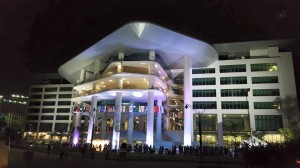


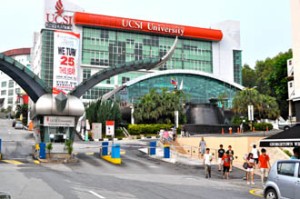



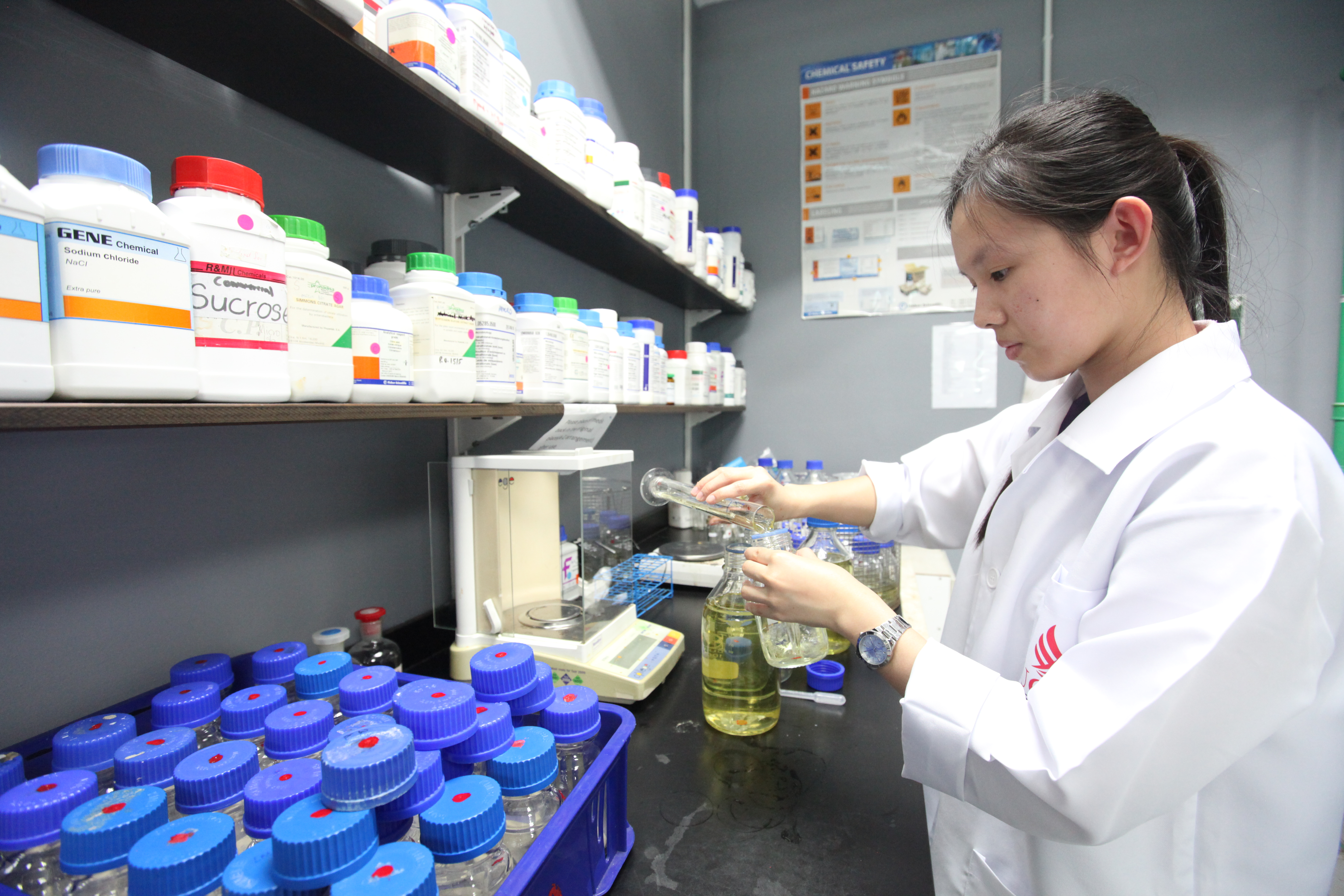


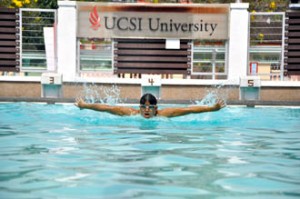

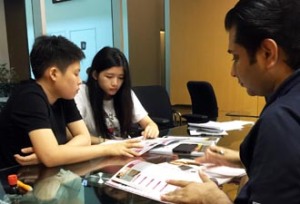


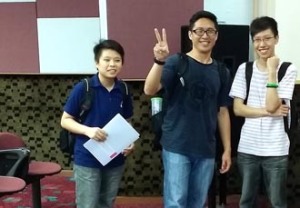


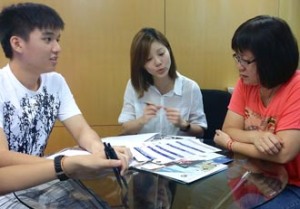



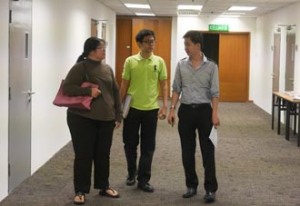




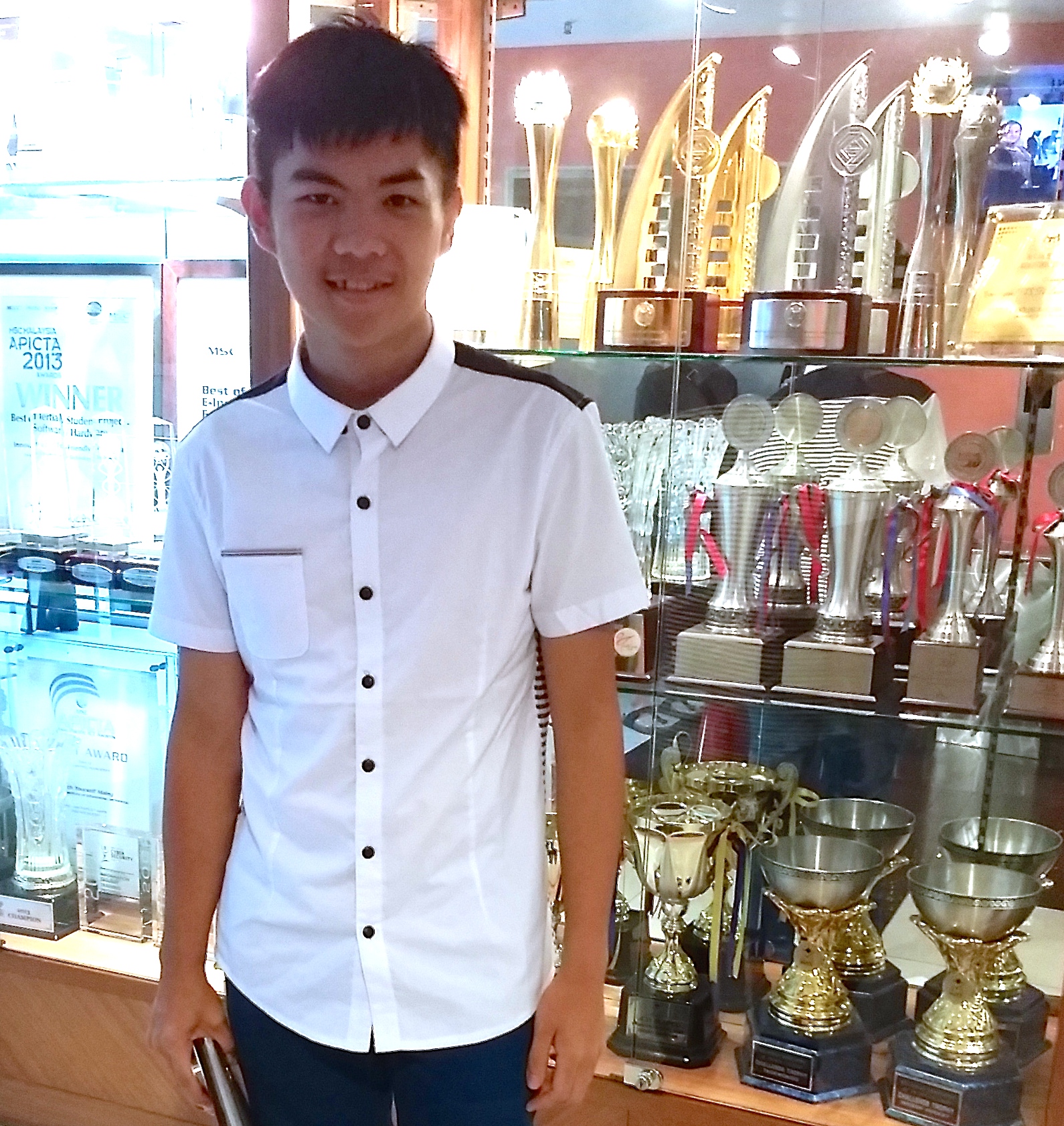


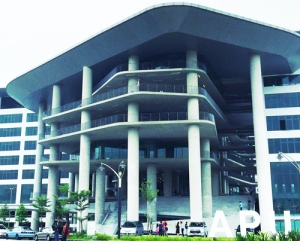


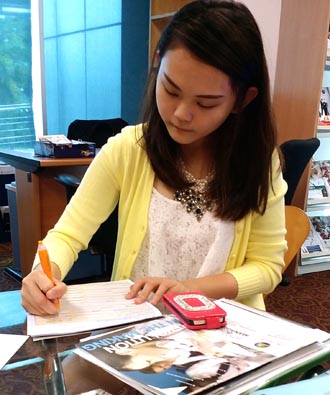

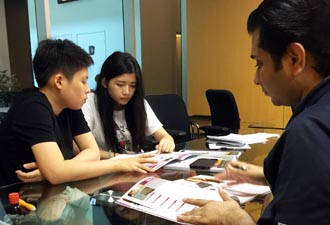
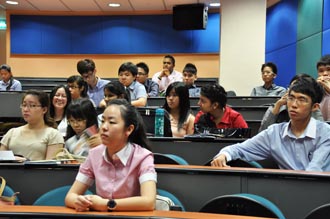



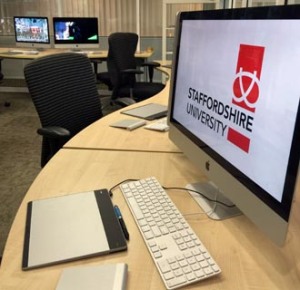
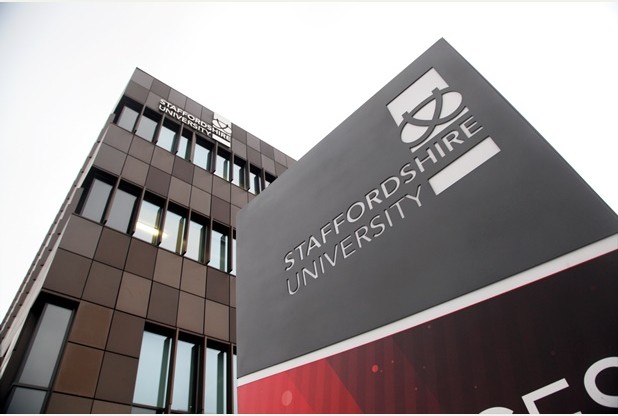


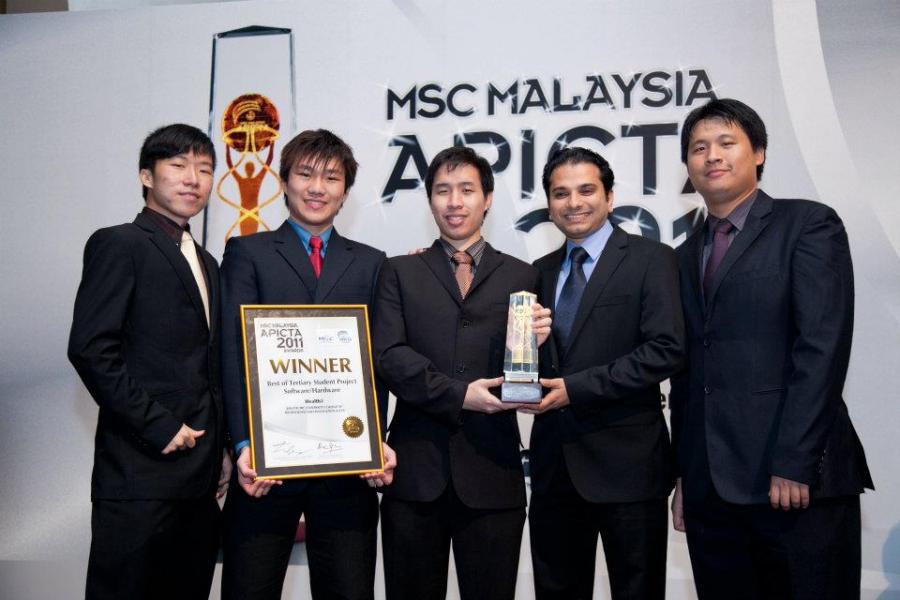




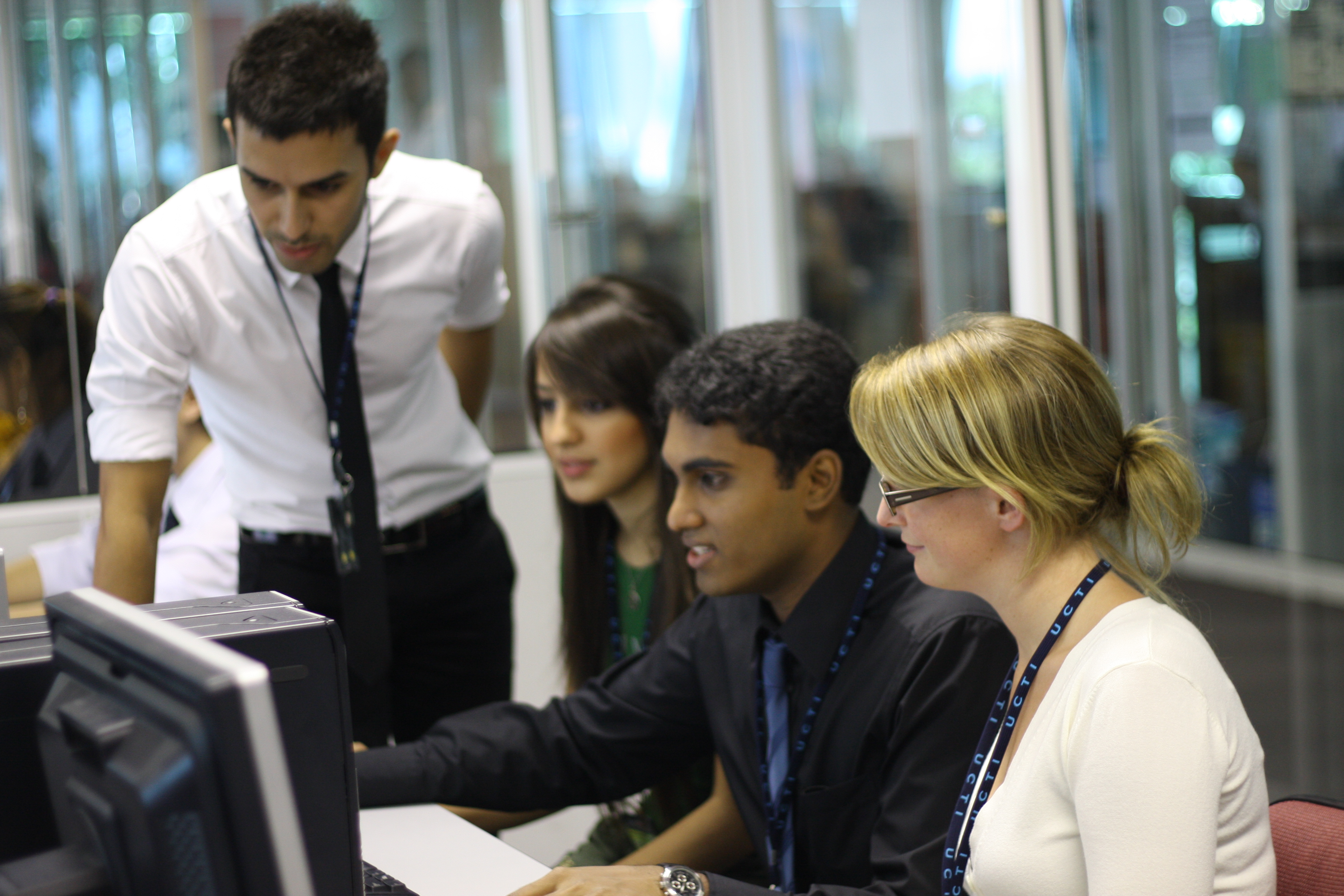


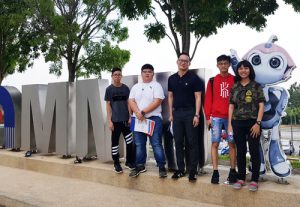


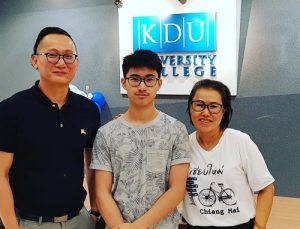

 Top Private Universities & Colleges in Malaysia