
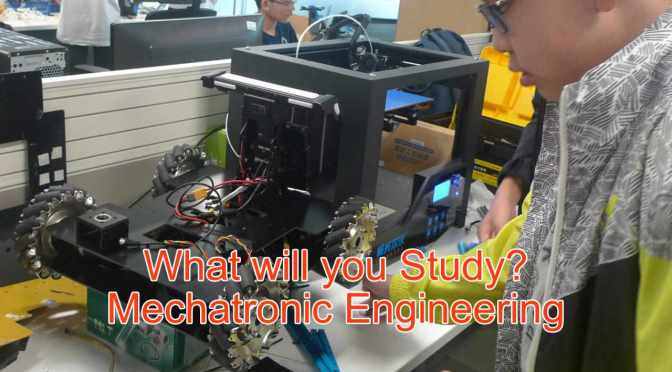
Studying the Mechatronic Engineering Degree Course
- BEng (Hons) Mechatronics Engineering students will use analytical and scientific knowledge to design, optimise and manage integrated electronics, controls, computers, and moving parts.
- Students will hone their problem-solving skills by crafting practical solutions tailored to real-world industrial needs.
- The BEng (Hons) Mechatronics Engineering is a full-time 4-year degree at Malaysia’s private universities that should be accredited by the Board of Engineers Malaysia (BEM) and the Malaysian Qualifications Agency (MQA).
Mechatronic Engineering is the combination of Mechanical, Electronic and Electrical Engineering, robotics and computing for the design, manufacture and maintenance of systems that use microprocessors and actuators to control mechanical processes. The key element is the integration of these different areas into the design process from start to finish. Mechatronics engineers understand how to do this and enable the intelligent operation of mechanical systems. It also involves installing, operating and modifying mechanical and electronic equipment and in areas like manufacturing, aviation, robotics and defense. A Mechatronic Engineer designs smart machines that are aware of their surroundings and can make decisions. It is a new branch of the engineering field with very good job prospects. Mechatronic engineers are at the leading edge of the development of new products, devices and processes. The growing complexity of electro-mechanical systems has led to a need for engineers with this skill set, therefore graduates will have excellent job prospects.
In the Mechatronic Engineering course, students will learn Engineering principles at different levels which are enhanced by exposure to practical sessions supported by hands-on laboratory work and design projects. The 4-year degree programme will cover various key topics, including mechanics, electronics, computer science, control theory, and signal processing.Students will learn how mechatronics systems work from design to build. You will hone your skills in systems design, development, and optimisation by working on a variety of projects and be given the tools to build something on your own from start to finish. By the end of the course, students should be able to design and manufacture products efficiently. You will also acquire project management and commercial skills that will make you a well-rounded, engineer career-ready for the engineering industry and beyond.
You might also be interested to read these:
- High demand for “Robotics Skills” & Mechatronic Engineers Globally and in Malaysia
- Best Robotics Courses at 5 Top Private Universities in Malaysia
- Malaysia’s Top Private Universities Offering Robotics Degree Programmes
- Top 3 Universities in Malaysia for Mechatronic Engineering
- Best Universities in Malaysia for Mechatronic Engineering Degree Accredited by Board of Engineers Malaysia (BEM)
- Why Study the Foundation in Engineering at a Top Private University in Malaysia?
- Top 20 Courses to Study in Malaysia that has High Job Demand & Stable Salary
- Top 50 Jobs with High Future Demand in Malaysia
- Malaysia’s 28 Top Jobs in Demand in Future with High Salaries
- Top 40 Courses You Should Choose to Study After SPM that has Future High Job Demand & Salary
- After SPM or IGCSE/O-Levels: Top 10 Tips on How to Make the Right Choice for Your Studies
Please fill up the Form below and I will WhatsApp you and provide you with sound advise on how to choose the best private university or college in Malaysia to study at. Our knowledgeable & experienced counselor will send you a message on WhatsApp & provide assistance from there.


What will you Study in a Mechatronic Engineering Degree Programme at Private Universities in Malaysia that’s Accredited by the Board of Engineers Malaysia (BEM)?

Vincent Hoy, Graduated from Mechatronic Engineering at Asia Pacific University (APU)
Students who are active, creative, like machines and robots and are good in subjects like Add Maths and Physics can consider the degree in Mechatronics Engineering. Mechatronic Engineering is the study of basic engineering sciences and fundamentals of mechanical, electrical, electonics and computing engineering. Students will be to integrate these four diverse fields. The technical skills to design, analyse and test “intelligent” products or processes that incorporate suitable controller, sensor and mechatronic devices for robotics and automation.
A Bachelor of Engineering (BEng) in Mechatronics Engineering is a four-year undergraduate mechatronics degree combining mechanical, electrical, and software engineering to design and develop intelligent systems that integrate sensors, actuators, and control algorithms.
The curriculum for a BEng Mechatronics Engineering programme at Malaysia’s private universities typically includes courses such as mechanics, electronics, computer science, control theory, and signal processing. Students may also have the opportunity to gain practical experience through lab work and design projects, as well as participate in industrial placements or internships.
In the Mechatronic Engineering course, students will learn Engineering principles at different levels which are enhanced by exposure to practical sessions supported by hands-on laboratory work. This is undertaken in the fully-equipped laboratories for Analogue and Digital Electronics, Communication Engineering, Power System, Robotics, PLC Controls, Pneumatics and Automation, Mechanical Equipment, Mechanical Workshop and as well as Materials and Testing Laboratories.
In order to enable students to learn and understand the latest high-tech engineering design and simulation techniques, software such as Matlab, Labview, Multisim and Autodesk Inventor.
What are the Mechatronic Engineering Programme General Objectives and Outcomes?

Ignatius, Mechatronic Engineering at Asia Pacific University (APU)
Mechatronic Engineering is concerned with the creation, design and building of intelligent machines. This new breed of engineer has to master skills in mechanical, electronic and computer engineering and work in a hybrid manner, meeting an ever-increasing need in industry where complexity of projects is rising and resources are limited. The main areas of activity are:
- Fundamental design and build – ways of embedding intelligence and interfacing to the real world
- Process control – plant condition monitoring and control
- Advance robotics and intelligent Machines
- Image Processing and collision avoidance
- Industrial system such as CIM system, CAD/CAM system
- Design and develop a Mechatronics system
Upon completion of their Mechatronic Engineering degree programme at a private university in Malaysia, students should have attained the following outcomes:
- Ability to gain and apply basic principles of Mathematics, Science and Engineering.
- Ability to identify engineering problems and apply basic engineering principles to solve them.
- Ability to recognize and apply suitable tools and techniques for engineering practical applications.
- Ability to investigate complex engineering problems using research techniques.
- Ability to design solutions for complex engineering problems.
- Ability to communicate effectively and professionally.
- Ability to comprehend and demonstrate current good practices of engineering for sustainable development.
- Ability to practice safety, health, social, cultural, legal and environmental responsibilities as an engineer.
- Ability to execute the responsibilities of an Engineer professionally and ethically.
- Ability to function effectively as an individual or in a team.
- Ability to recognize the need for, and be able to engage in independent and life-long learning.
- Ability to demonstrate and apply the knowledge and understanding of engineering management principles.
How long is the Duration of a Mechatronic Engineering Degree Programme at Malaysia’s Private Universities?

Lyngkaran, Engineering at Taylor’s University
The duration of the Mechatronic Engineering Programme at Malaysia’s private universities is 4 years in order to meet the requirements of the Board of Engineers Malaysia (BEM).
In each year there are two long-semesters consisting of 14 weeks of instruction with 2 weeks of examinations, and one short-semester consisting of 7 weeks of instruction with 1 week of examinations.
Students will also undergo industrial training or internship for a minimum of 12 weeks (to meet BEM requirements) to learn and to familiarize themselves with real life working environment. In addition, students also undertake a research and development project in their final year.
The number of contact hours per course per week depends on the credit and teaching methodology of each course. Each credit is approximately equivalent to 1 hour of class, or 2 hours of labs per week.
What will you study in Mechatronics Engineering?

Justin Moo, Mechanical Engineering graduate from Taylor’s University
Mechatronics students will find a full project application with hardware and software a piece of cake, but will not be able to give in-depth analysis of the mechanical dynamics/software structure unless they specifically work towards it.
Mechatronic students take courses from across the various fields listed below:
- Mechanical engineering and materials science subjects
- Electronic engineering subjects
- Computer engineering subjects
- Computer science subjects
- Systems and control engineering subjects
- Optomechanics (optical engineering) subjects
- Robotics subjects
Example of subjects at degree level: Electrical Circuits, Computer Programming, Control Systems, Thermodynamics, Kinematics and Dynamics of Machines, Microcomputer Systems and Interfacing, Actuators and Sensors, Digital Control Systems, Robotics and Automation, Mechanical Systems, Microprocessor Systems, Stress Analysis & Design, Instrumentation & Measurements, Electrical Power & Machines, Fluid Power & Drives, etc
What are some of the Subjects that you will Study in a Mechatronic Engineering Degree Programme at a Private University in Malaysia?

Eugene Ong, Electrical & Electronic Engineering Graduate
- Circuit Theory
- Digital Electronics
- Technical Communication
- Mathematical Methods For Engineers
- Engineering Graphics & Design
- Engineering Statics
- Analogue Electronics
- Engineering Dynamics
- Fluid Mechanics
- Advanced Circuit Theory & Transmission Lines
- Computing For Engineers
- Material Science
- Electronic Manufacturing Industry
- Engineering Software & Applications
- Numerical Analysis
- Microprocessor Systems
- Electrical Power & Machines
- Thermodynamics
- Engineers In Society
- Control Systems
- Stress Analysis & Design
- Manufacturing Processes
- Instrumentation & Measurements (Lab)
- Embedded System Design
- Mechatronic Systems Design
- Engineering Management & Economics
- Digital Control Systems
- Intelligent Systems
- Digital Signal Processing
- Fluid Power & Drives
- Robotic Systems
- Power Electronics
- Analysis of Circuits
- Engineering Materials
- Introduction to Management
- Engineering Statics & Dynamics
- Engineering Mathematics
- Introduction to C Programming
- Instrumentation & Measurement
- Engineering Design
- Analogue Electronics
- Introduction to Power System
- Electromagnetic Field Theory
- Digital Electronics
- Engineering Software & Applications
- Signals & Linear Systems
- Strength of Material
- Sensor & Actuators
- Intermediate Robotics
- Control Engineering
How is the Assessment for the Mechatronic Engineering Degree Course?

Melvern, Engineering Graduate
The teaching and learning strategies and assessment are designed depending on and according to the nature of course or topic being taught or investigated. Private Universities implement different methods and styles of teaching and learning and assessment to ensure the successful achievement of the learning outcomes of their Mechatronic Engineering programmes, that include:
- Classroom lectures
- Group tutorials
- Laboratory work
- Seminars and e-forums
- Directed and self learning
- Invited guest lectures
- Industrial visits
What is the Education Pathway to a Mechatronic Engineering Degree after SPM or IGCSE/O-Levels?

Chong Keat, Electrical & Electronic Engineering at Heriot-Watt University Malaysia
Students need to have credits in Maths & Physics or Science in SPM or IGCSE/O-Levels to go for the mechatronics engineering programme. Students after SPM or IGCSE/O-Levels who are sure of choosing engineering for their degree studies may go for the Foundation in Engineering.
If you are still not sure whether you want engineering or other science courses, you may choose the Foundation in Science programme at premier private universities in Malaysia.
Alternatively, students with at least 3 credits in SPM or IGCSE/O-Levels including Maths and 1 Science subject may go for the Diploma in Electrical & Electronic Engineering or Diploma in Mechatronic Engineering for 2 years 4 months and then enter into Year 2 of the Mechatronic Engineering degree programme for another 3 years.
Students after the external Pre-University Programme such as A-Levels, UEC, STPM, SAM, CPU, MUFY or AUSMAT may enter directly into the Engineering Degree programme with relevant results. Students can study a 4-year Mechatronics degree at top private universities in Malaysia that are accredited by the Board of Engineers Malaysia
What are the Entry Requirements into a Mechatronic Engineering Degree at Private Universities in Malaysia?

Aun Jie, Chemical Engineering at Heriot-Watt University Malaysia
These are the general entry requirements for the Mechatronic Engineering course at most private universities however the requirements may vary from university to university. You will need to contact the university to check their specific requirements.
- STPM
Minimum 2Cs including Mathematics and one relevant Physical Science subject - A Level
Minimum 2Ds including Mathematics and one relevant Physical Science subject - UEC
Minimum 5Bs including Mathematics and one relevant Physical Science subject - CPU
Minimum average of 60% in 6 subjects, inclusive of a minimum score of 60% in Mathematics and one relevant Physical Science subject - Local Matriculation
Minimum CGPA 2.0 - Foundation in Engineering or Foundation in Science
Minimum CGPA 2.0 - WAEC/NECO
A maximum aggregate of 15 points out of best 5 subjects, inclusive of minimum B in Mathematics and one relevant Physical Science subject - Diploma/ Advance Diploma/ equivalent
Minimum CGPA 2.0) - Subject to Faculty discretion after reviewing transcript and syllabus. Max credit transfer of 30% of the programme total credits
Other qualifications deemed equivalent to STPM/A-Level by Malaysian Qualifications Agency
Minimum overall average of 60%, inclusive of minimum 60% in Mathematics and one relevant Physical Science subject - International Baccalaureate
Minimum 26/42 points from 6 subjects (inclusive Mathematics and one relevant Physical Science subject) - SAM
Minimum average of 60% in 5 subjects, inclusive of minimum scores of 60% in Mathematics and one relevant Physical Science subject - SACE/AUSMAT/TEE/SAM
Minimum overall average of 60%, inclusive of a minimum score of 60% in Mathematics and one relevant Physical Science subject - WACE/NTEC
Minimum overall average of 60%, inclusive of minimum 60% in Mathematics and one relevant Physical Science subject
Get a First Rate Mechatronic Engineering Education at Top Private Universities in Malaysia

Chong Han, Foundation in Engineering at Taylor’s University
Mechatronics is the efficient and effective integration of mechanical systems, IT and electronics. It is a blend of mechanics and electronics, and uses the following:
- precision engineering
- control theory
- computer science
- mathematics
- sensor technology, to design enhanced or “smart” products, processes and systems.
Mechatronics is the combination of Mechanical, Electronic and Electrical Engineering for the design, manufacture and maintenance of systems that use microprocessors and actuators to control mechanical processes.
The key element is the integration of these different areas into the design process from start to finish. Mechatronics engineers understand how to do this and enable the intelligent operation of mechanical systems. It also involves installing, operating and modifying mechanical and electronic equipment and in areas like manufacturing, aviation, robotics and defense.
Mechatronics engineers also have roles in project engineering where their cross disciplinary knowledge gives them an edge on mechanical or electrical engineers. Mechatronics engineers can work with electrical and mechanical systems together and solve problems that cross discipline boundaries. Their strength in IT, computer hardware and networking as well as software also helps them to be very versatile problem solvers.
Mechatronic Engineers are also involved in the design, construction and running of factory production lines and processes, where they use their skills in computers; micro-controllers; programmable logic controllers; programming; industrial sensors; hydraulic, pneumatic and electric drives; design of mechanical structures and mechanisms; and knowledge of manufacturing processes.
A mechatronics engineer unites the principles of mechanics, electronics, and computing to generate a simpler, more economical and reliable system. Its application areas range from power systems to transportation to optical telecommunications to biomedical engineering, along with a host of others.
Mechatronic systems are almost everywhere you look. For example, it can be applied to the automotive industry in the increasing combination of the mechanical part of the engine with electronics and artificial intelligence.
Another example is the Mars Rover that NASA built to send to planet Mars for research gathering purposes. The Mars Rover was the product of several years of research and development to ensure engineers on earth could effectively control the Rover on the unpredictable terrain of the planet Mars.
It had to be able to negotiate any terrain encountered as well as perform fine motions to grab and sample rock and soil – much like expecting a rugby union prop to also be an accomplished ballet dancer! Of course that call occurred after a brilliant and novel Mars landing strategy was developed.
Another Example: The anti-lock braking system Cars need brakes. Cars have always had brakes. But the design of brakes has been improved over time, making them better, more responsive and safer. Now, thanks to modern sensing, actuation, computing and control technologies, braking systems are more amazing than ever before. Using technology to adjust the braking system in a split second has meant brakes are more responsive and deliver the greatest coefficient of friction possible.
It may sound a bit far-fetched but Mechatronic engineers create smart machines that are aware of their surroundings and can make decisions. These smart machines are complex beings made up of several parts: the mechanical system itself, the sensing and actuation, the control systems and the software. The opportunities available to develop such intelligent machines are ever evolving.
The future is virtually unlimited for mechatronics, and much of it is here today. Robotic systems and components are already as small as a few microns and researchers are investigating nano-technologies using mechatronic systems for implantation into the human body to repair or replace damaged physiological functions.
The next two decades will see an explosion of automated mechatronic systems infiltrating our lives more and more every year – improving our quality of life and our knowledge of the world and universe we live in. Offices, homes, factories, and more are becoming more and more mechanised to be efficient.
What do Mechatronics Engineers work as in Malaysia?
Mechatronics combines mechanical, electrical and software engineering in the design, development and control of diverse systems used in a range of industries including manufacturing, medicine and the service industries. Examples of mechatronic systems include aircraft, dishwashers, motor vehicles, automated manufacturing plants, medical and surgical devices and systems, robots of all types, many toys, artificial organs and many others.
There is an increasing demand for engineering graduates who are able to work in an interdisciplinary environment. Mechatronics Engineering is a new discipline that is combines electronics, control, software, computer and mechanical engineering.
Modern mechatronics is about the integration of electronics with mechanical design to create intelligent systems. From fuzzy logic controlled washing machines to space exploration, mechatronics and robotic systems are at the forefront of technological developments.
The word ‘mechatronics’ might still not be recognised by some dictionaries even today, but it has been in use for quite a while now. It first surfaced in Japan in the 1980s and represents the discipline of engineering that is associated with robots and automation. Without a doubt, the engineers who choose this field do share an interest in building robots that are able to perform a variety of functions, for one purpose or another.
Mechatronics engineers are therefore involved in almost every possible industry at levels from applications development to manufacturing to advanced research.Some of the products of mechatronic engineering include everyday gadgets like cameras, printers, washing machines and automatic doors. Others include parts of the car and airplane, robotic arm, etc.
Graduates with a Mechatronics degree can take up careers in a wide range of industries including robotics, aerospace, chemical, defence and automotive and manufacturing where complex software plays a major role, as well as in businesses that require extensive computer support, such as banking and commerce.
Contributions can be made to these industries in a variety of roles including design engineer, software engineer, project planner, product designer and project manager.
What do Mechatronic Engineers do?
In a nutshell, a mechatronic engineer is responsible for combining the elements of mechanical engineering and electronics engineering to design and develop mechatronic products. Elements of electrical engineering and computer science (in the form of software design and software engineering) play a part in the daily work of mechatronic engineers too.
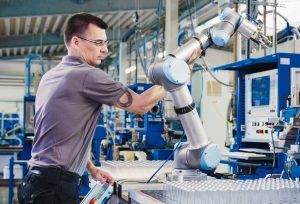
Likewise, a Robotic Arm is a prime example of a mechatronics system because it includes aspects of mechanics, electronics, control and soft-computing to do its day-to-day jobs.
Engineers from different fields of expertise work in teams on projects. For example, in a project, the Electrical & Electronics Engineer will give an in-depth analysis on the Electrical characteristics while the Mechanical engineer focuses on the physical mechanics. The software engineer will provide the software for the machine to function. With knowledge from all areas, the mechatronics engineer will be an ideal project manager.
Here are some things you might be expected to do in your job:
- Develop new solutions to industrial problems using mechanical and electronic processes and computer technology.
- Design and build completely new products by integrating various technologies, for example, developing robotic vehicles for underwater exploration.
- Build and test factory production lines introducing automation to improve existing processes.
- Maintain and improve previous industrial and manufacturing processes and designs, for example, robotic lawn mowers and robot floor cleaners.
- Design, develop, maintain and manage high technology engineering systems for the automation of industrial tasks.
- Apply mechatronic or automated solutions to the transfer of material, components or finished goods.
- Apply advanced control systems, which are usually computer-driven.
- Apply electronic and mechanical processes and computers to tasks where the use of human labour may be dangerous (like underwater exploration, mining or forestry)
- Study the feasibility, cost implications and performance benefits of new mechatronic equipment.
- Carry out modelling, simulation and analysis of complex mechanical, electronic or other engineering systems using computers.
Career Opportunities for Mechatronics Engineering Graduates in Malaysia
The career opportunities for mechatronics engineers in Malaysia is wide and a huge range of applications, from robotics in manufacturing and automation to the automotive, aerospace, medical and leisure and entertainment industries.
With your broad engineering knowledge base, you probably hold technical design and decision-making positions, often overseeing or playing a central role in engineering design teams.
Mechatronic engineers work in companies that require hi-tech input into what they are developing. They may work in a laboratory, a processing plant or an engineering office but are also research opportunities in emerging fields like bioengineering, nanotechnology and robotics.
You will find Mechatronic engineers in large global enterprises developing futuristic vehicles, challenging defence technology and revolutionising consumer products. They may also work in smaller innovative ‘high tech’ companies supplying software, parts and equipment. They could be product developers, work in manufacturing, or mining or defence industries, and in government and industry research groups.
Mechatronic Engineers may be required to travel to present at a conference or view a new design idea or innovative technology.
Mechatronics graduates can work as Systems Engineers, Project Engineers, Industrial Engineers and Control & Instrumentation Engineers within organizations such ABB, Alstom, Dyson, First Solar, GE Intelligent Platforms, Honeywell, Infineon, Intel, Jacobs Engineering, M+W, Petronas, Shell, Siemens, Sunpower, Yokogawa, etc.
Mechatronics – Dyson, Hitachi, Panasonic, Sony, Sime Darby, VS Industry, Bosch, Carsem (M) Sdn. Bhd. (S-Site), , T.A. Furniture Industries Sdn Bhd, Singapore Epson Industrial Pte Ltd., Emerson Process Management Asia Pacific Pte Ltd (Singapore), GLOBALFOUNDRIES Singapore, Cycle & Carriage Industries Pte Ltd (Singapore), Perodua Manufacturing Sdn Bhd, T & T Inspection and Engineering Sdn Bhd, Top Glove Corporation Berhad




 Top Private Universities & Colleges in Malaysia