Find Out About the Bachelor of Science (Hons) Actuarial Studies Degree Course Details, Entry Requirements, Fees & Intakes at Asia Pacific University (APU) Malaysia
Written by EduSpiral Consultant Services. For more information contact 01111408838
Malaysian students after high school or Pre-University wanting to find out more about the Bachelor of Science (Hons) Actuarial Studies course, intake dates & tuition fees at Asia Pacific University (APU), Malaysia have come to the right place. We will provide detailed information for the course and counseling is available.
Established in 1993, Asia Pacific University (APU) is famous in Malaysia for its technology courses and is one of the first private universities to offer the actuarial science degree programme. The Actuarial Science degree at Asia Pacific University (APU) has been awarded full accreditation from the Institute and Faculty of Actuaries (IFoA) (UK). APU is among the 7 universities in Asia to receive such worldwide recognition. In addition, APU is the first and the only Malaysian university that has all the six preliminary exams (P, FM, IFM, LTAM, STAM & SRM) and all the three VEE topics listed in its SOA UCAP profile.
Please fill up the Form below and I will WhatsApp you and provide you with sound advise on how to choose the best private university or college in Malaysia to study at. If you do not give your mobile number or full name as in IC, your query will not be answered. Our knowledgeable & experienced counsellor will se nd you a message on WhatsApp & provide assistance from there.
Actuarial Science Degree Programme at Asia Pacific University (APU) in Malaysia
I wasn’t sure of which university to join for actuarial science. EduSpiral shared with me about the scholarship and actuarial pathways clearly which helped me to decide. Wei Zhe, Actuarial Science at Asia Pacific University (APU)
The necessary knowledge and skills to provide advice to institutions like insurance or reinsurance companies, pensions funds and financial and investment institutions. The skills acquired by actuaries are not confined to the financial sector but are also transferable to any organisation that has to deal with risk and make financial sense of the future.
Opportunities to adapt to Insurance-related industries by providing them with assignments to mimic the actual decision making process and broad-based information pertaining to the industries.
Opportunities to develop their skills to solve a problem and model a solution using specialized statistical and actuarial methods.
Why Study Actuarial Science at Asia Pacific University?
Asia Pacific University (APU) was awarded the Premier Digital Tech University status and 100% are Employed by Graduation
A course of study in Actuarial Science which has been awarded full accreditation from the IFoA (UK). APU is among the 7 universities in Asia to receive such worldwide recognition.
Competent teaching staff with professional or specialized academic qualification, possessing working experience from actuarial industries/academia.
Course syllabus which is comprehensively structured in tandem and compliance with the 2 biggest actuarial bodies, the IFoA (UK) and the SOA (US).
Comprehensive guidance to mold graduates to be industry-ready.
According to the latest Graduate Tracer Study 2018 by Ministry of Education Malaysia, 100% of APU graduates are employed by graduation. This is not just a number, but a significant symbol of APU’s success and pride in nurturing professionals for global careers.
The university has more than 12,000 students coming from over 100 countries. 60% of its students are international students giving the campus a very international flavour. This is advantageous to Malaysian students who want to learn in a global environment in order to compete in the multinational work force of the future. In addition, it forces Malaysian students to improve their English while communicating with the international students.
Actuarial Science Programme Details at Asia Pacific University (APU)
I was confused what to study & which university. My cousin introduced me to EduSpiral who helped me to make the right choice. Ye Lun, Actuarial Science at Asia Pacific University (APU)
APU’s Bachelor of Science (Honours) in Actuarial Studies is a 3-year degree programme of full-time study. This programme is to develop students’ mathematical, statistical and analytical skills in addition to actuarial practices as preparation to become a qualified actuary.
Actuaries are highly regarded professional and they work across several industries including life and general insurance, commercial and investment banking, pensions and healthcare, consulting firms, and public sector. Actuaries are problem solvers and strategic thinkers with a deep understanding of risk management; they are one of the top paying professionals as they are usually in high demand worldwide.
Education Pathway to the Actuarial Science Degree at Asia Pacific University (APU)
After chatting with EduSpiral on WhatsApp, he met me & my family to take us around the campus & provide further advise on the course. Zijun, Actuarial Science at Asia Pacific University (APU)
Entry Requirements for the Actuarial Studies Degree at Asia Pacific University (APU)
Programmes
General Requirements
DIRECT ENTRY TO LEVEL 1 OF THE DEGREE:
STPM
• 2 Passes in STPM with a minimum Grade C+ (GP 2.33) and a Credit in Mathematics and a Pass in English at SPM Level or its equivalent.
A-LEVEL
• 2 Passes in A-Level in any 2 subjects, and a Credit in Mathematics and a Pass in English at SPM/O-Level/ IGCSE or its equivalent.
UEC
• 5 Grade B’s in UEC including Mathematics with a Pass in English.
MATRICULATION/ FOUNDATION
• Passed Foundation programme (minimum CGPA of 2.5) with a Credit in Mathematics and a Pass in English at SPM/O-Level/IGCSE or equivalent.
DIRECT ENTRY TO LEVEL 2 OF THE DEGREE:
DIPLOMA IN ACCOUNTING
• Passed Diploma with minimum CGPA of 2.5 and a Credit in Mathematics at SPM level.
Any qualification that APU accepts as equivalent to the above.
What you will study in the Bachelor of Science (Hons) in Actuarial Studies at Asia Pacific University (APU)
An excellent study environment at Asia Pacific University (APU)
APU BSc (Hons) in Actuarial Studies is a 3 years degree programme of full-time study. This programme is designed not only to provide students with knowledge and skills to enter the actuarial profession but also prepare them for the professional examinations that will lead them to a qualified actuary.
While working, they continue to sit and pass the remaining professional exams, eventually becoming qualified actuaries in their chosen specialisation in various areas such as Corporate Finance and Enterprise Risk management, Individual Life and Annuities, Group and health Insurance, Retirement Benefits, Quantitative Finance and Investment, and General Insurance.
APU graduates will also acquire the essential leadership qualities, work in teams, communication skills, problem solving abilities, critical thinking, as well as entrepreneurial and managerial skills that will enable them to face the challenging and exciting world today.
Actuaries usually work primarily for the insurance industry. They are also highly sought after by other sectors such as private corporations, banks, financial institutions and investment firms, brokerages and even government department such as Bank Negara also requires actuaries in risk management and financial consulting services.
Accreditation & Recognition of the Actuarial Science Degree at Asia Pacific University (APU)
APU graduates who perform to the required standard can be eligible for exemption from CS1, CS2, CM1, CM2, CB1 and CB2. This is a 6-paper exemption out of 7 papers of the Core Principles Professional Papers for the new IFoA Curriculum 2019, which is the maximum paper exemptions.
In addition, the university has competent teaching staff with professional or specialized academic qualification, possessing working experience from actuarial industries/academia.
APU’s Actuarial Science course syllabus is comprehensively structured in tandem and compliance with the 2 biggest actuarial bodies, the IFoA (UK) and the SOA (US).
At Asia Pacific University, Bachelor of Science (Hons) Actuarial Studies students will also receive credits for all the 3 Validated by Educational Experience (VEE) papers from SOA as long as they receive a minimum mark of 70% in the APU equivalent papers.
APU is the first and the only Malaysian university that has all the six preliminary exams (P, FM, IFM, LTAM, STAM & SRM) and all the three VEE topics listed in its SOA UCAP profile.
The Actuarial Science degree at Asia Pacific University (APU) has been awarded full accreditation from the Institute and Faculty of Actuaries (IFoA) (UK)
SOCIETY OF ACTUARIES (SOA), USA
APU is also recognized by the Society of Actuaries (US) that our BSc (Hons) Actuarial Studies will prepare students for all the six preliminary exams (P, FM, IFM, LTAM, STAM, and SRM) in the new SOA curriculum. This is in addition to the approved coursework for all the three VEE topics (Accounting & Finance, Economics, and Mathematical Statistics).
What You Will Study in the Bachelor of Science (Honours) in Actuarial Studies
I was confused what to study & which university. My cousin introduced me to EduSpiral who helped me to make the right choice. Ye Lun, Actuarial Science at Asia Pacific University (APU)
APU’s Bachelor of Science (Honours) in Actuarial Studies is a 3-year degree programme of full-time study. This programme is to develop students’ mathematical, statistical and analytical skills in addition to actuarial practices as preparation to become a qualified actuary.
Actuaries are highly regarded professional and they work across several industries including life and general insurance, commercial and investment banking, pensions and healthcare, consulting firms, and public sector.
Actuaries are problem solvers and strategic thinkers with a deep understanding of risk management; they are one of the top paying professionals as they are usually in high demand worldwide.
Year 1 Subjects for the BSc (Hons) in Actuarial Studies at Asia Pacific University
Asia Pacific University (APU) is ranked Tier 5 or “Excellent” in the SETARA rating by MQA.
Equipping students with essential fundamentals of Mathematics, Statistics, Economics and Finance starts at Level 1. To complement the core knowledge, the students will also learn Business, Communication, and IT skills, before progressing to the Level 2 of Actuarial Science study.
Modules
Probability Models
Linear Algebra
Business and Communication Skills
Calculus
Financial Accounting
Microeconomics
Macroeconomic
Introduction to R Programming
Advanced Probability Models
Statistics
Year 2 Subjects for the BSc (Hons) in Actuarial Studies at Asia Pacific University
Library at Asia Pacific University (APU)
The core knowledge of Mathematics and Statistics now act as engine to drive the complex models of Economics and Finance in the actuarial industries.
Those core knowledge are integrated to form actuarial tools and infrastructure, ready to be used for planning and managing purposes. Students will receive exposure and coaching which are actuarial centric, targeting at industrial applications. They are gradually groomed to be more independent in their study and research efforts.
Modules
Asset and Liability Valuations
Financial Statement Analysis
Predictive Analytics
Financial Mathematics
Calculus II
Regression Analysis
Financial Economics
Financial Planning and Control
Business Research Methods
Financial Management
Business Ethics & Governance
Mathematics of Financial Derivatives
INTERNSHIP (16 WEEKS)
At APU, we encourage our students to be entrepreneurial and innovative. After the completion of Level 2, students will undertake a short internship/industrial training of a minimum of 16 weeks. This will provide our students opportunities to engage with realworld business problems both in our programmes and in our renowned Professional Training placements.
Year 3 Subjects for the BSc (Hons) in Actuarial Studies at Asia Pacific University
Top lecturers teach at Asia Pacific University (APU)
The students are now ready to merge their knowledge and industrial experience to forge ahead and put into action their acquired skills in planning, managing and analyzing risk. At this level, emphasis is placed on evaluating financial performance of businesses from actuary’s perspectives.
Students will have the opportunity to understand the critical roles played by actuaries, for example, in the development and pricing of insurance products. Risk Management, Actuarial Modeling and Ratemaking are some of a wide repertoire of skills to be used.
Modules
Stochastic Processes
Life Contigencies
Strategic Management
Corporate Finance
Risk Theory
Investigation in Actuarial Studies
Option and Bond Valuations
Survival Analysis
Life Contingencies 2
Pension and Retirement Plans
Project in Actuarial Studies
MQA Compulsory Subjects*
Ethnic Relations (M’sian Students)
Islamic & Asian Civilisation (M’sian Students)
Malaysian Studies (Int’l Students)
Malay Communication Language (Int’l Students)
Workplace Professional Communication Skills
Employee & Employment Trends
Co-Curriculum
(*All students are required to successfully complete these modules as stipulated by the Malaysian Qualification Agency)
Career Options for Graduates of the BSc. (Hons) in Actuarial Studies at Asia Pacific University (APU)
Actuary
Risk Analyst
Financial Analyst
Financial Planning Advisor
Regulator
Statistician
Mathematician
Professor
Intake Dates for the BSc. (Hons) in Actuarial Studies at Asia Pacific University (APU)
The duration for the BSc. (Hons) in Actuarial Studies at Asia Pacific University (APU) is 3 years with 2 semesters a year. Each semester is 6 months long.
Intakes for the degree programmes are in February, April, September and November of each year. For the exact dates, please WhatsApp 01111408838
2020 Course Fees:
Malaysian Students
International Students
Year 1: RM 25,400
Year 2: RM 25,800
Year 3: RM 26,800 Total: RM 78,000
Year 1: RM 28,600 (USD 7,150)
Year 2: RM 29,700 (USD 7,430)
Year 3: RM 29,900 (USD 7,480) Total: RM 88,200 (USD 22,060)
* Fees stated above do not include Deposits and other Miscellaneous Fees. Please refer to Fee Guide for details.
Studying Actuarial Science in Malaysia is a Pathway to a Financially Rewarding Career
Written by EduSpiral Consultant Services. For more information contact 01111408838
With only 100 qualified actuaries in Malaysia, the market for actuaries can perhaps still be considered unsaturated.Due to the demand for actuarial technical skills and knowledge, there are vast career options and opportunities for an actuary. Traditionally, actuaries worked only in the insurance industry.
However, with the growing acknowledgement and recognition of actuarial skills today across the various financial sectors, the potential employment opportunities of an actuary have expanded to encompass banks, investment companies, security and commodity broker firms, regulators and even lecturing in the education sector. With such demand, there is an ever-increasing need for actuaries all around the world.
Furthermore, salaries for actuaries is can be very high compared to the similar jobs in financial institutions.
For more information on the top private universities and colleges in Malaysia, WhatsApp 01111408838
Please fill up the Form below and I will WhatsApp you and provide you with sound advise on how to choose the best private university or college in Malaysia to study at. If you do not give your mobile number or full name as in IC, your query will not be answered. Our knowledgeable & experienced counsellor will send you a message on WhatsApp & provide assistance from there.
Choosing to Study Actuarial Science in Malaysia can get you into High Paying Jobs in your Future Career
My father wanted me to study at the best university for actuarial science & I wasn’t sure about my results. EduSpiral met up with us, explained about the course and university. Min En, Actuarial Science, Heriot-Watt University Malaysia
One of the main aim of getting a university education in Malaysia is to find a stable job so that you can take care of yourself and your family. However, nowadays, with the high cost of living, just finding any job will not do. You will need to find a job that has a high salary.
For those who are willing to work hard, Actuary is a financially-rewarding profession. Experienced fellows have the potential to earn from $150,000 to $250,000 annually, and many actuaries earn more than that.
Compensation may vary significantly according to years of experience, industry, geographic region, and responsibilities. For example, an actuary with a fellowship designation working as a financial manager in the banking industry could earn a higher salary than another fellow working in the health insurance industry.
The actuarial profession is perfect for individuals who enjoy challenges and problems solving. Those who develop a track-record of success will have many opportunities for growth and advancement.
Most employers of actuaries award merit increases as you gain experience and pass the actuarial examinations. Most companies also offer cash bonuses, salary increases, and promotions for each professional designation achieved.
Skills acquired by actuaries, especially the quantitative analysis of risk, are valued in the marketplace. As such, those who have the will to succeed can aspire to career advancement with an actuarial credential.
According to Hays Recruitment Malaysia 2019 Salary Guide
The yearly salary for the various job positions in actuaries in Malaysia are:
Chief Actuaries 420 – 660k
Department Head 180 – 300k
Senior Manager 180 – 264k
Manager 84 – 192k
Associate 60 – 84k
According to the 2020 Robert Walters Salary Report
The annual salary for an actuary in Malaysia is:
4 – 7 Years Experience
8 – 12 Years Experience
12+ Years Experience
Actuaries – Pricing & Valuation
90 – 180k a year
180 – 264k a year
264k+ a year
What is the Job Demand for Actuaries in Malaysia?
Ong Shze Yeong, Head of Actuarial at AXA Affin General Insurance Berhad was at UCSI University to discuss the general insurance industry in Malaysia and to share career insights in this emerging market.
With only 100 qualified actuaries in Malaysia, the market for actuaries can perhaps still be considered unsaturated.Due to the demand for actuarial technical skills and knowledge, there are vast career options and opportunities for an actuary. Traditionally, actuaries worked only in the insurance industry.
However, with the growing acknowledgement and recognition of actuarial skills today across the various financial sectors, the potential employment opportunities of an actuary have expanded to encompass banks, investment companies, security and commodity broker firms, regulators and even lecturing in the education sector. With such demand, there is an ever-increasing need for actuaries all around the world.
Given the expected continuous growth in the insurance market, it is anticipated that the demand for actuaries in Malaysia will continue to grow in the next few decades. Future regulatory developments (e.g. requirement for certification of IBNR) and the increasing need for risk management are likely to result in significant increase in demand for actuarial services by general insurers.
Currently, Malaysians are generally under-insured or not insured, and there is a lack of understanding of insurance products by the general public. However, as the country develops and the middle-working class population grows, there will be an increase in financial awareness. This will create a lot of potential growth in the Malaysian market. There is a demand in Life and takaful insurance, since the majority of Malaysians are Muslims where there is demand for Sharia compliant products.
Where do Actuaries Work?
I was confused which university to choose for my studies and contacted EduSpiral. He provided facts & evidence to help me make the right choice. Vivian Chua, Actuarial Science at UCSI University
Actuarial science is also an internationally-recognised qualification that is a passport to working anywhere globally. Actuaries are in demand mainly in the financial services sector, working in banks, insurance and investment companies as well as government bodies.
Actuaries are excellent risk managers. They work in the specialist areas of insurance, pensions, benefits, healthcare, investments and banking, or for any large organization where risk management plays an important role, or for a consultancy advising on all sorts of different projects.
Therefore, actuaries play very important roles in the insurance and finance industries in Malaysia. They include life insurance companies, general insurance companies, and reinsurance companies.
Actuarial Science is a job that is recession-proof, therefore providing security for your career.
Who Should Study Actuarial Science?
After chatting with EduSpiral on WhatsApp, he met me & my family to take us around the campus & provide further advise on the course. Zijun, Actuarial Science at Asia Pacific University (APU)
The work is challenging and intellectually stimulating, especially for those who love numbers and logic.
For an actuary, being good in mathematics is a must. However, actuaries must also have good verbal and written communication skills, strong computer skills, time-management skills, as well as possess good judgement, imagination and clear logical thinking.
They also should have a knack for problem-solving, be self-confident, and possess the ability to work under pressure. Sharpness, creativity, practicality coupled with good business sense are also some of the key personal attributes. An actuary who has devised a brilliant solution to complex problem must be able to explain his solution to non-actuaries!
You can also see your efforts having a big impact on the industry and society as a whole, as when you devise and formulate financially-secure benefit plans and programmes that serve to protect clients.
What will you Study in an Actuarial Science Degree in Malaysia?
I wasn’t sure of which university to join for actuarial science. EduSpiral shared with me about the scholarship and actuarial pathways clearly which helped me to decide. Wei Zhe, Actuarial Science at Asia Pacific University (APU)
Actuarial Science is a very comprehensive course in the way that it covers Mathematics, Finance, Economics, Accounting, Business Models, Computer Programming and Risk Management. As such, a high aptitude in Mathematics is highly required.
Actuarial science includes a number of interrelated subjects, including mathematics, probability theory, statistics, finance, economics, and computer science. Historically, actuarial science used deterministic models in the construction of tables and premiums. The science has gone through revolutionary changes during the last 30 years due to the proliferation of high speed computers and the union of stochastic actuarial models with modern financial theory.
Actuarial Science degree students at top universities in Malaysia will also learn Calculus, Statistics, Probability, and Financial Mathematics. With this fundamental Mathematical knowledge graduates will be able to solve complex actuarial problems.
Actuarial science is the discipline that applies mathematical and statistical methods to assess risk in insurance, finance and other industries and professions. Actuaries are professionals who are qualified in this field through intense education and experience. Upon completion of the actuarial science degree programme in Malaysia, actuaries must demonstrate their competence by passing a series of thorough professional examinations.
Being an actuary also requires you to master several computer programming languages such as Microsoft Excel, Microsoft Visual Basic, Microsoft Visual FoxPro, and most importantly, Prophet – an actuarial software designed to crunch a large database. If you do not enjoy learning programming languages or writing codes, actuarial science would not be the career for you.
Where do Actuaries Work in Malaysia?
I received a lot of in-depth information about the course & university from EduSpiral. He took us around for a campus tour as well as the hostel in Cyberjaya. Wen Hang, Actuarial Science at Heriot-Watt University Malaysia
Actuaries are normally found in the insurance industry. They also work in consulting, financial institutions, banks, investment, brokerages, or as lecturers.
The American Society of Actuaries defines actuaries as ‘professionals who provide expert advice and relevant solutions for business and societal problems that involve economic risk.’ In Malaysia, one of the places where actuaries are often found is at insurance companies. Using mathematical models based on statistical data, they are the brains behind the calculation of the amount of insurance premium that a policyholder has to pay.
With their readily transferable skills, actuaries can also be found in many other fields. Besides the hugely popular insurance field, an actuary can work in finance, marketing, manufacturing or in the development of new products.
For example, an actuary might be hired by a business to help determine where it should invest its money based on risk and potential return analysis. Opportunities for actuaries range from the education industry to research work and even to government agencies. Because of the importance of their work, actuaries are respected throughout the business community.
In Malaysia, most actuaries can be found in life insurance companies, financial institutions such as banks, consultancies providing advice in the fields of employee benefits, life insurance and general insurance, Bank Negara Malaysia and public universities.
The areas of work for actuaries are not limited to insurance firms only. Instead, the horizon for this line of job is very wide. Below are some of the areas of work which actuaries do:
Life Insurance / Family Takaful
General Insurance / General Takaful
Reinsurance / Retakaful
Actuarial Consulting
Investment and Financial Services
Employee Benefit Industry (e.g. EPF)
Government Sector (e.g. BNM)
Colleges and Universities
What is the Day-to-Day Job of an Actuaries in Malaysia?
My mum contacted EduSpiral and he gave me in-depth information on the courses & universities. He arranged for us to tour the universities to help me make the right choice. Bryan Yap, Foundation in Business (Actuarial Science) at Heriot-Watt University Malaysia
In the insurance industry, actuaries are the financial engineers. Actuaries analyse and predict the probability that a potential event will generate a claim, and ascertain the amount of money needed for claims payouts. They are also involved in regulation, policy writing, product design and marketing of the products.
The main roles of actuaries in insurance companies are to calculate the premium for the insurance products, and determine whether the insurance company is financially solvent. In contrast, the roles of actuaries in the finance industry are in the field of risk management and assets liabilities management. They help in assessing all possible risks and manage them before the problems surface.
Actuaries are often required to work overtime in some aggressive companies, especially when they are to meet deadlines. As such, life of an actuary can be thrilling or stressful, depending on how you perceive it.
Combining their skills in mathematics, statistics, economics and finance, actuaries are able to gauge and make expert financial predictions about the future.
What areas can Actuaries Specialise in for their Job in Malaysia?
Actuaries can specialise in the following fields:
Traditional life insurance
They focus on the analysis of mortality, the production of life tables and the application of interest to produce life insurance, annuities and endowment policies. It also includes credit and mortgage insurance, long term care insurance and health savings account.
Health insurance
They focus on the analyses of rates of disability, morbidity, mortality, fertility and other contingencies. Also of great importance are the effects of consumer choice and the geographical distribution of medical services as well as the procedures and use of drugs and therapies.
Pension industry
They measure costs of alternative strategies with regards to the design, maintenance or redesigning of pension plans. The strategies are greatly influenced by collective bargaining, the changing demographics of the workforce, changes in internal revenue code and financial and economic trends among others.
Property and casualty
They focus on data collection, measurement, estimation, forecasting and valuation tools to provide financial and underwriting data for management to assess marketing opportunities and the required degree of risk taking.
Reinsurance
Focus on designing and pricing reinsurance and retro-reinsurance schemes. Their responsibility also includes establishing reserve funds for known claims and future claims as well as catastrophes.
What is the Education Pathway to Become an Actuary in Malaysia?
I was confused what to study & which university. My cousin introduced me to EduSpiral who helped me to make the right choice. Ye Lun, Actuarial Science at Asia Pacific University (APU)
The Actuarial Science degree programme has a heavy mathematical and statistical component. The first step after SPM or O-Levels, students will need to consider a private university in Malaysia that has a solid Actuarial Science degree programme that will help you prepare well for the professional papers. Students should have excellent overall results including Maths in order to tackle the academic rigours of the actuarial science programme.
Thereafter, completing the professional exams may take another 3-7 years (considering working full-time while studying). The Society of Actuaries (SOA) has a series of examinations and modules that you can take to become a fully-qualified actuary. This is usually undertaken while one is already working as an entry-level actuary, and this certification process is often sponsored by the employer while the candidate gains practical experience at the same time.
Most people will take around six to eight years to complete the requirements to become an Associate, and another two or three years to become a Fellow, by which time one will usually be in one’s thirties.
After qualifying to be an actuary, one can choose to specialise in one of the areas of insurance, viz life, health protection, property, pensions etc. Later, one can also choose to work with a consulting firm or even be an independent consultant.
However, even those who did not manage to sit for all the exams will still be recognised for those that they have successfully completed. Those who have taken only the first three exams can qualify to become underwriters.
Institute and Faculty of Actuaries (IFoA) Curriculum 2019 Pathway
One of the pathways to become a professional actuaries in Malaysia is taking the professional papers from the Institute and Faculty of Actuaries (IFoA) UK. As a professional body the Institute and Faculty of Actuaries (IFoA) has a responsibility to ensure that the curriculum is relevant, up-to-date and reflects the skills, knowledge and attributes required of actuaries in an ever-changing global business environment. At the same time the IFoA, as a full member of the International Actuarial Association (IAA), must ensure that its curriculum reflects the international standards set by them.
To become an Associate member you need to complete 7 subjects of the Core Principles. The Core Principles cover three main areas which are Actuarial Statistics (CS), Actuarial Mathematics (CM) and Business (CB). Additionally, 3 Core Practices subjects (CP1, CP2 and CP3) either by examination or exemption and a minimum of 2 years of Personal and Professional Development (PPD).
To qualify as a Fellow you need to complete Two Specialist Principles subjects either by examination or exemption. You can choose 2 out of 9 subjects. Furthermore, you will need to complete One Specialist Advanced (Choose 1 out of 7 subjects) subject by examination or dissertation and a further minimum 1 year of Personal and Professional Development (PPD)
Where to Study the Best Degree for Actuarial Science in Malaysia?
EduSpiral helped me to find the right college for A-Levels, & now they have helped me to choose what to study after my A-Levels. Chee Kin, Actuarial & Finance degree at UCSI University
At Asia Pacific University, Bachelor of Science (Hons) Actuarial Studies students will also receive credits for all the 3 Validated by Educational Experience (VEE) papers from SOA as long as they receive a minimum mark of 70% in the APU equivalent papers.
APU graduates who perform to the required standard can be eligible for exemption from CS1, CS2, CM1, CM2, CB1 and CB2. This is a 6-paper exemption out of 7 papers of the Core Principles Professional Papers for the new IFoA Curriculum 2019, which is the maximum paper exemptions.
In addition, the university has competent teaching staff with professional or specialized academic qualification, possessing working experience from actuarial industries/academia.
APU’s Actuarial Science course syllabus is comprehensively structured in tandem and compliance with the 2 biggest actuarial bodies, the IFoA (UK) and the SOA (US).
HWUM Bachelor’s degree mirrors the highly successful BSc Actuarial Science degree offered in the UK, which is accredited by the UK Actuarial Profession. This can significantly reduce the time taken to qualify as a Fellow of the Institute and Faculty of Actuaries.
Good performance in examinations means exemptions from all Core Technical subjects, CT1 to CT8, of the UK Institute and Faculty of Actuaries (IFoA) which can be converted to CS1 and 2, CM1 and 2 and CB1 and 2 under the new system of examinations, giving prospective actuaries an advantage over those in other mathematics programmes.
The degree is accredited by the Royal Statistical Society.
The 1-year internship is offered in the third year of the 4-year programme, students have the opportunity to broaden their knowledge and gain industry exposure that will help them excel in their final year of studies.
Furthermore, students can consider studying the BSc (Hons) Actuarial Science at affordable and top ranked UCSI University. Many of UCSI’s students have completed 3 to 5 professional papers of the SOA during Year 2 and 3 of the Actuarial Science degree which reflects on the strength of their lecturers and curriculum.
All you need to know about becoming an Actuary through an Actuarial Science degree and then taking the professional papers from the Society of Actuaries (SOA) USA in Malaysia
Written by EduSpiral Consultant ServicesFor more information contact 01111408838
The most common route to become an Actuary in Malaysia is taking the Professional Papers from the Society of Actuaries (SOA) – USA. Malaysian insurance regulator, Bank Negara Malaysia and the Actuarial Society of Malaysia (ASM) recognize Fellows from the Society of Actuaries (U.S.) as qualified actuaries in Malaysia.
After SPM or O-Levels, students can go for the Foundation in Business Administration or Foundation in Arts and then enter into a degree programme in Actuarial Science with VEE exemptions from the Society of Actuaries (SOA). At most universities in Malaysia, students will also receive credits for all the 3 Validated by Educational Experience (VEE) papers from SOA as long as they receive a minimum mark of 70% in the equivalent papers.
Upon completing the Actuarial Science degree, students can then begin to take the professional exams. During their undergraduate studies, students can attempt the examinations conducted by the Society of Actuaries (SOA).
Please fill up the Form below and I will WhatsApp you and provide you with sound advise on how to choose the best private university or college in Malaysia to study at. If you do not give your mobile number or full name as in IC, your query will not be answered. Our knowledgeable & experienced counsellor will send you a message on WhatsApp & provide assistance from there.
Best Education Pathway to Study Actuarial Science and Become a Professional Actuary in Malaysia
I was confused what to study & which university. My cousin introduced me to EduSpiral who helped me to make the right choice. Ye Lun, Actuarial Science at Asia Pacific University
Actuarial science is a discipline that assesses financial risks in the insurance and finance fields, using mathematical and statistical methods.
Actuarial science applies the mathematics of probability and statistics to define, analyze and solve the financial implications of uncertain future events. Traditional actuarial science largely revolves around the analysis of mortality and the production of life tables, and the application of compound interest.
Students after SPM, IGSE or O-Levels, can go for the Foundation in Business and subsequently the Actuarial Science degree programme with exemptions from the professional papers. Students may attempt part of the Society of Actuaries (SOA) professional papers during their degree programme or upon completing the degree.
There are not many universities in Malaysia that offer the degree in Actuarial Science. To study Actuarial Science in Malaysia, students should choose a university that best equips them with the knowledge and skills to succeed in actuaries.
During their undergraduate studies, students can attempt the examinations conducted by professional bodies such as Society of Actuaries (SOA). The SOA is the world’s largest actuarial professional organisation and one that constantly highlights the importance of education, credentialing and professional development. Although based in the USA, the society has a global footprint.
Through research and education, the SOA’s mission is to advance actuarial knowledge and to enhance the ability of actuaries to provide expert advice and relevant solutions for financial, business and societal challenges.
Most people will take around six to eight years to complete the requirements to become an Associate, and another two or three years to become a Fellow, by which time one will usually be in one’s thirties.
The current structure for the respective exam series is briefly described below:
Society of Actuaries (U.S.)
5 Preliminary Exams
Validation by Educational Experience (VEE) – 3 subjects
Fundamental Actuarial Practices (FAP) – 8 modules + 2 assessments
Associateship Professionalism Course
FSA Module – 2 Modules
FSA Exams – 2 Exams
Strategic Business Management Module
Fellowship Admissions Course
Top Private Universities Offering the Actuarial Science Degree Programme in Malaysia
My father wanted me to study at the best university for actuarial science & I wasn’t sure about my results. EduSpiral met up with us, explained about the course and university. Min En, Actuarial Science, Heriot-Watt University Malaysia
At Asia Pacific University, Bachelor of Science (Hons) Actuarial Studies students will also receive credits for all the 3 Validated by Educational Experience (VEE) papers from SOA as long as they receive a minimum mark of 70% in the APU equivalent papers.
APU graduates who perform to the required standard can be eligible for exemption from CS1, CS2, CM1, CM2, CB1 and CB2. This is a 6-paper exemption out of 7 papers of the Core Principles Professional Papers for the new IFoA Curriculum 2019, which is the maximum paper exemptions.
In addition, the university has competent teaching staff with professional or specialized academic qualification, possessing working experience from actuarial industries/academia.
APU’s Actuarial Science course syllabus is comprehensively structured in tandem and compliance with the 2 biggest actuarial bodies, the IFoA (UK) and the SOA (US).
Heriot-Watt University Malaysia’s team of leading academics is internationally recognised for research, scholarship and teaching in mathematical and actuarial sciences. The Actuarial Science degree at Heriot-Watt University Malaysia receives the same exemptions from the VEE papers from SOA.
HWUM Bachelor’s degree mirrors the highly successful BSc Actuarial Science degree offered in the UK, which is accredited by the UK Actuarial Profession. This can significantly reduce the time taken to qualify as a Fellow of the Institute and Faculty of Actuaries.
Good performance in examinations means exemptions from all Core Technical subjects, CT1 to CT8, of the UK Institute and Faculty of Actuaries (IFoA) which can be converted to CS1 and 2, CM1 and 2 and CB1 and 2 under the new system of examinations, giving prospective actuaries an advantage over those in other mathematics programmes.
The degree is accredited by the Royal Statistical Society.
The 1-year internship is offered in the third year of the 4-year programme, students have the opportunity to broaden their knowledge and gain industry exposure that will help them excel in their final year of studies.
Furthermore, students can consider studying the BSc (Hons) Actuarial Science at affordable and top ranked UCSI University. Many of UCSI’s students have completed 3 to 5 professional papers of the SOA during Year 2 and 3 of the Actuarial Science degree which reflects on the strength of their lecturers and curriculum.
Qualifying to become a professional Actuary in Malaysia through taking the Society of Actuaries (SOA) Professional Papers
I was confused which university to choose for my studies and contacted EduSpiral. He provided facts & evidence to help me make the right choice. Vivian Chua, Actuarial Science at UCSI University
No specific degree is mandatory, but like most good jobs, graduating from university will give one a certain edge and credibility. Most practising actuaries today have a degree in mathematics, actuarial science, statistics or computer science. Similar to accountants, graduates must also pass professional exams, before they become recognised as an actuary.
In Malaysia, to be recognised as an actuary, one will have to be a registered member with the Actuarial Society of Malaysia (ASM).
What kind of support do local and foreign companies provide?
Most, if not all local and foreign companies support their actuarial students by having actuarial development programs with the following incentives:
Study and exam leave
Full/partial reimbursement on costs of study material
Salary increment and/or bonus upon passing of exams
Which actuarial professional bodies are recognized in Malaysia?
Malaysian insurance regulator, Bank Negara Malaysia and the Actuarial Society of Malaysia (ASM) recognize Fellows of the following organizations as qualified actuaries:
Currently, the ASM does not conduct any of its own exams, but aspiring actuaries in Malaysia can choose to take the exams conducted by one of the above professional bodies.
What are the passing rates like for the Actuarial Science Professional Papers?
Passing rates are generally low compared with other professions.
For the Institute, Society or Faculty professional exams, passing rates as low as 15% – 25% per subject are not uncommon.
What about exams and qualifications for Actuary?
The current structure for the respective exam series is briefly described below:
Society of Actuaries (U.S.)
5 Preliminary Exams
Validation by Educational Experience (VEE) – 3 subjects
Fundamental Actuarial Practices (FAP) – 8 modules + 2 assessments
Associateship Professionalism Course
FSA Module – 2 Modules
FSA Exams – 2 Exams
Strategic Business Management Module
Fellowship Admissions Course
Society of Actuaries (SOA) – USA
After chatting with EduSpiral on WhatsApp, he met me & my family to take us around the campus & provide further advise on the course. Zijun, Actuarial Science at Asia Pacific University (APU)
The journey to become a qualified actuary as outlined by the Society of Actuaries (SOA) – one of the most prominent professional organisation for actuaries in the world – is divided into four stages.
The first is the Validated by Educational Experience (VEE) stage where students who receive grades of 70% and above for subjects in economics, corporate finance and applied statistics – will receive credit for these professional papers.
The second stage involves five preliminary exams that candidates must pass before proceeding to the penultimate stage, namely, the Fundamentals of Actuarial Practices course and the Associateship Professionalism Course (APC). This will qualify them as an Associate of the Society of Actuaries (ASA).
The final hurdle would be to qualify as a Fellow of the Society of Actuaries (FSA).
To attain the Associate of the Society of Actuaries (ASA) designation a candidate must successfully complete the requirements shown below, and have the Application for Admission as an Associate approved by the SOA Board of Directors. Requirements include examinations, an e-Learning course, a proctored project assessment, validation of educational experiences outside the SOA Education system (VEE), and a professionalism seminar.
Route to Becoming an Actuary throught the Society of Actuaries professional exams – SOA
1. Preliminary Education Component
Consists of five papers:
Exam P Probability
Exam FM Financial Mathematics
Exam LTAM (Long-Term Actuarial Mathematics)
Exam IFM (Investments & Financial Markets)
Exam STAM (Short-Term Actuarial Mathematics)
2. Validation by Educational Experience (VEE)
There are three required VEE topics as of July 1, 2018:
Economics
Accounting and Finance
Mathematical Statistics
NOTE: Some candidates may be eligible to obtain VEE transition credit for the previously required topics of Corporate Finance and Applied Statistics.
The VEE topics are not formal prerequisites for the preliminary exams and may be fulfilled independently of the exam process. However, you must pass two SOA, CAS or CIA actuarial exams before applying to have your VEE credit added to your record.
NOTE: VEE topics are not prerequisites for the preliminary examinations. They need not be completed prior to writing any of the preliminary exams and may be fulfilled independently of the preliminary exam process.
Credit for VEE can be obtained through various courses completed from colleges or other education programs. Within Malaysia, candidates can gain credit via the following Private Universities:
A series of online learning modules, called the Fundamentals of Actuarial Practice (FAP), are intended to be taken after the preliminary exams. They cover real-world topics such as insurance and professionalism with readings, case studies and projects. The preliminary exams and FAP modules comprise the majority of the education requirement for the ASA designation.
Web-based course comprising eight modules and two assessments:
Modules:
Module 1 – Introduction / The Role of the Professional Actuary
Module 2 – Core External Forces
Module 3 – Risk in Actuarial Problems
Module 4 – Actuarial Solutions
Module 5 – Actuarial Models
Module 6 – Model Selection and Solution Design
Module 7 – Selection of Initial Assumptions
Module 8 – Monitoring Results and Completing the Control Cycle
Assessments:
First Assessment upon completion of Modules 1 to 5
Final Assessment upon completion of Modules 6 to 8
4. Associate Professionalism Course (ACP)
Half day course covering professionalism, ethics and legal liabilities.
Upon completion of the Preliminary Education Component, VEE, FAP and ACP, the candidate will obtain the title of Associate of the SOA (ASA).
5. Specialty Tracks for Fellowship Courses
Upper-level exam topics for the FSA designation include plan design, risk classification, enterprise risk management, ratemaking and valuation. Three fellowship exams are taken in one of six specialization tracks chosen by the candidate – Finance & Enterprise Risk Management, Investments, Individual Life Insurance & Annuities, Retirement Benefits, Group & Health Insurance, or General Insurance.
To proceed from Associate to Fellow in the SOA, specific exams and modules have to be completed from one of the following specialty tracks:
Corporate Finance and ERM (CFE)
Quantitative Finance and Investment (QFI)
Individual Life and Annuities
Retirement Benefits
Group and Health
General Insurance
6. Decision Making and Communication (DMAC) Module
E-learning module on written and oral communication skills and decision making skills, applied in solving business problems.
7. Fellowship Admissions Course (FAC)
Final fellowship course consisting of lectures, case studies and presentations to increase awareness in professional ethical and malpractice issues, encourage problem-solving from different perspectives and facilitate coaching in oral communications.
Upon completion of all of the above, the candidate will obtain the title of Fellow of the SOA (FSA).
Route to Becoming an Fellow through the Society of Actuaries professional exams – SOA
Membership Classes (To become a member of Actuarial Society of Malaysia)
There are four membership classes under the ASM:
Fellow
Associate
Ordinary
Student
The requirements for each class are as follows:
Fellow
To join, professionals must be a Fellow of one of the following bodies:
Society of Actuaries (USA)
Casualty Actuarial Society (USA)
Faculty and Institute of Actuaries (UK)
Institute of Actuaries of Australia (Australia)
Canadian Institute of Actuaries (Canada)
Recommended by 2 Fellow members of the Society
Resident in Malaysia or deemed to be familiar with Malaysian conditions
At least 1 year’s experience in the Malaysian actuarial industry
Associate
To join, professionals must be an Associate of one of the following bodies:
Society of Actuaries (USA)
Casualty Actuarial Society (USA)
Faculty and Institute of Actuaries (UK)
Institute of Actuaries of Australia (Australia)
Canadian Institute of Actuaries (Canada)
OR
– Passed examinations of any professional actuarial bodies to be recognized as Fellow, which is deemed to be at least equivalent to the examination requirements to become an Associate of the above actuarial bodies.
Ordinary
– Satisfies one of the following:
Ordinary member of a professional actuarial body; OR
Passed at least 1 part/subject of the examinations of a professional actuarial body which has no class of Ordinary membership and is continuing to study for other examinations of the actuarial body; OR
Completed an actuarial course or other related statistical course in a university, college or other academic institute and has achieved a qualification thereof; OR
Carrying out actuarial or other related work in a life or non-life insurance company, government office or actuarial consulting office.
– Nominated by 2 members of the Society
Student
Nominated by 2 persons delegated by the Vice Chancellor of the university
Does not meet the requirements for admission as Fellow, Associate or Ordinary member; OR meets the requirements but is not gainfully employed and chooses to seek Student membership
Has a declared interest in actuarial matters
Undergraduate/postgraduate student in an actuarial-related program
Find Out About the Best Actuarial Science Degree Programmes in Malaysia
Written by EduSpiral Consultant Services For more information contact 01111408838
The path to becoming an actuary in Malaysia for students after high school involves going through a structured education plan. First, students will obtain university-level education and then post-university examinations, as well as other requirements. One must pass the actuarial professional examinations and various on-the-job assessments. A normal actuarial studies degree spans 3 years. Thereafter, completing the professional exams may take another 3-7 years (considering working full-time while studying). Students should choose the best university in Malaysia for actuarial science to prepare them well to face the professional exams.
Please fill up the Form below and I will WhatsApp you and provide you with sound advise on how to choose the best private university or college in Malaysia to study at. If you do not give your mobile number or full name as in IC, your query will not be answered. Our knowledgeable & experienced counsellor will send you a message on WhatsApp & provide assistance from there.
The Best Universities in Malaysia to Study Actuarial Science
EduSpiral helped me to find the right college for A-Levels, & now they have helped me to choose what to study after my A-Levels. Chee Kin, Actuarial & Finance degree at UCSI University
The Actuarial Science degree programme has a heavy mathematical and statistical component. The first step after SPM or O-Levels, students will need to consider a private university in Malaysia that has a solid Actuarial Science degree programme that will help you prepare well for the professional papers.
Students should have excellent overall results including Maths in order to tackle the academic rigours of the actuarial science programme.
At Asia Pacific University, Bachelor of Science (Hons) Actuarial Studies students will also receive credits for all the 3 Validated by Educational Experience (VEE) papers from SOA as long as they receive a minimum mark of 70% in the APU equivalent papers.
APU graduates who perform to the required standard can be eligible for exemption from CS1, CS2, CM1, CM2, CB1 and CB2. This is a 6-paper exemption out of 7 papers of the Core Principles Professional Papers for the new IFoA Curriculum 2019, which is the maximum paper exemptions.
In addition, the university has competent teaching staff with professional or specialized academic qualification, possessing working experience from actuarial industries/academia.
APU’s Actuarial Science course syllabus is comprehensively structured in tandem and compliance with the 2 biggest actuarial bodies, the IFoA (UK) and the SOA (US).
Heriot-Watt University Malaysia’s team of leading academics is internationally recognised for research, scholarship and teaching in mathematical and actuarial sciences. The Actuarial Science degree at Heriot-Watt University Malaysia receives the same exemptions from the VEE papers from SOA.
HWUM Bachelor’s degree mirrors the highly successful BSc Actuarial Science degree offered in the UK, which is accredited by the UK Actuarial Profession. This can significantly reduce the time taken to qualify as a Fellow of the Institute and Faculty of Actuaries.
Good performance in examinations means exemptions from all Core Technical subjects, CT1 to CT8, of the UK Institute and Faculty of Actuaries (IFoA) which can be converted to CS1 and 2, CM1 and 2 and CB1 and 2 under the new system of examinations, giving prospective actuaries an advantage over those in other mathematics programmes.
The degree is accredited by the Royal Statistical Society.
The 1-year internship is offered in the third year of the 4-year programme, students have the opportunity to broaden their knowledge and gain industry exposure that will help them excel in their final year of studies.
Furthermore, students can consider studying the BSc (Hons) Actuarial Science at affordable and top ranked UCSI University. Many of UCSI’s students have completed 3 to 5 professional papers of the SOA during Year 2 and 3 of the Actuarial Science degree which reflects on the strength of their lecturers and curriculum.
UCSI University is one of the pioneers for actuarial science in Malaysia and offers a top rated actuarial science degree that’s affordable.
Who Should Study Actuaries in Malaysia
EduSpiral explained the pathway to become an actuaries & gave facts on why Heriot-Watt is the best for actuarial science. We also toured the campus and hostel. Weng Hang, Heriot-Watt University Malaysia
To become an actuary, you will generally need to have a high-level of mathematical ability and an above-average level of intelligence. However, actuaries must also have good verbal and written communication skills, strong computer skills, time-management skills, as well as possess good judgement, imagination and clear logical thinking.
They also should have a knack for problem-solving, be self-confident, and possess the ability to work under pressure. Sharpness, creativity, practicality coupled with good business sense are also some of the key personal attributes. An actuary who has devised a brilliant solution to complex problem must be able to explain his solution to non-actuaries!
Important characteristics for an actuary to have would be as follows:
Mathematics is one of your favourite subjects. You study mathematics at the highest possible level and achieve good grades for it. You have a strong interest in solving complicated problems.
You see yourself working as an actuary or risk manager for an insurance company, consultancy, pension fund or another financial or government institution.
You have an affinity for numbers as well as the societal reality behind them, you are a good abstract thinker and you have strong analytical skills.
You are capable of working independently: you know how to use a library. Initiative and inquisitiveness are also of great value.
What you Will Study in Actuarial Science in Malaysia
My father wanted me to study at the best university for actuarial science & I wasn’t sure about my results. EduSpiral met up with us, explained about the course and university. Min En, Actuarial Science, Heriot-Watt University Malaysia
Not all people are suited to study actuarial science as it is a very challenging course and requires a long time to become a professional actuaries. Students after SPM, O-Levels, Pre-U, STPM, A-Levels or UEC with excellent results in Maths and Add Maths can consider a career in actuary.
Actuarial Science is a very comprehensive course in the way that it covers Mathematics, Finance, Economics, Accounting, Business Models, Computer Programming and Risk Management. As such, a high aptitude in Mathematics is highly required.
Actuarial science includes a number of interrelated subjects, including mathematics, probability theory, statistics, finance, economics, and computer science. Historically, actuarial science used deterministic models in the construction of tables and premiums. The science has gone through revolutionary changes during the last 30 years due to the proliferation of high speed computers and the union of stochastic actuarial models with modern financial theory.
Actuarial Science degree students at top universities in Malaysia will also learn Calculus, Statistics, Probability, and Financial Mathematics. With this fundamental Mathematical knowledge graduates will be able to solve complex actuarial problems.
Actuarial science is the discipline that applies mathematical and statistical methods to assess risk in insurance, finance and other industries and professions. Actuaries are professionals who are qualified in this field through intense education and experience. Upon completion of the actuarial science degree programme in Malaysia, actuaries must demonstrate their competence by passing a series of thorough professional examinations.
Being an actuary also requires you to master several computer programming languages such as Microsoft Excel, Microsoft Visual Basic, Microsoft Visual FoxPro, R and most importantly, Prophet – an actuarial software designed to crunch a large database. If you do not enjoy learning programming languages or writing codes, actuarial science would not be the career for you.
Actuaries are professionals who like to solve complex problems. There are many factors impacting an actuarial solution that even one assumption is inaccurate, it would affect the whole solution and result.
Consequently, actuaries employ the actuarial control cycle – a problem-solving approach that applies equally well to the most broad and the focused actuarial problems. It is a model of actuarial practice in a wide range of fields and provides common grounding for all candidates.
Through the control cycle, all actuarial work is categorized into three main functions:
Define the problem
Design the solution
Monitor the results
Because of their ability to analyse and solve complex problems, actuaries command a very high salary. In fact, it is one of the highest paid professions in Malaysia and globally.
What is the Education Pathway into the Actuarial Science Degree in Malaysia?
Best Actuarial Science Degree Course in Malaysia at Award Winning Asia Pacific University (APU)
I wasn’t sure of which university to join for actuarial science. EduSpiral shared with me about the scholarship and actuarial pathways clearly which helped me to decide. Wei Zhe, Actuarial Science at Asia Pacific University (APU)
APU graduates who perform to the required standard can be eligible for exemption from CS1, CS2, CM1, CM2, CB1 and CB2. This is a 6-paper exemption out of 7 papers of the Core Principles Professional Papers for the new IFoA Curriculum 2019, which is the maximum paper exemptions.
In addition, the university has competent teaching staff with professional or specialized academic qualification, possessing working experience from actuarial industries/academia.
APU’s Actuarial Science course syllabus is comprehensively structured in tandem and compliance with the 2 biggest actuarial bodies, the IFoA (UK) and the SOA (US).
At Asia Pacific University, Bachelor of Science (Hons) Actuarial Studies students will also receive credits for all the 3 Validated by Educational Experience (VEE) papers from SOA as long as they receive a minimum mark of 70% in the APU equivalent papers.
The necessary knowledge and skills to provide advice to institutions like insurance or reinsurance companies, pensions funds and financial and investment institutions. The skills acquired by actuaries are not confined to the financial sector but are also transferable to any organisation that has to deal with risk and make financial sense of the future.
Opportunities to adapt to Insurance-related industries by providing them with assignments to mimic the actual decision making process and broad-based information pertaining to the industries.
Opportunities to develop their skills to solve a problem and model a solution using specialized statistical and actuarial methods.
What you will study in the Bachelor of Science (Hons) in Actuarial Studies at Asia Pacific University (APU)
After chatting with EduSpiral on WhatsApp, he met me & my family to take us around the campus & provide further advise on the course. Zijun, Actuarial Science at Asia Pacific University (APU)
Asia Pacific University’sBSc (Hons) in Actuarial Studies is a 3 years degree programme of full-time study. The actuarial studies degree programme at APU is designed not only to provide students with knowledge and skills to enter the actuarial profession but also prepare them for the professional examinations that will lead them to a qualified actuary.
During their undergraduate studies, students can attempt the examinations conducted by professional bodies such as Society of Actuaries (SOA) or Institute and Faculty of Actuaries (IFoA) and upon graduation, they can embark on careers as an actuarial assistant.
While working, they continue to sit and pass the remaining professional exams, eventually becoming qualified actuaries in their chosen specialisation in various areas such as Corporate Finance and Enterprise Risk management, Individual Life and Annuities, Group and health Insurance, Retirement Benefits, Quantitative Finance and Investment, and General Insurance.
APU graduates will also acquire the essential leadership qualities, work in teams, communication skills, problem solving abilities, critical thinking, as well as entrepreneurial and managerial skills that will enable them to face the challenging and exciting world today.
Actuaries usually work primarily for the insurance industry. They are also highly sought after by other sectors such as private corporations, banks, financial institutions and investment firms, brokerages and even government department such as Bank Negara also requires actuaries in risk management and financial consulting services.
Study the Actuarial Science Degree at the Top Ranked Heriot-Watt University Malaysia
My father wanted me to study at the best university for actuarial science & I wasn’t sure about my results. EduSpiral met up with us, explained about the course and university. Min En, Actuarial Science, Heriot-Watt University Malaysia
Actuaries manage risk and uncertainty and evaluate the likely impact of future events. Heriot-Watt’s Actuarial Science programme is world-famous for its excellence. It contains all the courses that are essential for ensuring a flying start to a career as an actuary whilst at the same time fostering highly transferable mathematical skills.
If you excel at mathematics, enjoy problem solving and are looking for a degree that will prepare you for a rewarding career – both intellectually and financially – Actuarial Science could be the programme for you.
Heriot-Watt University Malaysia Bachelor’s degree mirrors the highly successful BSc Actuarial Science degree offered in the UK, which is accredited by the UK Actuarial Profession. This can significantly reduce the time taken to qualify as a Fellow of the Institute and Faculty of Actuaries.
Teaching and Assessment
Teaching is delivered through a combination of lectures, tutorials and project work. Course assessment is generally based on either coursework or an exam at the end of the semester, or a mixture of the two at the end of the semester or academic year.
Accreditation
Good performance in examinations means exemptions from all Core Technical subjects, CT1 to CT8, of the UK Institute and Faculty of Actuaries (IFoA) which can be converted to CS1 and 2, CM1 and 2 and CB1 and 2 under the new system of examinations, giving prospective actuaries an advantage over those in other mathematics programmes.
The degree is accredited by the Royal Statistical Society.
The Best Actuarial Science Degree Programme at UCSI University
I was confused which university to choose for my studies and contacted EduSpiral. He provided facts & evidence to help me make the right choice. Vivian Chua, Actuarial Science at UCSI University
The 3-year BSc (Hons) Actuarial Science programme at UCSI University provides a solid grounding in mathematics, accounting, finance and statistic to integrate theories with actual experience and build a foundation for students to pursuit professional career in the financial risk management industry.
Students at UCSI University will be furnished with the essential leadership qualities, communication skills, problem-solving abilities, critical thinking, as well as entrepreneurial and managerial skills that will enable them to face the challenging yet exciting world, where risks can be turned into opportunities.
The assessment includes a combination of examinations, projects and assignments, and finally a requirement to complete a dissertation in Independent Project in the final year. Students will acquire up-to-date vocational skills that are relevant and competitive. This reflects the complex and challenging nature of the accounting, finance and business realms.
As testament to UCSI University’s efforts, they have students who passed three to five preliminary exams during their degree studies when they were still in their second year. This is a remarkable feat.
Top Bachelor of Science (Hons) Actuarial Studies UK Dual Award degree programme at Taylor’s University Lakeside Campus
My dream was to study at Taylor’s University and with the Taylor’s Excellence Award that EduSpiral shared with me, I am able to achieve it. Chun Tim, Foundation in Business into Finance at Taylor’s University
Actuarial Studies is the extensive study of mathematics, probability, statistics, finance and economics. Offered by Taylor’s Business School (TBS), the programme transforms students into skilled analytical problem solvers who are trained to calculate and manage financial risk for businesses.
Beyond providing a comprehensive programme, Taylor’s University further enrich the educational experience through various learning opportunities to help students get the most out of their studies.
3-Year and 4-Year Bachelor of Science (Hons) Actuarial Studies UK Dual Award degree programme at Taylor’s University in Malaysia
Our mum asked us to talk to EduSpiral as we did not know what to study. EduSpiral had helped our older sister before. He met us at Taylor’s, talked to us and then gave us a tour. Gan twins, Foundation in Arts at Taylor’s University
Designed to Suit Different Needs
The Actuarial Studies programme at Taylor’s University offers flexibility and allows students to choose how they wish to maximise their time at Taylor’s Business School. These options include:
A Semester Abroad
Students have the choice to complete a semester abroad in their second year. Credits gained during this semester will be recognised by Taylor’s University.
Short Internship
Offered in the final year of the 3-year programme, students have the opportunity to apply classroom lessons and gain industry experience from top companies.
Long Internship
Offered in the third year of the 4-year programme, students have the opportunity to broaden their knowledge and gain industry exposure that will help them excel in their final year of studies.
Flexible Learning
Students also have the option to transfer to another Taylor’s Business School programme during their course. Credits gained during their enrolment in Actuarial Studies will be credited to their new programme. Students have an option to take electives from other business programmes as well.
All You Need to Know About What is Artificial Intelligence (Ai), Job Demand, Salary, Degree Courses, Top Universities & Why Study this Course
Written by EduSpiral Consultant Services. For more information contact 01111408838
In order to meet the high demand of delivering faster, relevant and holistic services to today’s customers, it is estimated that about 70 percent of organisations will integrate Artificial Intelligence (AI) to assist employee productivity by 2021. However, only 26 percent of companies in Malaysia have actually begun integrating AI into their operations, according to a survey that was conducted in 2018. The low adoption rate is attributed to two key barriers that are related to organisational culture on AI and limited employee skill sets.
Therefore, the demand for qualified and trained professionals in Artificial Intelligence (AI) is high in Malaysia. With the emergence of new possibilities and opportunities through the power of emerging technologies, students must take advantage and choose courses that will be relevant in their future jobs.
For more information on the top private universities and colleges in Malaysia, WhatsApp 01111408838
Please fill up the Form below and I will WhatsApp you and provide you with sound advise on how to choose the best private university or college in Malaysia to study at. If you do not give your mobile number or full name as in IC, your query will not be answered. Our knowledgeable & experienced counsellor will send you a message on WhatsApp & provide assistance from there.
All You Need to Know About Artificial Intelligence (Ai) in Malaysia
Rise of Artificial Intelligence (Ai)
EduSpiral provided detailed information to help me make my decision. Vincent Lim, Software Engineering Graduate, Asia Pacific University (APU)
With the evolution of technology, the current job landscape in Malaysia has changed drastically. In many industries and countries, the current in-demand occupations or specialties did not exist 10 or even five years ago. The rise of technology has led to a disruption in the way we work and live. The Digital Era has changed the way we work.
Malaysia government’s focus was also in line with its efforts to meet the challenges of the Industrial Revolution 4.0 (IR 4.0) that requires highly skilled human capital. More new job opportunities would emerge as the digital revolution unfolded, and cited the World Economic Forum’s estimate that 65% of the workforce will work in the yet to be created job sector because it requires digital skills.
There will be a substantial rise in specialised processors, such as GPUs and chips, that implement Artificial Intelligence or AI architectures which determine how a network processes and routes information and maintains security, privacy, and integrity.
Quantum computing and engineering will continue to be in an aggressive hype phase in 2020, but the ability to control, measure, and error-correct quantum systems as the number of qubits grows will be important from the start.
Leading technology giants Facebook, Google, Amazon are all excited about Artificial Intelligence. Google CEO Sundar Pichai emphasized in 2017 just how important AI is to the future of the company, stating, “I’m really happy with how we are transitioning to an AI-first company.
The Google Assistant is one of our first steps towards that future…Advances in machine learning are helping us make many Google products better… Beyond that, we continue to set the pace in machine learning and AI research.” — Alphabet 1Q17 Earnings Call
In addition, Amazon CEO Jeff Bezos shared at the Code Conference in California “It’s hard to overstate how big of an impact AI is going to have on society over the next 20 years.”
Example of How AI is Applied in Future Jobs
EduSpiral counseled us online & then picked us up from the airport to visit MMU in order to help us choose the right university. Mak, Ong & Chaw – Diploma in Information Technology (IT) at Multimedia University (MMU)
In a competitive business environment, customer satisfaction and retention is key. Businesses must find ways to communicate and deliver to their customers seamlessly and immediately. The new generation of customers are technologically savvy and demand immediate attention to their needs.
In this landscape, the use of Ai will help businesses to listen to the needs of the customer, understand their needs and resolve any problems. Ai will deepen customer engagement through machine learning and automation.
Conversational Service Automation is about enabling front office automation in contact centres.
Consider this scenario: A customer starts a conversation with a chatbot for quick self-service. The bot is able to provide some quick and valuable updates based on the customer’s previous interactions. If the conversation gets more complex, the voice bot politely hands the call to a human agent via a live transfer. The agent is assisted through real-time analytics and chat transcripts to be able to make the next best offer which the customer gladly accepts.
This automation backed by real-time analytics is continuously self-learning, enabling real-time listening of conversations across channels and then converting them into actionable insights.
As a result, a win-win situation is created where businesses can reduce work pressure on call centre agents, improve accuracy of information and greater customer satisfaction.
What is Artificial Intelligence?
Being in Sabah made it difficult for me to survey the universities in Peninsula. I found EduSpiral online and they provided detailed information & helped me with my application. They even took me around the university for a tour when I went to visit. Xavier Phang, Software Engineering Graduate from Asia Pacific University (APU)
We are surrounded by Artificial Intelligence (AI) and we often use it without realizing. Every time you ask Siri or Bixby to do a task, use a Tiktok filter, have junk mail filtered from your inbox, or get a traffic update on Waze, AI is at work.
Basically, Artificial intelligence is the use of a program, or algorithm, to perform a task which requires humans to use our intelligence. Just as we use our brains to learn from new information gathered by our senses, AI learns from information fed to it—either many examples of an image, say, or the rules of a game—and processed according to how it is programmed. When AI is programmed to follow an algorithm, it is called machine learning. AI can handle massive amounts of data that our brains simply cannot cope with.
In 1956, John McCarthy defined the term Artificial Intelligence (Ai) as: ‘The science and engineering of making intelligent machines.’
In addition, Artificial Intelligence can be understood as the development of computer systems that can perform tasks requiring human intelligence. Human intelligence such as decision making, detecting objects, solving complex problems and so on. Basically, Ai is when a machine performs an “intelligent” task.
Artificial Intelligence (AI) means getting a computer to mimic human behavior in some way.
Machine learning is a subset of AI, and it consists of the techniques that enable computers to figure things out from the data and deliver AI applications.
Deep learning, meanwhile, is a subset of machine learning that enables computers to solve more complex problems.
What are the Types Of Learning In Artificial Intelligence?
EduSpiral helped me to understand clearly what software engineering is about & helped me to choose the right university. Vincent Chow, Software Engineering Graduate, Asia Pacific University
Artificial Narrow Intelligence
Artificial General Intelligence
Artificial Super Intelligence
These are the three stages through which AI can evolve, rather than the 3 types of Artificial Intelligence.
Artificial Narrow Intelligence (ANI)
Also known as Weak AI, ANI is the stage of Artificial Intelligence involving machines that can perform only a narrowly defined set of specific tasks. At this stage, the machine does not possess any thinking ability, it just performs a set of pre-defined functions.
Examples of Weak AI include Siri, Alexa, Self-driving cars, Alpha-Go, Sophia the humanoid and so on. Almost all the AI-based systems built till this date fall under the category of Weak AI.
Artificial General Intelligence (AGI)
Also known as Strong AI, AGI is the stage in the evolution of Artificial Intelligence wherein machines will possess the ability to think and make decisions just like us humans.
There are currently no existing examples of Strong AI, however, it is believed that we will soon be able to create machines that are as smart as humans.
Artificial Super Intelligence (ASI)
Artificial Super Intelligence is the stage of Artificial Intelligence when the capability of computers will surpass human beings. ASI is currently a hypothetical situation as depicted in movies and science fiction books, where machines have taken over the world.
Further Definitions of the Types of Artificial Intelligence (AI)
I was confused about my further studies. EduSpiral guided me in choosing the right course & getting a scholarship. He even kept in touch through all the years of my studies until now. Jeremy Lee, Software Engineering Graduate from Asia Pacific University (APU)
When explaining the different types of Artificial Intelligence systems, we can categorize them based on their functionalities. Based on the functionality of AI-based systems, these are the following types:
Reactive Machines AI
Limited Memory AI
Theory Of Mind AI
Self-aware AI
Reactive Machine AI
This type of AI includes machines that operate solely based on the present data, taking into account only the current situation. Reactive AI machines cannot form inferences from the data to evaluate their future actions. They can perform a narrowed range of pre-defined tasks.
An example of Reactive AI is the famous IBM Chess program that beat the world champion, Garry Kasparov.
Limited Memory AI
Like the name suggests Limited Memory AI, can make informed and improved decisions by studying the past data from its memory. Such an AI has a short-lived or a temporary memory that can be used to store past experiences and hence evaluate future actions.
Self-driving cars are Limited Memory AI, that uses the data collected in the recent past to make immediate decisions. For example, self-driving cars use sensors to identify civilians crossing the road, steep roads, traffic signals and so on to make better driving decisions. This helps to prevent any future accidents.
Theory Of Mind AI
The Theory Of Mind AI is a more advanced type of Artificial Intelligence. This category of machines is speculated to play a major role in psychology. This type of AI will focus mainly on emotional intelligence so that human believes and thoughts can be better comprehended.
The Theory of Mind AI has not yet been fully developed but rigorous research is happening in this area.
Self-Aware AI
Let’s just pray that we don’t reach the state of AI, where machines have their own consciousness and become self-aware. This type of AI is a little far fetched given the present circumstances. However, in the future, achieving a stage of superintelligence might be possible.
What are the Different Branches Of Artificial Intelligence?
I found EduSpiral online and he met me and my Dad at the university to counsel us & take us around for a tour. As I didn’t come from a rich family, EduSpiral helped me to find a university that’s affordable and good. Eric Ng, Diploma in Information Technology (IT) at First City University College
Artificial Intelligence (AI) can be roughly divided into symbolic or rules-based computing—typical ‘if-then’ statements—and machine learning, where AI is programmed with an algorithm that can modify itself as it gains new information.
There are different ways machine learning can be employed: deep learning by using artificial neural networks, reward-based learning, and learning based on statistical principles. Many AI programs are used for analyzing and processing images or speech or extracting information from them. Deep learning is often used for making predictions, like medical diagnoses or possible credit card fraud.
Artificial Intelligence can be used to solve real-world problems by implementing the following processes/ techniques:
Machine Learning
Deep Learning
Natural Language Processing
Robotics
Expert Systems
Fuzzy Logic
Machine Learning
Studying Information Technology (IT) was my dream but my results didn’t achieve the requirements. But EduSpiral gave me in-depth advise & helped me to choose the right course that suited me. Harold, Diploma in Business IT at Asia Pacific University (APU)
A subset of AI called Machine Learning is also taking AI to the next level. Machine Learning provides systems or machines the ability to learn and improve without being explicitly programmed. It is a computer-based learning achieved by following an algorithm (a set of instructions or rules) to maximize the chance of a prediction being correct.
In other words, the capability of machines to learn for themselves including the ability to analyze extensive volumes of data to identify patterns and predict outcomes without the need for human intervention.
Any program that improves its performance based on new inputs is an example of machine learning. It may involve artificial neural networks, but doesn’t have to.
Machine Learning is the science of getting machines to interpret, process and analyze data in order to solve real-world problems.
Under Machine Learning there are three categories:
Supervised Learning
Unsupervised Learning
Reinforcement Learning
Deep Learning
I was confused about what to study & at which university. Talking to EduSpiral helped clear my doubts. Zen Yi, Graduated from Software Engineering at Asia Pacific University (APU)
Deep Learning is the process of implementing Neural Networks on high dimensional data to gain insights and form solutions. Deep Learning is an advanced field of Machine Learning that can be used to solve more advanced problems.
A type of machine learning that uses ‘deep’ neural networks. The word ‘deep’ refers to the many layers in the neural network. Deep learning is how most of today’s artificial intelligence programs operate.
Deep Learning is the logic behind the face verification algorithm on Facebook, self-driving cars, virtual assistants like Siri, Alexa and so on.
Natural Language Processing
Natural Language Processing (NLP) refers to the science of drawing insights from natural human language in order to communicate with machines and grow businesses.
Twitter uses NLP to filter out terroristic language in their tweets, Amazon uses NLP to understand customer reviews and improve user experience.
Robotics
Robotics is a branch of Artificial Intelligence which focuses on different branches and application of robots. AI Robots are artificial agents acting in a real-world environment to produce results by taking accountable actions.
Sophia the humanoid is a good example of AI in robotics.
Fuzzy Logic
Fuzzy logic is a computing approach based on the principles of “degrees of truth” instead of the usual modern computer logic i.e. boolean in nature.
Fuzzy logic is used in the medical fields to solve complex problems that involve decision making. They are also used in automatic gearboxes, vehicle environment control and so on.
Expert Systems
An expert system is an AI-based computer system that learns and reciprocates the decision-making ability of a human expert.
Expert systems use if-then logical notations to solve complex problems. It does not rely on conventional procedural programming. Expert systems are mainly used in information management, medical facilities, loan analysis, virus detection and so on.
Why is Artificial Intelligence (Ai) Important for you to Consider as a Career Path?
EduSpiral provided me with up-to-date information on Asia Pacific University & helped me to apply for the MARA Loan for my studies to achieve my dreams. Mohd Muaz Anuar graduated with Information Technology (IT) from Asia Pacific University (APU)
Artificial Intelligence (Ai) as a career is big now and will become extremely high in demand in the future. Students who are interested in Computer Science may consider this as a specialisation. Employers and companies in Malaysia and globally are scrambling to get graduates who are proficient in Artificial Intelligence.
Artificial Intelligence (AI) automates repetitive learning and discovery through data. But AI is different from hardware-driven, robotic automation. Instead of automating manual tasks, AI performs frequent, high-volume, computerized tasks reliably and without any rest or stopping. For this type of automation, human inquiry is still important to set up the system and ask the right questions.
Artificial Intelligence (AI) adapts through progressive learning algorithms to let the data do the programming. AI finds structure and regularities in data so that the algorithm acquires a skill: The algorithm becomes a classifier or a predictor. So, just as the algorithm can teach itself how to play chess, it can teach itself what product to recommend next online. And the models adapt when given new data. Back propagation is an AI technique that allows the model to adjust, through training and added data, when the first answer is not quite right.
Artificial Intelligence (AI) gets the most out of data. When algorithms are self-learning, the data itself can become intellectual property. The answers are in the data; you just have to apply AI to get them out. Since the role of the data is now more important than ever before, it can create a competitive advantage. If you have the best data in a competitive industry, even if everyone is applying similar techniques, the best data will win.
Artificial Intelligence (AI) adds intelligence to existing products. In most cases, AI will not be sold as an individual application. Rather, products you already use will be improved with AI capabilities, much like Siri was added as a feature to a new generation of Apple products or Bixby to Samsung products. Automation, conversational platforms, bots and smart machines can be combined with large amounts of data to improve many technologies at home and in the workplace, from security intelligence to insurance or investment analysis.
Artificial Intelligence (AI) analyzes more and deeper data using neural networks that have many hidden layers. Building a fraud detection system with five hidden layers was almost impossible a few years ago. All that has changed with incredible computer power and big data. You need lots of data to train deep learning models because they learn directly from the data. The more data you can feed them, the more accurate they become.
Artificial Intelligence (AI) achieves incredible accuracy through deep neural networks – which was previously impossible. For example, your interactions with Alexa, Google Search and Google Photos are all based on deep learning – and they keep getting more accurate the more we use them. In the medical field, AI techniques from deep learning, image classification and object recognition can now be used to find cancer on MRIs with the same accuracy as highly trained radiologists.
What is the Job Demand for Big data, AI and cybersecurity skills in Malaysia?
I found EduSpiral online and he met me and my Dad at the university to counsel us & take us around for a tour. As I didn’t come from a rich family, EduSpiral helped me to find a university that’s affordable and good. Eric Ng, Diploma in Information Technology (IT) at First City University College
With the evolution of technology, the current job landscape in Malaysia has changed drastically. In many industries and countries, the current in-demand occupations or specialties did not exist 10 or even 5 years ago. The rise of technology has led to a disruption in the way we work and live. The Digital Era has changed the way we work.
Meanwhile in the tech and transformation industry, candidates moving jobs can expect salary increments of 20% to 30%, and the top skills in demand are big data and AI, cybersecurity, and agile and scrum. The top trends in this sector are emerging tech and digital transformation, e-wallets and payments, and digital forensics and cybersecurity.
Like sales and marketing professionals, only 18% of tech and transformation professionals stay less than two years in a role.
About 45% of professionals in this sector expect a 7% to 15% annual salary increment while 43% expect 0% to 6%. Meanwhile, 12% expect an annual salary increment of more than 15%. The top motivators for moving jobs are career progression 931%0, better compensation and benefits (26%), improved work-life balance (14%), and a change in role and responsibilities (11%).
The World Economic Forum (WEF) in its Future of Jobs report, characterises Industry 4.0 as the developments of genetics, artificial intelligence, networked devices, robotics, nanotechnology, 3D printing and other smart technologies.
In Malaysia, IT spending in 2018 is forecast to rise 5.7% to RM65.2 billion, faster than the projected global pace of 4.5%. The increased spending will be focus on adopting business digitalisation, blockchain technology and big data to encourage learning and artificial intelligence. According to Kelly Services 2018/2019 Salary Guide, 1 million professionals in the digital space is required in Malaysia by 2025.
11 per cent to 54 per cent of jobs in Malaysia can be significantly affected by AI in the next two decades and 7.4 per cent of Malaysian workers are at risk of being displaced by 2028.
Why Study Artificial Intelligence at a Top Private University in Malaysia?
I wasn’t sure of which course to study & Lonnie , from EduSpiral, guided me to choose the right course based on Job Demand & Salary. Hong Ming, Foundation in Computing & Technology at KDU University College
Artificial Intelligence (AI) or Intelligent Systems is an area of study in Computer Science that focuses on creating computer systems that perform tasks that require human intelligence. This can include visual perception, decision-making, translation, and even speech recognition.
Advances in Artificial Intelligence (AI) technology is changing the way we live our lives drastically. Studying AI gives you an insight into how these changes are happening and what to expect next, placing you in a perfect position to become involved in these changes yourself.
Getting a degree in Artificial Intelligence (AI) from a top private university in Malaysia is one of the best qualifications you can have for a technical career where you will learn valuable programming skills. In addition, the AI degree is a good general degree as it demonstrates a broad education, analytical skills and an enquiring mind. It opens a wide range of career options for you allowing you to venture into other fields.
Study at a Top Private University in Malaysia for Ai
EduSpiral took me & my friends to tour a few universities to help us make the right choice. He then met me & my father for further counseling & to assist in registering. Horng Yarng, Diploma in ICT at Asia Pacific University (APU)
Artificial Intelligence (AI) technology is increasing its presence in our everyday lives and will change the way we live. Ai has uses in a variety of industries from gaming, media, to finance, as well as in the state-of-the-art research fields from robotics, medical diagnosis, and quantum science.
In an Ai degree programme students will learn the basics and applications of AI, including: machine learning, probabilistic reasoning, robotics, computer vision, and natural language processing.
Most artificial intelligence degree programs will cover subjects such as artificial life, robotics, software engineering, computer programming, and machine learning. Students will also be able to choose some modules of their own interest from the electives.
It will vary depending on which university you are applying to but generally you can choose from subjects such as systems programming, mobile interfaces, networking systems, data mining and security systems.
Because of the high entry requirements for top universities, your course mates will be just as brilliant as you are having the same like mindedness to achieve success in your academics as well as future career. The top notch education that you receive will ensure you have the knowledge and skills to obtain a high paying job and achieve financial stability quickly.
Therefore, don’t make the mistake of choosing the cheapest university for your education, choose the best university to study your artificial intelligence (ai) degree.
Where to Study Artificial Intelligence in Malaysia?
I wanted to study mobile computing & EduSpiral shared with me about the course & helped me to choose the right university Mun Kit, Mobile Computing at Asia Pacific University (APU)
Artificial Intelligence (AI) or Intelligent Systems is an area of study in Computer Science that focuses on creating computer systems that perform tasks that require human intelligence. This can include visual perception, decision-making, translation, and even speech recognition. Advances in Artificial Intelligence (AI) technology is changing the way we live our lives drastically. Choosing to study at the best private university in Malaysia for artificial intelligence makes you one step closer to an exciting career that will bring you a rewarding salary.
There are not many private universities in Malaysia offering the degree in Artificial Intelligence. This course is generally parked under the Computer Science Faculty. Malaysia’s Top Private Universities for Artificial Intelligence (Ai) or Intelligent Systems are
To get in-depth knowledge of Artificial Intelligence (Ai), you can enroll for the degree programme at top ranked private universities such as:
What are the Advantages of Studying Artificial Intelligence (AI) at a Top Private University in Malaysia?
EduSpiral shared about the scholarship & the importance of getting a solid education in IT for a successful career. EduSpiral talked to my mum to convince her that with the scholarship, APU would be a good investment in my future Jia Chong, Diploma in IT (Software Engineering) at Asia Pacific University (APU)
There are many advantages of studying in top private universities in Malaysia for the artificial intelligence course, starting from getting a good and stable life ahead to working in the best of the environments. Students will also get to learn from the best lecturers.
Because of the high entry requirements for top universities, your course mates will be just as brilliant as you are having the same like mindedness to achieve success in your academics as well as future career.
Group work will be easier as they will all be working hard to achieve the same goals.
The top notch education that you receive will ensure you have the knowledge and skills to obtain a high paying job and achieve financial stability quickly. In addition, your exposure and experience will give you insight to venture into creating new businesses or career pathways. Therefore, don’t make the mistake of choosing the cheapest university for your education, choose the best university.
Who Should Study Artificial Intelligence (Ai)?
Are you an analytical thinker who enjoys working on intelligent computer systems? Would you like to know more about topics such as data mining, machine learning and information retrieval?
If this is who you are, then the degree in Artificial Intelligence is the right choice for you. You will learn how to use and develop computer systems that can learn from experience, recognise patterns in large amounts of data and reason strategically in complex decision-making situations.
Fast Facts about Studying Artificial Intelligence (Ai) in Malaysia
Learn about systems that simulate human intelligence
Diverse applications, from game design to patient diagnosis
Only a few private universities in Malaysia offer the degree in Artificial Intelligence (Ai)
Mainly offered in the Computer Science area
Computer science and artificial intelligence go hand-in-hand towards creating AI development. Students who are interested in machine intelligence require basic knowledge in many aspects of computer science like computational language and algorithms.
3-year degree full time
Accredited by Malaysian Qualifications Agency (MQA)
What will you Study in a Degree in Artificial Intelligence in Malaysia?
EduSpiral counseled me online on the software engineering courses & then took me & my friends to tour the university. Boon Ping, Software Engineering at Asia Pacific University (APU)
Artificial Intelligence (AI) technology is increasing its presence in our everyday lives and will change the way we live. Ai has uses in a variety of industries from gaming, media, to finance, as well as in the state-of-the-art research fields from robotics, medical diagnosis, and quantum science. In an Ai degree programme students will learn the basics and applications of AI, including: machine learning, probabilistic reasoning, robotics, computer vision, and natural language processing.
Most artificial intelligence degree programs will cover subjects such as artificial life, robotics, software engineering, computer programming, and machine learning. Students will also be able to choose some modules of their own interest from the electives. It will vary depending on which university you are applying to but generally you can choose from subjects such as systems programming, mobile interfaces, networking systems, data mining and security systems.
Below is a Sample of Subjects in the Artificial Intelligence (Ai) Degree Programme at Top Private Universities in Malaysia
Computer Fundamentals
Databases and Interfaces
Fundamentals of Artificial Intelligence
Mathematics for Computer Scientists
Programming and Algorithms
Programming Paradigms
Software Engineering
Systems and Architecture
Algorithms Correctness and Efficiency
Artificial Intelligence Methods
Language and Computation
Operating Systems and Concurrency
Software Maintenance
C++ Programming
Introduction to Human Computer Interaction
Introduction to Image Processing
Autonomous Robotic Systems
Computer Vision
Designing Intelligent Agents
Individual Dissertation
Knowledge Representation and Reasoning
Machine Learning
Mathematical Techniques
Computer Programming
Database Systems
Operating Systems
Discrete Mathematics and Probability
Computer Architecture and Organisation
Data Communications and Networking
Object Oriented Programming
System Analysis and Design
Technopreneur Venture
Human Computer Interaction
Computer Graphics
Software Engineering Fundamentals
Computational Science
Pattern Recognition
Computational Intelligence
Agent Technology
Expert Systems
Computer Vision
Natural Language Processing
Algorithm Design and Analysis
Semantic Web Technology
Artificial Intelligence (Ai) 2+1 Degree Course at Top Ranked University of Nottingham Malaysia Campus
Nottingham University Business School (NUBS) is an award-winning and top ranked Business School in UK
University of Nottingham Malaysia Campuscomputer science with artificial intelligence course is designed to develop both your general understanding of computer science and more specialist skills and knowledge in artificial intelligence (AI). In addition to fundamental computer science modules, the course covers topics including computer vision, expert systems, heuristic optimisation, the history and philosophy of artificial intelligence, intelligent agents, machine learning, neural networks and other intelligent systems.
By following this programme, you will learn how to develop new methodologies and novel computational techniques for the creation of human-like intelligence.You will spend your final year in the UK where you will study advanced AI techniques with specialist staff.
The BSc in Computer Science with Artificial Intelligence from the University of Nottingham is accredited by the British Computer Society (BCS). This is an external recognition of the excellence of our teaching, and it is also a recognition that the skills that you learn while studying the degree are of relevance to industry. Graduates from this degree may join the BCS, and with typically five years of industry experience, graduates may achieve UK chartered engineer (CEng) status.
Multimedia University (MMU) Melaka Offers the Best Bachelor of Information Technology (Honours) (Artificial Intelligence) in Malaysia
With 13 buildings spread over 280,000 square metres, Multimedia University (MMU) Melaka. It is MMU’s first campus, and has around 10,000 students.
Multimedia University (MMU) in Malaysia is ranked in the Top 300 QS World University Rankings in Computer Science and Information Systems, 2017. Multimedia University (MMU) is ranked 179th in Asia according to Quacquarelli Symonds (QS) World University rankings for 2018. A study by Gartner and MSC Malaysia found that Multimedia University (MMU) is among the top five universities preferred by major ICT players for graduate employmentHaving won hundreds of awards, Multimedia University (MMU) offers the best courses in Information Technology in Malaysia. Therefore, it is undeniably the best university in Malaysia for students to study the Bachelor of Information Technology (Honours) (Artificial Intelligence) degree that’s also affordable.
The objective of this three-year Bachelor of Information Technology (Honours) (Artificial Intelligence) degree programme at the Faculty of Information Science & Technology Multimedia University (MMU) Melaka is to equip students with the necessary knowledge and skills required to be successful in building the much-needed intelligent computer systems.
Intelligent Systems at the Best Computing University in Malaysia at Asia Pacific University (APU)
Asia Pacific University (APU) new campus at Technology Park Malaysia, Bukit Jalil in Kuala Lumpur
The Intelligent Systems degree programme at Asia Pacific University is specifically designed to provide:
The ability to design and develop systems that exploit artificial intelligence techniques such as machine learning, fuzzy logic, natural language processing, etc.
The ability to critically evaluate design paradigms, languages, algorithms, and techniques used to develop complex software systems.
The ability to evaluate and respond to opportunities for developing and exploiting new applications of artificial intelligence
Computer Science (Intelligent Systems) Degree Programme at First City University College
Established in 1990 by the First Nationwide Group, First City University College has an impressive purpose-designed, fully equipped campus with sports and recreational facilities, and located on a 13-acre site within Bandar Utama
With the fast evolvement of technology and the emergence of creative and innovative machine and software, the programme provides skills and knowledge to students to perceive the environment and react accordingly in an intelligent manner.
With the trending technologies of cloud computing, big data analytics and Internet of Things, the programme will produce students with the ability to learn and to thereby adapt to complex and changing environments, requirements and users.
At the end of this specially-designed programme, graduates should be able to demonstrate knowledge and understanding of essential facts, concepts, principles, and theories relating to Intelligent Systems; apply theoretical principles, data structures and algorithms to optimize the performance of Intelligent Systems; and apply computing skills and methodology to analyse, design, develop and evaluate Intelligent Systems.
Find Out More About What is Artificial Intelligence (AI) So You Can Make the Right Choice in Choosing a Course that Has High Job Demand & Salary
Written by EduSpiral Consultant Services. For more information contact 01111408838
We are surrounded by Artificial Intelligence (AI) and we often use it without realizing. Every time you ask Siri or Bixby to do a task, use a Tiktok filter, have junk mail filtered from your inbox, or get a traffic update on Waze, AI is at work.
Basically, Artificial intelligence is the use of a program, or algorithm, to perform a task which requires humans to use our intelligence. Just as we use our brains to learn from new information gathered by our senses, AI learns from information fed to it—either many examples of an image, say, or the rules of a game—and processed according to how it is programmed. When AI is programmed to follow an algorithm, it is called machine learning. AI can handle massive amounts of data that our brains simply cannot cope with.
We are in the era of Industry 4.0 where technology is replacing many jobs and job functions. Students must prepare themselves and choose courses that will have job demand in the future, if not, you will become jobless. Artificial Intelligence (AI) is one of the courses that students can consider where it has a high job demand and salary not only in Malaysia but globally. Read on to find out more about what AI is about in order to make the right decision for your future.
There are many advantages of studying in top private universities in Malaysia for the artificial intelligence (Ai) course, starting from getting a good and stable life ahead to working in the best of the environments. Students will also get to learn from the best lecturers.Because of the high entry requirements for top universities, your course mates will be just as brilliant as you are having the same like mindedness to achieve success in your academics as well as future career. The top notch education that you receive will ensure you have the knowledge and skills to obtain a high paying job and achieve financial stability quickly. Therefore, don’t make the mistake of choosing the cheapest university for your education, choose the best university to study your artificial intelligence (ai) degree.
Please fill up the Form below and I will WhatsApp you and provide you with sound advise on how to choose the best private university or college in Malaysia to study at. If you do not give your mobile number or full name as in IC, your query will not be answered. Our knowledgeable & experienced counsellor will send you a message on WhatsApp & provide assistance from there.
Being in Sabah made it difficult for me to survey the universities in Peninsula. I found EduSpiral online and they provided detailed information & helped me with my application. They even took me around the university for a tour when I went to visit. Xavier Phang, Software Engineering Graduate from Asia Pacific University (APU)
In 1956, John McCarthy defined the term Artificial Intelligence (Ai) as: ‘The science and engineering of making intelligent machines.’
In addition, Artificial Intelligence can be understood as the development of computer systems that can perform tasks requiring human intelligence. Human intelligence such as decision making, detecting objects, solving complex problems and so on. Basically, Ai is when a machine performs an “intelligent” task.
Artificial Intelligence (AI) means getting a computer to mimic human behavior in some way.
Machine learning is a subset of AI, and it consists of the techniques that enable computers to figure things out from the data and deliver AI applications.
Deep learning, meanwhile, is a subset of machine learning that enables computers to solve more complex problems.
Where to Study Artificial Intelligence in Malaysia?
To get in-depth knowledge of Artificial Intelligence (Ai), you can enroll for the degree programme at top ranked private universities such as:
What are the Advantages of Studying Artificial Intelligence (AI) at a Top Private University in Malaysia?
EduSpiral shared about the scholarship & the importance of getting a solid education in IT for a successful career. EduSpiral talked to my mum to convince her that with the scholarship, APU would be a good investment in my future Jia Chong, Diploma in IT (Software Engineering) at Asia Pacific University (APU)
There are many advantages of studying in top private universities in Malaysia for the artificial intelligence course, starting from getting a good and stable life ahead to working in the best of the environments. Students will also get to learn from the best lecturers.Because of the high entry requirements for top universities, your course mates will be just as brilliant as you are having the same like mindedness to achieve success in your academics as well as future career. Group work will be easier as they will all be working hard to achieve the same goals.
The top notch education that you receive will ensure you have the knowledge and skills to obtain a high paying job and achieve financial stability quickly. In addition, your exposure and experience will give you insight to venture into creating new businesses or career pathways. Therefore, don’t make the mistake of choosing the cheapest university for your education, choose the best university.
Who Should Study Artificial Intelligence (Ai)?
Are you an analytical thinker who enjoys working on intelligent computer systems? Would you like to know more about topics such as data mining, machine learning and information retrieval?
If this is who you are, then the degree in Artificial Intelligence is the right choice for you. You will learn how to use and develop computer systems that can learn from experience, recognise patterns in large amounts of data and reason strategically in complex decision-making situations.
What will you Study in a Degree in Artificial Intelligence in Malaysia?
I wanted to study mobile computing & EduSpiral shared with me about the course & helped me to choose the right university Mun Kit, Mobile Computing at Asia Pacific University (APU)
Artificial Intelligence (AI) technology is increasing its presence in our everyday lives and will change the way we live. Ai has uses in a variety of industries from gaming, media, to finance, as well as in the state-of-the-art research fields from robotics, medical diagnosis, and quantum science. In an Ai degree programme students will learn the basics and applications of AI, including: machine learning, probabilistic reasoning, robotics, computer vision, and natural language processing.
Most artificial intelligence degree programs will cover subjects such as artificial life, robotics, software engineering, computer programming, and machine learning. Students will also be able to choose some modules of their own interest from the electives. It will vary depending on which university you are applying to but generally you can choose from subjects such as systems programming, mobile interfaces, networking systems, data mining and security systems.
Below is a Sample of Subjects in the Artificial Intelligence (Ai) Degree Programme at Top Private Universities in Malaysia
Computer Fundamentals
Databases and Interfaces
Fundamentals of Artificial Intelligence
Mathematics for Computer Scientists
Programming and Algorithms
Programming Paradigms
Software Engineering
Systems and Architecture
Algorithms Correctness and Efficiency
Artificial Intelligence Methods
Language and Computation
Operating Systems and Concurrency
Software Maintenance
C++ Programming
Introduction to Human Computer Interaction
Introduction to Image Processing
Autonomous Robotic Systems
Computer Vision
Designing Intelligent Agents
Individual Dissertation
Knowledge Representation and Reasoning
Machine Learning
Mathematical Techniques
Computer Programming
Database Systems
Operating Systems
Discrete Mathematics and Probability
Computer Architecture and Organisation
Data Communications and Networking
Object Oriented Programming
System Analysis and Design
Technopreneur Venture
Human Computer Interaction
Computer Graphics
Software Engineering Fundamentals
Computational Science
Pattern Recognition
Computational Intelligence
Agent Technology
Expert Systems
Computer Vision
Natural Language Processing
Algorithm Design and Analysis
Semantic Web Technology
What are the Types Of Learning In Artificial Intelligence?
EduSpiral helped me to understand clearly what software engineering is about & helped me to choose the right university. Vincent Chow, Software Engineering Graduate, Asia Pacific University
Artificial Narrow Intelligence
Artificial General Intelligence
Artificial Super Intelligence
These are the three stages through which AI can evolve, rather than the 3 types of Artificial Intelligence.
Artificial Narrow Intelligence (ANI)
Also known as Weak AI, ANI is the stage of Artificial Intelligence involving machines that can perform only a narrowly defined set of specific tasks. At this stage, the machine does not possess any thinking ability, it just performs a set of pre-defined functions.
Examples of Weak AI include Siri, Alexa, Self-driving cars, Alpha-Go, Sophia the humanoid and so on. Almost all the AI-based systems built till this date fall under the category of Weak AI.
Artificial General Intelligence (AGI)
Also known as Strong AI, AGI is the stage in the evolution of Artificial Intelligence wherein machines will possess the ability to think and make decisions just like us humans.
There are currently no existing examples of Strong AI, however, it is believed that we will soon be able to create machines that are as smart as humans.
Artificial Super Intelligence (ASI)
Artificial Super Intelligence is the stage of Artificial Intelligence when the capability of computers will surpass human beings. ASI is currently a hypothetical situation as depicted in movies and science fiction books, where machines have taken over the world.
Further Definitions of the Types of Artificial Intelligence (AI)
EduSpiral counseled us online & then picked us up from the airport to visit MMU in order to help us choose the right university. Mak, Ong & Chaw – Diploma in Information Technology (IT) at Multimedia University (MMU)
When explaining the different types of Artificial Intelligence systems, we can categorize them based on their functionalities. Based on the functionality of AI-based systems, these are the following types:
Reactive Machines AI
Limited Memory AI
Theory Of Mind AI
Self-aware AI
Reactive Machine AI
This type of AI includes machines that operate solely based on the present data, taking into account only the current situation. Reactive AI machines cannot form inferences from the data to evaluate their future actions. They can perform a narrowed range of pre-defined tasks.
An example of Reactive AI is the famous IBM Chess program that beat the world champion, Garry Kasparov.
Limited Memory AI
Like the name suggests Limited Memory AI, can make informed and improved decisions by studying the past data from its memory. Such an AI has a short-lived or a temporary memory that can be used to store past experiences and hence evaluate future actions.
Self-driving cars are Limited Memory AI, that uses the data collected in the recent past to make immediate decisions. For example, self-driving cars use sensors to identify civilians crossing the road, steep roads, traffic signals and so on to make better driving decisions. This helps to prevent any future accidents.
Theory Of Mind AI
The Theory Of Mind AI is a more advanced type of Artificial Intelligence. This category of machines is speculated to play a major role in psychology. This type of AI will focus mainly on emotional intelligence so that human believes and thoughts can be better comprehended.
The Theory of Mind AI has not yet been fully developed but rigorous research is happening in this area.
Self-Aware AI
Let’s just pray that we don’t reach the state of AI, where machines have their own consciousness and become self-aware. This type of AI is a little far fetched given the present circumstances. However, in the future, achieving a stage of superintelligence might be possible.
What are the Different Branches Of Artificial Intelligence?
I found EduSpiral online and he met me and my Dad at the university to counsel us & take us around for a tour. As I didn’t come from a rich family, EduSpiral helped me to find a university that’s affordable and good. Eric Ng, Diploma in Information Technology (IT) at First City University College
Artificial Intelligence (AI) can be roughly divided into symbolic or rules-based computing—typical ‘if-then’ statements—and machine learning, where AI is programmed with an algorithm that can modify itself as it gains new information.
There are different ways machine learning can be employed: deep learning by using artificial neural networks, reward-based learning, and learning based on statistical principles. Many AI programs are used for analyzing and processing images or speech or extracting information from them. Deep learning is often used for making predictions, like medical diagnoses or possible credit card fraud.
Artificial Intelligence can be used to solve real-world problems by implementing the following processes/ techniques:
Machine Learning
Deep Learning
Natural Language Processing
Robotics
Expert Systems
Fuzzy Logic
Machine Learning
Studying Information Technology (IT) was my dream but my results didn’t achieve the requirements. But EduSpiral gave me in-depth advise & helped me to choose the right course that suited me. Harold, Diploma in Business IT at Asia Pacific University (APU)
A subset of AI called Machine Learning is also taking AI to the next level. Machine Learning provides systems or machines the ability to learn and improve without being explicitly programmed. It is a computer-based learning achieved by following an algorithm (a set of instructions or rules) to maximize the chance of a prediction being correct.
In other words, the capability of machines to learn for themselves including the ability to analyze extensive volumes of data to identify patterns and predict outcomes without the need for human intervention.
Any program that improves its performance based on new inputs is an example of machine learning. It may involve artificial neural networks, but doesn’t have to.
Machine Learning is the science of getting machines to interpret, process and analyze data in order to solve real-world problems.
Under Machine Learning there are three categories:
Supervised Learning
Unsupervised Learning
Reinforcement Learning
Deep Learning
I was confused about what to study & at which university. Talking to EduSpiral helped clear my doubts. Zen Yi, Graduated from Software Engineering at Asia Pacific University (APU)
Deep Learning is the process of implementing Neural Networks on high dimensional data to gain insights and form solutions. Deep Learning is an advanced field of Machine Learning that can be used to solve more advanced problems.
A type of machine learning that uses ‘deep’ neural networks. The word ‘deep’ refers to the many layers in the neural network. Deep learning is how most of today’s artificial intelligence programs operate.
Deep Learning is the logic behind the face verification algorithm on Facebook, self-driving cars, virtual assistants like Siri, Alexa and so on.
Natural Language Processing
Natural Language Processing (NLP) refers to the science of drawing insights from natural human language in order to communicate with machines and grow businesses.
Twitter uses NLP to filter out terroristic language in their tweets, Amazon uses NLP to understand customer reviews and improve user experience.
Robotics
Robotics is a branch of Artificial Intelligence which focuses on different branches and application of robots. AI Robots are artificial agents acting in a real-world environment to produce results by taking accountable actions.
Sophia the humanoid is a good example of AI in robotics.
Fuzzy Logic
Fuzzy logic is a computing approach based on the principles of “degrees of truth” instead of the usual modern computer logic i.e. boolean in nature.
Fuzzy logic is used in the medical fields to solve complex problems that involve decision making. They are also used in automatic gearboxes, vehicle environment control and so on.
Expert Systems
An expert system is an AI-based computer system that learns and reciprocates the decision-making ability of a human expert.
Expert systems use if-then logical notations to solve complex problems. It does not rely on conventional procedural programming. Expert systems are mainly used in information management, medical facilities, loan analysis, virus detection and so on.
Study Artificial Intelligence (AI) at a Top University in Malaysia – A Course with High Job Demand & Salary
Written by EduSpiral Consultant Services. For more information WhatsApp 01111408838
There are many advantages of studying in top private universities in Malaysia for the artificial intelligence (Ai) course, starting from getting a good and stable life ahead to working in the best of the environments. Students will also get to learn from the best lecturers.Because of the high entry requirements for top universities, your course mates will be just as brilliant as you are having the same like mindedness to achieve success in your academics as well as future career. The top notch education that you receive will ensure you have the knowledge and skills to obtain a high paying job and achieve financial stability quickly. Therefore, don’t make the mistake of choosing the cheapest university for your education, choose the best university to study your artificial intelligence (ai) degree.
Please fill up the Form below and I will WhatsApp you and provide you with sound advise on how to choose the best private university or college in Malaysia to study at. If you do not give your mobile number or full name as in IC, your query will not be answered. Our knowledgeable & experienced counsellor will send you a message on WhatsApp & provide assistance from there.
List of the Best Universities in Malaysia Offering the Artificial Intelligence (Ai) or Intelligent Systems Course
I was confused about what to study & at which university. Talking to EduSpiral helped clear my doubts. Zen Yi, Graduated from Software Engineering at Asia Pacific University (APU)
Artificial Intelligence (AI) technology is increasing its presence in our everyday lives and will change the way we live. Ai has uses in a variety of industries from gaming, media, to finance, as well as in the state-of-the-art research fields from robotics, medical diagnosis, and quantum science. In an Ai degree programme students will learn the basics and applications of AI, including: machine learning, probabilistic reasoning, robotics, computer vision, and natural language processing.
Most artificial intelligence degree programs will cover subjects such as artificial life, robotics, software engineering, computer programming, and machine learning. Students will also be able to choose some modules of their own interest from the electives. It will vary depending on which university you are applying to but generally you can choose from subjects such as systems programming, mobile interfaces, networking systems, data mining and security systems.
Artificial Intelligence (Ai) 2+1 Degree Course at Top Ranked University of Nottingham Malaysia Campus
Nottingham University Business School (NUBS) is an award-winning and top ranked Business School in UK
University of Nottingham Malaysia Campuscomputer science with artificial intelligence course is designed to develop both your general understanding of computer science and more specialist skills and knowledge in artificial intelligence (AI). In addition to fundamental computer science modules, the course covers topics including computer vision, expert systems, heuristic optimisation, the history and philosophy of artificial intelligence, intelligent agents, machine learning, neural networks and other intelligent systems.
By following this programme, you will learn how to develop new methodologies and novel computational techniques for the creation of human-like intelligence.You will spend your final year in the UK where you will study advanced AI techniques with specialist staff.
The BSc in Computer Science with Artificial Intelligence from the University of Nottingham is accredited by the British Computer Society (BCS). This is an external recognition of the excellence of our teaching, and it is also a recognition that the skills that you learn while studying the degree are of relevance to industry. Graduates from this degree may join the BCS, and with typically five years of industry experience, graduates may achieve UK chartered engineer (CEng) status.
Multimedia University (MMU) Melaka Offers the Best Bachelor of Information Technology (Honours) (Artificial Intelligence) in Malaysia
With 13 buildings spread over 280,000 square metres, Multimedia University (MMU) Melaka. It is MMU’s first campus, and has around 10,000 students.
Multimedia University (MMU) in Malaysia is ranked in the Top 300 QS World University Rankings in Computer Science and Information Systems, 2017. Multimedia University (MMU) is ranked 179th in Asia according to Quacquarelli Symonds (QS) World University rankings for 2018. A study by Gartner and MSC Malaysia found that Multimedia University (MMU) is among the top five universities preferred by major ICT players for graduate employmentHaving won hundreds of awards, Multimedia University (MMU) offers the best courses in Information Technology in Malaysia. Therefore, it is undeniably the best university in Malaysia for students to study the Bachelor of Information Technology (Honours) (Artificial Intelligence) degree that’s also affordable.
The objective of this three-year Bachelor of Information Technology (Honours) (Artificial Intelligence) degree programme at the Faculty of Information Science & Technology Multimedia University (MMU) Melaka is to equip students with the necessary knowledge and skills required to be successful in building the much-needed intelligent computer systems.
Intelligent Systems at the Best Computing University in Malaysia at Asia Pacific University (APU)
An impressive 95% of Asia Pacific University (APU)’s graduates obtain jobs before graduation.
The Intelligent Systems degree programme at Asia Pacific University is specifically designed to provide:
The ability to design and develop systems that exploit artificial intelligence techniques such as machine learning, fuzzy logic, natural language processing, etc.
The ability to critically evaluate design paradigms, languages, algorithms, and techniques used to develop complex software systems.
The ability to evaluate and respond to opportunities for developing and exploiting new applications of artificial intelligence
Computer Science (Intelligent Systems) Degree Programme at First City University College
Established in 1990 by the First Nationwide Group, First City University College has an impressive purpose-designed, fully equipped campus with sports and recreational facilities, and located on a 13-acre site within Bandar Utama
With the fast evolvement of technology and the emergence of creative and innovative machine and software, the programme provides skills and knowledge to students to perceive the environment and react accordingly in an intelligent manner.
With the trending technologies of cloud computing, big data analytics and Internet of Things, the programme will produce students with the ability to learn and to thereby adapt to complex and changing environments, requirements and users.
At the end of this specially-designed programme, graduates should be able to demonstrate knowledge and understanding of essential facts, concepts, principles, and theories relating to Intelligent Systems; apply theoretical principles, data structures and algorithms to optimize the performance of Intelligent Systems; and apply computing skills and methodology to analyse, design, develop and evaluate Intelligent Systems.
The best university in Malaysia for the Diploma in Computer Science & IT will focus on quality, have award winners for the particular courses, years of experience offering the particular course, highly experienced lecturers, a good study environment and good facilities.
Remember the best university doesn’t mean it is the best university for you. The best university is one that fits your career goals, your personality and can push you to a higher level of success. The university that you choose now can either equip you with the knowledge and skills to have a successful future or not enough skills ending up in joblessness.
For more information on the top private universities and colleges in Malaysia, WhatsApp 01111408838
Please fill up the Form below and I will WhatsApp you and provide you with sound advise on how to choose the best private university or college in Malaysia to study at. If you do not give your mobile number or full name as in IC, your query will not be answered. Our knowledgeable & experienced counsellor will send you a message on WhatsApp & provide assistance from there.
A Comparison of the Diploma in Computer Science & IT Courses from Top Private Universities in Malaysia to Help Students Choose the Best One
EduSpiral provided detailed information to help me make my decision. Vincent Lim, Software Engineering Graduate, Asia Pacific University (APU)
Information Technology is a challenging and rapidly changing field in the face of an explosion in the new technologies era such as software and hardware technology, which enhances the growth of the industry.
How to Choose the Best University for Diploma in Computer Science & IT to Study in Malaysia?
EduSpiral counseled us online & then picked us up from the airport to visit MMU in order to help us choose the right university. Mak, Ong & Chaw – Diploma in Information Technology (IT) at Multimedia University (MMU)
Part of finding the right college or university in Malaysia for you will, of course, be picking out the criteria that matters to most to you, and then seeing if any of the top private colleges or universities in Malaysia that you’re looking at fit those criteria.
When choosing the Diploma in Computer Science & IT to study at a private university in Malaysia, it is important to look at the subjects offered to see if they fit with your academic & career goals. Compare course outlines and academic facilities between universities to make sure you make the right choice for your educational needs and preferences. Many students make the mistake of assuming that all Diploma in Computer Science & IT courses at all universities are the same. They are not.
Have a look at the subjects you must undertake and the types of learning, assignments and examination tasks involved.
Secondly, look at the number of awards that the university has won in the area of computer science & IT. This will give you an idea of how good they are. Having won an award shows the level of capability of the students and lecturers.
In addition, the facilities are important to your learning experience. For example, Asia Pacific University (APU) has a RM15 Million Cyber Security Talent Zone while UOWM KDU has a few Alienware Labs.
Furthermore, the overall culture of the university may play as big a role in your future success as your degree. Figuring out what’s important to you will help you narrow the field when choosing a private college or university in Malaysia and you may discover some options that hadn’t even been on your radar!
Many students have chosen the cheapest private university to study, not taking into consideration the important skills that they could have gained from a better university. Higher education is an investment for a better future that takes sacrifice.
Finally, choose a university that promotes the use of the English language. Research by Star newspaper has shown that professionals with good command of the English language has a 25% higher salary and chances of promotion. Some graduates wonder why they can’t find a job because they cannot communicate in simple English when they chose a university that has lower fees but with a Mandarin-speaking environment.
It is important to choose a private university in Malaysia that has an English-speaking environment, students who are ambitious and serious about studies, and a globalised student body. Mixing around with international students will help to improve your English language skills and understanding of different cultures.
A private university that has a diverse student body with many international students would help students to improve their English-language and cross-cultural communication skills. With globalisation, many top companies in the world are looking for professionals who are dynamic with strong management skills to lead a globalised work force.
What will you Learn in a Diploma in Computer Science & IT Course?
Studying Information Technology (IT) was my dream but my results didn’t achieve the requirements. But EduSpiral gave me in-depth advise & helped me to choose the right course that suited me. Harold, Diploma in Business IT at Asia Pacific University (APU)
The Diploma in Computer Science & IT programme provides students with computing knowledge in planning, implementation, configuration and maintenance of an organisation’s computing infrastructure. Students will be exposed to various programming languages and web technologies with which they would be able to configure, integrate and deploy systems as well as provide technical support within an organisation.
Additionally, the Diploma in Computer Science & IT will equip students with academic and professional skills to develop solutions requiring the application of technology in a business and organisational context, so as to facilitate response to continuous future changes in technology and industry practices. In addition, students will be armed with critical, independent and cooperative learning skills so as to facilitate responses to continuous future changes in industry practices.
The curriculum covers areas such as programming, database, software design, operating systems, data communication & networking, as well as mathematics. Apart from the technical subjects, students will also be exposed to soft skills such as writing and presentation skills to help enhance their interaction and communication and prepare them for real-life working environment.
A Comparison of the Diploma in Computer Science & IT Courses Between Asia Pacific University (APU), Multimedia University (MMU), Sunway College & Taylor’s University
University
Asia Pacific University (APU)
Multimedia University (MMU)
Taylor’s University
Sunway College
Computer Science Diploma
Diploma in Information & Communications Technology
Diploma in Information & Communications Technology with a specialism in Software Engineering
Diploma in Information & Communications Technology with a specialism in Data Informatics
Diploma in Information & Communications Technology with a specialism in Interactive Technology
Diploma in Information Technology
Diploma in Information Technology
Diploma in Information Technology
Place
Bukit Jalil, Kuala Lumpur
Cyberjaya & Melaka
Subang, Selangor
Sunway, Selangor
Tuition Fees (Please WhatsApp 01111408838 for latest fees)
RM44,900
RM23,000
RM48,000
RM39,770
Intakes
April, May & September
April, July & November
March & August
January, March & August
Duration
24 Months
28 Months
24 Months
24 Months
Awards Won
About 200 Local & International awards in technology
About 100 local & international awards in IT Top 200 in QS Asia University Ranking 2020 Top 5 – Malaysian Private University in Times Higher Education World University Rankings 2020 2017 QS World University Rankings Top 300 by Subject Computer Science & Information Systems
About 20 awards in IT
None stated in website
Employability
According to the latest Graduate Tracer Study 2018 by Ministry of Education Malaysia, 100% of APU graduates are employed by graduation.
Malaysian Firms Most Preferred IT Graduates Frost & Sullivan Asia Pacific 2017
97% employability within 6 months of graduation
Taylor’s University retained its position as the top choice among Malaysian private universities by employers in the 2020 QS World University Rankings results which ranked the institution in the top 1 per cent globally.
None stated in website
Accredited by MQA
Yes
Yes
Yes
Yes
PTPTN Loan Available
Yes
Yes
Yes
Yes
Transfer to Overseas University
Available to UK & Australia
None
Available to UK & Australia
Available
Enter into Year 2 of Computer Science Degree Programmes
BIS (Hons) in Mobile Computing with Entrepreneurship BSc (Hons) Information Systems (Business Analytics) BSc (Hons)
Information Technology BSc (Hons) Information Technology (Computer Networking and Security) BSc (Hons) in
Computer Science Bachelor of Software Engineering (Hons)
Computer Labs
RM15 Million Cyber Secuirty Talent Zone Alienware Computer Labs Mac Labs Computer Labs
Cybersecurity Lab Computer Labs Mac Labs
The House of Multimodal Evolution (H.O.M.E) is dedicated in providing cutting-edge multimodal applications and communications to address some of the world’s most pressing challenges
Premier Digital Tech University Status
Yes
Yes
Yes
Yes
Scholarships
Available
Available
Available
Available
Internships Available
Yes
Yes
Yes
Yes
School of Computing Established
1993
1998
Not Stated in Website
Diploma in IT Subjects
English for Academic Purposes
Fundamentals of Entrepreneurship
Managing Business
Practical IT Skills Academic Research Skills
Informataion Systems
Discrete Mathematics
Professional Communication Database Systems
Operating Systems
Computer Systems Architecture
Visual Basic.NET Web Development
Information Technology Operations Management
Numerical Methods
Networks & Networking
System Analysis & Design Java Programming
Multimedia Applications
Digital Security & Forensic
Software Development Project
Computer Systems and Applications
Elective 1
Mathematical Techniques 1
Program Design
Computer Architecture
Contemporary Management and Entrepreneurship
English
Mathematical Techniques 2
Discrete Structures
Database Systems
Operating System
Systems Analysis and Design
Elective
Data Communication and Networking
Internet and Web Publishing
Object Oriented Programming
Programming in Java
Data Structure and Algorithms
Elective 3
Effective Communication Skills
Industrial TrainingElective Subjects
E-Commerce
Multimedia Applications
Management Information Systems
Introduction to Probability and Statistics
Academic English
Introduction to Information Technology
Computing Mathematics
Management Information Systems
Object-Oriented Programming
Object-Oriented Analysis and Design
Elective I
Human-Computer Interaction
UCM U4
Software Project Management
Database Systems
Data Communications and Networking
Operating Systems
Web Development
Industrial Training
English for Information Technology
Introduction to Information Technology
Discrete Mathematics
Probability & Statistics
Human Computer Interaction
Network Administration & Security
Fundamentals of Information System
Programming Concepts & Problem Solving
Fundamental of Operating Systems
Java Programming
Database Fundamentals 1
Professional Issues in Information Technology
Principles of Management
Data Communication & Networking
Object-oriented Modelling
Computer System Architecture
System Analysis & Design
Web Development
IT Project (Part 1)
Maths Logic & Theory Set
English for Business Communication
Ethics & Cyber Law
Mobile Application
IT Project (Part 2)
Data Fundamental II / Web Design
Internship
Frequently Asked Questions (FAQs) About Studying Diploma in Computer Science & IT in Malaysia
How much does a Diploma in Computer Science & IT cost?
I found EduSpiral online and he met me and my Dad at the university to counsel us & take us around for a tour. As I didn’t come from a rich family, EduSpiral helped me to find a university that’s affordable and good. Eric Ng, Diploma in Information Technology (IT) at First City University College
Talk to your parents and find out what is their budget. There is no point going around asking about studies overseas and then find out that you can only afford to study in Malaysia.
You need to know the budget for your studies in order to choose the right university that fits you. There is no point to choose a university and then find out that you cannot afford the fees.
The cost for the Diploma in IT at Asia Pacific University (APU) is RM44,900 In the Subang area, Taylor’s University is at RM48,000 compared to Sunway College’s RM39,770 and UOWM KDU at RM42,340. Multimedia University (MMU) is most affordable at RM23,000. Please note that the fees will change each year. Please contact me for the latest fees.
If this is out of your budget, then you should consider taking the STPM and going for Public University. If you do not have the finances to study at private universities, then just go for STPM. Note that STPM is extremely tough and takes 2 years of your time. You may not get the degree of your choice when entering into Public University.
Should I choose the cheapest university for the course?
If you choose a university with extremely low fees, then don’t be surprised at the low quality of education there. If you pay for a Kancil, you will get Kancil power. However, it doesn’t mean that you should pay so much until you are just paying for the lake only. Pay what is value for money.
How long will it take to study the Diploma in Information Technology In Malaysia?
For some colleges or universities, the diploma will take 2 years while at others, it will be 2.5 years. After completing the diploma, you can generally enter into Year 2 of the related IT degree course.
Can I transfer to another university for the degree?
EduSpiral provided me with up-to-date information on Asia Pacific University & helped me to apply for the MARA Loan for my studies to achieve my dreams. Mohd Muaz Anuar graduated with Information Technology (IT) from Asia Pacific University (APU)
You will need to submit the transcripts and course outline to the university that you are interested in for them to perform the exemptions. It will take about one to three weeks for the university to perform the exemption evaluation.
To perform exemptions, you will need to submit the following documents to the university of interest for exemption evaluation:
Transcripts for the subjects taken
Course outline for all subjects taken
Letter of Completion or Diploma Certificate
Copy of SPM certificate
What will I study in a Diploma in IT Course in Malaysia?
EduSpiral helped me to find an affordable and yet world top ranked computer science university. Vickey, Diploma in IT at Multimedia University (MMU)
A diploma in IT course at a top private university in Malaysia provides general knowledge and skills in IT, programming, databases, multimedia and networks.
The Diploma in Information Technology equips students with a strong grounding in the basic skills as well as providing a theoretical understanding which is important for an IT graduate.
Students will be exposed to JAVA programming, VB.net, HTML, J2ME, Java Scripting as well as networking and business communication. The modules lead into all aspects of software applications; internet technology; multimedia technology; information systems; operating systems; systems methodologies; visual programming; and database management systems.
Other non-IT courses such as marketing, business communication and problem-solving, among others, are included in the course so that students are equipped with transferable skills that will enable them to work efficiently both independently and in teams.
How many Subjects are there in a Diploma in Computer Science & IT course?
Students will normally take about 24-25 subjects not including the MQA subjects which are Bahasa Kebangsaan, Moral, and Pengajian Malaysia. The MQA subjects are compulsory at all colleges and universities.
Assessment of the Diploma in IT Course in Malaysia
EduSpiral counseled me online on the software engineering courses & then took me & my friends to tour the university. Boon Ping, Software Engineering at Asia Pacific University (APU)
A diploma course is generally more practical compared to a degree course.
Coursework percentage and written examination percentage. Different learning processes can be used in the delivery of the programme, such as lectures, tutorials, computer lab work, team-based project, real life system development, presentations, independent projects supervised by supervisors from university lecturers or industry experts. It will vary from university to university on how the course is conducted.
What are the Computer Science Degree Courses that I can continue on to study after the Diploma in Computer Science?
EduSpiral helped me to understand clearly what software engineering is about & helped me to choose the right university. Vincent Chow, Software Engineering Graduate, Asia Pacific University
Career Opportunities for Diploma in IT Graduates in Malaysia
I was confused about what to study & at which university. Talking to EduSpiral helped clear my doubts. Zen Yi, Graduated from Software Engineering at Asia Pacific University (APU)
Diploma holders can seek employment in the area of internet commerce/e-commerce; software development; database administration, system support, etc.
But I would advise students to go for the degree because there are too many diploma and degree graduates out there therefore to remain competitive in the workforce, you should get a degree.
Many students have heard that there could be no jobs for IT graduates because many are unemployed.
While this may be true, the jobs are still plenty out there. It is not that there are no jobs, it is because the graduates do not have the skills and knowledge even after going through university.
This is because they have chosen a cheaper university where they did not have experienced lecturers to equip them well. The university environment is also important because if most students speak in Mandarin at the university, then you won’t be able to improve on your communication skills in English which is important in getting a job in a Multi National Company.
What is the minimum entry requirements for a Diploma in Computer Science?
An overall credit pass in 3 subjects at SPM including credit in Mathematics and a minimum of pass in Bahasa Malaysia and Sejarah (History); or
An overall credit pass in 3 subjects at O-Levels/GCSE including credit in Mathematics;
Unified Examination Certificate (UEC) – Pass with min. 3Bs including Mathematics
Some universities may require a Pass in English
What are your career prospects with a Diploma in Computer Science?
I wanted to study mobile computing & EduSpiral shared with me about the course & helped me to choose the right university Mun Kit, Mobile Computing at Asia Pacific University (APU)
Diploma holders can seek employment in the area of internet commerce/e-commerce; software development; database administration, system support, etc.
But I would advise students to go for the degree because there are too many diploma and degree graduates out there therefore to remain competitive in the workforce, you should get a degree.
Many students have heard that there could be no jobs for IT graduates because many are unemployed.
While this may be true, the jobs are still plenty out there. It is not that there are no jobs, it is because the graduates do not have the skills and knowledge even after going through university.
This is because they have chosen a cheaper university where they did not have experienced lecturers to equip them well. The university environment is also important because if most students speak in Mandarin at the university, then you won’t be able to improve on your communication skills in English which is important in getting a job in a Multi National Company.
Diploma in Computer Science vs Foundation in Computing & Information Technology
I was confused about my further studies. EduSpiral guided me in choosing the right course & getting a scholarship. He even kept in touch through all the years of my studies until now. Jeremy Lee, Software Engineering Graduate from Asia Pacific University (APU)
A Diploma course is one level higher than a Foundation programme but one level lower than a Degree programme. A Diploma is equivalent to Year 1 of the Degree. Diploma graduates may apply for a job upon completion. For the Foundation course, you have to continue on to the degree before going to work. The diploma generally is more practical while a degree course is more theoretical and academic. Students should choose top private universities in Malaysia for their diploma education so that you can gain the best knowledge and skills for a successful career.
The subjects for the Diploma course is more specific to the field of interest while the Foundation programme tend to have more general subjects. Students who are sure of what they want to study may go for the Diploma course at a top university or college in Malaysia. A lot of students assume that all Diploma in Information Technology (IT) courses at the universities are the same. They are not. It is important when choosing the Diploma in IT, to look at the subjects offered.
Some Diploma in IT are more multimedia based while others focus on programming. Some universities could have a diploma with a specialism in software engineering. You have to decide which area you want to focus on in your future career before choosing the college or university, if not, you will end up with a diploma but without the necessary knowledge and skills in IT.
This is important because during interviews for IT jobs, you will be given a test to assess your knowledge in IT. If you do not pass that test, you will not move on to be interviewed. IT is not like a business course, it is technical. If you do not have the necessary knowledge and skills, you will not go far in your career.
What is the Salary for Technology Professionals in Malaysia?
According to the JobStreet.com 2017 Salary Report, IT/computer consulting jobs (IT, science, engineering and technical) for senior managers in Kuala Lumpur, Selangor and Putrajaya command the highest average maximum monthly salary of around RM18,000.
Meanwhile, IT/computer workers in consumer and fast-moving consumer goods industries earn the highest average minimum salary of RM14,000 within the same region.
Human Resource Management (HRM) is an In-Demand Job in Malaysia Therefore Study at a Top University
Written by EduSpiral Consultant Services For more information contact 01111408838
The study of Human Resource Management includes Business and psychology subjects as you learn to develop a strategic approach to recruiting, training and developing the employees’ in an organisation. Human Resource Management explores how the proper management of employees contributes towards organisational effectiveness.
For more information on the top private universities and colleges in Malaysia, WhatsApp 01111408838
Please fill up the Form below and I will WhatsApp you and provide you with sound advise on how to choose the best private university or college in Malaysia to study at. If you do not give your mobile number or full name as in IC, your query will not be answered. Our knowledgeable & experienced counsellor will send you a message on WhatsApp & provide assistance from there.
Studying Human Resource Management (HRM) at Top Private Universities will Enhance Your Knowledge & Skills to Do Well in Your Job
I was confused about what to study and talking to EduSpiral helped me a lot. Coming from Sarawak made it difficult for me to know which university was best in Malaysia & EduSpiral provided good insights. Eric Lu, Business at KDU University College
Human Resource personnel participate in activities of the company related to recruiting and hiring, training and development of staff, determining staff compensation and benefits, employee relations including handling grievances, ensuring occupational health and safety, and other activities geared towards strengthening their organization’s entire workforce.
In an effort to improve morale and productivity and limit job turnover, human resources managers also help their firms effectively use employee skills, provide training opportunities to enhance those skills, and boost the employees’ satisfaction with their jobs and working conditions. As the global marketplace continues to expand, experts in human resources management will continue to be in ever-increasing demand.
A good university in Malaysia will prepare graduates with the necessary knowledge and skills to succeed in the area of human resource management. Top human resource specialists are paid very high salaries in Malaysia.
The Best Universities in Malaysia for a Top Rate Education in Human Resource Management
I wasn’t sure of what to study & my mother found EduSpiral to talk to me. He helped me to choose a course that suited me & had good job prospects. Min Yi, Human Resource Management at Asia Pacific University (APU)
Human Resource Management (HRM) is the function within an organization that focuses on recruitment of, management of, and providing direction for the people who work in the organization. HRM can also be performed by line managers.
Human Resource Management (HRM) is the process of managing the relationship between people and the organisations they work in. It is a specialist function supporting organisations, and their employees, at both strategic and operational levels. An understanding of HRM is also of benefit to anyone with responsibilities for managing people.
HRM is the organizational function that deals with issues related to people such as compensation, hiring, performance management, organization development, safety, wellness, benefits, employee motivation, communication, administration, and training.
HRM is also a strategic and comprehensive approach to managing people and the workplace culture and environment. Effective HRM enables employees to contribute effectively and productively to the overall company direction and the accomplishment of the organization’s goals and objectives.
Where Can You Work with a Degree in Human Resource Management in Malaysia?
EduSpiral advised me to study Finance because it had high job demand & salary. Darren, Finance & Investment Graduate from UCSI University
A career in human resource management is about managing people effectively. You will work to place people in positions where their skills and abilities can be most effectively used to help the organisation meet its business goals. At the same time you will help create work environments which are healthy and rewarding for employees. Not only so they contribute to the organisation, but so they can satisfy their own personal and career needs. This is vital for any organisation wanting to retain a sustained competitive edge.
You will also consult and advise managers and employees on areas like employment law, dispute resolution and employee engagement.
Human Resources – Hays Recruitment Agency, Jobstreet, JobsDB, Kelly Services, Wanco Manpower, Agensi Pekerjaan City Recruit Sdn Bhd, Agensi Pekerjaan Randstad Sdn Bhd – RSR – Philips, Adecco Personnel,
Who Should Study Human Resource Management (HRM)?
My dream was to study at Taylor’s University and with the Taylor’s Excellence Award that EduSpiral shared with me, I am able to achieve it. Chun Tim, Foundation in Business into Finance at Taylor’s University
A career in the human resources field demands a range of personal qualities and skills, from the ability to work with diverse employees to the active promotion of organizational goals.
Students considering a career in human resources in Malaysia should have “soft skills” like integrity, empathy, fair-mindedness, and a persuasive, congenial personality, able to stand firm on principles, negotiation skills, and you must be able to cope with conflicting points of view, able to perform under pressure, and demonstrate discretion.
Students who like to help people to grow and succeed, with interest in human behaviour are well suited for this course.
The “hard skills” include computer proficiency, strong written and oral communication, math, and principles of business.
What you can work as in Human Resource Management (HRM) in Malaysia
EduSpiral helped me to transfer my business diploma into UCSI University. He had advised me to go for a university with an English-speaking environment so that I can improve myself. Kwang Wei, Business graduate from UCSI University
Almost every company in Malaysia need at least one Human Resource staff to take care of the needs on their employees. Medium and Large companies will have a dedicated Human Resources Department to ensure their staff are well compensated, motivated, trained and receive the correct amount of benefits due to them.
Some of the job commonly held by graduates if human resource management graduates are:
Human Resources Personnel
Human Resource Manager
Compensation & Benefits
Executive Recruiter
Staffing Specialist
Training Coordinator
Job Analyst / Evaluator
Organizational Development Specialist
Industrial Relations Analyst
Arbitration Specialist
Change Management Consultant
Recruitment Specialist
Human Resource Consultant
Training & Development Consultant
Occupational, Health & Safety Officer
Head Hunter
What type of work does a Human Resource worker do in Malaysia?
My mum contacted EduSpiral and he gave me in-depth information on the courses & universities. He arranged for us to tour the universities to help me make the right choice. Bryan Yap, Foundation in Business (Actuarial Science) at Heriot-Watt University Malaysia
Human resource personnel develop, advise on and implement policies relating to the effective use of personnel within an organisation.
Human resource personnel are responsible for recruiting, screening, interviewing and placing workers. They may also handle employee relations, payroll and benefits and training. Human resources managers plan, direct and coordinate the administrative functions of an organization. They oversee specialists in their duties; consult with executives on strategic planning; and link a company’s management with its employees.
Their aim is to ensure that the organisation employs the right balance of staff in terms of skills and experience, and that training and development opportunities are available to employees to enhance their performance and achieve the employer’s business aims. HR personnel not only deal with staff welfare and administration-centred activities, but also strategy and planning.
HR specialists tend to focus on a single area, such as recruiting or training. HR generalists handle a number of areas and tasks simultaneously. Small companies will typically have one or two HR generalists on staff, while larger ones may have many devoted to particular areas and services.
Some typical daily tasks for an HR worker include:
Consult with employers to identify needs and preferred qualifications on potential staff
Interview applicants about their experience, education and skills
Contact references and perform background checks of potential staff
Inform applicants about job details such as benefits and conditions
Hire or refer qualified candidates
Conduct new employee orientations
Process paperwork
Process visa for foreign workers if any
Work closely with various departments to advise line managers and help them to understand and implement policies and procedures
Promote equality and diversity as part of the company’s culture
Liaise with a wide range of people involved in policy areas such as staff performance and occupational, health and safety
Staff recruitment – this includes developing job descriptions and person specifications, preparing job advertisements, checking application forms, shortlisting, interviewing and selecting candidates
Administer payroll and maintain employee records
Advise staff on their rights in Malaysian Labour Law matters
HR managers in Malaysia will perform some of the roles below:
Plan and coordinate the workforce to best use employees’ talents
Resolve issues between management and employees
Advise managers on policies like equal employment opportunity and sexual harassment
Develop and implement policies on issues like working conditions, performance management, equal opportunities, disciplinary procedures and absence management;
Prepare and develop staff handbook and the company’s HR policies and procedures
Advise on pay and other remuneration issues, including promotion, compensation and benefits
Undertake salary reviews of staff
Negotiate with staff and their representatives (for example, union officials) on issues relating to pay, benefits and working conditions
Interpret and advise both management and employees on Labour Laws in Malaysia
Deal with staff grievances and implement disciplinary procedures
Develop with line managers HR planning strategies which consider immediate and long-term staff requirements
Plan, and sometimes delivering, training – including orientation for new staff
Analyse training needs of the staff together with departmental managers to ensure staff are up-to-date in their knowledge and skills
What you will study in a Human Resource Management (HRM) Degree course in Malaysia
“I met up with EduSpiral about 4 times in Ipoh & at Asia Pacific University to discuss about my future. He provided me with in-depth information and even arranged for me to meet up with the Head of School at APU to talk to me.” Kar Jun, Accounting graduate from Asia Pacific University (APU)
Some common subjects found in most human resource management degree courses in Malaysia are:
Labour law
Recruitment and selection
Compensation and benefits
Organisation change management
Training and development
Ethics, leadership, coaching, and mentoring.
Employee relations
Organisation behavioural
Occupational, Health and safety for workers
Labor relations
Performance management
Job analysis and design
Career development strategies
Organisational structures
In addition, human resource management students get to explore how economic, social, psychological, legal, and cultural forces influence employee relations and organisational decisions.
What is the Education Pathway into a Human Resource Management (HRM) Career in Malaysia?
EduSpiral counselled me online and met me at KDU Penang University College to take me around the campus. It helped me a lot in making the right decision. Archie Wong (Right), Business degree Graduate from KDU Penang University College
Top American Degree Transfer Program (ADP) at the Best Colleges & Universities in Malaysia
Written by EduSpiral Consultant Services.For more information contact 01111408838
The USA has one of the world’s finest education systems, with excellent programs across all disciplines. The USA higher education system has a lot to offer Malaysian students. The program structure is flexible, broad and all-rounded, giving equal emphasis on building a strong theoretical base along with importance on practical, employment-related skills. Furthermore, the highest ranking universities in the world are in the USA. Universities in the USA pride themselves on being at the forefront of technology, research and techniques, and in making the best possible equipment and resources available to their students.
All these make the USA the best destination for Malaysian students wanting a top notch education. Students after SPM or O-Levels will enter directly into Year 1 of the degree program in the American education system. Top private universities in Malaysia offer the American Degree Transfer Program (ADTP) for Malaysian students to complete the first 2 years of the degree programme before continuing on to the USA for the final 2 years. This saves a considerable amount of money for parents. Read on to find out more about the ADTP at top universities in Malaysia.
For more information contact 01111408838
Please fill up the Form below and I will WhatsApp you and provide you with sound advise on how to choose the best private university or college in Malaysia to study at. If you do not give your mobile number or full name as in IC, your query will not be answered. Our knowledgeable & experienced counsellor will send you a message on WhatsApp & provide assistance from there.
American Degree Transfer Program (ADTP) Education Pathway
After SPM, students will enter into the American Degree Transfer Program (ADTP) for 2 years before transferring their credits to a university of their choice in the USA for the final 2 years. Students will need at least 5 credits in SPM to enter the ADP.
There is no “Foundation or Pre-U” in the USA education system. Students after high school will enter directly into 4 years of degree studies. Students complete (on average) two years in the ADP and the remaining two years at universities in the United States.
Students will take about 40 subjects (110 – 140 credit hours) in total during their four years of studies, where 20 subjects (60 credit hours) are completed at ADP and the rest are completed in the USA. Students will normally take about 4-5 subjects each semester. Since the total duration to obtain a USA degree is four years, students spend about two years in Malaysia and the other two years in the USA.
Students are assessed through exams, coursework, assignments, presentations, quizzes and research papers. The percentage of exams and assignments varies depending on the subject you are taking.
Why study in the USA?
EduSpiral advised me to go for the best college for A-Levels in order to fulfil my dream of entering an Ivy League university in the USA. He met us at Taylor’s College to talk to us and tour the college. Gi Hang, A-Levels at Taylor’s College
The United States has some of the highest-ranking universities in the world. The USA has more universities in the 2020 QS World University Rankings than any other country. Half of the Top 20 universities in the world are from the USA and all Top 3 universities are from the USA.
The USA is one of the global leaders in technology innovation. Many universities recognize the importance of using new technology in the classroom.
The USA is a top destination for international students. Build relationships with people from around the world and begin to grow your global network!
The USA is home to the world’s largest number of international students, and to support this population, Universities there are many resources in place including the International Students Services Department that make studying in the USA as easy as possible.
The top companies in the world are in the USA
The best technologies and innovations come from the USA
There are more than 5000 higher education institutions, colleges & universities.
Students can work part-time while studying in the USA
There are currently, 8200 Malaysians studying in the USA. Malaysian student visas to the USA had a 99% approval rating.
Entry Requirements into the American Degree Transfer Program
Entry Requirements: 5 credits in SPM or 5Bs in UEC
Duration: About 2 years before transferring to the USA
Number of Subjects per semester: While a 12 credit (4 subjects) schedule in a regular semester is considered full-time study, you may carry 5 subjects (15-17 credits) in one semester.
Credit Hours: Students will take about 60 credit hours (20 subjects) before transferring to the USA.
American Degree Transfer Program (ADTP) Education Pathway
I was confused about what to study & didn’t want to do what my dad was working as because he was so busy. My mum asked EduSpiral to advise me. He showed my that I am different from my dad & helped me to make the right choice. Chong Han, Foundation in Engineering at Taylor’s University
With at least 5 credits, students after SPM from Malaysia can enter the American Degree Transfer Program in Malaysia at top private colleges & universities. Students after SPM or O-Levels will enter directly into Year 1 of the degree program for a total of 4 years. The American education system does not require Pre-University to enter into the degree programme after SPM or O-Levels. The American Degree system after SPM or O-Levels is Year 1 (Freshman), Year 2 (Sophomore), Year 3 (Junior) and finally Year 4 (Senior).
Students after SPM or O-Levels planning to study partly in the USA can go for the American Degree Program (ADP) offered at Taylor’s University, KDU College Damansara Jaya or HELP University. Students will take the General Studies for 2 years in Malaysia and then transfer their credits to their university of choice in the USA for the final 2 years.
American Degree Transfer Program (ADTP) Intakes
Intakes for the ADTP are in January, March and August of each year. Please WhatsApp 01111408838 for the exact dates at the universities.
What you need to know about the American undergraduate education system
American Degree Transfer Program (ADTP) at Taylors University
In the first 2 years, students will take general subjects before going into more specific subjects related to their degree of choice when they go to the USA. Depending on what major you take, the college will advise you on which subjects to take that are transferable to the universities. A major is the degree of choice like engineering, IT, business, actuarial science, aerospace engineering, accounting, etc.
At year 1, students need to choose the major so that you take the right subjects. During Year 2, students should identify the universities of choice to apply to in the USA. Normally, it is advised to apply to at least 3 universities just in case one application gets rejected
The American undergraduate degree provides an education that emphasizes problem-solving, critical thinking and decision-making skills. American education provides a flexible, holistic and well-rounded approach to education. It produces graduates with strong critical and analytical thinking skills with the ability to put knowledge into action.
It is a 4-year degree program after SPM or O-Levels
Students gain direct entry to university level after high school.
The curriculum is broad based and flexible.
Students are allowed to switch major if they decided to do so even after 2 years of studies.
Students are required to take courses outside of their major (commonly known as the liberal arts education philosophy).
Continuous learning and testing system (70% coursework, 30% final examination) where students are involved in projects, teamwork, presentation, extra- and co-curricular activities.
The education is learning-driven instead of exam-driven. Students are groomed to be all rounded team players with strong critical thinking and communication skills.
Students are expected to speak, ask, and challenge your instructors during discussions in / outside of class.
Sample Subjects for the Two Years of the General Education Studies for the American Degree Program (ADP)
Students are expected to complete the General Education Requirement and Major Related Courses that will total an average of 51–73 credits credits. MAJOR RELATED COURSES to complete, 20-30 credits.
GENERAL EDUCATION REQUIREMENT COURSES
CREDITS
TO COMPLETE
Natural Science
General Biology 1 with Lab
4
4-8
General Chemistry 1 with Lab
4
General Physics 1 with Lab
4
Biochemistry with Lab
4
Humanities
US History
3
3-6
Social Sciences
Introduction to Anthropology
3
3
General Psychology
3
General Sociology
3
Communications
Introduction to Public Speaking
3
3-6
Organisational Communication
3
Business Communication
3
Mathematics
Algebra
3
3
Business Mathematics
3
English
English Composition 1
3
3
Choosing your Major for the American Degree Program and Applying to Universities in the USA
KDU College Damansara Jaya Campus
Freshman (Year 1)
You will be able to choose from a wide range of subjects in Business, Foreign Languages, English, Mathematics, Social Sciences, Humanities, Physical and Life Sciences as General Education Requirement (GER) subjects.
Sophomore (Year 2)
You will be able to choose subjects that are related to your desired major. Choose the university that you are interested to go to so that you can match the subjects from Taylor’s University, KDU College Damansara Jaya or HELP University to the university of choice in the USA.
Take the TOEFL or IELTS and begin university applications.
Junior (Year 3)
You would need to complete the compulsory subjects for your degree major.
Senior (Year 4)
You will get to pick subjects to specialise in your degree.
Grading System in the American Degree Education System
Choosing the Right University in the USA after your ADTP in Malaysia
American Degree Transfer Program (ADTP) at Taylor’s University
Identifying the university that you want to go to can be challenging as there are thousands of universities in the USA. Taylor’s University, KDU College and HELP University has an extensive list of partner universities where the subjects have been approved for transfer into their university.
ADP students are advised to narrow down their university choices by region, size of university, cost of living and fees, programme offered, and number of subjects accepted for transfer.
State universities in the USA
State universities are founded and subsidised by the US government. Tuition is lower than private universities, and in-state residents (those from that state) pay significantly lower than out-of-state residents. Total enrolment is usually over 20,000 students. International students are classified as out-of-state residents and may have to fulfill higher admission requirements than in-state students.
Private Universities in the USA
Private institutions are funded by endowments, tuition fees, grants and alumni donations. Tuition fees tend to be higher than at state universities and no distinction is made between in-state or out-of-state residents. These institutions tend to have a smaller enrolment than state universities. Religious-affiliated institutions, which are numerous in the US, are private.
It is cheaper to study in the Midwest than to study in the East Coast or West Coast of the USA.
Tuition Fee Per Year
RM
Cost of Living
RM
USA
US$15,000-US$25,000
RM48,000-RM80,000
US$10,700-US$16,000
RM34,240-51,200
Academic Calendar in the USA
The university year usually starts in September (Fall) and ends in May. It is often divided into two semesters as well as a shorter, more intensive summer term. The summer term allows students spread out their course load over the year, or complete their undergraduate degree in less time. Students can also join the January intake which is called the Spring semester.
Best University in Malaysia to Study the American Degree Transfer Program (ADTP) at Taylor’s University
American Degree Transfer Program (ADTP) at Taylors University
Since 1996, Taylor’s University has successfully transferred thousands of students to top universities in the USA. 87% of Taylor’s University ADTP students transfer to Tier 1 (Top 200) U.S. universities . Over 5,000 students
transferred to Tier 1 US Universities.
The results of Taylor’s University holistic educational environment is evident in the string of Taylor’s University American Degree Program students who have been accepted into Tier 1 universities in the U.S., including those in the prestigious Ivy League. This makes Taylor’s University one of the best universities in Malaysia to study the American Degree Transfer Program (ADTP).
Successful University Placements for the American Degree Program (ADP) at Taylor’s University
Dedicated University Placement Support
One of the key success factors of ADP is the strong support and guidance provided by the University Placement Center, which enable students to apply and secure places at their university of choice.
Taylor’s provide the following support:
Conducts briefings
Counseling sessions
Arranging visits of American and Canadian university representatives to inform and educate students on the application process and requirements
Step-by-step counseling advice
Guidance from the Center
Reference materials and resources needed for their university application process.
ADP University Placement Center provides:
Conducts briefings
Counselling sessions
Arranging visits of American and Canadian university representatives to inform and educate students on the application process and requirements
Students obtain:
Step-by-step counseling advice
Guidance from the Center
Reference materials and resources needed for their university application process.
University Resource Center at Taylor’s University
American Degree Transfer Program (ADTP) at Taylors University
We have an extensive resource center packed with information on hundreds of universities in America where students can find out about majors offered, facilities, rankings and course fees, among others. Our dedicated placement counselors will assist students in applying for transfer to overseas universities. More than that, briefings and counseling are organized regularly to furnish information on the criteria and requirements of the respective universities.
University Representative Visits
Every semester Taylor’s ADP will also arrange for representatives from the universities to come and meet the students. Students should take this opportunity to talk and find out all the need from the university that they are interested in transferring to.
Taylor’s University Students Transferred to Tier 1 U.S. Universities
87% of our students transfer to Tier 1 (Top 200) U.S. universities .
Over 5,000 students transferred to Tier 1 US Universities
The results of our holistic educational environment are evident in the string of Taylor’s ADP students who have been accepted into Tier 1 universities in the U.S., including those in the prestigious Ivy League.
We are proud to be among the few higher educational institutions in Malaysia who have consistently churned out ADP graduates who meet the stringent requirements and application procedures of some of the most elite universities in the U.S. and in the world.
Our students’ continued success in securing placements in these high-ranking institutions not only reflects the effectiveness of our teaching practice, but also speaks volumes about the level of care, support and guidance that we provide to them as part of their journey here at ADP.
Study in the USA through KDU College Damansara Jaya American Degree Transfer Program
KDU College Damansara Jaya CampusKDU College is the first college to offer the America Degree Transfer Program in Malaysia. Thousands of students have successfully transferred to top universities in the USA through the ADP.
The American Degree Program (ADP) is perfect for students who intend to study in an American-style liberal arts environment as it is designed to prepare students with the skills and knowledge to continue their education in the United States. Designed as a direct route into a degree pathway, the ADP’s liberal arts education system is flexible, supports the spirit of inquiry and fosters a culture of idea exchange by focusing on critical thinking.
This falls in line with the ideal that students will reach their full potential in the midst of a diverse environment they helped to create, which will open more doors to various communities around the world.
KDU is the first education institution to introduce the American Degree Program (ADP) to Malaysians in 1983. As a pioneering educator in this field, we have enabled thousands of students to transfer to over 500 universities and colleges across the United States for over 30 years.
HIGH LEVEL OF FLEXIBILITY
KDU College’s well equipped library at the Damansara Jaya Campus
Students undergo two years of liberal arts studies before deciding on a major in specific disciplines. They are free to pick a combination of science and arts subjects, depending on what they prefer.
PERSONALISED ATTENTION
A small student-to-teacher ratio ensures each student gets the attention he/she needs to excel. Lecturers are highly experienced and trained to give students a well-rounded education and the confidence to think and communicate indepeneantly
EASY TRANSFER TO UNIVERSITIES ALL OVER THE WORLD
Contrary to its name, the programme allows you to transfer to not only American universities but also to institutions in the UK, Australia, New Zealand and Canada. Since its inception, thousands of students have transferred to more than 500 universities and colleges in the USA with the help of our supportive university placement services.
Subjects Offered in the American Degree Transfer Program at KDU College Damansara Jaya
Students are expected to complete the General Education Requirement and Major Related Courses that will total an average of 51–73 credits credits. Students are also assigned a program advisor who will guide them on the individual study plan during the program.
GENERAL EDUCATION REQUIREMENT COURSES
CREDITS
TO COMPLETE
Natural Science
BIO101/L General Biology 1 with Lab
4
4-8
CHM102/L General Chemistry 1 with Lab
4
PHY201/L General Physics 1 with Lab
4
BCM101/L Biochemistry with Lab
4
Humanities
HIS 201 US History
3
3-6
Social Sciences
ANT 201 Introduction to Anthropogy
3
3
PSY201 General Psychology
3
SOC201 General Sociology
3
Communications
COM101 Introduction to Public Speaking
3
3-6
COM200 Organizational Communication
3
COM202 Business Communication
3
Mathematics
MAT101 Algebra
3
3
MAT102 Business Mathematics
3
English
ENC101 English Composition 1
3
3
Mata Pelajaran Umum (MPU)
CREDITS
TO COMPLETE
MPU3113 Hubungan Etnik (Local)
3
12–14
MPU3123 Tamadun Islam and Tamadun Asia (Local)
3
MPU3313 Life in Malaysia (Local & International)
3
MPU3143 Bahasa Melayu Komunikasi 2 (International)
3
MPU3173 Pengajian Malaysia 3 (International)
3
MPU3253 Critical Thinking and Reading Skills
3
MPU3213 Bahasa Kebangsaan A *
3
MPU3422 Community Services & Co-curricular Activities
2
* MPU3213 Bahasa Kebangsaan A for Malaysian students without credit in SPM Bahasa Melayu.
The Ministry of Education requires all students to take Mata Pelajaran Umum (MPU) (U1-U4) as a prerequisite for the award of the certificate.



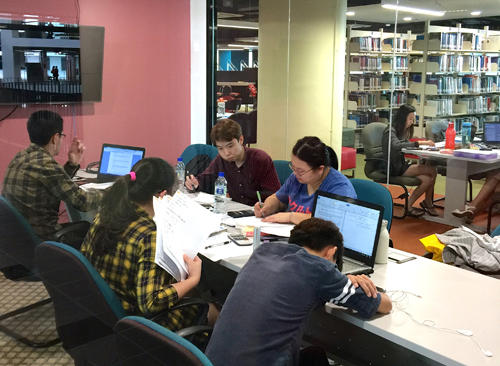
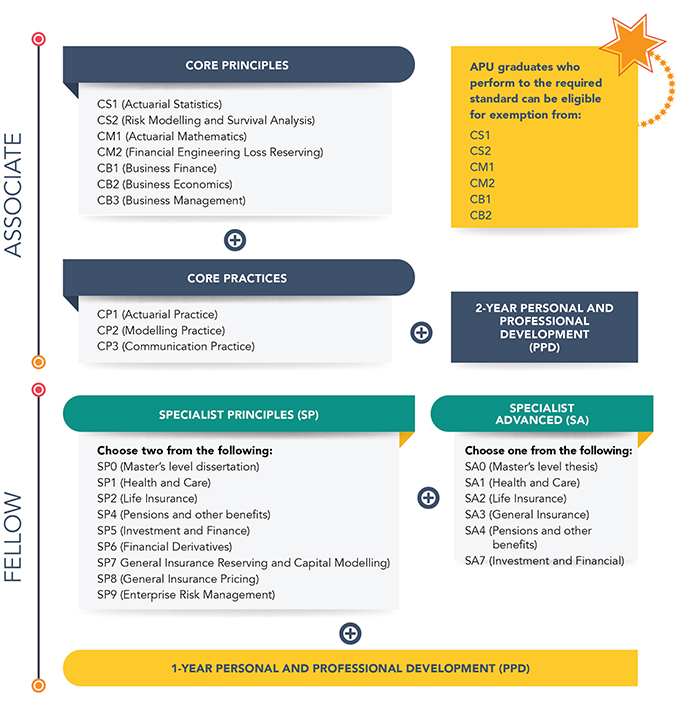




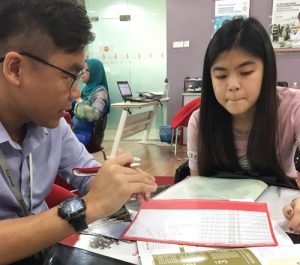
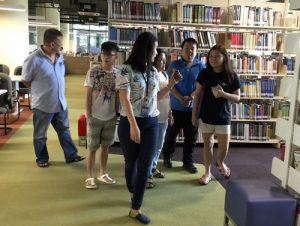





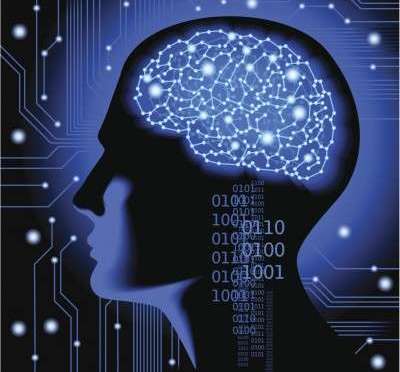

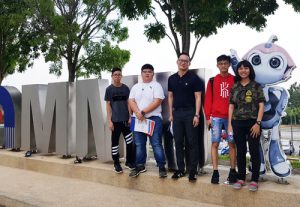








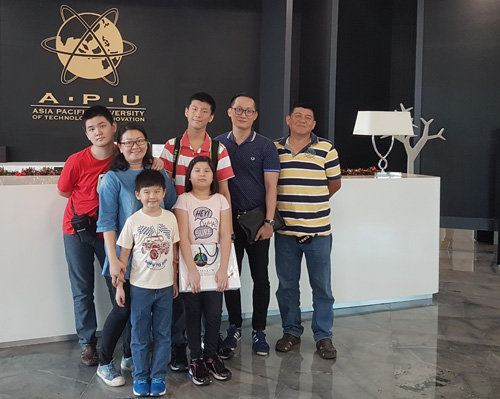

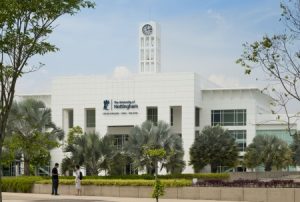
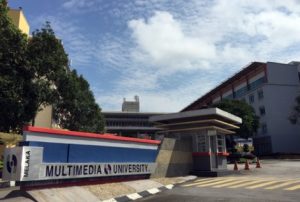












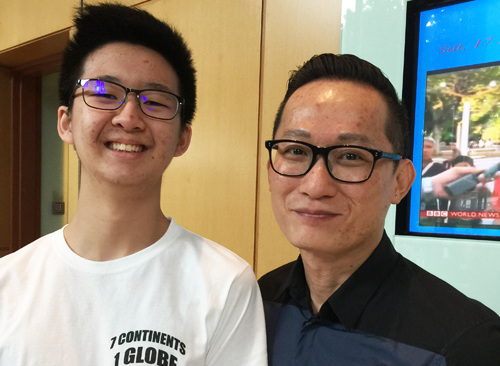





 Top Private Universities & Colleges in Malaysia