
What is the best course to study in Malaysia after SPM?

Which Course Should I Study After SPM? Diploma or Pre-University (Foundation, STPM, A-Levels, etc)

Written by EduSpiral Consultant Services For more information contact 01111408838

Choosing the right course to study in Malaysia after high school is one of the most important decisions you can make in your life. This can be a confusing and difficult time if you are unprepared.

After SPM or O-Levels , there are many different pathways for you to choose from and sometimes it can be confusing. Students may fill up our EduSpiral Career Assessment form for evaluation. Choosing a course to study after SPM or O-Levels in Malaysia is not a science, it is a process in finding out who you are and what you are good at. Some people find out faster while others take more time.

Most great things begin with a plan. Your future career and studies should be no different. A plan will give you something to work towards. It’ll also help you make the most of the opportunities that come your way. It can be confusing to choose the right course after SPM. You should carefully think about what are the options available to you.

You might also be interested to read these:

For more information on the top private universities and colleges in Malaysia, Whatsapp 01111408838

Please fill up the Form below and I will WhatsApp you and provide you with sound advise on how to choose the best private university or college in Malaysia to study at. If you do not give your mobile number or full name as in IC, your query will not be answered. Our knowledgeable & experienced counsellor will send you a message on WhatsApp & provide assistance from there.

← Back

Thank you for your response. ✨

Which is the Best Education Pathway after SPM?
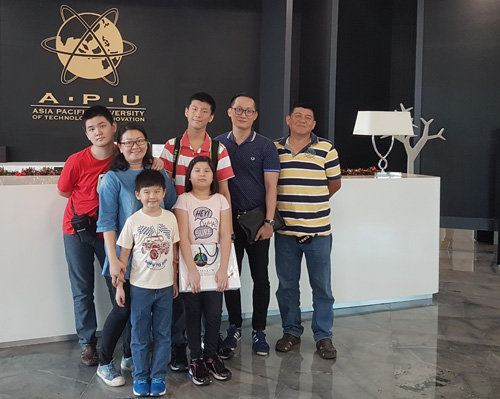
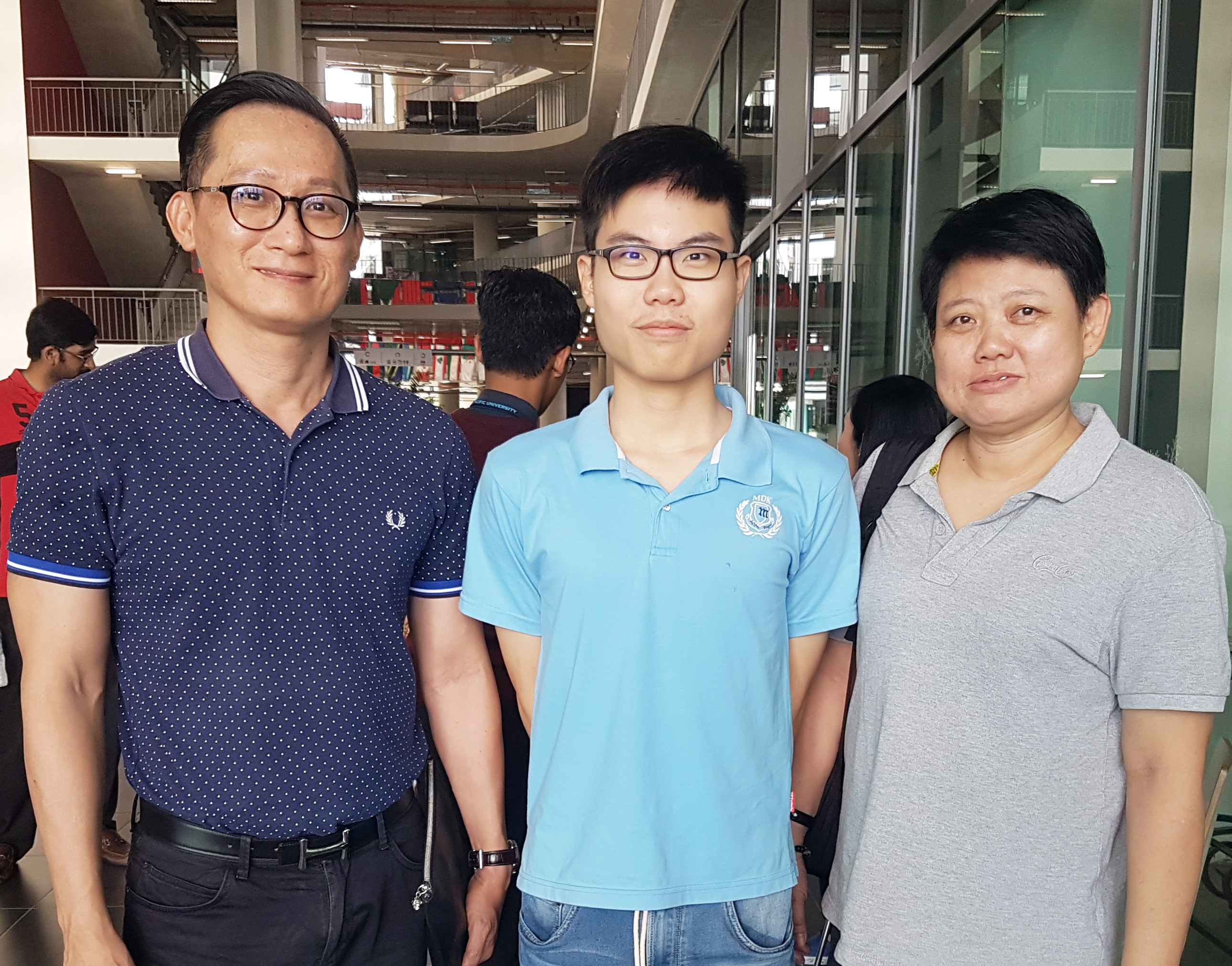
I wanted to study mobile computing & EduSpiral shared with me about the course & helped me to choose the right university
I wanted to study mobile computing & EduSpiral shared with me about the course & helped me to choose the right university Mun Kit, Mobile Computing at Asia Pacific University (APU)

It can be confusing for students to choose the right course to study in Malaysia after SPM.

Preparations should have been made even before this time but fear not it is still not too late if you have not decided on a career path. It is important for you to research carefully the career that you intend to pursue.

With the wide variety of courses available to a student, the time after SPM can be a confusing one if not guided properly by an experienced and knowledgeable education counselor.

If you are not sure what to study, do ask a trained counselor and always make decisions based on evidence and facts. The decisions that you make now, can change your life forever. You can contact us for a free career test to help you understand yourself better so that you are able to make the right decision.

At EduSpiral Consultant Services, we have counseled and helped thousands of students to choose the right course and private university to study in Malaysia.

The Different Types of Pre-University Programmes for SPM/O-Level School Leavers

EduSpiral analysed my personality and results, subsequently advised me on choosing the right course as well as the best university that fit me.
John Lai Wai Hong, Graduated in Mass Communication from KDU University College

Choosing the right Pre-University course after SPM or O-Levels can be confusing. There is no such thing as the “best” Pre-University programme. It is choosing the right Pre-U programme that fits you and your future goals. We have come up with a list of the Top Ten best Pre-University programmes to study in Malaysia,

Below is a list of pre-university programmes offered by top universities & colleges in Malaysia:

  1. Foundation programmes by private universities in Malaysia
  2. Sijil Tinggi Persekolahan Malaysia (STPM) Malaysia
  3. Unified Examination Certificate (UEC)
  4. University of Cambridge International Examinations (CIE) UK A-Levels
  5. South Australian Matriculation (SAM) or SACE International
  6. American Degree Transfer Program (ADTP)
  7. Edexcel International Advanced Level UK A-Levels
  8. Western Australian Matriculation (AUSMAT)
  9. Matriculation Certificate, Ministry of Education Malaysia
  10. Canadian International Matriculation Programme (CIMP)

There are many different Pre-University programmes available in Malaysia. I will list some of the most popular ones.

Diploma Course in Malaysia
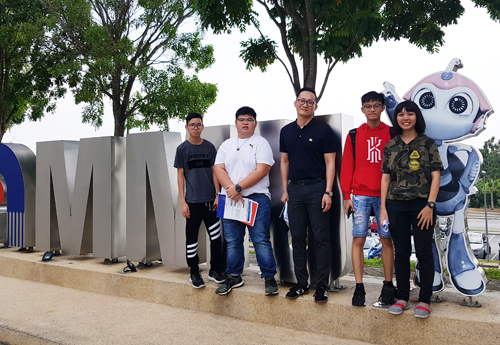
EduSpiral counseled us online & then picked us up from the airport to visit MMU in order to help us choose the right university. Mak, Ong & Chaw - Diploma in Information Technology (IT) at Multimedia University (MMU)
EduSpiral counseled us online & then picked us up from the airport to visit MMU in order to help us choose the right university. Mak, Ong & Chaw – Diploma in Information Technology (IT) at Multimedia University (MMU)

With 3 credits, you can join most diploma courses. Nowadays, you can finish a diploma in 2 years, it used to be 2.5 years. Therefore, now you will complete a degree in 4 years after the diploma which is the same duration if you go for Foundation.

To join a diploma programme, you will need at least 3 credits in your SPM or 3 Bs in UEC. You must have a Pass in BM and Sejarah. The credits of the subjects will depend on what course you take. For example, Maths will be a required credit for IT and Engineering.

The Diploma pathway is a good choice if you do not have enough money, you can at least graduate with a diploma as it is cheaper and a shorter duration. After working a few years to save money, you can continue to complete your degree. If you find it difficult to study and yet would like a certificate, maybe you should study a diploma as takes less time to complete. A degree may be too difficult and is longer hence you may not have the motivation to finish it.

Diploma programmes in Malaysia tend to be more practical oriented while degree programmes are more theoretical. Foundation programmes are more academic. If you are sure of what you want to study, then you can go for the Diploma course. Students after SPM who are not sure what to study should go for the Foundation or Pre-University Programme. You have 1 year in the Foundation or Pre-U in Malaysia to really decide what to study for your degree.

You can apply for the PTPN Loan for the Diploma course while there is no PTPN loan for Foundation or Pre-University courses.

After the Diploma course, you can continue on to a degree and generally enter into the 2nd Year for another 2 years of study. If you enter engineering, it could be another 2 or 3 years depending on which course.

It depends on the exemptions from the particular institution. Generally you will enter into Year 2 of the similar programme at the same university but if you choose to transfer to another university, you may not get enough exemptions and may only enter into the Final semester of Year 1.

Pre-University or Foundation Programmes in Malaysia

Actuarial Science, Heriot-Watt University Malaysia
My father wanted me to study at the best university for actuarial science & I wasn’t sure about my results. EduSpiral met up with us, explained about the course and university. Min En, Actuarial Science, Heriot-Watt University Malaysia

You will need at least 5 Relevant SPM credits to enter into a Pre-University programme or Foundation Course in Malaysia

It is important to find out what you would like to study after SPM instead of blindly following your friends or just assuming that some said that the A-Levels is good, and so you chose it without finding out more.

I don’t have anything against the A-Levels, but my humble opinion is that it is a great programme and is quite challenging. Students should choose the A-Level programme if they want to study Law, Medicine or Pharmacy.

Keep in mind that the A-Levels is quite challenging, is in English and takes up 1.5 years. If you do not make it, you may have wasted a lot of time. If you know what you would like to study, you should just take up the college’s Pre-U/Foundation programme or an internationally recognised Pre-U programme such as the SAM, CPU, AUSMAT, UNSW, etc. They generally take 8-12 months to complete, so you could save on time. Note that if you want to pursue Medicine, some of the Pre-U programmes are not accepted.

The Pre-U programmes in Malaysia vary in time and course content. Some emphasise on course work, others exam oriented so choose one that fits your character.

Many private higher educational institutions, have developed their own internal university foundation programmes. These courses are accredited by the Malaysia Qualification Agency (MQA) and recognised by the respective foreign partner universities and also accepted by many other overseas universities as an equivalent to pre-university qualification in their respective home countries.

Unlike the external qualifications which focus on more general Science and Art-based subjects, the internal qualifications provide specialisation in precise areas of study such as the fields of business, computer & IT, and engineering, and hence, cater to the specific needs of different students.

Students who know what they want to study can just go for the Foundation at the university offering the degree of interest. It is cheaper, easier and a faster way to continue to completing the degree.

What about studying STPM?

Sijil Tinggi Persekolahan Malaysia (STPM) is Malaysia’s version of the UK’s GCE A-Levels and is a Pre-University course

After STPM I was searching for the right university to accept my results to pursue my dream but couldn't find until EduSpiral helped me. Jia Loon, Biotechnology at UCSI University
After STPM I was searching for the right university to accept my results to pursue my dream but couldn’t find until EduSpiral helped me.
Jia Loon, Biotechnology at UCSI University

recognised for entry into public universities in Malaysia. The STPM is also accepted for entry into private universities in Malaysia and overseas universities.

The STPM is acknowledged as one of the toughest exams.

STPM is very tough and takes 2 years to finish. If you do not do well in STPM, you would have wasted the time which is also money. If you had graduated faster, you would have started work earlier and start earning money and gain experience valuable for your resume.

STPM will take about 2 years, more time than that if you calculate the time after your SPM until you enter into Public University. The time you take for STPM, you would have completed the diploma.

There were 58,355 students who took STPM in 2013 and in 2014 it dropped to 48,615 students. It is a drop of 16.69% (9,740 candidates)

48,615 candidates registered for the STPM examinations in 2014 but only 42,854 sat for it. Only 390 out of 48,615 STPM 2014 obtained a 4.0 CGPA. 57 candidates failed the exam.

The national CGPA was 2.62 but for non-bumis to get their courses of choice, you will need higher CGPA. Ten students scored 5As, and a total of 398 students scored 4As. To obtain scholarships from private universities or overseas, you need to score 4As or 5As, so based on this, you can calculate the chances of you scoring in the STPM and obtaining a scholarship.

27,342 (63.80%), passed in four subjects, 7,130 in three subjects, 3,563 in two subjects and 2,410 passed just one subject. Pass here includes D and E. You need at least 2 Cs to join a degree course in private universities.

The number of candidates achieving 4 Principals (C) in STPM 2014 is 60.14 per cent. You need at least 2 Principals to join a degree course in private universities.

Still not sure what to study after SPM?

I contacted EduSpiral to find an affordable college for culinary arts. He arranged for me and my mother for a campus tour & helped me find a college that had excellent facilities that I could afford. Fu Wei, Diploma in Culinary Arts Graduate from YTL International College of Hotel Management

If you are not sure of what you want to study, then you can join the Pre-U or Foundation course. After that, you will continue on to the degree programme for another 3-4 years depending on the course. You do not have to choose what to study yet during foundation as it is general.

The only choice is either Foundation in Arts or Foundation in Science. Note that if you take Foundation in Science, you can change to arts courses for your degree but if you take Foundation in Arts, you can’t change to science-based courses.

It is important to talk to the right people to give you proper advise.

Just like you won’t ask a Doctor how to repair your car or a mechanic about your health, you should ask someone who has the necessary experience with in depth knowledge of the hundreds of courses and universities out there.

The choice that you make now can change your life forever, so you should talk to the right people and make the right choices.

Summary of the Best Pre-University Programmes in Malaysia

Top Foundation Programmes in Malaysia

Students after SPM or O-Levels can consider taking the Foundation Programmes at top private universities in Malaysia. The Foundation Programmes are 1 year and is cheaper compared to the external Pre-University Programmes.

Many private higher educational institutions in Malaysia, have developed their own internal university foundation programmes. Students who know what they want to study can just go for the Foundation at the university offering the degree of interest. It is cheaper, easier and a faster way to continue to completing the degree in Malaysia.

Duration 12 months
Number of subjects 12-15. Varies depending on the programme and university (usually combination of compulsory, elective & MPU subjects)
Recognition & Accreditation Malaysia Qualification Agency (MQA)
Assessment Assessment for Foundation programmes in Malaysia will vary from university to university. It will contain a mix of coursework, assignments, quizzes and exams. The coursework could cover different assessment tasks such as projects, assignments, laboratory work, presentations, tests, and others as assigned throughout each semester. The final examination is conducted at the end of each semester. 
Price RM8,000 – RM25,000
Advantages
  • Tailored specifically towards the degree course offered by the university
  • Shorter duration compared to the STPM and A-Level programmes
  • Generally, cheaper than most Pre-University (Pre-U) programmes
  • Most students find it easier compared to other Pre-University programmes
  • English-speaking environment which would help you to improve your language skills (depends on which university you choose)
  • The course is taught and marked by Malaysians who would understand the language skills of Malaysian students. Therefore, students who are weak in the English language should choose the Foundation and take the opportunity to improve their language skills during the Foundation programme.
Disadvantages
  • Depending on which Foundation, it may be difficult to change courses if you decide to pursue a different field
  • May not be accepted by other private universities for your undergraduate degree
  • May not be accepted into universities overseas


The Best A-Level Programmes in Malaysia

EduSpiral advised me to go for the best college for A-Levels in order to fulfil my dream of entering an Ivy League university in the USA. He met us at Taylor’s College Subang to talk to us and tour the college.
Gi Hang, A-Levels at Taylor’s College

The A-Levels is quite popular however it is quite tough and not for those who do not have the discipline or motivation to complete it. I would recommend the A-Levels for those intending to pursue medicine, dentistry, law or pharmacy or who are planning to go overseas. The A-Levels is internationally-recognised for admission into universities worldwide including professional courses.

The A-level syllabuses are divided into Advanced Subsidiary (AS) and Advanced Two (A2) levels, each contributing 50% towards the final A-Level grade. AS Level is the first half of the course and forms the foundation of A-Level. A2 Level is the second part of the syllabus and covers more difficult topics.

Students who have good results in SPM/O-Levels and prefer exam-oriented assessment rather than coursework or assignments, should go for the A-Levels.


Country of origin United Kingdom (UK)
Duration 12 – 18 months
Number of subjects 2- 4. Students may choose the following subjects:

  • Mathematics
  • Further Mathematics
  • Chemistry
  • Physics
  • Biology
  • Business
  • Economics
  • English Literature
  • Law
  • Accounting
Assessment It is 100% external examination-based. Both the ‘A2’ and ‘AS’ level examination sessions occur twice a year, in June and November, with some subjects only available in June or November. Results are issued in August and February respectively.
Awarding Body
  • University of Cambridge International Examinations (CIE) or
  • Edexcel International Advanced Levels (Modular structure)
Price RM20,000 – RM40,000
Advantages
  • Commonly considered the ‘Gold Standard’ of Pre-U programmes and is globally accepted (UK, US, Singapore, Australia etc.)
  • Accepted by universities worldwide
  • General subjects therefore the choices to enter degree programmes are wide depending on your subject combination
Disadvantages
  • Higher cost compared to most Pre-University (Pre-U) programmes
  • Longer duration than most Pre-University programmes
  • The A-Levels is rigorous and requires students who have strong academic results in SPM or O-Levels to do well in it
  • Subjects are general therefore students who have taken it may not be sure of what they want to study at degree level
  • If your command of the English language is weak then you may find this course very challenging
  

Australia Matriculation Programmes in Malaysia

I met EduSpiral a few years back & although I wanted to pursue his advise, my parents asked me to take STPM. I wasn’t satistied with my STPM results and finally, EduSpiral helped me to understand clearly that SAM was the best Pre-U that suit me.
Khalil, South Australian Matriculation (SAM) at Taylors College

There are 2 different Australian Matriculation programmes in Malaysia which are the:

  • South Australian Matriculation (SAM) or SACE International
  • Western Australian Matriculation (AUSMAT)

There are some slight differences between the two programmes and it is important for students to research and compare to see which on fits them.

I would not advise students to go for the March intake as it is an intensive programme which is shorter in duration where the exam is in November. Many students with good SPM results have not done well after taking the March intake for AUSMAT.

Country of origin Australia
Duration 7 – 18 months
Number of subjects 5 subjects (including English)
Assessment
  • South Australian Matriculation (SAM) or SACE International: 70% coursework (e.g. tests, research papers, assignments) and 30% exams
  • AUSMAT: 50% coursework (e.g. tests, research papers, assignments) and 50% exams
Awarding Body South Australian Certificate of Education (SACE)
Price RM21,000 – RM40,000
Advantages
  • Recognised for entry by most countries overseas
  • Shorter duration compared to the A-Levels and STPM
  • Continuous assessment helps to accumulate marks towards your final grade, instead of depending on a particular exam or coursework
  • Students who have a strong command of the English language & like assignment based courses would do well in the Australian Matriculation
Disadvantages
  • Very high entry requirements for competitive programmes like Medicine, Pharmacy, Dentistry, etc.
  • Students must do well consistently in all assessment types to obtain a high final grade
  • Self-directed learning may not be suitable for everyone
  • The March intake for AUSMAT is short and too intensive. Many students do not do well in it

Canadian International Matriculation Programme (CIMP) in Malaysia

The Canadian Pre-University (CPU) or CIMP is the final year of the secondary school programme in Ontario, Canada. It is designed based on the course guidelines and standards of the Ministry of Education and Training of the Ontario Province.

Country of origin Canada
Duration 12 – 15 months
Number of subjects 6 subjects which include one English subject, that is, either ENG4E or ENG4U. The other subjects are Business, Computer Studies, Mathematics, Science and Social Science.
Assessment 70% coursework (e.g. tests, research papers, assignments) and 30% final exam
Awarding Body Ontario Secondary School Diploma (OSSD)
Cost Between RM13,000 – RM35,000
Advantages  

  • Focuses on interactive learning as opposed to only academic
  • Progressive accumulation of marks towards your final grade instead of depending on one final exam or coursework
Disadvantages
  • Public speaking and debate may not be suitable everyone (requirement for CPU)
  • Very high entry requirements for competitive programmes like Medicine, Pharmacy, Dentistry, etc.
  • Students must do well consistently in all assessment types to obtain a high final grade


American Degree Transfer Programme (ADTP)

Students after SPM or O-Levels will enter directly into Year 1 of the degree program for a total of 4 years. The American Degree system after SPM or O-Levels is

  • Year 1 (Freshman) – ADTP in Malaysia
  • Year 2 (Sophomore) – ADTP in Malaysia
  • Year 3 (Junior) – University in the USA
  • Year 4 (Senior) – University in the USA

The American undergraduate degree provides an education that emphasizes problem-solving, critical thinking and decision-making skills. American education provides a flexible, holistic and well-rounded approach to education. It produces graduates with strong critical and analytical thinking skills with the ability to put knowledge into action.

Country of origin USA
Duration 48 months. After SPM or O-Levels, students will enter into the American Degree Programme for 2 years before transferring their credits to a university of their choice in the USA for the final 2 years.
Number of subjects Students will take about 40 subjects (110 – 140 credit hours) in total during their four years of studies, where 20 subjects (60 credit hours) are completed at ADP and the rest are completed in the USA. Students will normally take about 4-5 subjects each semester.
Assessment Students are assessed through exams, coursework, assignments, presentations, quizzes and research papers. The percentage of exams and assignments varies depending on the subject you are taking.
Grading System Final results will be a single score, the Grade Point Average (GPA) on a 0.0 to 4.0 scale. The highest grade is an A, which equals 4.0 The final result is the CGPA (cumulative grade point average) which is also on a 0.0 to 4.0 scale, and is your GPA obtained from all subjects taken.
Cost RM30,000 – RM60,000 for duration of 2 years of study in Malaysia. Cost of studying in the USA would range from RM150,000 to RM200,000 per year including cost of living.
Advantages
  • The curriculum is broad based and flexible.
  • Students are allowed to switch major if they decided to do so even after 2 years of studies.
  • Students are required to take courses outside of their major (commonly known as the liberal arts education philosophy).
  • Continuous learning and testing system (70% coursework, 30% final examination) where students are involved in projects, teamwork, presentation, extra- and co-curricular activities.
  • The education is learning-driven instead of exam-driven. Students are groomed to be all rounded team players with strong critical thinking and communication skills.
  • Students are expected to speak, ask, and challenge your instructors during discussions in / outside of class.
Disadvantages
  • Students must transfer to the USA for the final part of the studies. If you complete the ADTP and decide not to go to the USA, it is not accepted for entry at any university in Malaysia.
  • Students who prefer exam-based programmes will find the ADTP challenging.

Diploma Course at Private Universities in Malaysia

Students who are sure of what they want to study can go for a Diploma course. If you are still not sure, then you should go for a Pre-University programme. The diploma generally is more practical while a degree course is more theoretical and academic.

After completing your diploma, you can go find a job or continue on to Year 2 of the degree if your college or university offers the degree or you can transfer credits into another university. If you transfer to another university, you may not be able to get the full exemptions to enter into Year 2 of the degree.

Duration 24 – 30 months
Number of subjects 25-35 subjects (May include internship)
Assessment A mix of Assignments, Coursework, and written examination percentage. The diploma programme provides students with relevant, interesting, stimulating and practical experience via a variety of teaching and practical techniques.

Students will experience different dynamic learning processes are employed in the delivery of a diploma programme, such as lectures, tutorials, computer lab work, team-based project, real life system development, presentations, independent projects supervised by supervisors from university lecturers or industry experts. The learning is very much practical oriented.

Recognition  Accredited by the Malaysian Qualifications Agency (MQA)
Cost RM15,000 to RM50,000
Advantages
  • The Diploma is technically not a pre-university programme; it is one level below undergraduate degree
  • Needs at least 3 credits in SPM to enter the Diploma programme
  • Students may apply for the PTPN Loan for Diploma courses. There is no PTPN Loan for Foundation & External Pre-University programmes
  • You will study the subjects that you are interested in. The subjects are specific to your field of interest.
  • The course is more practical with mixed assessment.
  • Upon completion of the Diploma, you may choose to start work or continue on to Year 2 of the related degree.
Disadvantages
  • You cannot change to a different course for degree level
  • You may lose some credits when transferring to a different university


Sijil Tinggi Persekolahan Malaysia (STPM)

I was planning to study in IPTA after STPM but then my parents talked to EduSpiral. They realised the importance of studying at a top award winning university for computing.
Mark Siew, Software Engineering at Asia Pacific University

Sijil Tinggi Persekolahan Malaysia (STPM) is Malaysia’s version of the UK’s GCE A-Levels and is a Pre-University course recognised for entry into public universities (IPTA) in Malaysia. The STPM is also accepted for entry into private universities in Malaysia and overseas universities. The STPM is acknowledged as one of the toughest exams in the world.

If you had scored high is SPM, you are eligible for scholarships for Foundation programmes at top private universities. The Foundation programmes are easier and so if you score for Foundation, you can get more scholarships to cover part or all of your degree studies.

Problem is if you take the STPM which is so much tougher than the Foundation course, although Form 6 is free, but if you don’t score in STPM, you have no scholarship for your degree studies and in the end have to pay all of the fees for your degree studies in private university.

The STPM is extremely tough and if you do not do well, you would have wasted 2 years of your life and time is money. The earlier you graduate and join the work force, the more work experience you can gain and add this to your resume where it translates into higher salary. If you take a diploma at a private university in Malaysia, you would have finished it at the same time you would have taken to complete Form 6.

You need a lot of discipline and good teachers in order to do well in the STPM. If you have alright results for your SPM, don’t expect a miracle in the STPM as it is 20 times tougher than the SPM. If you can afford, choose an easier way through the 1-year Foundation offered at top reputable Private Universities in Malaysia.

Country of origin Malaysia
Duration 18 months (+6 months if you intend to apply to public universities)
Number of subjects Between 4 – 5 (including General Paper)
Assessment
  • Students will go through a school-based assessment with a weighting of 20-40% of the final score and a centralised examination with a weighting of 60-80% of the final score (The weighting varies according to subjects).
  • Nevertheless, School Based Assessment (SBA) cannot be repeated and repeaters are required to sit for an alternative written paper in place with SBA.
  • The curriculum is divided into three parts based on topic areas. Each part will be taught and studied in either the first, second or third term.
  • You will take the examinations at the end of each term (3 in total). One term is 6 months. Students who are not satisfied with their results for the first two terms can retake the examinations at the end of the third term.
  • Students’ assessment will be carried out each term with the results being released at the end of each respective term. The overall STPM results will be based on the best combined results of the three terms.
Grading Final results will be a single score, the Overall Subject Grade Point. Grades are given from A to F for each subject taken, which corresponds to a grade point. The Overall Subject Grade Point is the average of the top four subjects with the maximum score of 4.0.
Cost Less than RM1,000
Advantages
  • A Pre-University course recognised for entry into public universities (IPTA) in Malaysia
  • An affordable Pre-University programme
  • Recognised for entry into universities worldwide
  • With School Based Assessment, teaching and learning are integrated with assessment. Students are allowed to improve on their first term and second term results by retaking these term examinations at the end of the third term. Students who do not obtain satisfactory results for the third term may also re-sit it.
Disadvantages
  • The STPM can be very challenging for students who are weak academically or who do not prepare themselves well
  • Longer duration compared to most Pre-University courses in Malaysia
  • Heavy weightage of exam-based assessment
  • As soon as you enter Lower 6 you will have to hit the books because your first exam will be in December and you will have not much time to study and the teachers do no have enough time to cover the material as well. There is no rest as you will need to keep studying  the exams every 6 months.
  • To enter into most private universities, students must achieve at least a CGPA of 2.00 or at least 2 Principal Cs in the relevant subjects. A C- is not a principal and some universities do not accept the Pengajian Am as entry into the university.
  • STPM requires you to take in too much information in 1.5 years. That in itself shows the inadequacies of a system which doesn’t give enough time for students to consume the information required. Furthermore, STPM needs a lot of study time in order to score well. If you are not ready to commit the time and effort, you should consider other options.
  • From the time you enter Form 6 till the exam and getting into IPTA would be 2 years. If you had taken a diploma, you would have already completed it.
  • English language not emphasized so you do not gain the all important language and communication skills needed to succeed in the workforce
  • The government chooses the course and university (IPTA) for you. Therefore, after 2 years, you may not get to study what you want.

Malaysian Matriculation Programme (Matrikulasi) and Asasi IPTA

Program Matrikulasi Malaysia) is a one-year pre-university preparatory programme offered by the Ministry of Education, Malaysia. Starting 2005, the selection process for the programme is done through a race-based quota system, where 90% of the places are reserved for bumiputeras students while the remaining 10% are open for non-bumiputeras.

Prior to 2006, only one-year programmes are being conducted. Since then, four different programmes are offered. They are One Year Programme (PST, short for Program Satu Tahun in Malay), Two Year Programme (PDT, short for Program Dua Tahun in Malay), Technical Programme and Accounting Programme. Mathematics, physics, biology, chemistry and informatics science subjects are conducted in English. Other compulsory subjects are English, Dynamics Skills (Kemahiran Dinamika), Islamic/Moral Study and Information Technology. Students are also required to take up a co-curricular activity of their choice (sports/games, societies/clubs or marching band) during the programme.

Country of origin Malaysia
Duration 12 months (Program Satu Tahun) – 24 months (Program Dua Tahun)
Number of subjects Students must study at least six subjects over two semesters (one year). There is one intake a year, usually in March or April. The matriculation programme in Malaysia offers three streams – science, accountancy and technical streams
Assessment Combination of classroom assignments and examinations
Grading System Your GPA is determined from the grade values associated with the grades that you obtain for each subject every semester. All grades are internally assessed.
Cost RM600
Advantages
  • Extremely affordable
  • Good prospects to gain admission into public universities
  • Wide range of subjects to choose from
Cons
  • Recognised for entry into universities in Commonwealth countries
  • Has limitations, such as ‘Program Dua Tahun’ only open for bumiputras
  • Fewer options of degree courses as the subjects are divided into ‘streams’

Comparison Chart of the Top Pre-University (Pre-U) Programmes in Malaysia

Pre-U Programme Brief introduction Duration Assessment Subjects
Cambridge A-Levels           Awarded by Cambridge Advanced Level Certificate                                                                               The Cambridge GCE A Level is the general certificate of education qualification through examinations by the University of Cambridge International Examinations (CIE).The GCE A Level programme places emphasis on knowledge, understanding and reasoning abilities and skills. Duration is 12 or 18 months                Intakes in January, March and July                                                                                                Exams in June & November Assessed totally through external examinations. The examination papers are set and marked by examiners from the University of Cambridge International Examinations (CIE).  You can now sit for the A-Level examination in two phases:  at Advanced Subsidiary Level (AS) and at Advanced Two (A2) Level. Students unsatisfied with any of their individual units must re-sit the entire level, ie either AS or A2, and only the last score will automatically be taken into account. No. of Subjects: 3-4                                                SciencePhysics, Chemistry, Biology, Mathematics, Further Mathematics and Economics.Arts

Law, Mathematics, Economics, History, Accounting, English Literature and Business Studies.

LONDON EDEXCEL INTERNATIONAL – A-Levels          The Qualifications & Curriculum Authority (QCA) in the UK only recognises the London A-Levels. The London A-Levels is under the tight scrutiny of the QCA for all preparation, distribution and marking of the examination papers. For the London A-Levels, there is a centre in every region to facilitate communication with Edexcel UK, in addition to ensuring that the London A-Levels centres meet the standards set by the QCA. Duration is 12 or 18 months      Intakes in January, April and July         Exams in January & May/June 100% external examination. n Modular A-levels, each A-Level subject is subdivided into SIX UNITS where each unit is separately assessed in stages. In the Staged assessment it is divided into stages and in each stage the candidates get to select any number of the six units to be assessed in each examination session. An assessment is done every six months and the number of units selected for each examination session is entirely up to the candidate. The best grades for all the 6 units will be added together for a full A-Level final grade. No. of Subjects: 3-4

Mathematics

Further Maths

Biology

Chemistry

Physics

Economics

Accounting

Law

Business

South Australian Matriculation (SAM) or SACE International                                                               Awarded by South Australian Certificate of Education (SACE) SAM offers  – Proven learning techniques tailored to university study- A balanced choice of subjects leading to a variety of university degree courses- A mixture of school assessments and external examinations that assess students fairly

– The flexibility for students to complete the program over an extended period

– An opportunity for students to increase their tertiary entrance rank by repeating subjects without penalty.

Duration is 10 – 18 months with intakes in January, April or August Balance of continuous internal assessment and a final external examination. Students are provided with a university aggregate score (out of 90 marks) and a tertiary entrance rank (TER), a percentile ranking that is recognised without modification by all tertiary selection agencies in Australia. Students must complete 5 subjects, including 1 subject from List 1 and at least 1 subject from List 2. In addition, students must achieve a satisfactory score (10/20 or better) in either English as Second Language Studies, or English Studies. No. of Subjects – 6                                       • Accounting
• Biology
• Chemistry
• Economics
• English as an Additional
Language
• Legal Studies
• Mathematical Methods
• Nutrition
• Physics
• Psychology
• Research Project B
• Specialist Mathematics
Australian Matriculation (AUSMAT)  Awarded by Western Australian Certificate of Education (WACE) The AUSMAT is the Year 12 curriculum of Western Australia. The Curriculum Council of Western Australia, on behalf of the Government of Western Australia, overseas the quality implementation of the curriculum. Duration is 7-10 months with Intakes in January & March

Exam in November

50% internal continuous assessment(moderated by the Curriculum Council)and 50% external final examinations (TEE)

Provides opportunities to use multiple assessment techniques to help students progress – continuous assessment may include topic tests, quizzes, assignments, investigations, research and exams.

Flexibility of calculating a student’s score based on Best-4 or Best-5 subjects .

No. of Subjects – 5                                              Required to take English as an Additional Language (EAL/D) or English The remaining subjects must include one subject from each from List 1 and List 2:LIST 1 – German, English, Economics,  LIST 2 – Accounting and Finance, Biological SciencesChemistry, Computer Studies

Mathematics, Mathematics : Specialist Physics

Canadian International Matriculation Programme (CIMP) or International Canadian Pre-University (ICPU)                               Awarded by Ontario Secondary School Diploma (OSSD) Offered according to the requirements of the Ontario Ministry of Education, students to graduate with the Ontario Secondary School Diploma (OSSD) In the CIMP, they focus on your development in the following areas:- Effective communication; using English as the language   for international communication- Independent learning skills; learn how to learn

– Effective transition from secondary to tertiary education

– Talent and leadership development

– Community outreach

Duration is 10 months.               Intakes in January, March and July                Exam in May & November Assessment will be 70% coursework and 30% final examinations. Coursework includes evaluations conducted throughout the programme; quizzes, assignments, projects and class tests. The final assessment will be in the form of an examination.In addition, to graduate, students must sit for anexternal literacy test administered in March, perform Ten (10) hours of recognised Community Involvement.  No. of Subjects – 6                                            Business, Computer Studies, Mathematics, Science, Social Sciences & English Courses.
Internal Foundation at Private Universities in Malaysia -Internal qualification  It is cheaper and easier than the external Pre-University programmes. Students intending to continue on in the particular university can choose to go for their internal Foundation course. Its accredited by MQA & can transfer to other private universities in Malaysia for the relevant degree. Duration is 12 mths or 3 semesters with intakes in Jan, April, July, August or October depending on the university Assessments comprise coursework, class tests and examinations. Internally assessed by the private university. No. of Subjects – 12-15

Subjects depends on the type of Foundation

 American Degree Program (ADP)  -Direct entry into Year 1 of degree continue to Year 2 in Malaysia and then transfer to a university in the USA for the final 2 years- Holistic education Duration is 2 years in Malaysia and 2 years in the USA Assessment includes quizzes, assignments, projects and class tests. Students will take general studies for the first 2 years before specializing in their major for the final 2 years


4 Top Private Universities in Malaysia to Study Cyber Security

Which University in Malaysia is Best to Study Cyber Security?

Written by EduSpiral Consultant Services. WhatsApp 01111408838 for the best advise

As technology advances, the number of computer systems in Malaysia and globally has increased dramatically, and the dependence upon them by individuals, businesses, industries and governments have grown. This means that there are an increasing number of systems at risk. Serious financial damage can result from cyber attacks and sometimes even physically.

These cyberthreats take many forms such as application attacks, malware, ransomware, phishing, exploit kits). Unfortunately, cyber adversaries have learned to launch automated and sophisticated attacks using these tactics – at lower and lower costs. As a result, keeping pace with cybersecurity strategy and operations can be a challenge, particularly in government and enterprise networks where, in their most disruptive form, cyberthreats often take aim at secret, political, military or infrastructural assets of a nation, or its people.

Computer security, also known as cyber security or IT security, is the protection of computer systems from the theft and damage to their hardware, software or information, as well as from disruption or misdirection of the services they provide.  Cybersecurity refers to a set of techniques used to protect the integrity of networks, programs and data from attack, damage or unauthorized access. According to Forbes, the global cybersecurity market reached $75 billion for 2015 and is expected to hit $170 billion in 2020.

With so much data that needs to be protected from theft or damage, governments and businesses need trained professionals in Computer Security or Cyber Security to ensure sufficient protection. A degree programme in Cyber Security or Computer Security is not easy to study therefore students should choose top universities in Malaysia with a proven track record in information technology education and having won awards as evidence of their capability. The best universities in Computer Security or Cyber Security will ensure that graduates will be equipped with the knowledge and skills to handle the complexities of the job which will result in an excellent career.

You might also be interested to read these:

For more information contact 01111408838

Please fill up the Form below and I will WhatsApp you and provide you with sound advise on how to choose the best private university or college in Malaysia to study at. If you do not give your mobile number or full name as in IC, your query will not be answered. Our knowledgeable & experienced counsellor will send you a message on WhatsApp & provide assistance from there.

← Back

Thank you for your response. ✨

Top Universities in Malaysia to Study Computer Security or Cyber Security

EduSpiral provided me with up-to-date information on Asia Pacific University & helped me to apply for the MARA Loan for my studies to achieve my dreams. Mohd Muaz Anuar graduated with Information Technology (IT) from Asia Pacific University (APU)
EduSpiral provided me with up-to-date information on Asia Pacific University & helped me to apply for the MARA Loan for my studies to achieve my dreams.
Mohd Muaz Anuar graduated with Information Technology (IT) from Asia Pacific University (APU)

With the ever-increasing integration of technology into our lives—including mobile networks, Wi-Fi and cloud computing applications—there is more need to make sure that those technologies are secured from criminals. As a result, the field of cyber security is growing at a rapid pace.

If you are considering a career in computer science, take a look at programs that offer a bachelor’s degree in cyber security. With the rise in cyber attacks and increasingly complex cyber threats, a bachelor’s degree in cyber security from a top university in Malaysia provides a strong foundation to be prepared for one of the many jobs available in the field.

Top award-winning universities and colleges in Malaysia to study Computer Security or Cyber Security are:

  1. Asia Pacific University (APU)
  2. Multimedia University (MMU)
  3. Taylor’s University 
  4. University of Wollongong (UOW) Malaysia KDU

The Importance of Studying Computer Security or Cyber Security at a Top University in Malaysia

EduSpiral took me & my friends to tour a few universities to help us make the right choice. He then met me & my father for further counseling & to assist in registering. Horng Yarng, Diploma in ICT at Asia Pacific University (APU)
EduSpiral took me & my friends to tour a few universities to help us make the right choice. He then met me & my father for further counseling & to assist in registering.
Horng Yarng, Diploma in ICT at Asia Pacific University (APU)

This rapid market growth is being fueled by an array of technology trends, including the onslaught of initiatives with ever-evolving security requirements, like “bring your own device” (BYOD) and the increasing reliance on computer systems and the Internet, wireless networks such as Bluetooth and Wi-Fi, the growth of “smart” devices, including smartphones, televisions and tiny devices as part of the Internet of Things (IoT); the rapid adoption of cloud-based applications and workloads, extending security needs beyond the traditional data center; and stringent data protection mandates.

Financial systems, Utilities and industrial equipment, Aviation, Automobiles, Consumer devices, Large corporations, Government, Medical Systems, and more need protection from security breaches.

With so much data that needs to be protected from theft or damage, governments and businesses need trained professionals in Computer Security or Cyber Security to ensure sufficient protection. A degree programme in Cyber Security or Computer Security is not easy to study therefore students should choose top universities in Malaysia with a proven track record in information technology education and having won awards as evidence of their capability.

Malaysia’s best universities in Computer Security or Cyber Security will ensure that graduates will be equipped with the knowledge and skills to handle the complexities of the job which will result in an excellent career.

Cyber Security is a very analytical field that is demanding for everyone. It requires strong analytical thinking skills and quite a bit of creativity to understand how systems can be broken, protected and should be used. Students with a strong background in mathematics tend to do well, as do those who have strong logic skills. If math is not for you, you might want to try formal logic instead. Make sure you take formal logic and that the course focuses exclusively on working logical proofs, which look a lot like mathematical derivations but without the numbers.

What is Cyber Security?

Being in Sabah made it difficult for me to survey the universities in Peninsula. I found EduSpiral online and they provided detailed information & helped me with my application. They even took me around the university for a tour when I went to visit. Xavier Phang, Software Engineering Graduate from Asia Pacific University (APU)

According to Kaspersky, Cyber-security is the practice of defending computers, servers, mobile devices, electronic systems, networks, and data from malicious attacks. It’s also known as information technology security or electronic information security. The term applies in a variety of contexts, from business to mobile computing, and can be divided into a few common categories.

  • Network security is the practice of securing a computer network from intruders, whether targeted attackers or opportunistic malware.
  • Application security focuses on keeping software and devices free of threats. A compromised application could provide access to the data its designed to protect. Successful security begins in the design stage, well before a program or device is deployed.
  • Information security protects the integrity and privacy of data, both in storage and in transit.Operational security includes the processes and decisions for handling and protecting data assets. The permissions users have when accessing a network and the procedures that determine how and where data may be stored or shared all fall under this umbrella.
  • Disaster recovery and business continuity define how an organization responds to a cyber-security incident or any other event that causes the loss of operations or data. Disaster recovery policies dictate how the organization restores its operations and information to return to the same operating capacity as before the event. Business continuity is the plan the organization falls back on while trying to operate without certain resources.
  • End-user education addresses the most unpredictable cyber-security factor: people. Anyone can accidentally introduce a virus to an otherwise secure system by failing to follow good security practices. Teaching users to delete suspicious email attachments, not plug in unidentified USB drives, and various other important lessons is vital for the security of any organization.

Education Pathway

Our mum asked us to talk to EduSpiral as we did not know what to study. EduSpiral had helped our older sister before. He met us at Taylor’s, talked to us and then gave us a tour.
Gan twins, Foundation in Arts at Taylor’s University

Students after SPM or O-Levels may go for the Foundation in Computing or Information Technology at top private universities in Malaysia for 1 year before continuing on to the 3-year Cyber Security or  Computer Science  degree.

With 3 credits in SPM or O-Levels including Maths, students may go for the 2-year Diploma in Information Technology, Diploma in Computer Studies or Diploma in Software Engineering and then enter into Year 2 of the Cyber Security or  Computer Science degree.

Pre-University students with the relevant results in STPM, A-Levels, SAM, CPU, AUSMAT, etc. can enter directly into Year 1 of the Cyber Security or Computer Science degree at the best university in MalaysiaFoundation in Science programmes from premier private universities in Malaysia  are also accepted for entry.

What are the Subjects that You Will Study in an Undergraduate Cyber Security Programme at a Private University in Malaysia?

EduSpiral helped me to understand clearly what software engineering is about & helped me to choose the right university. Vincent Chow, Software Engineering Graduate, Asia Pacific University

When choosing the right university to study the Cyber Security degree at a private university in Malaysia, students should look at the subjects offered. Many students make the mistake in assuming that all subjects and syllabus are the same at all universities and studying at any university doesn’t make a difference. This is not true.

A top private university would ensure that it has the latest up-to-date curriculum taught by qualified and experienced lecturers. The awards won at competitions is also a good indication of the standard of the university in the particular field. The awards are not bought nor for showing off. Having won competitions would show that the students have achieved a high level of understanding and competence in the particular field of study. In addition, the lecturers have the capability to guide and teach the students to reach this level.

Below is a sample of subjects in a cyber security degree that you will study at a top private university in Malaysia.

  • Networking
  • Mathematical Concepts for Computing
  • Operating Systems & Computer Architecture
  • System Analysis & Design
  • Security and Forensic Technologies
  • Creativity & Innovation
  • Object Oriented Development with Java
  • Probability & Statistical Modeling
  • Professional & Enterprise Development
  • Research Methods For Computing and Technology
  • System Development Methods
  • Ethical Hacking and Incidence Response
  • Fundamentals of Mobile Computing
  • Mobile & Wireless Technology
  • Network Security
  • Principles of Networks and Network Design
  • System Programming and Computer Control
  • Computer Systems Security
  • Critical Issues in Managing IS in Organisations
  • Design of Corporate Communications Systems
  • Information Systems Security Project
  • Investigations in Information Systems Security
  • Malicious Software and Security Programming
  • Penetration Testing
  • Voice Over IP Security
  • Wireless and Mobile Security
  • Object-Oriented Programming
  • Computer Crime and Digital Evidence
  • Data Structures and Algorithms
  • Software Engineering
  • Computer Systems
  • C Programming
  • Systems Analysis & Design
  • Mathematics for Computing
  • Operating Systems
  • Software Design
  • Database Systems
  • Data Communications
  • Computer and Network Security
  • Object-Oriented Programming using Java
  • User Interface Programming and Graphics
  • Computing Theory
  • Computer Security and Forensics Tools
  • Distributed Application Development
  • Security Management in Practice
  • Cryptography
  • Computer Intrusion Detection
  • Professional Computing Practice
  • Artificial Intelligence
  • Forensic Computing Practice

Where can You work with a Degree in Cyber Security?

Graduates can find employment as computer security experts such as cybersecurity analysts, forensic computer analysts, software developers, IT analysts and web application developers in many different organisations.


Cyber Security Degree Course in Malaysia

A Top Private University in Cyber Security will Equip You with the Knowledge & Skills to Succeed in You Career

Written by EduSpiral Consultant Services. For more information contact 01111408838

Cyber security professionals are increasingly in demand as businesses continue to battle the growing threat of cybercrime. The threats have become increasingly sophisticated making the need for qualified cybersecurity experts to grow exponentially in Malaysia. Therefore, the opportunity is great for students wanting to study cyber security.

Hence, there is an increasing demand for cybersecurity talent in Malaysia as the government looks to position Malaysia as one of the leading countries in Asean for cybersecurity resources. The cybersecurity industry is expected to enjoy “phenomenal growth” within the next few years. Furthermore, according to a Frost and Sullivan survey, the demand for cybersecurity-­related jobs would hit 10,500 by 2020.

You might also be interested to read these:

For more information on how to choose the right course with high job demand, contact 01111408838

Please fill up the Form below and I will WhatsApp you and provide you with sound advise on how to choose the best private university or college in Malaysia to study at. If you do not give your mobile number or full name as in IC, your query will not be answered. Our knowledgeable & experienced counsellor will send you a message on WhatsApp & provide assistance from there.

← Back

Thank you for your response. ✨

Why You Should Choose a Top Private University to Study Cyber Security

EduSpiral helped me to understand clearly what software engineering is about & helped me to choose the right university. Vincent Chow, Software Engineering Graduate, Asia Pacific University

It is important to choose the best university in Malaysia to study your Cyber Security degree in Malaysia so that you will gain the necessary knowledge and skills for a successful career in the competitive field of ICT.

While it can be difficult to choose between private universities or colleges in Malaysia offering the Cyber Security Degree Course, you will find that there are some key differences between them that can help you make the big decision in choosing the right one that fits you.

The best private universities and colleges in Malaysia have excellent facilities, years of experience running the Cyber Security degree course, strong student support services, internships and experienced lecturers.

A university degree in Cyber Security is no longer enough to secure a job in Malaysia. Employers in Malaysia are looking for individuals with multiple skill sets. Employers today expect their employees to be able to multitask and communicate well in the English language.

Top award-winning private universities such as Asia Pacific University (APU), Multimedia University (MMU), Taylor’s University and University of Wollongong (UOW) Malaysia KDU offer some of the best Cyber Security degree programmes in Malaysia. They have many years of experience in education, excellent facilities, qualified & experienced lecturers, up-to-date syllabus, internships, high employability rate, and have won awards in Cyber Security.

What are the Entry Requirements to Study Cyber Security?

Vincent Lim, Software Engineering Graduate, Asia Pacific University (APU)
EduSpiral provided detailed information to help me make my decision.
Vincent Lim, Software Engineering Graduate, Asia Pacific University (APU)

Students after SPM or O-Levels may go for the Foundation in Computing or Information Technology at top private universities in Malaysia for 1 year before continuing on to the 3-year Cyber Security or  Computer Science  degree. At least 5 credits including Maths are needed to enter the Foundation course.

With 3 credits in SPM or O-Levels including Maths, students may go for the 2-year Diploma in Information TechnologyDiploma in Computer Studies or Diploma in Software Engineering and then enter into Year 2 of the Cyber Security or  Computer Science degree.

Pre-University students with the relevant results in STPMA-LevelsSAMCPUAUSMAT, etc. can enter directly into Year 1 of the Cyber Security or Computer Science degree at the best university in MalaysiaFoundation in Science programmes from premier private universities in Malaysia  are also accepted for entry.

BSc. (Hons) Computer Science with Specialism in Cyber Security Degree at Asia Pacific University (APU)

Being in Sabah made it difficult for me to survey the universities in Peninsula. I found EduSpiral online and they provided detailed information & helped me with my application. They even took me around the university for a tour when I went to visit. Xavier Phang, Software Engineering Graduate from Asia Pacific University (APU)

Asia Pacific University (APU), a top technology private university in Malaysia, has addressed these  concerns while demonstrating the university’s strength in providing first-class education in the area of cyber security. As an all-rounded education provider, APU has world-class facilities, qualified academics, industry-relevant syllabus and strong partnerships. Furthermore, Asia Pacific University (APU), students will be trained to become qualified cyber security professionals who are ready to face challenges in the digital world through a wholesome experience.

Moreover, Asia Pacific University (APU) is an award-winning university for Computing in Malaysia having won hundreds of awards. In addition, they are also a Premier Digital Tech status university. Studying Cyber Security at Top Ranked Asia Pacific University is one of the best choices you can make as a student in Malaysia.

The BSc. (Hons) Computer Science with Specialism in Cyber Security degree programme at the top ranked  Asia Pacific University (APU) in Malaysia is specifically designed to provide with:

  • The ability to develop technical knowledge, skills and background in the design and organisation of computer systems focusing on cyber security.
  • The ability to critically evaluate design paradigms, languages, algorithms, and techniques used to develop complex software systems related to cyber security.
  • The ability to evaluate and respond to opportunities for developing and exploiting new technologies and applications in cyber security.

Additionally, Asia Pacific University of Technology and Innovation (APU) has signed a MoU with Rocheston Ltd, a US-based cybersecurity training company, to set up the first Cyberthreats Intelligence Centre (CIC) in Malaysia to be based within a university campus.

The formation of this Cyberthreats Intelligence Centre represents a significant further development of APU’s existing state-of-the-art integrated Cybersecurity Talent Zone (CTZ) which was launched in 2018. This CTZ presently already comprises a NATO-standard Cyber Range and Security Operation Centre, APU’s CISCO Networking Academy, as well as centres for research and development for IoT and digital forensics

In Asia Pacific University (APU), there is a 300% employability rate for cybersecurity students, with them getting two or three job offers as cybersecurity professionals before they graduated.

Asia Pacific University (APU) is an award-winning university for Computing in Malaysia having won hundreds of awards. In addition, they are also a Premier Digital Tech status university. Studying Cyber Security at Top Ranked Asia Pacific University is one of the best choices you can make as a student in Malaysia.

Technologically Advanced Cyber Security Labs at Asia Pacific University (APU)

Qualified & Experience Asia Pacific University (APU) lecturers are committed to equip students with necessary theoretical knowledge and practical skills upon graduation.

State-of-the-art infrastructure at APU’s CyberSecurity Talent Zone allows students to have real-life exposure within the university’s environment.

With the support of industry partners and Malaysia Digital Economy Corporation (MDEC), APU continuously responds to the talent demand as they aspire to train and nurture “superheroes” of the digital space who will combat digital crimes and safeguard digital assets when they graduate.

Industry advisory panel consisting of experts from the cyber security field – CompTIA, ISACA, CSM, MDEC, TecForte, Cyber Test Systems, Cyber Intelligence and SecureKi – are involved in designing the curriculum at APU, ensuring the syllabus taught is up-to-date and relevant for students to change and improve the landscape of secure computing.

The full-fledged Cyber Threats Simulation and Response Centre (also known as Cyber Range) and Security Operations Centre (SOC) stream live monitoring data extracted from a database of cyber-attacks worldwide, providing a platform for hands-on practice when it comes to ethical hacking and incident response.APU also houses state-of-the-art infrastructure to complement the delivery of the curriculum.

In 2018, APU launched the nation’s first CyberSecurity Talent Zone, which is now home to military-grade real-time cyber security monitoring systems, research centres and simulation infrastructure to nurture global cybersecurity, networking and IoT talents of the future.

Based on real-time data, APU students learn to monitor, troubleshoot, investigate and escalate security breach issues. These experiences nurture security professionals who are ever-ready to join the cyber security workforce with their practical and technical exposure.

Malaysia’s Award-Winning Cyber Security University – Asia Pacific University (APU)

Asia Pacific University (APU) students win the KPMG Cyber Challenge 2018

Asia Pacific University (APU) cyber security students have been excelling in local and international cyber-related competitions. In addition, APU has produced digital security superstars, who constantly outperform their peers at national and international level competitions.

Some notable achievements include the

  • Top University Award at the KPMG Cyber Challenge 2018
  • Champion of the Ernst & Young Asia-Pacific Global Hackathon 2019
  • Three times champion at the F-Secure Intervarsity Cyber Security Challenge since 2016
  • Cyber Heroes Challenge 2019 champion and Most Valuable Player (MVP) award

Bachelor of Information Technology (Honours) Security Technology at Multimedia University (MMU)

EduSpiral counseled us online & then picked us up from the airport to visit MMU in order to help us choose the right university. Mak, Ong & Chaw - Diploma in Information Technology (IT) at Multimedia University (MMU)
EduSpiral counseled us online & then picked us up from the airport to visit MMU in order to help us choose the right university.
Mak, Ong & Chaw – Diploma in Information Technology (IT) at Multimedia University (MMU)

Multimedia University (MMU) offers the Bachelor of Information Technology (Honours) Security Technology course at its Faculty of Information Science and Technology for those pursuing a career in the security industry.

The dean, Associate Professor Dr Lau Siong Hoe, said the security technology programme is designed to develop knowledge and skills in security management and technologies necessary for employment in areas such as government and corporate security, strategic facilities security, private sector and retail security, and financial institutions and major security organisations.

“The course emphasises the functions and management of security technology in the protection of assets and is supported by appropriate studies in cyber law and ethics. Graduates of this course will be equipped for a career in the security industry. Potential career prospects include security auditor, security penetration tester, computer forensic investigator, software engineer, systems analyst and programmer.”

The three-year programme includes subjects such as Applied Cryptography, Information Theory, Password Authentication and Biometrics, Integrative Programming and Technologies, Ethical Hacking and Security Assessment, Malware and Intrusion Detection, and Digital Forensics.

“The majority of students at the faculty are enrolled in the Security Technology programme that provides a broad overview of the techniques of information security technology for safe communication and protection of data when storing or sending electronic data over the networked environment,” said Lau.

He highlighted that organisations are applying artificial intelligence (AI) to bolster cybersecurity and offer more protection against sophisticated hackers.

“In order to meet future industry demand, we are planning and integrating more AI-related subjects such as machine learning and deep learning to equip students with skills and knowledge to enhance conventional cybersecurity protocols.

“As the new generation of cyber attacks evolves over time and can be difficult to detect, cybersecurity solutions that apply AI approach by using data from prior cyber attacks to respond to newer but somewhat similar risk will help to remediate the situation.”

Media Arts Student Work from the Award-Winning Faculty of Creative Multimedia at Multimedia University (MMU) Cyberjaya.

Having won hundreds of awards, Multimedia University (MMU) offers the best courses that’s affordable at its campus in Melaka, Malaysia. Students may apply for PTPTN Loan for the Foundation, Diploma & Degree courses at MMU.

Multimedia University (MMU) in Malaysia is ranked in the Top 300 QS World University Rankings in Computer Science and Information Systems, 2017. Multimedia University (MMU) is ranked 179th in Asia according to Quacquarelli Symonds (QS) World University rankings for 2018. Having won hundreds of awards, Multimedia University (MMU) offers the best courses in Information Technology in Malaysia. Therefore, it is undeniably the best university in Malaysia for students to study the Bachelor of Information Technology (Honours) (Security Technology).

Furthermore, 97% of Multimedia University (MMU) students are employed within six months of graduation.

UK Dual Award Computer Science (Computer Security & Forensics) Degree at Taylors University

Taylor's University Lakeside Campus encompasses a modern, functional design with state-of-the-art facilities together with lush greenery and its trademark 5.5 acre lake
Taylor’s University Lakeside Campus encompasses a modern, functional design with state-of-the-art facilities together with lush greenery and its trademark 5.5 acre lake

The Bachelor of Computer Science (Hons) programme at Taylor’s University specializing in computer security & digital forensics is designed to equip students with the knowledge and ability to secure computing systems and networks from malice or intrusions, such as viruses and hackers, as well as expose them to current and developing computer forensic technologies.

Taylor’s School of Computing & IT students will learn how to design and create computer systems to curb malicious users from causing damage to the system, and focus on studying the whole security life cycle covering the identification of risks and threats, testing of security measures and responses required if security measures fail. Through the Bachelor of Computer Science (Hons) (Computer Security & Forensics) programme at Taylor’s University, students will be equipped with in-depth knowledge in network security, systems hardening, the process of forensically gathering evidence and analysing captured data, as well as legal aspects of cyber security.

Strong Focus on Computer Security & Forensics at Taylor’s University

was confused about what to study & didn't want to do what my dad was working as because he was so busy. My mum asked EduSpiral to advise me. He showed my that I am different from my dad & helped me to make the right choice. Chong Han, Foundation in Engineering at Taylor's University
was confused about what to study & didn’t want to do what my dad was working as because he was so busy. My mum asked EduSpiral to advise me. He showed my that I am different from my dad & helped me to make the right choice.
Chong Han, Foundation in Engineering at Taylor’s University
  • Develop specialised skills such as hands-on forensic analysis and security techniques as well as procedures required to implement more robust security mechanisms; also mastery of industry software such as EnCase Forensic.
  • Practical exposure at dedicated security and forensic test laboratory, through subjects like Computer Crime & Digital Evidence, Computer Security & Forensics Tools and Forensic Computing Practice, allowing students to gather, analyse and present evidence.

Learning from Experts

  • Gain valuable industry exposure and keep abreast with industry practices via module adoption, expert talks, guest lecturers and project based module from the experts such as International Multilateral Partnership Against Cyber Threats (IMPACT) and F-Secure.

Industry Engagement at Taylor’s University

  • Opportunity to work on real-world problems identified by the industry for assignments, projects or as a Final Year Project under the guidance of the industry members.
  • Mentorship from industry experts in developing commercial applications, tools and/or services.

Integrated Professional Certification at Taylor’s University

  • Option to take-up elective modules for the Oracle Database SQL Expert exam as an Oracle Database SQL Certified Expert, SAP Professional Training and Google Web Academy Online Professional.

Dynamic Internship Programme at Taylor’s University

School of Computing & IT at Taylor's University

  • 12-week internship exposes students to the real working environment and provides in-depth knowledge in the field of computing.

UK Dual Award Degree at Taylor’s University

  • Students will receive equal recognition and certification from both Taylor’s University and the University of the West of England (UWE), UK.

Bachelor of Computer Science (Hons) Computer Security Specialisation at UOW Malaysia KDU

I wasn't sure of which course to study & Lonnie , from EduSpiral, guided me to choose the right course based on Job Demand & Salary. Hong Ming, Foundation in Computing & Technology at KDU University College
I wasn’t sure of which course to study & Lonnie , from EduSpiral, guided me to choose the right course based on Job Demand & Salary. Hong Ming, Foundation in Computing & Technology at KDU University College

UOW Malaysia KDU recognises the need to integrate and diminish the gap between industry requirements, practice and technology and academic delivery. Irrespective of the computing stream students choose to study, our syllabus ensure they have a strong grasp in the fundamentals on computing, from programming, to using complex algorithms, and designing, building and testing of applications or systems – all of which are critical in cultivating a graduate who is an analytical thinker and creative problem-solver.

Additionally, University of Wollongong (UOW) Malaysia KDU Won the Top University Award at the KPMG Cyber Challenge 2019.

Students will study a Computer Science programme with specialisation subjects in Computer Security at Year 2 and 3. They are:

  • Computer System Security
  • Wireless and Mobile Security
  • Ethical Hacking and Countermeasures
  • Computer Forensics
  • Network Security
  • Penetration Testing

In November 2018, KDU entered into a strategic partnership with UOW Global Enterprises, a wholly-owned subsidiary of University of Wollongong Australia. Subsequently, in November 2019, the name of the college and university colleges were changed to reflect the stewardship of the University of Wollongong and they are now known as UOW Malaysia KDU.

What are the Subjects that You Will Study in an Undergraduate Cyber Security Programme at a Private University in Malaysia?

Diploma in IT (Software Engineering) at Asia Pacific University (APU)
EduSpiral shared about the scholarship & the importance of getting a solid education in IT for a successful career. EduSpiral talked to my mum to convince her that with the scholarship, APU would be a good investment in my future
Jia Chong, Diploma in IT (Software Engineering) at Asia Pacific University (APU)

When choosing the right university to study the Cyber Security degree at a private university in Malaysia, students should look at the subjects offered. Many students make the mistake in assuming that all subjects and syllabus are the same at all universities and studying at any university doesn’t make a difference. This is not true.

A top private university would ensure that it has the latest up-to-date curriculum taught by qualified and experienced lecturers. The awards won at competitions is also a good indication of the standard of the university in the particular field. The awards are not bought nor for showing off. Having won competitions would show that the students have achieved a high level of understanding and competence in the particular field of study. In addition, the lecturers have the capability to guide and teach the students to reach this level.

Below is a sample of subjects in a cyber security degree that you will study at a top private university in Malaysia.

  • Networking
  • Mathematical Concepts for Computing
  • Operating Systems & Computer Architecture
  • System Analysis & Design
  • Security and Forensic Technologies
  • Creativity & Innovation
  • Object Oriented Development with Java
  • Probability & Statistical Modeling
  • Professional & Enterprise Development
  • Research Methods For Computing and Technology
  • System Development Methods
  • Ethical Hacking and Incidence Response
  • Fundamentals of Mobile Computing
  • Mobile & Wireless Technology
  • Network Security
  • Principles of Networks and Network Design
  • System Programming and Computer Control
  • Computer Systems Security
  • Critical Issues in Managing IS in Organisations
  • Design of Corporate Communications Systems
  • Information Systems Security Project
  • Investigations in Information Systems Security
  • Malicious Software and Security Programming
  • Penetration Testing
  • Voice Over IP Security
  • Wireless and Mobile Security
  • Object-Oriented Programming
  • Computer Crime and Digital Evidence
  • Data Structures and Algorithms
  • Software Engineering
  • Computer Systems
  • C Programming
  • Systems Analysis & Design
  • Mathematics for Computing
  • Operating Systems
  • Software Design
  • Database Systems
  • Data Communications
  • Computer and Network Security
  • Object-Oriented Programming using Java
  • User Interface Programming and Graphics
  • Computing Theory
  • Computer Security and Forensics Tools
  • Distributed Application Development
  • Security Management in Practice
  • Cryptography
  • Computer Intrusion Detection
  • Professional Computing Practice
  • Artificial Intelligence
  • Forensic Computing Practice

Cybersecurity Professionals Salary in Malaysia

Cybersecurity Rise in Job Demand & Salary in Malaysia Makes it a Top Course to Study

Written by EduSpiral Consultant Services. For more information contact 01111408838

Digital or IT-related jobs, including Cyber Security professionals will continue to stay in demand for the next decade. And, with a growing number of large-scale cyberattacks, it’s no surprise that cybersecurity experts are high on the wanted list. Malaysian organisations need such professionals to safeguard their IT operations. The increasing threat of cyber security has created huge demand for security experts who can safeguard the IT systems of organisations against malicious cyber-attacks.

According to Frost & Sullivan’s digital talent study, Malaysia needs 10,500 Cybersecurity talents in 2020. Therefore, Malaysian students who have an interest in computing courses and are good in Mathematics should consider a career in Cyber Security as it has a future high job demand & salary.

You may also be interested in:

For more information on private universities offering cybersecurity course contact 01111408838

Please fill up the Form below and I will WhatsApp you and provide you with sound advise on how to choose the best private university or college in Malaysia to study at. If you do not give your mobile number or full name as in IC, your query will not be answered. Our knowledgeable & experienced counsellor will send you a message on WhatsApp & provide assistance from there.

← Back

Thank you for your response. ✨

Malaysia’s Cybersecurity Potential

Vincent Lim, Software Engineering Graduate, Asia Pacific University (APU)
EduSpiral provided detailed information to help me make my decision.
Vincent Lim, Software Engineering Graduate, Asia Pacific University (APU)

Regulators in Malaysia have been increasing their requirements in the areas of technology risk and cyber security. As a result, technology governance is starting to become an independent function in every organisation, particularly within financial institutions.

Hiring for positions like CISO (chief information security officer), IT security risk professionals and IT audit analytics will surge significantly in the coming quarter to not just enforce regulations but also assist in technology implementations.

Cyber resilience is another area that is rapidly gaining recognition in overcoming ‘smart’ attacks and cyber-crime. Detection and training against these threats has become an everyday subject along with adopting data analytics to perform audit works for the third line of defence.

The ideal candidate for such roles would be adept at using large data sets to find opportunities for reducing risk, detecting fraud, optimising cost and operations efficiency and using models to test the effectiveness of different courses of action.

When it comes to potential in the cybersecurity industry, Malaysia is one of the best ranking countries in the ASEAN region. Here are the details:

  • 3.5 Million: A study by CyberSecurity Ventures shows that by 2021 there will be a deficit of 3.5 million cyber security professionals in the world
  • 10,500: Number of cybersecurity talent demand in Malaysia by the year 2020 (Source: Frost & Sullivan’s recent digital talent study)
  • Top 10% of job opportunities in Malaysia is related to cybersecurity. (Source: Talent Pool Report Pro – Oct 2017)
  • 21%: The percentage of women in Malaysian cybersecurity Workforce (Source: Dec 2017 LinkedIn Report)
  • USD 632.6M: Estimated value of Malaysia’s overall security services market in 2021 (Source: IDC market Security product and services forecast, 2H16)
  • Over 10,000 cyber incidents reported per year in Malaysia 4. 7,667 reported cyber incidents between January-September 2019
  • 30% of the cybersecurity environment to incorporate cognitive/AI technologies by 2018 6. 70,624 hacked servers were up for sale in 2017

Rise in Cybersecurity Incidences in Malaysia

Being in Sabah made it difficult for me to survey the universities in Peninsula. I found EduSpiral online and they provided detailed information & helped me with my application. They even took me around the university for a tour when I went to visit. Xavier Phang, Software Engineering Graduate from Asia Pacific University (APU)

Cybersecurity is very much a global issue. When attacks happen in the US, chances are, they will trickle down to other parts of the world too.

According to Forbes, the global cybersecurity market reached $75 billion for 2015 and is expected to hit $170 billion in 2020.

In Malaysia, specifically, cybercrimes have increased at an average of 10,000 cases per year – the highest number involves online scams and hacking information systems of organisations.

CyberSecurity Malaysia receives between 9,000 and 10,000 incident reports each year on various matters of contention happening in cyberspace.

The cyber security specialist agency under the Communications and Multimedia Ministry has recorded 7,667 cases of cyber-related incidents for the first nine months of 2019, compared to 6,182 cases recorded during the same period in 2018.

The figures from the agency showed that for January through September 2019, a total of 1,025 cases of intrusions have been recorded, intrusion attempts (69) and malicious codes (515), creating fear of the security of the country’s information technology infrastructure.

For the whole of 2018, 1,805 intrusion attempts were recorded, intrusions (1,160) and malicious codes (1,700).

More malicious codes are used to cause security breaches or intended to damage systems.

TMR reported that there are 178 cases of data breach to date, almost a 200% jump than the 63 attacks recorded last year, according to Malaysia Computer Emergency Response Team of CyberSecurity Malaysia’s figures.

In 2017, only 19 cases were reported in Malaysia but the advancements in hacking techniques and the almost muted responses to calls to enhance complex network systems had made many organisations vulnerable targets.

A survey by Chubb of Small and Medium Enterprises (SMEs) revealed that 84% of SMEs in Malaysia were affected by cyber incidents in the past year.

Asean’s cybersecurity spending is forecasted to grow 15% CAGR (compound annual growth rate) between 2015 and 2025. In addition, Malaysia is one of the top three Asean countries that are expected to contribute 75% of the cybersecurity services market share by 2025

Cybersecurity Job Demand in Malaysia

EduSpiral counseled us online & then picked us up from the airport to visit MMU in order to help us choose the right university. Mak, Ong & Chaw - Diploma in Information Technology (IT) at Multimedia University (MMU)
EduSpiral counseled us online & then picked us up from the airport to visit MMU in order to help us choose the right university.
Mak, Ong & Chaw – Diploma in Information Technology (IT) at Multimedia University (MMU)

According to a Frost and Sullivan survey, the demand for cybersecurity-­related jobs would hit 10,500 by 2020. Malaysia Digital Economy Corporation (MDEC) shares that Malaysia is one of the best ranking countries in the Asean region based on potential in the cyber-security industry.

Malaysia Digital Economy Corpo­ration chief executive officer Datuk Yasmin Mahmood said it was forecasted that by 2020, the industry would see a talent gap of about 6,000 given its current trajectory.

Additionally, Malaysia Digital Economy Corporation (MDEC) has teamed up with global technology and information security association ISACA to address the shortage of cyber security professionals in our country. Cybersecurity strategists, cyber troopers and cyber warfare analysts are in demand in the market.

Cybersecurity concerns, and corresponding countermeasures, will also likely be a major investment theme as major cyber-attacks continually made making headlines. Candidates who are skilled in OpenSource, DevOps or cyber security are limited in number but essential to digital development plans, so they will be highly sought after.

With so much data that needs to be protected from theft or damage, governments and businesses need trained professionals in Computer Security or Cyber Security to ensure sufficient protection

Salary for Cybersecurity Specialists in Malaysia

I wasn't sure of which course to study & Lonnie , from EduSpiral, guided me to choose the right course based on Job Demand & Salary. Hong Ming, Foundation in Computing & Technology at KDU University College
I wasn’t sure of which course to study & Lonnie , from EduSpiral, guided me to choose the right course based on Job Demand & Salary. Hong Ming, Foundation in Computing & Technology at KDU University College

As it can be seen above, Cybersecurity ICT professionals can command higher than the average monthly salary of their respective job categories. Why are the salaries so high? One explanation is that there is a critical shortage of specialised cybersecurity professionals worldwide who are able to protect organisations from sophisticated online attacks.

  • According to Randstad Malaysia, a Cybersecurity Engineer with 5-8 years experience can earn between RM8,000 to RM15,000 a month.
  • According to Hays Salary Report 2020, the salary for Cybersecurity Specialists in Malaysia per year:
    • Digital Forensics (EnCase/Blacklight/Wireshark) RM180 – 360k
    • Incident Respond Specialist (EnCase/Blacklight/Wireshark) RM168 – 300k
    • CybersecurityConsultant (EnCase/Blacklight/Wireshark) RM 216 – 300k
    • Malware Reverse Engineer (EnCase/Blacklight/Wireshark) RM 240 – 360k
    • Digital Forensics (Blackduck) RM240 – 360k
    • Incident Respond Specialist (Blackduck) RM168 -300k
    • Cybersecurity Consultant (Blackduck) RM216 – 300k
    • Malware Reverse Engineer (Blackduck) RM240 – 360k
  • Michael Page Salary Benchmark 2020 
    • Financial Services – Base salary range for 12 months (MYR’000)
      • IT Security Engineer 60 – 77
      • Assistant IT Security Manager 120 – 144
      • Senior IT Security Manager 180 – 228
    • Technology & Communications – Base salary range for 12 months (MYR’000)
      • IT Security Engineer 72 – 108
      • Senior IT Security Specialist 108 – 144
  • According to Kelly Services 2019 Salary Guide an Information Security Manager with 5-8 years experience earns between RM12,000 – RM20,000 a month while a Security Analyst with 3-5 years experience earns RM6,000 – RM8,000.
  • According to Robert Walters Salary Survey 2020, the average salary per year for IT Governance & Information/Cybersecurity:
    • Chief Information Security Officer 360 – 540k
    • Business Information Security Officer 216 – 300k
    • Security Manager 144 – 228k
    • Security Governance 96 – 168k
    • Security Specialist  72 – 144k
    • Penetration Tester  72 – 156k
    • IT Audit Manager 102 – 204k
    • IT Risk Manager  120 – 240k
  • According to PIKOM Salary Report 2018, the average monthly salary of the top five paying cybersecurity jobs for the Entry Level category ranged from RM2,500 to RM3,400 in 2017. Security Analyst (e-security) was the position with the highest average monthly salary at RM3,400, followed by Network Security Engineer (RM3,000), Security Operator (2,750), Security Engineer (RM2,650), and Security Analyst at RM2,500.
  • In the Senior Executive Category, Two positions, Security System Engineer and IT Security Incident Response Analyst, commanded an average monthly salary of RM15,000 to RM15,500 respectively, which is more than double the overall average monthly salary of ICT professionals in this category at RM7,057. The average monthly salary of the three remaining top jobs in this category ranged from RM10,500 to RM12,500.
  • Senior Manager Level Category – The top paying position in this category was an IT Operations Security Senior Manager with an average monthly salary of RM20,500, also higher than the overall average monthly salary of RM19,147. The other top paying cybersecurity jobs in this category were Information Security Architect (RM17,500), Cybersecurity Senior Manager (RM17,000), Business Information Security Officer (RM15,225) and Senior Manager for IT Security and Infrastructure (RM13,000).
  • As it can be seen above, Cybersecurity ICT professionals can command higher than the average monthly salary of their respective job categories. Why are the salaries so high? One explanation is that there is a critical shortage of specialised cybersecurity professionals worldwide who are able to protect organisations from sophisticated online attacks. In Malaysia, the Malaysia Digital Economy Corporation (MDEC) has teamed up with global technology and information security association ISACA to address the shortage of cyber security professionals in our country. There are currently 6,300 cyber security professionals in Malaysia and a target has been set to provide 10,000 professionals by 2020.
  • Cybersecurity concerns, and corresponding countermeasures, will also likely be a major investment theme as major cyber-attacks continually made making headlines. Candidates who are skilled in OpenSource, DevOps or cyber security are limited in number but essential to digital development plans, so they will be highly sought after.

Professionals who have prior experience in cybersecurity, either from agencies or with portfolios in banks and FIs, will be highly in demand in 2020

When it comes to fintech and banktech, Randstad’s report points out that an area with exceptionally high talent demand is cybersecurity. Citing Frost & Sullivan reports, the potential economic loss from cyberthreats can be estimated at a hefty US$12.2 billion (RM50.4 billion), which is more than 4% of the total GDP (US$296 billion).

Randstad IT industry salary in Malaysia snapshot

“Professionals who have prior experience in cybersecurity, either from agencies or with portfolios in banks and FIs, will be highly in demand in 2020,” the report continues.

It adds that fintech firms and banktech teams are focused on building their capabilities in machine learning and artificial intelligence (ML/AI), as well as robotics process automation (RPA). According to a Forrester report, the global RPA market will increase to US$2.9 billion (RM11.9 billion) by 2021, from US$250 million in 2016 (a 1,160% jump).


Top Ten Reasons to Study Cybersecurity at Asia Pacific University (APU) Malaysia

Find Out Why Studying Cyber Security at Asia Pacific University (APU) Malaysia is a Good Choice

Written by EduSpiral Consultant Services. For more information contact 01111408838

Asia Pacific University (APU) is an award-winning university for Computing in Malaysia offering the BSc. (Hons) Computer Science with Specialism in Cyber Security Degree. With many universities offering the Cybersecurity course in Malaysia, it may be confusing & difficult to choose the right one that will equip you for a successful career. Many of you would ask if APU is a good university to study computer science and cybersecurity?

Having helped thousands of students to choose the right course & university in Malaysia, I have come up with the Top 10 Reasons why you should study Cybersecurity at Asia Pacific University (APU).

For more information contact 01111408838

Please fill up the Form below and I will WhatsApp you and provide you with sound advise on how to choose the best private university or college in Malaysia to study at. If you do not give your mobile number or full name as in IC, your query will not be answered. Our knowledgeable & experienced counsellor will send you a message on WhatsApp & provide assistance from there.

← Back

Thank you for your response. ✨

Top 10 Reasons to Study the Cyber Security Degree Course at Asia Pacific University (APU)

Vincent Lim, Software Engineering Graduate, Asia Pacific University (APU)
EduSpiral provided detailed information to help me make my decision. Vincent Lim, Software Engineering Graduate, Asia Pacific University (APU)

Asia Pacific University (APU), a top technology private university in Malaysia, has addressed these  concerns while demonstrating the university’s strength in providing first-class education in the area of cyber security.

As an all-rounded education provider, APU has world-class facilities, qualified academics, industry-relevant syllabus and strong partnerships. Furthermore, Asia Pacific University (APU), students will be trained to become qualified cyber security professionals who are ready to face challenges in the digital world through a wholesome experience.

Students are able to apply for the PTPTN Loan to study at APU. In addition, scholarships are available for deserving students who have performed well academically. Students interested to find out more about APU’s cybersecurity course please contact us or if you want to register, please go to this link.

Here are the Top 10 Reasons to study Cyber Security at Asia Pacific University:

1. Malaysia’s Award-Winning Cyber Security University – Asia Pacific University (APU)

Asia Pacific University (APU) students win the KPMG Cyber Challenge 2018

Asia Pacific University (APU) has won more than 200 awards in the area of technology locally as well as globally.

To win an award is proof that a student has reached a level of capability as well as the quality of the lecturer that has taught and guided the student in the competition.

Additionally, APU’s cyber security students have been excelling in local and international cyber-related competitions.

Moreover, APU has produced digital security superstars, who constantly outperform their peers at national and international level competitions.

Some notable achievements specific to Cybersecurity include the

  • CYBERSECURITY EXCELLENCE AWARDS
    • 2020 – Gold Winner (Best CyberSecurity Education Provider in Asia)
    • 2019 – Gold Winner (Best CyberSecurity Education Provider)
  • REGIONAL CYBER CHALLENGE (RCC)
    • 2019 – Champion
    • 2019 – 1st Runner Up
  • “PWN TILL DAWN” HACKATHON BY WIZLYNX GROUP
    • 2019 – 4th Place
    • 2019 – 5th Place
    • 2019 – 6th Place
  • Top University Award at the KPMG Cyber Challenge 2018
  • KPMG CYBER SECURITY CHALLENGE
    • 2019 – 1st Runner Up
    • 2018 – Top University Award
    • 2018 – Champion (“APT, Malware & Cyber powered by FireEye” track)
    • 2018 – Champion (“Engineering & Cyber – powered by IET” track)
    • 2018 – 2nd Runner Up (Cyber Security Challenge 2018 – National Finals)
  • Champion of the Ernst & Young Asia-Pacific Global Hackathon 2019
  • CYBER HEROES COMPETITION
    • 2019 – Champion
    • 2019 – Most Valuable Player (MVP)
    • 2017 – 3rd Place
    • 2017 – 4th Place
  • Three times champion at the F-Secure Intervarsity Cyber Security Challenge since 2016
  • HACKING, DEFENCE AND FORENSICS COMPETITION 2018 Champions
  • APPRENTICE INNOVATION & RESEARCH EXHIBITION (AIREX) 2018 Champions
  • HACK@10 CYBERSECURITY COMPETITION
    • 2018 – Champion
    • 2018 – 2nd Runner Up
    • 2018 – 10th Place
  • 3rd Place in the 2018 “HACK FOR GOOD” CHALLENGE
  • 1st Place in the 2016 JOM HACK: SMART CITIES WITH LORA
  • GAMIFICATION HACKATHON
    • 2016 – Champion
    • 2016 – Gold Medal
  • Grand Prize Winner in the 2016 ANGELHACK GLOBAL HACKATHON (MALAYSIA)
  • I-HACK
    • 2016 – Champion (Forensic Challenge)
    • 2016 – Champion (Hack & Defence)
  • UTP-HAX NATIONAL HACKING COMPETITION
    • 2015 – 1st Runner-up
    • 2014 – 1st Runner-up
    • 2014 – 4th Place
    • 2014 – 1st Runner-up
  • MALAYSIA CYBERSECURITY AWARDS (CYBERSECURITY MALAYSIA)
    • 2013 – Award for ‘Information Security Training Provider of the Year’
    • 2012 – Award for ‘Information Security Training Provider of the Year’
    • 2009 – Award for ‘Information Security Training Provider of the Year’
  • HSBC YOUNG IT ENTREPRENEUR AWARDS 2004 – Judges Award for ‘Security Transmitter & Detector’ device

2. Technologically Advanced Cyber Security Labs at Asia Pacific University (APU)

Qualified & Experience Asia Pacific University (APU) lecturers are committed to equip students with necessary theoretical knowledge and practical skills upon graduation.

State-of-the-art infrastructure at APU’s CyberSecurity Talent Zone allows students to have real-life exposure within the university’s environment.

With the support of industry partners and Malaysia Digital Economy Corporation (MDEC), APU continuously responds to the talent demand as they aspire to train and nurture “superheroes” of the digital space who will combat digital crimes and safeguard digital assets when they graduate.

The full-fledged Cyber Threats Simulation and Response Centre (also known as Cyber Range) and Security Operations Centre (SOC) stream live monitoring data extracted from a database of cyber-attacks worldwide, providing a platform for hands-on practice when it comes to ethical hacking and incident response.APU also houses state-of-the-art infrastructure to complement the delivery of the curriculum.

In 2018, APU launched the nation’s first CyberSecurity Talent Zone, which is now home to military-grade real-time cyber security monitoring systems, research centres and simulation infrastructure to nurture global cybersecurity, networking and IoT talents of the future.

Based on real-time data, APU students learn to monitor, troubleshoot, investigate and escalate security breach issues. These experiences nurture security professionals who are ever-ready to join the cyber security workforce with their practical and technical exposure.

3. Industry Advisory Panel

Industry advisory panel consisting of experts from the cyber security field – CompTIA, ISACA, CSM, MDEC, TecForte, Cyber Test Systems, Cyber Intelligence and SecureKi – are involved in designing the curriculum at APU, ensuring the syllabus taught is up-to-date and relevant for students to change and improve the landscape of secure computing.

4. 100% Employability

“100% Employed by Graduation” – Graduate Tracer Study 2018 – According to the latest Annual Graduate Tracer Study by Ministry of Education Malaysia, 100% of APU graduates were employed by graduation in 2018.

Malaysia Digital Economy Corpo­ration chief executive officer Datuk Yasmin Mahmood said in Asia Pacific University (APU), there is a 300% employability rate for cybersecurity students, with them getting two or three job offers as cybersecurity professionals before they graduated.

5. Premier Digital Tech University status

Software Engineering at Asia Pacific University (APU)
I was confused about what to study & at which university. Talking to EduSpiral helped clear my doubts. Zen Yi, Graduated from Software Engineering at Asia Pacific University (APU)

APU was awarded the Premier Digital Tech University status by the Malaysia Digital Economy Corporation (MDEC).

APU is recognised for its commitment in offering top-notch digital technology courses and ensuring our highly-skilled graduates continue to flourish and fill future digital job demands locally and globally.

This status was awarded by the Minister of Higher Education Malaysia in 2017. In June 2019, this status has been renewed for a further 3 years by MDEC.

6. QS Stars Rating 2017

5-STARS for APU at QS Stars Rating 2017 -Asia Pacific University (APU) received international recognition by Quacquarelli Symonds (QS) in 2017 with APU being awarded 5-Star in four categories of the QS Stars Rating – Teaching, Employability, Facilities and Inclusiveness. The QS Stars rating measures achievements of universities worldwide.

QS Stars is a international rating system which allows students to better understand an institution’s qualities, looking at everything from the employability of graduates, to sports facilities and community engagement.

7. Industry-Academia Collaboration (IAC) model

APU follows a structured Industry-Academia Collaboration (IAC) model that associates the concerned parties involving industry, academia, and government. The main considerations include enhancing the employability of graduates, necessary information on the employability outlook, areas of growth within the ICT industry and how various programmes offered by APU assist in talent development.

8. Asia Pacific University (APU) has a Truly International Community – 11,000 Students from over 110 Countries

Software Engineering Graduate from Asia Pacific University (APU)
I was confused about my further studies. EduSpiral guided me in choosing the right course & getting a scholarship. He even kept in touch through all the years of my studies until now. Jeremy Lee, Software Engineering Graduate from Asia Pacific University (APU)

With an international student community of more than 11,000 students from more than 110 countries studying in its Malaysian campus, APU offers a truly cosmopolitan learning environment which prepares students well for the global challenges which lie ahead. APU offers a wide range of degrees with Technology as a common core.

It is APU’s aim to nurture and encourage innovation through our programmes, with the intention of producing individuals who will learn, adapt and think differently in new and better ways.

9. Recognition of Asia Pacific University (APU) Courses in Malaysia

Diploma in IT (Software Engineering) at Asia Pacific University (APU)
EduSpiral shared about the scholarship & the importance of getting a solid education in IT for a successful career. EduSpiral talked to my mum to convince her that with the scholarship, APU would be a good investment in my future Jia Chong, Diploma in IT (Software Engineering) at Asia Pacific University (APU)

Besides, being awarded the MSC Malaysia status for Institutions of Higher Learning is a recognition and testimony of APU’s contribution to Malaysia’s Digital Economy through IT professionals with industry relevant and immediately employable skills upon graduation.

In 2017, APU is also recognized as one of the Premier Digital Institute of Higher Learning (IHL) by the Malaysia Digital Economy Corporation (MDEC), in which the university is now open to more opportunities from the government and the industry through exclusive collaborations, internship and job placements etc.

APU’s academic programmes are approved by the Ministry of Education of Malaysia and the qualifications are accredited, or provisionally accredited by the Malaysian Qualifications Agency (MQA). This means that the courses at APU are recognised worldwide for employment.

10. Opportunity to Participate in Competitions

It costs money to participate in competitions, meaning that APU has invested money for her students to gain invaluable experience through these important events. As a student of APU, you will have the opportunity to participate in competitions if you are good and should you win, it will add value to your resume. Future employers will look favorably to outstanding students with top academic knowledge and practical experience.


Asia Pacific University (APU) Emerge as Champion in Regional Cyber Challenge 201

Asia Pacific University (APU) Wins Champion & 1st Runner up in Regional Cyber Challenge 2019

Written by EduSpiral Consultant Services. For more information contact 01111408838

Asia Pacific University (APU)’s Cyber Security teams, Shellhound and Et3rnal brought the nation immense pride and joy as they emerged as the Champion and the 1st Runner up of the recently concluded Regional Cyber Challenge 2019 that was held in conjunction with the Australian Information Security Association (AISA) Perth Conference.

You may also be interested in:

For more information on the top private universities and colleges in Malaysia, WhatsApp 01111408838

Please fill up the Form below and I will WhatsApp you and provide you with sound advise on how to choose the best private university or college in Malaysia to study at. If you do not give your mobile number or full name as in IC, your query will not be answered. Our knowledgeable & experienced counsellor will send you a message on WhatsApp & provide assistance from there.

← Back

Thank you for your response. ✨

Asia Pacific University (APU) Cybersecurity Students Win Big

Organised by Silensec and Cyber8Labs, Australia, the competition was a virtual competition that took place around the globe. Our teams prepared and went through the competition’s challenges at our Cyber Range, while they competed among 12 participating teams that came from 9 countries.

Throughout the 5 hours of the competition, teams had to make use of their Incident Response skills to detect, respond and recover from cyber-attacks. It was an intense competition, as the teams’ capability were tested greatly through the challenging case scenarios, combined with the emergence of several vulnerabilities throughout the duration of the challenge. At the end of the challenge, both APU teams defeated their competitors and emerged as the TOP 2 TEAMS of the challenge!

At a recent prize giving ceremony held at our campus, both teams received their awards and certificates from Ms. Daisy Sinclair, Founder of Cyber8Lab Pty. Ltd., Australia, who flew here all the way from Australia to attend the ceremony.

CONGRATULATIONS to teams Shellhound & Et3rnal – thank you so much for making us proud! This achievement has once again proven that our students are capable to compete globally, as cybersecurity professionals of the future. The skills and knowledge possessed by them do not fall short of those who come from developed countries, and as graduates from a Malaysian university, they are definitely capable of standing in the eyes of the world!

Kudos to the teams’ mentors, Ms. Yusnita Yusof & Ms. Nor Azlina Abdul Rahman for their passion and dedication in leading the teams towards their success. Members of the 2 teams comprised:

Team Name Members
Shellhound – Champion Mentor: Ms. Yusnita Yusof
Leader: Imran Esack Dawoodjee
Members:
Sritaran Doraisamy
Mohin Paramasivam
Et3rnal – 1st Runner Up Mentor: Ms. Nor Azlina Abdul Rahman
Leader: Hains Jojo
Members:
Reza Ahmad Nugroho
Farzan Mohammed


BEST Cybersecurity Education Provider in ASIA – Asia Pacific University (APU)

Asia Pacific University (APU) has just been announced by the Cybersecurity Excellence Awards 2020 as the Best Cybersecurity Education Provider in Asia

Written by EduSpiral Consultant Services. For more information contact 01111408838

Asia Pacific University (APU) has just been announced as the BEST Cybersecurity Education Provider in ASIA.

This spectacular achievement was announced by the Cybersecurity Excellence Awards 2020 committee on their website. All nominations submitted were subjected to a judging process based on the demonstration of leadership, excellence and results in cybersecurity and a voting process by the Information Security Community, which consists of 400,000+ members on LinkedIn.

What is making this achievement greater is the fact that APU is receiving this award for the 2nd time in a row! As a continuation of APU’s excellence since last year, we stood out among all nominations for our excellence in providing high-quality cybersecurity education, particularly through world-class facilities housed at the CyberSecurity Talent Zone and the outstanding competence demonstrated by our academic team.

The honour has also been recognized by Cybersecurity Insiders on their website.

You may also be interested in:

For more information on the top private universities and colleges in Malaysia, WhatsApp 01111408838

Please fill up the Form below and I will WhatsApp you and provide you with sound advise on how to choose the best private university or college in Malaysia to study at. If you do not give your mobile number or full name as in IC, your query will not be answered. Our knowledgeable & experienced counsellor will send you a message on WhatsApp & provide assistance from there.

← Back

Thank you for your response. ✨

What Makes Asia Pacific University (APU) the Best University to Study Cybersecurity in Malaysia

Choosing a university can determine the outcome for your future career. A top private university is able to enhance your learning experience and provide opportunities for participation, innovation and growth. Here are some reasons why studying cybersecurity at Asia Pacific University (APU) is a good choice.

The BSc. (Hons) Computer Science with Specialism in Cyber Security Degree course at Asia Pacific University (APU) is designed to meet the growing demand for Cyber Security Specialists in Malaysia as well as globally.

Asia Pacific University (APU), a top technology private university in Malaysia, has addressed these  concerns while demonstrating the university’s strength in providing first-class education in the area of cyber security. As an all-rounded education provider, APU has world-class facilities, qualified academics, industry-relevant syllabus and strong partnerships.

Furthermore, Asia Pacific University (APU), students will be trained to become qualified cyber security professionals who are ready to face challenges in the digital world through a wholesome experience.

In addition, Asia Pacific University (APU) is an award-winning university for Computing in Malaysia having won hundreds of awards. In addition, they are also a Premier Digital Tech status university. Studying Cyber Security at Top Ranked Asia Pacific University is one of the best choices you can make as a student in Malaysia.

Technologically Advanced Cyber Security Labs at Asia Pacific University (APU)

Qualified & Experience Asia Pacific University (APU) lecturers are committed to equip students with necessary theoretical knowledge and practical skills upon graduation.

State-of-the-art infrastructure at APU’s CyberSecurity Talent Zone allows students to have real-life exposure within the university’s environment.

With the support of industry partners and Malaysia Digital Economy Corporation (MDEC), APU continuously responds to the talent demand as they aspire to train and nurture “superheroes” of the digital space who will combat digital crimes and safeguard digital assets when they graduate.

Industry advisory panel consisting of experts from the cyber security field – CompTIA, ISACA, CSM, MDEC, TecForte, Cyber Test Systems, Cyber Intelligence and SecureKi – are involved in designing the curriculum at APU, ensuring the syllabus taught is up-to-date and relevant for students to change and improve the landscape of secure computing.

The full-fledged Cyber Threats Simulation and Response Centre (also known as Cyber Range) and Security Operations Centre (SOC) stream live monitoring data extracted from a database of cyber-attacks worldwide, providing a platform for hands-on practice when it comes to ethical hacking and incident response.APU also houses state-of-the-art infrastructure to complement the delivery of the curriculum.

In 2018, APU launched the nation’s first CyberSecurity Talent Zone, which is now home to military-grade real-time cyber security monitoring systems, research centres and simulation infrastructure to nurture global cybersecurity, networking and IoT talents of the future.

Based on real-time data, APU students learn to monitor, troubleshoot, investigate and escalate security breach issues. These experiences nurture security professionals who are ever-ready to join the cyber security workforce with their practical and technical exposure.

Malaysia’s Award-Winning Cyber Security University – Asia Pacific University (APU)

Asia Pacific University (APU) students win the KPMG Cyber Challenge 2018

Asia Pacific University (APU) has won more than 200 awards in the area of technology locally as well as globally.

To win an award is proof that a student has reached a level of capability as well as the quality of the lecturer that has taught and guided the student in the competition.

Moreover, it costs money to participate in competitions, meaning that APU has invested money for her students to gain invaluable experience through these important events. As a student of APU, you will have the opportunity to participate in competitions if you are good and should you win, it will add value to your resume. Future employers will look favorably to outstanding students with top academic knowledge and practical experience.

Additionally, APU’s cyber security students have been excelling in local and international cyber-related competitions.

Moreover, APU has produced digital security superstars, who constantly outperform their peers at national and international level competitions.

Some notable achievements specific to Cybersecurity include the

  • CYBERSECURITY EXCELLENCE AWARDS
    • 2020 – Gold Winner (Best CyberSecurity Education Provider in Asia)
    • 2019 – Gold Winner (Best CyberSecurity Education Provider)
  • REGIONAL CYBER CHALLENGE (RCC)
    • 2019 – Champion
    • 2019 – 1st Runner Up
  • “PWN TILL DAWN” HACKATHON BY WIZLYNX GROUP
    • 2019 – 4th Place
    • 2019 – 5th Place
    • 2019 – 6th Place
  • Top University Award at the KPMG Cyber Challenge 2018
  • KPMG CYBER SECURITY CHALLENGE
    • 2019 – 1st Runner Up
    • 2018 – Top University Award
    • 2018 – Champion (“APT, Malware & Cyber powered by FireEye” track)
    • 2018 – Champion (“Engineering & Cyber – powered by IET” track)
    • 2018 – 2nd Runner Up (Cyber Security Challenge 2018 – National Finals)
  • Champion of the Ernst & Young Asia-Pacific Global Hackathon 2019
  • CYBER HEROES COMPETITION
    • 2019 – Champion
    • 2019 – Most Valuable Player (MVP)
    • 2017 – 3rd Place
    • 2017 – 4th Place
  • Three times champion at the F-Secure Intervarsity Cyber Security Challenge since 2016
  • HACKING, DEFENCE AND FORENSICS COMPETITION 2018 Champions
  • APPRENTICE INNOVATION & RESEARCH EXHIBITION (AIREX) 2018 Champions
  • HACK@10 CYBERSECURITY COMPETITION
    • 2018 – Champion
    • 2018 – 2nd Runner Up
    • 2018 – 10th Place
  • 3rd Place in the 2018 “HACK FOR GOOD” CHALLENGE
  • 1st Place in the 2016 JOM HACK: SMART CITIES WITH LORA
  • GAMIFICATION HACKATHON
    • 2016 – Champion
    • 2016 – Gold Medal
  • Grand Prize Winner in the 2016 ANGELHACK GLOBAL HACKATHON (MALAYSIA)
  • I-HACK
    • 2016 – Champion (Forensic Challenge)
    • 2016 – Champion (Hack & Defence)
  • UTP-HAX NATIONAL HACKING COMPETITION
    • 2015 – 1st Runner-up
    • 2014 – 1st Runner-up
    • 2014 – 4th Place
    • 2014 – 1st Runner-up
  • MALAYSIA CYBERSECURITY AWARDS (CYBERSECURITY MALAYSIA)
    • 2013 – Award for ‘Information Security Training Provider of the Year’
    • 2012 – Award for ‘Information Security Training Provider of the Year’
    • 2009 – Award for ‘Information Security Training Provider of the Year’
  • HSBC YOUNG IT ENTREPRENEUR AWARDS 2004 – Judges Award for ‘Security Transmitter & Detector’ device


Job Demand & Salary for Actuarial Science in Malaysia

Actuarial Science Salary & Career Opportunities in Malaysia

Written by EduSpiral Consultant Services. For more information contact 01111408838

Choosing the right course is just the first step in the right direction of achieving a life with stable or high income. And to get a job with a high salary, you need to choose a degree course that has a high job demand and salary. The career in Actuarial Science in Malaysia is one that’s financially rewarding should you work hard for it.

Actuaries are business professionals who measure and manage the financial implications of future events—pro and con, certain and uncertain, probable and improbable. Actuaries measure and manage risk. With a deep understanding of mathematics, actuaries forecast possibilities and develop plans to manage financial risks.

Read on to find out what the career opportunities and salary for Actuaries is in Malaysia.

You might also be interested to read:

For more information on the top private universities and colleges in Malaysia, WhatsApp 01111408838

Please fill up the Form below and I will WhatsApp you and provide you with sound advise on how to choose the best private university or college in Malaysia to study at. If you do not give your mobile number or full name as in IC, your query will not be answered. Our knowledgeable & experienced counsellor will send you a message on WhatsApp & provide assistance from there.

← Back

Thank you for your response. ✨

Find Out What are the Salary and Career Opportunities for Actuarial Science in Malaysiaactuary growth

By and large, the rewards & remuneration for actuarial science professionals are good. It is no secret that an actuary is one of the higher paid jobs in Malaysia.

Of course, salaries can vary according to company policy and market forces of supply and demand. Actuaries have excellent promotion opportunities as they gain more experience and advancement to higher management levels will usually come rapidly with good job performance.

Many Actuaries have also migrated overseas to work, therefore, I have also included the salary for Actuaries for the USA, UK and Australia. When choosing a course, students should also keep in mind the future prospects of working overseas and potential for migration.

Future job prospects for actuarial science professionals in Malaysia

My father wanted me to study at the best university for actuarial science & I wasn't sure about my results. EduSpiral met up with us, explained about the course and university.
My father wanted me to study at the best university for actuarial science & I wasn’t sure about my results. EduSpiral met up with us, explained about the course and university.
Min En, Actuarial Science, Heriot-Watt University Malaysia

The Actuarial Society of Malaysia observed that with the expected continuous growth in the insurance market, the demand for actuaries in Malaysia will continue to grow in the next few decades. The rewards for an actuary is good and is one of the higher paid jobs. There is a demand for actuaries in Malaysia.

  • Given the expected continuous growth in the insurance market, it is anticipated that the demand for actuaries in Malaysia will continue to grow in the next few decades.
  • Future regulatory developments (e.g. requirement for certification of IBNR) and the increasing need for risk management are likely to result in significant increase in demand for actuarial services by general insurers.
  • With only 164 qualified actuaries in Malaysia, the market for actuaries can perhaps still be considered unsaturated. 

Compensation Benefits for Actuaries in Malaysia

I was confused which university to choose for my studies and contacted EduSpiral. He provided facts & evidence to help me make the right choice. Vivian Chua, Actuarial Science at UCSI University
I was confused which university to choose for my studies and contacted EduSpiral. He provided facts & evidence to help me make the right choice.
Vivian Chua, Actuarial Science at UCSI University

Compensation may vary significantly according to years of experience, industry, geographic region, and responsibilities. For example, an actuary with a fellowship designation working as a financial manager in the banking industry could earn a higher salary than another fellow working in the health insurance industry.

The actuarial profession is perfect for individuals who enjoy challenges and problems solving. Those who develop a track-record of success will have many opportunities for growth and advancement. Most employers of actuaries in Malaysia award merit increases as you gain experience and pass the actuarial examinations. Most companies also offer cash bonuses, salary increases, and promotions for each professional designation achieved.

Skills acquired by actuaries, especially the quantitative analysis of risk, are valued in the marketplace. As such, those who have the will to succeed can aspire to career advancement with an actuarial credential.

Actuaries Salary in Malaysia

After chatting with EduSpiral on WhatsApp, he met me & my family to take us around the campus & provide further advise on the course. Zijun, Actuarial Science at Asia Pacific University (APU)
After chatting with EduSpiral on WhatsApp, he met me & my family to take us around the campus & provide further advise on the course.
Zijun, Actuarial Science at Asia Pacific University (APU)

Actuaries are well compensated. Experienced fellows have the potential to earn from $150,000 to $250,000 annually, and many actuaries earn more than that.

Compensation may vary significantly according to years of experience, industry, geographic region, and responsibilities. For example, an actuary with a fellowship designation working as a financial manager in the banking industry could earn a higher salary than another fellow working in the health insurance industry.

The actuarial profession is perfect for individuals who enjoy challenges and problems solving. Those who develop a track-record of success will have many opportunities for growth and advancement.

According to Hays Recruitment Malaysia 2019 Salary Guide 

The yearly salary for the various job positions in actuaries in Malaysia are:

  • Chief Actuaries 420 – 660k
  • Department Head 180 – 300k
  • Senior Manager 180 – 264k
  • Manager 84 – 192k
  • Associate 60 – 84k

According to the 2020 Robert Walters Salary Report

The annual salary for an actuary in Malaysia is:

4 – 7 Years Experience 8 – 12 Years Experience 12+ Years Experience
Actuaries – Pricing & Valuation 90 – 180k a year 180 – 264k a year 264k+ a year

Actuaries Salary in the USA

Actuarial Science at Heriot-Watt University Malaysia
My mum contacted EduSpiral and he gave me in-depth information on the courses & universities. He arranged for us to tour the universities to help me make the right choice.
Bryan Yap, Foundation in Business (Actuarial Science) at Heriot-Watt University Malaysia

According to data reported by the U.S. Bureau of Labor Statistics (BLS), the median annual pay of an actuary – an individual who analyzes statistical data for the purpose of forecasting risk and liability – was $102,880 as of May 2018, the most recently available data. This breaks down to an average compensation of $49.46 per hour.

The best-paid 25 percent made $141,760 that year, while the lowest-paid 25 percent made $76,720. The typical actuary works full time in an office for a particular employer, but some work as consultants, traveling frequently to meet with clients.

Actuaries working with insurance brokerages and financial institutions earned the highest yearly salary – $108,920 – whereas those working for general companies earned the least – $97,110.

Job growth forecasts are strong, with the field expected to increase by 20% over the ten-year period of 2018-2028.

Actuaries rank #11 in Best Business Jobs. Jobs are ranked according to their ability to offer an elusive mix of factors. Read more about how we rank the best jobs.

  • #11 in Best Business Jobs
  • #23 in Best STEM Jobs
  • #24 in Best Paying Jobs
  • #54 in 100 Best Jobs

Actuaries Salary in the UK

  • Starting salaries for graduates generally fall between £25,000 and £35,000. The average salary is £32,000. Salaries vary according to location, and are usually higher in London.
  • Newly qualified actuaries in insurance companies can earn between £40,000 and £55,000. Increments are usually paid for examination success.
  • At a senior level, or with 10 to 15 years’ experience, salaries are typically more than £60,000. There is a wide range of salaries for experienced actuaries, but high financial rewards and excellent benefits packages are common.
  • Salaries in excess of £200,000 are typical for senior directors.

Actuaries Salary in Australia

In Australia, the number of qualified actuaries is 2,972*. A newly qualified Fellow can expect to earn around $125,000 per year and incomes rise quickly. Senior actuaries can easily earn over $300,000 a year.

Actuaries Salary in Singapore

In Singapore, the starting base salary salaries for actuarial graduates may be about SGD$3,000 per month on average. Upon obtaining a Fellowship from a recognised actuarial association, with work experience, actuaries may earn in excess of SGD$120,000 a year.

How many Professional Actuaries are there in Malaysia? Actuarial Society of Malaysia (ASM) Society Statistics as at 30 June 2019

Membership Breakdown by Class

Class Total
Fellow 164
Associate 65
Ordinary 721
Student 18
Total 968

Membership Breakdown by Professional Body

Professional Body Total
Society of Actuaries 515
Institute & Faculty of Actuaries 286
Institute of Actuaries of Australia 38
Casualty Actuarial Society 88
Others 41
Total 968

The Job of an Actuaries in Malaysia

Actuarial Science at Asia Pacific University (APU)
I wasn’t sure of which university to join for actuarial science. EduSpiral shared with me about the scholarship and actuarial pathways clearly which helped me to decide.
Wei Zhe, Actuarial Science at Asia Pacific University (APU)

Basically an Actuary calculates the amount of premiums to charge to a policy holder using mathematical models based on statistical data from the past. Since we are not able to predict the future, the actuary has to use mathematical models to make projections as accurate as possible on the chances that disease, accidents or death will occur to a person at a particular age and the potential for claims.

Then the insurance company is able to charge the premium for the financial protection. For example, a premium for a young male driver would be higher as the risks are higher as compared with an experienced driver or the premium for a non-smoker is lower because of the lower health risk.

In short, actuaries use and analyse historical data using mathematical models to come up with projections on the chances of something happening in order to formulate the pricing.

Actuaries are also involved in designing insurance products, formulating involved in designing insurance products, formulating investment strategies, determining reserves to be set up to meet future claims and recommend distribution of profits to shareholders taking into account the insurance company’s future obligation to policyholders.

Actuaries also estimate the amount of future claims by analysing past data or experience to assign probabilities to events such as death, sickness, disability, loss of property or even loss of business profits. Actuaries provide solutions to today’s insurance and financial problems that properly take into account the financial impact of future events. With the actuaries’ expert knowledge in financial matters, they are often key advisors to the Board of Directors.

An actuary’s job is not just boring desk-bound number crunching. Actuaries are faced with challenges of the ever-changing economic environment in which they have to constantly update their techniques of assessment and calculation. It is an intellectual challenge to analyse current trends and predict the future as we live in a world where the unexpected (e.g. the SARS outbreak, September 11 etc.) can happen.

Due to the demand for actuarial technical skills and knowledge, there are vast career options and opportunities for an actuary. Traditionally, actuaries worked only in the insurance industry.

However, with the growing acknowledgement and recognition of actuarial skills today across the various financial sectors, the potential employment opportunities of an actuary have expanded to encompass banks, investment companies, security and commodity broker firms, regulators and even lecturing in the education sector. With such demand, there is an ever-increasing need for actuaries all around the world.

In Malaysia, most actuaries are still working in the traditional life and non-life insurance industry. However, based on trends worldwide and the rapid growth of the Malaysian financial industry, it is expected that more and more actuaries will ventured into the non-traditional areas as mentioned above.

Graduates of the Actuarial Studies major are well prepared for careers in the following areas:

  • Banking and finance
  • Capital and risk management
  • Financial planning
  • Financial reporting and performance management
  • General insurance
  • Health insurance
  • Investments and asset management
  • Life insurance: product pricing, design and distribution
  • Superannuation
  • Valuation of insurance liabilities and financial instruments.

What are the Job Responsibilities of an Actuaries?

Specific tasks vary, but your work might include:

EduSpiral provided me with advise as well as helped me to get scholarship at UCSI. Chun Tim, Actuarial Science, UCSI University
EduSpiral provided me with advise as well as helped me to get scholarship at UCSI.
Chun Tim, Actuarial Science, UCSI University
  • Using mathematical modelling techniques and statistical concepts to determine probability and assess risks, such as analysing pension scheme liabilities, to price commercial insurance
  • Analysing statistical data in order to calculate, for example, accident rates for particular groups of people
  • Developing new financial products
  • Preparing presentations, reports, valuations and quarterly updates
  • Monitoring risk within trading positions in investment banking to ensure excessive risks are not taken during the fast pace of trading
  • Presenting reports, explaining their implications to managers and directors and advising risk limitation
  • Advising on issues such as the selection of investment managers or the administration of pensions and benefits
  • Working with IT professionals to develop systems to ensure compliance with the requirements of regulatory bodies
  • Carrying out relationship management, liaising with clients such as investment managers, financial directors and external stakeholders
    supervising staff
  • Working with mergers and acquisitions.

What are the examples of actuarial work?

The traditional areas in which actuaries operate in Malaysia are: consultancy, investment, life and general insurance and pensions. Actuaries are also increasingly moving into other areas of the financial sector where their analytical skills can be employed.

  • Consultancy
    • Actuarial consultancies offer a whole range of services to their clients on issues such as acquisitions, mergers, corporate recovery and financing capital projects. Many also offer advice to employers and trustees who run occupational pension schemes. In fact, such consultancies are probably the biggest employers of actuaries in the UK.
  • Investment
    • In the area of investment, actuaries are involved in a range of work such as: pricing financial derivatives, working in fund management, or working in quantative investment research. Often investment actuaries work in fields where their understanding of insurance or pension liabilities helps them to manage the investment of the corresponding assets.
  • Insurance
    • The work carried out by actuaries in insurance includes designing new insurance policies, setting premium rates, calculating a company’s financial status (based on the policies already sold), and answering technical queries from policyholders. Insurance actuaries also undertake detailed investigations of different experiences; such as how assets and expenses have performed and the extent of different types of claims for different types of insurance policies (eg death claims for life insurance or car theft for motor insurance).
  • Pensions & Employee Benefits
    • In the pensions field, actuaries are usually involved in designing and advising company pension schemes, especially where a value needs to be placed on a scheme’s accumulated pension promises. Actuaries are also involved in designing schemes for employee benefits.

Where do most actuaries work in Malaysia?

Actuaries are normally found in the insurance industry. They also work in consulting, financial institutions, banks, investment, brokerages, or as lecturers.

The American Society of Actuaries defines actuaries as ‘professionals who provide expert advice and relevant solutions for business and societal problems that involve economic risk.’  In Malaysia, one of the places where actuaries are often found is at insurance companies. Using mathematical models based on statistical data, they are the brains behind the calculation of the amount of insurance premium that a policyholder has to pay.

With their readily transferable skills, actuaries can also be found in many other fields. Besides the hugely popular insurance field, an actuary can work in finance, marketing, manufacturing or in the development of new products.

For example, an actuary might be hired by a business to help determine where it should invest its money based on risk and potential return analysis. Opportunities for actuaries range from the education industry to research work and even to government agencies. Because of the importance of their work, actuaries are respected throughout the business community.

In Malaysia, most actuaries can be found in life insurance companies, financial institutions such as banks, consultancies providing advice in the fields of employee benefits, life insurance and general insurance, Bank Negara Malaysia and public universities.

The areas of work for actuaries are not limited to insurance firms only. Instead, the horizon for this line of job is very wide. Below are some of the areas of work which actuaries do:

  • Life Insurance / Family Takaful
  • General Insurance / General Takaful
  • Reinsurance / Retakaful
  • Actuarial Consulting
  • Investment and Financial Services
  • Employee Benefit Industry (e.g. EPF)
  • Government Sector (e.g. BNM)
  • Colleges and Universities

What are the career options available to actuaries?

Actuarial Science is a qualification you can take anywhere in the world. It’s a highly regarded profession that is high in demand in Malaysia and you’ll be well rewarded for your analytical and problem solving skills and your ability to lead. Emerging as a key growth sector of the 21st century, actuarial science applies elements of economics, finance, statistics and advanced mathematics to interpret, manage and evaluate risk.

Employment opportunities include working as an investment analyst, portfolio manager, actuarial consultant, insurance actuary, superannuation actuary, risk analyst, big data analyst, liability manager and high level manager.

Actuaries have historically taken on the following positions in companies:

  • Chief Executive Officer (CEO)
  • Chief Risk Officer (CRO)
  • Chief Financial Officer (CFO)
  • Appointed Actuary / Signing Actuary
  • Asset/Investment Consultant
  • Management Consultant

Actuaries can Specialise in Various Fields in Malaysia

Combining their skills in mathematics, statistics, economics and finance, actuaries are able to gauge and make expert financial predictions about the future.

Actuaries can specialise in the following fields:actuarial

  • Traditional life insurance
    • They focus on the analysis of mortality, the production of life tables and the application of interest to produce life insurance, annuities and endowment policies. It also includes credit and mortgage insurance, long term care insurance and health savings account.
  • Health insurance
    • They focus on the analyses of rates of disability, morbidity, mortality, fertility and other contingencies. Also of great importance are the effects of consumer choice and the geographical distribution of medical services as well as the procedures and use of drugs and therapies.
  • Pension industry
    • They measure costs of alternative strategies with regards to the design, maintenance or redesigning of pension plans. The strategies are greatly influenced by collective bargaining, the changing demographics of the workforce, changes in internal revenue code and financial and economic trends among others.
  • Property and casualty
    • They focus on data collection, measurement, estimation, forecasting and valuation tools to provide financial and underwriting data for management to assess marketing opportunities and the required degree of risk taking.
  • Reinsurance
    • Focus on designing and pricing reinsurance and retro-reinsurance schemes. Their responsibility also includes establishing reserve funds for known claims and future claims as well as catastrophes.

What do Actuaries work as in Malaysia?

Actuaries work in insurance and everywhere in-between.

Actuaries are at work all over the world—anticipating and solving financial, economic and other problems for companies, institutions and societies.

Actuaries are in demand in financially focused businesses including insurance, employee benefits and consulting. The field is expanding to include just about any industry or opportunity where decisions carry financial weight: banking and investments, government, energy, e-commerce and marketing. More and more, leaders want to reinforce their decisions with trusted analysis.

Actuaries measure risk and discover ways for people and organizations to stay secure, even when the risks are high. And because risk is everywhere, so are actuaries.

People generally know that actuaries work in the insurance industry but what is it that an actuary really does? If you have a life insurance policy, you’ll have to pay premiums regularly to your insurance company in exchange for the financial protection that the company is providing you. Have you ever wondered who calculates the amount of premium you have to pay?

Actuaries build and use mathematical models based on statistical data to calculate the appropriate amount of premiums to charge policyholders. This will require projections of how events will unfold in the future. In calculating the right amount of premiums, the actuary will need to project how large potential claims will be and when they will occur.

Such projections are incorporated into the models to calculate the premium required. At the same time, judgement, business acumen and experience are required to understand and logically interpret the results of the model before finally coming up with a solution to the problem. Actuarial science is a combination of science and art!

Calculation of premiums is only one of the many contributions of actuaries to insurance companies. In addition to pricing decisions, actuaries are involved in designing insurance products, formulating investment strategies, determining reserves to be set up to meet future claims and recommending distribution of profits to shareholders after taking into account the insurance company’s future obligation to policyholders.

Actuaries also estimate the amount of future claims by analysing past data or experience to assign probabilities to events such as death, sickness, disability, loss of property or even loss of business profits. Actuaries provide solutions to today’s insurance and financial problems that properly take into account the financial impact of future events. With the actuaries’ expert knowledge in financial matters, they are often key advisors to the Board of Directors.

An actuary’s job is not just boring desk-bound number crunching. Actuaries are faced with challenges of the ever-changing economic environment in which they have to constantly update their techniques of assessment and calculation. It is an intellectual challenge to analyse current trends and predict the future as we live in a world where the unexpected (e.g. the SARS outbreak, September 11 etc.) can happen.

Due to the demand for actuarial technical skills and knowledge, there are vast career options and opportunities for an actuary. Traditionally, actuaries worked only in the insurance industry. However, with the growing acknowledgement and recognition of actuarial skills today across the various financial sectors, the potential employment opportunities of an actuary have expanded to encompass banks, investment companies, security and commodity broker firms, regulators and even lecturing in the education sector. With such demand, there is an ever-increasing need for actuaries all around the world.

In Malaysia, most actuaries are still working in the traditional life and non-life insurance industry. However, based on trends worldwide and the rapid growth of the Malaysian financial industry, it is expected that more and more actuaries will ventured into the non-traditional areas as mentioned above.

In the wide field of opportunities to manage risk, one industry employs more actuaries than any other: insurance. Within this industry, actuaries hold significant positions:

  • In insurance companies, where actuaries develop, price and manage products across all lines of business—life, health, retirement, and general insurance (property and casualty).
  • With consulting firms, where actuaries advise employers on the design and management of pension, retirement and other employee benefit programs and provide actuarial advice to insurance companies and other providers of financial services.
  • Within employee benefits departments, where actuaries define, create and manage pension and retirement plans for employees.
  • In government agencies, where actuaries operate retirement and insurance programs.
  • For financial advisories, where actuaries provide financial planning guidance to individuals.

With actuarial work, opportunities grow and change along with the world. For instance, changes in healthcare laws have created the need for more actuaries to evaluate the effects of those laws on insurance programs and benefit plans. Additionally, catastrophic weather brings opportunity for actuaries in the general insurance field to predict, evaluate and cover the risks associated with potential storms.

Examples of actuarial work:

  • Valuation –performs experience studies, cash flow testing and other tasks to set the amount of reserve and capital to be held by an insurer
  • Pricing –determines product features and pricing of products
  • Pension –certifies the contributions needed to adequately fund a pension plan
  • Consulting –advises clients on actuarial financial risks, usually associated with employee benefits and insurance
  • Reinsurance –performs traditional actuarial duties for a reinsurer that would accept risk from a direct insurance company
  • General Insurance – performs roles like a valuation or pricing actuary, with a specialty in property and casualty insurance
  • Health Insurance –performs actuarial duties for a health organization or insurer
  • Product Line or Segment Risk Management – performs risk management functions for a specific line of business for an insurance company

Non-traditional Career Pathways for Actuaries in Malaysia

In terms of employment opportunities for actuaries, the insurance industry is number one—but not the only industry for actuaries.

Wherever there is risk—and a desire to manage it—there is opportunity for actuaries to apply analytical skills and business knowledge to solve problems. Changes in the world bring new risks; and new risks mean new challenges for actuaries. Also, as more leaders and organizations see that risk modeling and management can help them navigate volatile situations, actuarial careers are taking exciting turns.

Actuaries are finding roles in industries where actuaries have never been.

As companies seek greater control over risk, they are bringing actuarial work in-house. Enterprise Risk Management has become such a trusted, essential function that some organizations employ a Chief Risk Officer, a risk management-focused position at the most senior level of business leadership.

Additionally, actuaries find professional growth and personal satisfaction in fields such as:

  • Financial services, such as banking, investment management and stock markets in developing economies
  • Technology, e-commerce and business start-ups of all sorts
  • Environmental causes, climate change and weather risk management
  • Transportation, such as shipping and air travel
  • Energy, such as utilities, oil and gas
  • Government institutions, social programs and other groups that help shape legislation

Examples of non-traditional actuarial fields in Malaysia

  • Business Analytics, where actuaries work on predictive modeling and data mining
  • Enterprise Risk Management, where actuaries provide tools, techniques and perspective to manage operational risks at an enterprise or corporate level
  • Senior Management, where actuaries provide broad business and management oversight for an organization’s most senior decision makers
  • Investments and Fund Management, where actuaries focus on asset risks for asset managers but also contribute in areas such as hedging strategy, derivatives structuring and structured finance
  • Banking and Financial Services, where actuaries help banks and financial services companies with product portfolio, capital management and risk analysis
  • Environmental Finance, where actuaries apply finance techniques and practices to environmental issues
  • Wealth Management and Financial Planning, where actuaries contribute skills and expertise to wealth management firms and individuals (rather than to insurance companies)
  • Health and Retirement Financing, where actuaries offer advice on aspects of social insurance including funding levels and population projections
  • Sales and Marketing, where actuaries help set policies, messages and compensation levels for those directly involved in marketing
  • Entrepreneurial Actuaries, which represents a wide range of opportunities for actuaries who desire to set up and run their own business

Which Private Universities in Malaysia have Full Exemptions from Institute & Faculty of Actuaries (IFoA) UK

Study at a Top Private University in Malaysia with Full Exemptions from IFoA (UK)

Written by EduSpiral Consultant Services. For more information contact 01111408838

To become a professional actuaries in Malaysia, one must take the relevant professional exams and pass them. One route to become an Actuary in Malaysia is taking the Professional Papers from the Institute and Faculty of Actuaries (IFoA) UK. Furthermore, Malaysian insurance regulator, Bank Negara Malaysia and the Actuarial Society of Malaysia (ASM) recognize Fellows from the Institute and Faculty of Actuaries (IFoA) UK  as qualified actuaries in Malaysia.

The first step after SPM or O-Levels is to take a Pre-University Course such as the Foundation in Business Administration or Foundation in Arts and then enter into the Actuarial Science degree. Upon completion of the degree, you can then start taking the professional papers. Read on to find out Which are the top private universities in Malaysia with full Exemptions from Institute and Faculty of Actuaries (IFoA)

You might also be interested to read:

For more information contact 01111408838

Please fill up the Form below and I will WhatsApp you and provide you with sound advise on how to choose the best private university or college in Malaysia to study at. If you do not give your mobile number or full name as in IC, your query will not be answered. Our knowledgeable & experienced counsellor will send you a message on WhatsApp & provide assistance from there.

← Back

Thank you for your response. ✨

Study at a Top Private University in Malaysia for Actuarial Science

Actuarial Science, Heriot-Watt University Malaysia
My father wanted me to study at the best university for actuarial science & I wasn’t sure about my results. EduSpiral met up with us, explained about the course and university. Min En, Actuarial Science, Heriot-Watt University Malaysia

At Asia Pacific University, Bachelor of Science (Hons) Actuarial Studies students will also receive credits for all the 3 Validated by Educational Experience (VEE) papers from SOA as long as they receive a minimum mark of 70% in the APU equivalent papers.

In addition, the Actuarial Science degree at Asia Pacific University (APU)  has been awarded full accreditation from the IFoA (UK). APU is among the 7 universities in Asia to receive such worldwide recognition.

APU graduates who perform to the required standard can be eligible for exemption from CS1, CS2, CM1, CM2, CB1 and CB2. This is a 6-paper exemption out of 7 papers of the Core Principles Professional Papers for the new IFoA Curriculum 2019, which is the maximum paper exemptions.

In addition, the university has competent teaching staff with professional or specialized academic qualification, possessing working experience from actuarial industries/academia.

APU’s Actuarial Science course syllabus is comprehensively structured in tandem and compliance with the 2 biggest actuarial bodies, the IFoA (UK) and the SOA (US).

Heriot-Watt University Malaysia’s team of leading academics is internationally recognised for research, scholarship and teaching in mathematical and actuarial sciences. The Actuarial Science degree at Heriot-Watt University Malaysia receives the same exemptions from the VEE papers from SOA.

HWUM Bachelor’s degree mirrors the highly successful BSc Actuarial Science degree offered in the UK, which is accredited by the UK Actuarial Profession. This can significantly reduce the time taken to qualify as a Fellow of the Institute and Faculty of Actuaries.

Good performance in examinations means exemptions from all Core Technical subjects, CT1 to CT8, of the UK Institute and Faculty of Actuaries (IFoA) which can be converted to CS1 and 2, CM1 and 2 and CB1 and 2 under the new system of examinations, giving prospective actuaries an advantage over those in other mathematics programmes.

The degree is accredited by the Royal Statistical Society.

How to Qualify to Become a Fellowship/Associateship through the Institute and Faculty of Actuaries (IFoA)

What is the Institute and Faculty of Actuaries (IFoA), UK?

Institute and Faculty of Actuaries (IFoA) UK

As a professional body the Institute and Faculty of Actuaries (IFoA) has a responsibility to ensure that the curriculum is relevant, up-to-date and reflects the skills, knowledge and attributes required of actuaries in an ever-changing global business environment. At the same time the IFoA, as a full member of the International Actuarial Association (IAA), must ensure that its curriculum reflects the international standards set by them. This we have done by ensuring that the core subjects align themselves to the agreed 2017 IAA syllabus.

To become an Associate member you need to complete the following:

  • Core Principles subjects (CS1-2, CM1-2 and CB1-3) either by examination or exemption
  • Core Practices subjects (CP1, CP2 and CP3) either by examination or exemption
  • Personal and Professional Development (PPD) – A minimum of 2 years of PPD
  • Professional Skills Course (PSC)
  • Online Professional Awareness Test (OPAT)

To qualify as a Fellow you need to complete the following:

Actuarial Science at Asia Pacific University (APU)
I wasn’t sure of which university to join for actuarial science. EduSpiral shared with me about the scholarship and actuarial pathways clearly which helped me to decide.
Wei Zhe, Actuarial Science at Asia Pacific University (APU)
  • Core Principles subjects (CS1-2, CM1-2 and CB1-3) either by examination or exemption
  • Core Practices subjects (CP1, CP2 and CP3) either by examination or exemption
  • Two Specialist Principles (SP1, SP2, SP4, SP5, SP6, SP7, SP8 and SP9) subjects either by examination or exemption
  • One Specialist Advanced (SA1, SA2, SA3, SA4 and SA7) subject by examination or dissertation
  • Personal and Professional Development (PPD) A further minimum 1 year of PPD
  • Professional Skills Course (if you have not yet taken this course you must do so within 12 months of becoming a Fellow)
  • Online Professional Awareness Test (OPAT). Must take OPAT before taking CB3

Core Principles (7 Subjects)

General Structure

The Core Principles cover three main areas. These are:

  1. Actuarial Statistics (CS)
    • Actuarial Statistics (CS1)
    • Risk Modelling & Survival Analysis (CS2)
  2. Actuarial Mathematics (CM)
    • Actuarial Mathematics (CM1)
    • Financial Engineering and Loss Reserving (CM2)
  3. Business (CB)
    • Business Finance (CB1)
    • Business Economics (CB2)
    • Business Management (CB3) – Pre-requisite in OPAT

Within each area there are a number of subjects shown opposite. The Core Principles therefore comprises seven subjects.

Assessments for Core Principles

All Core Principle subjects will be assessed. Actuarial Statistics and Actuarial Mathematics have two elements of assessment. For each subject there will be a 3 hours 15 minutes written paper and a 1 hour 45 minutes problem-based assessment. For these subjects both elements of assessment must be taken at the same examination sitting. The two papers will be weighted (70% for the written paper and 30% for the problem based assessment). A single aggregate mark will then be calculated. Failure to reach the overall pass mark will require both elements of assessment to be retaken. The problem-based assessments will be computer based and taken at home or in your office.

Core Practices (5 Papers)

The Core Practices cover three areas. These are:

  1. Actuarial Practice (CP1)
  2. Modelling Practice (CP2)
  3. Communications Practice (CP3)

Assessments for Core Practices

All three will be assessed using written and computer-based examinations. For CP1 and CP2 there will be two elements of assessment for each subject. Each assessment carries equal weighting. A single aggregate mark will then be calculated. Failure to reach the overall pass mark will require both elements of assessments to be retaken. For CP3 there will be a single paper.

Specialist Principles (Choose 2 out of 9)

The Specialist Principles (SP) subjects require individuals to demonstrate an understanding of the concepts of specific specialist areas. Each subject will be assessed using a 3 hours and 15 minutes paper-based examination. These will be taken in an examination centre. Those who have obtained an alternative qualification have the option of applying for SP0.

This is normally through a Level 7, Master’s Thesis in an actuarially relevant subject. The Specialist Principle subjects are:

  • SP0: Master’s Level Thesis
  • SP1: Health and Care
  • SP2: Life Insurance
  • SP4: Pensions
  • SP5: Investment and Finance
  • SP6: Financial Derivatives
  • SP7: General Insurance: Reserving
  • SP8: General Insurance Pricing
  • SP9: Enterprise Risk Management

Two of these SP subjects have to be passed to be eligible to qualify as a Fellow. You do not need to take any SP subjects to qualify as an Associate.

Specialist Advanced (Choose 1 out of 7)

The Specialist Advanced (SA) subjects require individuals to apply specific knowledge and principles of actuarial practice to the provision of specific practice areas.

Subjects SA1 – SA7 will be assessed using a 3 hours and 15 minutes paper-based examination. These will be taken in an examination centre. Those who are planning to undertake some original research on an actuarial topic can apply to take the SA0 route. The research should be at MPhil or PHD level and is likely to require at least 2 years of study. The IFoA must be involved from the start of the project and agree the objectives of the research.

The Specialist Principle subjects are:

  • SA0: Research Master’s Thesis
  • SA1: Health and Care
  • SA2: Life Insurance
  • SA3: General Insurance
  • SA4: Pensions
  • SA7: Investment and Finance

One of these subjects has to be passed to be eligible to qualify as a Fellow. You do not need to take any SA subjects to qualify as an Associate.

Actuaries’ Code

Institute and Faculty of Actuaries (IFoA) UK Career Pathway after High School

Throughout their career as an actuary, individuals are expected to act within the framework of the Actuaries’ Code. The principles of which are:

  • Integrity – Members will act honestly and with the highest standards of integrity. Competence and Care – Members will perform their professional duties competently and with care.
  • Impartiality – Members will not allow bias, conflicts of interest, or the undue influence of others to override their professional judgement.
  • Compliance  – Members will comply with all relevant, legal, regulatory and professional requirements, take reasonable steps to ensure they are not placed in a position where they are unable to comply and will challenge non-compliance by others.
  • Communication – Members will communicate effectively and meet all applicable reporting standards.

To help members develop their understanding of how to apply this code in practice, the IFoA has developed different stages which need to be completed. For students these are:

Stage 1: Online Professional Awareness Test (OPAT) This is a 90 minute, mainly knowledge based, multiple choice online exam, which it is recommended you sit within your first year of membership. This must be sat and passed before applying to sit CB3.

Stage 2: Professional Skills Course (PSC) This is an online course which continues the development of professionalism through case-study discussion. These discussions explore the concepts of professionalism and business ethics. They also provide an opportunity to demonstrate judgement and decision making to resolve issues. The PSC must be completed in order to qualify at either the Associate or Fellow

Personal and Professional Development (PPD)

As part of the journey to become a qualified member of the IFoA, an individual needs to demonstrate they have the relevant skills and experience within a work environment. To do this, the IFoA requires PPD to be completed in addition to the examinations and professionalism requirements.

The PPD requirement includes three categories, subdivided into key competencies, which will carry a credit value. All credits will be recorded online and there will be a minimum annual requirement for each qualification route.

The PPD requirement will align with the CPD scheme which all members need to adhere to when qualified. The three key categories of PPD are:

  1. Effective Communications
  2. Problem Solving and Decision Making
  3. Professionalism

PPD was introduced in September 2017 and replaces Work Based Skills (WBS). There is also a requirement to complete 2hrs of formal learning each year

How to Choose the Best Degree in Actuarial Science in Malaysia?

Which are the Best Actuarial Science Courses in Malaysia that Suits You?

Written by EduSpiral Consultant Services. For more information contact 01111408838

Most practicing actuaries in Malaysia have a degree in actuarial science or related course. Similar to accountants, graduates must also pass professional exams, before they become recognised as an actuary. The path to becoming an actuary involves going through a well-structured education plan. One must pass professional examinations and various on-the-job assessments, in addition to obtaining a degree in actuarial science.

Students who have a passion for Maths and excel in it can consider Actuarial Science as a career in Malaysia. A top actuarial science programme from a private university in Malaysia can enhance your ability to perform well on the rigorous demands of the actuarial professional exams and requirements. In addition, exemptions from the professional papers will allow you to complete faster. The most common route to become an Actuary in Malaysia is taking the Professional Papers from the Society of Actuaries (SOA) – USA and the Institute and Faculty of Actuaries (IFoA) – UK.

You might also be interested to read:

For more information on the top private universities and colleges in Malaysia, WhatsApp 01111408838

Please fill up the Form below and I will WhatsApp you and provide you with sound advise on how to choose the best private university or college in Malaysia to study at. If you do not give your mobile number or full name as in IC, your query will not be answered. Our knowledgeable & experienced counsellor will send you a message on WhatsApp & provide assistance from there.

← Back

Thank you for your response. ✨

What you Will Study in Actuarial Science Degree Programme in Malaysia

Actuarial Science, Heriot-Watt University Malaysia
My father wanted me to study at the best university for actuarial science & I wasn’t sure about my results. EduSpiral met up with us, explained about the course and university.
Min En, Actuarial Science, Heriot-Watt University Malaysia

Obtaining an Actuarial Science degree at a top private university in Malaysia provides the first step towards qualifying as an actuary. Actuarial Science is an extremely demanding field of study and only very dedicated and capable students are likely to succeed.

Not all people are suited to study actuarial science as it is a very challenging course and requires a long time to become a professional actuaries. Students after SPM, O-Levels or UEC with As in Maths and Add Maths can consider a career in actuary.

Actuarial Science is a very comprehensive course in the way that it covers Mathematics, Finance, Economics, Accounting, Business Models, Computer Programming and Risk Management. As such, a high aptitude in Mathematics is highly required.

Furthermore, actuarial Science degree students at top universities in Malaysia includes a number of interrelated subjects such as Calculus, Statistics, Probability, Probability Theory, Economics, Finance and Financial Mathematics. With this fundamental Mathematical knowledge graduates will be able to solve complex actuarial problems. Historically, actuarial science used deterministic models in the construction of tables and premiums.

The science has gone through revolutionary changes during the last 30 years due to the proliferation of high speed computers and the union of stochastic actuarial models with modern financial theory. Being an actuary also requires you to master several computer programming languages such as Microsoft Excel, Microsoft Visual Basic, Microsoft Visual FoxPro, R and most importantly, Prophet – an actuarial software designed to crunch a large database. If you do not enjoy learning programming languages or writing codes, actuarial science would not be the career for you.

Actuarial science is the discipline that applies mathematical and statistical methods to assess risk in insurance, finance and other industries and professions. Actuaries are professionals who are qualified in this field through intense education and experience.

Upon completion of the actuarial science degree programme in Malaysia, actuaries must demonstrate their competence by passing a series of thorough professional examinations.

Who Should Study Actuarial Science in Malaysia?

After chatting with EduSpiral on WhatsApp, he met me & my family to take us around the campus & provide further advise on the course. Zijun, Actuarial Science at Asia Pacific University (APU)
After chatting with EduSpiral on WhatsApp, he met me & my family to take us around the campus & provide further advise on the course.
Zijun, Actuarial Science at Asia Pacific University (APU)

To become an actuary, you will generally need to have a high-level of mathematical ability and an above-average level of intelligence.

However, actuaries in Malaysia must also have good verbal and written communication skills especially in English, strong computer skills, time-management skills, as well as possess good judgement, imagination and clear logical thinking.

They also should have a knack for problem-solving, be self-confident, and possess the ability to work under pressure.

Sharpness, creativity, practicality coupled with good business sense are also some of the key personal attributes. An actuary who has devised a brilliant solution to complex problem must be able to explain his solution to non-actuaries!

Important characteristics for an actuary to have would be as follows:

  • Mathematics is one of your favourite subjects. You study mathematics at the highest possible level and achieve good grades for it. You have a strong interest in solving complicated problems.
  • An excellent business sense with knowledge of finance, accounting, and economics; keen analytical, project management, and problem solving skills
  • You see yourself working as an actuary or risk manager for an insurance company, consultancy, pension fund or another financial or government institution.
  • You have an affinity for numbers as well as the societal reality behind them, you are a good abstract thinker and you have strong analytical skills.
  • You are interested in a variety of historical, social, legislative, and political issues, and are self-motivated achievers.
  • Students should have achieved high marks in English and possess good oral & written communication skills.
  • You are capable of working independently: you know how to use a library. Initiative and inquisitiveness are also of great value.

Moreover, being an actuary also requires you to master several computer programming languages such as Microsoft Excel, Microsoft Visual Basic, Microsoft Visual FoxPro, R and most importantly, Prophet – an actuarial software designed to crunch a large database. If you do not enjoy learning programming languages or writing codes, actuarial science would not be the career for you.

To summarise, actuaries bring a special set of skills to their work such as:

  • Specialised math knowledge
  • Calculus, statistics, probability
  • Keen analytical, project management, and problem solving skills
  • Good business sense
  • Finance, accounting, economics
  • Solid communication skills (oral and written)
  • Strong computer skills
  • Formulating spreadsheets, statistical analysis programs, database manipulation, programming languages

Actuaries are talented professionals, with personal characteristics such as:

  • Self-motivation
  • Creativity
  • Independence
  • Ability to work with others
  • Ambition

Entry Requirements

Students after SPM or O-Levels with at least 5 credits including Maths and relevant subjects may enter the  Foundation in Business  or Foundation in Arts for 1 year before continuing on to the Actuarial Studies degree.

Pre-University graduates in Malaysia from programmes such as UEC, STPM, A-Levels, SAM, CPU, AUSMAT and others may enter directly into the Actuarial Science or Actuarial Studies degree providing they meet the minimum entry requirements.

What are the Rewards for Actuarial Science Graduates in Malaysia?

Actuarial Science at UCSI University (APU)
I was confused what to study & which university. My cousin introduced me to EduSpiral who helped me to make the right choice.
Ye Lun, Actuarial Science at Asia Pacific University (APU)
  • Financial – qualified actuaries have significantly higher salaries than most other professionals in the financial services industry. In addition, due to increments commonly offered for exam progress, actuarial executives can expect to outperform their peers in other sectors even before qualifying.
  • Intellectually stimulating – actuaries are rewarded for their problem solving and analytical skills. As such, job satisfaction comes from working in an intellectually stimulating and challenging environment. This encourages continual growth in one’s technical skill and ability, paving the way to involvement at senior levels of all organisations.
  • Employment opportunities – due to the constant demand for actuaries exceeding supply, there is rarely ever a shortage of demand for actuaries. Many actuaries have also successfully transitioned to other non-traditional areas such as corporate finance and investments, where their analytical and quantitative skills are highly sought after.

The Work of Actuaries

EduSpiral helped me to find the right college for A-Levels, & now they have helped me to choose what to study after my A-Levels. Chee Kin, Actuarial & Finance degree at UCSI University
EduSpiral helped me to find the right college for A-Levels, & now they have helped me to choose what to study after my A-Levels.
Chee Kin, Actuarial & Finance degree at UCSI University

Actuaries are professionals who like to solve complex problems. There are many factors impacting an actuarial solution that even one assumption is inaccurate, it would affect the whole solution and result.

Consequently, actuaries employ the actuarial control cycle – a problem-solving approach that applies equally well to the most broad and the focused actuarial problems. It is a model of actuarial practice in a wide range of fields and provides common grounding for all candidates.

Through the control cycle, all actuarial work is categorized into three main functions:

  1. Define the problem
  2. Design the solution
  3. Monitor the results

Because of their ability to analyse and solve complex problems, actuaries command a very high salary. In fact, it is one of the highest paid professions in Malaysia and globally.

Helping Malaysian Students Choose the Best Courses & Top Private Universities to Study in Malaysia after High School