Study at Malaysia’s Best Private Universities for Logistics Management for a Career with High Job Demand
Written by EduSpiral Consultant Services. For more information contact 01111408838
Logistics refers to the movement of goods and information between the provider and the receiver. The market of international logistics is having a significant growth with growing demand of various goods across the globe.
Logistics and supply chain management is critical to the success of any company which manufactures or handles goods. A top Malaysian private university for logistics management will equip you with the skills and knowledge to be competitive in this field. Furthermore, students will become adept in sourcing the best materials for the best price, developing good relationships with suppliers and customers, monitoring the movement and storage of raw materials, maintaining inventories of stock, and tracking goods from their point of origin to the final customer.
In addition, increasing in global trade activities of the developing economies, rise in trade related agreements and global logistics infrastructure and advancement in information technology and transportation sector are the prime factors responsible for the growth of global market. With the immense growth in the logistics industry in Malaysia and globally, there is a high demand for graduates in Logistics.
For more information contact 01111408838
Please fill up the Form below and I will WhatsApp you and provide you with sound advise on how to choose the best private university or college in Malaysia to study at. If you do not give your mobile number or full name as in IC, your query will not be answered. Our knowledgeable & experienced counsellor will send you a message on WhatsApp & provide assistance from there.
Meet the High Demand for Qualified Professionals in the Logistics & Supply Chain Industry by Getting Your Degree from a Top Private University in Malaysia
I had so many questions to ask and being in Sitiawan made it difficult to find out about the universities. I WhatsApped Eduspiral & he helped me to find the right university. Met me & my family to take us around & also register. Kuan Jian, Diploma in Logistics, UCSI University
In any industry goods need to be procured, stored and dispatched. Efficient and effective management of all these business functions are important in the business world.
Graduates equipped with comprehensive and integrated knowledge of logistics would be a strong candidate in the job market. There are many career opportunities afforded to logistics graduates locally and globally.
Every retail organisation has a supply chain, so this is an area where there are multiple opportunities for employment.
In the era of globalisation, the movement of products efficiently and ability to get them moved quickly would make a big difference to the profitability of a business. The modes and carriers selected must complement the supply chain strategy and must be responsive to the needs of customers and the entire chain.
To gain a competitive advantage, service and time compression is vital to ensure customers are able to purchase the items and inventories are under control. They must be able to plan the whole supply chain effectively from the time the product is made to storage, delivery to its worldwide stores, delivery to the distributors, and finally to the hands of the customer. They must make sure that there are no delays and to effectively deal with the delays if any.
Therefore, it comes as no surprise then, that logistics and supply chain management are critical competence areas that contribute to satisfying customer demand in a timely and cost-efficient manner.
Delivering products and services at the right time and place, right cost, and at the right quantity and quality is at the heart of logistics and supply chain management.
Why Study Logistics?
Logistics has high job demand. The global logistics market is anticipated to register a CAGR of 3.48% from 2016 to 2022 to attain a market size of around $12,256 billion by 2022. Asia-Pacific is anticipated to contribute significantly in terms of revenue to the logistics market share.
Graduates are in high demand across many industries, including courier and transport, shipping, aviation, freight, manufacturing, import/export, and retail warehousing and distribution
Students have the opportunity to work overseas.
Rise in eCommerce & Technology Increases Demand for Qualified Professionals
We didn’t know which university was best for logistics in Malaysia. My mother contacted EduSpiral & he helped us to make the right choice. Ashwin Gill, Logistics at UCSI University
The logistics industry in Malaysia has evolved in recent years. With the rise of e-commerce in the country, companies are capitalizing on this emerging trend. The interest of the companies in emerging areas, such as cold chain logistics, last mile delivery services, etc. is growing, due to the high margins and rising demand.
The economy of the country is expected to grow between 5% and 6%, driving the growth of the logistics industry further. As the growth of the logistics sector is expected to be positive in the future, there is a need for qualified professionals in Logistics, eBusiness and Supply Chain Management.
What is Logistics?
I had so many questions to ask and being in Sitiawan made it difficult to find out about the universities. I WhatsApped Eduspiral & he helped me to find the right university. Met me & my family to take us around & also register. Kuan Jian, Diploma in Logistics, UCSI University
“Logistics management” is defined as, “that part of supply chain management that plans, implements, and controls the efficient, effective forward and reverse flow and storage of goods, services and related information between the point of origin and the point of consumption in order to meet customers’ requirements,” according to the Council of Supply Chain Management Professionals (CSCMP).
The term Logistics is generally the detailed organization and implementation of a complex operation. It refers to the movement of goods and information between the provider and the receiver. Moreover, logistics is the management of the flow of things between the point of origin and the point of consumption in order to meet requirements of customers or corporations.
There are several main modes of transportation, including air, water, rail, motor carrier and pipeline. Each has its own sets of advantages and disadvantages when it comes to speed and cost. Typical measures of performance in transportation include product availability, order preparation time, transit time, whether goods are shipped on time and complete, and the efficiency and accuracy of billing.
In short, while logistics involves getting items where they need to be, when they need to be, in the ideal condition and at an optimal price, transportation determines the best way to move the items from supplier to site.
Locally, the Malaysian Freight and Logistics Market is segmented by function (freight transport, freight forwarding, warehousing, courier, express and parcel (CEP), value-added services, and other emerging areas, such as cold chain logistics, project logistics, etc.) and end user.
The resources managed in logistics can include physical items such as food, materials, animals, equipment, and liquids; as well as abstract items, such as time and information.
What will You Study in a Logistics Degree at a Private University in Malaysia?
Malaysian students taking a degree in Logistics Management will develop specialist skills in logistics and supply chain management, as well as, enhance your critical understanding about the engineering, urban planning, and business management of transport. You will learn about supply chain operations, purchasing, inventory, distribution and business management.
The degree course will focus on management and operations. Students will gain specialist skills in applying the concepts, techniques and principles that lie at the heart of logistics, supply chain management and transport planning and management.
Furthermore, you will study the relationships of business processes within and between organisations, learn how to use systems approaches to solve business problems, and develop the skills to manage the effects of current and future trends in supply chain management on business processes.
Students will have the opportunity to visit logistics companies to expose them to the industry. Internships are built into the degree programme to allow students to put into practice the concepts, give them practical experience and provide opportunities for future jobs.
What is the Salary for Logistics Professionals in Malaysia?
Michael Page Salary Benchmark 2019 reports that a Logistics Manager can earn from RM120,000 to RM180,000 and a Supply Chain Manager from RM120,000 to RM144,000 in the Healthcare & Pharmaceutical Sector as well as the Manufacturing & Industrial Sector. A Supply Chain Leader in the Manufacturing & Industrial Sector is expected to earn from RM558,000 to RM682,000.
A Supply Chain Manager can earn from RM7,700 to RM13,800 a month according to Kelly Services 2018/2019 Salary Guide. They have also listed this as one of the Hot Jobs for 2018/2019. A Director of Supply Chain is expected to earn a salary range from RM20,600 to RM31,000.
Who Should Study Logistics Management?
We didn’t know which university was best for logistics in Malaysia. My mother contacted EduSpiral & he helped us to make the right choice. Ashwin Gill, Logistics at UCSI University
Students who want a job in the future that has future high job demand
Students who want a job that provides the opportunity to work overseas
Students who are good in Mathematics
Students who are hands-on, enjoying a job that’s practical with lots of movement
Students who are able to handle pressure in a fast paced environment
Student who possess strong language skills in English & Mandarin with an ability to communicate with people at all levels
The ability to plan, organise and execute tasks are important skills to have
Students who are sure of pursuing a career in the Logistics industry should just go straight into the diploma instead of taking the Foundation or Pre-University course
Which are the Top Private Universities in Malaysia Offering the Degree in Logistics Management?
Choosing a private college or university for your Logistics Management degree course in Malaysia is important as it will help to shape your mind, character and help you to develop the necessary skills for a successful career.
There are many reasons and motivations for attending university in Malaysia, so ask yourself some serious questions to identify what you want from your university experience. Every university and diploma course in Malaysia is different and each student wants different things to fit their education and career goals.
The best private university in Malaysia for your Logistics Management course will focus on quality, have highly experienced lecturers, provide a good study environment, opportunities to visit the logistics industry, organised solid internships, good facilities and accredited by the Chartered Institute of Logistics and Transport Malaysia (CILTM).
With any 3 credits in SPM or IGCSE O-Levels, you can go for the Diploma in Logistics Management course. You will spend 2 years or 2.5 year studying the diploma and upon completion, you can continue on to Year 2 of the Logistics Degree course at the same university or transfer to another private university.
What are the Entry Requirements for a Degree in Logistics Management Course?
STPM – Minimum 2 principals (C) (CGPA 2.0) in 2 subjects and pass in Mathematics and English at SPM Level
A-levels – Minimum 2 principals (E)
UECMinimum 5 credits (B6) and pass (C8) in Mathematics and English
National Matriculation – Minimum CGPA of 2.0
International Baccalaureate (IB) – Minimum score of 26 points in 6 subjects
Canadian Pre-U (CPU) / CIMP – Minimum average of 60% in 6 subjects
SAM / SACEi / Ausmat /Australian Year 12 – Minimum average of 60% in 5 subjects
Diploma (business-related) – Minimum CGPA of 2.0
Other qualifications deemed equivalent to STPM/A-Level by Malaysian Qualifications AgencyMinimum overall average of 60%
Assessments for a Logistics Management Degree
The assessment includes a combination of examinations, projects and assignments.
Students will acquire up-to-date vocational skills that are relevant and competitive.
This reflects the complex and challenging nature of the accounting, finance and business realms.
Internships for Logistics Management Degree
Put your classroom knowledge into practice through a local Internship at top logistics companies in Malaysia. Interns will gain valuable professional experience working on a project for a real logistics company and earn credit towards your degree.
Sample of Subjects that you will Study in a Logistics Management Degree Course at a Private University in Malaysia
Fundamentals of Management
Introduction to Logistics Management
Fundamentals of Marketing
Business Information System
Microeconomics
Business Accounting
Organisational Behavior
Macroeconomics
Business Law
Operations Management
Introduction to Industrial Management
Air Transportation Management
Land Transportation Management
Managing People
Statistics and Its Application
Financial Management
Maritime Transport
Quantitative Method for Logistician
Warehousing Management
Business Research Methods
IT Application in Logistics Operations
Industrial Relations
International Business
Operations Research
Business Supply Chain Management
Strategic Logistics Management
Final Year Project B
Logistics Project Management
Materials Management
Strategic Distribution Management
Export Management and Practice
Career opportunities within this dynamic logistics field
Logistics management is a rapidly expanding function as many corporations today acknowledge and attribute its value to their overall success in this competitive business environment. Graduates may pursue careers in the transport and logistics sector including:
When you complete the diploma course, you can then continue on to either the degree in Logistics Management or Supply Chain Management. The Diploma in Logistics Management is an excellent choice as it is more practical compared to a Pre-University Programme and you will focus specifically on the logistics and business subjects. Furthermore, the internship will enhance your learning experience and provide for job opportunities.
For more information contact 01111408838
Please fill up the Form below and I will WhatsApp you and provide you with sound advise on how to choose the best private university or college in Malaysia to study at. If you do not give your mobile number or full name as in IC, your query will not be answered. Our knowledgeable & experienced counsellor will send you a message on WhatsApp & provide assistance from there.
Studying the Diploma in Logistics Management at a Top Private University in Malaysia
I had so many questions to ask and being in Sitiawan made it difficult to find out about the universities. I WhatsApped Eduspiral & he helped me to find the right university. Met me & my family to take us around & also register. Kuan Jian, Diploma in Logistics, UCSI University
The assessments for the Diploma in Logistics Management programme at private universities and colleges in Malaysia is a mix of Assignments, Coursework, and written examination percentage. The diploma programme provides students with relevant, interesting, stimulating and practical experience via a variety of teaching and practical techniques.
Students will experience different dynamic learning processes are employed in the delivery of a diploma programme, such as lectures, tutorials, computer lab work, team-based project, real life system development, presentations, independent projects supervised by supervisors from university lecturers or industry experts. The learning is very much practical oriented and will include trips within the Logistics industry and internships.
The Diploma in Logistics Management programme aims to link and synchronise the marketplace, transportation systems, distribution network, as well as the manufacturing processes together effectively to ensure that services meet customer satisfaction.
In a nutshell, this programme presents a broad view of logistics acquired through a combination of examinations, projects, coursework, industrial attachments and a dissertation in the final year. Students learn the relevant academic and vocational logistics management principles, skills and knowledge through innovative teaching and learning methodologies.
With this, students are not only able to perform effectively and efficiently within a variety of contemporary logistics environments, but are also properly equipped to face the numerous dynamic challenges in local and global industries.
What is Logistics?
Logistics refers to the movement of goods and information between the provider and the receiver. The market of international logistics is having a significant growth with growing demand of various goods across the globe.
Furthermore, increasing in global trade activities of the developing economies, rise in trade related agreements and global logistics infrastructure and advancement in information technology and transportation sector are the prime factors responsible for the growth of global market. With the immense growth in the logistics industry in Malaysia and globally, there is a high demand for graduates in Logistics.
Who Should Study the Diploma in Logistics Management?
We didn’t know which university was best for logistics in Malaysia. My mother contacted EduSpiral & he helped us to make the right choice. Ashwin Gill, Logistics at UCSI University
Students who want a job in the future that has future high job demand
Students who want a job that provides the opportunity to work overseas
Students who are good in Mathematics
Students who are hands-on, enjoying a job that’s practical with lots of movement
Students who are able to handle pressure in a fast paced environment
Student who possess strong language skills in English & Mandarin with an ability to communicate with people at all levels
The ability to plan, organise and execute tasks are important skills to have
Students who are sure of pursuing a career in the Logistics industry should just go straight into the diploma instead of taking the Foundation or Pre-University course
Which are the Top Private Universities in Malaysia Offering the Diploma in Logistics Management?
Choosing a private college or university for your Diploma in Logistics Management course in Malaysia is important as it will help to shape your mind, character and help you to develop the necessary skills for a successful career.
There are many reasons and motivations for attending university in Malaysia, so ask yourself some serious questions to identify what you want from your university experience. Every university and diploma course in Malaysia is different and each student wants different things to fit their education and career goals.
The best private university in Malaysia for your Diploma in Logistics Management course will focus on quality, have highly experienced lecturers, provide a good study environment, opportunities to visit the logistics industry, organised solid internships, good facilities and accredited by the Chartered Institute of Logistics and Transport Malaysia (CILTM). .
Education Pathway after SPM or IGCSE O-Levels for Logistics
With any 3 credits in SPM or IGCSE O-Levels, you can go for the Diploma in Logistics Management course. You will spend 2 years or 2.5 year studying the diploma and upon completion, you can continue on to Year 2 of the Degree at the same university or transfer to another private university.
There is no need to perform exemptions if you continue on to degree at the same university. Upon completion of the Diploma in Logistics Management graduates can continue on to year 2 degree for Logistics Management or Supply Chain Management.
What’s the Entry Requirements for a Diploma in Logistics Management Course?
With at least 3 credits in your SPM or IGCSE O-Levels or 3 Bs in UEC, you can join the Diploma in Logistics Management course. Students after SPM must have a pass in BM & Sejarah.
There may be other subject requirements depending on the course & university. Some universities may require a Credit in English.
STPM – Minimum 1 principal (C)
A-levels- Minimum 1 principal (E)
SPM – Pass SPM with minimum 3 credits (C)
O-level – Minimum 3 credits (C)
UEC – Pass UEC with minimum 3 credits (B)
Certificate, SKM, SKK (MQF Level 3) – Pass Level 3 in related course and pass SPM with at least 1 credit
Other qualifications deemed equivalent to STPM/A-Level by Malaysian Qualifications Agency – Minimum overall average of 50%
Other qualifications deemed equivalent to SPM/O-Levelby Malaysian Qualifications Agency – Minimum overall average of 50%
Assessments for the Diploma in Logistics Management
The assessment includes a combination of examinations, projects and assignments.
Students will acquire up-to-date vocational skills that are relevant and competitive.
This reflects the complex and challenging nature of the accounting, finance and business realms.
Sample of Subjects that you will Study in a Diploma in Logistics Management Course at a Private University in Malaysia
In a Diploma in Logistics Management course, students will take 25-35 subjects which is a mix of Assignments, Coursework, and written examination percentage. Students will take mostly Logistics and Business subjects with some computing and mathematics.
Logistics Subjects
Introduction to Logistics Studies
Freight Intermediaries and Operations
Warehousing and Distribution Network
Supervisory skills and Management
Ports & Shipping Operations
Customer Relationship Management
Marketing in Supply Chain Management
E-Commerce Logistics
Inventory Management
Transportation System Management
Supply Chain Management
Warehouse Management
Logistics Organisation
Logistics Business Strategy & Planning
Issues in Logistics Industry
Transportation and Freight Logistics
Global Logistics & Chain Integration
Inventory Management & procurement
Container Trade & Supply Chain
Customs and Freight Forwarding
Supply Chain Management in Aviation
Global Commercial Shipping
Business Subjects
Entrepreneurship
Accounting
Economics
Microeconomics
Macroeconomics
Business Law
Marketing
Financial Accounting
Organisational Behaviour
Business Ethics
Fundamental of Management
Computing & Maths Subjects
Information Technology
Internet Technologies
Statistics
Business Information System
Does the Diploma in Logistics Management have Internships?
During the Diploma in Logistics Management, students will have the opportunity to go for an internship at a company within the logistics industry. An internship will enhances your employability by integrating classroom learning with workplace training at the companies.
Is the PTPTN Loan Available for Diploma in Logistics Management Courses?
Students whose parents are under Bantuan Rakyat 1 Malaysia (BR1M) may get the full PTPTN Loan amount of RM 13,600. This is the total loan amount for the whole course.
Students whose parents’ combined income is not more than RM8,000 but not under BR1M will get RM 10,200.
Finally, students whose parents’ combined income is more than RM8,000 will get RM 6,800.
What is the Starting Salary for Diploma in Logistics Management Graduates in Malaysia?
Starting salaries for Diploma holders is generally not high but it will go higher will more experience. It is recommended for Diploma students to continue on to the Degree programme if you can afford it.
Starting salaries will range from RM1800 to RM2500 a month.
Choose to Study Diploma Programmes that will Lead to Degree Courses that Have Future High Job Demand & Salary in Malaysia
Written by EduSpiral Consultant Services. For more information contact 01111408838
Malaysia has a high unemployment rate for graduates and an increasing high cost of living with jobs that have low starting salaries. This makes it difficult for students after SPM or O-Levels who have to choose the right diploma course that they like as well as have a future high job demand & salary.
Students who are not sure which course to study should go for the Foundation or External Pre-University Programme while students who are sure which course to pursue can go for the diploma course. For example, if you have taken a Diploma in IT and decide later you want to study Business, you will have to start all over again from the beginning. Therefore, don’t choose a diploma course if you are still not sure of what to study. Talk to an experienced and knowledgeable education counselor to find out the best pathway for you.
For more information on private universities offering cybersecurity course contact 01111408838
Please fill up the Form below and I will WhatsApp you and provide you with sound advise on how to choose the best private university or college in Malaysia to study at. If you do not give your mobile number or full name as in IC, your query will not be answered. Our knowledgeable & experienced counsellor will send you a message on WhatsApp & provide assistance from there.
Choosing the Best Diploma Course So that You have a Successful Future Career in Malaysia
I contacted EduSpiral to find an affordable college for culinary arts. He arranged for me and my mother for a campus tour & helped me find a college that had excellent facilities that I could afford. Fu Wei, Diploma in Culinary Arts Graduate from YTL International College of Hotel Management
Many students in Malaysia tend to choose their course based on what their parents or relatives recommend, rather than on what they are good at or really like to study. The end result is that a lot of Malaysian students discover that they have started on courses that may be unsuitable to them after studying a few semesters. Worse is when they start work, they find that it is not what they like.
You should also ask yourself if you would still be interested in that subject for a further three or four years – enough to motivate yourself to work and research independently? Remember, you are going to work in this career for the next 50 years after graduation, therefore, you should have a high interest in the course.
Additionally, another important factor that many students after SPM or IGCSE O-Levels fail to take into account is the future job demand and salary for their course of choice.
One of the aims of studying a course is to get a job. And the aim of getting a job is to obtain a salary so that you can take care of yourself, your future family and your parents. Therefore, keep in mind what kind of lifestyle you want and whether the course that you are choosing will give you the salary to sustain that lifestyle. If you choose a course that you like but the future job demand is low, you may be jobless or if the salary is low, it would be difficult for you to buy things that you like or travel.
Most importantly, the right diploma course will help you to develop skills for the long term, for your career and personal development.
When choosing a course students need to choose based on your personal strengths and your career goals. Let the experienced counselors at EduSpiral Consultant Services take you step-by-step through the choices.
What is the Main Aim for Studying a Diploma Course?
EduSpiral helped me to transfer my business diploma into UCSI University. He had advised me to go for a university with an English-speaking environment so that I can improve myself. Kwang Wei, Business graduate from UCSI University
One of the aims of education is to get a job. One of the aims of getting a job is to obtain a salary that can take care of yourself, your future family and your parents. Therefore, keep in mind what kind of lifestyle you want and whether the course that you are choosing will give you the salary to sustain that lifestyle.
How to Choose a Diploma Course that will Lead to a Degree Programme that has Future High Job Demand & Salary?
Look for statistics and research to support whether there is a job demand for your future career in Malaysia. Here at EduSpiral Consultant Services, we do our research on the job demand for the careers in Malaysia, Salary Reports, and universities so that we can advise our students based on facts and evidence.
20 Top Diploma Programmes in Malaysia with High Job Potential
EduSpiral advised me to study Finance because it had high job demand & salary. Darren, Finance & Investment Graduate from UCSI University
The ever-increasing cost of living in Malaysia is making it challenging for fresh graduates and working professionals to support their lifestyle. In light of that, it would be important for students to plan ahead what career that you want to enter into so that you can choose a course that has future job demand and high salary in Malaysia.
Choosing the Best Private University or College to Study Diploma
I met EduSpiral a few years ago after completing my Diploma at LKW. I wanted to continue my degree at a better university & EduSpiral showed the number of awards won by First City UC for interior design which convinced me. Jun Hao, Graduated with Interior Architecture & Design at First City University College
Choosing a private college or university for your diploma course in Malaysia is important as it will help to shape your mind, character and help you to develop the necessary skills for a successful career.
Therefore, not all private colleges & universities are the same. You should not choose a university because it is the cheapest, easiest and nearest. It should be based on which university that best fit your needs.
There are many reasons and motivations for attending university in Malaysia, so ask yourself some serious questions to identify what you want from your university experience. Every university and diploma course in Malaysia is different and each student wants different things to fit their education and career goals.
It goes without saying that one of the most important considerations when it comes to choosing the right university to study in Malaysia is your course of interest and whether that particular university is popular for it. Additionally, many universities in Malaysia may offer the same course but many students fail to consider looking at the subjects, the experience of the university in running the course, awards won as evidence of the university’s capability and the facilities to support the course.
The best university in Malaysia for your diploma course will focus on quality, have award winners for the particular courses, years of experience offering the particular course, highly experienced lecturers, a good study environment (not a party university) and good facilities.
Many students have taken the easy way out and choosing the university that is cheapest, nearest and where most of their friends attend. They fail to understand that what they decide now can affect their future career forever.
In addition, knowing which course you want to study will help in determining which university for your diploma. Each university in Malaysia excels in particular areas, so you should ensure that your field of study is a strong-point of the university you choose. Just like signature dishes for restaurants, certain private universities are famous for particular courses.
Choosing a university that is best in your field of study may provide you with access to more specialised opportunities, including custom-built facilities, field-specific academic opportunities and employment opportunities with prestigious organisations in your industry.
What is a Diploma Programme? – Practical & Specific
EduSpiral took me & my friends to tour a few universities to help us make the right choice. He then met me & my father for further counseling & to assist in registering. Horng Yarng, Diploma in ICT at Asia Pacific University (APU)
Students after SPM or IGCSE O-Levels who are sure of what they want to study can go for a Diploma course. The diploma generally is more practical while a degree course is more theoretical and academic.
What’s the Entry Requirements for a Diploma Course?
With at least 3 credits in your SPM or IGCSE O-Levels or 3 Bs in UEC, you can join the Diploma course. Students after SPM must have a pass in BM & Sejarah.
There will be other subject requirements depending on the course & university. Some universities may require a Credit in English. Other requirements would be Mathematics for Diploma courses in computer studies, computer science, information technology, architecture, accounting and finance.
Engineering diplomas would require credits in Mathematics & 1 science subject.
How long is a Diploma Course?
The duration of the diploma is 2 years or 2.5 years depending on the university. Some have internships.
Can I change to another private university for the degree course?
After completing your diploma, you can continue on to Year 2 of the related degree if your college or university offers it or you can transfer the diploma credits to another private university in Malaysia or even overseas to Australia or UK.
Is the PTPTN Loan Available for Diploma Courses?
EduSpiral counseled us online & then picked us up from the airport to visit MMU in order to help us choose the right university. Mak, Ong & Chaw – Diploma in Information Technology (IT) at Multimedia University (MMU)
Students whose parents are under Bantuan Rakyat 1 Malaysia (BR1M) may get the full PTPTN Loan amount RM14,030 (Science-related Diploma) or RM 13,600 (Arts-related Diploma). This is the total loan amount for the whole course.
Students whose parents’ combined income is not more than RM8,000 but not under BR1M will get RM10,520 (Science-related Diploma) or RM 10,200 (Arts-related Diploma).
Finally, students whose parents’ combined income is more than RM8,000 will get RM7,010 (Science-related Diploma) or RM 6,800 (Arts-related Diploma).
The details of the loan level are as below:
No
Level
Description of Eligibility
1
Maximum
Student’s or parents’ names are listed as recepient of BR1M
2
75% from maximum loan amount
Family income lower than RM8,000 (names not listed in BR1M)
3
50% from maximum loan amount
Family income higher than RM8,000 (names not listed in BR1M)
How do we Apply for the PTPTN Loan for our Diploma Course?
I had so many questions to ask and being in Sitiawan made it difficult to find out about the universities. I WhatsApped Eduspiral & he helped me to find the right university. Met me & my family to take us around & also register. Kuan Jian, Diploma in Logistics, UCSI University
Most private universities and colleges will have a special department and staff to help you to make all the necessary arrangements for the loan so you do not need to worry about it. They will brief you about it during Orientation
Please note that generally, you have to pay the First Semester Fees first and then apply for the loan, which would take 2-3 months to process. The loan should be given out in time for the second semester but if it doesn’t happen in time, you have to prepare the fees for the Second Semester.
How many Subjects are there in a Diploma Course at a Private University in Malaysia?
Students will take 25-35 subjects in the diploma and it is a mix of Assignments, Coursework, and written examination percentage.
How is the Assessment for Diploma Courses?
I found EduSpiral on Google after reading their article on culinary arts. He advised my online and then arranged for me to tour the college and talk to the counselor. Kar Wai, Diploma in Culinary Arts at YTL International College of Hotel Management
A diploma course is more practical while a Foundation, external Pre-University programme and degree courses are more academic.
The assessments for a diploma programme at private universities and colleges in Malaysia is a mix of Assignments, Coursework, and written examination percentage. The diploma programme provides students with relevant, interesting, stimulating and practical experience via a variety of teaching and practical techniques.
Students will experience different dynamic learning processes are employed in the delivery of a diploma programme, such as lectures, tutorials, computer lab work, team-based project, real life system development, presentations, independent projects supervised by supervisors from university lecturers or industry experts. The learning is very much practical oriented.
Can I find a Job using the Diploma?
Studying Information Technology (IT) was my dream but my results didn’t achieve the requirements. But EduSpiral gave me in-depth advise & helped me to choose the right course that suited me. Harold, Diploma in Business IT at Asia Pacific University (APU)
You can use the diploma to apply for a job. On the other hand, if you choose to study a Foundation course, or Pre-University Programme, you have to continue on to the degree before going to work.
The diploma generally is more practical while a degree course is more theoretical and academic. Some courses such as culinary and design, a diploma is sufficient to join the workforce in Malaysia. Otherwise, it is advisable to continue your studies to degree level
What is the Starting Salary for Diploma Graduates in Malaysia?
Starting salaries for Diploma holders is generally not high but it will go higher will more experience. It is recommended for Diploma students to continue on to the Degree programme if you can afford it.
Starting salaries will range from RM1500 to RM2500 a month.
Why Should You Study a Diploma Course after SPM or IGCSE O-Levels?
After I finished my SPM, I felt confused about my further study. Eduspiral, was so patient to answer all my questions and took us around for a campus tour. Hui Ying, Diploma in Accounting Graduate from Asia Pacific University (APU)
The diploma course is more practical with mixed assessment.
You will study the subjects that you are interested in. The subjects are specific to your field of interest.
Upon completion of the Diploma, you may choose to start work or continue on to Year 2 of the related degree
Some diploma courses have internships which provides an opportunity for you to work for the company when you graduate.
If you are considering going for Form 6, the STPM will take about 2 years, if you calculate the time after your SPM until you enter into Public University. The time you take for STPM, you would have completed the diploma course. Furthermore, the STPM exam is very tough and there is a chance that you might not do well.
How to Transfer credits from Diploma into Degree Year 2 into Top Private Universities in Malaysia
My mother whatsapped EduSpiral & he provided vital information to help me make my decision to transfer my diploma. Soon Hong, Marketing at HELP University
Most diplomas can be transferred to another college or university into the Year 2 of the relevant programme. If you have taken the Diploma in Accounting, it is highly likely that you can enter into Year 2 of the degree in Accounting or Accounting & Finance.
For the Diploma in Business Administration, you can enter into Year 2 of the degree in Business Administration depending on the exemptions.
However, if you go from the Diploma in Business Administration into the Degree in Accounting, then you may not get the optimum amount of exemptions because the subjects in your diploma are not similar with the degree course of the university that you want to transfer to.
To transfer your credits into another university, you will need to submit the following documents for exemptions:
Transcripts from your current college or university
As many as 107,000 unemployed graduates were recorded in the first four months of 2016 that occurred due to low academic qualifications, not enough interest in the job offered in addition to a mismatch the field of study at the university. Therefore, don’t be one of the 107,000 unemployed graduates that made the wrong choice in their course.
Which degree should you study to get rich quick? If you want to be earning a lot of money within five years of graduating, what degree should you choose? At EduSpiral Consultant Services, we research to find factual information such as salary reports and job demand statistics so that we can advise our students properly in order to make the right choice. We don’t bribe students with special discounts or money, scholarships, free tickets or toys to get students to register at universities. We believe in taking the time and effort to properly guide you with my years of experience and based on facts and evidence to make this very important decision in choosing the right course as it will change your future forever.
For more information on the top private universities and colleges in Malaysia, WhatsApp 01111408838
Please fill up the Form below and I will WhatsApp you and provide you with sound advise on how to choose the best private university or college in Malaysia to study at. If you do not give your mobile number or full name as in IC, your query will not be answered. Our knowledgeable & experienced counsellor will send you a message on WhatsApp & provide assistance from there.
I was confused about what to study & at which university. Talking to EduSpiral helped clear my doubts. Zen Yi, Graduated from Software Engineering at Asia Pacific University (APU)
The aim of education is to get a good job with high salary so that you can take care of your family and maintain the lifestyle that you want. It is the dream of most people to become rich, but while everyone is dreaming, only a few have the discipline and courage to act on those dreams to make them become a reality.
Therefore, putting in the effort now, through choosing the right course, will pay off in the long run and is the best approach to fast-tracking your wealth. Now, you may ask, how can choosing the right course make me rich?
Malaysian students are exposed to the internet and to the jobs from overseas countries such as the USA or UK. Many don’t realise that some of these courses are not in demand in Malaysia or may not command a high salary. A lot of students after SPM or O-Levels just blindly follow their friends to the university taking any course as long as they can be with their friends.
Some students choose the course based on the advise of their parents, relatives or friends. Some of their advise could be valuable but some are simply just not based on facts or evidence of good career prospects. Students must check the advise given by so called agents & counsellors, and their friends and relatives to make sure what they said is true and supported by facts and evidence.
Of course, just choosing the course doesn’t mean that you will get rich automatically. Choosing the right course is just the first step in the right direction of achieving a life with stable or high income. In addition, the university that you study that course at also plays an important part in helping you to gain the knowledge and skills to perform well in your career and earn a high income.
To find out if the course that you are choosing has a good job potential and salary in the future, please contact me at 01111408838 for free advise.
If you want to be rewarded for all the hard work you’ve put in during your university studies and you have a strong interest in finance, technology or engineering, you’re in luck! Graduates in these fields tend to earn the highest, both right after graduation and years down the line. Here are some of the top degree courses in Malaysia that have a high salary.
Information Technology & Computer Science
EduSpiral picked me up from KL Sentral to tour the campus & provided counseling to help me make the right choice. Qi Leem, Software Engineering Graduate from Asia Pacific University (APU)
The whole world is moving very fast in the area of technology and many jobs done by humans have been or will be replaced by robots and computers. Therefore, it makes sense to choose to study Information Technology, Computer Science or Software Engineering as the future potential for these careers are very good and the salaries are high and keep on increasing each year.
The National Information and Communications Technology (ICT) Association of Malaysia (Pikom) expects the overall average monthly salary of ICT professionals this year to rise 5.4% to RM9,389 from RM8,908 in 2017.
Research Committee chair Woon Tai Hai said among the five main categories of positions — namely fresh graduates, junior executives, senior executives, managers and senior managers — the expected rise in senior managers’ salary for 2018 is 5.9% followed by managers at 5.7%.
According to PIKOM Salary Report 2018 the average monthly starting salary for an ICT Professional in Malaysia is RM3,094 and a Senior Manager (more than 10 years of experience) commands an average of RM20,277 a month.
Engineering
I talked to EduSpiral on WhatsApp and after obtaining all the necessary information. EduSpiral met me and my parents at Heriot-Watt University Malaysia to take us around for a tour. Aun Jie, Chemical Engineering at Heriot-Watt University Malaysia
If you want to be rich, you can study engineering! 22% of the world’s top 100 billionaires studied engineering in some form or another.
Carlos Slim, once the world’s richest men, studied civil engineering and has a worth of $55 billion.
Jeff Bezos, founder and CEO of Amazon.com, has a bachelor’s in Electrical Engineering and Computer Science from Princeton University and is worth $72.8 billion.
Larry Page, co-founder and CEO of Google, got his bachelor’s in Computer Engineering and a Master’s in Computer Science. Page is currently worth $40.7 billion.
Students who want to make money as quickly as possible should study engineering in Malaysia. According to the Michael Page 2018 Salary Report, Engineers (Manufacturing, Mechanical, Electrical and Electronic) can earn from RM76,000 to RM101,000 a year
Moreover, 30% of the CEOs in Malaysia’s 50 largest companies posses a basic engineering degree. Engineers and technical minded individuals tend to have a certain advantage because they are very structured and solutions-based.
Malaysia needs at least 200,000 engineers by 2020 in order to attain the status of a developed nation. Currently, according to BEM there are 11010 Professional Engineers and 81771 Graduate Engineers in Malaysia. Malaysia needs around 275,000 and 300,000 engineers in 5 and 10 years respectively.
Fintech (Financial Technology)
My dream was to study at Taylor’s University and with the Taylor’s Excellence Award that EduSpiral shared with me, I am able to achieve it. Chun Tim, Foundation in Business into Finance at Taylor’s University
The Malaysian finance technology (Fintech) market grew steadily over 2017 and we expect this growth to continue throughout 2018, driven by new technology innovations and regulatory change. The central bank, Bank Negara Malaysia, is working to raise the profile of FinTech amongst financial firms and insurers to improve the quality and efficiency of the country’s financial services sector. This push has created more job opportunities for candidates in the emerging technologies space including mobile and the web.
According to Hays Salary Report 2018, the main trends will be the increasing digitisation and automation of the financial services industry. We are already seeing increasing use of e-payments and direct channel distribution. Project Managers are needed in this space and we expect qualified candidates will be able to command higher salaries in 2018. Salaries in Support Functions range from RM80,000 to RM240,000 a year while Management positions can range from RM150,000 to RM780,000. Click here for the detailed salary report.
Data Science
There is a tremendous requirement for Data Scientists and Big Data Specialists worldwide now and in the future, with hundreds of thousands of new job opportunities emerging globally. In Malaysia alone, by the year 2020 this need is expected to reach at least 20,000 data professionals and 2000 data scientists. Job demand as well as salary for qualified Data Scientists or Big Data Professionals in Malaysia is high.
According to the Data Science Competency Checklists 2017 report by MDEC, Dataviz.my and Big Data, “While the highest bracket a data scientist could expect was more than RM15,000 per month, the highest bracket for data engineers and data analysts was RM8,001 – RM15,000. The skills that differentiate data scientists, namely, statistics and modelling and machine learning competencies, can add high value to a graduate’s earning potential.”
Asean Data Analytics Exchange (ADAX) CEO Sharala Axryd believes data professionals such as data engineers, data analysts and data scientists are in hot demand due to their highly valued skill sets. According to her, local data science fresh graduates can demand starting pay in the range of RM4,000-RM8,000 — making it the highest paid entry level job in the country today. An experienced professional in the field can demand up to RM15,000.
You might also be interested to read the following articles on Data Science
The increasing threat of cyber security has created huge demand for security experts who can safeguard the IT systems of organisations against malicious cyber-attacks. Cyber security professionals will be highly sought after across a number of industries, especially in the banking sector in Malaysia. Senior Managers can earn between RM17,000 to RM20,500 a month!
Fresh graduates would be interested to find out that the average monthly salary of the top five paying cybersecurity jobs for the Entry Level category ranged from RM2,500 to RM3,400 in 2017. Security Analyst (e-security) was the position with the highest average monthly salary at RM3,400, followed by Network Security Engineer (RM3,000), Security Operator (2,750), Security Engineer (RM2,650), and Security Analyst at RM2,500.
Computer Science & Software Engineering
I was confused about my further studies. EduSpiral guided me in choosing the right course & getting a scholarship. He even kept in touch through all the years of my studies until now. Jeremy Lee, Software Engineering Graduate from Asia Pacific University (APU)
Basically, computer science and software engineering are the future and offer great perks for graduates who have the potential to work at top global firms. There are many areas to specialise in once you’ve graduated with a computer science or software engineering degree, all of which will present you with a comfortable living.
According to the Michael Page 2018 Salary Report
Lead Analyst Programmer can earn RM108,000 to RM132,000
Enterprise Architect RM144,000 to RM180,000
Application Development Manager salary ranges from RM192,000 to RM264,000
Senior Database Administrator / Data Analyst RM60,000 to RM180,000
Data Architect/Data Warehousing/Modelling Specialist RM96,000 to RM120,000
Security Analyst/Consultant RM120,000 to RM144,000
Network Engineer/Network Architect RM60,000 to RM120,000
Security Manager or Infrastructure Manager RM180,000 to RM240,000
IT Director or Chief Information Officer RM240,000 to RM480,000
Finance, Banking & Investment
EduSpiral advised me to study Finance because it had high job demand & salary. Darren, Finance & Investment Graduate from UCSI University
Graduates of finance, banking, investment or economics degrees are more likely to go on and earn a high salary, according to a report by the Hays 2018 Salary Report, the Salary for the Banking Industry in Malaysia Finance Director or CFO can expect a salary of over RM420,000 and the Financial Controller ranges from RM240,000 – RM390,000 and Senior Finance Manager from RM144,000 – RM210,000
According to the Michael Page 2018 Salary Report
A Financial Accountant can earn from RM60,000 to RM144,000 a year
Group Accountant – Consolidation salary ranges from RM120,000 to RM180,000
Finance Manager salary ranges from RM96,000 to RM216,000
A Financial Controller can earn from RM144,000 to RM300,00 a year depending on the size of the company
Financial & Planning Analysis Manager will range from RM120,000 to RM240,000
Chief Financial Officer (CFO)/Finance Director (Large Organisation) can earn RM240,000 to RM600,000 a year
Corporate Finance Manager can earn from RM120,000 to RM240,000 while the Director can earn from RM240,000 to RM600,000
Senior Internal Auditor can earn RM60,000 to RM84,000
Head of Internal Audit can earn RM240,000 to RM300,000
A Tax Executive can expect their salary to range from RM36,000 to RM54,000 while the Head of Tax salary ranges from RM180,000 to RM300,000
According to Hays 2018 Salary Report, the Salary for the Banking Industry in Malaysia:
Finance Director or CFO can earn 240 – 420 (SME) or 300 – 720 (Mid) or 480 – 900 (MNC)
Financial Controller can earn 180 – 240 (SME) or 180 – 300 (Mid) or 240 – 360 (MNC)
Senior Finance Manager 130 – 180 (SME) or 180 – 216 (Mid) or 168 – 240 (MNC)
Finance Manager 84 – 120 (SME) or 120 – 180 (Mid) or 140 – 180 (MNC)
Assistant Finance Manager 72 – 84 (SME) or 84 – 96 (Mid) or 84 – 96 (MNC)
Management Accountant 84 – 102 (SME) or 102 – 108 (Mid) or 108 – 120 (MNC)
Financial Accountant 84 – 102 (SME) or 102 – 108 (Mid) or 108 – 120 (MNC)
FP&A Director 180 – 240 (SME) or 216 – 264 (Mid) or 360 – 420 (MNC)
FP&A Manager 130 – 180 (SME) or 120 – 192 (Mid) or 132 – 192 (MNC)
Financial Analyst 72 – 96 (SME) or 72 – 120 (Mid) or 120 – 156 (MNC)
Tax Director or Head 144 – 180 (SME) or 180 – 240 (Mid) or 300 – 540 (MNC)
Tax Manager 96 – 144 (SME) or 144 – 216 (Mid) or 216 – 264 (MNC)
Tax Accountant 60 – 84 (SME) or 102 – 120 (Mid) or 120 – 156 (MNC)
Project Finance Manager 120 – 156 (SME) or 156 – 180 (Mid) or 180 – 216 (MNC)
In a Shared Service Centre 90 – 120 (Team Leader) or 102 – 168 (Asst Manager) or 180 – 300 (Manager) or 240 – 480 (Head)
Assistant Accountant RM54,000 – RM66,000 while a Graduate Accountant expects RM42,000 – RM48,000
Auditor RM48,000 – RM60,000, Senior Auditor RM60,000 – RM96,000, Audit Manager RM96,000 – RM180,000, Senior Audit Manager RM180,000 – RM240,000 and Head of Audit RM240,000 – RM480,000
Accounting
EduSpiral patiently provided information on many universities offering accounting. Then he met up with me & my parents to take us around the universities. EduSpiral helped me to choose the right university. Chew Ling, Accounting & Finance at Taylor’s University
Under the Economic Transformation Programme (ETP), it’s envisaged that Malaysia will need 60,000 accountants by 2020 to transform Malaysia into a developed nation. Internal Auditors, Regulatory Reporting Analysts, and Financial Planning & Analysis professionals are among the skills in high demand across Asia, according to our latest Hays Quarterly Report of jobs in demand. In Malaysia there is a steady demand for Tax Managers, Accounts Payable/Receivable Managers, CFOs and Financial Controllers, Corporate Finance Managers, Risk Analysts and Credit Risk Managers, and Compliance Officers.
According to the Michael Page 2018 Salary Report
A Financial Accountant can earn from RM60,000 to RM144,000 a year
Group Accountant – Consolidation salary ranges from RM120,000 to RM180,000
Finance Manager salary ranges from RM96,000 to RM216,000
A Financial Controller can earn from RM144,000 to RM300,00 a year depending on the size of the company
Financial & Planning Analysis Manager will range from RM120,000 to RM240,000
Chief Financial Officer (CFO)/Finance Director (Large Organisation) can earn RM240,000 to RM600,000 a year
Communications
EduSpiral analysed my personality and results, subsequently advised me on choosing the right course as well as the best university that fit me. John Lai Wai Hong, Graduated in Mass Communication from KDU University College
A degree in mass communication opens doors for a career in marketing communications, corporate affairs, public relations, journalism, editing, direction, filmmaking, scriptwriting, production, film & TV, publishing etc. With the phenomenal and unprecedented explosion in communication technology and media, the need for well trained communication specialists is even higher.
Many graduates fail to get good jobs in this area because they just simply chose the cheapest college or did not see the importance of improving their command of the English language. A top university is able to equip students with the necessary knowledge and wide array of skills to handle the challenges of this career. Furthermore, an English-speaking environment will play an important factor in your development and path to earning a higher income.
According to the Michael Page 2018 Salary Report
Senior Brand Manager / Senior Product Manager can earn from RM120,000 to RM144,000
Public Relations Manager can expect a salary range from RM72,000 to RM108,000 while the Director position can bring in RM180,000 to RM400,000
Marketing Communications Manager salary ranges from RM96,000 to RM144,000 while the Director can expect RM180,000 to RM300,000
Internal Communications Manager will earn from RM120,000 to RM180,000 while the Director is expected to earn from RM180,000 to RM300,000
Public Relations / Corporate Communications Manager can earn RM72,000 to RM108,000 while the Director is expected to earn RM180,000 to RM300,000
A Media Relations Manager is expected to earn RM60,000 to RM84,000 and the Director position will range from RM216,000 to RM300,000
Marketing Communications/Regional Communications/Public Relations Manager in the IT and Telecommunications industry can expect RM72,000 to RM108,000 while the Director position can expect RM180,000 to RM400,000
Public Relations / Media Communications Manager can expect RM72,000 to RM108,000
An Account Manager in the Advertising & Public Relations Agency can earn RM42,000 to RM54,000 and the Group Account Director is expected to earn RM114,000 to RM144,000
The Business Director in the Advertising & Public Relations Agency can expect a salary range from RM180,00 to RM240,000 while the Managing Director or General Manager can expect RM264,000 to RM336,000.
Advertising / Media Sales Manager in Media & Entertainment can earn from RM72,000 to RM120,000 while the Director position ranges from RM180,000 to RM216,000. A General Manager will earn RM240,000 to RM276,000
Account Managers in PR Agencies can expect a salary range from RM48,000 to RM84,000 while the Director expects to earn RM96,000 to RM156,000
A Managing Director or General Manager in a PR Agency can earn a salary range from RM300,000 to RM420,000
Online, Media & Digital Marketing
Students and parents tend to be quite traditional in their mindset when choosing courses and do not see the opportunity for a career in online digital marketing. I have tried hard to convince students choose courses that prepare them for this career but not many have taken up this challenge as they prefer to choose “safe” courses. Degree programmes such as e-Business or media marketing would prepare you to enter this exciting new career.
According to Michael Page 2018 Salary Report –
Search Engine Marketing (SEM) Manager salary ranges from RM96,000 to RM120,000 a year
Digital Marketing Management salary ranges from RM120,000 to RM180,00 a year
Head of Digital will range from RM240,000 to RM360,000 a year
Social Media Manager is RM96,000 to RM144,000
Head of eCommerce salary ranges from RM180,000 to RM300,000
Marketing & Sales
My friend introduced me to EduSpiral because I was confused about my next step due to my unexpected results in STPM. EduSpiral provided me with great solutions to fit my career goals. Foo, Marketing Graduate from UCSI University
Graduates with a marketing or business administration degree can expect lucrative salaries from a career in marketing & sales. This is a fast paced career with high pressure but the rewards are there for professionals who have gained the right training from top universities.
According to the Michael Page 2018 Salary Report for Marketing Professionals in Malaysia
A Sales or Marketing Manager in the Healthcare industry can earn from RM120,00 to RM180,000 a year while the Director can expect RM300,000 to RM420,000
General Manager position will range from RM420,000 to RM540,000
Trade Marketing Manager salary ranges from RM84,000 to RM120,000
A Marketing Manager can expect a salary ranging from RM144,000 to RM216,000 while the Director position can expect RM300,000 to RM480,000
Market Research Manager will bring you RM60,000 to RM84,000 while the Director is expected to earn RM216,000 to RM300,000
A Marketing Manager or Product Marketing Manager in the Manufacturing and Industrial sector can expect to earn RM96,000 to RM180,000
A Marketing Manager in the Media and Entertainment industry can expect RM84,000 to RM120,000 while the Director position is expected to earn RM216,000 to RM300,000
According to the Michael Page 2018 Salary Report for Sales Professionals in Malaysia
A Country Sales Manager in the Consumer Products & FMCG sector can earn from RM180,000 to RM300,000 while the Sales Director can expect RM220,000 to RM540,000. The General Manager can earn RM300,000 to RM720,000
A Sales Manager in Financial Services can earn RM72,000 to RM156,000 while the Director is expected to earn RM180,000 to RM240,000
Sales Manager / Global Account Director in the IT & Telecommunications Sector can earn from RM144,000 to RM240,000 while the Division Manager / Sales and Marketing Manager / General Sales Manager in the same sector can expect RM180,000 to RM288,000
A Vice President/Sales and Marketing / Sales and Marketing Director / Marketing Director in the IT & Telecommunications Sector expects a salary ranging from RM240,000 to RM420,000 and the Managing Director / General Manager will range from RM360,000 to RM700,000
A Sales Manager / Business Development Manager from the Industrial and Manufacturing sector can expect the salary range from RM96,000 to RM180,000 while the General Manager or Director will range from RM240,000 to RM420,000
Medicine
A new Medical Officer (MO) in Malaysia can expect a salary range from RM4,300 – RM5,200. With 3-6 years experience, the salary would be from RM5,900 – RM6,800 while MO’s with 7-9 years experience can expect RM 6,549 – RM7,449. Those with more than 10 years experience will earn about RM6,871 – RM8,200.
To earn a higher income, one would need to specialise and there is a high demand for Specialists in Malaysia. A Specialist working for the government can earn RM10,000 or more while working for the Private, a Specialist can expect a comfortable RM15,000 – RM30,000.
Architecture
EduSpiral met me and my father at the university to advise us on the course as well as take us around. He helped me to understand what the course is about & the best way for it. Hock Wei, Architecture at UCSI University
At the 2014 Persatuan Arkitek Malaysia -Tan Sri Ar Chan Sau Lai Architecture Award prize-giving ceremony today, Kuala Lumpur Mayor Datuk Seri Ahmad Phesal Talib said that the current ratio of architects in Malaysia is one to 17,257 people.
There is a shortage of architects in Malaysia due to the low passing rate in the final test which would enable them to become professional architects, which carries the title of Ar. There are only 1700 Registered Architects in Malaysia. The Average pass rate is 9%~20%
Students interested in Architecture should be prepared for a long road ahead to achieve the status of obtaining the title “Ar.” as a professional architect. Architecture is a combination of creativity, history, sciences, and design. You will learn how to conceptualise and design buildings in relation to the economic, technical, environmental and social needs. Architecture strongly relates to built environment and urban planning disciplines such as civil and structural engineering, quantity surveying, and property economics and management.
Logistics & Supply Chain Management
I had so many questions to ask and being in Sitiawan made it difficult to find out about the universities. I WhatsApped Eduspiral & he helped me to find the right university. Met me & my family to take us around & also register. Kuan Jian, Diploma in Logistics, UCSI University
Logistics and Supply Chain Management is all about moving products from A to B. Delivering products/services at the right time and place, right cost, and at the right quantity and quality is at the heart of logistics and supply chain management. In the past few decades we have seen tremendous growth in world trade: Products are manufactured in one place, then shipped and sold in other places all over the world. Globalisation has been the major driver of economic growth. Traditional work areas that graduates can work in are at ports, airports, retail, and courier delivery companies like FedEx, DHL, etc.
Even locally, the movement of products from point A to B have grown through Apps like Grab Food, Honest Bee, Food Panda, and more. Young people have been buying and selling products using online platforms such as Alibaba, Lazada, Zalora, Rakuten, Mudah.my and others.
That means that for many large organisations, managing their supply chains has become increasingly important. In fact, many of the world’s most successful businesses owe their success to efficient supply chain management.
According to the Michael Page 2018 Salary Report
Warehouse Manager RM120,000 to RM160,000
Warehouse Operations and Logistics Manager RM140,000 to RM180,000
Regional Warehouse Operations and Logistics Manager RM180,000 to RM360,000
Logistics Manager RM120,000 to RM160,000
Senior Logistics Manager RM140,000 to RM180,000
Director / Vice President-Operations and Logistics RM250,000 to RM400,000
Material Planning and Control Manager RM120,000 to RM180,000
Procurement Manager RM120,000 to RM180,000
Procurement Director RM240,000 to RM350,000
Global Head (Procurement) RM400,000 to RM480,000
Supply Chain Manager RM120,000 to RM160,000
Supply Chain Director or Head RM300,000 to RM420,000
Global Head (Supply Chain) RM400,000 to RM480,000
Human Resource Management (HRM)
I wasn’t sure of what to study & my mother found EduSpiral to talk to me. He helped me to choose a course that suited me & had good job prospects. Min Yi, Human Resource Management at Asia Pacific University (APU)
Surprisingly, not many students choose to study Human Resource Management in Malaysia even though the salary for this career can be very high. From the 2018 salary report by Michael Page, a Compensation and Benefits Specialist can earn from RM60,000 to RM250,000 while a Head of Human Resources/HR Director can expect a salary range from RM170,000 to RM400,000.
Insurance
The number of insurance agents stands at around 80,000. It’s been the same for many years. The ratio-to-population is 1:375. In Taiwan, the ratio is 1:77 – that’s 300,000 agents servicing a population of 23 million. There, the insured population is 260%.
In Malaysia, only 54% are insured. To achieve Bank Negara’s insurance penetration rate to 75% by 2020, we need more agents. Most graduates want to “work” for a fixed salary of RM3,000 to RM4,000. But a career in life insurance offers a stable income of RM100,000 per annum after three years in business, if you work for it. Therefore, pursuing a degree in Marketing & Sales, Finance, Accounting or Business Administration are useful courses to equip you to enter the insurance career.
An Important Guide on Why & How to Choose the Best Private University in Malaysia for Cybersecurity
Written by EduSpiral Consultant Services. For more information contact 01111408838
Cybersecurity is very much a global issue. In Malaysia, specifically, cybercrimes have increased at an average of 10,000 cases per year. The threats have become increasingly sophisticated making the need for qualified cybersecurity experts to grow exponentially in Malaysia.
However, a degree programme in Cyber Security or Computer Security is not easy to study therefore students should choose top universities in Malaysia with a proven track record. The best universities in Computer Security or Cyber Security will ensure that graduates will be equipped with the knowledge and skills to handle the complexities of the job which will result in an excellent career.
For more information on private universities offering cybersecurity course contact 01111408838
Please fill up the Form below and I will WhatsApp you and provide you with sound advise on how to choose the best private university or college in Malaysia to study at. If you do not give your mobile number or full name as in IC, your query will not be answered. Our knowledgeable & experienced counsellor will send you a message on WhatsApp & provide assistance from there.
Why Choose the Best Private University in Malaysia to Study Cybersecurity?
EduSpiral helped me to understand clearly what software engineering is about & helped me to choose the right university. Vincent Chow, Software Engineering Graduate, Asia Pacific University
Choosing a university is important as it will help to shape your mind, character and help you to develop the necessary skills for a successful career. Therefore, not all private universities are the same. You should not choose a university because it is the cheapest, easiest and nearest. It should be based on which university that best fits your needs.
Furthermore, a degree earned at a reputable university in Malaysia makes seeking employment much easier whether locally or globally. Part of finding the right college or university in Malaysia for you will be picking out the criteria that matters to most to you, and then seeing if any of the top private colleges or universities in Malaysia that you’re looking at fit those criteria.
Malaysia’s best universities in Computer Security or Cyber Security will ensure that graduates will be equipped with the knowledge and skills to handle the complexities of the job which will result in an excellent career.
How to Choose a Top Private University in Malaysia to Study Cybersecurity
EduSpiral counseled us online & then picked us up from the airport to visit MMU in order to help us choose the right university. Mak, Ong & Chaw – Diploma in Information Technology (IT) at Multimedia University (MMU)
Choose a Private University whose Cybersecurity degree is accredited by the Malaysian Qualifications Agency (MQA)
Check to make sure that the foundation, diploma and degree programmes are accredited by the Malaysian Qualifications Agency (MQA). Taking a professional certificate course with a title “diploma” would not allow you to continue on into a degree programme accredited by MQA.
Ensure that the Cybersecurity Lecturers are Qualified & Experienced
Students should look at the qualifications of the lecturers at the university.
How many are PhD and Master degree holders?
How many years of experience do they have in teaching cybersecurity?
Are the lecturers mostly part time or full time? If the university has mostly part time lecturers, then you won’t be able to find them any time during office hours for assistance or advise.
Experienced lecturers would be able to guide students to achieve academic success.
Quality of the private university in Malaysia for Cybersecurity
EduSpiral counseled me online on the software engineering courses & then took me & my friends to tour the university. Boon Ping, Software Engineering at Asia Pacific University (APU)
Many students make the mistake of just listening to advertisements or friends without checking the information. Students should make decisions based on facts and evidence choosing universities that have a proven track record.
One of the ways to show that a private university has achieved a high standard of quality is Malaysia Ministry of Education’s SETARA rating system. Private Universities are rated from 1 to 5, with 5 being Excellent.
To ensure that future graduates are able to meet the nation’s digital economy demands, the Ministry of Education and MDEC designated some universities in Malaysia as Premier Digital Tech Institutions. These academic institutions are capable of providing students with first-class theoretical and practical training, giving them a head start in the digital ecosystem. Premier Digital Tech Universities are Malaysia’s leading digital tech-focused tertiary institutions. The PDTIs have a proven track record in producing high quality graduates for digital tech-based high value jobs, via cutting-edge research and education policies, strong industry linkages, and career development and placement services.
In addition, look at the number of awards that the university and its students have won in competitions related to Cybersecurity & Computer Science. To win award shows that the student has reached a high level of capability as well as that the lecturers have the experience to equip and guide them.
What is the reputation of the private university in Malaysia for Cybersecurity?
EduSpiral helped me to find an affordable and yet world top ranked computer science university. Vickey, Diploma in IT at Multimedia University (MMU)
Some students prefer famous universities instead of universities that are recognised in that field of study. A famous university may not be good at cybersecurity and have no proven track record in it. Although the “famous” university may have a top ranked UK Dual Award degree or high brand recognition, if they do not have the experience or expertise, you may not be fully equipped to face the challenges of your job in cybersecurity.
Instead, choose a private university that has years of experience offering the cybersecurity degree programme as well as computer science. Look at what makes the private university famous for cybersecurity. Check out the facilities.
What are the Cybersecurity Facilities Available at the Private University?
Does the private university that you are looking at have technologically advanced facilities and software in cybersecurity? Specialised Cybersecurity labs and software will greatly enhance your learning experience and set you apart.
What is the Student Culture & Make up of the Student Body at the Private University
I wasn’t sure of which course to study & Lonnie , from EduSpiral, guided me to choose the right course based on Job Demand & Salary. Hong Ming, Foundation in Computing & Technology at KDU University College
The overall culture of your college may play as big a role in your future success as your degree. Figuring out what’s important to you will help you narrow the field when choosing a private college or university in Malaysia, and you may discover some options that hadn’t even been on your radar!
Many students have chosen the cheapest private university to study, not taking into consideration the important skills that they could have gained from a better university. Higher education is an investment for a better future that takes sacrifice.
It is important to choose a private university in Malaysia that has an English-speaking environment, students who are ambitious and serious about studies, and a globalised student body. Mixing around with international students will help to improve your English language skills and understanding of different cultures.
Some private universities in Malaysia are known for their focus on lifestyle or known as party universities. There is nothing wrong with choosing them if you are able to control yourself. If not, you have to consider that this could affect your future.
A private university that has a diverse student body with many international students would help students to improve their English-language and cross-cultural communication skills. With globalisation, many top companies in the world are looking for professionals who are dynamic with strong management skills to lead a globalised work force.
Campus resources & Support Services at the University
I found EduSpiral online and he met me and my Dad at the university to counsel us & take us around for a tour. As I didn’t come from a rich family, EduSpiral helped me to find a university that’s affordable and good. Eric Ng, Diploma in Information Technology (IT) at First City University College
Students should visit the universities campuses to look at the labs, libraries, sports facilities, etc. While visiting, you can also get a feel of the student culture to see if it fits you.
Does the private university that you are interested in provide support services for students in times of need? Some private universities provide qualified and trained psychologists to help students with their problems and counsel them.
An active Student Affairs Department would have a lot of extra-curricular activities providing for a vibrant university life. Strong student clubs and societies would help build important skills such as leadership, communication, teamwork, problem-solving and creativity.
The Accommodation Department would assist students with options for on-campus and off-campus accommodation.
Talk to a Knowledgeable & Experienced Education Consultant
EduSpiral has more than 10 years of experience in counseling students on choosing the right courses
Choosing a the right university to study cybersecurity in Malaysia takes time, it is a process in finding out which university in best for you. You need to talk to the right counselors who are knowledgeable and experienced.
A knowledgeable counselor would be able to provide detailed information about the course, facts & evidence to support the job prospects for the course and in-depth information about which university would be suit you.
Furthermore, an experienced counselor would be able to analyse your results, understand your personality & skills to figure out whether the cybersecurity course and career suits you.
A knowledgeable education consultant means that he or she would know the entry requirements, course details, in-depth knowledge of the hundreds of courses out there, career prospects, job demand, professional recognition requirements, accreditation, best universities for the course, and other information that would help a confused student to make the right choice.
While an experienced education consultant would have had counseled hundreds of students analysing their personalities and skilfully guiding them to the right course and university.
At EduSpiral Consultant Services, I have worked in the private higher education industry in Malaysia for more than 20 years advising students with facts and evidence on how to choose the right course. WhatsApp 01111408838 for further advise on how to choose the best private university in Malaysia to study cybersecurity.
Which are the Best Courses to Study in Malaysia After SPM?
Written by EduSpiral Consultant Services. For more information contact 01111408838
Finally, you have completed SPM, one of the biggest exams in your life, and have been looking for a the right Pre-University Programme or Diploma course so that you can continue on to the degree programme.
There are many questions going through your mind such as: Should you study locally or overseas after SPM? Which university or college is the best? What course should you take? Can my parents afford for me to study at a Private University in Malaysia? How to choose the right course with so many choices?
But with the many difference choices out there, which one will you choose? So, to make it easier for you, I have made a list of the most popular study options in Malaysia. The summary will give you a snapshot of the good points of each Pre-University course in Malaysia so that you can make the best choice after SPM.
For a personalised advise on how to choose the right course contact 01111408838
Please fill up the Form below and I will WhatsApp you and provide you with sound advise on how to choose the best private university or college in Malaysia to study at. If you do not give your mobile number or full name as in IC, your query will not be answered. Our knowledgeable & experienced counsellor will send you a message on WhatsApp & provide assistance from there.
Furthermore, your budget will also determine which course would be suitable. Students who plan to go overseas to study can go for the A-Levels or SACEi while students who plan to study locally at private universities can go for the Foundation or Diploma. Students who have a limited budget can go for the STPM and try to get into your course of interest at the public universities or IPTA.
Choosing the right Pre-University course that fits you would mean that you have to ask yourself which methods of assessment best suit you? Exams, coursework, practicals, group projects and presentations could all be in the mix in differing quantities. Every Pre-University course will include a % breakdown of assessment. You need to understand yourself and capabilities in order to decide which Pre-University course would best suit you.
As you can see, choosing the right course to study can be confusing so do WhatsApp me at 01111408838 for advise if you need more help. Read on below to find out the best points about the various Pre-University programmes in Malaysia.
Diploma Programme – Practical & Specific
EduSpiral counseled us online & then picked us up from the airport to visit MMU in order to help us choose the right university. Mak, Ong & Chaw – Diploma in Information Technology (IT) at Multimedia University (MMU)
Students who are sure of what they want to study can go for a Diploma course. The diploma generally is more practical while a degree course is more theoretical and academic.
The duration of the diploma is 2 years or 2.5 years depending on the university. Some have internships.
After completing your diploma, you can go find a job or continue on to Year 2 of the degree if your college or university offers the degree or you can transfer credits into another university.
Students will take 25-35 subjects in the diploma and it is a mix of Assignments, Coursework, and written examination percentage.
Why Study Diploma?
The course is more practical with mixed assessment.
Students may apply for the PTPN Loan for Diploma courses. There is no PTPN Loan for Foundation & External Pre-University programmes
You will study the subjects that you are interested in. The subjects are specific to your field of interest.
Upon completion of the Diploma, you may choose to start work or continue on to Year 2 of the related degree
Foundation Course – Short & Affordable
My mum contacted EduSpiral to help advise me on which course & university to choose as I was quite confused. He took us to visit the universities & helped guide me to make the right choice. Bryan Yap, Foundation in Business at Heriot-Watt University Malaysia
Furthermore, students will take about 15 subjects depending on the type of Foundation Programme. Assessment is about 50% exam and 50% coursework and assignments.
EduSpiral advised me to go for the best college for A-Levels in order to fulfil my dream of entering an Ivy League university in the USA. He met us at Taylor’s College to talk to us and tour the college. Gi Hang, A-Levels at Taylor’s College
A-Levels is a UK-based programme that’s popular in Malaysia. The A-Level programme places emphasis on knowledge, understanding and reasoning abilities and skills. Students can choose to take 2 to 4 subjects from a wide range of subjects depending on their degree path.
The A-level course is 12 – 18 months and is a 100% external examination-based course.
Both the ‘A2’ and ‘AS’ level examination sessions occur twice a year, in June and November, with some subjects only available in June or November.
Why Study A-Levels?
Students who have good results in SPM/O-Levels and prefer exam-oriented assessment rather than coursework or assignments, should go for the A-Levels.
Accepted by universities worldwide
General subjects therefore the choices to enter degree programmes are wide depending on your subject combination
Australian Matriculation – Coursework & Recognised Worldwide
I met EduSpiral a few years back & although I wanted to pursue his advise, my parents asked me to take STPM. I wasn’t satistied with my STPM results and finally, EduSpiral helped me to understand clearly that SAM was the best Pre-U that suit me. Khalil, South Australian Matriculation (SAM) at Taylors College
SAM or SACEi has been offered to students outside of Australia since 1984 and is accepted by many renowned universities in Australia, the UK, the US, Hong Kong, Singapore, New Zealand, India, and private universities in Malaysia as an admission criterion into their undergraduate programmes.
SACEi is a 10-month matriculation programme which is 30% exam and remaining 70% is awarded internally through continuous assessment of coursework and tests.
South Australian Matriculation (SAM) or SACE International: 70% coursework (e.g. tests, research papers, assignments) and 30% exams
AUSMAT: 50% coursework (e.g. tests, research papers, assignments) and 50% exams
Why Australian Matriculation
Recognised for entry by most countries overseas
Shorter duration compared to the A-Levels and STPM
Continuous assessment helps to accumulate marks towards your final grade, instead of depending on a particular exam or coursework
Students who have a strong command of the English language & like assignment based courses would do well in the Australian Matriculation
American Degree Transfer Programme (ADTP) – Only if you want to Study in the USA
I met EduSpiral at their fair and then at Old Town for more counseling. They then met me at the college to help with the application. Zhi Leong, ADP at HELP University
The USA has one of the world’s finest education systems, with the highest number of top ranked universities in the world. Students interested to save money and study the first part of their degree program in Malaysia before continuing on to the USA for the final part can go for the American Degree Transfer Program or ADTP.
In addition, the American Degree Transfer Programme (ADTP) provides an education that emphasizes problem-solving, critical thinking and decision-making skills. It produces graduates with strong critical and analytical thinking skills with the ability to put knowledge into action.
Students after SPM or O-Levels will enter into the American Degree Programme for 2 years before transferring their credits to a university of their choice in the USA for the final 2 years. Students are assessed through exams, coursework, assignments, presentations, quizzes and research papers.
Why American Degree Transfer Programme (ADTP)?
You save a lot of money by studying the first 2 years in Malaysia.
The curriculum is broad based and flexible.
Students are allowed to switch major if they decided to do so even after 2 years of studies.
The education is learning-driven instead of exam-driven. Students are groomed to be all rounded team players with strong critical thinking and communication skills.
Canadian Pre-University (CPU) or CIMP
Mr. Lonnie from EduSpiral, guided us in our confusion of which course to take that has a high job demand & salary and after the counseling, we decided on Fintech. Bryan & Wen Kai, Fintech at Asia Pacific University (APU)
The Canadian Pre-University (CPU) or CIMP is the final year of the secondary school programme in Ontario, Canada.
CIMP is a 12-month course where intake occurs three times a year in January, March and July.
The examination sessions occur twice a year, in May and November.
It is 70% coursework (e.g. tests, research papers, assignments) and 30% final exam. Students must also complete 10 hours of approved community service
STPM – Exam-Based for Entry into Public Universities
EduSpiral advised us that the Foundation in Science going into Pharmacy would be our best choice because our STPM results didn’t meet the requirements. Leow En Qi and Sin Jie, graduated from Pharmacy at UCSI University
Sijil Tinggi Persekolahan Malaysia (STPM) is Malaysia’s version of the UK’s GCE A-Levels and is a Pre-University course recognised for entry into public universities (IPTA) in Malaysia. The STPM is also accepted for entry into private universities in Malaysia and overseas universities. The STPM is acknowledged as one of the toughest exams in the world.
Students will go through a school-based assessment with a weighting of 20-40% of the final score and a centralised examination with a weighting of 60-80% of the final score (The weighting varies according to subjects).
Nevertheless, School Based Assessment (SBA) cannot be repeated and repeaters are required to sit for an alternative written paper in place with SBA.
You will take the examinations at the end of each term (3 in total). One term is 6 months. Students who are not satisfied with their results for the first two terms can retake the examinations at the end of the third term.
Students’ assessment will be carried out each term with the results being released at the end of each respective term. The overall STPM results will be based on the best combined results of the three terms.
With School Based Assessment, teaching and learning are integrated with assessment. Students are allowed to improve on their first term and second term results by retaking these term examinations at the end of the third term. Students who do not obtain satisfactory results for the third term may also re-sit it.
EduSpiral gets to know who you are so we can advise you how to choose the best course that fits you
I contacted EduSpiral to find an affordable college for culinary arts. He arranged for me and my mother for a campus tour & helped me find a college that had excellent facilities that I could afford. Fu Wei, Diploma in Culinary Arts Graduate from YTL International College of Hotel Management
EduSpiral Consultant Services has more than 10 years of experience in counseling students on choosing the right courses
We review the student’s high school profile, all high school transcripts, projected courses, extracurricular activities, awards, hobbies, interests and outstanding talents.
Then we discuss the factors that are most important to the student in identifying appropriate colleges & universities that would fit you
We assist to develop priorities for university selection, including courses of study, location, size, extracurricular opportunities, and many other factors
Ensure that the student’s interests and achievements are carefully matched with appropriate private colleges and universities in Malaysia
Please fill up the Form below and I will WhatsApp you and provide you with sound advise on how to choose the best private university or college in Malaysia to study at. If you do not give your mobile number or full name as in IC, your query will not be answered. Our knowledgeable & experienced counsellor will send you a message on WhatsApp & provide assistance from there.
Choosing the Best Private University in Malaysia to Study
I was confused about what to study & didn’t want to do what my dad was working as because he was so busy. My mum asked EduSpiral to advise me. He showed my that I am different from my dad & helped me to make the right choice. Chong Han, Foundation in Engineering at Taylor’s University
Don’t choose a university just because someone told you that it is good. Ask why is it good? Don’t choose because a university is “famous” because it has put out a lot of advertisements.
The best university in Malaysia will focus on quality, have award winners for the particular courses, years of experience offering the particular course, highly experienced lecturers, a good study environment (not a party university) and good facilities.
A student with 10As from Muar that I know had joined a famous college in Subang for Pre-University. He had wanted to go for dentistry but now is planning to go for a Business course because he did not get the necessary grades to enter dentistry.
Furthermore, he said that his results was one of the best in his class and half of them had to re-take the Pre-U at other colleges because they had failed.
So, if you do not have the self-control, it is better to choose a university that has less distraction or partying students so that you achieve success. Just because a university has a lake or has a beautiful campus doesn’t necessarily mean that the quality or environment is the best for you.
Remember the best university doesn’t mean it is the best university for you. The best university is one that fits your career goals, your personality and can push you to a higher level of success.
The university that you choose now can either equip you with the knowledge and skills to have a successful future or not enough skills ending up in joblessness.
Cost of studying at that college or university in Malaysia
I contacted EduSpiral to find an affordable college for culinary arts. He arranged for me and my mother for a campus tour & helped me find a college that had excellent facilities that I could afford. Fu Wei, Diploma in Culinary Arts Graduate from YTL International College of Hotel Management
What type of college do I like? (Large, medium, small, city, suburbs, or outer city) Some people like small colleges where you get a community feel while others like large colleges where they get to meet lots of people.
Know yourself, if you like city life, don’t choose a college far away from the city even though the facilities are great. However, if you have a discipline problem in having too much fun, studying away from the city may be a good choice
Facilities – computer labs, computers, science labs, student centre, job placement centre, etc. Note – You should expect to get what you pay for.
If you like sports, you may not want to choose a college without a football field or gym.
Is it near public transportation? This is important if you do not have transportation.
Note that you get what you pay for, if you pay for a Kancil don’t expect a Mercedes service. Nothing wrong with a Kancil, it’s just being realistic with your “purchase” however that does not mean that you should get lousy service from that college.
Choosing the Right Course at the University or College in Malaysia
I talked to EduSpiral on WhatsApp and after obtaining all the necessary information. EduSpiral met me and my parents at Heriot-Watt University Malaysia to take us around for a tour. Aun Jie, Chemical Engineering at Heriot-Watt University Malaysia
Is that course popular at that college?
Are the courses recognised and approved by the Malaysian Qualifications Audit (MQA)?Do they have enough students to start a class?
How many students do they have studying that course at that college?
What is the duration of the course?
Quality of lecturers. What are their qualifications? Years of experience.
Ask your friends who have studied there. Ask your friends who are studying there.
How much money do I have? Ask your parents. If you take the PTPTN loan, note that you will need to have enough to pay the tuition fees as well as your cost of living.
How much are the tuition fees? Does it include the exam and other fees?
How much does it cost to live in KL?
How much is on-campus accommodation?
How much is off-campus accommodation? Note that it might be cheaper to find off campus accommodation on your own with friends. Is the accommodations near eateries, banks, entertainment, public transportation, etc.?
Size of the university in Malaysia and its facilities
After I finished my SPM, I felt confused about my further study. Eduspiral, was so patient to answer all my questions and took us around for a campus tour. Hui Ying, Diploma in Accounting Graduate from Asia Pacific University (APU)
The size of the college also matters to some people as some prefer a small and friendly college environment where you know everyone’s names. Some may prefer a medium sized college where there are more students to interact with and more facilities to use like a bigger library, student centre, computer labs etc.
In large universities you might feel lost but there will be more facilities like a football field, gym, swimming pool, basketball courts, etc.
You just need to understand your personality and then choose the type of college that fits you.
If you are a sports person, you might want to find one with a football field, basketball courts, gym or swimming pool.
The language spoken mostly at the college by the students may also matter if you don’t know Mandarin or BM or English. If most of the students speak Mandarin at that university then it will not help you to improve your English. Having a good command of the English language helps you to get good jobs and promotions.
Be careful of colleges who offer freebies like iPads, computers, etc. They are just marketing gimmicks to get you to register. Look at their quality and ask about their lecturers. I know of one new college who is giving away iPads to the first 100 students but is planning to buy used iPads to give away. This college does not even have any lecturers yet at their city campus. So, as students, you are spending a lot of money therefore you need to be wise.
Common Factors in Choosing the Best Private University in Malaysia to Study
EduSpiral helped me to transfer my business diploma into UCSI University. He had advised me to go for a university with an English-speaking environment so that I can improve myself. Kwang Wei, Business graduate from UCSI University
Diploma and degrees offered
Subjects offered in the diploma or degree (Are they relevant, up-to-date, and help you to achieve your career goals)
Accreditation by MQA and other relevant professional bodies in Malaysia
Type of programme (local degree, 3+0 UK or Australian degree, 4+0 American degree, degree transfer programme, etc)
Entry requirements (Branch campuses in Malaysia have higher entry requirements)
Location of the university
Size of the student population
Student culture (English-speaking environment, ambitious, serious about studies, lifestyle or party university, etc)
Public vs. Private (STPM is tougher and choice of course & university is determined by the government)
What is the Best Course to Study in Malaysia to Achieve High Salary in the Future Career?
Written by EduSpiral Consultant Services For more information contact 01111408838
Choosing the right course after SPM or IGCSE O-levels is just the first step in the right direction of achieving a life with stable or high income. The ever-increasing cost of living in Malaysia & high graduate unemployment rate is making it challenging for fresh graduates and working professionals to support their lifestyle. In light of that, it would be important for students to plan ahead what career that you want to enter into so that you can choose a course that has future job demand and high salary in Malaysia.
It’s no secret that some degrees lead to higher salaries than others. We’ve put together a list of courses that will help you find the ones that pay the most. Then, you can research each course to see which one that best fits you.
For a personalised advise on how to choose the right course contact 01111408838
Please fill up the Form below and I will WhatsApp you and provide you with sound advise on how to choose the best private university or college in Malaysia to study at. If you do not give your mobile number or full name as in IC, your query will not be answered. Our knowledgeable & experienced counsellor will send you a message on WhatsApp & provide assistance from there.
Many of us come from families that are just middle income and we dream to be rich one day. The aim of getting an education is so that we can secure a good job that has demand with a high salary.
Which degree should you study to get rich quick? If you want to be earning a lot of money within five years of graduating, what degree should you choose? At EduSpiral Consultant Services, we research to find factual information such as salary reports and job demand statistics so that we can advise our students properly in order to make the right choice.
We don’t bribe students with special discounts or money, scholarships, free tickets or toys to get students to register at universities. We believe in taking the time and effort to properly guide you with my years of experience and based on facts and evidence to make this very important decision in choosing the right course as it will change your future forever.
The aim of education is to get a good job with high salary so that you can take care of your family and maintain the lifestyle that you want. It is the dream of most people to become rich, but while everyone is dreaming, only a few have the discipline and courage to act on those dreams to make them become a reality.
Here is a list of top courses that can help you to be on your way to become rich. The list would serve as a guide in your decision-making. Do WhatsApp me at 01111408838 should you need further advise on choosing the right course.
Best Computer Science, Computing & Information Technology (IT) Courses to Study in MalaysiaI was confused about what to study & at which university. Talking to EduSpiral helped clear my doubts. Zen Yi, Graduated from Software Engineering at Asia Pacific University (APU)
Best Accounting, Finance & Quantitative Studies Courses to Study in MalaysiaEduSpiral advised me to study Finance because it had high job demand & salary. Darren, Finance & Investment Graduate from UCSI University
Best Business Management Courses to Study in MalaysiaEduSpiral helped me to transfer my business diploma into UCSI University. He had advised me to go for a university with an English-speaking environment so that I can improve myself. Kwang Wei, Business graduate from UCSI University
I met EduSpiral a few years ago after completing my Diploma at LKW. I wanted to continue my degree at a better university & EduSpiral showed the number of awards won by First City UC for interior design which convinced me. Jun Hao, Graduated with Interior Architecture & Design at First City University College
Best Hospitality, Tourism & Culinary Arts Courses to Study in MalaysiaEduSpiral analysed my personality and results, subsequently advised me on choosing the right course as well as the best university that fit me. John Lai Wai Hong, Graduated in Mass Communication from KDU University College
I was searching for the right university to accept my results to pursue my dream but couldn’t find until EduSpiral helped me. Jia Loon, Biotechnology Graduate from UCSI University
Best Applied Science Courses to Study in MalaysiaI contacted EduSpiral to find an affordable college for culinary arts. He arranged for me and my mother for a campus tour & helped me find a college that had excellent facilities that I could afford. Fu Wei, Diploma in Culinary Arts Graduate from YTL International College of Hotel Management
Therefore, putting in the effort now, through choosing the right course, will pay off in the long run and is the best approach to fast-tracking your wealth. Now, you may ask, how can choosing the right course make me rich?
Keep in mind that the salary for each career will vary and also depend on your experience. A graduate from Medicine can expect to earn more than the average professional in Communications. This is common sense. Hence, choosing the course that has a higher salary potential will help you to achieve your goal of becoming rich.
Having said that, we cannot choose any course just based on the fact that it has a high salary. We have to take look at your academics to see if it meets the requirements for university studies, your interest and your passion. If you do not meet the entry requirements to study medicine, it would not be possible for you to choose that course.
Choosing the right course is a process and takes time and effort to gather the information and experience in order to make the right choice.
Make the Right Choices
Choosing the right course to study in Malaysia after high school is one of the most important decisions you can make in your life. This can be a confusing and difficult time if you are unprepared. With the wide variety of courses available to a student, it can be confusing if not guided properly by an experienced and knowledgeable education counsellor.
After SPM – Ultimate Guide on How to Choose the Best Course
Written by EduSpiral Consultant Services. For more information contact 01111408838
Now that SPM is over, you have to make some important decisions on continuing your studies. There are so many choices out there, so which one should you choose?
Your decision will be influenced by many criteria such as the budget for your studies, accreditation of the course by MQA & relevant professional bodies, the suitability of the course against your academic results and career goals, tuition fees, job prospects, salary for the career, and more.
There are literally thousands of courses to choose from, and each university and college programme in Malaysia will vary on their offerings. You need to pick a major that your future self will thank you for. With this complete guide where we’ll walk you step-by-step through the process, you’ll be well on the way to finding the best course that will suit you.
In addition, most great things begin with a plan. Your future career and studies should be no different. A plan will give you something to work towards. It’ll also help you make the most of the opportunities that come your way. It can be confusing to choose the right course after SPM. You should carefully think about what are the options available to you.
In this article, we will discuss about the diploma and various types of Pre-University programmes available in Malaysia for you to choose from.
For more information on how to choose the right course with high job demand, contact 01111408838
Please fill up the Form below and I will WhatsApp you and provide you with sound advise on how to choose the best private university or college in Malaysia to study at. If you do not give your mobile number or full name as in IC, your query will not be answered. Our knowledgeable & experienced counsellor will send you a message on WhatsApp & provide assistance from there.
After SPM Options – Diploma & Pre-University Programmes
Mr. Lonnie from EduSpiral, guided us in our confusion of which course to take that has a high job demand & salary and after the counseling, we decided on Fintech. Bryan & Wen Kai, Fintech at Asia Pacific University (APU)
Choosing the right Diploma or Pre-University course after SPM can be confusing as there are many out there for you to choose from. Choosing the right course depends on various factors such as your SPM results, budget, personality, learning style, education and capability to handle the course.
To choose the best Pre-University programme or Diploma course to study in Malaysia, you have to ask yourself the following questions:
What is my learning style?My friend introduced me to EduSpiral. He gave me all the information on Facebook & then met us at the Education Fair to guide us on how to choose the right university Lyngkaran, Engineering at Taylor’s University
Do you prefer exam-based or a mix of exams, assignments, course work, etc.? What is your learning style? Each Pre-University Programme & Diploma has different learning styles from Exam-Based to a mix of coursework, assignments & exams.
Understanding your learning style will enhance your ability to perform better in the course.
Additionally, students wanting to go for medicine, law, pharmacy or dentistryare recommended to take the A-Levels as it will prepare you well to handle the rigours of the degree programme.
Hence, if studying at a private university for Pharmacy costs RM130,000 and you are determined to study Pharmacy, then you should consider taking the STPM and going for Public University.
However, note that STPM is extremely tough and takes 2 years of your time. You may not get the degree of your choice when entering into Public University.
Or you can consider another course at a private university that would fit your budget.
What’s my Educational Goals?EduSpiral picked us up from Subang Airport to take us to visit the universities & advised on which is the best for mass communication. Hui Lan, Mass Communication at KDU University College
Do you want to continue your studies in Malaysia or overseas? If you plan to go overseas, then go for the external Pre-University programme and choose based on which country you want to go to.
If you plan to continue your degree course in Malaysia, you should just take the Foundation course as it is cheaper and generally easier than the external Pre-U.
To study overseas will cost from RM150,000 to RM200,000 a year at least. So, if you do not have the finances to study overseas, there is no point to go for an external Pre-University Programme. A Foundation course at a top private university in Malaysia will be sufficient.
Going overseas to study will give you the opportunity to stay there to work and apply for permanent residence. This could be one of your future goals and planning ahead increases your chances of achieving it.
Some students don’t perform well in the Pre-University because the assessment of the Pre-University doesn’t fit them or their command of the English language is too weak to handle the written assignments.
Just because a Pre-University is free, doesn’t mean that it would be the best or “less burden” to your parents. Taking the STPM may be free but it is a very tough exam. If you have 9As and you take the STPM, which is tougher to score, you may not be able to get 4As to apply for scholarships for degree.
But if you take the Foundation, even if you have to pay a bit, but you score because it is very much easier than STPM, you will be able to apply for partial or even full scholarship for your degree.
Understanding What the Diploma & Pre-University Programmes will Help You Choose the Right One
What is a Diploma Course?
EduSpiral counseled us online & then picked us up from the airport to visit MMU in order to help us choose the right university. Mak, Ong & Chaw – Diploma in Information Technology (IT) at Multimedia University (MMU)
Students who are sure of what they want to study can go for a Diploma course. If you are still not sure, then you should go for a Pre-University programme. The diploma generally is more practical while a degree course is more theoretical and academic.
After completing your diploma, you can go find a job or continue on to Year 2 of the degree if your college or university offers the degree or you can transfer credits into another university. If you transfer to another university, you may not be able to get the full exemptions to enter into Year 2 of the degree.
What is the Duration of the Diploma?
24 – 30 months
How is the Diploma Assessed?
Students will take 25-35 subjects in the diploma.
It is a mix of Assignments, Coursework, and written examination percentage.
The diploma programme provides students with relevant, interesting, stimulating and practical experience via a variety of teaching and practical techniques.
Students will experience different dynamic learning processes are employed in the delivery of a diploma programme, such as lectures, tutorials, computer lab work, team-based project, real life system development, presentations, independent projects supervised by supervisors from university lecturers or industry experts.
The learning is very much practical oriented.
How much does the Diploma Cost?
Depending on the college or university, the Diploma will cost between RM15,000 to RM50,000 total.
Why Should you Study Diploma?
The Diploma is technically not a pre-university programme; it is one level below undergraduate degree
Students may apply for the PTPN Loan for Diploma courses. There is no PTPN Loan for Foundation & External Pre-University programmes
You will study the subjects that you are interested in. The subjects are specific to your field of interest.
The course is more practical with mixed assessment.
Upon completion of the Diploma, you may choose to start work or continue on to Year 2 of the related degree.
What is a Foundation Course?
My mum contacted EduSpiral and he gave me in-depth information on the courses & universities. He arranged for us to tour the universities to help me make the right choice. Bryan Yap, Foundation in Business (Actuarial Science) at Heriot-Watt University Malaysia
Many private higher educational institutions in Malaysia, have developed their own internal university foundation programmes. These courses are accredited by the Malaysia Qualification Agency (MQA)and recognised by the respective foreign partner universities.
Unlike the external qualifications which focus on more general Science and Art-based subjects, the internal qualifications provide specialisation in precise areas of study such as the fields of business, computer & IT, and engineering, and hence, cater to the specific needs of different students.
Students who know what they want to study can just go for the Foundation at the university offering the degree of interest. It is cheaper, easier and a faster way to continue to completing the degree.
Students will take various subjects depending on the type of Foundation Programme. Assessment is about 50% exam and 50% coursework and assignments.
In addition, assessment for Foundation programmes in Malaysia will vary from university to university. It will contain a mix of coursework, assignments, quizzes and exams.
The coursework could cover different assessment tasks such as projects, assignments, laboratory work, presentations, tests, and others as assigned throughout each semester.
The final examination is conducted at the end of each semester. The assessments are subject to quality assurance procedures to maintain high standards and ensuring fair assessment.
How much does a Foundation Course Cost?
A Foundation programme cost depends on the private university and ranges from RM6000 to RM25,000 total for 1 year.
Students intending to continue on in the particular university can choose to go for their internal Foundation course.
Its accredited by MQA & can transfer to other private universities in Malaysia for the relevant degree.
What are the Different Types of Foundation Courses in Malaysia?
Unlike the external pre-university programmes in Malaysia which focus on more general Science and Art-based subjects, the Foundation programmes for private universities provide specialisation in specific areas of study such as business, computer & IT, or engineering, and hence, cater to the specific needs of different students.
Below is a list of the different types of Foundation Programmes in Malaysia:
EduSpiral advised & helped me choose the best college for A-Levels. And now I have graduated from a top ranked UK University in Malaysia Dexter Leong, A-Levels at HELP Academy & Degree from University of Nottingham Malaysia Campus
A-Levels is a UK-based programme that’s popular in Malaysia. The A-Level programme places emphasis on knowledge, understanding and reasoning abilities and skills. Students can choose to take 2 to 4 subjects from a wide range of subjects depending on their degree path.
What is the Duration of the A-Levels Course?
12 – 18 months
Intakes in January, March and July.
How is the A-Levels Course Assessed?
It is 100% external examination-based.
Both the ‘A2’ and ‘AS’ level examination sessions occur twice a year, in June and November, with some subjects only available in June or November.
The A-level syllabuses are divided into Advanced Subsidiary (AS) and Advanced Two (A2) levels, each contributing 50% towards the final A-Level grade.
AS Level is the first half of the course and forms the foundation of A-Level. A2 Level is the second part of the syllabus and covers more difficult topics.
How much does the A-Levels Course Cost?
RM20,000 – RM40,000
Why Should you Study A-Levels?
Students who have good results in SPM/O-Levels and prefer exam-oriented assessment rather than coursework or assignments, should go for the A-Levels.
Commonly considered the ‘Gold Standard’ of Pre-U programmes and is globally accepted (UK, US, Singapore, Australia etc.)
Accepted by universities worldwide
General subjects therefore the choices to enter degree programmes are wide depending on your subject combination
What is the Australian Matriculation?
I met EduSpiral a few years back & although I wanted to pursue his advise, my parents asked me to take STPM. I wasn’t satistied with my STPM results and finally, EduSpiral helped me to understand clearly that SAM was the best Pre-U that suit me. Khalil, South Australian Matriculation (SAM) at Taylors College
SAM or SACEi has been offered to students outside of Australia since 1984 and is accepted by many renowned universities in Australia, the UK, the US, Hong Kong, Singapore, New Zealand, India, and private universities in Malaysia as an admission criterion into their undergraduate programmes.
What is the Duration of the Australian Matriculation Course?
7 – 18 months.
Typically, you would start the course in January or March and take your exams in November.
The June intake is 18 months with the exams in November the following year.
How is the Australian Matriculation Course Assessed?
SAM is a 10-month matriculation programme with a unique assessment pattern – 50% of the final mark is derived from the final public examination (usually in the month of October/November) while the remaining 50% is awarded internally through continuous assessment of coursework and tests. It offers students the flexibility to complete the programme over an extended period although the normal duration of study is one year.
Students taking the SAM programme must complete five subjects, including one subject from List 1 and at least one subject from List 2. In addition, students must achieve a satisfactory score (10/20 or better) in either English as Second Language Studies, or English Studies. Students can also repeat subjects without a penalty.
The SAM programme gives students an Australian Tertiary Admission Rank (ATAR, which is a percentile ranking that is utilised as a selection criterion of students for bachelor’s degree courses by universities in Australia and different parts of the world.
South Australian Matriculation (SAM) or SACE International: 70% coursework (e.g. tests, research papers, assignments) and 30% exams
AUSMAT: 50% coursework (e.g. tests, research papers, assignments) and 50% exams
How much does the Australian Matriculation Course Cost?
RM21,000 – RM40,000
Why Should you Study Australian Matriculation?
Recognised for entry by most countries overseas
Shorter duration compared to the A-Levels and STPM
Continuous assessment helps to accumulate marks towards your final grade, instead of depending on a particular exam or coursework
Students who have a strong command of the English language & like assignment based courses would do well in the Australian Matriculation
Things to Consider
There are some slight differences between the two programmes and it is important for students to research and compare to see which on fits them.
I would not advise students to go for the March intake as it is an intensive programme which is shorter in duration where the exam is in November.
Many students with good SPM results have not done well after taking the March intake for AUSMAT.
What is American Degree Transfer Programme (ADTP)?
I met EduSpiral at their fair and then at Old Town for more counseling. They then met me at the college to help with the application. Zhi Leong, ADP at HELP University
The USA has one of the world’s finest education systems, with excellent programs across all disciplines. The USA higher education system has a lot to offer Malaysian students. Students interested to save money and study the first part of their degree program in Malaysia before continuing on to the USA for the final part can go for the American Degree Transfer Program or ADTP.
The American Degree Transfer Programme (ADTP) structure is flexible, broad and all-rounded, giving equal emphasis on building a strong theoretical base along with importance on practical, employment-related skills.
Furthermore, the highest ranking universities in the world are in the USA. Universities in the USA pride themselves on being at the forefront of technology, research and techniques, and in making the best possible equipment and resources available to their students.
The American undergraduate degree provides an education that emphasizes problem-solving, critical thinking and decision-making skills. American education provides a flexible, holistic and well-rounded approach to education. It produces graduates with strong critical and analytical thinking skills with the ability to put knowledge into action.
What is the Duration of the American Degree Transfer Programme (ADTP)?
The ADTP duration is 24 months although students can also transfer after 12 months.
The American education system does not require Pre-University to enter into the degree programme after SPM or O-Levels.
After SPM or O-Levels, students will enter into the American Degree Programme for 2 years before transferring their credits to a university of their choice in the USA for the final 2 years.
Year 1 (Freshman) – American Degree Transfer Programme (ADTP) in Malaysia
Year 2 (Sophomore) – American Degree Transfer Programme (ADTP) in Malaysia
Year 3 (Junior) – University in the USA
Year 4 (Senior) – University in the USA
How is the American Degree Transfer Programme (ADTP) Assessed?
Students are assessed through exams, coursework, assignments, presentations, quizzes and research papers.
The percentage of exams and assignments varies depending on the subject you are taking.
Students will take about 40 subjects (110 – 140 credit hours) in total during their four years of studies, where 20 subjects (60 credit hours) are completed at ADP and the rest are completed in the USA.
Students will normally take about 4-5 subjects each semester.
Final results will be a single score, the Grade Point Average (GPA) on a 0.0 to 4.0 scale. The highest grade is an A, which equals 4.0 The final result is the CGPA (cumulative grade point average) which is also on a 0.0 to 4.0 scale, and is your GPA obtained from all subjects taken.
How much does the American Degree Transfer Programme (ADTP) Cost?
RM30,000 – RM60,000 for duration of 2 years of study in Malaysia.
Cost of studying in the USA would range from RM150,000 to RM200,000 per year including cost of living.
Why Should you Study American Degree Transfer Programme (ADTP)?
The curriculum is broad based and flexible.
Students are allowed to switch major if they decided to do so even after 2 years of studies.
Students are required to take courses outside of their major (commonly known as the liberal arts education philosophy).
Continuous learning and testing system (70% coursework, 30% final examination) where students are involved in projects, teamwork, presentation, extra- and co-curricular activities.
The education is learning-driven instead of exam-driven. Students are groomed to be all rounded team players with strong critical thinking and communication skills.
Students are expected to speak, ask, and challenge your instructors during discussions in / outside of class.
Things to Consider
You must be sure that you want to study in the USA because you cannot use the ADTP to enter into the degree programme at other private universities in Malaysia, UK or Australia.
What is Canadian Pre-University (CPU) or CIMP?
EduSpiral advised me to study Finance because it had high job demand & salary. Darren, Finance & Investment Graduate from UCSI University
The Canadian Pre-University (CPU) or CIMP is the final year of the secondary school programme in Ontario, Canada. It is designed based on the course guidelines and standards of the Ministry of Education and Training of the Ontario Province.
What is the Duration of the CIMP?
CIMP is a 12-month course where intake occurs three times a year in January, March and July.
The examination sessions occur twice a year, in May and November.
How is the CIMP Assessed?
Students take a total of six subjects which include one English subject, that is, either ENG4E or ENG4U. The other subjects are Business, Computer Studies.
It is 70% coursework (e.g. tests, research papers, assignments) and 30% final exam.
How much does the CIMP Cost?
Between RM13,000 – RM35,000
Why Should you Study CIMP?
Focuses on interactive learning as opposed to only academic
Progressive accumulation of marks towards your final grade instead of depending on one final exam or coursework
Things to Consider
March intakes are shortened and more intensive therefore I would not recommend for students to go for the March intake for CIMP.
Public speaking and debate may not be suitable everyone (requirement for CPU)
Very high entry requirements for competitive programmes like Medicine, Pharmacy, Dentistry, etc. It is also not recognised for entry into certain programmes at universities.
Students must do well consistently in all assessment types to obtain a high final grade
What is STPM?
EduSpiral advised us that the Foundation in Science going into Pharmacy would be our best choice because our STPM results didn’t meet the requirements. Leow En Qi and Sin Jie, graduated from Pharmacy at UCSI University
Sijil Tinggi Persekolahan Malaysia (STPM) is Malaysia’s version of the UK’s GCE A-Levels and is a Pre-University course recognised for entry into public universities (IPTA) in Malaysia. The STPM is also accepted for entry into private universities in Malaysia and overseas universities. The STPM is acknowledged as one of the toughest exams in the world.
What is the Duration of the STPM?
18 months (+6 months if you intend to apply to public universities)
How is STPM Assessed?
Students will go through a school-based assessment with a weighting of 20-40% of the final score and a centralised examination with a weighting of 60-80% of the final score (The weighting varies according to subjects).
Nevertheless, School Based Assessment (SBA) cannot be repeated and repeaters are required to sit for an alternative written paper in place with SBA.
The curriculum is divided into three parts based on topic areas. Each part will be taught and studied in either the first, second or third term.
You will take the examinations at the end of each term (3 in total). One term is 6 months. Students who are not satisfied with their results for the first two terms can retake the examinations at the end of the third term.
Students’ assessment will be carried out each term with the results being released at the end of each respective term. The overall STPM results will be based on the best combined results of the three terms.
With School Based Assessment, teaching and learning are integrated with assessment. Students are allowed to improve on their first term and second term results by retaking these term examinations at the end of the third term. Students who do not obtain satisfactory results for the third term may also re-sit it.
Problem is if you take the STPM which is so much tougher than the Foundation course, although Form 6 is free, but if you don’t score in STPM, you have no scholarship for your degree studies and in the end have to pay all of the fees for your degree studies in private university.
The STPM is extremely tough and if you do not do well, you would have wasted 2 years of your life and time is money. The earlier you graduate and join the work force, the more work experience you can gain and add this to your resume where it translates into higher salary. If you take a diploma at a private university in Malaysia, you would have finished it at the same time you would have taken to complete Form 6.
You need a lot of discipline and good teachers in order to do well in the STPM. If you have alright results for your SPM, don’t expect a miracle in the STPM as it is 20 times tougher than the SPM.
The STPM can be very challenging for students who are weak academically or who do not prepare themselves well
Heavy weightage of exam-based assessment
As soon as you enter Lower 6 you will have to hit the books because your first exam will be in December and you will have not much time to study and the teachers do no have enough time to cover the material as well. There is no rest as you will need to keep studying the exams every 6 months.
To enter into most private universities, students must achieve at least a CGPA of 2.00 or at least 2 Principal Cs in the relevant subjects. A C- is not a principal and some universities do not accept the Pengajian Am as entry into the university.
STPM requires you to take in too much information in 1.5 years. That in itself shows the inadequacies of a system which doesn’t give enough time for students to consume the information required. Furthermore, STPM needs a lot of study time in order to score well. If you are not ready to commit the time and effort, you should consider other options.
From the time you enter Form 6 till the exam and getting into IPTA would be 2 years. If you had taken a diploma, you would have already completed it.
English language not emphasized so you do not gain the all important language and communication skills needed to succeed in the workforce
The government chooses the course and university (IPTA) for you. Therefore, after 2 years, you may not get to study what you want.
EduSpiral gets to know who you are so we can advise you how to choose the best course that fits you
I contacted EduSpiral to find an affordable college for culinary arts. He arranged for me and my mother for a campus tour & helped me find a college that had excellent facilities that I could afford. Fu Wei, Diploma in Culinary Arts Graduate from YTL International College of Hotel Management
EduSpiral Consultant Services has more than 10 years of experience in counseling students on choosing the right courses
We review the student’s high school profile, all high school transcripts, projected courses, extracurricular activities, awards, hobbies, interests and outstanding talents.
Then we discuss the factors that are most important to the student in identifying appropriate colleges & universities that would fit you
We assist to develop priorities for university selection, including courses of study, location, size, extracurricular opportunities, and many other factors
Ensure that the student’s interests and achievements are carefully matched with appropriate private colleges and universities in Malaysia
Guide on How to Choose the Right Course to Study after SPM
Written by EduSpiral Consultant Services. For more information contact 01111408838
With the SPM exam over, you have to make some important choices about your future education. Many people are giving you a lot of advise and information and with so many choices out there, so which one should you choose?
Most great things begin with a plan. Your future career and studies should be no different. A plan will give you something to work towards. It’ll also help you make the most of the opportunities that come your way. It can be confusing to choose the right course after SPM. You should carefully think about what are the options available to you.
In this article, we will discuss about the diploma and various types of Pre-University programmes available in Malaysia for you to choose from to help you make the right choice.
For more information on how to choose the right course with high job demand, contact 01111408838
Please fill up the Form below and I will WhatsApp you and provide you with sound advise on how to choose the best private university or college in Malaysia to study at. If you do not give your mobile number or full name as in IC, your query will not be answered. Our knowledgeable & experienced counsellor will send you a message on WhatsApp & provide assistance from there.
After SPM Options – Diploma & Pre-University Programmes
Mr. Lonnie from EduSpiral, guided us in our confusion of which course to take that has a high job demand & salary and after the counseling, we decided on Fintech. Bryan & Wen Kai, Fintech at Asia Pacific University (APU)
Choosing the right Diploma or Pre-University course after SPM can be confusing as there are many out there for you to choose from. Choosing the right course depends on various factors such as your SPM results, budget, personality, learning style, education and capability to handle the course.
To choose the best Pre-University programme or Diploma course to study in Malaysia, you have to ask yourself the following questions:
What is my learning style?My friend introduced me to EduSpiral. He gave me all the information on Facebook & then met us at the Education Fair to guide us on how to choose the right university Lyngkaran, Engineering at Taylor’s University
Do you prefer exam-based or a mix of exams, assignments, course work, etc.? What is your learning style? Each Pre-University Programme & Diploma has different learning styles from Exam-Based to a mix of coursework, assignments & exams.
Understanding your learning style will enhance your ability to perform better in the course.
Additionally, students wanting to go for medicine, law, pharmacy or dentistryare recommended to take the A-Levels as it will prepare you well to handle the rigours of the degree programme.
Hence, if studying at a private university for Pharmacy costs RM130,000 and you are determined to study Pharmacy, then you should consider taking the STPM and going for Public University.
However, note that STPM is extremely tough and takes 2 years of your time. You may not get the degree of your choice when entering into Public University.
Or you can consider another course at a private university that would fit your budget.
What’s my Educational Goals?EduSpiral picked us up from Subang Airport to take us to visit the universities & advised on which is the best for mass communication. Hui Lan, Mass Communication at KDU University College
Do you want to continue your studies in Malaysia or overseas? If you plan to go overseas, then go for the external Pre-University programme and choose based on which country you want to go to.
If you plan to continue your degree course in Malaysia, you should just take the Foundation course as it is cheaper and generally easier than the external Pre-U.
To study overseas will cost from RM150,000 to RM200,000 a year at least. So, if you do not have the finances to study overseas, there is no point to go for an external Pre-University Programme. A Foundation course at a top private university in Malaysia will be sufficient.
Going overseas to study will give you the opportunity to stay there to work and apply for permanent residence. This could be one of your future goals and planning ahead increases your chances of achieving it.
Some students don’t perform well in the Pre-University because the assessment of the Pre-University doesn’t fit them or their command of the English language is too weak to handle the written assignments.
Just because a Pre-University is free, doesn’t mean that it would be the best or “less burden” to your parents. Taking the STPM may be free but it is a very tough exam. If you have 9As and you take the STPM, which is tougher to score, you may not be able to get 4As to apply for scholarships for degree.
But if you take the Foundation, even if you have to pay a bit, but you score because it is very much easier than STPM, you will be able to apply for partial or even full scholarship for your degree.
Understanding What the Diploma & Pre-University Programmes will Help You Choose the Right One
What is a Diploma Course?
EduSpiral counseled us online & then picked us up from the airport to visit MMU in order to help us choose the right university. Mak, Ong & Chaw – Diploma in Information Technology (IT) at Multimedia University (MMU)
Students who are sure of what they want to study can go for a Diploma course. If you are still not sure, then you should go for a Pre-University programme. The diploma generally is more practical while a degree course is more theoretical and academic.
After completing your diploma, you can go find a job or continue on to Year 2 of the degree if your college or university offers the degree or you can transfer credits into another university. If you transfer to another university, you may not be able to get the full exemptions to enter into Year 2 of the degree.
What is the Duration of the Diploma?
24 – 30 months
How is the Diploma Assessed?
Students will take 25-35 subjects in the diploma.
It is a mix of Assignments, Coursework, and written examination percentage.
The diploma programme provides students with relevant, interesting, stimulating and practical experience via a variety of teaching and practical techniques.
Students will experience different dynamic learning processes are employed in the delivery of a diploma programme, such as lectures, tutorials, computer lab work, team-based project, real life system development, presentations, independent projects supervised by supervisors from university lecturers or industry experts.
The learning is very much practical oriented.
How much does the Diploma Cost?
Depending on the college or university, the Diploma will cost between RM15,000 to RM50,000 total.
Why Should you Study Diploma?
The Diploma is technically not a pre-university programme; it is one level below undergraduate degree
Students may apply for the PTPN Loan for Diploma courses. There is no PTPN Loan for Foundation & External Pre-University programmes
You will study the subjects that you are interested in. The subjects are specific to your field of interest.
The course is more practical with mixed assessment.
Upon completion of the Diploma, you may choose to start work or continue on to Year 2 of the related degree.
What is a Foundation Course?
My mum contacted EduSpiral and he gave me in-depth information on the courses & universities. He arranged for us to tour the universities to help me make the right choice. Bryan Yap, Foundation in Business (Actuarial Science) at Heriot-Watt University Malaysia
Many private higher educational institutions in Malaysia, have developed their own internal university foundation programmes. These courses are accredited by the Malaysia Qualification Agency (MQA)and recognised by the respective foreign partner universities.
Unlike the external qualifications which focus on more general Science and Art-based subjects, the internal qualifications provide specialisation in precise areas of study such as the fields of business, computer & IT, and engineering, and hence, cater to the specific needs of different students.
Students who know what they want to study can just go for the Foundation at the university offering the degree of interest. It is cheaper, easier and a faster way to continue to completing the degree.
Students will take various subjects depending on the type of Foundation Programme. Assessment is about 50% exam and 50% coursework and assignments.
In addition, assessment for Foundation programmes in Malaysia will vary from university to university. It will contain a mix of coursework, assignments, quizzes and exams.
The coursework could cover different assessment tasks such as projects, assignments, laboratory work, presentations, tests, and others as assigned throughout each semester.
The final examination is conducted at the end of each semester. The assessments are subject to quality assurance procedures to maintain high standards and ensuring fair assessment.
How much does a Foundation Course Cost?
A Foundation programme cost depends on the private university and ranges from RM6000 to RM25,000 total for 1 year.
Students intending to continue on in the particular university can choose to go for their internal Foundation course.
Its accredited by MQA & can transfer to other private universities in Malaysia for the relevant degree.
What are the Different Types of Foundation Courses in Malaysia?
Unlike the external pre-university programmes in Malaysia which focus on more general Science and Art-based subjects, the Foundation programmes for private universities provide specialisation in specific areas of study such as business, computer & IT, or engineering, and hence, cater to the specific needs of different students.
Below is a list of the different types of Foundation Programmes in Malaysia:
EduSpiral advised & helped me choose the best college for A-Levels. And now I have graduated from a top ranked UK University in Malaysia Dexter Leong, A-Levels at HELP Academy & Degree from University of Nottingham Malaysia Campus
A-Levels is a UK-based programme that’s popular in Malaysia. The A-Level programme places emphasis on knowledge, understanding and reasoning abilities and skills. Students can choose to take 2 to 4 subjects from a wide range of subjects depending on their degree path.
What is the Duration of the A-Levels Course?
12 – 18 months
Intakes in January, March and July.
How is the A-Levels Course Assessed?
It is 100% external examination-based.
Both the ‘A2’ and ‘AS’ level examination sessions occur twice a year, in June and November, with some subjects only available in June or November.
The A-level syllabuses are divided into Advanced Subsidiary (AS) and Advanced Two (A2) levels, each contributing 50% towards the final A-Level grade.
AS Level is the first half of the course and forms the foundation of A-Level. A2 Level is the second part of the syllabus and covers more difficult topics.
How much does the A-Levels Course Cost?
RM20,000 – RM40,000
Why Should you Study A-Levels?
Students who have good results in SPM/O-Levels and prefer exam-oriented assessment rather than coursework or assignments, should go for the A-Levels.
Commonly considered the ‘Gold Standard’ of Pre-U programmes and is globally accepted (UK, US, Singapore, Australia etc.)
Accepted by universities worldwide
General subjects therefore the choices to enter degree programmes are wide depending on your subject combination
What is the Australian Matriculation?
I met EduSpiral a few years back & although I wanted to pursue his advise, my parents asked me to take STPM. I wasn’t satistied with my STPM results and finally, EduSpiral helped me to understand clearly that SAM was the best Pre-U that suit me. Khalil, South Australian Matriculation (SAM) at Taylors College
SAM or SACEi has been offered to students outside of Australia since 1984 and is accepted by many renowned universities in Australia, the UK, the US, Hong Kong, Singapore, New Zealand, India, and private universities in Malaysia as an admission criterion into their undergraduate programmes.
What is the Duration of the Australian Matriculation Course?
7 – 18 months.
Typically, you would start the course in January or March and take your exams in November.
The June intake is 18 months with the exams in November the following year.
How is the Australian Matriculation Course Assessed?
SAM is a 10-month matriculation programme with a unique assessment pattern – 50% of the final mark is derived from the final public examination (usually in the month of October/November) while the remaining 50% is awarded internally through continuous assessment of coursework and tests. It offers students the flexibility to complete the programme over an extended period although the normal duration of study is one year.
Students taking the SAM programme must complete five subjects, including one subject from List 1 and at least one subject from List 2. In addition, students must achieve a satisfactory score (10/20 or better) in either English as Second Language Studies, or English Studies. Students can also repeat subjects without a penalty.
The SAM programme gives students an Australian Tertiary Admission Rank (ATAR, which is a percentile ranking that is utilised as a selection criterion of students for bachelor’s degree courses by universities in Australia and different parts of the world.
South Australian Matriculation (SAM) or SACE International: 70% coursework (e.g. tests, research papers, assignments) and 30% exams
AUSMAT: 50% coursework (e.g. tests, research papers, assignments) and 50% exams
How much does the Australian Matriculation Course Cost?
RM21,000 – RM40,000
Why Should you Study Australian Matriculation?
Recognised for entry by most countries overseas
Shorter duration compared to the A-Levels and STPM
Continuous assessment helps to accumulate marks towards your final grade, instead of depending on a particular exam or coursework
Students who have a strong command of the English language & like assignment based courses would do well in the Australian Matriculation
Things to Consider
There are some slight differences between the two programmes and it is important for students to research and compare to see which on fits them.
I would not advise students to go for the March intake as it is an intensive programme which is shorter in duration where the exam is in November.
Many students with good SPM results have not done well after taking the March intake for AUSMAT.
What is American Degree Transfer Programme (ADTP)?
I met EduSpiral at their fair and then at Old Town for more counseling. They then met me at the college to help with the application. Zhi Leong, ADP at HELP University
The USA has one of the world’s finest education systems, with excellent programs across all disciplines. The USA higher education system has a lot to offer Malaysian students. Students interested to save money and study the first part of their degree program in Malaysia before continuing on to the USA for the final part can go for the American Degree Transfer Program or ADTP.
The American Degree Transfer Programme (ADTP) structure is flexible, broad and all-rounded, giving equal emphasis on building a strong theoretical base along with importance on practical, employment-related skills.
Furthermore, the highest ranking universities in the world are in the USA. Universities in the USA pride themselves on being at the forefront of technology, research and techniques, and in making the best possible equipment and resources available to their students.
The American undergraduate degree provides an education that emphasizes problem-solving, critical thinking and decision-making skills. American education provides a flexible, holistic and well-rounded approach to education. It produces graduates with strong critical and analytical thinking skills with the ability to put knowledge into action.
What is the Duration of the American Degree Transfer Programme (ADTP)?
The ADTP duration is 24 months although students can also transfer after 12 months.
The American education system does not require Pre-University to enter into the degree programme after SPM or O-Levels.
After SPM or O-Levels, students will enter into the American Degree Programme for 2 years before transferring their credits to a university of their choice in the USA for the final 2 years.
Year 1 (Freshman) – American Degree Transfer Programme (ADTP) in Malaysia
Year 2 (Sophomore) – American Degree Transfer Programme (ADTP) in Malaysia
Year 3 (Junior) – University in the USA
Year 4 (Senior) – University in the USA
How is the American Degree Transfer Programme (ADTP) Assessed?
Students are assessed through exams, coursework, assignments, presentations, quizzes and research papers.
The percentage of exams and assignments varies depending on the subject you are taking.
Students will take about 40 subjects (110 – 140 credit hours) in total during their four years of studies, where 20 subjects (60 credit hours) are completed at ADP and the rest are completed in the USA.
Students will normally take about 4-5 subjects each semester.
Final results will be a single score, the Grade Point Average (GPA) on a 0.0 to 4.0 scale. The highest grade is an A, which equals 4.0 The final result is the CGPA (cumulative grade point average) which is also on a 0.0 to 4.0 scale, and is your GPA obtained from all subjects taken.
How much does the American Degree Transfer Programme (ADTP) Cost?
RM30,000 – RM60,000 for duration of 2 years of study in Malaysia.
Cost of studying in the USA would range from RM150,000 to RM200,000 per year including cost of living.
Why Should you Study American Degree Transfer Programme (ADTP)?
The curriculum is broad based and flexible.
Students are allowed to switch major if they decided to do so even after 2 years of studies.
Students are required to take courses outside of their major (commonly known as the liberal arts education philosophy).
Continuous learning and testing system (70% coursework, 30% final examination) where students are involved in projects, teamwork, presentation, extra- and co-curricular activities.
The education is learning-driven instead of exam-driven. Students are groomed to be all rounded team players with strong critical thinking and communication skills.
Students are expected to speak, ask, and challenge your instructors during discussions in / outside of class.
Things to Consider
You must be sure that you want to study in the USA because you cannot use the ADTP to enter into the degree programme at other private universities in Malaysia, UK or Australia.
What is Canadian Pre-University (CPU) or CIMP?
EduSpiral advised me to study Finance because it had high job demand & salary. Darren, Finance & Investment Graduate from UCSI University
The Canadian Pre-University (CPU) or CIMP is the final year of the secondary school programme in Ontario, Canada. It is designed based on the course guidelines and standards of the Ministry of Education and Training of the Ontario Province.
What is the Duration of the CIMP?
CIMP is a 12-month course where intake occurs three times a year in January, March and July.
The examination sessions occur twice a year, in May and November.
How is the CIMP Assessed?
Students take a total of six subjects which include one English subject, that is, either ENG4E or ENG4U. The other subjects are Business, Computer Studies.
It is 70% coursework (e.g. tests, research papers, assignments) and 30% final exam.
How much does the CIMP Cost?
Between RM13,000 – RM35,000
Why Should you Study CIMP?
Focuses on interactive learning as opposed to only academic
Progressive accumulation of marks towards your final grade instead of depending on one final exam or coursework
Things to Consider
March intakes are shortened and more intensive therefore I would not recommend for students to go for the March intake for CIMP.
Public speaking and debate may not be suitable everyone (requirement for CPU)
Very high entry requirements for competitive programmes like Medicine, Pharmacy, Dentistry, etc. It is also not recognised for entry into certain programmes at universities.
Students must do well consistently in all assessment types to obtain a high final grade
What is STPM?
EduSpiral advised us that the Foundation in Science going into Pharmacy would be our best choice because our STPM results didn’t meet the requirements. Leow En Qi and Sin Jie, graduated from Pharmacy at UCSI University
Sijil Tinggi Persekolahan Malaysia (STPM) is Malaysia’s version of the UK’s GCE A-Levels and is a Pre-University course recognised for entry into public universities (IPTA) in Malaysia. The STPM is also accepted for entry into private universities in Malaysia and overseas universities. The STPM is acknowledged as one of the toughest exams in the world.
What is the Duration of the STPM?
18 months (+6 months if you intend to apply to public universities)
How is STPM Assessed?
Students will go through a school-based assessment with a weighting of 20-40% of the final score and a centralised examination with a weighting of 60-80% of the final score (The weighting varies according to subjects).
Nevertheless, School Based Assessment (SBA) cannot be repeated and repeaters are required to sit for an alternative written paper in place with SBA.
The curriculum is divided into three parts based on topic areas. Each part will be taught and studied in either the first, second or third term.
You will take the examinations at the end of each term (3 in total). One term is 6 months. Students who are not satisfied with their results for the first two terms can retake the examinations at the end of the third term.
Students’ assessment will be carried out each term with the results being released at the end of each respective term. The overall STPM results will be based on the best combined results of the three terms.
With School Based Assessment, teaching and learning are integrated with assessment. Students are allowed to improve on their first term and second term results by retaking these term examinations at the end of the third term. Students who do not obtain satisfactory results for the third term may also re-sit it.
Problem is if you take the STPM which is so much tougher than the Foundation course, although Form 6 is free, but if you don’t score in STPM, you have no scholarship for your degree studies and in the end have to pay all of the fees for your degree studies in private university.
The STPM is extremely tough and if you do not do well, you would have wasted 2 years of your life and time is money. The earlier you graduate and join the work force, the more work experience you can gain and add this to your resume where it translates into higher salary. If you take a diploma at a private university in Malaysia, you would have finished it at the same time you would have taken to complete Form 6.
You need a lot of discipline and good teachers in order to do well in the STPM. If you have alright results for your SPM, don’t expect a miracle in the STPM as it is 20 times tougher than the SPM.
The STPM can be very challenging for students who are weak academically or who do not prepare themselves well
Heavy weightage of exam-based assessment
As soon as you enter Lower 6 you will have to hit the books because your first exam will be in December and you will have not much time to study and the teachers do no have enough time to cover the material as well. There is no rest as you will need to keep studying the exams every 6 months.
To enter into most private universities, students must achieve at least a CGPA of 2.00 or at least 2 Principal Cs in the relevant subjects. A C- is not a principal and some universities do not accept the Pengajian Am as entry into the university.
STPM requires you to take in too much information in 1.5 years. That in itself shows the inadequacies of a system which doesn’t give enough time for students to consume the information required. Furthermore, STPM needs a lot of study time in order to score well. If you are not ready to commit the time and effort, you should consider other options.
From the time you enter Form 6 till the exam and getting into IPTA would be 2 years. If you had taken a diploma, you would have already completed it.
English language not emphasized so you do not gain the all important language and communication skills needed to succeed in the workforce
The government chooses the course and university (IPTA) for you. Therefore, after 2 years, you may not get to study what you want.
EduSpiral gets to know who you are so we can advise you how to choose the best course that fits you
I contacted EduSpiral to find an affordable college for culinary arts. He arranged for me and my mother for a campus tour & helped me find a college that had excellent facilities that I could afford. Fu Wei, Diploma in Culinary Arts Graduate from YTL International College of Hotel Management
EduSpiral Consultant Services has more than 10 years of experience in counseling students on choosing the right courses
We review the student’s high school profile, all high school transcripts, projected courses, extracurricular activities, awards, hobbies, interests and outstanding talents.
Then we discuss the factors that are most important to the student in identifying appropriate colleges & universities that would fit you
We assist to develop priorities for university selection, including courses of study, location, size, extracurricular opportunities, and many other factors
Ensure that the student’s interests and achievements are carefully matched with appropriate private colleges and universities in Malaysia


























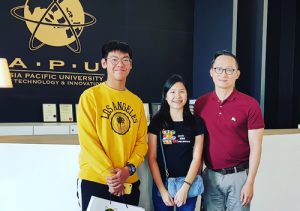




 Top Private Universities & Colleges in Malaysia