
Category Archives: Engineering

Find Out What you will Study in a Mechatronic Engineering Degree at a Private University in Malaysia

Studying Mechatronics Engineering at Malaysia’s Private Universities

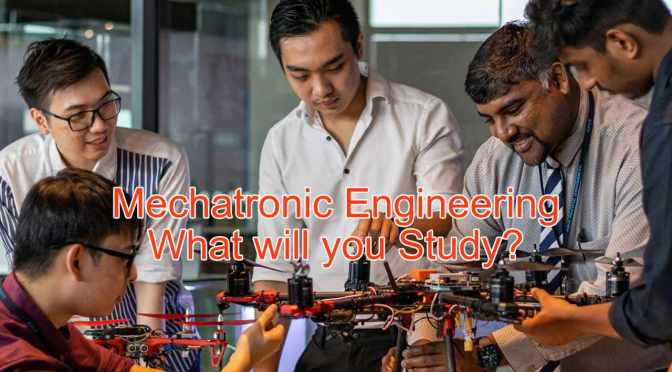
Mechatronic engineering is covers the design of automated machines such as robotics. Mechatronics Engineering is a combination of mechanical engineeringelectrical & electronics engineering and software engineering, but is a distinctly different discipline to all three. Furthermore, Mechatronic engineering is the engineering discipline concerned with the research, design, implementation and maintenance of intelligent engineered products and processes enabled by the integration of mechanical, electronic, computer, and software engineering technologies.

Mechatronics combines mechanical, electrical and software engineering in the design, development and control of diverse systems used in a range of industries including manufacturing, medicine and the service industries. Examples of mechatronic systems include aircraft, dishwashers, motor vehicles, automated manufacturing plants, medical and surgical devices and systems, robots of all types, many toys, artificial organs and many others. There is an increasing demand for engineering graduates who are able to work in an interdisciplinary environment. Mechatronics Engineering is a new discipline that is combines electronics, control, software, computer and mechanical engineering.

Modern mechatronics is about the integration of electronics with mechanical design to create intelligent systems. From fuzzy logic controlled washing machines to space exploration, mechatronics and robotic systems are at the forefront of technological developments.

Mechatronic Engineering is the study of basic engineering sciences and fundamentals of mechanical, electrical, electonics and computing engineering. Students will be to integrate these four diverse fields. The technical skills to design, analyse and test “intelligent” products or processes that incorporate suitable controller, sensor and mechatronic devices for robotics and automation. In the Mechatronic Engineering course, students will learn Engineering principles at different levels which are enhanced by exposure to practical sessions supported by hands-on laboratory work.

Mechatronics Engineering is the efficient and effective integration of mechanical systems, IT and electronics. It is a blend of mechanics and electronics, and uses precision engineering, control theory, computer science, mathematics and sensor technology, to design enhanced or “smart” products, processes and systems. Furthermore, Mechatronics Engineering is the combination of Mechanical, Electronic and Electrical Engineering for the design, manufacture and maintenance of systems that use microprocessors and actuators to control mechanical processes. A Mechatronic Engineer designs smart machines that are aware of their surroundings and can make decisions. It is a new branch of the engineering field with very good job prospects.

Please fill up the Form below and I will WhatsApp you and provide you with sound advise on how to choose the best private university or college in Malaysia to study at. If you do not give your mobile number or full name as in IC, your query will not be answered. Our knowledgeable & experienced counselor will send you a message on WhatsApp & provide assistance from there.

Go back

Your message has been sent

Warning
Warning
Warning
Warning
Warning
Warning
Warning
Warning
Warning

Warning.

Gain an Understanding the Mechatronic Engineering Undergraduate Programme

Mechatronic Engineering at Asia Pacific University (APU)
I met EduSpiral and he helped me to filter all the information from the universities and choose the best university that fit me.
Vincent Hoy, Graduated from Mechatronic Engineering at Asia Pacific University (APU)

The engineering working world is very competitive and students must arm themselves with the necessary skills and knowledge to succeed. This means that they should choose top rated universities in Malaysia for their engineering studies.

A mechatronics engineer unites the principles of mechanics, electronics, and computing to generate a simpler, more economical and reliable system. Its application areas range from power systems to transportation to optical telecommunications to biomedical engineering, along with a host of others.

Mechatronic Engineering is the study of basic engineering sciences and fundamentals of mechanical, electrical, electonics and computing engineering. Students will be to integrate these four diverse fields. The technical skills to design, analyse and test “intelligent” products or processes that incorporate suitable controller, sensor and mechatronic devices for robotics and automation.

In the Mechatronic Engineering course, students will learn Engineering principles at different levels which are enhanced by exposure to practical sessions supported by hands-on laboratory work. This is undertaken in the fully-equipped laboratories for Analogue and Digital Electronics, Communication Engineering, Power System, Robotics, PLC Controls, Pneumatics and Automation, Mechanical Equipment, Mechanical Workshop and as well as Materials and Testing Laboratories.

Upon completion of their Mechatronic Engineering degree programme at a private university in Malaysia, students should have attained the following outcomes:

  • Ability to gain and apply basic principles of Mathematics, Science and Engineering.
  • Ability to identify engineering problems and apply basic engineering principles to solve them.
  • Ability to recognize and apply suitable tools and techniques for engineering practical applications.
  • Ability to investigate complex engineering problems using research techniques.
  • Ability to design solutions for complex engineering problems.
  • Ability to communicate effectively and professionally.
  • Ability to comprehend and demonstrate current good practices of engineering for sustainable development.
  • Ability to practice safety, health, social, cultural, legal and environmental responsibilities as an engineer.
  • Ability to execute the responsibilities of an Engineer professionally and ethically.
  • Ability to function effectively as an individual or in a team.
  • Ability to recognize the need for, and be able to engage in independent and life-long learning.
  • Ability to demonstrate and apply the knowledge and understanding of engineering management principles.

What is Mechatronic Engineering?

Being from Pangkor made it difficult to find information on the universities to transfer after my Diploma. EduSpiral gave a lot of information & advise that helped me to choose the right university. They even picked me up from the bus station to drop me at the hostel. Jayden Cheah, Mechatronics Engineering Graduate
Being from Pangkor made it difficult to find information on the universities to transfer after my Diploma. EduSpiral gave a lot of information & advise that helped me to choose the right university. They even picked me up from the bus station to drop me at the hostel.
Jayden Cheah, Mechatronics Engineering Graduate

Mechatronics is the efficient and effective integration of mechanical systems, IT and electronics. It is a blend of mechanics and electronics, and uses the following:

  • precision engineering
  • control theory
  • computer science
  • mathematics
  • sensor technology, to design enhanced or “smart” products, processes and systems.

Mechatronics is the combination of Mechanical, Electronic and Electrical Engineering for the design, manufacture and maintenance of systems that use microprocessors and actuators to control mechanical processes.

The key element is the integration of these different areas into the design process from start to finish. Mechatronics engineers understand how to do this and enable the intelligent operation of mechanical systems. It also involves installing, operating and modifying mechanical and electronic equipment and in areas like manufacturing, aviation, robotics and defense.

Mechatronics engineers also have roles in project engineering where their cross disciplinary knowledge gives them an edge on mechanical or electrical engineers. Mechatronics engineers can work with electrical and mechanical systems together and solve problems that cross discipline boundaries. Their strength in IT, computer hardware and networking as well as software also helps them to be very versatile problem solvers.

Mechatronic Engineers are also involved in the design, construction and running of factory production lines and processes, where they use their skills in computers; micro-controllers; programmable logic controllers; programming; industrial sensors; hydraulic, pneumatic and electric drives; design of mechanical structures and mechanisms; and knowledge of manufacturing processes.

Who Should Study Mechatronic Engineering?

Students who are active, creative, like machines and robots and are good in subjects like Add Maths and Physics can consider the degree in Mechatronics Engineering.

Duration of the Mechatronic Engineering Programme

The duration of the Mechatronic Engineering Programme  is 4 years in order to meet the requirements of the Board of Engineers Malaysia (BEM).

In each year there are two long-semesters consisting of 14 weeks of instruction with 2 weeks of examinations, and one short-semester consisting of 7 weeks of instruction with 1 week of examinations.

Education Pathway after Secondary School

I contacted EduSpiral online & obtained in-depth information on the universities and courses. This helped me to make the right choice for my course. Melvern, Engineering Graduate, UCSI University
I contacted EduSpiral online & obtained in-depth information on the universities and courses. This helped me to make the right choice for my course.
Melvern, Engineering Graduate, UCSI University

Students need to have at least 5 credits including Maths & Physics or Science in SPM or IGCSE/O-Levels to go for the mechatronics engineering programme. Students after secondary school who are sure of choosing engineering for their degree studies may go for the Foundation in Engineering.

Alternatively, you can also take the Diploma in Mechatronic Engineering or Diploma in Electrical & Electronic Engineering for 2 years and then enter into Year 2 of the Mechatronic Engineering degree course.

If you are still not sure whether you want engineering or other science courses, you may choose the Foundation in Science programme at premier private universities in Malaysia.

Students after the external Pre-University Programme such as A-Levels, UEC, STPM, CPU, MUFY or AUSMAT may enter directly into the Engineering Degree programme with relevant results. Students can study a 4-year Mechatronics degree at top private universities in Malaysia that are accredited by the Board of Engineers Malaysia

What will you study in Mechatronics Engineering?

I didn't know what to study after A-Levels. EduSpiral helped me to understand what I am good at as well as what's in demand for the future. Renee Tan, Mechanical Engineering at Heriot-Watt University Malaysia
I didn’t know what to study after A-Levels. EduSpiral helped me to understand what I am good at as well as what’s in demand for the future.
Renee Tan, Mechanical Engineering at Heriot-Watt University Malaysia         

Mechatronic Engineering is a field that integrates various components in different engineering disciplines – such as electronicscomputer and mechanical engineering, among others – to meet the increasing demands of complex and sophisticated industries.  In mechatronics, students are equipped with the essential skills in industrial technology and learn a combination of mechanical, electronic and computer science techniques to design, fabricate, assemble and maintain automation and modern manufacturing systems.

Mechatronics students will find a full project application with hardware and software a piece of cake, but will not be able to give in-depth analysis of the mechanical dynamics/software structure unless they specifically work towards it.

Mechatronic students take courses from across the various fields listed below:

  • Mechanical engineering and materials science subjects
  • Electronic engineering subjects
  • Computer engineering subjects
  • Computer science subjects
  • Systems and control engineering subjects
  • Optomechanics (optical engineering) subjects
  • Robotics subjects

Example of subjects at degree level: Electrical Circuits, Computer Programming, Control Systems, Thermodynamics, Kinematics and Dynamics of  Machines, Microcomputer Systems and Interfacing, Actuators and Sensors, Digital Control Systems, Robotics and Automation, Mechanical Systems, Microprocessor Systems, Stress Analysis & Design,  Instrumentation & Measurements, Electrical Power & Machines, Fluid Power & Drives, etc

Assessments for the Mechatronic Engineering Programme

was confused about what to study & didn't want to do what my dad was working as because he was so busy. My mum asked EduSpiral to advise me. He showed my that I am different from my dad & helped me to make the right choice. Chong Han, Foundation in Engineering at Taylor's University
I was confused about what to study & didn’t want to do what my dad was working as because he was so busy. My mum asked EduSpiral to advise me. He showed my that I am different from my dad & helped me to make the right choice.
Chong Han, Foundation in Engineering at Taylor’s University

The teaching and learning strategies and assessment are designed depending on and according to the nature of course or topic being taught or investigated.

The school of Engineering implements different methods and styles of teaching and learning and assessment to ensure the successful achievement of the learning outcomes of its programmes, that includes

  • Ordinary classroom lectures
  • Group tutorials
  • Laboratory works
  • Seminars and eforums
  • Directed and self learning
  • Invited guest lectures
  • Industrial visits

Sample of Mechatronic Engineering Degree Subjects

My friend introduced me to EduSpiral. He gave me all the information on WhatsApp & helped me to apply. Chong Keat, Electrical & Electronic Engineering at Heriot-Watt University Malaysia
My friend introduced me to EduSpiral. He gave me all the information on WhatsApp & helped me to apply.
Chong Keat, Electrical & Electronic Engineering at Heriot-Watt University Malaysia
  • Calculus & Analytical Geometry
  • Circuit Theory
  • Digital Electronics
  • Technical Communication
  • Mathematical Methods For Engineers
  • Engineering Graphics & Design
  • Engineering Statics
  • Analogue Electronics
  • Analysis of Circuits
  • Engineering Materials
  • Introduction to Management
  • Engineering Statics & Dynamics
  • Engineering Mathematics
  • Introduction to C Programming
  • Instrumentation & Measurement
  • Engineering Design
  • Analogue Electronics
  • Introduction to Power System
  • Electromagnetic Field Theory
  • Digital Electronics
  • Engineering Software & Applications
  • Signals & Linear Systems
  • Strength of Material
  • Sensor & Actuators
  • Intermediate Robotics
  • Control Engineering
  • Communication Engineering Principles
  • Microprocessor Systems & Embedded Software
  • Numerical Methods & Statistics
  • Power Electronic & Drives
  • Machine Design
  • PLC & Pneumatic System
  • CAD/CAM
  • Thermodynamics & Heat Transfer
  • Advance Robotics
  • Mechatronics Design
  • Fluid Mechanics
  • Product creation and Technology

What do Mechatronic Engineers do? 

I loved motorsports and EduSpiral gave me great advise to help guide me to achieve my dream. Justin Moo, Mechanical Engineering graduate from Taylor's University
I loved motorsports and EduSpiral gave me great advise to help guide me to achieve my dream.
Justin Moo, Mechanical Engineering graduate from Taylor’s University

Modern mechatronics is about the integration of electronics with mechanical design to create intelligent systems. From fuzzy logic controlled washing machines to space exploration, mechatronics and robotic systems are at the forefront of technological developments.

Mechatronics engineers are therefore involved in almost every possible industry at levels from applications development to manufacturing to advanced research.Some of the products of mechatronic engineering include everyday gadgets like cameras, printers, washing machines and automatic doors. Others include parts of the car and airplane, robotic arm, etc.

Graduates with a Mechatronics degree can take up careers in a wide range of industries including robotics, aerospace, chemical, defence and automotive and manufacturing where complex software plays a major role, as well as in businesses that require extensive computer support, such as banking and commerce.

Contributions can be made to these industries in a variety of roles including design engineer, software engineer, project planner, product designer and project manager.

In a nutshell, a mechatronic engineer is responsible for combining the elements of mechanical engineering and electronics engineering to design and develop mechatronic products. Elements of electrical engineering and computer science (in the form of software design and software engineering) play a part in the daily work of mechatronic engineers too.

Likewise, a Robotic Arm is a prime example of a mechatronics system because it includes aspects of mechanics, electronics, control and soft-computing to do its day-to-day jobs.

Engineers from different fields of expertise work in teams on projects. For example, in a project, the Electrical & Electronics Engineer will give an in-depth analysis on the Electrical characteristics while the Mechanical engineer focuses on the physical mechanics. The software engineer will provide the software for the machine to function. With knowledge from all areas, the mechatronics engineer will be an ideal project manager.

Here are some things you might be expected to do in your job:

  • Develop new solutions to industrial problems using mechanical and electronic processes and computer technology.
  • Design and build completely new products by integrating various technologies, for example, developing robotic vehicles for underwater exploration.
  • Build and test factory production lines introducing automation to improve existing processes.
  • Maintain and improve previous industrial and manufacturing processes and designs, for example, robotic lawn mowers and robot floor cleaners.
  • Design, develop, maintain and manage high technology engineering systems for the automation of industrial tasks.
  • Apply mechatronic or automated solutions to the transfer of material, components or finished goods.
  • Apply advanced control systems, which are usually computer-driven.
  • Apply electronic and mechanical processes and computers to tasks where the use of human labour may be dangerous (like underwater exploration, mining or forestry)
  • Study the feasibility, cost implications and performance benefits of new mechatronic equipment.
  • Carry out modelling, simulation and analysis of complex mechanical, electronic or other engineering systems using computers.

Career Opportunities for Mechatronics Engineering Graduates in Malaysia

Chemical Engineering at Heriot-Watt University Malaysia
I talked to EduSpiral on WhatsApp and after obtaining all the necessary information. EduSpiral met me and my parents at Heriot-Watt University Malaysia to take us around for a tour.
Aun Jie, Chemical Engineering at Heriot-Watt University Malaysia

The career opportunities for mechatronics engineers in Malaysia is wide and a huge range of applications, from robotics in manufacturing and automation to the automotive, aerospace, medical and leisure and entertainment industries.

With your broad engineering knowledge base, you probably hold technical design and decision-making positions, often overseeing or playing a central role in engineering design teams.

Mechatronic engineers work in companies that require hi-tech input into what they are developing. They may work in a laboratory, a processing plant or an engineering office but are also research opportunities in emerging fields like bioengineering, nanotechnology and robotics.

You will find Mechatronic engineers in large global enterprises developing futuristic vehicles, challenging defence technology and revolutionising consumer products. They may also work in smaller innovative ‘high tech’ companies supplying software, parts and equipment. They could be product developers, work in manufacturing, or mining or defence industries, and in government and industry research groups.

Mechatronic Engineers may be required to travel to present at a conference or view a new design idea or innovative technology.

Mechatronics graduates can work as Systems Engineers, Project Engineers, Industrial Engineers and Control & Instrumentation Engineers within organizations such ABB, Alstom, Dyson, First Solar, GE Intelligent Platforms, Honeywell, Infineon, Intel, Jacobs Engineering, M+W, Petronas, Shell, Siemens, Sunpower, Yokogawa, etc.

Mechatronics – Dyson, Hitachi, Panasonic, Sony, Sime Darby, VS Industry, Bosch, Carsem (M) Sdn. Bhd. (S-Site), , T.A. Furniture Industries Sdn Bhd, Singapore Epson Industrial Pte Ltd., Emerson Process Management Asia Pacific Pte Ltd (Singapore),  GLOBALFOUNDRIES Singapore, Cycle & Carriage Industries Pte Ltd (Singapore), Perodua Manufacturing Sdn Bhd, T & T Inspection and Engineering Sdn Bhd, Top Glove Corporation Berhad

Recognition and Accreditation of the Mechatronic Engineering Degree

My mom contacted EduSpiral to ask his advise with regard to my results & where to study. He met us at the university to guide us and even obtained a partial scholarship for me. Ignatius, Mechatronic Engineering at Asia Pacific University (APU)
My mom contacted EduSpiral to ask his advise with regard to my results & where to study. He met us at the university to guide us and even obtained a partial scholarship for me.
Ignatius, Mechatronic Engineering at Asia Pacific University (APU)

Students should look for Engineering Degrees that are fully accredited by the Board of Engineers Malaysia (BEM) which is a signatory to the Washington Accord.

This accreditation ensures that Engineering Graduates will have the following benefits in countries who are signatories of the Washington Accord: Opportunities to register as a Graduate Engineer with Board of Engineers Malaysia (BEM) or the relevant professional bodies in other countries who are signatories under the Washington Accord.

With this achievement, recognition under the Washington Accord enables Engineering graduates to work in any country in the world who are also a signatory to the Accord, without the need to re-qualify. If they choose to work in Malaysia, graduates will have the opportunity to register as Graduate Engineers with Board of Engineers Malaysia (BEM), if they choose to work overseas in Washington Accord signatory countries; they can also register as Graduate Engineers.

The recognition is of utmost importance to the engineering education in Malaysia as graduates from accredited engineering degree programmes from Washington Accord signatory countries are considered as meeting the academic standard for practices in engineering at the international level.

The Engineering Degrees of these universities are accredited by the Board of Engineers Malaysia (BEM) which is a signatory to the Washington Accord. This accreditation ensures that Engineering Graduates will have the following benefits in countries who are signatories of the Washington Accord:

  • Opportunities to register as a Graduate Engineer with Board of Engineers Malaysia (BEM) or the relevant professional bodies in other countries who are signatories under the Washington Accord.
  • Pathways to becoming a Professional or Chartered Engineer.
  • Assurance that graduates are considered as having met international academic standards for engineering practice.
Best Engineering Courses to Study in Malaysia that has High Job Demand

Study an Engineering Course that has Future High Job Demand in Malaysia

When deciding on an engineering career path it is very difficult to know whether your chosen industry will continue growing, become oversaturated or even become obsolete because of technological advancements. It is clear that the trend is towards information technology and automation and this is set to remain the case for the foreseeable future. Traditional fields such as civil and petroleum engineering are still in high demand, but the fastest growing fields are those in the IT related areas. This article aims to list some of the engineering jobs that are most in-demand in future for Malaysian students to consider.

Engineering covers many different types of activity. Engineers make things, make things work and make things work better. They also use their creativity to design solutions to the world’s problems and help build the future. A career in engineering is fulfilling if you have chosen the right engineering field to study.

You may also be interested to read:

For more information contact 01111408838

Please fill up the Form below and I will WhatsApp you and provide you with sound advise on how to choose the best private university or college in Malaysia to study at. If you do not give your mobile number or full name as in IC, your query will not be answered. Our knowledgeable & experienced counsellor will send you a message on WhatsApp & provide assistance from there.

Go back

Your message has been sent

Warning
Warning
Warning
Warning
Warning
Warning
Warning
Warning
Warning

Warning.

The Most In-Demand Engineering Courses with Future High Job Demand in Malaysia

Mechatronic Engineering at Asia Pacific University (APU)
I met EduSpiral and he helped me to filter all the information from the universities and choose the best university that fit me.
Vincent Hoy, Graduated from Mechatronic Engineering at Asia Pacific University (APU)

The world will always need engineers, but some specialized fields are growing faster than others. As the population ages, environmental policy changes, and automation takes over more and more aspects of manufacturing, the world needs qualified and experienced engineers to design, develop, test, and implement new strategies to meet the challenges of technological advancements.

In order for the country to become a developed nation, the engineer to population ratio must be 1:100. For Malaysia, with a population of 32 million, the number of engineers should be 300,000. Surprisingly, based on the Education Ministry’s statistics from 1997 to 2020, the average number of engineers produced per year by the local institutions of higher learning, excluding graduates from international universities is about 16,000. The cumulative total of all engineers produced from 1997 to 2020 is estimated to be about 400,000. The number of engineers may be currently surplus for Malaysia.

Engineers are professionals with a degree qualification recognised by the Washington Accord for Engineers and are regulated and registered by the Board of Engineers Malaysia (BEM).

The engineer to population ratio for developed nations is 1:100. For Malaysia, with a population of 32 million, the number of engineers should be 300,000. As at February 2020, BEM’s registered Graduate Engineers and Professional Engineers stand at 137,073.

Unfortunately, the reality is that only 35% of the graduate engineers (GE) registered with the Board of Engineers Malaysia (BEM). BEM is owned by the Malaysian government to administer the registration of PE. Although according to Malaysia’s law through the Registration of Engineers Act 1967 (Revised 2015), all practising engineers must be registered with the BEM as GE to work as an engineer legally. According to the statistic published by BEM in February 2020, only 10% out of 142,000 registered Graduate Engineer (GE) successfully obtained the certification as Professional Engineer, which is less than 4% of all engineers in Malaysia.

At least five most common engineering fields run the country today, which are mechanical, chemical, electrical, electronic, and civil engineering. Civil engineering shows the highest number of registered Graduate Engineer followed by mechanical, electrical, electronic, and chemical engineering.

More than 50% of the total registered Graduate Engineer have been upgraded into Professional Engineer for at least two engineering disciplines which are civil and electrical engineering.

For mechanical engineering, the number of Graduate Engineer converted into Professional Engineer is slightly less at about 40%. The least amount of converted Graduate Engineer into Professional Engineer status is demonstrated by chemical and electronic engineering.

Job Demand for Engineers in Malaysia

The 5-year centralised economic development plan, known as the Malaysia Plan, will be one of the keys to driving the construction sector up to pace again. The government has plans to expand and modernise the public infrastructures within the country. In December 2020, the government approved a 2021 budget worth RM322.5 billion (US$73.3 billion). 73.3% for operational expenditure, 21.4% towards development expenditure and the balance of 5.3% to tackle the Covid-19 pandemic.

As the East Coal Rail Line aims for completion in 2027, others projects continue to boost Malaysia’s construction sector. These include the Mass Rail Transit 2, Light Rail Transit 3, Electrified Double Track Gemas-Johor Bahru, Klang Valley Double Track Phase 2, Pan Borneo Highway and Coastal Highway.

With projects underway, there is a surge in demand for skilled labour workers within the property and construction industry.

In addition, the surge in telecommunications and internet usage skyrocketed. Virtual meetings are the norm. Software such as Zoom and other communication platforms are now necessities. Wireless networks and fibre broadband are a must to keep operations and businesses running amidst this pandemic.

Ministry of Finance states that the Malaysian economy expects to rebound between 6.0% and 7.5% through its gross domestic product in 2021. And civil engineering will be the one spurring the recovery.

What are the Fastest Growing and In-Demand Engineering Jobs in Malaysia?

EduSpiral took me on a campus tour & gave in-depth information to help me decide. Eugene Ong, Electrical & Electronic Engineering at UCSI University
EduSpiral took me on a campus tour & gave in-depth information to help me decide.
Eugene Ong, Electrical & Electronic Engineering Graduate

Engineering plays a key role in supporting the growth and development in Malaysia’s economy as well as in improving the quality of life. As such, there is an important link between a country’s engineering capacity and its economic development. However, the extent to which engineering can aid development is also dependent upon government’s commitment of finances and resources required for infrastructure projects. By investing in infrastructure, such as transport, bridges, dams, communication, waste management, water supply and sanitation as well as energy and digital infrastructure, countries can raise their productivity and enhance other economic variables. By having a well-developed transport and communications infrastructure for example, countries are better able to get goods and services to market and move workers to jobs. A strong communications network allows a rapid and free flow of information, helping to ensure businesses can communicate and make timely decisions. All of these infrastructure projects require engineers.

Here are the fastest growing, most in-demand jobs predicted for future:

1. Automation & Robotics Engineer

My mom contacted EduSpiral to ask his advise with regard to my results & where to study. He met us at the university to guide us and even obtained a partial scholarship for me. Ignatius, Mechatronic Engineering at Asia Pacific University (APU)
My mom contacted EduSpiral to ask his advise with regard to my results & where to study. He met us at the university to guide us and even obtained a partial scholarship for me.
Ignatius, Mechatronic Engineering at Asia Pacific University (APU)

Automation has been reducing jobs in key industries. Robots can perform tasks faster, cheaper, and more safely, and can perform repetitive tasks around the clock. There’s no going back from automation now—in fact, the field of robotics is only going to continue to grow. For job security, it’s a good idea for prospective engineers to position themselves within the automation industry.

Automation and robotics engineers are responsible for creating, developing, testing, and putting automated systems into place.

Robotic systems are already good at performing menial repetitive tasks that don’t require the dexterity and attention to detail provided by a human worker. However, with constant advances in computing, energy storage and materials, robots are beginning to move from single arm welding and assembly robots to complex humanoid machines.

A good example of this is the Boston Dynamics robot. A robotics engineer is involved in every aspect of the design, development, testing and implementation of robotic systems. Robotics engineers are typically either mechanical, electronics or mechatronic engineers. As we move ever-closer to an automated world, the only safe jobs are those within automation itself.

Courses that you should study:

2. Alternative Energy Engineer

I didn't know what to study after A-Levels. EduSpiral helped me to understand what I am good at as well as what's in demand for the future. Renee Tan, Mechanical Engineering at Heriot-Watt University Malaysia
I didn’t know what to study after A-Levels. EduSpiral helped me to understand what I am good at as well as what’s in demand for the future.
Renee Tan, Mechanical Engineering at Heriot-Watt University Malaysia

As alternative energy sources become more mainstream and their technology advances, the cost of creating and implementing solar and wind power has gone down. This, in turn, has helped to boost demand for people who work on developing new, more efficient green energy tech, as well as inspect, repair, and install existing tech.

Solar, wind, biofuels and geothermal energy are key players in powering the future with the two most prevalent renewable energy technologies being solar panels and wind turbines.

As solar panels reduce in price, the desire for them increases and they are being installed in more and more projects across the planet every year. It is estimated that within the next five years the need for photovoltaic engineers will be double what it is now, and this shows no sign of stopping as organisations seek to reduce their carbon emissions and find cheaper, more sustainable sources of energy.

With the Malaysian government target that 11% of all energy will come from renewables by 2020, the Solar industry is going through a major surge. The problem is that the new Solar plants are up to 50Mw in size (10 times bigger than what we currently have) and there are 460Mw of new projects already confirmed!

With local talent already in short supply candidates with Solar experience are being offered expat packages to return to Malaysia to work in the industry and many are looking to hire Civil Engineers and Electrical Engineers with transferable skills.

Alternative energy engineers can assemble and install solar panels and service wind turbines. Mechanical or electrical engineers can start out here, but may want to go for a Master’s degree in energy engineering, specifically.

Courses that you should study:

3. Civil Engineer

My friend introduced me to EduSpiral. He gave me all the information on Facebook & then met us at the Education Fair to guide us on how to choose the right university Lyngkaran, Engineering at Taylor's University
My friend introduced me to EduSpiral. He gave me all the information on Facebook & then met us at the Education Fair to guide us on how to choose the right university
Lyngkaran, Engineering at Taylor’s University

Civil engineering never goes out of style. It’s a very varied field with a lot of different branches, and, as the population grows and environmental policies adjust, there will always be a need for people to oversee infrastructure projects. This is another safe bet for people looking for a secure long-term prospect.

Civil engineers are responsible for overseeing road systems, sewage systems, and dams, among other things. With the increase in demand for alternative energy sources, there’s an equal increase in openings for civil engineers to handle the needed infrastructure for solar and wind farms, geothermal installations, and more. They will need to handle feasibility studies, impact studies, cost estimates, site inspection, and integration with existing infrastructure.

Another opportunity for civil engineers comes in the form of smart cities. With the public and private sectors both looking to embed technology more intuitively into infrastructure, this presents a flourishing of new cross-disciplinary opportunities for civil engineers to build their digital skills and play a vital role in revisiting urban structures to revolutionise the way cities operate.

There are various branches of civil engineering which make it difficult to saturate the market and it is therefore a great field to be in. The main civil engineering fields include: structural engineering, road/highway engineering and transportation engineering.

Courses that you should study:

4. Telecommunications Engineer

was confused about what to study & didn't want to do what my dad was working as because he was so busy. My mum asked EduSpiral to advise me. He showed my that I am different from my dad & helped me to make the right choice. Chong Han, Foundation in Engineering at Taylor's University
I was confused about what to study & didn’t want to do what my dad was working as because he was so busy. My mum asked EduSpiral to advise me. He showed my that I am different from my dad & helped me to make the right choice.
Chong Han, Foundation in Engineering at Taylor’s University

According to the UN, in 2014 54% of the world’s population lived in urban areas. This is expected to increase to 66% by 2050, with the majority of the increase concentrated in Asia and Africa. In absolute terms, the urban population of the world grew from 746 million in 1950 to 3.9 billion in 2014. This figure is expected to surpass six billion by 2045.

This urbanisation will come with its own challenges and engineers will be involved in meeting the needs of growing urban areas, such as ensuring that there is adequate housing, water, sanitation, electricity and telecommunications.

Telecommunications is one of the most rapidly developing industry sectors globally. Mobile phones have become commonplace, optical fibres have improved long distance communications and digital techniques have made networks much more sophisticated. Communications are of vital importance to all people and all organisations

In addition, the arrival of 5G is expected to increase productivity and bring new products and services to market that have yet to be invented. Building on the foundation created by 4G LTE, 5G will dramatically increase the speed at which data is transferred across the network.

With the new opportunities brought about by this technology, 5G will create a highly competitive business environment across multiple industries. But it can only be built with the right skills and, as a result, many newly qualified engineers, technicians and 5G-ready engineers could find themselves being in very high demand over the next few years.

Courses that you should study:

5. Systems Software Engineer

Being in Sabah made it difficult for me to survey the universities in Peninsula. I found EduSpiral online and they provided detailed information & helped me with my application. They even took me around the university for a tour when I went to visit. Xavier Phang, Software Engineering Graduate from Asia Pacific University (APU)

While the world needs people to design and develop new ways to respond to environmental issues, an aging population, manufacturing, and our growing need for new, sustainable infrastructure, it also needs people to create the software that helps those things function. Every industry is increasing their dependence on technology, and the demand for software engineering has been increasing for years. That doesn’t look like it’s going to slow anytime soon. In fact, experts predict an increase of about 11% within the next few years.

Systems software engineers design, develop, and test operating systems. As more industries continue to update their technology, there will also be a need for network software. Network engineers are needed to oversee planning and implementing computer networks, while data science specialists are needed to analyze data and turn it into usable information.

Technology no longer operates just as a separate discipline but is integrated into all aspects of engineering design, planning, operations and maintenance. That could include the design and commercial production of digital devices and appliances, control systems for defence, power plants, aerospace and smart city infrastructure.

For wider engineering disciplines, digital engineers allow projects to make use of simulations, models, analysis and big data insights which support resource planning and costings, reduces wastage and allows projects to come to life for the client as early as possible with richly detailed computer-aided design.

this means that if you’re an engineer with capabilities in software, hardware, and data management, your expertise will be in high demand in whichever industry you want to specialise.

Courses that you should study:

6. Medical Devices

My friend introduced me to EduSpiral. He gave me all the information on WhatsApp & helped me to apply. Chong Keat, Electrical & Electronic Engineering at Heriot-Watt University Malaysia
My friend introduced me to EduSpiral. He gave me all the information on WhatsApp & helped me to apply.
Chong Keat, Electrical & Electronic Engineering at Heriot-Watt University Malaysia

Malaysia is the largest medical device market in Southeast Asia, with a market worth US$1.55 billion (RM6.44 billion). In addition, Malaysia is seen as the leading medical device manufacturing hub in the East, competing against the likes of mature hubs such as Puerto Rico, Costa Rica and Ireland.

In Malaysia, the medical devices industry spans a wide range of industries from
rubber and latex, textiles, plastics, machinery and engineering support and
electronics.

Under the Eleventh Malaysia Plan (RMK-11), the Government has identified medical devices as one of the high potential growth sectors. The industry has also been identified as one of the growth areas under the Healthcare NKEA under which eight (8) EPPs were announced and targeted to contribute RM17.1 billion in revenue and RM11.4 billion in GNI, as well as generate 86,000 jobs by 2020.

There are approximately more than 200 medical devices manufacturers, mainly the small and medium entreprises (SMEs) manufacturing medical gloves. However, the industry also includes higher value-added and technologically advanced products such as cardiac pacemakers, stents, orthopaedic implantable devices, electromedical, therapeutic and monitoring devices.

There are currently more than 30 MNCs producing high value-added medical
devices, making Malaysia their offshore location for manufacturing operations, such as Agilent, B. Braun, Boston Scientific, St. Jude Medical, C.R. Bard, Symmetry Medical, Teleflex, Resmed, Ciba Vision, Kelpac Medical, Ambu, Toshiba Medical Systems and Haemonetics.

Targeted products

  • Electromedical equipment
  • Cardiovascular devices
  • Orthopaedic devices
  • In-vitro diagnostic products
  • Wound care management products
  • Products from convergence of technology (medical devices/ pharmaceutical/electronics/ ICT/IoT/ 3D Printing)

Courses that you should study:

7. Aerospace Engineer

I was not sure if I could handle engineering but after listening to EduSpiral, I was able to make the right decision. Jun Chung, Diploma in Electrical & Electronic Engineering at Asia Pacific University (APU)
I was not sure if I could handle engineering but after listening to EduSpiral, I was able to make the right decision.
Jun Chung, Diploma in Electrical & Electronic Engineering at Asia Pacific University

Malaysia is already home to more than 230 aerospace companies including international players such as Airbus, General Electric, Spirit Aerospace and Honeywell. It is a great enabler for the development of a vibrant local supply chain comprising both international and local industry players.

Malaysia’s strategic position and strong local supply chain have contributed to its position as a preferred location for many MRO companies. Over 230 aerospace-related companies have established operations here in the country. They are involved in (MRO), aero manufacturing, education and training, systems integration, and engineering and design activities. Notable players such as Airbus Helicopters, Airfoil Services, Sepang Aircraft Engineering and GKN Aerospace have leveraged on our skilled local competencies to serve their customers in this region. Our local industry champions include UMW Aerospace, CTRM, Aerospace Composites Malaysia (ACM) and Spirit Aerosystems Malaysia. These are among the top tier single-source suppliers to major global aerospace OEMs such as Airbus, Boeing and Rolls Royce.

In the country’s most recent Aerospace Industry Blueprint, running from 2015 to 2030, the government has again targeted capturing 5% of the global MRO market by 2030, in addition to generating annual revenues of RM55.2bn ($13.7bn) and creating 32,000 high-skill jobs. Malaysia’s Economic Transformation Plan, meanwhile, forecasts the aerospace industry to be worth $1trn by 2020.

From commercial aviation to aircraft parts manufacturing MRO, aerospace is a strategic industry for Malaysia. In 2019, revenue from manufacturing and MRO raked in an estimated RM18 billion and provided jobs for 26,000 skilled workers.

As for Malaysia’s major exports, key products include aerospace parts and components such as fan cowl, fan casing, thrust reverser, forward leading edge and aircraft door. Most of the products were exported mainly to the US, Singapore, UK, China and France.

Malaysia is the second-largest aerospace market in Southeast Asia and the largest aero structures manufacturer in the region, with a long established design and build capability.

Currently, the aerospace industry activities can be seen throughout the country, especially in Selangor, Penang and Johor. The government is committed to strengthening the aerospace ecosystem by implementing efforts to transform Selangor and Kuala Lumpur into Southeast Asia’s hub for aerospace, particularly via Subang Aerotech Park and KLIA Aeropolis.

Courses that you should study:

Education Pathway to Become an Engineer

I was not happy at my former university and found EduSpiral online. He gave me good advise and even met up with me at KDU to tour the college. Ong Richard, Diploma in Electrical & Electronic Engineering at KDU University College Penang
I was not happy at my former university and found EduSpiral online. He gave me good advise and even met up with me at KDU to tour the college.
Ong Richard, Diploma in Electrical & Electronic Engineering at KDU University College Penang

Engineering degrees that are accredited by the Board of Engineers Malaysia (BEM) are recognised by overseas countries for work. Students should choose the best university in Malaysia to study engineering so that they can gain the necessary knowledge and skills to be successful in their career.

Students after SPM or O-Levels who are sure of choosing engineering for their degree studies may go for the Foundation in Engineering. If you are still not sure whether you want engineering or other science courses, you may choose the Foundation in Science programme at premier private universities in Malaysia. Students after the external Pre-University Programme such as A-Levels, UEC, STPM, SAM, CPU, MUFY or AUSMAT may enter directly into the Engineering Degree programme with relevant results.

EduSpiral Consultant Services provides free advise to students after SPM, O-Levels, STPM, A-Levels, UEC, and Pre-University to guide them in choosing the right course and university to study so that they can have a successful career. The aim for EduSpiral Consultant Services in sharing this article is to help students in selecting their course of study and career paths based on areas in demand.