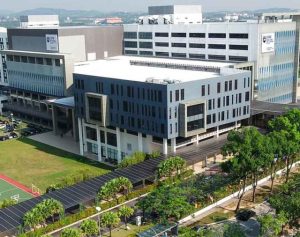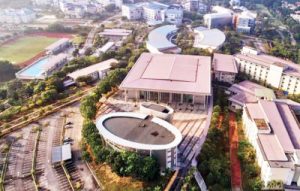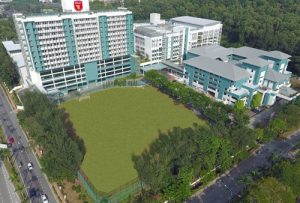
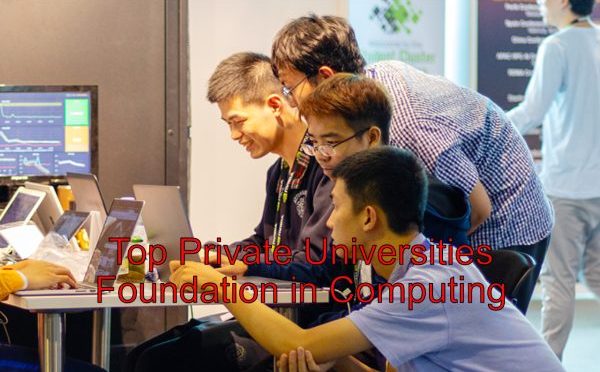
Category Archives: Computer Science

Malaysia’s Best Private Universities for Foundation in Computing & Technology Programmes

Top 10 Private Universities to Study Foundation in Computing & Information Technology (IT)

  • List of 10 top private universities offering the Foundation in Computing & Information Technology (IT)
  • The Foundation in Computing and IT is 1 year in duration and recognised by the Malaysian Qualifications Agency (MQA)
  • The Foundation is designed by the university to specifically prepare you to handle their own computing degree programmes

The Foundation in Information Technology (IT) or Computer Studies is the first step for students after SPM or IGCSE/O-Levels to pursue a computing degree programme at private universities. The Foundation in Computing & Technology is a preparatory programme that will prepare you for the undergraduate programme and transition you into university life.

The Foundation in IT is a 1 year Pre-University programme that is developed internally by the private universities following the guidelines from the Malaysian Qualifications Agency (MQA). The MQA will accredit the courses and will receive recognition for transfer to other universities. The subjects for the Foundation in IT will be tailored towards preparing students for their undergraduate computing studies. It will prepare you better than a general STPM, AUSMAT, MUFY, or A-Levels. There are differences in the subjects from university to university so students will need to research and compare which one would suit you.

A top private university for computing programmes will enhance your career opportunities as they will provide you with networking and internships at reputable computing companies. Their years of experience will be invaluable in equipping you with sound academic knowledge and skills in the dynamic and fast evolving world of IT. Furthermore, the university environment will be one of top students who are likeminded and focused on succeeding in the computing field. Therefore, it is important to choose a top private university for your computing Pre-University studies to ensure you get the best preparation possible to succeed.

You might also be interested to read these:

Please fill up the Form below and I will WhatsApp you and provide you with sound advise on how to choose the best private university or college in Malaysia to study at. Our knowledgeable & experienced counselor will send you a message on WhatsApp & provide assistance from there.

Go back

Your message has been sent

Warning
Warning
Warning
Warning
Warning
Warning
Warning
Warning
Warning

Warning.

List of the Best Foundation in Information Technology (IT) or Foundation in Computer Studies Courses in Malaysia

I secured a job with a high salary before I graduated and I am thankful for the guidance from EduSpiral in helping me to choose my course and university.
Teoh, Computer Science graduate from Asia Pacific University (APU)

With the increased demand for trained professionals in information technology (IT) and the many universities for students to choose from, it is important for the student to be able to choose a university that will build a solid foundation to be successful in this challenging but rewarding career.

Students after SPM or IGCSE/O-Levels interested in a career in information technology (IT), software engineering, or computer science  can go for the 1-year Foundation in Information Technology programmes at top private universities in Malaysia.

The subjects for the Foundation in Computing and IT would more specific to the computing field and therefore related to your interest as well as prepare you better for your undergraduate studies. Some universities may not title the Foundation as Foundation in Computing and IT but put it under Foundation in Arts or Foundation in Business.

You need to look at the subjects in the Foundation to see if they contain the necessary computing subjects which would help you to prepare for your computing degree studies. The Foundation are designed by the university to prepare you specifically for their own degree programmes.

Additionally, the Foundation in Information Technology (IT) programmes are cheaper and generally easier than the external Pre-University programmes.

Which are the Top Private Universities Offering Foundation in Information Technology (IT) or Computer Studies?

I wasn't sure of which course to study & Lonnie , from EduSpiral, guided me to choose the right course based on Job Demand & Salary. Hong Ming, Foundation in Computing & Technology at KDU University College
I wasn’t sure of which course to study & Lonnie , from EduSpiral, guided me to choose the right course based on Job Demand & Salary. Hong Ming, Foundation in Arts & Technology at UOWM KDU University College

Learn how to become a computer science professional in Malaysia by talking to knowledgeable & experienced counselors and then choosing the best private university for your degree studies. Research the education and career requirements, training and certification information and experience needed to be successful in your future career in information technology or computer science in Malaysia.

  1. University of Southampton Malaysia (UoSM)
  2. Asia Pacific University (APU)
  3. Heriot-Watt University Malaysia
  4. Taylor’s College
  5. UOW Malaysia
  6. UOWM KDU Penang
  7. Multimedia University (MMU)
  8. HELP University
  9. UCSI University
  10. First City University College

What is the Education Pathway?

I wanted to choose a course that had high job demand & future as well as affordable and EduSpiral provided information supported by facts to help me choose. Yue Sheng, Foundation in Information Technology (IT) at Multimedia University (MMU)
I wanted to choose a course that had high job demand & future as well as affordable and EduSpiral provided information supported by facts to help me choose.
Yue Sheng, Foundation in Information Technology (IT) at Multimedia University (MMU)

Students after SPM or IGCCSE/O-Levels interested in a career in Computing & Technology can go for the 1-year Foundation programmes at top private universities in Malaysia instead of an external Pre-University Course like SAM, AUSMAT or A-Levels.

The Foundation in Information Technology (IT) programmes are cheaper than the external Pre-University programmes and generally easier. If you do not plan on going overseas for your degree programme, then it is better to go for the Foundation programme at a top private university in Malaysia.

Foundation in Information Technology or Foundation in Computer Studies courses are intensive, focused one-year courses which prepare students for your computing degree studies in Malaysia and guarantee entry to the university of interest upon successful completion.

The Foundation in Information Technology or Foundation in Computer Studies courses provide a solid foundation for students to adapt to university education more confidently, both in terms of level and style of education of the particular university.

Study Foundation in Information Technology (IT) or Foundation in Computer Studies Course at Top Universities in Malaysia

My mum contacted EduSpiral to help advise me on which course & university to choose as I was quite confused. He took us to visit the universities & helped guide me to make the right choice. Bryan Yap, Foundation in Business at Heriot-Watt University Malaysia
My mum contacted EduSpiral to help advise me on which course & university to choose as I was quite confused. He took us to visit the universities & helped guide me to make the right choice.
Bryan Yap, Foundation in Business at Heriot-Watt University Malaysia

Many top private universities in Malaysia, have developed their own internal university foundation programmes. The Foundation in Information Technology (IT) and Foundation in Computing & Technology courses are accredited by the Malaysia Qualification Agency (MQA) and recognised by the respective foreign partner universities. The Foundation in Information Technology (IT) subjects are geared more specifically to Information Technology courses unlike the external qualifications which focus on more general Science and Art-based subjects.

You will get the chance to study a variety of subject areas related to computer studies in the Foundation in Information Technology (IT) or Foundation in Computing & Technology Programme. This will not only give you an idea of what subject you may like to progress on to, but also to develop the valuable learning skills necessary for pursue a degree. A Foundation Programme in Malaysia can be 2 semesters with 6 months each semester or 3 semesters with 4 months each semester.

Assessment for Foundation in Information Technology (IT) or Foundation in Computing & Technology programmes in Malaysia will vary from university to university. It will contain a mix of coursework, assignments, quizzes and exams. The coursework could cover different assessment tasks such as projects, assignments, laboratory work, presentations, tests, and others as assigned throughout each semester. The final examination is conducted at the end of each semester. The assessments are subject to quality assurance procedures to maintain high standards and ensuring fair assessment.

To enter into the Foundation in Computing & Technology students after SPM or IGCSE/O-Levels would generally need at least 5 credits in the relevant subjects.

If you are sure that you want to study Information Technology (IT) for your degree studies then this Foundation Programme is your best choice.

  • Duration: 1 year
  • Entry Requirements: Min. 5 credits, inclusive of Maths (Some universities may have higher entry rquirements)
  • Recognition: Mostly in Malaysia and some overseas. As long as the Foundation course is accredited by MQA, it will be accepted by another private university for entry into the relevant degree programme.
  • Cost: It will range from RM6500 to RM30,000. Generally cheaper than overseas Pre-University courses and A-Levels

1. University of Southampton Malaysia (UoSM)

University of Southampton Malaysia (UoSM) is currently the Top UK University in Malaysia* and the Top 1%* of all the world's educational institutions.
University of Southampton Malaysia (UoSM) is currently the Top UK University in Malaysia* and the Top 1%* of all the world’s educational institutions.

UoSM Computer Science Foundation Year is designed to enhance your comprehension of the mathematical concepts that underlie computer science, as well as to cultivate your problem-solving skills in engineering and computer science.

  • Progress to Southampton Malaysia’s computer science degree upon successful completion of this Foundation Year.
  • University of Southampton’s Computer Science degree is highly ranked in the UK.

This one-year full-time course is integrated with a further three-year BSc degree, and will build your understanding of the computer science disciplines. Students may transfer to the UK campus for the final part of their degree with a 20% bursary off the UK fees.

Successful completion of this Foundation Year guarantees progression to our computer science degree at the University of Southampton Malaysia.


2. Asia Pacific University (APU)

Asia Pacific University (APU) is a top ranked university in Malaysia with its new campus at Technology Park Malaysia. An impressive 100% of APU's graduates obtain jobs before graduation
Asia Pacific University (APU) is a top ranked university in Malaysia with its new campus at Technology Park Malaysia. An impressive 100% of APU’s graduates obtain jobs before graduation

Asia Pacific University Foundation (Pre-University) programme is designed to help those with SPM, O Levels or similar qualifications to develop the skills and knowledge to progress into the first year of degree of choice. Throughout the programme, our academic staff will advise you on the options available at each stage of your university degree study.

Asia Pacific University (APU) Foundation in Computing & Technology Programme lays the pathway towards professional tertiary education. It is a vital transformation point for students; soft skills, general knowledge and preparatory subject fundamentals acquired at the Foundation lead to excellence in a student’s education performance, as well as career-readiness as they move on as global professionals eventually. APU’s 12-month Foundation Programme is designed to prepare those with SPM, ‘O’ Levels or similar qualifications with the knowledge and skills to progress into the first year of a degree of their choice. On completion of the Foundation Programme, you will be able to make an informed decision about your interest and pursue theIGCSE/ right computing & technology degree as APU offers more than 20 specialisations to choose from..

As a testimony of that Asia Pacific University (APU) is the best university for computing, computer science and ICT in Malaysia, they have won more than 400 awards at local, regional and international level. These awards serve as acknowledgements of the achievement of APU and their students, reaffirming their standing as being among the leading private university in Malaysia for Information Technology (IT) courses.

Upon completion of the Foundation in Computing & Technology at Asia Pacific University, you can continue on to any of the top award-winning computing programmes.


3. Heriot-Watt University Malaysia

Heriot-Watt University Malaysia is a top ranking UK university for Engineering
Heriot-Watt University Malaysia is a top ranking UK university for Computer Science

The Foundation in Business is a focused programme of academic subjects, study skills and English language training designed to provide you with a direct route into a professionally relevant and internationally recognised degree at Heriot-Watt University Malaysia.

The tailored Foundation programme of courses is a direct pathway to your choice of a range of professionally relevant degrees. The focused academic content is taught in a way that introduces you to independent learning. Your development is monitored through regular assessments and feedback. Students intending to pursue the Computing degree programme will take computing subjects in the Foundation that will prepare them for their undergraduate studies

The popular Foundation in Business at Heriot-Watt University Malaysia will lead you to some of UK’s top ranked degree programmes. Students can use their forecast results to apply for the intakes as well as scholarships. In addition, students will get a 20% bursary should they pursue their degree studies at the UK campus in Edinburgh, Scotland. Students can choose to study all or part of the degree studies in the UK. This amounts to vast cost savings for you to obtain a top ranked UK degree.

Upon completion of the Foundation, students will enter the degree programme:


4. Taylors College

Taylor's University Lakeside Campus is strategically located in a modern and well-planned township. Just 30 minutes away from the bustling Kuala Lumpur
Taylor’s University Lakeside Campus is strategically located in a modern and well-planned township. Just 30 minutes away from the bustling Kuala Lumpur

Taylor’s College Foundation in Computing programme is designed to provide students with the necessary knowledge and skills to pursue a future in various computing related degrees programmes. Emphasising on ‘learning by doing’, students are regularly required to work on actual projects that instil core competencies and knowledge in the field of computing and information technology.

As part of their studies, Taylor’s students will be exposed to a dynamic learning environment that extends beyond the classroom, where students are trained to apply theory into practice, thus developing the ability to demonstrate discipline-specific knowledge, cognitive capabilities and soft skills.

Upon completion, students at Taylor’s University will develop core competencies in the field of computer science and information technology, grooming them for further studies or careers in the ICT industry, or to be the next technopreneurs of Malaysia’s bustling start-up scene.

Upon completion of the top rated Foundation in Computing programme, students at Taylor’s University can continue on to any of the UK dual-award degree programmes below:


5. UOW Malaysia

Top Ranked Australian University Education at University of Wollongong (UOW) Malaysia KDU, Utropolis Glenmarie
Top Ranked Australian University Education at University of Wollongong (UOW) Malaysia, Utropolis Glenmarie

Foundation Studies, at UOWM Malaysia is designed to prepare students for university-level education. By taking on courses that interest you, you’ll have the opportunity to develop and practise academic writing, independent study, and research skills, as well as time management skills that will be essential for your future success in your chosen bachelor’s degree program.

You will be able to choose a stream that you are passionate about. UOWM Foundation Studies program in Glenmarie, Selangor campus covers several fields. This allows students to get started on subject areas that interest them and decide whether or not they later want to pursue tertiary education in that field.

By completing a foundation program at UOW Malaysia, students are better prepared for the rigours of university-level education and can make a smooth transition into their chosen degree program below:


6. UOWM KDU Penang

UOWM KDU Penang Batu Kawan campus, Part of the Top Ranked University of Wollongong, Australia

The Foundation program in UOW Malaysia KDU Penang, George Town campus equips students with the necessary fundamental knowledge to pursue their university studies. This flexible program ensures students are grounded with a strong grasp of core subjects, as well as a variety of other subjects to give them a broad-based educational platform. It also helps them to explore new methods and ideas, as well as skills and concepts, to encourage independent and critical thinking.

The Foundation in Science is a one-year program that provides students with 2 elective areas:

  • Pure Science
  • Engineering or IT or Computer Science

This is a pre-university program that focuses on science related subjects such as chemistry, biology and physics as well as mathematics and information technology. It aims to provide pre-university students a smooth transition from secondary school/high school to a university degree.

The program will give students a strong foundation as well as the basic skills needed for a science-related degree. Upon completion of the Foundation at UOWM KDU Penang, you may continue on to the computing degree programmes below:


7. Multimedia University (MMU)

Multimedia University (MMU) Cyberjaya
Multimedia University (MMU) Cyberjaya is a top private university in Malaysia supported by a full university campus facilities

Both Multimedia University’s Faculty of Computing & Informatics and Faculty of Information Science & Technology incorporate industry-led curriculum so you will gain not only technical knowledge and skills, but also relevant soft and management skills. Many of the lecturers are professionals and specialists in their fields who will be able to impart real-life experience and solutions to your learning.

Multimedia University (MMU) also has strong collaborations with global industry leaders who are ready to share their knowledge of cutting-edge innovative technologies to keep you up-to-the-minute with current and future industry needs. MMU was the first private university approved by the Malaysian government.

Multimedia University’s collaboration partners include multinational corporations such as Microsoft, IBM, Dell-EMC, Cisco, Oracle, Intel, Cloudera, Nokia, EC Council, Google, Sun, Novell, Shell, BT, Celcom, CA, and Motorola. Through such partnerships, our staff and students are able to leverage on the latest technologies driving the Malaysian and global ICT scenes.

Upon completing the 1-year Foundation in Information Technology at MMU Melaka or MMU Cyberjaya, students may choose to enter into any of the Computer Science or Information Technology programmes below:

Multimedia University (MMU) Faculty of Computing & Informatics (Cyberjaya)

Multimedia University (MMU) Faculty of Information Science and Technology (Melaka)


8. HELP University

HELP University Subang 2 Campus
HELP University Subang Bestari Campus

At HELP Matriculation Centre, they believe not only in preparing their students to become employable graduates, but also principled graduates who will be conscientious and respectful to the environment that we live in. Students who withstand the test of time and win in the digital-driven world will have one thing in common: a strong cutting-edge foundation for the future. Students intending to pursue computing degree studies will choose the computing subject electives in their Foundation in Arts course at HELP University.

  • To provide good quality Pre-University education that prepares the students to meet the demands of undergraduate study
  • To incorporate a certain degree of flexibility where students can make their choice of selecting a discipline at a later stage rather than at the beginning of the course
  • Subjects such as Study Skills and Critical Thinking Skills are added to give the students an edge over others
  • Extra-curricular activities and a supportive environment of care are emphasised to ensure that students obtain a holistic education
  • To provide a conducive environment for study as well as to equip them with excellent facilities

Why study Foundation in Arts at HELP?

  • Recognition by universities in Australia, United Kingdom, New Zealand, United States of America and other countries
  • A flexible programme which offers a broad-based education providing exposure to a variety of disciplines, thus allowing students to make an informed choice when deciding on a future career
  • Experienced and committed teaching faculty with proven track records
    Cultural exchange and networking opportunities from a healthy mix of international and local students
  • Value-added subjects such as Critical Thinking Skills, Study Skills, Personal Development & Leadership and Culture, Arts and Politics to inculcate broader appeal and thinking
  • Leadership training specially designed by experienced psychologists and trained facilitators

Upon completion of the Foundation in Arts at HELP University, you may continue on to the computing degree programmes below:


9. UCSI University

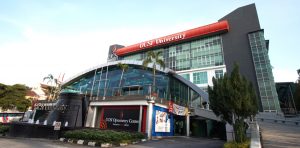
UCSI University is a top ranked private university in Malaysia offering a wide range of recognised Foundation, Degree and Postgraduate courses

At UCSI’s Institute of Computer Science and Digital Innovation, they believe in preparing for the here and now, and for the future. The Institute caters for those who wish to advance in the field of Computer Science and Information Technology and take their learning to the next level.

Emerging IR 4.0 technologies such as the Internet of Things (IoT), Cloud Computing, Machine Learning, and Data Analytics are changing how industries operate. Therefore, the demand for graduates in Computer Science and Information Technology is increasing. Their knowledge and specialisation are invaluable and will shape the very way in which we view the world.

UCSI’s faculty members are experts in their respective fields and have vast and varied experiences to share with students. Furthermore, the Foundation with Computer Science and Information Technology pathways equip students with skills such as analytical thinking, critical thinking and problem solving as well as computing knowledge, and practical skills needed to thrive in IR 4.0.

Upon completion of the Foundation in Arts (Information Technology) at UCSI University, you may continue on to the degree programmes below:


10. First City University College

Established in 1990 by the First Nationwide Group, First City University College has an impressive purpose-designed, fully equipped campus with sports and recreational facilities, and located on a 13-acre site within Bandar Utama

This affordable Foundation in Engineering, Science & Technology Programme in Malaysia at First City University College prepares students for two major pathways of Degree programmes offered by the Faculty of Engineering and Computing, which are Engineering and Computing. Students will be equipped with elementary to intermediate level of knowledge on the respective pathway after the completion of this foundation programme.

In Semester 1, students will explore their first programming language of which they will analyse, design and develop an IT solution for a business case. At the same time, students will build a solid background on Mathematics for their chosen pathway in Semester 2.

In Semester 2, students will explore more into their chosen pathway. For students who choose the Computing pathway, they will learn various programming languages, such as structured C++ programming in Semester 2 and Object-Oriented Java programming in Semester 3. Students will learn to create simple and yet functional programs from these languages. Furthermore, students from all pathways will also benefit from applying the MATLAB software in their mathematics modules.

To conclude, this foundation programme provides students a strong solid background on the respective pathway to degree programmes of study.

Upon completion of the Foundation in Engineering, Science & Technology at First City University College you can continue on to the following degree programmes at First City:

Malaysia’s Top Ten Information Technology (IT) or Computing Jobs Most In-Demand

Top 10 Digital Talent Technology Jobs in Malaysia

The gap between the demand for information and computer technology (ICT) talent and the supply of that talent is large. Under the MyDigital initiative, the Malaysian government is openly committed to advance the country digitally, aiming to attract and drive investments in the digital economy to create at least half a million jobs by 2025.

The Information and Technology (IT) industry continues to relish tremendous growth since the pandemic started. It is one of the fastest growing sectors in the Malaysian market to date. According to a report by GlobalData Market Opportunities Forecasts, IT expenditure in Malaysia will reach RM103.75 billion by 2023.

As demand for tech talent increases, private companies and government agencies are making big investments in the tech sector to ensure sustainable growth in the future. For example, Malaysia’s tech hub, Cyberjaya, is receiving RM11bn (£2.1bn) in investments through the implementation of the upcoming Cyber City Centre, while RM1.5bn has been allocated to the Ministry of Science, Technology and Innovation.

With the large investments being pumped into all areas of Malaysia’s technology sector, not only are these major projects going to develop the industry, it will be a primary driver in developing the tech talent pipeline.

The National Policy on Industry Revolution 4.0 (Industry4WRD), spearheaded by the Ministry of International Trade and Industry (MITI), will play a vital role in promoting digitalisation across all sectors. Businesses are starting to pivot their operations to enable remote capabilities, no longer restricted to borders and time zone differences.

The new norm of working from home is a major contributing factor. As remote work protracts indefinitely, businesses are adapting to a hybrid work model. Larger organisations are making efforts to integrate IT into their operations.

As the economy rebounds, the emphasis on Industrial Revolution 4.0 will be the centre of focus. Aligning with the government’s effort, the digital transformation across all sectors and industries will be inevitable. IT professionals will play an active role in the process to keep businesses up-to-date and relevant.

You may also be interested in:

Please fill up the Form below and I will WhatsApp you and provide you with sound advise on how to choose the best private university or college in Malaysia to study at. If you do not give your mobile number or full name as in IC, your query will not be answered. Our knowledgeable & experienced counsellor will send you a message on WhatsApp & provide assistance from there.

Go back

Your message has been sent

Warning
Warning
Warning
Warning
Warning
Warning
Warning
Warning
Warning
Warning

Warning.

Urgent and Unprecedented Demand for Technology Talent in Malaysia

EduSpiral helped me to understand clearly what software engineering is about & helped me to choose the right university. Vincent Chow, Software Engineering Graduate, Asia Pacific University

Malaysia is banking on solid public and private partnerships to close the skills gap as it charts its way to realize the Malaysia 5.0 agenda while eyeing to be the Heart of digital ASEAN.

Inspired by Japan’s Society 5.0, the agenda seeks to transform the country into a digital nation with 4IR (fourth industrial revolution) technologies integrated at every level of its society and steer its national education system to align with a digital future.

The 12th Malaysia Plan revealed in 2021 also sets out to boost the GDP contribution of its digital sector from 22.6% to 25.5% by 2025.

Randstad Malaysia

A report by Randstad Malaysia, stated that companies’ increasing focus on digital transformation will drive talent demand and shape the local workforce in 2021. There will be demand for highly specialised talent, particularly in areas such as Internet of Things (IoT), software development, cloud computing, artificial intelligence, blockchain technology, robotics, project migration and change management.

In the technology industry, Randstad Malaysia predicts four potential areas of technology growth in 2021 – cybersecurity, Software-as-a-Service conferencing solutions, e-commerce, and IoT.

Aligned with its projections on market growth, it said experienced talent in cybersecurity, app development, DevOps and digital marketing would be highly sought-after in 2021.

Malaysian Digital Economy Corp (MDEC)

According to Malaysian Digital Economy Corp (MDEC), theinformation technology (IT) industry is expected to face a shortage of between 7,000 and 15,000 professionals, as Malaysia rides the wave of the growing digital economy.

There are more than 3,000 companies registered under the Multimedia Super Corridor and the industry is currently in need of specialised workers in various IT fields. MDEC projects that by 2025, the IT industry will require one million specialised working professionals as the industry is experiencing a rampant growth.

MDEC Digital Talent Survey 2021

The MDEC Digital Talent Survey 2021 published in October last year found 85% of companies recognize the need to reskill their employees. As 48% of companies adopted digital tech platforms for day-to-day operations, up from 19% in 2020, the required skills have also evolved.

The survey also found that more emphasis is put on technical skills, such as cloud computing, cybersecurity, data analytics, digital marketing, and software development, instead of digital productivity and remote working skills.

MDEC: Digital job vacancies almost tripled in Malaysia

Software Engineering Graduate from Asia Pacific University (APU)
I was confused about my further studies. EduSpiral guided me in choosing the right course & getting a scholarship. He even kept in touch through all the years of my studies until now.
Jeremy Lee, Software Engineering Graduate from Asia Pacific University (APU)

As Malaysia and the world experience the extended impact from the Covid-19 pandemic, the role of digital is ever more important for the survival of businesses. It is therefore not entirely surprising that digital job vacancies in Malaysia almost tripled from June 2020 to April 2021.

This finding was made based on Malaysia Digital Economy Corporation’s (MDEC) tracking of digital vacancies on five popular recruitment platforms in Malaysia since June 2020.

MDEC found that the number of digital job vacancies increased from around 19,000 in June last year to more than 56,000 as at April 2021, with the largest share of vacancies posted on LinkedIn. The most popular jobs were in software development, data science, IT services and e-commerce. Some 76% of the vacancies were for experienced hires while only about 20% were open to fresh graduates, with the rest for internships.

The country’s leading digital economy agency found the local top 10 in-demand digital skills from the LinkedIn Talent Insights platform as follow:

  1. Analytical skills
  2. Engineering
  3. Computer science
  4. Software development
  5. Programming
  6. SQL
  7. Lead
  8. JavaScript
  9. Information Technology
  10. Cloud computing

Critical Occupation List (COL)

Furthermore, IT jobs such as Software Developers, Computer Network Professionals, System Analysts, and Application Programmers have appeared in every Critical Occupation List (COL) since 2015.

The COL, published by Institute of Labour Market Information and Analysis (ILMIA) and TalentCorp Malaysia, shows occupations that are skilled, sought-after, and strategic across 18 sectors in Malaysia.

LinkedIn

Moreover, Malaysia’s top five emerging jobs were all related to the tech industry as reported by LinkedIn in its report titled 2019 Emerging Jobs in Malaysia.

It analysed “millions” of job titles by LinkedIn users in Malaysia in 2013 and 2017 and then grouped them into common job roles and counted how frequently a particular job role appeared in 2013 versus 2017.

The report identified five future jobs in Malaysia which are Data Scientist, Full Stack Engineer, Drive Test Engineer, User Experience (UX) designer and Content Writer.

MyDIGITAL

In addition, MyDIGITAL is expected to create 500,000 new job opportunities in the digital economy and, in effect, contribute 22.6% of Malaysia’s gross domestic product by 2030.

What are the Ten Most In-Demand Technology Jobs in Malaysia?

EduSpiral counseled us online & then picked us up from the airport to visit MMU in order to help us choose the right university. Mak, Ong & Chaw - Diploma in Information Technology (IT) at Multimedia University (MMU)
EduSpiral counseled us online & then picked us up from the airport to visit MMU in order to help us choose the right university.
Mak, Ong & Chaw – Diploma in Information Technology (IT) at Multimedia University (MMU)

Computing or IT professionals are one of the highest paid in Malaysia. Job demand for Information Technology professional are high and here is the list of the best jobs in demand

  1. Software Engineer
  2. Data Scientist
  3. Cybersecurity Specialist
  4. Artificial Intelligence (Ai) Professional
  5. Internet of Things (IoT) Specialist
  6. Cloud Computing Specialist
  7. Fintech Professional
  8. Robotics Specialist
  9. Information Technology (IT) Professional
  10. Mobile Computing Specialist

Malaysia’s Digital Talent Demand

Software Engineer

Software developers, user interface designers, cloud experts and IT project managers are deemed to see the largest demand in both markets because of the emergence of a lot of startups and small companies. Malaysian businesses want to get digitalised to reduce paperwork and move from traditional retail to e-commerce.

Software developers using the latest technologies are most in demand. JavaScript frameworks such as React.js, Node.js and Angular.js seem to be the hype with digital companies and startups, while other companies dealing with large volumes of transactions in the e-commerce and travel space seem to be moving into using Scala.

Data Science
I found EduSpiral online and he met me and my Dad at the university to counsel us & take us around for a tour. As I didn't come from a rich family, EduSpiral helped me to find a university that's affordable and good. Eric Ng, Diploma in Information Technology (IT) at First City University College
I found EduSpiral online and he met me and my Dad at the university to counsel us & take us around for a tour. As I didn’t come from a rich family, EduSpiral helped me to find a university that’s affordable and good.
Eric Ng, Diploma in Information Technology (IT) at First City University College

Malaysia’s rapid expansion of regional IT hubs in recent years has engendered an acute demand for talent in key positions. This is especially pressing considering Malaysia’s goal to raise 2,000 data scientists and 16,000 data professionals by 2030. Currently, there are only 300 data scientists in Malaysia – both local and foreign.

Malaysia has been spearheading the development of Data Analytics and is close to becoming the data hub of all of Southeast Asia. The nation is putting in efforts to maintain steady growth in the field of Data Science as well as promoting the field to get more people interested.

It is globally recognized that the world is facing a huge gap between the supply and demand for Data Scientists and the stats in Malaysia are the same. The government of Malaysia has the aim of producing around 20,000 data professionals in the oncoming future. Currently, the number of Data Scientists in the country is around 300 which is very less as compared to the demand of Data Scientists by various organizations and companies.

According to official reports, there are around 22 multinational companies involved in Big data and analytics (BDA) which are working in Malaysia, therefore, making constant progress towards making Malaysia a hub for Big data and analytics amongst Southeast Asia.

With various companies such as Coursera, Cloudera and Center of Applied Data Science (CADS), Malaysia has been producing Data Scientists at a better rate as these companies work together with the government and the Universities in the nation to get more people in the field of Data Science and train them with the skill and knowledge to become a proficient Data Scientist.

Cybersecurity
I wanted to study mobile computing & EduSpiral shared with me about the course & helped me to choose the right university
Mun Kit, Mobile Computing at Asia Pacific University (APU)

Cyber security professionals are increasingly in demand as businesses continue to battle the growing threat of cybercrime. Budget 2021 allocated RM27million for cybersecurity programs alone. That itself forms the fundamental building blocks of the digital transition under the Malaysian Digital Economy roadmap.

Malaysia targets employing 20,000 cybersecurity professional by 2025 with the right training in artificial intelligence, Internet of Things and Big Data across all industries. The rapid growth of the cybersecurity industry, coupled with threats posed by technological advancements, is resulting in greater job creation in the field.

Cybersecurity and data systems integration solutions are burgeoning. The essentialities of such services received acknowledgement by SMEs, and the adoption rate reflects the shift. And predictably, the top 10% of job opportunities in Malaysia are cybersecurity related. More businesses and companies understand
the significance of cybersecurity.

With the ongoing global pandemic, most industries are going digital, which indirectly necessitate cybersecurity protection. It is imperative to keep organisations safe by executing new technologies to address the potential risks.

Artificial Intelligence (AI)
I wasn't sure of which course to study & Lonnie , from EduSpiral, guided me to choose the right course based on Job Demand & Salary. Hong Ming, Foundation in Computing & Technology at KDU University College
I wasn’t sure of which course to study & Lonnie , from EduSpiral, guided me to choose the right course based on Job Demand & Salary. Hong Ming, Foundation in Arts & Technology at UOWM KDU University College

11 per cent to 54 per cent of jobs in Malaysia can be significantly affected by AI in the next two decades and 7.4 per cent of Malaysian workers are at risk of being displaced by 2028.

In order to meet the high demand of delivering faster, relevant and holistic services to today’s customers, it is estimated that about 70 percent of organisations will integrate Artificial Intelligence (AI) to assist employee productivity by 2021.

However, only 26 percent of companies in Malaysia have actually begun integrating AI into their operations, according to a survey that was conducted in 2018. The low adoption rate is attributed to two key barriers that are related to organisational culture on AI and limited employee skill sets.

Therefore, the demand for qualified and trained professionals in Artificial Intelligence (AI) is high in Malaysia.

Internet of Things (IoT)
Software Engineering at Asia Pacific University (APU)
I was confused about what to study & at which university. Talking to EduSpiral helped clear my doubts.
Zen Yi, Graduated from Software Engineering at Asia Pacific University (APU)

In Malaysia, the IoT industry is expected to generate over 14,000 new jobs and contribute billions of ringgit to the economy. According to MIMOS, IoT will create a positive impact on several areas. First, it expects mobile device penetration to hit 280% by 2025 (from 144% currently). It also expects mobile broadband penetration to jump to 167% by 2025 (from under 15% in 2015) and mobile services to more than double to US$16 billion in 2025.

MIMOS also added that implementation of IoT is also likely to contribute RM9.5 billion to Malaysia’s gross national income by 2020, and RM42.5 billion by 2025. From the RM42.5 billion projection, RM34 billion will be driven by apps and services, as well as analytics solutions.

In 2015, the Ministry of Science, Innovation & Technology Malaysia launched the National IoT Strategic Roadmap, which forecasted opportunities to reach RM9.5 billion in 2020 and RM42.5 billion in 2025. This is all done to create a national ecosystem to make IoT a new source of economic growth with its industrialisation and proliferation of use.

The National IoT Strategic Roadmap outlines 3 national goals:

  1. Malaysia as the Regional Development Hub for IoT
  2. Create a conducive IoT industry ecosystem
  3. Strengthen technopreneur capabilities in Apps & Services layer
Cloud computing

Malaysia’s public cloud market alone, which amounts to 3.63% of the total IT spending in the country, has already reached USD643.4 million, according to research site Twimbit. This makes Malaysia the second-biggest cloud market in ASEAN after Singapore.

We have seen significant progress in its digital transformation journey, launching the Digital Free Trade Zone, and introducing multiple digital initiatives in its national agenda. Disruptive abilities and technologies such as cloud computing will continue to increase the demand for specialised and skilled employees.

This year has also seen the creation of a new country office by Alibaba – a “one-stop solution centre” for local businesses designed to support Malaysia’s technology innovation through cloud computing services – following soon after the launch of its first electronic world trade platform hub outside of Mainland China, creating the infrastructure to support global trade with services encompassing ecommerce, logistics, cloud computing, mobile payment and talent training.

What Qualifications Should You Have to Work in the Computing & Technology Jobs in Malaysia?

Diploma in IT at Multimedia University (MMU)
EduSpiral helped me to find an affordable and yet world top ranked computer science university.
Vickey, Diploma in IT at Multimedia University (MMU)

With the increased demand for trained professionals in information technology (IT) and the many universities for students to choose from, it is important for the student to be able to choose a university that best fits his or her needs – financially, quality, educationally and career. Within the computing discipline, there are 3 major areas of study that private universities offer which are Information Technology (IT)Computer Science and Software Engineering. These computing fields are related but also quite different from each other and the subjects overlap as well.

With an IT degree, graduates can find work in areas such as information security, network architecture, database administration, systems administration and computer support. However, some of these jobs require advanced computer science and programming knowledge, so students need to decide beforehand which area that they would like to specialise in.

For example, information security requires knowledge of discrete math and algorithms, and database administration requires knowledge of programming. Also, information security analysts usually have certifications, such as ISC or CISSP.

In general, IT professionals need to stay abreast of new technology, and they must be very familiar with how to use operating systems and server software, including Linux, Apache, OpenSSL, Windows Server, Oracle, MySQL and Microsoft SQL Server.

There are many types of computing courses that you can choose or specialise in. You must take the time to talk to the right people so that you understand which one fits you. Students should also choose the best university for computing or IT to study at so that you can gain the necessary knowledge and skills.

Top 20 Courses Best for a Career in Industry 4.0 in Malaysia

Industrial Revolution (INR) 4.0 – Top Courses that You Should Study in Malaysia to be Ready for it

  • Industry 4.0, also known as the Fourth Industrial Revolution, is all about making business smarter and more automated.
  • What technologies are driving Industry 4.0
  • Top 20 Courses for a Career in Industry 4.0 in Malaysia

What are the implications of these future trends for key aspects of the future workforce and workplace that would concern you as a student? To address this question, we take a closer look at the major factors that are expected to shape the world of work in the coming decades so that you can be prepared by choosing the right course to study.

In doing so, our objective is not so much to predict the future but rather to understand what are the changes that technology in the era of Industry 4.0 is impacting jobs of the future. When we understand the future trends, we will know which courses to choose that will enable us to hone our skills to obtain a job that has high demand and salary.

You might also be interested to read these:

Please fill up the Form below and I will WhatsApp you and provide you with sound advise on how to choose the best private university or college in Malaysia to study at. If you do not give your mobile number or full name as in IC, your query will not be answered. Our knowledgeable & experienced counsellor will send you a message on WhatsApp & provide assistance from there.

Go back

Your message has been sent

Warning
Warning
Warning
Warning
Warning
Warning
Warning
Warning
Warning

Warning.

Which are the Top 20 Courses for a Career in Industry 4.0 in Malaysia?

Industry 4.0 is signalling a change in the traditional manufacturing landscape. Also known as the Fourth Industrial Revolution, Industry 4.0 encompasses three technological trends driving this transformation: connectivity, intelligence and flexible automation.

Industry 4.0 converges IT (Information Technology) and OT (Operational Technology), to create a cyber-physical environment. This convergence has been made possible thanks to the emergence of digital solutions and advanced technologies, which are often associated with Industry 4.0.

These technologies are helping to drive manufacturing’s digital transformation through the integration of previously disparate systems and processes through interconnected computer systems across the value and supply chain.

Embracing Industry 4.0, digital manufacturing and the interconnectivity that comes with it opens a myriad of benefits for companies, including greater agility, flexibility and operational performance.

Check out the best careers that you can get today as well as the ones that are more futuristic:

  1. Computer Science
  2. Software development or Software Engineering
  3. Information Technology (IT)
  4. Cybersecurity
  5. Data science
  6. Artificial Intelligence (AI)
  7. Internet of Things (IOT)
  8. Financial Technology (Fintech)
  9. Cloud Computing
  10. Blockchain
  11. Game Development
  12. Network Computing
  13. Mobile Computing
  14. Augmented Reality (AR)/Virtual Reality (VR)
  15. Engineering
  16. Mechatronic Engineering
  17. Electrical & Electronic Engineering
  18. Mechanical Engineering
  19. Robotics Engineering
  20. Telecommunications Engineering

What is Industry Revolution 4.0?

EduSpiral gave me useful information & evidence on why I should choose the best university. Philip Sim, Information Technology (IT) graduate from Asia Pacific University (APU)
EduSpiral gave me useful information & evidence on why I should choose the best university.
Philip Sim, Information Technology (IT) graduate from Asia Pacific University (APU)

Industry 4.0, also known as the Fourth Industrial Revolution, is all about making business smarter and more automated. Where the Third Industrial Revolution focused on switching mechanical and analog processes to digital ones, the Fourth Industrial Revolution focuses on deepening the impact of our digital technologies by making our machines more self-sufficient, able to “talk” to one another, and to consider massive amounts of data in ways that humans simply can’t—all in the name of efficiency and growth. Industry 4.0 technology represents a foundational shift in how businesses operate, as fundamental as the change from steam power to electricity in the Second Industrial Revolution.

Industry 4.0 is revolutionizing the way companies manufacture, improve and distribute their products. Manufacturers are integrating enabling technologies, including Internet of Things (IoT), cloud computing and analytics, and AI and machine learning into their production facilities and throughout their operations. These smart factories are equipped with advanced sensors, embedded software and robotics that collect and analyze data and allow for better decision making. Even higher value is created when data from production operations is combined with operational data from ERP, supply chain, customer service and other enterprise systems to create whole new levels of visibility and insight from previously siloed information. This technology leads to increased automation, predictive maintenance, self-optimization of process improvements and, above all, a new level of efficiencies and responsiveness to customers not previously possible.

Developing smart factories provides an incredible opportunity for manufacturers entering the fourth industrial revolution. Analyzing the large amounts of data collected from sensors on the factory floor ensures real-time visibility of manufacturing assets and can provide tools for performing predictive maintenance in order to minimize equipment downtime.

Using IoT devices in smart factories leads to higher productivity and improved quality. Replacing manual inspection with AI-powered visual insights reduces manufacturing errors and saves money and time. With minimal investment, quality control personnel can set up a smartphone connected to the cloud to monitor manufacturing processes from virtually anywhere. By applying machine learning algorithms, manufacturers can detect errors immediately, rather than at later stages when repair work is more expensive.

Industry 4.0 concepts and technologies can be applied across all types of industrial companies, including discrete and process manufacturing, as well as oil and gas, mining and other industrial segments.

Industry 4.0 optimizes the computerization of Industry 3.0

EduSpiral took me on a campus tour & gave in-depth information to help me decide. Eugene Ong, Electrical & Electronic Engineering at UCSI University
EduSpiral took me on a campus tour & gave in-depth information to help me decide.
Eugene Ong, Electrical & Electronic Engineering Graduate

When computers were introduced in Industry 3.0, it was disruptive thanks to the addition of an entirely new technology. Now, and into the future as Industry 4.0 unfolds, computers are connected and communicate with one another to ultimately make decisions without human involvement. A combination of cyber-physical systems, the Internet of Things and the Internet of Systems make Industry 4.0 possible and the smart factory a reality. As a result of the support of smart machines that keep getting smarter as they get access to more data, our factories will become more efficient and productive and less wasteful. Ultimately, it’s the network of these machines that are digitally connected with one another and create and share information that results in the true power of Industry 4.0.

Malaysia Lacks the Talent to Work in Industry 4.0 Jobs

The Malaysian Ministry of International Trade and Industry (MITI) tabled the the National Policy for Industry 4.0 to help advance the countries’ businesses and factories. This will ideally help the local industries to increase productivity, efficiency, quality, and to also develop new skills and talent with the people.

According to MITI, Malaysia is currently somewhere in between Industry 2.0, which is mass production of items, and Industry 3.0, automation. It is a slow process that is facing many challenges such as the lack of awareness and understanding of Industry 4.0 and also the lack of standards and skillsets.

Industry 4.0 is the new approach to combining traditional manufacturing processes and technology such as the Internet of Things (IoT) to enable machines to capture and convey more data via machine-to-machine communications to enable businesses to make smarter decisions.

All these have to be mobilised by a workforce equipped with the necessary skill sets to develop systems, applications and services such as artificial intelligence, Big Data and advanced analytics, robotics and automation.

In terms of preparing the necessary skilled manpower (for Industry 4.0), Indonesia and Singapore are far ahead (of Malaysia) because they have specific programmes from abroad for their workers to learn from

Malaysia did not have a standard system to produce graduates with the necessary skills for Industry 4.0, Ganesh said the local university syllabuses were somewhat out of date and did not fulfill the requirements of Industry 4.0.

“After completing their studies, our (university) graduates have to be retaught to master 4.0 elements like additive manufacturing and robotics, that is, how to handle and manage robots and so on

Unfortunately, many of the local industries were still depending on manual labour to carry out their operations, he said.

He also said that Malaysia has to seek out foreign technology to enable it to approach Industry 4.0 due to the shortage of efforts locally to develop home-grown technology to meet the needs of the new industry.

What technologies are driving Industry 4.0?

  • Data Science & Data Analytics
  • Autonomous Robots & Advanced robotics
  • Simulation/Digital Twins
  • Horizontal and Vertical Systems
  • Industrial Internet of Things (IIoT)
  • Cybersecurity Technology
  • Cloud Computing
  • Additive Manufacturing (AM)
  • Artificial Intelligence (Ai) & Machine Learning
  • Augmented and virtual reality (AR/VR)
Data Science & Data Analytics

Data science combines the scientific method, math and statistics, specialized programming, advanced analytics, AI, and even storytelling to uncover and explain the business insights buried in data.

Data science is a multidisciplinary approach to extracting actionable insights from the large and ever-increasing volumes of data collected and created by today’s organizations. Data science encompasses preparing data for analysis and processing, performing advanced data analysis, and presenting the results to reveal patterns and enable stakeholders to draw informed conclusions.

Autonomous Robots & Advanced robotics
I loved motorsports and EduSpiral gave me great advise to help guide me to achieve my dream. Justin Moo, Mechanical Engineering graduate from Taylor's University
I loved motorsports and EduSpiral gave me great advise to help guide me to achieve my dream.
Justin Moo, Mechanical Engineering graduate from Taylor’s University

Robotics play a major role in the manufacturing landscape today. Automated manufacturing solutions should be a key part of any operation that strives for maximum efficiency, safety and competitive advantage in the market. Manufacturing robots automate repetitive tasks, reduce margins of error to negligible rates, and enable human workers to focus on more productive areas of the operation.

Robots used in manufacturing fill numerous roles. Fully autonomous robots in manufacturing are commonly needed for high-volume, repetitive processes — where the speed, accuracy and durability of a robot offers unparalleled advantages. Other manufacturing automation solutions include robots used to help people with more intricate tasks. The robot executes components of the process such as lifting, holding and moving heavy pieces.

Compared with conventional robots, advanced robots have superior perception, integrability, adaptability, and mobility. These improvements permit faster setup, commissioning, and reconfiguration, as well as more efficient and stable operations. The cost of this sophisticated equipment will decline as prices for sensors and computing power decrease, and as software increasingly replaces hardware as the primary driver of functionality. Taken together, these improvements mean that advanced robots will be able to perform many tasks more economically than the previous generation of automated systems.

Producers are now deploying advanced robotics as an essential element of advanced automation that enables the self-controlled factory of the future. Enhancing plant structures and processes with digital technologies can increase productivity and flexibility in both the factory and the supply chain, enabling producers to rapidly adjust to changing customer needs.

Simulation/Digital Twins
Mechatronic Engineering at Asia Pacific University (APU)
I met EduSpiral and he helped me to filter all the information from the universities and choose the best university that fit me.
Vincent Hoy, Graduated from Mechatronic Engineering at Asia Pacific University (APU)

Simulations are used across industry to test products, systems, processes, and concepts. Often used during the design phase, simulations are often digital models using computer-aided design software applications. These models can be created in 2D or 3D to represent parts of a process or product, although they can also be created using mathematical concepts rather than computer-based models. The simulation works by introducing and testing different variables into the digital environment or interface to assess outcomes.

The digital transformation offered by Industry 4.0 has allowed manufacturers to create digital twins that are virtual replicas of processes, production lines, factories and supply chains. A digital twin is created by pulling data from IoT sensors, devices, PLCs and other objects connected to the internet. Manufacturers can use digital twins to help increase productivity, improve workflows and design new products. By simulating a production process, for example, manufacturers can test changes to the process to find ways to minimize downtime or improve capacity.

A digital twin is a virtual model that is created to accurately reflect an existing physical object. The physical object is fitted with sensors that produce data about different aspects of the object’s performance, for example on a wind turbine. This data is then relayed to a processing system and applied to the digital model. This digital model, or twin, can then be used to run simulations, study current performance and generate potential improvements that can then be applied back to the actual physical asset. A digital twin can also be created for non-physical processes and systems, mirroring the actual process or system and allowing simulations to be run based on real-time data.

The data used by digital twins is usually collected from Internet of Things (IoT) enabled devices, allowing for the capture of high-level information that can then be integrated into the virtual model.

A digital twin is, in effect, a virtual environment where ideas can be tested with few limitations. With an IoT platform, the model becomes an integrated, closed-loop twin that can be used to inform and drive strategy across a business.

A simulation replicates what could happen to a product, but a digital twin replicates what is happening to an actual specific product in the real world. Any changes to a simulation are limited to the imagination of a designer who needs to input any changes. However, because a digital twin offers real feedback, the designer can see if it is working as intended and then determine any improvements based on actual use. This translates from assets to other applications, such as for a manufacturing process, which can be assessed with real data to react to changing demands, requirements or business conditions. The difference is that while a simulation is theoretical, a digital twin is specific and actual.

Horizontal and Vertical Systems
Software Engineering at Asia Pacific University (APU)
I was confused about what to study & at which university. Talking to EduSpiral helped clear my doubts.
Zen Yi, Graduated from Software Engineering at Asia Pacific University (APU)

When it comes to horizontal integration, Industry 4.0 envisions connected networks of cyber-physical and enterprise systems that introduce unprecedented levels of automation, flexibility, and operational efficiency into production processes. This horizontal integration takes place at several levels:

  • On the production floor: Always-connected machines and production units each become an object with well-defined properties within the production network. They constantly communicate their performance status and, together, respond autonomously to dynamic production requirements. The ultimate goal is that smart production floors will be able to cost-effectively produce lot sizes of one as well as reduce costly downtime through predictive maintenance.
  • Across multiple production facilities: If an enterprise has distributed production facilities, Industry 4.0 promotes horizontal integration across plant-level Manufacturing Execution Systems (MES). In this scenario, production facility data (inventory levels, unexpected delays, and so on) are shared seamlessly across the entire enterprise and, where possible, production tasks are shifted automatically among facilities in order to respond quickly and efficiently to production variables.
  • Across the entire supply chain: Industry 4.0 proposes data transparency and high levels of automated collaboration across the upstream supply and logistics chain that provisions the production processes themselves as well as the downstream chain that brings the finished products to market. Third-party suppliers and service providers must be securely but tightly incorporated horizontally into the enterprise’s production and logistics control systems.

Vertical integration in Industry 4.0 aims to tie together all logical layers within the organization from the field layer (i.e., the production floor) up through R&D, quality assurance, product management, IT, sales and marketing, and so on. Data flows freely and transparently up and down these layers so that both strategic and tactical decisions can be data-driven. The vertically integrated Industry 4.0 enterprise gains a crucial competitive edge by being able to respond appropriately and with agility to changing market signals and new opportunities.

Industrial Internet of Things (IIoT)

The Internet of Things (IoT) is a key component of smart factories. Machines on the factory floor are equipped with sensors that feature an IP address that allows the machines to connect with other web-enabled devices. This connectivity makes it possible for large amounts of valuable data to be collected, analyzed and exchanged.

Cybersecurity Technology

Manufacturing companies have not always considered the importance of cybersecurity. However, the same connectivity of operational equipment in the factory or field (OT) that enables more efficient manufacturing processes also exposes new entry paths for malicious attacks and malware. When undergoing a digital transformation to Industry 4.0, it is essential to consider a cybersecurity approach that encompasses IT and OT equipment.

The cost of a data breach in industrial manufacturing is among the highest of any industry. A single breach averages $5.2 million in the industrial sector, according to the 2019 Cost of a Data Breach Report by the Ponemon Institute. It can be much worse. When the WannaCry ransomware attack took place in May 2017, many manufacturing companies were hit particularly hard, with several automobile companies shutting down factories for days. Overall losses totaled in the billions of dollars.

Today, you have more open factory floors and supply chains. You must have granular visibility and controls, eliminating risks of unauthorized users, applications and data on the network. You also have to accept that nothing is perfect despite these controls, that threats can still get in.

You need provisions to quickly detect and prevent against attacks. For example, tools to automate threat detection and response, leveraging machine learning for IoT and Industry 4.0. The technologies that increase the attack surface are the same technologies that can automate cybersecurity detection and prevention. However, automation must be used strategically.

Cloud computing

Cloud computing is a cornerstone of any Industry 4.0 strategy. Full realization of smart manufacturing demands connectivity and integration of engineering, supply chain, production, sales and distribution, and service. Cloud helps make that possible. In addition, the typically large amount of data being stored and analyzed can be processed more efficiently and cost-effectively with cloud. Cloud computing can also reduce startup costs for small- and medium-sized manufacturers who can right-size their needs and scale as their business grows.

Additive manufacturing (AM)

Additive manufacturing (AM) or additive layer manufacturing (ALM) is the industrial production name for 3D printing, a computer controlled process that creates three dimensional objects by depositing materials, usually in layers.

Using computer aided design (CAD) or 3D object scanners, additive manufacturing allows for the creation of objects with precise geometric shapes. These are built layer by layer, as with a 3D printing process, which is in contrast to traditional manufacturing that often requires machining or other techniques to remove surplus material.

AM is used to create a wide range of products across a growing number of industries, including:

  • Aerospace
    AM is particularly suited to aerospace applications due to its weight saving capability and ability to produce complex geometric parts such as blisks.
  • Automotive
    A variety of materials are widely additive manufactured for the automotive industry as they can be rapidly prototyped while offering weight and cost reductions.
  • Medical
    The medical sector is finding an increasing number of applications for additively manufactured parts, especially for bespoke custom-fitted implants and devices.

AI and machine learning

AI and machine learning allow manufacturing companies to take full advantage of the volume of information generated not just on the factory floor, but across their business units, and even from partners and third-party sources. AI and machine learning can create insights providing visibility, predictability and automation of operations and business processes. For instance: Industrial machines are prone to breaking down during the production process. Using data collected from these assets can help businesses perform predictive maintenance based on machine learning algorithms, resulting in more uptime and higher efficiency.

Augmented and virtual reality (AR/VR)

Industry 4.0 is increasing in recent years and is one of the main sectors where Augmented Reality and Virtual Reality technologies are being adopted.

In the context of Industry 4.0, Innovae augmented reality and virtual reality allow to empower the workforce and train operators to be more efficient in increasingly complex production processes.

In short, these technologies allow operators to obtain critical knowledge easily and visually, enabling the performance of tasks more efficiently.

The applications of augmented reality in Industry 4.0. are several and are aimed at supporting technicians in their real working environment.

Through augmented reality, the user can visualize step-by-step procedures of the task to be performed or even get visual instructions in real time from experts with remote assistance systems.

Currently, the presence of augmented reality in areas such as maintenance, assembly processes or quality control is already common and reference companies in various sectors are implementing systems based on augmented reality to revolutionize their industrial processes.

Edge computing

The demands of real-time production operations mean that some data analysis must be done at the “edge”—that is, where the data is created. This minimizes latency time from when data is produced to when a response is required. For instance, the detection of a safety or quality issue may require near-real-time action with the equipment. The time needed to send data to the enterprise cloud and then back to the factory floor may be too lengthy and depends on the reliability of the network. Using edge computing also means that data stays near its source, reducing security risks.

Which Courses are the Best for a Future Career in the Era of Industry 4.0 in Malaysia?

The International Labor Organization has estimated that almost 300 million jobs are at risk due to the coronavirus pandemic. Of those that are lost, almost 40% will not come back. According to research by the University of Chicago, they will be replaced by automation to get work done more safely and efficiently. Particularly at risk are so-called “frontline” jobs – customer service, cashiers, retail assistant, and public transport being just a few examples. But no occupation or profession is entirely future proof. Thanks to artificial intelligence (AI) and machine learning (ML), even tasks previously reserved for highly trained doctors and lawyers – diagnosing illness from medical images, or reviewing legal case history, for example – can now be carried out by machines.

At the same time, the World Economic Forum, in its 2020 Future of Jobs report, finds that 94% of companies in the UK will accelerate the digitization of their operations as a result of the pandemic, and 91% are saying they will provide more flexibility around home or remote working.

The world of work is in constant change. Email, video conferencing, and cloud sharing are now the norm and millions of people now work in the gig economy, rather than on structured payrolls. But perhaps the greatest debate about the future of work is centered on automation, artificial intelligence, and robotics, and their potential effects on jobs.

BETWEEN 3.3 million and 6 million jobs are expected to be created in Malaysia by 2030, but with the new age of automation Industrial 4.0, preparation and training are fast becoming the critical factor as the new workforce would need new skills.

Furthermore, the ever-increasing cost of living in Malaysia is making it challenging for fresh graduates and working professionals to support their lifestyle. In light of that, it would be important for students to plan ahead what career that you want to enter into so that you can choose a course that has future job demand and high salary in Malaysia.

By having a view of emerging job trends, it is hoped that students would be inspired to draw up study plans and select career choices and pathways as early as schooling years up to university level that will ensure success in future careers and work environments.

Top Private Universities in Malaysia for Computer Science

Which are the Top Private Universities in Malaysia to Study Computer Science?

Written by EduSpiral Consultant Services. For more information contact 01111408838

It is important to choose the best university in Malaysia to study your computer science degree so that you will gain the necessary knowledge and skills for a successful career in the competitive field of ICT. Computer science (CS) spans the range from theory through programming to cutting-edge development of computing solutions. The study of computers, including both hardware and software design. Computer science is composed of many broad disciplines, including artificial intelligence and software engineering.

While it can be difficult to choose between private universities or colleges in Malaysia offering the Computer Science Degree Course, you will find that there are some key differences between them that can help you make the big decision in choosing the right one that fits you.  The best private universities and colleges in Malaysia have excellent facilities, years of experience running the Computer Science degree course, strong student support services, internships and experienced lecturers. Students should choose the best university in Malaysia for their Computer Science Degree studies in order to gain the necessary knowledge & skills for a successful career.

You may also be interested to read:

For more information contact 01111408838

Please fill up the Form below and I will WhatsApp you and provide you with sound advise on how to choose the best private university or college in Malaysia to study at. If you do not give your mobile number or full name as in IC, your query will not be answered. Our knowledgeable & experienced counsellor will send you a message on WhatsApp & provide assistance from there.

Go back

Your message has been sent

Warning
Warning
Warning
Warning
Warning
Warning
Warning
Warning
Warning

Warning.

Studying at Computer Science Degree Programme at a Top University in Malaysia

Vincent Lim, Software Engineering Graduate, Asia Pacific University (APU)
EduSpiral provided detailed information to help me make my decision.
Vincent Lim, Software Engineering Graduate, Asia Pacific University (APU)

Computer Science is about understanding computer systems and networks at a deep level. Computers and the programs they run are among the most complex products ever created by humans; designing and using them effectively presents immense challenges.

A degree in computer science can be expected to concentrate on the scientific aspects of computing, while a degree in information technology can be expected to concentrate on the business and communication applications of computing

The computer science degree is primarily focused on subjects such as software, databases, and networking. In general computer science degrees tend to focus on the mathematical and theoretical foundations of computing rather than emphasizing specific technologies.

The degree is a Bachelor of Science degree with institutions conferring degrees in the fields of information technology and related fields. This degree is awarded for completing a program of study in the field of software development, software testing, software engineering, web design, databases, programming, computer networking and computer systems.

Many employers require software developers or programmers to have a Bachelor of Science in Computer Science degree; however, those seeking to hire for positions such as network administrators or database managers would require a Bachelors of Science in Information Technology or an equivalent degree.

Computer science offers a foundation that permits graduates to adapt to new technologies and new ideas. The work of computer scientists falls into three categories:

  1. designing and building software;
  2. developing effective ways to solve computing problems, such as storing information in databases, sending data over networks or providing new approaches to security problems; and
  3. devising new and better ways of using computers and addressing particular challenges in areas such as robotics, computer vision, or digital forensics (although these specializations are not available in all computer science programs). Most computer science programs require some mathematical background.

A Great Job Outlook for Computer Science in Malaysia

A university degree in computer science is no longer enough to secure a job in Malaysia. Employers in Malaysia are looking for individuals with multiple skill sets. Employers today expect their employees to be able to multitask and communicate well in the English language.

The gap between the demand for information and computer technology (ICT) talent and the supply of that talent is large. Study indicates that the existing situation cannot even supply half of the demand by 2020, about 500,000 human capital educated in science and technology will be needed in Malaysia. From this number, at least 30,000 graduates are required in the ICT job market.

What will you study in a Computer Science Degree at Top Private Universities in Malaysia?

EduSpiral helped me to understand clearly what software engineering is about & helped me to choose the right university. Vincent Chow, Software Engineering Graduate, Asia Pacific University

Since Computer Science is such a wide field, required Computer Science degree courses vary. A typical list of standard courses that most Computer Science degrees require includes topics such as:

  • Programming Principles
  • Programming Paradigms
  • Algorithms
  • Data Structures
  • Logic & Computation
  • Computer architecture

Some schools which place more emphasis on mathematics will also require such courses such as:

  • Linear Algebra
  • Calculus
  • Probability and Statistics
  • Combinatorics, Discrete Mathematics
  • Differential Equations

Beyond the basic set of Computer Science courses, students can typically choose additional courses from a variety of different fields, such as:

  • Theory of computation
  • Operating Systems
  • Numerical computation
  • Compilers
  • Real-time computing
  • Distributed system
  • Computer Networking
  • Data Communication
  • Computer graphics
  • Artificial Intelligence
  • Multimedia
  • Human-computer interaction
  • Information theory
  • Algorithm design & analysis
  • Software testing

Some universities in Malaysia also offer concentrations in a certain area of computer science, such as:

Best Computer Science Degree Programme at Top Private Universities in Malaysia

I wasn't sure of which course to study & Lonnie , from EduSpiral, guided me to choose the right course based on Job Demand & Salary. Hong Ming, Foundation in Computing & Technology at KDU University College
I wasn’t sure of which course to study & Lonnie , from EduSpiral, guided me to choose the right course based on Job Demand & Salary. Hong Ming, Foundation in Computing & Technology at KDU University College

A computer science graduate from a top university in Malaysia is proficient in designing and building software, developing computing solutions and innovating better approaches to addressing computing challenges.

Computer Science requires a strong mathematical and scientific background. Depending on which university, the courses may vary in teaching subjects.

While some universities prefer teaching theoretical aspect of computer science, others focus on advanced programming. It is important to look at the subjects offered at the private universities in Malaysia when choosing the right computer science course to study.

You have to look at the subjects to see whether they fit your academic and career goals. For further advise and assistance in choosing the right course and university, you may contact us for a free consultation. Below are some of the top private universities in Malaysia offering the computer science degree course.

  1. Asia Pacific University (APU)
  2. Taylor’s University
  3. Multimedia University (MMU) Cyberjaya
  4. Multimedia University (MMU) Melaka
  5. University of Nottingham Malaysia Campus
  6. University of Wollongong (UOW) Malaysia KDU, Utropolis Glenmarie campus
  7. Monash University Malaysia
  8. University of Wollongong (UOW) Malaysia KDU Penang
  9. UCSI University
  10. First City University College
  11. HELP University

Best Computer Science Degree Courses at Top Ranked Asia Pacific University (APU)

Software Engineering at Asia Pacific University (APU)
I was confused about what to study & at which university. Talking to EduSpiral helped clear my doubts.
Zen Yi, Graduated from Software Engineering at Asia Pacific University (APU)


The Asia Pacific University of Technology & Innovation (APU) is amongst Malaysia’s Premier Private Universities, and is where a unique fusion of technology, innovation and creativity works effectively towards preparing professional graduates for significant roles in business and society globally. APU has earned an enviable reputation as an award-winning University through its achievements in winning a host of prestigious awards at international and international levels.

APU was announced as among the Highest Rated Emerging Universities in Malaysia, being rated at 5-STAR (EXCELLENT Rating) under the SETARA 2017 Ratings by the Ministry of Higher Education (MOHE). APU has maintained this Excellent Rating in the SETARA 2011, 2013 and now in 2017.

Asia Pacific University (APU) has been RATED No. 1 in Asia and Malaysia for its multicultural learning experience by Student Barometer Wave 2014, ‘Studying with people from other cultures’ and also ranked Tier 5 ranking or Excellent in SETARA by the Malaysian Qualifications Agency (MQA).

Furthermore, APU is awarded Premier Digital Tech University status in Malaysia by Malaysia Digital Economy Corporation (MDEC). An impressive 95% of APU’s graduates obtain jobs before graduation. Asia Pacific University (APU) is the best university to study Computer Science in Malaysia as evidenced through the hundreds of awards that the university’s students and staff have won.

Top Ranked Taylor’s University offers First Rate Computer Science Degree Courses

Foundation in Business into Finance at Taylor's University
My dream was to study at Taylor’s University and with the Taylor’s Excellence Award that EduSpiral shared with me, I am able to achieve it. Chun Tim, Foundation in Business into Finance at Taylor’s University

Established in 1998, Taylor’s Computing & IT offers a range of career-focused programmes from diploma, degree and postgraduate programmes, where graduates continue to meet industry standards, filling out the talent pool in ICT.

Taylor’s motto, “Driving Innovation Through Technology” aims to provide students with ample opportunities to influence the future of the modern world – pioneering the frontiers of Computing and Information Technology with a positive impact on society.

Taylor’s University industry relevant curriculum is a result of a comprehensive practical content using relevant and latest learning technologies, a conducive environment and multiple strong collaborations including close ties to the industry, professional bodies, government agencies, and academia. With these valuable partnerships, the School encourages and enables students to undertake innovative projects in its quest to nurture budding technopreneurs.

Taylor’s School of Computing and IT (SOCIT) offers dual award degree programmes in collaboration with the Department of Computer Science and Creative Technologies, University of the West of England (UWE), UK. A quality review committee, comprising academics from both institutions, is established for quality assurance and the moderation of the standards of the programmes, which includes curriculum and assessment. Students will receive certification and academic transcripts from both Taylor’s University and UWE upon completion of their degrees at Taylor’s.

Taylor’s University retained its position as the top choice among Malaysian private universities by employers in the 2020 QS World University Rankings results which ranked the institution in the top 1 per cent globally. Over 70% of Taylors University’s graduates are employed within 2 months.  Taylor’s University is also awarded the Premier Digital Tech University status by MDeC.

World Top Ranked Computer Science Courses at Multimedia University (MMU)

EduSpiral counseled us online & then picked us up from the airport to visit MMU in order to help us choose the right university. Mak, Ong & Chaw - Diploma in Information Technology (IT) at Multimedia University (MMU)
EduSpiral counseled us online & then picked us up from the airport to visit MMU in order to help us choose the right university. Mak, Ong & Chaw – Diploma in Information Technology (IT) at Multimedia University (MMU)

As the first private university approved by the Malaysian government, top ranked Multimedia University (MMU) adheres to the strictest requirements for a high quality degree. A study by Gartner and MSC Malaysia found that MMU is among the top five universities preferred by major ICT players for graduate employment — a testament to the quality of MMU’s academicians, curriculum, student development programmes and our solid reputation with the industries.

Furthermore, MMU is awarded Premier Digital Tech University Status 2017 by the Ministry of Higher Education (MOHE) and the Malaysia Digital Economy Corporation (MDEC). And they are ranked Top 300 QS World University Ranking for Computer Science & Information Systems, 2017.

In addition, Multimedia University falls within the Top 200 QS Asia University Ranking 2018 due to their holistic education and excellent academic reputation. Multimedia University (MMU) has won hundreds of awards throughout the years making it one of the Top Private Universities in Malaysia.

Outstanding Computer Science Courses at University of Wollongong (UOW) Malaysia KDU, Utropolis Glenmarie campus

I wasn't sure of which course to study & Lonnie , from EduSpiral, guided me to choose the right course based on Job Demand & Salary. Hong Ming, Foundation in Computing & Technology at KDU University College
I wasn’t sure of which course to study & Lonnie , from EduSpiral, guided me to choose the right course based on Job Demand & Salary. Hong Ming, Foundation in Computing & Technology at KDU University College

University of Wollongong (UOW) Malaysia KDU, Utropolis Glenmarie campus, an institution that has over 36 years of history and experience, believes in providing real world education and has been successful in producing competent graduates and preparing students for top universities all over the world.

The University of Wollongong (UOW) is an global network of campuses, students, graduates and academics. Beyond Australia, UOW delivers transnational global education programs to its campuses in Dubai, Singapore, Hong Kong, Malaysia and China, providing opportunities for students to gain a UOW degree outside Australia.

Students after SPM or O-Levels who have a passion for computer science in Malaysia can join the 2-year Diploma in Computer Studies or Foundation in Arts & Technology at University of Wollongong (UOW) Malaysia KDU, Utropolis Glenmarie campus before continuing on into the Bachelor of Computer Science (Hons) majoring in 3 areas:

  • Networking
  • Mobile Computing
  • Computer Security 

The best computing courses offered at the

Best University College in Penang for Computer Science Degree Courses at University of Wollongong (UOW) Malaysia KDU Penang

EduSpiral counselled me online and met me at KDU Penang University College to take me around the campus. It helped me a lot in making the right decision. Archie Wong (Right), Business degree Graduate from KDU Penang University College

In the MyQuest 2014/2015, University of Wollongong (UOW) Malaysia KDU Penang was rated 6-Stars which is the highest ranking for a college in Malaysia. This would make UOWM KDU Penang the best university in Penang. UOWM KDU Penang was also rated an all-round 5-star College status by Ministry of Education (MOE) MyQuest Audit for2011/2012 and 2012/2013.

The Bachelor of Computer Science (Hons) in Computer and Network Technology degree programme at UOWM KDU Penang is designed to provide a challenging programme for students to demonstrate their full potential in respect to computer networking, software development and computer hardware in the context of  modern digital communication systems.

The courses offered cover a wide range of topics including object-oriented programming, network programming and computational mathematics, computer data networks using languages and tools such as Java, C++, UNIX, Network Simulators, Network sensor smart home environment.

Computing Courses from Top Ranked UCSI University

The Bachelor of Computer Science (Hons) Mobile Computing and Networking programme at UCSI University will furnish students with a strong grounding in the technological aspects of specially designed courses such as software management and operating systems, databases, networks as well as programming, among others. With more than 30 years of education experience, top ranked UCSI University provides an affordable degree in mobile computing and networking supported by excellent facilities.

Affordable High Quality Computer Science Degree Course at First City University College

I found EduSpiral online and he met me and my Dad at the university to counsel us & take us around for a tour. As I didn't come from a rich family, EduSpiral helped me to find a university that's affordable and good. Eric Ng, Diploma in Information Technology (IT) at First City University College
I found EduSpiral online and he met me and my Dad at the university to counsel us & take us around for a tour. As I didn’t come from a rich family, EduSpiral helped me to find a university that’s affordable and good. Eric Ng, Diploma in Information Technology (IT) at First City University College

First City University College is a private higher education institution established in 1990 by the First Nationwide Group. First City University College is the best value for money with a purpose-designed, fully equipped campus with sports and recreational facilities, and located on a 13-acre site within Bandar Utama.

HELP University’s Computer Science Degree Programme

EduSpiral arranged for me and my mother to meet up with the lecturer at HELP to get a deeper understanding of the course, and also got me a scholarship! Cavan Stefan, IT at HELP University

Ever since its founding in 1986 to provide affordable quality educational opportunities for Malaysians, HELP University has developed into one of the best universities in Malaysia with a firmly established international reputation among universities, research organisations, scholars, business and corporate leaders and governments in Asia Pacific, Europe and North America. Students interested in Computing & Information Technology (IT) Courses at HELP University can choose to study at their Damansara Heights campus.

HELP University is Ranked as Very Good or Tier 4 in the SETARA 2013 & SETARA 2011 by MQA. The top university rank achieved by HELP University affirms their commitment and position as one of the best universities in Malaysia.

What is the Pathway to Study a Computer Science Course in Malaysia?

Software Engineering Graduate from Asia Pacific University (APU)
I was confused about my further studies. EduSpiral guided me in choosing the right course & getting a scholarship. He even kept in touch through all the years of my studies until now.
Jeremy Lee, Software Engineering Graduate from Asia Pacific University (APU)

Students after SPM or O-Levels may go for the Foundation in Computing or Information Technology, Foundation in Arts or Foundation in Science at top private universities in Malaysia for 1 year before continuing on to the 3-year Computer Science degree. Students will need at least 5 credits including Maths.

With 3 credits in SPM or O-Levels including Maths, students may go for the 2-year Diploma in Information Technology, Diploma in Computer Studies or Diploma in Software Engineering and then enter into Year 2 of the Computer Science degree.

Finally, Pre-University students with the relevant results in STPM, A-Levels, SAM, CPU, AUSMAT, etc. can enter directly into Year 1 of the Computer Science degree at the best university in MalaysiaFoundation in Science programmes from premier private universities in Malaysia  are also accepted for entry.