
Tag Archives: what to study after IGCSE in Malaysia

Best Courses to Study after IGCSE/O-Levels in Malaysia

Which are the Best Pre-University Courses to Study in Malaysia After High School?

Finally, you have completed IGCSE/O-Levels, one of the biggest exams in your life, and have been looking for a the right Pre-University Programme or Diploma course so that you can continue on to the degree programme.

There are many questions going through your mind such as: Should you study locally or overseas after completing high school? Which Pre-University Course is the best? How to choose the right Pre-U Programme

? Which university or college is the best? What degree course should you take? Does the course have future high job demand & salary? How to choose the right course with so many choices?

But with the many difference choices out there, which one will you choose? So, to make it easier for you, I have made a list of the most popular Pre-University study options in Malaysia. The summary will give you a snapshot of the good points of each Pre-University course in Malaysia so that you can make the best choice after IGCSE/O-Levels.

You might also be interested to read:

Do you have any questions for us on this article? Or need advise on choosing the right course and private university? If so, then please fill up the Enquiry Form below. Our team of experts will help you solve your queries at the earliest via WhatsApp.

Go back

Your message has been sent

Warning
Warning
Warning
Warning
Warning
Warning
Warning
Warning
Warning

Warning.

What are your options after IGCSE/O-Levels?

I was interested in choosing a course that has high job demand & salary as well as meet my interests. EduSpiral gave me job reports & statistics to help me choose the right course. Bernice, Digital Marketing at Taylor's University
I was interested in choosing a course that has high job demand & salary as well as meet my interests. EduSpiral gave me job reports & statistics to help me choose the right course.
Bernice, Digital Marketing at Taylor’s University

Choosing the right Pre-University Programme will help you enter your university of choice to study the degree course that you want. After IGCSE/O-Levels, before entering a degree programme, students have to take a Pre-University Course or Diploma. Since you have taken IGCSE/O-Levels, you will not be able to enter into the government universities or IPTA.

Sometimes students choose the Pre-University programme for the wrong reasons. Students must research carefully the type of Pre-University and its assessment style.

Some students don’t perform well in the Pre-University because the assessment of the Pre-University doesn’t fit them or their command of the English language is too weak to handle the written assignments.

Know what you want to Study for the Degree

In order to choose the right Pre-University or Diploma course, you have to figure out what you want to study in your degree or at least have some idea. For example, if you plan to study Engineering, then your choices are Diploma in Electrical & Electronic Engineering, Foundation in Engineering, Foundation in Science, A-Levels Sciences, or AUSMAT Sciences.

Students who are sure of what they want to study can go specifically for the Diploma in Electrical & Electronic Engineering or Foundation in Engineering.

Students who are not sure of what to study or you are still considering other courses, then take more general Pre-U like Foundation in Science, A-Levels Sciences, or AUSMAT Sciences. These Pre-U programmes are able to enter most degree programmes giving you more options.

Know where you want to Study for the Degree

EduSpiral advised & helped me choose the best college for A-Levels. And now I have graduated from a top ranked UK University in Malaysia Dexter Leong, A-Levels at HELP Academy & Degree from University of Nottingham Malaysia Campus
EduSpiral advised & helped me choose the best college for A-Levels. And now I have graduated from a top ranked UK University in Malaysia
Dexter Leong, A-Levels at HELP Academy & Degree from University of Nottingham Malaysia Campus

Furthermore, your budget will also determine which course would be suitable. Students who plan to go overseas to study can go for the A-Levels or AUSMAT while students who plan to study locally at private universities can go for the Foundation or Diploma.

If you plan to go overseas, then go for the external Pre-University programme and choose based on which country you want to go to. If you plan to continue your degree course in Malaysia, you should just take the Foundation course as it is cheaper and generally easier than the external Pre-U. To study overseas will cost from RM150,000 to RM200,000 a year at least.

So, if you do not have the finances to study overseas, there is no point to go for an external Pre-University Programme. A Foundation course at a top private university in Malaysia will be sufficient

Know what type of Assessment fits your learning Style

Do you prefer exam-based or a mix of exams, assignments, course work, etc.?

Choosing the right Pre-University course that fits you would mean that you have to ask yourself which methods of assessment best suit you? Exams, coursework, practicals, group projects and presentations could all be in the mix in differing quantities.

Every Pre-University course will include a % breakdown of assessment. You need to understand yourself and capabilities in order to decide which Pre-University course would best suit you.

Know when you Should Start your Pre-U Course

Intakes are also important for students who want to perform the best in the exams. Taking the March intake is generally a mistake as it is compressed in duration therefore making the student having to complete the syllabus in a short amount of time.

Furthermore, you must also find out when you will get your results in order to meet the application deadline for your university of choice.

Need Help in Choosing the Right Pre-U Programme after IGCSE/O-Levels?

As you can see, choosing the right course to study can be confusing so do WhatsApp me at 01111408838 for advise if you need more help. Read on below to find out the best points about the various Pre-University programmes in Malaysia.

Top Pre-University Programmes in Malaysia Suitable for Students after IGCSE/O-Levels

Diploma Programme – Practical & Specific

Studying Information Technology (IT) was my dream but my results didn't achieve the requirements. But EduSpiral gave me in-depth advise & helped me to choose the right course that suited me. Harold, Diploma in Business IT at Asia Pacific University (APU)
Studying Information Technology (IT) was my dream but my results didn’t achieve the requirements. But EduSpiral gave me in-depth advise & helped me to choose the right course that suited me. Harold, Diploma in Business IT at Asia Pacific University (APU)

Students who are sure of what they want to study can go for a Diploma course. The diploma generally is more practical while a degree course is more theoretical and academic.

The duration of the diploma is 2 years or 2.5 years depending on the university. Some have internships.

After completing your diploma, you can go find a job or continue on to Year 2 of the degree if your college or university offers the degree or you can transfer credits into another university.

Students will take  25-35 subjects in the diploma and it is a mix of Assignments, Coursework, and written examination percentage.

Why Study Diploma?

  • The course is more practical with mixed assessment.
  • You have at least 3 credits in IGCSE/O-Levels to enter the Diploma programme
  • Students may apply for the PTPTN Loan for Diploma courses. There is no PTPTN Loan for Foundation & External Pre-University programmes
  • You will study the subjects that you are interested in. The subjects are specific to your field of interest.
  • Upon completion of the Diploma, you may choose to start work or continue on to Year 2 of the related degree

Foundation Course – Short & Affordable

EduSpiral advised me on WhatsApp & provided all the information on Taylor’s University. He also helped to arrange a campus tour. Finally, he helped me to register as well as apply for the scholarship.
Hazel Hoh, Foundation in Arts (Communication)

Foundation courses are offered by Private Universities as a transition into their degree programmes. It helps students after IGCSE/O-Levels to familiarise with the university’s own degree courses & adjust to university life.

Furthermore, students will take about 15 subjects depending on the type of Foundation Programme. Assessment is about 50% exam and 50% coursework and assignments.

Why Study Foundation at a Private University?

A-Levels – Exam-Base with Worldwide Recognition
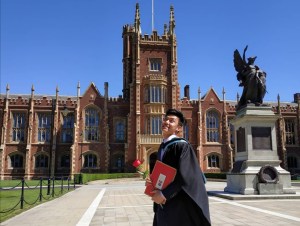
EduSpiral advised & helped me choose the best college for A-Levels. I obtained a scholarship & have graduated from a top ranked UK University. Lucas, A-Levels at HELP Academy & Law Degree from Queens University Belfast
EduSpiral advised & helped me choose the best college for A-Levels. I obtained a scholarship & have graduated from a top ranked UK University.
Lucas, A-Levels at HELP Academy & Law Degree from Queens University Belfast

A-Levels is a UK-based programme that’s popular in Malaysia. The A-Level programme places emphasis on knowledge, understanding and reasoning abilities and skills. Students can choose to take 2 to 4 subjects from a wide range of subjects depending on their degree path.

The A-level course is 12 – 18 months and is a 100% external examination-based course.

Both the ‘A2’ and ‘AS’ level examination sessions occur twice a year, in June and November, with some subjects only available in June or November.

Why Study A-Levels?

  • Students who have good results in IGCSE/O-Levels and prefer exam-oriented assessment rather than coursework or assignments, should go for the A-Levels.
  • Accepted by universities worldwide
  • General subjects therefore the choices to enter degree programmes are wide depending on your subject combination
  • If you plan to go overseas after your Pre-University programme, then the A-Levels is a good choice as it is accepted by universities worldwide.
  • Students who intend to join Ivy League universities in the USA or to enter top universities like Cambridge or Oxford or National University of Singapore (NUS) are encouraged to take the A-Levels.
  • Students who intend to take up Medicine, Pharmacy, Dentistry or Veterinary should go for this course as it will prepare you well to handle the undergraduate programme.

Australian Matriculation – Coursework & Recognised Worldwide

South Australian Matriculation (SAM) at Taylors College
I met EduSpiral a few years back & although I wanted to pursue his advise, my parents asked me to take STPM. I wasn’t satistied with my STPM results and finally, EduSpiral helped me to understand clearly that SAM was the best Pre-U that suit me. Khalil, South Australian Matriculation (SAM) at Taylors College

TheSouth Australian Matriculation (SAM) or SACE International is an internationally-recognised Australian pre-university matriculation programme which is set and administered by the Senior Secondary Assessment Board of South Australia (SSABSA).

SAM or SACEi has been offered to students outside of Australia since 1984 and is accepted by many renowned universities in Australia, the UK, the US, Hong Kong, Singapore, New Zealand, India, and private universities in Malaysia as an admission criterion into their undergraduate programmes.

SACEi is a 10-month matriculation programme which is 30% exam and remaining 70% is awarded internally through continuous assessment of coursework and tests.

  • South Australian Matriculation (SAM) or SACE International: 70% coursework (e.g. tests, research papers, assignments) and 30% exams
  • AUSMAT: 50% coursework (e.g. tests, research papers, assignments) and 50% exams

Why Australian Matriculation

  • Recognised for entry by most countries overseas
  • Shorter duration compared to the A-Levels
  • Continuous assessment helps to accumulate marks towards your final grade, instead of depending on a particular exam or coursework
  • Students who have a strong command of the English language & like assignment based courses would do well in the Australian Matriculation

American Degree Transfer Programme (ADTP) – Only if you want to Study in the USA

The USA has one of the world’s finest education systems, with the highest number of top ranked universities in the world. Students interested to save money and study the first part of their degree program in Malaysia before continuing on to the USA for the final part can go for the American Degree Transfer Program or ADTP.

In addition, the American Degree Transfer Programme (ADTP) provides an education that emphasizes problem-solving, critical thinking and decision-making skills. It produces graduates with strong critical and analytical thinking skills with the ability to put knowledge into action.

Students after IGCSE/O-Levels will enter into the American Degree Programme for 2 years before transferring their credits to a university of their choice in the USA for the final 2 years. Students are assessed through exams, coursework, assignments, presentations, quizzes and research papers.

Students after high school will enter directly into Year 1 of the degree program for a total of 4 years. The American Degree system is:

  • Year 1 (Freshman) – ADTP in Malaysia
  • Year 2 (Sophomore) – ADTP in Malaysia
  • Year 3 (Junior) – University in the USA
  • Year 4 (Senior) – University in the USA

Why American Degree Transfer Programme (ADTP)?

  • You save a lot of money by studying the first 2 years in Malaysia.
  • The curriculum is broad based and flexible.
  • Students are allowed to switch major if they decided to do so even after 2 years of studies.
  • The education is learning-driven instead of exam-driven. Students are groomed to be all rounded team players with strong critical thinking and communication skills.

Canadian Pre-University (CPU) or CIMP

Mr. Lonnie from EduSpiral, guided us in our confusion of which course to take that has a high job demand & salary and after the counseling, we decided on Fintech. Bryan & Wen Kai, Fintech at Asia Pacific University (APU)
Mr. Lonnie from EduSpiral, guided us in our confusion of which course to take that has a high job demand & salary and after the counseling, we decided on Fintech.
Bryan & Wen Kai, Fintech at Asia Pacific University (APU)

The Canadian Pre-University (CPU) or CIMP is the final year of the secondary school programme in Ontario, Canada.

CIMP is a 12-month course where intake occurs three times a year in January, March and July.

The examination sessions occur twice a year, in May and November.

It is 70% coursework (e.g. tests, research papers, assignments) and 30% final exam. Students must also complete 10 hours of approved community service

EduSpiral gets to know who you are so we can advise you how to choose the best course that fits you

EduSpiral Consultant Services has more than 10 years of experience in counseling students on choosing the right courses

  • We review the student’s high school profile, all high school transcripts, projected courses, extracurricular activities, awards, hobbies, interests and outstanding talents.
  • Then we discuss the factors that are most important to the student in identifying appropriate colleges & universities that would fit you
  • We assist to develop priorities for university selection, including courses of study, location, size, extracurricular opportunities, and many other factors
  • Ensure that the student’s interests and achievements are carefully matched with appropriate private colleges and universities in Malaysia

Top Criteria to Consider When Choosing the Best Pre-University (Pre-U) Programme in Malaysia

I didn't know what to study after A-Levels. EduSpiral helped me to understand what I am good at as well as what's in demand for the future. Renee Tan, Mechanical Engineering at Heriot-Watt University Malaysia
I didn’t know what to study after A-Levels. EduSpiral helped me to understand what I am good at as well as what’s in demand for the future.
Renee Tan, Mechanical Engineering at Heriot-Watt University Malaysia
  • Is the Pre-University (Pre-U) course popular at that college or university? Quality/reputation/ranking of the private college in Malaysia
  • Which are the awarding bodies? Are the certificates recognised for enter at all universities overseas?
  • Are the courses recognised and approved by the Ministry of Education Malaysia and the relevant external bodies?
  • Are the courses accredited by the Malaysian Qualifications Audit (MQA)?
  • Subjects offered in the Pre-University (Pre-U) Programme. Do they help you to achieve your undergraduate academic goals. Does the subject combinations allow you to enter your university and degree of choice.
  • Which are the subjects that you must take in order to enter the degree of your choice.
  • Is the class size small so that you have personal attention from the lecturer? If the fees are very cheap and the class size is big, then you may not have the attention that you need from the lecturer to guide you to do well in the Pre-University (Pre-U) Programme.
  • Do they have enough students to start a class?
  •  How many students do they have studying that Pre-University (Pre-U) Programme at that university?
  •  What is the duration of the Pre-University (Pre-U) Programme?
  • When do you get your results so that you can meet the application deadline for the overseas university?
  • Does the college or university have a dedicated department to assist students for the overseas university and scholarship applications?
  • Does the college have regular visits from overseas universities so that you can expose yourself to the various universities and ask questions?
  •  Quality of lecturers. What are their qualifications? How many years of experience in teaching?
  • Faculty contact/classes taught by full-time qualified & experienced faculty
  •  Ask your friends who have studied there for their opinion. Ask your friends who are currently studying there as well.
  • Entry requirements
  • How much money do I have to pay for the course and cost of living? Ask your parents. Note that you will need to have enough to pay the tuition fees as well as your cost of living. (tuition, hostel, food, transportation, etc.)
  • How much are the tuition fees? Does it include the external exam fees and other fees?
  • How much is on-campus accommodation?
  • How much is off-campus accommodation? Note that it might be cheaper to find off campus accommodation on your own with friends. Is the accommodations near eateries, banks, entertainment, public transportation, etc.?
  • What is the student culture at the university? (English-speaking environment, ambitious, serious about studies, lifestyle or party university, etc) The language spoken mostly at the college by the students may also matter if you don’t know Mandarin or BM or English. If most of the students speak Mandarin at that university then it will not help you to improve your English. Having a good command of the English language helps you to get good jobs and promotions.
  • What are the Extra-curricular activities available? (Student organisations, clubs, sports, etc.)

Which are the Best Courses to Study in Malaysia after SPM or IGCSE / O-Levels?

Top Ten List of Best Courses to Study in Malaysia after SPM, O-Levels, UEC, STPM, A-Levels or Pre-University

I have grouped all the courses that are popular and have job demand in Malaysia into 10 main areas of study. Some courses have higher job demand and salary than others. You have to choose based on your list of criteria of what’s important to you. This list of top ten of the best courses to study in Malaysia makes it easier for students to narrow down to which area that you are interested in and would best suit you.

Choosing a course to study is a process in finding out who you are, what you are good at and its job prospects. An experienced & knowledgeable Education Advisor would be invaluable in assisting you to choose the right course. Here at EduSpiral Consultant Services, I do the research on the job demand for the careers in Malaysia, Salary Reports, and universities so that I can advise students based on facts and evidence. Furthermore, in my 20-year career, I have counselled thousands of students to choose their course and career, and many have already graduated and found the career of their dreams.

You might also be interested to read these:

Please fill up the Form below and I will WhatsApp you and provide you with sound advise on how to choose the best private university or college in Malaysia to study at. If you do not give your mobile number or full name as in IC, your query will not be answered. Our knowledgeable & experienced counsellor will send you a message on WhatsApp & provide assistance from there.

Go back

Your message has been sent

Warning
Warning
Warning
Warning
Warning
Warning
Warning
Warning
Warning

Warning.

The Top Ten List of Best Courses to Study in Malaysia

EduSpiral advised & helped me choose the best college for A-Levels. I obtained a scholarship & have graduated from a top ranked UK University. Lucas, A-Levels at HELP Academy & Law Degree from Queens University Belfast
EduSpiral advised & helped me choose the best college for A-Levels. I obtained a scholarship & have graduated from a top ranked UK University.
Lucas, A-Levels at HELP Academy & Law Degree from Queens University Belfast

Choosing the right course to study in Malaysia after high school is one of the most important decisions you can make in your life. This can be a confusing and difficult time if you are unprepared.

With the wide variety of courses available to a student, the time can be a confusing one if not guided properly by an experienced and knowledgeable education counsellor.

It can be confusing for students to choose the right major for their undergraduate degree studies in Malaysia. Preparations should have been made even before this time but fear not it is still not too late if you have not decided on a career path. It is important for you to research carefully the career that you intend to pursue.

Here at EduSpiral Consultant Services, we do our research on the job demand for the careers in Malaysia, Salary Reports, and universities so that we can advise our students based on facts and evidence. Students need to talk to the right education counselors so that you get the right information to help you in making this life-changing decision.

Below is a list of Top 10 Courses that students can consider studying in Malaysia. Some of them have very high job demand and salary, while others not so much. There are many factors in choosing a course such as your interest & skills, your academic results, the budget for your studies, job demand, salary, and more.

The list would serve as a guide in your decision-making.

  1. Best Computer Science, Computing & Information Technology (IT) Courses to Study in Malaysia
Software Engineering at Asia Pacific University (APU)
I was confused about what to study & at which university. Talking to EduSpiral helped clear my doubts.
Zen Yi, Graduated from Software Engineering at Asia Pacific University (APU)

Best Accounting, Finance & Quantitative Studies Courses to Study in Malaysia

Best Business Management Courses to Study in Malaysia

Best Engineering & Built Environment Courses to Study in Malaysia

Best Mass Communication Courses to Study in Malaysia

Best Hospitality, Tourism & Culinary Arts Courses to Study in Malaysia

Best Art and Design Courses to Study in Malaysia

Best Health Science Courses to Study in Malaysia

Best Applied Science Courses to Study in Malaysia

Best Humanities & Social Science Courses to Study in Malaysia

Best Course Choices for Science Stream Students in Malaysia

  1. Engineering & Built Environment
    • Mechanical Engineering
    • Electrical & Electronic Engineering
    • Telecommunication Engineering
    • Civil Engineering
    • Chemical Engineering
    • Mechatronic Engineering
    • Petroleum Engineering
    • Geology
    • Quantity Surveying
    • Construction Project Management
    • Interior Architecture
    • Architecture
  2. Health Sciences
    • Medicine
    • Dentistry
    • Optometry
    • Pharmacy
    • Nursing
  3. Applied Sciences
    • Biotechnology
    • Food Science
    • Aquatic Science
    • Nutrition

Best Course Choices for Arts Stream Students in Malaysia

Note that Science stream students from SPM, STPM, UEC, O-Levels or A-Levels can choose to study science or arts courses. Arts students cannot study science course except for engineering if they meet the requirements.

First, EduSpiral took me around to a few universities and advised me on which course that would suit me. Finally, after deciding, EduSpiral met up with me and my Dad to help me to register.
Jia Jin, Foundation in Design at Taylor’s University

Computing

  • Computer Science
  • Software Engineering
  • Information Communications Technology
  • Networking
  • Database Administration
  • Business Information Systems
  • Systems Security
  • Forensic Computing
  • Cloud Computing
  • Mobile Computing
  • Computer Games Development or Games Design
  • Intelligent Systems

Mass Communication

  • Branding & Advertising
  • Journalism
  • Broadcasting
  • Media Studies
  • Public Relations
  • Marketing Communications
  • Events Management
  • Social Media Marketing

Business

  • Management
  • Business Administration
  • Human Resource Management
  • Marketing
  • eBusiness
  • Entrepreneurship
  • International Business
  • Logistics
  • Supply Chain Management

Accounting, Finance & Quantitative Studies

  • Accounting
  • Accounting & Finance
  • Actuarial Science
  • Banking, Finance
  • Finance & Investment
  • Banking & Finance
  • Islamic Banking
  • Economics
  • Financial Economics

Humanities & Social Sciences

  • Law
  • Early Childhood Education
  • English & Communication
  • Teaching English as a Second Language (TESL)
  • Psychology

Arts and Design

  • Graphic Design
  • Multimedia Design
  • Fashion Design
  • Product Design
  • Industrial Design
  • Interior Design
  • 3D Animation
  • Entertainment Arts

Hospitality & Culinary Arts

  • Hotel Management
  • Culinary Arts
  • Tourism Management
  • Events Management

You might also be interested to read – Top 20 Courses to Study in Malaysia that has High Job Demand & Stable Salary

Ask a Knowledgeable & Experienced Education Consultant to Help you Make the Right Choice

Choosing a course to study is not a science, it is a process

Lonnie Sik, Founder of EduSpiral, has more than 15 years of experience counseling thousands of students on how to choose the right course & university

in finding out who you are and what you are good at. An experienced Education Advisor would be invaluable in assisting you to choose the right course.

Students should discuss their future choices with knowledgeable and experienced education counselors so that you get the right information to help you in making this life-changing decision.

Ask the right Education Counselors. Would you ask a Doctor on how to repair your car? Or would you ask a mechanic for medical advise?

Although this sounds ridiculous, but many students do listen to advise from young and inexperienced counselors from universities, colleges or agents’ offices.

Talking to an experienced education advisor would help you to navigate through this confusing time of choosing the best course that fits you.

Experienced education counselors are able to analyse your interests, personality and exam results to help you make a list of possible courses for consideration. EduSpiral Consultant Services staff have more than 20 years experience in counseling students.

Having worked in the private education industry, we have in-depth knowledge of each private university and college in what they are good at.

Useful article for you – Top Private Universities & Colleges in Malaysia

What do I want to do for my career?

"I was confused and had some questions. EduSpiral met up with me and my mum to explain more about the course and helped me choose the right course."
“I was confused and had some questions. EduSpiral met up with me and my mum to explain more about the course and helped me choose the right course.”
Gary, Accounting Graduate from University of Wollongong Malaysia (UOWM) KDU

You may have a clear idea of what you want to do for a career which makes choosing a course to study easier, particularly if you want to become a doctor or lawyer. You can search our articles section to see if we’ve already written about your dream graduate career and how you can achieve this.

When making a decision about your career, it is important to take into consideration the average salary. Starting salaries in Malaysia is about RM2800 to RM3000 for most careers while starting salaries in Singapore is about SGD2714.

Although starting salaries is generally the same level for everyone, what you do in the following years of your job will determine how much higher you would get.

Sometimes, the course that you are interested in may not have a high job demand or salary in Malaysia, hence, you have to weigh the cost of taking that course. You have to balance between passion and money.

If you come from a rich family then I guess you have no worries and can go for your passion but if you’re like general population, then you have to consider carefully the future salary of the course that you intend to take.

Many students forget that when they grow older, most will get married and start a family. In addition, you will need to care for your parents when they get old. All these will need money.

Therefore, it is also important to choose the right university that would equip you with the necessary knowledge and skills to move up in your career.

Many students make the mistake of choosing the cheapest university for their studies and then later realise that they cannot get the promotion or salary increment because they did not get the skills needed.

English is one of these skills that most students do not take seriously about its importance for promotion and salary increments in future jobs. Think about it, if you are unable to write a report or email in proper English or do a presentation smoothly, how would you be able to become a manager or CEO eventually?

These articles may change your life! – Top 10 Degree Courses in Malaysia with Highest Starting Salaries or List of Top Ranking Private Universities & Colleges in Malaysia

Help! I don’t know what course to choose to study at university- what do I do?

EduSpiral advised & helped me choose the best college for A-Levels. And now I have graduated from a top ranked UK University in Malaysia Dexter Leong, A-Levels at HELP Academy & Degree from University of Nottingham Malaysia Campus
EduSpiral advised & helped me choose the best college for A-Levels. And now I have graduated from a top ranked UK University in Malaysia
Dexter Leong, A-Levels at HELP Academy & Degree from University of Nottingham Malaysia Campus

It is important to choose the right course to study – you don’t want to waste your time and money on a Course you don’t want to do (or end up dropping out of). To help you decide which course is right for you, make a list of courses that are of interest to you.

Is it a subject you have already studied? For example, maybe you loved the English subject and you read novels for pleasure in your own time. You can consider Teaching English as a Second Language, journalism or Mass Communication. In addition, you don’t have to do a journalism degree to become a journalist – many degrees are considered!

Maybe you’ve always been interested in computers and the internet at home, and enjoyed maths at school, so are considering a degree in computer science, a course subject you probably won’t have studied before.

Experienced education counselors are able to analyse your interests, personality and exam results to help you make a list of possible courses for consideration.

Culinary Arts Graduate from KDU University College
I found information on KDU’s Culinary Arts programme easily through EduSpiral. He answered all my questions quickly & helped me to register.
Wei Kang,
Culinary Arts Graduate from KDU University College

Looking at your results in SPM, UEC or O-Levels could help you to decide which course you would be good at. If you are good in Maths & Physics then you can consider Engineering courses. Having good results in Chemistry, Biology & Maths, you can think of a career in Food Science, Pharmacy or Medicine.

Talking to an experienced education advisor would help you to navigate through this confusing time of choosing the best course that fits you.

Many students make the mistake of just listening to advise without verifying whether the information given is true or not. In addition, just because you have heard or seen a lot of advertisements by a particular university, doesn’t mean that it is the best in that course.

You should also ask yourself if you would still be interested in that subject for a further three or four years – enough to motivate yourself to work and research independently? Remember, you are going to work in this career for the next 50 years after graduation, therefore, you should have a high interest in the course.

The course that you choose should also have a job demand for you after you graduate. Choosing a course that you are passionate about without job demand and you may end up being jobless. Look for statistics and research to support whether there is a job demand for your future career in Malaysia or overseas.

Here at EduSpiral Consultant Services, we do our research on the job demand for the careers in Malaysia, Salary Reports, and universities so that we can advise our students based on facts and evidence.

Now why would you want to talk to EduSpiral Consultant Services when you can contact the private universities directly? Well, EduSpiral Consultant Services staff have more than 15 years experience in counseling students.

Having worked in the private education industry, we have in-depth knowledge of each private university and college in what they are good at. We have worked with our partner universities and colleges for many years while the counselors at the private universities or agents’ offices change every few years therefore they would not have the in-depth knowledge of the courses and the university that they are working at.

What am I good at? What am I not good at?

I contacted EduSpiral to find an affordable college for culinary arts. He arranged for me and my mother for a campus tour & helped me find a college that had excellent facilities that I could afford. Fu Wei, Diploma in Culinary Arts Graduate from YTL International College of Hotel Management
I contacted EduSpiral to find an affordable college for culinary arts. He arranged for me and my mother for a campus tour & helped me find a college that had excellent facilities that I could afford.
Fu Wei, Diploma in Culinary Arts Graduate from YTL International College of Hotel Management

An undergraduate degree course in Malaysia lasts three to five years – that’s a long time to spend studying something which you don’t enjoy, especially at a more intense level! First of all ask yourself what you have enjoyed studying at secondary school in Malaysia.

Your SPM or O-Level results will show what you are actually good at. Having good results in Maths, you can consider Actuarial Science, Accounting, Computing or Finance courses.

Certain courses have compulsory subject requirements to enter into them such as the science subjects for Medicine, Pharmacy, Dentistry, etc or Maths & Physics for Engineering courses. If your results are good in these subjects then you can consider them.

Having narrowed down to these courses, you can go for the Foundation in Arts for 1 year before really choosing which one to study for your degree.

Alternatively you can also think about subjects you definitely don’t want to study at university level and which you can’t wait to say goodbye to. Crossing these off will make your list of options smaller and less overwhelming.

Your parents and friends would also be able to give you an idea of what you are good at. Looking at your hobbies and interests would help to narrow down the list. Your hobby in drawing could open the possibility of choosing design courses.