UOW Malaysia offers a Top Rate Game Development Programme
UOW Malaysia has always been recognized as one of the premier Game Development Institutes in Malaysia and is the forerunner for producing the best graduates in this field. As one of the earliest private educational institutions in Malaysia, the university not only pride themselves with delivering quality education, they are also championing the nation’s digital content initiative in Game Development.
As they continue to grow and evolve, UOW Malaysia has now taken the role as one of the primary movers in the space of Game Development for both education and industry collaborations. The UOW Malaysia Bachelor of Game Development Program is one of the biggest talent suppliers to the industry at the moment.
UOWM lecturers are actively involved in the industry and are experts in their respective fields. In this unique Bachelor of Game Development (Hons) programme, students are given the opportunity to specialise in one of three game development disciplines. For those who have a keen eye for visual aesthetics and 3D Modelling, consider being a game artist. Students who enjoy analysing, writing stories and crafting experiences, can opt to be game designers. For those who love mathematics, problem-solving and going through lines of codes, they can make game technology their preferred specialisation.
UOW Malaysia is offering the Bachelor of Game Development (Hons) and Foundation Studies (Art and Technology) programmes. The Bachelor’s degree programme allows students the option to specialise in any one of the three discipline tracks in Game Development — Game Art, Game Design and Game Technology. The school is pioneering the concept of ‘technological artistry’ in Malaysia, an approach to incorporate creativity into technology in order to produce graduates who will be the bridge between the two fields.
GAME ART handles the visual components of games. Game Artists have to learn how to create 3D and 2D art assets for various types of games ranging from simple pixel-based graphics to hyper-realistic graphics for total player immersion.
GAME DESIGN handles the gameplay, mechanics, level and world design as well as storytelling/narrative of electronic games. Game Designers have to learn how games function to construct experiences, including play mechanics, game balancing, social game interaction and the integration of visual, audio, tactile and textual elements into the total game experience.
GAME TECHNOLOGY focuses on the technical aspects of Games such as physics engines, graphics engine, artificial intelligence and networking. Game Programmers have to learn the optimisation of mainstream algorithms such as path-finding and sorting, and real-time 3D rendering for a ground-up games engine or modification of an existing engine.
What will I study in Game Development at UOW Malaysia?
UOW Malaysia Game Technology students
The Bachelor of Game Development syllabus at UOW Malaysia is a direct result of in-depth analysis and collaborations with industry partners and game development pioneers to ensure our graduates are not only employable but desirable talents that can integrate seamlessly into the industry. The syllabus evolves to stay relevant to current industry needs, trends and practices.
The Game Development degree program at UOW Malaysia is endorsed by a major UK-based game development studio and stalwarts in the local industry. The program’s streamlined syllabus and industry insights produces sought-after talents, drawing many a studio to headhunt and handpick talents before they even graduate. With three specialised streams to choose from, our program is one of the most comprehensive Game Development programs out there.
Bachelor of Game Development Program is also endorsed by Codemasters Studios. The collaboration entails the adoption of industry benchmarking and standards for curriculum and assessment methods in the program delivery. Codemasters is one of Britain’s oldest video game development companies and is considered Europe’s largest independent games company with nearly 700 employees in the UK alone. The Bachelor of Game Development Program is also one of the first programs outside North America and Europe to be an Unreal Academic Partner. The Unreal Academic Partner Program recognizes universities and schools that have committed to providing high-quality educational opportunities with an experienced faculty, proven curricula, sufficient facilities, and resources to meet the demands of the global game development industry.
3 Areas of Specialisations in Game Development at UOW Malaysia
The Bachelor of Game Development (Honours) program at UOW Malaysia is specially crafted and development by industry professionals and pioneers. Students will choose from 3 specialisations
The Bachelor of Game Development (Honours) program is specially crafted and development by industry professionals and pioneers. Students entering this program are presented with the opportunity to specialize in three distinct areas:
GAME ART handles the visual components of games. Game Artists have to learn how to create 3D and 2D art assets for various types of games ranging from simple pixel-based graphics to hyper-realistic graphics for total player immersion.
Art has come a long way from the first video games with little pixels to represents character or objects to today’s showcase of high-end visually stunning graphics. Game Artists today are a specialized breed of talents with not only an eye for visual aesthetics but also a strong degree of technical knowledge. Nowadays many games rely on hyper realistic graphics to pull players into an immersive and engaging world of digital games. Game Artist have to be good in their observation skills, have a sense of aesthetics and have a keen mind to explore the known world. if you enjoy drawing, reading comics, watching anime, appreciate art in various forms or medium; then the path of a Game Artist is indeed for you.
GAME DESIGN handles the gameplay, mechanics, level and world design as well as storytelling/narrative of electronic games. Game Designers have to learn how games function to construct experiences, including play mechanics, game balancing, social game interaction and the integration of visual, audio, tactile and textual elements into the total game experience.
Game Design is the art of crafting experiences. It is often the first step in making a game, but a game designer’s job doesn’t stop by just thinking of ideas. Game Design covers the gameplay mechanics, level design, narrative, documentation and interactions within a game. Game Designers also needs to know a little bit of marketing and business in order to monetize their games. There is no shortage of ideas for cool games, but ideas are free. Game Designers are tasked with taking that idea and turning it into something tangible and commercial. Game Designers have to be creative yet analytical, observant yet curious. They need to be able to propose a theory and put that theory to the test through rigorous playtesting and perform quality checks before the product is ready to be shipped.
If you love reading, have a creative mind and are interested in crafting worlds and experiences, then maybe Game Design is the path for you.
GAME TECHNOLOGY focuses on the technical aspects of Games such as physics engines, graphics engine, artificial intelligence and networking.
Game Programmers have to learn the optimisation of mainstream algorithms such as path finding and sorting, and real-time 3D rendering for a ground-up games engine or modification of an existing engine. Behind every game, behind those dazzling special effects, the intriguing dialogues, or even the enjoyable game-play system, they are bound together by strict and complex lines of codes. These codes govern how the game functions, when certain sounds are meant to happen and more importantly, help makes the game play smoothly.
Students will explore new technologies like 3D graphics, animation, game mechanics, user interface designing for games, gaming software development, the use of Artificial Intelligence (AI) and interactive design.
What are the Subjects that you will Study in the Bachelor of Game Development (Hons) Programme at UOW Malaysia?
Year 1
Oral Communication
Fundamentals of Game Design
Fundamentals of Game Technology
Fundamentals of Game Development
Fundamentals of Game Art
Professional Development and Leadership Skills
Specialisation (4 Subjects)
Year 2
Game Project Studio 1
Game Project Studio 2
Human Computer Interaction for Games
Game Business & Marketing
Research Methodology
Specialisation (6 Subjects)
Year 3
Final Year Project 1
Final Year Project 2
Internship
Electives (4 Subjects)
Specializations
Game Art
University of Wollongong Malaysia (UOWM) KDU Game Design Development students
Digital Drawing
Digital Imaging
Animation Principles
Introduction to 3D Modeling
3D Game Modelling and Texturing 1
3D Game Modelling and Texturing 2
3D Game Animation 1
3D Game Animation 2
3D Game Art Development
Advance 3D Game Art
Game Design
Game Genre Studies 1
Game Systems Analysis and Design
Game Level Design
Game Social and Culture Studies
Game World Creation
Games Narrative
Multiplayer Game Design
Game Genre Studies 2
Game QA and Testing
Game Support Documentation and Review
Game Technology
Fundamentals of Programming
Logic, Math & Physics for Games
Data Structures & Algorithms
Object Oriented Programming
Game Programming
Graphics Programming
Mobile Game Development
Object Oriented System Analysis and Design
3D Game Programming
Data Communication & Networking
ELECTIVES
Digital Audio for Games
Concept Art for Games
2D Game Art Development
Artificial Intelligence for Games
Game Engine Architecture and Design
Integrated Game Commercialisation Project 1
Integrated Game Commercialisation Project 2
Presentation Skills
Motion Graphic Design
Highly Experienced Game Development Lecturers
Qualified Industry Experts teach the Game Development Degree at UOW Malaysia
To study games, you must learn from people who produced games. All of UOW Malaysia’s game development lecturers have worked or are still actively involved in the video game industry; and are experts at their respective fields. Learning from their insights and industry-experience would greatly enhance your learning experience. The lecturers include a healthy mix of full-time and part-time staff, some of whom are currently CEOs and CTOs of their respective game studios but have dedicated their time to ensure that the degree program is of the highest standards. Our teaching staff includes people who has worked on games on the PS3 such as SEGA ALL STARS Racing and Afro Samurai; Stormriders Online (one of Malaysia’s first MMO); concept artist for Dark Souls; one of the founding members of the Women-in-Games Malaysia (WIGout); the founding chairman of the Game Development Association of Malaysia and many more.
Our students have or are working in the following studios:
CD PROJECT RED, POLAND
CODEMASTERS STUDIOS MALAYSIA (INTERNATIONAL STUDIO)
PLAYSTATION STUDIOS MALAYSIA (INTERNATIONAL STUDIO)
DOUBLE ELEVEN MALAYSIA (INTERNATIONAL STUDIO)
STREAMLINE STUDIOS (INTERNATIONAL STUDIO)
LARIAN STUDIOS MALAYSIA (INTERNATIONAL STUDIO)
NAMCO BANDAI STUDIOS MALAYSIA (INTERNATIONAL STUDIO)
VIRTUOS STUDIOS (INTERNATIONAL STUDIO)
PASSION REPUBLIC
LEMONSKY GAMES
METRONOMIK GAMES
KAIGAN GAMES
APPXPLORE
FORUST
MAGNUS GAMES STUDIO
And many more.
Game Lab at UOW Malaysia
Game Lab at UOW Malaysia
This is where Game Development students will be spending most of their time at.
Equipped with powerful equipment necessary for your education, the Game Lab in UOW Malaysia has everything that you’ll need to play the latest and greatest titles on the market currently. Of course, playing won’t be everything you’ll do in this lab. You’ll be developing games from the ground up.
The Game Lab offers 11 units of Alienware Aurora gaming desktop systems. In a room found next to this, is the Game Console Area, where there’s Sony PlayStation 3, one Special Edition Gears of War themed Xbox 360, and a Nintendo Wii.
What are the career options of a Game Developer?
The video game industry is a multi-billion dollar industry with many game development career options to choose from, both on the highly technical and creative sides of the field. If you have the commitment, skills and drive to immerse yourself in the world of video games, the possibilities are endless. The image shows some of the career possibilities in this fast-growing sector.
Studying the Mechatronic Engineering Degree Course
BEng (Hons) Mechatronics Engineering students will use analytical and scientific knowledge to design, optimise and manage integrated electronics, controls, computers, and moving parts.
Students will hone their problem-solving skills by crafting practical solutions tailored to real-world industrial needs.
The BEng (Hons) Mechatronics Engineering is a full-time 4-year degree at Malaysia’s private universities that should be accredited by the Board of Engineers Malaysia (BEM) and the Malaysian Qualifications Agency (MQA).
Mechatronic Engineering is the combination of Mechanical, Electronic and Electrical Engineering, robotics and computing for the design, manufacture and maintenance of systems that use microprocessors and actuators to control mechanical processes. The key element is the integration of these different areas into the design process from start to finish. Mechatronics engineers understand how to do this and enable the intelligent operation of mechanical systems. It also involves installing, operating and modifying mechanical and electronic equipment and in areas like manufacturing, aviation, robotics and defense. A Mechatronic Engineer designs smart machines that are aware of their surroundings and can make decisions. It is a new branch of the engineering field with very good job prospects. Mechatronic engineers are at the leading edge of the development of new products, devices and processes. The growing complexity of electro-mechanical systems has led to a need for engineers with this skill set, therefore graduates will have excellent job prospects.
In the Mechatronic Engineering course, students will learn Engineering principles at different levels which are enhanced by exposure to practical sessions supported by hands-on laboratory work and design projects. The 4-year degree programme will cover various key topics, including mechanics, electronics, computer science, control theory, and signal processing.Students will learn how mechatronics systems work from design to build. You will hone your skills in systems design, development, and optimisation by working on a variety of projects and be given the tools to build something on your own from start to finish. By the end of the course, students should be able to design and manufacture products efficiently. You will also acquire project management and commercial skills that will make you a well-rounded, engineer career-ready for the engineering industry and beyond.
Please fill up the Form below and I will WhatsApp you and provide you with sound advise on how to choose the best private university or college in Malaysia to study at. Our knowledgeable & experienced counselor will send you a message on WhatsApp & provide assistance from there.
What will you Study in a Mechatronic Engineering Degree Programme at Private Universities in Malaysia that’s Accredited by the Board of Engineers Malaysia (BEM)?
I met EduSpiral and he helped me to filter all the information from the universities and choose the best university that fit me. Vincent Hoy, Graduated from Mechatronic Engineering at Asia Pacific University (APU)
Students who are active, creative, like machines and robots and are good in subjects like Add Maths and Physics can consider the degree in Mechatronics Engineering. Mechatronic Engineering is the study of basic engineering sciences and fundamentals of mechanical, electrical, electonics and computing engineering. Students will be to integrate these four diverse fields. The technical skills to design, analyse and test “intelligent” products or processes that incorporate suitable controller, sensor and mechatronic devices for robotics and automation.
A Bachelor of Engineering (BEng) in Mechatronics Engineering is a four-year undergraduate mechatronics degree combining mechanical, electrical, and software engineering to design and develop intelligent systems that integrate sensors, actuators, and control algorithms.
The curriculum for a BEng Mechatronics Engineering programme at Malaysia’s private universities typically includes courses such as mechanics, electronics, computer science, control theory, and signal processing. Students may also have the opportunity to gain practical experience through lab work and design projects, as well as participate in industrial placements or internships.
In the Mechatronic Engineering course, students will learn Engineering principles at different levels which are enhanced by exposure to practical sessions supported by hands-on laboratory work. This is undertaken in the fully-equipped laboratories for Analogue and Digital Electronics, Communication Engineering, Power System, Robotics, PLC Controls, Pneumatics and Automation, Mechanical Equipment, Mechanical Workshop and as well as Materials and Testing Laboratories.
In order to enable students to learn and understand the latest high-tech engineering design and simulation techniques, software such as Matlab, Labview, Multisim and Autodesk Inventor.
What are the Mechatronic Engineering Programme General Objectives and Outcomes?
My mom contacted EduSpiral to ask his advise with regard to my results & where to study. He met us at the university to guide us and even obtained a partial scholarship for me. Ignatius, Mechatronic Engineering at Asia Pacific University (APU)
Mechatronic Engineering is concerned with the creation, design and building of intelligent machines. This new breed of engineer has to master skills in mechanical, electronic and computer engineering and work in a hybrid manner, meeting an ever-increasing need in industry where complexity of projects is rising and resources are limited. The main areas of activity are:
Fundamental design and build – ways of embedding intelligence and interfacing to the real world
Process control – plant condition monitoring and control
Advance robotics and intelligent Machines
Image Processing and collision avoidance
Industrial system such as CIM system, CAD/CAM system
Design and develop a Mechatronics system
Upon completion of their Mechatronic Engineering degree programme at a private university in Malaysia, students should have attained the following outcomes:
Ability to gain and apply basic principles of Mathematics, Science and Engineering.
Ability to identify engineering problems and apply basic engineering principles to solve them.
Ability to recognize and apply suitable tools and techniques for engineering practical applications.
Ability to investigate complex engineering problems using research techniques.
Ability to design solutions for complex engineering problems.
Ability to communicate effectively and professionally.
Ability to comprehend and demonstrate current good practices of engineering for sustainable development.
Ability to practice safety, health, social, cultural, legal and environmental responsibilities as an engineer.
Ability to execute the responsibilities of an Engineer professionally and ethically.
Ability to function effectively as an individual or in a team.
Ability to recognize the need for, and be able to engage in independent and life-long learning.
Ability to demonstrate and apply the knowledge and understanding of engineering management principles.
How long is the Duration of a Mechatronic Engineering Degree Programme at Malaysia’s Private Universities?
My friend introduced me to EduSpiral. He gave me all the information on Facebook & then met us at the Education Fair to guide us on how to choose the right university Lyngkaran, Engineering at Taylor’s University
The duration of the Mechatronic Engineering Programme at Malaysia’s private universities is 4 years in order to meet the requirements of the Board of Engineers Malaysia (BEM).
In each year there are two long-semesters consisting of 14 weeks of instruction with 2 weeks of examinations, and one short-semester consisting of 7 weeks of instruction with 1 week of examinations.
Students will also undergo industrial training or internship for a minimum of 12 weeks (to meet BEM requirements) to learn and to familiarize themselves with real life working environment. In addition, students also undertake a research and development project in their final year.
The number of contact hours per course per week depends on the credit and teaching methodology of each course. Each credit is approximately equivalent to 1 hour of class, or 2 hours of labs per week.
What will you study in Mechatronics Engineering?
I loved motorsports and EduSpiral gave me great advise to help guide me to achieve my dream. Justin Moo, Mechanical Engineering graduate from Taylor’s University
Mechatronics students will find a full project application with hardware and software a piece of cake, but will not be able to give in-depth analysis of the mechanical dynamics/software structure unless they specifically work towards it.
Mechatronic students take courses from across the various fields listed below:
Mechanical engineering and materials science subjects
Electronic engineering subjects
Computer engineering subjects
Computer science subjects
Systems and control engineering subjects
Optomechanics (optical engineering) subjects
Robotics subjects
Example of subjects at degree level: Electrical Circuits, Computer Programming, Control Systems, Thermodynamics, Kinematics and Dynamics of Machines, Microcomputer Systems and Interfacing, Actuators and Sensors, Digital Control Systems, Robotics and Automation, Mechanical Systems, Microprocessor Systems, Stress Analysis & Design, Instrumentation & Measurements, Electrical Power & Machines, Fluid Power & Drives, etc
What are some of the Subjects that you will Study in a Mechatronic Engineering Degree Programme at a Private University in Malaysia?
EduSpiral took me on a campus tour & gave in-depth information to help me decide. Eugene Ong, Electrical & Electronic Engineering Graduate
Circuit Theory
Digital Electronics
Technical Communication
Mathematical Methods For Engineers
Engineering Graphics & Design
Engineering Statics
Analogue Electronics
Engineering Dynamics
Fluid Mechanics
Advanced Circuit Theory & Transmission Lines
Computing For Engineers
Material Science
Electronic Manufacturing Industry
Engineering Software & Applications
Numerical Analysis
Microprocessor Systems
Electrical Power & Machines
Thermodynamics
Engineers In Society
Control Systems
Stress Analysis & Design
Manufacturing Processes
Instrumentation & Measurements (Lab)
Embedded System Design
Mechatronic Systems Design
Engineering Management & Economics
Digital Control Systems
Intelligent Systems
Digital Signal Processing
Fluid Power & Drives
Robotic Systems
Power Electronics
Analysis of Circuits
Engineering Materials
Introduction to Management
Engineering Statics & Dynamics
Engineering Mathematics
Introduction to C Programming
Instrumentation & Measurement
Engineering Design
Analogue Electronics
Introduction to Power System
Electromagnetic Field Theory
Digital Electronics
Engineering Software & Applications
Signals & Linear Systems
Strength of Material
Sensor & Actuators
Intermediate Robotics
Control Engineering
How is the Assessment for the Mechatronic Engineering Degree Course?
I contacted EduSpiral online & obtained in-depth information on the universities and courses. This helped me to make the right choice for my course. Melvern, Engineering Graduate
The teaching and learning strategies and assessment are designed depending on and according to the nature of course or topic being taught or investigated. Private Universities implement different methods and styles of teaching and learning and assessment to ensure the successful achievement of the learning outcomes of their Mechatronic Engineering programmes, that include:
Classroom lectures
Group tutorials
Laboratory work
Seminars and e-forums
Directed and self learning
Invited guest lectures
Industrial visits
What is the Education Pathway to a Mechatronic Engineering Degree after SPM or IGCSE/O-Levels?
My friend introduced me to EduSpiral. He gave me all the information on WhatsApp & helped me to apply. Chong Keat, Electrical & Electronic Engineering at Heriot-Watt University Malaysia
Alternatively, students with at least 3 credits in SPM or IGCSE/O-Levels including Maths and 1 Science subject may go for the Diploma in Electrical & Electronic Engineering or Diploma in Mechatronic Engineering for 2 years 4 months and then enter into Year 2 of the Mechatronic Engineering degree programme for another 3 years.
What are the Entry Requirements into a Mechatronic Engineering Degree at Private Universities in Malaysia?
I talked to EduSpiral on WhatsApp and after obtaining all the necessary information. EduSpiral met me and my parents at Heriot-Watt University Malaysia to take us around for a tour. Aun Jie, Chemical Engineering at Heriot-Watt University Malaysia
These are the general entry requirements for the Mechatronic Engineering course at most private universities however the requirements may vary from university to university. You will need to contact the university to check their specific requirements.
STPM Minimum 2Cs including Mathematics and one relevant Physical Science subject
A Level Minimum 2Ds including Mathematics and one relevant Physical Science subject
UEC Minimum 5Bs including Mathematics and one relevant Physical Science subject
CPU Minimum average of 60% in 6 subjects, inclusive of a minimum score of 60% in Mathematics and one relevant Physical Science subject
Local Matriculation Minimum CGPA 2.0
Foundation in Engineering or Foundation in Science Minimum CGPA 2.0
WAEC/NECO A maximum aggregate of 15 points out of best 5 subjects, inclusive of minimum B in Mathematics and one relevant Physical Science subject
Subject to Faculty discretion after reviewing transcript and syllabus. Max credit transfer of 30% of the programme total credits Other qualifications deemed equivalent to STPM/A-Level by Malaysian Qualifications Agency Minimum overall average of 60%, inclusive of minimum 60% in Mathematics and one relevant Physical Science subject
International Baccalaureate Minimum 26/42 points from 6 subjects (inclusive Mathematics and one relevant Physical Science subject)
SAM Minimum average of 60% in 5 subjects, inclusive of minimum scores of 60% in Mathematics and one relevant Physical Science subject
SACE/AUSMAT/TEE/SAM Minimum overall average of 60%, inclusive of a minimum score of 60% in Mathematics and one relevant Physical Science subject
WACE/NTEC Minimum overall average of 60%, inclusive of minimum 60% in Mathematics and one relevant Physical Science subject
Get a First Rate Mechatronic Engineering Education at Top Private Universities in Malaysia
I was confused about what to study & didn’t want to do what my dad was working as because he was so busy. My mum asked EduSpiral to advise me. He showed my that I am different from my dad & helped me to make the right choice. Chong Han, Foundation in Engineering at Taylor’s University
Mechatronics is the efficient and effective integration of mechanical systems, IT and electronics. It is a blend of mechanics and electronics, and uses the following:
precision engineering
control theory
computer science
mathematics
sensor technology, to design enhanced or “smart” products, processes and systems.
Mechatronics is the combination of Mechanical, Electronic and Electrical Engineering for the design, manufacture and maintenance of systems that use microprocessors and actuators to control mechanical processes.
The key element is the integration of these different areas into the design process from start to finish. Mechatronics engineers understand how to do this and enable the intelligent operation of mechanical systems. It also involves installing, operating and modifying mechanical and electronic equipment and in areas like manufacturing, aviation, robotics and defense.
Mechatronics engineers also have roles in project engineering where their cross disciplinary knowledge gives them an edge on mechanical or electrical engineers. Mechatronics engineers can work with electrical and mechanical systems together and solve problems that cross discipline boundaries. Their strength in IT, computer hardware and networking as well as software also helps them to be very versatile problem solvers.
Mechatronic Engineers are also involved in the design, construction and running of factory production lines and processes, where they use their skills in computers; micro-controllers; programmable logic controllers; programming; industrial sensors; hydraulic, pneumatic and electric drives; design of mechanical structures and mechanisms; and knowledge of manufacturing processes.
A mechatronics engineer unites the principles of mechanics, electronics, and computing to generate a simpler, more economical and reliable system. Its application areas range from power systems to transportation to optical telecommunications to biomedical engineering, along with a host of others.
Mechatronic systems are almost everywhere you look. For example, it can be applied to the automotive industry in the increasing combination of the mechanical part of the engine with electronics and artificial intelligence.
Another example is the Mars Rover that NASA built to send to planet Mars for research gathering purposes. The Mars Rover was the product of several years of research and development to ensure engineers on earth could effectively control the Rover on the unpredictable terrain of the planet Mars.
It had to be able to negotiate any terrain encountered as well as perform fine motions to grab and sample rock and soil – much like expecting a rugby union prop to also be an accomplished ballet dancer! Of course that call occurred after a brilliant and novel Mars landing strategy was developed.
Another Example: The anti-lock braking system Cars need brakes. Cars have always had brakes. But the design of brakes has been improved over time, making them better, more responsive and safer. Now, thanks to modern sensing, actuation, computing and control technologies, braking systems are more amazing than ever before. Using technology to adjust the braking system in a split second has meant brakes are more responsive and deliver the greatest coefficient of friction possible.
It may sound a bit far-fetched but Mechatronic engineers create smart machines that are aware of their surroundings and can make decisions. These smart machines are complex beings made up of several parts: the mechanical system itself, the sensing and actuation, the control systems and the software. The opportunities available to develop such intelligent machines are ever evolving.
The future is virtually unlimited for mechatronics, and much of it is here today. Robotic systems and components are already as small as a few microns and researchers are investigating nano-technologies using mechatronic systems for implantation into the human body to repair or replace damaged physiological functions.
The next two decades will see an explosion of automated mechatronic systems infiltrating our lives more and more every year – improving our quality of life and our knowledge of the world and universe we live in. Offices, homes, factories, and more are becoming more and more mechanised to be efficient.
What do Mechatronics Engineers work as in Malaysia?
Mechatronics combines mechanical, electrical and software engineering in the design, development and control of diverse systems used in a range of industries including manufacturing, medicine and the service industries. Examples of mechatronic systems include aircraft, dishwashers, motor vehicles, automated manufacturing plants, medical and surgical devices and systems, robots of all types, many toys, artificial organs and many others.
There is an increasing demand for engineering graduates who are able to work in an interdisciplinary environment. Mechatronics Engineering is a new discipline that is combines electronics, control, software, computer and mechanical engineering.
Modern mechatronics is about the integration of electronics with mechanical design to create intelligent systems. From fuzzy logic controlled washing machines to space exploration, mechatronics and robotic systems are at the forefront of technological developments.
The word ‘mechatronics’ might still not be recognised by some dictionaries even today, but it has been in use for quite a while now. It first surfaced in Japan in the 1980s and represents the discipline of engineering that is associated with robots and automation. Without a doubt, the engineers who choose this field do share an interest in building robots that are able to perform a variety of functions, for one purpose or another.
Mechatronics engineers are therefore involved in almost every possible industry at levels from applications development to manufacturing to advanced research.Some of the products of mechatronic engineering include everyday gadgets like cameras, printers, washing machines and automatic doors. Others include parts of the car and airplane, robotic arm, etc.
Graduates with a Mechatronics degree can take up careers in a wide range of industries including robotics, aerospace, chemical, defence and automotive and manufacturing where complex software plays a major role, as well as in businesses that require extensive computer support, such as banking and commerce.
Contributions can be made to these industries in a variety of roles including design engineer, software engineer, project planner, product designer and project manager.
What do Mechatronic Engineers do?
In a nutshell, a mechatronic engineer is responsible for combining the elements of mechanical engineering and electronics engineering to design and develop mechatronic products. Elements of electrical engineering and computer science (in the form of software design and software engineering) play a part in the daily work of mechatronic engineers too.
Likewise, a Robotic Arm is a prime example of a mechatronics system because it includes aspects of mechanics, electronics, control and soft-computing to do its day-to-day jobs.
Engineers from different fields of expertise work in teams on projects. For example, in a project, the Electrical & Electronics Engineer will give an in-depth analysis on the Electrical characteristics while the Mechanical engineer focuses on the physical mechanics. The software engineer will provide the software for the machine to function. With knowledge from all areas, the mechatronics engineer will be an ideal project manager.
Here are some things you might be expected to do in your job:
Develop new solutions to industrial problems using mechanical and electronic processes and computer technology.
Design and build completely new products by integrating various technologies, for example, developing robotic vehicles for underwater exploration.
Build and test factory production lines introducing automation to improve existing processes.
Maintain and improve previous industrial and manufacturing processes and designs, for example, robotic lawn mowers and robot floor cleaners.
Design, develop, maintain and manage high technology engineering systems for the automation of industrial tasks.
Apply mechatronic or automated solutions to the transfer of material, components or finished goods.
Apply advanced control systems, which are usually computer-driven.
Apply electronic and mechanical processes and computers to tasks where the use of human labour may be dangerous (like underwater exploration, mining or forestry)
Study the feasibility, cost implications and performance benefits of new mechatronic equipment.
Carry out modelling, simulation and analysis of complex mechanical, electronic or other engineering systems using computers.
Career Opportunities for Mechatronics Engineering Graduates in Malaysia
The career opportunities for mechatronics engineers in Malaysia is wide and a huge range of applications, from robotics in manufacturing and automation to the automotive, aerospace, medical and leisure and entertainment industries.
With your broad engineering knowledge base, you probably hold technical design and decision-making positions, often overseeing or playing a central role in engineering design teams.
Mechatronic engineers work in companies that require hi-tech input into what they are developing. They may work in a laboratory, a processing plant or an engineering office but are also research opportunities in emerging fields like bioengineering, nanotechnology and robotics.
You will find Mechatronic engineers in large global enterprises developing futuristic vehicles, challenging defence technology and revolutionising consumer products. They may also work in smaller innovative ‘high tech’ companies supplying software, parts and equipment. They could be product developers, work in manufacturing, or mining or defence industries, and in government and industry research groups.
Mechatronic Engineers may be required to travel to present at a conference or view a new design idea or innovative technology.
Mechatronics graduates can work as Systems Engineers, Project Engineers, Industrial Engineers and Control & Instrumentation Engineers within organizations such ABB, Alstom, Dyson, First Solar, GE Intelligent Platforms, Honeywell, Infineon, Intel, Jacobs Engineering, M+W, Petronas, Shell, Siemens, Sunpower, Yokogawa, etc.
Mechatronics – Dyson, Hitachi, Panasonic, Sony, Sime Darby, VS Industry, Bosch, Carsem (M) Sdn. Bhd. (S-Site), , T.A. Furniture Industries Sdn Bhd, Singapore Epson Industrial Pte Ltd., Emerson Process Management Asia Pacific Pte Ltd (Singapore), GLOBALFOUNDRIES Singapore, Cycle & Carriage Industries Pte Ltd (Singapore), Perodua Manufacturing Sdn Bhd, T & T Inspection and Engineering Sdn Bhd, Top Glove Corporation Berhad
Best Private Universities for Electrical & Electronic Engineering in Malaysia
List of 10 Top Private Universities in Malaysia Offering the Electrical & Electronic Engineering Degree Courses Accredited by the Board of Engineers Malaysia (BEM)
Summary of the Top Electrical & Electronic Engineering Programmes from each university
Although the terms electrical and electronics engineering often are used interchangeably in academia and industry, electrical engineers have traditionally focused on the generation and supply of power, whereas electronics engineers have worked on applications of electricity to control systems or signal processing. Malaysian students interested to study electrical & electronic engineering should look for top private university with a proven track record, highly experienced lecturers, top notch engineering labs & facilities, solid internship programme and a degree that’s accredited by the Malaysian Qualifications Agency (MQA) and the Board of Engineers Malaysia (BEM). Choosing to study at a top private universities in Malaysia for your electrical & electronic engineering education will help you to acquire the best knowledge and skills for a successful career.
Electronics engineering deals with devices and systems that use small amounts of electrical energy to analyse, transmit and store information. Transmission of these electronic signals forms the basis of communications and the information technology industry, and includes the field of microelectronics and the use of silicon chip technology. Electrical engineering is concerned with the basic forms of energy that run our world. Whether it’s gas, hydro, turbine, fuel cell, solar, geothermal, or wind energy, electrical engineers deal with distributing these energies from their sources to our homes, factories, offices, hospitals, and schools.
Do you have any questions for us on this article? Or need advise on choosing the right course and private university? If so, then please fill up the Enquiry Form below. Our team of experts will help you solve your queries at the earliest via WhatsApp.
Study at the Best Private Universities in Malaysia for Electrical & Electronic Engineering that’s Accredited by the Board of Engineers Malaysia (BEM)
was confused about what to study & didn’t want to do what my dad was working as because he was so busy. My mum asked EduSpiral to advise me. He showed my that I am different from my dad & helped me to make the right choice. Chong Han, Foundation in Engineering at Taylor’s University
In addition, students need to look at the subjects offered and the learning outcomes of the engineering course offered. Not all universities have the same subjects and learning outcomes. You will need to check if they meet your academic and career goals.
What is Electrical & Electronic Engineering?
EduSpiral took me on a campus tour & gave in-depth information to help me decide. Eugene Ong, Electrical & Electronic Engineering at UCSI University
In general, electronics engineers focus on the electronic circuits which are at the heart of computer science, while electrical engineers are concerned with the large-scale transfer of electrical currents as a power source.
Electrical and Electronic Engineering is about the science and technology related to generating, distributing, storage and use of electrical energy for the benefit of mankind. It is the broadest and most dynamic of all engineering covering everything from micron-scale transistors to macro-scale network systems.
Think about how many items in your daily life we use power such as batteries, petrol motors or even solar panels. Electrical and Electronic engineers are involved in the analysis of existing systems whether electrical, electronic or computer systems and they are often involved in creating and designing new products and systems for manufacturing industries.
Electronics Engineering focuses on solid state devices and integrated circuits that enable the creation of devices such as cellular phones, miniature computers, solar powered devices, electronic controls for automotive and navigation systems in cars, home appliances, and a vast variety of other products for daily usage.
On the other hand, Electrical Engineering is a field of engineering that generally studies the designing, installation, manufacturing, maintenance and testing of electrical and electronic equipment.
Electrical engineers deal with everything related to electrical devices and systems, and the use of electricity. Electrical engineers design, develop, test and supervise the manufacture or installation of electrical equipment, such as power generating and transmission equipment, used for domestic, industry and business purposes.
Some of this equipment includes electric motors; machinery controls, lighting, and wiring in buildings; automobiles; aircraft; radar and navigation systems; and power generation, control, and transmission devices used by electric utilities.
But there is more to Electrical engineering than just that. Many advances in biomedicine were pioneered by electrical engineers, many software houses such as Microsoft employ electrical engineers and so do airplane manufacturers such as Boeing and Airbus. Most astronomical observatories employ Electrical engineers to design their telescopes, other optical instruments and do advanced signal processing.
Areas of Electrical & Electronic Engineering include:
I was not sure if I could handle engineering but after listening to EduSpiral, I was able to make the right decision. Jun Chung, Diploma in Electrical & Electronic Engineering at Asia Pacific University
Electronics
Software
Hardware
Signal Processing
Communications
Computer Engineering
Power Electronics
Power Systems Engineering (including renewable energy)
Nanotechnology
Biomedical Imaging
Embedded Systems
Control
Their work includes the design and manufacture of electronics and electrical devices for a wide range of applications. They are also involved in consulting, the planning and operating of power systems and telecommunication networks, satellite communications, and biomedical engineering.
Electrical engineers may specialise in computer engineering, electronic engineering, lasers, power generation & transmission, biomedical engineering, integrated circuits and microwave & optic fibre communications.
Electrical engineers specialise in areas such as power systems engineering, electrical equipment manufacturing communications, signal processing, and control systems or have a specialty within one of these areas—control systems or aviation electronics.
Many electronics engineers also work in areas closely related to computers. However, engineers whose work is related exclusively to computer hardware are considered computer hardware engineers.
Sample Electrical & Electronic Degree Subjects
Example of subjects at degree level:
Circuit Theory, Digital Electronics, Analogue Electronics, Mathematical Methods for Engineers, Electromagnetic Theory, Circuit Theory & Transmission Lines, Electronic Manufacturing Industry, Engineering Software & Applications, Electrical Power, Data Communication & Networks, Microprocessor Systems, Instrumentation & Measurement,, Electrical Machines,
Electronic Circuit Design , Power Electronics, Control Systems, Power Systems, VLSI Design, Digital Signal Processing, Digital System & HDLs or Embedded System Design, Mathematical Techniques for Electrical and Electronic Engineers, Signal Processing and Control Engineering, Power Supply Electronics, Software Engineering Design, Telecommunications, Fields Waves and Antennas, etc.
Electrical & Electronic Engineering Studies in Malaysia
I wanted my daughter to study a nursing diploma after her Pre-U. Luckily, after assessing my daughter, EduSpiral advised me to send her to Heriot-Watt as she had excellent results in her Pre-U & that engineering suited her more. Mr. Yeo
E&E is a very important part of your everyday life. The study of Electrical & Electronic Engineering can involve large amounts of power such as power and control engineering, large devices like power stations and electric vehicles or small amounts of power like computers, communications and information engineering and small devices including MP3 players, iPads and cell phones.
Electronics engineering deals with devices and systems that use small amounts of electrical energy to analyse, transmit and store information. Transmission of these electronic signals forms the basis of communications and the information technology industry, and includes the field of microelectronics and the use of silicon chip technology.
Do you have a mobile phone or a computer? Wireless communication and the Internet are just a few areas electrical engineering has helped flourish, by developing better phones, more powerful computers, and high-speed modems. As we enter the 21st century, the technology that surrounds us will continue to expand and electrical engineers are leading the way.
Various systems for communication between people both nearby and on the other side of the world have been developed and are constantly being improved and refined. This communication takes place using satellite, telephone, optical fibres and computer systems.
These systems are of vital importance in everyday communication, defence, transport, civil aviation & medical equipment such as the bionic ear, pacemakers and life support systems.
Electrical engineering is concerned with the basic forms of energy that run our world. Whether it’s gas, hydro, turbine, fuel cell, solar, geothermal, or wind energy, electrical engineers deal with distributing these energies from their sources to our homes, factories, offices, hospitals, and schools.
Electrical engineering is concerned with research, design, development, manufacture, installation, operation, maintenance and management of equipment, plant and systems within the electrical, electronic, communication and computer systems areas.
These activities can apply to electricity generation, transmission, distribution, electrical installations in buildings and on industrial sites, electrical equipment manufacture, instrumentation and control systems applications in industry, communications networks, electronic plant and equipment, and also the integration and control of computer systems.
Using math and science, electrical engineers come up with economical solutions for technical problems. They use scientific advancements to meet consumer and societal needs through commercial applications. Many electrical engineers develop new products. In the process they must consider several factors from specifying precise functional requirements, to designing and testing components, to evaluating the final design for safety, reliability, cost and effectiveness.
Beyond design and development some electrical engineers work in maintenance, testing or production. They may determine the cause of malfunctions, test products for quality or supervise production in factories. At the supervisory level, electrical engineers are usually in charge of major components or entire projects. Electrical engineers use computers extensively on the job. They control efficiency, monitor quality, simulate and test system operations and produce and analyze designs. Also adding new principles to the design process is nanotechnology.
Electrical engineers design, develop, test and supervise electrical equipments manufacturing process. They may work with a variety of electrical equipment including electric motors, communications systems, lighting and wiring in buildings, radar and navigation systems, machinery controls and power generation, transmission and control devices used by electric utilities. They may also design electrical systems for automobiles and aircraft.
Electronics and electrical engineers are often confused and the term can be used interchangeably. However, electrical engineers usually focus on the generation and supply of power while electronics engineers traditionally have worked on applying electricity principles to control systems or signal processing. Specialization areas for electrical engineers include electrical equipment manufacturing and power systems engineering.
Electronics engineering is a very diverse field and it is currently undergoing expansion as new applications are found for electronic equipment. This has led to the development of two relatively new fields of engineering – software engineering and mechatronics.
Software engineers design and modify complex software systems and computer hardware. Mechatronics Engineering combines the disciplines of mechanical and electrical engineering. It is associated with the use of digital computers to control machines and processes. It is also used to create diverse products such as substitutes for human sensors and organs and computer controlled machine tools.
Mechatronics Engineering is a rapidly developing field and as the world becomes steadily more technologically advanced it will be of increasing importance. Electronic engineers work for companies and government departments that design, construct, and test electronic devices (including computers) or that are involved with their installation.
Engineering Degree Accreditation by Board of Engineers Accredited (BEM)
The Engineering Degrees of these universities are accredited by the Board of Engineers Malaysia (BEM) which is a signatory to the Washington Accord. This accreditation ensures that Engineering Graduates will have the following benefits in countries who are signatories of the Washington Accord:
Pathways to becoming a Professional or Chartered Engineer.
Assurance that graduates are considered as having met international academic standards for engineering practice.
Career Options for Electrical & Electronic Graduates
My friend introduced me to EduSpiral. He gave me all the information on WhatsApp & helped me to apply. Chong Keat, Electrical & Electronic Engineering at Heriot-Watt University Malaysia
Appliances Engineer
Communication Engineer
Computer Engineer
Construction Engineer
Control Engineer
Electrical and Electronics Engineer
Instrumentation Engineer
Mechatronic Engineer
Medical Engineer
Microelectronics Engineer
Power Engineer
Signal Processing Engineer
Software Engineer
Telecommunications Engineer
Top Private Universities for Electrical & Electronic Engineering
My son wasn’t sure of what to study and we met EduSpiral at a few universities to explore. After some discussion, EduSpiral urged us to consider the top ranked UK university in Malaysia for engineering as it is very prestigious. Mother of Joshua, Engineering at University of Southampton Malaysia
Course: Master of Engineering in Electrical and Electronic Engineering
Intakes: September
Accreditation: Institution of Engineering and Technology on behalf of the Engineering Council and Malaysian Qualifications Agency (MQA)
Overseas Transfer Options: University of Southampton, UK
University of Southampton Malaysia (UoSM) is currently the Top UK University in Malaysia* and the Top 1%* of all the world’s educational institutions.
At the University of Southampton Malaysia , you will gain a broad spectrum of knowledge and skills required to work in the technology sector, but also the wider range of competencies needed by today’s professional engineer. They are ranked Top 3 in the UK for Electrical & Electronic Engineering by Guardian
This breadth of knowledge is developed using a systematic approach to most subjects – blending the core technical syllabus with ongoing design exercises that run throughout the programme. You will use some of the most advanced teaching facilities in the world, you will put the theory you have learned in lectures into practice and deliver real results.
Engineering students have access to world-class facilities including the Testing and Structures Research Laboratory and wind-tunnel complex. Only elite students may enter into the UK Top 3 ranked MEng Electrical and Electronic Engineering at University of Southampton Malaysia. Companies that offer placements for UoSM students include Dyson, Intel, Tektronix, JP Morgan, Rolls-Royce and LafargeHolcim.
By dividing their studies between the University of Southampton’s Malaysia and UK campuses, undergraduate engineering students will spend only around 40% of the price a student would pay pursuing their degree entirely in the UK. The split program also allows students to experience life abroad, further their academic pursuits and make invaluable international connections at a distinctively lower price than would otherwise be required.
To allow students to gain the skills they need to excel in their chosen fields, the University of Southampton has invested in trailblazing technology and facilities. The UK campus boasts a world-class wind tunnel complex, a high-voltage laboratory, and even a streamlined flight simulator for aeronautic students (developed in collaboration with the team behind the Microsoft Flight Simulator games). State-of-the-art cleanrooms, as well as science and computer labs are also available.
Accreditation: Institution of Engineering and Technology on behalf of the Engineering Council, Board of Engineers Malaysia (BEM) and Malaysian Qualifications Agency (MQA)
Overseas Transfer Options: Heriot-Watt University, UK
Heriot-Watt University Malaysia new RM191 million state-of-the-art campus next to the Putrajaya lake
Students can now obtain a top ranked UK university Electrical and Electronic Engineering degree in Malaysia fromHeriot-Watt University Malaysia. Heriot-Watt University Malaysia is the best university of choice to study Electrical and Electronic Engineering in Malaysia with its excellent academics, top notch facilities, strategic location, and student experience. The new state-of-the-art campus at Putrajaya is set to produce top engineers in the coming years.
The BEng and MEng degrees provide a broad education as well as an appropriate measure of specialisation in Advanced Electronic, Electrical and Computer Systems. Graduates enjoy excellent employment prospects throughout industry, financial organisations, government and the professions and are well qualified to join research teams.
Accreditation: Institution of Engineering and Technology on behalf of the Engineering Council, of Engineers Malaysia (BEM) and Malaysian Qualifications Agency (MQA)
A Nottingham degree has a high reputation within the electrical and electronic engineering industry, opening up a world of opportunity and prospects. Their programmes will equip you with a variety of skills that allow for adaptation and improvisation in the fast changing world of technology.
Nottingham’s MEng (Hons) Electrical & Electronic Engineering degree offers you the chance to study a range of topics while still allowing you to specialise in the later years of the programme. Topics include communications, computer modelling, electrical machines, electronic design, instrumentation, microelectronics, power generation and distribution, signal processing, software engineering and finally renewable energy systems. The variety of modules taught throughout the course makes this a truly multidisciplinary degree.
#4 Monash University Malaysia
Course: Bachelor of Electrical and Computer Systems Engineering
Intakes: February, July and October
Accreditation: Engineers Australia, Engineering Accreditation Council Malaysia, and Malaysian Qualifications Agency (MQA)
Overseas Transfer Options: Monash Australia
Monash University with a campus at Sunway, Malaysia drops in the rankings from last year to 61
The Bachelor of Electrical and Computer Systems Engineering (Honours) covers a diverse range of fields, including biomedical, computer systems, electronics, electrical power engineering, robotics and telecommunications.
It is a field that evolves rapidly, with new technologies and techniques being patented every day. It spans all scales of electrical and electronic engineering, from the fundamentals of circuits, electronic signals and signal processing, through to digital electronics and chip-based systems, to the design of large-scale power and telecommunication systems.
Professionals in the electrical and electronics engineering field are constantly striving to innovate and push the boundaries of current technologies. This is evidenced by the countless patents filed each year, which cover everything from novel materials and components to cutting-edge systems and applications.
As an electrical and computer systems engineer, you might design products such as smartphones, virtual reality systems or video games, or maybe robotic medical devices to assist in surgery and rehabilitation.
#5 Taylor’s University
Course: Bachelor of Electrical and Electronic Engineering (Honours)
Intakes: February, April and September
Accreditation: Board of Engineers Malaysia (BEM) and Malaysian Qualifications Agency (MQA)
Overseas Transfer Options: United Kingdom (UK) and Australia
Taylor’s University Lakeside Campus encompasses a modern, functional design with state-of-the-art facilities together with lush greenery and its trademark 5.5 acre lake
Taylor’s School of Engineering is the first in Southeast Asia to adopt the CDIO™ Initiative and register with the Grand Challenge Scholars Program (GSCP), enabling us to apply these approaches to create engineers who are able to meet the real-world demands of their profession and provide solutions for the betterment of humankind.
Through project-based learning, we encourage our engineering school students to explore their passion in their chosen areas of specialisation and work on actual projects that are in line with the Grand Challenges throughout their duration of study in the engineering programmes.
Throughout the Bachelor of Electrical and Electronic Engineering programme, you will gain a comprehensive understanding of electrical and electronic engineering principles. Their curriculum emphasizes hands-on learning experiences, enabling you to apply theoretical knowledge to real-world scenarios.
At Taylor’s University, they take pride in our experienced faculty who are passionate about your success. They are dedicated to providing a supportive and engaging learning environment, where you can ask questions, collaborate with your peers, and develop practical skills that are highly sought after in the industry.
#6 Asia Pacific University (APU)
Course: Bachelor of Electrical and Electronic Engineering with Honours
Intakes: February, April, July, September & November
Accreditation: Board of Engineers Malaysia (BEM) and Malaysian Qualifications Agency (MQA)
Overseas Transfer Options: United Kingdom (UK) and Australia
Asia Pacific University (APU) is ranked Tier 5 or “Excellent” in the SETARA 2017 rating by MQA. APU is now operating at its new iconic campus at Technology Park Malaysia, Kuala Lumpur.
Top ranked Asia Pacific University (APU) offers the B. Eng (Hons) in Electrical & Electronic Engineering that’s accredited by the Board of Engineers Malaysia (BEM) and Malaysian Qualifications Agency (MQA). The engineering programmes offered by the School of Engineering at Asia Pacific University (APU) are current in terms of technology and are market driven, thus having great employment opportunities. They provide an education based on a theoretical, experimental and ethical foundation enhanced by opportunities for participation in research, internships and interdisciplinary programme.
High-quality undergraduate engineering education by providing students with a curriculum that is firmly grounded in electrical & electronic engineering fundamentals.
A study in both the areas of electronics fundamentals as well as electrical power systems including the areas of generation, transmission and distribution of electrical energy
In APU, employment and it’s continual sustainability is of paramount importance to us. The range of minor and extensions offered to all students within the School of Engineering will craft a formidable way forward for the young aspiring engineers of tomorrow. These options allow students to embark on a journey of exploration either within the engineering fraternity by extending into greater depth (extensions) niche knowledge, skills and attributes required for the practice of contemporary engineering or explore wider options (minor) that are pivotal in the fundamental proliferation of the engineering profession as a while when coupled with other current multidisciplinary fields of expertise. Successful completion of either pathways future proof the students allowing them to embark on a journey of rewarding careers within an engineering discipline of their choice.
Minor Pathway – Gain breadth of knowledge by taking 3 set modules outside of a particular major field of study. There are minor packages available undertaken from Year 3 Semester 2 Year 4 Semester 1 and Year 4 Semester 2.
MINOR PATHWAY
NAME OF MINOR
Year 3 Semester 2
Year 4 Semester 1
Year 4 Semester 2
loT
Knowledge Discovery and Big Data Analytics
Internet of Things: Concepts and Applications
Emergent Technology
FinTech
FinTech Governance, Risk Management & Compliance
Digital Finance
Robo Advisor
Digital Transformation
Digital Execution
Digital Strategy & Analytics
Emergent Technology
Data Analytics
Knowledge Discovery and Big Data Analytics
Behavioral Science and Marketing Analytics
Optimization & Deep Learning
Artificial Intelligence
Machine Vision Intelligence (MVI)
Text Analysis & Sentiment Analysis
Emergent Technology
Digital Age Psychology
Industrial & Organizational Psychology
Cyberpsychology
Human Factors Psychology
Extension Pathway – Expand depth of knowledge by taking three (3) set modules in a specific area within a certain field of study. There are extensions available undertaken from Year 3 Semester 2, Year 4 Semester 1 and Year 4 Semester 2.
EXTENSION PATHWAY
NAME OF EXTENSION
Year 3 Semester 2
Year 4 Semester 1
Year 4 Semester 2
Smart Drones
Robotic Technology
Robot Operating Systems
Drone Technology
Smart Manufacturing
Robotic Technology
Robot Operating Systems
Product Creation Technology
Drilling Technology
Drilling Fluids & Hydraulics
Directional Drilling & Surveying
Well Control
Intelligent Design and Manufacturing Technologies
Machine Vision Intelligence
CAD/CAM
Product Creation Technology
Oil and Gas Operations
Gas Engineering
Petroleum Economics
Drilling Fluids & Hydraulics
#7 Multimedia University (MMU)
Course:B.Eng (Hons) Electrical Engineering or B.Eng (Hons) Electronic Engineering
Intakes: July & October
Accreditation: Board of Engineers Malaysia (BEM) and Malaysian Qualifications Agency (MQA)
Multimedia University (MMU) Cyberjaya is a top private university in Malaysia supported by a full university campus facilities
Multimedia University (MMU) is the first private university in Malaysia and is ranked top in the world having won many awards and accolades. Established in 1996, MMU has more than 15,000 students, and the engineering programmes are offered at its well equipped campuses in Cyberjaya and Melaka.
The B.Eng. (Hons) Electrical programme at Multimedia University (MMU) Cyberjaya is a four-year engineering course that prepares students with a broad foundation in a discipline that deals with the generation, transmission, and distribution of electricity. Additionally, electrical engineers are also responsible for the design of related devices such as transformers, generators, power electronics and electric motors.
During the four years of this major, students will develop expertise in electrical circuits and electromagnetic, with focus on power generation, transmission and distribution, as well as the latest technologies in renewable energy. Building a good foundation in engineering mathematics is also emphasized in the programme to better prepare the students for future professional engineering careers.
Course: Bachelor of Electrical and Electronic Engineering with Honours
Intakes: January, May and September
Accreditation: Board of Engineers Malaysia (BEM) and Malaysian Qualifications Agency (MQA)
Overseas Transfer Options: United Kingdom (UK) and Australia
UCSI University is a top ranked private university in Malaysia with an excellent campus & affordable fees
UCSI University is a vibrant community of learning and scholarship. At present, more than 12,000 students study at the University. Over the years, students from 120 different countries have studied here, making the campus a melting pot of culture and diversity. As one of Malaysia’s first private universities, UCSI University has long impacted the national higher education landscape and the University continues to do so with over 150 undergraduate and postgraduate programmes.
The University’s academic staff are at the forefront of their disciplines and their views are highly sought after on major issues; from business to political science. Many of our academics have extensive experience working overseas and some play advisory roles in public bodies and various committees. By bringing their experiences into the classroom, our academics cater to an exhilarating learning environment and learners will thrive as they balance academic mastery with industrial application.
UCSI University offers the Bachelor of Electrical and Electronic Engineering with Honours. Electrical and Electronics Engineering is one of the broadest engineering disciplines and this programme will cover multiple subject areas like analogue electronics, microelectronic chip design, digital signal processing, power generation, protection and distribution, C++ programming, instrumentation and measurements control, renewable energy systems, and more. Students will also have the chance to learn MATLAB, PSPICE and LABVIEW which are used to run simulations in projects and research.
#9 First City University College
Course: Bachelor of Electronic Engineering with Honours
Intakes: July & October
Accreditation: Board of Engineers Malaysia (BEM) and Malaysian Qualifications Agency (MQA)
Established in 1990 by the First Nationwide Group, First City University College has an impressive purpose-designed, fully equipped campus with sports and recreational facilities, and located on a 13-acre site within Bandar Utama
The Bachelor of Electronic Engineering with Honours programme at First City University College programme equips students with a broad range of knowledge and technical skills that are required for an electronic engineering career. The strength of the programme is in the broad areas of digital and analogue electronics, communication systems, instrumentation and control, and circuits and signals.
The Bachelor of Electronic Engineering with Honours degree is recognized by the Board of Engineers Malaysia (BEM). The programme fulfills the broad areas requirement for electronic discipline. The broad areas include circuits and signals, electromagnetic fields and waves, instrumentation and control, digital and analogue electronics, microprocessor systems, programming techniques, introduction to electrical power system, computer architecture, communication systems, electronic system analysis and design, digital signal processing and application, mathematical applications, statistical and numerical techniques, and computer applications. Courses related to management and communication, and general studies are offered, for exposure to engineering practice and general knowledge, to be an all-rounded individual.
Emphasis is placed on analytical and complex problem-solving skills, teamwork and project management skills driven by project-based learning; thus, preparing graduates for the Internet of Things and Industry 4.0. Students use Siemens Electronic Design Automation (EDA) tools, an industrial standard software, for microchips and integrated circuit design. Students will undergo internships where they will gain hands-on experience.
The Programme objectives are to:
Equip graduates with technical knowledge and skills in the field of electronic engineering.
Produce engineers who adhere to social, ethical and professional practices.
Empower graduates with the ability to provide innovative and creative engineering solutions.
Produce graduates who can work globally and engage in research and life-long learning.
#10 University of Wollongong Malaysia
Course: Bachelor of Electronic Engineering with Honours
Intakes: July & October
Accreditation: Board of Engineers Malaysia (BEM) and Malaysian Qualifications Agency (MQA)
Top Ranked Australian University Education at University of Wollongong (UOW) Malaysia
The Bachelor of Electrical and Electronics Engineering With Honours degree program at UOW Malaysia ensures that the students have a strong foundation in mathematics, physics and chemistry. Throughout the program, E&E students learn about things such as circuit theory, digital and analogue electronics, data and computer networking, communication systems, and digital signal processing.
The program also helps students to develop interpersonal skills, as well as written and verbal communication skills, all of which are very important when collaborating with other engineers, teams or companies.
Electrical & Electronic Engineering Degree students are given a choice of 3 majors to choose from in their fourth year
Electrical Power and Renewable Energy Focuses on harnessing green energy and developing the latest smart-grid technology
Electronic Engineering Emphasises on advanced digital system design and embedded systems
Communication Engineering Focuses on radio frequency and optical communication
The Bachelor of Electrical and Electronics Engineering With Honours degree program at UOW Malaysia is fully accredited by the Board of Engineers Malaysia (BEM) . In addition, the Engineering programmes at UOW Malaysia are designed to prepare graduates with everything necessary to face the new industrial economy around the globe.
With high quality programmes that adhere to the strict standards set by the Board of Engineers (BEM) Malaysia, students can expect a curriculum that is design-centric and trains them to hone their complex problem-solving skills.
Students will also experience valuable hands-on experience by participating in real-world projects, and have the opportunity to become a research assistant at an undergraduate level through our undergraduate research scheme.
With the goal of ensuring a holistic learning experience, UOWM’s programme allows you to cultivate the skills, knowledge, and the ability to develop engineering applications which are required for a wide range of professional engineering careers and expected of leaders in business, engineering, industry and even in R & D.
If you are keen on green energy and the latest smart-grid technology, and envision a career with power utility companies, then you may major in Electrical Power and Renewable Energy in your fourth year.
If your interest lies in advanced digital system design and embedded systems, and if you seek employment with companies like INTEL, Altera and Motorola, opt for Electronic Engineering. Communication Engineering would be your ideal major which focuses on radio frequency and optical communication.
Actuaries measure and manage risk. Basically an Actuary calculates the amount of premiums to charge to a policy holder using mathematical models based on statistical data from the past. Since we are not able to predict the future, the actuary has to use mathematical models to make projections as accurate as possible on the chances that disease, accidents or death will occur to a person at a particular age and the potential for claims. Then the insurance company is able to charge the premium for the financial protection. For example, a premium for a young male driver would be higher as the risks are higher as compared with an experienced driver or the premium for a non-smoker is lower because of the lower health risk.
In short, actuaries use and analyse historical data using mathematical models to come up with projections on the chances of something happening in order to formulate the pricing. Actuaries measure and manage risk. With a deep understanding of mathematics, actuaries forecast possibilities and develop plans to manage financial risks. Applying a blend of math, statistics, computing and business knowledge, they serve as trusted financial and business advisors. Actuaries inform and make decisions that lead to profits, savings, stability and success.
The Actuarial Science degree programme has a heavy mathematical and statistical component. The first step after SPM or IGCSE/O-Levels, students will need to consider a private university in Malaysia that has a solid Actuarial Science degree programme that will help you prepare well for the professional papers. After completing your degree, you can continue on to two of the more popular professional papers in Malaysia which are the Society of Actuaries (SoA) USA and the Institute and Faculty of Actuaries (IFoA) (UK). A few private universities have managed to obtain full exemptions from IFoA allowing students the fastest pathway to becoming a professional actuary.
Do you have any questions for us on this article? Or need advise on choosing the right course and private university? If so, then please fill up the Enquiry Form below. Our team of experts will help you solve your queries at the earliest via WhatsApp.
The Best Education Pathway to Become a Professional Actuary in Malaysia
My father wanted me to study at the best university for actuarial science & I wasn’t sure about my results. EduSpiral met up with us, explained about the course and university. Min En, Actuarial Science, Heriot-Watt University Malaysia
The path to becoming an actuary in Malaysia involves going through a well-structured education plan. This involves university-level education and post-university examinations, as well as other requirements.
Students who have completed a Pre-University programme, may enter into the Actuarial Science degree programme.
At most universities in Malaysia, students will also receive credits for all the 3 Validated by Educational Experience (VEE) papers from SOA as long as they receive a minimum mark of 70% in the equivalent papers.
Upon completing the Actuarial Science degree, students can then begin to take the professional exams. Students can attempt the examinations conducted by professional bodies such as the Society of Actuaries (SOA) or Institute and Faculty of Actuaries (IFoA). They are 2 of the more popular professional bodies in Malaysia.
How long does it normally take to become an Actuary in Malaysia?
Actuarial Science/Math Degree (3-4 years) + Professional Papers (3-7 years taken part time as you work)
Qualifying to become a professional Actuary in Malaysia
No specific degree is mandatory, but like most good jobs, graduating from university will give one a certain edge and credibility. Most practising actuaries today have a degree in mathematics, actuarial science, statistics or computer science. Similar to accountants, graduates must also pass professional exams, before they become recognised as an actuary.
In Malaysia, to be recognised as an actuary, one will have to be a registered member with the Actuarial Society of Malaysia (ASM).
What are the Passing Rates like for the Actuarial Science Professional Exams?
Passing rates are generally low compared with other professions. For the Institute, Society or Faculty professional exams, passing rates as low as 15% – 25% per subject are not uncommon.
What kind of support do local and foreign companies provide?
Most, if not all local and foreign companies support their actuarial students by having actuarial development programs with the following incentives:
Study and exam leave
Full/partial reimbursement on costs of study material
Salary increment and/or bonus upon passing of exams
Which Actuarial Professional Bodies are Recognized in Malaysia?
Malaysian insurance regulator, Bank Negara Malaysia and the Actuarial Society of Malaysia (ASM) recognize Fellows of the following organizations as qualified actuaries:
Currently, the ASM does not conduct any of its own exams, but aspiring actuaries in Malaysia can choose to take the exams conducted by one of the above professional bodies.
What about professional exams and qualifications for Actuary?
The ASM does not conduct its own exams but actuarial students in Malaysia have a choice of taking any of the USA, U.K. or Australian exams from the above professional bodies.
About the Society of Actuaries (SOA) – USA
Society of Actuaries (SOA) – USA
The Society of Actuaries (SOA) is a professional organization for actuaries based in North America. It is a full member organization of the International Actuarial Association.
The Society’s vision is for actuaries to be recognized as the leading professionals in the modeling and management of financial risk and contingent events. The SOA has three overall goals: providing primary and continuing education for students and practicing actuaries, maintaining high professional standards for actuaries, and conducting research on actuarial trends and public policy issues.[5]
The Society’s members are mainly involved in the life, health, and pension areas of the actuarial profession. There are three designations offered by the Society. The two Associate-level designations are Associate of Society of Actuaries (ASA) and Chartered Enterprise Risk Analyst (CERA), which was introduced in 2007. The highest designation is Fellow of the Society of Actuaries (FSA). As of April 1, 2011, SOA membership consisted of 8,712 Associates and 13,489 Fellows.
Requirements for membership for the SOA include the actuarial exams, a comprehensive series of competitive exams. Topics covered in the exams include mathematics, finance, insurance, economics, interest theory, life models, and actuarial science. Non-members working in the actuarial profession and taking exams are often referred to as actuarial students or candidates.
Overview of the Society of Actuaries (SOA) Examinations in Malaysia
I was confused which university to choose for my studies and contacted EduSpiral. He provided facts & evidence to help me make the right choice. Vivian Chua, Actuarial Science at UCSI University
Professional designations in the Society are earned by completing a rigorous system of examinations. It is common for actuarial students to work full-time in the profession while studying for the exams.
The first five (“preliminary”) exams consist mostly of core mathematics related to actuarial science including probability, statistics, interest theory, life contingencies, and risk models.
A series of online learning modules, called the Fundamentals of Actuarial Practice (FAP), are intended to be taken after the preliminary exams. They cover real-world topics such as insurance and professionalism with readings, case studies and projects. The preliminary exams and FAP modules comprise the majority of the education requirement for the ASA designation.
Upper-level exam topics for the FSA designation include plan design, risk classification, enterprise risk management, ratemaking and valuation. Three fellowship exams are taken in one of six specialization tracks chosen by the candidate – Finance & Enterprise Risk Management, Investments, Individual Life Insurance & Annuities, Retirement Benefits, Group & Health Insurance, or General Insurance.
Candidates completing the Finance & Enterprise Risk Management track will also earn the CERA designation. Candidates in any of the other five tracks have the option of replacing their track-specific Enterprise Risk Management exam with a more generalized ERM exam in order to obtain the CERA designation in addition to FSA
Meaning of FSA and ASA Designations
EduSpiral helped me to find the right college for A-Levels, & now they have helped me to choose what to study after my A-Levels. Chee Kin, Actuarial & Finance Graduate
The Society of Actuaries Bylaws states that a member may use the designation “Fellow of the Society of Actuaries” or “Associate of the Society of Actuaries,” as applicable, or the corresponding initials. Since these designations will be viewed by the public as conveying a certain professional standing, this brief explanation of their meaning is intended to be helpful to our members and to the public.
The Society of Actuaries, as described in our Mission and Vision Statement, is an education, research, and professional membership organization. Achieving Fellowship or Associateship status is based primarily on completing specified educational requirements, with no requirement related to a certain number of years of practical actuarial experience. The FSA and ASA designations and CERA credential signify completion of the following educational achievements:
Chartered Enterprise Risk Analyst: A Chartered Enterprise Risk Analyst (CERA) of the Society of Actuaries has demonstrated knowledge in the identification, measurement and management of risk within risk–bearing enterprises. The CERA has also completed a professionalism course covering the professional code of conduct and the importance of adherence to recognized standards of practice. CERAs who have the Application for Admission as an Associate approved by the SOA Board of Directors will be granted membership as an Associate.
Associate: An Associate of the Society of Actuaries has demonstrated knowledge of the fundamental concepts and techniques for modeling and managing risk. The Associate has also learned the basic methods of applying those concepts and techniques to common problems involving uncertain future events, especially those with financial implications. The Associate has also completed a professionalism course covering the professional code of conduct and the importance of adherence to recognized standards of practice. Associates who have been members of the SOA for five or more years may also vote in Society of Actuaries elections.
Fellow: Has demonstrated a knowledge of the business environments within which financial decisions concerningpensions, life insurance, health insurance, general insurance and investments are made including the application of mathematical concepts and other techniques to the various areas of actuarial practice. The Fellow has further demonstrated an in–depth knowledge of the application of appropriate techniques to a specific area of actuarial practice. Fellows may vote in Society of Actuaries elections.
When Associate status is achieved, the individual becomes a member of the Society of Actuaries, is able to attend meetings, join in discussions, participate on Committees, join Sections, and is subject to the code of conduct for the profession. All Fellows and five-year Associates may vote in Society of Actuaries elections.
While these educational accomplishments are a vital part of an actuary’s progress, they must be combined with appropriate training and practical experience in order for an actuary to be qualified to practice and to give advice on a specific issue.
It is important to note that the Society of Actuaries’ professional designations and credentials, of themselves, recognize educational accomplishment only.
In most cases, by the time an individual reaches the Fellowship level, considerable practical experience has been acquired.
The combination of educational achievement, practical experience, and formal qualification (e.g., Enrolled Actuary; Fellow, Canadian Institute of Actuaries; Member, American Academy of Actuaries) permits the actuary to practice within his or her area of expertise.
Qualifying to become a professional Actuary in Malaysia through taking the Society of Actuaries (SOA) Professional Papers
No specific degree is mandatory, but like most good jobs, graduating from university will give one a certain edge and credibility. Most practising actuaries today have a degree in mathematics, actuarial science, statistics or computer science. Similar to accountants, graduates must also pass professional exams, before they become recognised as an actuary.
In Malaysia, to be recognised as an actuary, one will have to be a registered member with the Actuarial Society of Malaysia (ASM).
What about SOA exams and qualifications for Actuary?
The current structure for the Society of Actuaries (U.S.) exam series is briefly described below:
6 Preliminary Exams
Validation by Educational Experience (VEE) – 3 subjects
Fundamental Actuarial Practices (FAP) – 8 modules + 2 assessments
Project (Predictive Analytics)
Associateship Professionalism Course
FSA Module – 2 Modules
FSA Exams – 2 Exams
Strategic Business Management Module
Fellowship Admissions Course
Society of Actuaries (SOA) – USA
After chatting with EduSpiral on WhatsApp, he met me & my family to take us around the campus & provide further advise on the course. Zijun, Actuarial Science at Asia Pacific University (APU)
The journey to become a qualified actuary as outlined by the Society of Actuaries (SOA) – one of the most prominent professional organisation for actuaries in the world – is divided into four stages.
The first is the Validated by Educational Experience (VEE) stage where students who receive grades of 70% and above for subjects in economics, corporate finance and applied statistics – will receive credit for these professional papers.
The second stage involves 6 preliminary exams that candidates must pass before proceeding to the penultimate stage, namely, the Fundamentals of Actuarial Practices (E-Learning), Project (Predictive Analytics) and the Associateship Professionalism Course (APC). This will qualify them as an Associate of the Society of Actuaries (ASA).
The final hurdle would be to qualify as a Fellow of the Society of Actuaries (FSA).
Route to Becoming an Actuary through the Society of Actuaries professional exams – SOA
To attain the Associate of the Society of Actuaries (ASA) designation a candidate must successfully complete the requirements shown below, and have the Application for Admission as an Associate approved by the SOA Board of Directors. Requirements include examinations, an e-Learning course, a proctored project assessment, validation of educational experiences outside the SOA Education system (VEE), and a professionalism seminar.
Route to Becoming an Actuary throught the Society of Actuaries professional exams – SOA
1. Preliminary Education Component
Consists of 6 papers:
Exam P Probability
Exam FM Financial Mathematics
Exam LTAM (Long-Term Actuarial Mathematics)
Exam IFM (Investments & Financial Markets)
Exam STAM (Short-Term Actuarial Mathematics)
Exam SRM (Statistics for Risk Modelling)
2. Validation by Educational Experience (VEE)
There are three required VEE topics as of July 1, 2018:
Economics
Accounting and Finance
Mathematical Statistics
NOTE: VEE topics are not prerequisites for the preliminary examinations. They need not be completed prior to writing any of the preliminary exams and may be fulfilled independently of the preliminary exam process.
3. Fundamentals of Actuarial practice (FAP) – E-Learning
A series of online learning modules, called the Fundamentals of Actuarial Practice (FAP), are intended to be taken after the preliminary exams. They cover real-world topics such as insurance and professionalism with readings, case studies and projects. The preliminary exams and FAP modules comprise the majority of the education requirement for the ASA designation.
Web-based course comprising eight modules and two assessments:
Modules:
Module 1 – Introduction / The Role of the Professional Actuary
Module 2 – Core External Forces
Module 3 – Risk in Actuarial Problems
Module 4 – Actuarial Solutions
Module 5 – Actuarial Models
Module 6 – Model Selection and Solution Design
Module 7 – Selection of Initial Assumptions
Module 8 – Monitoring Results and Completing the Control Cycle
Assessments:
First Assessment upon completion of Modules 1 to 5
Final Assessment upon completion of Modules 6 to 8
Half day course covering professionalism, ethics and legal liabilities.
Upon completion of the Preliminary Education Component, VEE, FAP and ACP, the candidate will obtain the title of Associate of the SOA (ASA).
5. Specialty Tracks for Fellowship Courses
Upper-level exam topics for the FSA designation include plan design, risk classification, enterprise risk management, ratemaking and valuation. Three fellowship exams are taken in one of six specialization tracks chosen by the candidate – Finance & Enterprise Risk Management, Investments, Individual Life Insurance & Annuities, Retirement Benefits, Group & Health Insurance, or General Insurance.
To proceed from Associate to Fellow in the SOA, specific exams and modules have to be completed from one of the following specialty tracks:
Corporate Finance and ERM (CFE)
Quantitative Finance and Investment (QFI)
Individual Life and Annuities
Retirement Benefits
Group and Health
General Insurance
6. Decision Making and Communication (DMAC) Module
E-learning module on written and oral communication skills and decision making skills, applied in solving business problems.
7. Fellowship Admissions Course (FAC)
Final fellowship course consisting of lectures, case studies and presentations to increase awareness in professional ethical and malpractice issues, encourage problem-solving from different perspectives and facilitate coaching in oral communications.
Upon completion of all of the above, the candidate will obtain the title of Fellow of the SOA (FSA).
Route to Becoming an Fellow through the Society of Actuaries professional exams – SOA
The Pathway to Become a Qualified Professional Actuary through the Institute and Faculty of Actuaries UK
The Pathway to Become a Qualified Professional Actuary through the Institute and Faculty of Actuaries UK
What is the Institute and Faculty of Actuaries (IFoA), UK?
Institute and Faculty of Actuaries (IFoA) UK
As a professional body the Institute and Faculty of Actuaries (IFoA) has a responsibility to ensure that the curriculum is relevant, up-to-date and reflects the skills, knowledge and attributes required of actuaries in an ever-changing global business environment. At the same time the IFoA, as a full member of the International Actuarial Association (IAA), must ensure that its curriculum reflects the international standards set by them. This we have done by ensuring that the core subjects align themselves to the agreed 2017 IAA syllabus.
To become an Associate member you need to complete the following:
Core Principles subjects (CS1-2, CM1-2 and CB1-3) either by examination or exemption
Core Practices subjects (CP1, CP2 and CP3) either by examination or exemption
Personal and Professional Development (PPD) – A minimum of 2 years of PPD
Professional Skills Course (PSC)
Online Professional Awareness Test (OPAT)
To qualify as a Fellow you need to complete the following:
Core Principles subjects (CS1-2, CM1-2 and CB1-3) either by examination or exemption
Core Practices subjects (CP1, CP2 and CP3) either by examination or exemption
Two Specialist Principles (SP1, SP2, SP4, SP5, SP6, SP7, SP8 and SP9) subjects either by examination or exemption
One Specialist Advanced (SA1, SA2, SA3, SA4 and SA7) subject by examination or dissertation
Personal and Professional Development (PPD) A further minimum 1 year of PPD
Professional Skills Course (if you have not yet taken this course you must do so within 12 months of becoming a Fellow)
Online Professional Awareness Test (OPAT). Must take OPAT before taking CB3
Core Principles (7 Subjects)
EduSpiral explained the pathway to become an actuaries & gave facts on why Heriot-Watt is the best for actuarial science. We also toured the campus and hostel. Weng Hang, Actuarial Science at Heriot-Watt University Malaysia
General Structure
The Core Principles cover three main areas. These are:
Actuarial Statistics (CS)
Actuarial Statistics (CS1)
Risk Modelling & Survival Analysis (CS2)
Actuarial Mathematics (CM)
Actuarial Mathematics (CM1)
Financial Engineering and Loss Reserving (CM2)
Business (CB)
Business Finance (CB1)
Business Economics (CB2)
Business Management (CB3) – Pre-requisite in OPAT
Within each area there are a number of subjects shown opposite. The Core Principles therefore comprises seven subjects.
Assessments for Core Principles
All Core Principle subjects will be assessed. Actuarial Statistics and Actuarial Mathematics have two elements of assessment. For each subject there will be a 3 hours 15 minutes written paper and a 1 hour 45 minutes problem-based assessment. For these subjects both elements of assessment must be taken at the same examination sitting. The two papers will be weighted (70% for the written paper and 30% for the problem based assessment). A single aggregate mark will then be calculated. Failure to reach the overall pass mark will require both elements of assessment to be retaken. The problem-based assessments will be computer based and taken at home or in your office.
Core Practices (5 Papers)
The Core Practices cover three areas. These are:
Actuarial Practice (CP1)
Modelling Practice (CP2)
Communications Practice (CP3)
Assessments for Core Practices
All three will be assessed using written and computer-based examinations. For CP1 and CP2 there will be two elements of assessment for each subject. Each assessment carries equal weighting. A single aggregate mark will then be calculated. Failure to reach the overall pass mark will require both elements of assessments to be retaken. For CP3 there will be a single paper.
Specialist Principles (Choose 2 out of 9)
EduSpiral provided me with advise as well as helped me to get scholarships. Chun Tim, Foundation in Business into Actuarial Science, Taylor’s University
The Specialist Principles (SP) subjects require individuals to demonstrate an understanding of the concepts of specific specialist areas. Each subject will be assessed using a 3 hours and 15 minutes paper-based examination. These will be taken in an examination centre. Those who have obtained an alternative qualification have the option of applying for SP0.
This is normally through a Level 7, Master’s Thesis in an actuarially relevant subject. The Specialist Principle subjects are:
SP0: Master’s Level Thesis
SP1: Health and Care
SP2: Life Insurance
SP4: Pensions
SP5: Investment and Finance
SP6: Financial Derivatives
SP7: General Insurance: Reserving
SP8: General Insurance Pricing
SP9: Enterprise Risk Management
Two of these SP subjects have to be passed to be eligible to qualify as a Fellow. You do not need to take any SP subjects to qualify as an Associate.
Specialist Advanced (Choose 1 out of 7)
EduSpiral took us around to tour the campus and talk to the Head of Actuarial Science Department to help us make a better decision. Edward Loh (L) Partial Scholarship and Chee Wei (R) Full Scholarship for Actuarial Science at UCSI University
The Specialist Advanced (SA) subjects require individuals to apply specific knowledge and principles of actuarial practice to the provision of specific practice areas.
Subjects SA1 – SA7 will be assessed using a 3 hours and 15 minutes paper-based examination. These will be taken in an examination centre. Those who are planning to undertake some original research on an actuarial topic can apply to take the SA0 route. The research should be at MPhil or PHD level and is likely to require at least 2 years of study. The IFoA must be involved from the start of the project and agree the objectives of the research.
The Specialist Principle subjects are:
SA0: Research Master’s Thesis
SA1: Health and Care
SA2: Life Insurance
SA3: General Insurance
SA4: Pensions
SA7: Investment and Finance
One of these subjects has to be passed to be eligible to qualify as a Fellow. You do not need to take any SA subjects to qualify as an Associate.
Actuaries’ Code
Institute and Faculty of Actuaries (IFoA) UK Career Pathway after High School
Throughout their career as an actuary, individuals are expected to act within the framework of the Actuaries’ Code. The principles of which are:
Integrity – Members will act honestly and with the highest standards of integrity. Competence and Care – Members will perform their professional duties competently and with care.
Impartiality – Members will not allow bias, conflicts of interest, or the undue influence of others to override their professional judgement.
Compliance – Members will comply with all relevant, legal, regulatory and professional requirements, take reasonable steps to ensure they are not placed in a position where they are unable to comply and will challenge non-compliance by others.
Communication – Members will communicate effectively and meet all applicable reporting standards.
To help members develop their understanding of how to apply this code in practice, the IFoA has developed different stages which need to be completed. For students these are:
Stage 1: Online Professional Awareness Test (OPAT) This is a 90 minute, mainly knowledge based, multiple choice online exam, which it is recommended you sit within your first year of membership. This must be sat and passed before applying to sit CB3.
Stage 2: Professional Skills Course (PSC) This is an online course which continues the development of professionalism through case-study discussion. These discussions explore the concepts of professionalism and business ethics. They also provide an opportunity to demonstrate judgement and decision making to resolve issues. The PSC must be completed in order to qualify at either the Associate or Fellow
Personal and Professional Development (PPD)
As part of the journey to become a qualified member of the IFoA, an individual needs to demonstrate they have the relevant skills and experience within a work environment. To do this, the IFoA requires PPD to be completed in addition to the examinations and professionalism requirements.
The PPD requirement includes three categories, subdivided into key competencies, which will carry a credit value. All credits will be recorded online and there will be a minimum annual requirement for each qualification route.
The PPD requirement will align with the CPD scheme which all members need to adhere to when qualified. The three key categories of PPD are:
Effective Communications
Problem Solving and Decision Making
Professionalism
PPD was introduced in September 2017 and replaces Work Based Skills (WBS). There is also a requirement to complete 2hrs of formal learning each year
Actuarial Society of Malaysia (ASM) – Persatuan Aktuari Malaysia
Membership Classes (To become a member of Actuarial Society of Malaysia)
There are four membership classes under the ASM:
Fellow
Associate
Ordinary
Student
The requirements for each class are as follows:
Fellow
To join, professionals must be a Fellow of one of the following bodies:
Society of Actuaries (USA)
Casualty Actuarial Society (USA)
Faculty and Institute of Actuaries (UK)
Institute of Actuaries of Australia (Australia)
Canadian Institute of Actuaries (Canada)
Recommended by 2 Fellow members of the Society
Resident in Malaysia or deemed to be familiar with Malaysian conditions
At least 1 year’s experience in the Malaysian actuarial industry
Associate
To join, professionals must be an Associate of one of the following bodies:
Society of Actuaries (USA)
Casualty Actuarial Society (USA)
Faculty and Institute of Actuaries (UK)
Institute of Actuaries of Australia (Australia)
Canadian Institute of Actuaries (Canada)
OR
– Passed examinations of any professional actuarial bodies to be recognized as Fellow, which is deemed to be at least equivalent to the examination requirements to become an Associate of the above actuarial bodies.
Ordinary
– Satisfies one of the following:
Ordinary member of a professional actuarial body; OR
Passed at least 1 part/subject of the examinations of a professional actuarial body which has no class of Ordinary membership and is continuing to study for other examinations of the actuarial body; OR
Completed an actuarial course or other related statistical course in a university, college or other academic institute and has achieved a qualification thereof; OR
Carrying out actuarial or other related work in a life or non-life insurance company, government office or actuarial consulting office.
– Nominated by 2 members of the Society
Student
Nominated by 2 persons delegated by the Vice Chancellor of the university
Does not meet the requirements for admission as Fellow, Associate or Ordinary member; OR meets the requirements but is not gainfully employed and chooses to seek Student membership
Has a declared interest in actuarial matters
Undergraduate/postgraduate student in an actuarial-related program
Which are the Top Private Universities in Malaysia to Study Mechanical Engineering?
A list of 10 top private universities offering the mechanical engineering course to help you in your university search.
Mechanical engineering is the broadest of the engineering subjects, giving you an insight into the others, and giving you the most wide-ranging career options.
The quality of the Mechanical Engineering programmes of some private universities are of high standards as they are accredited by the Board of Engineers Malaysia (BEM) and the Malaysian Qualifications Agency (MQA).
With a Mechanical Engineering degree that’s accredited by the Board of Engineers Malaysia (BEM), graduates may apply to become professional engineers.
Discover Malaysia’s top private universities for Mechanical Engineering. If you are interested in studying Mechanical Engineering, then graduating from the best private university in Malaysia will put you in a strong position you to choose from a number of mechanical engineering fields, and many different jobs locally and globally. When you finish your undergraduate programme, you will be ready to progress to your career with confidence.
Mechanical engineering is a blend of maths, science and computing. Mechanical engineers are responsible for building the world as we know it. From the smallest nanotechnology to society’s largest constructions such as buildings, cars, and space stations, mechanical engineers are key in their design and development.
Of the engineering disciplines, mechanical engineering is the broadest, allowing you an insight into the other subjects and, as a result, the most diverse career choices.
Unlike other degree programmes, mechanical engineering covers a wide-ranging syllabus, allowing you to learn a variety of skills that are relevant to many types of employment. Mechanical Engineeringis a discipline of engineering that applies the principles of physics and materials science for analysis, design, manufacturing, and maintenance of mechanical systems. It is the branch of engineering that involves the production and usage of heat and mechanical power for the design, production, and operation of machines and tools.
The mechanical engineering field requires understanding of core concepts including mechanics, kinematics, thermodynamics, materials science, and structural analysis. Mechanical engineers use these core principles along with tools like computer-aided engineering and product lifecycle management to design and analyze manufacturing plants, industrial equipment and machinery, heating and cooling systems, motorized vehicles, aircraft, watercraft, robotics, medical devices and more.
Please fill up the Form below and I will WhatsApp you and provide you with sound advise on how to choose the best private university or college in Malaysia to study at. Our knowledgeable & experienced counselor will send you a message on WhatsApp & provide assistance from there.
Study Mechanical Engineering at the Best Private Universities in Malaysia
I loved motorsports and EduSpiral gave me great advise to help guide me to achieve my dream. Justin Moo, Mechanical Engineering graduate from Taylor’s University
In addition, EduSpiral Consultant Services offer Free course counselling and university placement services to students wanting to find the university that best fits their academic, social, and financial needs.
Mechanical engineering is the broadest of the engineering subjects, giving you an insight into the others, and giving you the most wide-ranging career options. In addition, mechanical engineers are in demand in almost every sector and tend to earn high salaries. The job demand for mechanical engineers in Malaysia and globally is high so you don’t need to worry about not finding a job when you graduate.
If you’re looking for a future-proof skill, then remember that mechanical engineers are heavily involved in automation, renewable energy, and artificial intelligence. Mechanical engineers lead on and develop new technologies, so you’ll be at the heart of the process. The rapid development of technology also means that studying mechanical engineering is never going to be boring. You’ll be among the first to test emerging techniques and technologies, and much of your study will be practical and hands-on.
Furthermore, Mechanical engineers are in demand around the world. Every country needs these professionals to work on their society’s many products and services. You could work on a railway project in China or on an oil rig in the North Sea. If you plan to live in a different country, a mechanical engineering degree could help get you there.
Who Should Study Mechanical Engineering?
Mechanical Engineering is ideal for students who are strong in Mathematics and Physics. Students who are curious about how machines work and enjoy using both their minds and hands, will enjoy studying mechanical engineering.
How to Study Mechanical Engineering after SPM or IGCSE O-Levels?
What are the Entry Requirements for a Mechanical Engineering Degree at a Private University in Malaysia?
My friend introduced me to EduSpiral. He gave me all the information on Facebook & then met us at the Education Fair to guide us on how to choose the right university Lyngkaran, Engineering at Taylor’s University
Mechanical engineering is widely thought of as a challenging yet exciting degree programme. As a result of this, entry requirements can be high. Interested students need to demonstrate good grades in your previous studies especially in maths and physics.
Below are the general entry requirements for Mechanical Engineering at private universities in Malaysia to serve as a guide. However, note that the entry requirements will vary from university to university.
STPM – Minimum 2Cs including Mathematics and one relevant Physical Science subject
A-levels – Minimum 2Ds including Mathematics and one relevant Physical Science subject
UEC – Minimum 5Bs including Mathematics and one relevant Physical Science subject
CPU – Minimum average of 60% in 6 subjects, inclusive of a minimum score of 60% in Mathematics and one relevant Physical Science subject
Local Matriculation – Minimum CGPA 2.0
Foundation from other University/ College – Minimum CGPA 2.0
WAEC/NECOA maximum aggregate of 15 points out of best 5 subjects, inclusive of minimum B in Mathematics and one relevant Physical Science subject
Diploma/ Advance Diploma/ Degree/ equivalent – Minimum CGPA 2.0 Subject to Faculty discretion after reviewing transcript and syllabus. Max credit transfer of 30% of the programme total credits
Other qualifications deemed equivalent to STPM/A-Level by Malaysian Qualifications Agency – Minimum overall average of 60%, inclusive of minimum 60% in Mathematics and one relevant Physical Science subject
International Baccalaureate – Minimum 26/42 points from 6 subjects (inclusive Mathematics and one relevant Physical Science subject)
SAM – Minimum average of 60% in 5 subjects, inclusive of minimum scores of 60% in Mathematics and one relevant Physical Science subject
SACE/AUSMAT/TEE/SAM – Minimum overall average of 60%, inclusive of a minimum score of 60% in Mathematics and one relevant Physical Science subject
WACE/NTEC – Minimum overall average of 60%, inclusive of minimum 60% in Mathematics and one relevant Physical Science subject
Why Study Mechanical Engineering at Private University?
Studying in an English-speaking environment at a private university gives you the advantage in improving your language skills. Qualified and experienced engineering graduates who can communicate well in English are able to migrate overseas to countries like Australia, UK, USA, Europe and more.
In addition, there are many international students studying at private universities where you are able to interact with them and learn about their culture. In an era of globalisation, the knowledge and skills gained in your interaction will prove invaluable.
What is it Like to Study Mechanical Engineering at a Private University in Malaysia?
My son wasn’t sure of what to study and we met EduSpiral at a few universities to explore. After some discussion, EduSpiral urged us to consider the top ranked UK university in Malaysia for engineering as it is very prestigious. Mother of Joshua, Engineering at University of Southampton Malaysia
Mechanical engineering is an academically challenging course. The course will last 4 years at universities in Malaysia in order to comply with Board of Engineers Malaysia (BEM).
The first and second years are usually similar across most mechanical engineering programmes. The course will likely cover an introduction to engineering with modules in applied mathematics, computing, thermodynamics and design and manufacturing.
After that, students will be able to specialise through selecting modules that interest them such as computational continuum mechanics, interfacing and data processing, fluid mechanics and many others.
During your engineering studies, you will be involved in a lot of practical and demonstration sessions, as well as laboratory work and workshops. Mechanical engineering requires a lot of study, theory, and practice. Courses are assessed through examination or coursework, presentations and project work, or a combination of these. In addition, you will be spending your time in many different environments: classrooms, laboratories, and workshops.
When you graduate, you will be awarded a BEng or Bachelor of Engineering, rather than the more common BA or BSc.
During your mechanical engineering studies, you will be:
writing reports and essays
attending lectures, tutorials, seminars, and
attending laboratory lessons and conducting experiments
going to design workshops and practical sessions
completing group and project assignments
completing design and computer-based assignments
design and research projects
perform site visits
work in an internship
What will You Study in a Mechanical Engineering Degree Course in Malaysia
I contacted EduSpiral online & obtained in-depth information on the universities and courses. This helped me to make the right choice for my course. Melvern, Engineering at UCSI University
Fundamental subjects of mechanical engineering usually include:
Statics
dynamics and kinematics
Strength of materials and solid mechanics
Instrumentation and measurement
Thermodynamics
Heat transfer
Energy conversion
HVAC Fluid mechanics
Fluid dynamics
Mechanism design (including kinematics and dynamics)
Materials science
Manufacturing technology or processes
Hydraulics and pneumatics
Engineering design
Mechatronics and control theory
Thermodynamics Vibrations
Material Engineering
Drafting
CAD
Electrical circuits
What are the Benefits of Studying a Mechanical Engineering Degree?
I contacted EduSpiral to find out which UK branch university campus would be best for my son. EduSpiral advised me on WhatsApp & Phone calls providing facts & evidence on the university rankings & course details. He arranged for us to visit the campus as we were from Johor. (Mrs. Mah) Chee Yuan, Chemical Engineering at Heriot-Watt University Malaysia
TRANSFERABLE SKILLS Mechanical engineering skills are transferable, meaning they will be useful across a variety of industries and help you to become more employable. A degree in mechanical engineering will give you a range of skills including:
problem solving – engineering is about finding better, more efficient ways of doing things
teamwork – working in teams means you can share expertise and develop faster and more robust solutions
advanced technical skills – specialising in mechanical engineering means you will build a strong knowledge of mechanical engineering theory, and how to put it into practise practically
academic writing – you will be able to present your findings and ideas in a compelling way in written reports
decision making – mechanical engineers have to be willing to take risks and to have confidence in their decisions under pressure.
GAIN A BROAD RANGE OF KNOWLEDGE Mechanical engineering is a broad field, which has more impact on people’s daily lives than you may realise, from manufacturing the clothes they wear, to building the apps on their phones. You will study a range of interesting subjects during the course of your degree programme. This may include:
computer applications – computer technology continues to evolve at an incredible pace, stretching its impact into almost every part of life mathematics and physics – having a good grounding in pure mathematics and physics is vital, as they are the basis of all engineering
electricity – study the science behind electricity and how it can further change the world
design and manufacture – learn how to draw designs digitally and how manufacturing processes work
robotics and artificial intelligence – study the mechanics of robotics and the influence that this relatively new technology is having across a number of industries.
What can you do with a mechanical engineering degree?
My son wanted a top ranked UK university education and EduSpiral provided all the necessary information online and even arranged for us to meet the University of Southampton Malaysia representative in KL. Mother of Nishant, Mechanical Engineering at UOSM
Most mechanical engineering graduates will remain in engineering, as:
mechanical engineer
structural engineer
aerospace engineer
civil engineer
But some engineering graduates use their diverse skillset to move into other sectors, as:
auto electrician
transport planner
model maker
CNC machinist
Where do Mechanical Engineers Work?
Mechanical engineers play a central role in such industries as:
automotive (from the car chassis to its every subsystem—engine, transmission, sensors)
aerospace (airplanes, aircraft engines, control systems for airplanes and spacecraft)
biotechnology (implants, prosthetic devices, fluidic systems for pharmaceutical industries)
computers and electronics (disk drives, printers, cooling systems, semiconductor tools)
microelectromechanical systems, or MEMS (sensors, actuators, micropower generation); energy conversion (gas turbines, wind turbines, solar energy, fuel cells)
environmental control (HVAC, air-conditioning, refrigeration, compressors); automation (robots, data and image acquisition, recognition, control)
Studying Mechatronics Engineering at Malaysia’s Private Universities
Mechatronic engineering is covers the design of automated machines such as robotics. Mechatronics Engineering is a combination of mechanical engineering, electrical & electronics engineering and software engineering, but is a distinctly different discipline to all three. Furthermore, Mechatronic engineering is the engineering discipline concerned with the research, design, implementation and maintenance of intelligent engineered products and processes enabled by the integration of mechanical, electronic, computer, and software engineering technologies.
Mechatronics combines mechanical, electrical and software engineering in the design, development and control of diverse systems used in a range of industries including manufacturing, medicine and the service industries. Examples of mechatronic systems include aircraft, dishwashers, motor vehicles, automated manufacturing plants, medical and surgical devices and systems, robots of all types, many toys, artificial organs and many others. There is an increasing demand for engineering graduates who are able to work in an interdisciplinary environment. Mechatronics Engineering is a new discipline that is combines electronics, control, software, computer and mechanical engineering.
Modern mechatronics is about the integration of electronics with mechanical design to create intelligent systems. From fuzzy logic controlled washing machines to space exploration, mechatronics and robotic systems are at the forefront of technological developments.
Mechatronic Engineering is the study of basic engineering sciences and fundamentals of mechanical, electrical, electonics and computing engineering. Students will be to integrate these four diverse fields. The technical skills to design, analyse and test “intelligent” products or processes that incorporate suitable controller, sensor and mechatronic devices for robotics and automation. In the Mechatronic Engineering course, students will learn Engineering principles at different levels which are enhanced by exposure to practical sessions supported by hands-on laboratory work.
Mechatronics Engineering is the efficient and effective integration of mechanical systems, IT and electronics. It is a blend of mechanics and electronics, and uses precision engineering, control theory, computer science, mathematics and sensor technology, to design enhanced or “smart” products, processes and systems. Furthermore, Mechatronics Engineering is the combination of Mechanical, Electronic and Electrical Engineering for the design, manufacture and maintenance of systems that use microprocessors and actuators to control mechanical processes. A Mechatronic Engineer designs smart machines that are aware of their surroundings and can make decisions. It is a new branch of the engineering field with very good job prospects.
Please fill up the Form below and I will WhatsApp you and provide you with sound advise on how to choose the best private university or college in Malaysia to study at. If you do not give your mobile number or full name as in IC, your query will not be answered. Our knowledgeable & experienced counselor will send you a message on WhatsApp & provide assistance from there.
Gain an Understanding the Mechatronic Engineering Undergraduate Programme
I met EduSpiral and he helped me to filter all the information from the universities and choose the best university that fit me. Vincent Hoy, Graduated from Mechatronic Engineering at Asia Pacific University (APU)
The engineering working world is very competitive and students must arm themselves with the necessary skills and knowledge to succeed. This means that they should choose top rated universities in Malaysia for their engineering studies.
A mechatronics engineer unites the principles of mechanics, electronics, and computing to generate a simpler, more economical and reliable system. Its application areas range from power systems to transportation to optical telecommunications to biomedical engineering, along with a host of others.
Mechatronic Engineering is the study of basic engineering sciences and fundamentals of mechanical, electrical, electonics and computing engineering. Students will be to integrate these four diverse fields. The technical skills to design, analyse and test “intelligent” products or processes that incorporate suitable controller, sensor and mechatronic devices for robotics and automation.
In the Mechatronic Engineering course, students will learn Engineering principles at different levels which are enhanced by exposure to practical sessions supported by hands-on laboratory work. This is undertaken in the fully-equipped laboratories for Analogue and Digital Electronics, Communication Engineering, Power System, Robotics, PLC Controls, Pneumatics and Automation, Mechanical Equipment, Mechanical Workshop and as well as Materials and Testing Laboratories.
Upon completion of their Mechatronic Engineering degree programme at a private university in Malaysia, students should have attained the following outcomes:
Ability to gain and apply basic principles of Mathematics, Science and Engineering.
Ability to identify engineering problems and apply basic engineering principles to solve them.
Ability to recognize and apply suitable tools and techniques for engineering practical applications.
Ability to investigate complex engineering problems using research techniques.
Ability to design solutions for complex engineering problems.
Ability to communicate effectively and professionally.
Ability to comprehend and demonstrate current good practices of engineering for sustainable development.
Ability to practice safety, health, social, cultural, legal and environmental responsibilities as an engineer.
Ability to execute the responsibilities of an Engineer professionally and ethically.
Ability to function effectively as an individual or in a team.
Ability to recognize the need for, and be able to engage in independent and life-long learning.
Ability to demonstrate and apply the knowledge and understanding of engineering management principles.
What is Mechatronic Engineering?
Being from Pangkor made it difficult to find information on the universities to transfer after my Diploma. EduSpiral gave a lot of information & advise that helped me to choose the right university. They even picked me up from the bus station to drop me at the hostel. Jayden Cheah, Mechatronics Engineering Graduate
Mechatronics is the efficient and effective integration of mechanical systems, IT and electronics. It is a blend of mechanics and electronics, and uses the following:
precision engineering
control theory
computer science
mathematics
sensor technology, to design enhanced or “smart” products, processes and systems.
Mechatronics is the combination of Mechanical, Electronic and Electrical Engineering for the design, manufacture and maintenance of systems that use microprocessors and actuators to control mechanical processes.
The key element is the integration of these different areas into the design process from start to finish. Mechatronics engineers understand how to do this and enable the intelligent operation of mechanical systems. It also involves installing, operating and modifying mechanical and electronic equipment and in areas like manufacturing, aviation, robotics and defense.
Mechatronics engineers also have roles in project engineering where their cross disciplinary knowledge gives them an edge on mechanical or electrical engineers. Mechatronics engineers can work with electrical and mechanical systems together and solve problems that cross discipline boundaries. Their strength in IT, computer hardware and networking as well as software also helps them to be very versatile problem solvers.
Mechatronic Engineers are also involved in the design, construction and running of factory production lines and processes, where they use their skills in computers; micro-controllers; programmable logic controllers; programming; industrial sensors; hydraulic, pneumatic and electric drives; design of mechanical structures and mechanisms; and knowledge of manufacturing processes.
Who Should Study Mechatronic Engineering?
Students who are active, creative, like machines and robots and are good in subjects like Add Maths and Physics can consider the degree in Mechatronics Engineering.
Duration of the Mechatronic Engineering Programme
The duration of the Mechatronic Engineering Programme is 4 years in order to meet the requirements of the Board of Engineers Malaysia (BEM).
In each year there are two long-semesters consisting of 14 weeks of instruction with 2 weeks of examinations, and one short-semester consisting of 7 weeks of instruction with 1 week of examinations.
Education Pathway after Secondary School
I contacted EduSpiral online & obtained in-depth information on the universities and courses. This helped me to make the right choice for my course. Melvern, Engineering Graduate, UCSI University
Students need to have at least 5 credits including Maths & Physics or Science in SPM or IGCSE/O-Levels to go for the mechatronics engineering programme. Students after secondary school who are sure of choosing engineering for their degree studies may go for the Foundation in Engineering.
I didn’t know what to study after A-Levels. EduSpiral helped me to understand what I am good at as well as what’s in demand for the future. Renee Tan, Mechanical Engineering at Heriot-Watt University Malaysia
Mechatronic Engineering is a field that integrates various components in different engineering disciplines – such as electronics, computer and mechanical engineering, among others – to meet the increasing demands of complex and sophisticated industries. In mechatronics, students are equipped with the essential skills in industrial technology and learn a combination of mechanical, electronic and computer science techniques to design, fabricate, assemble and maintain automation and modern manufacturing systems.
Mechatronics students will find a full project application with hardware and software a piece of cake, but will not be able to give in-depth analysis of the mechanical dynamics/software structure unless they specifically work towards it.
Mechatronic students take courses from across the various fields listed below:
Mechanical engineering and materials science subjects
Electronic engineering subjects
Computer engineering subjects
Computer science subjects
Systems and control engineering subjects
Optomechanics (optical engineering) subjects
Robotics subjects
Example of subjects at degree level: Electrical Circuits, Computer Programming, Control Systems, Thermodynamics, Kinematics and Dynamics of Machines, Microcomputer Systems and Interfacing, Actuators and Sensors, Digital Control Systems, Robotics and Automation, Mechanical Systems, Microprocessor Systems, Stress Analysis & Design, Instrumentation & Measurements, Electrical Power & Machines, Fluid Power & Drives, etc
Assessments for the Mechatronic Engineering Programme
I was confused about what to study & didn’t want to do what my dad was working as because he was so busy. My mum asked EduSpiral to advise me. He showed my that I am different from my dad & helped me to make the right choice. Chong Han, Foundation in Engineering at Taylor’s University
The teaching and learning strategies and assessment are designed depending on and according to the nature of course or topic being taught or investigated.
The school of Engineering implements different methods and styles of teaching and learning and assessment to ensure the successful achievement of the learning outcomes of its programmes, that includes
Ordinary classroom lectures
Group tutorials
Laboratory works
Seminars and eforums
Directed and self learning
Invited guest lectures
Industrial visits
Sample of Mechatronic Engineering Degree Subjects
My friend introduced me to EduSpiral. He gave me all the information on WhatsApp & helped me to apply. Chong Keat, Electrical & Electronic Engineering at Heriot-Watt University Malaysia
Calculus & Analytical Geometry
Circuit Theory
Digital Electronics
Technical Communication
Mathematical Methods For Engineers
Engineering Graphics & Design
Engineering Statics
Analogue Electronics
Analysis of Circuits
Engineering Materials
Introduction to Management
Engineering Statics & Dynamics
Engineering Mathematics
Introduction to C Programming
Instrumentation & Measurement
Engineering Design
Analogue Electronics
Introduction to Power System
Electromagnetic Field Theory
Digital Electronics
Engineering Software & Applications
Signals & Linear Systems
Strength of Material
Sensor & Actuators
Intermediate Robotics
Control Engineering
Communication Engineering Principles
Microprocessor Systems & Embedded Software
Numerical Methods & Statistics
Power Electronic & Drives
Machine Design
PLC & Pneumatic System
CAD/CAM
Thermodynamics & Heat Transfer
Advance Robotics
Mechatronics Design
Fluid Mechanics
Product creation and Technology
What do Mechatronic Engineers do?
I loved motorsports and EduSpiral gave me great advise to help guide me to achieve my dream. Justin Moo, Mechanical Engineering graduate from Taylor’s University
Modern mechatronics is about the integration of electronics with mechanical design to create intelligent systems. From fuzzy logic controlled washing machines to space exploration, mechatronics and robotic systems are at the forefront of technological developments.
Mechatronics engineers are therefore involved in almost every possible industry at levels from applications development to manufacturing to advanced research.Some of the products of mechatronic engineering include everyday gadgets like cameras, printers, washing machines and automatic doors. Others include parts of the car and airplane, robotic arm, etc.
Graduates with a Mechatronics degree can take up careers in a wide range of industries including robotics, aerospace, chemical, defence and automotive and manufacturing where complex software plays a major role, as well as in businesses that require extensive computer support, such as banking and commerce.
Contributions can be made to these industries in a variety of roles including design engineer, software engineer, project planner, product designer and project manager.
In a nutshell, a mechatronic engineer is responsible for combining the elements of mechanical engineering and electronics engineering to design and develop mechatronic products. Elements of electrical engineering and computer science (in the form of software design and software engineering) play a part in the daily work of mechatronic engineers too.
Likewise, a Robotic Arm is a prime example of a mechatronics system because it includes aspects of mechanics, electronics, control and soft-computing to do its day-to-day jobs.
Engineers from different fields of expertise work in teams on projects. For example, in a project, the Electrical & Electronics Engineer will give an in-depth analysis on the Electrical characteristics while the Mechanical engineer focuses on the physical mechanics. The software engineer will provide the software for the machine to function. With knowledge from all areas, the mechatronics engineer will be an ideal project manager.
Here are some things you might be expected to do in your job:
Develop new solutions to industrial problems using mechanical and electronic processes and computer technology.
Design and build completely new products by integrating various technologies, for example, developing robotic vehicles for underwater exploration.
Build and test factory production lines introducing automation to improve existing processes.
Maintain and improve previous industrial and manufacturing processes and designs, for example, robotic lawn mowers and robot floor cleaners.
Design, develop, maintain and manage high technology engineering systems for the automation of industrial tasks.
Apply mechatronic or automated solutions to the transfer of material, components or finished goods.
Apply advanced control systems, which are usually computer-driven.
Apply electronic and mechanical processes and computers to tasks where the use of human labour may be dangerous (like underwater exploration, mining or forestry)
Study the feasibility, cost implications and performance benefits of new mechatronic equipment.
Carry out modelling, simulation and analysis of complex mechanical, electronic or other engineering systems using computers.
Career Opportunities for Mechatronics Engineering Graduates in Malaysia
I talked to EduSpiral on WhatsApp and after obtaining all the necessary information. EduSpiral met me and my parents at Heriot-Watt University Malaysia to take us around for a tour. Aun Jie, Chemical Engineering at Heriot-Watt University Malaysia
The career opportunities for mechatronics engineers in Malaysia is wide and a huge range of applications, from robotics in manufacturing and automation to the automotive, aerospace, medical and leisure and entertainment industries.
With your broad engineering knowledge base, you probably hold technical design and decision-making positions, often overseeing or playing a central role in engineering design teams.
Mechatronic engineers work in companies that require hi-tech input into what they are developing. They may work in a laboratory, a processing plant or an engineering office but are also research opportunities in emerging fields like bioengineering, nanotechnology and robotics.
You will find Mechatronic engineers in large global enterprises developing futuristic vehicles, challenging defence technology and revolutionising consumer products. They may also work in smaller innovative ‘high tech’ companies supplying software, parts and equipment. They could be product developers, work in manufacturing, or mining or defence industries, and in government and industry research groups.
Mechatronic Engineers may be required to travel to present at a conference or view a new design idea or innovative technology.
Mechatronics graduates can work as Systems Engineers, Project Engineers, Industrial Engineers and Control & Instrumentation Engineers within organizations such ABB, Alstom, Dyson, First Solar, GE Intelligent Platforms, Honeywell, Infineon, Intel, Jacobs Engineering, M+W, Petronas, Shell, Siemens, Sunpower, Yokogawa, etc.
Mechatronics – Dyson, Hitachi, Panasonic, Sony, Sime Darby, VS Industry, Bosch, Carsem (M) Sdn. Bhd. (S-Site), , T.A. Furniture Industries Sdn Bhd, Singapore Epson Industrial Pte Ltd., Emerson Process Management Asia Pacific Pte Ltd (Singapore), GLOBALFOUNDRIES Singapore, Cycle & Carriage Industries Pte Ltd (Singapore), Perodua Manufacturing Sdn Bhd, T & T Inspection and Engineering Sdn Bhd, Top Glove Corporation Berhad
Recognition and Accreditation of the Mechatronic Engineering Degree
My mom contacted EduSpiral to ask his advise with regard to my results & where to study. He met us at the university to guide us and even obtained a partial scholarship for me. Ignatius, Mechatronic Engineering at Asia Pacific University (APU)
Students should look for Engineering Degrees that are fully accredited by the Board of Engineers Malaysia (BEM) which is a signatory to the Washington Accord.
This accreditation ensures that Engineering Graduates will have the following benefits in countries who are signatories of the Washington Accord: Opportunities to register as a Graduate Engineer with Board of Engineers Malaysia (BEM) or the relevant professional bodies in other countries who are signatories under the Washington Accord.
With this achievement, recognition under the Washington Accord enables Engineering graduates to work in any country in the world who are also a signatory to the Accord, without the need to re-qualify. If they choose to work in Malaysia, graduates will have the opportunity to register as Graduate Engineers with Board of Engineers Malaysia (BEM), if they choose to work overseas in Washington Accord signatory countries; they can also register as Graduate Engineers.
The recognition is of utmost importance to the engineering education in Malaysia as graduates from accredited engineering degree programmes from Washington Accord signatory countries are considered as meeting the academic standard for practices in engineering at the international level.
The Engineering Degrees of these universities are accredited by the Board of Engineers Malaysia (BEM) which is a signatory to the Washington Accord. This accreditation ensures that Engineering Graduates will have the following benefits in countries who are signatories of the Washington Accord:
Opportunities to register as a Graduate Engineer with Board of Engineers Malaysia (BEM) or the relevant professional bodies in other countries who are signatories under the Washington Accord.
Pathways to becoming a Professional or Chartered Engineer.
Assurance that graduates are considered as having met international academic standards for engineering practice.




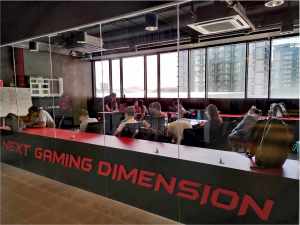
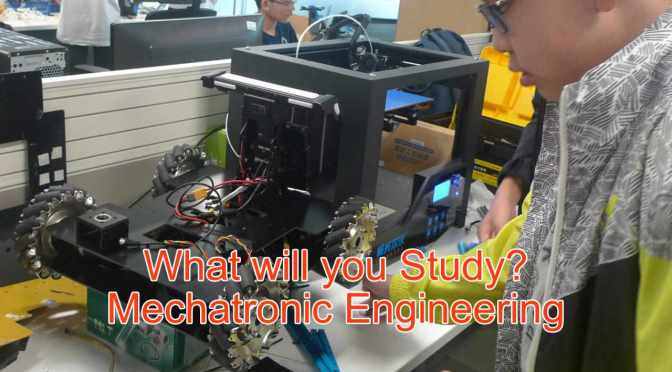













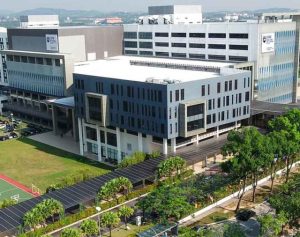






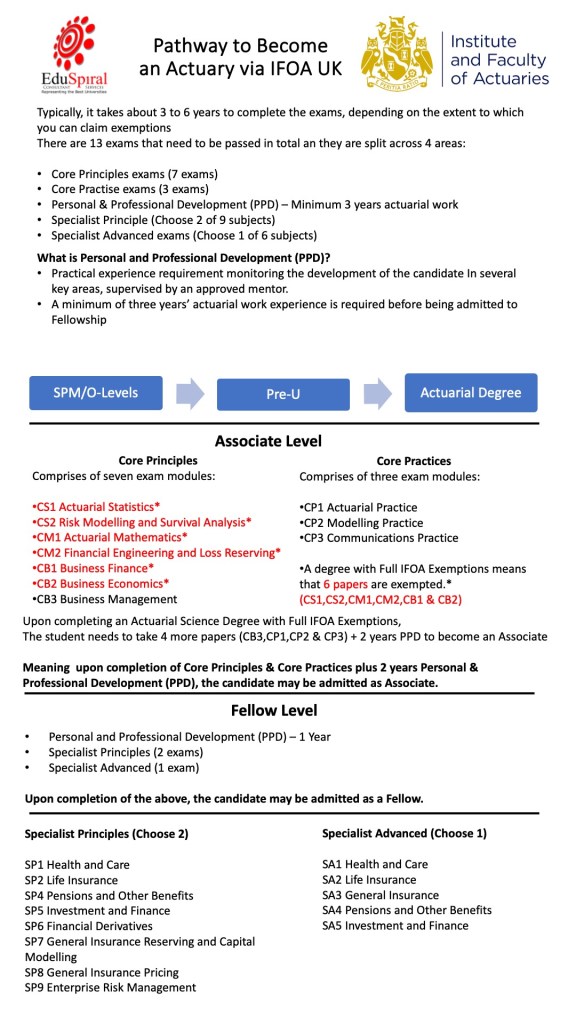






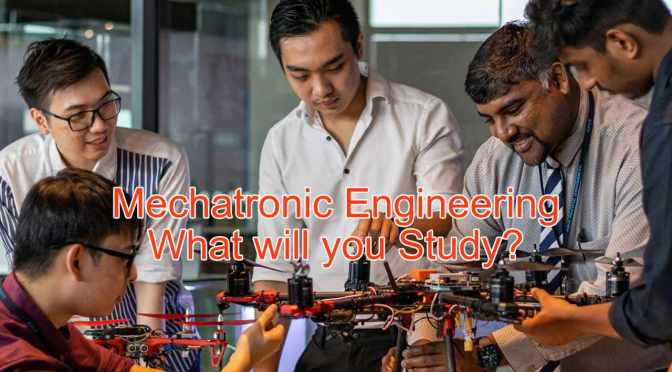


 Top Private Universities & Colleges in Malaysia