

Best Private Universities for Electrical & Electronic Engineering in Malaysia
- List of 10 Top Private Universities in Malaysia Offering the Electrical & Electronic Engineering Degree Courses Accredited by the Board of Engineers Malaysia (BEM)
- Summary of the Top Electrical & Electronic Engineering Programmes from each university
Although the terms electrical and electronics engineering often are used interchangeably in academia and industry, electrical engineers have traditionally focused on the generation and supply of power, whereas electronics engineers have worked on applications of electricity to control systems or signal processing. Malaysian students interested to study electrical & electronic engineering should look for top private university with a proven track record, highly experienced lecturers, top notch engineering labs & facilities, solid internship programme and a degree that’s accredited by the Malaysian Qualifications Agency (MQA) and the Board of Engineers Malaysia (BEM). Choosing to study at a top private universities in Malaysia for your electrical & electronic engineering education will help you to acquire the best knowledge and skills for a successful career.
Electronics engineering deals with devices and systems that use small amounts of electrical energy to analyse, transmit and store information. Transmission of these electronic signals forms the basis of communications and the information technology industry, and includes the field of microelectronics and the use of silicon chip technology. Electrical engineering is concerned with the basic forms of energy that run our world. Whether it’s gas, hydro, turbine, fuel cell, solar, geothermal, or wind energy, electrical engineers deal with distributing these energies from their sources to our homes, factories, offices, hospitals, and schools.
Read on to find out more about the Top Private Universities in Malaysia offering the Electrical & Electronic Engineering courses.
You might also be interested to read:
- Job Demand & Salary for Electrical & Electronic (E&E) Engineers in Malaysia
- Top 10 Private Universities Offering the Best Electrical & Electronic Engineering Degree Courses Accredited by the Board of Engineers Malaysia (BEM)
- An Electrical & Electronic Engineering Degree from a Top University in Malaysia will Boost Your Career!
- Why Study the Electrical & Electronics Engineering Degree Course that’s Accredited by the Board of Engineers Malaysia (BEM)
- Choose the Best Electrical & Electronic Engineering Degree Course Accredited by the Board of Engineers Malaysia (BEM)
- Best Electrical & Electronic Engineering Courses at Top Universities in Malaysia
- An Incredible Future in Studying the Electrical & Electronic Engineering Degree in Malaysia
Do you have any questions for us on this article? Or need advise on choosing the right course and private university? If so, then please fill up the Enquiry Form below. Our team of experts will help you solve your queries at the earliest via WhatsApp.


Study at the Best Private Universities in Malaysia for Electrical & Electronic Engineering that’s Accredited by the Board of Engineers Malaysia (BEM)

Chong Han, Foundation in Engineering at Taylor’s University
With thousands of graduates in Electrical and Electronic Engineering coming out each year, it is important to set yourself apart from the rest to secure a job with an excellent career. Therefore, in order to succeed as an Electrical & Electronic Engineer in Malaysia, students should choose the best private universities in Malaysia to study Electrical & Electronic Engineering so that you can gain the necessary knowledge and skills.
Students interested to pursue the Electrical & Electronic Engineering degree at private universities in Malaysia should consider a few factors when choose the university. First, the Electrical & Electronic Engineering degrees at the top private universities in Malaysia should be accredited by MQA and also the Board of Engineers Malaysia (BEM).
In addition, students need to look at the subjects offered and the learning outcomes of the engineering course offered. Not all universities have the same subjects and learning outcomes. You will need to check if they meet your academic and career goals.
What is Electrical & Electronic Engineering?

Eugene Ong, Electrical & Electronic Engineering at UCSI University
In general, electronics engineers focus on the electronic circuits which are at the heart of computer science, while electrical engineers are concerned with the large-scale transfer of electrical currents as a power source.
Electrical and Electronic Engineering is about the science and technology related to generating, distributing, storage and use of electrical energy for the benefit of mankind. It is the broadest and most dynamic of all engineering covering everything from micron-scale transistors to macro-scale network systems.
Think about how many items in your daily life we use power such as batteries, petrol motors or even solar panels. Electrical and Electronic engineers are involved in the analysis of existing systems whether electrical, electronic or computer systems and they are often involved in creating and designing new products and systems for manufacturing industries.
Electronics Engineering focuses on solid state devices and integrated circuits that enable the creation of devices such as cellular phones, miniature computers, solar powered devices, electronic controls for automotive and navigation systems in cars, home appliances, and a vast variety of other products for daily usage.
On the other hand, Electrical Engineering is a field of engineering that generally studies the designing, installation, manufacturing, maintenance and testing of electrical and electronic equipment.
Electrical engineers deal with everything related to electrical devices and systems, and the use of electricity. Electrical engineers design, develop, test and supervise the manufacture or installation of electrical equipment, such as power generating and transmission equipment, used for domestic, industry and business purposes.
Some of this equipment includes electric motors; machinery controls, lighting, and wiring in buildings; automobiles; aircraft; radar and navigation systems; and power generation, control, and transmission devices used by electric utilities.
But there is more to Electrical engineering than just that. Many advances in biomedicine were pioneered by electrical engineers, many software houses such as Microsoft employ electrical engineers and so do airplane manufacturers such as Boeing and Airbus. Most astronomical observatories employ Electrical engineers to design their telescopes, other optical instruments and do advanced signal processing.
Areas of Electrical & Electronic Engineering include:

Jun Chung, Diploma in Electrical & Electronic Engineering at Asia Pacific University
- Electronics
- Software
- Hardware
- Signal Processing
- Communications
- Computer Engineering
- Power Electronics
- Power Systems Engineering (including renewable energy)
- Nanotechnology
- Biomedical Imaging
- Embedded Systems
- Control
Their work includes the design and manufacture of electronics and electrical devices for a wide range of applications. They are also involved in consulting, the planning and operating of power systems and telecommunication networks, satellite communications, and biomedical engineering.
Electrical engineers may specialise in computer engineering, electronic engineering, lasers, power generation & transmission, biomedical engineering, integrated circuits and microwave & optic fibre communications.
Electrical engineers specialise in areas such as power systems engineering, electrical equipment manufacturing communications, signal processing, and control systems or have a specialty within one of these areas—control systems or aviation electronics.
Many electronics engineers also work in areas closely related to computers. However, engineers whose work is related exclusively to computer hardware are considered computer hardware engineers.
Sample Electrical & Electronic Degree Subjects
Example of subjects at degree level:
Circuit Theory, Digital Electronics, Analogue Electronics, Mathematical Methods for Engineers, Electromagnetic Theory, Circuit Theory & Transmission Lines, Electronic Manufacturing Industry, Engineering Software & Applications, Electrical Power, Data Communication & Networks, Microprocessor Systems, Instrumentation & Measurement,, Electrical Machines,
Electronic Circuit Design , Power Electronics, Control Systems, Power Systems, VLSI Design, Digital Signal Processing, Digital System & HDLs or Embedded System Design, Mathematical Techniques for Electrical and Electronic Engineers, Signal Processing and Control Engineering, Power Supply Electronics, Software Engineering Design, Telecommunications, Fields Waves and Antennas, etc.
Electrical & Electronic Engineering Studies in Malaysia

Mr. Yeo
E&E is a very important part of your everyday life. The study of Electrical & Electronic Engineering can involve large amounts of power such as power and control engineering, large devices like power stations and electric vehicles or small amounts of power like computers, communications and information engineering and small devices including MP3 players, iPads and cell phones.
Electronics engineering deals with devices and systems that use small amounts of electrical energy to analyse, transmit and store information. Transmission of these electronic signals forms the basis of communications and the information technology industry, and includes the field of microelectronics and the use of silicon chip technology.
Do you have a mobile phone or a computer? Wireless communication and the Internet are just a few areas electrical engineering has helped flourish, by developing better phones, more powerful computers, and high-speed modems. As we enter the 21st century, the technology that surrounds us will continue to expand and electrical engineers are leading the way.
Various systems for communication between people both nearby and on the other side of the world have been developed and are constantly being improved and refined. This communication takes place using satellite, telephone, optical fibres and computer systems.
These systems are of vital importance in everyday communication, defence, transport, civil aviation & medical equipment such as the bionic ear, pacemakers and life support systems.
Electrical engineering is concerned with the basic forms of energy that run our world. Whether it’s gas, hydro, turbine, fuel cell, solar, geothermal, or wind energy, electrical engineers deal with distributing these energies from their sources to our homes, factories, offices, hospitals, and schools.
Electrical engineering is concerned with research, design, development, manufacture, installation, operation, maintenance and management of equipment, plant and systems within the electrical, electronic, communication and computer systems areas.
These activities can apply to electricity generation, transmission, distribution, electrical installations in buildings and on industrial sites, electrical equipment manufacture, instrumentation and control systems applications in industry, communications networks, electronic plant and equipment, and also the integration and control of computer systems.
Using math and science, electrical engineers come up with economical solutions for technical problems. They use scientific advancements to meet consumer and societal needs through commercial applications. Many electrical engineers develop new products. In the process they must consider several factors from specifying precise functional requirements, to designing and testing components, to evaluating the final design for safety, reliability, cost and effectiveness.
Beyond design and development some electrical engineers work in maintenance, testing or production. They may determine the cause of malfunctions, test products for quality or supervise production in factories. At the supervisory level, electrical engineers are usually in charge of major components or entire projects. Electrical engineers use computers extensively on the job. They control efficiency, monitor quality, simulate and test system operations and produce and analyze designs. Also adding new principles to the design process is nanotechnology.
Electrical engineers design, develop, test and supervise electrical equipments manufacturing process. They may work with a variety of electrical equipment including electric motors, communications systems, lighting and wiring in buildings, radar and navigation systems, machinery controls and power generation, transmission and control devices used by electric utilities. They may also design electrical systems for automobiles and aircraft.
Electronics and electrical engineers are often confused and the term can be used interchangeably. However, electrical engineers usually focus on the generation and supply of power while electronics engineers traditionally have worked on applying electricity principles to control systems or signal processing. Specialization areas for electrical engineers include electrical equipment manufacturing and power systems engineering.
Electronics engineering is a very diverse field and it is currently undergoing expansion as new applications are found for electronic equipment. This has led to the development of two relatively new fields of engineering – software engineering and mechatronics.
- Software engineers design and modify complex software systems and computer hardware. Mechatronics Engineering combines the disciplines of mechanical and electrical engineering. It is associated with the use of digital computers to control machines and processes. It is also used to create diverse products such as substitutes for human sensors and organs and computer controlled machine tools.
- Mechatronics Engineering is a rapidly developing field and as the world becomes steadily more technologically advanced it will be of increasing importance. Electronic engineers work for companies and government departments that design, construct, and test electronic devices (including computers) or that are involved with their installation.
Engineering Degree Accreditation by Board of Engineers Accredited (BEM)
The Engineering Degrees of these universities are accredited by the Board of Engineers Malaysia (BEM) which is a signatory to the Washington Accord. This accreditation ensures that Engineering Graduates will have the following benefits in countries who are signatories of the Washington Accord:
- Opportunities to register as a Graduate Engineer with Board of Engineers Malaysia (BEM) or the relevant professional bodies in other countries who are signatories under the Washington Accord.
- Pathways to becoming a Professional or Chartered Engineer.
- Assurance that graduates are considered as having met international academic standards for engineering practice.
Career Options for Electrical & Electronic Graduates

Chong Keat, Electrical & Electronic Engineering at Heriot-Watt University Malaysia
- Appliances Engineer
- Communication Engineer
- Computer Engineer
- Construction Engineer
- Control Engineer
- Electrical and Electronics Engineer
- Instrumentation Engineer
- Mechatronic Engineer
- Medical Engineer
- Microelectronics Engineer
- Power Engineer
- Signal Processing Engineer
- Software Engineer
- Telecommunications Engineer
Top Private Universities for Electrical & Electronic Engineering

Mother of Joshua, Engineering at University of Southampton Malaysia
As a guide for students to choose the right university, you may look through the list of top private universities offering the Electrical & Electronic Engineering in Malaysia. Go through the details and please contact us for advise and to arrange for a campus tour.
- University of Southampton Malaysia (UoSM)
- Heriot-Watt University Malaysia
- University of Nottingham Malaysia
- Monash University
- Taylor’s University
- Asia Pacific University (APU)
- Multimedia University (MMU)
- UCSI University
- First City University College
- University of Wollongong (Malaysia)
#1 University of Southampton Malaysia (UoSM)
- Course: Master of Engineering in Electrical and Electronic Engineering
- Intakes: September
- Accreditation: Institution of Engineering and Technology on behalf of the Engineering Council and Malaysian Qualifications Agency (MQA)
- Overseas Transfer Options: University of Southampton, UK

At the University of Southampton Malaysia , you will gain a broad spectrum of knowledge and skills required to work in the technology sector, but also the wider range of competencies needed by today’s professional engineer. They are ranked Top 3 in the UK for Electrical & Electronic Engineering by Guardian
This breadth of knowledge is developed using a systematic approach to most subjects – blending the core technical syllabus with ongoing design exercises that run throughout the programme. You will use some of the most advanced teaching facilities in the world, you will put the theory you have learned in lectures into practice and deliver real results.
Engineering students have access to world-class facilities including the Testing and Structures Research Laboratory and wind-tunnel complex. Only elite students may enter into the UK Top 3 ranked MEng Electrical and Electronic Engineering at University of Southampton Malaysia. Companies that offer placements for UoSM students include Dyson, Intel, Tektronix, JP Morgan, Rolls-Royce and LafargeHolcim.
By dividing their studies between the University of Southampton’s Malaysia and UK campuses, undergraduate engineering students will spend only around 40% of the price a student would pay pursuing their degree entirely in the UK. The split program also allows students to experience life abroad, further their academic pursuits and make invaluable international connections at a distinctively lower price than would otherwise be required.
To allow students to gain the skills they need to excel in their chosen fields, the University of Southampton has invested in trailblazing technology and facilities. The UK campus boasts a world-class wind tunnel complex, a high-voltage laboratory, and even a streamlined flight simulator for aeronautic students (developed in collaboration with the team behind the Microsoft Flight Simulator games). State-of-the-art cleanrooms, as well as science and computer labs are also available.
#2 Heriot-Watt University Malaysia
- Course: MEng (Hons) Electrical & Electronic Engineering
- Intakes: January & September
- Accreditation: Institution of Engineering and Technology on behalf of the Engineering Council, Board of Engineers Malaysia (BEM) and Malaysian Qualifications Agency (MQA)
- Overseas Transfer Options: Heriot-Watt University, UK

Students can now obtain a top ranked UK university Electrical and Electronic Engineering degree in Malaysia fromHeriot-Watt University Malaysia. Heriot-Watt University Malaysia is the best university of choice to study Electrical and Electronic Engineering in Malaysia with its excellent academics, top notch facilities, strategic location, and student experience. The new state-of-the-art campus at Putrajaya is set to produce top engineers in the coming years.
Students after SPM and IGCSE/O-Levels can enter the Foundation in Science at Heriot-Watt University Malaysia before continuing into the top rated electrical & electronic engineering degree programme. BEng students who meet the progression requirements for the MEng programme may transfer programmes at the end of the second year.
The BEng and MEng degrees provide a broad education as well as an appropriate measure of specialisation in Advanced Electronic, Electrical and Computer Systems. Graduates enjoy excellent employment prospects throughout industry, financial organisations, government and the professions and are well qualified to join research teams.
#3 University of Nottingham Malaysia
- Course: MEng (Hons) Electrical & Electronic Engineering
- Intakes: September
- Accreditation: Institution of Engineering and Technology on behalf of the Engineering Council, of Engineers Malaysia (BEM) and Malaysian Qualifications Agency (MQA)
A Nottingham degree has a high reputation within the electrical and electronic engineering industry, opening up a world of opportunity and prospects. Their programmes will equip you with a variety of skills that allow for adaptation and improvisation in the fast changing world of technology.
Nottingham’s MEng (Hons) Electrical & Electronic Engineering degree offers you the chance to study a range of topics while still allowing you to specialise in the later years of the programme. Topics include communications, computer modelling, electrical machines, electronic design, instrumentation, microelectronics, power generation and distribution, signal processing, software engineering and finally renewable energy systems. The variety of modules taught throughout the course makes this a truly multidisciplinary degree.
#4 Monash University Malaysia
- Course: Bachelor of Electrical and Computer Systems Engineering
- Intakes: February, July and October
- Accreditation: Engineers Australia, Engineering Accreditation Council Malaysia, and Malaysian Qualifications Agency (MQA)
- Overseas Transfer Options: Monash Australia

The Bachelor of Electrical and Computer Systems Engineering (Honours) covers a diverse range of fields, including biomedical, computer systems, electronics, electrical power engineering, robotics and telecommunications.
It is a field that evolves rapidly, with new technologies and techniques being patented every day. It spans all scales of electrical and electronic engineering, from the fundamentals of circuits, electronic signals and signal processing, through to digital electronics and chip-based systems, to the design of large-scale power and telecommunication systems.
Professionals in the electrical and electronics engineering field are constantly striving to innovate and push the boundaries of current technologies. This is evidenced by the countless patents filed each year, which cover everything from novel materials and components to cutting-edge systems and applications.
As an electrical and computer systems engineer, you might design products such as smartphones, virtual reality systems or video games, or maybe robotic medical devices to assist in surgery and rehabilitation.
#5 Taylor’s University
- Course: Bachelor of Electrical and Electronic Engineering (Honours)
- Intakes: February, April and September
- Accreditation: Board of Engineers Malaysia (BEM) and Malaysian Qualifications Agency (MQA)
- Overseas Transfer Options: United Kingdom (UK) and Australia

Taylor’s School of Engineering is the first in Southeast Asia to adopt the CDIO™ Initiative and register with the Grand Challenge Scholars Program (GSCP), enabling us to apply these approaches to create engineers who are able to meet the real-world demands of their profession and provide solutions for the betterment of humankind.
Through project-based learning, we encourage our engineering school students to explore their passion in their chosen areas of specialisation and work on actual projects that are in line with the Grand Challenges throughout their duration of study in the engineering programmes.
Throughout the Bachelor of Electrical and Electronic Engineering programme, you will gain a comprehensive understanding of electrical and electronic engineering principles. Their curriculum emphasizes hands-on learning experiences, enabling you to apply theoretical knowledge to real-world scenarios.
At Taylor’s University, they take pride in our experienced faculty who are passionate about your success. They are dedicated to providing a supportive and engaging learning environment, where you can ask questions, collaborate with your peers, and develop practical skills that are highly sought after in the industry.
#6 Asia Pacific University (APU)
- Course: Bachelor of Electrical and Electronic Engineering with Honours
- Intakes: February, April, July, September & November
- Accreditation: Board of Engineers Malaysia (BEM) and Malaysian Qualifications Agency (MQA)
- Overseas Transfer Options: United Kingdom (UK) and Australia

Top ranked Asia Pacific University (APU) offers the B. Eng (Hons) in Electrical & Electronic Engineering that’s accredited by the Board of Engineers Malaysia (BEM) and Malaysian Qualifications Agency (MQA). The engineering programmes offered by the School of Engineering at Asia Pacific University (APU) are current in terms of technology and are market driven, thus having great employment opportunities. They provide an education based on a theoretical, experimental and ethical foundation enhanced by opportunities for participation in research, internships and interdisciplinary programme.
Students after SPM or IGCSE/O-Levels may go for the Foundation in Engineering at Asia Pacific University for 1 year before continuing on to the 4-year Electrical & Electronic Engineering degree. With 3 credits in SPM or O-Levels including Maths & Science, students may go for the 2-year Diploma in Mechatronic Engineering and then enter into Year 2 of the Engineering degree at Asia Pacific University. The Bachelor of Electrical and Electronic Engineering with Honours programme at Asia Pacific University (APU) is specifically designed to provide students with:
- High-quality undergraduate engineering education by providing students with a curriculum that is firmly grounded in electrical & electronic engineering fundamentals.
- A study in both the areas of electronics fundamentals as well as electrical power systems including the areas of generation, transmission and distribution of electrical energy
In APU, employment and it’s continual sustainability is of paramount importance to us. The range of minor and extensions offered to all students within the School of Engineering will craft a formidable way forward for the young aspiring engineers of tomorrow. These options allow students to embark on a journey of exploration either within the engineering fraternity by extending into greater depth (extensions) niche knowledge, skills and attributes required for the practice of contemporary engineering or explore wider options (minor) that are pivotal in the fundamental proliferation of the engineering profession as a while when coupled with other current multidisciplinary fields of expertise. Successful completion of either pathways future proof the students allowing them to embark on a journey of rewarding careers within an engineering discipline of their choice.
Minor Pathway – Gain breadth of knowledge by taking 3 set modules outside of a particular major field of study. There are minor packages available undertaken from Year 3 Semester 2 Year 4 Semester 1 and Year 4 Semester 2.
| MINOR PATHWAY | ||||
| NAME OF MINOR | Year 3 Semester 2 | Year 4 Semester 1 | Year 4 Semester 2 | |
| loT | Knowledge Discovery and Big Data Analytics | Internet of Things: Concepts and Applications | Emergent Technology | |
| FinTech | FinTech Governance, Risk Management & Compliance | Digital Finance | Robo Advisor | |
| Digital Transformation | Digital Execution | Digital Strategy & Analytics | Emergent Technology | |
| Data Analytics | Knowledge Discovery and Big Data Analytics | Behavioral Science and Marketing Analytics | Optimization & Deep Learning | |
| Artificial Intelligence | Machine Vision Intelligence (MVI) | Text Analysis & Sentiment Analysis | Emergent Technology | |
| Digital Age Psychology | Industrial & Organizational Psychology | Cyberpsychology | Human Factors Psychology | |
Extension Pathway – Expand depth of knowledge by taking three (3) set modules in a specific area within a certain field of study. There are extensions available undertaken from Year 3 Semester 2, Year 4 Semester 1 and Year 4 Semester 2.
| EXTENSION PATHWAY | ||||
| NAME OF EXTENSION | Year 3 Semester 2 | Year 4 Semester 1 | Year 4 Semester 2 | |
| Smart Drones | Robotic Technology | Robot Operating Systems | Drone Technology | |
| Smart Manufacturing | Robotic Technology | Robot Operating Systems | Product Creation Technology | |
| Drilling Technology | Drilling Fluids & Hydraulics | Directional Drilling & Surveying | Well Control | |
| Intelligent Design and Manufacturing Technologies | Machine Vision Intelligence | CAD/CAM | Product Creation Technology | |
| Oil and Gas Operations | Gas Engineering | Petroleum Economics | Drilling Fluids & Hydraulics | |
#7 Multimedia University (MMU)
- Course:B.Eng (Hons) Electrical Engineering or B.Eng (Hons) Electronic Engineering
- Intakes: July & October
- Accreditation: Board of Engineers Malaysia (BEM) and Malaysian Qualifications Agency (MQA)
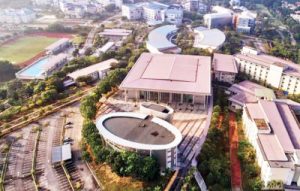
Multimedia University (MMU) is the first private university in Malaysia and is ranked top in the world having won many awards and accolades. Established in 1996, MMU has more than 15,000 students, and the engineering programmes are offered at its well equipped campuses in Cyberjaya and Melaka.
The B.Eng. (Hons) Electrical programme at Multimedia University (MMU) Cyberjaya is a four-year engineering course that prepares students with a broad foundation in a discipline that deals with the generation, transmission, and distribution of electricity. Additionally, electrical engineers are also responsible for the design of related devices such as transformers, generators, power electronics and electric motors.
During the four years of this major, students will develop expertise in electrical circuits and electromagnetic, with focus on power generation, transmission and distribution, as well as the latest technologies in renewable energy. Building a good foundation in engineering mathematics is also emphasized in the programme to better prepare the students for future professional engineering careers.
Students after SPM or IGCSE/O-Levels may go for the Foundation in Engineering or Diploma in Electronic Engineering before pursuing the Degree programme. Furthermore, students may apply for PTPTN Loan for the Foundation in Engineering and Degree courses at MMU.
Multimedia University (MMU) offers various electrical engineering and electronic engineering degree programmes at both its campuses.
- BEng (Hons) Electrical (Cyberjaya)
- BEng (Hons) Electronics (Cyberjaya)
- BEng (Hons) Electronics majoring in Computer (Cyberjaya)
- BEng (Hons) Electronics majoring in Optical Engineering (Cyberjaya)
- BEng (Hons) Electronics majoring in Telecommunications (Cyberjaya)
- BEng (Hons) Electronics majoring in Nanotechnology (Cyberjaya)
- BEng (Hons) Electronics majoring in Robotics and Automation (Melaka)
- BEng (Hons) Electronics majoring in Telecommunications (Melaka)
#8 UCSI University
- Course: Bachelor of Electrical and Electronic Engineering with Honours
- Intakes: January, May and September
- Accreditation: Board of Engineers Malaysia (BEM) and Malaysian Qualifications Agency (MQA)
- Overseas Transfer Options: United Kingdom (UK) and Australia

UCSI University is a vibrant community of learning and scholarship. At present, more than 12,000 students study at the University. Over the years, students from 120 different countries have studied here, making the campus a melting pot of culture and diversity. As one of Malaysia’s first private universities, UCSI University has long impacted the national higher education landscape and the University continues to do so with over 150 undergraduate and postgraduate programmes.
The University’s academic staff are at the forefront of their disciplines and their views are highly sought after on major issues; from business to political science. Many of our academics have extensive experience working overseas and some play advisory roles in public bodies and various committees. By bringing their experiences into the classroom, our academics cater to an exhilarating learning environment and learners will thrive as they balance academic mastery with industrial application.
UCSI University offers the Bachelor of Electrical and Electronic Engineering with Honours. Electrical and Electronics Engineering is one of the broadest engineering disciplines and this programme will cover multiple subject areas like analogue electronics, microelectronic chip design, digital signal processing, power generation, protection and distribution, C++ programming, instrumentation and measurements control, renewable energy systems, and more. Students will also have the chance to learn MATLAB, PSPICE and LABVIEW which are used to run simulations in projects and research.
#9 First City University College
- Course: Bachelor of Electronic Engineering with Honours
- Intakes: July & October
- Accreditation: Board of Engineers Malaysia (BEM) and Malaysian Qualifications Agency (MQA)

The Bachelor of Electronic Engineering with Honours programme at First City University College programme equips students with a broad range of knowledge and technical skills that are required for an electronic engineering career. The strength of the programme is in the broad areas of digital and analogue electronics, communication systems, instrumentation and control, and circuits and signals.
The Bachelor of Electronic Engineering with Honours degree is recognized by the Board of Engineers Malaysia (BEM). The programme fulfills the broad areas requirement for electronic discipline. The broad areas include circuits and signals, electromagnetic fields and waves, instrumentation and control, digital and analogue electronics, microprocessor systems, programming techniques, introduction to electrical power system, computer architecture, communication systems, electronic system analysis and design, digital signal processing and application, mathematical applications, statistical and numerical techniques, and computer applications. Courses related to management and communication, and general studies are offered, for exposure to engineering practice and general knowledge, to be an all-rounded individual.
Emphasis is placed on analytical and complex problem-solving skills, teamwork and project management skills driven by project-based learning; thus, preparing graduates for the Internet of Things and Industry 4.0. Students use Siemens Electronic Design Automation (EDA) tools, an industrial standard software, for microchips and integrated circuit design. Students will undergo internships where they will gain hands-on experience.
The Programme objectives are to:
- Equip graduates with technical knowledge and skills in the field of electronic engineering.
- Produce engineers who adhere to social, ethical and professional practices.
- Empower graduates with the ability to provide innovative and creative engineering solutions.
- Produce graduates who can work globally and engage in research and life-long learning.
#10 University of Wollongong Malaysia
- Course: Bachelor of Electronic Engineering with Honours
- Intakes: July & October
- Accreditation: Board of Engineers Malaysia (BEM) and Malaysian Qualifications Agency (MQA)
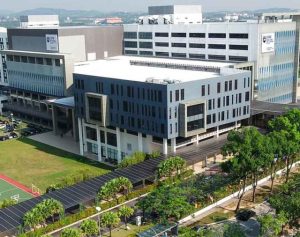
The Bachelor of Electrical and Electronics Engineering With Honours degree program at UOW Malaysia ensures that the students have a strong foundation in mathematics, physics and chemistry. Throughout the program, E&E students learn about things such as circuit theory, digital and analogue electronics, data and computer networking, communication systems, and digital signal processing.
The program also helps students to develop interpersonal skills, as well as written and verbal communication skills, all of which are very important when collaborating with other engineers, teams or companies.
Students after SPM or IGCSE/O-Levels who desire a career as an engineer in Malaysia can join the Foundation in Engineering at University of Wollongong (Malaysia) KDU, University College Utropolis Glenmarie before continuing on to the 4-year Bachelor of Engineering (Hons) Electrical & Electronic Engineering.
Electrical & Electronic Engineering Degree students are given a choice of 3 majors to choose from in their fourth year
- Electrical Power and Renewable Energy
Focuses on harnessing green energy and developing the latest smart-grid technology - Electronic Engineering
Emphasises on advanced digital system design and embedded systems - Communication Engineering
Focuses on radio frequency and optical communication
The Bachelor of Electrical and Electronics Engineering With Honours degree program at UOW Malaysia is fully accredited by the Board of Engineers Malaysia (BEM) . In addition, the Engineering programmes at UOW Malaysia are designed to prepare graduates with everything necessary to face the new industrial economy around the globe.
With high quality programmes that adhere to the strict standards set by the Board of Engineers (BEM) Malaysia, students can expect a curriculum that is design-centric and trains them to hone their complex problem-solving skills.
Students will also experience valuable hands-on experience by participating in real-world projects, and have the opportunity to become a research assistant at an undergraduate level through our undergraduate research scheme.
With the goal of ensuring a holistic learning experience, UOWM’s programme allows you to cultivate the skills, knowledge, and the ability to develop engineering applications which are required for a wide range of professional engineering careers and expected of leaders in business, engineering, industry and even in R & D.
If you are keen on green energy and the latest smart-grid technology, and envision a career with power utility companies, then you may major in Electrical Power and Renewable Energy in your fourth year.
If your interest lies in advanced digital system design and embedded systems, and if you seek employment with companies like INTEL, Altera and Motorola, opt for Electronic Engineering. Communication Engineering would be your ideal major which focuses on radio frequency and optical communication.
 Top Private Universities & Colleges in Malaysia