UOW Malaysia offers a Top Rate Game Development Programme
UOW Malaysia has always been recognized as one of the premier Game Development Institutes in Malaysia and is the forerunner for producing the best graduates in this field. As one of the earliest private educational institutions in Malaysia, the university not only pride themselves with delivering quality education, they are also championing the nation’s digital content initiative in Game Development.
As they continue to grow and evolve, UOW Malaysia has now taken the role as one of the primary movers in the space of Game Development for both education and industry collaborations. The UOW Malaysia Bachelor of Game Development Program is one of the biggest talent suppliers to the industry at the moment.
UOWM lecturers are actively involved in the industry and are experts in their respective fields. In this unique Bachelor of Game Development (Hons) programme, students are given the opportunity to specialise in one of three game development disciplines. For those who have a keen eye for visual aesthetics and 3D Modelling, consider being a game artist. Students who enjoy analysing, writing stories and crafting experiences, can opt to be game designers. For those who love mathematics, problem-solving and going through lines of codes, they can make game technology their preferred specialisation.
UOW Malaysia is offering the Bachelor of Game Development (Hons) and Foundation Studies (Art and Technology) programmes. The Bachelor’s degree programme allows students the option to specialise in any one of the three discipline tracks in Game Development — Game Art, Game Design and Game Technology. The school is pioneering the concept of ‘technological artistry’ in Malaysia, an approach to incorporate creativity into technology in order to produce graduates who will be the bridge between the two fields.
GAME ART handles the visual components of games. Game Artists have to learn how to create 3D and 2D art assets for various types of games ranging from simple pixel-based graphics to hyper-realistic graphics for total player immersion.
GAME DESIGN handles the gameplay, mechanics, level and world design as well as storytelling/narrative of electronic games. Game Designers have to learn how games function to construct experiences, including play mechanics, game balancing, social game interaction and the integration of visual, audio, tactile and textual elements into the total game experience.
GAME TECHNOLOGY focuses on the technical aspects of Games such as physics engines, graphics engine, artificial intelligence and networking. Game Programmers have to learn the optimisation of mainstream algorithms such as path-finding and sorting, and real-time 3D rendering for a ground-up games engine or modification of an existing engine.
What will I study in Game Development at UOW Malaysia?
UOW Malaysia Game Technology students
The Bachelor of Game Development syllabus at UOW Malaysia is a direct result of in-depth analysis and collaborations with industry partners and game development pioneers to ensure our graduates are not only employable but desirable talents that can integrate seamlessly into the industry. The syllabus evolves to stay relevant to current industry needs, trends and practices.
The Game Development degree program at UOW Malaysia is endorsed by a major UK-based game development studio and stalwarts in the local industry. The program’s streamlined syllabus and industry insights produces sought-after talents, drawing many a studio to headhunt and handpick talents before they even graduate. With three specialised streams to choose from, our program is one of the most comprehensive Game Development programs out there.
Bachelor of Game Development Program is also endorsed by Codemasters Studios. The collaboration entails the adoption of industry benchmarking and standards for curriculum and assessment methods in the program delivery. Codemasters is one of Britain’s oldest video game development companies and is considered Europe’s largest independent games company with nearly 700 employees in the UK alone. The Bachelor of Game Development Program is also one of the first programs outside North America and Europe to be an Unreal Academic Partner. The Unreal Academic Partner Program recognizes universities and schools that have committed to providing high-quality educational opportunities with an experienced faculty, proven curricula, sufficient facilities, and resources to meet the demands of the global game development industry.
3 Areas of Specialisations in Game Development at UOW Malaysia
The Bachelor of Game Development (Honours) program at UOW Malaysia is specially crafted and development by industry professionals and pioneers. Students will choose from 3 specialisations
The Bachelor of Game Development (Honours) program is specially crafted and development by industry professionals and pioneers. Students entering this program are presented with the opportunity to specialize in three distinct areas:
GAME ART handles the visual components of games. Game Artists have to learn how to create 3D and 2D art assets for various types of games ranging from simple pixel-based graphics to hyper-realistic graphics for total player immersion.
Art has come a long way from the first video games with little pixels to represents character or objects to today’s showcase of high-end visually stunning graphics. Game Artists today are a specialized breed of talents with not only an eye for visual aesthetics but also a strong degree of technical knowledge. Nowadays many games rely on hyper realistic graphics to pull players into an immersive and engaging world of digital games. Game Artist have to be good in their observation skills, have a sense of aesthetics and have a keen mind to explore the known world. if you enjoy drawing, reading comics, watching anime, appreciate art in various forms or medium; then the path of a Game Artist is indeed for you.
GAME DESIGN handles the gameplay, mechanics, level and world design as well as storytelling/narrative of electronic games. Game Designers have to learn how games function to construct experiences, including play mechanics, game balancing, social game interaction and the integration of visual, audio, tactile and textual elements into the total game experience.
Game Design is the art of crafting experiences. It is often the first step in making a game, but a game designer’s job doesn’t stop by just thinking of ideas. Game Design covers the gameplay mechanics, level design, narrative, documentation and interactions within a game. Game Designers also needs to know a little bit of marketing and business in order to monetize their games. There is no shortage of ideas for cool games, but ideas are free. Game Designers are tasked with taking that idea and turning it into something tangible and commercial. Game Designers have to be creative yet analytical, observant yet curious. They need to be able to propose a theory and put that theory to the test through rigorous playtesting and perform quality checks before the product is ready to be shipped.
If you love reading, have a creative mind and are interested in crafting worlds and experiences, then maybe Game Design is the path for you.
GAME TECHNOLOGY focuses on the technical aspects of Games such as physics engines, graphics engine, artificial intelligence and networking.
Game Programmers have to learn the optimisation of mainstream algorithms such as path finding and sorting, and real-time 3D rendering for a ground-up games engine or modification of an existing engine. Behind every game, behind those dazzling special effects, the intriguing dialogues, or even the enjoyable game-play system, they are bound together by strict and complex lines of codes. These codes govern how the game functions, when certain sounds are meant to happen and more importantly, help makes the game play smoothly.
Students will explore new technologies like 3D graphics, animation, game mechanics, user interface designing for games, gaming software development, the use of Artificial Intelligence (AI) and interactive design.
What are the Subjects that you will Study in the Bachelor of Game Development (Hons) Programme at UOW Malaysia?
Year 1
Oral Communication
Fundamentals of Game Design
Fundamentals of Game Technology
Fundamentals of Game Development
Fundamentals of Game Art
Professional Development and Leadership Skills
Specialisation (4 Subjects)
Year 2
Game Project Studio 1
Game Project Studio 2
Human Computer Interaction for Games
Game Business & Marketing
Research Methodology
Specialisation (6 Subjects)
Year 3
Final Year Project 1
Final Year Project 2
Internship
Electives (4 Subjects)
Specializations
Game Art
University of Wollongong Malaysia (UOWM) KDU Game Design Development students
Digital Drawing
Digital Imaging
Animation Principles
Introduction to 3D Modeling
3D Game Modelling and Texturing 1
3D Game Modelling and Texturing 2
3D Game Animation 1
3D Game Animation 2
3D Game Art Development
Advance 3D Game Art
Game Design
Game Genre Studies 1
Game Systems Analysis and Design
Game Level Design
Game Social and Culture Studies
Game World Creation
Games Narrative
Multiplayer Game Design
Game Genre Studies 2
Game QA and Testing
Game Support Documentation and Review
Game Technology
Fundamentals of Programming
Logic, Math & Physics for Games
Data Structures & Algorithms
Object Oriented Programming
Game Programming
Graphics Programming
Mobile Game Development
Object Oriented System Analysis and Design
3D Game Programming
Data Communication & Networking
ELECTIVES
Digital Audio for Games
Concept Art for Games
2D Game Art Development
Artificial Intelligence for Games
Game Engine Architecture and Design
Integrated Game Commercialisation Project 1
Integrated Game Commercialisation Project 2
Presentation Skills
Motion Graphic Design
Highly Experienced Game Development Lecturers
Qualified Industry Experts teach the Game Development Degree at UOW Malaysia
To study games, you must learn from people who produced games. All of UOW Malaysia’s game development lecturers have worked or are still actively involved in the video game industry; and are experts at their respective fields. Learning from their insights and industry-experience would greatly enhance your learning experience. The lecturers include a healthy mix of full-time and part-time staff, some of whom are currently CEOs and CTOs of their respective game studios but have dedicated their time to ensure that the degree program is of the highest standards. Our teaching staff includes people who has worked on games on the PS3 such as SEGA ALL STARS Racing and Afro Samurai; Stormriders Online (one of Malaysia’s first MMO); concept artist for Dark Souls; one of the founding members of the Women-in-Games Malaysia (WIGout); the founding chairman of the Game Development Association of Malaysia and many more.
Our students have or are working in the following studios:
CD PROJECT RED, POLAND
CODEMASTERS STUDIOS MALAYSIA (INTERNATIONAL STUDIO)
PLAYSTATION STUDIOS MALAYSIA (INTERNATIONAL STUDIO)
DOUBLE ELEVEN MALAYSIA (INTERNATIONAL STUDIO)
STREAMLINE STUDIOS (INTERNATIONAL STUDIO)
LARIAN STUDIOS MALAYSIA (INTERNATIONAL STUDIO)
NAMCO BANDAI STUDIOS MALAYSIA (INTERNATIONAL STUDIO)
VIRTUOS STUDIOS (INTERNATIONAL STUDIO)
PASSION REPUBLIC
LEMONSKY GAMES
METRONOMIK GAMES
KAIGAN GAMES
APPXPLORE
FORUST
MAGNUS GAMES STUDIO
And many more.
Game Lab at UOW Malaysia
Game Lab at UOW Malaysia
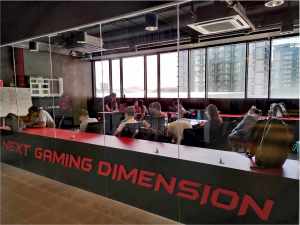
This is where Game Development students will be spending most of their time at.
Equipped with powerful equipment necessary for your education, the Game Lab in UOW Malaysia has everything that you’ll need to play the latest and greatest titles on the market currently. Of course, playing won’t be everything you’ll do in this lab. You’ll be developing games from the ground up.
The Game Lab offers 11 units of Alienware Aurora gaming desktop systems. In a room found next to this, is the Game Console Area, where there’s Sony PlayStation 3, one Special Edition Gears of War themed Xbox 360, and a Nintendo Wii.
What are the career options of a Game Developer?
The video game industry is a multi-billion dollar industry with many game development career options to choose from, both on the highly technical and creative sides of the field. If you have the commitment, skills and drive to immerse yourself in the world of video games, the possibilities are endless. The image shows some of the career possibilities in this fast-growing sector.
Studying the Mechatronic Engineering Degree Course
BEng (Hons) Mechatronics Engineering students will use analytical and scientific knowledge to design, optimise and manage integrated electronics, controls, computers, and moving parts.
Students will hone their problem-solving skills by crafting practical solutions tailored to real-world industrial needs.
The BEng (Hons) Mechatronics Engineering is a full-time 4-year degree at Malaysia’s private universities that should be accredited by the Board of Engineers Malaysia (BEM) and the Malaysian Qualifications Agency (MQA).
Mechatronic Engineering is the combination of Mechanical, Electronic and Electrical Engineering, robotics and computing for the design, manufacture and maintenance of systems that use microprocessors and actuators to control mechanical processes. The key element is the integration of these different areas into the design process from start to finish. Mechatronics engineers understand how to do this and enable the intelligent operation of mechanical systems. It also involves installing, operating and modifying mechanical and electronic equipment and in areas like manufacturing, aviation, robotics and defense. A Mechatronic Engineer designs smart machines that are aware of their surroundings and can make decisions. It is a new branch of the engineering field with very good job prospects. Mechatronic engineers are at the leading edge of the development of new products, devices and processes. The growing complexity of electro-mechanical systems has led to a need for engineers with this skill set, therefore graduates will have excellent job prospects.
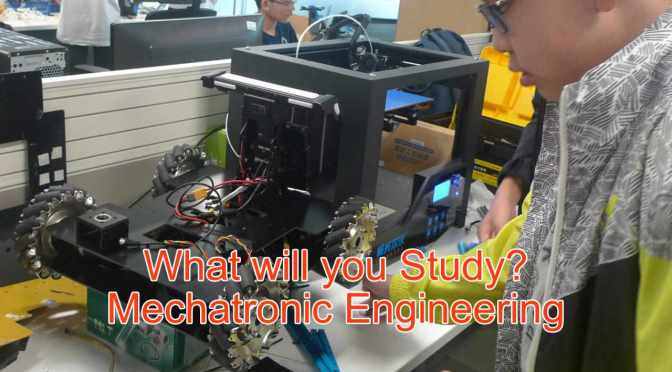
In the Mechatronic Engineering course, students will learn Engineering principles at different levels which are enhanced by exposure to practical sessions supported by hands-on laboratory work and design projects. The 4-year degree programme will cover various key topics, including mechanics, electronics, computer science, control theory, and signal processing.Students will learn how mechatronics systems work from design to build. You will hone your skills in systems design, development, and optimisation by working on a variety of projects and be given the tools to build something on your own from start to finish. By the end of the course, students should be able to design and manufacture products efficiently. You will also acquire project management and commercial skills that will make you a well-rounded, engineer career-ready for the engineering industry and beyond.
Please fill up the Form below and I will WhatsApp you and provide you with sound advise on how to choose the best private university or college in Malaysia to study at. Our knowledgeable & experienced counselor will send you a message on WhatsApp & provide assistance from there.
What will you Study in a Mechatronic Engineering Degree Programme at Private Universities in Malaysia that’s Accredited by the Board of Engineers Malaysia (BEM)?
I met EduSpiral and he helped me to filter all the information from the universities and choose the best university that fit me. Vincent Hoy, Graduated from Mechatronic Engineering at Asia Pacific University (APU)
Students who are active, creative, like machines and robots and are good in subjects like Add Maths and Physics can consider the degree in Mechatronics Engineering. Mechatronic Engineering is the study of basic engineering sciences and fundamentals of mechanical, electrical, electonics and computing engineering. Students will be to integrate these four diverse fields. The technical skills to design, analyse and test “intelligent” products or processes that incorporate suitable controller, sensor and mechatronic devices for robotics and automation.
A Bachelor of Engineering (BEng) in Mechatronics Engineering is a four-year undergraduate mechatronics degree combining mechanical, electrical, and software engineering to design and develop intelligent systems that integrate sensors, actuators, and control algorithms.
The curriculum for a BEng Mechatronics Engineering programme at Malaysia’s private universities typically includes courses such as mechanics, electronics, computer science, control theory, and signal processing. Students may also have the opportunity to gain practical experience through lab work and design projects, as well as participate in industrial placements or internships.
In the Mechatronic Engineering course, students will learn Engineering principles at different levels which are enhanced by exposure to practical sessions supported by hands-on laboratory work. This is undertaken in the fully-equipped laboratories for Analogue and Digital Electronics, Communication Engineering, Power System, Robotics, PLC Controls, Pneumatics and Automation, Mechanical Equipment, Mechanical Workshop and as well as Materials and Testing Laboratories.
In order to enable students to learn and understand the latest high-tech engineering design and simulation techniques, software such as Matlab, Labview, Multisim and Autodesk Inventor.
What are the Mechatronic Engineering Programme General Objectives and Outcomes?
My mom contacted EduSpiral to ask his advise with regard to my results & where to study. He met us at the university to guide us and even obtained a partial scholarship for me. Ignatius, Mechatronic Engineering at Asia Pacific University (APU)
Mechatronic Engineering is concerned with the creation, design and building of intelligent machines. This new breed of engineer has to master skills in mechanical, electronic and computer engineering and work in a hybrid manner, meeting an ever-increasing need in industry where complexity of projects is rising and resources are limited. The main areas of activity are:
Fundamental design and build – ways of embedding intelligence and interfacing to the real world
Process control – plant condition monitoring and control
Advance robotics and intelligent Machines
Image Processing and collision avoidance
Industrial system such as CIM system, CAD/CAM system
Design and develop a Mechatronics system
Upon completion of their Mechatronic Engineering degree programme at a private university in Malaysia, students should have attained the following outcomes:
Ability to gain and apply basic principles of Mathematics, Science and Engineering.
Ability to identify engineering problems and apply basic engineering principles to solve them.
Ability to recognize and apply suitable tools and techniques for engineering practical applications.
Ability to investigate complex engineering problems using research techniques.
Ability to design solutions for complex engineering problems.
Ability to communicate effectively and professionally.
Ability to comprehend and demonstrate current good practices of engineering for sustainable development.
Ability to practice safety, health, social, cultural, legal and environmental responsibilities as an engineer.
Ability to execute the responsibilities of an Engineer professionally and ethically.
Ability to function effectively as an individual or in a team.
Ability to recognize the need for, and be able to engage in independent and life-long learning.
Ability to demonstrate and apply the knowledge and understanding of engineering management principles.
How long is the Duration of a Mechatronic Engineering Degree Programme at Malaysia’s Private Universities?
My friend introduced me to EduSpiral. He gave me all the information on Facebook & then met us at the Education Fair to guide us on how to choose the right university Lyngkaran, Engineering at Taylor’s University
The duration of the Mechatronic Engineering Programme at Malaysia’s private universities is 4 years in order to meet the requirements of the Board of Engineers Malaysia (BEM).
In each year there are two long-semesters consisting of 14 weeks of instruction with 2 weeks of examinations, and one short-semester consisting of 7 weeks of instruction with 1 week of examinations.
Students will also undergo industrial training or internship for a minimum of 12 weeks (to meet BEM requirements) to learn and to familiarize themselves with real life working environment. In addition, students also undertake a research and development project in their final year.
The number of contact hours per course per week depends on the credit and teaching methodology of each course. Each credit is approximately equivalent to 1 hour of class, or 2 hours of labs per week.
What will you study in Mechatronics Engineering?
I loved motorsports and EduSpiral gave me great advise to help guide me to achieve my dream. Justin Moo, Mechanical Engineering graduate from Taylor’s University
Mechatronics students will find a full project application with hardware and software a piece of cake, but will not be able to give in-depth analysis of the mechanical dynamics/software structure unless they specifically work towards it.
Mechatronic students take courses from across the various fields listed below:
Mechanical engineering and materials science subjects
Electronic engineering subjects
Computer engineering subjects
Computer science subjects
Systems and control engineering subjects
Optomechanics (optical engineering) subjects
Robotics subjects
Example of subjects at degree level: Electrical Circuits, Computer Programming, Control Systems, Thermodynamics, Kinematics and Dynamics of Machines, Microcomputer Systems and Interfacing, Actuators and Sensors, Digital Control Systems, Robotics and Automation, Mechanical Systems, Microprocessor Systems, Stress Analysis & Design, Instrumentation & Measurements, Electrical Power & Machines, Fluid Power & Drives, etc
What are some of the Subjects that you will Study in a Mechatronic Engineering Degree Programme at a Private University in Malaysia?
EduSpiral took me on a campus tour & gave in-depth information to help me decide. Eugene Ong, Electrical & Electronic Engineering Graduate
Circuit Theory
Digital Electronics
Technical Communication
Mathematical Methods For Engineers
Engineering Graphics & Design
Engineering Statics
Analogue Electronics
Engineering Dynamics
Fluid Mechanics
Advanced Circuit Theory & Transmission Lines
Computing For Engineers
Material Science
Electronic Manufacturing Industry
Engineering Software & Applications
Numerical Analysis
Microprocessor Systems
Electrical Power & Machines
Thermodynamics
Engineers In Society
Control Systems
Stress Analysis & Design
Manufacturing Processes
Instrumentation & Measurements (Lab)
Embedded System Design
Mechatronic Systems Design
Engineering Management & Economics
Digital Control Systems
Intelligent Systems
Digital Signal Processing
Fluid Power & Drives
Robotic Systems
Power Electronics
Analysis of Circuits
Engineering Materials
Introduction to Management
Engineering Statics & Dynamics
Engineering Mathematics
Introduction to C Programming
Instrumentation & Measurement
Engineering Design
Analogue Electronics
Introduction to Power System
Electromagnetic Field Theory
Digital Electronics
Engineering Software & Applications
Signals & Linear Systems
Strength of Material
Sensor & Actuators
Intermediate Robotics
Control Engineering
How is the Assessment for the Mechatronic Engineering Degree Course?
I contacted EduSpiral online & obtained in-depth information on the universities and courses. This helped me to make the right choice for my course. Melvern, Engineering Graduate
The teaching and learning strategies and assessment are designed depending on and according to the nature of course or topic being taught or investigated. Private Universities implement different methods and styles of teaching and learning and assessment to ensure the successful achievement of the learning outcomes of their Mechatronic Engineering programmes, that include:
Classroom lectures
Group tutorials
Laboratory work
Seminars and e-forums
Directed and self learning
Invited guest lectures
Industrial visits
What is the Education Pathway to a Mechatronic Engineering Degree after SPM or IGCSE/O-Levels?
My friend introduced me to EduSpiral. He gave me all the information on WhatsApp & helped me to apply. Chong Keat, Electrical & Electronic Engineering at Heriot-Watt University Malaysia
Alternatively, students with at least 3 credits in SPM or IGCSE/O-Levels including Maths and 1 Science subject may go for the Diploma in Electrical & Electronic Engineering or Diploma in Mechatronic Engineering for 2 years 4 months and then enter into Year 2 of the Mechatronic Engineering degree programme for another 3 years.
What are the Entry Requirements into a Mechatronic Engineering Degree at Private Universities in Malaysia?
I talked to EduSpiral on WhatsApp and after obtaining all the necessary information. EduSpiral met me and my parents at Heriot-Watt University Malaysia to take us around for a tour. Aun Jie, Chemical Engineering at Heriot-Watt University Malaysia
These are the general entry requirements for the Mechatronic Engineering course at most private universities however the requirements may vary from university to university. You will need to contact the university to check their specific requirements.
STPM Minimum 2Cs including Mathematics and one relevant Physical Science subject
A Level Minimum 2Ds including Mathematics and one relevant Physical Science subject
UEC Minimum 5Bs including Mathematics and one relevant Physical Science subject
CPU Minimum average of 60% in 6 subjects, inclusive of a minimum score of 60% in Mathematics and one relevant Physical Science subject
Local Matriculation Minimum CGPA 2.0
Foundation in Engineering or Foundation in Science Minimum CGPA 2.0
WAEC/NECO A maximum aggregate of 15 points out of best 5 subjects, inclusive of minimum B in Mathematics and one relevant Physical Science subject
Subject to Faculty discretion after reviewing transcript and syllabus. Max credit transfer of 30% of the programme total credits Other qualifications deemed equivalent to STPM/A-Level by Malaysian Qualifications Agency Minimum overall average of 60%, inclusive of minimum 60% in Mathematics and one relevant Physical Science subject
International Baccalaureate Minimum 26/42 points from 6 subjects (inclusive Mathematics and one relevant Physical Science subject)
SAM Minimum average of 60% in 5 subjects, inclusive of minimum scores of 60% in Mathematics and one relevant Physical Science subject
SACE/AUSMAT/TEE/SAM Minimum overall average of 60%, inclusive of a minimum score of 60% in Mathematics and one relevant Physical Science subject
WACE/NTEC Minimum overall average of 60%, inclusive of minimum 60% in Mathematics and one relevant Physical Science subject
Get a First Rate Mechatronic Engineering Education at Top Private Universities in Malaysia
I was confused about what to study & didn’t want to do what my dad was working as because he was so busy. My mum asked EduSpiral to advise me. He showed my that I am different from my dad & helped me to make the right choice. Chong Han, Foundation in Engineering at Taylor’s University
Mechatronics is the efficient and effective integration of mechanical systems, IT and electronics. It is a blend of mechanics and electronics, and uses the following:
precision engineering
control theory
computer science
mathematics
sensor technology, to design enhanced or “smart” products, processes and systems.
Mechatronics is the combination of Mechanical, Electronic and Electrical Engineering for the design, manufacture and maintenance of systems that use microprocessors and actuators to control mechanical processes.
The key element is the integration of these different areas into the design process from start to finish. Mechatronics engineers understand how to do this and enable the intelligent operation of mechanical systems. It also involves installing, operating and modifying mechanical and electronic equipment and in areas like manufacturing, aviation, robotics and defense.
Mechatronics engineers also have roles in project engineering where their cross disciplinary knowledge gives them an edge on mechanical or electrical engineers. Mechatronics engineers can work with electrical and mechanical systems together and solve problems that cross discipline boundaries. Their strength in IT, computer hardware and networking as well as software also helps them to be very versatile problem solvers.
Mechatronic Engineers are also involved in the design, construction and running of factory production lines and processes, where they use their skills in computers; micro-controllers; programmable logic controllers; programming; industrial sensors; hydraulic, pneumatic and electric drives; design of mechanical structures and mechanisms; and knowledge of manufacturing processes.
A mechatronics engineer unites the principles of mechanics, electronics, and computing to generate a simpler, more economical and reliable system. Its application areas range from power systems to transportation to optical telecommunications to biomedical engineering, along with a host of others.
Mechatronic systems are almost everywhere you look. For example, it can be applied to the automotive industry in the increasing combination of the mechanical part of the engine with electronics and artificial intelligence.
Another example is the Mars Rover that NASA built to send to planet Mars for research gathering purposes. The Mars Rover was the product of several years of research and development to ensure engineers on earth could effectively control the Rover on the unpredictable terrain of the planet Mars.
It had to be able to negotiate any terrain encountered as well as perform fine motions to grab and sample rock and soil – much like expecting a rugby union prop to also be an accomplished ballet dancer! Of course that call occurred after a brilliant and novel Mars landing strategy was developed.
Another Example: The anti-lock braking system Cars need brakes. Cars have always had brakes. But the design of brakes has been improved over time, making them better, more responsive and safer. Now, thanks to modern sensing, actuation, computing and control technologies, braking systems are more amazing than ever before. Using technology to adjust the braking system in a split second has meant brakes are more responsive and deliver the greatest coefficient of friction possible.
It may sound a bit far-fetched but Mechatronic engineers create smart machines that are aware of their surroundings and can make decisions. These smart machines are complex beings made up of several parts: the mechanical system itself, the sensing and actuation, the control systems and the software. The opportunities available to develop such intelligent machines are ever evolving.
The future is virtually unlimited for mechatronics, and much of it is here today. Robotic systems and components are already as small as a few microns and researchers are investigating nano-technologies using mechatronic systems for implantation into the human body to repair or replace damaged physiological functions.
The next two decades will see an explosion of automated mechatronic systems infiltrating our lives more and more every year – improving our quality of life and our knowledge of the world and universe we live in. Offices, homes, factories, and more are becoming more and more mechanised to be efficient.
What do Mechatronics Engineers work as in Malaysia?
Mechatronics combines mechanical, electrical and software engineering in the design, development and control of diverse systems used in a range of industries including manufacturing, medicine and the service industries. Examples of mechatronic systems include aircraft, dishwashers, motor vehicles, automated manufacturing plants, medical and surgical devices and systems, robots of all types, many toys, artificial organs and many others.
There is an increasing demand for engineering graduates who are able to work in an interdisciplinary environment. Mechatronics Engineering is a new discipline that is combines electronics, control, software, computer and mechanical engineering.
Modern mechatronics is about the integration of electronics with mechanical design to create intelligent systems. From fuzzy logic controlled washing machines to space exploration, mechatronics and robotic systems are at the forefront of technological developments.
The word ‘mechatronics’ might still not be recognised by some dictionaries even today, but it has been in use for quite a while now. It first surfaced in Japan in the 1980s and represents the discipline of engineering that is associated with robots and automation. Without a doubt, the engineers who choose this field do share an interest in building robots that are able to perform a variety of functions, for one purpose or another.
Mechatronics engineers are therefore involved in almost every possible industry at levels from applications development to manufacturing to advanced research.Some of the products of mechatronic engineering include everyday gadgets like cameras, printers, washing machines and automatic doors. Others include parts of the car and airplane, robotic arm, etc.
Graduates with a Mechatronics degree can take up careers in a wide range of industries including robotics, aerospace, chemical, defence and automotive and manufacturing where complex software plays a major role, as well as in businesses that require extensive computer support, such as banking and commerce.
Contributions can be made to these industries in a variety of roles including design engineer, software engineer, project planner, product designer and project manager.
What do Mechatronic Engineers do?
In a nutshell, a mechatronic engineer is responsible for combining the elements of mechanical engineering and electronics engineering to design and develop mechatronic products. Elements of electrical engineering and computer science (in the form of software design and software engineering) play a part in the daily work of mechatronic engineers too.
Likewise, a Robotic Arm is a prime example of a mechatronics system because it includes aspects of mechanics, electronics, control and soft-computing to do its day-to-day jobs.
Engineers from different fields of expertise work in teams on projects. For example, in a project, the Electrical & Electronics Engineer will give an in-depth analysis on the Electrical characteristics while the Mechanical engineer focuses on the physical mechanics. The software engineer will provide the software for the machine to function. With knowledge from all areas, the mechatronics engineer will be an ideal project manager.
Here are some things you might be expected to do in your job:
Develop new solutions to industrial problems using mechanical and electronic processes and computer technology.
Design and build completely new products by integrating various technologies, for example, developing robotic vehicles for underwater exploration.
Build and test factory production lines introducing automation to improve existing processes.
Maintain and improve previous industrial and manufacturing processes and designs, for example, robotic lawn mowers and robot floor cleaners.
Design, develop, maintain and manage high technology engineering systems for the automation of industrial tasks.
Apply mechatronic or automated solutions to the transfer of material, components or finished goods.
Apply advanced control systems, which are usually computer-driven.
Apply electronic and mechanical processes and computers to tasks where the use of human labour may be dangerous (like underwater exploration, mining or forestry)
Study the feasibility, cost implications and performance benefits of new mechatronic equipment.
Carry out modelling, simulation and analysis of complex mechanical, electronic or other engineering systems using computers.
Career Opportunities for Mechatronics Engineering Graduates in Malaysia
The career opportunities for mechatronics engineers in Malaysia is wide and a huge range of applications, from robotics in manufacturing and automation to the automotive, aerospace, medical and leisure and entertainment industries.
With your broad engineering knowledge base, you probably hold technical design and decision-making positions, often overseeing or playing a central role in engineering design teams.
Mechatronic engineers work in companies that require hi-tech input into what they are developing. They may work in a laboratory, a processing plant or an engineering office but are also research opportunities in emerging fields like bioengineering, nanotechnology and robotics.
You will find Mechatronic engineers in large global enterprises developing futuristic vehicles, challenging defence technology and revolutionising consumer products. They may also work in smaller innovative ‘high tech’ companies supplying software, parts and equipment. They could be product developers, work in manufacturing, or mining or defence industries, and in government and industry research groups.
Mechatronic Engineers may be required to travel to present at a conference or view a new design idea or innovative technology.
Mechatronics graduates can work as Systems Engineers, Project Engineers, Industrial Engineers and Control & Instrumentation Engineers within organizations such ABB, Alstom, Dyson, First Solar, GE Intelligent Platforms, Honeywell, Infineon, Intel, Jacobs Engineering, M+W, Petronas, Shell, Siemens, Sunpower, Yokogawa, etc.
Mechatronics – Dyson, Hitachi, Panasonic, Sony, Sime Darby, VS Industry, Bosch, Carsem (M) Sdn. Bhd. (S-Site), , T.A. Furniture Industries Sdn Bhd, Singapore Epson Industrial Pte Ltd., Emerson Process Management Asia Pacific Pte Ltd (Singapore), GLOBALFOUNDRIES Singapore, Cycle & Carriage Industries Pte Ltd (Singapore), Perodua Manufacturing Sdn Bhd, T & T Inspection and Engineering Sdn Bhd, Top Glove Corporation Berhad
Which are the Top Private Universities in Malaysia to Study Mechanical Engineering?
A list of 10 top private universities offering the mechanical engineering course to help you in your university search.
Mechanical engineering is the broadest of the engineering subjects, giving you an insight into the others, and giving you the most wide-ranging career options.
The quality of the Mechanical Engineering programmes of some private universities are of high standards as they are accredited by the Board of Engineers Malaysia (BEM) and the Malaysian Qualifications Agency (MQA).
With a Mechanical Engineering degree that’s accredited by the Board of Engineers Malaysia (BEM), graduates may apply to become professional engineers.
Discover Malaysia’s top private universities for Mechanical Engineering. If you are interested in studying Mechanical Engineering, then graduating from the best private university in Malaysia will put you in a strong position you to choose from a number of mechanical engineering fields, and many different jobs locally and globally. When you finish your undergraduate programme, you will be ready to progress to your career with confidence.
Mechanical engineering is a blend of maths, science and computing. Mechanical engineers are responsible for building the world as we know it. From the smallest nanotechnology to society’s largest constructions such as buildings, cars, and space stations, mechanical engineers are key in their design and development.
Of the engineering disciplines, mechanical engineering is the broadest, allowing you an insight into the other subjects and, as a result, the most diverse career choices.
Unlike other degree programmes, mechanical engineering covers a wide-ranging syllabus, allowing you to learn a variety of skills that are relevant to many types of employment. Mechanical Engineeringis a discipline of engineering that applies the principles of physics and materials science for analysis, design, manufacturing, and maintenance of mechanical systems. It is the branch of engineering that involves the production and usage of heat and mechanical power for the design, production, and operation of machines and tools.
The mechanical engineering field requires understanding of core concepts including mechanics, kinematics, thermodynamics, materials science, and structural analysis. Mechanical engineers use these core principles along with tools like computer-aided engineering and product lifecycle management to design and analyze manufacturing plants, industrial equipment and machinery, heating and cooling systems, motorized vehicles, aircraft, watercraft, robotics, medical devices and more.
Please fill up the Form below and I will WhatsApp you and provide you with sound advise on how to choose the best private university or college in Malaysia to study at. Our knowledgeable & experienced counselor will send you a message on WhatsApp & provide assistance from there.
Study Mechanical Engineering at the Best Private Universities in Malaysia
I loved motorsports and EduSpiral gave me great advise to help guide me to achieve my dream. Justin Moo, Mechanical Engineering graduate from Taylor’s University
In addition, EduSpiral Consultant Services offer Free course counselling and university placement services to students wanting to find the university that best fits their academic, social, and financial needs.
Mechanical engineering is the broadest of the engineering subjects, giving you an insight into the others, and giving you the most wide-ranging career options. In addition, mechanical engineers are in demand in almost every sector and tend to earn high salaries. The job demand for mechanical engineers in Malaysia and globally is high so you don’t need to worry about not finding a job when you graduate.
If you’re looking for a future-proof skill, then remember that mechanical engineers are heavily involved in automation, renewable energy, and artificial intelligence. Mechanical engineers lead on and develop new technologies, so you’ll be at the heart of the process. The rapid development of technology also means that studying mechanical engineering is never going to be boring. You’ll be among the first to test emerging techniques and technologies, and much of your study will be practical and hands-on.
Furthermore, Mechanical engineers are in demand around the world. Every country needs these professionals to work on their society’s many products and services. You could work on a railway project in China or on an oil rig in the North Sea. If you plan to live in a different country, a mechanical engineering degree could help get you there.
Who Should Study Mechanical Engineering?
Mechanical Engineering is ideal for students who are strong in Mathematics and Physics. Students who are curious about how machines work and enjoy using both their minds and hands, will enjoy studying mechanical engineering.
How to Study Mechanical Engineering after SPM or IGCSE O-Levels?
What are the Entry Requirements for a Mechanical Engineering Degree at a Private University in Malaysia?
My friend introduced me to EduSpiral. He gave me all the information on Facebook & then met us at the Education Fair to guide us on how to choose the right university Lyngkaran, Engineering at Taylor’s University
Mechanical engineering is widely thought of as a challenging yet exciting degree programme. As a result of this, entry requirements can be high. Interested students need to demonstrate good grades in your previous studies especially in maths and physics.
Below are the general entry requirements for Mechanical Engineering at private universities in Malaysia to serve as a guide. However, note that the entry requirements will vary from university to university.
STPM – Minimum 2Cs including Mathematics and one relevant Physical Science subject
A-levels – Minimum 2Ds including Mathematics and one relevant Physical Science subject
UEC – Minimum 5Bs including Mathematics and one relevant Physical Science subject
CPU – Minimum average of 60% in 6 subjects, inclusive of a minimum score of 60% in Mathematics and one relevant Physical Science subject
Local Matriculation – Minimum CGPA 2.0
Foundation from other University/ College – Minimum CGPA 2.0
WAEC/NECOA maximum aggregate of 15 points out of best 5 subjects, inclusive of minimum B in Mathematics and one relevant Physical Science subject
Diploma/ Advance Diploma/ Degree/ equivalent – Minimum CGPA 2.0 Subject to Faculty discretion after reviewing transcript and syllabus. Max credit transfer of 30% of the programme total credits
Other qualifications deemed equivalent to STPM/A-Level by Malaysian Qualifications Agency – Minimum overall average of 60%, inclusive of minimum 60% in Mathematics and one relevant Physical Science subject
International Baccalaureate – Minimum 26/42 points from 6 subjects (inclusive Mathematics and one relevant Physical Science subject)
SAM – Minimum average of 60% in 5 subjects, inclusive of minimum scores of 60% in Mathematics and one relevant Physical Science subject
SACE/AUSMAT/TEE/SAM – Minimum overall average of 60%, inclusive of a minimum score of 60% in Mathematics and one relevant Physical Science subject
WACE/NTEC – Minimum overall average of 60%, inclusive of minimum 60% in Mathematics and one relevant Physical Science subject
Why Study Mechanical Engineering at Private University?
Studying in an English-speaking environment at a private university gives you the advantage in improving your language skills. Qualified and experienced engineering graduates who can communicate well in English are able to migrate overseas to countries like Australia, UK, USA, Europe and more.
In addition, there are many international students studying at private universities where you are able to interact with them and learn about their culture. In an era of globalisation, the knowledge and skills gained in your interaction will prove invaluable.
What is it Like to Study Mechanical Engineering at a Private University in Malaysia?
My son wasn’t sure of what to study and we met EduSpiral at a few universities to explore. After some discussion, EduSpiral urged us to consider the top ranked UK university in Malaysia for engineering as it is very prestigious. Mother of Joshua, Engineering at University of Southampton Malaysia
Mechanical engineering is an academically challenging course. The course will last 4 years at universities in Malaysia in order to comply with Board of Engineers Malaysia (BEM).
The first and second years are usually similar across most mechanical engineering programmes. The course will likely cover an introduction to engineering with modules in applied mathematics, computing, thermodynamics and design and manufacturing.
After that, students will be able to specialise through selecting modules that interest them such as computational continuum mechanics, interfacing and data processing, fluid mechanics and many others.
During your engineering studies, you will be involved in a lot of practical and demonstration sessions, as well as laboratory work and workshops. Mechanical engineering requires a lot of study, theory, and practice. Courses are assessed through examination or coursework, presentations and project work, or a combination of these. In addition, you will be spending your time in many different environments: classrooms, laboratories, and workshops.
When you graduate, you will be awarded a BEng or Bachelor of Engineering, rather than the more common BA or BSc.
During your mechanical engineering studies, you will be:
writing reports and essays
attending lectures, tutorials, seminars, and
attending laboratory lessons and conducting experiments
going to design workshops and practical sessions
completing group and project assignments
completing design and computer-based assignments
design and research projects
perform site visits
work in an internship
What will You Study in a Mechanical Engineering Degree Course in Malaysia
I contacted EduSpiral online & obtained in-depth information on the universities and courses. This helped me to make the right choice for my course. Melvern, Engineering at UCSI University
Fundamental subjects of mechanical engineering usually include:
Statics
dynamics and kinematics
Strength of materials and solid mechanics
Instrumentation and measurement
Thermodynamics
Heat transfer
Energy conversion
HVAC Fluid mechanics
Fluid dynamics
Mechanism design (including kinematics and dynamics)
Materials science
Manufacturing technology or processes
Hydraulics and pneumatics
Engineering design
Mechatronics and control theory
Thermodynamics Vibrations
Material Engineering
Drafting
CAD
Electrical circuits
What are the Benefits of Studying a Mechanical Engineering Degree?
I contacted EduSpiral to find out which UK branch university campus would be best for my son. EduSpiral advised me on WhatsApp & Phone calls providing facts & evidence on the university rankings & course details. He arranged for us to visit the campus as we were from Johor. (Mrs. Mah) Chee Yuan, Chemical Engineering at Heriot-Watt University Malaysia
TRANSFERABLE SKILLS Mechanical engineering skills are transferable, meaning they will be useful across a variety of industries and help you to become more employable. A degree in mechanical engineering will give you a range of skills including:
problem solving – engineering is about finding better, more efficient ways of doing things
teamwork – working in teams means you can share expertise and develop faster and more robust solutions
advanced technical skills – specialising in mechanical engineering means you will build a strong knowledge of mechanical engineering theory, and how to put it into practise practically
academic writing – you will be able to present your findings and ideas in a compelling way in written reports
decision making – mechanical engineers have to be willing to take risks and to have confidence in their decisions under pressure.
GAIN A BROAD RANGE OF KNOWLEDGE Mechanical engineering is a broad field, which has more impact on people’s daily lives than you may realise, from manufacturing the clothes they wear, to building the apps on their phones. You will study a range of interesting subjects during the course of your degree programme. This may include:
computer applications – computer technology continues to evolve at an incredible pace, stretching its impact into almost every part of life mathematics and physics – having a good grounding in pure mathematics and physics is vital, as they are the basis of all engineering
electricity – study the science behind electricity and how it can further change the world
design and manufacture – learn how to draw designs digitally and how manufacturing processes work
robotics and artificial intelligence – study the mechanics of robotics and the influence that this relatively new technology is having across a number of industries.
What can you do with a mechanical engineering degree?
My son wanted a top ranked UK university education and EduSpiral provided all the necessary information online and even arranged for us to meet the University of Southampton Malaysia representative in KL. Mother of Nishant, Mechanical Engineering at UOSM
Most mechanical engineering graduates will remain in engineering, as:
mechanical engineer
structural engineer
aerospace engineer
civil engineer
But some engineering graduates use their diverse skillset to move into other sectors, as:
auto electrician
transport planner
model maker
CNC machinist
Where do Mechanical Engineers Work?
Mechanical engineers play a central role in such industries as:
automotive (from the car chassis to its every subsystem—engine, transmission, sensors)
aerospace (airplanes, aircraft engines, control systems for airplanes and spacecraft)
biotechnology (implants, prosthetic devices, fluidic systems for pharmaceutical industries)
computers and electronics (disk drives, printers, cooling systems, semiconductor tools)
microelectromechanical systems, or MEMS (sensors, actuators, micropower generation); energy conversion (gas turbines, wind turbines, solar energy, fuel cells)
environmental control (HVAC, air-conditioning, refrigeration, compressors); automation (robots, data and image acquisition, recognition, control)
Which are the Top 10 Degree Programmes to Study After Australian Matriculation in Malaysia?
The 1-year Australian Matriculation (AUSMAT) programme is a Year 12 curriculum of Western Australia that is specifically tailored to prepare students with academic strength and essential skills to thrive in university. Students who have taken the AUSMAT has gone through a balanced assessment structure that comprises school-based assignments prepared by the AUSMAT lecturers, and external examinations that is administered by the relevant body in Australia. Most students who take the AUSMAT programme have the intention to pursue their tertiary education at an Australian university. However, the AUSMAT is also recognised globally as well as Malaysia’s private universities for entry into their degree programmes. This article will explore the education pathway for AUSMAT graduates at Malaysia’s private universities.
One question on the minds of AUSMAT graduates in Malaysia is this: What degree is going to provide me with the very best opportunity to obtain a rewarding career that will sustain my lifestyle? With the effects of rapidly advancing technology on future of jobs as well as rising cost of living, choosing the right course has become even more important.
Fortunately, choosing a course which eventually would prepare you for your future career in Malaysia doesn’t need to a difficult one. Put enough thought and effort into it, and you will increase your chances of making you dream come true. On the other hand, there are a lot of people who end up choosing the wrong career and become frustrated. Being in the wrong line of work doesn’t only ruin your professional life, but it harms your personal life as well. One of the main aim of getting a university education in Malaysia is to find a stable job so that you can take care of yourself and your family. However, nowadays, with the high cost of living, just finding any job will not do. You will need to find a job that has a high salary.
Choosing a course to study is a process in finding out who you are, what you are good at and its job prospects. Choosing the right course to study in Malaysia after completing your AUSMAT is one of the most important decisions you can make in your life. This can be a confusing and difficult time if you are unprepared. Therefore, one of the top questions for a student is “What is the Best Course to Study?”. Technically, there is not one best course to study in Malaysia for you, the question should actually be, “What is the Best course to Study in Malaysia that Fits Me?”
It can be confusing for students to choose the right major for their undergraduate degree studies at a top private university in Malaysia. Preparations should have been made even before this time but fear not it is still not too late if you have not decided on a career path. It is important for you to research carefully the career that you intend to pursue.
Please fill up the Form below and I will WhatsApp you and provide you with sound advise on how to choose the best private university or college in Malaysia to study at. Our knowledgeable & experienced counselor will send you a message on WhatsApp & provide assistance from there.
Choosing the Best Degree Programmes to Study in Malaysia
“I was confused and had some questions. EduSpiral met up with me and my mum to explain more about the course and helped me choose the right course.” Gary, Accounting Graduate from University of Wollongong Malaysia (UOWM) KDU
By having a view of emerging job trends, it is hoped that AUSMAT graduates would be inspired to draw up study plans and select career choices and pathways as early as schooling years up to university level that will ensure success in future careers and work environments.
Choosing a course to study is a process in finding out who you are, what you are good at and its job prospects. An experienced & knowledgeable Education Advisor would be invaluable in assisting you to choose the right course.
With the wide variety of courses available to a student, the time can be a confusing one if not guided properly by an experienced and knowledgeable education counsellor.
Here at EduSpiral Consultant Services, I do the research on the job demand for the careers in Malaysia, Salary Reports, and universities so that I can advise students based on facts and evidence. Furthermore, in my 20-year career, I have counselled thousands of students to choose their course and career, and many have already graduated and found the career of their dreams.
Top 10 Degree Programmes for Malaysia’s AUSMAT Graduates
Best Computer Science, Computing & Information Technology (IT) Courses to Study in Malaysia
I was confused about what to study & at which university. Talking to EduSpiral helped clear my doubts. Zen Yi, Graduated from Software Engineering at Asia Pacific University (APU)
EduSpiral advised me to study Finance because it had high job demand & salary. Darren, Finance & Investment Graduate
One of the main aim of getting a university education in Malaysia is to find a stable job so that you can take care of yourself and your family. However, nowadays, with the high cost of living, just finding any job will not do. You will need to find a job that has a high salary.
Keep in mind, that after graduating, you would want to buy a car, a house, and get married and have children. This means that you will need to have enough money to feed yourself, your spouse, children and most probably your parents.
Factor in the costs of healthcare, insurance, education, food, travel, saving for your retirement and other day-to-day expenses and all these amount to a lot of money!
Technological Advancements that will Affect Future of Jobs related to your Course of Choice
EduSpiral helped me to understand clearly what software engineering is about & helped me to choose the right university. Vincent Chow, Software Engineering Graduate, Asia Pacific University
With the evolution of technology, the current job landscape in Malaysia has changed drastically. In many industries and countries, the current in-demand occupations or specialties did not exist 10 or even five years ago. The rise of technology has led to a disruption in the way we work and live. The Digital Era has changed the way we work.
Malaysia government’s focus was also in line with its efforts to meet the challenges of the Industrial Revolution 4.0 (IR 4.0) that requires highly skilled human capital. More new job opportunities would emerge as the digital revolution unfolded, and cited the World Economic Forum’s estimate that 65% of the workforce will work in the yet to be created job sector because it requires digital skills.
As the digital economy grows, Malaysia must be prepared to choose jobs that will be in demand in the future as well as still exist. 75 million job roles are expected to disappear by 2022 according to the “Future of Jobs Report 2018” by the World Economic Forum,. Furthermore, another 133 million roles are expected to emerge.
In 2017, the McKinsey Global Institute found that about half the activities people are paid to do could potentially be automated using technologies that exist today. While few occupations can be entirely automated, 60% of all occupations have at least 30% of constituent activities that can be automated.
Some of the biggest changes will occur in jobs that require routine physical activity in a predictable setting, such as operating machinery or preparing food. About 50% of the work time in Malaysia is spent on these types of highly automatable activities.”
The Fourth Industrial Revolution (Industry 4.0), artificial intelligence (AI), innovation, automation, Internet of Things (IOT) and other technological advancement would impact all industries. The Industry 4.0 will change the kinds of jobs needed across all market sectors. Therefore, students must possess the right skills to value-add, creative, empathetic and interactive in a technology-driven job landscape.
The World Economic Forum (WEF) Future of Jobs Report 2023 has revealed that almost a quarter of jobs, or 23 per cent, are expected to change in the next five years via a 10.2 per cent growth in some jobs, and a 12.3 per cent decline in others as a result of technology and digitalisation. The report said that employers anticipate 69 million new jobs will be created and 83 million eliminated among the 673 million jobs corresponding to the dataset, a net decrease of 14 million jobs, or two per cent of current employment.
McKinsey says its study indicates that by 2030, automation could displace up to 25% of hours (equivalent to about 4.5 million workers) in Malaysia. However, between 3.3 million and 6 million jobs are expected to be created in Malaysia by 2030, but with the new age of automation Industrial 4.0, preparation and training are fast becoming the critical factor as the new workforce would need new skills.
The International Labor Organization has estimated that almost 300 million jobs are at risk due to the coronavirus pandemic. Of those that are lost, almost 40% will not come back. According to research by the University of Chicago, they will be replaced by automation to get work done more safely and efficiently. Particularly at risk are so-called “frontline” jobs – customer service, cashiers, retail assistant, and public transport being just a few examples. But no occupation or profession is entirely future proof. Thanks to artificial intelligence (AI) and machine learning (ML), even tasks previously reserved for highly trained doctors and lawyers – diagnosing illness from medical images, or reviewing legal case history, for example – can now be carried out by machines.
BETWEEN 3.3 million and 6 million jobs are expected to be created in Malaysia by 2030, but with the new age of automation Industrial 4.0, preparation and training are fast becoming the critical factor as the new workforce would need new skills.
What Factors Should I consider when Choosing a Course?
The decisions that you make now, can change your life forever. Choosing the right course after UEC is just the first step in the right direction of achieving a life with stable or high income. The ever-increasing cost of living in Malaysia & high graduate unemployment rate is making it challenging for fresh graduates and working professionals to support their lifestyle. In light of that, it would be important for students to plan ahead what career that you want to enter into so that you can choose a course that has future job demand and high salary in Malaysia.
What can I do to Succeed in my Future Career?
I was interested in choosing a course that has high job demand & salary as well as meet my interests. EduSpiral gave me job reports & statistics to help me choose the right course. Bernice, Digital Marketing at Taylor’s University
You may have a clear idea of what you want to do for a career which makes choosing a course to study easier, particularly if you want to become a doctor or lawyer. You can search our articles section to see if we’ve already written about your dream graduate career and how you can achieve this.
When making a decision about your career, it is important to take into consideration the average salary. Starting salaries in Malaysia is about RM2800 to RM3500 for most careers while starting salaries in Singapore is about SGD2714.
Although starting salaries is generally the same level for everyone, what you do in the following years of your job will determine how much higher you would get.
Sometimes, the course that you are interested in may not have a high job demand or salary in Malaysia, hence, you have to weigh the cost of taking that course. You have to balance between passion and money.
If you come from a rich family then I guess you have no worries and can go for your passion but if you’re like general population, then you have to consider carefully the future salary of the course that you intend to take.
Many students forget that when they grow older, most will get married and start a family. In addition, you will need to care for your parents when they get old. All these will need money.
Therefore, it is also important to choose the right university that would equip you with the necessary knowledge and skills to move up in your career.
Many students make the mistake of choosing the cheapest university for their studies and then later realise that they cannot get the promotion or salary increment because they did not get the skills needed.
English is one of these skills that most students do not take seriously about its importance for promotion and salary increments in future jobs. Think about it, if you are unable to write a report or email in proper English or do a presentation smoothly, how would you be able to become a manager or CEO eventually?
Choose Based on Evidence
I didn’t know what to study after A-Levels. EduSpiral helped me to understand what I am good at as well as what’s in demand for the future. Renee Tan, Mechanical Engineering at Heriot-Watt University Malaysia
It is important to choose the right course to study – you don’t want to waste your time and money on a Course you don’t want to do (or end up dropping out of). To help you decide which course is right for you, make a list of courses that are of interest to you.
Is it a subject you have already studied? For example, maybe you loved the English subject and you read novels for pleasure in your own time. You can consider Teaching English as a Second Language, journalism or Mass Communication. In addition, you don’t have to do a journalism degree to become a journalist – many degrees are considered!
Maybe you’ve always been interested in computers and the internet at home, and enjoyed maths at school, so are considering a degree in computer science, a course subject you probably won’t have studied before.
Experienced education counselors are able to analyse your interests, personality and exam results to help you make a list of possible courses for consideration.
Looking at your results in UEC could help you to decide which course you would be good at. If you are good in Maths & Physics then you can consider Engineering courses. Having good results in Chemistry, Biology & Maths, you can think of a career in Food Science, Pharmacy or Medicine.
Talking to an experienced education advisor would help you to navigate through this confusing time of choosing the best course that fits you.
Many students make the mistake of just listening to advise without verifying whether the information given is true or not. In addition, just because you have heard or seen a lot of advertisements by a particular university, doesn’t mean that it is the best in that course.
You should also ask yourself if you would still be interested in that subject for a further three or four years – enough to motivate yourself to work and research independently? Remember, you are going to work in this career for the next 50 years after graduation, therefore, you should have a high interest in the course.
The course that you choose should also have a job demand for you after you graduate. Choosing a course that you are passionate about without job demand and you may end up being jobless. Look for statistics and research to support whether there is a job demand for your future career in Malaysia or overseas.












 Top Private Universities & Colleges in Malaysia