Diploma Courses with High Job Demand that you Must Consider after Secondary School
The Diploma programmes offered at Malaysia’s private colleges and universities are designed specifically for students who desire a course that is more practical in nature and career-focused. During the course, students will experience different dynamic learning processes which are employed in the delivery of a diploma programme, such as lectures, tutorials, computer lab work, team-based project, real life system development, presentations, independent projects supervised by supervisors from university lecturers or industry experts. The learning is very much practical oriented.
The Diploma programme has some advantages compared to other courses. It allows students a faster pathway to start their career without pursuing the degree. Although, completing a degree would be recommended for most careers. Students who are sure of their career pathway can choose the Diploma course as it is more specific and you will study subjects that are related to your interest.
There are some colleges and academies offering Associate Diploma courses awarded by institutions from Australia, UK or USA. These are not accredited by the Malaysian Qualifications Agency (MQA) and you will not be able to continue on to degree programmes at universities in Malaysia. So, you need to check carefully before you start any course.
Each Diploma course will equip you with the knowledge and skills and lead you to a particular career field. Not all careers have the same job demand or command the same salary. When choosing the Diploma course, you should take into consideration the future job demand and salary for that career. Will it satisfy your lifestyle and sustain the costs of living? In light of this, a top Diploma programme may be important in shaping your future career and lead you to a job that has high demand and salary.
Please fill up the Form below and I will WhatsApp you and provide you with sound advise on how to choose the best private university or college in Malaysia to study at. Our knowledgeable & experienced counselor will send you a message on WhatsApp & provide assistance from there.
Why Should you Study a Diploma Course after SPM or IGCSE/O-Levels?
Studying Information Technology (IT) was my dream but my results didn’t achieve the requirements. But EduSpiral gave me in-depth advise & helped me to choose the right course that suited me. Harold, Diploma in Business IT at Asia Pacific University (APU)
Students after SPM or IGCSE/O-Levels who are sure of their field of study may go for the Diploma programme before continuing on to the degree. The Diploma is advantageous for you because the subjects are specific to your field of study hence you will be more motivated to study as it is related to your interest.
The diploma programme is only 2 years for most while some are 2.5 or 3 years in duration. It is a faster option leading to the degree compared to taking the STPM or A-Levels. It would also be cheaper as well. You could also apply for the PTPTN Loan to support part of your studies.
Which are the Best Diploma Courses to Study?
I contacted EduSpiral to find an affordable college for culinary arts. He arranged for me and my mother for a campus tour & helped me find a college that had excellent facilities that I could afford. Fu Wei, Diploma in Culinary Arts Graduate from YTL International College of Hotel Management
Students after high school who are sure of what they want to study can go for a Diploma course. The diploma generally is more practical while a Foundation and Degree course are more theoretical and academic. It may require more hands on learning experience in the field of its study so that you are well trained and have specific knowledge the particular field.
Diploma programmes are an excellent pathway to the degree programme. As the subjects in the Diploma are more specific to the course, it will prepare you for the degree better.
The Best Diploma course is one that fits your needs and goals. The Best is one that fits your entry requirements, budget, career goal, academic aims, and learning style. So, you have to choose based on these criteria. You can also fill up the Enquiry Form and our Knowledgeable and Experienced counsellor can advise and guide you to choosing the right one.
Which are the Top Diploma Courses that you Should Study after Secondary School?
One of the aims of education is to get a job. One of the aims of getting a job is to obtain a salary that can take care of yourself, your future family and your parents.
Therefore, keep in mind what kind of lifestyle you want and whether the course that you are choosing will give you the salary to sustain that lifestyle. Of course, you should have the interest, passion, skill and academic achievement to pursue that field of study also.
With the rapid advancement of technology, courses related to it will have a high demand and salary. On the other hand, jobs that require the “human touch” still remain popular such as hotel management, education, marketing, mass communication, and event management.
Skill-based diplomas like design, culinary arts, baking, and physiotherapy will remain high in demand.
Below are some of the best diploma programmes for you to consider studying at Malaysia’s top private universities and colleges:
You need some financial support from the PTPTN Loan
You want a course that has an internship
Diploma Courses that you Should Continue on to Degree
My mother whatsapped EduSpiral & he provided vital information to help me make my decision to transfer my diploma. Soon Hong, Marketing at HELP University
EduSpiral helped me to find a college that’s affordable and with a job guarantee too! Dora, Diploma in Hotel Management at YTL International College of Hotel Management
Which are the Best Courses to Study in Malaysia After SPM?
Written by EduSpiral Consultant Services. For more information contact 01111408838
Finally, you have completed SPM, one of the biggest exams in your life, and have been looking for a the right Pre-University Programme or Diploma course so that you can continue on to the degree programme.
There are many questions going through your mind such as: Should you study locally or overseas after SPM? Which university or college is the best? What course should you take? Can my parents afford for me to study at a Private University in Malaysia? How to choose the right course with so many choices?
But with the many difference choices out there, which one will you choose? So, to make it easier for you, I have made a list of the most popular study options in Malaysia. The summary will give you a snapshot of the good points of each Pre-University course in Malaysia so that you can make the best choice after SPM.
For a personalised advise on how to choose the right course contact 01111408838
Please fill up the Form below and I will WhatsApp you and provide you with sound advise on how to choose the best private university or college in Malaysia to study at. If you do not give your mobile number or full name as in IC, your query will not be answered. Our knowledgeable & experienced counsellor will send you a message on WhatsApp & provide assistance from there.
Furthermore, your budget will also determine which course would be suitable. Students who plan to go overseas to study can go for the A-Levels or SACEi while students who plan to study locally at private universities can go for the Foundation or Diploma. Students who have a limited budget can go for the STPM and try to get into your course of interest at the public universities or IPTA.
Choosing the right Pre-University course that fits you would mean that you have to ask yourself which methods of assessment best suit you? Exams, coursework, practicals, group projects and presentations could all be in the mix in differing quantities. Every Pre-University course will include a % breakdown of assessment. You need to understand yourself and capabilities in order to decide which Pre-University course would best suit you.
As you can see, choosing the right course to study can be confusing so do WhatsApp me at 01111408838 for advise if you need more help. Read on below to find out the best points about the various Pre-University programmes in Malaysia.
Diploma Programme – Practical & Specific
EduSpiral counseled us online & then picked us up from the airport to visit MMU in order to help us choose the right university. Mak, Ong & Chaw – Diploma in Information Technology (IT) at Multimedia University (MMU)
Students who are sure of what they want to study can go for a Diploma course. The diploma generally is more practical while a degree course is more theoretical and academic.
The duration of the diploma is 2 years or 2.5 years depending on the university. Some have internships.
After completing your diploma, you can go find a job or continue on to Year 2 of the degree if your college or university offers the degree or you can transfer credits into another university.
Students will take 25-35 subjects in the diploma and it is a mix of Assignments, Coursework, and written examination percentage.
Why Study Diploma?
The course is more practical with mixed assessment.
Students may apply for the PTPN Loan for Diploma courses. There is no PTPN Loan for Foundation & External Pre-University programmes
You will study the subjects that you are interested in. The subjects are specific to your field of interest.
Upon completion of the Diploma, you may choose to start work or continue on to Year 2 of the related degree
Foundation Course – Short & Affordable
My mum contacted EduSpiral to help advise me on which course & university to choose as I was quite confused. He took us to visit the universities & helped guide me to make the right choice. Bryan Yap, Foundation in Business at Heriot-Watt University Malaysia
Furthermore, students will take about 15 subjects depending on the type of Foundation Programme. Assessment is about 50% exam and 50% coursework and assignments.
EduSpiral advised me to go for the best college for A-Levels in order to fulfil my dream of entering an Ivy League university in the USA. He met us at Taylor’s College to talk to us and tour the college. Gi Hang, A-Levels at Taylor’s College
A-Levels is a UK-based programme that’s popular in Malaysia. The A-Level programme places emphasis on knowledge, understanding and reasoning abilities and skills. Students can choose to take 2 to 4 subjects from a wide range of subjects depending on their degree path.
The A-level course is 12 – 18 months and is a 100% external examination-based course.
Both the ‘A2’ and ‘AS’ level examination sessions occur twice a year, in June and November, with some subjects only available in June or November.
Why Study A-Levels?
Students who have good results in SPM/O-Levels and prefer exam-oriented assessment rather than coursework or assignments, should go for the A-Levels.
Accepted by universities worldwide
General subjects therefore the choices to enter degree programmes are wide depending on your subject combination
Australian Matriculation – Coursework & Recognised Worldwide
I met EduSpiral a few years back & although I wanted to pursue his advise, my parents asked me to take STPM. I wasn’t satistied with my STPM results and finally, EduSpiral helped me to understand clearly that SAM was the best Pre-U that suit me. Khalil, South Australian Matriculation (SAM) at Taylors College
SAM or SACEi has been offered to students outside of Australia since 1984 and is accepted by many renowned universities in Australia, the UK, the US, Hong Kong, Singapore, New Zealand, India, and private universities in Malaysia as an admission criterion into their undergraduate programmes.
SACEi is a 10-month matriculation programme which is 30% exam and remaining 70% is awarded internally through continuous assessment of coursework and tests.
South Australian Matriculation (SAM) or SACE International: 70% coursework (e.g. tests, research papers, assignments) and 30% exams
AUSMAT: 50% coursework (e.g. tests, research papers, assignments) and 50% exams
Why Australian Matriculation
Recognised for entry by most countries overseas
Shorter duration compared to the A-Levels and STPM
Continuous assessment helps to accumulate marks towards your final grade, instead of depending on a particular exam or coursework
Students who have a strong command of the English language & like assignment based courses would do well in the Australian Matriculation
American Degree Transfer Programme (ADTP) – Only if you want to Study in the USA
I met EduSpiral at their fair and then at Old Town for more counseling. They then met me at the college to help with the application. Zhi Leong, ADP at HELP University
The USA has one of the world’s finest education systems, with the highest number of top ranked universities in the world. Students interested to save money and study the first part of their degree program in Malaysia before continuing on to the USA for the final part can go for the American Degree Transfer Program or ADTP.
In addition, the American Degree Transfer Programme (ADTP) provides an education that emphasizes problem-solving, critical thinking and decision-making skills. It produces graduates with strong critical and analytical thinking skills with the ability to put knowledge into action.
Students after SPM or O-Levels will enter into the American Degree Programme for 2 years before transferring their credits to a university of their choice in the USA for the final 2 years. Students are assessed through exams, coursework, assignments, presentations, quizzes and research papers.
Why American Degree Transfer Programme (ADTP)?
You save a lot of money by studying the first 2 years in Malaysia.
The curriculum is broad based and flexible.
Students are allowed to switch major if they decided to do so even after 2 years of studies.
The education is learning-driven instead of exam-driven. Students are groomed to be all rounded team players with strong critical thinking and communication skills.
Canadian Pre-University (CPU) or CIMP
Mr. Lonnie from EduSpiral, guided us in our confusion of which course to take that has a high job demand & salary and after the counseling, we decided on Fintech. Bryan & Wen Kai, Fintech at Asia Pacific University (APU)
The Canadian Pre-University (CPU) or CIMP is the final year of the secondary school programme in Ontario, Canada.
CIMP is a 12-month course where intake occurs three times a year in January, March and July.
The examination sessions occur twice a year, in May and November.
It is 70% coursework (e.g. tests, research papers, assignments) and 30% final exam. Students must also complete 10 hours of approved community service
STPM – Exam-Based for Entry into Public Universities
EduSpiral advised us that the Foundation in Science going into Pharmacy would be our best choice because our STPM results didn’t meet the requirements. Leow En Qi and Sin Jie, graduated from Pharmacy at UCSI University
Sijil Tinggi Persekolahan Malaysia (STPM) is Malaysia’s version of the UK’s GCE A-Levels and is a Pre-University course recognised for entry into public universities (IPTA) in Malaysia. The STPM is also accepted for entry into private universities in Malaysia and overseas universities. The STPM is acknowledged as one of the toughest exams in the world.
Students will go through a school-based assessment with a weighting of 20-40% of the final score and a centralised examination with a weighting of 60-80% of the final score (The weighting varies according to subjects).
Nevertheless, School Based Assessment (SBA) cannot be repeated and repeaters are required to sit for an alternative written paper in place with SBA.
You will take the examinations at the end of each term (3 in total). One term is 6 months. Students who are not satisfied with their results for the first two terms can retake the examinations at the end of the third term.
Students’ assessment will be carried out each term with the results being released at the end of each respective term. The overall STPM results will be based on the best combined results of the three terms.
With School Based Assessment, teaching and learning are integrated with assessment. Students are allowed to improve on their first term and second term results by retaking these term examinations at the end of the third term. Students who do not obtain satisfactory results for the third term may also re-sit it.
EduSpiral gets to know who you are so we can advise you how to choose the best course that fits you
I contacted EduSpiral to find an affordable college for culinary arts. He arranged for me and my mother for a campus tour & helped me find a college that had excellent facilities that I could afford. Fu Wei, Diploma in Culinary Arts Graduate from YTL International College of Hotel Management
EduSpiral Consultant Services has more than 10 years of experience in counseling students on choosing the right courses
We review the student’s high school profile, all high school transcripts, projected courses, extracurricular activities, awards, hobbies, interests and outstanding talents.
Then we discuss the factors that are most important to the student in identifying appropriate colleges & universities that would fit you
We assist to develop priorities for university selection, including courses of study, location, size, extracurricular opportunities, and many other factors
Ensure that the student’s interests and achievements are carefully matched with appropriate private colleges and universities in Malaysia
What is the Best Course to Study in Malaysia to Achieve High Salary in the Future Career?
Written by EduSpiral Consultant Services For more information contact 01111408838
Choosing the right course after SPM or IGCSE O-levels is just the first step in the right direction of achieving a life with stable or high income. The ever-increasing cost of living in Malaysia & high graduate unemployment rate is making it challenging for fresh graduates and working professionals to support their lifestyle. In light of that, it would be important for students to plan ahead what career that you want to enter into so that you can choose a course that has future job demand and high salary in Malaysia.
It’s no secret that some degrees lead to higher salaries than others. We’ve put together a list of courses that will help you find the ones that pay the most. Then, you can research each course to see which one that best fits you.
For a personalised advise on how to choose the right course contact 01111408838
Please fill up the Form below and I will WhatsApp you and provide you with sound advise on how to choose the best private university or college in Malaysia to study at. If you do not give your mobile number or full name as in IC, your query will not be answered. Our knowledgeable & experienced counsellor will send you a message on WhatsApp & provide assistance from there.
Many of us come from families that are just middle income and we dream to be rich one day. The aim of getting an education is so that we can secure a good job that has demand with a high salary.
Which degree should you study to get rich quick? If you want to be earning a lot of money within five years of graduating, what degree should you choose? At EduSpiral Consultant Services, we research to find factual information such as salary reports and job demand statistics so that we can advise our students properly in order to make the right choice.
We don’t bribe students with special discounts or money, scholarships, free tickets or toys to get students to register at universities. We believe in taking the time and effort to properly guide you with my years of experience and based on facts and evidence to make this very important decision in choosing the right course as it will change your future forever.
The aim of education is to get a good job with high salary so that you can take care of your family and maintain the lifestyle that you want. It is the dream of most people to become rich, but while everyone is dreaming, only a few have the discipline and courage to act on those dreams to make them become a reality.
Here is a list of top courses that can help you to be on your way to become rich. The list would serve as a guide in your decision-making. Do WhatsApp me at 01111408838 should you need further advise on choosing the right course.
Best Computer Science, Computing & Information Technology (IT) Courses to Study in Malaysia
I was confused about what to study & at which university. Talking to EduSpiral helped clear my doubts. Zen Yi, Graduated from Software Engineering at Asia Pacific University (APU)
Best Business Management Courses to Study in Malaysia
EduSpiral helped me to transfer my business diploma into UCSI University. He had advised me to go for a university with an English-speaking environment so that I can improve myself. Kwang Wei, Business graduate from UCSI University
I met EduSpiral a few years ago after completing my Diploma at LKW. I wanted to continue my degree at a better university & EduSpiral showed the number of awards won by First City UC for interior design which convinced me. Jun Hao, Graduated with Interior Architecture & Design at First City University College
Best Hospitality, Tourism & Culinary Arts Courses to Study in Malaysia
EduSpiral analysed my personality and results, subsequently advised me on choosing the right course as well as the best university that fit me. John Lai Wai Hong, Graduated in Mass Communication from KDU University College
I was searching for the right university to accept my results to pursue my dream but couldn’t find until EduSpiral helped me. Jia Loon, Biotechnology Graduate from UCSI University
I contacted EduSpiral to find an affordable college for culinary arts. He arranged for me and my mother for a campus tour & helped me find a college that had excellent facilities that I could afford. Fu Wei, Diploma in Culinary Arts Graduate from YTL International College of Hotel Management
Therefore, putting in the effort now, through choosing the right course, will pay off in the long run and is the best approach to fast-tracking your wealth. Now, you may ask, how can choosing the right course make me rich?
Keep in mind that the salary for each career will vary and also depend on your experience. A graduate from Medicine can expect to earn more than the average professional in Communications. This is common sense. Hence, choosing the course that has a higher salary potential will help you to achieve your goal of becoming rich.
Having said that, we cannot choose any course just based on the fact that it has a high salary. We have to take look at your academics to see if it meets the requirements for university studies, your interest and your passion. If you do not meet the entry requirements to study medicine, it would not be possible for you to choose that course.
Choosing the right course is a process and takes time and effort to gather the information and experience in order to make the right choice.
Make the Right Choices
Choosing the right course to study in Malaysia after high school is one of the most important decisions you can make in your life. This can be a confusing and difficult time if you are unprepared. With the wide variety of courses available to a student, it can be confusing if not guided properly by an experienced and knowledgeable education counsellor.
After SPM – Ultimate Guide on How to Choose the Best Course
Written by EduSpiral Consultant Services. For more information contact 01111408838
Now that SPM is over, you have to make some important decisions on continuing your studies. There are so many choices out there, so which one should you choose?
Your decision will be influenced by many criteria such as the budget for your studies, accreditation of the course by MQA & relevant professional bodies, the suitability of the course against your academic results and career goals, tuition fees, job prospects, salary for the career, and more.
There are literally thousands of courses to choose from, and each university and college programme in Malaysia will vary on their offerings. You need to pick a major that your future self will thank you for. With this complete guide where we’ll walk you step-by-step through the process, you’ll be well on the way to finding the best course that will suit you.
In addition, most great things begin with a plan. Your future career and studies should be no different. A plan will give you something to work towards. It’ll also help you make the most of the opportunities that come your way. It can be confusing to choose the right course after SPM. You should carefully think about what are the options available to you.
In this article, we will discuss about the diploma and various types of Pre-University programmes available in Malaysia for you to choose from.
For more information on how to choose the right course with high job demand, contact 01111408838
Please fill up the Form below and I will WhatsApp you and provide you with sound advise on how to choose the best private university or college in Malaysia to study at. If you do not give your mobile number or full name as in IC, your query will not be answered. Our knowledgeable & experienced counsellor will send you a message on WhatsApp & provide assistance from there.
After SPM Options – Diploma & Pre-University Programmes
Mr. Lonnie from EduSpiral, guided us in our confusion of which course to take that has a high job demand & salary and after the counseling, we decided on Fintech. Bryan & Wen Kai, Fintech at Asia Pacific University (APU)
Choosing the right Diploma or Pre-University course after SPM can be confusing as there are many out there for you to choose from. Choosing the right course depends on various factors such as your SPM results, budget, personality, learning style, education and capability to handle the course.
To choose the best Pre-University programme or Diploma course to study in Malaysia, you have to ask yourself the following questions:
What is my learning style?
My friend introduced me to EduSpiral. He gave me all the information on Facebook & then met us at the Education Fair to guide us on how to choose the right university Lyngkaran, Engineering at Taylor’s University
Do you prefer exam-based or a mix of exams, assignments, course work, etc.? What is your learning style? Each Pre-University Programme & Diploma has different learning styles from Exam-Based to a mix of coursework, assignments & exams.
Understanding your learning style will enhance your ability to perform better in the course.
Additionally, students wanting to go for medicine, law, pharmacy or dentistryare recommended to take the A-Levels as it will prepare you well to handle the rigours of the degree programme.
Hence, if studying at a private university for Pharmacy costs RM130,000 and you are determined to study Pharmacy, then you should consider taking the STPM and going for Public University.
However, note that STPM is extremely tough and takes 2 years of your time. You may not get the degree of your choice when entering into Public University.
Or you can consider another course at a private university that would fit your budget.
What’s my Educational Goals?
EduSpiral picked us up from Subang Airport to take us to visit the universities & advised on which is the best for mass communication. Hui Lan, Mass Communication at KDU University College
Do you want to continue your studies in Malaysia or overseas? If you plan to go overseas, then go for the external Pre-University programme and choose based on which country you want to go to.
If you plan to continue your degree course in Malaysia, you should just take the Foundation course as it is cheaper and generally easier than the external Pre-U.
To study overseas will cost from RM150,000 to RM200,000 a year at least. So, if you do not have the finances to study overseas, there is no point to go for an external Pre-University Programme. A Foundation course at a top private university in Malaysia will be sufficient.
Going overseas to study will give you the opportunity to stay there to work and apply for permanent residence. This could be one of your future goals and planning ahead increases your chances of achieving it.
Some students don’t perform well in the Pre-University because the assessment of the Pre-University doesn’t fit them or their command of the English language is too weak to handle the written assignments.
Just because a Pre-University is free, doesn’t mean that it would be the best or “less burden” to your parents. Taking the STPM may be free but it is a very tough exam. If you have 9As and you take the STPM, which is tougher to score, you may not be able to get 4As to apply for scholarships for degree.
But if you take the Foundation, even if you have to pay a bit, but you score because it is very much easier than STPM, you will be able to apply for partial or even full scholarship for your degree.
Understanding What the Diploma & Pre-University Programmes will Help You Choose the Right One
What is a Diploma Course?
EduSpiral counseled us online & then picked us up from the airport to visit MMU in order to help us choose the right university. Mak, Ong & Chaw – Diploma in Information Technology (IT) at Multimedia University (MMU)
Students who are sure of what they want to study can go for a Diploma course. If you are still not sure, then you should go for a Pre-University programme. The diploma generally is more practical while a degree course is more theoretical and academic.
After completing your diploma, you can go find a job or continue on to Year 2 of the degree if your college or university offers the degree or you can transfer credits into another university. If you transfer to another university, you may not be able to get the full exemptions to enter into Year 2 of the degree.
What is the Duration of the Diploma?
24 – 30 months
How is the Diploma Assessed?
Students will take 25-35 subjects in the diploma.
It is a mix of Assignments, Coursework, and written examination percentage.
The diploma programme provides students with relevant, interesting, stimulating and practical experience via a variety of teaching and practical techniques.
Students will experience different dynamic learning processes are employed in the delivery of a diploma programme, such as lectures, tutorials, computer lab work, team-based project, real life system development, presentations, independent projects supervised by supervisors from university lecturers or industry experts.
The learning is very much practical oriented.
How much does the Diploma Cost?
Depending on the college or university, the Diploma will cost between RM15,000 to RM50,000 total.
Why Should you Study Diploma?
The Diploma is technically not a pre-university programme; it is one level below undergraduate degree
Students may apply for the PTPN Loan for Diploma courses. There is no PTPN Loan for Foundation & External Pre-University programmes
You will study the subjects that you are interested in. The subjects are specific to your field of interest.
The course is more practical with mixed assessment.
Upon completion of the Diploma, you may choose to start work or continue on to Year 2 of the related degree.
What is a Foundation Course?
My mum contacted EduSpiral and he gave me in-depth information on the courses & universities. He arranged for us to tour the universities to help me make the right choice. Bryan Yap, Foundation in Business (Actuarial Science) at Heriot-Watt University Malaysia
Many private higher educational institutions in Malaysia, have developed their own internal university foundation programmes. These courses are accredited by the Malaysia Qualification Agency (MQA)and recognised by the respective foreign partner universities.
Unlike the external qualifications which focus on more general Science and Art-based subjects, the internal qualifications provide specialisation in precise areas of study such as the fields of business, computer & IT, and engineering, and hence, cater to the specific needs of different students.
Students who know what they want to study can just go for the Foundation at the university offering the degree of interest. It is cheaper, easier and a faster way to continue to completing the degree.
Students will take various subjects depending on the type of Foundation Programme. Assessment is about 50% exam and 50% coursework and assignments.
In addition, assessment for Foundation programmes in Malaysia will vary from university to university. It will contain a mix of coursework, assignments, quizzes and exams.
The coursework could cover different assessment tasks such as projects, assignments, laboratory work, presentations, tests, and others as assigned throughout each semester.
The final examination is conducted at the end of each semester. The assessments are subject to quality assurance procedures to maintain high standards and ensuring fair assessment.
How much does a Foundation Course Cost?
A Foundation programme cost depends on the private university and ranges from RM6000 to RM25,000 total for 1 year.
Students intending to continue on in the particular university can choose to go for their internal Foundation course.
Its accredited by MQA & can transfer to other private universities in Malaysia for the relevant degree.
What are the Different Types of Foundation Courses in Malaysia?
Unlike the external pre-university programmes in Malaysia which focus on more general Science and Art-based subjects, the Foundation programmes for private universities provide specialisation in specific areas of study such as business, computer & IT, or engineering, and hence, cater to the specific needs of different students.
Below is a list of the different types of Foundation Programmes in Malaysia:
EduSpiral advised & helped me choose the best college for A-Levels. And now I have graduated from a top ranked UK University in Malaysia Dexter Leong, A-Levels at HELP Academy & Degree from University of Nottingham Malaysia Campus
A-Levels is a UK-based programme that’s popular in Malaysia. The A-Level programme places emphasis on knowledge, understanding and reasoning abilities and skills. Students can choose to take 2 to 4 subjects from a wide range of subjects depending on their degree path.
What is the Duration of the A-Levels Course?
12 – 18 months
Intakes in January, March and July.
How is the A-Levels Course Assessed?
It is 100% external examination-based.
Both the ‘A2’ and ‘AS’ level examination sessions occur twice a year, in June and November, with some subjects only available in June or November.
The A-level syllabuses are divided into Advanced Subsidiary (AS) and Advanced Two (A2) levels, each contributing 50% towards the final A-Level grade.
AS Level is the first half of the course and forms the foundation of A-Level. A2 Level is the second part of the syllabus and covers more difficult topics.
How much does the A-Levels Course Cost?
RM20,000 – RM40,000
Why Should you Study A-Levels?
Students who have good results in SPM/O-Levels and prefer exam-oriented assessment rather than coursework or assignments, should go for the A-Levels.
Commonly considered the ‘Gold Standard’ of Pre-U programmes and is globally accepted (UK, US, Singapore, Australia etc.)
Accepted by universities worldwide
General subjects therefore the choices to enter degree programmes are wide depending on your subject combination
What is the Australian Matriculation?
I met EduSpiral a few years back & although I wanted to pursue his advise, my parents asked me to take STPM. I wasn’t satistied with my STPM results and finally, EduSpiral helped me to understand clearly that SAM was the best Pre-U that suit me. Khalil, South Australian Matriculation (SAM) at Taylors College
SAM or SACEi has been offered to students outside of Australia since 1984 and is accepted by many renowned universities in Australia, the UK, the US, Hong Kong, Singapore, New Zealand, India, and private universities in Malaysia as an admission criterion into their undergraduate programmes.
What is the Duration of the Australian Matriculation Course?
7 – 18 months.
Typically, you would start the course in January or March and take your exams in November.
The June intake is 18 months with the exams in November the following year.
How is the Australian Matriculation Course Assessed?
SAM is a 10-month matriculation programme with a unique assessment pattern – 50% of the final mark is derived from the final public examination (usually in the month of October/November) while the remaining 50% is awarded internally through continuous assessment of coursework and tests. It offers students the flexibility to complete the programme over an extended period although the normal duration of study is one year.
Students taking the SAM programme must complete five subjects, including one subject from List 1 and at least one subject from List 2. In addition, students must achieve a satisfactory score (10/20 or better) in either English as Second Language Studies, or English Studies. Students can also repeat subjects without a penalty.
The SAM programme gives students an Australian Tertiary Admission Rank (ATAR, which is a percentile ranking that is utilised as a selection criterion of students for bachelor’s degree courses by universities in Australia and different parts of the world.
South Australian Matriculation (SAM) or SACE International: 70% coursework (e.g. tests, research papers, assignments) and 30% exams
AUSMAT: 50% coursework (e.g. tests, research papers, assignments) and 50% exams
How much does the Australian Matriculation Course Cost?
RM21,000 – RM40,000
Why Should you Study Australian Matriculation?
Recognised for entry by most countries overseas
Shorter duration compared to the A-Levels and STPM
Continuous assessment helps to accumulate marks towards your final grade, instead of depending on a particular exam or coursework
Students who have a strong command of the English language & like assignment based courses would do well in the Australian Matriculation
Things to Consider
There are some slight differences between the two programmes and it is important for students to research and compare to see which on fits them.
I would not advise students to go for the March intake as it is an intensive programme which is shorter in duration where the exam is in November.
Many students with good SPM results have not done well after taking the March intake for AUSMAT.
What is American Degree Transfer Programme (ADTP)?
I met EduSpiral at their fair and then at Old Town for more counseling. They then met me at the college to help with the application. Zhi Leong, ADP at HELP University
The USA has one of the world’s finest education systems, with excellent programs across all disciplines. The USA higher education system has a lot to offer Malaysian students. Students interested to save money and study the first part of their degree program in Malaysia before continuing on to the USA for the final part can go for the American Degree Transfer Program or ADTP.
The American Degree Transfer Programme (ADTP) structure is flexible, broad and all-rounded, giving equal emphasis on building a strong theoretical base along with importance on practical, employment-related skills.
Furthermore, the highest ranking universities in the world are in the USA. Universities in the USA pride themselves on being at the forefront of technology, research and techniques, and in making the best possible equipment and resources available to their students.
The American undergraduate degree provides an education that emphasizes problem-solving, critical thinking and decision-making skills. American education provides a flexible, holistic and well-rounded approach to education. It produces graduates with strong critical and analytical thinking skills with the ability to put knowledge into action.
What is the Duration of the American Degree Transfer Programme (ADTP)?
The ADTP duration is 24 months although students can also transfer after 12 months.
The American education system does not require Pre-University to enter into the degree programme after SPM or O-Levels.
After SPM or O-Levels, students will enter into the American Degree Programme for 2 years before transferring their credits to a university of their choice in the USA for the final 2 years.
Year 1 (Freshman) – American Degree Transfer Programme (ADTP) in Malaysia
Year 2 (Sophomore) – American Degree Transfer Programme (ADTP) in Malaysia
Year 3 (Junior) – University in the USA
Year 4 (Senior) – University in the USA
How is the American Degree Transfer Programme (ADTP) Assessed?
Students are assessed through exams, coursework, assignments, presentations, quizzes and research papers.
The percentage of exams and assignments varies depending on the subject you are taking.
Students will take about 40 subjects (110 – 140 credit hours) in total during their four years of studies, where 20 subjects (60 credit hours) are completed at ADP and the rest are completed in the USA.
Students will normally take about 4-5 subjects each semester.
Final results will be a single score, the Grade Point Average (GPA) on a 0.0 to 4.0 scale. The highest grade is an A, which equals 4.0 The final result is the CGPA (cumulative grade point average) which is also on a 0.0 to 4.0 scale, and is your GPA obtained from all subjects taken.
How much does the American Degree Transfer Programme (ADTP) Cost?
RM30,000 – RM60,000 for duration of 2 years of study in Malaysia.
Cost of studying in the USA would range from RM150,000 to RM200,000 per year including cost of living.
Why Should you Study American Degree Transfer Programme (ADTP)?
The curriculum is broad based and flexible.
Students are allowed to switch major if they decided to do so even after 2 years of studies.
Students are required to take courses outside of their major (commonly known as the liberal arts education philosophy).
Continuous learning and testing system (70% coursework, 30% final examination) where students are involved in projects, teamwork, presentation, extra- and co-curricular activities.
The education is learning-driven instead of exam-driven. Students are groomed to be all rounded team players with strong critical thinking and communication skills.
Students are expected to speak, ask, and challenge your instructors during discussions in / outside of class.
Things to Consider
You must be sure that you want to study in the USA because you cannot use the ADTP to enter into the degree programme at other private universities in Malaysia, UK or Australia.
What is Canadian Pre-University (CPU) or CIMP?
EduSpiral advised me to study Finance because it had high job demand & salary. Darren, Finance & Investment Graduate from UCSI University
The Canadian Pre-University (CPU) or CIMP is the final year of the secondary school programme in Ontario, Canada. It is designed based on the course guidelines and standards of the Ministry of Education and Training of the Ontario Province.
What is the Duration of the CIMP?
CIMP is a 12-month course where intake occurs three times a year in January, March and July.
The examination sessions occur twice a year, in May and November.
How is the CIMP Assessed?
Students take a total of six subjects which include one English subject, that is, either ENG4E or ENG4U. The other subjects are Business, Computer Studies.
It is 70% coursework (e.g. tests, research papers, assignments) and 30% final exam.
How much does the CIMP Cost?
Between RM13,000 – RM35,000
Why Should you Study CIMP?
Focuses on interactive learning as opposed to only academic
Progressive accumulation of marks towards your final grade instead of depending on one final exam or coursework
Things to Consider
March intakes are shortened and more intensive therefore I would not recommend for students to go for the March intake for CIMP.
Public speaking and debate may not be suitable everyone (requirement for CPU)
Very high entry requirements for competitive programmes like Medicine, Pharmacy, Dentistry, etc. It is also not recognised for entry into certain programmes at universities.
Students must do well consistently in all assessment types to obtain a high final grade
What is STPM?
EduSpiral advised us that the Foundation in Science going into Pharmacy would be our best choice because our STPM results didn’t meet the requirements. Leow En Qi and Sin Jie, graduated from Pharmacy at UCSI University
Sijil Tinggi Persekolahan Malaysia (STPM) is Malaysia’s version of the UK’s GCE A-Levels and is a Pre-University course recognised for entry into public universities (IPTA) in Malaysia. The STPM is also accepted for entry into private universities in Malaysia and overseas universities. The STPM is acknowledged as one of the toughest exams in the world.
What is the Duration of the STPM?
18 months (+6 months if you intend to apply to public universities)
How is STPM Assessed?
Students will go through a school-based assessment with a weighting of 20-40% of the final score and a centralised examination with a weighting of 60-80% of the final score (The weighting varies according to subjects).
Nevertheless, School Based Assessment (SBA) cannot be repeated and repeaters are required to sit for an alternative written paper in place with SBA.
The curriculum is divided into three parts based on topic areas. Each part will be taught and studied in either the first, second or third term.
You will take the examinations at the end of each term (3 in total). One term is 6 months. Students who are not satisfied with their results for the first two terms can retake the examinations at the end of the third term.
Students’ assessment will be carried out each term with the results being released at the end of each respective term. The overall STPM results will be based on the best combined results of the three terms.
With School Based Assessment, teaching and learning are integrated with assessment. Students are allowed to improve on their first term and second term results by retaking these term examinations at the end of the third term. Students who do not obtain satisfactory results for the third term may also re-sit it.
Problem is if you take the STPM which is so much tougher than the Foundation course, although Form 6 is free, but if you don’t score in STPM, you have no scholarship for your degree studies and in the end have to pay all of the fees for your degree studies in private university.
The STPM is extremely tough and if you do not do well, you would have wasted 2 years of your life and time is money. The earlier you graduate and join the work force, the more work experience you can gain and add this to your resume where it translates into higher salary. If you take a diploma at a private university in Malaysia, you would have finished it at the same time you would have taken to complete Form 6.
You need a lot of discipline and good teachers in order to do well in the STPM. If you have alright results for your SPM, don’t expect a miracle in the STPM as it is 20 times tougher than the SPM.
The STPM can be very challenging for students who are weak academically or who do not prepare themselves well
Heavy weightage of exam-based assessment
As soon as you enter Lower 6 you will have to hit the books because your first exam will be in December and you will have not much time to study and the teachers do no have enough time to cover the material as well. There is no rest as you will need to keep studying the exams every 6 months.
To enter into most private universities, students must achieve at least a CGPA of 2.00 or at least 2 Principal Cs in the relevant subjects. A C- is not a principal and some universities do not accept the Pengajian Am as entry into the university.
STPM requires you to take in too much information in 1.5 years. That in itself shows the inadequacies of a system which doesn’t give enough time for students to consume the information required. Furthermore, STPM needs a lot of study time in order to score well. If you are not ready to commit the time and effort, you should consider other options.
From the time you enter Form 6 till the exam and getting into IPTA would be 2 years. If you had taken a diploma, you would have already completed it.
English language not emphasized so you do not gain the all important language and communication skills needed to succeed in the workforce
The government chooses the course and university (IPTA) for you. Therefore, after 2 years, you may not get to study what you want.
EduSpiral gets to know who you are so we can advise you how to choose the best course that fits you
I contacted EduSpiral to find an affordable college for culinary arts. He arranged for me and my mother for a campus tour & helped me find a college that had excellent facilities that I could afford. Fu Wei, Diploma in Culinary Arts Graduate from YTL International College of Hotel Management
EduSpiral Consultant Services has more than 10 years of experience in counseling students on choosing the right courses
We review the student’s high school profile, all high school transcripts, projected courses, extracurricular activities, awards, hobbies, interests and outstanding talents.
Then we discuss the factors that are most important to the student in identifying appropriate colleges & universities that would fit you
We assist to develop priorities for university selection, including courses of study, location, size, extracurricular opportunities, and many other factors
Ensure that the student’s interests and achievements are carefully matched with appropriate private colleges and universities in Malaysia
Guide on How to Choose the Right Course to Study after SPM
Written by EduSpiral Consultant Services. For more information contact 01111408838
With the SPM exam over, you have to make some important choices about your future education. Many people are giving you a lot of advise and information and with so many choices out there, so which one should you choose?
Most great things begin with a plan. Your future career and studies should be no different. A plan will give you something to work towards. It’ll also help you make the most of the opportunities that come your way. It can be confusing to choose the right course after SPM. You should carefully think about what are the options available to you.
In this article, we will discuss about the diploma and various types of Pre-University programmes available in Malaysia for you to choose from to help you make the right choice.
For more information on how to choose the right course with high job demand, contact 01111408838
Please fill up the Form below and I will WhatsApp you and provide you with sound advise on how to choose the best private university or college in Malaysia to study at. If you do not give your mobile number or full name as in IC, your query will not be answered. Our knowledgeable & experienced counsellor will send you a message on WhatsApp & provide assistance from there.
After SPM Options – Diploma & Pre-University Programmes
Mr. Lonnie from EduSpiral, guided us in our confusion of which course to take that has a high job demand & salary and after the counseling, we decided on Fintech. Bryan & Wen Kai, Fintech at Asia Pacific University (APU)
Choosing the right Diploma or Pre-University course after SPM can be confusing as there are many out there for you to choose from. Choosing the right course depends on various factors such as your SPM results, budget, personality, learning style, education and capability to handle the course.
To choose the best Pre-University programme or Diploma course to study in Malaysia, you have to ask yourself the following questions:
What is my learning style?
My friend introduced me to EduSpiral. He gave me all the information on Facebook & then met us at the Education Fair to guide us on how to choose the right university Lyngkaran, Engineering at Taylor’s University
Do you prefer exam-based or a mix of exams, assignments, course work, etc.? What is your learning style? Each Pre-University Programme & Diploma has different learning styles from Exam-Based to a mix of coursework, assignments & exams.
Understanding your learning style will enhance your ability to perform better in the course.
Additionally, students wanting to go for medicine, law, pharmacy or dentistryare recommended to take the A-Levels as it will prepare you well to handle the rigours of the degree programme.
Hence, if studying at a private university for Pharmacy costs RM130,000 and you are determined to study Pharmacy, then you should consider taking the STPM and going for Public University.
However, note that STPM is extremely tough and takes 2 years of your time. You may not get the degree of your choice when entering into Public University.
Or you can consider another course at a private university that would fit your budget.
What’s my Educational Goals?
EduSpiral picked us up from Subang Airport to take us to visit the universities & advised on which is the best for mass communication. Hui Lan, Mass Communication at KDU University College
Do you want to continue your studies in Malaysia or overseas? If you plan to go overseas, then go for the external Pre-University programme and choose based on which country you want to go to.
If you plan to continue your degree course in Malaysia, you should just take the Foundation course as it is cheaper and generally easier than the external Pre-U.
To study overseas will cost from RM150,000 to RM200,000 a year at least. So, if you do not have the finances to study overseas, there is no point to go for an external Pre-University Programme. A Foundation course at a top private university in Malaysia will be sufficient.
Going overseas to study will give you the opportunity to stay there to work and apply for permanent residence. This could be one of your future goals and planning ahead increases your chances of achieving it.
Some students don’t perform well in the Pre-University because the assessment of the Pre-University doesn’t fit them or their command of the English language is too weak to handle the written assignments.
Just because a Pre-University is free, doesn’t mean that it would be the best or “less burden” to your parents. Taking the STPM may be free but it is a very tough exam. If you have 9As and you take the STPM, which is tougher to score, you may not be able to get 4As to apply for scholarships for degree.
But if you take the Foundation, even if you have to pay a bit, but you score because it is very much easier than STPM, you will be able to apply for partial or even full scholarship for your degree.
Understanding What the Diploma & Pre-University Programmes will Help You Choose the Right One
What is a Diploma Course?
EduSpiral counseled us online & then picked us up from the airport to visit MMU in order to help us choose the right university. Mak, Ong & Chaw – Diploma in Information Technology (IT) at Multimedia University (MMU)
Students who are sure of what they want to study can go for a Diploma course. If you are still not sure, then you should go for a Pre-University programme. The diploma generally is more practical while a degree course is more theoretical and academic.
After completing your diploma, you can go find a job or continue on to Year 2 of the degree if your college or university offers the degree or you can transfer credits into another university. If you transfer to another university, you may not be able to get the full exemptions to enter into Year 2 of the degree.
What is the Duration of the Diploma?
24 – 30 months
How is the Diploma Assessed?
Students will take 25-35 subjects in the diploma.
It is a mix of Assignments, Coursework, and written examination percentage.
The diploma programme provides students with relevant, interesting, stimulating and practical experience via a variety of teaching and practical techniques.
Students will experience different dynamic learning processes are employed in the delivery of a diploma programme, such as lectures, tutorials, computer lab work, team-based project, real life system development, presentations, independent projects supervised by supervisors from university lecturers or industry experts.
The learning is very much practical oriented.
How much does the Diploma Cost?
Depending on the college or university, the Diploma will cost between RM15,000 to RM50,000 total.
Why Should you Study Diploma?
The Diploma is technically not a pre-university programme; it is one level below undergraduate degree
Students may apply for the PTPN Loan for Diploma courses. There is no PTPN Loan for Foundation & External Pre-University programmes
You will study the subjects that you are interested in. The subjects are specific to your field of interest.
The course is more practical with mixed assessment.
Upon completion of the Diploma, you may choose to start work or continue on to Year 2 of the related degree.
What is a Foundation Course?
My mum contacted EduSpiral and he gave me in-depth information on the courses & universities. He arranged for us to tour the universities to help me make the right choice. Bryan Yap, Foundation in Business (Actuarial Science) at Heriot-Watt University Malaysia
Many private higher educational institutions in Malaysia, have developed their own internal university foundation programmes. These courses are accredited by the Malaysia Qualification Agency (MQA)and recognised by the respective foreign partner universities.
Unlike the external qualifications which focus on more general Science and Art-based subjects, the internal qualifications provide specialisation in precise areas of study such as the fields of business, computer & IT, and engineering, and hence, cater to the specific needs of different students.
Students who know what they want to study can just go for the Foundation at the university offering the degree of interest. It is cheaper, easier and a faster way to continue to completing the degree.
Students will take various subjects depending on the type of Foundation Programme. Assessment is about 50% exam and 50% coursework and assignments.
In addition, assessment for Foundation programmes in Malaysia will vary from university to university. It will contain a mix of coursework, assignments, quizzes and exams.
The coursework could cover different assessment tasks such as projects, assignments, laboratory work, presentations, tests, and others as assigned throughout each semester.
The final examination is conducted at the end of each semester. The assessments are subject to quality assurance procedures to maintain high standards and ensuring fair assessment.
How much does a Foundation Course Cost?
A Foundation programme cost depends on the private university and ranges from RM6000 to RM25,000 total for 1 year.
Students intending to continue on in the particular university can choose to go for their internal Foundation course.
Its accredited by MQA & can transfer to other private universities in Malaysia for the relevant degree.
What are the Different Types of Foundation Courses in Malaysia?
Unlike the external pre-university programmes in Malaysia which focus on more general Science and Art-based subjects, the Foundation programmes for private universities provide specialisation in specific areas of study such as business, computer & IT, or engineering, and hence, cater to the specific needs of different students.
Below is a list of the different types of Foundation Programmes in Malaysia:
EduSpiral advised & helped me choose the best college for A-Levels. And now I have graduated from a top ranked UK University in Malaysia Dexter Leong, A-Levels at HELP Academy & Degree from University of Nottingham Malaysia Campus
A-Levels is a UK-based programme that’s popular in Malaysia. The A-Level programme places emphasis on knowledge, understanding and reasoning abilities and skills. Students can choose to take 2 to 4 subjects from a wide range of subjects depending on their degree path.
What is the Duration of the A-Levels Course?
12 – 18 months
Intakes in January, March and July.
How is the A-Levels Course Assessed?
It is 100% external examination-based.
Both the ‘A2’ and ‘AS’ level examination sessions occur twice a year, in June and November, with some subjects only available in June or November.
The A-level syllabuses are divided into Advanced Subsidiary (AS) and Advanced Two (A2) levels, each contributing 50% towards the final A-Level grade.
AS Level is the first half of the course and forms the foundation of A-Level. A2 Level is the second part of the syllabus and covers more difficult topics.
How much does the A-Levels Course Cost?
RM20,000 – RM40,000
Why Should you Study A-Levels?
Students who have good results in SPM/O-Levels and prefer exam-oriented assessment rather than coursework or assignments, should go for the A-Levels.
Commonly considered the ‘Gold Standard’ of Pre-U programmes and is globally accepted (UK, US, Singapore, Australia etc.)
Accepted by universities worldwide
General subjects therefore the choices to enter degree programmes are wide depending on your subject combination
What is the Australian Matriculation?
I met EduSpiral a few years back & although I wanted to pursue his advise, my parents asked me to take STPM. I wasn’t satistied with my STPM results and finally, EduSpiral helped me to understand clearly that SAM was the best Pre-U that suit me. Khalil, South Australian Matriculation (SAM) at Taylors College
SAM or SACEi has been offered to students outside of Australia since 1984 and is accepted by many renowned universities in Australia, the UK, the US, Hong Kong, Singapore, New Zealand, India, and private universities in Malaysia as an admission criterion into their undergraduate programmes.
What is the Duration of the Australian Matriculation Course?
7 – 18 months.
Typically, you would start the course in January or March and take your exams in November.
The June intake is 18 months with the exams in November the following year.
How is the Australian Matriculation Course Assessed?
SAM is a 10-month matriculation programme with a unique assessment pattern – 50% of the final mark is derived from the final public examination (usually in the month of October/November) while the remaining 50% is awarded internally through continuous assessment of coursework and tests. It offers students the flexibility to complete the programme over an extended period although the normal duration of study is one year.
Students taking the SAM programme must complete five subjects, including one subject from List 1 and at least one subject from List 2. In addition, students must achieve a satisfactory score (10/20 or better) in either English as Second Language Studies, or English Studies. Students can also repeat subjects without a penalty.
The SAM programme gives students an Australian Tertiary Admission Rank (ATAR, which is a percentile ranking that is utilised as a selection criterion of students for bachelor’s degree courses by universities in Australia and different parts of the world.
South Australian Matriculation (SAM) or SACE International: 70% coursework (e.g. tests, research papers, assignments) and 30% exams
AUSMAT: 50% coursework (e.g. tests, research papers, assignments) and 50% exams
How much does the Australian Matriculation Course Cost?
RM21,000 – RM40,000
Why Should you Study Australian Matriculation?
Recognised for entry by most countries overseas
Shorter duration compared to the A-Levels and STPM
Continuous assessment helps to accumulate marks towards your final grade, instead of depending on a particular exam or coursework
Students who have a strong command of the English language & like assignment based courses would do well in the Australian Matriculation
Things to Consider
There are some slight differences between the two programmes and it is important for students to research and compare to see which on fits them.
I would not advise students to go for the March intake as it is an intensive programme which is shorter in duration where the exam is in November.
Many students with good SPM results have not done well after taking the March intake for AUSMAT.
What is American Degree Transfer Programme (ADTP)?
I met EduSpiral at their fair and then at Old Town for more counseling. They then met me at the college to help with the application. Zhi Leong, ADP at HELP University
The USA has one of the world’s finest education systems, with excellent programs across all disciplines. The USA higher education system has a lot to offer Malaysian students. Students interested to save money and study the first part of their degree program in Malaysia before continuing on to the USA for the final part can go for the American Degree Transfer Program or ADTP.
The American Degree Transfer Programme (ADTP) structure is flexible, broad and all-rounded, giving equal emphasis on building a strong theoretical base along with importance on practical, employment-related skills.
Furthermore, the highest ranking universities in the world are in the USA. Universities in the USA pride themselves on being at the forefront of technology, research and techniques, and in making the best possible equipment and resources available to their students.
The American undergraduate degree provides an education that emphasizes problem-solving, critical thinking and decision-making skills. American education provides a flexible, holistic and well-rounded approach to education. It produces graduates with strong critical and analytical thinking skills with the ability to put knowledge into action.
What is the Duration of the American Degree Transfer Programme (ADTP)?
The ADTP duration is 24 months although students can also transfer after 12 months.
The American education system does not require Pre-University to enter into the degree programme after SPM or O-Levels.
After SPM or O-Levels, students will enter into the American Degree Programme for 2 years before transferring their credits to a university of their choice in the USA for the final 2 years.
Year 1 (Freshman) – American Degree Transfer Programme (ADTP) in Malaysia
Year 2 (Sophomore) – American Degree Transfer Programme (ADTP) in Malaysia
Year 3 (Junior) – University in the USA
Year 4 (Senior) – University in the USA
How is the American Degree Transfer Programme (ADTP) Assessed?
Students are assessed through exams, coursework, assignments, presentations, quizzes and research papers.
The percentage of exams and assignments varies depending on the subject you are taking.
Students will take about 40 subjects (110 – 140 credit hours) in total during their four years of studies, where 20 subjects (60 credit hours) are completed at ADP and the rest are completed in the USA.
Students will normally take about 4-5 subjects each semester.
Final results will be a single score, the Grade Point Average (GPA) on a 0.0 to 4.0 scale. The highest grade is an A, which equals 4.0 The final result is the CGPA (cumulative grade point average) which is also on a 0.0 to 4.0 scale, and is your GPA obtained from all subjects taken.
How much does the American Degree Transfer Programme (ADTP) Cost?
RM30,000 – RM60,000 for duration of 2 years of study in Malaysia.
Cost of studying in the USA would range from RM150,000 to RM200,000 per year including cost of living.
Why Should you Study American Degree Transfer Programme (ADTP)?
The curriculum is broad based and flexible.
Students are allowed to switch major if they decided to do so even after 2 years of studies.
Students are required to take courses outside of their major (commonly known as the liberal arts education philosophy).
Continuous learning and testing system (70% coursework, 30% final examination) where students are involved in projects, teamwork, presentation, extra- and co-curricular activities.
The education is learning-driven instead of exam-driven. Students are groomed to be all rounded team players with strong critical thinking and communication skills.
Students are expected to speak, ask, and challenge your instructors during discussions in / outside of class.
Things to Consider
You must be sure that you want to study in the USA because you cannot use the ADTP to enter into the degree programme at other private universities in Malaysia, UK or Australia.
What is Canadian Pre-University (CPU) or CIMP?
EduSpiral advised me to study Finance because it had high job demand & salary. Darren, Finance & Investment Graduate from UCSI University
The Canadian Pre-University (CPU) or CIMP is the final year of the secondary school programme in Ontario, Canada. It is designed based on the course guidelines and standards of the Ministry of Education and Training of the Ontario Province.
What is the Duration of the CIMP?
CIMP is a 12-month course where intake occurs three times a year in January, March and July.
The examination sessions occur twice a year, in May and November.
How is the CIMP Assessed?
Students take a total of six subjects which include one English subject, that is, either ENG4E or ENG4U. The other subjects are Business, Computer Studies.
It is 70% coursework (e.g. tests, research papers, assignments) and 30% final exam.
How much does the CIMP Cost?
Between RM13,000 – RM35,000
Why Should you Study CIMP?
Focuses on interactive learning as opposed to only academic
Progressive accumulation of marks towards your final grade instead of depending on one final exam or coursework
Things to Consider
March intakes are shortened and more intensive therefore I would not recommend for students to go for the March intake for CIMP.
Public speaking and debate may not be suitable everyone (requirement for CPU)
Very high entry requirements for competitive programmes like Medicine, Pharmacy, Dentistry, etc. It is also not recognised for entry into certain programmes at universities.
Students must do well consistently in all assessment types to obtain a high final grade
What is STPM?
EduSpiral advised us that the Foundation in Science going into Pharmacy would be our best choice because our STPM results didn’t meet the requirements. Leow En Qi and Sin Jie, graduated from Pharmacy at UCSI University
Sijil Tinggi Persekolahan Malaysia (STPM) is Malaysia’s version of the UK’s GCE A-Levels and is a Pre-University course recognised for entry into public universities (IPTA) in Malaysia. The STPM is also accepted for entry into private universities in Malaysia and overseas universities. The STPM is acknowledged as one of the toughest exams in the world.
What is the Duration of the STPM?
18 months (+6 months if you intend to apply to public universities)
How is STPM Assessed?
Students will go through a school-based assessment with a weighting of 20-40% of the final score and a centralised examination with a weighting of 60-80% of the final score (The weighting varies according to subjects).
Nevertheless, School Based Assessment (SBA) cannot be repeated and repeaters are required to sit for an alternative written paper in place with SBA.
The curriculum is divided into three parts based on topic areas. Each part will be taught and studied in either the first, second or third term.
You will take the examinations at the end of each term (3 in total). One term is 6 months. Students who are not satisfied with their results for the first two terms can retake the examinations at the end of the third term.
Students’ assessment will be carried out each term with the results being released at the end of each respective term. The overall STPM results will be based on the best combined results of the three terms.
With School Based Assessment, teaching and learning are integrated with assessment. Students are allowed to improve on their first term and second term results by retaking these term examinations at the end of the third term. Students who do not obtain satisfactory results for the third term may also re-sit it.
Problem is if you take the STPM which is so much tougher than the Foundation course, although Form 6 is free, but if you don’t score in STPM, you have no scholarship for your degree studies and in the end have to pay all of the fees for your degree studies in private university.
The STPM is extremely tough and if you do not do well, you would have wasted 2 years of your life and time is money. The earlier you graduate and join the work force, the more work experience you can gain and add this to your resume where it translates into higher salary. If you take a diploma at a private university in Malaysia, you would have finished it at the same time you would have taken to complete Form 6.
You need a lot of discipline and good teachers in order to do well in the STPM. If you have alright results for your SPM, don’t expect a miracle in the STPM as it is 20 times tougher than the SPM.
The STPM can be very challenging for students who are weak academically or who do not prepare themselves well
Heavy weightage of exam-based assessment
As soon as you enter Lower 6 you will have to hit the books because your first exam will be in December and you will have not much time to study and the teachers do no have enough time to cover the material as well. There is no rest as you will need to keep studying the exams every 6 months.
To enter into most private universities, students must achieve at least a CGPA of 2.00 or at least 2 Principal Cs in the relevant subjects. A C- is not a principal and some universities do not accept the Pengajian Am as entry into the university.
STPM requires you to take in too much information in 1.5 years. That in itself shows the inadequacies of a system which doesn’t give enough time for students to consume the information required. Furthermore, STPM needs a lot of study time in order to score well. If you are not ready to commit the time and effort, you should consider other options.
From the time you enter Form 6 till the exam and getting into IPTA would be 2 years. If you had taken a diploma, you would have already completed it.
English language not emphasized so you do not gain the all important language and communication skills needed to succeed in the workforce
The government chooses the course and university (IPTA) for you. Therefore, after 2 years, you may not get to study what you want.
EduSpiral gets to know who you are so we can advise you how to choose the best course that fits you
I contacted EduSpiral to find an affordable college for culinary arts. He arranged for me and my mother for a campus tour & helped me find a college that had excellent facilities that I could afford. Fu Wei, Diploma in Culinary Arts Graduate from YTL International College of Hotel Management
EduSpiral Consultant Services has more than 10 years of experience in counseling students on choosing the right courses
We review the student’s high school profile, all high school transcripts, projected courses, extracurricular activities, awards, hobbies, interests and outstanding talents.
Then we discuss the factors that are most important to the student in identifying appropriate colleges & universities that would fit you
We assist to develop priorities for university selection, including courses of study, location, size, extracurricular opportunities, and many other factors
Ensure that the student’s interests and achievements are carefully matched with appropriate private colleges and universities in Malaysia
Which Course Should I Study After SPM? Diploma or Pre-University (Foundation, STPM, A-Levels, etc)
Written by EduSpiral Consultant Services For more information contact 01111408838
Choosing the right course to study in Malaysia after high school is one of the most important decisions you can make in your life. This can be a confusing and difficult time if you are unprepared.
After SPM or O-Levels , there are many different pathways for you to choose from and sometimes it can be confusing. Students may fill up our EduSpiral Career Assessment form for evaluation. Choosing a course to study after SPM or O-Levels in Malaysia is not a science, it is a process in finding out who you are and what you are good at. Some people find out faster while others take more time.
Most great things begin with a plan. Your future career and studies should be no different. A plan will give you something to work towards. It’ll also help you make the most of the opportunities that come your way. It can be confusing to choose the right course after SPM. You should carefully think about what are the options available to you.
For more information on the top private universities and colleges in Malaysia, Whatsapp 01111408838
Please fill up the Form below and I will WhatsApp you and provide you with sound advise on how to choose the best private university or college in Malaysia to study at. If you do not give your mobile number or full name as in IC, your query will not be answered. Our knowledgeable & experienced counsellor will send you a message on WhatsApp & provide assistance from there.
I wanted to study mobile computing & EduSpiral shared with me about the course & helped me to choose the right university Mun Kit, Mobile Computing at Asia Pacific University (APU)
Preparations should have been made even before this time but fear not it is still not too late if you have not decided on a career path. It is important for you to research carefully the career that you intend to pursue.
With the wide variety of courses available to a student, the time after SPM can be a confusing one if not guided properly by an experienced and knowledgeable education counselor.
If you are not sure what to study, do ask a trained counselor and always make decisions based on evidence and facts. The decisions that you make now, can change your life forever. You can contact us for a free career test to help you understand yourself better so that you are able to make the right decision.
At EduSpiral Consultant Services, we have counseled and helped thousands of students to choose the right course and private university to study in Malaysia.
The Different Types of Pre-University Programmes for SPM/O-Level School Leavers
EduSpiral analysed my personality and results, subsequently advised me on choosing the right course as well as the best university that fit me. John Lai Wai Hong, Graduated in Mass Communication from KDU University College
Matriculation Certificate, Ministry of Education Malaysia
Canadian International Matriculation Programme (CIMP)
There are many different Pre-University programmes available in Malaysia. I will list some of the most popular ones.
Diploma Course in Malaysia
EduSpiral counseled us online & then picked us up from the airport to visit MMU in order to help us choose the right university. Mak, Ong & Chaw – Diploma in Information Technology (IT) at Multimedia University (MMU)
With 3 credits, you can join most diploma courses. Nowadays, you can finish a diploma in 2 years, it used to be 2.5 years. Therefore, now you will complete a degree in 4 years after the diploma which is the same duration if you go for Foundation.
To join a diploma programme, you will need at least 3 credits in your SPM or 3 Bs in UEC. You must have a Pass in BM and Sejarah. The credits of the subjects will depend on what course you take. For example, Maths will be a required credit for IT and Engineering.
The Diploma pathway is a good choice if you do not have enough money, you can at least graduate with a diploma as it is cheaper and a shorter duration. After working a few years to save money, you can continue to complete your degree. If you find it difficult to study and yet would like a certificate, maybe you should study a diploma as takes less time to complete. A degree may be too difficult and is longer hence you may not have the motivation to finish it.
Diploma programmes in Malaysia tend to be more practical oriented while degree programmes are more theoretical. Foundation programmes are more academic. If you are sure of what you want to study, then you can go for the Diploma course. Students after SPM who are not sure what to study should go for the Foundation or Pre-University Programme. You have 1 year in the Foundation or Pre-U in Malaysia to really decide what to study for your degree.
After the Diploma course, you can continue on to a degree and generally enter into the 2nd Year for another 2 years of study. If you enter engineering, it could be another 2 or 3 years depending on which course.
It depends on the exemptions from the particular institution. Generally you will enter into Year 2 of the similar programme at the same university but if you choose to transfer to another university, you may not get enough exemptions and may only enter into the Final semester of Year 1.
Pre-University or Foundation Programmes in Malaysia
My father wanted me to study at the best university for actuarial science & I wasn’t sure about my results. EduSpiral met up with us, explained about the course and university. Min En, Actuarial Science, Heriot-Watt University Malaysia
It is important to find out what you would like to study after SPM instead of blindly following your friends or just assuming that some said that the A-Levels is good, and so you chose it without finding out more.
I don’t have anything against the A-Levels, but my humble opinion is that it is a great programme and is quite challenging. Students should choose the A-Level programme if they want to study Law, Medicine or Pharmacy.
Keep in mind that the A-Levels is quite challenging, is in English and takes up 1.5 years. If you do not make it, you may have wasted a lot of time. If you know what you would like to study, you should just take up the college’s Pre-U/Foundation programme or an internationally recognised Pre-U programme such as the SAM, CPU, AUSMAT, UNSW, etc. They generally take 8-12 months to complete, so you could save on time. Note that if you want to pursue Medicine, some of the Pre-U programmes are not accepted.
The Pre-U programmes in Malaysia vary in time and course content. Some emphasise on course work, others exam oriented so choose one that fits your character.
Many private higher educational institutions, have developed their own internal university foundation programmes. These courses are accredited by the Malaysia Qualification Agency (MQA) and recognised by the respective foreign partner universities and also accepted by many other overseas universities as an equivalent to pre-university qualification in their respective home countries.
Unlike the external qualifications which focus on more general Science and Art-based subjects, the internal qualifications provide specialisation in precise areas of study such as the fields of business, computer & IT, and engineering, and hence, cater to the specific needs of different students.
Students who know what they want to study can just go for the Foundation at the university offering the degree of interest. It is cheaper, easier and a faster way to continue to completing the degree.
After STPM I was searching for the right university to accept my results to pursue my dream but couldn’t find until EduSpiral helped me. Jia Loon, Biotechnology at UCSI University
recognised for entry into public universities in Malaysia. The STPM is also accepted for entry into private universities in Malaysia and overseas universities.
The STPM is acknowledged as one of the toughest exams.
STPM is very tough and takes 2 years to finish. If you do not do well in STPM, you would have wasted the time which is also money. If you had graduated faster, you would have started work earlier and start earning money and gain experience valuable for your resume.
STPM will take about 2 years, more time than that if you calculate the time after your SPM until you enter into Public University. The time you take for STPM, you would have completed the diploma.
There were 58,355 students who took STPM in 2013 and in 2014 it dropped to 48,615 students. It is a drop of 16.69% (9,740 candidates)
48,615 candidates registered for the STPM examinations in 2014 but only 42,854 sat for it. Only 390 out of 48,615 STPM 2014 obtained a 4.0 CGPA. 57 candidates failed the exam.
The national CGPA was 2.62 but for non-bumis to get their courses of choice, you will need higher CGPA. Ten students scored 5As, and a total of 398 students scored 4As. To obtain scholarships from private universities or overseas, you need to score 4As or 5As, so based on this, you can calculate the chances of you scoring in the STPM and obtaining a scholarship.
27,342 (63.80%), passed in four subjects, 7,130 in three subjects, 3,563 in two subjects and 2,410 passed just one subject. Pass here includes D and E. You need at least 2 Cs to join a degree course in private universities.
The number of candidates achieving 4 Principals (C) in STPM 2014 is 60.14 per cent. You need at least 2 Principals to join a degree course in private universities.
Still not sure what to study after SPM?
I contacted EduSpiral to find an affordable college for culinary arts. He arranged for me and my mother for a campus tour & helped me find a college that had excellent facilities that I could afford. Fu Wei, Diploma in Culinary Arts Graduate from YTL International College of Hotel Management
If you are not sure of what you want to study, then you can join the Pre-U or Foundation course. After that, you will continue on to the degree programme for another 3-4 years depending on the course. You do not have to choose what to study yet during foundation as it is general.
The only choice is either Foundation in Arts or Foundation in Science. Note that if you take Foundation in Science, you can change to arts courses for your degree but if you take Foundation in Arts, you can’t change to science-based courses.
It is important to talk to the right people to give you proper advise.
Just like you won’t ask a Doctor how to repair your car or a mechanic about your health, you should ask someone who has the necessary experience with in depth knowledge of the hundreds of courses and universities out there.
The choice that you make now can change your life forever, so you should talk to the right people and make the right choices.
Summary of the Best Pre-University Programmes in Malaysia
Many private higher educational institutions in Malaysia, have developed their own internal university foundation programmes. Students who know what they want to study can just go for the Foundation at the university offering the degree of interest. It is cheaper, easier and a faster way to continue to completing the degree in Malaysia.
Duration
12 months
Number of subjects
12-15. Varies depending on the programme and university (usually combination of compulsory, elective & MPU subjects)
Recognition & Accreditation
Malaysia Qualification Agency (MQA)
Assessment
Assessment for Foundation programmes in Malaysia will vary from university to university. It will contain a mix of coursework, assignments, quizzes and exams. The coursework could cover different assessment tasks such as projects, assignments, laboratory work, presentations, tests, and others as assigned throughout each semester. The final examination is conducted at the end of each semester.
Price
RM8,000 – RM25,000
Advantages
Tailored specifically towards the degree course offered by the university
Shorter duration compared to the STPM and A-Level programmes
Generally, cheaper than most Pre-University (Pre-U) programmes
Most students find it easier compared to other Pre-University programmes
English-speaking environment which would help you to improve your language skills (depends on which university you choose)
The course is taught and marked by Malaysians who would understand the language skills of Malaysian students. Therefore, students who are weak in the English language should choose the Foundation and take the opportunity to improve their language skills during the Foundation programme.
Disadvantages
Depending on which Foundation, it may be difficult to change courses if you decide to pursue a different field
May not be accepted by other private universities for your undergraduate degree
May not be accepted into universities overseas
The Best A-Level Programmes in Malaysia
EduSpiral advised me to go for the best college for A-Levels in order to fulfil my dream of entering an Ivy League university in the USA. He met us at Taylor’s College Subang to talk to us and tour the college. Gi Hang, A-Levels at Taylor’s College
The A-Levels is quite popular however it is quite tough and not for those who do not have the discipline or motivation to complete it. I would recommend the A-Levels for those intending to pursue medicine, dentistry, law or pharmacy or who are planning to go overseas. The A-Levels is internationally-recognised for admission into universities worldwide including professional courses.
The A-level syllabuses are divided into Advanced Subsidiary (AS) and Advanced Two (A2) levels, each contributing 50% towards the final A-Level grade. AS Level is the first half of the course and forms the foundation of A-Level. A2 Level is the second part of the syllabus and covers more difficult topics.
Students who have good results in SPM/O-Levels and prefer exam-oriented assessment rather than coursework or assignments, should go for the A-Levels.
Country of origin
United Kingdom (UK)
Duration
12 – 18 months
Number of subjects
2- 4. Students may choose the following subjects:
Mathematics
Further Mathematics
Chemistry
Physics
Biology
Business
Economics
English Literature
Law
Accounting
Assessment
It is 100% external examination-based. Both the ‘A2’ and ‘AS’ level examination sessions occur twice a year, in June and November, with some subjects only available in June or November. Results are issued in August and February respectively.
Awarding Body
University of Cambridge International Examinations (CIE) or
Edexcel International Advanced Levels (Modular structure)
Price
RM20,000 – RM40,000
Advantages
Commonly considered the ‘Gold Standard’ of Pre-U programmes and is globally accepted (UK, US, Singapore, Australia etc.)
Accepted by universities worldwide
General subjects therefore the choices to enter degree programmes are wide depending on your subject combination
Disadvantages
Higher cost compared to most Pre-University (Pre-U) programmes
Longer duration than most Pre-University programmes
The A-Levels is rigorous and requires students who have strong academic results in SPM or O-Levels to do well in it
Subjects are general therefore students who have taken it may not be sure of what they want to study at degree level
If your command of the English language is weak then you may find this course very challenging
Australia Matriculation Programmes in Malaysia
I met EduSpiral a few years back & although I wanted to pursue his advise, my parents asked me to take STPM. I wasn’t satistied with my STPM results and finally, EduSpiral helped me to understand clearly that SAM was the best Pre-U that suit me. Khalil, South Australian Matriculation (SAM) at Taylors College
There are 2 different Australian Matriculation programmes in Malaysia which are the:
South Australian Matriculation (SAM) or SACE International
Western Australian Matriculation (AUSMAT)
There are some slight differences between the two programmes and it is important for students to research and compare to see which on fits them.
I would not advise students to go for the March intake as it is an intensive programme which is shorter in duration where the exam is in November. Many students with good SPM results have not done well after taking the March intake for AUSMAT.
Country of origin
Australia
Duration
7 – 18 months
Number of subjects
5 subjects (including English)
Assessment
South Australian Matriculation (SAM) or SACE International: 70% coursework (e.g. tests, research papers, assignments) and 30% exams
AUSMAT: 50% coursework (e.g. tests, research papers, assignments) and 50% exams
Awarding Body
South Australian Certificate of Education (SACE)
Price
RM21,000 – RM40,000
Advantages
Recognised for entry by most countries overseas
Shorter duration compared to the A-Levels and STPM
Continuous assessment helps to accumulate marks towards your final grade, instead of depending on a particular exam or coursework
Students who have a strong command of the English language & like assignment based courses would do well in the Australian Matriculation
Disadvantages
Very high entry requirements for competitive programmes like Medicine, Pharmacy, Dentistry, etc.
Students must do well consistently in all assessment types to obtain a high final grade
Self-directed learning may not be suitable for everyone
The March intake for AUSMAT is short and too intensive. Many students do not do well in it
Canadian International Matriculation Programme (CIMP) in Malaysia
The Canadian Pre-University (CPU) or CIMP is the final year of the secondary school programme in Ontario, Canada. It is designed based on the course guidelines and standards of the Ministry of Education and Training of the Ontario Province.
Country of origin
Canada
Duration
12 – 15 months
Number of subjects
6 subjects which include one English subject, that is, either ENG4E or ENG4U. The other subjects are Business, Computer Studies, Mathematics, Science and Social Science.
Assessment
70% coursework (e.g. tests, research papers, assignments) and 30% final exam
Awarding Body
Ontario Secondary School Diploma (OSSD)
Cost
Between RM13,000 – RM35,000
Advantages
Focuses on interactive learning as opposed to only academic
Progressive accumulation of marks towards your final grade instead of depending on one final exam or coursework
Disadvantages
Public speaking and debate may not be suitable everyone (requirement for CPU)
Very high entry requirements for competitive programmes like Medicine, Pharmacy, Dentistry, etc.
Students must do well consistently in all assessment types to obtain a high final grade
The American undergraduate degree provides an education that emphasizes problem-solving, critical thinking and decision-making skills. American education provides a flexible, holistic and well-rounded approach to education. It produces graduates with strong critical and analytical thinking skills with the ability to put knowledge into action.
Country of origin
USA
Duration
48 months. After SPM or O-Levels, students will enter into the American Degree Programme for 2 years before transferring their credits to a university of their choice in the USA for the final 2 years.
Number of subjects
Students will take about 40 subjects (110 – 140 credit hours) in total during their four years of studies, where 20 subjects (60 credit hours) are completed at ADP and the rest are completed in the USA. Students will normally take about 4-5 subjects each semester.
Assessment
Students are assessed through exams, coursework, assignments, presentations, quizzes and research papers. The percentage of exams and assignments varies depending on the subject you are taking.
Grading System
Final results will be a single score, the Grade Point Average (GPA) on a 0.0 to 4.0 scale. The highest grade is an A, which equals 4.0 The final result is the CGPA (cumulative grade point average) which is also on a 0.0 to 4.0 scale, and is your GPA obtained from all subjects taken.
Cost
RM30,000 – RM60,000 for duration of 2 years of study in Malaysia. Cost of studying in the USA would range from RM150,000 to RM200,000 per year including cost of living.
Advantages
The curriculum is broad based and flexible.
Students are allowed to switch major if they decided to do so even after 2 years of studies.
Students are required to take courses outside of their major (commonly known as the liberal arts education philosophy).
Continuous learning and testing system (70% coursework, 30% final examination) where students are involved in projects, teamwork, presentation, extra- and co-curricular activities.
The education is learning-driven instead of exam-driven. Students are groomed to be all rounded team players with strong critical thinking and communication skills.
Students are expected to speak, ask, and challenge your instructors during discussions in / outside of class.
Disadvantages
Students must transfer to the USA for the final part of the studies. If you complete the ADTP and decide not to go to the USA, it is not accepted for entry at any university in Malaysia.
Students who prefer exam-based programmes will find the ADTP challenging.
Diploma Course at Private Universities in Malaysia
Students who are sure of what they want to study can go for a Diploma course. If you are still not sure, then you should go for a Pre-University programme. The diploma generally is more practical while a degree course is more theoretical and academic.
After completing your diploma, you can go find a job or continue on to Year 2 of the degree if your college or university offers the degree or you can transfer credits into another university. If you transfer to another university, you may not be able to get the full exemptions to enter into Year 2 of the degree.
Duration
24 – 30 months
Number of subjects
25-35 subjects (May include internship)
Assessment
A mix of Assignments, Coursework, and written examination percentage. The diploma programme provides students with relevant, interesting, stimulating and practical experience via a variety of teaching and practical techniques.
Students will experience different dynamic learning processes are employed in the delivery of a diploma programme, such as lectures, tutorials, computer lab work, team-based project, real life system development, presentations, independent projects supervised by supervisors from university lecturers or industry experts. The learning is very much practical oriented.
Recognition
Accredited by the Malaysian Qualifications Agency (MQA)
Cost
RM15,000 to RM50,000
Advantages
The Diploma is technically not a pre-university programme; it is one level below undergraduate degree
Needs at least 3 credits in SPM to enter the Diploma programme
Students may apply for the PTPN Loan for Diploma courses. There is no PTPN Loan for Foundation & External Pre-University programmes
You will study the subjects that you are interested in. The subjects are specific to your field of interest.
The course is more practical with mixed assessment.
Upon completion of the Diploma, you may choose to start work or continue on to Year 2 of the related degree.
Disadvantages
You cannot change to a different course for degree level
You may lose some credits when transferring to a different university
Sijil Tinggi Persekolahan Malaysia (STPM)
I was planning to study in IPTA after STPM but then my parents talked to EduSpiral. They realised the importance of studying at a top award winning university for computing. Mark Siew, Software Engineering at Asia Pacific University
Sijil Tinggi Persekolahan Malaysia (STPM) is Malaysia’s version of the UK’s GCE A-Levels and is a Pre-University course recognised for entry into public universities (IPTA) in Malaysia. The STPM is also accepted for entry into private universities in Malaysia and overseas universities. The STPM is acknowledged as one of the toughest exams in the world.
If you had scored high is SPM, you are eligible for scholarships for Foundation programmes at top private universities. The Foundation programmes are easier and so if you score for Foundation, you can get more scholarships to cover part or all of your degree studies.
Problem is if you take the STPM which is so much tougher than the Foundation course, although Form 6 is free, but if you don’t score in STPM, you have no scholarship for your degree studies and in the end have to pay all of the fees for your degree studies in private university.
The STPM is extremely tough and if you do not do well, you would have wasted 2 years of your life and time is money. The earlier you graduate and join the work force, the more work experience you can gain and add this to your resume where it translates into higher salary. If you take a diploma at a private university in Malaysia, you would have finished it at the same time you would have taken to complete Form 6.
You need a lot of discipline and good teachers in order to do well in the STPM. If you have alright results for your SPM, don’t expect a miracle in the STPM as it is 20 times tougher than the SPM. If you can afford, choose an easier way through the 1-year Foundation offered at top reputable Private Universities in Malaysia.
Country of origin
Malaysia
Duration
18 months (+6 months if you intend to apply to public universities)
Number of subjects
Between 4 – 5 (including General Paper)
Assessment
Students will go through a school-based assessment with a weighting of 20-40% of the final score and a centralised examination with a weighting of 60-80% of the final score (The weighting varies according to subjects).
Nevertheless, School Based Assessment (SBA) cannot be repeated and repeaters are required to sit for an alternative written paper in place with SBA.
The curriculum is divided into three parts based on topic areas. Each part will be taught and studied in either the first, second or third term.
You will take the examinations at the end of each term (3 in total). One term is 6 months. Students who are not satisfied with their results for the first two terms can retake the examinations at the end of the third term.
Students’ assessment will be carried out each term with the results being released at the end of each respective term. The overall STPM results will be based on the best combined results of the three terms.
Grading
Final results will be a single score, the Overall Subject Grade Point. Grades are given from A to F for each subject taken, which corresponds to a grade point. The Overall Subject Grade Point is the average of the top four subjects with the maximum score of 4.0.
With School Based Assessment, teaching and learning are integrated with assessment. Students are allowed to improve on their first term and second term results by retaking these term examinations at the end of the third term. Students who do not obtain satisfactory results for the third term may also re-sit it.
Disadvantages
The STPM can be very challenging for students who are weak academically or who do not prepare themselves well
Longer duration compared to most Pre-University courses in Malaysia
Heavy weightage of exam-based assessment
As soon as you enter Lower 6 you will have to hit the books because your first exam will be in December and you will have not much time to study and the teachers do no have enough time to cover the material as well. There is no rest as you will need to keep studying the exams every 6 months.
To enter into most private universities, students must achieve at least a CGPA of 2.00 or at least 2 Principal Cs in the relevant subjects. A C- is not a principal and some universities do not accept the Pengajian Am as entry into the university.
STPM requires you to take in too much information in 1.5 years. That in itself shows the inadequacies of a system which doesn’t give enough time for students to consume the information required. Furthermore, STPM needs a lot of study time in order to score well. If you are not ready to commit the time and effort, you should consider other options.
From the time you enter Form 6 till the exam and getting into IPTA would be 2 years. If you had taken a diploma, you would have already completed it.
English language not emphasized so you do not gain the all important language and communication skills needed to succeed in the workforce
The government chooses the course and university (IPTA) for you. Therefore, after 2 years, you may not get to study what you want.
Malaysian Matriculation Programme (Matrikulasi) and Asasi IPTA
Program Matrikulasi Malaysia) is a one-year pre-university preparatory programme offered by the Ministry of Education, Malaysia. Starting 2005, the selection process for the programme is done through a race-based quota system, where 90% of the places are reserved for bumiputeras students while the remaining 10% are open for non-bumiputeras.
Prior to 2006, only one-year programmes are being conducted. Since then, four different programmes are offered. They are One Year Programme (PST, short for Program Satu Tahun in Malay), Two Year Programme (PDT, short for Program Dua Tahun in Malay), Technical Programme and Accounting Programme. Mathematics, physics, biology, chemistry and informatics science subjects are conducted in English. Other compulsory subjects are English, Dynamics Skills (Kemahiran Dinamika), Islamic/Moral Study and Information Technology. Students are also required to take up a co-curricular activity of their choice (sports/games, societies/clubs or marching band) during the programme.
Country of origin
Malaysia
Duration
12 months (Program Satu Tahun) – 24 months (Program Dua Tahun)
Number of subjects
Students must study at least six subjects over two semesters (one year). There is one intake a year, usually in March or April. The matriculation programme in Malaysia offers three streams – science, accountancy and technical streams
Assessment
Combination of classroom assignments and examinations
Grading System
Your GPA is determined from the grade values associated with the grades that you obtain for each subject every semester. All grades are internally assessed.
Cost
RM600
Advantages
Extremely affordable
Good prospects to gain admission into public universities
Wide range of subjects to choose from
Cons
Recognised for entry into universities in Commonwealth countries
Has limitations, such as ‘Program Dua Tahun’ only open for bumiputras
Fewer options of degree courses as the subjects are divided into ‘streams’
Comparison Chart of the Top Pre-University (Pre-U) Programmes in Malaysia
Pre-U Programme
Brief introduction
Duration
Assessment
Subjects
Cambridge A-Levels Awarded by Cambridge Advanced Level Certificate
The Cambridge GCE A Level is the general certificate of education qualification through examinations by the University of Cambridge International Examinations (CIE).The GCE A Level programme places emphasis on knowledge, understanding and reasoning abilities and skills.
Duration is 12 or 18 months Intakes in January, March and July Exams in June & November
Assessed totally through external examinations. The examination papers are set and marked by examiners from the University of Cambridge International Examinations (CIE). You can now sit for the A-Level examination in two phases: at Advanced Subsidiary Level (AS) and at Advanced Two (A2) Level. Students unsatisfied with any of their individual units must re-sit the entire level, ie either AS or A2, and only the last score will automatically be taken into account.
No. of Subjects: 3-4 SciencePhysics, Chemistry, Biology, Mathematics, Further Mathematics and Economics.Arts
Law, Mathematics, Economics, History, Accounting, English Literature and Business Studies.
LONDON EDEXCEL INTERNATIONAL – A-Levels
The Qualifications & Curriculum Authority (QCA) in the UK only recognises the London A-Levels. The London A-Levels is under the tight scrutiny of the QCA for all preparation, distribution and marking of the examination papers. For the London A-Levels, there is a centre in every region to facilitate communication with Edexcel UK, in addition to ensuring that the London A-Levels centres meet the standards set by the QCA.
Duration is 12 or 18 months Intakes in January, April and July Exams in January & May/June
100% external examination. n Modular A-levels, each A-Level subject is subdivided into SIX UNITS where each unit is separately assessed in stages. In the Staged assessment it is divided into stages and in each stage the candidates get to select any number of the six units to be assessed in each examination session. An assessment is done every six months and the number of units selected for each examination session is entirely up to the candidate. The best grades for all the 6 units will be added together for a full A-Level final grade.
No. of Subjects: 3-4
Mathematics
Further Maths
Biology
Chemistry
Physics
Economics
Accounting
Law
Business
South Australian Matriculation (SAM) or SACE International Awarded by South Australian Certificate of Education (SACE)
SAM offers – Proven learning techniques tailored to university study- A balanced choice of subjects leading to a variety of university degree courses- A mixture of school assessments and external examinations that assess students fairly
– The flexibility for students to complete the program over an extended period
– An opportunity for students to increase their tertiary entrance rank by repeating subjects without penalty.
Duration is 10 – 18 months with intakes in January, April or August
Balance of continuous internal assessment and a final external examination. Students are provided with a university aggregate score (out of 90 marks) and a tertiary entrance rank (TER), a percentile ranking that is recognised without modification by all tertiary selection agencies in Australia. Students must complete 5 subjects, including 1 subject from List 1 and at least 1 subject from List 2. In addition, students must achieve a satisfactory score (10/20 or better) in either English as Second Language Studies, or English Studies.
No. of Subjects – 6 • Accounting
• Biology
• Chemistry
• Economics
• English as an Additional
Language
• Legal Studies
• Mathematical Methods
• Nutrition
• Physics
• Psychology
• Research Project B
• Specialist Mathematics
Australian Matriculation (AUSMAT) Awarded by Western Australian Certificate of Education (WACE)
The AUSMAT is the Year 12 curriculum of Western Australia. The Curriculum Council of Western Australia, on behalf of the Government of Western Australia, overseas the quality implementation of the curriculum.
Duration is 7-10 months with Intakes in January & March
Exam in November
50% internal continuous assessment(moderated by the Curriculum Council)and 50% external final examinations (TEE)
Provides opportunities to use multiple assessment techniques to help students progress – continuous assessment may include topic tests, quizzes, assignments, investigations, research and exams.
Flexibility of calculating a student’s score based on Best-4 or Best-5 subjects .
No. of Subjects – 5 Required to take English as an Additional Language (EAL/D) or English The remaining subjects must include one subject from each from List 1 and List 2:LIST 1 – German, English, Economics, LIST 2 – Accounting and Finance, Biological SciencesChemistry, Computer Studies
Mathematics, Mathematics : Specialist Physics
Canadian International Matriculation Programme (CIMP) or International Canadian Pre-University (ICPU) Awarded by Ontario Secondary School Diploma (OSSD)
Offered according to the requirements of the Ontario Ministry of Education, students to graduate with the Ontario Secondary School Diploma (OSSD) In the CIMP, they focus on your development in the following areas:- Effective communication; using English as the language for international communication- Independent learning skills; learn how to learn
– Effective transition from secondary to tertiary education
– Talent and leadership development
– Community outreach
Duration is 10 months. Intakes in January, March and July Exam in May & November
Assessment will be 70% coursework and 30% final examinations. Coursework includes evaluations conducted throughout the programme; quizzes, assignments, projects and class tests. The final assessment will be in the form of an examination.In addition, to graduate, students must sit for anexternal literacy test administered in March, perform Ten (10) hours of recognised Community Involvement.
No. of Subjects – 6 Business, Computer Studies, Mathematics, Science, Social Sciences & English Courses.
Internal Foundation at Private Universities in Malaysia -Internal qualification
It is cheaper and easier than the external Pre-University programmes. Students intending to continue on in the particular university can choose to go for their internal Foundation course. Its accredited by MQA & can transfer to other private universities in Malaysia for the relevant degree.
Duration is 12 mths or 3 semesters with intakes in Jan, April, July, August or October depending on the university
Assessments comprise coursework, class tests and examinations. Internally assessed by the private university.
No. of Subjects – 12-15
Subjects depends on the type of Foundation
American Degree Program (ADP)
-Direct entry into Year 1 of degree continue to Year 2 in Malaysia and then transfer to a university in the USA for the final 2 years- Holistic education
Duration is 2 years in Malaysia and 2 years in the USA
Assessment includes quizzes, assignments, projects and class tests.
Students will take general studies for the first 2 years before specializing in their major for the final 2 years










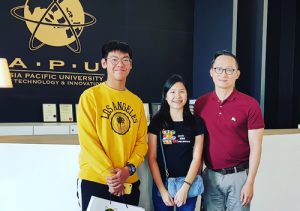





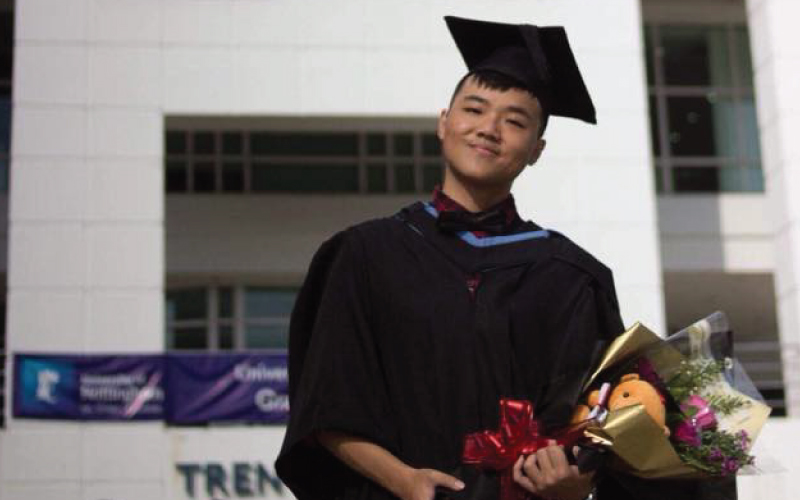

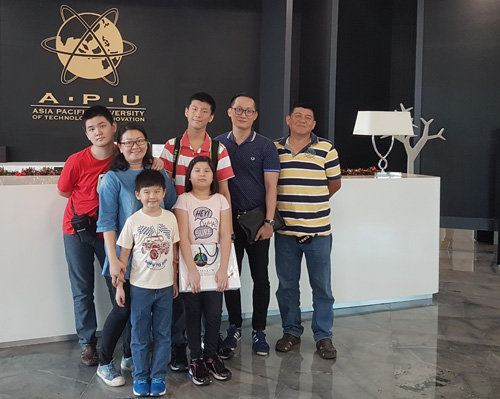


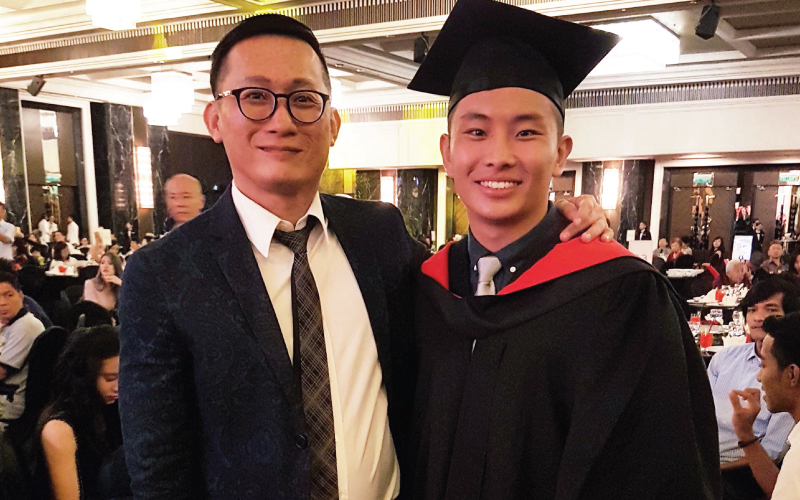



 Top Private Universities & Colleges in Malaysia