Category Archives: Electrical & Electronic Engineering

Which are the Top 10 Universities for Electrical & Electronic Engineering in Malaysia?

Best Private Universities for Electrical & Electronic Engineering in Malaysia

  • List of 10 Top Private Universities in Malaysia Offering the Electrical & Electronic Engineering Degree Courses Accredited by the Board of Engineers Malaysia (BEM)
  • Summary of the Top Electrical & Electronic Engineering Programmes from each university

Although the terms electrical and electronics engineering often are used interchangeably in academia and industry, electrical engineers have traditionally focused on the generation and supply of power, whereas electronics engineers have worked on applications of electricity to control systems or signal processing. Malaysian students interested to study electrical & electronic engineering should look for top private university with a proven track record, highly experienced lecturers, top notch engineering labs & facilities, solid internship programme and a degree that’s accredited by the Malaysian Qualifications Agency (MQA) and the Board of Engineers Malaysia (BEM). Choosing to study at a top private universities in Malaysia for your electrical & electronic engineering education will help you to acquire the best knowledge and skills for a successful career.

Electronics engineering deals with devices and systems that use small amounts of electrical energy to analyse, transmit and store information. Transmission of these electronic signals forms the basis of communications and the information technology industry, and includes the field of microelectronics and the use of silicon chip technology. Electrical engineering is concerned with the basic forms of energy that run our world. Whether it’s gas, hydro, turbine, fuel cell, solar, geothermal, or wind energy, electrical engineers deal with distributing these energies from their sources to our homes, factories, offices, hospitals, and schools.

Read on to find out more about the Top Private Universities in Malaysia offering the Electrical & Electronic Engineering courses.

You might also be interested to read:

Do you have any questions for us on this article? Or need advise on choosing the right course and private university? If so, then please fill up the Enquiry Form below. Our team of experts will help you solve your queries at the earliest via WhatsApp.

Go back

Your message has been sent

Warning
Warning
Warning
Warning
Warning
Warning
Warning
Warning
Warning

Warning.

Study at the Best Private Universities in Malaysia for Electrical & Electronic Engineering that’s Accredited by the Board of Engineers Malaysia (BEM)

was confused about what to study & didn't want to do what my dad was working as because he was so busy. My mum asked EduSpiral to advise me. He showed my that I am different from my dad & helped me to make the right choice. Chong Han, Foundation in Engineering at Taylor's University
was confused about what to study & didn’t want to do what my dad was working as because he was so busy. My mum asked EduSpiral to advise me. He showed my that I am different from my dad & helped me to make the right choice.
Chong Han, Foundation in Engineering at Taylor’s University

With thousands of graduates in Electrical and Electronic Engineering coming out each year, it is important to set yourself apart from the rest to secure a job with an excellent career. Therefore, in order to succeed as an Electrical & Electronic Engineer in Malaysia, students should choose the best private universities in Malaysia to study Electrical & Electronic Engineering so that you can gain the necessary knowledge and skills.

Students interested to pursue the Electrical & Electronic Engineering degree at private universities in Malaysia should consider a few factors when choose the university. First, the Electrical & Electronic Engineering degrees at the top private universities in Malaysia should be accredited by MQA and also the Board of Engineers Malaysia (BEM).

In addition, students need to look at the subjects offered and the learning outcomes of the engineering course offered. Not all universities have the same subjects and learning outcomes. You will need to check if they meet your academic and career goals.

What is Electrical & Electronic Engineering?

EduSpiral took me on a campus tour & gave in-depth information to help me decide. Eugene Ong, Electrical & Electronic Engineering at UCSI University
EduSpiral took me on a campus tour & gave in-depth information to help me decide.
Eugene Ong, Electrical & Electronic Engineering at UCSI University

In general, electronics engineers focus on the electronic circuits which are at the heart of computer science, while electrical engineers are concerned with the large-scale transfer of electrical currents as a power source.

Electrical and Electronic Engineering is about the science and technology related to generating, distributing, storage and use of electrical energy for the benefit of mankind. It is the broadest and most dynamic of all engineering covering everything from micron-scale transistors to macro-scale network systems.

Think about how many items in your daily life we use power such as batteries, petrol motors or even solar panels. Electrical and Electronic engineers are involved in the analysis of existing systems whether electrical, electronic or computer systems and they are often involved in creating and designing new products and systems for manufacturing industries.

Electronics Engineering focuses on solid state devices and integrated circuits that enable the creation of devices such as cellular phones, miniature computers, solar powered devices, electronic controls for automotive and navigation systems in cars, home appliances, and a vast variety of other products for daily usage.

On the other hand, Electrical Engineering is a field of engineering that generally studies the designing, installation, manufacturing, maintenance and testing of electrical and electronic equipment.

Electrical engineers deal with everything related to electrical devices and systems, and the use of electricity. Electrical engineers design, develop, test and supervise the manufacture or installation of electrical equipment, such as power generating and transmission equipment, used for domestic, industry and business purposes.

Some of this equipment includes electric motors; machinery controls, lighting, and wiring in buildings; automobiles; aircraft; radar and navigation systems; and power generation, control, and transmission devices used by electric utilities.

But there is more to Electrical engineering than just that. Many advances in biomedicine were pioneered by electrical engineers, many software houses such as Microsoft employ electrical engineers and so do airplane manufacturers such as Boeing and Airbus. Most astronomical observatories employ Electrical engineers to design their telescopes, other optical instruments and do advanced signal processing.

Areas of Electrical & Electronic Engineering include:

I was not sure if I could handle engineering but after listening to EduSpiral, I was able to make the right decision. Jun Chung, Diploma in Electrical & Electronic Engineering at Asia Pacific University (APU)
I was not sure if I could handle engineering but after listening to EduSpiral, I was able to make the right decision.
Jun Chung, Diploma in Electrical & Electronic Engineering at Asia Pacific University
  • Electronics
  • Software
  • Hardware
  • Signal Processing
  • Communications
  • Computer Engineering
  • Power Electronics
  • Power Systems Engineering (including renewable energy)
  • Nanotechnology
  • Biomedical Imaging
  • Embedded Systems
  • Control

Their work includes the design and manufacture of electronics and electrical devices for a wide range of applications. They are also involved in consulting, the planning and operating of power systems and telecommunication networks, satellite communications, and biomedical engineering.

Electrical engineers may specialise in computer engineering, electronic engineering, lasers, power generation & transmission, biomedical engineering, integrated circuits and microwave & optic fibre communications.

Electrical engineers specialise in areas such as power systems engineering,  electrical equipment manufacturing communications, signal processing, and control systems or have a specialty within one of these areas—control systems or aviation electronics.

Many electronics engineers also work in areas closely related to computers. However, engineers whose work is related exclusively to computer hardware are considered computer hardware engineers.

Sample Electrical & Electronic Degree Subjects

Example of subjects at degree level:

Circuit Theory, Digital Electronics, Analogue Electronics, Mathematical Methods for Engineers, Electromagnetic Theory, Circuit Theory & Transmission Lines, Electronic Manufacturing Industry, Engineering Software & Applications, Electrical Power,  Data Communication & Networks,  Microprocessor Systems, Instrumentation & Measurement,, Electrical Machines,

Electronic Circuit Design , Power Electronics, Control Systems, Power Systems, VLSI Design, Digital Signal Processing, Digital System & HDLs  or  Embedded System Design, Mathematical Techniques for Electrical and Electronic Engineers, Signal Processing and Control Engineering, Power Supply Electronics, Software Engineering Design, Telecommunications, Fields Waves and Antennas, etc.

Electrical & Electronic Engineering Studies in Malaysia

Engineering at Heriot-Watt University Malaysia
I wanted my daughter to study a nursing diploma after her Pre-U. Luckily, after assessing my daughter, EduSpiral advised me to send her to Heriot-Watt as she had excellent results in her Pre-U & that engineering suited her more.
Mr. Yeo

E&E is a very important part of your everyday life. The study of Electrical & Electronic Engineering can involve large amounts of power such as power and control engineering, large devices like power stations and electric vehicles or small amounts of power like computers, communications and information engineering and small devices including MP3 players, iPads and cell phones.

Electronics engineering deals with devices and systems that use small amounts of electrical energy to analyse, transmit and store information. Transmission of these electronic signals forms the basis of communications and the information technology industry, and includes the field of microelectronics and the use of silicon chip technology.

Do you have a mobile phone or a computer? Wireless communication and the Internet are just a few areas electrical engineering has helped flourish, by developing better phones, more powerful computers, and high-speed modems. As we enter the 21st century, the technology that surrounds us will continue to expand and electrical engineers are leading the way.

Various systems for communication between people both nearby and on the other side of the world have been developed and are constantly being improved and refined. This communication takes place using satellite, telephone, optical fibres and computer systems.

These systems are of vital importance in everyday communication, defence, transport, civil aviation & medical equipment such as the bionic ear, pacemakers and life support systems.

Electrical engineering is concerned with the basic forms of energy that run our world. Whether it’s gas, hydro, turbine, fuel cell, solar, geothermal, or wind energy, electrical engineers deal with distributing these energies from their sources to our homes, factories, offices, hospitals, and schools.

Electrical engineering is concerned with research, design, development, manufacture, installation, operation, maintenance and management of equipment, plant and systems within the electrical, electronic, communication and computer systems areas.

These activities can apply to electricity generation, transmission, distribution, electrical installations in buildings and on industrial sites, electrical equipment manufacture, instrumentation and control systems applications in industry, communications networks, electronic plant and equipment, and also the integration and control of computer systems.

Using math and science, electrical engineers come up with economical solutions for technical problems. They use scientific advancements to meet consumer and societal needs through commercial applications. Many electrical engineers develop new products. In the process they must consider several factors from specifying precise functional requirements, to designing and testing components, to evaluating the final design for safety, reliability, cost and effectiveness.

Beyond design and development some electrical engineers work in maintenance, testing or production. They may determine the cause of malfunctions, test products for quality or supervise production in factories. At the supervisory level, electrical engineers are usually in charge of major components or entire projects. Electrical engineers use computers extensively on the job. They control efficiency, monitor quality, simulate and test system operations and produce and analyze designs. Also adding new principles to the design process is nanotechnology.

Electrical engineers design, develop, test and supervise electrical equipments manufacturing process. They may work with a variety of electrical equipment including electric motors, communications systems, lighting and wiring in buildings, radar and navigation systems, machinery controls and power generation, transmission and control devices used by electric utilities. They may also design electrical systems for automobiles and aircraft.

Electronics and electrical engineers are often confused and the term can be used interchangeably. However, electrical engineers usually focus on the generation and supply of power while electronics engineers traditionally have worked on applying electricity principles to control systems or signal processing. Specialization areas for electrical engineers include electrical equipment manufacturing and power systems engineering.

Electronics engineering is a very diverse field and it is currently undergoing expansion as new applications are found for electronic equipment. This has led to the development of two relatively new fields of engineering – software engineering and mechatronics.

  1. Software engineers design and modify complex software systems and computer hardware. Mechatronics Engineering combines the disciplines of mechanical and electrical engineering. It is associated with the use of digital computers to control machines and processes. It is also used to create diverse products such as substitutes for human sensors and organs and computer controlled machine tools.
  2. Mechatronics Engineering is a rapidly developing field and as the world becomes steadily more technologically advanced it will be of increasing importance. Electronic engineers work for companies and government departments that design, construct, and test electronic devices (including computers) or that are involved with their installation.

Engineering Degree Accreditation by Board of Engineers Accredited (BEM)

The Engineering Degrees of these universities are accredited by the Board of Engineers Malaysia (BEM) which is a signatory to the Washington Accord. This accreditation ensures that Engineering Graduates will have the following benefits in countries who are signatories of the Washington Accord:

  • Opportunities to register as a Graduate Engineer with Board of Engineers Malaysia (BEM) or the relevant professional bodies in other countries who are signatories under the Washington Accord.
  • Pathways to becoming a Professional or Chartered Engineer.
  • Assurance that graduates are considered as having met international academic standards for engineering practice.

Career Options for Electrical & Electronic Graduates

My friend introduced me to EduSpiral. He gave me all the information on WhatsApp & helped me to apply. Chong Keat, Electrical & Electronic Engineering at Heriot-Watt University Malaysia
My friend introduced me to EduSpiral. He gave me all the information on WhatsApp & helped me to apply.
Chong Keat, Electrical & Electronic Engineering at Heriot-Watt University Malaysia
  • Appliances Engineer
  • Communication Engineer
  • Computer Engineer
  • Construction Engineer
  • Control Engineer
  • Electrical and Electronics Engineer
  • Instrumentation Engineer
  • Mechatronic Engineer
  • Medical Engineer
  • Microelectronics Engineer
  • Power Engineer
  • Signal Processing Engineer
  • Software Engineer
  • Telecommunications Engineer

Top Private Universities for Electrical & Electronic Engineering

My son wasn't sure of what to study and we met EduSpiral at a few universities to explore. After some discussion, EduSpiral urged us to consider the top ranked UK university in Malaysia for engineering as it is very prestigious. Mother of Joshua, Engineering at University of Southampton Malaysia
My son wasn’t sure of what to study and we met EduSpiral at a few universities to explore. After some discussion, EduSpiral urged us to consider the top ranked UK university in Malaysia for engineering as it is very prestigious.
Mother of Joshua, Engineering at University of Southampton Malaysia

As a guide for students to choose the right university, you may look through the list of top private universities offering the Electrical & Electronic Engineering in Malaysia. Go through the details and please contact us for advise and to arrange for a campus tour.

  1. University of Southampton Malaysia (UoSM)
  2. Heriot-Watt University Malaysia
  3. University of Nottingham Malaysia
  4. Monash University
  5. Taylor’s University
  6. Asia Pacific University (APU)
  7. Multimedia University (MMU)
  8. UCSI University 
  9. First City University College
  10. University of Wollongong (Malaysia)

#1 University of Southampton Malaysia (UoSM)

  • Course: Master of Engineering in Electrical and Electronic Engineering
  • Intakes: September
  • Accreditation: Institution of Engineering and Technology on behalf of the Engineering Council and Malaysian Qualifications Agency (MQA)
  • Overseas Transfer Options: University of Southampton, UK
University of Southampton Malaysia (UoSM) is currently the Top UK University in Malaysia* and the Top 1%* of all the world's educational institutions.
University of Southampton Malaysia (UoSM) is currently the Top UK University in Malaysia* and the Top 1%* of all the world’s educational institutions.

At the  University of Southampton Malaysia , you will gain a broad spectrum of knowledge and skills required to work in the technology sector, but also the wider range of competencies needed by today’s professional engineer. They are ranked Top 3 in the UK for Electrical & Electronic Engineering by Guardian

This breadth of knowledge is developed using a systematic approach to most subjects – blending the core technical syllabus with ongoing design exercises that run throughout the programme. You will use some of the most advanced teaching facilities in the world, you will put the theory you have learned in lectures into practice and deliver real results.

Engineering students have access to world-class facilities including the Testing and Structures Research Laboratory and wind-tunnel complex. Only elite students may enter into the UK Top 3 ranked MEng Electrical and Electronic Engineering at University of Southampton Malaysia. Companies that offer placements for UoSM students include Dyson, Intel, Tektronix, JP Morgan, Rolls-Royce and LafargeHolcim.

By dividing their studies between the University of Southampton’s Malaysia and UK campuses, undergraduate engineering students will spend only around 40% of the price a student would pay pursuing their degree entirely in the UK. The split program also allows students to experience life abroad, further their academic pursuits and make invaluable international connections at a distinctively lower price than would otherwise be required.

To allow students to gain the skills they need to excel in their chosen fields, the University of Southampton has invested in trailblazing technology and facilities. The UK campus boasts a world-class wind tunnel complex, a high-voltage laboratory, and even a streamlined flight simulator for aeronautic students (developed in collaboration with the team behind the Microsoft Flight Simulator games). State-of-the-art cleanrooms, as well as science and computer labs are also available.


#2 Heriot-Watt University Malaysia

  • Course: MEng (Hons) Electrical & Electronic Engineering
  • Intakes: January & September
  • Accreditation: Institution of Engineering and Technology on behalf of the Engineering Council,  Board of Engineers Malaysia (BEM) and Malaysian Qualifications Agency (MQA)
  • Overseas Transfer Options: Heriot-Watt University, UK

Heriot-Watt University Malaysia new RM191 million state-of-the-art campus next to the Putrajaya lake

Students can now obtain a top ranked UK university Electrical and Electronic Engineering degree in Malaysia fromHeriot-Watt University Malaysia. Heriot-Watt University Malaysia is the best university of choice to study Electrical and Electronic Engineering in Malaysia with its excellent academics, top notch facilities, strategic location, and student experience. The new state-of-the-art campus at Putrajaya is set to produce top engineers in the coming years.

Students after SPM and IGCSE/O-Levels can enter the Foundation in Science at Heriot-Watt University Malaysia before continuing into the top rated electrical & electronic engineering degree programme. BEng students who meet the progression requirements for the MEng programme may transfer programmes at the end of the second year.

The BEng and MEng degrees provide a broad education as well as an appropriate measure of specialisation in Advanced Electronic, Electrical and Computer Systems. Graduates enjoy excellent employment prospects throughout industry, financial organisations, government and the professions and are well qualified to join research teams.


#3 University of Nottingham Malaysia

  • Course: MEng (Hons) Electrical & Electronic Engineering
  • Intakes: September
  • Accreditation: Institution of Engineering and Technology on behalf of the Engineering Council,  of Engineers Malaysia (BEM) and Malaysian Qualifications Agency (MQA)

A Nottingham degree has a high reputation within the electrical and electronic engineering industry, opening up a world of opportunity and prospects. Their programmes will equip you with a variety of skills that allow for adaptation and improvisation in the fast changing world of technology.

Nottingham’s MEng (Hons) Electrical & Electronic Engineering degree offers you the chance to study a range of topics while still allowing you to specialise in the later years of the programme. Topics include communications, computer modelling, electrical machines, electronic design, instrumentation, microelectronics, power generation and distribution, signal processing, software engineering and finally renewable energy systems. The variety of modules taught throughout the course makes this a truly multidisciplinary degree.


#4 Monash University Malaysia

  • Course: Bachelor of Electrical and Computer Systems Engineering
  • Intakes: February, July and October
  • Accreditation: Engineers Australia, Engineering Accreditation Council Malaysia, and Malaysian Qualifications Agency (MQA)
  • Overseas Transfer Options: Monash Australia
Monash University with a campus at Sunway, Malaysia drops in the rankings from last year to 61

The Bachelor of Electrical and Computer Systems Engineering (Honours) covers a diverse range of fields, including biomedical, computer systems, electronics, electrical power engineering, robotics and telecommunications.

It is a field that evolves rapidly, with new technologies and techniques being patented every day. It spans all scales of electrical and electronic engineering, from the fundamentals of circuits, electronic signals and signal processing, through to digital electronics and chip-based systems, to the design of large-scale power and telecommunication systems.

Professionals in the electrical and electronics engineering field are constantly striving to innovate and push the boundaries of current technologies. This is evidenced by the countless patents filed each year, which cover everything from novel materials and components to cutting-edge systems and applications.

As an electrical and computer systems engineer, you might design products such as smartphones, virtual reality systems or video games, or maybe robotic medical devices to assist in surgery and rehabilitation.


#5 Taylor’s University

  • Course: Bachelor of Electrical and Electronic Engineering (Honours)
  • Intakes: February, April and September
  • Accreditation: Board of Engineers Malaysia (BEM) and Malaysian Qualifications Agency (MQA)
  • Overseas Transfer Options: United Kingdom (UK) and Australia
Taylor's University Lakeside Campus encompasses a modern, functional design with state-of-the-art facilities together with lush greenery and its trademark 5.5 acre lake
Taylor’s University Lakeside Campus encompasses a modern, functional design with state-of-the-art facilities together with lush greenery and its trademark 5.5 acre lake

Taylor’s School of Engineering is the first in Southeast Asia to adopt the CDIO™ Initiative and register with the Grand Challenge Scholars Program (GSCP), enabling us to apply these approaches to create engineers who are able to meet the real-world demands of their profession and provide solutions for the betterment of humankind.

Through project-based learning, we encourage our engineering school students to explore their passion in their chosen areas of specialisation and work on actual projects that are in line with the Grand Challenges throughout their duration of study in the engineering programmes.

Throughout the Bachelor of Electrical and Electronic Engineering programme, you will gain a comprehensive understanding of electrical and electronic engineering principles. Their curriculum emphasizes hands-on learning experiences, enabling you to apply theoretical knowledge to real-world scenarios.

At Taylor’s University, they take pride in our experienced faculty who are passionate about your success. They are dedicated to providing a supportive and engaging learning environment, where you can ask questions, collaborate with your peers, and develop practical skills that are highly sought after in the industry.


#6 Asia Pacific University (APU)

  • Course: Bachelor of Electrical and Electronic Engineering with Honours
  • Intakes: February, April, July, September & November
  • Accreditation: Board of Engineers Malaysia (BEM) and Malaysian Qualifications Agency (MQA)
  • Overseas Transfer Options: United Kingdom (UK) and Australia
Asia Pacific University (APU) is ranked Tier 5 or "Excellent" in the SETARA 2017 rating by MQA. APU is now operating at its new iconic campus at Technology Park Malaysia, Kuala Lumpur.
Asia Pacific University (APU) is ranked Tier 5 or “Excellent” in the SETARA 2017 rating by MQA. APU is now operating at its new iconic campus at Technology Park Malaysia, Kuala Lumpur.

Top ranked Asia Pacific University (APU) offers the B. Eng (Hons) in Electrical & Electronic Engineering that’s accredited by the Board of Engineers Malaysia (BEM) and Malaysian Qualifications Agency (MQA). The engineering programmes offered by the School of Engineering at Asia Pacific University (APU) are current in terms of technology and are market driven, thus having great employment opportunities. They provide an education based on a theoretical, experimental and ethical foundation enhanced by opportunities for participation in research, internships and interdisciplinary programme.

Students after SPM or IGCSE/O-Levels may go for the Foundation in Engineering at Asia Pacific University for 1 year before continuing on to the 4-year Electrical & Electronic Engineering degree. With 3 credits in SPM or O-Levels including Maths & Science, students may go for the 2-year Diploma in Mechatronic Engineering and then enter into Year 2 of the Engineering degree at Asia Pacific University. The Bachelor of Electrical and Electronic Engineering with Honours programme at Asia Pacific University (APU) is specifically designed to provide students with:

  • High-quality undergraduate engineering education by providing students with a curriculum that is firmly grounded in electrical & electronic engineering fundamentals.
  • A study in both the areas of electronics fundamentals as well as electrical power systems including the areas of generation, transmission and distribution of electrical energy

In APU, employment and it’s continual sustainability is of paramount importance to us. The range of minor and extensions offered to all students within the School of Engineering will craft a formidable way forward for the young aspiring engineers of tomorrow. These options allow students to embark on a journey of exploration either within the engineering fraternity by extending into greater depth (extensions) niche knowledge, skills and attributes required for the practice of contemporary engineering or explore wider options (minor) that are pivotal in the fundamental proliferation of the engineering profession as a while when coupled with other current multidisciplinary fields of expertise. Successful completion of either pathways future proof the students allowing them to embark on a journey of rewarding careers within an engineering discipline of their choice.

Minor Pathway – Gain breadth of knowledge by taking 3 set modules outside of a particular major field of study. There are minor packages available undertaken from Year 3 Semester 2 Year 4 Semester 1 and Year 4 Semester 2.

MINOR PATHWAY
NAME OF MINORYear 3 Semester 2Year 4 Semester 1Year 4 Semester 2
loTKnowledge Discovery and Big Data AnalyticsInternet of Things:
Concepts and Applications
Emergent Technology
FinTechFinTech Governance, Risk Management & ComplianceDigital FinanceRobo Advisor
Digital TransformationDigital ExecutionDigital Strategy & AnalyticsEmergent Technology
Data AnalyticsKnowledge Discovery and Big Data AnalyticsBehavioral Science and
Marketing Analytics
Optimization & Deep
Learning
Artificial IntelligenceMachine Vision Intelligence
(MVI)
Text Analysis & Sentiment
Analysis
Emergent Technology
Digital Age PsychologyIndustrial & Organizational
Psychology
CyberpsychologyHuman Factors
Psychology

Extension Pathway – Expand depth of knowledge by taking three (3) set modules in a specific area within a certain field of study. There are extensions available undertaken from Year 3 Semester 2, Year 4 Semester 1 and Year 4 Semester 2.

EXTENSION PATHWAY
NAME OF EXTENSIONYear 3 Semester 2Year 4 Semester 1Year 4 Semester 2
Smart DronesRobotic TechnologyRobot Operating SystemsDrone Technology
Smart ManufacturingRobotic TechnologyRobot Operating SystemsProduct Creation Technology
Drilling TechnologyDrilling Fluids & HydraulicsDirectional Drilling & SurveyingWell Control
Intelligent Design and Manufacturing TechnologiesMachine Vision IntelligenceCAD/CAMProduct Creation Technology
Oil and Gas OperationsGas EngineeringPetroleum EconomicsDrilling Fluids & Hydraulics

#7 Multimedia University (MMU)

  • Course:B.Eng (Hons) Electrical Engineering or B.Eng (Hons) Electronic Engineering
  • Intakes: July & October
  • Accreditation: Board of Engineers Malaysia (BEM) and Malaysian Qualifications Agency (MQA)
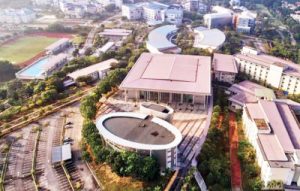
Multimedia University (MMU) Cyberjaya
Multimedia University (MMU) Cyberjaya is a top private university in Malaysia supported by a full university campus facilities

Multimedia University (MMU) is the first private university in Malaysia and is ranked top in the world having won many awards and accolades. Established in 1996, MMU has more than 15,000 students, and the engineering programmes are offered at its well equipped campuses in Cyberjaya and Melaka.

The B.Eng. (Hons) Electrical programme at Multimedia University (MMU) Cyberjaya is a four-year engineering course that prepares students with a broad foundation in a discipline that deals with the generation, transmission, and distribution of electricity. Additionally, electrical engineers are also responsible for the design of related devices such as transformers, generators, power electronics and electric motors.

During the four years of this major, students will develop expertise in electrical circuits and electromagnetic, with focus on power generation, transmission and distribution, as well as the latest technologies in renewable energy. Building a good foundation in engineering mathematics is also emphasized in the programme to better prepare the students for future professional engineering careers.

Students after SPM or IGCSE/O-Levels may go for the Foundation in Engineering or Diploma in Electronic Engineering before pursuing the Degree programme. Furthermore, students may apply for PTPTN Loan for the Foundation in Engineering and Degree courses at MMU.

Multimedia University (MMU) offers various electrical engineering and electronic engineering degree programmes at both its campuses.


#8 UCSI University

  • Course: Bachelor of Electrical and Electronic Engineering with Honours
  • Intakes: January, May and September
  • Accreditation: Board of Engineers Malaysia (BEM) and Malaysian Qualifications Agency (MQA)
  • Overseas Transfer Options: United Kingdom (UK) and Australia
UCSI University Malaysia
UCSI University is a top ranked private university in Malaysia with an excellent campus & affordable fees

UCSI University is a vibrant community of learning and scholarship. At present, more than 12,000 students study at the University. Over the years, students from 120 different countries have studied here, making the campus a melting pot of culture and diversity. As one of Malaysia’s first private universities, UCSI University has long impacted the national higher education landscape and the University continues to do so with over 150 undergraduate and postgraduate programmes.

The University’s academic staff are at the forefront of their disciplines and their views are highly sought after on major issues; from business to political science. Many of our academics have extensive experience working overseas and some play advisory roles in public bodies and various committees. By bringing their experiences into the classroom, our academics cater to an exhilarating learning environment and learners will thrive as they balance academic mastery with industrial application.

UCSI University offers the Bachelor of Electrical and Electronic Engineering with Honours. Electrical and Electronics Engineering is one of the broadest engineering disciplines and this programme will cover multiple subject areas like analogue electronics, microelectronic chip design, digital signal processing, power generation, protection and distribution, C++ programming, instrumentation and measurements control, renewable energy systems, and more. Students will also have the chance to learn MATLAB, PSPICE and LABVIEW which are used to run simulations in projects and research.


#9 First City University College

  • Course: Bachelor of Electronic Engineering with Honours
  • Intakes: July & October
  • Accreditation: Board of Engineers Malaysia (BEM) and Malaysian Qualifications Agency (MQA)

Established in 1990 by the First Nationwide Group, First City University College has an impressive purpose-designed, fully equipped campus with sports and recreational facilities, and located on a 13-acre site within Bandar Utama

The Bachelor of Electronic Engineering with Honours programme at First City University College  programme equips students with a broad range of knowledge and technical skills that are required for an electronic engineering career. The strength of the programme is in the broad areas of digital and analogue electronics, communication systems, instrumentation and control, and circuits and signals.

The Bachelor of Electronic Engineering with Honours degree is recognized by the Board of Engineers Malaysia (BEM). The programme fulfills the broad areas requirement for electronic discipline. The broad areas include circuits and signals, electromagnetic fields and waves, instrumentation and control, digital and analogue electronics, microprocessor systems, programming techniques, introduction to electrical power system, computer architecture, communication systems, electronic system analysis and design, digital signal processing and application, mathematical applications, statistical and numerical techniques, and computer applications. Courses related to management and communication, and general studies are offered, for exposure to engineering practice and general knowledge, to be an all-rounded individual.

Emphasis is placed on analytical and complex problem-solving skills, teamwork and project management skills driven by project-based learning; thus, preparing graduates for the Internet of Things and Industry 4.0. Students use Siemens Electronic Design Automation (EDA) tools, an industrial standard software, for microchips and integrated circuit design. Students will undergo internships where they will gain hands-on experience.

The Programme objectives are to:

  • Equip graduates with technical knowledge and skills in the field of electronic engineering.
  • Produce engineers who adhere to social, ethical and professional practices.
  • Empower graduates with the ability to provide innovative and creative engineering solutions.
  • Produce graduates who can work globally and engage in research and life-long learning.

#10 University of Wollongong Malaysia

  • Course: Bachelor of Electronic Engineering with Honours
  • Intakes: July & October
  • Accreditation: Board of Engineers Malaysia (BEM) and Malaysian Qualifications Agency (MQA)
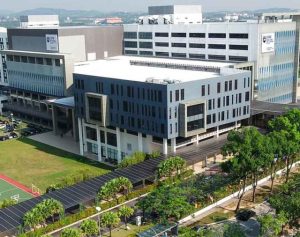
Top Ranked Australian University Education at University of Wollongong (UOW) Malaysia KDU, Utropolis Glenmarie
Top Ranked Australian University Education at University of Wollongong (UOW) Malaysia

The Bachelor of Electrical and Electronics Engineering With Honours degree program at UOW Malaysia ensures that the students have a strong foundation in mathematics, physics and chemistry. Throughout the program, E&E students learn about things such as circuit theory, digital and analogue electronics, data and computer networking, communication systems, and digital signal processing.

The program also helps students to develop interpersonal skills, as well as written and verbal communication skills, all of which are very important when collaborating with other engineers, teams or companies.

Students after SPM or IGCSE/O-Levels who desire a career as an engineer in Malaysia can join the Foundation in Engineering at University of Wollongong (Malaysia) KDU, University College Utropolis Glenmarie before continuing on to the 4-year Bachelor of Engineering (Hons) Electrical & Electronic Engineering.

Electrical & Electronic Engineering Degree students are given a choice of 3 majors to choose from in their fourth year

  • Electrical Power and Renewable Energy
    Focuses on harnessing green energy and developing the latest smart-grid technology
  • Electronic Engineering
    Emphasises on advanced digital system design and embedded systems
  • Communication Engineering
    Focuses on radio frequency and optical communication

The Bachelor of Electrical and Electronics Engineering With Honours degree program at UOW Malaysia is fully accredited by the Board of Engineers Malaysia (BEM) . In addition, the Engineering programmes at UOW Malaysia are designed to prepare graduates with everything necessary to face the new industrial economy around the globe.

With high quality programmes that adhere to the strict standards set by the Board of Engineers (BEM) Malaysia, students can expect a curriculum that is design-centric and trains them to hone their complex problem-solving skills.

Students will also experience valuable hands-on experience by participating in real-world projects, and have the opportunity to become a research assistant at an undergraduate level through our undergraduate research scheme.

With the goal of ensuring a holistic learning experience, UOWM’s programme allows you to cultivate the skills, knowledge, and the ability to develop engineering applications which are required for a wide range of professional engineering careers and expected of leaders in business, engineering, industry and even in R & D.

If you are keen on green energy and the latest smart-grid technology, and envision a career with power utility companies, then you may major in Electrical Power and Renewable Energy in your fourth year.

If your interest lies in advanced digital system design and embedded systems, and if you seek employment with companies like INTEL, Altera and Motorola, opt for Electronic Engineering. Communication Engineering would be your ideal major which focuses on radio frequency and optical communication.

Top University in Malaysia for Nanotechnology Engineering

Study Nanotechnology Engineering at a Top Private University in Malaysia

For more information contact 01111408838

Nanoscience and nanotechnology are the study and application of extremely small things and can be used across all the other science fields, such as chemistry, biology, physics, materials science, and engineering.

Engineers utilize nanotechnology for many purposes, such as designing computer components, creating explosive-resistant materials and building microscopic sensors. For example, in the computer industry, engineers use nanowires and optics to create microchips with immense storage capacity for data processing.

Nanotechnology deals with engineering at the nanoscale with a view to creating applications or devices at the atomic, molecular, or supramolecular scale. The applications are diverse, including medicine, electronics, biomaterials, and energy production.

Malaysian students interested to work in this exciting, fast growing technologically advanced engineering field can pursue a degree in Electronic Engineering majoring in Nanotechnology and subsequently postgraduate.

For a personalised advise on how to choose the right course contact 01111408838

Please fill up the Form below and I will WhatsApp you and provide you with sound advise on how to choose the best private university or college in Malaysia to study at. If you do not give your mobile number or full name as in IC, your query will not be answered. Our knowledgeable & experienced counsellor will send you a message on WhatsApp & provide assistance from there.

Go back

Your message has been sent

Warning
Warning
Warning
Warning
Warning
Warning
Warning
Warning
Warning

Warning.

Find Out What is Nanotechnology Engineering and the Best University in Malaysia for this Course

What is Nanotechnology?

EduSpiral counseled us online & then picked us up from the airport to visit MMU in order to help us choose the right university. Mak, Ong & Chaw - Diploma in Information Technology (IT) at Multimedia University (MMU)
EduSpiral counseled us online & then picked us up from the airport to visit MMU in order to help us choose the right university.
Mak, Ong & Chaw – Diploma in Information Technology (IT) at Multimedia University (MMU)

It’s hard to imagine just how small nanotechnology is. One nanometer is a billionth of a meter, or 10-9 of a meter. Here are a few illustrative examples:

  • There are 25,400,000 nanometers in an inch
  • A sheet of newspaper is about 100,000 nanometers thick
  • On a comparative scale, if a marble were a nanometer, then one meter would be the size of the Earth

Nanoscience and nanotechnology involve the ability to see and to control individual atoms and molecules. Everything on Earth is made up of atoms—the food we eat, the clothes we wear, the buildings and houses we live in, and our own bodies.

But something as small as an atom is impossible to see with the naked eye. In fact, it’s impossible to see with the microscopes typically used in a high school science classes. The microscopes needed to see things at the nanoscale were invented relatively recently—about 30 years ago.

Once scientists had the right tools, such as the scanning tunneling microscope (STM) and the atomic force microscope (AFM), the age of nanotechnology was born.

Today’s scientists and engineers are finding a wide variety of ways to deliberately make materials at the nanoscale to take advantage of their enhanced properties such as higher strength, lighter weight, increased control of light spectrum, and greater chemical reactivity than their larger-scale counterparts.

(Taken from the Official website of the United States National Nanotechnology Initiative)

What is a Nanotechnology Engineer?

Those who work with nanotechnology deal with materials and technologies on a microscopic level. As engineers, they might develop computer components or super-strong materials.

A nanotechnology engineer is someone who works around the smallest, most amazing fragments of science. From storing and altering things on the cellular level, to creating new, tiny pieces of electronics, nanotechnology engineers are the cream of the crop, possessing an acute attention to detail and a strong drive to make things better.

What does a Nanotechnology Engineer do?

From storing and altering things on the cellular level, to creating new, tiny pieces of electronics, nanotechnology engineers are the cream of the crop, possessing an acute attention to detail and a strong drive to make things better.

A nanotechnology engineer seeks to learn new things that can change the face of health, science, technology, and the environment on a molecular level. They test for pollutants, create powders to enrich our foods and medicines, and study the smallest fragments of DNA. They can even manipulate cells, proteins, and other chemicals from within the body.

Nanotechnology engineers take advanced supplies and materials and turn them into something new and exciting. They may try to make a once heavy invention work better while weighing less, making the object far more efficient. They may also create new and improved ways of watching out and improving the environment by creating innovative ways to test for contaminants and pollutants in the air, ground, and water.

Nanotechnology engineers may also choose to work in the medical field creating new gadgets that can fix problems on a scale as small as the molecular level, thus changing the face of medicine forever. Those involved with bio-systems will create ways to store the tiniest amounts of DNA or other biological fragments for testing and manipulation.

Nanotechnology engineers that work with nanoelectronics will create smaller, more efficient chips, cards, and even smaller computer parts to make products that can do as much as bigger products without so much electronic waste.

Behind the scenes, these engineers must be good at paperwork and detailed description writing. They are responsible for writing extremely detailed reports describing their findings in their specific experiments.

Who Should Study Nanotechnology Engineering?

  • Students who excel in Mathematics and Physics
  • Students who are curious and investigative individuals, meaning that you are intellectual, introspective, and inquisitive.
  • Students who are methodical, rational, analytical, and logical.
  • Some are also realistic, meaning that you are independent, stable, persistent, genuine, practical, and thrifty.

The Global Nanotechnology Industry

Although relatively new, the global nanotechnology sector will be one of the greatest needle shifting industries within the next five years, with far reaching implications on the way we live, work and play. The international nanotechnology market is expected to hit the USD5.76 trillion mark by 2022,
from USD3.68 trillion in 2018, denotinga double-digit Compound Annual Growth Rate (CAGR) of 11.8% within theforecast period of 2018 till 2024.

Europe and Asia are expected to register the greatest growth in market share, followed closely by the United States. Asia’smarket share is expected to grow from USD1.3 trillion in 2018,to USD2 trillion in 2022, while Europe’s market share is forecasted to increase from USD1.33 trillion in 2018, to USD2 trillion in 2022.

The explosive growth in nanotechnology will primarily be driven by rapidly growing advancements in potential applications within sectors such as healthcare, cosmetics, energy and agriculture. Significant developments have been observed within the past few years in the electronics, energy and biomedical sectors.

Specifically, it has been projected that nanotubes will capture the greatest market share, with demand driven by the electronics, energy storage and automotive sectors. The second highest market share is expected to be held by
nanoceramics, with growing demand from the electronics and biomedical sectors. Over 70% of the global nanotechnology market share will be held by nanotechnology applications within materials and manufacturing, electronics and information technology, and healthcare and life sciences
.
1. Source : LuxResearch & NVSB Internal Research
2. Source : LuxResearch & NVSB Internal Research

Nano Malahysia – Electronic Devices And Systems

The Electronics and Electrical (E&E) industry is one of the major sub-sectors of the manufacturing sector in Malaysia. E&E primarily consists of two main industry components – computer, electronic and optical products; and electrical equipment.

An important contributor to the national economy, in 2017 alone, E&E was Malaysia’s largest export earner at RM343 billion, accounting for 36.7% of the country’s total exports. The added value of the E&E sub-sector stood at RM67.7
billion in 2017, an 8.2% increase from the previous year. The increase in the sector’s value is attributed to an industry shift from low value-added activities, to high value operations to enhance the local sector’s competitiveness within the international business landscape.

Employment within the E&E sector has grown substantially through the years to consist of 19.9% of the total manufacturing workforce comprising of 485,000
workers as at end 2017. Robust global demand for E&E products is driving industry growth, and by 2020, it is expected that the sector will generate a Gross National Income (GNI) impact of RM53.4 billion, and create a further 157,000 jobs.

There is tremendous potential for the E&E sector to move up the manufacturing value chain and thus propel its growth by adopting nanotechnology within its
manufacturing processes. Opportunities for growth and expansion are fuelled by the advent of new breakthrough discoveries in nanotechnology such as nanoelectronics and nanophotonics, as well as the rise of the Internet of
Nano Things (IoNT).

1. Source : 25th Productivity Report 2017/2018, published by Malaysia Productivity Corporation in 2018
2. Source : 25th Productivity Report 2017/2018, published by Malaysia Productivity Corporation in 2018
3. 2018 Malaysian American Electronics Industry (MAEI) Survey Report

Education Pathway to a Nanotechnology Engineering Degree in Malaysia

Students after SPM or O-Levels with at least 5 credits in SPM or O-Levels may go for the Foundation in Engineering.

Upon completion of the Foundation, students can enter into Year 1 of the 4-year degree programme in Electronics Engineering Majoring in Nanotechnology that’s accredited by the Engineering Accreditation Council (EAC) and MQA, and recognised by the Board of Engineering Malaysia (BEM).

Pre-University students with the relevant results in STPM, A-Levels, SAM, CPU, AUSMAT, etc. can enter directly into Year 1 of the B.Eng. (Hons) Electronics Majoring in Nanotechnology degree.

Study the Bachelor of Engineering (Hons.) Electronics Majoring in Nanotechnology Course in Malaysia at Top Ranked Multimedia University (MMU) Cyberjaya Campus

Faculty of Engineering at Multimedia University (MMU) Cyberjaya

Nanotechnology is an emerging field for the next generation of electronics, materials and devices leveraging on its exploratory potential. The Faculty of Engineering at Multimedia University (MM) Cyberjaya offers a four year undergraduate programme leading to the Bachelor of Engineering degree majoring in Nanotechnology.

For students planning for professional careers in the fields of microelectronics and nanoelectronics, the nanotechnology programme provides a complete undergraduate training in electronics and nanoelectronics-related fields, such as nanomaterials, nanosciences, nanofabrication technology, nanoelectronic devices, MEMS/NEMS, diagnostic technology, computer organisation and architecture, data communication, microprocessor system, and multimedia technology.

In addition, MMU Cyberjaya engineering students are also exposed to basic engineering training in circuit and signal analysis, field theory, electronics, control theory, digital logic, communications and engineering mathematics. To better prepare the students for a professional career in engineering, courses in basic management, economics, accounting and law are also included. This programme also provides students with industrial experience and research training by requiring them to complete industrial training and graduate projects.

Year 1 Subjects for the B.Engineering (Hons) Electronics Majoring in Nanotechnology

Multimedia University (MMU) is ranked 179th in Asia according to Quacquarelli Symonds (QS) World University rankings for 2018. The 2017 QS World University Rankings by Subject again listed MMU as one of the highest ranked private universities in Malaysia for Electrical & Electronics Engineering and Computer Science & Information Systems.

  • Engineering Mathematics 1
  • Electronics 1
  • Circuit Theory
  • Field Theory
  • Computer and Program
  • Design
  • Engineering Mathematics 2
  • Electronics 2
  • Introduction to Machines and
  • Power Systems
  • Algorithm and Data Structure
  • Instrumentation and
  • Measurement Techniques
  • Digital Logic Design
  • Electronics 3

Year 2 Subjects for the B.Engineering (Hons) Electronics Majoring in Nanotechnology

  • Engineering Mathematics 3
  • Microcontroller and
  • Microprocessor Systems
  • Circuits and Signals
  • Electromagnetic Theory
  • Computer Organization and
  • Architecture
  • Microelectronic Circuit
  • Analysis and Design
  • Advanced Microprocessors
  • Solid State Electronics
  • Engineering Mathematics 4
  • Control Theory

Year 3 Subjects for the B.Engineering (Hons) Electronics Majoring in Nanotechnology 

Multimedia University (MMU) was rated tier 5 (Excellent) in the Malaysian Ministry of Higher Education SETARA Rating in 2010, 2011 & 2013. This is the highest rating achieved by all institutions.  About 290 of Multimedia University lecturers possess a Phd qualification.

  • Analog and Digital
  • Communications
  • Optoelectronic Devices
  • Semiconductor Devices
  • Advanced Fabrication
  • Technology
  • Nano-Science
  • Capstone Project

Electives

  • Multimedia Technology and
  • Applications
  • Power Electronics

Year 4 Subjects for the B.Engineering (Hons) Electronics Majoring in Nanotechnology at Multimedia University (MMU) Cyberjaya

  • Digital Integrated Circuits
  • Diagnostic Technologies
  • Project
  • N/MEMS
  • Data Communications and Computer Networking
  • Nanoelectronic Materials and Devices

Why Study Electronic Engineering (Nanotechnology) at Multimedia University (MMU) Cyberjaya?

Commencing operations in June 1999, MMU (Cyberjaya Campus) conducts a spectrum of information technology and multimedia-based programmes at undergraduate and postgraduate levels. The campus houses the Faculty of Engineering, Faculty of Computing and Informatics, Faculty of Management, Faculty of Creative Multimedia, Learning Institute for Empowerment and the Institute for Postgraduate Studies.

In the 2017 QS World University Rankings by Subject again listed Multimedia University (MMU) as the No. 1 private university in Malaysia for “Electrical & Electronics Engineering”.  Since 2015, MMU has been placed in the top 151-200 universities worldwide.

Multimedia University (MMU) is the first private university in Malaysia and is ranked top in the world having won many awards and accolades therefore, they are the top choice for students to study the best Nanotechnology Engineering course in Malaysia.

Established in 1996, MMU marked Malaysia’s foray into a new economy.  With more than 15,000 students, the university has campuses in Cyberjaya, Melaka and Johor. For a list of the awards and achievements for engineering at Multimedia University (MMU), click on the link.

  • In 2009, MMU was ranked at 171 by THES-QS in the Asian University Rankings, the first private university in Malaysia to achieve such a feat. The 2017 QS World University Rankings by Subject again listed MMU as the No. 1 private university in Malaysia for “Electrical & Electronics Engineering”.
  • Since 2015, MMU has been placed in the top 151-200 universities worldwide by QS World University Rankings by subject Electrical and Electronics Engineering.
  • In 2017 – Multimedia University (MMU) Faculty of Engineering earns four (4) accolades from the global professional association, Institute of Electrical and Electronics Engineers (IEEE).These are among the hundreds of awards & achievements of the engineering students and staff at Multimedia University (MMU) showing that MMU is the best private university in Malaysia for engineering.
  • The Faculty of Engineering teaching staff at Multimedia University (MMU) Cyberjaya have at least a Master for lecturers, at least 2nd Class Upper Bachelor degree for tutors in MMU. About 80% Multimedia University (MMU) engineering tutors has 1st class and 35% lecturers with PhD.
  • The engineering programmes in MMU are accredited by the Malaysian Qualification Agency (MQA) and the Engineering Accreditation Council (EAC) as well as recognised by the Board of Engineers Malaysia (BEM).
  • Hence, MMU’s engineering graduates can readily seek employment or be admitted into top international universities for postgraduate studies. More than 40% of MMU’s engineering graduates secure jobs before completion of studies while more than 96% of them secure jobs within 6 months after graduation.
  • Multimedia University (MMU) has some of the best teaching labs among private universities in Malaysia. Students have the opportunity to experience for themselves the various principles of engineering in action through the numerous hands-on experiments. There are also various activities conducted in collaboration with the industry that expose students to real world challenges that require innovative engineering solutions.
  • MMU’s strong partnerships with global industry players that include Fortune 500 companies have led to the establishment of state-of-the-art research and teaching facilities such as Intel Advanced Architecture Lab, Panasonic Computing Lab, Huawei Digital Lifestyle and Innovation Centre and Motorola Wireless Broadband Technology Lab.
  • Multimedia University (MMU) has a vibrant Student engineering society and professional engineering student chapters such as The Institution of Engineering and Technology (IET), Institute of Electrical and Electronics Engineers (IEEE) and Institution of Engineers, Malaysia (IEM) as well as ‘Multimedia University Engineering Society Overseas Research Programme'(MESCORP) for students to grow in leadership and soft-skills, as MMU recognises the growing importance of these human aspects of what engineers do.
  • In line with the Multimedia University (MMU)’s vision to be a leading engineering faculty in Malaysia for creation, preservation and dissemination of knowledge, MMU lecturers/professors/researchers at Faculty of Engineering has never failed to actively engage themselves in the forefront R&D activities for the creation of new knowledge and technology where scientific findings are presented and published in various reputable international conferences, and prestigious journals of international standing.
  • MMU also enjoys great support and close research collaborations with some top names in the industries in Malaysia such as Intel, NTT, Nokia, National Semiconductor, Motorola, Matsushita, Ericsson, Agilent , coupled with the constant arrangement of invited lecture series that brings renowned engineers and scholars to MMU from across the world, has helped MMU to ensure the multi-skilled engineering graduates they produce stay relevant to the fast changing industry trends and needs.

The Best Reasons to Study Electronic Engineering (Nanotechnology) at Multimedia University (MMU) Cyberjaya

Faculty of Engineering at Multimedia University (MMU) Cyberjaya

  • Curriculum have been endorsed by panel of international experts from top universities such as Pennsylvania State University, University of Texas at Arlington, National University of Singapore, Nanyang Technological University, etc.
  • More than 40% of academic staff graduated from top international universities such as University of Edinburgh, University of Sheffield, University of Surrey, etc.
  • In addition to academic qualifications, academic staff also have industry experiences, with more than 35% of them possessing professional certifications such as Professional Engineer, or Chartered Engineer
  • Consistent graduate employability rate of 97-98% every year
  • Graduate Employment Survey conducted by MAEI (Malaysian American Electronics Industry) companies including Intel, Motorola, and AMD indicate that these companies prefer our MMU engineering graduates
  • More than 10 industry-sponsored labs – one of the highest among private engineering faculties in Malaysia
  • Industry partners co-develop curriculum
  • More than 200 R&D collaborations with universities, industries, government bodies etc.
  • One of the very few Malaysian private universities that actively collaborates with industries in the Living Lab (previously known as Digital Home & Lifestyle Lab)
  • First university to offer programmes in fast growing industries such as Nanotechnology and Photonics
  • Early adopter of latest technology in the industry

Career Prospects for Graduates from the Nanotechnology Engineering Degree at Multimedia University (MMU) Cyberjaya

Nanotechnology is an emerging field for the next generation of electronics, materials and devices leveraging on the exploratory potential of nanotechnology. Potential career opportunities are in Nanotechnology, Electronics, Semiconductor, Telecommunication, Optoelectronics, Green Energy and Research and Academic.

  • Research Engineers/Scientists
  • Test and Characterization Engineers
  • Process and Device Engineers
  • Product Reliability Engineers
  • Electronics Engineers
  • Process Engineers
  • Quality Control/Assurance Engineers
  • Failure Analysis Engineers
  • Field Application Engineers
  • Telecommunications Engineers
  • R&D Engineers
  • Research Engineer/Scientist
  • Microfabrication Engineer,
  • Test and Characterization Engineer
  • Process and Device Engineer
  • Products Reliability Engineer
  • Electronics Engineer
  • Process Engineer
  • Manufacturing Engineer
  • Product Engineer
  • Quality Control/Assurance Engineer
  • Failure Analysis Engineer
  • Field Application Engineer
  • Customer Service Engineer
  • Telecommunication Engineer
  • R&D Engineer
  • Safety Engineer
  • Sales Engineer
  • Service Engineer
  • Facility Engineer
  • Assistant Lecturer/Tutor

MMU nanotechnology engineering graduates have found work in different industrial companies such as Intel Electronics, Freescale Semiconductor, Finisar, Western Digital, Agilent Technologies, Altera Corporation, Huawei Technologies, Telekom Malaysia, ZTE, Flextronics, Avago, Lumiled and AMD.


Top 5 Universities in Malaysia Best for Electrical & Electronic Engineering Diploma Course

Outstanding Diploma in Electrical & Electronic Engineering at the Best Private Universities in Malaysia

Written by EduSpiral Consultant Services For more information contact 01111408838

In a report conducted by IPSOS Business Consulting in 2012 on the E&E Sector Study on the Supply-Demand of Talent in Malaysia, it is found that there is a shortage of Electrical & Electronic Engineers in Malaysia. The E&E sector is an important contributor to Malaysia’s economy as it is one of the 12 National Key Economic Areas (NKEA) in the country’s Economic Transformation Programme (ETP). There are 1,900 active E&E companies in Malaysia which provide employment to over 350,000 people.

In line with ETP projections, Malaysia’s Electrical & Electronic sector growth is expected to be robust in the coming years. This growth will require a steady supply of skilled talent, both in numbers and in the appropriate skills-sets, to meet the present and future needs of the sector.

Students interested in engineering with a solid future job career in Malaysia can go for the Diploma in Electrical & Electronic engineering after their SPM or O-Levels. With 3 credits in SPM including Maths & Science and a Pass in BM & Sejarah, you can go for the Diploma at a top private university in Malaysia. Upon completion of the 2-year diploma, you can continue on to Year 2 of the Electrical & Electronic Engineering Degree at the same university or if the degree course is offered. The electrical & electronic degree programmes should be accredited by the Board of Engineers Malaysia (BEM).

Students should choose top private universities in Malaysia for their electrical & electronic engineering diploma education so that you can gain the best knowledge and skills for a successful career.

For more information contact 01111408838

Please fill up the form for more information. If you do not give your mobile number or full name as in IC, your query will not be answered. Please make sure you give a correct email address and check your email including the SPAM or JUNK email folder within 48 hours as we will email you the information. 

Go back

Your message has been sent

Warning
Warning
Warning
Warning
Warning
Warning

Warning.

Top Rate Universities in Malaysia for Electrical & Electronic Engineering Diploma

I was not sure if I could handle engineering but after listening to EduSpiral, I was able to make the right decision.
Jun Chung, Diploma in Electrical & Electronic Engineering at Asia Pacific University

Malaysia’s Electrical & Electronic sector also faces a situation of skills gaps, where adequately trained and skilled talent, both at entry and experienced levels are lacking. These are mainly in the areas of R&D and to some extent Engineering Support. The IPSOS Business Consulting in 2012 report found that Fresh Graduates or Entry-level Talent Not Industry-Ready (lacks required skill-sets) therefore it is important for students to choose a university that is able to provide the necessary training and possess the experience to teach.

In order to have a successful career as an electrical & electronics engineer, students after SPM, O-Levels, UEC, A-Levels or STPM must choose to study at the best private universities in Malaysia. Leading private universities and colleges in Malaysia offering the Diploma in Electrical & Electronic Engineering are

  1. UCSI University
  2. Asia Pacific University  or APIIT
  3. KDU University College Utropolis Glenmarie
  4. KDU Penang University College
  5. First City University College

Diploma in Electrical & Electronic Engineering at APIIT or Asia Pacific University (APU)

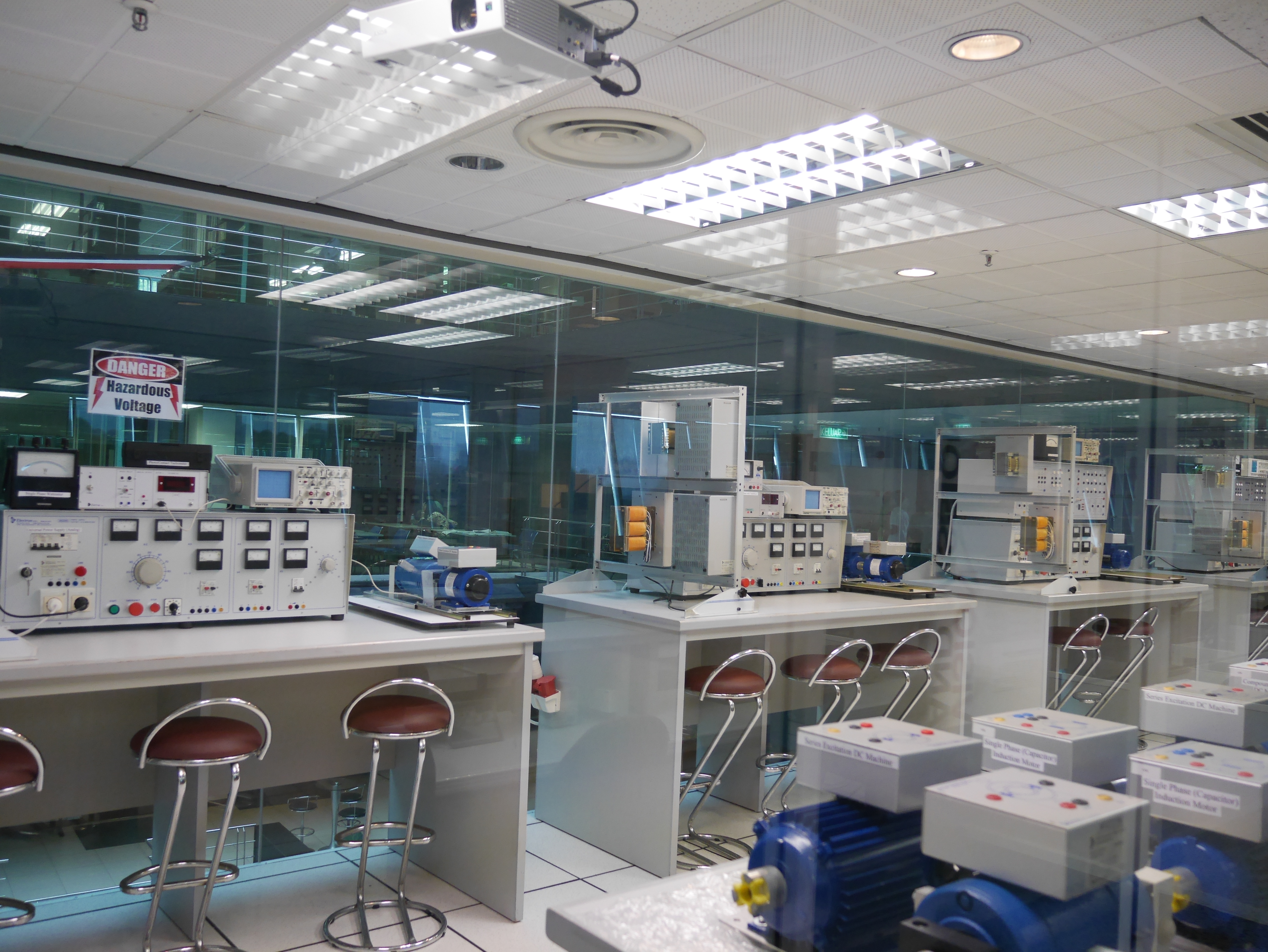
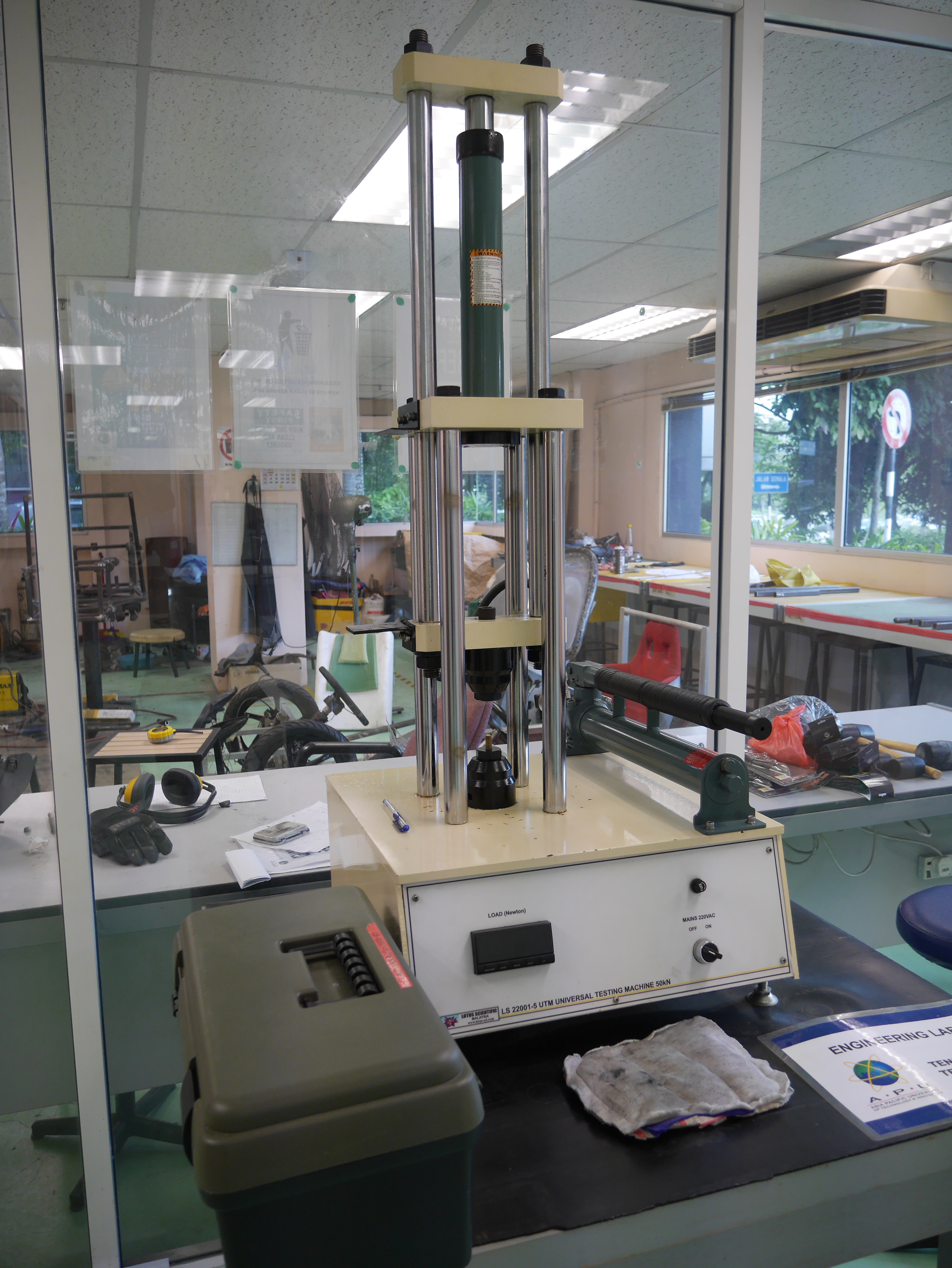
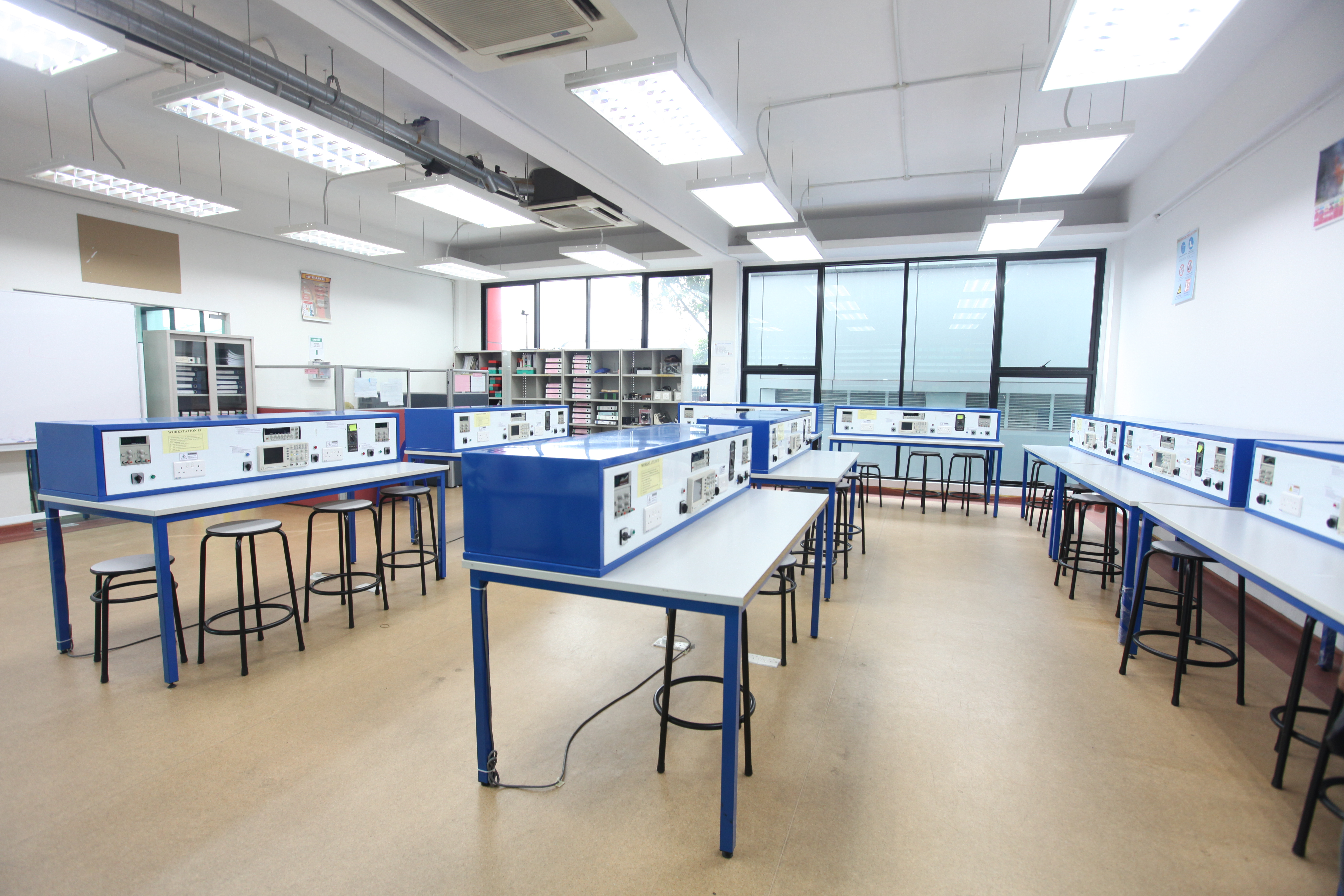
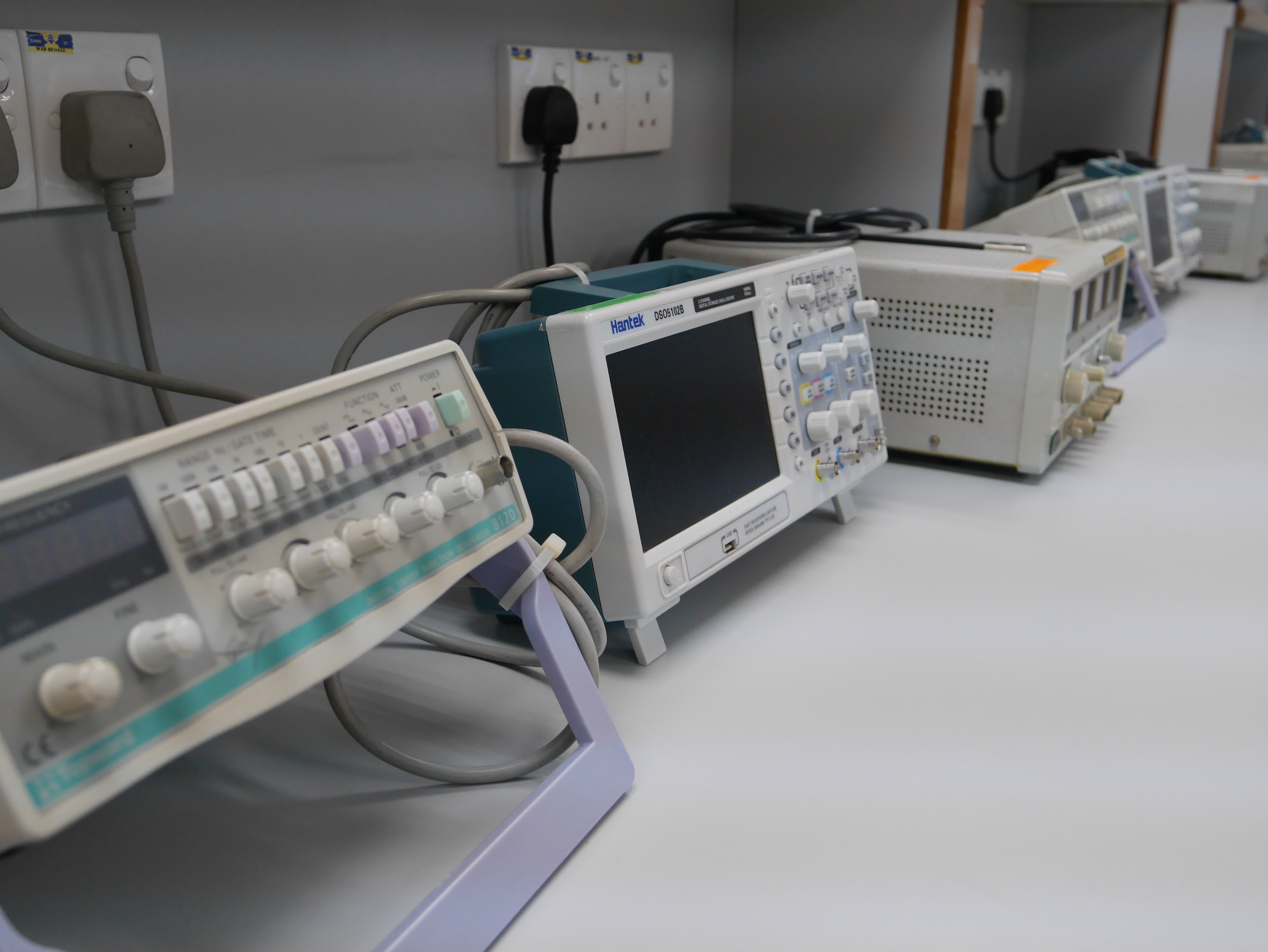
Electrical & Electronic Engineering lab at Asia Pacific University

The Diploma in Electrical and Electronic Engineering programme at Asia Pacific University prepares you for careers in the Electrical, Electronics, Telecommunication, and Manufacturing environments. This programme offers a broad-based study in the areas of electrical and electronic engineering.

A range of modules in the electrical and electronic engineering spectrum is provided.

Other skills necessary for the workplace are also provided. These include communication skills and life-long learning skills.
You will be equipped with the knowledge and expertise to face the challenges of business development in a wide range of electrical and electronic industries.

The Electrical & Electronic Engineering diploma programme at APIIT provides a significant amount of hands-on experience. The curriculum requires 6 semesters of laboratory experience in electrical and electronics. Hands on experience provide necessary experience in designing engineering solutions, dealing with implementation issues, and using engineering tools. In addition, you will be exposed with seminars & competitions to be part of the engineering world.

Year 1 Subjects for the Diploma in Electrical and Electronic Engineering at Asia Pacific University

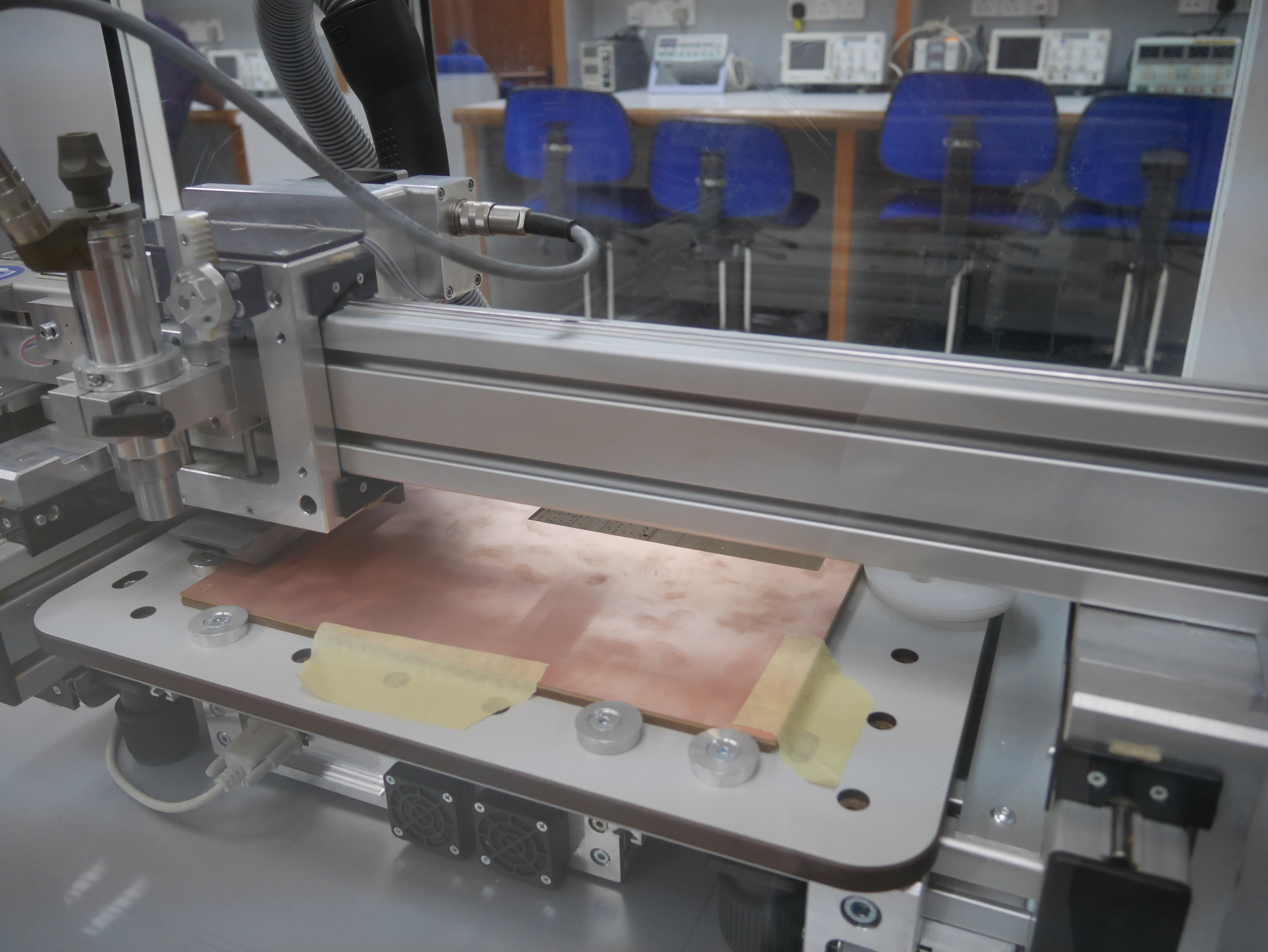
Engineering lab at Asia Pacific University

The subjects offered in Year 1 of the Diploma in Electrical and Electronic Engineering programme at Asia Pacific University will enable you to understand the electrical and electronic engineering fundamentals starting with the science of elementary particles called electrons.

You will be able to apply theories and principles of science and mathematics to solve practical technical problems with basic knowledge and skills of the electrical elements, components and devices to construct simple electrical and electronic circuits. There are also modules that provide study skills as well as business and communication and information technology skills.

  • Practical English
  • Foundation of Engineering Mathematics
  • Professional Communications
  • Applied Mechanics
  • Practical IT Skills
  • Business Environment
  • Electrical & Electronic Principles
  • Engineering Materials
  • Engineering Mathematics 1
  • Engineering Mathematics 2

Year 2 Subjects for the Diploma in Electrical and Electronic Engineering at Asia Pacific University

The subjects provided in Year 2 of the Diploma in Electrical and Electronic Engineering programme at APU provide you

I met EduSpiral at the Education Fair and he helped me to filter all the information from the universities and choose the best university that fit me." Vincent Hoy, Scholarship student at Asia Pacific University
I met EduSpiral at the Education Fair and he helped me to filter all the information from the universities and choose the best university that fit me.”
Vincent Hoy, Engineering Scholarship student at Asia Pacific University

with knowledge of electrical components, instruments and devices operation and behaviour such as electric and magnetic fields, analogue and digital electronics, machines and control, communication engineering, microprocessor and programming technology. This makes your job opportunities much wider.

  • Instrumentation & Measurements
  • Control & Automation
  • Generation Transmission & Protection
  • Microprocessor Systems
  • Electrical Machines & Drives
  • Organisational Behaviour
  • Problem Solving & Program Design Using C
  • Analysis of Circuits
  • Analogue Electronics
  • Digital Electronics
  • Communication Engineering Principles
  • Design Principles

Upon successful completion of the Diploma in Electrical & Electronic Engineering programme, you will be eligible to progress into any of the following engineering degree programmes offered at Asia Pacific University:

Affordable Diploma in Electrical & Electronics Engineering course at Top Ranked UCSI University

UCSI University is ranked in the Top 300 Universities in Asia in 2015 by the renown QS University Rankings. UCSI University is ranked as Excellent or Tier 5 in the SETARA 2013 rating system by MQA.

Students after SPM or O-Levels with at least 3 credits in the relevant subjects can go for the Diploma in Electrical & Electronic Engineering at UCSI University for 2 years.

After that, they can enter into Year 2 of the Electrical & Electronic Engineering degree for another 3 years. The Electrical & Electronic Engineering degree at UCSI University is accredited by MQA and the Board of Engineers Malaysia (BEM)

The Diploma in Electrical & Electronics Engineering course at UCSI University is designed to provide fundamental theoretical knowledge and practical skills to individuals who are eager to join the industry at an earlier stage.


Robotic PLC Micro-Processor Lab for Engineering Students at UCSI University

The first rate Electrical & Electronic Diploma programme at UCSI University equips students with the relevant academic and “hands-on” experience to enable them to adapt quickly to their jobs after graduation, and provides flexibility, motivation and the essential knowledge and skills as a solid foundation for further studies.

Upon successful completion of the Diploma in Electrical & Electronics programme at UCSI University, graduates may continue on to Year 2 of any of the engineering degree programmes offered at UCSI University:

In a nutshell, this programme incorporates design projects – that aim to improve skills in design, problem-solving and report-writing – and furnishes students with the necessary skills, knowledge and expertise for challenges in various electrical and electronic industries.

The students are also required to undergo a minimum of three months’ industrial training under UCSI University’s Co-operative Placement scheme to learn and familiarize themselves with a real-life working environment.

Programme Details for the Diploma in Electrical & Electronics Engineering course at UCSI University

Power, machine & control engineering lab at UCSI University

The duration of the programme is approximately 2 years and 4 months.

In each year there are two long-semesters consisting of 14 weeks of instruction with 2 weeks of examinations, and one short-semester consisting of 7 weeks of instruction with 1 week of examinations. The long-semesters start in January and May, while the short-semester starts in September.

In the months of November & December students undergo industrial training under the Co-Operative Placement Scheme to learn and to familiarize themselves with real life working environment. In addition, students also undertake a design project near the end of their studies, which aids in developing the students’ skills in design, problem solving and report writing.

The number of contact hours per course per week depends on the credit and teaching methodology of each course. Each credit is approximately equivalent to 1 hour of class, or 2 hours of labs per week.

Assessments for the Diploma in Electrical & Electronics Engineering course at UCSI University

Robotic PLC Micro-Processor Lab at UCSI University

The teaching and learning strategies and assessment are designed depending on and according to the nature of course or topic being taught or investigated. The school of Engineering implements different methods and styles of teaching and learning and assessment to ensure the successful achievement of the learning outcomes of its programmes, that includes:

  • Ordinary classroom lectures
  • Group tutorials
  • Laboratory works
  • Seminars and eforums
  • Directed and self learning
  • Invited guest lectures
  • Industrial visits

Year 1 Subjects for the Diploma in Electrical & Electronics Engineering course at UCSI University

The engineering programmes at UCSI University are accredited by the Board of Engineers Malaysia and MQA

  • Engineering Physics 1 *
  • Engineering Mathematics 1
  • Computer Applications (Computing Essentials)
  • Electrical and Electronic Principles *
  • Engineering Physics 2 *
  • Circuit Analysis 1 *
  • Engineering Mathematics 2
  • Engineering Design *
  • Digital Electronics *

Year 2 Subjects for the Diploma in Electrical & Electronics Engineering course at UCSI University

I went for the EduSpiral Education Fair and gained a lot of information. After the fair, EduSpiral even arranged to take me around for a campus tour, assisted me with application and accommodation as well. Nixonn Cheong, Engineering at UCSI University
I went for the EduSpiral Education Fair and gained a lot of information. After the fair, EduSpiral even arranged to take me around for a campus tour, assisted me with application and accommodation as well.
Nixonn Cheong, Engineering at UCSI University

  • Engineering Principles
  • Applied Computing (Computing for Engineers) *
  • Circuit Analysis 2 *
  • Electrical Technology 1 *
  • Electrical Technology 2 *
  • Engineering Mathematics 3
  • Telecommunication Principles *
  • Industrial Studies
  • Project A
  • Analogue Electronics *
  • Co-operative Placement 2

Year 3 Subjects for the Diploma in Electrical & Electronics Engineering course at UCSI University

  • Control & Instrumentation Systems *
  • Microprocessor Based Systems *
  • Project B

Best Diploma in Electrical & Electronic Engineering (Microelectronics) at KDU College Penang

Engineering lab at KDU Penang University College

KDU Penang University College is the pioneer in engineering programmes in Penang. The college is ranked 5-star College status by Ministry of Education (MOE) MyQuest Audit thus making KDU Penang University College the best university to study engineering in Penang.

Very-large-scale integration (VLSI) is emphasised at KDU Penang University College with their own VLSI training facility featuring the latest Mentor Graphic software being used in the IC industry .

KDU Penang Diploma in Electrical and Electronic Engineering (Microelectronics) is a programme where the students will be introduced to the concepts of Physical Electronics, VLSI Technology, design and fabrication of miniaturised electronic devices and systems designed for generation, transmission and distribution of electricity.

This diploma offers challenging career prospects in the areas of research and development (R&D), design and manufacturing, technical management and marketing within the field of engineering.

Top notch engineering facilities at KDU Penang University College

It is important to choose the best college in Malaysia to study for your engineering degree so that you will gain the necessary

Excellent facilities and industry relevant software will equip KDU College Penang engineering graduates for a successful career

knowledge and skills for a successful career in the competitive job market. A college with excellent engineering labs and equipment will provide you with the opportunity to practice and familiarise with how they work.

KDU Penang University College has invested millions of Ringgit for their engineering labs and facilities to ensure their students receive the best education possible.

  • Well-equipped engineering laboratories and facilities such as the VLSI, Electrical Power, Electronics and Communications Lab to support the practical work.
  • Industrial grade software such as Mentor Graphics, SolidWorks, ERACS, OrCAD, Matlab and many more are also available.
  • 95% employment rate within the first 6 months upon graduation.
  • More than 250 industrial partners for internship/graduates placement.
  • On-campus interviews are regularly conducted for graduates.

Programme Structure for the Diploma in Electrical & Electronic Engineering (Microelectronics) at KDU Penang University College

Year 1 Subjects for the Diploma in Electrical & Electronic Engineering (Microelectronics) at KDU Penang University College

VLSI Labs for the engineering students at KDU College Penang

  • Engineering Mathematics I
  • Engineering Mathematics II
  • Computer Fundamentals
  • Semiconductor Devices & Applications
  • Electric Circuits I
  • Basic Programming
  • Electric Circuits II
  • Microcontroller System Design and Applications
  • Analogue Electronics
  • Digital Electronics
  • Personal Development & Leadership Skills

Year 2 Subjects for the Diploma in Electrical & Electronic Engineering (Microelectronics) at KDU Penang University College

  • Engineering Mathematics III
  • Introduction to Inventive Problem Solving in Engineering
  • Very Large Scale Integration

    Excellent facilities and industry relevant software will equip KDU College Penang engineering graduates for a successful career
    Excellent facilities and industry relevant software will equip KDU College Penang engineering graduates for a successful career
  • Technopreneurship
  • Electric Machines
  • Power Electronics
  • Advanced Computer Programming
  • Electric Power Systems Fundamentals
  • Industrial Training

Year 3 Subjects for the Diploma in Electrical & Electronic Engineering (Microelectronics) at KDU Penang University College

  • Wafer Fabrication and IC Packaging
  • Project Lab

Top Diploma in Electrical and Electronic Engineering (Mechatronics) at KDU Penang University College

Engineering lab at KDU Penang University College

The Diploma in Electrical and Electronic Engineering (Mechatronics) programme at KDU Penang University College is broad-based and specifically designed to integrate three major areas – electrical, electronics and mechanical engineering – into one stream. These courses give students theoretical and practical introduction to a career in electrical, electronics & mechanical engineering. This comprehensive, organized and focused programme provides the students with more flexibility in choosing or tailoring their career paths and endeavours.

Students after SPM or O-Levels wanting a top diploma in mechatronic engineering can choose to study at KDU Penang University College. With at least 3 credits in SPM, students may join the 2-year Diploma in Electrical and Electronic Engineering (Mechatronics) at KDU Penang University College.

KDU Penang University College is the pioneer in engineering programmes in Penang. The college is ranked 6-star College status by Ministry of Education (MOE) MyQuest Audit thus making KDU Penang University College  the best college to study engineering.

Excellent facilities and industry relevant software will equip KDU College Penang engineering graduates for a successful career

Engineering students at KDU Penang University College will be introduced to the concepts of:

  • Physical Electronics
  • Engineering Materials
  • Mechatronics System Design
  • Applied Pneumatics and Hydraulics
  • Computer Aided Design/Drafting
  • Robotic Technology

This comprehensive, programme provides the students with the flexibility to choose or tailor their career paths and endeavors.

This diploma offers career prospects in the areas of research and development (R&D), design and manufacturing, technical management and marketing within the field of engineering.

Subjects for the Diploma in Electrical and Electronic Engineering (Mechatronics) at KDU Penang University College

Year 1 Subjects for the Diploma in Electrical & Electronic Engineering

  • Engineering Mathematics I

    Electronics Lab at KDU College Penang
    Electronics Lab at KDU College Penang
  • Engineering Mathematics II
  • Computer Fundamentals
  • Semiconductor Devices & Applications
  • Electric Circuits I
  • Basic Programming
  • Electric Circuits II
  • Microcontroller System Design and Applications
  • Analogue Electronics
  • Digital Electronics
  • Personal Development & Leadership Skills

Year 2 Subjects for the Diploma in Electrical & Electronic Engineering

  • Engineering Mathematics III
  • Introduction to Inventive Problem Solving in Engineering
  • Mechatronics System Design

    Excellent facilities and industry relevant software will equip KDU College Penang engineering graduates for a successful career
    Excellent facilities and industry relevant software will equip KDU College Penang engineering graduates for a successful career
  • Technopreneurship
  • Engineering Materials
  • Computer Aided Design/Drafting
  • Instrumentation and Control
  • Applied Pneumatics and Hydraulics
  • Industrial Training

Year 3 Subjects for the Diploma in Electrical & Electronic Engineering

  • Robotic Technology
  • Project Lab

Outstanding Private University in Malaysia for Electronic Engineering Diploma at First City University College

This practical-oriented Diploma in Electronic Engineering programme at First City University College (First City UC) is designed to train students in the principles and practices of electronic engineering. The duration for the diploma is 2 1/3 years (7 semesters) with internship.  Intakes are in January, March and May of each year for the Diploma in Electronic Engineering at First City University College.

The Faculty of Engineering and Computing at First City University College provides students with the latest in learning experience through the use of state-of-the-art facilities. Students are inspired and motivated through a hands-on approach in the teaching of engineering and computing.

Why Study Engineering / Computing Programmes at First City UC?

The engineering labs at First City University College are well-equipped to meet the stringent requirements of MQA

  • Students are taught problem-solving skills
  • Attend talks by industry experts
  • Use of advanced software tools such as Mainframe Computing Technology and Mentor Graphics of Electronic Design Automation (EDA)
  • 19 State-of-the-art engineering and computing laboratories

Entry Requirements for the Diploma in Electronic Engineering at First City University College

  • SPM: Minimum 3 Cs (inclusive of Mathematics & 1 Science subject) and at least a pass in Malay Language, History & English.
  • UEC: Minimum 3 Bs (inclusive of Mathematics & 1 Science subject) and at least a pass inEnglish
  • GCE O Level: Minimum 3 Cs (inclusive of Mathematics & 1 Science subject) and at least a pass in English

Diploma in Electronic Engineering Subjects at First City University College

Top notch engineering equipment at First City University College

SEMESTER 1 MODULE CONTENT

  • Materials Science
  • Basic Circuit Theory
  • Communication Skills
  • Programming Language
  • Digital Electronics 1

SEMESTER 2 MODULE CONTENT

  • Basic Electronics
  • Algebra
  • Calculus
  • Microcontroller Principles

Top notch engineering equipment at First City University College

SEMESTER 3 MODULE CONTENT

  • Analogue Electronics 1
  • Engineering Mathematics

SEMESTER 4 MODULE CONTENT

  • Computer Interfacing Techniques
  • Microcontroller Programming and Interfacing
  • Project Management

SEMESTER 5 MODULE CONTENT

  • Analogue Electronics 2
  • Digital Electronics 2
  • Signals and Systems

SEMESTER 6 MODULE CONTENT

  • First City University College Final year electrical & electronic engineering student, Yip Chee Hoe, with his project, "DC-DC Step Up Converter for Wind Turbine Application".
    First City University College Final year electrical & electronic engineering student, Yip Chee Hoe, with his project, “DC-DC Step Up Converter for Wind Turbine Application”.

    Industrial Training

SEMESTER 7 MODULE CONTENT

  • Basic Communication Systems
  • Project • IC Technology
  • Electronic Design Automation
  • Advanced Analogue and Digital Electronics
  • Electronic Circuit Modelling and Simulation

Electives*: *Remarks: Choose only TWO modules from 4 elective modules

Diploma in Electrical and Electronics Engineering at KDU University College Utropolis Glenmarie

Electrical & Electronics Engineering Lab at KDU University College Utropolis Glenmarie

Students after SPM or O-Levels who desire a career as an engineer in Malaysia can join the Diploma in Electrical & Electronic Engineering at KDU University College Utropolis Glenmarie before continuing on to Year 2 of the Bachelor of Engineering (Hons) Electrical & Electronic Engineering for another 3 years.

Electrical & Electronic Engineering Degree students at KDU University College Utropolis Glenmarie are given a choice of 3 majors to choose from in their fourth year

  • Electrical Power and Renewable Energy
    Focuses on harnessing green energy and developing the latest smart-grid technology
  • Electronic Engineering
    Emphasises on advanced digital system design and embedded systems
  • Communication Engineering

Learn all about the concepts and applications of power generation, transmission and distribution in this

Mechanical Engineering Lab at KDU University College Utropolis Glenmarie

electrical & electronic engineering diploma at KDU University College Utropolis Glenmarie. With an emphasis on the utilisation and control of electrical energy and technology, this course will provide you with a strong foundation in both theory and practical training.

Engineering students at KDU University College Utropolis Glenmarie will be able to acquire valuable hands-on experience through projects throughout the course and particularly through the industrial training programme offered in the second year.

Whether you join the job market after completing this diploma course or continue to study for a degree, you will be well-prepared and ready for the next step in your career path. Upon completion of the Diploma in Electrical & Electronics Engineering at KDU University College Utropolis Glenmarie, graduates can continue on to the Bachelor of Engineering (Hons) in Electrical and Electronic Engineering or the Bachelor of Engineering (Hons) Mechanical Engineering at KDU.

Year 1 Subjects for the Diploma in Electrical & Electronics Engineering at KDU University College Utropolis Glenmarie

Electrical & Electronic Engineering lab at KDU University College

  • Analogue Electronics
  • Computer Programming
  • Electric Circuits
  • Engineering Drawing & CAD
  • Engineering Mathematics I & II
  • Engineering Physics
  • Microcontroller Technology
  • Personal Development & Leadership Skills I & II
  • Principles of Electromagnetic Fields
  • Tertiary English I & II
  • Telecommunication Systems Fundamentals

Year 2 Subjects for the Diploma in Electrical & Electronics Engineering at KDU University College Utropolis Glenmarie

Electrical & Electronic Engineering lab at KDU University College

  • Digital Electronics
  • Electric Machines
  • Electric Power System Fundamentals
  • Electronic Instrumentation & Control Systems
  • Engineering Management, Practices & Ethics
  • Engineering Mathematics III
  • Engineering Project
  • Fundamentals of System Modelling
  • Industrial Project
  • Industrial Training
  • Microcontroller System Design & Applications
  • Power Electronics
  • Power Generation, Transmission & Distribution


EduSpiral Consultant Services- Your Personal Online Education Advisor

Established since 2009, EduSpiral Consultant Services helps provide information and counselling on courses and universities in Malaysia & Singapore.

EduSpiral Consultant Services represents the best colleges and universities in Malaysia offering a wide range of choices for

I went for the EduSpiral Education Fair and gained a lot of information. After the fair, EduSpiral even arranged to take me around for a campus tour, assisted me with application and accommodation as well. Nixonn Cheong, Engineering at UCSI University
I went for the EduSpiral Education Fair and gained a lot of information. After the fair, EduSpiral even arranged to take me around for a campus tour, assisted me with application and accommodation as well.
Nixonn Cheong, Engineering at UCSI University

students to choose from. These colleges and universities offer value for money in the quality of education and excellent facilities that you get.

These universities and colleges are chosen by EduSpiral because they represent the best in their fields in Malaysia and affordable. EduSpiral provides in-depth information and counseling on their courses so that students are able to make the right choice.

If you are still not sure what to study, please contact us and we will send you a free EduSpiral Career Assessment Form.

Please contact us for more details.

Please fill up the form for more information. If you do not give your mobile number or full name as in IC, your query will not be answered. Please make sure you give a correct email address and check your email including the SPAM or JUNK email folder within 48 hours as we will email you the information. 

Go back

Your message has been sent

Warning
Warning
Warning
Warning
Warning
Warning

Warning.

Malaysia’s Top University Best for Electrical & Electronic Engineering at Top Ranked UCSI University

First Rate Electrical & Electronic Engineering Course in Malaysia at UCSI University

Written by EduSpiral Consultant Services For more information contact 01111408838

Studying Electrical & Electronic Engineering allows UCSI students to be at the centre of a vibrant and fast-moving discipline that’s related to industries like electronics, information technology, manufacturing, energy generation and supply, transport, and communications.

Students after SPM or O-Levels may go for the Foundation in Science at UCSI University for 1 year before continuing on to the 4-year Electrical & Electronic Engineering degree. With 3 credits in SPM or O-Levels including Maths & Science, students may go for the 2-year Diploma in Electrical & Electronic Engineering and then enter into Year 2 of the Engineering degree. Pre-University students with the relevant results in STPM, A-Levels, SAM, CPU, AUSMAT, etc. can enter directly into Year 1 of the engineering degree. Students may apply for the PTPN loan to help with their studies. Scholarships are also available to top students applying to UCSI University.

Top Ranked UCSI University is famous for its engineering courses and has offered the Electrical & Electronic Engineering course since 1992. UCSI University is ranked in the Top 300 Universities in Asia in 2015 by the renown QS University Rankings.  UCSI University is ranked as Excellent or Tier 5 in the SETARA 2013 rating system by MQA. The Electrical & Electronic Engineering degree at UCSI University is accredited by the Board of Engineers Malaysia (BEM) and MQA.

Students should choose top private universities in Malaysia for their electrical & electronic engineering education so that you can gain the best knowledge and skills for a successful career.

For more information contact 01111408838

Please fill up the form for more information. If you do not give your mobile number or full name as in IC, your query will not be answered. Please make sure you give a correct email address and check your email including the SPAM or JUNK email folder within 48 hours as we will email you the information. 

Go back

Your message has been sent

Warning
Warning
Warning
Warning
Warning
Warning

Warning.

Best Electrical & Electronic Engineering Degree at Top Ranked UCSI University

Strategically locate in Kuala Lumpur, UCSI University is ranked in the top 300 universities in Asia by QS and Rated Excellent or Tier 5 in the SETARA 2013 by MQA

At UCSI University, the Electrical and Electronic Engineering programme covers a tremendous array of courses related to both fields, ranging from basic topics such as circuits, analogue and digital devices and systems, computing, machines, communications and digital networks to more specialised topics like filter design, control, instrumentation, power, signal processing, VLSI design, and microprocessors / microcontrollers, among others.

This well-established and broad-based engineering degree programme combines theoretical studies with practical applications and problem-solving skills in the realm of engineering. The course grooms students to be well-trained individuals and exposes them to hands-on sessions with software and hardware design tools, in line with industry needs.

To foster competitiveness among graduates, students are also required to undergo industrial training

The winning Malaysian entry in 2014, submitted by UCSI University student Desmond Tan Mun Yung, was a full-body “exoskeleton” which aims to help disabled patients with movement.

under UCSI University’s Co-operative Placement Training Scheme at the end of the 2nd and 3rd academic years.

This training allows students to learn and familiarise themselves with the real-life working environment. Apart from that, students also undertake research and development projects in their final year of study.

Top electrical & electronic engineering students at UCSI University can be inducted into the IEEE Honours Society, Mu Alpha. The winning Malaysian entry in 2014 to enter the James Dyson international award competition, was submitted by a UCSI University student Desmond Tan Mun Yung, was a full-body “exoskeleton” which aims to help disabled patients with movement.

UCSI University Bachelor of Engineering (Hons) Electrical & Electronic Engineering Programme

The duration of the programme is 4 years.

EduSpiral took me & my friend to visit APU and UCSI so that we can see the campus facilities and make a better decision about our future. Kian Yong, Mehcanical Engineering at UCSI University
EduSpiral took me & my friend to visit APU and UCSI so that we can see the campus facilities and make a better decision about our future.
Kian Yong, Mehcanical Engineering at UCSI University

In each year there are two long-semesters consisting of 14 weeks of instruction with 2 weeks of examinations, and one short-semester consisting of 7 weeks of instruction with 1 week of examinations.

The long-semesters start in January and May, while the short-semester starts in September.

In the months of November & December students undergo industrial training under the Co-Operative Placement Scheme to learn and to familiarize themselves with real life working environment. In addition, students also undertake a research and development project in their final year.

The number of contact hours per courses per week depends on the credit and teaching methodology of each course. Each credit is approximately equivalent to 1 hour of class, or 2 hours of labs per week.

The teaching and learning strategies and assessment are designed depending on and according to the nature of subject or topic being taught or investigated.

The school of Engineering implements different methods and styles of teaching and learning and assessment to ensure the successful achievement of the learning outcomes of its programmes, that includes

  • Ordinary classroom lectures
  • Group tutorials
  • Laboratory works
  • Seminars and eforums
  • Directed and self learning
  • Invited guest lectures
  • Industrial visits

UCSI University Engineering Degree Accredited by Board of Engineers Accredited (BEM)

The engineering degree programmes at UCSI University are accredited by the Board of Engineers Malaysia

The Engineering Degrees of these universities are accredited by the Board of Engineers Malaysia (BEM) which is a signatory to the Washington Accord. This accreditation ensures that Engineering Graduates will have the following benefits in countries who are signatories of the Washington Accord:

  • Opportunities to register as a Graduate Engineer with Board of Engineers Malaysia (BEM) or the relevant professional bodies in other countries who are signatories under the Washington Accord.
  • Pathways to becoming a Professional or Chartered Engineer.
  • Assurance that graduates are considered as having met international academic standards for engineering practice.

Year 1 Electrical and Electronic Engineering Degree subjects at UCSI University

Power, machine & control engineering lab at UCSI University

  • Calculus & Analytical Geometry II
  • Circuit Theory I *
  • Digital Electronics I *
  • Analogue Electronic I *
  • Mathematical Methods for Engineers I
  • Technical Communication
  • Electromagnetic Theory I *
  • Electronic Laboratory 1A
  • Electronic Laboratory 1B

Year 2 Electrical and Electronic Engineering Degree subjects at UCSI University

Robotic PLC Micro-Processor Lab for engineering students at UCSI University

  • Advanced Circuit Theory &TL *
  • Engineering Design *
  • Mathematical Methods for Engineers II
  • Electronic Manufacturing Industry *
  • Engineering Softwares & Applications *
  • Electrical Power *
  • Computing for Engineers *
  • Co-operative Placement 2
  • Analogue Electronics II *
  • Digital Electronics II *
  • Electronic Laboratory 2A
  • Electronic Laboratory 2B

Year 3 Electrical and Electronic Engineering Degree subjects at UCSI University

Robotic PLC Micro-Processor Lab for engineering students at UCSI University

  • Communication Theory *
  • Numerical Analysis
  • Instrumentation & Measurement *
  • Data Communication &Networks *
  • Microprocessor Systems *
  • Electrical Machines *
  • Environmental Engineering and Abatement Processes”
  • Control Systems *
  • Engineering & Management & Economics
  • Engineers in Society
  • Energy Conversion & High Voltage Power Transmission*
  • Electronic Laboratory 3A
  • Electrical Laboratory 3B
  • Electrical Laboratory 3C

Year 4 Electrical and Electronic Engineering Degree subjects at UCSI University

I went for the EduSpiral Education Fair and gained a lot of information. After the fair, EduSpiral even arranged to take me around for a campus tour, assisted me with application and accommodation as well. Nixonn Cheong, Engineering at UCSI University
I went for the EduSpiral Education Fair and gained a lot of information. After the fair, EduSpiral even arranged to take me around for a campus tour, assisted me with application and accommodation as well.
Nixonn Cheong, Engineering at UCSI University

  • Digital Signal processing *
  • Digital Systems & HDLs *
  • Electronic Circuit Design
  • Power Electronics *
  • Final Year Project A
  • Embedded Systems Design *
  • Power Systems *
  • Final Year Project B
  • Co-operative Placement 4
  • Power System Protection
  • Electronic Laboratory 4A
  • Electrical Laboratory 4B

Elective :

  • Electromagnetic Theory II
  • Introduction to Production and manufacturing
  • VLSI Design
  • Technopreneurship

International University Collaboration Centre at UCSI University

UCSI University is ranked in the Top 300 Universities in Asia in 2015 by the renown QS University Rankings. UCSI University is ranked as Excellent or Tier 5 in the SETARA 2013 rating system by MQA.

As a premier university, UCSI University provides students with the option to complete their studies at UCSI or transfer to global partner universities in the Russell Group, Universitas 21 and The Group of Eight. With over 200 fields to choose from, the flexible IDP programme allows students to not only study in two countries for a fraction of the cost but also obtain a foreign degree.

At the University, the International University Collaboration Centre assists students in all aspects of their IDP experience. Services rendered by IUCC include personalised counselling, university selection, course selection, university application, monitoring of progress and follow-up, accommodation arrangement as well as special pre-departure services, which include visa applications, air ticket arrangements and briefings.

EduSpiral explained the courses in detail and took us around the campus to view the Pharmacy facilities to help me make a good decision about my future career.
Ka Jun, Pharmacy at UCSI University

Students are also able to attend international education fairs and guest lectures, interact directly with university representatives, and have on-the-spot interviews.

Building on its domestic standing as a preferred and trusted education provider, the University is also expanding its sphere of influence. Tie-ups with foreign universities, research institutes and leading multinational companies are constantly established, enhancing opportunities for students and staff in the areas of research and development, mobility programmes and career opportunities, among others.

Engineering degree students at UCSI University may transfer to top universities overseas for the final part of their degree. Students may transfer to Australian universities such as the University of Queensland for Chemical Engineering, Civil Engineering, Electrical & Electronic Engineering, Mechanical Engineering and Mechatronic Engineering. For the UK, students may transfer to Northampton University for Electrical & Electronic Engineering, Electromechanical Engineering and Mechanical Engineering.

Entry Requirements for the Electrical and Electronic Engineering Degree at UCSI University

Qualifications Academic Requirements
STPM Minimum 2C including Mathematics and Physics
‘A’ Levels Minimum 2D including Mathematics and Physics
UEC Minimum 5 credits, including Mathematics and Physics
CPU CPU – Minimum average of 60% in 6 subjects, inclusive of a minimum score of 60% in Mathematics and Physics
Local Matriculation Minimum CGPA 2.0
Foundation from other University/ College Minimum CGPA 2.0
WAEC/NECO Maximum aggregate of 15 points out of best 5 subjects, inclusive of minimum B’s in Mathematics and Physics
Diploma/ Advance Diploma/ Degree/ equivalent Pass

  • Subject to School discretion after reviewing transcript & syllabus. Max credit transfer of 30% of the programme total credits
Other qualifications deemed equivalent to STPM/A-Level by Malaysian Qualifications Agency Minimum overall average of 65%, inclusive of minimum 65% in Mathematics and Physics
International Baccalaureate Minimum 26/42 points from 6 subjects (inclusive Mathematics & Physics/Chemistry)
SAM SAM – Minimum average of 65% in 5 subjects, inclusive of minimum scores of 65% in Mathematics and Physics

*Chemistry is required for Chemical Engineering; Physics is required for all other programmes.

English Requirements
  • A distinction (A+, A or A-) in the English Language subject at SPM/UEC level; or MUET Band 5; or a score of 196 (computer-based) / 525 (writing-based) / 69-70 (internet-based) in TOEFL; or Band 5.5 in IELTS.
  • In the event that the English Language Requirements are not met, student may be required to undertake additional English module(s) prior to or concurrently with the undergraduate programme, based on the University’s decision.

* International students holding equivalent academic qualifications but which are not conducted in English, are required to sit for the English Placement Test, which may result in the taking of the Certificate in English programme (1 to 10 months). Students who intend to pursue the above undergraduate programme directly, are advised to fulfil the above English requirements prior to commencing their studies at the University.

Note / LegendDiscretion is given to the Head of School to deal with applicants who have results borderline to the Academic Requirements.SPM Credit – ‘A+’ to ‘C’
O-Level – ‘A’ to ‘C’
UEC Credit – ‘A1’ to ‘B6’
STPM principal – ‘A’ to ‘C’
‘A’ Levels principal – ‘A’ to ‘E’

Study at the Top Ranked UCSI University in Malaysia

UCSI University is ranked in the Top 300 Universities in Asia in 2015 by the renown QS University Rankings. UCSI University is ranked as Excellent or Tier 5 in the SETARA 2013 rating system by MQA.

Founded in 1986, UCSI University is the flagship institution of the UCSI Group conglomerate. With campuses in Kuala Lumpur, Terengganu and Sarawak, the University comprises seven faculties, a Centre for Pre-U Studies, De Institute of Creative Arts and Design, and an Institute of Music, with more than 85 programmes in disciplines like medicine, pharmacy, architecture, engineering, computer science, liberal arts and music.

As one of Malaysia’s first private universities, UCSI University has long impacted the national higher education landscape and the University continues to do so with its wide range of undergraduate and postgraduate programmes.

UCSI University  is a vibrant community of learning and scholarship. With more than 10,000 students

Auditorium at UCSI University

from 110 different countries, the University stands out as a melting pot of diversity and learners will supplement their pursuit of knowledge with a keen sense of cultural appreciation – a vital trait in today’s borderless world.  Over 30% of UCSI’s student population is international.

Scholarships are available to top deserving students. 1 out of 5 UCSI students obtain a merit-based government scholarship or grant.

As one of Malaysia’s first private universities, UCSI University has long impacted the national higher education landscape and the University continues to do so with its wide range of undergraduate and postgraduate programmes. The university has over 100 academic programmes make UCSI the most academically diverse private university in Malaysia by far. They are also the pioneer in Aquatic Science, Biotechnology, Food Science, Music and Nutrition programmes in Malaysia‘s private higher education landscape

UCSI University is ranked in the Top 300 Universities in Asia in 2015 by the renown QS University Rankings. UCSI is one of the few Malaysian private universities to break into the 2015 and 2016 QS Asian University Rankings. UCSI University is ranked as Excellent or Tier 5 in the SETARA 2013 rating system by MQA.

Students at UCSI University are taught by qualified and experienced lecturers

OVER 30% of UCSI’s academic staff are PhD holders and a further 17% are pursuing their doctorate. The 2015 average at private higher education institutions in Malaysia is 16%

The University’s academic staff are at the forefront of their disciplines and their views are highly sought after on major issues; from business to political science.  There are 396 members of academic staff (staff to student ratio of 1:22) with the following qualifications:

  • 68 doctorate degree holders
  • 19 doctorate degree candidates
  • 235 master’s degree holders

Many of their academics have extensive experience working overseas and some play advisory roles in public bodies and various committees. By bringing their experiences into the classroom, UCSI’s academics cater to an exhilarating learning environment and learners will thrive as they balance academic mastery with industrial application.

Co-Operative Education Training Programme for Every Year of Degree Studies at UCSI University

I am glad that EduSpiral recommended me to UCSI University as I gained so much real work experiences during all my Co-Op (Internship). Paul Kong, graduated in Business Administration from UCSI University
I am glad that EduSpiral recommended me to UCSI University as I gained so much real work experiences during all my Co-Op (Internship).
Paul Kong, graduated in Business Administration from UCSI University

With its innovative academic curriculum, UCSI University students also enjoy the unique benefits of its Co-Operative Education Training Programme (Co-Op) that enhances their employability by integrating classroom learning with workplace training in Co-Op employer organisations.

UCSI University is the first university in Asia to facilitate industry placement for students each year.

Completing two months’ work experience for every study year, a UCSI University student would have six to eight months’ work experience to stand ready for full-time employment upon their graduation.
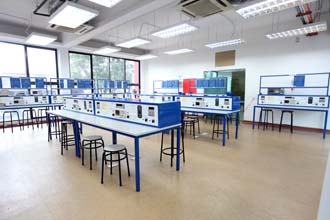
Around 4000 global companies provide UCSI students with internship. And 96% of UCSI University’s Co-Op partners would like to rehire their interns when they graduate.

With the number rising annually, these partnerships create job opportunities for students to be job-ready upon their graduation. UCSI University is among the Best performing comprehensive private universities in Malaysia for graduate employability.

State-of-the-Art Facilities at UCSI University

Situated on a 19-acre piece of land, the Campus is located in Cheras, Kuala Lumpur with convenient access to numerous

Chemistry lab at UCSI University

facilities including banks, restaurants, transportation services, entertainment, and accommodation. Fully wireless, it is equipped with the latest cutting-edge technology to access the world of e-learning and e-resources.

Housing 7 different blocks, the Campus includes the Student Centre (Menara Gading), the Resource Centre, the Academic Blocks and Residential Halls to comfortably accommodate a student population of more than 15000.

Other facilities include the four-level library, an auditorium, a recital hall, a multi-purpose hall, computer laboratories, residential halls, bookstores and cafeterias. Also available on Campus is an Apple Experience Centre.

The Campus faculty-centric facilities include: the Anatomy & Pathology Museum, Clinical Skills Laboratories, Petrochemical

UCSI students playing basketball at the Multipurpose Hall with the Gym in the background.

Laboratory, Physiology & Pharmacology Laboratory, Molecular Biology Laboratory, and Microbiology Laboratory, fashion design workshops, Psychology Laboratory, as well as drafting and design studios.

The University is also constantly working with the industry to set up specialised labs which ensure students are updated with the latest industrial practices. Currently, the University has established laboratories jointly with National Instruments and RICOH under the School of Engineering and the School of Information Technology, respectively.

Due to its rapid expansion, an additional 48-storey building will be built on the existing Campus that will include a 5-Star hotel, twelve floors of parking bays and hostel accommodations for UCSI University students, administrative offices, restaurants, a ballroom and also a clubhouse.

Sports Facilities at UCSI University

Excellent sports facilities at UCSI University provide for an all-rounded education & a healthy lifestyle

  • Badminton Courts
  • Basketball Courts
  • Football Field
  • Futsal Court
  • Gymnasium
  • Pool Tables
  • Squash Courts
  • Swimming Pool
  • Table Tennis
  • Volleyball Court

Engineering Laboratories at UCSI University

State-of-the-art engineering labs at UCSI University

  • Chemical Instrumentation Lab
  • Communication Labs 1 & 2
  • Control & Instrumentation Lab
  • Drafting & Design Lab
  • Electrical & Electronics Labs 1 & 2
  • NI Virtual Lab
  • Mechanical Workshop & Lab
  • Mechatronics Lab
  • Microprocessor & Microcontroller Lab
  • PCB Fabrication & Mechanical Workshop
  • Petrochemical Lab
  • Pneumatics & Hydraulics Lab and Robotics Lab
  • Power & Machines Lab
  • R & D Lab

Geomatic & Concrete Lab for Civil Engineering students at UCSI University

Geomatic & Concrete Lab for Civil Engineering students at UCSI University

This lab is equipped with all the necessary surveying equipment. Students use this equipment for land surveying, and analyse data collected during assignments. Students can also do engineering evaluations and experiments to test the qualities of building materials like concrete and other cementitious materials here.


Power, Machine & Control Lab at UCSI University

Power, Machine & Control Lab at UCSI University

Equipped with state-of-the-art electrical machines, this lab allows students to run experiments related to electrical power systems, conveyor belts and high voltage energy.


Material Science & Petrology Soil Mechanics Lab at UCSI University

Material Science & Petrology Soil Mechanics Lab at UCSI University

In this lab, students can develop further knowledge of materials structure, properties, performance and its processes by producing, transforming, and analysing materials. Students can also do experiments to process, test and determine soil properties here.


Thermo Fluid Lab for Engineering Students at UCSI University

Thermo Fluid Lab for Engineering Students at UCSI University

The lab allows students to conduct research in thermodynamics, fluid mechanics, and heat transfer. Students can also study a variety of complex engineering issues, such as electronics cooling, nanofluidics, micro-flow control, and bio-inspired fluid dynamics.


Control, Instrumentation Pneumatic & Hydraulics Lab for Engineering Students at UCSI University

Control, Instrumentation Pneumatic & Hydraulics Lab for Engineering Students at UCSI University

In this lab, students can study the profiles and properties of water in an open channel flow, and learn about pressure testing and flow control. They can also conduct experiments and learn about control on rotating conveyor belts.


Instrumentation Lab for Engineering Students at UCSI University

Instrumentation Lab for Engineering Students at UCSI University

This laboratory has state-of-the-art equipment for teaching and research development. The equipment includes atomic absorption spectroscopy (AAS), Fourier Transform Infrared Spectroscopy (FTIR), UV-VIS spectroscopy with desktop computer, nano zeta sizer, titrator and tensiometer.


Petrochemical Lab for Engineering Students at UCSI University

Petrochemical Lab for Engineering Students at UCSI University

This lab has the necessary equipment for analysis and characterization of solid, liquid and gaseous substances, which students can use to conduct testing and research in the areas of air and water pollution. The equipment available includes a viscometer bath, flashpoint tester, seta oil test centrifuge, rotary evaporator, colorimeter, jar test, and turbidity meter.



Industrial Chemistry Lab for Engineering Students at UCSI University

Industrial Chemistry Lab for Engineering Students at UCSI University

This lab is equipped with all the necessary measuring and analytical instruments for teaching and experiments, especially in chemical engineering. The equipment includes a water bath, oven, furnace, hotplate, and stirring hotplate.


Advanced Chemical Laboratory for Engineering Students at UCSI University

Advanced Chemical Laboratory for Engineering Students at UCSI University

This laboratory has all the equipment for aspiring chemical engineers to conduct physical and chemical processes (fluid flow, heat and mass transfer).

The equipment includes a PC-controlled and data logging system, a gas chromatography with a desktop computer, gas absorption demonstration unit, tubular flow reactor with a desktop computer, refractometer, continuous distillation column, batch reactor and CSTR in series.


Drilling and Material Science Lab for Engineering Students at UCSI University

Drilling and Material Science Lab for Engineering Students at UCSI University

The laboratory is designed to provide students with exposure to both macroscopic and microscopic analysis. It is well equipped with filter press, mixer, viscometer, grinder, polisher, hardness tester and emulsion stability mater.

Students who are taking Drilling Engineering and Element of Material Science courses will be involved in experimental work in this lab.


Robotic PLC Micro-Processor Lab for Engineering Students at UCSI University

Robotic PLC Micro-Processor Lab for Engineering Students at UCSI University

This lab allows students to enhance their knowledge in programming and control of hardware. Students can also do various robotic experiments and use virtual reality software installed in computers for the simulation and study of various tasks.


General Labs for Engineering Students at UCSI University

General Labs for Engineering Students at UCSI University

Equipped with all general lab apparatus, these labs provide the ideal training ground for undergraduates of the Electrical & Electronic Engineering and Communication & Electronic Engineering degree programmes to conduct experiments for projects and assignments.


EduSpiral Consultant Services- Your Personal Online Education Advisor

Established since 2009, EduSpiral Consultant Services helps provide information and counselling on courses and universities in Malaysia & Singapore. EduSpiral Consultant Services represents the best colleges and universities in Malaysia offering a wide range of choices

EduSpiral took us on a campus tour & gave in-depth information to help me decide. Eugene Ong, Electrical & Electronic Engineering at UCSI University
EduSpiral took us on a campus tour & gave in-depth information to help me decide.
Eugene Ong, Electrical & Electronic Engineering at UCSI University

for students to choose from. These colleges and universities offer value for money in the quality of education and excellent facilities that you get.

These universities and colleges are chosen by EduSpiral because they represent the best in their fields in Malaysia and affordable. EduSpiral provides in-depth information and counseling on their courses so that students are able to make the right choice.

If you are still not sure what to study, please contact us and we will send you a free EduSpiral Career Assessment Form.

Please contact us for more details.

Please fill up the form for more information. If you do not give your mobile number or full name as in IC, your query will not be answered. Please make sure you give a correct email address and check your email including the SPAM or JUNK email folder within 48 hours as we will email you the information. 

Go back

Your message has been sent

Warning
Warning
Warning
Warning
Warning
Warning

Warning.